Tab. 1:
Genre-specific elements of (semi-)formal emails included in the analysis (with inter-rater reliabilities and scale descriptors)
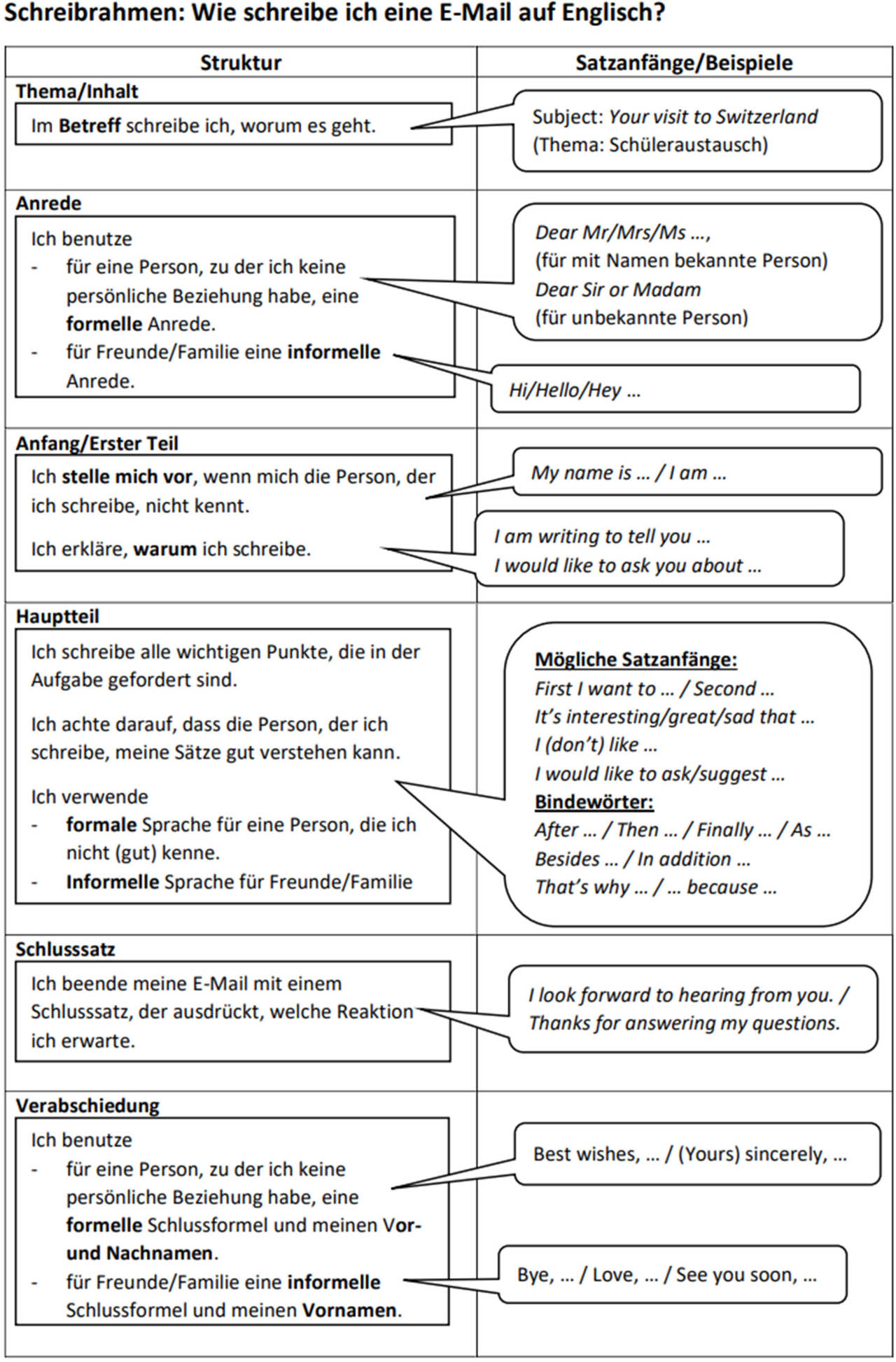
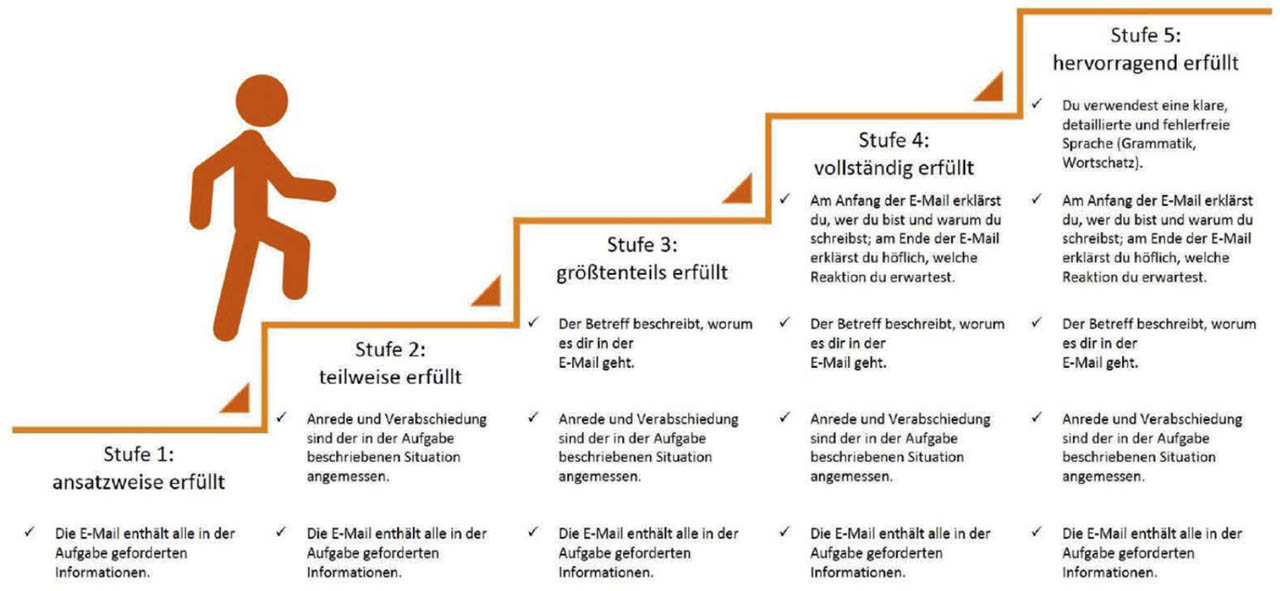
| Category | Description | Scale |
|---|---|---|
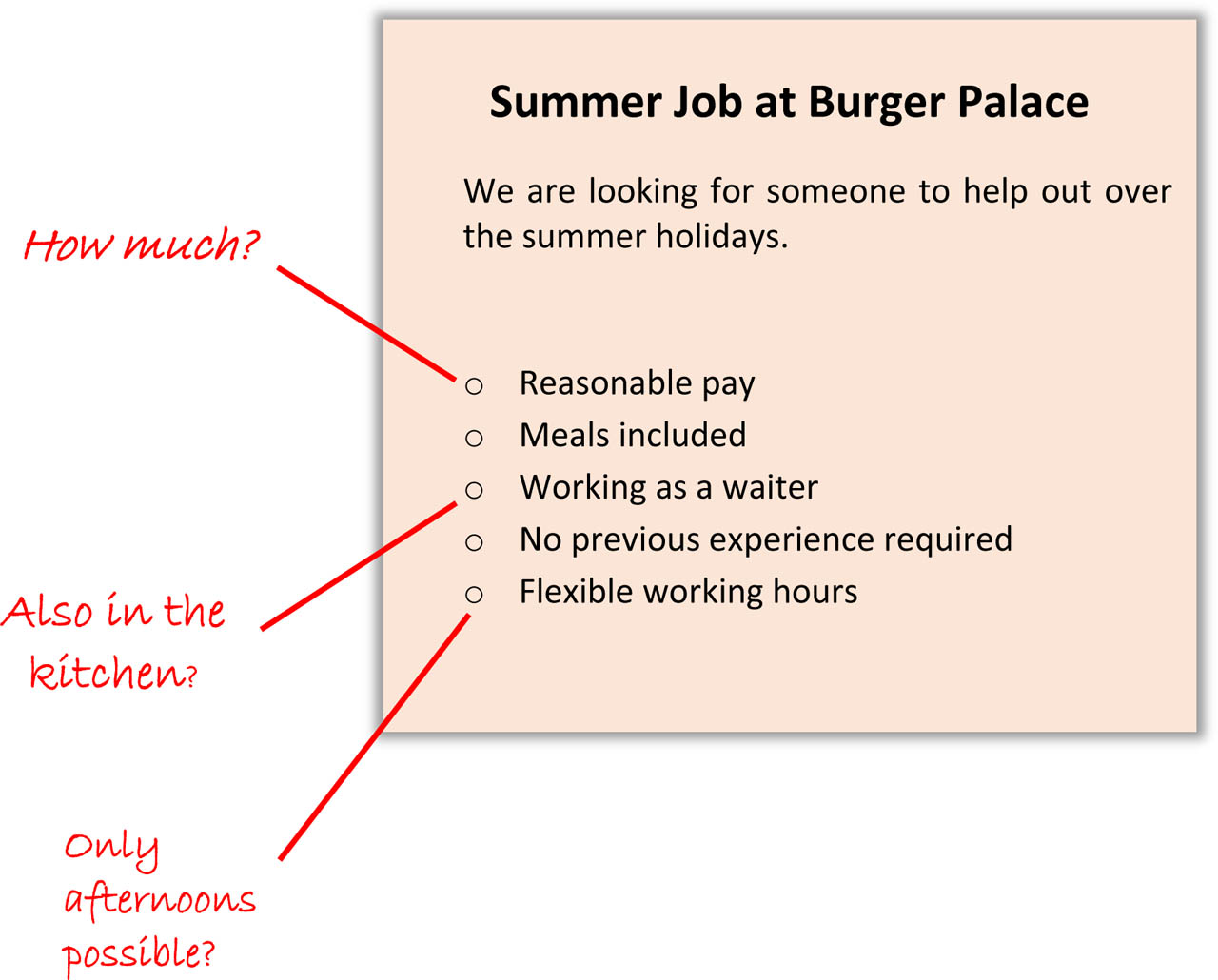
| Subject line (W = 0.88)1 | The subject line is appropriate (e.g. Summer job at Burger Palace) |
|
| Salutation (W = 0.92) | A salutation is provided. It is appropriate and respectful (e.g. Dear / Good morning / Good afternoon + [name]) |
|
| Information about the writer (W = 0.96) | A freely formulated piece of text in which the writer says who he/she is (e.g. My name is Kim Weber) |
|
| Matter of concern (W = 0.87) | A freely formulated piece of text in which the writer explains why he/she is writing the email and what the concern is (e.g. I have a question about ...) |
|
| Number of task questions addressed (W = 0.87) | How many of the three pieces of information required by the writing tasks were explicitly mentioned in the text (i.e. task completion) |
|
| Concluding sentence (W = 0.87) | An appropriate concluding sentence expressing that a response is expected (e.g. I am looking forward to hearing from you; it would be great if you could answer my questions) |
|
| Closing (W = 0.97) | A closing is provided which is appropriate and respectful (e.g. (yours) sincerely, best (wishes, regards)) |
|
Tab. 2:
Aspects of emails which were marked “appropriate” in the first writing task
| All three task questions addressed | 83.9% |
| Subject line | 72.0% |
| Salutation | 47.2% |
| Matter of concern | 43.8% |
| Concluding sentence | 41.3% |
| Information about the writer | 26.1% |
| Closing | 23.6% |
Tab. 3:
Linguistic uptake of genre-specific elements in three subsequent writing tasks
| t3–t1 | n | Improved | Remained | Deteriorated |
|---|---|---|---|---|
| Subject line | 109 | 74.3% | 22.0% | 3.7% |
| Salutation | 194 | 73.2% | 24.2% | 2.6% |
| Information about the writer | 261 | 43.2% | 52.5% | 4.2% |
| Matter of concern | 206 | 44.6% | 43.2% | 12.1% |
| Number of task questions addressed | 60 | 83.3% | 15.0% | 1.7% |
| Concluding | 170 | 74.1% | 21.2% | 4.7% |
| Closing | 223 | 63.7% | 32.7% | 3.6% |
Tab. 4:
Learner uptake of linguistic elements for the aspect “salutation”
| N = 322 | T1 | T2 | T3 |
|---|---|---|---|
| Dear used appropriately (e.g. Dear Ms. Black) | 132 | 207 | 222 |
| Dear used partly appropriately (e.g., Dear Jane – informal) | 28 | 42 | 48 |
| Dear used inappropriately (e.g. *Dear Mr., *Dear Black) | 7 | 3 | 8 |
| Hello, Hallo, Halo, Hi, Hey | 117 | 46 | 26 |
| Good day/ morning/ afternoon/ evening used appropriately | 20 | 3 | 6 |
Tab. 5:
Learner uptake of the linguistic elements for the aspect closing
| N = 322 | T1 | T2 | T3 | |
|---|---|---|---|---|
| Fully appropriate | Best wishes | 8 | 85 | 132 |
| Greetings | 31 | 22 | 16 | |
| Best / kind regards | 28 | 21 | 18 | |
| (Yours) sincerely | 12 | 26 | 21 | |
| Partly appropriate | See you soon / Bye / Love / From | 37 | 65 | 44 |
| Not appropriate | Name only | 105 | 56 | 45 |
| Neither closing nor name | 35 | 11 | 2 |
Tab. 6:
Linguistic uptake of the element introductory section
| N = 322 | T1 | T2 | T3 |
|---|---|---|---|
| My name is | 166 | 220 | 208 |
| I am / I'm / Im (e.g. I am a learner from …) | 107 | 95 | 80 |
| Living / live | 11 | 19 | 7 |
| I have * questions (about) | 167 | 160 | 143 |
| I would like to (ask you about) | 92 | 113 | 127 |
| I want to (ask, study, work etc.) | 75 | 73 | 74 |
| I am / we are interested | 62 | 55 | 49 |
| I am writing / I write (to tell you) | 16 | 30 | 44 |
Tab. 7:
Linguistic uptake of the element concluding sentence
| N = 322 | T1 | T2 | T3 |
|---|---|---|---|
| Thank you / Thanks for | 75 | 116 | 123 |
| I hope | 64 | 103 | 87 |
| Look / looking forward to | 19 | 64 | 74 |
| I would / I'd / It would (e.g. I would love to hear from you) | 56 | 49 | 36 |
| Have a nice / great (day, weekend) | 24 | 19 | 25 |
| I wish you | 14 | 13 | 12 |