1. Introduction
Email writing is an important learning goal in the curricula of English as a second or foreign language (ESFL) in European countries (EDK, 2014; KMK, 2023). While communication on mobile phones and messaging apps has gained prominence in recent years (EFL, 2024), emails are still a key genre of communication in many contexts of education, business and leisure (Keller et al., 2023; Simpson et al., 2024). They are part of a group of functional genres (together with blogs, reports, procedures, etc.) which prepare learners for successful integration in the labour market, allow them to engage in international communication, and support their integration and participation in modern democratic societies characterized by migration, multiculturalism and multilingualism (Keller et al., 2023).
Research has focused on the linguistic challenges which this genre holds for ESFL learners, for example an awareness of the register or level of formality for different types of emails, or different forms of linguistic politeness to manage interpersonal relationships (Al-Ali & Sahawneh, 2008). Research also focused on pedagogical approaches to overcome such challenges, for example the analysis of model texts (Yasuda, 2011), genre-specific formative feedback (Fleckenstein et al., 2024), or computer-generated feedback based on automatic writing evaluation (AWE; Horbach et al., 2023).
While several studies have examined the development of learners' writing performance with rather broad and general measures, only few have attempted a detailed linguistic analysis of the language elements (e.g., conventions of salutations and closings) which learners take up when working on the genre in the classroom or in an on-line learning environment. Such an analysis would be useful, however, for teachers, material developers and curricula designers, and it is in this area that this paper hopes to contribute to existing research. This paper contains a detailed analysis of genre-specific linguistic features that learners integrated into their (semi-)formal request emails over the course of an on-line writing unit that lasted for one double-lesson (90 minutes). In this setting, learners subsequently worked on three email writing tasks while scaffolding was provided in the form of an ‘email framework’ (collection of relevant language material) and rubric-based feedback (provided by trained raters).
In the Background section, we provide a detailed description of emails as key genre of ESFL writing, focusing on both on linguistic challenges of the genre, and on educational approaches which help learners master/overcome these challenges. In the Methods section, we outline how we performed a detailed linguistic analysis of emails from N = 322 learners at lower-secondary level in Switzerland. The Results section presents a detailed analysis of linguistic aspects specific to email writing, focusing both on formulaic and on freer types of language and analyzing the types and frequency of formulations which learners picked up and used in their texts: subject line, salutation, information about the writer, email content, expected response and closing – was well as linguistic structures used to express these text functions. The paper examined whether learners were able to use such formulation in a communicatively adequate way, e.g., “Dear Mr Smith” vs. “Hi John”; “I look forward to hearing from you soon” vs “bye bye”, and so on. The practical implications of this research, as well as its limitations, are described in the Discussion section. We discuss our results regarding practical implications for online learning environments in ESFL as well as a range of other subjects in which learners are tasked with structured, genre-based writing.
2. Background
2.1. Emails as a key genre in ESFL writing
This study focuses on (semi-)formal request emails, in which learners are required to address an unfamiliar addressee, negotiate an imposition (e.g., asking for information or a favour) and achieve a specific social action through written discourse (Yasuda, 2011). Compared to school genres such as literary interpretation or opinion essays, the audience is more immediately present in email writing: writers must display awareness of the addressee's status and expectations, choose an appropriate level of formality, and manage the face-threatening potential of the request (Brown & Levinson, 1987). Semi-formal request emails therefore provide a particularly suitable context for investigating how ESFL learners develop genre awareness, pragmatic competence and control of register.
Research on email communication has shown that many EFL learners struggle with these demands. Studies of student–teacher email exchanges document frequent problems with pragmatic politeness and email etiquette, including missing or inappropriate openings and closings, over-direct requests and status-incongruent language (Biesenbach-Lucas, 2007; Economidou-Kogetsidis, 2011; Barón & Ortega, 2018). Even advanced L2 users often differ from L1 speakers in how they formulate requests, apologies or refusals, and may underestimate the imposition involved, which can lead to miscommunication or negative evaluations (Bardovi-Harlig & Dörnyei, 1998; Bàron Pàres, 2015; Zhu, 2012). Recent work further shows that targeted instruction and practice in email pragmatics can substantially improve learners' awareness and production of appropriate requests (López-Serrano, et al., 2025; Sujinpram & Wannaruk, 2024).
From a curricular perspective, email writing is thus more than a peripheral digital skill. Curricula in German-speaking countries explicitly frame functional genres such as emails, reports or procedures as key means for participating in education, work and democratic societies (EDK, 2014; KMK, 2023). In secondary school, (semi-)formal emails offer a relatively constrained genre in which learners can practise core aspects of pragmatic and textual competence: signaling who they are and why they are writing, formulating the request, and indicating what kind of response they expect. Some elements can be learned as relatively fixed formulae (e.g., salutations and closings), while others require flexible language use to build an interpersonal relationship with the addressee.
Despite the growing body of research on email pragmatics in higher education and workplace settings, there is still limited fine-grained evidence on how younger ESFL learners at lower-secondary level take up genre-specific linguistic resources during instruction, especially in online environments. The present study addresses this gap by analysing which email-specific elements lower-secondary learners already control and which linguistic resources they incorporate into their texts while working through a short, scaffolded online unit on (semi) formal request emails.
2.2. Genre-based writing teaching
Writing pedagogy has emphasized the importance of genres and genre-based teaching as an approach to ESFL writing that is needs-based and socially integrated (Hyland, 2019). Genre-based approaches conceptualise writing as participation in recurrent social activities, where writers draw on conventional patterns of organisation and language to meet readers' expectations. In ESFL contexts, genre pedagogy seeks to make these patterns explicit so that learners can see how choices at the level of moves, sentence structure and lexis serve communicative purposes (Hyland, 2019; Zhai & Razali, 2023).
Empirical studies show that genre-based instruction improves learners' control of both global structure and local language features. Working with model texts and move–step analyses (i.e., describing how a text is organised to achieve its communicative purpose), help learners recognise how texts are structured to achieve their intended effect, and how this effects depends on a repertoire of linguistic elements and choices (Riley & Reedy, 2000; Yasuda, 2011). In email writing, genre-based sequences in which learners analyse request emails, identify key moves and jointly construct new texts have been found to enhance students' ability to produce appropriate, well-organised messages (Al-Ali & Sahawneh, 2008; Sujinpram & Wannaruk, 2024; Yasuda, 2011). Similar genre-focused interventions have been shown to benefit writing in other subjects, for example disciplinary essays in higher education (Carstens & Fletcher, 2009) and procedural texts in science education (Schmidt et al., 2024).
Genre-based writing pedagogy therefore emphasises explicit teaching of genre realisation patterns and of the linguistic resources that realise key communicative functions. Learners are encouraged to explore how specific elements—such as greetings, self-introductions or request formulations—help to manage relationships with readers and achieve the writer's goals (Bardovi-Harlig & Dörnyei, 1998; Hyland, 2019; Quasthoff & Kern, 2001). For inexperienced writers, such explicit attention to the relationship between purpose, audience and linguistic choice provides concrete opportunities to understand how genres address readers' needs and which linguistic means are appropriate for doing so.
Informed by Vygotsky's (1978) sociocultural theory, genre-based writing instruction frequently uses scaffolding devices such as model texts, sentence starters and genre-specific frames to help learners progress within their Zone of Proximal Development (ZPD)—the range between what a learner can achieve with guidance and perform independently and what they Learners initially rely on such scaffolds but gradually assume more control as they internalise genre-specific lexico-grammatical patterns (Rose & Martin, 2012). For example, Yasuda (2011) showed that Japanese ESFL learners who identified text functions and matching language forms in model texts improved their use of cohesive devices and developed a clearer awareness of audience and purpose.
However, most existing studies report effects on overall text quality or holistic ratings rather than tracing which concrete linguistic resources learners actually adopt. There is also comparatively little evidence from lower-secondary learners and from short, technology-supported units that approximate authentic email tasks. The present study responds to this gap by analysing learners' uptake of genre-specific email elements when these learners work with a genre framework and rubric-based feedback in an online environment.
2.3. Feedback in genre-based writing approaches
Feedback is generally understood as information provided to learners during or after a learning activity to help them close the gap between their current performance and the desired learning goal (Narciss, 2018; Sadler, 1989). In formative assessment, such feedback combines evaluative information on current performance with guidance on how to improve, typically by clarifying goals (“Where am I going?(”), indicating progress ((“How am I doing?(”) and pointing to concrete next steps ((“Where to next?(”; Hattie & Timperley, 2007). Meta-analyses suggest that formative feedback on writing can yield moderate to large effects, especially when it is specific, process-oriented and integrated into instruction (Graham, Hebert, & Harris, 2015; Graham et al., 2024).
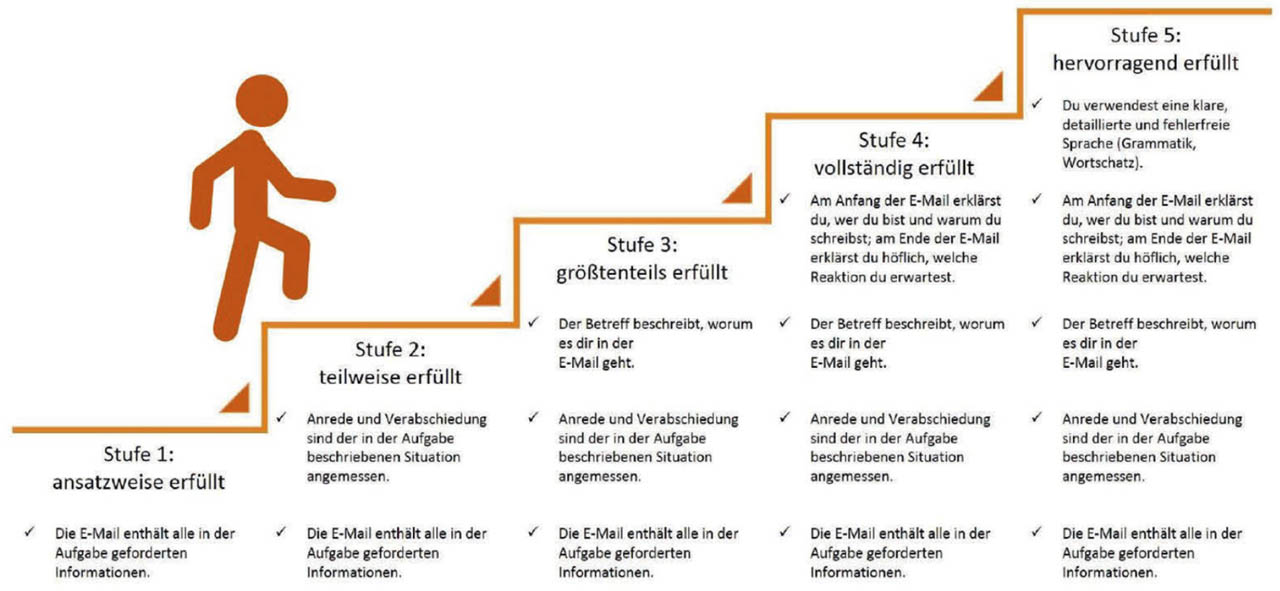
In the present project, a genre-specific feedback rubric for semi-formal emails was developed to operationalise these principles for lower-secondary ESFL learners. The rubric breaks down successful emails into five communicative steps (task completion, salutation and closing, subject line, framing of the request, and clarity of language) and can be used both for self-assessment and for external feedback (Keller et al., 2023). In an earlier study using this rubric in the same online environment, learners who received detailed information about their current level together with suggestions for improvement engaged more intensively with the feedback and showed greater gains in email-writing quality over three tasks. Also, time spent engaging with feedback significantly predicted improvement (Fleckenstein et al., 2024; Graham et al., 2015).
A second line of work within the project examined whether such rubric-based feedback can be automated through automated writing evaluation (AWE). Using the rubric criteria as training targets, we developed separate classifiers for each step and achieved moderate to substantial human–machine agreement (κ = .35–.87; Horbach et al. 2023). In an intervention study, students who received step-wise automated feedback on their emails outperformed those who only received a description of the scoring criteria, indicating that even imperfect automated feedback can support writing development (Fleckenstein et al., 2024).
Taken together, these studies indicate that genre-specific, rubric-based feedback—whether delivered by human raters or automated scoring engines—can support learners in mastering the semi-formal email genre. However, previous analyses have focused on holistic or analytic ratings of text quality. We still know relatively little about which concrete linguistic resources learners actually adopt when working with genre models, rubrics and frameworks in such environments. The present study therefore complements earlier work by examining learner uptake at the level of genre-specific linguistic elements, thereby providing a more fine-grained picture of how genre-specific language input and rubric-based feedback function in online ESFL writing environment.
Against this backdrop, we formulated the following research questions for this study:
1) Which genre-specific linguistic elements of (semi-)formal emails are visible in learners' texts at the outset, before working in the online learning environment?
This research question focuses on learners' previous knowledge in writing (semi-)formal request emails, without the support and intervention provided in the study.
2) Which genre-specific linguistic elements do learners take up in subsequent texts after receiving genre-specific language input and rubric-based feedback?
This study is thus concerned with the question of linguistic uptake: Which aspects of English as a foreign language do learners pick up more easily, and which develop more slowly in the context of genre-based writing supported by feedback in an online learning environment.
3. Method
3.1. Participants
A total of N = 373 eighth- and ninth-grade students from ten lower-secondary schools in north-western Switzerland took part in the study (ISCED levels 243 and 244; UNESCO, 2011). Since we wanted to track developmental patterns, we had to exclude students who had not completed all three tasks, whose texts were incomplete (e.g. interrupted mid-sentence) or had not solved the task as intended (e.g. most of the text written in another language). For this study, this resulted in a sample of N = 322 students who had completed all three writing assignments. 57.1 % of the students self-identified as female, 38.8 % as male, 1.9 % as non-binary and 2.2 % chose not answer. The mean age of participants was M = 14.2 years (SD = 0.89). 81.4 % of the learners had started learning English from grade three. Data collection was carried out between September and November 2020 by the research team using an online, web-based learning environment.
3.2. Materials and on-line writing environment
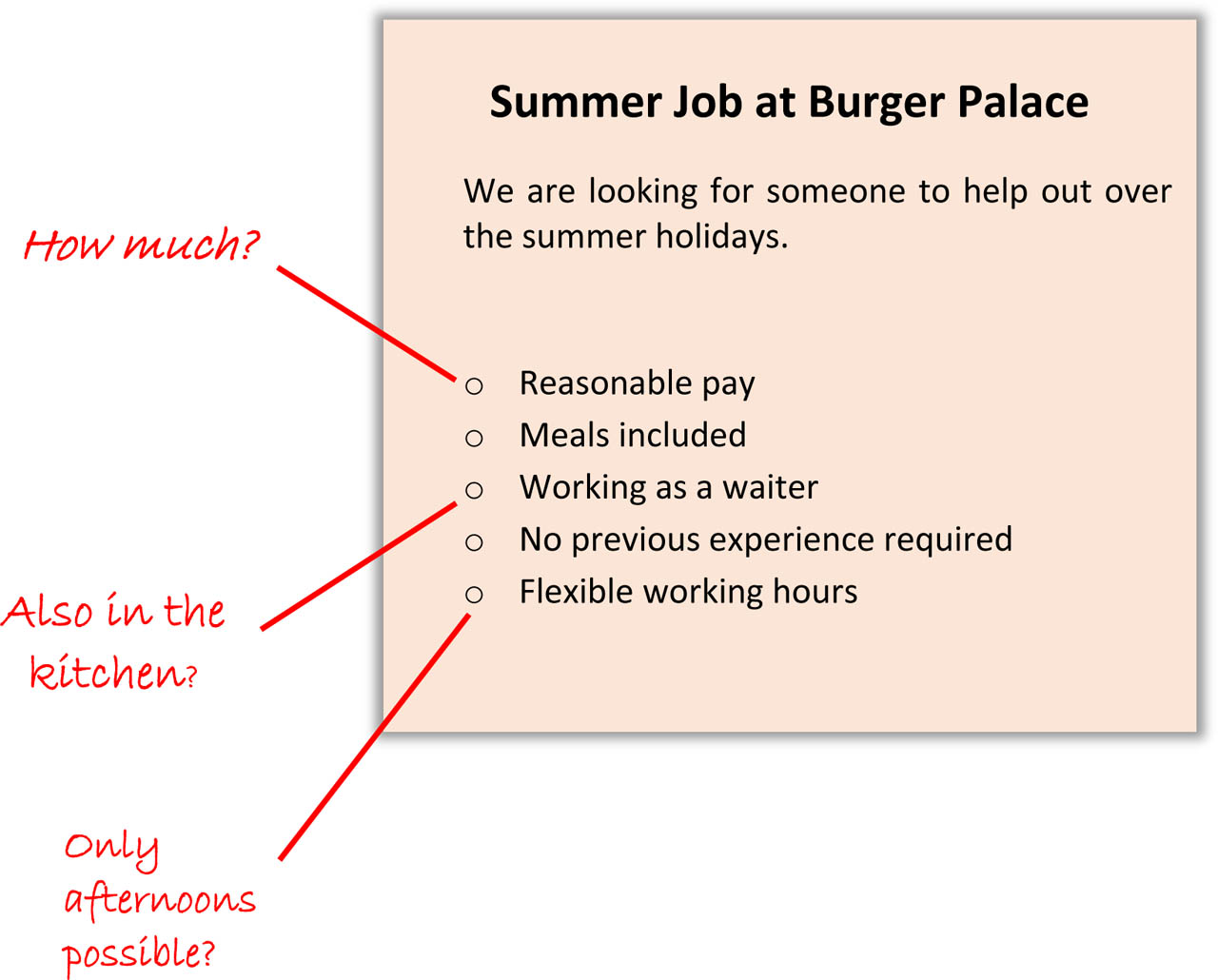
Within an on-line writing environment, students engaged in three consecutive email-writing tasks which were based on realistic communicative scenarios: (a) requesting information about a campground vacation, (b) inquiring about enrolling in an English language course, and (c) seeking information about a summer job at a restaurant (see Appendix A for model task). The implementation lasted 90 minutes and tasks were presented to learners in randomized order. Time for working on each task was standardized to 20 minutes per task. To help the students cope with the communicative challenges of the genre, they were provided with two types of support: a genre-specific rubric and supplementary instructional material. To guide them in their writing process, learners received a genre-specific rubric which had been designed especially for this project (Keller et al., 2023; see Appendix C). The rubric was introduced after completion of the first task and accompanied by the following prompt: “Look at the rubric and learn about key elements of a good email. Reflect what stage you have achieved in your text and how you can use the information in the rubric to improve your text.” The first, communicatively most important step was that the email should contain all the information required in the task. Step 2 focused on the salutation and closing, which should be adequate to the situation described in the task. Step 3 focused on the subject line, which should successfully communicate the intention of the email. Step 4 referred to the contextualization of the email at the beginning and at the end: the authors should initially introduce themselves and state the purpose of the email. At the end, they should describe what kind of response they expect from the addressee. Step 5, finally, focused on the use of clear, detailed and adequate language (grammar and vocabulary) in the email, which should also be free from mistakes that inhibit understanding.
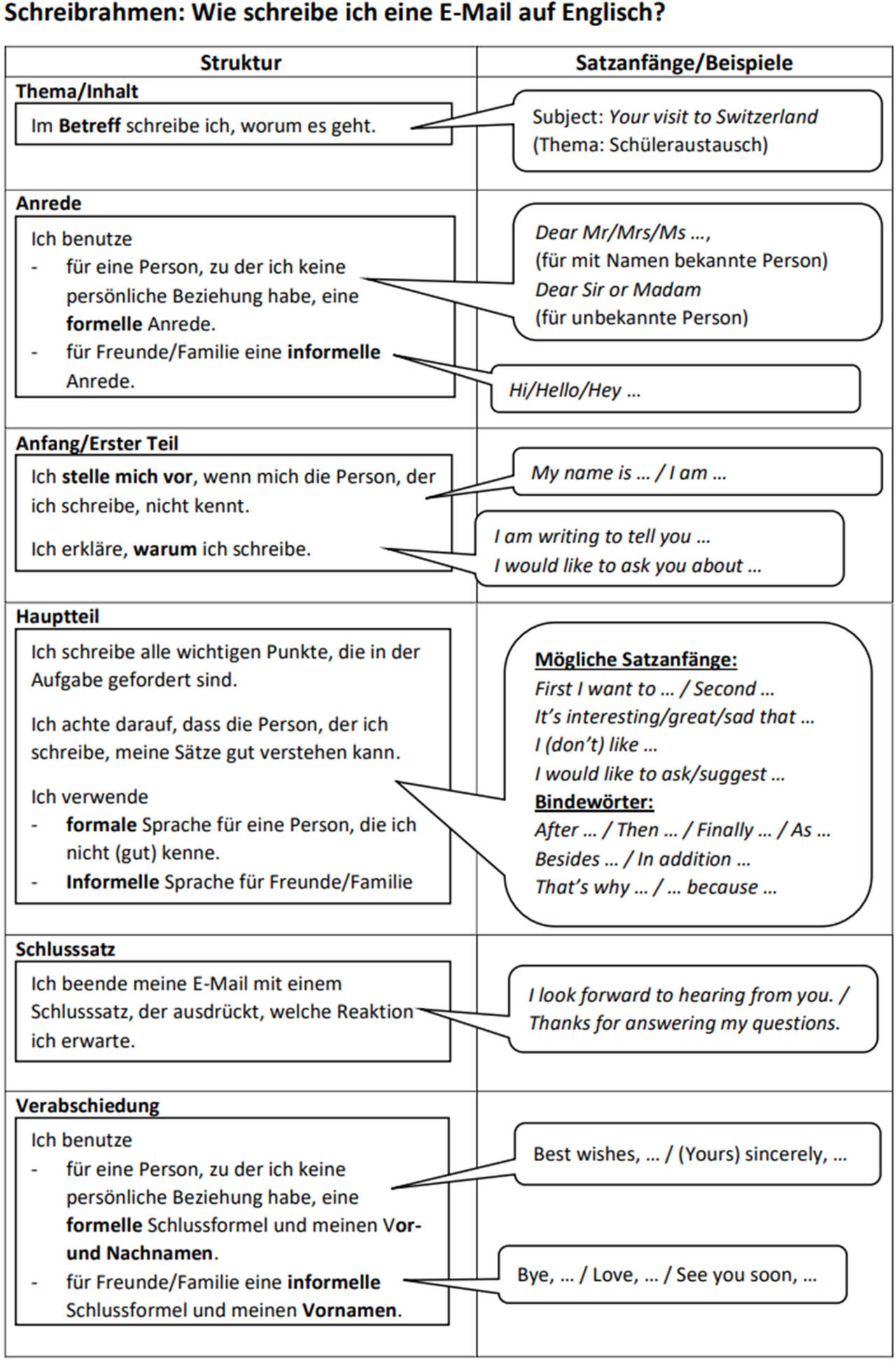
In addition to this rubric, all participants were provided with supplementary instructional material in the form of a genre-specific email framework. This framework included key linguistic and structural features of email requests, offering learners the foundational tools needed to formulate effective texts and potentially enhance the quality of their subsequent writing (see Appendix B). For all generic elements and genre moves required in request emails, the email framework provided examples and suggestions, for example “Dear” as a greeting or “sincerely” as a closing of an email. Given that the learners had little experience with this genre in English, it could not be assumed that they would independently produce the necessary linguistic structures and integrate them in their writing effectively. Learners were shown this email framework between working on the different tasks but could not access it while working on their texts. Thus, uptake of linguistic elements meant retrieving them from memory and integrating them into the text under construction.
In the original implementation of this study, different groups of learners received different types of rubric-based feedback, which was provided live by trained human raters and shown to learners between the writing tasks. One group was given an indication of the rubric level they had reached, and another group additionally received prompts specifying concrete steps for improving their text. As these feedback variants did not lead to significantly different developments in learners' writing skills (Fleckenstein et al., 2024), we collapsed the groups for the present linguistic analysis and included texts from all learners. Importantly, all participants worked with the email framework and received some form of rubric-based feedback; the design therefore did not include a “business-as-usual” control group without these supports. Consequently, the present study can describe developmental patterns and learner uptake within the intervention, but it cannot provide strong causal claims about the effectiveness of the framework and rubric relative to regular classroom instruction.
3.3. Linguistic analysis of learner texts
To analyze learner texts, we focused on the generic elements of semi-formal request emails, aligning our categories with those listed in the rubric provided to learners. These categories are shown in Table 1:
Tab. 1:
Genre-specific elements of (semi-)formal emails included in the analysis (with inter-rater reliabilities and scale descriptors)
| Category | Description | Scale |
|---|---|---|
| Subject line (W = 0.88)1 | The subject line is appropriate (e.g. Summer job at Burger Palace) |
|
| Salutation (W = 0.92) | A salutation is provided. It is appropriate and respectful (e.g. Dear / Good morning / Good afternoon + [name]) |
|
| Information about the writer (W = 0.96) | A freely formulated piece of text in which the writer says who he/she is (e.g. My name is Kim Weber) |
|
| Matter of concern (W = 0.87) | A freely formulated piece of text in which the writer explains why he/she is writing the email and what the concern is (e.g. I have a question about ...) |
|
| Number of task questions addressed (W = 0.87) | How many of the three pieces of information required by the writing tasks were explicitly mentioned in the text (i.e. task completion) |
|
| Concluding sentence (W = 0.87) | An appropriate concluding sentence expressing that a response is expected (e.g. I am looking forward to hearing from you; it would be great if you could answer my questions) |
|
| Closing (W = 0.97) | A closing is provided which is appropriate and respectful (e.g. (yours) sincerely, best (wishes, regards)) |
|
To answer the research questions, we analyzed the texts in two different ways. First, we coded the texts in MAXQDA (VERBI Software, 2022) according to the seven categories (which would later allow us to conduct a lexical analysis within the category-specific text segments). We assigned each element a rating that expressed its quality (see Scale in Table 1). This resulted in seven ratings per text. The rating was conducted by four trained raters who were experts in English language teaching. We calculated the inter-rater reliability (Kendall's W for ordinal data and more than two raters) based on 40 texts which were rated by all four raters. For this purpose, the 40 randomly selected texts were integrated into the rating package of each rater (ten in each quartile), without them knowing which texts were used to calculate inter-rater reliability. The interrater reliability was high, with W = 0.87 to 0.97 for the different categories (see Table 1).
Secondly, we conducted a lexical analysis with the automated search function in MAXQDA (VERBI Software, 2022). Starting from the email framework (see Appendix B), we searched for keywords and linguistic elements which were associated with each category. In the category Salutation, for example, we searched for the expressions “dear”, “hello”, “hi”, “hey”, “good day/morning/afternoon/evening” and possible variations or misspelt variants (e.g. “hallo” or “der”). We manually checked and corrected the results before they were labelled with a code. We also screened all text segments to find any additional expressions or misspellings that had not been considered and ran an additional search with these terms.
4. Results
4.1. Quality of emails at the outset
To answer research question 1, we analyzed learner texts written in response to the first writing task, before participants had been shown the email framework and the feedback rubric. This shows the genre-specific elements of request emails that were already part of learners' linguistic repertoire, as well as ones which needed development. Results of this analysis are shown in Table 2.
Tab. 2:
Aspects of emails which were marked “appropriate” in the first writing task
| All three task questions addressed | 83.9% |
| Subject line | 72.0% |
| Salutation | 47.2% |
| Matter of concern | 43.8% |
| Concluding sentence | 41.3% |
| Information about the writer | 26.1% |
| Closing | 23.6% |
As appears in Table 2, most learners were able to refer to all communicative aspects of the email (i.e., the three task questions) as they were specified in the writing tasks (see Appendix A for an example). This is plausible as these questions could be addressed by re-formulating the input in the task itself, thus producing a minimal version of what can be considered a communicatively successful text. Further, most learners were able to formulate a subject line which succinctly expressed the purpose or general issue addressed in the email. Aspects in need of development included formulaic elements such as salutation and closing, as well as ‘freer’ elements such as the appropriate framing of the request.
About half of texts contained an appropriate salutation (e.g. Dear Ms Black), yet only a quarter had an appropriate closing (e.g. yours sincerely). Without the input of the writing framework, which was given only in subsequent tasks, learners were thus unable to provide a contextually appropriate closing. It appears that such formulaic elements were not fully part of learners' linguistic repertoire at the outset. Also, only about a quarter of the texts started out with appropriate information about the writer (26.1%), and about half stated what the matter of concern was (43.8 %).
In sum, learners were able to engage with this writing task in a meaningful way and partially mastered characteristic elements of the genre prior to the intervention. The linguistic analysis of the first text also shows that learners needed systematic support to learn how to establish an interpersonal relationship with the addressee, both by using expected formulae and by framing the communicative situation. The subsequent analysis therefore focuses on the degree to which learners were able to pick up such elements from working with the email framework and the feedback rubric in subsequent writing tasks.
4.2. Learner uptake of email-related language: development of writing competences
Research question 2 centered on the feedback uptake of genre-specific linguistic elements over three writing tasks. In Table 3 we have summarized how ratings in the key categories of analysis changed from the first to the third writing task, focusing only on instances where a feature was not yet “fully appropriate” in the first task, i.e. where there was room for improvement as learners worked on another similar task. If learners made use of a genre-specific element in a subsequent writing task, this was counted as improved. In some cases, learners took up an element but then stopped using it again, which was counted as deteriorated.
Tab. 3:
Linguistic uptake of genre-specific elements in three subsequent writing tasks
| t3–t1 | n | Improved | Remained | Deteriorated |
|---|---|---|---|---|
| Subject line | 109 | 74.3% | 22.0% | 3.7% |
| Salutation | 194 | 73.2% | 24.2% | 2.6% |
| Information about the writer | 261 | 43.2% | 52.5% | 4.2% |
| Matter of concern | 206 | 44.6% | 43.2% | 12.1% |
| Number of task questions addressed | 60 | 83.3% | 15.0% | 1.7% |
| Concluding | 170 | 74.1% | 21.2% | 4.7% |
| Closing | 223 | 63.7% | 32.7% | 3.6% |
As Table 3 shows, improvement took place in all categories of analysis over the course of the three writing tasks, but uptake varied considerably. The largest increase in uptake occurred in the category number of task questions: over 80% of learners who had not yet done so in the first text included all elements required in the writing tasks in their texts. This was the first step mentioned in the feedback rubric, which is a strong indication of the effectiveness of this rubric in the writing process. As Table 2 shows, most learners had already mastered this aspect in their first texts, suggesting that this is also an aspect which can be easily improved in a subsequent task. Effects were also strong for subject line, salutation, concluding sentence and closing (see Table 3), which depend on choosing appropriate linguistic formulae according to register and formality and summarizing the purpose of the email. It appears that learners were able to select appropriate forms from the email framework, presumably because they were prompted to do so in the feedback rubric.
Uptake was slightly more limited for information about the writer and matter of concern, which suggests that genre-specific elements requiring a more flexible use of the target language can also be improved by working with rubric and email framework. However, our results imply that improvement in this area happens at a slower pace. Still, our descriptive analysis suggests that take-up of linguistic forms applies not only to formulaic aspects of language use but also to interpersonal pragmatics such as framing the request in a certain context and explaining what kind of answer is desired.
Table 3 also shows that linguistic uptake is not equivalent to steady progress (or even acquisition of writing competence). In the process of working on the different prompts, learners sometimes used some elements in an early task but then dropped them again in the final one. While the percentages are relatively low, this result shows that acquisition of writing competences is a zig-zag process characterized by improvement as well as backsliding. This reflects the instability of developing language systems and the ongoing restructuring of linguistic knowledge (Ellis, 1997).
As a further level of analysis, we performed a lexical analysis relating to genre-specific language elements that appear in learner texts. Table 4 shows learner uptake for the aspect salutation, where the input in the framework was as follows: “Dear Mr/Mrs/Ms (for a person you know), Dear Sir or Madam (for an unknown person), and Hi/Hello, Hey” (friends and family); see Appendix B). Learners thus had to pick a formulation which was appropriate in terms of formality and integrate it into their texts. Table 4 shows the use of such elements in each writing task of our study.
Tab. 4:
Learner uptake of linguistic elements for the aspect “salutation”
| N = 322 | T1 | T2 | T3 |
|---|---|---|---|
| Dear used appropriately (e.g. Dear Ms. Black) | 132 | 207 | 222 |
| Dear used partly appropriately (e.g., Dear Jane – informal) | 28 | 42 | 48 |
| Dear used inappropriately (e.g. *Dear Mr., *Dear Black) | 7 | 3 | 8 |
| Hello, Hallo, Halo, Hi, Hey | 117 | 46 | 26 |
| Good day/ morning/ afternoon/ evening used appropriately | 20 | 3 | 6 |
We see that overall, appropriate use of the correct salutation formula increased, while inappropriate or informal formulations (Hello, Hi) decreased considerably. Formulations that are acceptable but less common (such as Good day) also decreased. Even without help from a teacher and in the 90-minute time period of the implementation, learners were able to select the element with the right level of formality and integrate it into their texts.
Similar rates of improvement occurred for the aspect closing, where the input on the email framework was “Best wishes, … / Yours sincerely (for a person I do not know well), und Bye / Love / See you soon (friends and family)”. In this case appropriateness rests mainly on the level of formality. While formulations such as “kind regards” express appropriateness in this regard, overly informal expressions such as "bye” are inappropriate, as is closing the mail by name only.
As Table 5 shows, the closing formula Best wishes was practically unknown in this group of learners at the outset, yet it came to be used most frequently in later writing tasks. The more formal element Sincerely yours became slightly more common, but it is also more difficult to remember and to spell. As learners did not have access to the email framework during writing, they might have preferred the simpler formulation Best wishes. It also seems to have replaced Greetings and Best/kind regards, which are slightly more formal but were not mentioned in the email framework. Overly informal elements such as See you soon, Bye or Love slightly increased in number at first, but then decreased again. The number of learners who closed their email with their name only (or who neither used a closing nor their name) considerably decreased from the first to the third writing task. This suggests that a great number of learners were able to integrate an appropriate closing in their emails over the course of the three writing tasks.
Tab. 5:
Learner uptake of the linguistic elements for the aspect closing
| N = 322 | T1 | T2 | T3 | |
|---|---|---|---|---|
| Fully appropriate | Best wishes | 8 | 85 | 132 |
| Greetings | 31 | 22 | 16 | |
| Best / kind regards | 28 | 21 | 18 | |
| (Yours) sincerely | 12 | 26 | 21 | |
| Partly appropriate | See you soon / Bye / Love / From | 37 | 65 | 44 |
| Not appropriate | Name only | 105 | 56 | 45 |
| Neither closing nor name | 35 | 11 | 2 |
The next section focuses on two aspects which required more flexible use of language, namely the introductory section (consisting of information about the writer & matter of concern) and the concluding sentence. The email framework contained useful phrases and chunks for managing the genre moves, such as I am writing to tell you or I would like to ask you about (see Appendix C). Table 6 shows linguistic elements that learners frequently used in the introductory section of their emails:
Tab. 6:
Linguistic uptake of the element introductory section
| N = 322 | T1 | T2 | T3 |
|---|---|---|---|
| My name is | 166 | 220 | 208 |
| I am / I'm / Im (e.g. I am a learner from …) | 107 | 95 | 80 |
| Living / live | 11 | 19 | 7 |
| I have * questions (about) | 167 | 160 | 143 |
| I would like to (ask you about) | 92 | 113 | 127 |
| I want to (ask, study, work etc.) | 75 | 73 | 74 |
| I am / we are interested | 62 | 55 | 49 |
| I am writing / I write (to tell you) | 16 | 30 | 44 |
Tab. 7:
Linguistic uptake of the element concluding sentence
| N = 322 | T1 | T2 | T3 |
|---|---|---|---|
| Thank you / Thanks for | 75 | 116 | 123 |
| I hope | 64 | 103 | 87 |
| Look / looking forward to | 19 | 64 | 74 |
| I would / I'd / It would (e.g. I would love to hear from you) | 56 | 49 | 36 |
| Have a nice / great (day, weekend) | 24 | 19 | 25 |
| I wish you | 14 | 13 | 12 |
The analysis shows that the introductory formula my name is was already common at the outset and became even more widespread as learners worked on subsequent tasks. In terms of stating the matter of concern, widely adopted formulations were I have questions (about)… and I would like to…. While this form associated with linguistic politeness increased in number, the more generic formulation I have questions about slightly decreased. We could tentatively conclude that while the rubric prompted learners to think about introductory information to their email, they largely relied on their previous knowledge and the linguistic material in the email framework to put it into writing.
A similar picture emerges for the aspect of concluding sentence, which contained chunks such as I look forward to hearing from you or Thanks for answering my questions.
While the rubric established the simple fact that such a concluding statement is needed, the formulations most frequently taken up were the simple Thank you and different variations of I hope and I look forward to. We see here that the email framework and rubric were again helpful for learners to pick up appropriate means of producing a concluding sentence to their emails.
5. Discussion
This study provided a linguistic analysis of learner uptake in an on-line learning environment dealing with (semi-)formal request emails in lower secondary education. As has been established in previous publications (Fleckenstein et al., 2024; Keller et al., 2023), learners significantly improved their texts over the course of working on three subsequent writing tasks, where instruction was provided through a combination of (a) a genre-specific feedback rubric, and (b) an email framework containing suitable linguistic elements to be used in working on these tasks.
The linguistic analysis of learner uptake revealed that improvement happens both at the level of formulaic elements that can be taken over holistically, and at the level of freer forms of writing, which establish a context for the request and manage the interpersonal relationship between writer and addressee. When working on the first writing task (without prior instruction or feedback), learners tended to focus on the content of the request while often neglecting both an appropriate opening (salutation, introducing themselves and stating the nature of the request) and closing section (describing the nature of the response that was expected and closing the email with an appropriate formula such as Best regards). All these elements were mentioned in the feedback learners received, with suitable language material provided in the email framework. The fact that both opening and closing sections improved during the intervention suggests that the combination of feedback rubric and email framework can effectively support writing development in an on-line setting where the teacher is not immediately available for input or explanations.
While our analysis might indicate that formulaic aspects (e.g. subject line, salutation, concluding sentence and closing) are easier to improve, we also saw improvements in setting the context and managing an interpersonal relationship, both of which are essential elements of the genre. These results suggest that formative feedback and a writing guideline (in our case, the email framework) are suitable ways of supporting writing skills in an on-line learning environment if they are closely attuned to the genre in question. It also suggests that such elements should be explicitly taught, as they are not something which learners can intuit (Biesenbach-Lucas, 2007). Input materials should therefore closely direct learners' attention to those linguistic aspects that are essential for succeeding in a particular writing task. Formalized genres such as request emails are a good practice ground for on-line instruction, where relevant language structures can be presented in suitable materials, and learners can experiment with them in several iterations of writing.
Results from this study can be adapted in a range of subjects where learners are expected to produce structured, genre-specific texts. In science education, for example, students must learn to write laboratory reports or procedural descriptions of experiments that follow a conventional sequence of moves (e.g., aim–materials–method–results–conclusion); providing genre frameworks and step-wise feedback for such texts could mirror the role of the email framework in the present study (Schmidt, Fiene, & Siegmund, 2024). In social studies and history, learners often write inquiry letters, position statements or evidence-based explanations aimed at specific audiences, which likewise require explicit teaching of genre moves and language for stance and evaluation. At tertiary level, genre-focused feedback on essays and reports has been shown to support students across disciplines in meeting disciplinary expectations (Carstens & Fletcher, 2009). We therefore see the combination of genre-specific frameworks and formative feedback in an online environment as a transferable design principle for subject-matter education more broadly, not only for ESFL email writing.
While our analysis has shown the value of genre-based writing support in an on-line format, our study has several limitations. First, we should be careful about claiming effectiveness from a study which did not have a true control group, i.e. learners who did not work with the email framework or rubric (or simply participated in ‘regular’ writing instruction). As there was no true control group, we cannot be sure if the same progress could be achieved simply by writing emails, without our intervention. Further, it is unclear to what degree our results can be transferred to other genres. Emails are highly structured texts which include formulaic elements that can be taken over from a framework. This would be more difficult for genres which depend less on such elements, such as argumentative essays. However, as Keller et al. (2024) have shown, argumentative writing in an ESFL context also requires a specific set of generic elements, for example argumentative language (some people claim that…) or structuring devices (first, second, by contrast, furthermore…). It would be worth conducting further studies to understand to what degree writing in such genres benefits from this set-up.
Our study provides tentative evidence that genre-specific, rubric-based feedback may help learners in the process of acquiring mastery of that genre. This is especially relevant because, in recent years and months, capacities for genre-specific scaffolding in on-line environments have increased exponentially with the advent of generative AI tools, which can be used for automated feedback (e.g. ChatGPT). As previous studies have shown, such AI-tools can be adapted to a wide range of writing contexts and are beneficial both for writing development and learners' motivation for writing (Meyer et al., 2024). Further, it has been shown that these generative models are able to provide task- and genre-specific language support, much in the same way as we implemented with the email framework and the rubric-based feedback. Employing AI-based assistants for this function would free up teachers to assist learners with individual issues, or to focus more on aspects of communicative and creative language use for which AI-based tools are not ideal.
Appendices
Appendix A: Model task
Writing Task: Burger Palace
Du möchtest während der Schulferien gerne etwas dazuverdienen und suchst daher nach einem Ferienjob. Lies das Inserat, dass du im Internet gefunden hast und die Notizen, die du dir bereits in rot dazu gemacht hast. Schreibe eine offizielle Email («formal email») an die Leiterin, in der Du Dich kurz vorstellst und Deine Anliegen detailliert schilderst. Verwende dazu alle gemachten Notizen (unten). Benutze keine anderen Hilfsmittel.
[You would like to earn some extra money during the school vacations and are therefore looking for a vacation job. Read the ad you found on the Internet and the notes you already made in red. Write an official email ("formal email") to the leader, in which you introduce yourself briefly and describe your concerns in detail. Use all the notes you made (below). Do not use any other tools.]
Appendix B
Guidelines for writing an email provided to students in this study (“email framework”)
Appendix C
Email rubric for formative assessment (Keller et al., 2023)