
Soybean (Glycine max [L.] Merr.) is one of the most economically and nutritionally important crops worldwide, widely cultivated for its high protein and oil content (Karges et al., 2022; Majidian et al., 2024; Mishra et al., 2024; Wójcik-Gront et al., 2022). It plays a key role in global food production systems, as well as livestock feed and biofuel industries (Bennett et al., 2003; Mishra et al., 2024). However, soybean yields are frequently hindered by a variety of biotic stressors, including fungal pathogens (Li et al., 2023), bacterial infections (Pfeilmeier et al., 2016), and viral diseases (Jones, 2021; Lyons et al., 2008; Roberts, 2014). Among these, plant-parasitic nematodes (PPNs) are particularly damaging. Their ability to colonize roots unnoticed and inflict chronic physiological stress on host plants makes them a persistent and often underestimated threat to soybean health and productivity (Faske et al., 2023; Kantor et al., 2022; Kantor et al., 2024; Pulavarty et al., 2021).
Two of the most damaging nematodes associated with soybean are the southern root-knot nematode (RKN) (Meloidogyne incognita (Kofoid and White, 1919) Chitwood, 1949) and soybean cyst nematode (SCN) (Heterodera glycines Ichinohe, 1952) (Gorny et al., 2021; Tylka & Marett, 2021a; Tylka & Mullaney, 2021). These pathogens parasitize plant roots, impairing nutrient uptake and causing stunted growth, which ultimately leads to significant yield reductions. Meloidogyne incognita is a globally distributed, highly destructive PPN that inflicts major yield losses across a broad spectrum of agronomic and horticultural crops, including soybean, cotton (Gossypium hirsutum L.), tomato (Solanum lycopersicon L.), and cucumber (Cucumis sativus L.) (Eisenback, 2022; Karuri et al., 2017; Yigezu Wendimu, 2021). Its aggressive root galling, extensive host range, and adaptability to diverse soil conditions make it one of the most economically important nematodes worldwide (Gorny et al., 2021; Sasser, 1977).
Similarly, H. glycines is the most yield-limiting pathogen of soybean in North America and ranks among the most destructive PPNs globally, contributing to significant annual crop losses in the United States (Tylka and Marett, 2025). It is particularly insidious because it often reduces yields without causing obvious aboveground symptoms and has evolved virulence against many commercially resistant cultivars (Bradley et al., 2021; McCarville et al., 2017).
Both M. incognita and H. glycines form specialized feeding structures within plant roots that divert host resources, disrupt nodulation, and drastically impair overall plant performance – posing a persistent threat across soybean-growing regions worldwide (Tylka and Marett, 2021b; Wang et al., 2003). These nematodes are obligate parasites and cause substantial damage to crops (Chen et al., 2020; Eisenback, 2022).
Current management strategies, such as crop rotation and the use of resistant cultivars, offer only partial and often short-lived control. Once established, nematodes can persist for years because their eggs or cysts remain viable under adverse conditions and through nonhost crop rotations. Their high reproductive capacity, broad host range, and adaptability to diverse environments further reduce the long-term effectiveness of these strategies. The emergence of virulent populations, such as Heterodera glycines overcoming PI 88788-derived resistance, continues to complicate control efforts and contributes to significant yield losses across major production regions (Arjoune et al., 2022; Winsor, 2020).
Importantly, nematodes are microscopic animals with complex nervous and reproductive systems (Eisenback, 2022). These systems make them susceptible to chemical nematicides, such as organophosphates and carbamates, which act on neural transmission or fertility pathways (Eisenback, 2022; Opdensteinen et al., 2024). However, these biological targets are conserved across animals, including humans, raising significant safety concerns (Ahmad et al., 2024; Desaeger et al., 2020). As a result, the use of chemical nematicides has come under increased scrutiny due to their potential risks to human neurological health development and reproductive health, prompting regulatory restrictions and driving interest in safer, biologically based alternatives (Ahmad et al., 2024; Chen et al., 2020).
Biological control using plant growth-promoting rhizobacteria (PGPR) offers a promising and environmentally sustainable strategy for managing nematode infestations. Among these, Pseudomonas species are particularly notable for their nematicidal properties, which are mediated through multiple mechanisms including the production of hydrogen cyanide (HCN), lytic enzymes, siderophores, and the induction of systemic resistance (ISR) in host plants (Abd El-Rahman et al., 2019; Lee et al., 2015; Poveda et al., 2020; Proença et al., 2019; Ye et al., 2022).
In recent years, volatile organic compounds (VOCs) such as dimethyl disulfide (DMDS) and 1-undecene have gained attention as potent microbial metabolites capable of repelling or killing nematodes without direct contact. These compounds act as biofumigants, diffusing through air or soil pores to exert toxic, repellent, or signaling effects on nematodes (Bhat et al., 2023; Cheng et al., 2017; Deng, Wang & Li, 2022; Dupont et al., 2023; Ilieva et al., 2021; Wang et al., 2023). These compounds operate through distinct biochemical pathways: HCN inhibits cytochrome c oxidase, thereby disrupting mitochondrial respiration (Kang et al., 2018); DMDS compromises membrane integrity and interferes with oxidative metabolism (Ilieva et al., 2021; Tóth et al., 2019; Yan et al., 2019); and 1-undecene impairs nematode sensory perception, resulting in widespread mortality (Dupont et al., 2023; Prakash et al., 2021). Unlike synthetic nematicides, these VOCs are naturally produced by microbes, biodegradable, and generally pose lower risks to nontarget organisms and the environment (Bhat et al., 2023; Raio, 2024; Schulz & Dickschat, 2007).
Identifying multifunctional bacterial strains capable of both direct and systemic suppression of PPNs is a major goal for sustainable agriculture. Several studies have reported that endophytic bacteria isolated from legume root nodules exhibit strong biocontrol activity against PPNs and fungal pathogens, highlighting these endophytes as a promising and still underexplored reservoir of multifunctional strains for sustainable crop protection (Haarith et al., 2021; Marin-Bruzos et al., 2021; Mazzuchelli et al., 2020). In addition to direct antagonism, some endophytic and rhizosphere-associated Pseudomonas spp. can suppress PPNs indirectly by inducing systemic resistance in the host plant, thereby strengthening plant defense responses beyond the site of bacterial colonization. Such induced resistance may involve activation of defense-related signaling pathways and priming of host responses that reduce nematode infection and development (Ye et al., 2022; Kuhl-Nagel et al., 2022; Haney et al., 2018). Endophytic bacteria from legume nodules therefore represent a largely unexplored reservoir of biocontrol agents with potential for sustainable crop protection (Fadiji & Babalola, 2020; Flores-Duarte et al., 2022; Ibañez et al., 2014; Sharma & Mallubhotla, 2022; Tokgöz et al., 2020; Verma & Gange, 2014; Xia et al., 2022).
Among these nodule-associated endophytes, ‘Candidatus Pseudomonas auctus’ JDE115 (Ali et al., 2025) isolated from soybean nodules was previously shown to enhance plant growth and nodulation. These beneficial effects, together with the multifunctional traits commonly associated with endophytic Pseudomonas, provided a strong rationale for testing whether JDE115 could also suppress PPNs. We hypothesized that JDE115 exerts multimodal nematode suppression through HCN production, VOC-mediated toxicity, and the ISR in host plants. To test this hypothesis, we conducted a series of integrated in planta and in vitro experiments involving volatile profiling and functional bioassays targeting key metabolites such as 1-undecene and DMDS. The study specifically examined the effects of JDE115 on Heterodera glycines (SCN), and Meloidogyne incognita (RKN). Understanding the mechanisms by which JDE115 suppresses these economically important nematodes provides a foundation for developing sustainable, microbe-based management strategies that reduce dependence on chemical nematicides.
1. Materials and methods
1.1. Nematode cultures
The PPN species were used in this study: Heterodera glycines (SCN), Meloidogyne incognita (RKN), and free-living nematodes. All cultures were maintained in the Nematode Diagnostic and Assay Laboratory at Virginia Tech. Heterodera glycines was propagated on the susceptible soybean cultivar ‘Lee’, M. incognita on tomato (Solanum lycopersicum) roots, and free-living nematodes (extracted using semi-automatic elutriator) from drill field in Virginia Tech. Species identity was confirmed morphologically. Cysts were extracted from infested soil using a semi-automatic elutriator and collected on a 60 mesh sieve at the top of the funnel connected to the splitter bowl. Cysts were counted under a stereomicroscope. Collected cysts from each plant were transferred to a blender containing water and blended for 2 min to release eggs. The blended suspension was poured through a 60 mesh sieve placed above a 500 mesh sieve. Larger debris was retained on the 60 mesh sieve, while eggs passed through and were captured on the 500 mesh sieve. Eggs were rinsed thoroughly with distilled water, collected, and counted under a stereomicroscope for inoculation assays. For M. incognita, eggs were extracted from infected tomato roots. Roots were washed thoroughly, then immersed in 10% sodium hypochlorite (NaOCl), and shaken vigorously for 2 min to dissolve the gelatinous matrix surrounding the egg masses. The suspension was poured through a nested sieve set (25 over 60 over 400 over 500 mesh). Eggs retained on the 500 mesh sieve were collected and rinsed repeatedly with sterile distilled water to ensure removal of residual bleach before use in experiments. All nematode cultures were maintained in greenhouse conditions at 28°C with a 16 h light/8 h dark cycle. Freshly collected eggs or juveniles were used for all assays described below. Control assays included sterile water and Luria-Bertani (LB) lite medium without JDE115, depending on the experimental design. For the in vitro egg hatch and juvenile mortality assays, sterile water served as the negative control, and LB lite alone was tested separately to verify that the medium itself had no measurable effect (Supplementary Figure S4). For greenhouse and split-root experiments, sterile LB lite broth served as the corresponding control treatment.
1.2. Bacterial culture
‘Candidatus P. auctus’ JDE115 was originally isolated from surface-sterilized soybean root nodules collected from soybean plants grown at a research field site in Blacksburg, Virginia, USA (37.1998°N, 80.5644°W). The bacterium was maintained on LB lite agar (NaCl 10 g/L, yeast extract 5 g/L, and agar 15 g/L) plates (15 × 100 mm) at 28°C and subcultured every 2 weeks. For experimental use, a single colony was inoculated into LB lite broth and incubated at 28°C with shaking (150 rpm) until the culture reached an optical density (OD₆₀₀) of approximately 0.7, corresponding to 1.4 × 10⁸ CFU mL⁻¹. The cells were used fresh for in vitro assays and for in planta inoculations. All experiments employed the same batch of medium and growth conditions to ensure reproducibility. LB lite (broth and agar) medium was used for all bacterial culturing and bioassay controls throughout this study to ensure consistency and minimize background nutrient interference.
1.3. RKN egg hatching inhibition by Ca. P. auctus
To evaluate the inhibitory effect of ‘Ca. P. auctus’ JDE115 on nematode egg hatching, a 24-h bacterial culture grown in LB lite broth (OD₆₀₀ ≈ 0.7) was used as the treatment. Sterile distilled water served as the control group. Each treatment was applied to five replicates in 90 mm Petri dishes. The experimental setup is shown in Supplementary Figure S1.
A nylon mesh screen was placed at the center of each dish and overlaid with a single-fold facial tissue. This chamber retained nematode eggs above the mesh while allowing hatched second-stage juveniles (J2) into the liquid medium. The elevation created by the screen enabled sampling without disturbing the tissue layer. Each dish was filled with 20 mL of either JDE115 culture or distilled water and incubated at 25°C under standard laboratory light–dark conditions for 21 days.
At intervals on days 1, 2, 3, 6, 9, 12, 15, 18, and 21, 10 mL of liquid was withdrawn from the edge of the dish and examined microscopically (Olympus CK2, Olympus Optical Co. Ltd., Japan) to count hatched juveniles (Li et al., 2022; Xiang et al., 2018). The removed liquid was immediately replaced with 10 mL of fresh treatment: 1 mL of freshly cultured JDE115 mixed with 9 mL LB lite broth for the treatment group or distilled water for the control group (Supplementary Figure S1). The 10% (v/v) JDE115 replenishment solution was used as a standardized replacement treatment after each sampling interval to maintain consistent exposure to freshly produced bacterial cells and metabolites throughout the assay without completely replacing the incubation medium.
The entire experiment was repeated independently using new bacterial cultures and nematode egg preparations. Suppression percentage is calculated as follows:
Suppression (%) = ((Control − Treatment)/Control) × 100.
At each observation point, newly hatched juveniles were counted and removed, and cumulative hatch per replicate was calculated by summing juveniles recorded at all time points across the 21-day assay period. Data were analyzed as described in the Statistical analysis section. LB lite alone was tested separately and showed no significant effect on egg hatch relative to the water control (Supplementary Figure S3)
1.4. RKN mortality caused by Ca. P. auctus’ JDE115
To assess the nematicidal activity of ‘Ca. P. auctus’ JDE115, a six-day juvenile (J2) mortality assay was conducted following the protocols of Mendoza et al. (2008). Approximately 1,000 freshly hatched J2s (RKN) extracted using the Baermann funnel were used per replicate. Two treatments were evaluated across five biological replicates: (1) Treatment: 20 mL of JDE115 culture (OD₆₀₀ ≈ 0.7, grown in LB lite broth for 24 h), and (2) Control: 20 mL of sterile distilled water. Petri dishes were incubated at 25–28°C under static conditions. Nematode viability was assessed daily for 6 days. A liquid sample was withdrawn from each dish and examined with an inverted microscope. Nematodes were recorded as dead if they appeared straight, immobile, and unresponsive to gentle probing for 30 s and did not recover movement after transfer to fresh water for 24 h.
After each daily count, 10 mL of liquid was replenished to maintain experimental conditions. The treatment group received 1 mL of fresh JDE115 culture (OD600 ≈ 0.7) mixed with 9 mL LB lite broth, while the control group received 10 mL of sterile distilled water. The 10% (v/v) replenishment solution was used as a standardized replacement treatment after each sampling interval to maintain consistent exposure to bacterial cells and metabolites throughout the assay while avoiding complete replacement of the incubation medium. To confirm that nematode mortality was due to LB media components, an additional control assay was conducted.
Approximately 1,000 J2 were exposed to 20 mL of each solution in separate Petri dishes. Sterile distilled water served as the negative control (Supplementary Figure S1). Plates were incubated at 25–28°C and J2 mortality was assessed on Day 6 using the same criteria described earlier.
Mortality (%) is calculated using the formula:
Mortality (%) = (Number of dead J2/Total J2 observed) × 100.
The entire experiment was repeated twice independently with fresh batches of J2 and bacterial cultures to ensure reproducibility. LB lite alone was evaluated separately as a medium control and showed no measurable effect on juvenile survival compared with sterile water (Supplementary Figure S3). Data were analyzed as described in the Statistical analysis section.
1.5. Local effect of ‘Ca. P. auctus’ on soybean growth and Heterodera glycines reproduction
Soybean seeds (cv. Lee) were surface sterilized (dx.doi.org/10.17504/protocols.io.ewov12jd7gr2/v1) and soaked for 15 min in either culture of JDE115 (OD₆₀₀ ≈ 0.6) grown in LB lite broth media or sterile LB lite broth (control). Seeds were sown into 15 cm diameter clay pots containing a 3:1 mixture of field soil and sand (Kolar Scape). The field soil was collected from Kentland Farm, Virginia Tech, and classified as a Hayter loam (fine-loamy, mixed, active, mesic Typic Hapludult) according to the U.S. Soil Taxonomic System. The soil mixture was sterilized in a greenhouse steam box at 104°C for 3 h following the Virginia Tech APHIS-approved steam-sterilization guidelines. Plants were maintained in a greenhouse at 28 ± 2°C, 60 ± 10% relative humidity, and a 16 h light/8 h dark photoperiod.
At the V3 growth stage (third trifoliate stage, with three fully developed trifoliate leaves), plants received a second application of ‘Ca. P. auctus’ JDE115 by pipetting 5 mL of freshly grown bacterial suspension (OD₆₀₀ ≈ 0.6) directly into the rhizosphere. One week later, each plant was inoculated with 5,000 Heterodera glycines eggs. The eggs were applied by pipetting the suspension into five small holes made around the root zone, which were immediately refilled with soil to prevent desiccation. Plants were watered daily at approximately 11:00 AM with ∼200 mL of tap water per pot and received no supplemental fertilizer. After 45 days, plants were harvested and the following parameters were recorded: plant height (cm), stem diameter (mm), shoot and root biomass (g), nodule number and weight (g), nodule color (pink/gray), total number of cysts, and cysts per gram of root. For cyst analysis, roots were carefully separated from the soil, gently washed with tap water to remove adhering particles, and blot-dried with paper towels prior to weighing (Supplementary Figure S2). Cysts were extracted from soil using a semi-automatic elutriator (Byrd et al., 1976), collected on a 60 mesh sieve at the top of the funnel connected to the splitter bowl, and counted with a stereomicroscope (Olympus CK2, Olympus Optical Co. Ltd., Japan).
To assess SCN reproduction, collected cysts from each plant were transferred to a blender and blended in water for 2 min. The blended suspension was poured through a 60 mesh sieve placed above a 500 mesh sieve. Larger debris was retained on the 60 mesh sieve, while eggs passed through and were captured on the 500 mesh sieve. Eggs were rinsed, collected, and counted under a stereomicroscope. Final egg density was calculated and expressed as the number of eggs per gram of root tissue. Five biological replicates were used per treatment, and each experiment was repeated twice with fresh cultures and nematode populations. All controls plants received sterile LB lite broth prepared under the same condition.
1.6. Systemic effects of ‘Ca. P. auctus’ on soybean growth and Heterodera glycines reproduction
To evaluate systemic suppression of SCN, soybean plants at the V1 growth stage were carefully uprooted, and their root systems were longitudinally split into two halves up to the hypocotyl. Each half was transplanted into adjacent narrow plastic pots (6 × 5¾ inches; 1.5 L soil volume) containing the same 3:1 mixture of sterilized field soil and sand. One root half received two applications of JDE115 (OD₆₀₀ ≈ 0.6): first immediately after transplanting and again 1 day prior to SCN inoculation at the V3 stage. The opposite half was inoculated with 5,000 SCN eggs. In the control treatment, one root half received sterile LB lite broth alone, while the opposite root half was inoculated with 5,000 SCN eggs. No seed treatment was used in this experiment to ensure that JDE115 colonization was limited to the designated compartment and did not affect the side exposed to nematodes (Supplementary Figure S2). All other experimental conditions, including greenhouse environment, nematode inoculation procedure, watering schedule, and postharvest measurements, were consistent with those described for the pot experiment. Five biological replicates were used per treatment, and each experiment was repeated twice with fresh cultures and nematode populations. All controls received sterile LB lite broth prepared under the same condition.
1.7. HCN detection assay
A single colony of ‘Ca. P. auctus’ JDE115, previously cultured on LB agar for 48 hours at 28°C, was streaked onto HCN detection medium. Sterile Whatman No. 1 filter paper discs, presoaked with 0.5% picric acid dissolved in 1% sodium carbonate (Na2CO3), were attached to the inner lid of each Petri dish, ensuring no contact with the agar surface (Castric, 1977). Plates were sealed with Parafilm® to minimize the loss of volatilized organic compounds and incubated at 25°C for 7 days. Control plates containing only LB medium only were used to confirm the stability of the picrate reagent under noninducing conditions. HCN production was assessed visually based on a color change in the picrate-saturated paper from yellow to orange or reddish-brown. Each treatment included five biological replicates, and the experiment was independently repeated three times to ensure reproducibility.
1.8. VOCs profiling using headspace SPME-GC/MS
VOCs produced by ‘Ca. P. auctus’ JDE115 were analyzed using headspace solid-phase microextraction (SPME) coupled with gas chromatography–mass spectrometry (GC-MS) following the method of Sawoszczuk and Syguła-Cholewińska (2017). Two treatments were prepared in airtight 20 mL glass vials containing 10 mL of potato dextrose agar (PDA) and incubated at 28°C: (i) PDA inoculated with JDE115 and (ii) uninoculated PDA for the control.
Headspace VOCs were extracted using a 50/30 µm divinylbenzene/carboxen/polydimethylsiloxane StableFlex® fiber (Supelco®, USA), preconditioned according to the manufacturer’s instructions. After 30 min of equilibration at room temperature, the fiber was exposed to the vial headspace for 10 min and then thermally desorbed by direct insertion into the gas chromatograph injector.
GC-MS analysis was performed using an Agilent® 7890 gas chromatograph coupled with a 5975 C mass selective detector. VOCs were separated using a DB-5 capillary column (30 m × 25 µm i.d., 0.25 µm film thickness). Samples were injected in split mode (1:10) with the injector temperature set at 200°C. Helium served as the carrier gas at a constant flow rate of 1.0 mL/min. The oven temperature program was as follows: initial hold at 35°C for 3 min, ramped at 15°C/min to 200°C, followed by a final hold for 5 min. The transfer line temperature was maintained at 220°C. Mass spectra were collected in the electron ionization mode. VOCs were identified by comparing the spectra to entries in the Wiley and NIST mass spectral libraries. All analyses were performed under consistent instrument conditions to ensure data reproducibility and reliability.
1.9. Nematode response to 1-undecene
For nematode bioassays, water agar was prepared by dissolving 20 g of bacteriological agar in 1 L of deionized water, followed by autoclaving at 121°C for 20 min. After cooling to a manageable temperature, the sterile agar was poured into Petri dishes within a biosafety cabinet. The plates were incubated at room temperature for 48 h to verify sterility; only plates without signs of contamination were used in subsequent experiments.
Freshed hatched RKN J2s (using a baermann funnel process) and free-living nematodes (soils were collected from Drillfield, Virginia Tech) were used for bioassays to ensure viability and responsiveness.
To evaluate the repellent effect of pure 1-undecene, individual nematodes were picked and were transferred onto water agar plates and observed with an inverted Olympus® microscope to confirm normal motility prior to treatment. Images and videos were captured to document baseline behavior. A small amount of pure 1-undecene (∼10–15 µL) was carefully applied to the agar surface using a fine brush ensuring that the nematode was not contacted directly. J2s responses were observed in real time. Upon initial exposure, nematodes consistently moved away from the 1-undecene source. When the compound was introduced in their redirected path, nematodes altered course a second time, demonstrating avoidance behavior in multiple directions. This repeated aversion was documented and used as evidence of repellent activity. In most cases, nematodes became immobile and subsequently died within 40 min, even without direct contact with 1-undecene (Prakash et al., 2021).
The compound (≥99% purity; Sigma-Aldrich, USA) was applied at 15 µL per 90 mm Petri dish, corresponding to an estimated 76 mM concentration within the 20 mL plate headspace. This concentration was chosen to determine the maximal nematicidal potential of 1-undecene, consistent with previous reports that employed pure microbial volatiles to establish threshold bioactivity (Prakash et al., 2021). Because the 1-undecene bioassays were performed on water agar using the purified compound alone, sterile water and untreated agar plates served as the relevant negative controls. JDE115 was not included in these assays because the objective was to evaluate the biological activity of purified 1-undecene independent of the bacterium.
To evaluate the nematicidal activity of 1-undecene, four small wells were created in each water agar plate using the blunt end of a 1 mL pipette tip. Mixed nematode populations were randomly picked and transferred to the agar surface, and 15 µL of pure 1-undecene was carefully pipetted ensuring the compound did not spread across the agar surface (Figure 1). Following confirmation of nematode movement, plates were immediately sealed with Parafilm® to retain VOCs. Within 15–20 min, nematodes located near the wells exhibited complete mortality. In a separate direct-contact assay (Figure 2), nematodes were placed directly in contact with 1-undecene on the water agar. These J2s exhibited rapid mortality. The behavioral responses and mortality events were also documented using high-resolution photography and video recording (Supplementary Movie S1).
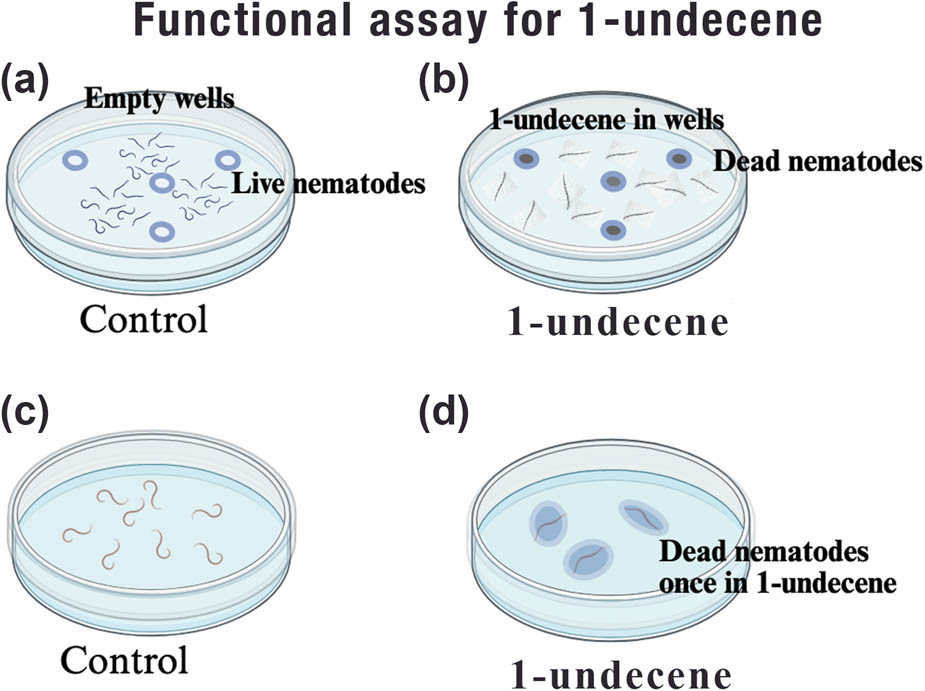
Figure 1
Functional bioassay demonstrating the nematicidal activity of 1-undecene produced by ‘Candidatus Pseudomonas auctus’ JDE115 (Ali et al., 2025). (a) Control: live free-living nematodes in 2% water agar with four empty wells. Nematodes exhibited normal, curved morphology, and active movement. (b) 1-Undecene treatment: bioassay plate containing 1-undecene in four wells. Exposed nematodes appeared straight and immobile, indicating mortality caused by the volatile compound. (c) Additional control: untreated nematodes in 2% water agar remained viable, confirming that agar and plate conditions did not influence nematode viability. (d) Direct in situ exposure: Nematodes exposure directly to 1-undecene on agar became immobile and adopted a straightened posture, demonstrating the compound’s rapid and irreversible toxic effect.
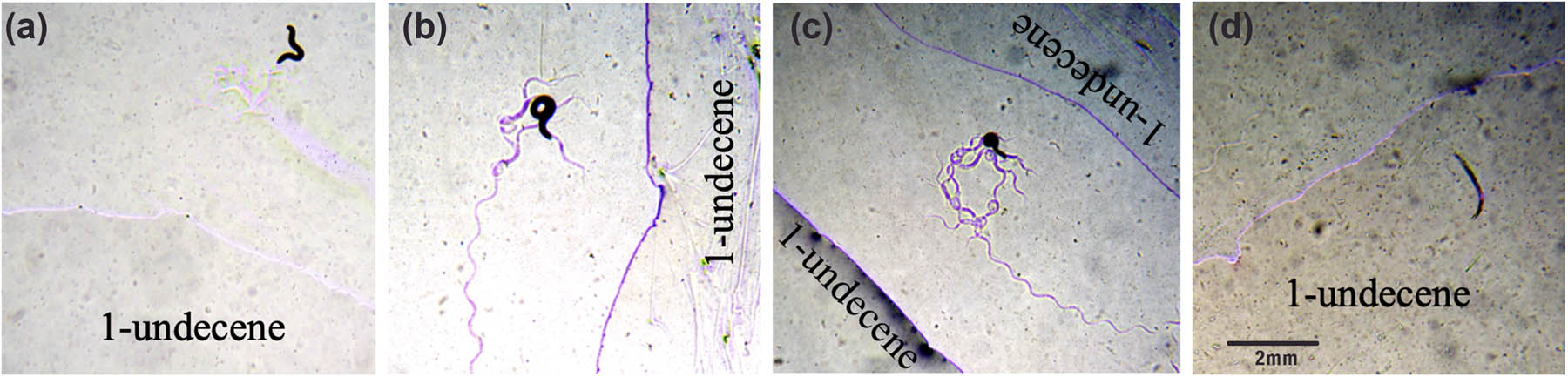
Figure 2
Repellent and nematicidal effects of 1-undecene on free-living nematodes. Microscopic images depict behavioral and lethal responses of nematodes exposed to pure 1-undecene. (a) Nematodes exhibited a characteristic “omega” turn upon sensing 1-undecene, indicating an attempt to reorient away from the source. (b) Continued exposure triggered a second “omega” turn in the opposite direction, confirming sustained avoidance behavior. (c) A third directional change was observed, demonstrating consistent three-directional repulsion and heightened sensitivity to 1-undecene. (d) Nematodes directly exposed to 1-undecene became immobile, adopting a straight posture with internal vacuolization, indicative of complete mortality.
1.9.1. Statistical analysis
All statistical analyses were performed in R version 4.4.0. Data are presented as mean ± standard deviation (SD). For comparisons between two groups, Student two-sample t-tests were used. Juvenile mortality data were additionally analyzed using a two-way linear model including treatment and replication as fixed factors. Model assumptions were evaluated using the Shapiro–Wilk test for normality, and the Wilcoxon rank-sum test was used as a nonparametric confirmation where appropriate. Differences were considered significant at P < 0.05.
2. Results
JDE115 treatment caused a strong suppression of egg hatching compared with the untreated control. The mean number of hatched juveniles was significantly lower in the JDE115 treatment (P < 0.001), representing a 99.1% reduction relative to the control (Figure 3). Similarly, nematode survival declined sharply in the presence of JDE115, with surviving juveniles reduced by 99.1% relative to the control (P < 0.001). These results collectively demonstrate the potent nematicidal effect of ‘Ca. P. auctus’ JDE115 under in vitro conditions. A time-resolved analysis of hatch dynamics across the full 21-day period is provided in Supplementary Figure S3, illustrating the continuously suppressed hatch in JDE115 compared with the steadily increasing hatch in the control. LB lite alone showed no significant effect on egg hatch or juvenile survival compared with the sterile water control (Supplementary Figure S3). Therefore, sterile water was used as the negative control in the corresponding in vitro assays.
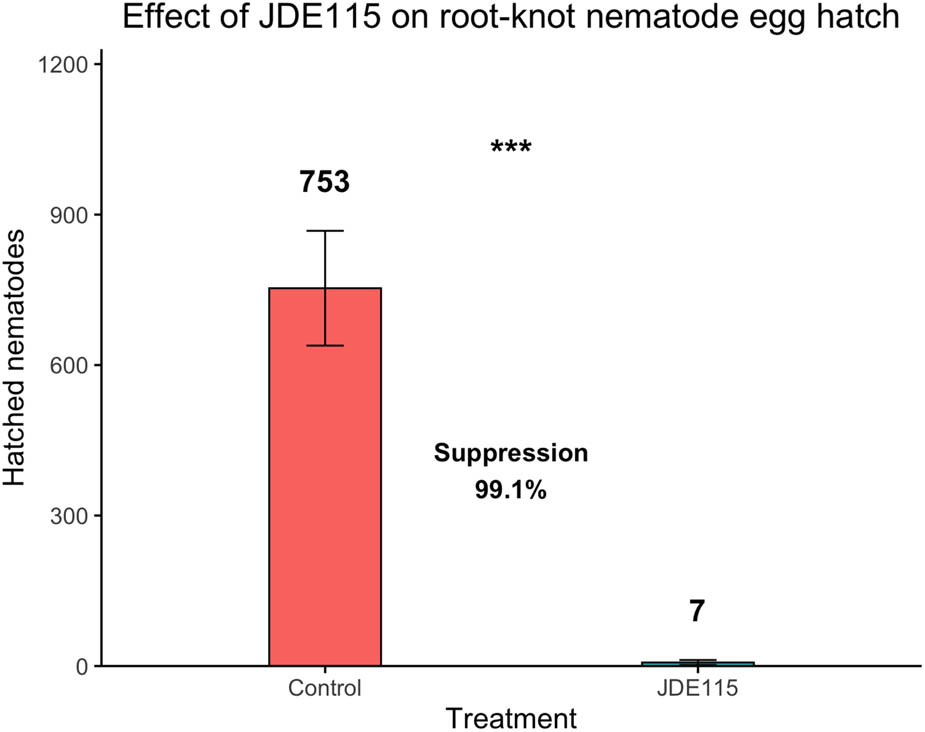
Figure 3
Effect of ‘Candidatus Pseudomonas auctus’ JDE115 (Ali et al., 2025) on root-knot nematode, Meloidogyne incognita (Kofoid & White, 1919; Chitwood, 1949), egg hatching. The bar plot shows the mean number of hatched second-stage juveniles in the JDE115 treated group compared to the untreated control. The error bars represent standard deviation of the mean. A significant reduction in egg hatch was observed in the JDE115 treatment (P < 0.001), with a calculated suppression rate of 99% relative to the control. Numeric values adjacent to the bars indicate mean hatch counts. Data are from five biological replicates per experiment, and the assay was repeated twice independently. Sterile water was used as the negative control. LB-lite medium without JDE115 was confirmed to have no measurable effect on egg hatch, juvenile mortality, or SCN reproduction.
Exposure to ‘Ca. P. auctus’ JDE115 resulted in rapid and substantial mortality of juveniles, with significant death observed within 24 h. By Day 6, cumulative mortality exceeded 95% in the JDE115-treated group, whereas nematodes in the control group remained largely viable. Treated juveniles consistently displayed a straight, immobile morphology, an indicator of death (Figure 4). The mean number of surviving nematodes in the JDE115-treated group was approximately 10, compared to over 1,000 in the control, representing a 99% reduction in survival (P < 0.001). Importantly, no significant difference was observed between the sterile water control and LB lite alone, confirming that the medium itself did not account for nematode mortality. These findings confirm that the observed nematicidal activity is due to the biological effects of JDE115, rather than to any chemical constituents of the culture medium.
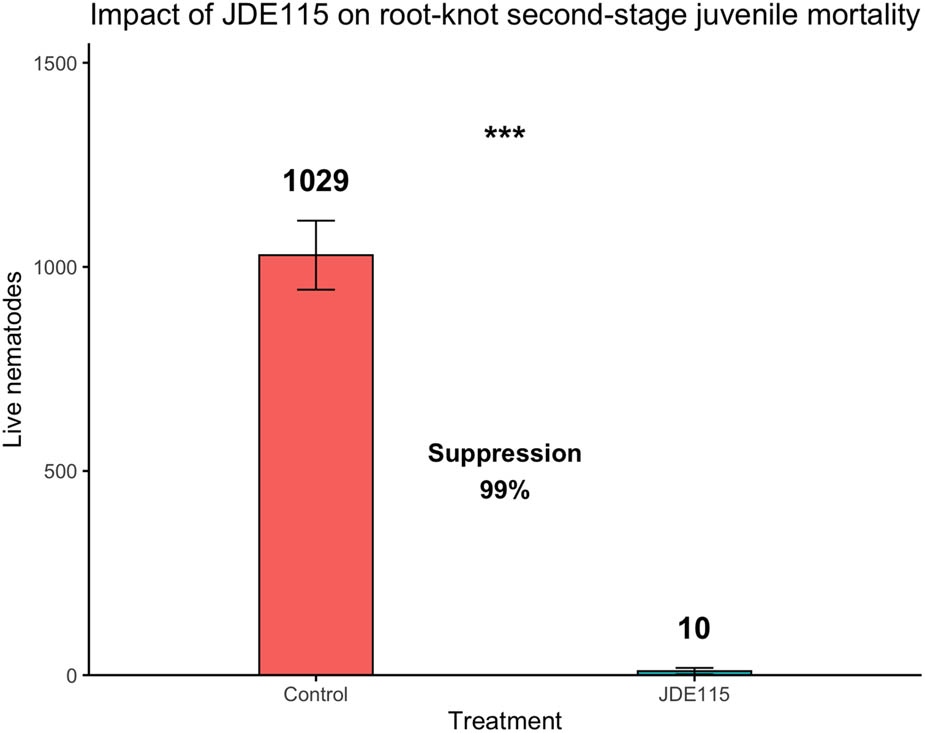
Figure 4
Root-knot nematode, Meloidogyne incognita (Kofoid & White, 1919 (Chitwood, 1949), mortality index following treatment with ‘Candidatus Pseudomonas auctus JDE115 (Ali et al., 2025). Bars represent the mean number of surviving nematodes in the JDE115-treated group compared with the untreated control. Error bars indicate standard deviation (n = 10 per treatment). A two-way linear model (Live Nematodes ∼ Treatment + Replication) revealed a highly significant reduction in nematode survival (P < 0.001), with model assumptions validated by the Shapiro–Wilk test (P = 0.987). Percent suppression by JDE115 was calculated at 99%. A Wilcoxon rank-sum test independently confirmed the result (p = 0.00018). Bar labels indicate mean nematode counts with significance levels (P < 0.001). Data are from five biological replicates per experiment pooled across two independent experiments. Sterile water was used as the negative control. LB-lite medium without JDE115 was confirmed to have no measurable effect on egg hatch, juvenile mortality, or SCN reproduction.
Treatment with ‘Ca. P. auctus’ JDE115 significantly improved soybean growth and suppressed SCN reproduction under controlled pot conditions. Across all measured parameters, JDE115-treated plants exhibited superior vegetative growth compared to the control group. Specifically, plant height, shoot biomass, and stem diameter increased by approximately 23, 43, and 35%, respectively (P < 0.01), while root biomass was also significantly elevated by 36% (P < 0.05). A particularly notable effect was observed in nodulation; JDE115-treated plants produced nearly 2.5 times more root nodules than control plants (P < 0.0001) (Figure 5). These nodules were more frequently pink internally, a characteristic commonly associated with active nitrogen fixation and leghemoglobin accumulation in functional nodules (Vyas et al., 2025; Soumare et al., 2020; Villari et al., 2021). Most strikingly, JDE115 treatment led to a dramatic reduction in SCN reproduction. The number of cysts per gram of root mass was reduced by approximately 95% compared to the control (P < 0.001), underscoring the potent local biocontrol effect of JDE115 within the soybean rhizosphere (Figure 6). Importantly, JDE115 suppressed SCN populations without reducing plant growth or nodulation, indicating that its nematode-suppressive activity does not impose phytotoxic or microbiome-disruptive effects. This selective suppression supports the suitability of JDE115 metabolites as biologically compatible alternatives to broad-spectrum chemical nematicides.
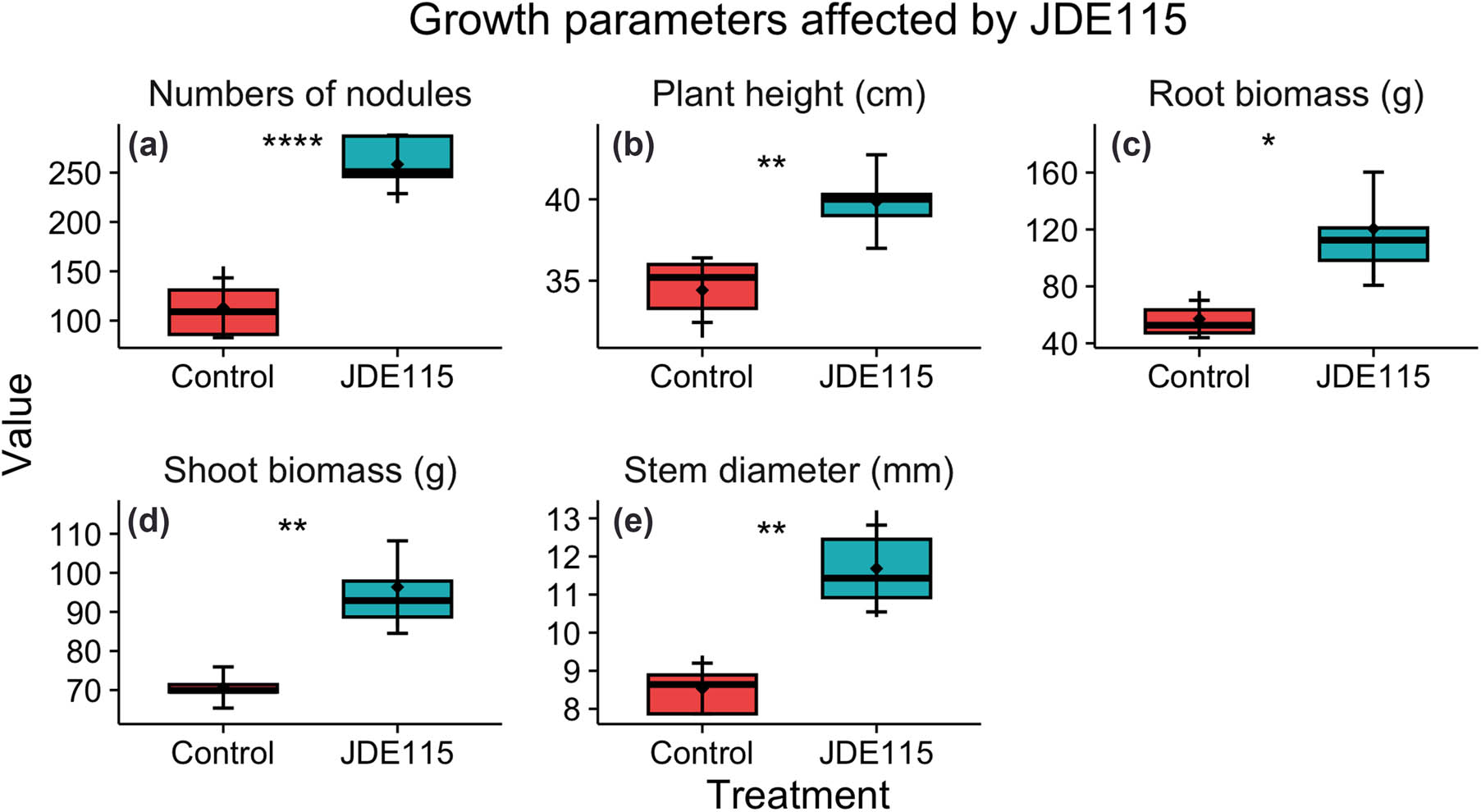
Figure 5
Local effects of ‘Candidatus Pseudomonas auctus’ JDE115 (Ali et al., 2025) on soybean growth. Boxplots illustrate the impact of JDE115 treatment on key soybean growth parameters measured 45 days after sowing, including (a) nodule number, (b) plant height (cm), (c) root biomass (g), (d) shoot biomass (g), and (e) stem diameter (mm). Soybean (Glycine max L.) seeds (cv. Lee) were soaked in JDE115 or LB lite broth (control) and grown in sterilized 3:1 field soil-to-sand mixture under greenhouse conditions. SCN (Heterodera glycines Ichinohe, 1952) eggs (5,000 per plant) were inoculated at the V3 growth stage. Asterisks indicate significant differences between treatments, using the student’s t-test (P ≤ 0.05 (*), P ≤ 0.01 (**), P ≤ 0.001 (***), P ≤ 0.0001 (****)). In each boxplot, the center line indicates the median, the box represents the interquartile range, whiskers show the data range, and the diamond denotes the mean. Data are from five biological replicates per experiment, and the experiment was repeated twice independently. LB lite was used as the negative control. LB-lite medium without JDE115 was confirmed to have no measurable effect on egg hatch, juvenile mortality, or SCN reproduction.
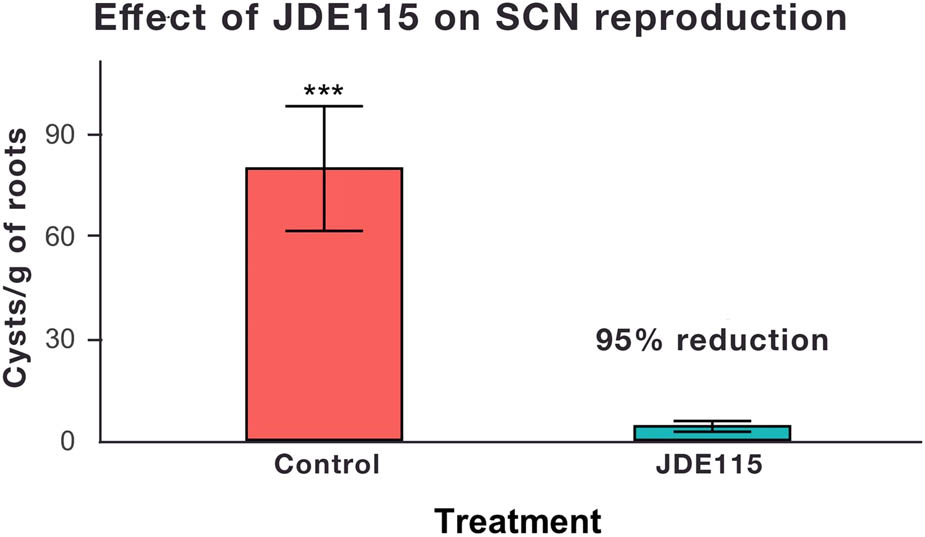
Figure 6
Local effects of ‘Candidatus Pseudomonas auctus’ JDE115 (Ali et al., 2025) on soybean cyst nematode (SCN) (Heterodera glycines Ichinohe, 1952) reproduction. Bar graph shows the number of SCN cysts per gram of root, revealing a 95% reduction in SCN reproduction in the JDE115-treated group compared to the control. Soybean seeds (cv. Lee) were soaked in JDE115 or LB lite broth (control) and grown in sterilized 3:1 field soil-to-sand mixture under greenhouse conditions. SCN eggs (5,000 per plant) were inoculated at the V3 growth stage. Asterisks indicate significant differences between treatments, using the student’s t-test (P ≤ 0.05 (*), P ≤ 0.01 (**), P ≤ 0.001 (***), P ≤ 0.0001 (****)). Bars show mean ± SD. Data are from five biological replicates per experiment, and the experiment was repeated twice independently. LB lite was used as the negative control. LB-lite medium without JDE115 was confirmed to have no measurable effect on egg hatch, juvenile mortality, or SCN reproduction.
To evaluate systemic suppression, soybean plants were grown in a split-root system in which one half of the root system was treated with ‘Ca. P. auctus’ JDE115, while the opposite half was inoculated with SCN. This experimental design ensured that JDE115 had no direct contact with the SCN-inoculated root zone. Compared to the control group, JDE115-treated plants showed significant increases in plant height and shoot biomass by approximately 38 and 58%, respectively (P < 0.01), indicating a systemic growth-promoting effect (Figure 7). No significant statistical differences were observed for root biomass or stem diameter, suggesting that JDE115’s primary influence under those conditions is on aboveground development via systemic signaling pathways.
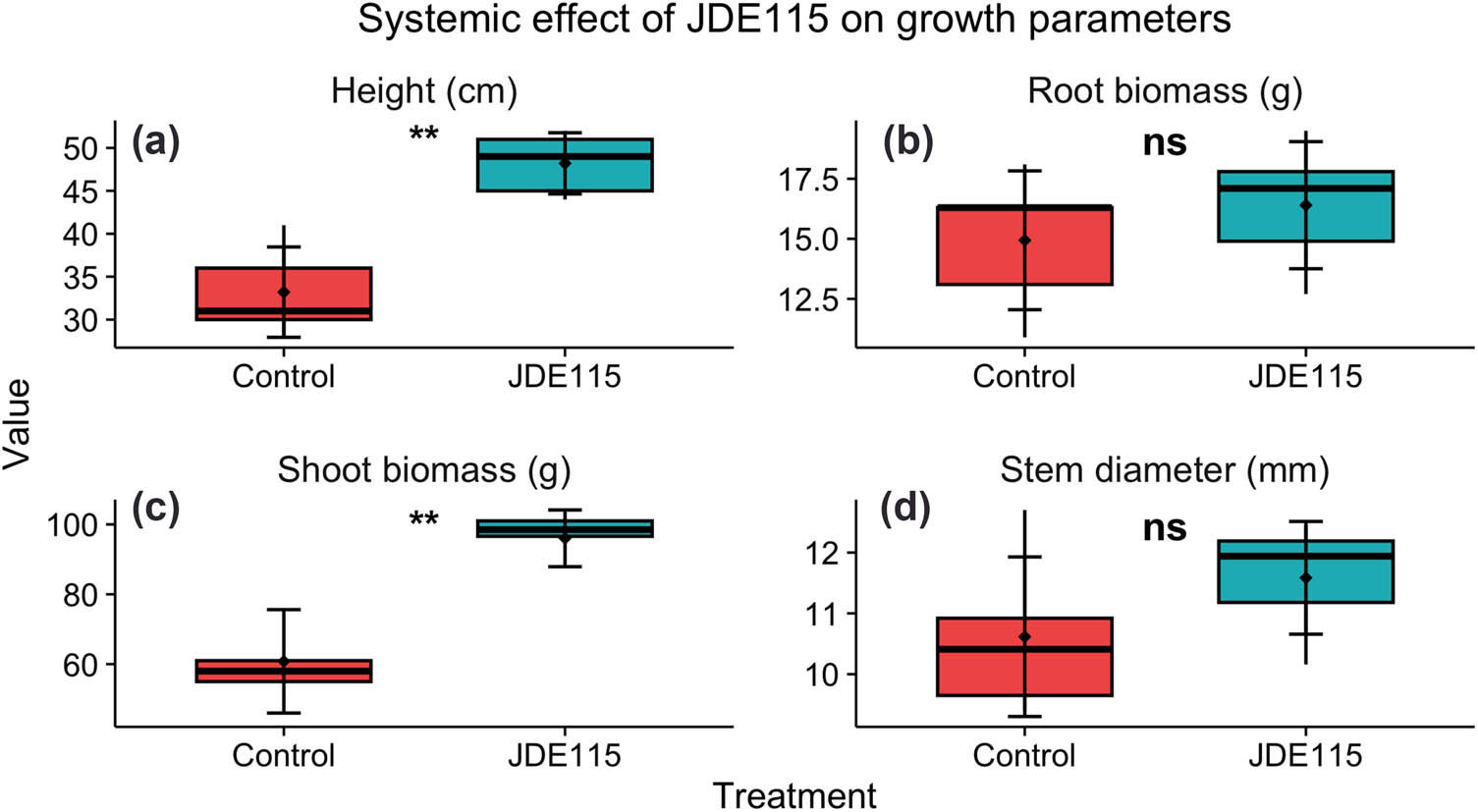
Figure 7
Systemic effects of ‘Candidatus Pseudomonas auctus’ JDE115 (Ali et al., 2025) on soybean (Glycine max L.) growth in a split-root system. Boxplots show (a) plant height (cm), (b) shoot biomass (g), (c) root biomass (g), and (d) stem diameter (mm) in soybean plants where only one root half was treated with JDE115. Asterisks indicate statistical significance as determined by Student’s t-test [P ≤ 0.05 (*), P ≤ 0.01 (**), P ≤ 0.001 (***)]. Error bars represent standard deviation. LB lite water was used as the negative control. In each boxplot, the center line indicates the median, the box represents the interquartile range, whiskers show the data range, and the diamond denotes the mean. Data are from five biological replicates per experiment, and the experiment was repeated twice independently.
In terms of biocontrol, SCN reproduction was markedly reduced in the untreated root half of JDE115-treated plants, with cysts counts declining by approximately 84.7% relative to the control (P < 0.001) (Figure 8). These results demonstrate that JDE115 induces systemic nematode suppression, even in the absence of direct bacterial contact at the site of inoculation (Pieterse et al., 2001).
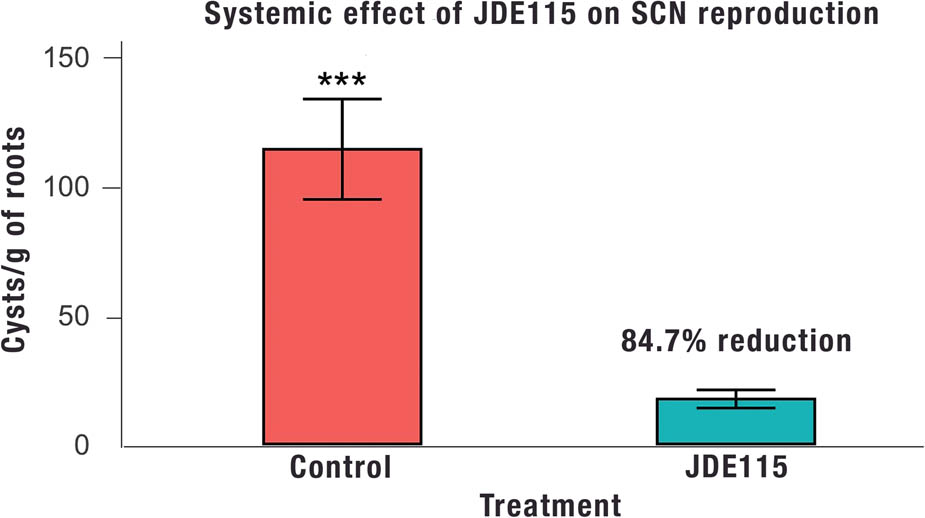
Figure 8
Systemic effects of ‘Candidatus Pseudomonas auctus’ JDE115 (Ali et al., 2025) on soybean cyst nematode (SCN) (Heterodera glycines Ichinohe, 1952) reproduction in a split-root system. Bar graph presents the number of SCN cysts per gram of root from the untreated root half demonstrating systemic suppression. JDE115 treatment reduced SCN cyst production by 84.7%, relative to the control. Asterisks indicate statistical significance as determined by Student’s t-test [P ≤ 0.05 (*), P ≤ 0.01 (**), P ≤ 0.001 (***)]. Bars show mean ± SD. Data are from five biological replicates per experiment, and the experiment was repeated twice independently. LB lite was used as the negative control. LB-lite medium without JDE115 was confirmed to have no measurable effect on egg hatch, juvenile mortality, or SCN reproduction.
2.1. HCN production by JDE115
The qualitative assay consistently confirmed HCN production by ‘Ca. P. auctus’ JDE115. In all JDE115-inoculated plates, the picrate-soaked filter paper exhibited a distinct color change from yellow to reddish-orange or reddish-brown after 7 days, indicating HCN release. In contrast, no color change was observed in the uninoculated control plates (Bakker, 1987). This result was reproducible across five biological replicates and three independent experiments (Figure 9).
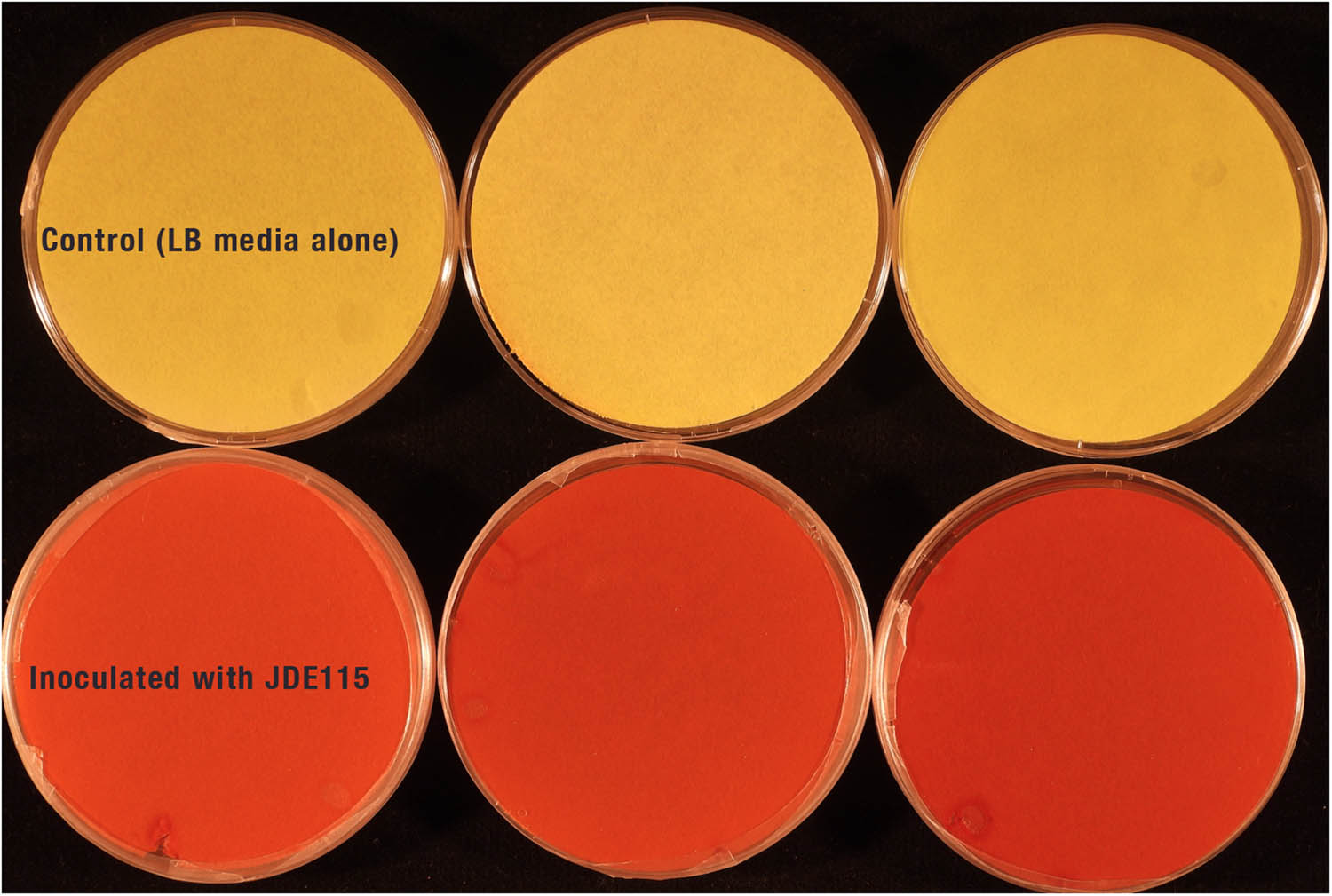
Figure 9
Qualitative detection of hydrogen cyanide (HCN) production by ‘Candidatus Pseudomonas auctus’ JDE115 (Ali et al., 2025) using a colorimetric assay. The top row displays negative control plates containing only LB medium, with no visible color change in the picrate-saturated filter paper. The bottom row shows plates inoculated with JDE115, where a visible color shift from yellow to reddish-brown on the filter paper after 7 days indicates positive HCN production.
2.2. VOCs produced by JDE115
The chromatogram displays distinct VOCs peaks emitted by JDE115. Numbers above each peak represent specific VOCs unique to JDE115, while the x-axis indicates retention time in minutes (Figure 10). Two prominent peaks, at 3.545 and 7.925 min., were identified as DMDS and 1-undecene, respectively. VOC identities were confirmed based on retention time, peak area, and spectral matching with entries in the Wiley and NIST mass spectral libraries.
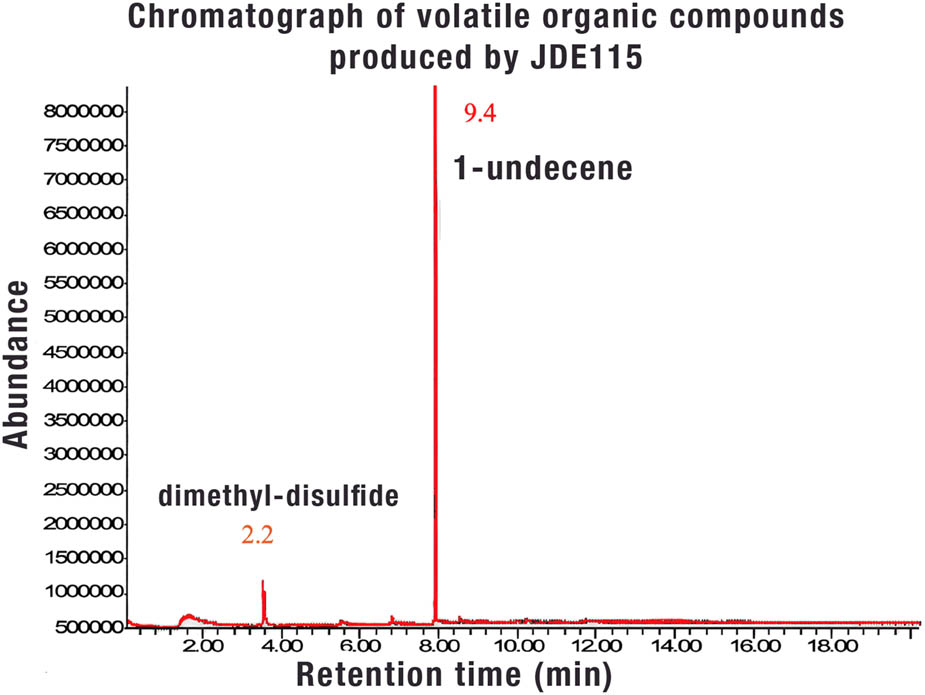
Figure 10
Identification of volatile organic compounds (VOCs) produced by ‘Candidatus Pseudomonas auctus’ JDE115 (Ali et al., 2025) using solid-phase microextraction gas chromatography–mass spectrometry (SPME-GC-MS). The chromatogram displays distinct VOCs peaks emitted by JDE115. Numbers above each peak represent specific VOCs unique to JDE115, while the x-axis indicates retention time in minutes. Two prominent peaks, at 3.545 and 7.925 min., were identified as dimethyl disulfide and 1-undecene, respectively. VOC identities were confirmed based on retention time, peak area, and spectral matching with entries in the Wiley and NIST mass spectral libraries.
Headspace SPME-GC/MS analysis of ‘Ca. P. auctus’ JDE115 revealed the presence of several VOCs with potential biological activity. Two compounds were uniquely detected in the JDE115-inoculated samples and were absent in the uninoculated media control, indicating that these VOCs are specifically emitted by the bacterium. Peak 1, with a retention time of 3.545 min and a peak area of 21,906,588, was identified as DMDS. Peak 2 at 7.925 min and a peak area of 93,690,736 corresponded to 1-undecene (Figure 10). These compounds produce prominent peaks in the chromatogram, confirming their abundance and significance among the VOCs released by JDE115. The exclusive detection of DMDS and 1-undecene supports the hypothesis that the biocontrol activity of JDE115 against SCN is mediated, at least in part, by VOC-based antagonism.
Although DMDS was positively identified by GC–MS, it was not included in subsequent nematode bioassays because DMDS has been extensively characterized as a commercial biofumigant and of its extremely pungent and irritating odor. Laboratory safety protocols at our facility prohibit open handling of DMDS due to its volatility and potential to contaminate shared air spaces. Therefore, functional assays focused on 1-undecene, which is less odorous and more suitable for confined laboratory testing.
2.3. 1-undecene bioassay
To investigate the functional role of 1-undecene in nematode suppression, a series of behavioral and mortality bioassays were conducted under both volatile and direct-contact exposure conditions (Prakash et al., 2021). In repellency assays, free-living nematodes and RKN J2s exhibited strong avoidance behavior when exposed to pure 1-undecene on 2% water agar plates. Upon initial exposure, nematodes performed sharp “omega” turns, actively redirecting movement away from the source (Figure 2a). When 1-undecene was introduced again along their new path, nematodes responded with additional directional changes (Figure 2b–c), demonstrating consistent three-way repulsion and high chemosensory sensitivity. These behaviors confirm the potent repellent activity of 1-undecene. In some instances, nematodes that entered the 1-undecene exposure died within few minutes, indicating its acute toxicity (Figure 2d).
For nematicidal assays, 15 µL of pure 1-undecene was added to wells on water agar plates seeded with RKN J2s. Within 40 min, all nematodes in proximity to the wells became immobile and adopted a straight, rigid posture. These responses were consistent across biological replicates, supporting the conclusion that 1-undecene acts as both a spatial repellent and a volatile nematicide with rapid vapor-phase activity. Supporting video evidence is provided in Supplementary Movie S1.
3. Discussion
This study demonstrates that ‘Ca. P. auctus’ JDE115 suppresses PPNs, including SCN and RKN through a multimodal biocontrol strategy. JDE115 combines local rhizosphere activity, ISR, and volatile-mediated toxicity to achieve broad-spectrum nematicidal effects. The use of such multifunctional endophytic bacteria represents a promising, environmentally sustainable alternative to chemical nematicides, which are increasingly restricted due to concerns over human health and environmental safety (Ahmad et al., 2024; Chen et al., 2020; Desaeger et al., 2020). In both pot and split-root greenhouse experiments ‘Ca. P. auctus’ JDE115 significantly reduced SCN reproduction and enhanced soybean growth. Cysts counts per gram of root were reduced by 95% in the pot experiment and 84.7% in the split-root system, indicating that JDE115 provides both local and systemic nematode suppression.
The systemic reduction in SCN reproduction suggests activation of ISR, a mechanism previously reported in other Pseudomonas species and typically mediated by jasmonic acid and ethylene signaling pathways (Khan et al., 2016; Pieterse et al., 2014; Stucky et al., 2023; Timper et al., 2009; Zhai et al., 2018). However, transcriptomic validation is needed to confirm ISR activation in the JDE115-soybean interaction (Pieterse et al., 2014; Wu et al., 2023). Our findings indicate that nematode suppression arises from a combination of direct toxicity and plant-mediated induced systemic resistance. Further molecular work will be required to determine how JDE115 influences nematode physiology beyond these demonstrated effects. We also recognize that this study used different nematode systems for complementary purposes, including free-living nematodes and RKN J2s for rapid volatile bioassays, RKNs for egg hatch and juvenile mortality assays, and SCNs for host-relevant greenhouse experiments. Although this design allowed us to examine multiple dimensions of JDE115 activity, future studies using a single PPN model across in vitro and in planta assays would provide a more unified mechanistic framework.
The ability of JDE115 to produce VOCs with nematicidal properties adds a distinctive layer to its biocontrol potential (Montejano-Ramírez et al., 2024). SPME-GC/MS identified two major VOCs: DMDS and 1-undecene, which were exclusively detected in JDE115 cultures and absent in media-only controls. These compounds are known to compromise nematode cell membranes and disrupt oxidative metabolism, contributing to their nematicidal activity (Abd El-Rahman et al., 2019; Ilieva et al., 2021; Yan et al., 2019).
Genomic analysis further supports the observed biocontrol capabilities of ‘Ca. P. auctus’ JDE115. The draft genome contains genes associated with VOC biosynthesis (Schulz and Dickschat, 2007), exopolysaccharide production (Poulin and Kuperman, 2021), and biofilm regulation, including the pgaC and bcsA genes (Choi et al., 2009; Itoh et al., 2008). It also harbors stress-adaptive elements such as the KefC potassium efflux system (Lyngberg et al., 2011), which are essential for environmental resilience and effective rhizosphere colonization (Ali et al., 2025).
In addition to VOC production, JDE115 synthesizes HCN adding another mode of nematode suppression. HCN disrupts mitochondrial respiration by inhibiting cytochrome c oxidase, resulting in cellular dysfunction in nematodes and other microfauna (Knowles, 1976; Zuhra & Szabo, 2022). HCN biosynthesis is typically governed by the hcnABC gene cluster, widely found in Pseudomonas species and known to contribute to biocontrol of both fungal pathogens and nematodes (Anand et al., 2020; Blumer & Haas, 2000; Hussein et al., 2024; Laville et al., 1998; Nandi et al., 2015). Notably, JDE115 also carries the hcnABC operon and consistently produced HCN in functional assays across all replicates in three independent trials, indicating stable gene expression and reliable HCN production. Although JDE115 produces HCN, no growth suppression was observed in soybean. This indicates that the bacterium likely synthesizes HCN at low, rhizosphere-compatible concentrations that are insufficient to harm plants but may contribute to microbial antagonism.
Among the VOCs produced by ‘Ca. P. auctus’ JDE115, DMDS stands out for its broad-spectrum biological activity (Bhat et al., 2023; Ilieva et al., 2021; Tóth et al., 2019; Yan et al., 2019). DMDS is a sulfur-containing compound well-documented antimicrobial, antifungal, and nematicidal properties (Gómez-Tenorio et al., 2015; Liu et al., 2020). Its primary mode of action involves the disruption of mitochondrial respiration through the inhibition of cytochrome c oxidase, which leads to ATP depletion and increased oxidative stress (Knowles, 1976; Popova et al., 2014). In nematodes, DMDS has been shown to compromise cuticular integrity, disrupt sensory behavior, and inhibit both hatching and motility of J2 (Gómez-Tenorio et al., 2015). In the present study, DMDS was uniquely detected in the VOC profile of JDE115 and was absent in the media-only controls, confirming it as a bacterial metabolite rather than a component of the growth medium.
The significant reduction in cyst numbers observed in JDE115-treated plants may be partially attributed to DMDS, either through direct nematicidal effects or by interfering with the signaling pathways that nematodes use to locate and invade host roots. Importantly, DMDS has already been successfully commercialized as a bio-fumigant, supporting it proven efficacy and favorable safety profile as a natural alternative to synthetic nematicides (Jiang et al., 2024).
The presence of this validated biocontrol metabolite underscores the potential of JDE115 as a dual-function PGPR capable of both suppressing soilborne pathogens and enhancing sustainable nematode management. Together, these major volatile or diffusible toxic metabolites produced by JDE115, including HCN, DMDS, and 1-undecene, create a hostile chemical environment that contributes to nematode mortality and reproductive suppression.
Bioassays confirmed that 1-undecene acts both as a strong repellent and a volatile nematicide. In the present study, purified 1-undecene was tested at a proof-of-concept concentration intended to confirm whether this JDE115-derived VOC could reproduce strong nematode-suppressive activity under controlled conditions. We agree that this concentration is higher than levels reported in some previous studies and does not by itself define the biologically relevant threshold under natural rhizosphere conditions. Future work should therefore include serial dilution assays and LD50 estimation using PPN juveniles to better define the effective dose range and ecological relevance of 1-undecene. Upon exposure, nematodes (free-living nematodes and RKN J2s) exhibited characteristic “omega” turns and rapid directional reversals, indicating a clear avoidance response (Prakash et al., 2021). Notably, nematodes that inadvertently entered zones containing 1-undecene died within 30-40 min with/without physical contact (no movement after probing and no recovery after 24 h in fresh water), demonstrating that 1-undecene exerts its effect through a systemic, vapor-phase mode of action.
Although pure 1-undecene was used to characterize its maximal nematicidal potential, GC–MS analysis shows that JDE115 emits 1-undecene and DMDS at much lower, biologically relevant micromolar levels. These concentrations fall within the natural range of rhizosphere VOCs (Bhat et al., 2023), supporting the ecological plausibility of their activity under field conditions. Unlike synthetic nematicides that persist in soil and negatively affect nontarget organisms, these bacterial volatiles are rapidly degradable and produced only locally where JDE115 colonizes. Their transient, low-accumulating nature, combined with the strong nematode suppression observed in both local and systemic assays, indicates that JDE115 metabolites represent environmentally compatible alternatives to conventional chemical nematicides. Because JDE115 suppresses nematodes through naturally occurring, low-accumulating volatiles rather than persistent synthetic chemicals, it represents a microbially derived strategy aligned with sustainable pest management practices.
The nematicidal VOCs produced by JDE115 may also interfere with nematode development and reproduction (Barros et al., 2014). For instance, exposure to environmental stressors such as VOCs can alter the developmental trajectory of RKNs, prompting J2 to develop into nonreproductive males instead of parasitic females (Snyder et al., 2006). Since male RKNs do not feed or reproduce, this developmental shift effectively interrupts the nematode life cycle and reduces long-term field infestation. However, future work should investigate whether JDE115-derived volatiles or HCN exposure influence sex determination in RKNs or modify chemosensory behavior. Such mechanistic studies will clarify how volatile-mediated signaling contributes to population suppression and reproductive interruption in field conditions.
In addition, VOCs may impair chemoreception, preventing juveniles from locating host roots. As a result, they may fail to establish feeding sites and ultimately die from starvation (Bargmann et al., 1993; Nagashima et al., 2019; Runyon et al., 2006). These findings suggest that JDE115-derived VOCs not only induce direct mortality but also disrupt nematode behavior and development, amplifying their biocontrol effectiveness.
In addition to producing nematicidal VOCs, JDE115 possesses a suite of nonvolatile enzymatic traits that further disrupt nematode development. Previous genomic analyses identified genes encoding chitinase, protease, cellulase, and glucanase (Ali et al., 2025); hydrolytic enzymes capable of degrading nematode eggshells and cuticles, thereby impairing hatching and juvenile mobility. These enzymes, which were previously linked to the suppression of Agroathelia rolfsii (Curzi) Redhead (2023) by JDE115, now appear to contribute to its nematode-suppressive activity as well.
SEM and GFP-tagging observations from our ongoing work indicate that JDE115 colonizes multiple root regions, including the hypocotyl, root hair zones, and rhizoplane, forming a stable presence that likely supports persistent biocontrol action (Ali et al., unpublished data). JDE115’s effectiveness is further enhanced by its plant growth promoting capabilities. Earlier studies reported its abilities to solubilize phosphate, fix nitrogen, and produce auxins and siderophores (Ali et al., 2025). These functional traits likely contribute to the improved plant height, shoot and root biomass, and nodule formation observed in this study. Taken together, JDE115 offers a dual advantage: it simultaneously enhances plant vigor and suppresses nematode populations, making it a promising candidate for integrated biological management strategies.
In summary, ‘Ca. P. auctus’ JDE115 employs a multimodal nematicidal strategy that integrates localized antagonism, ISR, and volatile-mediated toxicity. Key bioactive compounds, HCN, DMDS, and 1-undecene, contribute not only to direct nematode mortality but also to the disruption of nematode behavior and development. Together, these mechanisms make JDE115 a highly promising candidate for sustainable nematode management in soybean cultivation. Further investigation through field trials and formulation development is warranted to fully realize its potential as a practical biocontrol agent.
Acknowledgments
The authors would like to acknowledge VTIP for supporting this research and extend our gratitude to the SPES at Virginia Tech for providing the resources and facilities necessary to conduct this study.
Funding information
This research was supported by the School of Plant and Environmental Sciences, Virginia Tech, USA.
Author contributions
M. Sahadat Ali: Conceptualization, Methodology, Investigation, Data curation, Formal analysis, Visualization, Writing – original draft, Writing – review & editing. Fatima Tuz Zohora Mony: Investigation, Data curation, Formal analysis, Visualization, Writing – review & editing. Michael Evans: Supervision, Validation, Writing – review & editing. Steven Rideout: Methodology, Validation, Resources. David Haak: Methodology, Data analysis support, Supervision. Jonathan D. Eisenback: Supervision, Conceptualization, Project administration, Writing – review & editing. All authors have read and approved the manuscript.
Conflict of interest statement
Authors state no conflict of interest.
Data availability statement
Sequence data supporting the findings of this study have been deposited in GenBank under BioProject accession number PRJNA1196930. Other data supporting the findings of this study are provided within the manuscript.