
1. Introduction
1.1 Background and Context
Blended Learning (BL) has emerged as a significant pedagogical approach within higher education, combining traditional face-to-face instruction with digital technologies to enhance flexibility, accessibility, and personalization in learning (Yulduzxon & Gulmira, 2024; Alamri, Watson & Watson, 2021; Alammary et al., 2014). As educational institutions worldwide embrace the digital transformation, BL offers a hybrid learning model that integrates online tools, such as Learning Management Systems (LMS), with in-person interaction, offering the best of both worlds (Srivastava & Srivastava, 2024; Boelens et al., 2018). This shift is not merely a response to technological advancements but is also a result of evolving student expectations and demands for more adaptable, self-directed learning experiences (Bond et al., 2021).
In developed nations, the widespread adoption of BL has been facilitated by robust technological infrastructures, well-established institutional frameworks, and a culture of digital literacy among both students and faculty (Mesmar, Badran & Baydoun, 2023; Boelens et al., 2018). For instance, higher education institutions in North America and Europe have long integrated BL models, driven by the availability of high-speed internet, extensive technical support, and institutional readiness to experiment with new pedagogical approaches (Mesmar, Badran & Baydoun, 2023; Alammary et al., 2014). Additionally, the rapid growth of Massive Open Online Courses (MOOCs) and virtual classrooms during the COVID-19 pandemic further accelerated the global shift towards digital education (Xiong et al., 2021).
In contrast, the adoption of BL in developing countries, including Ghana, has been slower and more uneven due to a range of challenges. Despite increasing interest in integrating digital tools into higher education, many institutions face infrastructural limitations (Loglo et al., 2024; Ujakpa, 2020), such as unreliable internet access, lack of adequate digital resources, and varying levels of digital literacy among faculty and students (Qazi, Sharif, & Akhlaq, 2024; Johnson et al., 2020). In Ghana, public universities have been exploring Blended Learning since 2015, driven by a combination of external pressures to improve educational access and internal demands to enhance teaching quality (Antwi-Boampong, 2022; Adarkwah & Huang, 2023). However, despite these efforts, adoption remains inconsistent across institutions, with some departments moving forward while others lag behind due to a lack of institutional support, insufficient training, and limited access to digital tools (Aristovnik et al., 2023). The need for a deeper understanding of the factors influencing faculty engagement with BL in such resource-constrained settings is pressing, especially given the global trend toward digital learning.
This study is motivated by the recognition that the successful adoption of BL in Ghanaian public universities requires more than just technological readiness. It also demands an understanding of the socio-cultural and institutional contexts that shape faculty members’ willingness and ability to engage with digital pedagogies (Loglo, 2024). While the technological and infrastructural challenges faced by institutions have been well documented (Aristovnik et al., 2023; Adarkwah & Huang, 2023; Antwi-Boampong, 2023), less attention has been paid to the socio-cultural and institutional dynamics that influence the attitudes and practices of faculty members. This study therefore seeks to bridge that gap by examining how faculty members’ professional histories, institutional environments, and socio-cultural norms impact their adoption of BL.
The adoption of BL in Ghanaian higher education is influenced by multiple, interconnected factors, including technological readiness, institutional support, and socio-cultural dynamics (Asamoah & Oheneba-Sakyi, 2024; Agormedah et al., 2020). Significant research has examined technological barriers such as unreliable internet, lack of equipment, and inadequate digital literacy, but there is less exploration of how socio-cultural environments and institutional frameworks shape faculty engagement with BL (Agormedah et al., 2020). This study responds to calls for more context-specific research by investigating these factors through a robust theoretical lens.
Given the central role of faculty members in successful BL implementation, understanding how socio-cultural and institutional factors influence adoption is critical. Faculty are not only responsible for integrating these tools into their teaching but also for creating enabling learning environments for students. This study argues that socio-constructivist theories of learning and the socio-ecological model of human development provide valuable lenses through which to examine how adoption is shaped by professional experiences, institutional settings, and broader socio-cultural influences.
This research addresses a significant gap in the literature concerning the socio-cultural dimensions of Blended Learning (BL) adoption in resource-constrained settings such as Ghana. The study explored how faculty members’ professional backgrounds, availability of institutional resources, and cultural attitudes toward education shape their engagement with BL (Ujakpa & Heukelman, 2020; Ujakpa & Heukelman, 2018). Understanding these factors is crucial for developing targeted interventions and policies that can foster more effective BL adoption, thereby improving the overall quality of higher education in Ghana.
The study was guided by the following research questions:
How do faculty members’ professional histories and experiences influence their adoption of BL?
What institutional factors facilitate or hinder BL adoption in public universities?
How do socio-cultural contexts influence faculty perceptions and practices in BL environments?
What strategies could enhance BL adoption in resource-constrained environments, ensuring its sustainable integration into higher education?
The study drew from socio-constructivist theories of learning and Bronfenbrenner’s socio-ecological model (1979) to explore the multifaceted factors influencing BL adoption. These theories aided in contextualizing the individual, institutional, and socio-cultural dynamics that shaped faculty BL engagement in higher education institutions.
2. Theoretical Framework
The theoretical foundation of this study is grounded in two complementary frameworks, the socio-constructivist theories of learning and Bronfenbrenner’s socio-ecological model of human development (1979). These frameworks served as lenses through which the complex interplay between individual, institutional, and socio-cultural factors that shape faculty members’ adoption of Blended Learning (BL) in higher education was examined.
2.1 Socio-Constructivist Theories of Learning
Socio-constructivist theories, particularly those developed by Vygotsky (1978) and discussed by Kharroubi & ElMediouni (2024), posit that learning is inherently a social process, shaped by interaction and collaboration with others (Piki & Brzezinska, 2023; Gherghel, Yasuda & Kita, 2023; Gillen, 2000). Vygotsky’s (1978) concept of the zone of proximal development (ZPD) is central to this theory, referring to the range of tasks that learners can perform with the assistance of more knowledgeable individuals (Piki & Brzezinska, 2023; Gherghel, Yasuda & Kita, 2023; Gillen, 2000). Learning, therefore, occurs most effectively when individuals are supported by others, whether through peer collaboration, mentorship, or institutional support. In this study, faculty members are viewed both as learners navigating new technologies and as facilitators guiding their students through blended modalities.
In the context of Blended Learning, socio-constructivist theories highlight the importance of faculty-student interactions and peer support in the successful adoption of new pedagogical tools. Faculty members’ ability to adopt BL depends not only on their individual capabilities but also on the extent to which they can collaborate with peers and receive institutional guidance. This approach emphasizes that learning is mediated by cultural tools, including digital platforms, and that faculty BL adoption is influenced by how these tools are integrated into the socio-cultural context of their teaching environments (Boelens et al., 2018).
The socio-constructivist perspective also underscores the role of cultural and social contexts in shaping learning experiences. For faculty members in Ghana, their previous exposure to digital tools, the local norms surrounding education, and the expectations of students all play significant roles in determining how they engage with BL (Brenya, 2024). Faculty members who have previously worked in environments where technology was integral to education may find the adoption of BL more intuitive (Brenya, 2024). However, those in more traditional, face-to-face lecture-based environments may face significant challenges in adapting to digital tools. This study, therefore, explored how socio-constructivist principles manifest in faculty members’ approaches to blending in-person instruction with digital platforms.
Socio-constructivism also emphasizes the active role of the learner: in this case, faculty members constructing knowledge through social interaction. Therefore, the adoption of BL by faculty is not merely a top-down process dictated by institutional policies but also shaped by their day-to-day interactions with colleagues, students, and the technology itself. This approach helped illuminate how faculty members actively negotiate the challenges and opportunities of adopting BL within their institutional and socio-cultural contexts (Kharroubi & ElMediouni, 2024; Vygotsky, 1978).
2.2 Socio-Ecological Model of Human Development
Bronfenbrenner’s socio-ecological model (1979), as cited by Akbaba & Turan (2024), offers a broader, systems-based perspective on human development, positing that individuals’ behavior and learning are influenced by multiple, interconnected layers of their environment. These layers, or systems, range from the immediate environment in which the individual operates (microsystem) to broader societal and cultural influences (macrosystem). The socio-ecological model is particularly useful in understanding how environmental factors at various levels influence faculty members’ decisions to adopt BL, from classroom dynamics to institutional policies and societal attitudes toward technology in education.
In the context of this study, the socio-ecological model is applied to analyze how different environmental systems influence faculty adoption of Blended Learning. The microsystem includes the immediate teaching environment, such as faculty-student interactions and the availability of technological resources within the classroom. Access to reliable digital tools, internet connectivity, and learning platforms directly impacts faculty members’ ability to integrate BL into their courses. The dynamics between faculty and students also play a critical role, as faculty may be more inclined to adopt BL if they perceive that students are responsive and engaged with digital learning.
The mesosystem refers to the interrelationships between various microsystems, including the connection between faculty members’ personal experiences with technology and the institutional support they receive. Collaboration between departments or between faculty and administrative bodies can either facilitate or hinder the adoption of BL. For instance, faculties with strong departmental support and peer collaboration are more likely to integrate BL successfully into their teaching practices.
The exosystem encompasses external factors that indirectly influence faculty behavior, such as institutional policies, administrative decisions, and access to professional development opportunities. Faculty members are often impacted by decisions made at the institutional level, such as the allocation of resources for BL initiatives, the availability of technical support, and the institution’s overall commitment to digital learning. This study examined how these external factors shaped faculty engagement with BL.
In this study, the macrosystem represents broader cultural, societal, and economic forces that influence how faculty members perceive and adopt BL. In Ghana, the cultural preference for face-to-face learning and the societal perception that education requires physical presence (Kayi, 2024) may create resistance to online or blended modalities. Faculty members’ attitudes toward BL are shaped by these larger cultural values, which must be understood to address barriers to adoption effectively.
Finally, Bronfenbrenner & Morris (2007), as cited by Anderson, Sadiq & Anderson (2024) and Hemphill, and Wright (2024), emphasize the role of the chronosystem, which considers the influence of time in the development of behavior and learning. This includes significant historical events, technological advancements, and educational trends. For example, the COVID-19 pandemic forced many higher education institutions to adopt BL as a necessary solution for maintaining instructional continuity. Faculty members’ experiences with emergency remote teaching during the pandemic may shape their long-term attitudes toward the adoption of BL.
Bronfenbrenner’s socio-ecological model, with its emphasis on the dynamic interplay between individual, institutional, and societal factors, provides a comprehensive framework for understanding the complexities of BL adoption. It allows for an analysis of how various levels of influence—ranging from the immediate teaching environment to broader cultural norms—interact to shape faculty members’ decisions and practices.
2.3 Comparative and International Evidence on Faculty Resistance
While the Ghanaian case offers important insights, comparative studies highlight that faculty resistance to digital education is not unique to resource-constrained contexts.
Khalil (2013) provides a thematic synthesis of faculty resistance across higher education systems globally, noting that resistance is multi-layered—affective, cognitive, and behavioral—emerging from institutional culture, autonomy concerns, and communication breakdowns. Morgan (2019) similarly shows that faculty reluctance to adopt open and digital pedagogies often stems from time constraints and weak incentive systems, reinforcing the need for systemic rather than individual solutions.
Boyle (2023) reports on large-scale OER programs in the United States, identifying faculty hesitation due to lack of confidence and competing priorities, while Hocevar, (2017) document similar dynamics in Canada, where sustained support mechanisms were essential to reduce resistance. In a broader global review, Khodabandelou et al. (2025) found that faculty resistance remains a critical obstacle in digital course design worldwide, especially where workloads are high and institutional backing is limited.
These findings resonate with the Ghanaian context but also suggest that faculty resistance evolves over time. As Ozan and Özarslan (2025) show, factors such as self-efficacy, prior digital experience, and institutional support strongly predict digital competence and shape whether resistance decreases with exposure to new tools. By integrating these comparative perspectives, this study situates Ghanaian faculty adoption of BL within global debates, demonstrating both unique contextual challenges and common barriers shared across higher education systems internationally.
2.4 Integrating Socio-Constructivist and Socio-Ecological Perspectives
By integrating socio-constructivist theories with Bronfenbrenner’s (1979) socio-ecological model, this study adopts a multi-layered approach to understanding faculty members’ adoption of Blended Learning. While socio-constructivism emphasizes the role of social interaction and guided learning in adopting new tools, the socio-ecological model highlights the broader environmental systems that either facilitate or hinder this adoption. Together, these frameworks provide a better understanding of how faculty members navigate the complex process of integrating digital tools into their teaching practices.
This theoretical foundation guided the analysis of faculty members’ experiences with BL, offering insights into the individual, institutional, and cultural factors that influence their engagement with blended learning modalities. The following section outlines the research design and methodology applied in exploring the factors in greater depth.
3. Methodology
The study adopted a qualitative research design using Abductive Grounded Theory (AGT) (Hofmann, Paavola & Rainio, 2024; Timmermans & Tavory, 2012) to explore the factors influencing faculty members’ adoption of Blended Learning (BL) at a public university in Ghana. The use of AGT allowed for the development of theory grounded in empirical data while simultaneously using data from existing theoretical frameworks. AGT, as an iterative approach, was particularly well-suited for examining the complex interactions between individual, institutional, and socio-cultural factors in an educational context and hence its application in the study.
The case study was a multi-campus public university with sites across five regions of Ghana. At the time of the study, the institution employed 265 teaching staff and served over 12,075 students, with a broader policy goal to reach approximately 20,000 learners. The university offers both undergraduate and postgraduate programs, serving not only the Ghanaian market but also the West African sub-region. In 2013, management introduced a formal Blended Learning (BL) policy to guide a transition from a fully face-to-face model toward becoming a blended institution by 2021. To operationalize this, a Centre for Online Learning and Teaching was established to train faculty in instructional technology, supported by the procurement of a Moodle Learning Management System (LMS). Faculty were required to upload syllabi, lecture notes, videos, and other learning materials on Moodle, with teaching structured around both in-person and online sessions. Complementary platforms such as Zoom were also used to facilitate synchronous engagement. While the institutional BL policy was formally in place, enforcement was uneven across faculties.
3.1 Research Design
The research is rooted in a qualitative paradigm, which is ideal for capturing the depth and complexity of faculty members’ experiences with BL. Qualitative research emphasizes understanding participants’ perspectives in their natural settings, making it suitable for exploring how contextual factors influence behavior and decision-making (Clarke & Visser, 2019). Grounded Theory, specifically the abductive approach, was applied as a result of its ability to accommodate both inductive and deductive reasoning, which were both useful to this study (Hofmann, Paavola & Rainio, 2024). This approach allowed the researchers to navigate iteratively between data collection, analysis, and theoretical development, refining emerging theories based on the data (Corbin & Strauss, 1990; Charmaz, 2015). Additionally, the study employed triangulation to ensure robust findings, incorporating semi-structured interviews, document analysis, and participant observation. Data were systematically coded and analyzed using Constant Comparative Analysis to develop a grounded theory that reflects faculty experiences.
To enhance methodological rigor, validity and reliability were addressed through multiple strategies. Validity was ensured by aligning research instruments with the study objectives and by pilot-testing interview questions with two faculty members prior to full data collection. Reliability was strengthened by maintaining a clear audit trail of all coding decisions, memos, and analytic steps, allowing replication or verification by other researchers. Peer debriefing sessions with two colleagues were also conducted to cross-check coding and thematic development, thereby reducing individual bias.
3.2 Data Collection Methods
As demonstrated in Table 1, data were collected using three research instruments: semi-structured interviews, document gathering, and participant observation. This triangulated approach ensured a comprehensive understanding of the factors influencing faculty adoption of Blended Learning (BL), allowing for cross-validation of findings from different sources.
Table 1
Data Collection Methods Overview.
| DATA COLLECTION METHOD | DESCRIPTION | PURPOSE |
|---|---|---|
| Semi-Structured Interviews | In-depth interviews with 25 faculty members. | To explore faculty experiences, challenges, and support. |
| Document Analysis | Analysis of institutional documents (e.g., policies). | To understand the institutional context of BL adoption. |
| Participant Observation | Observation of faculty training sessions on BL. | To capture real-time interactions and institutional support. |
Semi-structured interviews were conducted with 25 faculty members from various academic departments. These interviews, lasting 60–90 minutes, were led by the researchers. They were classified as semi-structured because while core guiding questions were pre-determined, the format allowed participants to expand freely on their experiences, creating space for emergent insights. Open-ended questions encouraged reflection on professional histories, challenges, institutional support, and socio-cultural influences.
No questionnaire was used for participant selection; instead, purposive sampling identified faculty actively engaged in BL implementation.
Document analysis included policies, faculty training manuals, and strategic plans, which were systematically coded alongside interview transcripts to examine how institutional priorities, rules, and resource allocations shaped adoption.
Participant observation involved the researchers attending BL training sessions, noting faculty interactions with technologies, questions raised, and institutional support provided. Observational notes were integrated into the coding process, providing an additional layer of validation for themes emerging from interviews and documents.
3.3 Sampling Strategy
A purposive sampling strategy was employed to ensure the inclusion of faculty members with diverse experiences in adopting Blended Learning (BL). Participants were selected based on their involvement with BL, ensuring representation across a range of academic disciplines, ranks, and levels of digital literacy. This diversity was essential for capturing a wide spectrum of experiences, allowing for the identification of common challenges and successes across different departments within the university.
Faculty members were eligible to participate if they had been involved in implementing BL for at least one academic year. This criterion ensured that participants had sufficient experience with the university’s BL approach and were able to provide valuable insights based on their engagement with the technology and its integration into their teaching practices.
Table 2 presents participant demographics not only by discipline but also by academic rank (senior vs. junior faculty) and digital literacy levels (high, medium, low). This breakdown was important for the study, as professional status and prior digital competence were shown to influence how faculty engaged with Blended Learning (BL). The representation across ranks and literacy levels ensured that findings captured a wide spectrum of experiences—from highly digitally skilled senior academics who adopted BL more readily, to junior faculty with limited exposure who faced greater barriers. This diversity of perspectives provided a richer and more nuanced analysis of the factors influencing BL adoption.
3.4 Data Analysis
The data were analyzed using Constant Comparative Analysis (CCA), a core technique of Grounded Theory, which involves systematically comparing each piece of data with others to identify similarities and differences (Mirbagheri et al., 2024; Ricciutti & Storlie, 2024; Charmaz, 2015). This iterative process enabled the development of categories and the emergence of a theory grounded in the data.
Open coding segmented interview transcripts line-by-line, generating initial codes. Axial coding grouped these into broader categories by exploring relationships between them. Selective coding identified the “core category” that integrated all other categories into a coherent framework. NVivo software was used for coding management. To ensure reliability, 20% of transcripts were double-coded by a second researcher, with discrepancies reconciled through discussion. Observational field notes and institutional documents were coded using the same scheme, enabling triangulation across data sources.
Findings from interview transcripts were compared against policy documents and observational data. For example, faculty claims about insufficient institutional support were cross-checked against official BL policy provisions and observations of training sessions. This strengthened both internal validity and theoretical depth.
Figure 1 illustrates the constant comparative analysis process, showing how data were iteratively compared during open coding, axial coding, and selective coding. The continuous comparison between incidents, codes, and categories resulted in the development of a grounded theory.
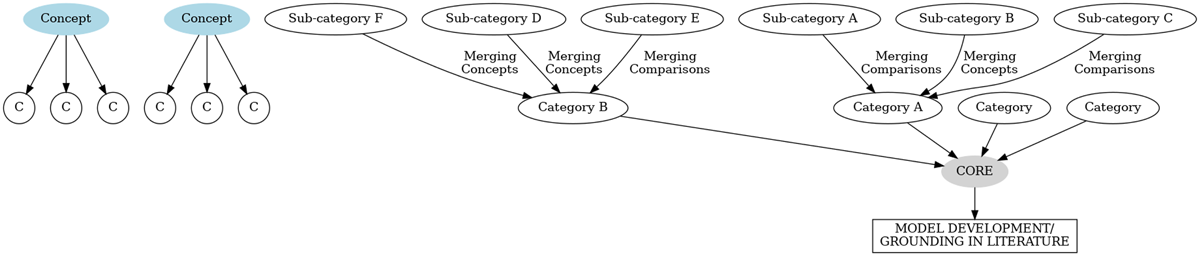
Figure 1
Constant Comparative Analysis in Grounded Theory.
Interview transcripts (B) Regrouping concepts (C) Identifying the core category
GT Process to Model Faculty Adoption Experiences (Adapted from Daengbuppha et al., 2006).
3.5 Trustworthiness and Credibility
To ensure the trustworthiness and credibility of the study, several strategies were employed. Triangulation was utilized by drawing data from multiple sources, including semi-structured interviews, document analysis, and participant observation. This approach allowed for cross-verification of the findings, ensuring that conclusions were not drawn from a single perspective but were supported by diverse sources of data.
Member checking was another key strategy: preliminary findings were presented to a subset of participants, who were invited to provide feedback on whether the analysis accurately captured their experiences. This process helped incorporate corrections and additional insights into the analysis, strengthening its credibility and ensuring that participant perspectives were authentically represented.
Finally, reflexivity was maintained throughout the research process. The researchers kept a reflective journal to document personal reflections, potential biases, and evolving data interpretations. This practice was essential in mitigating the influence of researcher bias and contributed to the transparency and rigor of the data interpretation process.
3.6 Limitations of the Study
As with all qualitative research, the study has certain limitations. The sample size, while adequate for grounded theory analysis, was drawn from a single Ghanaian public university and therefore may not capture all variations in BL adoption across other higher education institutions in Ghana or beyond. The purposive sampling approach may also have introduced self-selection bias, as faculty who agreed to participate might already have stronger opinions or experiences regarding BL. Additionally, while triangulation and member checking enhanced credibility, the reliance on self-reported data from interviews carries the risk of social desirability bias. These limitations should be considered when interpreting the findings and in framing directions for future research.
4. Findings and Discussion
Analysis revealed critical insights, including the impact of institutional training quality, peer support networks, and the integration of digital tools within culturally relevant pedagogies. Using constant comparative analysis, these themes were continuously refined as more data were collected and analyzed. The findings highlight three primary themes: (1) professional histories and digital literacy, (2) institutional support and technological infrastructure, and (3) socio-cultural resistance to Blended Learning. Each of these themes is presented below with supporting faculty members’ responses by direct quotations as evidence, providing rich, contextually grounded insights into the challenges and opportunities of adopting BL.
4.1 Professional Histories and Digital Literacy
The influence of faculty members’ professional experiences and their levels of digital literacy on their adoption of Blended Learning was observed as a dominant theme throughout the collected and analyzed data. Faculty members with prior experience using digital tools, either through previous teaching roles or external professional development, found the transition to BL relatively straightforward. These participants viewed BL as an extension of their existing teaching practices, which made the integration of online platforms easier. In support of this, a faculty member, marked as Participant 3, remarked:
“I have been using online tools like Moodle in my previous teaching roles, so Blended Learning wasn’t entirely new to me. It was just a matter of adapting my existing skills.”
However, for faculty members with limited exposure to digital technologies, the transition to BL posed significant challenges. These individuals often expressed frustration with the steep learning curve and the need to “relearn” how to teach using digital tools, particularly in environments with inadequate technical support. A faculty member, marked as Participant 12, stated:
“I’ve been teaching for over 20 years, and this whole digital thing is still foreign to me. It feels like I’m learning to teach all over again.”
Several participants noted that their resistance diminished as they became more familiar with digital tools through repeated exposure and training. This indicates that digital literacy is not static but evolves with engagement. Faculty in technical fields and sciences were generally quicker to adopt BL, reporting higher confidence in using Moodle and Zoom, while humanities faculty were more resistant, citing a preference for traditional pedagogy. Senior faculty often expressed more difficulty in transitioning compared to junior colleagues, who were more digitally flexible. This aligns with Qazi et al. (2024), who found generational differences in adoption trajectories.
This theme aligns with the socio-constructivist perspective, which emphasizes the importance of prior experience and guided learning. Faculty members who had already engaged with digital technologies were in a better position to integrate BL into their teaching, while those with limited digital literacy struggled to adopt these tools effectively. This finding echoes Boelens et al. (2020) and Adarkwah (2021), who highlighted digital literacy as a key factor in technology adoption in educational settings. This study extends prior work (Boelens et al., 2020; Adarkwah, 2021) by showing that while professional histories shape adoption trajectories, faculty resistance is dynamic — it weakens over time as confidence grows through practice and institutional reinforcement.
Unlike previous studies that treat digital literacy as a static determinant, this study shows it is dynamic: resistance weakens over time with practice and institutional reinforcement. This finding extends socio-constructivist theory by emphasizing adoption as an evolving process rather than a one-time decision.
4.2 Institutional Support and Technological Infrastructure
The role of institutional support and access to technological infrastructure was another critical factor influencing faculty members’ engagement with Blended Learning. Many faculty members emphasized the need for reliable internet access, functional digital tools, and ongoing technical support to facilitate their integration of BL. While some participants reported receiving adequate training and support, others expressed dissatisfaction with the university’s infrastructure and institutional preparedness for BL. Participant 7 explained:
“The training provided by the university was helpful, but we face real challenges with the infrastructure. The internet is often unreliable, and sometimes the digital platforms we’re supposed to use just don’t work.”
Another participant, Participant 16, emphasized the need for continuous institutional support beyond the initial training sessions:
“It’s not enough to provide a one-off training session. We need continuous support, especially as new tools are introduced and systems evolve.”
Faculty with high literacy benefited more from training, leveraging LMS features more effectively, while those with low literacy found infrastructure gaps more frustrating, compounding their struggles.
The importance of institutional support, including access to reliable technological infrastructure, aligns with Bronfenbrenner’s socio-ecological model, particularly the exosystem level, which emphasizes the impact of institutional decisions on individual behavior. The availability of resources, administrative support, and technical training are critical in shaping faculty members’ ability to adopt BL. These findings align with previous studies such as Bond et al. (2021), which emphasize the necessity of sustained institutional support for the successful implementation of digital learning technologies.
Beyond highlighting gaps in infrastructure, some faculty emphasized that continuous institutional reinforcement — such as refresher workshops and peer mentoring — gradually improved their confidence and reduced reluctance to engage with BL.
In addition to confirming earlier findings (Bond et al., 2021), this study reveals that sustained, iterative support is crucial. Initial training alone is insufficient; resistance declines only when institutions provide ongoing structures that normalize BL use. This study highlights that training alone is insufficient. Adoption deepens only when institutions provide iterative support structures such as refresher workshops, peer mentoring, and recognition for digital innovation — a nuance underexplored in prior African studies.
4.3 Socio-Cultural Resistance to Blended Learning
Another major theme that emerged from the data was socio-cultural resistance to Blended Learning from both faculty members and students. Many faculty members reported that their students were resistant to the idea of online learning, as they preferred the traditional face-to-face classroom instruction. This might be because students come from contexts where physical presence and direct interaction are highly valued, viewing online learning as less effective. Participant 5 remarked: “Students here are used to seeing their lecturers in person. They don’t fully trust online learning, and it’s hard to convince them that it’s just as effective as being in a classroom.”
Faculty members also expressed concerns that online learning might diminish their authority in the classroom and negatively affect their relationships with students. Participant 10 said:
“Teaching online feels less personal. It’s harder to build a connection with students, and I think that affects how we teach.”
Interestingly, faculty reported gradual shifts. Those initially skeptical acknowledged benefits such as flexibility once they experienced BL in practice. This suggests cultural resistance is transitional rather than permanent — a finding that extends existing literature by showing how resistance can evolve through exposure (similar to Ozan & Özarslan, 2025, in international contexts).
Resistance was strongest among humanities faculty, who emphasized personal interaction, whereas business and technical fields showed faster acceptance due to stronger alignment with professional digital practices.
The resistance to Blended Learning can be understood through Bronfenbrenner’s (1979) macrosystem, which points to influences from broader societal and cultural norms. In Ghana, traditional views on education emphasize the importance of in-person interaction, both as a measure of instructional quality and as a key element of the teacher-student relationship (Agormedah et al., 2020). This finding suggests that the successful implementation of BL in Ghanaian higher education will require not only technological and institutional changes but also cultural shifts in how education is perceived and valued. Building on Agormedah et al. (2020), this study highlights that cultural resistance is transitional rather than fixed. Repeated engagement with digital tools fosters incremental shifts in both faculty and student perceptions of legitimacy and effectiveness.
The findings underscore that faculty resistance should not be viewed as a permanent barrier but as a stage within the adoption process. Universities can reduce this resistance by adopting long-term strategies that combine exposure, infrastructure support, and cultural reframing.
5. Conclusion, Implications, and Suggestions
This study provides a roadmap for policymakers and educators in similar contexts by identifying both individual and systemic factors that must be addressed for successful Blended Learning (BL) adoption. The findings reveal that faculty members’ professional histories and digital literacy levels significantly affect their ability to adopt BL. Those with prior experience using digital tools transitioned more smoothly to BL, whereas faculty with limited exposure or training struggled to adapt (Antwi-Boampong, 2021). However, even technologically savvy faculty encountered major challenges due to inadequate institutional support and technological infrastructure. For example, unreliable campus internet connectivity and insufficient IT resources created frustration and often forced instructors to revert to traditional face-to-face teaching (Antwi-Boampong, 2021). Moreover, a strong socio-cultural preference for face-to-face interaction in Ghanaian higher education emerged as a significant barrier to BL adoption. Many faculty and students implicitly value physical classroom presence as an essential component of learning, which fuels skepticism toward online platforms. This resistance is not merely due to unfamiliarity with technology, but is rooted in deeper cultural values and past experiences—faculty teaching practices have long been constructed around the traditional face-to-face model, making it difficult to embrace BL (Antwi-Boampong, 2021). These findings directly answer the research questions by demonstrating how individual capabilities, institutional conditions, and cultural context jointly shape faculty adoption of BL.
Notably, the results of this study support and extend existing literature on BL adoption, especially in resource-constrained environments. Previous studies have identified factors such as digital literacy, technology infrastructure, and perceived usefulness of e-learning tools as key determinants of BL adoption (Asunka, 2013). This study confirms the importance of those factors and further highlights the critical role of institutional support and socio-cultural resistance in the Ghanaian context (Adarkwah, 2021). Even faculty who are open to innovation can be deterred by a lack of organizational backing—when the “enabling environment” (reliable internet, technical support, administrative encouragement) is missing, faculty cannot fully engage in BL despite knowing its value (Antwi-Boampong, 2018). Likewise, entrenched attitudes and poor perceptions of BL can lead to apathy or active resistance among faculty (Antwi-Boampong, 2019). In short, while technology skills and infrastructure are necessary for BL, they are not sufficient on their own; institutional and cultural factors can either facilitate or stifle the adoption process. This nuanced understanding underscores that the research questions cannot be answered by technical factors alone—human and contextual elements are equally pivotal in determining BL success (Antwi-boampong & Bokolo, 2021).
Taken together, these findings emphasize that successful BL adoption in higher education requires a dual focus: (1) Robust policy frameworks that mandate and resource sustained faculty development, and (2) Proactive institutional strategies that embed digital learning into the organizational culture (rather than treating it as a one-off or emergency measure). On the policy side, clear institutional and national policies are needed to guide BL initiatives. The absence of coherent policies and plans can result in the rejection of otherwise promising BL innovations, whereas strong policy frameworks and top management commitment make the transition toward BL much easier (Antwi-Boampong, 2019). Therefore, educational leaders and policymakers should establish guidelines that incentivize continuous faculty training, allocate dedicated budgets for technology infrastructure upgrades, and set benchmarks for minimum e-learning resources. Institutions, for their part, must adopt comprehensive change-management strategies to cultivate an environment where digital learning can thrive (Halverson et al., 2012; Porter & Graham, 2016). This includes providing ongoing technical support to faculty, ensuring reliable internet and equipment, and visibly committing to BL through strategic plans and leadership support (Porter et al., 2016). Crucially, change-management should involve engaging faculty early and often: a participatory, bottom-up approach—where early adopters are empowered as champions and faculty input is valued—can build buy-in and reduce resistance (Dziuban et al., 2018). Transparent communication about the goals and benefits of BL, phased implementation (starting with pilot programs or blended components before scaling up), and recognition or rewards for faculty who innovate in digital pedagogy are all strategies that can help shift the institutional culture. In essence, BL should be integrated into the university’s core mission and practices. By making modern ICT use a top concern and providing a supportive digital environment, Ghanaian universities can better align with 21st-century educational demands.
5.1 Theoretical Application
From a theoretical perspective, this study’s findings can be interpreted through socio-constructivist and socio-ecological lenses. In terms of socio-constructivist theory, the results illustrate how faculty develop digital teaching competence through social learning processes such as guided practice and iterative exposure. Many faculty members improved their BL skills via mentorship, training workshops, and collaborative problem-solving, which aligns with Vygotskian principles that learning is a socially mediated, gradual process. In other words, instructors built new pedagogical knowledge in a constructivist manner—through experience, reflection, and support from peers or trainers—highlighting the importance of scaffolding and community in professional development. Meanwhile, Bronfenbrenner’s socio-ecological model provides a useful framework for understanding the multi-level influences on BL adoption observed in this study. We found that factors beyond the individual faculty member were decisive: for instance, exosystem-level influences such as institutional policies, support structures, and training opportunities, and macro system-level influences such as national culture and prevailing educational values, significantly shaped how faculty embraced or resisted BL (Behara, Matthew & Magenuka, 2024). By situating our findings in Bronfenbrenner’s model, we see that a faculty member’s adoption trajectory is not only a product of personal readiness, but also of the broader ecosystem—the institutional environment and cultural norms that surround them. This study thus extends Bronfenbrenner’s approach into the realm of digital learning adoption, demonstrating how an interplay of factors at the institutional (exosystem) and societal (macro system) levels can enable or constrain educational innovation. From a practical standpoint, recognizing these layered influences is vital: it shows that faculty training, technological infrastructure, and cultural attitudes interact to either enable or hinder BL adoption. Interventions must therefore be holistic, addressing all these layers simultaneously. By contributing empirical evidence to these theoretical frameworks, the study underscores that faculty adoption of educational technology is a complex, socially situated process – one that theory must account for by including mentorship processes and environmental contexts in its explanations.
5.2 Practical Implications
The insights from this study suggest several concrete actions for higher education institutions in Ghana and other developing countries seeking to promote Blended Learning:
Institutions must prioritize ongoing training and support for faculty, rather than relying on one-off workshops. The findings indicate that many faculty initially lacked the pedagogical and technical skills to teach effectively in BL mode, and sporadic training left gaps in competence (Graham et al., 2019). A continuous professional development program – including hands-on training in instructional design for BL, regular refresher courses on new educational technologies, and a mentorship system where experienced BL instructors coach novices – would help faculty build confidence and proficiency over time. Such sustained capacity building is essential for ensuring the long-term success of BL initiatives, as it addresses the intrinsic barriers of limited skills and helps counter faculty’s fear of change or feeling unprepared (Ozan & Özarslan, 2025; Antwi-Boampong, 2023). In addition, universities should establish dedicated e-learning support units or helpdesks. Ready access to technical support when problems arise can alleviate the burden on instructors who might otherwise be overwhelmed by the dual role of teacher and tech troubleshooter (Mtebe, 2020). By institutionalizing continuous training and support, universities create an environment where faculty are empowered to experiment with and embrace BL rather than shy away from it.
Significant investment in reliable technological infrastructure is non-negotiable. This study showed that even faculty members with high digital literacy were stymied by infrastructure failures like unstable internet and power outages (Mtebe, 2020). Institutions should therefore focus on strengthening campus IT infrastructure – ensuring consistent high-bandwidth internet access in lecture halls and offices, providing functional learning management systems with adequate server capacity, and securing backup power solutions to mitigate electricity disruptions. Without reliable connectivity and hardware, even the most enthusiastic and skilled educators cannot implement BL effectively (Antwi-Boampong, 2018). Administrators should treat infrastructure development as a strategic priority, allocating budget for networking equipment, maintenance, and technical staff. The goal is to create a robust digital ecosystem where online components of courses can run smoothly. When technology works seamlessly in the classroom, faculty trust in BL increases, and they can focus on pedagogy rather than troubleshooting. In short, addressing the infrastructural gap is critical – as confirmed by prior research in Ghana, infrastructure deficits (especially internet connectivity issues) have been a major impediment to faculty BL adoption (Antwi-Boampong, 2020). By upgrading infrastructure, universities remove one of the biggest external barriers and send a message that digital learning is supported and here to stay.
To overcome socio-cultural resistance, institutions need to actively engage both faculty and students in shifting perceptions of digital learning. The deep-rooted preference for face-to-face instruction can be gradually transformed through awareness and inclusive involvement. Institutions might start with communication campaigns and workshops that highlight success stories of BL – for example, showcasing how blended approaches have improved student engagement or outcomes in similar universities (Karsli & Karaman, 2022). It’s important to address misconceptions directly: stakeholders should understand that BL is not meant to replace the rich in-person interaction valued in Ghanaian academia, but rather to augment and enhance the educational experience. Additionally, universities could implement pilot programs or phased adoption: for instance, begin by incorporating small online elements into a few traditionally taught courses and allow faculty and students to experience the benefits firsthand. Positive experiences in these pilots can challenge skeptical attitudes and serve as proof-of-concept, easing the transition. Providing forums for faculty to discuss their concerns and learn from peers is also essential – this collaborative approach can reduce fear of the unknown. Over time, as confidence in digital tools grows, the culture can evolve to embrace BL as a normal part of teaching. Leadership support and recognition play a role here as well: when faculty efforts in digital innovation are acknowledged (through awards, promotion criteria, or simply public appreciation), it legitimizes BL in the institutional culture. Ultimately, changing entrenched mindsets is a slow process, but through transparent dialogue, gradual implementation, and the demonstration of BL’s value, universities can cultivate a more receptive attitude toward blended education.
Beyond the institutional level, the study’s findings suggest that national higher education policy can play a catalytic role in normalizing BL. Ministries of Education and regulatory bodies should consider developing national digital learning strategies that set standards and provide incentives for universities. For example, a national policy could standardize infrastructure benchmarks (e.g. every university must provide a minimum level of internet access and an operational learning platform) and require that universities implement continuous faculty development programs for digital pedagogy. Funding models could be adjusted to support these requirements, perhaps by offering grants or budget increases to institutions that meet e-learning readiness criteria. Moreover, policy can encourage collaboration across institutions – universities in Ghana (and even regionally in West Africa) might share resources through inter-university platforms, exchange best practices, or co-develop online content. Such collaboration can reduce duplication of efforts and help smaller or less-resourced institutions catch up. By embedding BL into national quality assurance and accreditation standards, policymakers would also send a clear signal that blended and online modalities are a valued component of higher education, not an emergency stopgap. This top-down support, combined with grassroots changes at the university level, ensures that resistance to BL is addressed not only locally but within the broader higher education system. In sum, the practical implication is that a multi-layered approach – spanning faculty development, infrastructure investment, cultural change, and supportive policy – is necessary to fully realize BL’s potential in contexts like Ghana.
5.3 Future Research
While this study has provided important insights into the factors influencing BL adoption in a Ghanaian public university, it also opens several avenues for further inquiry. To build on these findings, future research should consider the following:
Since our data were drawn from a single institution, there is a need for comparative research across different universities in Ghana. Future studies could examine BL adoption in multiple institutions, including comparisons between public and private universities. This would help determine whether the barriers and facilitators identified (e.g. infrastructure issues, socio-cultural resistance, support mechanisms) are consistent across varying institutional contexts, or if certain environments have found effective ways to mitigate them. Comparative insights could identify best practices that are transferable and highlight context-specific challenges. For instance, private universities might have different resource levels or governance structures that affect BL uptake, and comparing them to public institutions could yield a more comprehensive understanding of how institutional type influences adoption.
Another important direction is to conduct longitudinal studies to track how faculty attitudes, competencies, and BL practices evolve over time. Adoption of educational technology is an iterative process; a one-time snapshot (like the present study) cannot capture changes in faculty engagement as they gain more experience or as institutional conditions shift. By following the same set of faculty (and possibly students) over several semesters or years, researchers could observe the trajectory of BL integration: Do initial skeptics become advocates after successful experiences? Does ongoing training gradually raise the overall digital proficiency of staff? How do external events (such as policy changes or technological improvements) alter the course of adoption? Longitudinal data would provide valuable evidence on the sustainability of BL initiatives and the timeline required for meaningful cultural and pedagogical change to take root.
Given the prominent role of socio-cultural resistance identified in this study, future research should explore intervention strategies to overcome resistance and foster a positive digital culture. Researchers could design and test specific interventions – for example, a targeted professional development program that explicitly addresses cultural attitudes (perhaps by blending pedagogy with discussions on the value of online learning), or an awareness campaign that involves student testimonials and faculty champions sharing success stories. Experimental or case-study approaches could evaluate which strategies most effectively shift perceptions and increase buy-in for BL among both faculty and students. Understanding how to reduce the cultural and psychological barriers to BL is essential for any long-term digital education reform, especially in contexts where traditional teaching methods are deeply ingrained. Findings from such studies would be extremely useful for university leaders in crafting change-management plans (supporting the notion from this study that stakeholder engagement and gradual change are key).
Further studies should also examine the policy dimension and broader regional context of BL adoption. At the policy level, researchers might investigate how government funding models, incentives, or accreditation requirements influence universities’ willingness and ability to implement BL. For example, does making BL part of performance evaluations or strategic plans at the national level correlate with better adoption outcomes at the institutional level? Analyses of policy documents and interviews with policymakers could shed light on the top-down factors that complement the bottom-up perspective of this study. Additionally, expanding the scope beyond Ghana to include other countries in West Africa (or Sub-Saharan Africa more broadly) would reveal whether similar socio-cultural resistances and institutional challenges are prevalent regionally. A comparative regional study could ascertain if the findings here reflect a wider phenomenon in higher education across developing countries, or if there are unique local factors at play. This could inform whether solutions need to be localized or globally/generalizable. In summary, future research should not only continue to probe the factors identified in this study (across different settings and over time) but also experiment with solutions and consider the macro-level influences, thereby contributing to a holistic understanding of how to advance blended learning in higher education.
Data Accessibility Statement
The datasets used and/or analysed during the current study are available from the corresponding author on reasonable request.
Author Notes
Based on Academic Integrity and Transparency in AI-assisted Research and Specification Framework (Bozkurt, 2024), authors of this paper acknowledge that this paper was proofread, edited, and refined with the assistance of OpenAI’s GPT-3.5 (Version as of November 20, 2024), and Quilbot software, complementing the human editorial process. The human author critically assessed and validated the content to maintain academic rigor. The author also assessed and addressed potential biases inherent in the AI-generated content. The final version of the paper is the sole responsibility of the human author.
Ethics and Consent
An ethics review was not applicable. However, informed consent was sought from all respondents before interviews were conducted.
Competing Interests
The authors have no competing interests to declare.
Author Contributions (CRediT)
Ahmed Antwi-Boampong: Conceptualization, Data curation, Formal Analysis, Methodology, Writing – original draft. The author has read and agreed to the published version of the manuscript. Martin Mabeifam Ujakpa: Methodology, Writing – original draft. The author has read and agreed to the published version of the manuscript. David King Boison: Conceptualization, Data curation, Writing – review & editing. The author has read and agreed to the published version of the manuscript. Frank Senyo Loglo: Formal Analysis, Writing – review & editing. The author has read and agreed to the published version of the manuscript. Ebenezer Malcalm: Writing – review & editing. The author has read and agreed to the published version of the manuscript. All authors have read and agreed to the published version of the manuscript.