
Introduction
In this article, we examine the concept of self-efficacy and its connection to the learning experience of distance learning students. Coming from diverse socio-demographic backgrounds, these students often face unique personal challenges that may prevent them from attending traditional universities (Otto, 2018). The high dropout rates among distance education programs indicate that self-efficacy could be a substantial factor (Elibol & Bozkurt, 2023; Shaikh & Asif, 2022). Consequently, it is crucial to conduct an in-depth investigation into the self-efficacy of distance education students, as can provide insights into potential interventions to reduce dropout rates and improve student support mechanisms. To address this issue, our study investigates the dimensions of self-efficacy in distance education by surveying 6724 students enrolled in six bachelor programs. We employed a mixed-method approach, including quantitative data collection and analysis through statistical methods.
To ensure a thorough measurement of self-efficacy in distance education, we suggest a detailed breakdown of the concept into multiple dimensions. After conducting a literature review, it is evident that education significantly emphasises academic self-efficacy (Seon Ahn & Bong, 2019). Academic self-efficacy is widely acknowledged in higher education as a crucial predictor of educational performance. It encompasses an individual’s certainty or belief that they can accomplish a specified level on an academic task or attain a specific academic objective. Therefore, academic self-efficacy is considered crucial in determining educational achievement (Sharma & Nasa, 2014). While research consistently demonstrates that academic self-efficacy is influential, “students need to balance their family, work, and study life, and the latter would assist them in gaining self-regulation and self-efficacy skills” (Elibol & Bozkurt, 2023, p. 915). Against this background, our article proposes expanding the academic concept of self-efficacy, introducing a three-dimensional approach to enhance understanding of self-efficacy in distance education. Although academic self-efficacy is undoubtedly important, we argue that it is not the sole factor contributing to concepts’ complexity and academic achievement. Consequently, we introduce a framework that includes self-efficacy in social support and learning strategies as additional dimensions that may play a role in self-efficacy in distance education.
We empirically examined six bachelor programmes at a Distance University of Applied Sciences in Germany to test our refined approach. We aimed to identify the most significant factors affecting self-efficacy in the different dimensions and determine support structures that could aid distance education students in achieving their educational goals.
This article is structured as follows: Chapter Two introduces our concept of self-efficacy based on a literature review and outlines a conceptual framework for our empirical study. Chapter Three explores the methodological approach we employed to gather and analyse our data. Chapter Four presents our study’s findings and their implications considering prior research. Lastly, Chapter Five discusses the implications of our findings for distance learning and offers recommendations for future research.
Self-efficacy in Distance Education
Self-efficacy was coined by Albert Bandura in 1977 and pertains to an individual’s belief in their capacity to successfully carry out a specific task and accomplish a desired outcome (Bandura, 1977). The notion has been researched in several countries and cultures and is dependable and consistent among varied demographics. A study conducted by Scholz et al. (2002) analysed self-efficacy across 25 countries and identified that although there were minor variations in the measurement-specific items, the general construct of self-efficacy was dependable and less impacted by contextual factors or cultural differences.
Self-efficacy is a crucial factor in determining academic achievement in higher education since students with higher levels of self-efficacy are more likely to persist, perform well, and attain their educational aspirations (Hodges, 2008; Seon Ahn & Bong, 2019). In line with this, several empirical studies have established that self-efficacy is positively linked with academic success in higher education (Burbage et al., 2023; Chemers et al., 2001; Multon et al., 1991). Studies have shown that self-efficacy is strongly linked to academic persistence (Holder, 2007; Multon et al., 1991; Pajares, 1996). Moreover, self-efficacy has been found to forecast academic performance even after controlling for other variables, including prior academic achievement and ability (Honicke & Broadbent, 2016). In addition, higher self-efficacy levels have been associated with reduced dropout rates (Elibol & Bozkurt, 2023; Multon et al., 1991).
While self-efficacy is a valuable construct in higher education, it should be employed thoughtfully. Self-efficacy is beneficial to academic accomplishment but is also contingent on the situation, leading to variations in different domains or tasks (Bandura, 1969, 1977). To elaborate, learners may exhibit confidence in writing a thesis. However, they may require greater self-efficacy levels in other spheres, such as arranging their schedules or utilising specific data collection instruments. Research has shown that self-efficacy can also be affected by non-academic factors such as prior experience, social support, and feedback (Bandura, 1977; Beirne et al., 2023; Elibol & Bozkurt, 2023). Bandura (1977) identified four principal sources of self-efficacy: mastery experiences, vicarious experiences, social persuasion, and physiological and emotional states. These sources are particularly relevant in online and distance learning contexts, where students may experience fewer vicarious experiences and social persuasion due to reduced face-to-face interactions. Incorporating these sources into our framework helps us understand the complex nature of self-efficacy in distance education (Bandura, 1977).
Therefore, it is auspicious to re-examine the concept of self-efficacy in distance education, as there is limited research on its interrelationship (Maurer et al., 2021). Due to the COVID-19 pandemic, online learning has gained substantial popularity in higher education. An increasing number of students are now opting to complete their courses online (Masalimova et al., 2022). However, the diversity of participants poses a significant challenge for distance education programmes. Typically, individuals who enrol in distance education courses have numerous personal and professional responsibilities outside their academic pursuits (Otto, 2018). Students are confronted with various responsibilities and obligations outside their studies, such as work commitments, limited mobility, study-related expenses, or childcare, which affect their ability to pursue full-time studies or attend a traditional university (Elibol & Bozkurt, 2023). Distance learning provides a flexible and convenient solution that enables them to balance these commitments while achieving their academic aspirations. Distance education is a mode of learning that presents unique challenges for students in terms of self-efficacy. While the fundamental aspects are similar to traditional face-to-face learning, self-efficacy carries more weight in distance learning. One reason is that instructors are not continuously present, so learners must assume greater responsibility for their academic progress by self-managing and self-regulating (Beirne et al., 2023; Dantes et al., 2022). Prior et al. (2016) noted that while the positive effects of self-efficacy in face-to-face education have been well established, its role in distance education requires further clarification, making distance and online learning a burgeoning field of research. One shortfall of research on self-efficacy in distance education is that it has primarily concentrated on academic self-efficacy (Abdous, 2019). Related studies have found a positive correlation between academic self-efficacy and competencies and vice versa (Prior et al., 2016). One of the problems is that the concept of self-efficacy used in many distance education studies is rather generic and not tailored to the possible needs of distance learners (Severino et al., 2011).
To tailor self-efficacy for distance education, it is essential to distinguish it from online learning, a concept that is often the focus of many studies on self-efficacy as it is domain-specific (Zimmerman & Kulikowich, 2016). This distinction is critical because the context of distance learning involves unique challenges and dynamics not present in traditional online learning environments. The primary feature of online learning is that it emerged as a style of education with the appearance of the Web (Tsai & Machado, 2002). Consequently, research on self-efficacy in online learning typically concentrates on the (online) learning environment and approaches to measuring and enhancing learners’ self-efficacy in associated skills (Hodges, 2008; Kuo et al., 2014). Distance learning involves students and tutors being separated by geographical distance (Otto & Becker, 2019; Zawacki-Richter & Jung, 2022). Distance learning programs can but do not necessarily contain an online study segment with access to digital learning resources. Therefore, distance learning can include online and face-to-face components, indicating that it is not exclusively reliant on the Internet. Although both online and distance education require the use of technology devices, they differ in availability, interaction, components, and target population (Otto & Becker, 2019). Moreover, distance education courses are mainly an upgrade or alternative to regular academic qualifications, and students work online at home while the teacher assigns work and checks assignments digitally.
Research has established that distance education can present unique challenges regarding self-efficacy. Students enrolled in distance learning programs may experience loneliness and a lack of social support, whether personal or work-related, which may adversely impact their level of self-assurance (Honicke & Broadbent, 2016). Further research indicates that this problem can be exacerbated when students are confronted with other challenges, such as inadequate time management skills and professional or personal commitments (Gursul, 2010). Holder’s (2007) study on predictors of persistence in higher education online programmes found that persisters generally exhibited higher scores in areas of emotional support, self-efficacy, and time and study management than non-persisters. Ahmad et al. (2019) suggest that self-directed learning and self-management also contribute significantly to the academic success of distance learners. Finally, Bartimote-Aufflick et al. (2016) indicate that targeted pedagogical or learning interventions, such as learning activities or teaching strategies, can enhance students’ self-efficacy.
Self-efficacy is crucial in two areas of distance education: self-directed learning and practising metacognitive learning strategies (Garrison, 2003; Shao et al., 2022). Students with high self-efficacy in these areas tend to be more involved in self-directed learning and more likely to adopt metacognitive strategies, leading to more effective and engaging learning outcomes. Distance learning frequently depends on self-directed learning, providing students with greater control over their own learning process, such as the pace and content they engage in (Shao et al., 2022). Self-directed learning typically involves individuals taking responsibility for their own learning, assessing their individual learning needs, and taking appropriate steps to achieve their personal learning goals. Recent studies have confirmed the importance of self-directed learning in distance education compared to traditional universities (Khalid et al., 2020). Moreover, metacognitive learning strategies have emerged as a crucial factor. Their association with self-directed learning in the context of distance education remains significant. Metacognitive learning strategies entail cognising and regulating one’s cognitive processes to proficiently arrange, observe, and assess learning (Hayat & Shateri, 2019).
While the social dimension of self-efficacy has been studied, particularly in online learning environments, its specific role in distance education requires further exploration. Previous research, such as studies by Hodges (2008) and Linnenbrink and Pintrich (2003), highlights the importance of social self-efficacy in educational contexts. Hodges (2008) provides a comprehensive review of self-efficacy in online learning, emphasising the need for further research on social aspects. Similarly, Linnenbrink and Pintrich (2003) discuss how self-efficacy beliefs influence student engagement and learning in classroom settings.
While established scales such as the Online Learning Self-Efficacy Scale (OLSES) (Zimmerman & Kulikowich, 2016), the Internet Self-Efficacy Scale (ISS) (Eastin & LaRose, 2006), the Digital Learning Self-Efficacy Scale (Hung et al., 2010), and the Technology Self-Efficacy Scale (Compeau & Higgins, 1995) provide valuable insights into specific aspects of self-efficacy, they primarily focus on technological dimensions. Thus, these instruments do not address the social dimensions of self-efficacy, which are crucial for understanding the full spectrum of distance education experiences.
Research on the impact of self-efficacy on non-academic outcomes, including social support in distance education, is lacking. While the relationship between self-efficacy and academic performance is established in distance education, further research is required on the impact of non-academic factors on self-efficacy (Koca et al., 2023).
There is a potential overlap between academic and learning self-efficacy in our research questions, as both definitions pertain to students’ beliefs in their academic abilities. However, academic self-efficacy refers to a student’s confidence in managing and completing academic tasks, such as writing papers, passing exams, and understanding course material (Bandura et al., 1999; Zimmerman & Kulikowich, 2016). Learning self-efficacy, on the other hand, encompasses a broader range of skills and strategies related to the learning process, such as time management, effective studying, and utilising learning resources efficiently (Pajares, 1996).
Additionally, we recognise the need to distinguish social self-efficacy from social support clearly. Social self-efficacy is defined as an individual’s belief in their ability to engage in social interactions and build social relationships effectively (Bandura, 1977). This construct impacts how students seek help, collaborate with peers, and participate in group activities. Social support, conversely, refers to the external resources and assistance provided by others, such as emotional, informational, or instrumental support (Gecas, 1989).
Our study distinctly examines these dimensions to provide a robust theoretical foundation and avoid conceptual overlap. Academic self-efficacy focuses on specific academic tasks, learning self-efficacy addresses the broader learning strategies and skills, and social self-efficacy pertains to social interactions and relationships. By clearly defining these constructs, we aim to enhance the precision of our research questions and provide a comprehensive understanding of self-efficacy in distance education.
The significance of the association between student self-efficacy and emotions regarding social support has become apparent during the COVID-19 pandemic and the phase of emergency remote teaching (Tannert & Gröschner, 2021). Social support refers to the assistance and comfort individuals receive from their relationships with others (Suryaratri et al., 2022). It encompasses a wide range of social resources and can include emotional, informational, or companionship support (Zhou, 2014).
It is crucial to distinguish between social self-efficacy and social support to avoid conceptual confusion. Social self-efficacy refers explicitly to an individual’s belief in their ability to engage in social interactions and build social relationships effectively (Bandura, 1977). This belief impacts how individuals initiate and maintain social connections, handle social situations, and assert themselves in group settings. In contrast, social support refers to the external resources provided by others, such as emotional, informational, or instrumental assistance (Gecas, 1989).
In the context of distance education, social self-efficacy involves students’ confidence in their ability to seek help, collaborate with peers, and participate in virtual communities. Social support, conversely, pertains to the assistance they receive from family, friends, instructors, and peers. These distinctions are critical because they address different aspects of the social experience in distance learning environments.
To provide a robust theoretical foundation for our study, we draw on the seminal works of Bandura et al. (1999) and Gecas (1989). Bandura et al. (1999) emphasize that social self-efficacy is vital to overall self-efficacy, affecting various life domains, including education. Gecas (1989) elaborates on the social psychology of self-efficacy, highlighting its role in social behaviour and relationships. These foundational theories inform our understanding of how social self-efficacy and social support interact and influence student outcomes in distance education.
Social support measurement can be based on the perception of available assistance, received aid, or the extent of incorporation into a social network. Social support can be derived from diverse sources, including family, friends, pets, neighbours, colleagues, organisations, and government-provided assistance. The crucial function of social support in distance learning was apparent long before the onset of the COVID-19 pandemic. The availability of social support can impact academic self-efficacy, quality of life, and the ability to experience academic flow (Suryaratri et al., 2022). Studies have demonstrated that social support can boost students’ academic self-efficacy, making it a fundamental element in distance education (Saefudin et al., 2021). Additionally, social support may facilitate academic flow among students and a heightened state of involvement and gratification during the learning process (Suryaratri et al., 2022). Ultimately, social support significantly impacts students’ academic self-efficacy, quality of life, and ability to attain academic flow, rendering it an essential factor in distance education. Social support can be obtained from various sources and offer emotional, informational, or companionship resources, as well as tangible or intangible assistance.
Our study examines both social self-efficacy and social support among distance learners to capture a comprehensive picture of their social experiences. By clearly defining these constructs and integrating critical theoretical perspectives, we aim to elucidate their distinct but interrelated roles in distance education. This approach aligns with established research and enhances our conceptual framework’s clarity and precision.
In a nutshell, it can be argued that for distance learning, self-efficacy in other areas besides core academic self-efficacy may play an important role. Based on our literature review on self-efficacy in distance education, it is possible to expand beyond its academic realm and explore other relevant dimensions. It may be worthwhile to conduct a more thorough analysis of the concept to offer distance education students more specific assistance and resources, such as workshops and tutorials on time management. By participating in these programmes, students may improve their self-efficacy, leading to success in their studies and attaining their educational objectives. Self-efficacy is especially important for students from underrepresented backgrounds (MacPhee et al., 2013). This is because it helps them overcome barriers like navigating complex bureaucracies and coping with financial stress. By enhancing their self-efficacy, these students can effectively tackle the challenges they face.
Based on the above explanations, we can frame the following research question:
What are the dimensions to measure self-efficacy in distance education?
How do the dimensions manifest, and to what extent do they correlate within each dimension?
Our literature review shows that a multi-dimensional approach to self-efficacy is essential for understanding distance education. Thus, we propose a framework focusing on three critical dimensions: academic, learning, and social self-efficacy as shown in Figure 1. We designed a study with the following dimensions to test this framework empirically.
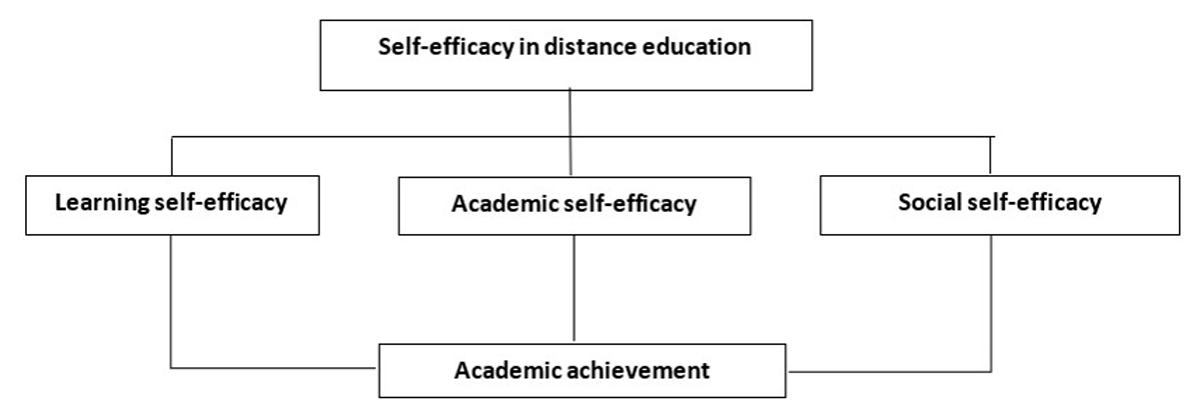
Figure 1
Relationship between Different Dimensions of Self-efficacy.
Academic self-efficacy: Students believe in meeting their study program’s requirements and mastering it successfully.
Learning self-efficacy: Students’ belief in knowing and applying appropriate learning strategies to self-manage and organise their learning path.
Social self-efficacy: Students believe in having social support to master their study program and be resilient to setbacks in their private and job environments during their studies.
Method
This study employed a quantitative cross-sectional survey design to explore the dimensions of self-efficacy in distance education. A cross-sectional design was chosen to capture a snapshot of students’ self-efficacy at a single point in time, which is suitable for identifying patterns and correlations within the collected data (Creswell, 1994). The survey included both descriptive and correlational analyses to examine the relationships between academic, learning, and social self-efficacy dimensions.
The quantitative approach allows for the systematic collection and statistical analysis of data, providing robust insights into the self-efficacy levels among distance education students. This approach is justified by its ability to generalise findings across the large sample of students surveyed (Bryman, 2016). The study’s correlational aspect helps in understanding the interrelationships between different self-efficacy dimensions and how they impact students’ educational experiences and outcomes.
Sample Size and Power Analysis
To ensure that our sample size was adequate to detect effects within our data, we conducted an a priori power analysis. The parameters and results of the power analysis are detailed in Table 1.
The power analysis indicates that a sample size of 86 participants per group was required to achieve a power of 0.900 (90%) at a significance level of 0.05, assuming a medium effect size (Cohen’s |δ| = 0.500). The actual power obtained was 0.903, slightly exceeding our target, thus confirming the adequacy of our sample size.
We designed a survey based on the three dimensions of self-efficacy and distributed it to students enrolled at a Distance University of Applied Science in Germany. The survey findings were gathered and assessed to gauge the significance of the various facets of self-efficacy and any possible links among them. Furthermore, through open-ended questions at the end of the survey, we endeavoured to uncover effective supportive interventions to bolster student self-efficacy.
Participants
The study surveyed 6724 students across six undergraduate programs at the Faculty of Health and Care at the Distance University of Applied Sciences in Germany, achieving a 7.02% response rate with 476 completed questionnaires as show in Table 2.
Table 2
Overview of Bachelor Programs.
| BACHELOR PROGRAM | ENROLLED STUDENTS | PARTICIPANTS | RESPONSE RATE (%) |
|---|---|---|---|
| Vocational education | 1228 | 127 | 10.34 |
| Psychology | 1978 | 159 | 8.04 |
| Business Psychology | 534 | 44 | 8.24 |
| Therapy and nursing sciences | 379 | 18 | 4.75 |
| Nursing Management | 1412 | 57 | 4.04 |
| Health and social management | 1193 | 65 | 5.45 |
| Total | 6724 | 472 | 7.02 |
Among the participants, 414 were females (87.9%), while only 56 were male (11.9%), and 2 (0.4%) identified as diverse. The average age of the students was 34.7 years, and they were, on average, between their third and fourth semesters. 90.7% or 428 students indicated studying part-time alongside their work. This demographic distribution reflects the enrolment distribution in the surveyed programs, where women are overrepresented. Studies indicate that women dominate enrolment in health and care programs due to various socioeconomic factors and career preferences (McLaughlin et al., 2010; Sanagoo et al., 2017).
The skewed demographic distribution towards female students may affect the generalizability of our findings. Since gender-specific factors can influence self-efficacy beliefs, the predominance of female respondents may bias the results. To address this, we have discussed the potential implications of this gender imbalance on the study’s outcomes. Additionally, we acknowledge the small number of male and diverse participants as a limitation of the study. Future research should aim to include a more balanced and diverse sample to enhance the generalizability of the findings.
Data Collection and Analysis
Against the findings of our literature review, no validated surveys are available to precisely measure the three dimensions of self-efficacy in distance education.
Although established scales for measuring self-efficacy in online learning exist, such as the OLSES (Zimmerman & Kulikowich, 2016), ISS (Eastin & LaRose, 2006), the Digital Learning Self-Efficacy Scale (Hung et al., 2010), and the Technology Self-Efficacy Scale (Compeau & Higgins, 1995), we developed our own scale to address specific aspects of distance learning that these instruments do not fully capture. This tailored approach was necessary to better understand the unique challenges distance learners face.
While the OLSES by Zimmerman and Kulikowich (2016) focuses on self-efficacy in general online learning contexts, it does not address the broader spectrum of challenges specific to distance education, such as maintaining motivation and managing time effectively in an asynchronous learning environment. Similarly, the ISS by Eastin and LaRose (2006) emphasises internet-specific competencies but lacks a focus on the unique aspects of distance learning, such as balancing study with work and family responsibilities. The Digital Learning Self-Efficacy Scale (Hung et al., 2010) and the Technology Self-Efficacy Scale (Compeau & Higgins, 1995) provide valuable insights into digital and technology-related competencies but do not comprehensively cover the multifaceted nature of self-efficacy required for distance education.
Our framework identifies three critical dimensions of self-efficacy in distance education: academic, learning, and social. While academic self-efficacy is well-covered by existing scales, the dimensions of learning self-efficacy (including time management and learning strategies) and social self-efficacy (including accessing social support and building resilience) are not adequately addressed. These dimensions are crucial for providing a holistic understanding of self-efficacy in distance education, allowing for more accurate and meaningful assessments that can inform targeted interventions.
Hence, our survey items were developed by thoroughly reviewing the existing literature on self-efficacy in education. For academic and learning self-efficacy, we based our items on the Occupational Self-Efficacy Scale by Rigotti et al. (2008), which assessed the validity of self-efficacy across different countries and highlighted its reliability in diverse contexts. This study demonstrated the structural and construct validity of the scale in Germany, Sweden, Belgium, the UK, and Spain, showing its robustness across various organisational environments. Additionally, we incorporated findings from Tuononen et al. (2023), which explored the role of academic self-efficacy in university students’ learning and performance, emphasising its critical impact on educational outcomes and its relationship with academic engagement and performance.
For social self-efficacy, we developed items based on Shaikh and Asif (2022), who provided a qualitative exploration of social self-efficacy in distance learning. Their work identified key factors that influence students’ social interactions and support mechanisms in an online learning environment. Their work highlighted the importance of social self-efficacy in seeking help, engaging with peers, and utilising social support effectively.
To ensure the validity and reliability of our newly developed scale, we conducted extensive pilot testing and sought feedback from professionals in the field of distance education. This rigorous process involved refining the scale items to accurately capture the experiences and challenges of distance learners, resulting in high content validity and reliability (Cronbach’s Alpha = 0.819). Additionally, the scale was designed to reflect the unique situational variables of distance education, such as coping with limited face-to-face interactions and accessing institutional support remotely.
By developing a tailored scale, we aim to provide a comprehensive assessment of self-efficacy among distance learners, enabling educators to design more effective support mechanisms. This approach aligns with the need for context-specific measurement tools that accurately capture the unique aspects of different educational settings (Bandura, 1977; Little & Rubin, 2002). While valuable, existing instruments do not sufficiently address the multifaceted nature of self-efficacy specific to distance education, requiring a more nuanced and tailored approach.
The developed survey comprised 18 items, six for each dimension of self-efficacy (see appendix). Furthermore, two questions were added to the survey to garner data regarding students’ support requirements in their studies. The items were rated using a 5-point Likert scale, with choices varying from 1 (strongly disagree) to 5 (strongly agree). To establish the reliability and validity of the survey, five research assistants affiliated with the University of Applied Sciences completed a preliminary test, discovering no noteworthy disparities.
In March 2023, we distributed the survey to all 6724 students enrolled in six undergraduate programs at the Faculty of Health and Care at the Distance University of Applied Sciences in Germany through the campus management system, followed by a reminder ten days later. We employed a stratified random sampling method to ensure comprehensive representation across different programs and demographic groups. This method was chosen to enhance the generalizability of our findings by ensuring that all subgroups within the population were adequately represented. Despite a response rate of 7.02%, we conducted a missing data analysis and used available case analysis, retaining over 94% of the initial sample of 443 cases to minimise biases. This approach ensured that the analysis was based on valid responses, enhancing the robustness and validity of our findings (Little & Rubin, 2002). We acknowledge the low response rate and its potential impact on the sample’s representativeness. However, a meta-analysis by Wu, Zhao, and Fils-Aime (2022) indicates that online surveys, especially in distance education, typically achieve lower response rates due to the students’ numerous responsibilities. We addressed these potential biases by discussing the limitations of the study’s generalizability.
The survey was conducted anonymously to ensure the confidentiality and privacy of the participants. Ethical approval for the study was obtained from the Institutional Review Board (IRB) of the Distance University of Applied Sciences in Germany. Informed consent was obtained from all participants, who were informed about the purpose of the study, their right to withdraw at any time, and how their data would be protected. Data protection measures included anonymising the responses and securely storing the data in compliance with the General Data Protection Regulation (GDPR) guidelines.
Findings and Discussion
To determine the reliability of your questionnaire, especially regarding internal consistency, we performed Cronbach’s Alpha as shown in Table 3. The reliability analysis of our scale yielded a value of 0.819, indicating good internal consistency (95% CI: 0.795 to 0.841). This finding substantiates the scale’s reliability for measuring the intended construct.
Table 3
Frequentist Scale Reliability Statistics.
| ESTIMATE | CRONBACH’S α |
|---|---|
| Point estimate | 0.819 |
| 95% CI lower bound | 0.795 |
| 95% CI upper bound | 0.841 |
[i] Note. Of the observations, pairwise complete cases were used. The following item correlated negatively with the scale: V23.
In addition, we also report the item-total correlations as shown in Table 4.
Table 4
Frequentist Individual Item Reliability Statistics.
| IF ITEM DROPPED | ||
|---|---|---|
| ITEM | CRONBACH’S α | SD |
| V6 | 0.803 | 0.973 |
| V7 | 0.802 | 0.898 |
| V8 | 0.804 | 0.938 |
| V9 | 0.807 | 0.958 |
| V10 | 0.803 | 0.886 |
| V11 | 0.801 | 0.820 |
| V12 | 0.804 | 0.921 |
| V13 | 0.799 | 0.968 |
| V14 | 0.803 | 0.988 |
| V15 | 0.807 | 1.021 |
| V16 | 0.800 | 1.090 |
| V17 | 0.810 | 0.804 |
| V18 | 0.820 | 1.205 |
| V19 | 0.807 | 1.071 |
| V20 | 0.828 | 1.358 |
| V21 | 0.818 | 1.000 |
| V22 | 0.811 | 0.855 |
| V23 | 0.847 | 0.917 |
In the conducted exploratory factor analysis (EFA), utilising a principal axis factoring extraction method and an oblique rotation, we identified a distinct factor structure within our dataset, revealing three separate factors collectively accounting for 79.5% of the total variance. This significant variance coverage indicates a robust underlying structure. The Kaiser-Meyer-Olkin (KMO) measure validated the sampling adequacy for our analysis, achieving a KMO value of 0.879. At the same time, Bartlett’s sphericity test confirmed the correlation matrix’s factorability, yielding a chi-square (χ2) value of 258.585 with 102 degrees of freedom, significant at p < .001. Each factor was interpreted based on items with high loadings, correlating with the theoretical constructs of academic, learning, and social self-efficacy. This elucidation provides compelling evidence for the theoretical implications or practical applications of our findings, emphasising the relevance and coherence of the identified factors in the context of our study on self-efficacy in distance education.
Survey findings were categorised into three self-efficacy dimensions. For academic self-efficacy as shown in Table 5, mean scores ranged from neutral (2.87) to relatively positive (3.74). Thesis completion was the lowest (2.87), a common challenge for students (Bitchener & Basturkmen, 2006). Other components showed consistent positive perspectives, with means between 3.44 and 3.74.
Table 5
Academic Self-Efficacy (1 weak –5 strong).
| ITEM (n470) | MEAN | STD. DEVIATION |
|---|---|---|
| Problem-solving | 3.63 | .973 |
| Managing study program | 3.60 | .898 |
| Thesis | 2.87 | .958 |
| Study goals | 3.69 | .886 |
| Academic requirements | 3.74 | .820 |
| Academic competence | 3.44 | .973 |
| Overall | 3.50 |
In terms of the students’ self-evaluation of their learning self-efficacy as shown in Table 6 compared to their academic self-belief, it is worth noting that they have shown considerable confidence in this dimension (with a range varying between 3.54 and 4.02). Nonetheless, previous research has pointed out that students significantly overstate their effective learning strategy implementation in practice (Hui et al., 2022). It would be favourable to explore the specific learning strategies students utilise compared to the effective learning strategies found in the literature (Dirkx et al., 2019). Additionally, it should be acknowledged that self-efficacy in self-motivation received the highest mean. The importance of motivational factors (Semmar, 2006; Seon Ahn & Bong, 2019) and self-directed learning abilities (Garrison, 1997, 2003; Shao et al., 2022) in distance learning needs to be particularly emphasised. Students must strike a balance between their studies and work in this context.
Table 6
Learning Self-Efficacy (1 weak –5 strong).
| ITEM (n470) | MEAN | STD. DEVIATION |
|---|---|---|
| Self-motivation | 4.02 | .921 |
| Awareness of learning strategy | 3.69 | .968 |
| Effectiveness of learning strategy | 3.77 | .988 |
| Reflecting learning strategy | 3.70 | 1.021 |
| Time-management | 3.54 | 1.090 |
| Adjusting learning strategy | 3.92 | .804 |
| Overall | 3.77 |
Social self-efficacy refers to the students’ conviction regarding personal and social support systems for handling their academic workload. The dimension covering social self-efficacy and its related aspects can be seen as the most arduous challenge for distance education students, as highlighted in previous literature (Gursul, 2010; Tannert & Gröschner, 2021). This is further intensified by more than 90% of the sample student population juggling work commitments alongside their studies. As anticipated, social self-efficacy as shown in Table 7 obtained the lowest mean score among all three dimensions (3.34). It is worth noting that the students’ self-efficacy in coping with negative events or resilience exhibits positive results (3.81). In contrast, the control variable of vulnerability, indicating a negative response to unforeseen events, received the lowest mean score (2.36). The provision of private support does not seem to present a significant problem for the students (4.16), albeit with a high standard deviation for this item. A more significant standard deviation is evident for employer support. The mean value falls within the neutral range, yet the standard deviation highlights significant deviations above and below the scale. This level of variation proposes that employer support significantly varies among students.
Table 7
Social Self-Efficacy (1 weak –5 strong).
| ITEM (n470) | MEAN | STD. DEVIATION |
|---|---|---|
| Financial stability | 3.41 | 1.205 |
| Reconciling work and study | 3.27 | 1.071 |
| Employer support | 3.02 | 1.358 |
| Private support | 4.16 | 1.000 |
| Resilience | 3.81 | .855 |
| Vulnerability | 2.36 | .917 |
| Overall | 3.34 |
In the subsequent stage, we employed Spearman’s rank correlation to examine the connection between variables across the three dimensions. We used Spearman’s rank correlation due to the ordinal nature of our survey data and the non-normal distribution of several variables. Spearman’s correlation is a non-parametric measure that does not assume a linear relationship or normal distribution, making it more suitable for our data characteristics. Given some variables’ significant skewness and kurtosis, Spearman’s correlation provides a more robust analysis than Pearson’s correlation, which assumes normality and linearity. This approach ensures the validity of our findings by accurately reflecting the monotonic relationships present in the data.
However, it is crucial to emphasise that Spearman’s correlation coefficients may have differing interpretations in different fields of scientific research (Akoglu, 2018). Generally, it is widely acknowledged that correlation coefficients ranging from 0.3 to 0.5 are moderate, while coefficients ranging from 0.5 to 0.8 are strong.
Our study identified a significant and strong positive correlation between academic competence and problem-solving (0.562**) as well as between academic competence and managing the study programme (0.530**) regarding the dimension of academic self-efficacy as shown in Table 8. This indicates that students who possess proficiency in academic matters have superior problem-solving abilities and achieve better results in their academic studies. Thus, enhancing their academic proficiency may lead to an impact on other facets of their academic journey. We found that students’ self-efficacy in meeting academic requirements is (moderate to strongly) positively correlated with all other variables, specifically study goals (0.497**), managing study programme (0.513**), and problem-solving (0.450**). This suggests that higher self-efficacy in meeting academic requirements is linked to accomplishing study goals and other skills relevant to academic studies. Improving students’ self-efficacy in meeting their academic demands could considerably enhance their overall achievement. However, all other factors exhibited merely a slight to moderate correlation with one another.
Table 8
Correlation Analysis of Academic Self-Efficacy.
| VARIABLES | ACADEMIC COMPETENCE | PROBLEM-SOLVING | MANAGING STUDY PROGRAM | THESIS | STUDY GOALS |
|---|---|---|---|---|---|
| Problem-solving | .562** | ||||
| Sig. (2-tailed) | .000 | ||||
| N | 470 | ||||
| Managing study program | .530** | .465** | |||
| Sig. (2-tailed) | .000 | .000 | |||
| N | 470 | 470 | |||
| Thesis | .329** | .343** | .413** | ||
| Sig. (2-tailed) | .000 | .000 | .000 | ||
| N | 469 | 469 | 470 | ||
| Study goals | .391** | .365** | .441** | .403** | |
| Sig. (2-tailed) | .000 | .000 | .000 | .000 | |
| N | 468 | 468 | 467 | 468 | |
| Academic requirement | .452** | .450** | .513** | .411** | .497** |
| Sig. (2-tailed) | .000 | .000 | .000 | .000 | .000 |
| N | 470 | 470 | 469 | 468 | 470 |
[i] Note. *p < .05, **p < .01.
In terms of learning self-efficacy, the Spearman test reveals that time management has noteworthy and significant (moderate to strongly) positive correlations with all other variables as shown in Table 9: effectiveness of learning strategies (0.530**), awareness of learning strategies (0.497**), reflecting on learning strategies (0.543**), and adjusting learning strategies (0.437**). Individuals with superior time-management skills tend to score higher on aspects of learning and self-regulation, which is also supported by findings in the literature (Ahmad et al., 2019). Additionally, outcomes demonstrate a noteworthy strong correlation (0.692**) between the awareness of learning strategies and their practical implementation. This outcome is unsurprising since a thorough grasp of learning strategies is critical for their successful deployment. Offering workshops or training to students on appropriate learning techniques can prove beneficial. Moreover, a significant, strong positive correlation of 0.545** exists between self-motivation and the effectiveness of learning strategies. Thus, more self-motivated students tend to consider their learning strategies more effective.
Table 9
Correlation Analysis of Learning Self-Efficacy.
| VARIABLES | SELF-MOTIVATION | EFFECTIVENESS OF LS | AWARENESS OF LS | REFLECTING LS | TIME MANAGEMENT |
|---|---|---|---|---|---|
| Effectiveness of learning strategies | .545** | ||||
| Sig. (2-tailed) | .000 | ||||
| N | 470 | ||||
| Awareness of learning strategies | .464** | .692** | |||
| Sig. (2-tailed) | .000 | .000 | |||
| N | 470 | 470 | |||
| Reflecting learning strategies | .350** | .491** | .554** | ||
| Sig. (2-tailed) | .000 | .000 | .000 | ||
| N | 470 | 470 | 470 | ||
| Time management | .550** | .530** | .497** | .543** | |
| Sig. (2-tailed) | .000 | .000 | .000 | ||
| N | 469 | 469 | 469 | 469 | |
| Adjusting learning strategies | .331** | .356** | .373** | .410** | .437** |
| Sig. (2-tailed) | .000 | .000 | .000 | .000 | .000 |
| N | 469 | 469 | 469 | 468 | 469 |
[i] Note. *p < .05, **p < .01.
For the last dimension of social efficacy, the Spearman test revealed no correlation stronger than 0.367** as shown in Table 10. There is a moderate positive correlation of 0.367** between financial support and the ability to reconcile work and study. This suggests that individuals receiving financial support better manage to balance their work and study commitments. Noteworthy, vulnerability is (weakly) negatively correlated with all other items except employer support, which indicates that either resilience or vulnerability could affect the other social self-efficacy items in both ways. This is a consistent connection, as resilience is understood as the overriding ability to return to the original state after setbacks. Although resilience faces conceptual and methodological weaknesses in higher education (Durso et al., 2021), it might be fruitful to explore the current structure of student resilience programs in higher education and precisely distance education in more detail (Brewer et al., 2019).
Table 10
Correlation Analysis of Social Self-Efficacy.
| VARIABLES | FINANCIAL SUPPORT | RECONCILING WORK AND STUDY | EMPLOYER SUPPORT | PRIVATE SUPPORT | POSITIVE RESILIENCE |
|---|---|---|---|---|---|
| Reconciling work and study | .367** | ||||
| Sig. (2-tailed) | .000 | .000 | |||
| N | 469 | ||||
| Employer support | .238** | .354** | |||
| Sig. (2-tailed) | .000 | .000 | |||
| N | 468 | 469 | |||
| Private Support | .227** | .263** | .198** | ||
| Sig. (2-tailed) | .000 | .000 | .000 | ||
| N | 469 | 470 | 470 | ||
| Resilience | .139** | .245** | .122** | .239** | |
| Sig. (2-tailed) | .000 | .000 | .000 | .000 | |
| N | 468 | 469 | 468 | 468 | |
| Vulnerability | –.160** | –.210** | –.089 | –.257** | –.275** |
| Sig. (2-tailed) | .000 | .000 | .000 | .000 | .000 |
| N | 468 | 469 | 468 | 468 | 469 |
[i] Note. *p < .05, **p < .01.
A conducted regression analysis shows that demographic factors have varying impacts on the three dimensions of self-efficacy. For academic self-efficacy, no significant influence of age, semester, or gender was found. Similarly, no significant effects of the independent variables were detected for learning-related self-efficacy. The situation differs for social self-efficacy: the results indicate that both semester (β = –0.028, p = 0.003) and gender (β = –0.153, p = 0.034) are significant predictors. Higher semesters are associated with lower social self-efficacy, which may indicate increasing challenges and burdens throughout the course of studies. Additionally, female students exhibit significantly lower social self-efficacy than their male counterparts. However, it is important to note that the small proportion of male students in the sample could influence the results and limit the generalizability of the findings. These insights underscore the need to develop gender-specific and semester-related support measures to strengthen students’ social self-efficacy, promoting academic success.
At the survey’s conclusion, students were queried about their preferences for support and guidance from the Distance University of Applied Sciences during their academic journey as shown in Table 11. The findings demonstrate that most students yearn for supplementary support, as 79.5% of respondents expressed their wish to avail more resources for training and support.
Table 11
Support Measures.
| ITEM (n471) | N | PERCENT |
|---|---|---|
| No | 14 | 3.0% |
| Rather no | 27 | 5.7% |
| Neutral | 56 | 11.9% |
| Rather yes | 175 | 37.2% |
| Yes | 199 | 42.3% |
[i] I would like more support from the University of Applied Sciences to achieve my degree.
In the second question, the survey asked students about their preferences for academic support and training they may require during their journey as shown in Table 12. The findings showed that over two-thirds of the students (67.94%) favoured targeted support for subject-specific topics, indicating that academic self-efficacy may be the primary concern for most. Instilling concrete training may be beneficial in addressing this need. The other responses were evenly distributed, with most students expressing a desire for more contact with peers (46.07%) and more support from professors (43.74%), which may indicate a sense of social isolation often associated with distance learning. Conversely, self-organisation support received the least requests (38.64%), indicating that most students feel confident in this area, which aligns with the findings on students’ learning self-efficacy.
Table 12
Forms of Support Measures.
| ITEM (n471) | N | PERCENT |
|---|---|---|
| Courses on suitable learning strategies | 203 | 43.10 |
| More support from teachers | 206 | 43.74 |
| More opportunities to exchange with other students | 217 | 46.07 |
| Specific support with subject-related topics | 320 | 67.94 |
| Counselling for personal problems during studies | 187 | 39.70 |
| Support with self-organisation during studies | 182 | 38.64 |
[i] What forms of support would you like to have? (multiple answers are possible).
Discussion and Conclusion
This paper aims to thoroughly examine the notion of self-efficacy in the framework of distance education. Self-efficacy is a pivotal concept in education, as research has consistently shown its influence on academic achievement. Consequently, investigating self-efficacy in distance learning more extensively is fundamental, considering the currently insufficient knowledge in this domain. This is particularly significant in supporting students undertaking a distance learning programme.
Our study first proposes categorising the various dimensions of self-efficacy in distance learning by distinguishing academic, learning, and social self-efficacy. To empirically construct and compare the different dimensions of this distinction, we surveyed at a Distance University of Applied Sciences. While the survey results align with the findings of the literature and thus demonstrate the importance of the three-dimensional concept, drawing general conclusions is complex.
Academic and learning self-efficacy tend to be higher among students, while social self-efficacy is comparatively weaker. On average, students deem their thesis the main hurdle in academic self-efficacy. Academic proficiency is a pivotal aspect that can impact both problem-solving skills and confidence when it comes to successfully finishing the programme of study.
Regarding learning self-efficacy, students are self-assured in their capacity to recognise and competently apply learning strategies. However, the existing literature does not echo this claim (Dirkx et al., 2019; Graf et al., 2009; Tuononen et al., 2023). Self-motivation received the highest mean, which is considered a fundamental prerequisite for studying at a distance-based university (Otto, 2018). Time management is shown to have moderate to strong correlations with all other items, highlighting its importance in self-regulated learning. Another crucial factor is the need for awareness and effective implementation of learning strategies.
While no strong correlation has been identified within the construct of social self-efficacy, the dimensions of resilience and vulnerability are weakly positively or negatively correlated with all other items, indicating that these factors are worth deeper consideration in future studies. However, it must be noted that the low (partly negative) intercorrelations of the items indicate that the scale has insufficient reliability and may require future adjustments.
The regression analyses indicate that demographic factors significantly influence only social self-efficacy, particularly semester and gender, with higher semesters and female students exhibiting lower values. This underscores the need for gender-specific and semester-related support measures.
Approximately 80% of the students surveyed expressed their desire for further support mechanisms within their distance learning programme. The topics of this support align with previous findings, with two-thirds of students seeking academic support, 46% wishing to engage more with their peers, and around 44% requiring more support from their professors. The scores for counselling for personal issues during studies (39.7%) and support with self-organisation (38.64%) were the lowest.
This study investigated the various dimensions of self-efficacy in distance education, specifically academic self-efficacy, learning self-efficacy, and social self-efficacy. Our findings highlight these dimensions’ distinct roles in influencing student outcomes in a distance learning environment. While academic self-efficacy is critical for task-specific confidence, learning self-efficacy encompasses broader learning strategies and skills necessary for effective study habits and time management. On the other hand, social self-efficacy impacts students’ ability to engage in social interactions and seek help, which is particularly crucial in distance education, where physical separation from peers and instructors can be a significant barrier.
The primary outcomes of this study underscore the importance of addressing all three dimensions of self-efficacy to enhance student success in distance education. Academic self-efficacy is vital for students to feel confident in managing and completing specific academic tasks. Learning self-efficacy, which includes time management and effective study strategies, is essential for fostering independent learning. Social self-efficacy facilitates students’ engagement in social interactions and their ability to seek support, which can significantly affect their overall educational experience and success.
One limitation of this study is the reliance on self-reported data, which may be subject to response biases. Additionally, the study was conducted within a specific cultural and educational context, which may limit the generalizability of the findings to other settings. The sample size, while adequate, could be expanded in future research to include a more diverse population of distance learners. Another limitation is the study’s cross-sectional nature, which provides a snapshot in time but does not capture changes in self-efficacy over the course of a student’s educational journey.
The significance of the results requires critical reflection on the methodological approach used. For the survey, no validated instruments were available to measure self-efficacy in distance education, so the validation of the survey is subject to further research. However, the results obtained can be used as a pretest for a validation study of the instrument. The overall number of 472 completed questionnaires for the initial survey renders the outcomes a suitable foundation. The study findings may face criticism for solely relying on self-evaluation and, therefore, require confirmation through empirical testing. However, the concept of self-efficacy itself is grounded in self-assessment. The survey was conducted in Germany, so it cannot be extrapolated to other countries without further adjustments. Furthermore, not all distance education programmes have equal structures. However, according to Scholz et al. (2002), the concept of self-efficacy is relatively stable across various countries and cultures. Additionally, distance education has been defined and differentiated from online learning. For future research, a more detailed investigation of self-efficacy in distance learning may be promising. While self-efficacy is recognised as a predictor of academic success in conventional universities, there is limited empirical research examining this relationship in distance education (Maurer et al., 2021). As a result, the different dimensions and respective items presented in this paper require further inquiry. Therefore, conducting additional scrutinisation and refinement of the various components would be beneficial. There is especially limited research on the role of social support in enhancing self-efficacy in distance education, particularly regarding its social dimensions (Tannert & Gröschner, 2021).
Future research should longitudinally examine self-efficacy development in distance education students to understand how it evolves over time and influences long-term educational outcomes. Additionally, exploring interventions designed to enhance each dimension of self-efficacy could provide valuable insights into practical strategies for supporting distance learners. Further studies could also investigate the impact of different types of social support on social self-efficacy to better understand how external resources can be leveraged to improve student outcomes.
Upcoming studies could explore a broader range of countries and distance learning modes. While some studies have investigated the effect of distance education on self-efficacy, more research is required to determine if the effect varies in specific contexts (Özüdoğru, 2022). Also, it would be pertinent to investigate the effectiveness of practical interventions like workshops and training on self-efficacy as well as the impact of support and training on students’ learning self-efficacy, particularly for specific topics like time management. Studying the influence of instructor self-efficacy on student self-efficacy in distance learning may also prove beneficial. While traditional education has shown instructor self-efficacy to be a significant factor in student self-efficacy, there is limited research on this correlation in distance education (Alamri, 2023).
In conclusion, our study provides a comprehensive analysis of the multifaceted nature of self-efficacy in distance education. By addressing academic, learning, and social dimensions of self-efficacy, educators and administrators can develop more targeted interventions to support distance learners, ultimately enhancing their educational experiences and success.
Data Accessibility Statement
All data generated or analysed during this study are included in this published article [and its supplementary information files].
Additional Files
The additional files for this article can be found as follows:
Ethics and Consent
No ethical approval was required for this study, as it involved an anonymized survey with no personal data collection. Participation was voluntary and anonymous, posing no risk to participants.
Competing Interests
The authors have no competing interests to declare.
Author Contributions
D. Otto and L. Peters: conceptualization, methodology, supervision, formal analysis, investigation; D. Otto: supervision, software, writing—original draft preparation; D. Otto and N. Kleinesper: writing—review and editing, data curation, visualization; N. Kleinesper: validation. All authors have read and agreed to the published version of the manuscript.