
Introduction
The level of development of countries depends on the opportunity for people in that country to receive continuous and quality education and their contribution to economic development with the knowledge and skills they acquire (Çakmak, 2008). Incidents such as pandemics, wars, and natural disasters may prevent the provision of uninterrupted and quality education (Aslan & İnceoğlu, 2023). Traditional education had to be suspended as a result of an incident, namely the Covid-19 pandemic (Daniel, 2020). Following UNESCO’s (2020) recommendation on distance education on the grounds that the current interruption would threaten the right to education and the vision of a sustainable education system without disruption, the concept of distance education provided in online environments entered our lives as a solution (Telli Yamamoto & Altun, 2020). It is reported that nearly 13.5 million people in Turkey were directly affected by the twin 7.7 and 7.6 magnitude earthquakes that happened on 6 February, 2023., in Kahramanmaraş. As a result of this natural calamity, the Council of Higher Education agreed to complete the spring semester of the academic year 2022–2023 through online learning at universities (URL-1). Today, in the event of disasters such as the COVID-19 pandemic and the Kahramanmaraş earthquake, remote education given in online environments is preferable to avoid disruptions in school. Online learning, in which we have engaged a lot through distance education, is an online learning practice that emerged with the use of digital technologies (Petrova, 2007). Online learning is continually growing and developing in response to learners’ interests, demands, and requirements, as well as the abilities required of teachers. (Kavrat & Türel, 2013). In these learning environments, the roles of students change as much as the roles of teachers (Turan-Güntepe et al., 2023). In an online learning environment, the teacher is expected to assume a role in guiding and facilitating the process, while the student is expected to actively participate by taking on their own learning responsibilities (Telli & Altun, 2023). Furthermore, online learning will assist students in assuming responsibility for the learning process, and research skills, and effectively and asynchronously using learning tools, that is, being a self-learning individual (Dabbagh, 2007). In this process, the materials that teachers can use effectively in their lessons in online learning environments are digital learning materials.
Digital learning materials must be interactive, and online learning environments enriched with these interactive materials must be created by teachers (Dönmez Usta, 2021). DILMs, which can be developed without any technical knowledge, offer many benefits to the learner and teacher in many aspects and raise the level of student-content interaction (Günaydın & Kurt, 2021). The development of DILMs is one of the importantcomponents of learner-centered online learning environment designs. With a worldwide epidemic in particular, the incorporation of digital tools in the classroom environment is no longer an option, but a requirement (Algeo et al., 2021). That’s why creating and organizing digital instructional materials will be crucial for teachers. However, even if teachers have the competencies to develop digital learning material, the integration of the relevant content into the learning environment is also an important criterion for an effective process. In this context, Perkmen (2008) emphasizes the importance of focusing on the impact of these technologies on the learning that takes place and the teaching process instead of focusing on technology in the technology integration process.
The self-efficacy of the teachers with regard to technology is shown to be an important factor in determining the indicators of technology integration (Albion, 1999). Similarly, Liu (2012) draws attention to the importance of the technological skills of teachers in ensuring improvement in the technology integration process and emphasizes that self-efficacy will play an important role at this stage. It can also be said that online learning plays a key role in learning environments that can be created with digital applications enabling technology integration into classrooms (Telli Yamamoto & Altun, 2020). Technology integration in education is a comprehensive process of incorporating and using technology in educational systems to boost the standart of education and teaching processes and find solutions to society’s need to learn (Wang & Woo, 2007). Effective technology integration necessitates qualified staff, access to software and hardware resources, proper teaching and evaluation methodologies, technical support, vision, requisite policies, and specific standards (Roblyer, 2006). In this environment, it is vital to raise individuals who follow the current opportunities and the standards defined in the technology integration process to perform the technology integration process successfully and efficiently.. In addition, although pre-service teachers are trained in the use of educational technology in our country, it is important to analyze this training in line with the educational technology standards accepted all over the world in order to keep up with the times. In many countries, the technological infrastructure of schools is getting improved in order to integrate technology into the focus of education while the training of teachers for the use of this technology is emphasized. As the teachers of the future, pre-service teachers are some of the important stakeholders who will use educational technologies effectively. However, not all teachers can benefit from educational technologies as they should, which has led to the need to ensure unity in the use of educational technologies for education and training processes (Çoklar, 2008). Within this context, the International Society for Technology in Education (ISTE, 2019) set the International Educational Technology Standards in 2008 to ensure the effective application of technologies in education worldwide. Although pre-service teachers in Türkiye have received training that provided them with the opportunity to gain experience in technology integration, it is important to analyze this training in line with globally accepted educational technology standards. In addition, ISTE developed the ISTE standards, which describe the higher standards and best practices of excellence in technology, to assess teachers’ technology self-efficacy (Sharp, 2014). In line with these standards, teachers are expected to assume roles that require high-level competencies such as learner, leader, and designer. The self-efficacy of teachers also dynamizes the quality and sustainability of teaching in the learning environment (Azar, 2010). Students’ comprehension of online technologies will affect their interaction with peers and instructors and their use of technology. In this sense, education should be able to meet the standards that individuals with self-efficacy and learners should accommodate in the 21st-century (Van Acker et al., 2013). In the subject matter, teachers’ self-efficacy is comprehensive and requires not only theoretical knowledge and skills but also effective implementation (Gavora, 2010). On the other hand, teachers are expected to be able to create learning environments where they integrate their pedagogical practices with digital technologies (Eurydice, 2019).
It is thought that providing technology-rich learning environments of learners of this century, who grew up with it, will contribute to their skills and learning. In this direction, educational institutions should update themselves and change their teaching methods in the adaptation of new technological tools and related tools to the learning process, taking into account the conditions of the digital age (Kayaduman, 2022). In line with this change, teachers in relevant institutions to enrich the learning environment with technology, it is important for them to be acquainted with digital applications that provide opportunities to prepare Digital Interactive Learning Materials (DILMs), know how they can benefit from these applications in learning environments, and give concrete examples after gaining experience in the relevant subject. Learners of this century must be allowed to enhance their knowledge and abilities concerning interactive digital applications, produce interactive learning materials using these digital tools, and plan activities to employ these materials in the learning environment (Dönmez Usta, 2021).
Especially during the Covid-19 epidemic, educational institutions have transferred their practices online as a result of quarantine regulations enacted by countries to prevent the spread of the virus (Bozkurt & Sharma, 2020; Crawford et al., 2020). Educational institutions are responsible for the efficent management of the process in distance learning settings, the training of teachers and learners in this process, and the effective development and delivery of technology-supported courses (Mtebe, 2020). The use of interactivity and interactive tools is important in conducting courses effectively by increasing the participation of learners in online learning environments (Muzammil et al., 2020; De Oliveira, 2021). For interactive applications, it is also important that both the teacher and the student have the necessary digital skills, competencies, and self-efficacy. From this point of view, pre-service science teachers, who will be the teachers of the age, need to be trained with and know the interactive digital tools. In this context, in addition to theoretical knowledge, practical information has also been provided to pre-service teachers so that they could transfer their knowledge to learning environments. It is aimed to contribute to pre-service teachers’ self-efficacy in using DILMs and new technologies they have met in the learning environment. Besides the fact that self-efficacy plays an active role in the use of online learning environments (Bervell & Umar, 2017), it is known that individuals with high self-efficacy are more likely to follow technological developments and use digital applications (Erbenzer & Aslan, 2024). In this context, it is expected to help new world teachers whose self-efficacy has been supported start their profession with the use of digital tools and adapt to the in accordance with the requirements of the age more easily. Considering all these situations, the main aimto this study is to determine the changes in pre-service science teachers’ self-efficacy toward Digital Interactive Learning Materials(DILMs) development, technology integration, and educational standards at the end of a training process. Within the framework of this purpose, answers to the following research questions are sought within the scope of the study.
Is there a significant difference between the pre and post-tests scores of pre-service science teachers on the Digital Learning Material Development Self-Efficacy Scale?
Is there a significant difference between the pre and post-tests scores of pre-service science teachers on the Self-Efficacy Perception Scale for Technology Integration?
Is there a significant difference between the pre and post-tests scores of pre-service science teachers on the Educational Technology Standards Self-Efficacy Scale?
What are the opinions of pre-service science teachers about the use of DILMs prepared with the applications provided during the project in the learning environment?
Methods
Research method
The case study approach was used to perform the study. This method was preferred since it provided opportunity to focus on a very specific topic (Wellington, 2000), collect qualitative and quantitative data under the same roof (Çepni, 2007), get information in a short period of time without fear of generalization (Creswell et al., 2003), and categorize situations, events, and behaviors (Hancock & Algozzine, 2006). As one of the four case studies that Yin (2018) introduced, the holistic single case study can be used to situations involving people or organizations (Çepni, 2007). In this study, a holistic single-case design was used to collect various data about the educational process of DILMs and to examine the variables affecting the process holistically. In the holistic single-case design, there is an opportunity to examine a situation in detail with different data collection tools and to access information that was not obtained in previous studies (Yin, 2018). As it is known, case studies focus on a group’s characteristics, and in this study, participants took part in an online project funded by TUBITAK in Turkey. The project, which was called “Designing and Developing Interactive Teaching Materials Suitable for the New World Order” was a project in the 2020–2021 and 2021–2022 spring semesters. This study was conducted with 53 pre-service science teachers. The pre-service teachers do not represent all pre-service science teachers, therefore, there is no generalization concern in the light the case study researches. This situation can also be considered as a limitation of the research. Furthermore, the scales utilized in the study provided for quantitative data collection, while the reflection report allowed for qualitative data collection within the same roof. The investigation of the project’s effects on the self-efficacy of pre-service science teachers in developing digital teaching materials, integrating technology, and adhering to educational standards is also regarded as a particular concern.
Research group
Participants were identified through purposive sampling. The process of choosing individuals, events, things, or circumstances with certain qualities identified in connection to the problem is known as purposeful sampling. Purposive sampling was found to be appropriate for the criteria that were used to determine which participants will engage in the study (Büyüköztürk et al., 2015).
After the project is recognized by TUBITAK, an open invitation is sent to 3rd and 4th-grade students from scientific teaching departments at all Turkish institutions. The main reason why the participants were selected from the 3rd and 4th grades was that they had taken courses such as “Instructional Technologies, and Material Design”, and “Special Teaching Methods”, and had the competence to apply what they learned from these courses at a basic level. Applications for participation were welcomed through the project’s web page (URL-2) for the 2020–2021 and 2021–2022 academic years. Applications were evaluated based on certain criteria. These criteria are; have a general academic grade point average of at least 2.5 out of 4, have a computer and computer equipment such as a camera and microphone, have uninterrupted and limitless internet, and have basic computer literacy skills. If you are registered in the TÜBİTAK-Research Information System (ARBİS) Database and accepted to the event, you can participate full-time. Applications from participants were combined to form a list pool. The forms in this pool were inspected, and a preliminary assessment was done to determine whether they fit the criteria. Applications that did not match the eligibility requirements were removed from the participant list pool. Applications are categorized by university to ensure the greatest range of participants. In this grouping, academic grade point averages were ranked from highest to lowest. Controls were given by performing technical trial programs on the computer hardware of the selected participants.. As a result of this process, 30 participants were identified. The project, which was carried out twice, 53 out of 60 participants participated full-time in the process, but 7 participants could not do so due to various reasons. The project was completed with 53 (41 female, 12 male; 21–25 ages) participants who were 3rd or 4th-year Pre-service Science Teachers (PSTs) enrolled different universities in Türkiye. The number of participants as well as the distribution of them according to universities are presented in Graphic 1 below.
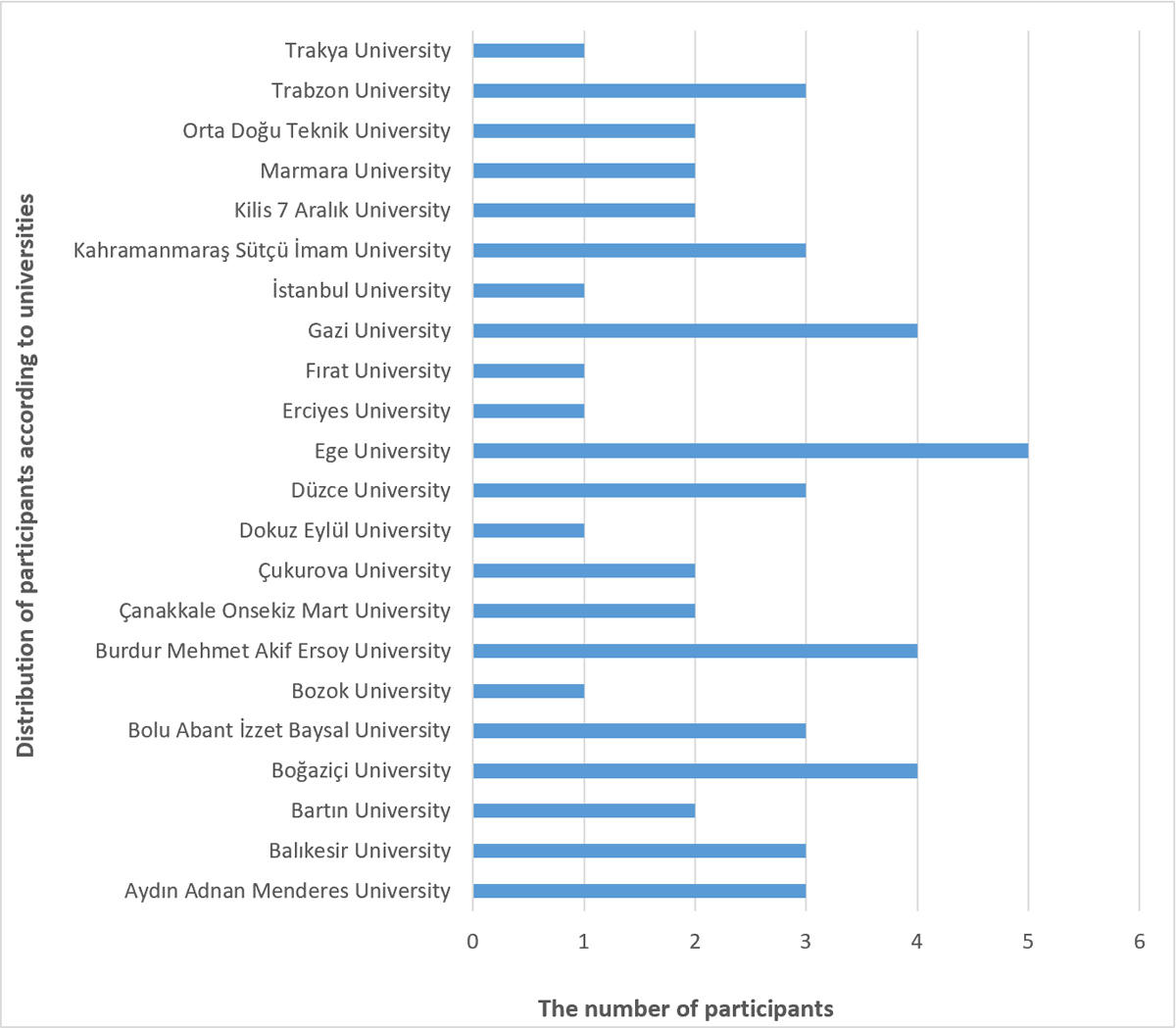
Graphic 1
Universities of the participants.
Data collection tools
In the project, PSTs were allowed to create digital interactive teaching materials and prepare activities for the use of the developed these digital materials in the learning environment. In this regard, data collection tools listed below were chosen to reflect the progress of the project participants’ self-efficacy in both digital interactive material development and technology integration. By implementing this procedure in accordance with standards like educational technology standards, it is possible to produce qualified learning outcomes in the context of technology integration. In this investigation, the following four collection tools were utilized.
Self-Efficacy Scale of Teachers’ Digital Teaching Material Development (DTeM): This scale consists of three factors and 38 items, developed by Korkmaz et al. (2019). The scale includes items such as “I can design the material according to the student’s needs”, “I can develop the background and the objects used in digital teaching materials to be compatible with each other”, “I can create graphics, shapes and objects suitable for the goals and achievements by using Web 2.0 software.”. With these three factors provided with the scale, a structure was formed with 14 items under the “Web 2.0 Development” factor, 18 items under the “Design” factor, and 6 items under the “Negative Point of View” factor. The factors identified in the scale explained 62% of the total variance. Cronbach alpha’s of all factors in this scale was 0.961. In this study, the value of Cronbach’s alpha was 0.772.
Technology Integration Self-Efficacy Scale (TIn): the scale consists of 2 factors and 19 items, developed by Ünal and Teker (2018). “I believe that I can successfully teach the relevant course content using appropriate technology,” “I believe that I can always use educational technology in effective ways,” and “I believe that I can regularly include technology in my lessons at appropriate times for my students to learn” are some examples of items from the scale that can be presented. These factors were named Self-Efficacy to Make Use Computer Technologies (13 items) and Self-Efficacy to Use Computer Technologies (6 items). The factors defined by the scale accounted for 54% of the overall variance. Cronbach’s alpha was determined to be 0.936 during the scale’s reliability analysis. In this study, Cronbach’s alpha was 0.775.
Education Technology Standards Self-Efficacy Scale (ETS): Şimşek and Yazar (2016) prepared a scale with five factors and 40 items. Some example items for the scale can be given: “I can encourage students to participate in various digital learning environments.”, “I can guide students in researching real-life subjects by using digital tools and resources.”, “I can design appropriate learning activities by integrating digital tools and resources related to the subject area to ensure that students learn in a permanent way.”, “I can constantly improve myself and learn about new technological tools in order to be a more effective teacher.”. The sub-categories of the ETS scale are as follows: (1) “Facilitating the learning process of students” (9 items), (2) “Designing and developing learning environments and assessment practices according to the requirements of the digital era” (10 items), (3) “Providing guidance through the studying and learning systems of the digital era” (5 items), (4) “Serving a model in digital citizenship” (7 items), and (5) “Participating in professional development and leadership activities” (9 items). Cronbach’s alpha value of 0.95 was determined during the scale’s reliability analysis. Cronbach’s alpha was 0.705 for this study.
Reflection reports: Reflection reports consist of 7 open-ended questions in order to reveal PSTs’ views on the project/implementation process and the development of DILMs in the learning environment. At the end of the project, reflection reports were filled in by the PSTs. Sample questions from the reflection reports are included below:
How do you think your students will be affected by using the interactive teaching materials you have prepared in the course? Explain.
How do you think your students’ interest in the course will be affected by using the interactive teaching materials you have prepared in the course? Explain.
Would you consider using the interactive teaching materials you prepared in your own lessons? Explain.
Data analysis
The quantitative data from the DTeM, TIn, and ETS scales were analyzed using the SPSS 24. The required exploratory statistical analyses were carried out to verify the normality of these data. Table 1 displays the data from the scales’ normality test findings.
Table 1
Normality test findings of the scales’ data.
| STATISTIC | df | Sig. | |
|---|---|---|---|
| DTeM pre-test | ,129 | 53 | ,082 |
| DTeM post-test | ,175 | 53 | ,097 |
| TIn pre- test | ,083 | 53 | ,200 |
| TIn post- test | ,163 | 53 | ,110 |
| ETS pre- test | ,096 | 53 | ,200 |
| ETS post- test | ,292 | 53 | ,061 |
Normality test values for the data from the scales were handled as Kolmogorov-Smirnov test results since the size of the study group was larger than 50 (Büyüköztürk, 2007). The p-values greater than 0.05 in Table 1 can be interpreted to show that the data are normally distributed. The relationship between the scores obtained in the pre and post-tests were analyzed with the dependent t-test since these variables were normally distributed. In addition, descriptive statistics were used to determine the mean, minimum, and maximum score values for the pre and post-test applications. Reliability coefficients were calculated for the scales in this study. The eta squared values (η2) indicating the degree of effectiveness of the independent variable on the dependent variable were computed for effect size measurements. According to its value, the effect size value is interpreted as 0,01 < η2 < 0,06 “low level effect”, 0,06 < η2 < 0,14 “medium level effect” and, η2 > 0,14 “large level effect” (Büyüköztürk, 2007).
Content analysis was used to assess the qualitative data from the reflection reports, and the findings were reported in frequency and percentage values.. The main method of content analysis is to collect similar data within the framework of specific categories and topics, and then organize and interpret it in a way that the reader can understand (Bauer Martin, 2003). Figure 1 demonstrates the qualitative data analysis procedure.
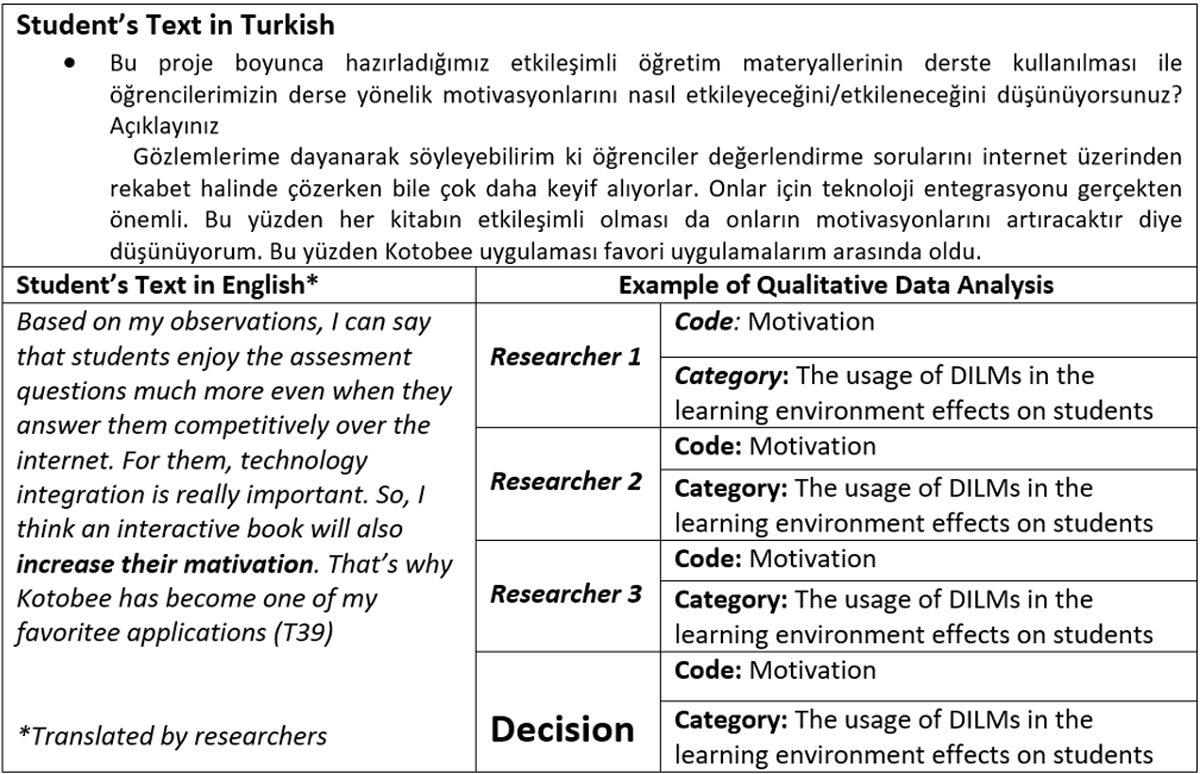
Figure 1
An example of the qualitative data analysis procedure.
Within this context, PSTs’ texts were transcribed, examined, and coded with the categories and themes formed. Afterward, the integrity of meaning was ensured from the emerging themes, and interpretation was provided. The researches relied on coding reliability to determine the consistency of their categories (Figure 1). The study’s dependability percentage calculated with Miles and Huberman’s (1994) formulae. This value was found to be 0.89. A number higher than 0.70 indicates that the qualitative analysis of the data is credible (Büyüköztürk, 2007).
Implementation process
Before the training, the PSTswere administered the DTeM, TIn, and ETS scales as a pre-test. On the last day of the project, the same scales were performed again on the PSTs as a post-test and reflection reports.
The project training lasted for a total of 5 days with 9 hours (9*45) per day. Digital applications like Kotobee, Actionbound, Padlet, Edpuzzle, Learningsapps, Nearpod, Educaplay, Thinglink, and Algodoo that provided opportunities to develop DILMs (DILMs) for 5 days were introduced by CEIT experts. These applications are some of the tools that are also available for free use.
After the introduction of the applications, workshops were held. In the workshops, CEIT experts as well as Science Education (SE) experts were present at the same time. In the workshops, CEIT experts provided support in the technical field, while SE experts provided support in the content field. Together they helped PSTs to develop DILMs. Afterward, PST were asked to design course plans to integrate the developed DILMs into the learning environment with support provided for the use of these materials in activity plans. For example, on one day of the project, Kotobee, and Actionbound application were introduced. Afterward, workshops were held with relevant applications. Activity plans were designed for the use of digital interactive teaching materials developed after the workshops in the learning environment. After, these activity plans were involved in the learning environment. Thus, the process was carried out dynamically.
In this process, PSTs were accompanied by SE experts, and the integration of the developed DILMs into the learning environment was ensured. This whole process is visualized in Figure 2 below.
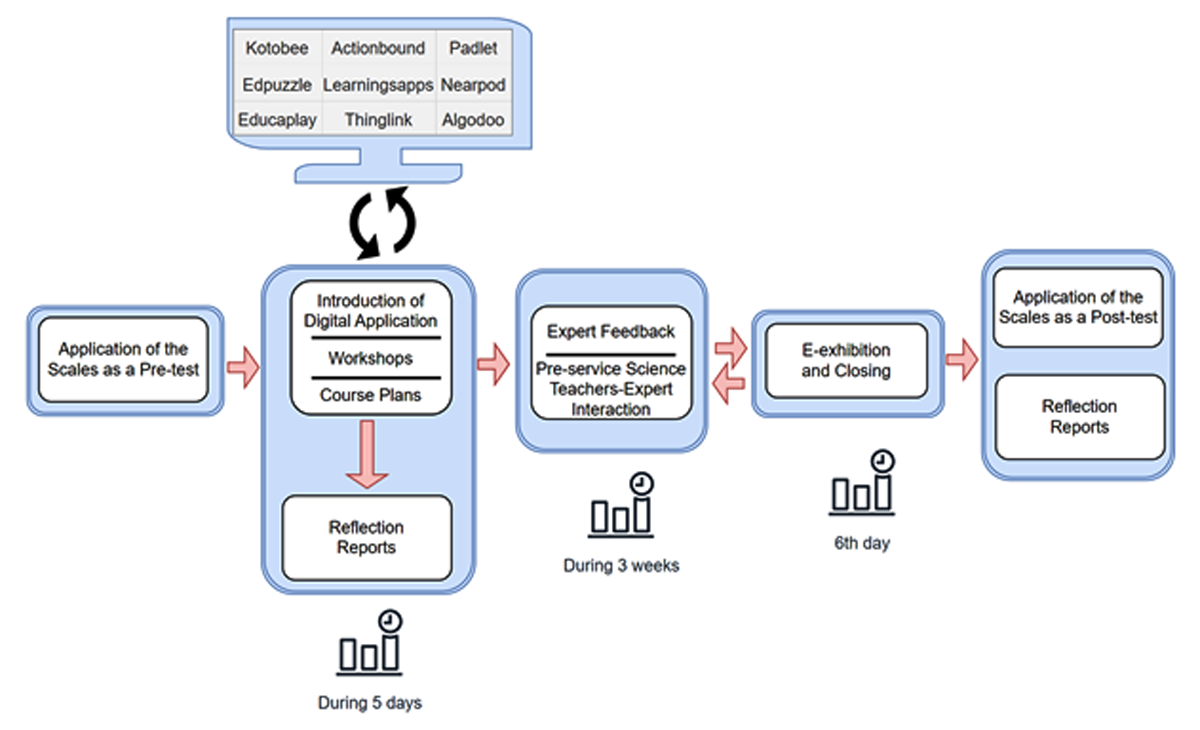
Figure 2
Implementation Process.
As seen Figure 2, the process described above was extremely active. Following this active period, PSTs were given three weeks to complete any gaps in the materials they had prepared. Throughout the three weeks, PSTs and researchers collaborated, keeping the process dynamic with frequent feedback. During this time, PSTs were able to finish their digital materials and technology integration processes. The PSTs then presented the materials they had created on the sixth day of the project, the electronic exhibition (e- exhibition) day. Following these presentations, the research process was completed with the application of the scales as post-tests. Reflection reports were also filled in by the PSTs at the end of the project in order to evaluate the applications they had learned. The project was called “Designing and Developing Interactive Teaching Materials Suitable for the New World Order”, and the project’s details are available at URL-2.
Ethics
Participants were informed that the data obtained during the study would be accessed with the reader (Cohen & Manion, 1994; Drew et al., 1996). Some private conversations between researchers and PSTs during data collection were excluded from the study due to privacy and confidentiality concerns. To guarantee the secrecy of the names of the PSTs who research group in the data collection workflow in accordance with research ethics, they were coded as PST1, PST2, PST3, …, PST53. To ensure transferability, the research conducted, research group, data collection instruments, and data analysis were thoroughly explained.
Findings
Findings from The Scales
For the first, second and third research questions, at first the descriptive statistics of the scales of the PSTs are shown in Table 2.
Table 2
Descriptive statistics results for mean self-efficacy scores of the pre- and post-tests.
| APPLICATION | N | SS | Min | Max | SKEWNESS | KURTOSIS | |
|---|---|---|---|---|---|---|---|
| DTeM pre-test | 53 | 3.88 | 0.575 | 2.29 | 4.97 | 0.373 | 0.635 |
| DTeM post- test | 53 | 4.58 | 0.401 | 3.68 | 5.00 | 0.740 | 0.691 |
| TIn pre-test | 53 | 4.00 | 0.514 | 2.89 | 5.00 | 0.566 | 0.430 |
| TIn post- test | 53 | 4.56 | 0.423 | 3.74 | 5.00 | 0.803 | 0.780 |
| ETS pre- test | 53 | 4.03 | 0.415 | 2.93 | 4.95 | 0.690 | 0.563 |
| ETS post- test | 53 | 4.81 | 0.299 | 3.95 | 5.00 | 0.950 | 0.967 |
As seen in Table 2, the average self-efficacy scores of the PSTs were 3.88, 4.00, and 4.03 in the pre-tests and 4.58, 4.56, and 4.81 in the post-tests, respectively. The graphs showing the pretest and posttest score distributions of the scales are presented in Graphic 2.
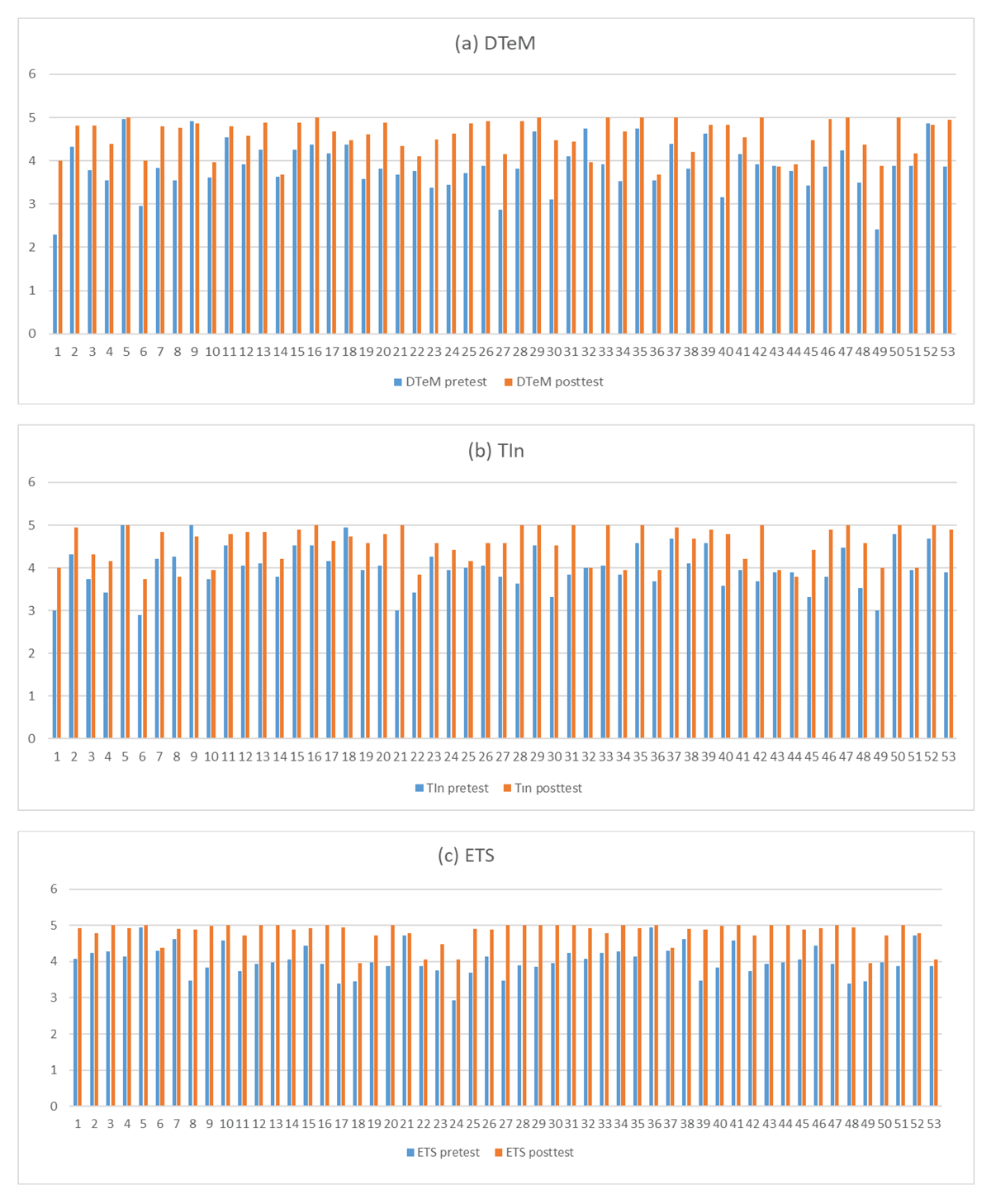
Graphic 2
The pretest and posttest score distributions of the scales: (a) DTeM, (b) TIn, (c) ETS.
The dependent t-test was used to determine whether the mean scores of the PSTs from the scales of DTeM, TIn, and ETS showed a statistically significant difference according to the applications, and the results are presented in Table 3.
Table 3
Dependent t-test analysis results between the mean scores of the scales.
| MEASUREMENT | N | s | t | sd | p | η2 | |
|---|---|---|---|---|---|---|---|
| DTeM pre-test | 53 | 3.88 | 0.575 | –10.036 | 52 | ,000 | 0,068 |
| DTeM post-test | 53 | 4.58 | 0.401 | ||||
| TIn pre-test | 53 | 4.00 | 0.514 | –8.599 | 52 | ,000 | 0,062 |
| TIn post-test | 53 | 4.56 | 0.423 | ||||
| ETS pre- test | 53 | 4.03 | 0.415 | –13.433 | 52 | ,000 | 0,078 |
| ETS post- test | 53 | 4.81 | 0.299 |
It was found that there was a statistically significant increase in the average self-efficacy scores of the PSTs in DTeM in favor of the post-test [t(52) = – 10.036, p < .01]. When the pre-test ( = 3.88) and post-test ( = 4.58) total scores were compared, an increase was observed between the scores in favor of the post-test. It was found that there was a statistically significant increase in the average self-efficacy scores of the PSTs in the TIn in favor of the post-test [t(52) = – 8.599, p < .01]. When the pre-test ( = 4.00) and post-test ( = 4.56) total scores were compared, an increase was observed between the scores in favor of the post-test. It was found that there was a statistically significant increase in the average self-efficacy scores of PSTS in the ETS in favor of the post-test [t(52) = – 13.433, p < .01]. When the pre-test ( = 4.03) and post-test ( = 4.81) total scores were compared, an increase was observed between the scores in favor of the post-test. When the eta squared values (η2) were taken into account, it was found that the project training was at “medium level effect” on the statistically significant differences obtained from the DTeM, Tin, and ETS scales.
Findings from the reflection reports
Within the framework of the fourth research question “What are the opinions of PSTs about the use of DILMs prepared with the applications provided during the project in the learning environment?”, the opinions of PSTs on the use of DILMs in the learning environment were analyzed. After the analysis, the results were grouped under the categories of student, learning environment, and learning process. Opinions on the usage of DILMs in the learning environment about the student are summarized in Table 4.
Table 4
PSTs’ opinions about the usage of DILMs in the learning environment effects on students
| CATEGORY | CODE | f | % |
|---|---|---|---|
| The usage of DILMs in the learning environment effects on students | Increasing active participation | 51 | 96.23 |
| Increasing motivation | 49 | 92.45 | |
| Arousing curiosity | 22 | 41.51 | |
| Learning difficult – abstract concepts | 7 | 13.21 | |
| Increasing academic success | 6 | 11.32 | |
| Improving positively attitude towards the course | 5 | 9.43 |
The usage of DILMs in the learning environment effects on students category consists of codes including increasing the student’s active participation in the course, increasing motivation, arousing curiosity about the course/subject, improving positively attitude towards the course, learning difficult and abstract concepts, and increasing academic success. A significant number of PSTs stated that the use of DILMs in the teaching process could ensure students’ active participation in the course (96.23% of PSTs) and increase their motivation towards the course (92.45% of PSTs). Examples of PSTs’ statements included in these codes can be given as follows: “I think the main purpose of the materials is to design student-centered courses. Since there are materials that completely focus on the student, and structuring their learning, of course, the student’s active participation in the course will increase. (PST9- Increasing active participation)” and “Based on my observations, I can say that students enjoy the assessment questions much more even when they answer them competitively over the internet. For them, technology integration is really important. So, I think an interactive book will also increase their motivation… (PST39- Increasing motivation)”. There are also PSTs (41.51%) stating that the use of DILMs in the course will be effective because it can arouse students’ sense of curiosity. (“I think applications will arouse curiosity in children as they encounter different applications. If this curiosity is supported, students who have the opportunity at home will turn to such applications instead of wasting time with meaningless games. (PST11- Arousing curiosity)”). Besides, as seen in the statement of PST17 “I can benefit from it when it comes to the concretization of abstract concepts for students. … With these applications, students can keep information permanently in their minds. Because abstract concepts formed in the student’s mind will become concrete (Learning difficult – abstract concepts)”, 13.21% of PSTs stated that interactive learning materials could be used especially during the teaching of difficult and abstract concepts. 11.32% of PSTs stated that these materials could increase students’ academic success. The statement of PST49 can be given as an example for the Increasing Academic Success code: “The use of interactive learning materials enriches learning. It makes learning permanent for students. Makes learning meaningful. It contributes to the success of students”. 9.43% of PSTs stated that the use of DILMs in the course would also affect students’ attitudes towards the course. PST15 stated that “I think these materials will positively affect both students’ attitudes towards the course and their academic achievement in general. (Improving positively attitude towards the course)”. Opinions on the usage of DILMs effects on the learning environment are summarized in Table 5.
Table 5
PSTs’ opinions about the usage of DILMs effects on the learning environment.
| CATEGORY | CODE | f | % |
|---|---|---|---|
| The usage of DILMs effects on the learning environment | Willingness to use it in professional life | 51 | 96.23 |
| Increasing interactivity | 17 | 32.08 | |
| Providing technical support for teachers | 12 | 22.64 | |
| Providing technical support for students | 5 | 9.43 |
Under the usage of DILMs effects on the learning environment category, there are codes for the willingness to use it in professional life, increasing interactivity, providing technical support for students, and providing technical support for teachers. 96.23% of PSTs stated that they wanted to use the applications they learned in the teaching processes they designed in their professional lives. “I will definitely use it. I think it will contribute a lot to the learning process and permanence of learning as a result of teaching courses in a very entertaining way for both me and my students. So, I think I will use it as long as technology allows (PST16)” and “I plan to use it in all my courses. … I will adapt the practices I have learned to the appropriate outcomes and design materials. (PST21)” statements clearly indicate the PSTs’ thoughts on this subject. In addition, some of PSTs (22.64%) stated that they must definitely get support from information technologies (IT) specialists while developing interactive learning materials with the applications they learned in their professional life. However, 9.43% of PSTs stated that technical support was also necessary for students. Examples of PSTs’ statements can be presented for codes related to the need for technical support as follows: “Here, the IT specialist in our school also plays a big role. I will convey my knowledge as a science teacher, but in cases where I am not enough, the IT specialist will have to step in (PST18- Providing technical support for teachers)” and “There may be some difficulties for children who haven’t learned how to use computers yet, but this can become a factor that pushes them to learn. (PST31- Providing technical support for students)”. In addition, 32.08% of PSTs thought that DILMs prepared using these applications can increase the interactions between teacher-student, student-student, and student-learning material in the course. As an example, statement of this code can be given as follows; “I believe it will make the student pay more attention to the course…. It will also make the courses more interactive. This will make the learning environment more efficient with different perspectives. (PST34- Increasing interactivity)”. Opinions on the usage of DILMs in the learning environment effects on the learning process are summarized in Table 6.
Table 6
PSTs’ opinions about the usage of DILMs in the learning environment effects on the learning process.
| CATEGORY | CODE | f | % |
|---|---|---|---|
| The usage of DILMs in the learning environment effects on the Learning Process | Drawing interest | 52 | 98.11 |
| Ensuring the retention of knowledge | 50 | 94.34 | |
| Making learning fun | 34 | 64.15 | |
| Learning by practicing and experiencing | 18 | 33.96 | |
| Encouraging learning | 10 | 18.87 | |
| Increasing motivation | 7 | 13.21 | |
| Providing alternative learning materials | 5 | 9.43 | |
| Relating to daily life experiences | 4 | 7.55 | |
| Providing reinforcement | 3 | 5.66 | |
| Learning by exploring | 2 | 3.77 | |
| Remedying misconceptions | 2 | 3.77 | |
| Identifying preliminary knowledge | 2 | 3.77 | |
| Providing evaluation | 1 | 1.89 | |
| Providing meaningful learning | 1 | 1.89 | |
| Developing scientific process skills | 1 | 1.89 | |
| Saving time | 1 | 1.89 |
The usage of DILMs in the learning environment effects on learning process category consists of codes such as drawing interest, ensuring the retention of knowledge, making learning meaningful and fun by practicing and experiencing or exploring, encouraging learning, increasing motivation, providing alternative learning materials, relating to daily life, providing reinforcement and evaluation, developing scientific process skills, saving time, remedying misconceptions and identifying preliminary knowledge. 98.11% of PSTs thought the use of DILMs was effective in attracting student interest in the course/subject and this situation can be seen in the statement of the PST given as an example: “We cannot attract students’ attention with a one-dimensional slide prepared with a mere narration. Thanks to the materials we prepare, students become interested in the courses. For example, we can change variables in the Algodoo application. When students change these variables themselves and see what happens, their interest in the course increases. Since they have fun while using a game and activity prepared in Actionbound, Educaplay, Learningapss applications, and their sense of competition is encouraged, their interest in the course increases. (PST35- Drawing interest)”. As seen in the example statements such as “When the students see that they can participate actively in the course, learning retention increases because they get to experience the process themselves. (PST8-Ensuring the retention of knowledge)” and “With the materials we’ve prepared, the retention of knowledge that is based on interaction, application, and discussion will be ensured. The aim here is not to memorize, but to teach the logic of a concept or situation permanently. (PST12-Ensuring the retention of knowledge)”, the most of PSTs (94.34%) thought it was effective in ensuring the retention of knowledge. In addition, 64.15% of PSTs stated the use of interactive learning materials would make learning fun for students (“Thanks to these applications, I think they will adapt to the course more easily and learn the subject in a fun and effective way. (PST32)”). 33.96% of PSTs stated that the use of these materials in the course also supported the students’ learning by practicing and experiencing. The PST36’s statement can be used as an example statement for the Learning by Doing and Experiencing code: “…We have created an environment where the students will actively participate instead of assigning them passive roles and the level of retention will increase because the students learn, research, and discover the information themselves through applications”. 3.77% of PSTs stated that students would learn by exploring through these materials. In addition, 18.87% of PSTs stated that the use of these materials in the learning process would encourage students to learn (For example, “Students were born into technology. So, using technology interactively in science education will encourage them to learn. (PST34)”), 13.21% stated that it would motivate students (For instance, “I think it will be more effective if we can place the material in accordance with a student-centered course plan. Students get curious and participate in the course. There are factors in the material that will keep them active. (PST43)”), 9.43% stated that it would provide alternative learning materials (For example, “Since they are interactive materials accessible both in and out-of school learning environments, they can access them anytime and anywhere. I think students’ creativity will increase more thanks to technological applications instead of courses taught only with books (PST46).” 7.55% stated that it related to daily life experiences (For instance, “They will discover that the courses are not boring and that science classes are actually very much related to daily life experiences, as a result of using the applications. (PST32)”). Along with these opinions from PSTs, 5.66% of them stated that it would reinforce learning, 1.89% of them stated that it would help evaluation, 1.89% of them stated that it would help to develop scientific process skills and 1.89% of them stated that it would save time. In the same manner, 3.77% of PSTs stated that these materials could remedying misconceptions that students might have about the subject and 3.77% of them thought that their preliminary knowledge could be identified.
Discussion
The following results were obtained, which are presented on the basis of the study’s research questions. In this section, firstly, the quantitative results obtained from the scales are discussed. Subsequently, qualitative results obtained from the reflection reports are discussed.
Discussion on the first research question of the study, “Is there a significant difference between the pre and post-tests scores of pre-service science teachers on the Digital Learning Material Development Self-Efficacy Scale?”
The average self-efficacy scores of pre-service teachers obtained from the DTeM scale increased statistically significantly in favor of the post-test (see Table 3). According to the study’s findings, pre-service teachers’ self-efficacy in developing DILMs that meet age-appropriate standards has grown. Based on a study conducted by Woodcock et al., (2015), one of the most important aspects influencing pre-service teachers’ online learning-teaching abilities is self-efficacy beliefs about online learning settings. Furthermore, Kayaduman and Demirel’s (2019) research emphasizes the importance of technological, pedagogical, and content trainings in reducing instructors’ concerns regarding the online learning process. The fact that PSTs self-efficacy about developing DILMs has increased in this environment suggests that the technology knowledge and skills they are receiving in online learning environments are appropriate for their intended use.
Discussion on the second and third research questions of the study, “Is there a significant difference between the pre and post-tests scores of pre-service science teachers on the Self-Efficacy Perception Scale for Technology Integration and Educational Technology Standards Self-Efficacy Scale?
The average self-efficacy scores of pre-service teachers obtained from the TIn and ETS scales increased statistically significantly in favor of the post-test (see Table 3). At the end of the process, there was a significant increase in PSTs’ self-efficacy for technology integration and self-efficacy for educational technology standards. Self-efficacy for technology integration predicts accurate technology integration (Anderson et al., 2011). In addition, it is important to ensure that teachers can effectively integrate technology into their classrooms through training to increase their technology self-efficacy and facilitate meaningful professional learning (Beard, 2016). In this context, the improvement of PSTs’ self-efficacy toward technology integration can be associated with the technology-supported training they are to receive throughout their professional life. Considering the direct connection between the acquisition of professional competencies and pre-service education, it is necessary to mention the importance of providing education within the framework of a standard program tailored to the requirements of the age. Similarly, Bull (2009) conducted a study to investigate the perception of PSTs and faculty members towards the integration of technology into teacher training programs. In the study, ISTE standards were converted into likert scale items and personal opinions of participants on the integration of these standards into the curriculum were collected. As a result of the study, it was observed that both groups had positive attitudes toward the integration of technology into teaching, however, faculty members were more prepared than PSTs in this regard.
Discussion on the fourth research question of the study, “What are the opinions of pre-service science teachers about the use of DILMs prepared with the applications provided during the project in the learning environment?”
The use of DILMs in the learning environment is considered important by most pre-service teachers in terms of keeping students active in the learning environment (Table 3). Similarly, Dele-Ajayi (2018) states that integrating technology-supported applications into the learning environment allows students to participate more actively in the learning process and supports communication and collaboration. In addition, it is also known that online learning environments are an important factor affecting learners’ motivation (Altinpulluk et al., 2023). Within this context, it is possible to say that the use of relevant programs by PSTs in both face-to-face and online learning environments will lead to an active learning process. Besides, Blaine (2019) emphasizes that interactive learning materials increase participation in online learning environments as well. Under the student category, one of the important findings is that the use of DILMs in the learning environment will contribute to motivation. In this context, there are many studies in the literature indicating that the use of interactive materials can improve learning outcomes and increase student motivation (Boluda et al., 2006; Hamada & Sato 2012; Mohamed, 2008; Cadenas, 2015). It is also emphasized that interactive materials increase student motivation to learn and help them pass their exams with high grades (Hamada & Hassan, 2017). Similar to the findings of our study, it has been concluded that DILMs must be used to increase academic achievement. A significant number of PSTs stated that the DILMs they’ve encountered during the project would arouse curiosity in students and this sense of curiosity would guide students to such applications against their interest in games for entertainment purposes. With regard to this, Nurbaiti and Titin (2017) emphasize that interactive materials attract students’ attention and increase their motivation to learn. In other words, it may be possible to enrich the learning process and conduct an effective learning process with the use of DILMs to increase motivation in the learning process.
Upon the assessment of the study results under the learning environment category, it has been observed that all of the PSTs want to use DILMs in their professional life. In the literature, in parallel with the findings of the study, it is seen that teachers have a positive attitude toward using interactive learning tools at all levels of education (Podschuweit, et al., 2016; Tanahoung et al., 2009; Hamada & Hassan, 2017). This can be associated with the contributions of DILMs to the learning environment. In addition, this situation can also be an outcome of PSTs willingness to use digital applications in their professional life as a result of an increase in their self-confidence in developing DILMs after trying the relevant digital applications themselves.
Within the scope of the study, some of the PSTs emphasized that it might be necessary to get technical support from experts while using DILMs in the learning environment. This might be due to the fact that PSTs needed expert support during the study, in which they participated in an online learning environment. Similarly, Taşkıran (2021) emphasizes the importance of providing learning environments where learners can produce, discover and create knowledge, actively participate and collaborate without time and space limits, and consult and receive expert support when necessary when it comes to online learning environments. In this context, it has been concluded that expert support is essential in both face-to-face and online learning platforms.
Under the learning process category, all PSTs stated that DILMs would attract students’ attention. In addition, all of the pre-service emphasized that active participation of the students in the process and retention of the acquired knowledge would be positively affected by the interactivity of the material with the use of DILMs in the learning process. Similarly, Akbaş and Toros (2016) emphasize that the use of interactive digital learning materials in learning environments is important in terms of drawing interest, retaining knowledge, reinforcing learning outcomes, and making learning fun. In addition, the literature also shows that the use of digital interactive materials in online learning environments supports the retention of knowledge (Westelinck et al., 2005). In addition to all these findings, most of the PSTs stated that it would be possible to make learning fun by using such learning materials. Within the framework of the studies conducted in the literature, it is seen that learning activities become more enjoyable when DILMs are integrated into the learning process in accordance with student characteristics and learning strategies (Liliana et al., 2020). On the other hand, it is emphasized that students are excited and enthusiastic about trying new technologies (Banitt et al., 2013). This situation shows the necessity of using digital interactive materials in the learning process in order to structure and enrich the learning process as a result of the integration of different interactive digital technologies into the learning process to increase student interest in the learning process as well as its contribution to the retention of knowledge.
Conclusion
The following results were in this study, which aimed to determine the changes in PSTs’ self-efficacy toward digital interactive learning material development, technology integration, and educational standards at the end of a training process:
The findings from the DTeM show that PSTs’ self-efficacy in developing DILMs in line with the in accordance with the requirements of the age has improved.
The findings from the TIn, and ETS there was a significant increase in PSTs’ self-efficacy for technology integration and self-efficacy for educational technology standards.
Using DILMs in the learning environment is determined important in keeping students active in the learning environment and will contribute to motivation, and increase academic achievement. Besides, the DILMs they, encountered during the project would arouse curiosity in students. This sense of curiosity would guide students to such applications against their interest in games for entertainment purposes.
Although it has been emphasized that all of the PSTs want to use DILMs in their professional life, some of the PSTs concluded that it might be necessary to get technical support from experts while using them in the learning environment.
All PSTs stated that DILMs would attract students’ attention, active participation of the students in the process, and retention of the acquired knowledge would be positively affected by the interactivity of the material with the using them in the learning process. Besides, the PSTs emphasize that it would be possible to make learning fun by using such learning materials.
Recommendations
The experiences PSTs gained with the opportunity to develop DILMs make this study even more important. The design and development of DILMs by PSTs in this study will benefit and facilitate them as the teachers of the in accordance with the requirements of the age and enable them to become well-equipped. Based on these results, the following recommendations are presented:
The PSTs, opportunities for such activities must be provided for pre-service teachers in different branches. It can also be suggested that such activities must be designed and organized not only for PSTs but also for learners of this century.
In order to increase the competencies of PSTs towards technology integration and to closely follow the technology integration process in accordance with ISTE standards, additional training can be provided to them through expert faculty members and the professional training process can be revised in line with these issues.
When it is considered that DILMs positively affect the motivation of learners by attracting their interest, it is also important to be able to integrate these materials into different steps such as introduction, exploration, and evaluation while it can be used in each step of the model within the framework of the theory of learning.
It is recommended that PSTs who wish to develop DILMs must make the necessary arrangements and finalize the material by consulting the opinions of relevant experts in terms of both design and technical aspects. In addition, it may be recommended to conduct studies for the evaluation of DILMs developed with the support of experts with regard to technical aspects and content in the learning environment.
In the learning environment, it is recommended to conduct studies for the evaluation of DILMs developed with the support of experts with regard to technical aspects and content.
Limitations
There are some shortcomings to this study. The study’s limitations are presented as follows:
This study focuses on purposive sampling and has a small sample size. Although every effort was made to ensure maximum variety in participant selection, the study is confined to those who were chosen.
The study is limited to the digital applications used such as Kotobee and Actionbound.
Data Accessibility Statement
The dataset analyzed in the current study is not publicly available due to potential identifiability of participants, but is available from the corresponding author upon reasonable request.
Ethics and Consent
All procedures performed in this study followed the ethical standards of the Department of Health Standards on Human Research (DOH/QD/SD/HSR/0.9) and the 1964 Helsinki Declaration and its later amendments or comparable ethical standards.
The first author is the project organizer and applied to TÜBİTAK by receiving an official letter signed by the Rector of Giresun University. The project was accepted by TÜBİTAK and announced to universities across Türkiye. Participants participated voluntarily and were selected according to certain criteria. In addition, both written and verbal participation consent was obtained from the participants. The project and the selection criteria for the participants are available on the Giresun University website (www.etkisimlimaterial.giresun.edu.tr). This statement is an ethical rule that must be followed to carry out the event.
Acknowledgements
This study was created from this project which is funded by TUBITAK with the number of 2237 A-I1129B372100797 provided. The authors are both creators and implementers of the project. The authors thank TUBITAK, the entire project team, and the participants.
Funding Information
The project (2237 A-I1129B372100797) was financed by the Scientific and Technological Research Council of TÜRKİYE (TÜBİTAK). TÜBİTAK provided financial support for this project, such as virtual classroom and faculty member course fees.
Competing Interests
The authors have no competing interests to declare.
Author Contributions (CRediT)
Necla Dönmez Usta designed the research, project administration, funding acquisition, interpreted the data, and drafted the study writing review and editing. Ebru Turan Güntepe participated in the acquisition, analysis, and interpretation of data and drafted the study; writing original draft preparation Ümmü Gülsüm Durukan participated in the acquisition, analysis, and interpretation of data and drafted the study. All authors have read and agreed to the published version of the manuscript.