
Introduction
Teacher identity has received wide acknowledgment as a crucial component of the teaching profession, profoundly impacting teachers’ beliefs, behaviors, and understanding of their societal responsibilities (Fox & Bird 2017; Hong, Greene & Lowery 2017; Ulla 2022; Van Lankveld et al. 2017). In their pedagogical practices, teachers may encounter various challenges, adjustments, and new experiences that influence the development of their professional identities, making a teacher’s identity a multifaceted phenomenon that entails the interplay of individual decisions, attitudes, motivations, and external factors (Avidov-Ungar & Forkosh-Baruch 2018). According to Reeves (2018), the process of identity formation among teachers involves a significant amount of effort to construct and re-evaluate their teaching identities. Such a process occurs within the complex social, political, and ethical contexts of schools characterized by diverse ideological perspectives. Thus, navigating these complex dynamics requires teachers to actively reflect and negotiate to shape their professional identities in response to the ever-evolving educational landscape.
Furthermore, previous studies (see Hiver & Whitehead 2018; Lindahl & Yazan 2019; Pennington & Richards 2016) also acknowledged the intricate link between teachers’ identity, practices, and ongoing learning, necessitating the construction, negotiation, and (trans)formation of their identity. The intersection of their professional identity with other social identities, such as race, gender, and ethnicity, and the diverse social contexts in which they operate further complicate that connection. Consequently, research on language-teacher identity has centred on forming identity intersecting race and nationality—e.g., non-native English-speaking teachers (NNESTs) (Aoyama 2021; Widodo, Fang & Elyas 2020). Other studies have also focused on the role of emotions in impacting a teacher’s performance (Cheng 2021), the complex relationships between emotions and agency that make up a teacher’s identity (Nazari & Karimpour 2022), and how teachers make sense of their professional identity including the factors that shape their identity as teacher-educators (Gong, Young & MacPhail 2021).
However, the recent technological advancements, particularly in digitally mediated teaching and learning, and the widespread use of social media in education have had a transformative impact on language and identity (Darvin 2016). Darvin (2016) noted that as the digital space has impacted language practices and created dynamic ways of generating meaning, it has also opened up new avenues for constructing and representing online identities.
TikTok, one of the most popular digital spaces, has gained significant importance in recent teacher research, especially in the context of shaping and influencing teacher identity (see Hartung et al. 2023; Le, McConney & Maor 2022; Literat 2021), due to its serving as a crucial platform for social identities to form and evolve. As an online platform, TikTok presents a distinctive opportunity for teachers to engage in self-expression, creativity, and connectivity in light of its concise video format and expansive user base (Escamilla-Fajardo, Alguacil & López-Carril 2021; Vizcaíno-Verdú & Abidin 2023). The platform allows teachers to exhibit their pedagogical approaches, disseminate instructional materials, and interact with a worldwide cohort of fellow teachers (Hartung et al. 2023). However, Vizcaíno-Verdú and Abidin (2023) also observed that teachers’ utilization of social media like TikTok had certain disadvantages with respect to intrapersonal issues, such as challenges in maintaining a clear demarcation between personal and professional spheres and interpersonal issues where teachers may risk appearing excessively self-promoting.
Although previous studies (Bennett 2017; Fox & Bird 2017; Greenhalgh et al. 2020; Prestridge 2019) have explored the affordances of social media for pedagogical practices among teachers, not much research exists on teachers’ use of TikTok and how such utilization of social media shapes their professional identity. This study aims to fill that gap and explore the platform’s affordances for developing teacher identity. Additionally, the research seeks to examine the potential implications of TikTok for teachers’ identity within and beyond education contexts, emphasizing the need for further investigation in this area.
Literature review: Teacher identity
Yazan (2018) defined teacher identity as ‘teachers’ dynamic self-conception and imagination of themselves as teachers, which shifts as they participate in varying communities, interact with other individuals, and position themselves (and are positioned by others) in social contexts’ (Yazan 2018: 21). In other words, as teachers participate in various educational communities, including professional learning networks, subject-specific groups and collaborative teams within their educational institutions, they may encounter various viewpoints, personal histories and concepts challenging their pre-existing beliefs and practices and prompting a process of re-evaluation and refinement of their teacher identity (Goktepe & Kunt 2021). In addition, how teachers engage with their students, peers, superiors, and parents may also be crucial in forming their teacher identity, presenting prospects for them to reflect on their pedagogical methodologies, classroom practices, and rapport with students (Barkhuizen 2017). Thus, we argue that the feedback and support received from colleagues, administrators and parents can influence the perception of one’s own effectiveness as a teacher and the development of teacher identity. Hiver and Whitehead (2018) argued that the identity construct encompasses a complex and interconnected framework with various components, including agency, experience, practice, and discourse, as well as numerous individual elements, e.g., self-referential cognitions and emotions, and relational elements, e.g., intergroup processes and role dynamics.
For instance, Goktepe and Kunt (2021) conducted a study of how a novice EFL teacher in Turkey constructed her identity over time. The researchers found that some aspects of teacher-induction programs may have a detrimental impact on how novice teachers form their identities as language teachers. Using sociocultural and post-structural methods, specifically drawing on the research participant’s reflective teaching narratives, her teaching journal, semistructured interviews and the researchers’ observation notes, the researchers revealed that their research participant ‘found herself a guest in the school setting, under the power of a mentor … making her feel uncomfortable and [making] it difficult for her to develop her desired language-teacher identity’ (Goktepe & Kunt, 2021: 483).
In recent years, scholars have extensively examined the notion of teacher identity, focusing on two distinct aspects: personal and professional identities (Goktepe & Kunt 2021; Kayi-Aydar 2019; Lindahl & Yazan 2019; Pennington & Richards 2016). While both concepts delve into teachers’ identities, personal identity may primarily involve biographical aspects, encompassing self-perceptions and personal experiences. On the other hand, professional identity derives from teachers’ professional involvement and self-identification as teachers in academic institutions (Carpenter et al. 2019).
Thus, understanding teacher identity may require focusing on the interaction and boundaries between personal and professional identities. In some instances, perceiving incongruence between their personal and professional identities may deter teachers from continuing in the profession (Carpenter et al. 2019). This is particularly important in education, where a prevalent belief among instructors is that establishing strong connections with students is a fundamental prerequisite for effective learning, and teachers can only forge those by revealing certain aspects of their personal identities to their students (Lasky 2005).
It is also important to note that identity encompasses how teachers project themselves within the classroom and school setting that external factors (e.g., societal norms, learning networks, and academic orientations) influence (Pennington & Richards 2016). Pennington and Richards (2016) argued that teacher professional identity (TPI) manifests through the attributes of learners and the instructional setting across different levels, from the classroom to higher contextual levels, shaping teachers’ objectives and everyday practices. In addition, Skott (2019) highlighted the dynamic and fluid nature of TPI as a multifaceted and evolving phenomenon that social interactions rather than fixed personality traits shape. This perspective emphasises the importance of acknowledging the changing nature of teacher identity and the role of social interactions in its development.
Furthermore, as Aoyama (2021) noted, the concept of identity is widely acknowledged as a socially constructed phenomenon rather than an internally enacted one. That is, daily interactions and engagements within various communities of practice shape and develop the sense of self. Although the notion of identity within social practice does not disregard individuality, it provides insights into teacher identity’s complex and dynamic nature and its interactions within the teaching community (Aoyama 2021). In other words, teachers shape their personal and professional identities through active participation in local communities of practice and engagement with broader social structures. This process of identity construction is especially significant in the context of technological advancements. The widespread use of social media platforms that provide spaces for teachers to create digital-world content influences the educational landscape, shaping their teacher identity.
Teachers and social media
The emergence of social media platforms has provided individuals with new opportunities for interpersonal communication and fostering social connections (Ulla & Espique 2022; Ulla & Perales 2021). In education, teachers can participate in online interactivity in a personal or professional capacity that these technological tools enable (Escamilla-Fajardo, Alguacil & López-Carril 2021). They can also derive such personal benefits as expanding their social network and cultivating connections and such professional benefits as using these tools for professional development or incorporating them into their teaching practice (Greenhalgh et al. 2020). However, Fox and Bird (2017) opined that the teachers’ consideration of these social media user advantages may depend on their ability to integrate their personal and professional identities effectively. In other words, teachers may define and reinvent who they are through their profiles, interactions, relationships, networks, and reputations. In addition, current societal conventions, cultures, and social media platforms’ inherent characteristics can influence and limit how teachers exhibit their identities and use these social media (Carpenter et al. 2019).
In their study, Avidov-Ungar and Forkosh-Baruch (2018) explored teacher educators’ professional identity in the digital era, specifically regarding their perceptions of pedagogical innovation and how it impacts their professional identity. Using a semi-structured interview with 27 teacher educators from 8 colleges of education, comprising some of the largest institutes for teacher training in Israel, the study found that teacher educators’ professional identity comprises three modes of existence: ‘being’, ‘doing’, and ‘having’. The study also found that the ‘being’ component relates to constructing professional selves and is the dominant mode of existence. The ‘having’ component is what teacher educators require from their workplace, suggesting that favourable attitudes towards technology and the use of ICT in education, as well as improved ICT literacy among teachers, may beneficially impact attitudes towards teaching as a profession throughout pre-service and in-service training. Moreover, the ‘doing’ component relates to pedagogy, a necessary task that shifts away from conventional teaching activities. As a result, teaching entails professionalising new information and abilities and introducing new and modern teaching techniques. Thus, the researchers acknowledged that the support of teacher education institutes is vital in developing teacher educators’ professional identity as innovators.
Two of the most studied social media platforms used in education—especially how these platforms impact teacher identity—are Twitter and TikTok. Researchers (Bennett 2017; Fox & Bird 2017) have argued that social media platforms shape and influence teachers’ professional identities. On the one hand, teachers become microcelebrities when using these social media (Vizcaíno-Verdú & Abidin 2023). On the other hand, they may also self-identify in some ways as non-professionals (Carpenter et al. 2019).
For example, Carpenter et al. (2019) explored how educators’ Twitter utilisation aligns with their personal and/or professional intentions, how they negotiate tensions between personal and professional social media use, and how this reflects their identity development in a digital world. By analysing the profiles and tweets derived from a sample of 33,184 U.S.-based K–12 teacher Twitter accounts, the study revealed that teachers tend to maintain a professional focus and disclose limited personal information there. They also self-identified in various ways in their Twitter profile descriptions. The study also found that teachers’ hashtag use and the domains of the links they shared provided insight into the topics about which they were tweeting. Although the study suggests social media as a valuable tool for educators to connect with other professionals and share resources, it also highlights the importance of being mindful of the personal-professional boundary.
In a recent study, Vizcaíno-Verdú and Abidin (2023) also examined the salient identity elements that typify the phenomenon of microcelebrification that teachers actively pursue on the popular social media platform TikTok, the affordances that the ‘TeachTok’ subculture employs and how teachers deploy them. Using the walkthrough method, the researcher identified 12 teacher profiles on TikTok and analysed their videos, focusing on identity elements in terms of ‘responsibility’, ‘commitment’ and ‘authority’. The findings revealed that ‘TeachTok’ teachers use the platform’s features to create teaching personalities that appeal to and engage their audiences. Teachers also demonstrated their ‘passion’ for their subject matter by including music, positivity, introspection and life in their lessons. In other words, teachers do not seem interested in microcelebrity as a status or career; some even made fun of such accounts. Much of the content these teachers shared centred on demonstrating enjoyable experiences and the challenges they faced in their educational context.
While recent scholarship (Carpenter et al. 2019; Greenhalgh et al. 2020; Le, McConney & Maor 2022; Prestridge 2019) has explored the impact and influence on teacher identity development of various social media platforms, such as Twitter, Facebook, and Instagram, the specific impact of TikTok in the context of language education has received limited scholarly attention. Hence, conducting empirical research to explore the intricate relationship between teacher identity and TikTok is imperative. We particularly focus on elucidating the ways that TikTok shapes and transforms teachers’ identities. Specifically, the current study sought to answer the following questions:
What identity do teachers create and display on TikTok?
How does a created and displayed identity impact a teacher’s professional identity?
Methodology
Design
The present investigation adopts an exploratory-descriptive qualitative (EDQ) research design (Hunter, McCallum & Howes 2019) as it explores identities that teachers have created and displayed on TikTok and how such identities impact their professional identity. Hunter, McCallum and Howes (2019) added that employing an EDQ design enables the researchers to delve into a phenomenon that has received limited attention when the research objectives entail generating a clear and concise depiction of it. This approach facilitates understanding the individuals or entities implicated, the nature of their involvement, and the spatial context in which the events transpired, all in relation to the phenomena under investigation (Hunter, McCallum & Howes 2019).
Participants
Five language teachers teaching at universities in Thailand responded to the call for research participants through posters disseminated on the popular social media platforms Facebook and TikTok for a month (January–February 2023).
Four males and one female aged 24 to 43 years old, with teaching experience between one and nine years, participated in the study (see Table 1). Two held MA degrees, and three had BA degrees. These participants were (a) language teachers who are on TikTok, (b) language teachers in Thailand, and (c) language teachers who are willing to be interviewed online.
Table 1
Demographic profile of the participants.
| PARTICIPANTS | AGE | GENDER | TEACHING EXPERIENCE/EDUCATIONAL QUALIFICATIONS | TIKTOK FOLLOWERS |
|---|---|---|---|---|
| 1 | 38 | Male | 5 years (MA) | 1,330 |
| 2 | 24 | Male | 1 year (BA) | 3,182 |
| 3 | 43 | Female | 9 years (MA) | 4,020 |
| 4 | 37 | Male | 7 years (MA) | 1,067 |
| 5 | 34 | Male | 6 years (BA) | 2,463 |
Before the study commenced, the researchers submitted the protocol to the Human Research Ethics Committee, affiliated with the first author’s academic institution, to obtain official approval. After receiving the approval (WUEC-23-049-01), the researchers invited the participants to the study, highlighting the study requirements for participants’ anonymity and data confidentiality.
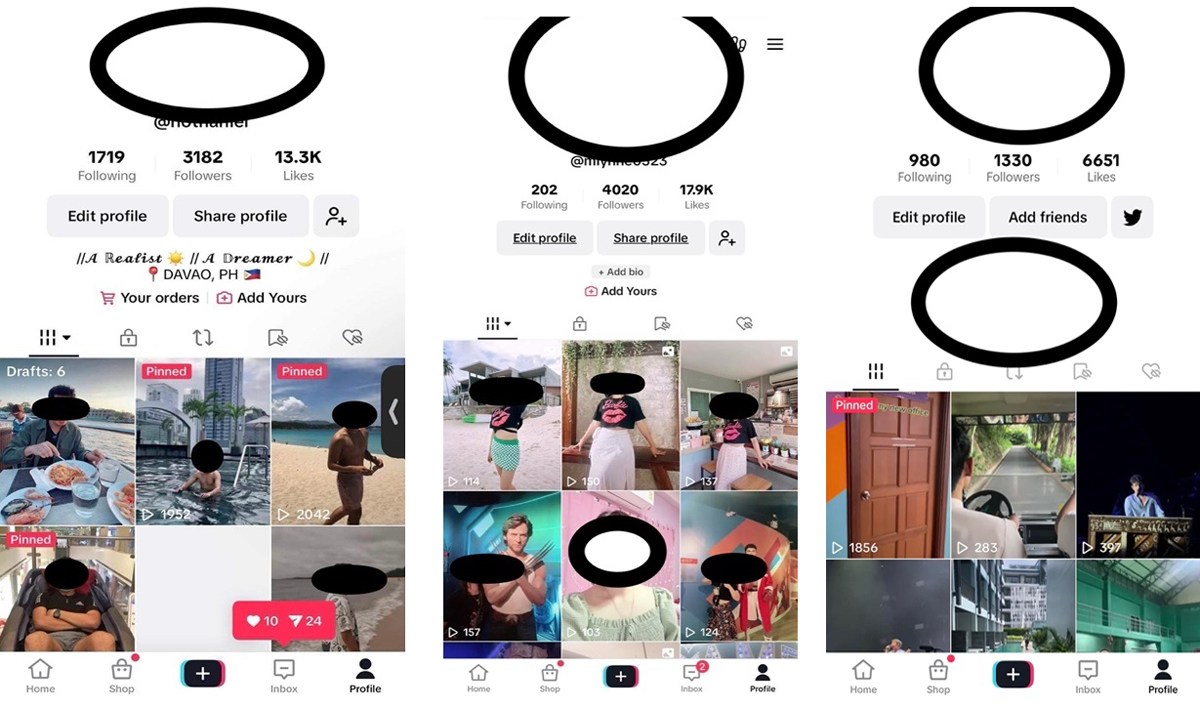
Participants started using TikTok in 2020 during the pandemic, and since then, they have been actively posting and sharing their TikTok content and liking and commenting on some other content. Since they were also teaching, they only shared content between once every week and once a month.
Data-gathering procedure
Following the participants’ voluntary indication of their interest in the study, the researchers implemented the walkthrough methodology on TikTok (Light, Burgess & Duguay 2018). This involved the researchers undertaking the necessary steps of registering for a TikTok account and establishing it on a mobile device. The researchers did not have TikTok accounts; establishing an account was imperative to enhance their understanding of how platform users interacted with their followers and the nature of the content they generated.
Upon successfully establishing the account, the researchers proceeded to input the participants’ profile handles into the platform’s search bar to initiate a search and subsequently follow them. The researchers, who followed the participants after they responded to the call for participants in March 2023, randomly explored the participants’ TikTok content after following them. Although the participants’ posts on TikTok were not used as data for the study, their posts informed the researchers about their TikTok engagement, behaviours, and activities. In other words, by closely monitoring and tracking the activities on TikTok, researchers could delve deeper into the emotional vulnerability the participants exhibited. Furthermore, this platform allowed researchers to gain insight into participants’ characteristics and behaviours by analysing their TikTok content.
The researchers established an in-depth, semi-structured online interview schedule through the Zoom platform between March and April 2023, accommodating the participants’ availability and convenience. As the interview was semi-structured, interview guide questions were prepared, and follow-up questions were asked to clarify some answers from the participants. Guided by previous studies in the literature and the research questions posed for the study, the interview guide questions consisted of three general questions:
Can you share specific examples or instances where you have used TikTok to showcase or share your teaching methods or language-related content? How do these instances contribute to the construction of your teacher identity?
In what ways do you navigate the balance between presenting an engaging and relatable identity on TikTok and maintaining the professionalism associated with your role as a language teacher? Are there certain aspects of your identity you consciously highlight or downplay for this purpose?
How do you handle feedback and interactions from your TikTok audience, particularly regarding questions or comments about you as a teacher? How does this engagement influence the ongoing construction of your teacher identity, and what challenges or opportunities does it present?
The researchers conducted the approximately 60-minute online interviews in English and recorded them with participants’ consent for future reference and analysis.
Data analysis
The primary data source for this study was the transcripts of online interviews. Following multiple readings of the transcripts, the researchers meticulously coded the data manually, specifically identifying and highlighting information that directly addressed the study’s research questions. The researchers organised the transcripts with a Microsoft Excel spreadsheet to facilitate manual coding and allow the researchers to actively engage with the data and develop a more comprehensive understanding of the qualitative information.
Following the thematic analysis framework by Braun and Clarke (2006), the researchers repeatedly read the data to get sense and meaning, rendering the text more manageable, attending to the communicated content, and constructing a theoretical framework. The researchers then categorized and organized the data according to the themes developed from the recurring patterns of meaning.
To ensure and maintain the authenticity, validity, and reliability of the data, the researchers returned the individual interview transcripts and the initial data analysis, consisting of the initial theme categorization, to each participant for member checking (Birt et al. 2016). The participants were informed that they could thoroughly review the transcripts to identify errors, misinterpretations, or potential adjustments. After a week, the approved transcripts were returned for final data analysis. The researchers discussed the themes and agreed on what should be included in the presentation of the findings.
Some excerpts from the interview transcripts appear in the findings, showing teacher participants assigned codes for identifying their responses (e.g., Participant 1, Participant 2).
Findings
Teachers’ identities on TikTok
Staying young, wild, and free: Expressive identity
Teachers have found TikTok to be a platform where they can embrace a more youthful, wild, and carefree identity, freely expressing themselves creatively and uninhibitedly. Participant 1 said:
‘I decided to open a TikTok account and started dancing both on my own, following what I saw on the platform, and occasionally dancing with my friends. I wore stylish clothes and applied makeup meticulously because my goal was to present a beautiful appearance on TikTok’.
Participant 2 supported Participant 1’s sentiment, expressing that he, too, can be true to himself on TikTok by staying true to his beliefs, interests and personality. His commitment to authenticity sets him apart and enables him to share content that genuinely reflects who he is:
‘On TikTok, I’m always true to myself … no faking. I’m not trying to be one of someone I am not. I’m just being authentic there’. (Participant 2)
With this free self-expression opportunity, these teachers have found TikTok a stress reliever, allowing them to relieve the pressure and overwhelming feelings of their professional lives.
‘During that period, my main purpose was to find a break from the stress and pressure I felt at work. It required some adjustments as I often found myself overwhelmed with the workload. So, I consciously decided to unwind and have fun on the weekends or during my free time using TikTok’. (Participant 3)
Creating connections, circles: Relational identity
For teachers, TikTok is a powerful platform for creating connections and fostering relational identity. Teachers and students can bond outside the classroom through shared interests, leading to a deeper understanding and a positive learning environment. For example:
‘Because we have something in common now, dealing with them is easier. Connecting with them is good because we have one thing in common: we both love TikTok. It’s easier, the students can easily open up because we know what we have … we have a common thing that we like’. (Participant 3)
Moreover, as content creators, teachers on TikTok find purpose in inspiring and motivating their audience, forming connections based on shared aspirations. An excerpt from Participant 2 emphasises how TikTok content creators, including teachers, find purpose in inspiring and motivating their audience:
‘It could also inspire other people. I’m inspired, and they will see that I’m inspired … I want to spread positivity, I want to inspire other people, and I want to make other people happy as well. Because I also want the people who will be watching my videos to be inspired like me’. (Participant 4)
This highlights how TikTok enables teachers to engage with their students more dynamically and personally, fostering understanding and strengthening the teacher-student relationship. It also allows teachers to share educational content and valuable life lessons, enhancing their impact on their students’ lives.
Taking trends of the time: Adaptive identity
Teachers in the study recognised that TikTok is a platform that drives trends, providing a space in which to participate actively and keeping their content fresh and appealing to their audience. Thus, they developed an adaptive identity. For instance, Participant 5 mentioned:
‘Just focus on browsing TikTok and looking for contents that I can follow, those I see on TikTok, the trends, following the trends, the new dance challenge and, you know, other contents that I would like to try by myself also’.
Moreover, teachers actively browse TikTok to discover and follow the platform’s latest trends, challenges, and popular content. As Participant 2 stated:
‘When there’s a trend … there’s a like something about dancing, for example. And because I have colleagues who are really good dancers, so most of the time, we use TikTok together’.
Thus, teachers adapt their content-creation strategies based on the prevailing trends. Whether these are dance challenges, viral jokes, fitness routines, or travel trends, teachers willingly participate and create content that aligns with what is currently capturing viewers’ interest.
‘I was … active in some … fitness so I upload some fitness thing. Some… travel or trip that I had before … some are no-nonsense things. Like what is trend I just followed it. I just do it what is in the trend’. (Participant 1)
Going for a leg up: Progressive identity
Findings also revealed that teachers had embraced TikTok as more than just a social media platform, recognising it as a space for perpetual growth and self-improvement in their personal and professional careers. In other words, they can showcase a progressive identity within this dynamic digital realm, constantly evolving and honing their abilities.
‘I follow the dances …it takes so much of my time because I’m not really that good at dancing. So, I have to practice it many times. So, at the same time, I am also exercising, because I have to practice many times first, and then when I feel that I’m ready, I memorised the steps and everything, I’ve already improved in my dancing that’s the time that I will start recording’. (Participant 3)
She continues by passionately emphasising that being on the platform is an avenue for talent development, and as long as their content remains non-offensive, there is absolutely nothing wrong with embracing it. TikTok has the power to ignite inspiration and motivation, empowering them to evolve into even more exceptional and impactful educators.
For Participant 4, mastering the steps of a trending dance video on TikTok brings a profound sense of personal transformation, as he feels he is evolving into a better and more empowered version of himself.
‘I’m happy after recording a video on TikTok, especially when we master the dance steps and perfect them; it’s really fulfilling. I believe it truly fuels us and makes us more energised because when you’re happy, you can function better’. (Participant 4)
Participant 5 expressed that TikTok is an exciting platform for learning. He mentioned that he loves various activities like singing, dancing, cooking, and traveling, and TikTok allows him to engage in these interests and learn many things.
‘… in TikTok what makes it interesting… it’s a platform for learning … I’m a person who loves singing, who loves dancing, who loves cooking, who loves travelling, who loves … to do and learn a lot of things’.
Impacts of TikTok identities on teacher professional identities
TikTok significantly influences teachers’ professional identity by offering them a platform for self-expression, fostering meaningful connections with students, adapting to the evolving digital landscape, and facilitating continuous growth in their teaching practices. Through TikTok, teachers embrace their authentic selves, showcase creativity, and engage with their students innovatively, enriching their educator role.
Projecting an authentic teacher-self
Expressive identity shapes the projection of a teacher’s professional identity by fostering authenticity and enhancing the teacher-student relationship. This authenticity allows them to present a more relatable and multifaceted image to their students:
‘I think it’s not a big deal for teachers to be on TikTok …I have a lot of friends who are on Tik Tok. My friends … who are teaching right now in [the] USA, others are …in the Philippines and they’re also on TikTok … I believe that this is actually a good platform for teachers, which is actually a big help for teachers to have … a different outlet in expressing ourselves’. (Participant 1)
Moreover, engaging with diverse content on TikTok allows teachers to continuously learn and gain insights into different perspectives, ideas and emotions, enriching their understanding of human experiences and behaviours.
‘… expressing ourselves on TikTok is a good thing because … when we know how to deal with our emotions, when we know how to express ourselves, when we know how to balance things, it makes us better teachers’. (Participant 2)
Developing a caring and approachable teacher
Relational identity significantly impacts a teacher’s professional identity, through interactions and connections they establish with their students and fellow educators on platforms like TikTok. TikTok allows teachers to adapt to the digital era by staying updated with trends and incorporating them into their content creation. This adaptability enables them to connect with students on an enjoyable platform, bridging the generation gap and enhancing their teaching effectiveness.
‘We interact better when we know each other well, so then, I can adjust my activities, make them participate, engage in any activities, and make jokes and things like that’. (Participant 3)
Moreover, relational identity fosters their professional connection with other teachers, demonstrating that teachers who create TikTok content see it as an opportunity to share positivity, motivate others and inspire their students and friends. By doing so, they aim to be not just educators but also role models and sources of encouragement:
‘Of course, for the people to be, some of my friends, teachers like me, to be, maybe enlightened or to be inspired or motivated’. (Participant 4)
The platform’s educational value allows teachers to extend their impact beyond traditional methods, shaping their relational identity as educators who embrace new ways of connecting with their students. Excerpts from Participant 3 illustrate how TikTok allows teachers to extend their educational impact beyond traditional methods:
‘I want to be remembered by the students as Teacher Nathan who can be their friend also … who is very understanding and can understand them. I ask my students, so by that one, aside from giving a bridge to my student, it also allows us to communicate in English, which we were having a conversation in English, which is my …goal also’. (Participant 3)
For Participant 5, the platform provided a unique opportunity for the teacher to showcase his or her personality, interests, and positive qualities, which resonated with their students and made them feel more attached or emotionally connected to the teacher:
‘The greatest contribution of TikTok is that I was able to penetrate the heart of my student. … I was able to connect with my students and … I was able to build a relationship … with my students good rapport’. (Participant 5)
Bridging the generational gap, forging genuine connections
By taking trends of the time and integrating them into their TikTok content, teachers demonstrate a flexible and dynamic approach to their online presence. Their adaptive identity helps them bridge the generational gap with their students. Participant 3 explains that ‘students are different in today’s world; before, students were far from students today. Students are into pop culture, and you should know their interests also…’. Hence, she suggests that language teachers should ‘go with the flow with the students and by that sharing or doing something like this, not only on a serious note also not just being serious on learning English’.
As predominantly younger audiences use TikTok, teachers who embrace trends showcase their willingness to engage with their students in a manner that resonates with them culturally and socially.
Enabling teaching innovations and discoveries
TikTok’s influence also extends to the professional growth of teachers, as the platform allows them to gain valuable insights and continuously develop their teaching practices by engaging with diverse content and ideas. Participant 1 explains:
‘… because we learned a lot of things also on TikTok, it’s not just based on our contents, but there are also contents on TikTok that are really inspiring … I believe that using TikTok can be a good help also for teachers’.
Additionally, Participant 5 noticed that students respond well to concise content on TikTok, compared to longer videos, as the platform allows for creative and engaging ways to present information. Moreover, he discovered that some educators use TikTok to deliver short lessons and teach vocabulary to young learners effectively. Recognising its trendy and innovative appeal among students, Participant 5 sees TikTok as a vehicle to share knowledge and engage with students on a platform they already know, prompting them to consider creating their own TikTok account to leverage its potential for enhancing the learning experience.
‘TikTok is one of those methodologies that we can use in teaching because we can reach … the interests of our students when they watch videos, short videos, when they watch … very specific videos, they like it, compared with long videos or whatsoever … in Tik Tok, you can … minimise… and you can put all the bullets in there in just short videos, students like it’. (Participant 5)
Teachers recognise the importance of integrating TikTok into their teaching methods to connect with their students and create a more engaging learning environment:
‘I started to tell myself that “oh I should use TikTok” because all my students have now TikTok account and I don’t have TikTok account so … I can use that… for them to learn’. (Participant 3)
Teacher identities on TikTok: Expressive, relational, adaptive, progressive
TikTok assumes a pivotal role in shaping the identities of teachers through diverse avenues. One identity reflected from the findings is the teacher’s expressive identity, where TikTok extends a space beyond conventional classroom boundaries, enabling teachers to share personal anecdotes, hobbies, and interests that go beyond their role as mere classroom teachers.
Another aspect influenced by social media is the relational identity of teachers. Based on the findings, TikTok becomes a conduit for teachers to establish professional networks and connect with colleagues, other teachers, and students. This interconnectedness fosters exchanging ideas, resources, and experiences, significantly developing a teacher’s relational identity within the broader educational community. Furthermore, teachers can bolster their connections with students by creating a more approachable image on platforms like TikTok, where they share insights, answer questions, and engage with students beyond the traditional classroom confines.
TikTok also plays a crucial role in shaping the adaptive identity of teachers. In this study, TikTok is an abundant fountain of development opportunities, enabling teachers to follow the platform’s trends, challenges, and popular content and stay updated on educational trends. In other words, adapting to the technological trends, like the teachers’ engagement in TikTok, contributes to teachers’ adaptive identity as lifelong learners.
Furthermore, TikTok contributes significantly to shaping the progressive identity of teachers. It offers a platform for educators to advance their understanding of the use of social media, share their perspectives on education policies, and contribute to progressive movements within the field. Additionally, teachers can spotlight their innovative practices and contribute to the discourse on progressive teaching using TikTok, effectively disseminating research, insights, and success stories aligned with a progressive educational philosophy.
Discussion
The current study explored how Thai university teachers created and displayed identities on TikTok and how such an identity impacts their professional identity as teachers. Findings suggest that teachers’ identity is multifaceted, especially in the context of digital TPI, as teachers display expressive, relational, adaptive, and progressive identities. Such identities relatively impact their TPI, allowing them to project an authentic teacher-self, become caring and approachable teachers to their students and colleagues, forge genuine connections, and enable pedagogical innovations and practices. Although the study confirms the existing literature on teacher identity (Carpenter et al. 2019; Hong, Greene & Lowery 2017; Ulla 2022; Van Lankveld et al., 2017), it argues that technological advancements also shape teachers’ professional identity, especially in digitally mediated teaching and learning, and the widespread use of social media in education, particularly TikTok. The findings make evident that TikTok had a transformative impact on teacher identity and teachers’ pedagogical practices, offering teachers an avenue to engage in self-expression, creativity, and connectivity (Escamilla-Fajardo, Alguacil & López-Carril 2021; Vizcaíno-Verdú & Abidin 2023).
First, teachers develop an expressive identity. This is evident in participant 1 and 2’s statements about how TikTok allows them to embrace their true selves and express their creativity without needing to conform or pretend to be someone they are not. Participant 1 emphasises the importance of presenting a beautiful appearance, possibly influenced by the visually driven nature of TikTok. On the other hand, participant 2 values authenticity, stating that he remains true to his beliefs, interests, and personality while creating content. This suggests that TikTok can serve as a platform for individuals to explore and display different aspects of their identity, contributing to their growth as educators and making them more effective in teaching and learning.
Second, TikTok positively affects teachers’ ability to communicate with their students, cultivate relational identity, and inspire their audience. For example, participants 3 and 4 emphasised the power of having a shared interest in TikTok to connect with students. This illustrates that teachers can bridge the gap between the traditional teacher-student dynamic and establish a more approachable and relatable relationship by finding common ground through their TikTok engagement. In addition, through shared interests in TikTok, teachers and students may form a bond that facilitates improved communication and understanding, fostering an engaging and supportive learning environment for students. As content creators on TikTok, teachers find purpose in motivating and inspiring their audience, expanding their influence beyond teaching and learning. Thus, TikTok enables teachers to interact with students more intimately, fostering a stronger teacher-student bond and promoting inclusivity. Such a finding relates to the study by Vizcaíno-Verdú and Abidin (2023), who examined the salient identity elements that typify the phenomenon of microcelebrification that teachers actively pursued on TikTok. In other words, teachers do not seem interested in microcelebrity as a status, as much of the content these teachers shared centred on demonstrating enjoyable experiences and the challenges they faced in their educational context.
Third, participants positively adapted to trends on TikTok as a social media platform where they share educational content and life teachings, allowing them to reach a larger audience and improve learning experiences among their students and those following them. Similar to the study by Carpenter et al. (2019), this finding also suggests that teachers employ TikTok by combining personal and professional objectives. On the one hand, teachers may utilise the platform to establish and cultivate a network of professional contacts, engage in discourse with fellow teachers and disseminate valuable educational materials and perspectives on social media pedagogy. Hartung et al. (2023) acknowledged that TikTok not only allows teachers to exhibit their pedagogical approaches and disseminate instructional materials but also to interact with other people and teachers worldwide. On the other hand, teachers may leverage the platform to articulate their individual interests and thoughts on diverse subjects beyond education and to establish connections with other people.
Fourth, the findings indicated teachers’ progressive identity as they embraced TikTok as not only a social media platform but also a space for personal growth and self-improvement. They view TikTok as an avenue for talent development and a means of continually evolving and honing their personal and professional abilities. In other words, the teachers’ use of TikTok goes beyond simple amusement. By devoting time to actively taking part in acquiring and perfecting skills, such as singing, cooking, dancing, and other activities, and honing these skills, teachers may experience personal development and progress, which may boost their confidence and self-esteem.
Lastly, the present study posits that the proliferation of technological advancements, particularly on TikTok, significantly influences the formation and development of teachers’ professional identity. The participants in the study exhibit a propensity for cultivating expressive identities and a strong inclination toward embracing creativity and authenticity. However, the study also acknowledges certain limitations in its scope, as it studied only EFL teachers in Thai universities. Thus, it is crucial to exercise caution when generalising the outcomes to educators operating in dissimilar settings or disciplines. In addition, the study only employed interviews to gather the data. Future studies may employ other methodological designs to investigate how TikTok influences teachers’ professional identity.
Conclusion
This research sheds light on the intricate and diverse dimensions of Thai university teachers’ identities on TikTok and the consequential influence of those identities on their professional identities as teachers. Based on the findings, we concluded that, as a digital medium, TikTok affords teachers the opportunity to delve into and manifest their genuine identities, fostering enhanced levels of empathy and accessibility in their interactions with both students and peers. Furthermore, TikTok also enables improved connectivity between teachers and students, which, in turn, affects teachers’ classroom practices and relationships. It also expands teachers’ outreach capabilities, enabling them to effectively engage with a wider range of individuals and enhance teaching by sharing educational materials and valuable life lessons.
The present study also underscores the significance of teachers’ expressive, relational, adaptive, and progressive identities in enhancing their classroom pedagogy and practice. TikTok is a digital medium through which teachers can authentically express their identities, establish profound connections with their students, assimilate prevailing cultural phenomena, and cultivate personal and professional advancement and development.
Funding Information
This research has been funded by the Walailak University Internal Research Fund (WU66256).
Competing Interests
The authors have no competing interests to declare.