1. Exploring Virtual Reality for language learning: An introduction
Digitalization, intercultural competence and preparation for a multilingual world are overarching goals in foreign language teacher education programs. Within this frame, VR applications play a vital role as they allow simulation of authentic culturally embedded situations, particularly with respect to the specific target language culture; furthermore, they facilitate FL learners’ motivation and engagement through immersive and interactive experiences in meaningful tasks. Additionally, VR can contribute to improved vocabulary retention via truly physical interaction (Alhawsawi & Alzaid, 2025) and reduce anxiety for public FL speaking practice, also called glossophobia (Tatlı & Karadağ, 2023), as one can act and “hide” with the help of an avatar and does not have to present oneself.
Challenges that remain consist of high costs to be invested into the equipment, time to be calculated for space and technology preparation complying to hygiene standards, VR glasses updates and battery charging as well as the care after. Technical difficulties during and after VR glasses use occur due to the short longevity of VR battery life as well as the constant need for updates which require an email address and cell phone number which need to be permanently available throughout the VR project. Last but not least one has to mention that enough space for big groups is a conditio sine qua non for a good VR experience, and health issues, such as motion sickness, need to be considered.
In this article, we will report on one research project which is situated within the digitalization framework of the University of Kassel and has been conducted by the authors (Finkbeiner, Schlaak & Ost, 2024; Finkbeiner, Ost & Schlaak, 2024). The project aimed at facilitating digital learning and teaching innovation and was funded by Stiftung Innovation in der Hochschullehre (The Foundation for Innovation in Higher Education). We investigated FL prospective teachers’ cooperative, autonomous construction, implementation and evaluation of immersive learning environments through 360-degree and VR scenarios in multilingual settings.
Even though Germany is still leading in the development of advanced technologies, such as semiconductors and edge nodes in the EU, it so far still only ranks on position 14 in the EU with respect to digitalization (European Union, 2025). This is caused by a lacking national overall coverage of high-capacity networks (across schools, public institutions and the private sector) as well as the facilitation of basic digital skills. Therefore, digitalized FL learning and teaching plays a huge role in the teacher education programs in Germany and has been declared a national educational goal resulting in the “Digital Pact” for schools. (Bundesministerium für Bildung, Familie, Senioren, Frauen und Jugend, 2025). Germany invested with a budget of EUR 5 billion between 2019 and 2024 into modern digital educational infrastructure. However, there is still a big gap in adopting a scholarly approach to teaching current digital applications, such as VR and critically viewing and evaluating them. VR plays an important role in FL teaching and learning as it allows all students, no matter which socio-economic background they belong to, to immerse themselves into the target culture environment. However, due to the fact that VR applications are still cost intense and need quite some technological attention the distance of prospective teachers to VR technology is still big. Therefore, the study presented here bears huge significance in the field as it can help reducing prospective teachers’ anxieties with respect to teaching but also create their awareness as far as the potential and limitations of multilingual teaching in VR environments is concerned.
In this article, we will focus on the evaluation of four VR applications intended for use in foreign language learning and teaching. After presenting VR applications in an FL learning setting to each other students mutually and reciprocally assessed the use of the VR applications in the given context.
2. Virtual Reality for language learning: Theoretical perspectives
Digitalization in FL teaching and learning has received an enormous impetus during and after the Pandemic which had not been anticipated before. Despite the huge challenge of closed school doors during that time there were also tremendous opportunities with respect to the development and implementation of technology-based FL teaching and learning. Despite the fact that lots of interactive platforms, apps and videos started thriving VR applications rather staggered and still do so. This can be easily explained as the implementation of VR into the FL teaching classroom requires the physical dimension and the use of VR glasses.
VR technology is not yet as widespread in schools and FL classrooms nor is the knowledge on how to teach VR and which benefits to gain from it largely available. However, immersive learning environments bear opportunities for FL students from the age of 13+ on which is an age recommendation due to the motion sickness factor (Davis, Nesbitt & Nalivaiko, 2014, 5). VR learning environments not only allow immersing into target cultures at a relatively low budget (once the VR technology is provided) but also engaging in virtual excursions in an immersive way (Hellriegel & Čubela, 2018).
There are different VR apps on the market, and the following study focuses on two of them. From summer term 2022 until summer term 2023 the research project “Virtual and augmented reality and their potential for Spanish teaching” was conducted at the Leibniz University Hannover in three courses of the master's program “Teaching at High Schools” (Wengler, 2024). The primary goal was to identify and evaluate suitable virtual reality applications for foreign language teaching (Spanish). In order to assess and compare the potential of the VR applications, the students used an assessment tool. Due to the fact that two current VR analysis tools turned out to be unsuitable for the analysis of the applications, a new assessment tool with two options only (feature given or not) was designed and continuously revised. It consisted of seven analysis criteria: data protection conflicts, competence facilitation, curricularly valid topics, construction/production, operation/interaction with the program, communication/interaction with other users and user-friendliness/usability. The two VR Apps “Mondly VR” and “Wander” were in focus. Wengler (2024) summarizes that Mondly VR is suitable for FL teaching contexts to promote specific skills, such as dialogical speaking. However, due to its sometimes poor speech recognition, it requires users to have a high tolerance for frustration. The topics focus on beginners. Immersive vocabulary lessons teach vocabulary in a thematic and multimodal, but mono-perspective way, as users only have the opportunity to repeat vocabulary without taking into account meaningful vocabulary learning strategies, thus not making utmost use of the potential that lies in VR. Wengler (2024) argues that in contrast to “Mondly VR” “Wander” is not a specific FL learning app, but it can be used to virtually explore authentic places. In some cases, it is possible to view cultural monuments from outside and inside. The app can be used to practice directions or to virtually experience multilingualism as part of linguistic landscape and facilitate intercultural learning.
Both cultural and language VR inherent enhancement factors were the driving force to design a multilingual interdisciplinary FL higher education class and co-teach French, Spanish and English FL prospective teachers. A pre-/post survey was administered to examine the attitudes of prospective FL teachers toward the use of virtual reality and their self-assessment of their digital skills before and after a project seminar. The following research questions were important (Finkbeiner, Ost & Schlaak, 2024):
How do prospective FL teachers assess their digital skills before and after the project seminar? Is there a change over time?
What are the attitudes of prospective FL teachers toward the use of virtual reality in teaching and learning foreign languages?
What suggestions for implementing VR apps in the school setting are made by prospective FL teachers?
In the summer semester of 2023, n=37 students of English, French, and Spanish took part in the seminar. The course aimed to familiarize students with various VR language learning software applications, to assess the use of VR glasses, and to develop and evaluate teaching ideas for their use in schools. An online pre-post survey with quantitative and qualitative items on dimensions of attitudes toward multilingualism and VR in foreign language teaching as well as demographic data and prior experience was administered to all participants. In addition, process data such as peer evaluations of the individual VR applications were collected which will be described below (cf. 3). The questionnaire drew on an adapted form of the Technology Attitude Scale (cf. Loyd & Gressard, 1984; Nash & Moroz, 1997) to assess attitudes toward virtual reality.
The self-assessment of students’ digital skills on a six-point scale from “beginner” (1) to “expert” (6) increased significantly (t = −0.259, df = 27, p = .002) from a mean value of 3.46 (standard deviation 1.26) to 4.21 (standard deviation 1.03). Furthermore, attitudes toward VR were assessed using the VR scale. The twelve items were rated on a 4-point Likert scale (Cronbach's alpha = .895). It is remarkable that the mean value of the overall scale decreased significantly (t=1.78, df=27, p = .043) from 2.90 in the pre-survey to 2.72 in the post-survey. However, this decline underlines the reflective and critical view of the students after the one semester VR work. This can be explained by the technological effort and missing infrastructure, the limitations of the applications with respect to the limited flexibility in adapting the texts and language in the VR applications as well as motion sickness. Finally, “anxiety in connection with VR” (Cronbach's alpha = .857) decreased significantly (t = 3.195, df = 27, p = .002) from 2.20 (SD = 0.70) to 1.90 (SD = 0.61). This corresponds with the results in Gu’s study (2025) on language anxiety. That VR applications bear huge potential in FL learning and teaching is also underlined by the systematic reviews conducted, for example, by Li, Pan, Su and Yao (2021) as well as by Alhawsawi and Alzaid (2025).
3. Evaluating the use of four VR applications: An empirical investigation
This explorative study aimed at investigating how prospective teachers perceive the pedagogical affordances of different types of VR applications through the lens of their developing professional knowledge. The following research questions guided the process:
How do prospective foreign language teachers evaluate the pedagogical suitability of the four different VR applications for classroom use?
What are the perceived advantages and disadvantages of each application regarding interactivity, learner motivation, language skill development, and fostering of intercultural competence?
3.1. Research context and research design
This study was embedded within a higher education teacher education seminar at a large German university, which was conducted in the summer semester of 2023. The course was designed as an interdisciplinary, multilingual seminar jointly offered by the Departments of English/American Studies and Romance Studies, and specifically targeted prospective teachers of English, French, and Spanish. Its main aims were threefold: (a) to familiarize prospective teachers with a range of VR language learning applications, (b) to train them in evaluating the pedagogical affordances and limitations of such tools, and (c) to design and present lesson units integrating VR into school contexts. Thus, the learning environment was both research-oriented and practice-oriented. Students were not merely passive recipients of technology but were engaged as designers, evaluators, and reflective practitioners.
The seminar “Virtual Reality: A Multilingual Approach” focused on the virtual reality language learning and teaching experience of teachers. Higher education students were expected to implement and evaluate authentic multilingual virtual reality learning environments. The concept of visual literacy and digital applications supporting language acquisition processes as well as different forms of digital reality, such as virtual reality, augmented reality, mixed reality and corresponding applications were introduced.
The VR experiences were facilitated through cooperative practice in FL learner groups of three or more. While one FL learner actively engaged with the VR, the second FL learner worked as an observer and followed the active FL learner’s views and experiences on a laptop, iPad or cell phone. The third FL learner watched out that there was enough space for the first FL learner who was immersed in VR, and that there would not be any obstacles in order to avoid harm. Furthermore, the observing learners took notes and worked on the tasks. Additionally, learners 2 and 3 who did not actively immerse into the VR world at the very moment when learner 1 did so, took notes and wrote down their observations and in this way contributed to the continuous improvement of the task.
Nine multilingual permanent groups of 3 – 6 members worked together in their one-semester course work. The groups engaged in the VR learning environments and used 14 Meta Quest 2 devices. Simulation of VR teaching implementation into the FL classroom was part of the program. The focus was on applications which were accessible and low budget, e.g., by using smartphones and/or mobile device virtual reality headsets. The focus was on FL learning and teaching in a multilingual context with virtual reality learning environments. These learning environments were explored, investigated, analyzed, and evaluated. Students learned how to use VR language learning apps, such as Mondly VR, Noun Town, Language Lab, and/or social VR apps, such as Engage and Mozilla Hubs. Each group selected one VR application and focused on one target language, then designed and presented a VR-based lesson unit. Each group received one to two Meta Quest 2 headsets, a widely available, standalone VR headset known for ease of use and accessibility. The devices were used in classroom and complementary tutorial sessions, allowing groups to alternate and share equipment. The following VR applications were available: BRINK Traveler, Mondly VR, National Geographic VR and Noun Town.
BRINK Traveler is an immersive exploration-based VR application designed to simulate travel experiences through photorealistic 3D environments. Users can virtually visit geographically diverse locations, interact with the environment, and access contextual information about each site.
Mondly VR is a VR language-learning application that integrates conversational artificial intelligence with immersive situational contexts. Users engage in interactive dialogues with virtual characters, practicing pronunciation, vocabulary, and grammar within contextually relevant scenarios such as commute, shopping, or hotel visits.
The National Geographic VR experience provides users with immersive documentarystyle expeditions based on real-world explorations and natural environments. The application combines high-definition visual storytelling with guided narration to promote engagement with environmental science, wildlife observation, and cultures.
Noun Town is a gamified VR learning application that focuses on vocabulary acquisition through interactive gameplay. Users learn new words by manipulating and labeling virtual objects within a visually engaging environment. The application employs a reward-based learning structure and progressive difficulty levels, encouraging sustained motivation and reinforcing language retention through multisensory engagement.
The seminar consisted of the following three major phases:
Phase 1 (Weeks 1–3): Introduction and VR training
Pre-questionnaires were administered.
Students were introduced to VR hardware.
Initial exploration of selected VR apps.
Phase 2 (Weeks 4–7): Theoretical engagement
Lectures and discussions on VR in second language acquisition, intercultural competence, and multilingualism.
Comparative criteria-based analysis of apps against curricular standards.
Phase 3 (Weeks 8–13): Group projects and evaluation
Group work with selected applications.
Development of lesson plans aligned with federal state curriculum (Hesse).
Student conference presentations on VR lesson plans.
Peer-evaluation via rubric.
Post-questionnaires were administered.
Some participants voluntarily piloted their lessons in local schools after the seminar, providing additional evidence of classroom transferability.
3.2. Participants of the empirical investigation
In total, N= 37 students enrolled in the seminar. Participants were primarily prospective teachers: 89.3% were enrolled in teacher education programs, 7.1% were BA students, and 3.6% were MA students. In terms of course level, 78.6% participated at the advanced level (Hauptseminar), while 21.4% were enrolled at the intermediate level (Proseminar). The participants represented a multilingual and interdisciplinary cohort, specializing in English, French, or Spanish as foreign languages. Many participants had additional heritage languages. This distribution reflects the seminar’s interdepartmental design and allowed for comparative evaluation across different linguistic and cultural contexts. In demographic terms, participants were mostly in their early to mid-twenties, with a balanced gender distribution, although precise age and gender breakdowns were not systematically recorded. Importantly, participants had diverse levels of prior experience with VR: some had previously encountered 360-degree videos or gamified VR tools, while others used VR for the first time in this seminar.
3.3. Instrument and data analysis
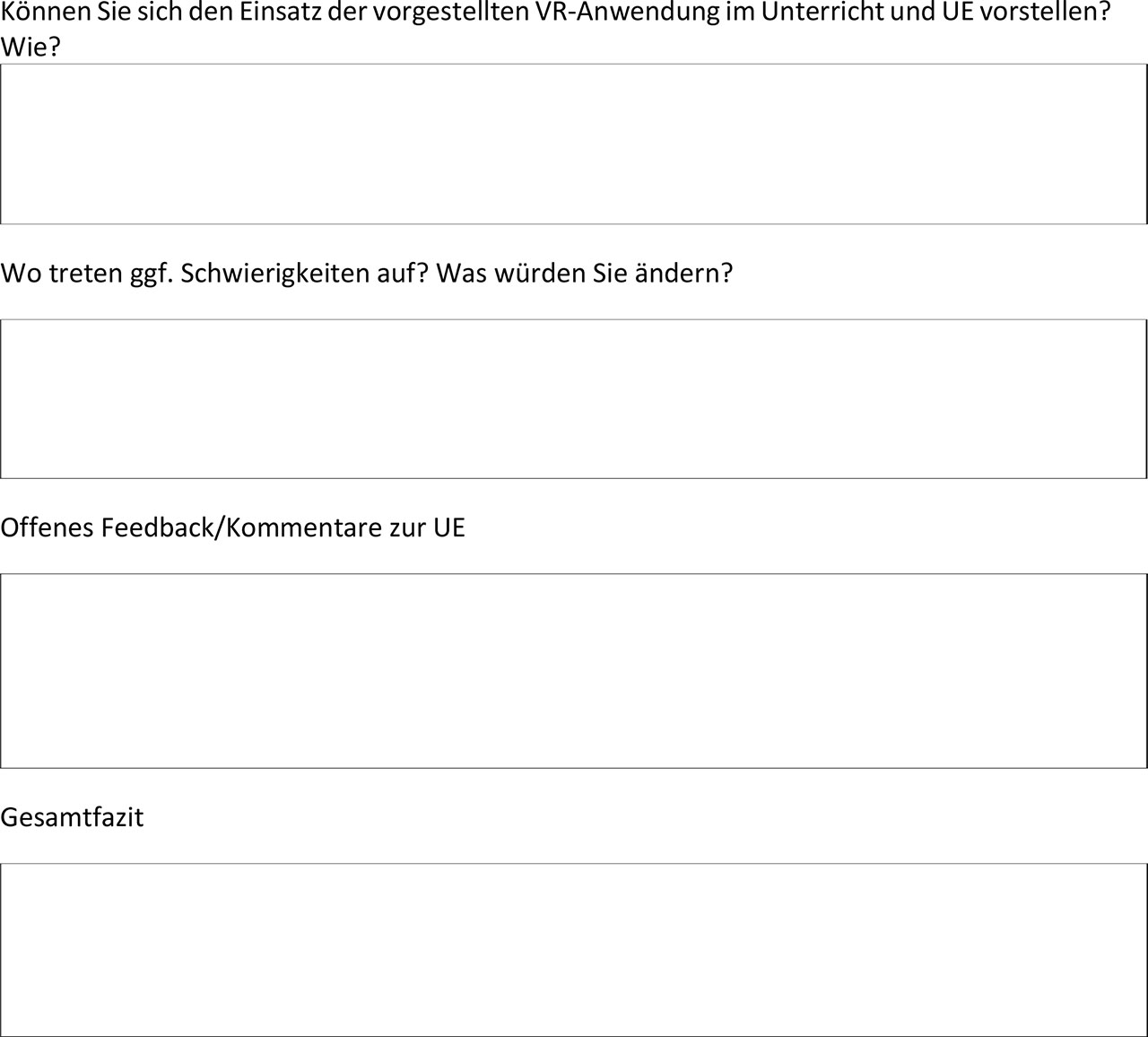
As part of the study (Finkbeiner, Ost & Schlaak, 2024), the evaluation of the VR-based lesson units was conducted with a structured rubric developed within the framework of the project virtual reality and multilingualism (see appendix). The rubric served a dual role: pedagogically, it functioned as a scaffold for peer evaluation, enabling students to assess the quality of the lesson designs produced by their peers in a systematic and reflective manner; methodologically, it provided a research instrument that generated both quantitative and qualitative data for empirical analysis. The integration of structured quantitative ratings with qualitative reflections made the rubric particularly well-suited to the mixed-methods design of the study. On the one hand, the closed items provided systematically comparable data across groups, enabling descriptive statistical analysis of evaluative tendencies. On the other hand, the open responses offered insight into the reasoning behind these ratings.
The rubric consisted of twenty-eight closed items organized across three overarching dimensions: formal criteria (rationale, methodology, didactic decisions), practical criteria (multiculturality, interactivity, etc.), as well as inclusion and added value (accessibility, added value of VR), supplemented by open-ended questions. Each closed item was rated on a simplified three-point ordinal scale ranging from “not applicable” (1), “partly applicable” (2), to “applicable” (3). This response format was selected to minimize rater fatigue and maximize comparability across groups. Students were asked to fill in the rubric online on the learning platform after each group presentation. The rubric was available in German. In total, N=94 peer-evaluation forms were filled in for the four VR applications: BRINK Traveler (N=18), Mondly VR (N=35), National Geographic VR (N=15), and Noun Town (N=26). Quantitative data were processed using IBM SPSS Statistics and primarily included descriptive statistics. Open-ended responses were analyzed using a qualitative data analysis.
4. Results
4.1. Quantitative data analysis
This section presents the results of the quantitative analysis regarding the pedagogical suitability of the following VR applications: BRINK Traveler, Mondly VR, National Geographic VR, and Noun Town for language learning contexts.
4.1.1. Perceived suitability for language learning
Students were asked to assess whether the four VR applications, BRINK Traveler, Mondly VR, National Geographic VR, and Noun Town, were suitable for language learning in general. As shown in Figure 1, Mondly VR and Noun Town received the highest number of positive responses, suggesting that prospective FL teachers considered them the most suitable for language learning purposes. Their combination of explicit linguistic content, interactive practice, and learner feedback appears to have made them especially convincing. Both tools integrate vocabulary practice, pronunciation feedback, and immediate correction loops, which align with the principles of form-focused instruction and task-based learning.
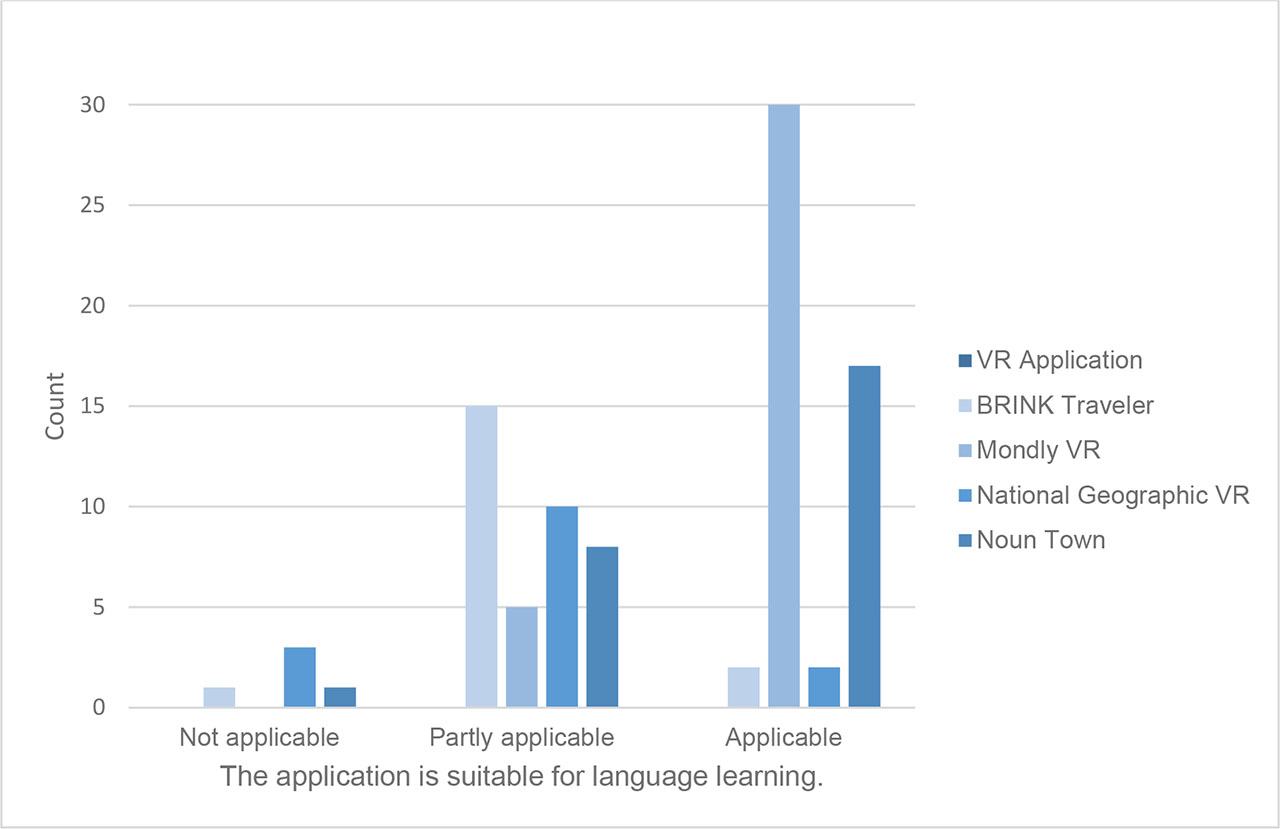
Fig. 1:
Results to the question “The application is suitable for language learning” on a three-point scale [Original: Die Anwendung eignet sich zum Sprachenlernen].
By contrast, BRINK Traveler and National Geographic VR were assessed more cautiously. Responses largely concentrated in the “partly applicable” category, indicating that participants appreciated their immersive and culturally rich content but questioned their adequacy as standalone language learning applications. Such findings align with prior research, which emphasizes that immersive environments, without explicit linguistic framing, tend to support content-based exposure rather than structured acquisition and are therefore considered less effective for language learning.
4.1.2. Target group orientation
The next item examined the extent to which participants perceived each VR application as appropriately addressing its target audience (see Figure 2). In language teacher education, target group orientation is central: teachers must select and adapt materials that are developmentally appropriate, engaging, and aligned with learners’ needs. Across all four applications, responses were predominantly positive, reflecting a general perception that VR environments can effectively engage their intended learners. Noun Town and Mondly VR again achieved the most favorable ratings. Participants frequently cited Noun Town’s gamified features, i.e., the colorful visuals, simplified vocabulary tasks, and immediate feedback, as particularly attractive for young or novice learners. The playful interface appears to align with motivational theories that emphasize autonomy and enjoyment in early language learning.
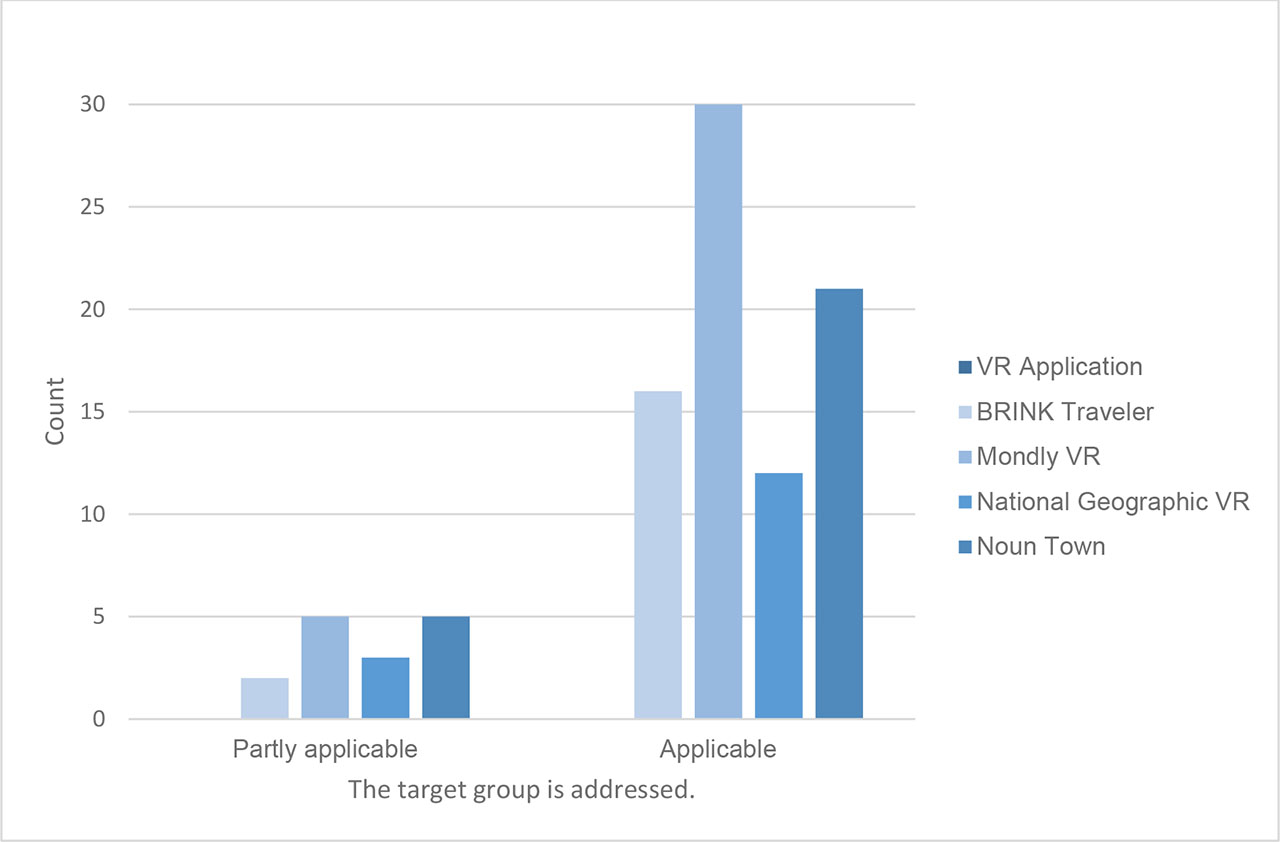
Fig. 2:
Results to the question “The target group is addressed” on a three-point scale [Original: Die Zielgruppe wird angesprochen].
Mondly VR, on the other hand, appealed to participants through its more structured, curriculum-oriented design, suggesting it might be better suited for formal educational contexts. In contrast, BRINK Traveler and National Geographic VR were perceived as less targeted; participants noted that their sophisticated cultural and thematic content may resonate more strongly with advanced learners or adult audiences. These distinctions highlight the importance of developmental appropriateness and learner profiling when integrating VR into teacher education and classroom practice.
4.1.3. Perceived Added Value of VR in Education
The subsequent item explored whether participants identified a clear added value in using VR for educational purposes (Figure 3). Responses indicated a generally positive outlook but also a notable degree of ambivalence.
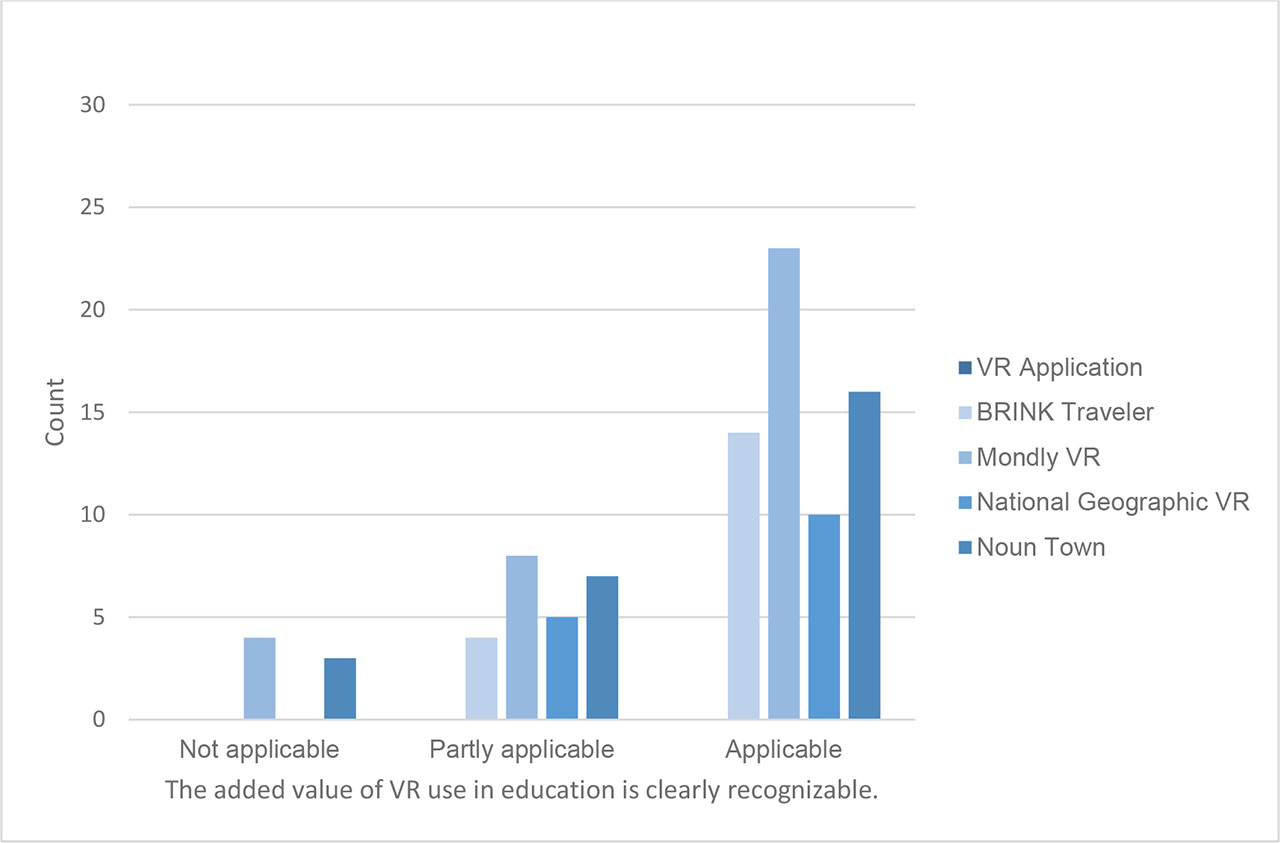
Fig. 3:
Results to the question “The added value of VR use in education is clearly recognizable” on a three-point scale [Original: Der Mehrwert der Nutzung von VR in der UE ist klar erkennbar].
Many participants acknowledged VR’s potential to enhance engagement, contextualization, and sensory immersion; key affordances that traditional classroom tools rarely replicate. However, some uncertainty remained, possibly reflecting limited prior experience with VR technologies or concerns about technological barriers, accessibility, and curriculum integration. This tension mirrors ongoing debates in educational research regarding whether immersive technologies substantively improve learning outcomes or primarily function as motivational enhancers.
4.1.4. Interactivity
This item examined the perceived interactivity of the teaching idea developed for the VR applications. Figure 4 shows a highly positive assessment of interactivity, with responses clustering in categories 2 and 3. Noun Town and Mondly VR again led the evaluations, suggesting that interactivity remains a central determinant of perceived pedagogical value. In Noun Town, learners actively manipulate objects, complete tasks, and engage in avatar-based exchanges, thereby enacting experiential learning through direct engagement with virtual stimuli. Mondly VR provides a more structured but equally interactive experience through speech recognition and dialogue simulations, enabling repeated practice of communicative patterns. While BRINK Traveler and National Geographic VR offer less linguistic interaction, participants valued their exploratory, discovery-based interactivity, which aligns with constructivist approaches emphasizing learner agency and contextual immersion.
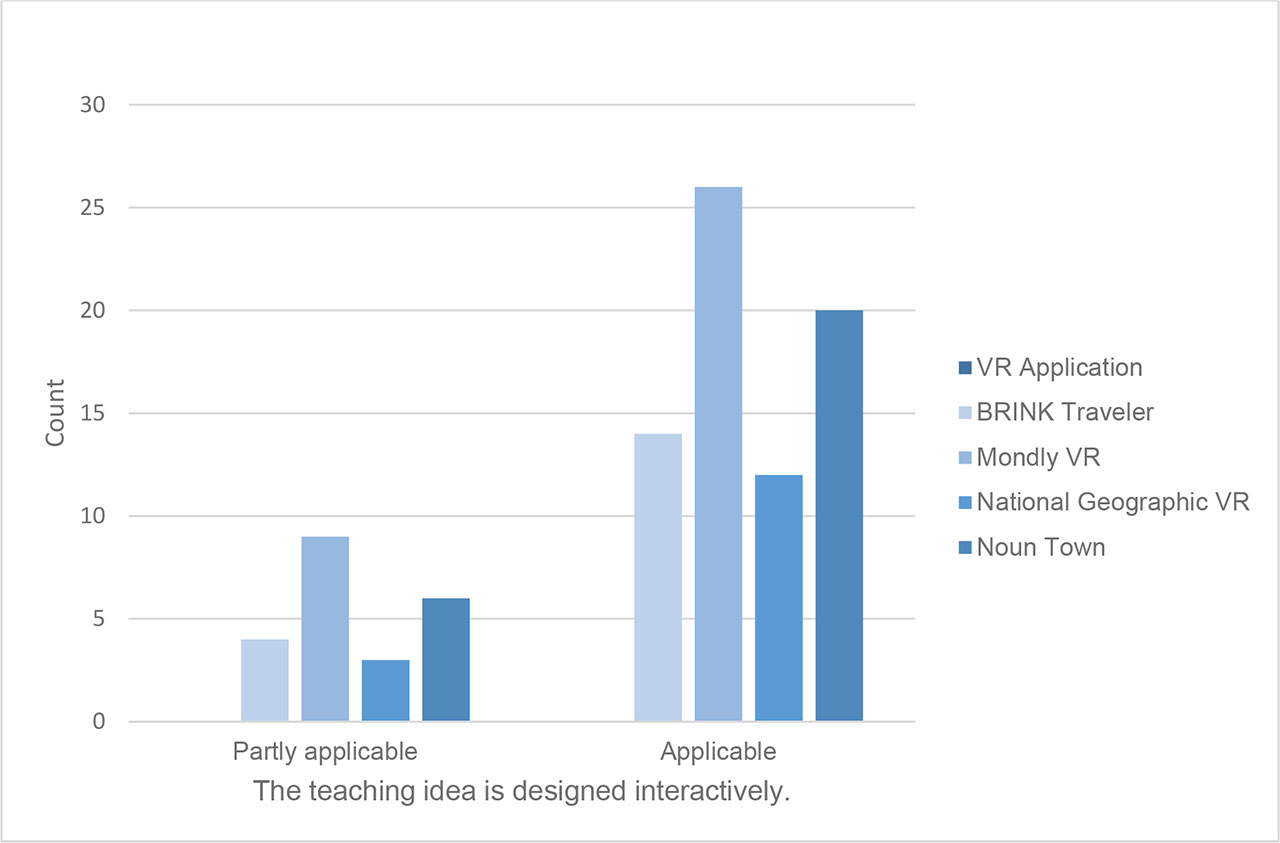
Fig. 4:
Results to the question “The teaching idea is designed interactively” on a three-point scale [Original: Die UE/UI ist interaktiv gestaltet].
Overall, the quantitative data reveal a consistent preference for VR applications that combine linguistic explicitness, gamified interactivity, and clear target group alignment. Participants valued VR tools that enable both experiential engagement and pedagogical structure, suggesting that future teachers recognize the potential of immersive technologies when grounded in sound instructional design. At the same time, the mixed responses regarding added value indicate a need for further reflection on how VR can be meaningfully integrated into curricular contexts, rather than used as a novelty.
4.2. Qualitative data analysis
Each VR application was evaluated by all participating students through open-ended questions, focusing on whether the future teachers could envision using the VR application, presented by their peers, in actual classroom settings and within the teaching scenarios suggested by the groups. In this context, the students also assessed what they perceived as the specific advantages of the respective VR application for FL learning.
The responses were categorized according to agreement or disagreement with the use of VR, as well as according to the perceived potential of each application. More specifically, they were categorized according to whether the VR application could promote competencies in foreign language teaching, contribute to learner motivation, and foster intercultural competencies. Many students assessed the latter aspect through the theme of 'travel.' In the analysis, responses that referred exclusively to the lesson plans created by the students themselves were excluded. Before presenting the results for each application in detail, the following table provides an overview of the four VR applications and their results:
Tab. 1:
Synopsis of the four VR applications
| Mondly VR | Noun Town | BRINK Traveler | National Geographic VR | |
|---|---|---|---|---|
| Pedagogical Focus | Communicative simulation: Facilitates oral production through role-play scenarios. | Lexical acquisition: Gamified vocabulary learning through object interaction. | Immersive exploration: Enhances receptive skills (listening, viewing, understanding) via virtual travel to distant places. | Immersive exploration: Enhances receptive skills (listening, viewing, understanding) via virtual travel to distant places and documentary-style narratives. |
| Interaction | High: Learners actively engage in dialogue and influence the flow of conversation. | Moderate: Learners interact with objects to trigger vocabulary, but dialogue is limited. | Low: Interaction is limited to navigation and triggering pre-recorded content. | Low: Limited communicative activity on the part of the learner. |
| Cultural Context | Situational: Focuses on generic “tourist” scenarios (e.g., hotel visit) rather than cultural embedding. | Decontextualized: Focuses on isolated objects rather than cultural embedding. | Geospatial: Provides access to photorealistic environments and geography. | Geospatial: Provides access to photorealistic environments and geography; moderate cultural embedding provided. |
| Didactic potential | Preparation for real-world dialogue; speech recognition integration. | High engagement via gamification; effective visual-lexical mapping. | Photorealistic representation; potential for cultural and factual knowledge/cultural awareness, narrative elements for listening comprehension. | Potential for cultural and factual knowledge/cultural awareness; narrative elements for listening comprehension. |
| Limitations | Speech recognition technology can be inconsistent; requires instructor scaffolding to integrate into curriculum. | Lacks support for complex syntax; requires supplementary instruction to contextualize isolated vocabulary. | Predominantly receptive nature limits output; additional tasks and contextualization necessary. | Additional tasks and contextualization necessary |
4.2.1. Evaluation of the Mondly VR application
Regarding the evaluation of the Mondly VR application, it becomes evident that students particularly emphasized the app’s diversity (“Ja, die Anwendung bietet verschiedene Möglichkeiten des Sprachenlernens, weshalb ein Einsatz in unterschiedlichen Unterrichtssituationen Sinn macht.”), its temporal compatibility with regular lessons (“Ja, man kann es sich gut vorstellen, da die Anwendungsdauer kurz ist und somit gut in eine Stunde integriert werden kann. Außerdem werden in der App verschiedene Situationen angesprochen. Man muss sich nicht unbedingt bewegen. Eventuell lesen die SuS lediglich die Sätze ab.”), and its suitability for specific teaching scenarios (“Ich kann mir die vorgestellte Unterrichtseinheit gut vorstellen, sie ist sehr fokussiert auf einen Aspekt der App und der passenden Kompetenz ausgelegt”). As with most other VR applications, rejection of Mondly VR was rare and usually only attributed to technical challenges or high operational demands (e.g., “Nein, technischer Aufwand zu hoch”).
The immersive component was also viewed positively. Mondly VR offers authentic, situational language experiences without requiring physical travel, representing a clear added value for intercultural learning, action-oriented teaching, and educational equity, particularly in supporting learners from underprivileged backgrounds. Mondly VR was considered a viable alternative to real-life class trips (“Abgesehen davon, dass die Möglichkeit einer Klassenfahrt nach London nicht immer gegeben ist, konnte ich mir dies vorstellen.”). Authentic everyday situations can be simulated, enabling students to better navigate target-language environments (“Ja. So wie die Stunde geplant wurde, macht es Sinn. Man kann in unterschiedliche Alltagssituationen eintauchen und sich anschließend in diesem Land besser verhalten.”).
For many prospective teachers, the increase in learner motivation constituted a key advantage (“Ja, weil durch die Anwendung aktiv die Sprache gelernt wird. Zudem steigert es die Motivation der SuS.”), although this effect was perceived as highly dependent on technical quality. The app’s speech recognition function was frequently criticized as a demotivating factor (“Nein. Manche Sätze werden von der App nicht erkannt, die eigentlich richtig sind - demotivierend für SuS.”).
In conclusion, Mondly VR is perceived by the majority of students as a didactically valuable complement to traditional FL teaching, particularly in enhancing speaking and increasing learner motivation. The ability to simulate authentic and culturally embedded learning situations is regarded as a key benefit of VR technology. At the same time, the analysis reveals that technical challenges and the lack of systematically integrated cultural content represent notable weaknesses. Consequently, successful classroom implementation requires not only suitable technical infrastructure but also the purposeful pedagogical integration of the application.
4.2.2. Evaluation of the Noun Town application
Noun Town received positive evaluations only within specific instructional contexts, such as in beginner-level language classes or for visualizing concrete objects. Since the application focuses exclusively on vocabulary acquisition, it was viewed critically for its limited capacity to foster comprehensive language competence (“Die Anwendung kann im Unterricht angewendet werden, aber nur im ersten Jahr des Spanisch-Unterrichts, da man wirklich nur Nomen kennenlernt, aber Nomen allein reichen nicht, um eine Sprache zu lernen.”).
Students positively highlighted the interactive design and immersive learning environment, which they considered suitable for everyday topics. (“Yes, the interaction is provided well, also an immersive context is there. So we can use it with a daily topic and combine it with activities.”)
However, several points of criticism were raised. The didactic value of the application was considered limited, (“Eher nicht, da der Mehrwert der Anwendung lediglich beim Vokabellernen zu sehen ist”), and the app was described as monotonous. In addition, students emphasized once again the technical and spatial limitations associated with using VR headsets in classroom environments. Nevertheless, some students noted that the interactive nature of the app could activate learners and increase motivation (“Ja, weil durch die Anwendung aktiv die Sprache gelernt wird. Zudem steigert es die Motivation der SuS.”) Additional potential was seen in the app’s ability to simulate speaking situations outside the classroom through its immersive environment and vocabulary training (“Ja, ich kann mir den Einsatz vorstellen, wenn beispielsweise Dialoge in einer anderen als der gewohnten Umgebung entwickelt werden sollen.”). Thus, the app was deemed suitable for visual vocabulary work but offered little support for functionally communicative use (“Nein, es sieht aus wie eine Anwendung für nur für Vokabellernen.”).
In summary, students assessed Noun Town far more critically than comparable VR applications such as Mondly VR. The application is primarily regarded as a visual support tool for vocabulary learning, particularly in beginner-level instruction or for introducing everyday nouns. However, it becomes evident that, in its current form, Noun Town offers limited potential for fostering higher-level language skills. The application remains confined to isolated word learning without embedding vocabulary into meaningful communicative contexts.
4.2.3. Evaluation of the BRINK Traveler application
Several students considered the BRINK Traveler application meaningful and well-suited for use in foreign language teaching, particularly in English classes. It was specifically emphasized that BRINK Traveler, through its thematic focus (e.g., climate change), enables learners’ emotional engagement.
Die Anwendung könnte ich mir im English Unterricht besonders gut vorstellen, besonders im Zusammenhang mit dem Thema Klimawandel. Die SuS könnten anhand einer Begehung der Orte auf affektiver Ebene angesprochen werden und dazu angeregt werden warum diese Orte schützenswert sind.
The immersive exploration of locations can have an affective impact and raise awareness about the need to protect vulnerable sites. Furthermore, students highlighted the potential for interdisciplinary work, for example, by linking FL teaching with scientific topics and developing concrete ideas for environmental protection (“Eine Interdisziplinäre Ausarbeitung wäre zum Beispiel auch mit den Naturwissenschaften möglich um Ideen auszuarbeiten wie der Schutz dieser Orte spezifisch aussehen könnte.”).
Some students, however, perceived the application as limited and rigid in its functionality, which restricts its pedagogical usability. Comparisons were drawn to other VR applications, such as National Geographic VR, which were described as inflexible (“Brink Traveler scheint ebenso starr zu funktionieren wie National Geographic”). This indicates a lack of flexibility and limited interactive design, as also noted by the authors of the study.
The app was nevertheless regarded as motivating, as its immersive experience can engage and activate learners. Several responses confirmed that BRINK Traveler can serve as a kind of virtual travel substitute (“Ja, da sie einen guten Einblick in weit entfernte Reiseziele bietet.”). The application provides valuable insights into distant travel destinations and can be used in the classroom, for example, through the creation of travel reports (“Ja, ich könnte mir die Anwendung im Unterricht vorstellen in Form von Reiseberichten.”). This opens up opportunities to design authentic and realistic language learning contexts that would otherwise be difficult to realize.
4.2.4. Evaluation of the National Geographic VR application
Students predominantly evaluated National Geographic VR as a useful supplement to foreign language teaching, emphasizing its capacity to enable authentic exploration of places within the target culture (“Ja, ich könnte es mir vorstellen. Im Spanischunterricht würde ich mit Hilfe der Anwendung Peru thematisieren.”). The application is often associated with subject-specific topics such as history, geography, nature, or climate change, all of which are highly relevant to classroom use. Some students saw it as a motivating concluding activity that deepens and makes previously learned content tangible through virtual exploration (“Ja, als Abschluss einer UE, um beispielsweise das Gelernte über die Antarktis und die Folgen des Klimawandels vor Ort greifbar zu machen und anschaulich zu erleben.”).
As with the previous applications, the immersive experience was positively noted, offering learners meaningful access to the target region (“Ja kann ich aber nur als kleiner Teil, da die Anwendung besser zur immersion in die Region geeignet ist aber weniger zum Sprachenlernen an sich.”). However, some students emphasized that the application functions better as a supportive tool for cultural immersion than as a direct language-learning or communication enhancer. According to several comments, linguistic and functional-communicative competencies are not explicitly addressed within the application (“Die Sprache und die funktional kommunikativen Kompetenzen stehen nicht explizit im Fokus der Anwendung.”).
Critically, students also pointed out the limited adaptability of the application, an issue not mentioned with the other applications but relevant here. The rigidity and lack of differentiation options may present didactic challenges, although teachers can partially compensate for these limitations through instructional design. Additionally, it was observed that the app’s design can be either too open or too restrictive due to its built-in parameters, which may complicate lesson flow.
Regarding its use as a travel substitute, the application was viewed positively. It enables exploration of distant places that would otherwise be inaccessible to students (“Ja, man kann sich die Anwendung gut im Unterricht vorstellen. Es ermöglicht, an weit entfernte Orte zu gehen, die man in Realität nicht einfach bereisen kann.”). However, the time required for thorough exploration was also noted as a challenge. To optimize instructional time and structure the learning process, it is recommended that exploration focuses on specific sites or thematic areas.
In summary, National Geographic VR is primarily valued as an immersive cultural and factual learning tool within foreign language education. It is well-suited to support intercultural learning and to motivate learners through virtual travel experiences. Nevertheless, limitations in didactic flexibility and the absence of explicit language-skill promotion require deliberate and targeted pedagogical integration. The application can serve as a valuable supplement by enabling virtual travel to otherwise inaccessible locations but demands careful time management to ensure effective use.
4.3. Discussion of the results
The empirical study demonstrates that VR applications hold considerable potential in FL teaching, particularly when they address language-specific learning objectives (as in Mondly VR) or motivate learners through interactive, immersive elements (as in Noun Town). These applications are especially effective in developing oral skills, which can be challenging to acquire in traditional classroom settings.
In contrast, applications, such as BRINK Traveler and National Geographic VR offer significant cultural and motivational stimuli, making them particularly suitable for fostering intercultural competencies through virtual travel experiences. They offer authentic contexts and allow learners to virtually encounter distant cultures, representing a notable advantage, especially for students who lack opportunities to travel in real life. However, these tools generally lack direct linguistic scaffolding and should therefore be used primarily as supplements to regular language instruction.
The evaluation of accessibility highlights that technical barriers and user-friendliness remain persistent challenges. In particular, the functional integration of VR into classroom practice depends largely on adequate infrastructure, technical reliability (e.g., speech recognition), and thoughtful pedagogical planning.
Multiculturalism is recognized as a central component of language teacher education, yet the results indicate that not all VR tools contribute equally to the development of intercultural competencies. Applications containing authentic cultural content (e.g., National Geographic VR) are rated more favorably in this regard even though one has to confess that they do not directly facilitate intercultural learning but rather an intense cultural experience.
Overall, the study recommends the targeted selection and combination of various VR applications to address both linguistic and cultural learning goals. Technical quality and pedagogical integration as well as time, space and technological assistance are crucial for successful implementation in the classroom. The future of VR in language education, therefore, lies in combining immersive experiences with pedagogical goal orientation and user-friendly technology.
5. Implications for practice
Purposeful use of different VR applications enables linguistic and cultural learning objectives to be achieved more effectively. Language-focused applications such as Mondly VR, for example, support the development of oral skills by providing interactive exercises and immediate feedback, thereby promoting active language production and leading to higher communicative competence in real-life contexts. Complementing this, culturally oriented applications such as BRINK Traveler or National Geographic VR offer authentic insights into foreign cultures, thus strengthening learners’ intercultural competence. By immersing themselves in virtual environments and experiencing cultural particularities firsthand, learners deepen their understanding of cultural diversity and engage in a more holistic learning process.
Playful and immersive applications, such as Noun Town are particularly motivating, as they bring the learning process to life through gamification and interactive experiences. These playful elements not only enhance motivation but also foster deeper engagement with the language, as learning is perceived as a positive and enjoyable experience. However, to fully harness the potential of these emerging technologies, appropriate technical infrastructure is essential. A stable internet connection, adequate devices, and accessible technical support form the foundation for the effective use of digital media and help prevent frustration arising from technical difficulties.
Furthermore, multiculturalism is gaining increasing importance as an integral component of foreign language teaching. Digital tools enable the authentic integration of diverse cultural perspectives into lessons, raising awareness of cultural similarities and differences and fostering an open, appreciative mindset. This is particularly relevant given that intercultural competence is now widely regarded as a key qualification for global citizenship. In times of restricted travel opportunities, such as during the pandemic, virtual and culturally oriented applications offer valuable alternatives for facilitating intercultural experiences. Through virtual realities and cultural simulations, learners can explore foreign countries and cultures without physical travel, thereby reducing prejudice and fostering empathy.
The immersive and interactive design of VR-supported learning processes also significantly contributes to increasing learning motivation. By integrating playful elements and immediate feedback, learning environments can generate a sense of “flow” and promote intrinsic motivation. This, in turn, supports more sustainable language acquisition skills. Additionally, digital learning platforms and applications offer great potential for differentiation and individualization of learning. They enable the adaptation of content, difficulty level, and learning pace to meet individual learner needs, thus providing better support, especially in heterogeneous learning groups.
6. Outlook
Current trends indicate that the ongoing digital transformation will continue to reshape the educational system. This development is likely to foster greater flexibility in learning times and contexts, while simultaneously increasing the demands placed on all stakeholders involved in education. Against this backdrop, VR remains a particularly promising field for FL education. Notably, at the beginning of the project seminar, most participants reported having little to no prior experience with VR in language learning contexts.
A key outcome of this study is the remarkably reflective and critical stance adopted by the prospective language teachers toward VR as an instructional medium. Their responses reveal both enthusiasm for the pedagogical potential of immersive technologies and awareness of their current limitations. While many participants recognized the motivational, interactive, and experiential affordances of VR—particularly its capacity to individualize learning and facilitate immediate immersion into linguistic and cultural environments—they also articulated legitimate concerns. These included the considerable time and effort required for implementation and the risk of reduced authenticity due to an overabundance of artificial or distracting elements within the virtual environment. Such reservations align with findings from recent studies (e.g., Plötner & Nowotny, 2023), which likewise emphasize the need for balanced, pedagogically grounded integration of VR technologies.
For teacher education, these findings underscore the importance of fostering critical digital literacy, that is, the ability to evaluate and adapt emerging technologies for pedagogically sound purposes. Future research might examine how prolonged exposure to VR-based teaching scenarios affects prospective teachers’ confidence, design skills, and conceptions of learner engagement. In conclusion, while the results attest to VR’s promising affordances for language learning, they also highlight the necessity of purposeful integration, scaffolding, and pedagogical reflection to transform technological potential into genuine educational value.
The results of this study also contribute to and extend the existing body of research by providing empirical evidence on the nuanced attitudes of prospective language teachers toward VR-supported learning. To implement the recommendations of the Standing Conference of the Ministers of Education and Cultural Affairs (KMK, 2021), it is essential that teacher training across all three phases include systematic qualification in the use of immersive technologies, such as VR.
At the same time, developers of educational VR applications must continue to refine their products to better meet pedagogical requirements. Stronger interdisciplinary collaboration between language education and computer science would be particularly beneficial for the continued development of didactically robust VR learning environments (cf. Zender et al., 2022). Finally, a sustained program of empirical research is indispensable. Future studies should focus on the practical feasibility, long-term impact, and effectiveness of VR-based instruction in everyday classroom settings.
7
Acknowledgements
We would like to sincerely thank the “Stiftung Innovation in der Hochschullehre” for funding the project. We also want to express our deep gratitude to all tutors, teachers and principals, as well as higher education and secondary school students who actively engaged in this project and contributed with lots of ideas and innovations. Without the cooperative engagement, dedication and team spirit of many, this project would not have been possible.
Appendices
8
Appendix: Rubric
Virtual Reality und Mehrsprachigkeit
Prof. Dr. Claudia Finkbeiner, Prof. Dr. Claudia Schlaak & Wiebke Sophie Ost
Sommersemester 2023
VR Rubrik: Evaluation der erstellten VR-Unterrichtseinheit
| Gruppe: | |
| VR Anwendung: | |
VR App freigegeben ab?
| |
| Zielsprache inkl. Sprachfertigkeit: | |
| Zielgruppe (Alter, Klasse, Schulart, Leistungsniveau): | |
| Thema der Unterrichtseinheit (UE) / Unterrichtsidee (UI): | |
| Thema der Unterrichtsreihe bzw. des Gesamtkontextes: | |
| Gesamtumfang der UI oder UE: | |
| Umfang von VR in der UE: |
| Formale Kriterien | ||
| Die Auswahl der VR Anwendung ist klar begründet. | ||
| Trifft nicht zu (1) | Trift teilweise zu (2) | Trifft zu (3) |
| Die Lehrvoraussetzungen zur VR App werden beschrieben; zum Beispiel Fach- und Methodenkompetenz der SuS. | ||
| Trifft nicht zu (1) | Trifft teilweise zu (2) | Trifft zu (3) |
| Die Lernvoraussetzungen zur VR App werden beschrieben; zum Beispiel räumliche Ausstattung, Raumgröße, vorliegende Unterrichtsmaterialien, Technik. | ||
| Trifft nicht zu (1) | Trifft teilweise zu (2) | Trifft zu (3) |
| Auf den Jugendschutz wurde eingegangen. | ||
| Trifft nicht zu (1) | Trifft teilweise zu (2) | Trifft zu (3) |
| Der Aufbau der UE bzw. UI ist klar und nachvollziehbar. | ||
| Trifft nicht zu (1) | Trifft teilweise zu (2) | Trifft zu (3) |
| Fachdidaktische Entscheidungen sind beschrieben. | ||
| Trifft nicht zu (1) | Trifft teilweise zu (2) | Trifft zu (3) |
| Fremdsprachenspezifische Entscheidungen sind beschrieben. | ||
| Trifft nicht zu (1) | Trifft teilweise zu (2) | Trifft zu (3) |
| Die gewählte Methodik ist ausführlich dargestellt. | ||
| Trifft nicht zu (1) | Trifft teilweise zu (2) | Trifft zu (3) |
| Die Wahl der Sozialform ist begründet. | ||
| Trifft nicht zu (1) | Trifft teilweise zu (2) | Trifft zu (3) |
| Die VR-basierte Lernaufgabe ist klar definiert und begründet. | ||
| Trifft nicht zu (1) | Trifft teilweise zu (2) | Trifft zu (3) |
| Praktischer Teil | ||
| Mehrkulturalität wird in der UE abgebildet. | ||
| Trifft nicht zu (1) | Trifft teilweise zu (2) | Trifft zu (3) |
| Ein interdisziplinärer Ansatz ist erkennbar. | ||
| Trifft nicht zu (1) | Trifft teilweise zu (2) | Trifft zu (3) |
| Der Human GPS-Ansatz (Mehrperspektiven) ist erkennbar und wurde sinnvoll eingebracht. | ||
| Trifft nicht zu (1) | Trifft teilweise zu (2) | Trifft zu (3) |
| Das Ziel/die Idee der VR-UE wird klar. | ||
| Trifft nicht zu (1) | Trifft teilweise zu (2) | Trifft zu (3) |
| Die Zielgruppe ist klar erkennbar. | ||
| Trifft nicht zu (1) | Trifft teilweise zu (2) | Trifft zu (3) |
| Die Zielgruppe wird angesprochen. | ||
| Trifft nicht zu (1) | Trifft teilweise zu (2) | Trifft zu (3) |
| Die UE / UI ist für den Fremdsprachenerwerb geeignet. | ||
| Trifft nicht zu (1) | Trifft teilweise zu (2) | Trifft zu (3) |
| Die VR-Anwendung eignet sich zum Sprachenlernen. | ||
| Trifft nicht zu (1) | Trifft teilweise zu (2) | Trifft zu (3) |
| Die UE / UI ist interaktiv gestaltet. | ||
| Trifft nicht zu (1) | Trifft teilweise zu (2) | Trifft zu (3) |
| Die Aufgaben können von der Zielgruppe bewältigt werden. Die Aufgaben sind bedarfsgerecht. | ||
| Trifft nicht zu (1) | Trifft teilweise zu (2) | Trifft zu (3) |
| Auf die Herausforderung für den Einsatz im Unterricht wurde eingegangen. | ||
| Trifft nicht zu (1) | Trifft teilweise zu (2) | Trifft zu (3) |
| Mehrwert und Inklusion | ||
| Die VR-UE /UI ist inklusiv. | ||
| Trifft nicht zu (1) | Trifft teilweise zu (2) | Trifft zu (3) |
| Die VR-UE ist barrierearm. | ||
| Trifft nicht zu (1) | Trifft teilweise zu (2) | Trifft zu (3) |
| Die UE beinhaltet eine Alternative zur Nutzung von VR. | ||
| Trifft nicht zu (1) | Trifft teilweise zu (2) | Trifft zu (3) |
| Der Mehrwert der Nutzung von VR in der UE ist klar erkennbar. | ||
| Trifft nicht zu (1) | Trifft teilweise zu (2) | Trifft zu (3) |
| Begleitende Materialien (Arbeitsblätter, Sitzplan) sind angehängt. | ||
| Trifft nicht zu (1) | Trift teilweise zu (2) | Trifft zu (3) |
| Ein Verlaufsplan ist beigefügt. | ||
| Trifft nicht zu (1) | Trifft teilweise zu (2) | Trifft zu (3) |
| Die Sprache ist professionell und fehlerfrei. | ||
| Trifft nicht zu (1) | Trifft teilweise zu (2) | Trifft zu (3) |
Offene Fragen: