
1. Introduction
Vibration is a common phenomenon in construction, military, manufacturing and other fields [1],[2],[3]. The generation of vibrations in equipment usually leads to a series of reactions that are often undesirable. Many factors can cause such undesirable mechanical mechanism vibrations, e.g., gearing errors in gears, alignment errors, vortex vibrations in gases and liquids, etc. [4]. As for the internal mechanism, the vibrations can cause the materials to experience repeated loading, resulting to fatigue stresses. Over time, tiny cracks can form in the material, eventually leading to material failure. The accumulation of fatigue damage can significantly reduce the service life of the machine. Vibration can also increase the relative motion between components and increase wear. For example, in contact surfaces such as bearings and gears, vibrations can lead to greater friction and wear, which ultimately affects the precision and performance of the components. The alternating stresses caused by vibrations can accelerate the growth of cracks, especially at weld seams or material defects. This situation can lead to a reduction in structural strength and a shortening of service life. Finally, vibrations can cause fasteners (such as bolts and nuts) to loosen, affecting the fit and stability of components. This loosening can lead to breakdowns or accidents. For large machines such as turbines and compressors, the monitoring and measuring of vibrations is very important. Therefore, they have been studied in detail in previous research [2], [5],[6],[7],[8],[9], as dangerous vibrations can directly affect their service life and efficiency [6]. Vibration analysis is one of the most important methods to prevent the occurrence of malfunction of these devices. Lu et al. investigated the vibrations caused by cavitation in centrifugal pumps using experimental and numerical methods. In addition, a direct link between cavitation and vibration was demonstrated [10]. As shown in Fig. 1, as the cavitation margin (NPSHa) of the device decreases, the maximum values of the amplitude of the vibration signal gradually increase. The results show that cavitation leads to a wide range of broadband vibrations. This eventually leads to erosion damage on the flow path surface and affects the efficiency of the centrifugal pump. Fig. 1(a) and Fig. 1(b) show the power spectral density (PSD) of the vibration signals in the sensor A and B, respectively.
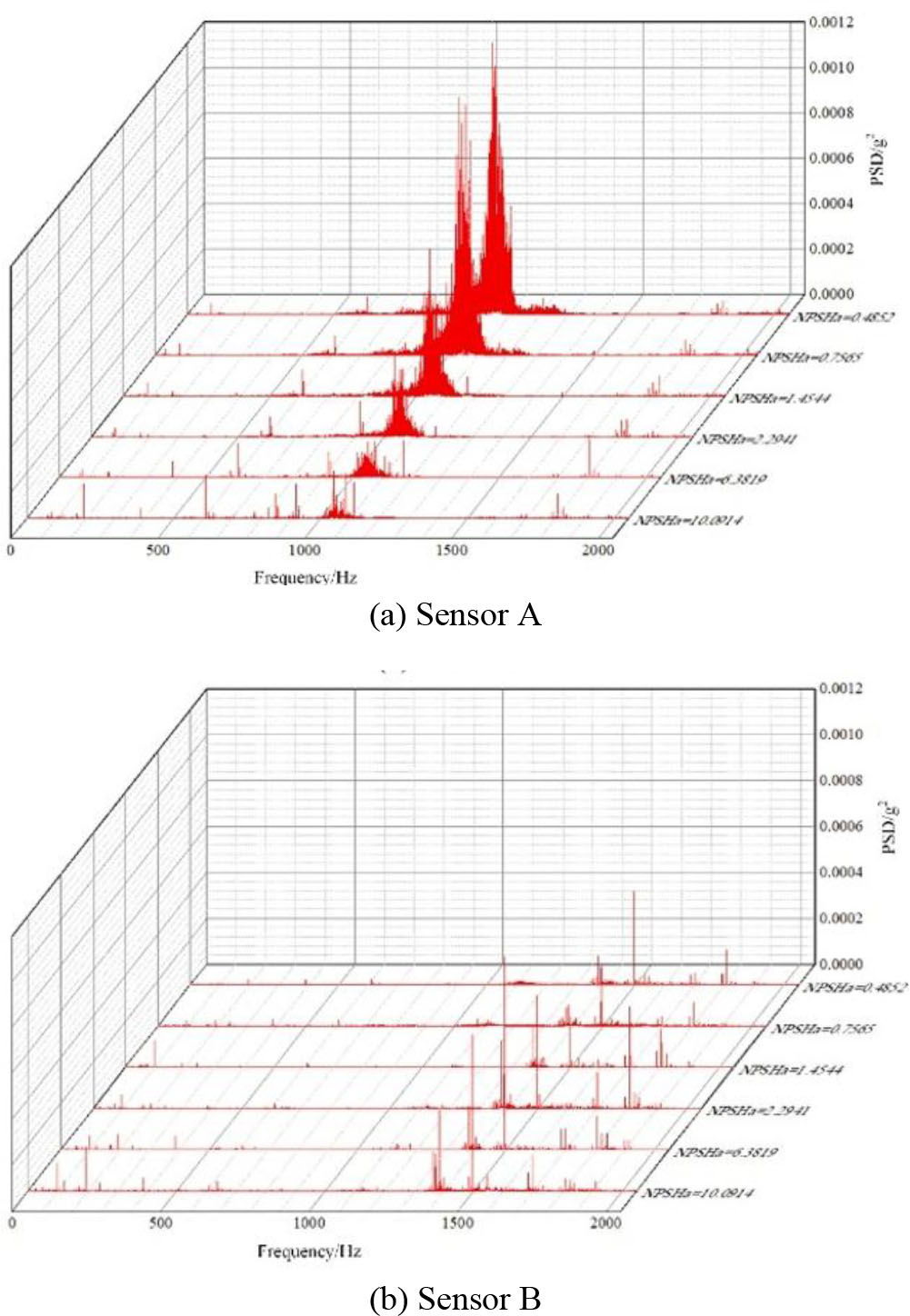
Fig. 1.
Power spectral density (PSD) of vibration signals [11].
CCPP gas turbines often cause vibrations due to imbalance, friction, and flow fluctuations, which can lead to equipment failure [12], [13]. In general, extreme mechanical vibrations cause large cyclic stresses that lead to failure of the turbine blades and associated accessories [14]. An example of blade damage can be seen in Fig. 2.
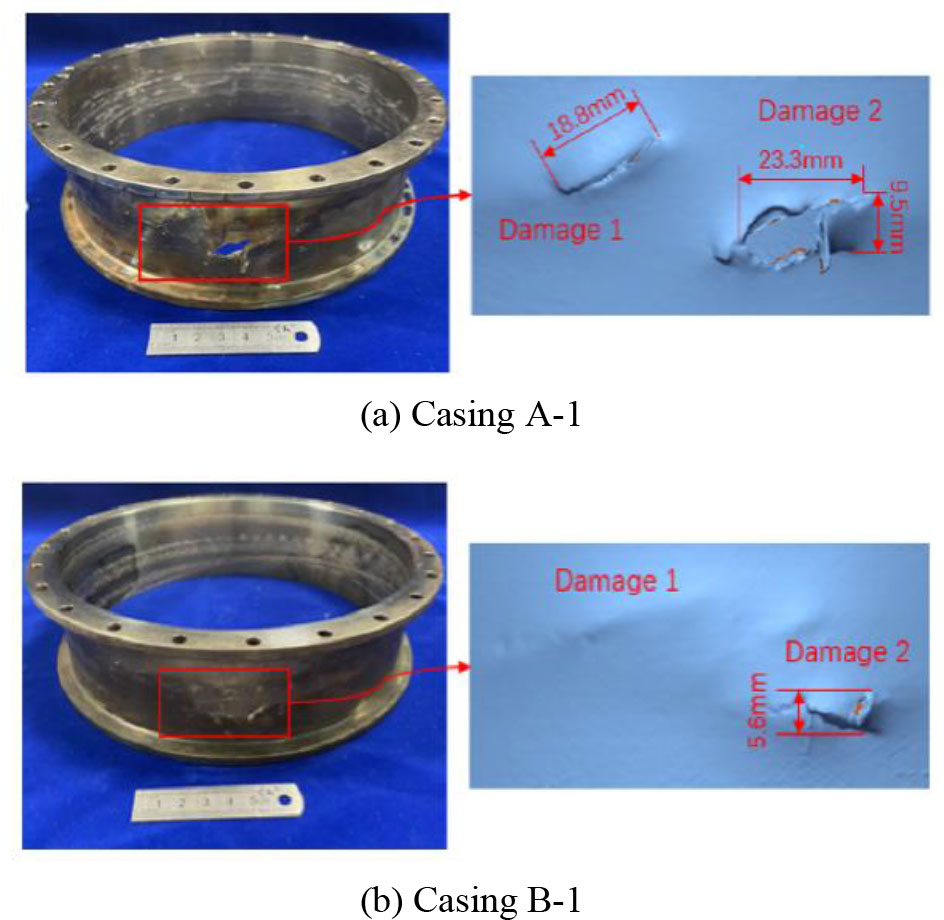
Fig. 2.
Example of damage to the blade containment [15].
In addition, severe vibration problems are of great importance for turbomachinery [16]. Akhtar et al. obtained data by installing eddy current probes on the turbine generator system and investigated the high vibration problem in gas turbines using bode, orbit, and shaft centerline plots [17]. Wang et al. applied the operational transfer path analysis method (OTPA) to identify the causes of turbogenerator vibrations, as shown in Fig. 3 [18]. In these published papers, the vibrations and their sources could be determined. Based on the high vibration amplitude, it is confirmed that there was a problem with the generator. Through logical reasoning and detailed data analysis, it is finally determined that the underlying cause of the generator malfunction is resonance. In the specific case discussed in this article, the resonance phenomenon can be avoided by adding mass to the location determined by the shape of the working disturbance to achieve a change in the natural frequency of the generator housing.
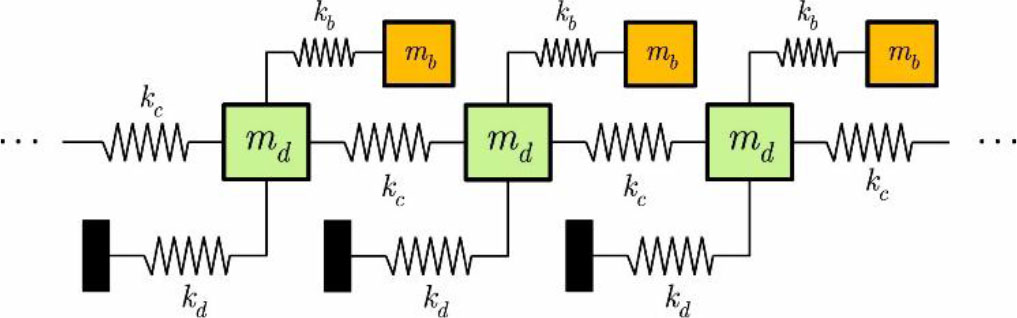
Fig. 3.
Lumped mass model of the bladed disk assembly [18]. kb, kc and kd are the stiffness of the blades, the stiffness of the connections between adjacent sectors, and the stiffness of the disk, respectively. mb and md are the mass of the blade and the disk.
The installation diagram of the acceleration sensors can be found in Fig. 3 in the reference.
Due to the high risks and safety requirements in the aeronautical field, the distinctiveness of sources of danger should also be emphasized. It has been established that one of the most important sources of vibration and noise comes from the engine [19]. The dynamic processes such as the fuel, air supply and combustion dynamics under different conditions can lead to different vibration acceleration characteristics, as shown in Fig. 4. The mechanical vibrations in the aircraft engine could reflect the operating condition of the power system.
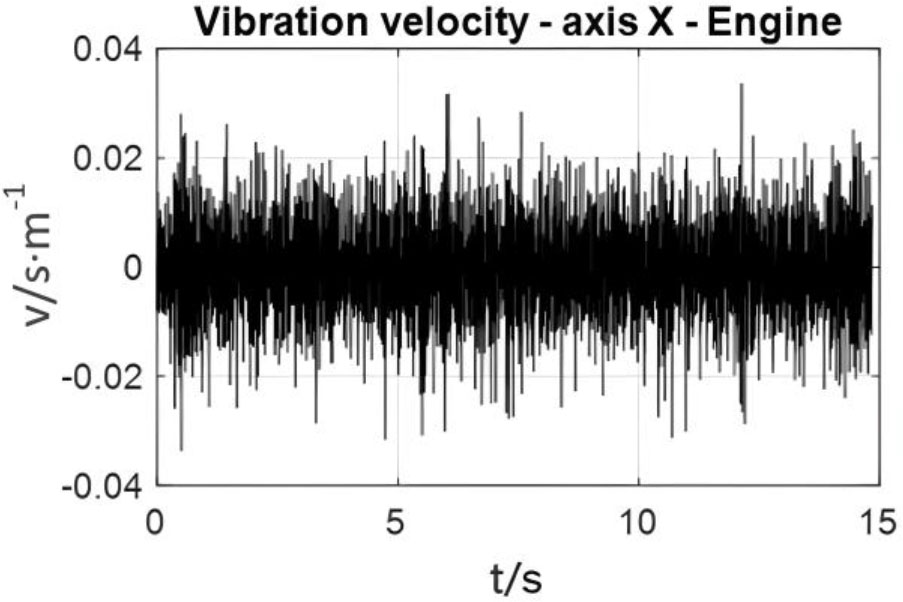
Fig. 4.
The time history of the vibration speed in the X-direction [20].
Therefore, effective analysis of vibration problems is essential. Vibration measurements are indispensable for the study of vibration problems. Mechanical vibrations can be described by measuring the displacement, velocity and acceleration of the measured object. At the same time, these parameters can be converted by a simple calculus relationship. At present, there is a great demand for vibration measurement and detection in industrial systems, and the requirements for the accuracy of measurement results are increasing. The development of vibration measurement is also related to intelligence and networking to meet the requirements of the times [21].
It has been shown that vibration measurement is necessary and important to prevent, detect and correct equipment malfunctions. The working conditions and the environment of the equipment determine the harshness of the working environment of the vibration sensor. A prerequisite to ensure the accuracy of measurements in different operating environments is the prior calibration of the sensors, which provides correction factors within the exact range. In this article, the working principles and current research status of different vibration sensors are discussed, and the current vibration sensor calibration devices and methods and improvement strategies in various aspects are examined.
2. Vibration sensors
Due to the urgent need for engineering applications and the constant updating of technology, the vibration sensor field is developing rapidly. According to the different application principles, they can be divided into two categories: fiber optics and electric vibration acceleration sensors. The summaries of some typical research papers on acceleration sensor with detailed information can be found in Table 1.
Table 1.
Summaries of some typical research work on acceleration sensors with detail information.
| Type | Sensitivity | Frequency range | Temperature | Range | Relative error | Nonlinearity | Response time | Refs |
|---|---|---|---|---|---|---|---|---|
| Piezoelectric | 5.9 pC/g | < 350 Hz | 1000 °C | [24] | ||||
| Piezoelectric | 0.001 Hz to 2 GHz | 120 °C | several ns | [25] | ||||
| Piezoelectric | 80 to 130 Hz | 0.041 % | [30] | |||||
| Piezoelectric | 1000 pC/MPa | > 200 kHz | −20–180 °C | < 0.5 % (linear error) | [31] | |||
| Resistance | 10–100 °C | [34] | ||||||
| Resistance | 2.56–5.67/kPa | < 30 ms | [35] | |||||
| Capacitive | 0.24 V/g | 0.29 % | [43] | |||||
| Capacitive | 18 mV/g | 100 g | 3 % | [44] | ||||
| Capacitive | ±160 g | 1 % | [51] | |||||
| Capacitive | ±4 g | 1 % | [49] | |||||
| Capacitive | 0–80 °C | ±10 g for x, y +12/−7.5 g for z | 0.34 %, 0.28 %, 0.41 % | [106] | ||||
| Fiber | 450 pm/g | [56] | ||||||
| Fiber | 19 pm/g | 1 kHz | 0.1–15 g | [64] | ||||
| Fiber | 1296 pm/g | 0 to 25 Hz | 20–115 °C | 0.5 to 5.5 g | 2 % | [66] | ||
| Fiber | 41.2/34.5 pm/g | 20 to 800 Hz | [67] | |||||
| Fiber | 2430 pm/g | 0 to 20 Hz | [107] | |||||
| Fiber | 19 pm/g | 10 to 1000 Hz | [65] |
A. Electric vibration acceleration sensors
Piezoelectric acceleration sensor
The piezoelectric effect, which was discovered by the Curie brothers in 1880, is the main principle of the piezoelectric accelerometer, as shown in Fig. 5. The material that can generate the piezoelectric effect is called piezoelectric material. The selection and improvement of piezoelectric material is also the focus of the piezoelectric sensor design. Common piezoelectric materials are quartz crystals, piezoelectric ceramics, piezoelectric polymers, etc. Among them, polyvinylidene fluoride (PVDF) film can be used in a variety of harsh scenarios due to its strong and stable chemical structure, which is of great development and application value.
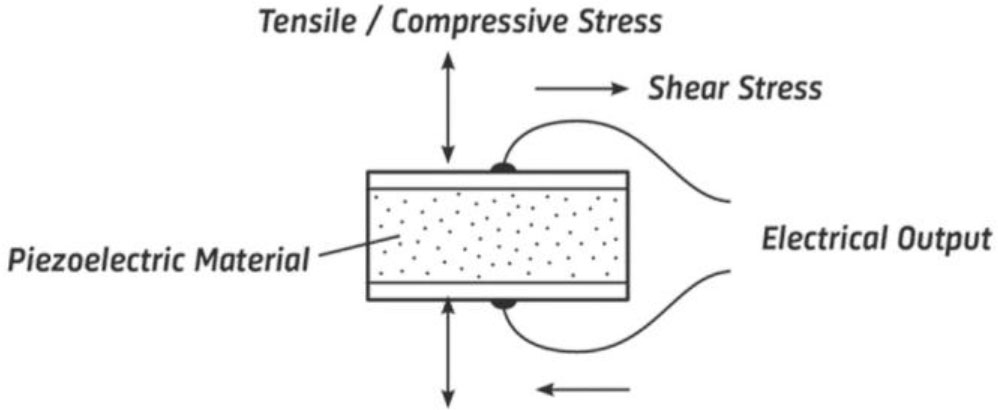
Fig. 5.
Piezoelectric accelerometer schematic [22].
Two configurations are commonly used for piezoelectric accelerometers: one in which a compressive force is applied to the piezoelectric element and the other in which a shear force is applied to the piezoelectric element. Due to the special properties of piezoelectric materials, the force applied to them can be reflected in equal parts in the electrical output. Newton's second law states that force = mass × acceleration, and so the target acceleration can be calculated.
Audrain et al. presented a structural intensity control system based on PVDF strain sensors, and the technical specifications of the system were determined experimentally [23]. Kim et al. reported a new high-temperature piezoelectric accelerometer based on YcaO (BO) single crystals (YCOB) and they experimentally confirmed that the accelerometer still exhibited high stability even at 1000°C [24]. Shirinov et al. reported the design and fabrication method of a PVDF thin-film pressure sensor and investigated its cross-sensitivity to temperature and humidity and aging characteristic curves [25]. Yu et al. reported a simple fabrication method of a piezoelectric thin-film sensor and tested the performance of the sensor [26]. Han et al. presented a method for coupled modal analysis of piezoelectric PVDF materials and the simulation results of ANSYS software showed that the method could solve the coupling problem [27]. Lin et al. presented a preparation method to integrate silicon substrate and PVDF nanofibers into pressure sensor application, and obtained a sensitivity of the sensor up to 2214.4 Mv/MPa through experiments [28]. Zhou et al. proposed a new low-frequency piezoelectric thin-film accelerometer constructed with sensitive PVDF elements and discussed the mathematical model and characteristics of the new sensor [29]. Zha et al. reported a new vibration sensor with energy harvesting capability based on the aid of a piezoelectric energy harvesting device (PZ EHD), and it was experimentally confirmed that the measurement frequency range of the sensor was 80 ~ 130 Hz [30]. Wang et al. designed a new piezoelectric shock wave pressure sensor based on the acceleration compensation mechanism. The device was simulated and optimized by software [31]. Ai et al. designed a high-sensitivity acceleration sensor using a piezoelectric metal-oxide-semiconductor field-effect transistor (MOSFET) and a silicon cantilever beam with Pt/ZnO/Pt/Ti multilayer structure. They experimentally measured the voltage sensitivity of the sensor to be 2.05 V/g [32]. Lee et al. optimized the piezoelectric acceleration sensor design by numerical simulation with metamodeling and determined the optimal piezoelectric sensor design in the resonant frequency range (25–47.5 kHz) [33].
Resistance sensor
Due to the rapid development of semiconductor materials with piezoresistive effect, there are more possibilities to improve the performance of the resistance sensor. The basic principle of resistance accelerometers is that the conductor resistance is proportional to the length of the conductor and inversely proportional to the area, as shown in Fig. 6. The strain of the measured object changes the resistance element in the sensor, which affects the output voltage.
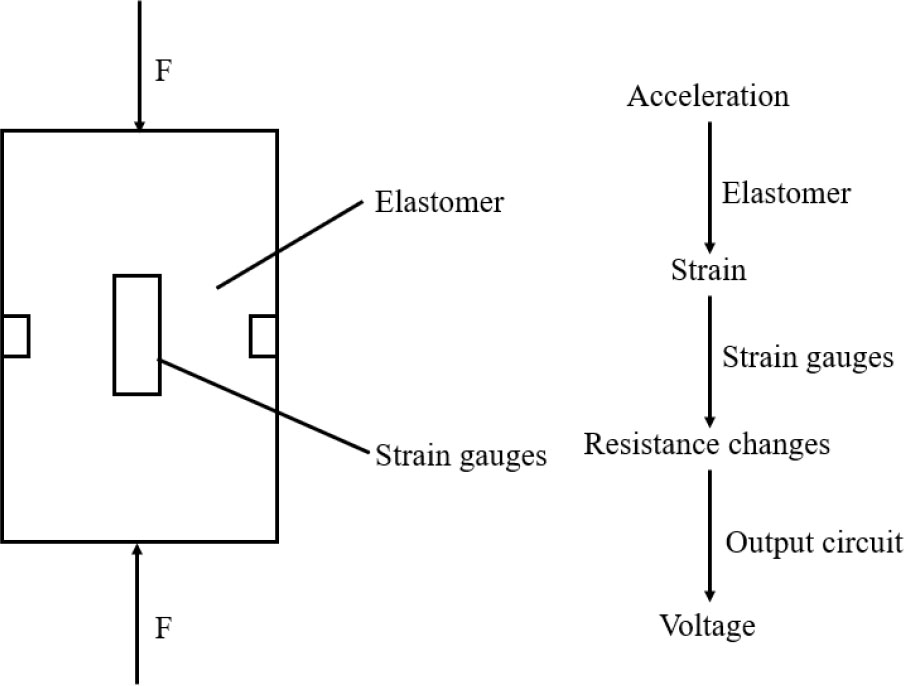
Fig. 6.
Schematic of a resistance accelerometer.
Pan et al. designed a new type of piezoresistive sensor with an elastic, microstructured, conductive polymer thin film that has ultra-high sensitivity and can detect pressures of less than 1 Pa [34]. Chen et al. reported a resistive pressure sensor based on cellulose paper and indicated the application range of the sensor [35]. Na et al. proposed a vertical graphene (VG) resistive strain sensor (RSS) to overcome the problem of severe performance degradation due to structural deformation and verified the feasibility of VG [36]. Iqra et al. developed a flexible piezoresistive strain sensor. They fabricated the sensor with laser-cut graphene oxide on polydimethylsiloxane (PDMS) and tested its performance [37]. Nakamura et al. proposed a piezoresistive graphene strain sensor that could be used for millimeter-scale strain detection. They fabricated the sensor using hollow tubing graphene fibers (TGFs) and PDMS coating and conducted a feasibility study [38]. Wei et al. proposed a flexible bio-based piezoresistive sensor that showed high sensitivity (5.8 kpa−1) [39]. Pan et al. reported a TPU/CNTs-ILs sandwich-resistive sensor. They used coating and 3D printing to fabricate the sensor and experimentally determined the resistance curve [40].
Capacitive acceleration sensor
Capacitive accelerometers use various capacitors as sensitive elements, and capacitive elements are susceptible to temperature changes. The development of this accelerometer is based on advances in micromachining technology. Fig. 7 shows the basic structure of capacitive acceleration sensors. The core components of capacitive sensors are various types of capacitors that can reflect the change in the measured physical quantity as a change in capacitance through the converter.
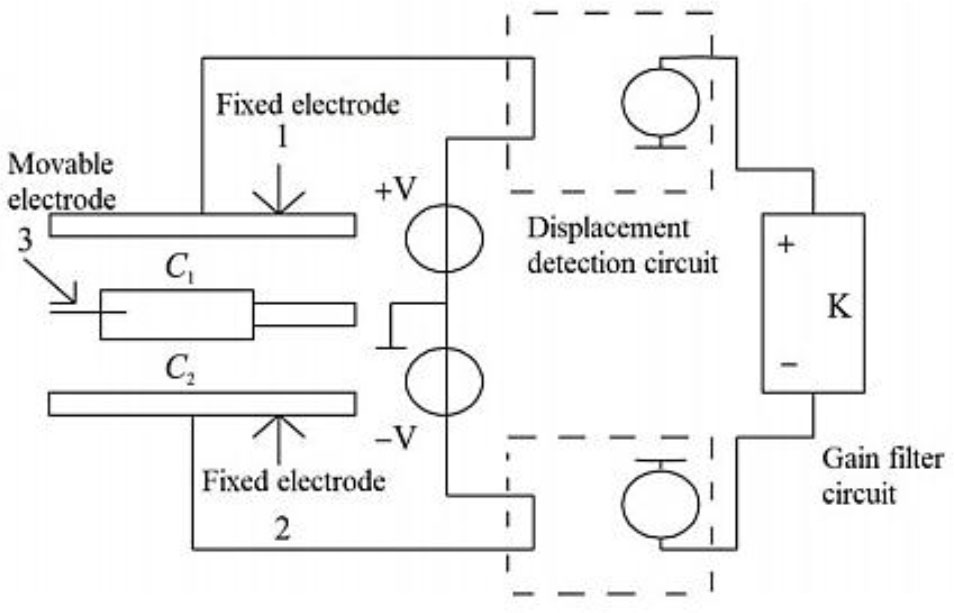
Fig. 7.
Basic structure of a capacitive accelerometer [41].
Chen et al. report a self-calibrating MEMS accelerometer in which the scale factor of capacitive accelerometers can be flexibly adjusted. The bias stability of the accelerometer was experimentally reduced to 31 mg [42]. Zhou et al. designed a new MEMS capacitive acceleration sensor with a double-sided H-shaped beam structure, and the sensitivity of the sensor was experimentally calibrated to 0.24 V/g [43]. Tahmasebipour et al. gave a design and fabrication method for the MEMS accelerometer using the micro-wire electrical discharge machining (μWEDM) method. The sensitivity of this accelerometer was experimentally measured to be 18 mV/g [44]. Meijerink et al. integrated a capacitive sensor on a low-temperature co-fired ceramic (LTCC) substrate, which can be used for stress analysis in solid media [45].
Zhang et al. reported a sawtooth MEMS capacitive strain sensor. The cantilever beams with sawtooth fingers of the sensor can improve the strain sensitivity [46]. Bakhoum et al. reported a miniaturized triaxial variable capacitive accelerometer made of a variable ultracapacitor with a sensitivity of up to 75 Nf/g [47]. Utz et al. reported on a MEMS capacitive accelerometer with a bandwidth of more than 5 kHz. The accelerometer could be used for high frequency measurements [48]. Langfelder et al. designed a novel MEMS accelerometer based on fringe field capacitance and optimized the sensor by FEM simulation [49]. Kumar et al. reported the design of a new secondary mass-spring assembly to improve the sensitivity of capacitive devices. They verified the feasibility of the design through experiments [50]. Maspero et al. reported a new 3D process that can be used for the fabrication of silicon capacitive accelerometers [51]. Jeong et al. designed a wide bandwidth capacitive accelerometer in wafer-level packaging. The sensor is characterized by low noise and high operating bandwidth [52].
B. Fiber Bragg grating vibration sensor
Compared to electrical vibration sensors, fiber Bragg grating vibration sensors are temperature-independent and resistant to electromagnetic interference and are increasingly used in industrial and military applications. They have been widely studied by scientists. The fiber grating acceleration sensor is equipped with a cantilever beam structure in which the fiber grating is fixed on the surface of the elastic beam. As shown in Fig. 8, its basic principle is to transmit the mechanical vibration transmitted from the vibration excitation equipment to the elastic beam through the mass block, causing the elastic beam and the fiber grating on its surface to react together with strain, and finally make the wavelength of the grating to drift.
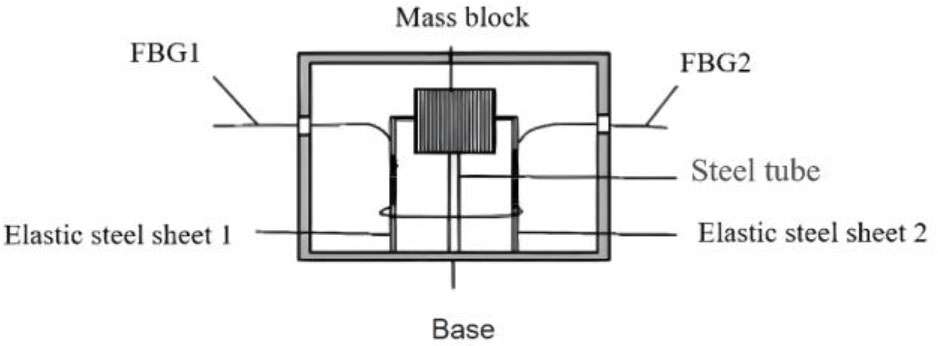
Fig. 8.
Schematic diagram of a fiber Bragg grating vibration sensor [53].
Zhou et al. designed a new grating accelerometer by attaching an optical fiber Bragg grating to the side of a right-angle triangular cantilever beam in an oblique direction and deforming it by applying vertical acceleration to the cantilever beam. They achieved a high sensitivity of 0.679 nm/g in the experiment [54]. Davies et al. developed and fabricated five MEMS accelerometers with different mechanical amplification factors and created mechanical behavior models for verification [55]. Basumallick et al. reported a new fiber Bragg grating vibration sensor in which the effective distance between the sensor and the neutral axis of the cantilever beam is adjusted using a patch. They experimentally compared the dynamic characteristics of this sensor and the conventional PZT acceleration sensor and proved that the improvement could effectively increase the sensitivity. The highest sensitivity of the experiment was 450 pm/g [56]. Wang et al. reported a demodulation scheme to generate carrier waves by the laser emission frequency modulation phase and applied this scheme to the fiber F-P accelerometer for experimental verification. The results showed that the scheme could effectively reduce the phase sensitivity deviation of the accelerometer [57]. Wang et al. reported a fiber-optic accelerometer using a bare macro-bending single-mode fiber and a corresponding measurement system, which was experimentally verified to measure frequencies up to 2 kHz [58]. Zhang et al. designed a new sensing element and applied it to fiber optic accelerometers and increased the sensor sensitivity to 0.751 rad/g [59]. Yin et al. designed an ordinary fiber optic sensor with F-P configuration that can measure both pressure and temperature. They determined the pressure and temperature sensitivities through experiments [60]. Ren et al. experimentally verified a novel demodulation technique that enabled F-P sensors to measure both dynamic and static parameters [61]. Li et al. validated a high-temperature fiber-optic F-P pressure sensor with a high-temperature resistant silicon chip sensing head, which experimentally exhibited a pressure sensitivity of 3.25 μm/MPa at 800°C [62]. Guo et al. improved the ductility of the optical fiber by copper plating and used metal packaging to avoid aging problems caused by viscose packaging, and developed a new fiber Bragg grating accelerometer with a sensitivity of 84 mV/g [63]. Stefani et al. proposed a new polymer fiber grating accelerometer that was more than four times as sensitive as the silica fiber grating accelerometer, and the sensitivity of the accelerometer was experimentally demonstrated to be as high as 19 pm/g [64]. Fender et al. reported a temperature-insensitive accelerometer that used AWG to convert the wavelength drift of the grating into a change in light intensity, and showed that the frequency response of the sensor could be adjusted by changing the length and mass of the cantilever end [65]. Zhang et al. reported a dual-optical grating accelerometer with an organic double-semicircle cantilever structure, which was found to be sensitive up to 1296 pm/g by low-frequency vibration measurements and effectively avoided the undesirable chirp effect of the grating [66]. Song et al. created a theoretical model of a two-dimensional fiber Bragg grating vibration sensor based on an orthogonal flexure hinge structure. The sensor had a sensitivity of 41.2 pm/g and 34.5 pm/g in the X/Y directions, respectively [67]. Li et al. designed a dual-axis fiber Bragg grating acceleration sensor that could only measure acceleration in the vertical plane [68]. Weng et al. proposed an optical fiber Bragg grating vibration sensor consisting of a flat diaphragm and two L-shaped rigid cantilever beams. The frequency response range of the sensor was obtained by experimental calibration from 0 to 120 Hz with a sensitivity factor up to 100 pm/g [69]. Li et al. proposed a pasted type distributed two-dimensional fiber Bragg grating vibration sensor. The sensitivity of the sensor in the X and Y directions was 32.84 pm/g and 451.3 pm/g, respectively, and the sensor could be used for distributed two-dimensional vibration measurement [70]. Morikawa et al. proposed and tested a triaxial fiber grating acceleration sensor and experimentally compared the response of piezoelectric accelerometers and fiber grating accelerometers. It was finally shown that the amplitude response of the fiber grating accelerometer exhibited good linear variation [71]. Nan et al. proposed a method to compensate for errors caused by the fluctuation of the light source and experimentally validated the method with a new three-dimensional high-frequency fiber-optic grating accelerometer they had developed [72]. Xiong et al. designed a triaxial fiber Bragg grating vibration sensor based on a composite structure of the cross-beam-type elastomer with low cross-coupling and the ability of self-temperature compensation [73]. Le et al. proposed a new cantilever beam model for measuring low-frequency vibration signals, and the experimentally measured accelerometer sensitivity range was 6.74 pm/g~26.64 pm/g [74]. Parid et al. designed a novel accelerometer based on a double-L cantilever with fiber Bragg grating, which has high sensitivity and self-temperature compensation. They experimentally determined a sensitivity of 406.7 pm/g and a temperature sensitivity of 0.016 pm/°C [75].
3. Vibration sensor calibration
A. Calibration systems and equipment
Based on the existing calibration methods, the experimenter improved the equipment or calibration system to achieve higher calibration accuracy or to create better calibration conditions from the perspective of the calibrated instrument. Villarroel et al. developed a low-cost sensor calibration system. They confirmed the feasibility of the system by comparing measurement data from a standard measurement and a low-cost sensor calibration system [76]. Yan et al. proposed a closed-loop calibration system with higher calibration accuracy, which can effectively reduce active jamming caused by manually adjusting the excitation in the open-loop system [77]. Ran et al. proposed a phase-locked resonance tracking control method to generate high-acceleration vibration for the calibration of vibration sensors under high acceleration, and established a high-acceleration vibration calibration system [78]. Ferreira et al. reported a vibration sensor system for laser vibrometry calibration using the stripe counting method. The system originated from the Inmetro Vibration Laboratory [79]. He et al. reported an ultralow-frequency vibration exciter system. The system utilized a displacement feedback control technique that could effectively reduce the ultralow-frequency vibration calibration time [80]. Prato et al. reported a calibration method for evaluating the sensitivity of triaxial accelerometers by uniaxial vibration excitation in an inclined plane. The feasibility of the method was verified at INRIM [81]. Payne et al. reported on an improved accelerometer calibration system. The system measured vibration frequencies between 1 Hz and 20 kHz and the calibration results were more accurate [82]. Kokuyama et al. designed a multi-point primary vibration calibration system. The system provides better positioning repeatability using a biaxial positioning stage. They used the system to successfully measure deformation [83]. Liu et al. investigated the improved control of a linear motor to achieve higher accuracy in vibration measurements. They used the controlled motor for MEMS accelerometer calibration and verified the stability and effectiveness of the motor [84]. Ohm et al. proposed a new low-frequency vibration generator. This device can effectively overcome the problems of performance degradation and total harmonic distortion of conventional shakers at low frequencies (<10 Hz) [85]. Garg et al. reported a new system for vibration calibration using zero-difference laser interferometry, which was experimentally validated against the main vibration calibration standards of the Indian NPL [86]. Garg and Chauhan presented a detailed system for implementing secondary vibration calibration at the CSIR in India and evaluated the uncertainty of the system [87].
B. Calibration method
In highly developed fields, engineers demand higher calibration accuracy. However, there are a large number of technical examples where extremely high accuracy is not required. Therefore, calibration methods for general accuracy are just as important as those for high accuracy. Researchers have improved vibration calibration methods and calibration algorithms to reduce the uncertainty of the data and have also proposed simple, technically applicable sensor calibration methods.
Van Kann et al. proposed a simple absolute calibration method that could be used to determine the effective suspended mass of a sensor and verified the feasibility of the method by experiment [88]. Cheng et al. proposed a new angle measurement method that was more economical and applicable. This method, combined with a visual encoder and a telecentric vision system, could achieve accurate static and dynamic angle measurements of amplitudes [89]. Link et al. reported a measurement method for estimating amplitude and phase angle by applying least squares to the phase sequence. This method was able to calibrate accelerometers in the frequency range from 1 kHz to 50 kHz by using the outlier sine approximation method [90]. Shimoda et al. proposed a signal processing method that could suppress line noise and common noise, and experimentally demonstrated that the method could reduce the uncertainty of micro-vibration calibration by two orders of magnitude [91]. Kumar et al. proposed a novel calibration method for vibration measurements on large structures. This method was based on the 3D digital image correlation technique and the feasibility was verified by field experiments [92]. Ripper et al. derived some correction methods for low frequency accelerometer calibration through experiments [93]. Cai et al. proposed a multi-position calibration equation based on the nonlinear scale factor of accelerometers for accelerometer calibration. They improved the accuracy of the calibration method by adding more parameters to the model and optimizing the algorithm [94]. Won et al. proposed a new method for calibrating triaxial accelerometers based on a mathematical model with six calibration parameters. They verified the feasibility of the method by simulation and indicated the error sources for the experiment [95]. Gietzelt et al. reported on a non-iterative calibration algorithm for accelerometers. They concluded that the algorithm has higher calibration quality and lower execution time compared to general algorithms [96]. Sipos et al. reported and compared three triaxial acceleration calibration algorithms. Based on this, they proposed and validated a calibration procedure [97]. Beravas et al. reported an automatic online calibration method for triaxial accelerometers that provided accurate parameter estimates after a small number of iterations. Simulation experiments confirmed that calibrations using this method improved the parameter estimation accuracy in less than 100 iterations [98]. Gao et al. reported a triaxial accelerometer self-calibration method that provides accurate calibration of accelerometer nonlinear errors. This method was used to calibrate the accelerometer nonlinear error to further improve the calibration accuracy [99]. Olsson et al. developed a method for triaxial accelerometer calibration using a triaxial gyroscope, which combines the data from both instruments to achieve optimal calibration results [100]. Särkkä et al. reported an improved multi-position calibration method that successfully calibrates in multi-position calibration modes by using only known net rotations. This calibration procedure can be performed in the field with simple tools [101]. Manzaneque et al. reported a method for estimating the accuracy of closed-loop resonant sensors based on the open-loop characterization of resonators, and compared the resonator accuracy obtained from open-loop measurements with the closed-loop data to verify the feasibility of the method [102]. Wang et al. proposed a method for angular vibration calibration using an interferometric fiber optic gyroscope and evaluated the ability of the method to calibrate vibration with a standard angular vibration system [103]. Shimoda et al. designed a noise suppression system for calibration systems of micro-vibration measurements. The reliability of the micro-vibration measurement system was improved [104]. Gou et al. proposed a new self-calibration method for angular displacement sensors that is suitable for harsh calibration environments. They experimentally determined that the calibration accuracy of this method can be better than ± 650" [105]. Conclusions have been made in Table 2 on the accuracy of the reported calibration methods.
Table 2.
The accuracy of the calibration methods in the previous literature.
| Description | Accuracy | Refs |
|---|---|---|
| 10 % cost of reference (DAQ NI 9775) | Vibration measurement system was working adequately | [76] |
| A closed loop calibration system | U1, U2, and S2 do not need to be measured again; the standard deviation of sensitivity is 0.0003 mV/ms−2 | [77] |
| A phase-locked resonance tracking control method based on the phase resonance principle | Acceleration stability control index of less than 0.5 % and a resonance tracking time of less than 0.1 s | [78] |
| Rapid vibration-level-adjustment for ultralow-frequency vibration exciters | Requires less vibration-level-adjustment time and improves the adjustment efficiency | [80] |
| Improved control of the linear motor | Maintaining amplitude stability over the frequency range from 0.1 to 160 Hz; the standard deviation is less than 0.01 mV/ms−2 | [84] |
| A simple but powerful method is presented | Accurate absolute calibrations with an error of 0.1 % | [88] |
| Introducing the accelerometer nonlinear scale factor | Calibration methods outperform the traditional calibration methods without high-precision orientation control | [94] |
| A low-frequency vibration generator that overcome small acceleration amplitudes and a high level of total harmonic distortion | Relative expanded uncertainty is 2.6 % at a confidence level of 95 % | [85] |
4. Conclusions
Monitoring and measuring vibrations is very important for large machines such as turbines and compressors, as dangerous vibrations can directly affect their service life and efficiency. Accurate measurement of vibration is a challenge in both academic and industrial fields. This paper presents recent advances in the accurate vibration measurement. To date, significant breakthroughs and advances have been made in manufacturing processes, processing techniques, material selection, calibration methods, and structural design for various types of vibration sensors. Currently, research in the field of sensors is striving to reduce costs, improve accuracy, sensitivity, lifespan, repeatability, and adaptability to specific environments. However, there is still a certain distance between scientific research and the industrial application of vibration sensors. Some advanced methods used in scientific research, such as MEMS technology and special high-end materials, still have significant cost issues. The ability to transfer scientific research results to industry still requires innovation in various areas, especially in materials and processes. According to previous research, although there are natural technical differences between different types of sensors, considering the technical level, research goals, and cost control of different research groups, the performance differences of different types of sensors are not significant. From an industry perspective, piezoelectric acceleration sensors still have a cost advantage and are very competitive in relatively conventional scenarios. In fields with high space and accuracy requirements, capacitive and resistance acceleration sensors have high priority at higher costs. In the field of scientific research, the fiber Bragg grating vibration sensor with its high sensitivity and anti-interference advantages will continue to be the focus of scientific research.
ACKNOWLEDGEMENTS
This study was supported by the National Key Basic Research Project (2022JCJQZD20600), the National Key Research and Development Program (2022YFA1005104), the Scientific and Technological Research Program of Chongqing Municipal Education Commission (KJQN202312903) and the 173 Program (2021JCJQJJ1329).