
Table 1.
Consumer decisions and their changes – individualistic interpretation vs. Theory of Social Practices (TSP)
| Individualistic interpretation | TSP interpretation | |
|---|---|---|
| How do consumers make decisions? | The individual (subject) in his action reveals his individual, autonomous values; Values and decisions are independent. | The individual (subject) embodies collective institutions in his actions; individual decisions and actions are “moments” of routine social practices. |
| What are routines, and how do they change? | Routines (habits) are individual; they are created by repeating individual actions. | Routines are social practices – they arise due to the reconfiguration of their elements. |
| Subject of study | Individual decisions and actions of individuals. | Social practices change by questioning the principles of the value of existing practices and reconfiguring elements. |
| How does an individual change decisions and actions | A change in the sphere of consciousness and values precedes and determines a change in actions (causality in one direction). |
|
| What is the relevance of the problems formulated so far for research projects? | Research projects look for solutions to problems formulated before they are undertaken, e.g., reducing environmental pollution, obesity, cigarette smoking, and sugar consumption. | Research projects formulate the problems to be solved, which usually involve questioning existing principles of the value of existing practices and providing tools to implement new practices |
| Data analysis | Data about consumers' decisions are interpreted as if they reflect their revealed preferences. | Data about consumer decisions are interpreted as the implementation of collective, routine practices |
| What is an intervention to change activities? | Social campaigns and education aimed at changing the awareness and values of individual entities | The actions of many actors (stakeholders) co-create new routines, i.e., configurations of rules, resources, and activities; consumers implement new practices after improvisation with new tools. |
| What is the effect of the intervention? | Better individual decisions in achieving a given goal, e.g., sustainable development values, obesity, etc. | New social practices with new, contextual principles of values and tools. |
[i] Source: based on Spotswood et al. (2015), Shove and Walker (2005, 2010), Schwanen et al. (2012).
Table 2.
Selected quotes and photos from respondents
|
 |
Table 3.
Selected quotes and photos from respondents
|
 |
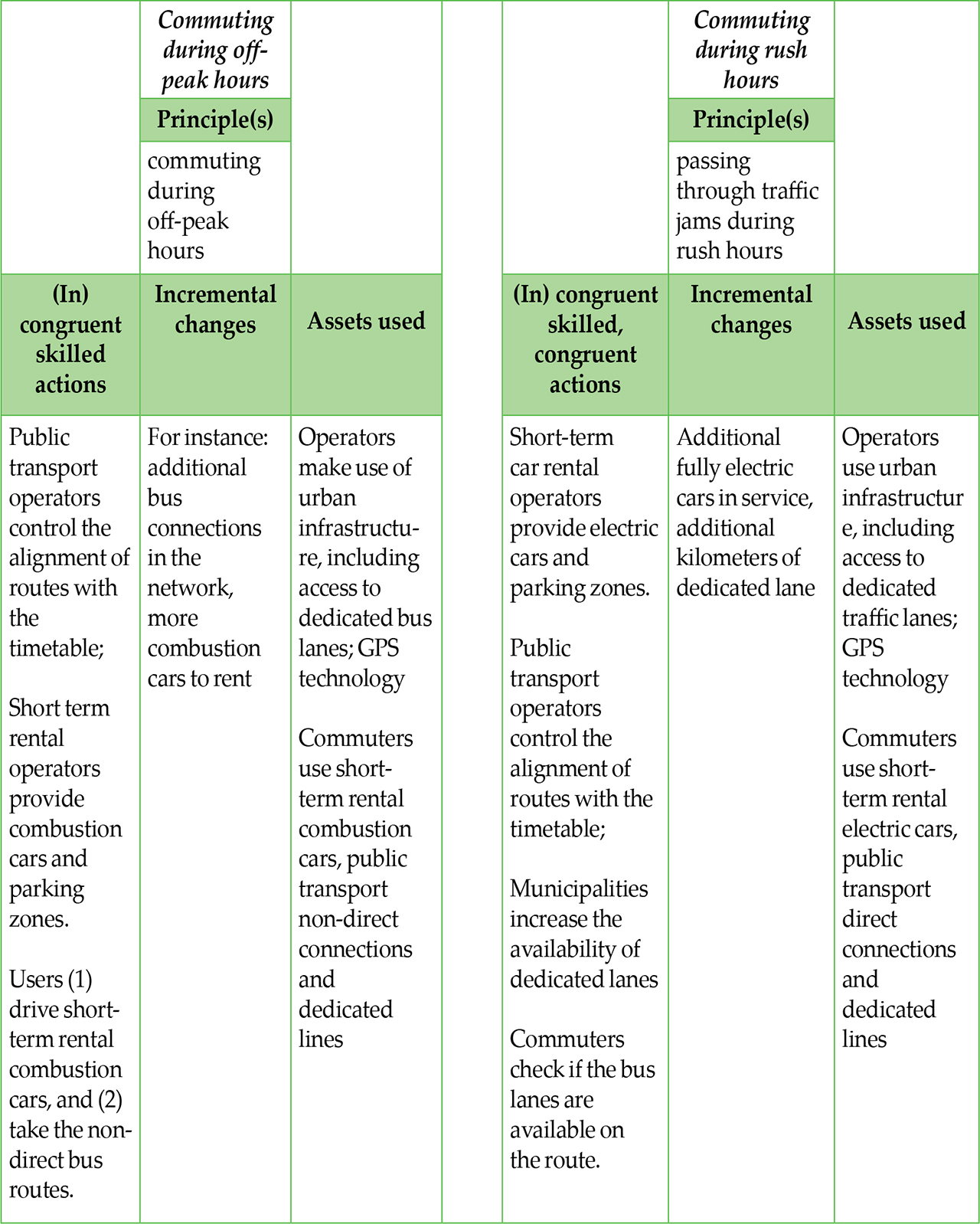
Figure 1.
Summary of study findings: the computing practices identified
Table 4.
Model for understanding of consumer practices
| Consumer practice as research unit a priori | Consumer practice as research tasks | |
|---|---|---|
| How to study consumer practices? | Consumer practices are viewed as intuitive and predefined, remaining the same from study start to finish | Consumer practices are the findings of the research |
| How does the new offer change consumer practice? |
| New offer inspires beneficiaries to improvise and perform practices different than just usage of the offers. |
| What are the relations between the consumer practices? | Consumer practices are bundled and performed at the same time or in the same places |
|
| What is the enrichment for beneficiaries? | More modalities of the practice enrich consumer experience. | Reducing the intensity of practice can benefit consumers, leading to potential enrichment |