Introduction
With the rapid growth of Controlled Environment Agriculture (CEA) in the fresh food production market, new obstacles are being encountered with regard to food safety and plant disease control. Lessons learned from terrestrial CEA can be applied to space crop production (Hamilton et al., 2023; Topalcengiz et al., 2024). However, the scale of production from the small plant growth units installed on the ISS, such as NASA’s Veggie and Advanced Plant Habitat (APH), the end consumer (astronaut), and the unique environmental conditions crops are subjected to in space make it challenging to directly compare to terrestrial agriculture systems’ challenges. Furthermore, terrestrial CEA operations depend on customer requirements often verified by 3rd party audits with standards developed by blending elements of conventional farming and processing facilities (CEA Food Safety Coalition, 2021; CEA Alliance, 2023), whereas space-based CEA currently has no developed standards. NASA has a long history of growing crops in space for basic biological research and, with the deployment of the Veggie plant growth unit in 2014, for consumption by the astronauts (Paul et al., 2013; Massa et al., 2017a; Kordyum and Hasenstein, 2021; Hughes and Kiss, 2022; De Micco et al., 2023; Maffei et al., 2024). A variety of leafy greens and, most recently in the VEG-05 experiment, tomatoes, have been grown in the Veggie hardware, and pre- and post-flight samples have been analyzed for microbial content (Khodadad et al., 2020; Hummerick et al., 2021; Bunchek et al., 2024; Spern et al., 2026). As a ready-to-eat food source for the crew, the crops grown on the ISS must be safe and free of potential foodborne pathogens. Hazard Analysis Critical Control Point (HACCP) plans are utilized in food production and agricultural operations to prevent food borne illness and reduce hazards to a level that is not reasonably likely to occur (Awuchi, 2023; Stenzel et al., 2023; FDA, 2024). This approach originated with the beginning of human space flight by NASA to ensure the quality of food prepared for astronauts, and has since been implemented globally to meet international food safety standards (Awuchi, 2023). Inherent limitations of crop systems in spaceflight may not support a HACCP plan in the classical sense; however, the framework can be applied where possible. HACCP is based on the following seven principles to control and prevent food safety hazards (https://www.fda.gov/food/hazard-analysis-critical-control-point-haccp/haccp-principles-application-guidelines)
Conduct a hazard analysis
Determine critical control points
Establish critical limits
Establish monitoring procedures
Establish corrective actions
Establish verification processes
Establish record keeping
The US Food and Drug Administration’s Food Safety Modernization Act (FSMA) addresses requirements for agricultural operations and producers and establishes minimum standards for safe growing and harvesting fresh produce. These standards as well as those set by other regulatory agencies, are good guidelines to define best practices in the production of fresh crops in space-based systems like Veggie, APH, or future exploration crop growth systems. While applying the classic HACCP approach to space crop production presents challenges and exposes gaps in its implementation, applying the framework of HACCP to vegetable production on ISS will lower the risk of foodborne illness from space-grown crops and inform development of standards and technologies that close these gaps. The FDA provides guidance (https://www.fda.gov/regulatory-information/search-fda-guidance-documents/guidance-industry-guide-minimize-microbial-food-safety-hazards-fresh-fruits-and-vegetables) specifically for the implementation of Good Agricultural Practices (GAP), outlining the potential sources of microbial contamination and stressing the importance of preventive measures to minimize contamination in the first place. In terrestrial agriculture, human and animal feces are the major source of foodborne pathogens often introduced in field irrigation water via contaminated irrigation water (Holvoet et al., 2015; Mogren et al., 2018; Pachepsky et al., 2018; Alegbeleye et al., 2018; Kim et al., 2023), while nutrient solutions deployed in indoor agriculture operations can carry various microorganisms, including bacteria, protozoa, and chemical contaminants (CEA Alliance, 2023). The advantage of crop systems designed for space missions is the precise control and the ability to prevent certain types of contamination that may be difficult in terrestrial agricultural practices.
Prevention of foodborne illness and crop disease is especially critical for controlled environment space farming. If the introduction of human pathogens were to occur, the risks to the crew of exposure to foodborne pathogens could be increased over terrestrial risks, considering the association of immune dysregulation with spaceflight (Borchers et al., 2002; Rizzo et al., 2012; Crucian et al., 2015; Winer et al., 2026).
Crop loss from the introduction of plant pathogens could impact astronaut nutrition if crops are a key part of future space diets. Also, cleaning hardware to remove contaminants may be more challenging in flight with resource and materials limitations. One of the components in the development of a disease prevention plan is to identify microbial risks associated with individual crops, the systems in which they are grown, and the associated horticultural practices. The investigation of microbial load on space-grown crops is ongoing, especially since the deployment of the Veggie facilities on ISS (Khodadad et al., 2020; Hummerick et al., 2021; Bunchek et al., 2024; Spern et al., 2026). Unlike processed food products in the astronaut diet, there are not yet enough data from space crop systems for NASA to develop microbiological standards for fresh grown produce harvested and consumed by the astronauts. The only close comparison is CEA-grown fresh produce, which must be free from pathogens but does not have limits for general microbiological levels. Instead, these systems rely on safe handling, high levels of cleaning and sanitation, and pathogen testing of inputs, food contact surfaces, and final product. The same levels of cleaning are not possible in spaceflight due to limitations on water and chemical cleansers, and microbiological testing capabilities prior to consumption are not available.
Crops, mostly leafy greens, have been grown in the Veggie facilities in a series of technological demonstrations and experiments, and for each of these crops, microbiological analysis was performed from Veggie ground test samples before they were approved for crew consumption on ISS. In addition, harvested produce grown on ISS has been returned to Earth for analysis. Results indicate that ISS-grown crops carry higher numbers of bacteria and fungi than corresponding ground controls (Khodadad et al., 2020; Hummerick et al., 2021; Bunchek et al., 2024; Spern et al., 2026).
Prior to the establishment of the food safety plan, prerequisite programs were developed to reduce the likelihood of introducing potential hazards (USDA, FSIS Guidelines | Food Safety and Inspection Service, usda.gov). As applied to crops grown in Veggie, this prerequisite program included standard operating procedures for sanitization of plant growth materials and seeds and other safe handling techniques.
Here we have applied the HACCP planning principles as a risk assessment to the cultivation of crops on the ISS in the Veggie hardware. This work focuses on the VEG-04 and VEG-05 experiments in which mizuna and tomato were grown, respectively, under different lighting and harvest regimes in the unique environment of the ISS (Fig. 1). Baseline microbiological assessments of mizuna and tomatoes from experiment verification testing, as well as ground and flight experiments, are presented here. The approach described in this work is a modification of traditional HACCP plans given that there is currently limited microbiological information available for crop growth in spaceflight. The resulting data and baseline food safety plan will be used to inform development of standards and technologies that close the food safety gaps.
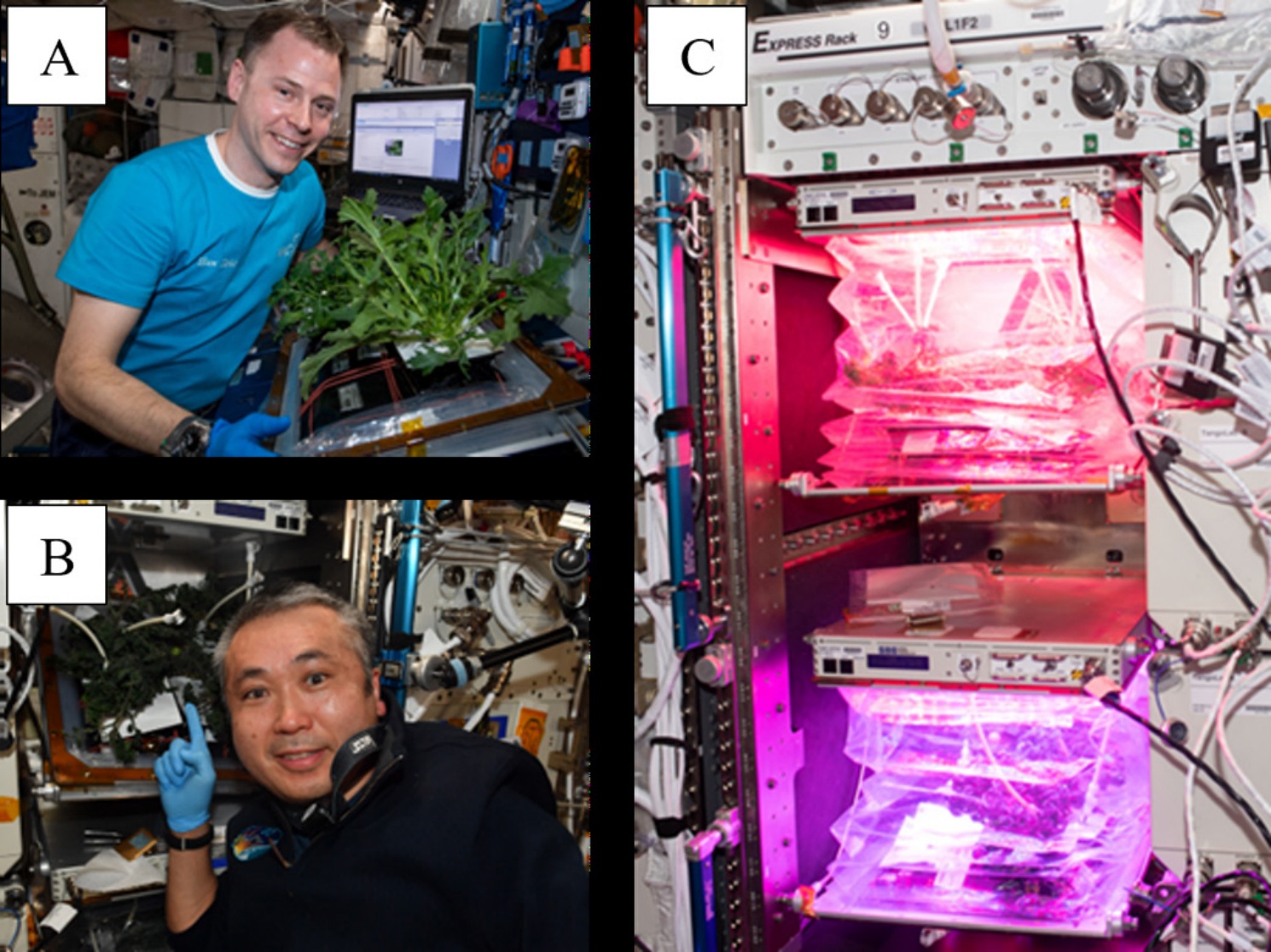
Figure 1.
A) Mizuna grown during the VEG-04A experiment. B) JAXA Astronaut Koichi Wakata pointing to the VEG-05 tomato experiment. C) VEG-05 experiment in an express rack with red-rich lighting on top and blue-rich lighting below (Credit: NASA).
Methods
Hazard analysis: Baseline microbial assessments: pre- and post-flight
Prior to the VEG-04 and 05 flight experiments, experiment verification testing (EVT) was performed in controlled environment chambers at KSC. To verify that the crops were free of pathogens and to determine expected bacterial and fungal counts on mizuna (VEG-04) and tomatoes (VEG-05) before flight experiments, preflight science and experiment verification tests were performed in controlled environment chambers at Kennedy Space Center (KSC). Plants were harvested following flight protocols, and mizuna leaves and tomato fruit were processed for microbiological analysis.
To collect VEG-04A, B, and VEG-05 flight sample baseline data, microbiological analysis was performed on mizuna after a single harvest (VEG-04A), after three consecutive harvests (VEG-04B), and tomato fruit from three harvests (VEG-05). All experiments were grown under either red-rich or blue-rich lighting recipes as described in Bunchek et al., 2024. Samples harvested from individual plants were processed for enumeration of bacteria and fungi and screening for potential human pathogens, E. coli, S. aureus, and Salmonella spp using culture-based methods (Khodadad et al., 2020; Hummerick et al., 2021; Bunchek et al., 2024). Bacterial and fungal community sequencing was performed on the VEG-05 flight and corresponding ground-control tomato samples, in addition to culture-based methods of enumeration and identification (Spern et al., 2026).
Flight samples of mizuna and tomato, as well as associated pillow components including wick material and substrate from VEG-04A, B, and VEG-05, were also analyzed after return to Kennedy Space Center (KSC) after harvest on the ISS and storage at −80 °C. The flight samples were processed to collect microbiological data, providing bacterial and fungal plate counts and pathogen screening, along with ground controls.
Determine critical and non-critical control points or good agricultural practices: Review processes from pre-flight preparations to harvest
One essential step in a formal HACCP process is identifying critical control points (CCPs), which are defined as points in the production process required to prevent, eliminate, or reduce the identified biological, chemical, and physical hazards. In the case of adapting the HACCP framework to growing crops in space flight, the emphasis of this food safety plan is on biological (microbial pathogens) hazards deemed likely to occur without control. If a process step is determined to be a CCP, critical limits are defined for that CCP, and corrective actions are established to bring the process back into control upon the occurrence of a verified deviation. Non-critical control points or GAPs can also be identified in HACCP planning and differ from CCPs in that the likelihood of a health risk occurring if not controlled is low, but it is a step in a process that can reduce the risk even further.
An example of a GAP would be the reliance on preventive procedures such as sanitizing seeds to minimize risks. In this project, control points were defined as steps in the Veggie ground assembly, crop growth, and harvest processes where microbes could be introduced. An assessment of pre- and in-flight operations was performed with a review of procedures from ground assembly to post-harvest. Veggie pillow assembly, substrate preparation and seed sanitization are described in Massa et al., 2017b. Preparation of disinfectant wipes used on produce after harvest and before consumption was done in KSC labs as described in Bunchek et al., 2024. Flight experiment procedures are provided to the astronauts, and these include initiation, plant maintenance, harvest and post-harvest produce cleaning protocols. Control measures were defined for each CCP (Tables 1 and 2).
Table 1.
Pre-flight process CCP to eliminate or reduce microbiological hazards.
| Pre-flight: Process Step/Control Point | Microbiological Hazard | Critical control measures | Control limit (Critical control limits. *) | Monitoring procedure | Verification |
|---|---|---|---|---|---|
| Ground processing-pillows, wicks, substrate | Introduction of microbes via handling and materials. | Sterilize components by autoclave or ethylene oxide sterilization. Aseptic technique used while assembling. Includes engineering controls such as use of laminar flow for assembly and use of PPE. | Sterilization conditions achieved.* | Biological indicators in each cycle for verification of sterilization processes. | Biological indicators are negative for growth. Laminar flow bench certification. Verification and record of assembly SOP. |
| Disinfectant wipe preparation | Introduction of microbes via handling and materials. | Autoclave materials. Aseptic technique used while assembling. Includes engineering controls such as use of laminar flow for assembly and use of PPE. | 1% ProSan disinfectant pH<3.0* | Biological indicators in each cycle for verification of sterilization processes. Check pH of ProSan solution after autoclaving using pH probe or pH paper. | Biological indicators are negative for growth. pH<3.0 after testing |
| Ground Processing-Seed | Introduction of microbes via handling and indigenous microbes present on seeds | Disinfection (Chlorine gas disinfection) (Massa et al, 2017). Use of sanitary handling practices. *Certification of pathogen-free seed. | Exposure time to chlorine gas. The time can vary depending on the type of seed but is pre-determined.* | Timer set- start and end time recorded. Seeds tested for microbial growth and germination post-disinfection with chlorine gas. | 90 % of seeds free of bacterial and fungal growth while maintaining 90% germination. Results verified and recorded per SOP. Certification paperwork from seed supplier verified pathogen-free. |
| Packing | no | - | - | ||
| Transport | no | - | - |
Table 2.
In-flight GAPs and control processes to eliminate or reduce microbiological hazards.
| In-flight: Process: Control Point | Microbiological Hazard | GAPs | Control processes | Monitoring procedure | Verification |
|---|---|---|---|---|---|
| Initiation of Veggie hardware for crop growth | Introduction of microbes via handling. | Use of sanitary handling-gloves. | Verification of installation procedures. | Photographs-depends on crew procedure requirements. | |
| Watering | Introduction of microbes via water supply or unsanitary handling. | Water is potable quality and treated with biocide. | ISS-acceptable biocide | In-flight and ground-based microbial and biocide monitoring. | NASA standards. Total bacteria: <50 CFU/mL Coliforms: undetectable |
| Crop growth | Potential contamination from air and human presence. Increase in indigenous flora due to availability of nutrients and water on surfaces. Microbial growth due to accumulation of dead plant material/debris. | Use of sanitary handling. Minimize handling of plants before harvest. Control humidity and water accumulation. Removal of visible microbial growth and debris. * | Plant health. No microbial growth visible on plants and associated surfaces. | Photographs taken by the crew. | Ground scientists confirming plant health status and any visual evidence of microbial growth. |
| Harvest | Introduction of microbes due to harvest procedures and human handling. | Sanitized instruments should be used, and gloves worn. Limited repeated cut harvests due to increased microbial growth. | 30 s contact to ProSan wipe. | Ground scientists view harvest videos for support and verification of crew procedures. | NASA standards for non-thermostabilized food. ** |
| Post-harvest produce sanitizing | Microbial presence established during plant growth and introduction via handling. | Sanitize produce before consumption. | 30 S contact to ProSan wipe. | Ground EVT and post-flight microbiological analysis of return samples. | NASA standards for non-thermostabilized food. ** |
| Post-harvest facility cleaning | Microbial presence established during plant growth and introduction via handling. Dead plant debris and inedible biomass. | Remove and discard used plant pillows and any debris. Wipe Veggie facility surfaces using disinfectant wipes (Currently 1% ProSan-see Table 1). | 100% removal of debris and residual plant matter. | Visual inspection by the crew. | Visual verification by the crew. |
Establish critical limits: Define for each CCP
Critical limits were determined where applicable (Table 1). Critical limits are based on measurements or predetermined values that must be maintained at a CCP to prevent or reduce hazards, and in this case, biological hazards. For example, in the preparation of ProSan® disinfectant for wipes, a pH limit of <3.0 must be met before it can be used for the preparation of wipes. Minimum temperature setpoints, exposure times, pressures, and gas concentrations are essential critical limits for autoclave and Ethylene Oxide (EtO) cycles used to sterilize Veggie components; the effectiveness of these cycles is validated using bioindicators that must yield negative results confirming no microbial growth. Potable water used for Veggie irrigation on ISS must meet potable water standards, which automatically exclude the presence of potential pathogens.
Establish monitoring procedures
Currently, the capability for in-flight real-time microbial monitoring does not exist for food safety analysis or sampling of edible produce; however, monitoring procedures do include visualization of plant health and chamber cleanliness with photo documentation by the crew.
Establish corrective actions
In the VEG-04 and 05 experiments, crew members were instructed to remove plant debris, clean any visible microbial growth on the Veggie facility and plant pillow surfaces using ProSan (Microcide, Sterling Heights, MI) sanitizing wipes, correct environmental condition anomalies, such as airflow (fan speed) and watering if possible, and sanitize produce surfaces after harvest using ProSan sanitizing wipes.
ProSan liquid, custom formulated for space wipes, was prepared and used in the preparation of the produce wipes used on ISS as described in Bunchek et al., 2024. Sterilization indicators (EZ test, Mesa Laboratories, Lakewood, CO, USA) were used to validate the EtO sterilization of pillow materials and steam autoclaving of substrate.
Establish verification procedures
Verification procedures for ground processing were performed as follows: 1% Chlorine gas seed sanitization (Massa et al., 2017b) was verified by plating 10 seeds each onto trypticase soy agar (TSA) and Inhibitory Mold Agar (IMA) to verify at least 90 % of the seeds were free of bacteria and fungi after incubation without negatively impacting germination.
Establish recordkeeping procedures
Written protocols are in place for pre-flight procedures, and records are kept for validation of seed sanitization and germination testing in-house via work authorization documents (WADs). Ground payload development personnel and scientists supporting from the ground maintain records, photos, record observations, and provide recommendations.
Results
Hazard Analysis: Microbial assessment
VEG-04A and B: EVT, ground and flight mizuna
By performing microbial food safety screening and analysis on crops grown in the Veggie system during pre-flight testing, we determined the microbial load typical of the crops grown, specifically leafy greens and tomatoes. Table 3 shows the microbial counts from the EVT and the VEG-04A experiment ground controls, and flight samples reported previously by Bunchek et al., 2024. EVT testing provided an opportunity to determine baseline microbial loads and the efficacy of produce sanitization on plants grown using the same materials under the same conditions as the flight experiments. Johnson Space Center (JSC) food technology and environmental health reviewed EVT data, and flight medicine provided final approval before the crew was allowed to consume the produce during the subsequent flight experiment. The mean aerobic plate count (APC) and fungal counts per gram of unsanitized leaf tissue from VEG-04A EVT were low, with the exception of one plant out of the five sampled from the EVT grown under red-rich light at 1.2 × 10⁶ CFU/g. The other four plants from the set of five did not exceed 1.4 × 10⁴ CFU/g (Table 3).
Table 3.
Mean bacterial (APC) and fungal counts on mizuna leaves (CFU/g) from the VEG-04A experiments, including the EVT, Ground control, and Flight.
| Mizuna VEG-04A-Red-rich | Mizuna VEG-04A-Blue-rich | |||||||||
|---|---|---|---|---|---|---|---|---|---|---|
| EVT | Ground Control | Flight | EVT | Ground Control | Flight | |||||
| BS | AS | BS | AS | BS | BS | AS | BS | AS | BS | |
| APC | 1.2×10⁶ (1/5) | 61 | 184 | 311 | 1.7×10⁶ (5/5) | 1,100 | 95 | 1,300 | 295 | 5.2×10⁴ (2/3) |
| Fungi | 268 | 61 | 124 | 74 | 3.4×10⁴ | 106 | 95 | 555 | 94 | 3.9×10³ |
| Pathogen screening | NEG | NEG | NEG | NEG | NEG | NEG | NEG | NEG | NEG | NEG |
[i] BS=before sanitizing; AS = after sanitizing. EVT (n=6 per light treatment). Ground control (n=6 per light treatment) and Flight samples (n=5 in red-rich and n=3 in the blue-rich treatment) as described in Buncheck et al, 2024. The number of plants of total evaluated, in which counts exceed the NASA thermostabilized standard for APC, is shown in parentheses. <DL=below detection limit. Pathogen screening included Salmonella spp, Staphylococcus aureus, coliforms, and E. coli.
VEG-04B plants were harvested using a “cut-and-come-again” method with three consecutive harvests during the EVT (Table 4) as well as during the flight growth test on the ISS and the corresponding ground control (Bunchek et al., 2024).
Table 4.
Mean bacteria (APC) and fungal counts on mizuna leaves (CFU/g) from the VEG-04B EVT (n=6 per light treatment).
| EVT Mizuna VEG-04B-Red-rich | EVT Mizuna VEG-04B-Blue-rich | |||||
|---|---|---|---|---|---|---|
| Harvest 1 | Harvest 2 | Harvest 3 | Harvest 1 | Harvest 2 | Harvest 3 | |
| APC BS | 2.1×10⁶ (4/6) | 8.2 × 10³ | 3.1 × 10⁴ (2/5) | 8.2 × 10⁵ (2/5) | 3.3 × 10⁵ (4/5) | 6.7 × 10⁶ (5/5) |
| APC AS | 1.6 × 10³ | 347 | 6.4 × 10³ | 3.1 × 10³ | 4.1 × 10³ | 2.8 × 10³ |
| Fungi BS | 1.2 × 10³ | 400 | 9.2 × 10³ | 260 | 31 | 2.2 × 10⁵ |
| Fungi AS | 22 | 2.1 × 10³ | 899 | <DL | 573 | 498 |
| Pathogen screening | NEG | NEG | NEG | NEG | NEG | NEG |
[i] BS=before sanitizing, AS=After sanitizing. Ground control (n=6 per light treatment) and flight samples (n=6 until harvest 1, then n=5 in red-rich and n=3 in the blue rich treatment) as described in Bunchek et al, 2024. Number of plants of total evaluated in which counts exceed NASA thermostabilized standard for APC are shown in parenthesis. <DL=below detection limit. Pathogen screening included Salmonella spp, Staphylococcus aureus, coliforms, and E. coli.
Sanitizing produce with wipes (Bunchek et al., 2024) appeared to be effective in lowering the average microbial load on the mizuna leaves as demonstrated in the EVT and ground controls (Table 4).
As a comparison to NASA standards for non-thermostabilized food, which state “no more than two samples out of five exceed 1 × 10⁴ CFU/g APC or 1 sample out of 5 exceed 2 × 10⁴ CFU/g”, VEG-04A and B mizuna after sanitizing met this standard. Perhaps more relevant to fresh produce, since APC is not necessarily a safety indicator, is the comparison to similar greens from market or field reported to be in the range of 1 × 10⁴ to 1 × 10⁸ CFU/g (International Fresh Produce Association, 2010; Valentin-Bon and Jacobson, 2008; Soendjojo, 2013; Jackson et al., 2013; Korir et al., 2016; Bohaychuk et al., 2016; Zhang et al., 2018; Zoellner et al., 2018; Maffei et al., 2024).
Comparisons of APC counts from VEG-04A and B mizuna (Fig. 2) between other Veggie tests with mizuna on ISS, as well as produce grown in controlled environment chambers at KSC, and similar market-acquired leafy produce (unpublished data) illustrate that Veggie-grown mizuna is in the range of the Market mustard greens. Additionally, the VEG-04A greens grown in flight were orders of magnitude lower than market greens, as are controlled environment-grown mizuna samples. VEG-04B mizuna showed a much wider range in counts when all three harvests were combined. Our analysis indicates no potential pathogens were identified from these crops, with the exception of a low number (88 CFU/g) of S. aureus in the 2nd and 3rd harvests on the same plant in VEG-04B, indicating a safe product and adequate control procedures.
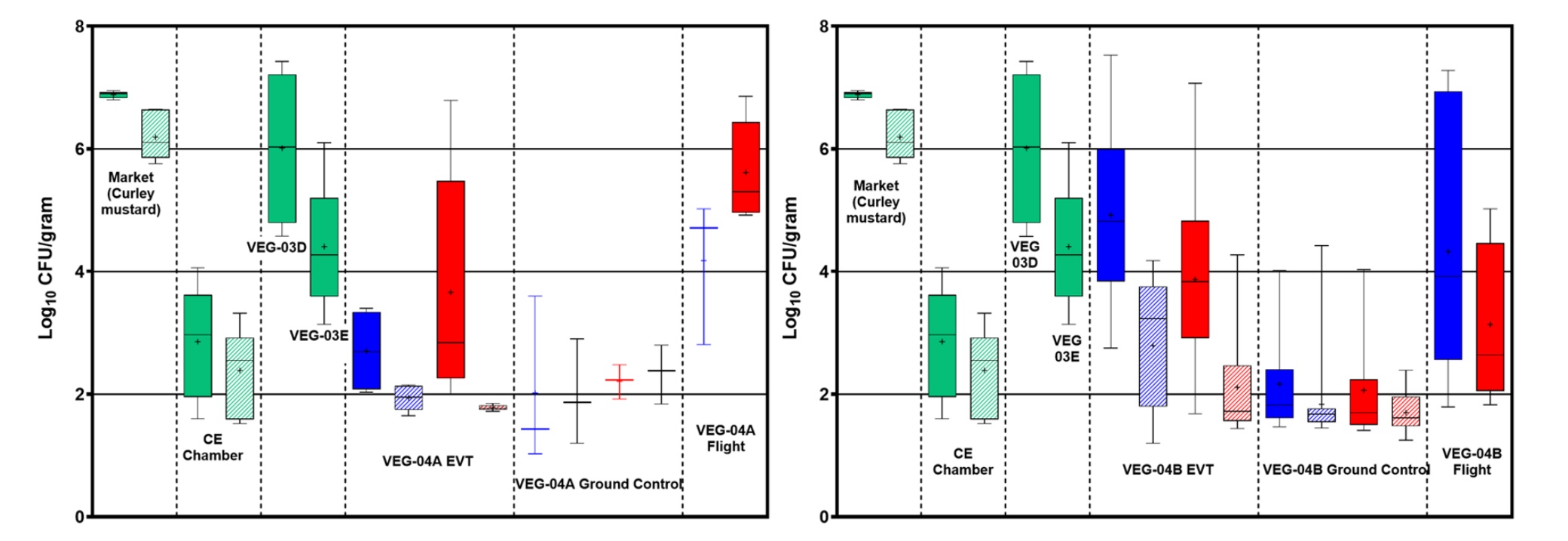
Figure 2.
Box-and-whisker plots of VEG-04A (left) and VEG-04B (right) mizuna APC (Log10 CFU/g) compared to a similar mustard variety from the market, mizuna grown in CE chambers at KSC, and VEG-03D and VEG-03E ISS tech demos. Whiskers are min and max values; the median is indicated by the line across each box, and + indicates the mean. Solid boxes were non-sanitized leaves; patterned boxes were sanitized with ProSan® wipes. Red or blue indicate light-rich treatments in the VEG-04 experiments. Data from VEG-04A and 04B were adapted from Bunchek et al, 2024. Data from VEG-03D and VEG-03E were adapted from Hummerick et al, 2021.
VEG-05 tomatoes
Tomato samples from the EVT harvests yielded generally low APC and Fungi CFU/g. Fungal counts were all below detection limits, and tomatoes from the second harvest from the blue-rich treatment yielded the highest counts (Table 5). APCs from the VEG-05 ground control samples (16 fruits) from the red-rich treatment ranged from 12 to 1.3 × 10³ CFU/g, and from the blue-rich treatment (14 fruits), 8 to 136 CFU/g. There was a lower harvest yield in the flight experiments due to plant stress leading to flower and fruit abortion, as well as visible microbial growth. Only one ripe fruit was evaluated microbiologically from the red-rich light treatment, and four were evaluated from the blue-rich treatment, and APCs ranged from 13 CFU/g in the red-rich tomato sample to 1.8 × 10³ from the blue-rich samples, in spite of the microorganisms observed growing on the plants. Fungal counts were low in the ground controls in both lighting regimes, while flight samples were higher, ranging from 2.5 × 10³ to 1.3 × 10⁴. All samples were negative for E. coli, S. aureus, and Salmonella sp. Tomatoes were not consumed in flight due to plant stress and low yield.
Table 5.
Mean bacteria (APC) and fungal counts (CFU/g) on tomatoes per gram from the VEG-05 EVT (n=6 per light treatment).
| EVT Tomato VEG-05-Red-rich | EVT Tomato VEG-05-Blue-rich | |||||
|---|---|---|---|---|---|---|
| Harvest 1 | Harvest 2 | Harvest 3 | Harvest 1 | Harvest 2 | Harvest 3 | |
| APC | 54 | 504 | 21 | 1000 | 74,300 (2/6) | 70 |
| Fungi | <DL | <DL | <DL | <DL | <DL | <DL |
| Pathogen screening | NEG | NEG | NEG | NEG | NEG | NEG |
A comparison was made between the VEG-05 grown tomatoes and KSC chamber-grown and market-acquired tomatoes (unpublished data) (Fig 3), and results show that the APC from Ground control and red-rich flight tomatoes were lower than Market tomatoes on average. Blue-rich flight tomatoes were in line with the market-grown tomatoes regarding bacterial counts.
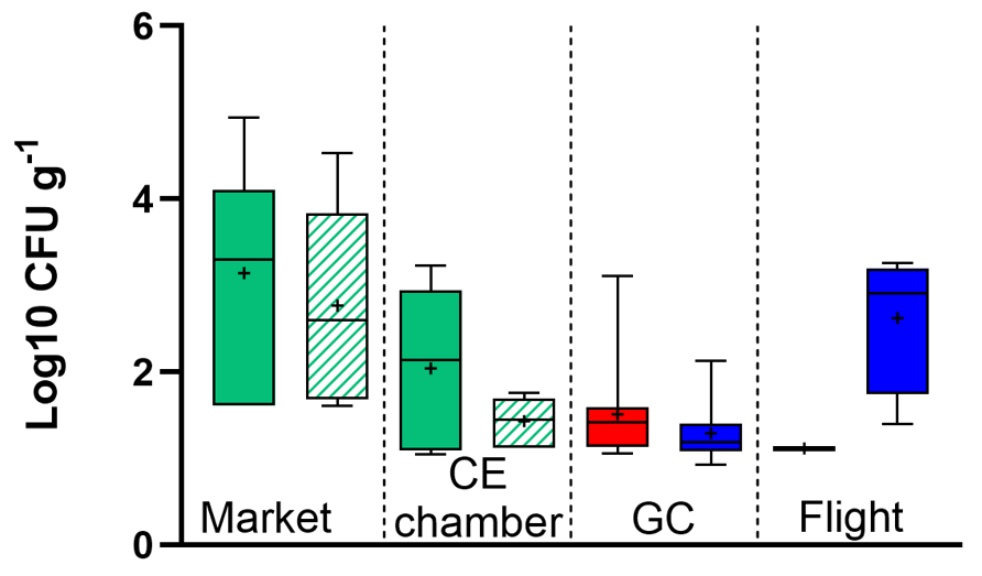
Figure 3.
Box-and-whisker plots of VEG-05 tomato APC (Log10 CFU/g) compared to market tomatoes and those grown in CE chambers at KSC. Whiskers are the minimum and maximum values; the median is indicated by the line across each box, and + indicates the mean. Solid boxes were non-sanitized fruit; patterned boxes were sanitized with ProSan® wipes. Red or blue indicate light-rich treatments in the VEG-05 experiments. Data from Veg-05A were adapted from Spern et al, 2026.
Discussion
The microbial load of mizuna grown in Veggie in earlier technology demonstration tests VEG-03D and VEG-03E (mixed crops with mizuna growing together in Veggie with various lettuce varieties), and tests of mizuna grown in the Russian Lada plant growth hardware on the ISS (Hummerick et al., 2010, 2011) ranged from 1.4 × 10³ to 2.6 × 10⁷ CFU/g bacteria and 2.4 × 10⁴ to 1.3 × 10⁵ CFU/g fungi (Hummerick et al., 2011, 2021). The repeated harvest method used in the VEG-04B experiments was also used in the LADA experiments with mizuna and, as in VEG-04B, bacterial and fungal counts increased with each subsequent harvest in the flight experiments (Hummerick et al., 2012, 2011; Bunchek et al., 2024). This trend was evident in the EVT harvests reported here only under blue-rich light treatment (Table 4). Microbial counts did not increase in the ground controls of VEG-04B (Bunchek et al., 2024).
The ISS microgravity environment, as well as other environmental factors such as high localized humidity in the Veggie flight chambers, may account for the differences between flight and ground control microbial growth dynamics (Bunchek et al., 2024). In addition, increased human handling, longer growth durations, and increased availability of microbial nutrients released due to leaf damage during harvest may increase microbial load, which may be a factor aside from harvest yield in determining the optimal harvest method for future space crops.
Since S. aureus is a commensal bacterium associated with the human microbiome, its presence on the leaves of one plant from the VEG-04B flight experiment emphasizes the necessity of safe handling procedures such as the correct use of gloves during and handwashing before harvest. Sequencing data collected from a variety of leafy greens grown in Veggie tech demos, VEG-01A and B, and VEG-03 C, D, E, and F, demonstrated the absence of human-associated pathogens on leaves (Khodadad et al., 2020; Hummerick et al., 2021). These additional data support the effectiveness of Veggie pre-flight and in-flight procedures to minimize the introduction of human pathogens to the crops grown in Veggie.
One of the goals of the VEG-04 and 05 experiments was to compare impacts of the different lighting regimes on crop yields, nutritional content, and microbial food safety. The different lighting treatments had no significant impact on microbial counts. The greatest differences in bacterial and fungal counts can be attributed to ground vs flight conditions. While CO2, humidity, and temperature exterior to the plant growth compartments are the same between the ISS and the ground control chambers, there are variations in humidity and temperature inside the Veggie facilities. In the VEG-04 and 05 experiments, high humidity and water accumulation may have contributed to higher counts in ISS-grown plants than in ground controls (Bunchek et al., 2024; Spern et al., 2026). Humidity is a factor in increased bacterial and fungal counts on plant surfaces and seems to be the trend when comparing ISS-grown plants and the corresponding ground controls (Hummerick et al., 2021; Khodadad et al., 2020; Bunchek et al., 2024; Spern et al., 2026). Elevated humidity levels create a moist environment that promotes the growth and proliferation of microorganisms, including bacteria and fungi. This can lead to a greater accumulation of microbial populations on leaves and stems, increasing the risk of infection and disease development. Additionally, prolonged exposure to high humidity suppresses transpiration rates and can weaken plant defenses, increasing susceptibility to pathogens and ultimately impacting crop health and yield (Talley et al., 2002; Li et al., 2014; Schuerger et al., 2021; Yao et al., 2023; Yasuda et al., 2025).
Ideally, hardware created for sustainable crop production in space should regulate environmental factors that influence the microbiological quality of the crops.
NASA’s Ohalo III crop production system is the newest technology being tested at Kennedy Space Center (https://techport.nasa.gov/projects/97036). Ohalo III features active sensor-based water management, along with precise nutrient delivery and humidity, temperature, and CO2 control, and while it recycles water, it also utilizes the ISS atmosphere to regulate CO2 and O2. Ohalo III was designed to validate diverse hosted hardware concepts, ranging from media-based substrates to hydroponics, to enable continuous space-based crop production. The Utah Reusable Root Module (URRM) (https://techport.nasa.gov/projects/183165) is a hosted hardware component for Ohalo III, engineered to support repetitive crop cycles of pick-and-eat crops with conditions that will foster balanced microbial communities. This approach minimizes microbial contamination and disease, thereby enhancing both crop safety and productivity (Garrido-Ruiz et al, 2025).
While sustainable crop production is a goal, Veggie technological demos and experiments served as proof-of-concept research for crop productivity in space utilizing a granular substrate and rooting pillows that were not designed for in situ reuse. Ohalo III is moving toward sustainable repetitive crop production. Fully hydroponic approaches are also being investigated as additional sustainable crop production methods. Pre-flight and in-flight control point processes are described in this paper in Tables 1 and 2. Following pre-flight procedures is critical to prevent contamination of the Veggie facilities and plant growth pillows. With these controls in place, in-flight sources of contamination are limited to ISS air, water, and human contact with the plants. Massa et al. (2017b) describe the procedures for pre-flight preparation of pillows and seed sanitization.
Crop failure is not generally recognized as a hazard in the traditional sense in HACCP; however, it represents a critical risk factor with direct implications for crew sustenance and, consequently, space exploration mission success. Poor yields and inedible crop material can foster microbial contamination in an agricultural system, including those planned for space flight.
Although this is not a formal HACCP plan since controls such as safe handling are GAPs rather than Critical Control Points, and validation steps such as microbiological testing are not possible prior to consumption in spaceflight, the testing done here will be used to develop standards for different crops in spaceflight and reduce risk.
Conclusion and future work
Crops have been grown successfully in the Veggie facility on ISS since 2014 and have provided fresh produce for the crew to consume. Microbiological monitoring performed at KSC laboratories indicates that, under current operational procedures, crops are microbiologically safe; however, a gap remains in the real-time quality assurance testing of the crops on ISS.
Nucleic acid amplification and sequencing technologies have been tested for real-time monitoring of air, water, and surfaces on the space station with some success (Castro Wallace et al., 2017; Khodadad et al, 2021). While not yet tested with samples of space-grown produce to screen for microbiological food safety, there is potential for this use; however, more development is needed. The Biomolecule Extraction and Sequencing technology (BEST), a swab-to-sequencer method employing a miniPCR and MinION sequencing, was tested and compared to results from traditional culture-based methods, and a close similarity was found between data sets (Castro Wallace et al, 2017). The development of a rapid method to diagnose plant disease, also a nucleic acid-based method, was developed by Haveman et. al. (2023) and could potentially be adapted for detection of food-borne pathogens. A single HACCP plan cannot be applied to “space crop production” in general, as each plant growth system is different in operation and microbial exposure risks. Veggie is an open system sharing the same airborne microbes as the surrounding space station environment, while the Advance Plant Habitat (APH) is a closed system with internal atmospheric controls and a closed water delivery system (Morrow et al., 2016; Monje et al., 2020), thus only exposing crops to the ISS environment during infrequent door-open crew operations. Each plant growth system has hosted a wide variety of plant experiments and technological demonstrations, some for fundamental plant research and others for crop production for consumption by astronauts. Ideally, implementing a HACCP plan requires dedicating the plant growth system exclusively to food crops and clearly defining all food products and potential hazards. NASA’s Ohalo III prototype crop production system is currently being built and tested at the Kennedy Space Center, with launch scheduled no earlier than December 2026. Operational validation of water delivery and crop production operations with Ohalo III is intended to inform the future development of next-generation crop production systems for long-duration space missions. Ohalo III can accommodate various hardware configurations to test different growth approaches, produce fresh crops to improve whole-food nutrition, and diversify astronaut crew diets. To ensure system operations and food safety, the Ohalo project integrates microbial risk mitigation directly into the hardware design and is implementing a more comprehensive HACCP framework for each crop type and hosted hardware configuration before deployment. Ultimately, the inherent resource constraints of spaceflight, specifically regarding water availability, chemical sanitation, and in-flight testing, are expected to serve as a catalyst for developing next-generation, high-efficiency food safety technologies necessary to realize deep-space crop production.
Acknowledgments
We would like to express our gratitude to the VEG-04 and VEG-05 team members, including NASA project managers Mr. Trent Smith, Mr. Bryan Onate, Ms. Nicole Dufour, Ms. Dinah Dimapilis, and Ms. Lucy Orozco, Project Scientist Dr. Ye Zhang, and the members of the TOSC/COMET, Aegis, and LASSO teams for their support and management of both experiments. Special acknowledgment goes to our scientists, Ms. Jennifer Gooden, Ms. Gretchen Maldonado Vazquez, Mr. Cory Spern, Dr. Christina Khodadad, Dr. Anirudha Dixit, and Mr. Aaron Curry in the KSC Life Sciences Labs for analysis and results of both the VEG-04 and VEG-05 samples. Finally, we thank the astronauts from ISS expeditions 59, 60, 61, and 68 for their dedication in implementing and completing these crop experiments on ISS.