
Figure 1
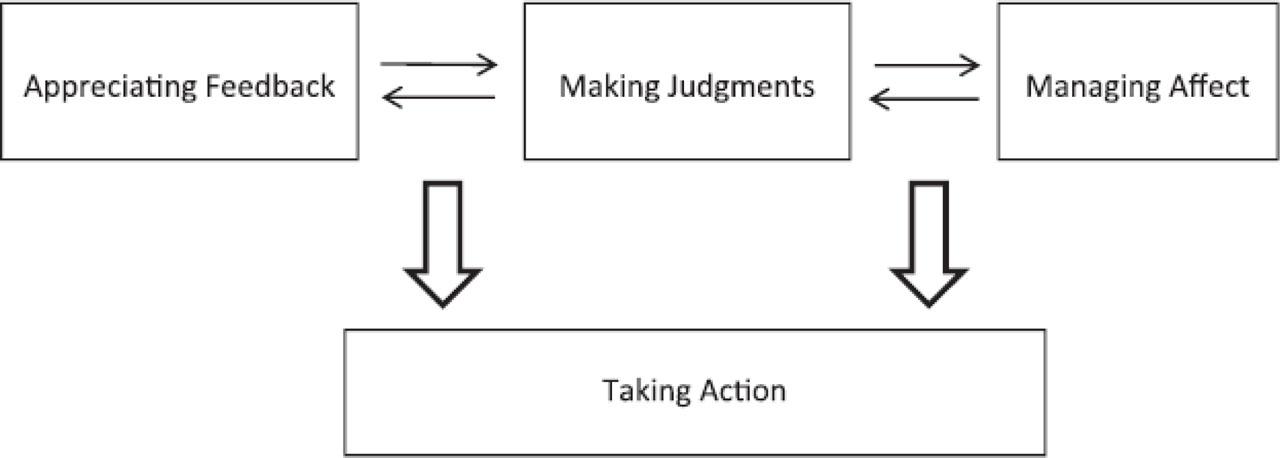
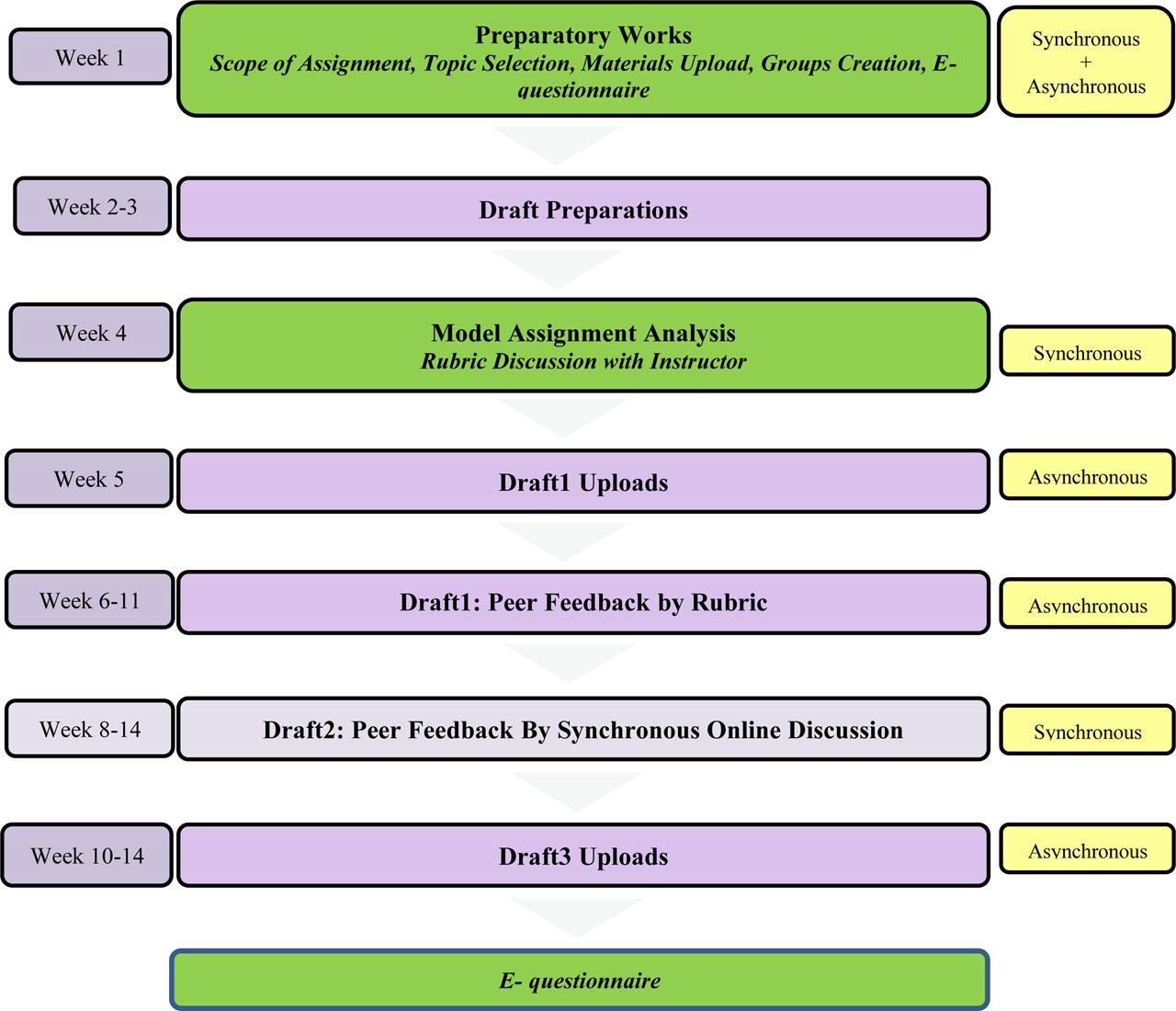
Figure 2
Students’ perceived change or development in their perspectives on feedback, decision-making abilities, feelings, and efforts
| Theme | Code | Appreciating feedback | Making judgments | Managing affect | Taking action | ||||
|---|---|---|---|---|---|---|---|---|---|
| Change or development | Frequency | Students’ remarks | Frequency | Students’ remarks | Frequency | Students’ remarks | Frequency | Students’ remarks | |
| Yes | 36 | We learnt to appreciate feedback (S50) | 35 | Brainstorming on where to add to or omit from the assignment improved our ability both to think and make decisions (S6) | 25 | The critical feedback made us unhappy at first. Later, we got over it when we realized that this is good for making our assignment better (S7) | 50 | We reviewed (the assignments) as a group and negative feedback was predominant. Frankly, I realized that the critical feedback of our friends encouraged our group. We were able to say “Okay, no problem, we got this job.” (S13) | |
| No | 15 | No, there has not been any change (S2) | 13 | No, there hasn’t. Because we did not do any activities on this. Feedback was given to us and we changed or did not change them. It was a routinized process (S19) | 14 | There has not been a change (S35) | 3 | It has affected negatively (S2) | |
| Partly | 1 | Yes, partially (S42) | 1 | Yes. Partially, it has happened by (our) seeing the mistakes (S42) | |||||
Wilcoxon signed-rank test results for assessment of draft 1 and draft 3
| N | Mean Rank | Sum of Ranks | Z | p | ||
|---|---|---|---|---|---|---|
| Draft 3-Draft 1 | Negative Ranks | 0 | ,00 | ,00 | -3,517 | ,000 |
| Positive Ranks | 16 | 8,50 | 136,00 | |||
| Ties | 2 | |||||
| Total | 18 |
The frequency of the peer feedback messages in the affective, cognitive and metacognitive categories
| Dimension | Category | Frequency | Examples |
|---|---|---|---|
| Affective | Supporting | 132 | “The assignment is well done. Above all, thanks.” |
| Opposing | 6 | “There are quite a lot of deficiencies. Most necessary things are ignored.” | |
| Cognitive | Direct correction | 64 | “Pay attention to punctuation and spelling rules!”. |
| Personal opinion | 86 | “The content could have been more comprehensive.” | |
| Guidance | 214 | “Some headings suitable for the introduction are in different places. A title suitable for section three is at the beginning. You should be careful about these.” | |
| Metacognitive | Evaluating | 3 | “None of the references are from Turkey. We are not sure how important this is, but Turkish studies could have been referred to for goodness of our country.” |
| Reflecting | 1 | “By looking at the other assignments, the shortcomings of this work can easily be seen. We recommend our mates to fix them with this method.” | |
| Irrelevant comments | 3 | “No problem.” | |
| Total | 509 | ||
Pre and post-test results on receiving or giving peer feedback
| Students’ views | Pre-test | Post-test |
|---|---|---|
| Undecided | 19 | 5 |
| Negative | 4 | 1 |
| Positive | 30 | 47 |
Perceived effect or contribution of feedback to students’ perspectives, decision-making abilities and feelings
| Theme | Appreciating feedback | Making judgments | Managing affect | ||||||
|---|---|---|---|---|---|---|---|---|---|
| Effect or contribution | Code | Frequency | Students’ remarks | Code | Frequency | Students’ remarks | Code | Frequency | Students’ remarks |
| Quality of assignment | 34 | Receiving peer feedback helped us improve our assignment a lot (S15) | Being open to different perspectives | 18 | Although peer feedback sounds scary at first, peer feedback becomes much more positive when we overcome the fear of criticism and realize that we are human beings and cannot do everything in the best way (S47) | Managing the emotions | 6 | Receiving feedback is important for being open to criticism and being respectful of different opinions. I believe it contributes to better management of our emotions (S1) | |
| Personal development | 12 | In this process, we tried to improve ourselves by learning many issues. I can say that it will bring great benefit to my future education life (S24) | Working collaboratively | 15 | Peer feedback helped us mix many ideas and find the right thing. What I understood in this study is that it can be more efficient when many people have different opinions on a subject (S39) | Flexibility or maturity | 7 | I learned to see the comments in a more objective and impartial way. Earlier, critical comments might have upset me, but this is not the case anymore. I think I am approaching more professionally (S23) | |
| Learning | 3 | The process had many stages and we gained new experiences and competencies at every stage. It was useful as we learnt different subjects (S18) | Being objective | 4 | Thanks to the feedback (we received), my ability to approach impartially has improved (S23) | ||||
| Inefficient | 3 | I don’t see it necessary (S42) | Empathy | 3 | I understood the importance of being able to empathize. I understood that feedbacks are important for our friends to really carry their assignment to a more qualified point and it is necessary to be sensitive and thoughtful at this point (S1) | ||||
| Critical thinking | 3 | I believe that my ability to read and interpret a assignment with a critical eye and to give suggestions without difficulty has improved (S15) | |||||||
Descriptive statistics regarding assessment of draft 1 and draft 3
| Drafts | N* | Mean | Std. Deviation | Minimum | Maximum |
|---|---|---|---|---|---|
| Draft 1 | 18 | 57,8944 | 19,38999 | 23,60 | 85,05 |
| Draft 3 | 18 | 68,8250 | 16,93220 | 23,60 | 87,00 |