
1. Introduction
Fish consumption holds a significant place in healthy eating due to fish’s high nutritional value (Pupavac et al., 2022). Scientific evidence has shown that fish contains numerous components beneficial to human health (Cardoso et al., 2013; Nesheim et al., 2015; Chen et al., 2022). Due to its high protein content and other nutrients, fish has become an integral part of many daily diets (Aberoumand, 2014).
The primary factors driving daily fish consumption include ease of access, taste, dietary variety, and health benefits (Sioen et al., 2007; Birch & Lawley, 2010). According to some studies, social and psychological aspects of fish consumption can be understood through the theory of planned behavior (TPB) (Tuu et al., 2008; Fiandari et al., 2019). Research by Tomic et al. (2016) suggests that the TPB for fish consumption encompasses attitude, subjective norms, and perceived behavioral control, and the TPB framework (attitude, subjective norms, and perceived behavioral control) significantly predicts the intention to consume fish.
TPB has also been applied to the consumption of other foods, including local/organic foods (Johe & Bhullar, 2016). For example, Al-Swidi (2014) used TPB to determine consumer intentions to consume organic food. However, a disadvantage that has been noted with TPB is that attitudes toward past experiences directly affect intention. Therefore, it is recommended that research on food choices incorporate additional dimensions (Cha et al., 2010; Mullan et al., 2012). The Health Belief Model (HBM) also provides a framework for understanding individuals’ health behaviours. In this context, the HBM, which emphasizes individuals’ perceptions of health benefits and barriers, suggests that people are more likely to consume foods they believe will benefit their health (Khormi, 2025).
In recent years, several additional constructs beyond attitudes in food preference have been added to empirical models. In particular, it was deemed appropriate to include some variables (such as motivation, perceived barrier, and perceived risk) to learn when or how attitudes or norms lead to particular behaviours in food choice (Olsen, 2001; Brunsø et al., 2009). Thus, in this study, we added consumers’ perceived barriers towards consuming fish in restaurants to the model previously measured within the scope of the TPB (Badr et al., 2015; Brunsø et al., 2009; Temesi et al., 2020).
In past studies, the following barriers to fish consumption have been found: fish is expensive; seasonal access is difficult; the bones in the fish are disturbing; it is not fresh; it is not as satisfying as meat; its odour is disturbing; and it takes a long time to prepare (Brunsø et al., 2009; Olsen, 2004; Vanhonacker et al., 2010). Fish is considered expensive by consumers in many countries, and consumers state that their intention to purchase fish is influenced by its price (Brunsø, 2003; Louis et al., 2023). Nevertheless, Leek et al. (2000) found price not to be a perceived barrier to fish consumption in the UK or Finland. Pieniak et al. (2010) said purchasing, preparation, and cooking are perceived difficulties in fish consumption at home, and freshness is an essential factor. Therefore, consumers need to know how to make choices when buying fish. In addition, cleaning and preparing fresh fish can take much time in the kitchen (Tomic et al., 2016). Understanding these barriers in countries with low fish consumption is very important (Temesi et al., 2020).
In 2019, per-capita fish consumption in Europe exceeded 25 kilograms. Portugal ranks first in fish consumption in Europe (EUMOFA, 2022). In Türkiye — which has coasts on the Black Sea, Mediterranean Sea, and Aegean Sea, and is rich in fish varieties — per-capita fish consumption is between six and eight kilograms (Republic of Türkiye Ministry of Agriculture and Forestry, 2022). This shows that Türkiye is well below the global and European averages. Meat and chicken consumption, by contrast, are higher (Şen et al., 2022).
This paper focuses on Türkiye, an area with deep fish diversity. Many studies have examined fish consumption in various regions of Türkiye in terms of preference, volume, and habit (Şen et al., 2008; Erdal & Esengün, 2008; Şen, 2011; Uzundumlu & Dinçel, 2015; Balcı et al., 2016; Bashimov, 2017; Genç et al., 2020; Abdikoğlu et al., 2020; Sagun & Sayğı, 2021). Şen et al. (2022), observing that studies conducted in Türkiye had been focusing only on fish consumption habits and ignoring the factors affecting these habits, investigated the factors affecting fish consumption behaviour within the scope of the TPB. Dursun (2020) also found that food neophobia had a moderating role in the intention to consume fish in restaurants.
Though previous research has addressed fish consumption research in Türkiye, it remains important to examine the perceived barriers that have kept the rate of consumption low. This study can contribute to developing strategies by determining why consumers in Türkiye consume less fish, especially in restaurants where fish is prepared and cooked. With this in mind, this paper aims to contribute to the literature by investigating the following factors influencing fish-consumption intention in restaurants in Türkiye: 1) the effect of perceived barriers on attitude, subjective norms, perceived behavioural control; 2) the effect of attitude, subjective norm, and perceived behavioural control; and 3) the mediating effect of attitude, subjective norms, and perceived behavioural control on the effect of perceived barriers to consumption.
2. Literature review
2.1. Perceived barriers
Perceived barriers for consumer products are defined as the various obstacles individuals perceive when engaging in behaviour (Han et al., 2018). Researchers in the field of consumer behaviour believe that perceived barriers have behavioural effects (Patterson, 2004; Doorn & Verhoef, 2015). In the study conducted by Grieger et al. (2012), it is noteworthy that the most frequently perceived barrier to fish consumption by Australian consumers is price. On the other hand, in some studies, the difficulties individuals perceive when buying, preparing, and cooking fish are only perceived, rather than actual, barriers. At the same time, unpleasant physical characteristics (bones, odour, etc.) may hinder consumers’ intention of fish consumption (Leek et al., 2000). According to Brunsø et al. (2009), the main reasons for consuming fish in Spain and Belgium are that it is healthy and tasty. Barriers to fish consumption are price perception, odour, and that it provides less satiety than meat. Trondsen et al. (2003) noted that the barriers Norwegian women perceive when consuming fish are the lack of fresh fish, low quality, and high price.
Kim and Kuo (2022) defined perceived barriers as situational factors that will change behaviour when evaluating products, including deciding not to purchase a product. For this reason, perceived barriers can be said to have an effect such as weakening or changing behaviour (Han et al., 2018). Empirical evidence shows that perceived barriers are related to intention and its antecedents (Patterson, 2004; Kim & Kuo, 2022). In light of this, the following hypotheses are proposed:
H1: The relationship between restaurant customers’ perceived barriers, attitude, subjective norms, perceived behavioural control, and their intention to consume fish is significant.
H2: The effect of restaurant customers’ perceived barriers on their intention to consume fish is significant.
According to the Health Belief Model (HBM), perceived barriers are individuals’ determination of the concrete consequences of a behaviour. Since perceived barriers are a determinant of the behaviour of the service sector, they can affect attitude (Shan et al., 2020). In other words, the perceived barrier structure of the HBM is one of the benefit analyses affecting the attitude variable. In this context, previous studies on the service sector have argued that there is a close relationship between attitudes and perceived barriers (Wang et al., 2018). It may be possible to see similar relationships involving the decision to consume fish at a restaurant. Therefore, high perceived barriers may lead individuals toward negative attitudes about fish consumption in restaurants. Thus, in the light of the results in the literature, the following hypothesis is proposed:
H3: The effect of restaurant customers’ perceived barriers on attitude is significant.
Different barriers affect people’s behavioural intentions. Recent studies have developed some categories by revealing different barriers (Juvakka, 2020). Perceived barriers are examined in two groups: internal and external barriers. External barriers include subjective norms, and it is stated that external barriers lead to behavioural change. It is noted that the most substantial barriers are consumption expectations and social norms (Dickinson et al., 2013). Individuals’ behavioural change strategies may stem from their desire to act according to the expectations of the social environment, or their need to hide shameful behaviour (Steg, 2016). However, according to Antimova et al. (2012), social norms that validate environmental actions also provide support to reducing perceived barriers, since they can mobilise individuals. Within the literature framework, there may be a relationship between perceived barriers and social norms. Therefore, the proposed hypothesis is as follows:
H4: The effect of restaurant customers’ perceived barriers on subjective norms is significant.
Chaulagain et al. (2020) proposed that perceived behavioural control correlates positively with the number of assets an individual possesses and negatively with perceived barriers. Previous studies employing the TPB indicate that barriers to achieving behavioural intentions significantly influence behaviour realization (Chen & Tung, 2014). Moreover, it is noted that perceived behavioural control serves a broad function. It is a variable that can directly affect actual behaviour as much as intentions. Therefore, as a broader concept, it can soften the perceived barriers to intention. At the same time, associating perceived behavioural control only with intentions may not reveal what situations enable consumers’ behavior. Therefore, evaluating different antecedents of this concept together may contribute to a better understanding of behavioural intentions (Alexandris & Stodolska, 2004). Based on the above discussions, the following prediction is made:
H5: The effect of restaurant customers’ perceived barriers on their perceived behavioural control is significant.
2.2. Attitude towards fish consumption
In the study conducted by Smith et al. (2008), the attitude variables of soft drink consumers were analysed, and they displayed a relationship between attitude and consumption; it was found that consumers with positive attitudes have higher purchase intentions. Fielding et al. (2008) stated that attitude positively affects intention in environmental protection activities. It has also been found that consumer attitudes toward food positively affect food consumption intention or behaviour (Hearty et al., 2007). Attitude is also assumed to be an important factor affecting fish consumption behaviour (Armitage & Conner, 2001; Verbeke et al., 2005).
Olsen (2001) found both positive and negative attitudes towards seafood as a home-cooked meal in Norway affect intention, with a positive effect for positive attitudes and a negative effect for negative ones. Tomic et al. (2016) stated that attitudes toward fish consumption are the strongest predictor of consuming fresh fish at home. Studies on fish consumption behaviour have stated that attitude affects it significantly (Tuu et al., 2008; Aghamolaei et al., 2012).
H6: The effect of restaurant customers’ attitude on their intention of fish consumption is significant.
2.3. Subjective norms
Scholderer and Grunert (2001) investigated the determinants of fish consumption before and after an advertising campaign within the scope of the TPB in Denmark. Before this advertising campaign, no significant relationship was found between the assumed determinants and behavioural intention. However, in the post-campaign period, the social norm of the family was found to have a significant effect on the intention to consume fish. Another study determined that subjective norms affect intended fish consumption in Norway (Olsen, 2001), and a Belgian study found that each family member strongly influenced food choices. Therefore, it can be said that individual desires and expectations vary, and differentiated food consumption habits may emerge (De Bourdeaudhuij & Van Oost, 1998). According to Verbeke and Vackier (2005), family, relatives, and friends also shape social situations regarding fish consumption.
H7: The effect of restaurant customers’ subjective norms on their intention of fish consumption is significant.
2.4. Perceived behavioural control
Perceived behavioural control consists of beliefs about the ease, difficulty, or sense of control a person perceives when performing a behaviour (Ajzen, 1991). According to Ajzen (2005), perceptions of the facilitative elements of a behaviour are linked to whether individuals possess the required resources and infrastructure for performing that behaviour. Beliefs about perceived behavioural control usually concern whether one possesses the necessary skills, resources, and opportunities. Individuals’ intention to engage in a behaviour is expected to increase as their belief strengthens that they will encounter fewer difficulties and have adequate resources and opportunities (Kocagöz & Dursun, 2010). Armitage and Conner (2001) affirmed that perceived behavioural control influences intention. In a study investigating individual determinants of fish consumption behaviour based on crosssectional data from Belgium, all items related to perceived behavioural control significantly influenced the intention to consume fish. Dursun (2024) study in Antalya (Türkiye) also found that perceived behavioural control affects the intention to consume fish in a restaurant.
H8: The effect of restaurant customers’ perceived behavioural control on the intention to consume fish is significant.
2.5. Behavioural intention
Behavioural intention reflects individuals’ consciously realistic plans to perform or refrain from performing future behaviours (Hasan, 2022). According to the TPB, behavioural intentions are shaped by the relative weights of attitudes, subjective norms, and behavioural control — that is, because it has an antecedent structure, behavioral intention often appears as a dependent variable (Altawallbeh et al., 2015). Previous studies also support this. For example, Öğretmenoğlu et al. (2025) suggested that travel motivation for sporting events positively influences visitors’ behavioural intentions. Guan et al. (2022), conversely, argued that the servicescape in robot restaurants predicts customer behavioural intentions.
2.6. The study
TPB predicts a linear relationship between behavioural intention and actual behaviour. TPB includes various variables that affect individuals’ decisions to act (Ajzen, 1991). Attitude is one of the most widely-used variables in predicting consumer preferences and shows the sensitivity of individuals toward actions; subjective norms are shared preferences and beliefs shaped according to the approval of reference groups, influencing the decision-making process when individuals participate in an activity or consume; and perceived behavioural control is related to an individual’s ability to freely choose to perform or avoid a particular action (Erul et al., 2023).
Many studies use TPB to explain consumers’ behavioural intentions; Lee and Jan (2018), for example, used it to investigate visitors’ intentions towards eco-tourism. While some researchers have examined the effect of the three TPB constructs on behavioural intentions (Chen & Tung, 2014; Hsu & Huang, 2012; Sánchez-Cañizares et al., 2021), others have explained behavioural intentions using subjective norms and perceived behavioural control (Lam & Hsu, 2006; Berki-Kiss & Menrad, 2022; Quintal et al., 2010).
In the last decade, researchers have expanded the scope of behavioural intentions by adding additional factors to the structure of TPB. These added factors can directly or indirectly explain the intentions of customers in the service sector. Among these factors are perceived risk (Hsieh et al., 2016), destination loyalty (Eom & Han, 2019), customer value (Shan et al., 2020), and perceived benefit (Chaulagain et al., 2020). The literature shows significant relationships exist between these additional constructs and behavioural intentions. In this study, the intention to consume fish in a restaurant was explained with perceived barriers, in addition to the structure of TPB.
H9: The mediating role of attitude, subjective norms, and perceived behavioural control in the effect of restaurant customers’ perceived barriers on their intention to consume fish is significant.
The model tested by the theoretical framework is presented in Figure 1. The study aims to examine this model, which should reveal the parallel mediating roles of attitude, subjective norms, and perceived behavioural control in the relationship between perceived barriers and intention of fish consumption.
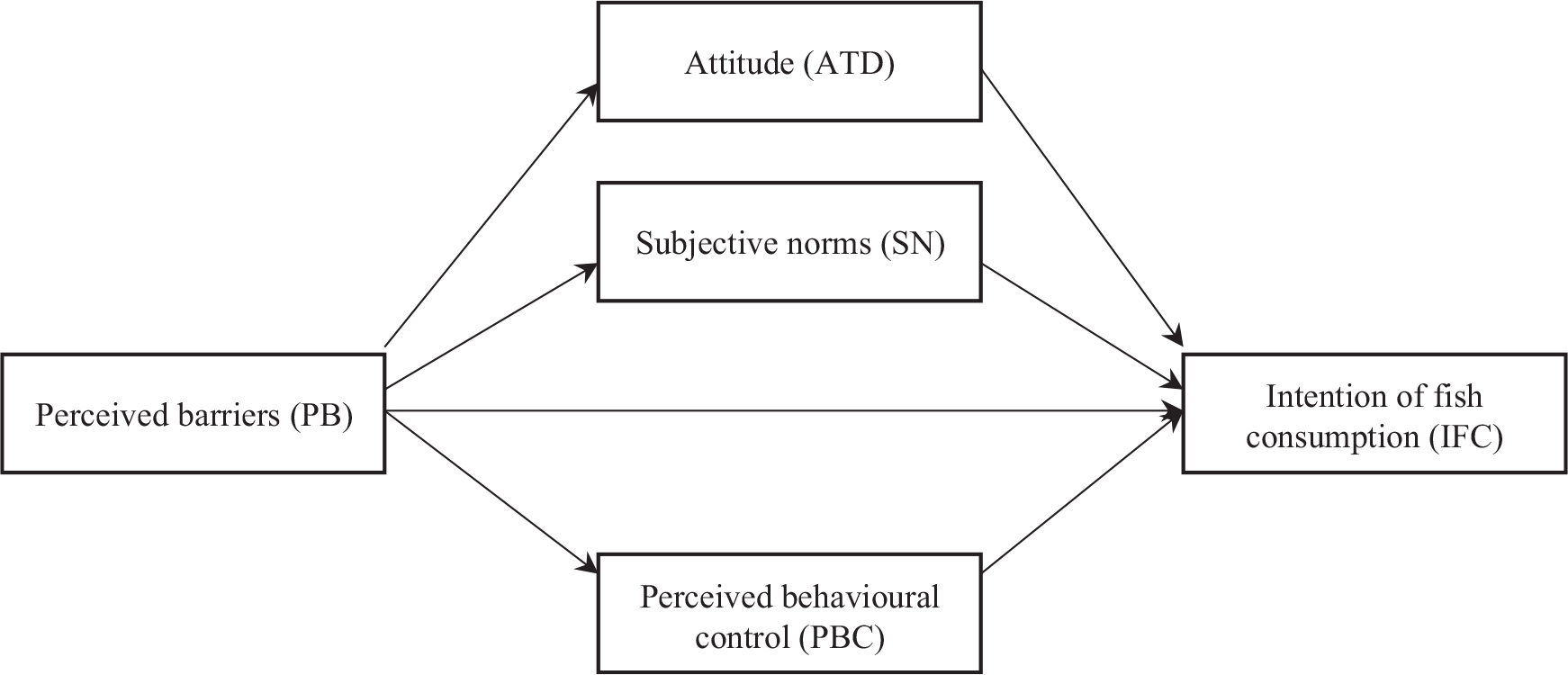
Figure 1:
Parallel Mediation Estimation Model
3. Method
This study, which was conducted within the framework of the relational survey model, examines the relationship between perceived barriers, attitude, subjective norms, perceived behavioural control, and intention of fish consumption in restaurant customers. Relational survey research aims to elucidate how variables are interrelated, assessing the strength and direction of these associations when relationships when they are identified (Fraenkel et al., 2011). Correlational research can predict the future of studies (Ozturk & Sarikaya, 2021). Structural equation modelling (SEM) has been recommended to explore these relationships between variables (Fraenkel et al., 2011; Kline, 2015).
3.1. Sample
Due to the high power of the sample for representing the universe and generalizations, the participants in this article were selected using a stratified sampling method. Firstly, seven different provinces from seven different geographical regions of Türkiye were randomly selected. Restaurants in these cities were selected that offered similar menus and price ranges. The similarity criteria used in selecting the surveyed restaurants were as follows: (1) menu composition (presence of fish dishes in similar categories); (2) similarity of average main course prices with a ±10% variation; and (3) similar service formats (casual dining restaurants). This supported homogeneity in the sample selection. During the selection process, attention was also paid to the similarity of the dishes on the restaurants’ menus, their price policies, and their service quality. Three restaurants operating in the selected provinces were randomly included in the sample. Necessary ethical permissions were obtained for this research; participants were adult customers (aged 18 or older) who had consumed a meal at the selected restaurants during the data collection period and who had voluntarily agreed to participate in the survey.
Since the restaurants were located in seven different cities, the research was completed in at least 15 days to accomodate the researcher’s time spent traveling. This method ensured that comparisons between restaurant customers in different geographical regions were consistent and reliable. Thus, the analyses were conducted using data collected from 529 restaurant customers. The data of the research were collected in the month of October 2024. In this study, Soper’s (2018) sample size calculator was employed to determine an adequate sample size. The calculation considered an expected effect size of 0.1, a p-value threshold of 0.01, and a desired statistical power level of 0.8 (Sop et al., 2024). Based on this calculation, it was determined that a minimum of 200 data would be sufficient to estimate the effects in the model. In this context, it was calculated that a sample of 529 restaurant customers would be required to represent the research population.
3.2. Instruments and data analysis
The data for this study were collected using TPB and a perceived-barrier scale to assess the intention of fish consumption. A personal information form was included in the questionnaire, as well as three sections. The first section covers descriptive characteristics; the second section addresses attitude, subjective norms, perceived behavioural control, and intention of fish consumption; and the third section contains statements regarding perceived barriers to fish consumption. Because the survey was collected from restaurant customers in Türkiye, the scale items were translated into Turkish and administered with the support of English-speaking tourism experts. Therefore, both EFA and CFA were applied to ensure construct validity, taking into account cultural differences. The items were then translated back into English and included in the article (Appendix A).
SPSS 24 and PROCESS macros were used to analyse the data. Firstly, 21 observations with missing data were removed from 550 data by checking whether there were missing data. Then, normality assumptions were evaluated over 529 data. Çokluk et al. (2016) stated that skewness and kurtosis coefficients should be between -1 and +1. When the variables of the study were examined, “perceived barriers” (skewness = 0.552; kurtosis = 0.162), “attitude” (skewness = -0.683; kurtosis = 0.338), “subjective norms” (skewness = -0.792; kurtosis = 0.597), “perceived behavioural control” (skewness = 0.130; kurtosis = -0.328) and “intention of fish consumption” (skewness = 0.300; kurtosis = -0.617) were statistically normal. After ensuring the data’s normality, descriptive and predictive analyses were conducted. Means and standard deviations were calculated within the scope of descriptive analyses, and predictive statistics were used in the correlation and mediator variable analyses.
In this study, the relationships between variables were determined by simple correlation. Mediation analyses were examined with the PROCESS macro developed for SPSS based on bootstrap sampling. The analysis was calculated with 5,000 and 95% confidence intervals. EFA was tested using SPSS 24. CFA was then performed using the AMOS 24 package program. Mediation analysis was tested using Process Macro v4.2, which was developed by Hayes and added to the SPSS 24 package program. Model 4 was used for the mediation analysis in order to reveal complex relationships. Statistical information regarding the scales (Cronbach’s Alpha, etc.) is included in the subsections.
3.2.1. Questionnaire: Personal information
The first part of the questionnaire includes a personal information form. Demographic characteristics are included in the questionnaire: education level, gender, income, marital status, occupation, age, and frequency of fish consumption in restaurants.
3.2.2. Questionnaire: Intention of fish consumption
It was stated that the first part of the questionnaire included personal information. The second part includes a scale with four dimensions (attitude, subjective norm, perceived behavioural control, and intention of fish consumption). The first research on fish consumption intention within the scope of the TPB was conducted by Verbeke and Vackier (2005). Afterward, the researchers added or removed different variables from the model. In this study, the intention of fish consumption was measured with 17 items within the scope of the TPB. Previous studies have measured consumers’ intention of fish consumption (Higuchi et al., 2017; Tomic et al., 2016; Şen et al., 2022), and after reviewing the literature, it was observed that previous studies had used the scale in four dimensions. A five-point Likert scale was used to determine respondents’ opinions on the items, from strongly disagree (1) to strongly agree (5).
The researchers conducted an explanatory factor analysis (EFA) with 200 data collected for the intention of fish consumption scale. The analysis revealed that the total variance explained was 73%. A four-factor structure emerged, consisting of 17 items. The factor loadings ranged from .88 (highest) to .52 (lowest). The identified factors were attitude, subjective norms, perceived behavioural control, and intention of fish consumption. The reliability coefficient (Cronbach’s Alpha) for the scale was .91. Confirmatory factor analysis was performed with the remaining 329 data. According to methodological recommendations, sample sizes above 200 are generally acceptable for CFA, provided that the model is not excessively complex (Hair et al., 2014; Kline, 2015). Additionally, confirmatory factor analysis (CFA) showed that some fit indices were at an acceptable level, while others indicated an excellent fit: [Chisquare (321.334)/df (109) = 2.94, RMSEA = .063, NFI = .94, TLI = .95, CFI = .96, IFI = .96, RFI = .93, SRMR = .070, GFI = .92, AGFI = .90].
3.2.3. Questionnaire: Perceived barriers
The third section includes perceived barriers to fish consumption. The perceived barriers scale was created based on previous studies on fish consumption (Olsen, 2004; Brunsø et al., 2009; Vanhonacker et al., 2010). Previous studies had revealed perceived barriers to fish consumption within the scope of qualitative research. However, they were not addressed as a scale. In this paper, a perceived-barriers scale was developed and considered based on models used in previous studies. Scale items are as follows: “the bones are disturbing”, “it is not as satisfying as meat,” disliking the taste, disliking the smell, “it takes a long time to serve,” “it is expensive,” “it is not available in all seasons,” and “it is unhygienic.” As in the second section, a five-point Likert scale was used to determine the opinions on the items in the perceived barrier scale, from strongly disagree (1) to strongly agree (5).
In order to develop a measurement tool for determining consumers’ perceived barriers to fish consumption, qualitative research data from the past were utilised. In this context, the studies conducted by Olsen (2004) and Brunsø et al. (2009) were used as a reference for the scale of perceived barriers in fish consumption. An eight-item form for perceived barriers was included in the data collection tool. After the data were collected, an exploratory factor analysis (EFA) on perceived barriers was conducted on 200 data. The data for the factor analysis is in Table 1.
Table 1:
EFA for Perceived Barriers (PB).
| Items | Extraction | Factor Loading | Item-total correlations | Total Variance |
|---|---|---|---|---|
| PB1 | 0.566 | 0.752 | 0.673 | 59.631 |
| PB2 | 0.623 | 0.791 | 0.720 | |
| PB3 | 0.521 | 0.722 | 0.639 | |
| PB4 | 0.610 | 0.782 | 0.703 | |
| PB5 | 0.560 | 0.748 | 0.661 | |
| PB6 | 0.709 | 0.842 | 0.775 | |
| PB7 | 0.660 | 0.813 | 0.738 | |
| PB8 | 0.518 | 0.720 | 0.628 |
According to Table 1, the EFA of perceived barriers revealed a single-factor structure comprising eight items. The highest factor loading was .84, while the lowest was .72. A factor loading value of .30 or above is expected; however, a value of .50 or above is considered quite high (Kalaycı, 2009; Seçer, 2015). The scale’s reliability coefficient (Cronbach’s Alpha) was .90. The total variance explained by this single factor was 59%. Henson and Roberts (2006) emphasize that the variance explained by the measurement tool should be at least 52%; Kline (1994) emphasizes that it should be 40%. Considering this situation, it can be said that the variance explained is sufficient.
As seen in Table 1, the ratios of each item explaining the variance in the common factor were analysed. It was observed that these values ranged between .51 and .70. Kalaycı (2009) stated that removing variables with a common variance less than .30 from the analysis increases the total variance explained. When the coefficients are analysed, it is observed that all values are higher than .30. In addition, the total correlation values of the items were analysed. Yalçınalp and Cabı (2015) emphasize that item-total correlation values should be high and positive. In cases where the item’s total correlation values are lower than .20, it is recommended that the relevant item be removed from the scale. It is emphasized that items with values higher than .30 are sufficient in terms of discrimination (Büyüköztürk, 2007; Seçer, 2015).
In Table 1, it is seen that the item total correlation values are between .62 and .77. After the exploratory factor analysis, a one-factor confirmatory factor analysis was performed with the remaining 329 data on the perceived barriers to fish consumption scale. As a result of CFA, it is possible to say that the fit index values are at the perfect fit level [Chi-square (39,370)/df (15) = 2.62, RMSEA = .058, NFI = .98, TLI = .97, IFI = .98, CFI = .98, RFI = .96, SRMR = .025, GFI = .98, AGFI = .95].
4. Results
4.1. Respondents
Participants were 47.7% male and 52.3% female; 49% were married and 51% were single. Most participants were between the ages of 19 and 28 (36.8%). When the level of education was analysed, it was seen that most participants had bachelor’s degrees (42.8%). The rate of participants with only primary education is 2.7%. The respondents were mostly civil servants in the public sector, but a limited number of pensioners (1%) also participated in the survey. The monthly income level of 27.3% of the participants is 35,001 TL and above. The largest number of participants said their frequency of fish consumption was a few times a year (40.3%). Only a few participants said they consume fish a few times a week (1%), indicating that participants do not consume fish regularly every week.
4.2. The relationship between perceived barriers, attitude, subjective norms, perceived behavioural control, and intention of fish consumption
In line with the first hypothesis of the study, the relationships between the variables (perceived barriers, attitude, subjective norms, perceived behavioural control, and intention of fish consumption) are given in Table 2. When Table 2 was analysed, a negative, significant relationship (r = -0.32, p < 0.01) was determined between perceived barriers and intention of fish consumption. A negative and significant relationship was also found between perceived barriers and attitude (r = -0.21, p < 0.01); subjective norms (r= -0.29, p < 0.01); and perceived behavioural control (r = -0.31, p < 0.01). In addition, there were positive and significant relationships between intention of fish consumption and attitude (r = 0.25, p < 0.01), subjective norms (r = -0.56, p < 0.01), and perceived behavioural control (r = 0.49, p < 0.01). The study’s first hypothesis (H1) was thus accepted, since the relationships between the variables were found to be significant.
Table 2:
Correlation coefficients between variables
| Bivariate correlation | Descriptive statistics | ||||||||
|---|---|---|---|---|---|---|---|---|---|
| 1 | 2 | 3 | 4 | 5 | N | M | SD | ||
| 1 | Perceived barriers | - | 529 | 2.58 | .86 | ||||
| 2 | Attitude | -.21** | - | 529 | 4.3 | .57 | |||
| 3 | Subjective norms | -.29** | .23** | - | 529 | 3.79 | .94 | ||
| 4 | Perceived behavioural control | -.31** | .22** | .53** | - | 529 | 3.09 | .89 | |
| 5 | Intention of fish consumption | -.32** | .25** | .56** | .49** | - | 529 | 2.96 | 1.01 |
4.3. The parallel mediation effect of attitude, subjective norm, and perceived behavioural control in the relationship between perceived barriers and intention of fish consumption
The effect of the restaurant customers’ perceived barriers on their intention of fish consumption is tested, and the statistical results are shown in Figure 2. The total effect of customers’ perceived barriers on their intention of fish consumption is statistically negative and significant (path c; β = -.38, se = .05, p < 0.01). According to the results obtained, the second hypothesis of the research (H2) is thus accepted. The results regarding the parallel mediating roles of attitude, subjective norms, and perceived behavioural control in the effect of perceived barriers on intention of fish consumption are presented in Table 3.

Figure 2:
The total effect of perceived barriers on intention of fish consumption
Table 3:
Regression coefficients and summary information for the model with mediating variables
| Antecedent | Consequent | |||||||||||||||
|---|---|---|---|---|---|---|---|---|---|---|---|---|---|---|---|---|
| M1 (ATD) | M2 (SN) | M3 (PBC) | Y (IFC) | |||||||||||||
| β | SE | p | β | SE | p | β | SE | p | β | SE | P | |||||
| X (PB) | a1 | -.14 | .03 | < .01 | a2 | -.31 | .05 | < .01 | a3 | -.32 | .04 | < .01 | c’ | -.16 | .05 | < .01 |
| M1 (ATD) | b1 | .17 | .07 | < .01 | ||||||||||||
| M2 (SN) | b2 | .25 | .05 | < .01 | ||||||||||||
| M3 (PBC) | b3 | .35 | .05 | < .01 | ||||||||||||
| Constant | iM1 | 4.63 | .07 | < .01 | iM2 | 4.56 | .12 | < .01 | iM3 | 3.86 | .11 | < .01 | iy | .58 | .24 | < .01 |
| R2 | .04 | .09 | .10 | .33 | ||||||||||||
| F (df) | 22.51*** (1;482) | 46.29*** (1;482) | 52.52*** (1;482) | 58.09*** (4;479) | ||||||||||||
| Indirect effect | K2 = -.18 β= -.22 SE= .04 95% CI [-.29, -.15] | |||||||||||||||
When Table 3 is examined, the effects of perceived barriers on attitude are all negative and significant (path a1; β = -.14, se = .03, p < 0.01), as well as subjective norms (path a2; β = -.31, se = .05, p < 0.01), and perceived behavioural control (path a3; β = -.32, se = .04, p < 0.01). These results support the acceptance of the third (H3), fourth (H4), and fifth (H5) hypotheses. However, the effects of attitude (path b1; β = .17, se = .07, p < 0.01), subjective norms (path b2; β = .25, se = .05, p < 0.01), and perceived behavioural control (path b3; β = .35, se = .05, p < 0.01) on intention of fish consumption are positive and significant. According to these results, the sixth (H6), seventh (H7), and eighth (H8) hypotheses of the study can be accepted.
The indirect effect of restaurant customers’ perceived barriers on their intention of fish consumption through attitude is significant (path a1b1; β = -.02; 95% ci [-.04, -.01], se =.01). At the same time, the effect of customers’ perceived barriers through subjective norms was also significant (path a2b2; β = -.08; 95% ci [-.13, -.05], se = .02). Finally, the effect of participants’ perceived barriers to intended fish consumption through perceived behavioural control was also found to be significant (path a3b3; β = -.11; 95% ci [-.17, -.07], se = .02). Thus, the total indirect effect is significant within the scope of parallel mediation. In other words, the parallel mediation role of attitude, subjective norm, and perceived behavioural control in the effect of restaurant customers’ perceived barriers on their intention of fish consumption is significant (path a1b1 + a2b2 + a3b3; β = -.22; 95% CI [-.29, -.15], SE = .03).
When mediating variables (attitude, subjective norm, and perceived behavioural control) were controlled, the effect of perceived barriers on intended consumption was significant (path c’; β = -.16, se = .05, p < 0.01). Statistical results show that attitude, subjective norms, and perceived behavioural control partially mediate the effect of restaurant customers’ perceived barriers to intended fish consumption. With these results, the ninth hypothesis of the study (H9) can also be accepted. The fully standardised total indirect effect size of the restaurant customers’ perceived barriers on intended fish consumption was statistically calculated to be moderate and significant (K2 = -0.18). The results of the parallel mediation model verified in this framework are presented in Figure 3.
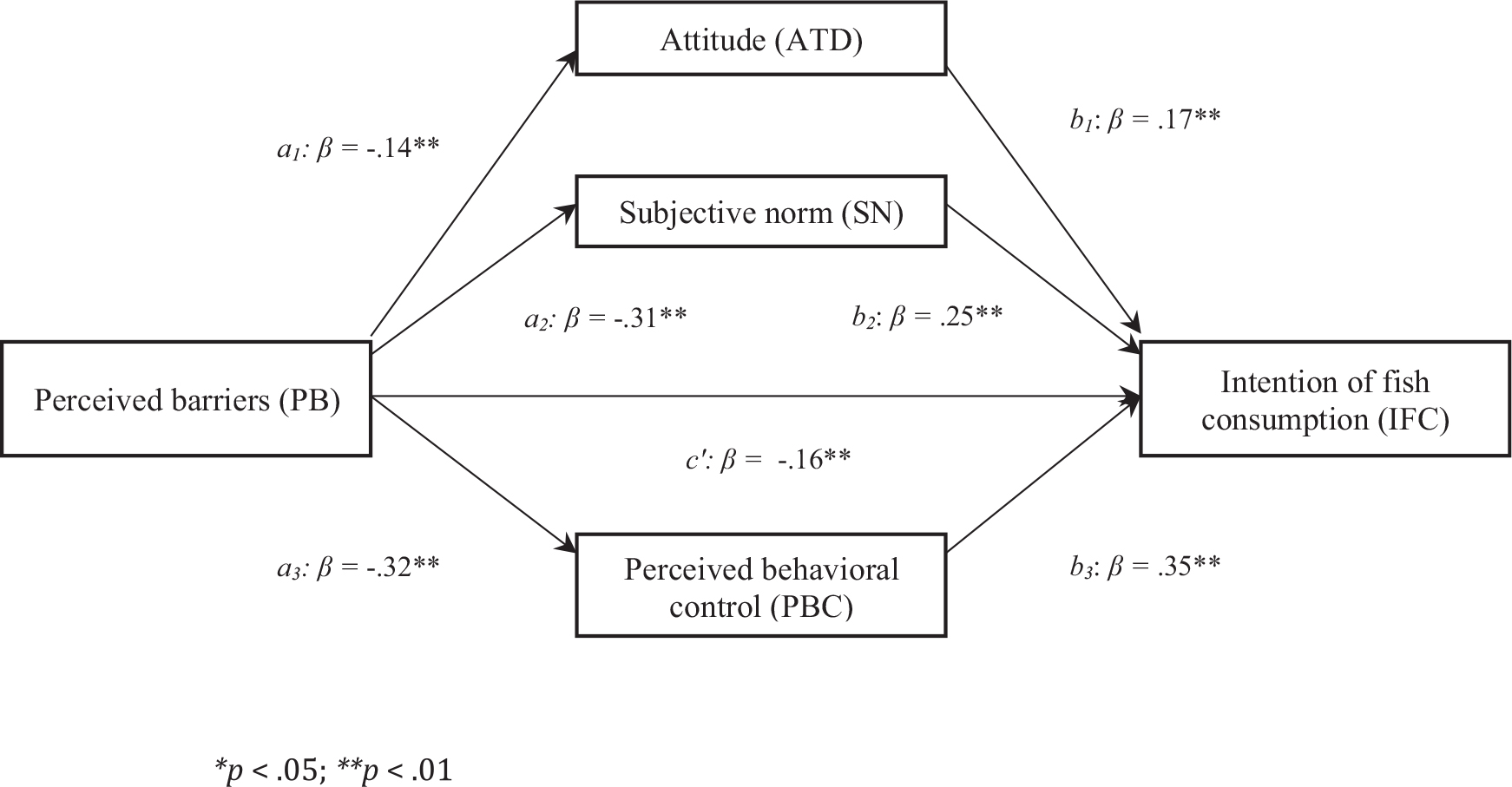
Figure 3:
Results of the parallel mediation model
5. Discussion and conclusion
In the tourism and food and beverage sector, issues such as attitude, perception, motivation, purchase intention, and behavioural theories are intensively studied (Ayaz et al., 2023; Buzlukçu et al., 2017; Türker & Süzer, 2022). This research, in particular, was designed to provide insights into behaviours toward fish consumption in Türkiye — the variables affecting the intention of restaurant customers to consume fish. However, it also extends previous studies. This study evaluated consumers from different regions in Türkiye to explain the relationship between perceived barriers, attitude, subjective norm, perceived behavioral control, and intention of fish consumption.
The results support the existing literature. The main finding of this study is that attitude, subjective norm, and perceived behavioural control significantly mediate the effect of perceived barriers on the intention of fish consumption. In addition, a negative and significant effect was found between perceived barriers and attitude, subjective norms, and perceived behavioural control. This corroborates previous research showing that attitude, subjective norms, and perceived behavioural control are negatively related to perceived barriers (Drovetta et al., 2022; Kim & Kuo, 2022).
Similarly, this study found a significant effect between perceived barriers and intention of fish consumption. Grieger et al. (2012) observed in Australian consumers that the most frequently perceived barrier to fish consumption is price. Therefore, as price increases as a barrier, fish consumption intention may decrease, while Leek et al. (2000) stated in their study that the perceived difficulties of buying, preparing, and cooking fish reduce fish consumption. Furthermore, Hughner et al. (2007) stated that perceived barriers may decrease purchase intention despite positive attitudes toward products. Thus, various barriers (disturbing bones; the notion that fish is not as satisfying as meat; disliking the taste; the smell; taking a long time to serve; being expensive, not being available in all seasons; and being unhygienic) can reduce consumers’ intention of fish consumption. Rehman et al. (2023), in a study conducted in Pakistan, found that perceived barriers are negatively related to the intention to purchase organic food. Bruening et al. (2010) investigated the fruit and vegetable consumption intentions of students at the University of Minnesota, finding that perceived barriers to consumption weakened the intention to consume fruits and vegetables. According to Lytle et al. (2003), food consumption may decrease as perceived barriers increase. Kitano and Yamamoto (2020) found in their Japanese study that fish lost its price advantage compared to meat, and that consumers were more willing to consume meat due to criteria around both seasonality and expense.
The results of the present research show a positive and significant relationship between attitude, subjective norms, perceived behavioural control, and intention of fish consumption. Many research results have revealed that attitude, subjective norms, and perceived behavioural control are related to intended consumption (Olsen, 2001; Armitage & Conner, 2001; Verbeke & Vackier, 2005; Verbeke et al., 2005; Tuu et al., 2008; Brunsø et al., 2009; Kocagöz & Dursun, 2010; Şen et al., 2022).
The findings of the present study on the relationship between attitude, subjective norms, perceived behavioural control, and intention of fish consumption support the literature. Attitudes are positive or negative beliefs; the more important the attitude towards a behaviour, the higher the probability of performing that behaviour (Ajzen, 2005). However, compared to previous studies, the effect of attitude on behavioural intention was low in this study (Dursun, 2010; Olsen, 2001; Şen et al., 2022; Verbeke & Vackier, 2005). This may be because fish consumption is lower in the summer than in the winter (Güngör & Ceyhun, 2017).
The last finding of the current study is that the parallel mediation effect of restaurant customers’ attitude, subjective norm, and perceived behavioural control is significant between perceived barriers and their intention of fish consumption. In other words, as the perceived barriers increase, the intention of fish consumption may decrease. However, individuals with highly positive attitudes who listen to the suggestions of their social environment, and who can manage their behavioural control, may increase their intention of fish consumption by reducing the physical or psychological barriers they perceive within the framework of healthy living.
This study obtained the following conclusions regarding fish consumption in restaurants: 1) perceived barriers have a negative effect on the intention of fish consumption, attitude, subjective norms, and perceived behavioural control; 2) attitude, subjective norms, and perceived behavioural control have a positive effect on the intention of fish consumption, 3) attitude, subjective norms, and perceived behavioural control have parallel mediating roles in the relationship between perceived barriers and intention of fish consumption.
These results of this study show that attitude, subjective norms, and perceived behavioural control are the determinants of restaurant customers’ perceived barriers in Türkiye. Although the mean of the perceived barriers is not high (see Table 2), the intention of fish consumption may decrease as perceived barriers increase statistically. Since consumers in Türkiye generally consume meat dishes, such as kebab, in restaurants, the barriers to consuming fish in restaurants are average — nevertheless, their intention of fish consumption in restaurants is average. This situation could be because restaurants do not include fish dishes in their menus. Customers may think that fish is expensive when consumed in a restaurant, and that it would be more reasonable to buy fish from retailers and cook and consume it at home. However, the perception of seasonality in fish consumption is also relatively high among consumers in Türkiye. Although the times when fish species are more flavourful are well-understood, consumers in Türkiye generally consume fish in winter. Although fishing seasons are determined by the state, and it is known that there is indeed seasonality, the perception of seasonality in fish consumption is high in Türkiye.
Finally, while the World Health Organization draws attention to the importance of consuming fish, the fish consumption rate in Türkiye is surprisingly low, even though it is a coastal country. Restaurants, retailers, managers, and researchers should take responsibility. Related panels, congresses, or symposiums can be organized. Managers of restaurants can be invited to these meetings as stakeholders and their opinions consulted. Joint decisions resulting from the meetings can be announced to consumers in the local media, creating greater awareness.
5.1. Theoretical implications
This study contributes to the literature on fish consumption by examining the parallel mediating roles of attitude, subjective norms, and perceived behavioural control on the effect of perceived barriers on intended fish consumption. Previous studies have indicated that there is a relationship between attitude, subjective norms and perceived behavioural control and intention of fish consumption (Olsen, 2001; Armitage & Conner, 2001; Verbeke & Vackier, 2005; Verbeke et al., 2005; Tuu et al., 2008; Brunsø et al., 2009; Kocagöz & Dursun, 2010; Şen et al., 2022). At the same time, though it is stated in various studies that perceived barriers affect the intention to consume certain foods, including fruits and vegetables and organic food (Bruening et al., 2010; Rehman et al., 2023), this study may be the first that tries to explain customers’ intention of fish consumption in restaurants by adding perceived barriers within the scope of HBM to the TBP. Previous studies have overlooked the perceived barriers to fish consumption, and identifying these perceived barriers enriches the existing literature and reveals the different perspectives of different consumers.
To summarize, perceived barriers have been found in the consumption of many products (vegetables/fruits, fish, meat, legumes, various foods, beverages, etc.) (Pham et al., 2019). Unlike other studies, however, this study extends the TBP. Within the scope of the service sector, many issues have been measured with TBP. However, in recent years, researchers have included additional constructs in the structure of TBP to more comprehensively explain consumers’ behavioural intentions. In this article, the effect of the perceived barriers variable on behavioural intention is determined in addition to the TBP. Average fish consumption in Türkiye is much lower than in Europe and America, and this study aims to determine whether consumers experience any barriers concerning fish consumption. Meanwhile, future studies can extend the model of this paper to contribute to the literature.
5.2. Practical implications
The practical implications of this paper are as follows. Firstly, perceived barriers to fish consumption in restaurants have a negative effect on the intention of fish consumption. Although barriers to fish consumption in restaurants are not perceived as very high by customers, it may be the reason restaurants do not include fish in their menus. In order to increase behavioural intentions to consume fish, it is suggested that restaurants should include fish in their menus by the season.
In addition, it is beneficial for restaurants to improve their service quality in order to reduce the existing perceived barriers. Based on the research results, if the perceived barriers in the restaurant are reduced, customers’ intentions to consume fish may increase. Secondly, attitude, subjective norms, and perceived behavioural control have positive effects on intention of fish consumption, with customers’ attitude higher than their subjective norms and perceived behavioural control (see Table 2). This result is consistent with the Theory of Planned Behaviour, which explains that attitudes strongly predict behavioural intentions (Fishbein & Ajzen, 2010).
When customers eat with their family members in the restaurant, parents encouraging their children to consume fish with them may support the formation of behavioural intentions. At the same time, when parents order fish from the restaurant menu, they can set an example for their family members. This may increase the behavioural intentions of other family members.
Finally, behavioural intentions toward fish consumption in restaurants in this study were generally low. This situation is because fish in Türkiye is generally purchased from retailers, then cooked and consumed at home. Because restaurant customers in Türkiye are generally motivated to consume meat. In addition, adding service-added value to the price of fish in restaurants may encourage customers to consume it.
Seasonality triggers extreme fluctuations in the price of fish, and this may be why customers may have a low intention of fish consumption in restaurants. As price perceptions and fairness are known to influence purchase decisions (Bolton et al., 2003), restaurants should review their pricing policies. Price fluctuations in the menu may arouse suspicion among customers. In general, if the stakeholders in the food sector aim to increase consumers’ intention of fish consumption, they should publicise the health benefits of fish to consumers through written and visual media. At the same time, parents in Türkiye should encourage fish consumption habits in their children.
5.3. Limitations and future research
The limitations of this article and suggestions for future research are as follows. Firstly, the sample selection may affect the research results, because some of the cities in the regions where the sample was selected have a seafront. Intention of fish consumption may be lower in landlocked cities. Therefore, future research can examine consumers’ intention of fish consumption in both coastal and non-coastal regions using different sampling methods.
Secondly, this paper takes a quantitative approach; the variables were assessed through a scale. We recommend that future studies use mixed methods to obtain indepth findings. The results show that attitude, subjective norms, and perceived behavioural control mediate the relationship between perceived barriers and intention of fish consumption in restaurants. Future studies can contribute to the literature on fish consumption by adding different variables to the model — such as perceived benefit, perceived risk, restaurant loyalty, satisfaction, and categorical variables — and by using various measurement tools.
Thirdly, since this study was conducted in Türkiye, the ratings of the respondents may vary. It may reflect cultural differences, since the same type of fish is not served in every restaurant, and various types of fish are consumed in different cultures.
Fourthly, this study did not collect information on participants’ reasons for visiting restaurants or specific dining contexts (e.g., daily meals, special occasions, or holidays). Therefore, the results reflect the overall experience of eating fish at restaurants rather than their context-specific reasons for dining. Future researchers may conduct studies on visitor populations that take into account such specific scenarios.
Finally, the current study utilised the opinions of restaurant customers. Future research could modify or differentiate the model in this study and apply consumer views to fish consumption at home. Examining the behavioural intentions of restaurant staff in preparing, cooking, and serving fish may also yield different findings.
Notes
[7] Ethics approval
All participants gave their informed consent for inclusion before they participated in the study. The Institutional Review Board of the authors’ university approved all procedures performed in this study with the approval number E-19460208-050.99-140766.
[8] Declaration of competing interest
No potential conflict of interest was reported by the author.
Appendices
Appendix A
Perceived barriers
PB1: Fishbones are uncomfortable
PB2: Difficult to clean
PB3: Not as satisfying as red meat
PB4: Unpleasant odor
PB5: Takes a long time to prepare
PB6: Expensive
PB7: Unavailable in all seasons
PB8: Unhygienic
Attitude
ATD1: Eating fish is good for health
ATD2: Eating fish is nutritious
ATD3: Fish contains various nutrients (vitamins, proteins, minerals, etc.)
ATD4: Eating fish is safe
Subjective norms
SN1: I buy fish to provide a healthy meal for my family SN2: I buy fish to provide a nutritious meal for my family
SN3: I buy fish to offer my family a different meal
Perceived behavioural control
PBC1: I know when the fish is of good quality
PBC2: I can make many different dishes with fish
PBC3: I can easily buy fish
PBC4: I have experience in buying fish
PBC5: I know many types of fish that can be prepared
PBC6: I have a lot of knowledge about fish
Intention of fish consumption
IFC1: I think I will eat fish in the following two weeks.
IFC2: I plan to eat fish in the following two weeks.
IFC3: I have a high desire to eat fish.
IFC4: I’m very excited to eat fish.