
Methane (CH4) emissions from ruminant animals are a major environmental concern, contributing to the overall impact of greenhouse gases on the planet. Ruminant animals emit CH4 during enteric fermentation in the rumen as they digest their feed (Bačėninaitė et al., 2022). This accounts for a relatively large proportion of agricultural CH4 emissions, which have a potent impact on global warming (Ghassemi Nejad et al., 2024). Approximately 30% of CH4 emissions in the United States come from ruminant animals, including dairy and beef cattle (Ghassemi Nejad et al., 2024).
Methane is produced in the rumen as a result of microbial fermentation of mainly dietary fiber. Ruminal microorganisms, such as bacteria, protozoa, and fungi, break down complex carbohydrates to produce volatile fatty acids, carbon dioxide (CO2), and CH4. The CH4 is then emitted through eructation (Danielsson et al., 2017). Methane production not only contributes to global warming but also represents a dietary energy loss that could otherwise be used for growth or milk production in ruminant animals. This inefficiency results in economic losses for producers, as more feed is required to produce the energy needed to sustain the same production levels (Tseten et al., 2022). Various strategies, such as incorporating feed additives, altering dietary practices, and enhancing management practices, have been adopted to decrease CH4 emissions from ruminants. Nonetheless, most of the methods have faced challenges in terms of effectiveness or encountered practical difficulties during implementation (Tseten et al., 2022).
Essential oils and plant extracts have emerged as natural sources of feed additives to reduce CH4 production and improve animal performance (Morsy et al., 2018; Kholif et al., 2019; Gray et al., 2025). Their antimicrobial properties and ability to modulate rumen fermentation make them suitable candidates for reducing CH4 emissions (El-Zaiat et al., 2020; Kholif and Olafadehan, 2021; Kholif, 2023). Several recent studies have shown that many plant extracts and essential oils, such as those from clove, oregano, and cinnamon, are effective in reducing CH4 emissions (Salem et al., 2014; Alabi et al., 2024; Ike et al., 2024). The effects of essential oils mitigating CH4 production may be mediated through several mechanisms, including changes in the rumen major microbial populations, altered fermentation patterns, and inhibition of methanogenic archaea. Consequently, this results in lower CH4 emissions and improved feed efficiency (Adejoro et al., 2019 a; Tolve et al., 2021). Despite these promising characteristics of essential oils, several challenges – such as inconsistent effectiveness and the need for standardized procedures – remain in their application in ruminant nutrition. The antimicrobial properties of essential oils can cause significant problems in animals, if not carefully controlled in the rumen. In addition, the bioavailability of essential oils decreases as they pass through the gastrointestinal tract due to their sensitivity to changes in temperature, pressure, acidity, and digestive enzymes (Zhang et al., 2016). Moreover, the volatilization of essential oils before ingestion, which reduces their effective dose in the rumen, cannot be overlooked (Benchaar and Greathead, 2011). Thus, encapsulation technology offers a partial solution to these issues by potentially enabling more consistent and standardized delivery systems (Tolve et al., 2021). Essential oils can be encapsulated within a protective matrix that regulates their release, improving their stable bioavailability to the rumen ecosystem. This technology facilitates the effective transport of essential oils to the rumen, where their benefits can be expressed (Tolve et al., 2021). This delivery method enhances their ability to impact rumen fermentation processes and reduce CH4 emissions (Adejoro et al., 2019 a; Tolve et al., 2021).
Incorporating encapsulated essential oils as a dietary supplement may lead to economic advantages, such as reducing the quantity of feed needed to achieve equivalent production levels. Moreover, the possible decrease in greenhouse gas emissions is in line with environmental policies and objectives for sustainable development. Further research is required to optimize the formulation and application of encapsulated essential oils. The studies should focus on selecting the most potent essential oils, refining the encapsulation techniques, and assessing long-term health and performance impacts on animals. The objective of this review was to explore the role of encapsulated essential oils for reducing CH4 emissions in ruminant livestock.
Rumen and methane production
Rumen
The digestive systems of ruminants, including bovine, ovine, and caprine species, provide a unique process that has evolved to efficiently break down fibrous plant matter. Unlike monogastric animals, ruminants have a digestive system that consists of a stomach with four compartments: the rumen, reticulum, omasum, and abomasum (Abdelsattar et al., 2023). Each of these chambers has a unique role in the digestion and absorption of nutrients from feed. The main function of the rumen and reticulum is to facilitate microbial fermentation, while the major functions of the omasum and abomasum are nutrient absorption and enzymatic digestion, respectively.
The rumen acts like a fermentation vat where microorganisms – including bacteria, protozoa, and fungi – act in symbiosis to break down complex carbohydrates, such as cellulose and hemicellulose, into simpler compounds (Matthews et al., 2019). Bacteria are the most abundant and are particularly adept at breaking down cellulose, starch, and proteins. Protozoa contribute significantly to the fermentation process and aid in maintaining the stability of the rumen environment, whereas fungi are responsible for breaking down resilient plant cell walls, thus making it easier for bacteria to access the digestible fibers (Castillo-González et al., 2014). Microbial fermentation plays a vital role for ruminants, allowing them to extract nutrients from plant materials that would otherwise be indigestible. Microorganisms in the rumen produce enzymes that break down plant fibers, thereby producing volatile fatty acids, which are the major sources of energy for the ruminant animals. In ruminants, in addition to the synthesis of amino acids that are digested in the abomasum, the ruminal microbes also synthesize essential vitamins that are absorbed through the rumen wall (Cammack et al., 2018). Methane, a potent greenhouse gas, is a product of ruminal microbial fermentation produced by a group of archaea known as methanogens. These microorganisms use hydrogen and CO2, which are by-products of fermentation, to produce CH4 (Tseten et al., 2022).
Methane production in rumen
Methane is a significant greenhouse gas, with various natural and human-induced sources, contributing to global emissions. Natural sources include wetlands, oceans, and geological processes, where CH4 is released through microbial activity and other natural mechanisms (Malerba et al., 2022; Kholif et al., 2024). However, human activities also play a major role in CH4 emissions. Industrial activities, such as fossil fuel extraction and mining, contribute substantially, as do agricultural practices – particularly rice paddies, landfills, and manure management (Dean et al., 2018; Malerba et al., 2022). In livestock, especially ruminants, CH4 is a naturally occurring by-product of the unique digestive processes found in ruminant animals.
During the digestion of fibrous plant materials, microorganisms in the stomach – particularly in the rumen – break down cellulose and other carbohydrates through fermentation. This metabolic process produces gases, with CH4 being a major byproduct, which the animal mainly releases through belching (Castillo-González et al., 2014; Matthews et al., 2019).
As a potent greenhouse gas, CH4 has a significant environmental impact. Examining the various factors influencing CH4 production in ruminants is crucial for developing strategies to reduce its emissions without compromising animal health and productivity (Tseten et al., 2022; Króliczewska et al., 2023).
During the ruminal anaerobic fermentation process, hydrogen and CO2 are produced and transformed into CH4 by a specific group of archaea (methanogens) (Króliczewska et al., 2023). The production of CH4 serves as a hydrogen sink for excessive hydrogen produced in the rumen, maintaining the balance of microbial activity necessary for efficient digestion (Shinkai et al., 2024). Methanogens use hydrogen as an energy source and CO2 as a carbon source to synthesize CH4. Methanogens are strictly anaerobic, thus the presence of oxygen, which acts as a terminal electron acceptor, inhibits CH4 synthesis (Hook et al., 2010). The composition of microbial communities in the rumen – including methanogens – is influenced by the diet, health, and management practices of the ruminant. Hence, regulating methanogen activity is essential for decreasing CH4 emissions from these animals (Khairunisa et al., 2023).
During the fermentation of plant materials in the rumen, the primary end products of carbohydrate breakdown are volatile fatty acids, CO2, and hydrogen, while hydrogen serves primarily as a key precursor for CH4 production. However, a large amount of the hydrogen generated during fermentation is also used in other pathways, such as propionate and butyrate production and biohydrogenation of fatty acids, making it an intermediate metabolite in various metabolic pathways (Ungerfeld, 2020). In other words, if methanogens are not active, the accumulation of free hydrogen in the rumen would disrupt the fermentation process, causing inefficient digestion (Ungerfeld, 2020). Consequently, CH4 production is also important for sustaining microbial balance in the rumen.
Various factors influence CH4 production in ruminants, including diet composition, feed additives, animal genetics, and rumen conditions and microbial populations (Króliczewska et al., 2023). The type of diet is one of the most significant determinants of CH4 production (Kholif et al., 2017, 2023). The dominance of specific fermentation pathways plays a crucial role in determining the amount of CH4 produced (Morsy et al., 2022). In general, forage-based diets, which favor the acetate production pathway, result in higher CH4 emissions. This is because CO2 and H2 are produced as by-products of acetate fermentation, and these gases serve as precursors for CH4 production. On the other hand, concentrate-based diets, which promote propionate production pathway, lead to lower CH4 emissions. Propionate production acts as one of the major hydrogen sinks, reducing the availability of hydrogen for CH4 formation (Beauchemin et al., 2020; Kholif et al., 2023). Moreover, the inclusion of dietary fat has been shown to reduce CH4 production. Dietary fatty acids, particularly unsaturated fatty acids, can alter rumen microbial populations by inhibiting protozoa and consequently reducing methanogen populations (Beauchemin et al., 2020). Additionally, unsaturated fatty acids are considered as one of the H2 sinks, reducing hydrogen availability for methanogenesis (Kholif et al., 2017; Beauchemin et al., 2020).
Rumen pH is another factor influencing microbial activity and CH4 production. An ideal stable, slightly acidic pH of around 6 to 7 in the rumen is a perfect predisposing factor for the growth of most of the rumen microorganisms and, consequently, methanogens. A significant decrease in pH, like that seen in acidosis, leads to alterations in microbial communities and may reduce CH4 production. However, a low ruminal pH also predisposes the host to digestive disturbances and decreases feed use efficiency (Matthews et al., 2019). Hence, to achieve a proper balance between CH4 production and overall health, it is crucial to maintain an optimal pH level in the rumen.
Methane production is also influenced by the composition of the rumen microbiota. The balance between various types of bacteria, protozoa, fungi, and methanogens determines the quantity of hydrogen produced and subsequently converted to CH4 (Shinkai et al., 2024). For example, certain bacteria can compete with methanogens for hydrogen, resulting in the production of propionate rather than CH4 (Karekar et al., 2022). In addition to propionate-producing bacteria, various other microorganisms also contribute to hydrogen utilization, thereby influencing CH4 production. Nitrate-reducing bacteria, for instance, can consume hydrogen in the rumen through denitrification processes, reducing the amount of hydrogen available for CH4 formation (Króliczewska et al., 2023). Similarly, sulfate-reducing bacteria use hydrogen as an electron donor to reduce sulfate to sulfide, thereby further limiting the hydrogen available for methanogenesis (Nedwell and Banat, 1981).
Bacteria that contribute to the production of propionate and butyrate, such as Selenomonas ruminantium and Butyrivibrio species, also play an important role in hydrogen consumption (Guo et al., 2022). These bacteria use hydrogen as part of their fermentation processes, thus reducing the amount of hydrogen that could otherwise be used for CH4 production. Additionally, bacteria involved in the biohydrogenation of fatty acids, such as Butyrivibrio and Megasphaera, consume hydrogen during the conversion of unsaturated fatty acids to saturated ones, further competing with methanogens for hydrogen (Dewanckele et al., 2020). Protozoa in the rumen also play a significant role in CH4 production. They contribute to hydrogen production by engulfing bacteria, which leads to the release of hydrogen as a byproduct of microbial digestion (Matthews et al., 2019). Hydrogen produced during ruminal fermentation can be utilized by various hydrogenotrophic microbes, particularly methanogens, to generate CH4. Protozoa contribute positively to methanogenesis by releasing hydrogen during the fermentation of carbohydrates and by providing a physical niche for methanogens on their cell surfaces, facilitating efficient interspecies hydrogen transfer. Therefore, the complex interactions among rumen microorganisms, especially those involving hydrogen production and utilization, play a critical role in regulating methane emissions (Mackie et al., 2024).
Essential oils
Essential oils are highly concentrated and volatile compounds extracted from plants. They encapsulate the plant’s essence or scent, and are recognized for their aromatic and therapeutic properties. Essential oils are composed of bioactive compounds that predominantly belong to two major classes: terpenoids and phenylpropanoids (Masyita et al., 2022). Terpenoids, which include monoterpenes, sesquiterpenes, and their oxygenated derivatives, such as alcohols, phenols, aldehydes, ketones, and esters, constitute the primary components of essential oils (Kholif and Olafadehan, 2021; Masyita et al., 2022). Phenylpropanoids, derived from the shikimate pathway, also contribute to the distinctive properties of essential oils – particularly their aromatic and antimicrobial characteristics (de Sousa et al., 2023). These compounds collectively define the biological activity and functional attributes of essential oils (Kholif and Olafadehan, 2021; de Sousa et al., 2023). Historically, essential oils have been widely used in traditional medicine, aromatherapy, cosmetics, and perfumery. Their natural origin and multi-functionality continue to drive their increasing popularity across various industries.
The general method of extraction of plants’ essential oils involves steam distillation, though cold pressing and solvent extraction are also employed (Rashidinejad and Jafari, 2020). These oils are highly aromatic and find applications in aromatherapy, massage, skincare, and flavorings in foods and beverages.
The most common method of extracting essential oils from vegetative matter involves the process of steam distillation, in which steam is passed through plant material to vaporize the volatile compounds. This vapor is then condensed back into liquid form and separated from the water. Other methods include cold pressing, generally used in citrus oils, where the oil is mechanically pressed from the rinds of fruits. Other methods involve solvent extraction, which is generally used for fragile flowers such as jasmine. During the process, solvents dissolve the oils, which again get separated from the solvent to produce an absolute oil (Mahato et al., 2019).
Essential oils derived from leaves, flowers, stems, roots, seeds, and bark may have distinctive odor properties, depending on the part of the plant from which they are extracted. The nature of the source material often explains the fragrance of the oil as well as its supposed medicinal action (Liang et al., 2023). Flowers yield the highest amount of essential oils. Oils extracted from flowers usually are used in perfumery and aromatherapy because of their pleasant and soothing smells. Leaves are also a major source of essential oils, usually providing fresh, herbaceous, or medicinal scents (Ali et al., 2015). Eucalyptus oil and peppermint oil are common essential oils derived from plant leaves. The root of some plants is also a source of essential oils. Vetiver oil and ginger oil are the most common essential oils extracted from roots. Root essential oils also generally have a longer-lasting fragrance and are often used as base notes in perfumery (Ali et al., 2015). The bark of some trees is another source of essential oils with warm, spicy, and woody aromas. Cinnamomum zeylanicum oil and Cedrus species oil are two well-known essential oils derived from tree bark. Seeds are also a very important source of essential oils. Seed oils have typically a high nutritional value and are also used for various therapeutic purposes (Rahim et al., 2023). Fennel oil and carrot seed oil are notable examples in this group. Due to their potency, most seed oils are quite concentrated and should be properly diluted before use (Rahim et al., 2023). Fruits are the primary part of plants used for the extraction of essential oils, with citrus fruits being the most recognized group. Common examples of citrus oils include lemon, orange, and grapefruit. These oils are high in limonene, a chemical responsible for their light, citrus scent, and have antioxidant and antimicrobial properties. Herbs do not belong to a specific botanical classification; instead, they are a broad term that encompasses a variety of plants producing essential oils. Some examples of herbs that generate essential oils are lavender, rosemary, and thyme.
The geographical origin of a plant’s essential oil greatly influences its quality and chemical composition (Mostafavi et al., 2019). The growth of plants and accumulation of essential oils in their tissues are greatly influenced by factors such as climate, soil type, altitude, and the environmental conditions in which they grow. Lavender farms located in central France produce high-quality oil with excellent fragrance characteristics (Habán et al., 2023). In the same way, the best quality sandalwood oil comes from India, as the trees, thriving in their natural environment, generate a deep and enduring scent (Brown et al., 2022).
Chemical composition of essential oils
Essential oils are complex mixtures of bio-volatile compounds, which are responsible for their particular smell, flavor, and pharmaceutical properties. The chemical composition of essential oils can vary greatly among different species, parts of the plant, extraction methods, and environmental factors (Kholif and Olafadehan, 2021). Terpenoids are typically the major chemical constituents of essential oils, with a wide range of aromatic, phenolic, and aliphatic structures. They also contain various functional groups, such as hydrocarbons, alcohols, esters, aldehydes, ketones, phenols, and oxides (Masyita et al., 2022), all of which contribute to the oil’s unique characteristics (Figure 1). The diversified chemical composition of the essential oils enables them to exhibit a broad range of biological activities, such as antimicrobial, anti-inflammatory, antioxidant, and anticancer properties, among others (Sell, 2020).
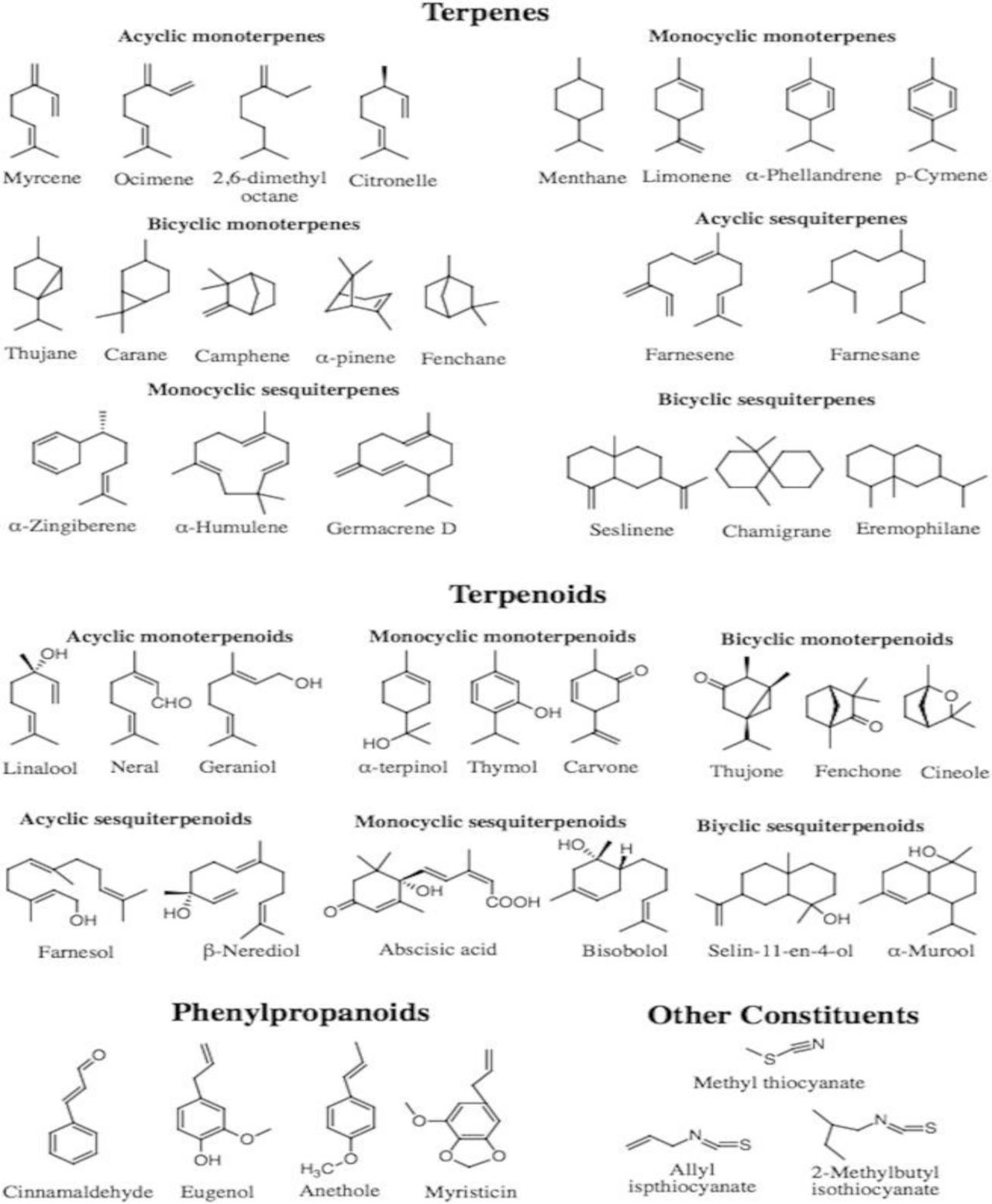
Figure 1.
The chemical structures of the bioactive compounds in essential oils
Terpenoids are formed from the basic isoprene unit (C5H8) and are mainly classified based on the number of isoprene units they contain, which influences their chemical properties, volatility, and bioactivity (Masyita et al., 2022; de Sousa et al., 2023). On this basis and the general formula [(C5H8)n], hemiterpenes are made up of one isoprene unit (C5H8), monoterpenes have two isoprene units (C10H16), sesquiterpenes consist of three isoprene units (C15H24), diterpenes contain four (C20H32), triterpenes include six (C30H48), and tetraterpenes or carotenoids are composed of eight isoprene units (C40H64). Polyterpenes are made up of multiple isoprene units (Masyita et al., 2022; de Sousa et al., 2023). Mono- and sesquiterpenoids are the major constituents of essential oils, and diterpenoids are less frequently present in essential oils due to their higher molecular weight and lower volatility.
Monoterpenes (C10) are the most abundant terpenoids in essential oils and are highly volatile, making them key contributors to aroma and fragrance. They are widely found in essential oils such as eucalyptus and peppermint, and include compounds like limonene, myrcene, pinene, terpinene and p-cymene which exhibit anti-inflammatory properties (Habtemariam, 2019; Masyita et al., 2022).
Sesquiterpenes (C15) are made up of three isoprene units; thus, they are less volatile accordingly than monoterpenes, which contributes to their stability and therapeutic properties. They are commonly found in chamomile and ginger oils, with notable examples including β-caryophyllene, humulene, and farnesene (Mockute et al., 2008; Matsunaga et al., 2011). Their oxygenated derivatives, sesquiterpenoids, such as bisabolol and nerolidol, play a crucial role in the fragrance and pharmacological properties of essential oils (Sell, 2020; de Sousa et al., 2023).
Diterpenes (C20) are larger molecules with lower volatility, making them less prevalent in essential oils. Despite their lower abundance, they exhibit significant biological activities, including antimicrobial and anti-inflammatory effects. Examples of diterpenes include sclareol and carnosol, while their oxygenated derivatives, diterpenoids, such as forskolin and taxol, have been extensively studied for their medicinal properties (Eksi et al., 2020; Torequl Islam et al., 2022).
Mechanisms of action of essential oils in reducing methane production
Administration of essential oils is one of the promising natural approaches to reduce CH4 production in ruminants, potentially by inhibiting methanogenic archaea, modulating rumen fermentation, reducing protozoan populations, and other mechanisms (Figures 2 and 3). However, careful consideration should be given to the selection of essential oils, determination of appropriate dosages, and potential adverse effects.
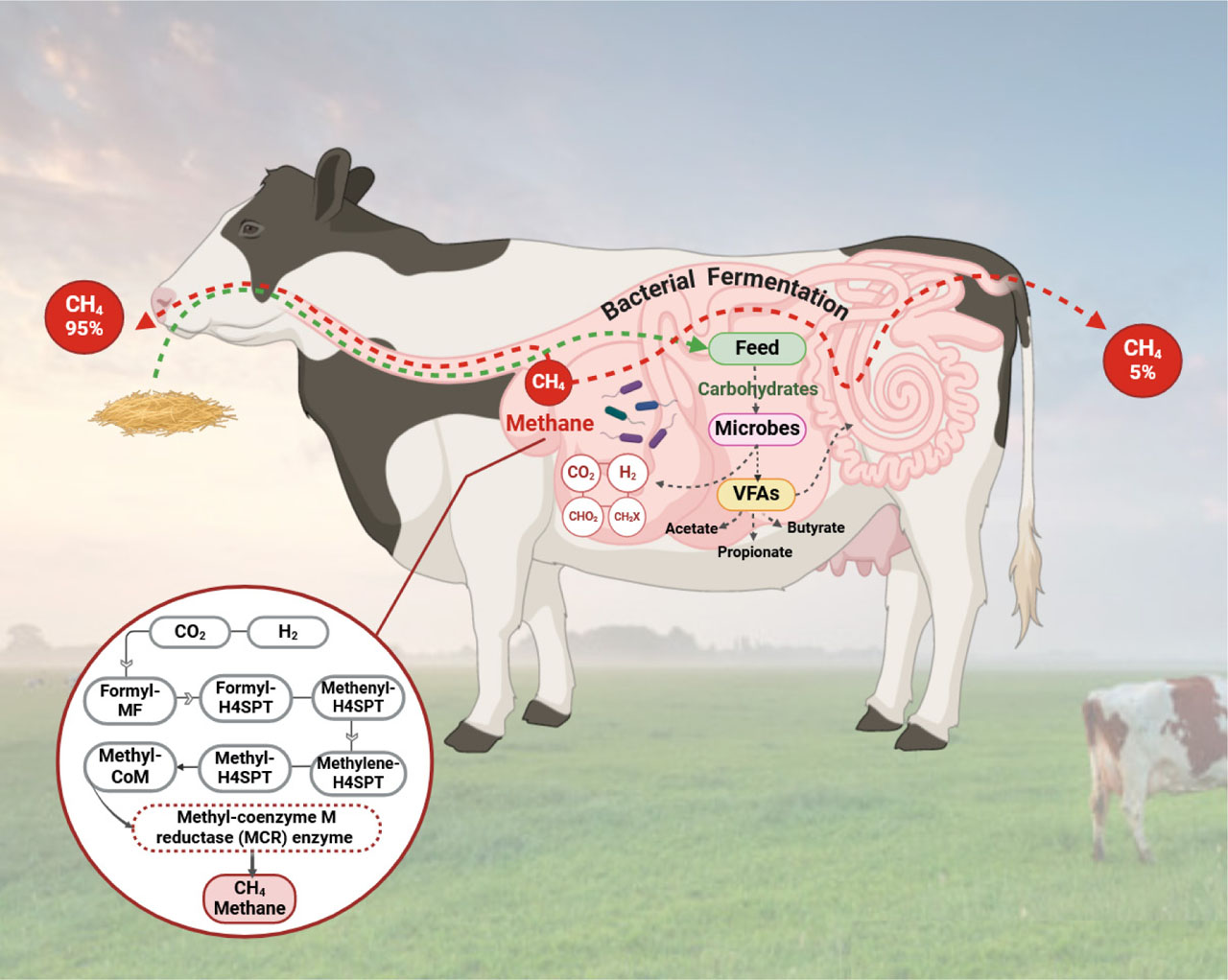
Figure 2.
The rumen and methane production
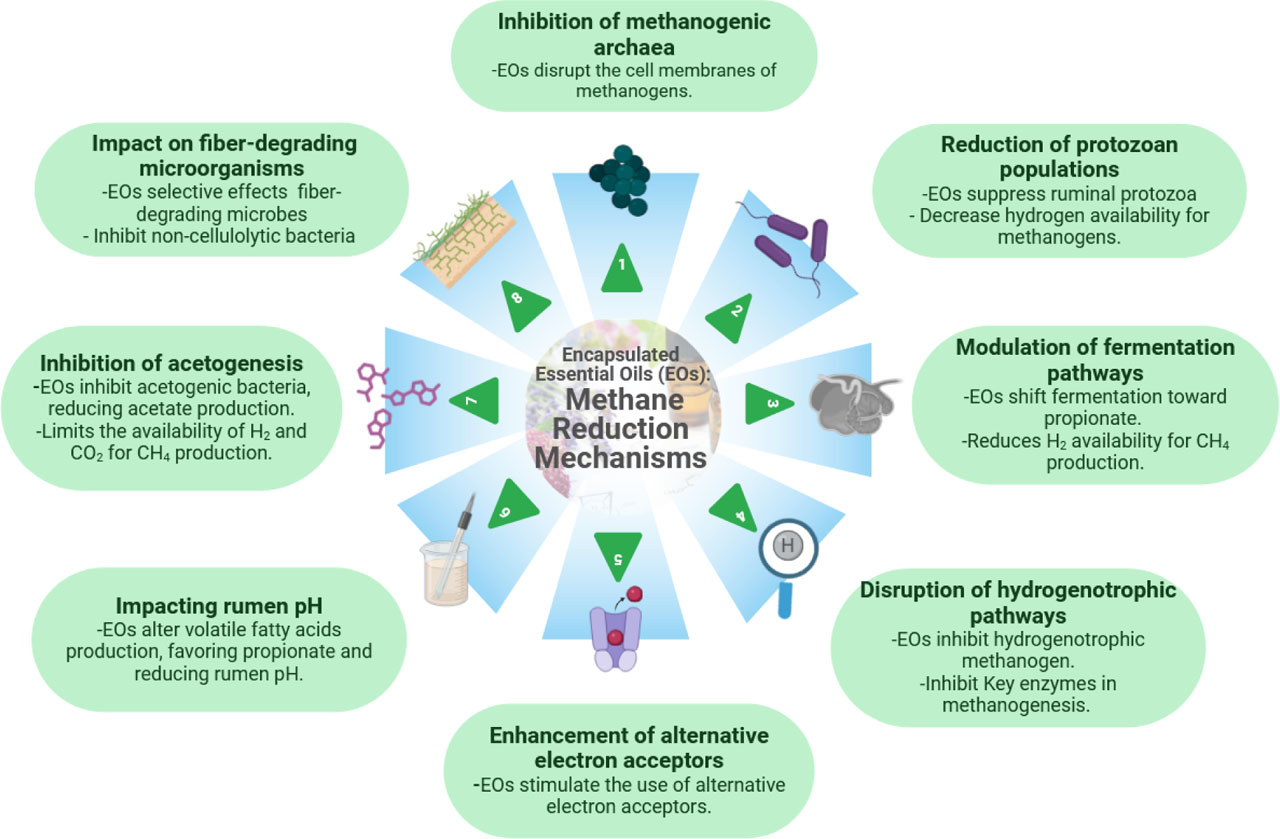
Figure 3.
The mode of action of encapsulated essential oils on methane production
Inhibition of methanogenic archaea
Methanogenic archaea are the main CH4 producers in the rumen that use hydrogen to reduce CO2 to CH4 (Hook et al., 2010). Essential oils, especially those rich in phenolic compounds such as thymol, carvacrol, and eugenol, have shown the ability to directly inhibit the growth and development of methanogens (Capasso et al., 2017). These phenolic compounds disrupt the cell membranes of methanogens, leading to increased permeability of the membrane and leakage of cellular contents, and ultimately their population (Benchaar and Greathead, 2011).
Reduction of protozoan populations
Protozoa have a symbiotic relationship with methanogens in the rumen by providing them with hydrogen generated during the fermentation of feed (Hassan et al., 2020). However, certain essential oils such as thymol, garlic, and cinnamon have been shown to suppress ruminal protozoa (Şahan, 2023). The suppression of protozoa leads to a decrease in the hydrogen available for methanogens; hence, essential oils indirectly reduce CH4 production (Hassan et al., 2020; Kholif and Olafadehan, 2021). Additionally, reducing the number of protozoa also reduces the total microbial load competing for nutrients, which may lead to improved feed efficiency (Russell and Rychlik, 2001).
Modulation of rumen fermentation pathways
Essential oils shift rumen fermentation away from microbial metabolic pathways with net formation of hydrogen towards pathways and no net hydrogen formation. Essential oils could alter the rumen environment to favor propionate-producing pathways, among other volatile fatty acids, which act as an alternative sink for hydrogen (Hassan et al., 2020). Thus, the production of propionate competes with methanogenesis for hydrogen, reducing substrate availability for CH4 production. This shift is important, as it decreases CH4 emissions and simultaneously increases the energy supply to the host animal in the form of propionate (Kholif and Olafadehan, 2021).
Disruption of hydrogenotrophic pathways
Essential oils can disrupt hydrogenotrophic methanogenesis, the primary pathway for CH4 production in the rumen (Hassan et al., 2020). By inhibiting hydrogenotrophic methanogens, essential oils reduce the efficiency of CH4 synthesis from hydrogen and CO2 (Belanche et al., 2014). This interference could be a result of the inhibition of key enzymes in methanogenesis, including methyl-coenzyme M reductase, which catalyzes the final step in CH4 formation. All these enzymes catalytically inhibit CH4 production at the biochemical level (Lyu et al., 2018).
Enhancement of alternative electron acceptors
Certain essential oils may stimulate the utilization of alternative electron acceptors in the rumen, like nitrate or fumarate, other than CO2 (Choi et al., 2024). These compounds can be utilized as hydrogen sinks, diverting hydrogen away from methanogenesis. For instance, essential oils stimulating the activity of nitrate-reducing bacteria (Mitsui and Harasawa, 2017) can obstruct CH4 production by forming ammonium at the expense of CH4 (Pineda et al., 2023). In addition to reducing CH4 emissions, such pathways, when optimized, can improve nitrogen retention in the rumen, thereby improving animal performance.
Impacting rumen pH
The effects of essential oils on rumen pH are related to a decrease in the production and/or absorption of volatile fatty acids (Kholif et al., 2018). Generally, low pH values are associated with reduced methanogen activity, as these microorganisms thrive in less acidic conditions (Matthews et al., 2019). Essential oils can reduce CH4 production by altering volatile fatty acid production and shifting it toward propionate (Alabi et al., 2024; Ike et al., 2024). However, it is crucial to maintain an optimal pH, as excessively low acidity can lead to rumen acidosis, which negatively impacts animal health.
Inhibition of acetogenesis
Acetogenesis is a distinct metabolic pathway in the rumen, in which acetogenic bacteria utilize the Wood-Ljungdahl pathway to convert hydrogen and carbon dioxide to acetate (Gagen et al., 2015). This pathway offers an alternative hydrogen sink to methanogenesis and can potentially reduce enteric methane production. In contrast, acetate produced via the main fermentation pathway – primarily by fibrolytic bacteria converting pyruvate to acetate – is typically associated with the release of H2 and CO2, which are substrates used by methanogens for CH4 synthesis. These fibrolytic bacteria often engage in a syntrophic relationship with methanogens, thereby intensifying CH4 production. Essential oils have been shown to modulate microbial populations in the rumen and inhibit fibrolytic and methanogenic activities, thereby disrupting the release of H2 and CO2 from pyruvate fermentation (Benchaar and Greathead, 2011; Capasso et al., 2017; Choudhury et al., 2022). By limiting hydrogen availability through the suppression of specific microbial groups, essential oils may indirectly reduce methane emissions, while the preservation or promotion of acetogenic activity could further divert hydrogen away from methanogenesis. Therefore, modulating the balance between microbial populations involved in hydrogen production and consumption is key to mitigating CH4 formation in the rumen.
Impact on fiber-degrading microorganisms
One of the major sources of hydrogen for methanogenesis is the degradation of fibrous plant material in the rumen. Essential oils have a less inhibitory effects on fiber-degrading microorganisms compared to those involved in other degradation processes (Hassan et al., 2020; Kholif and Olafadehan, 2021). The impact of essential oils on fiber-degrading microorganisms in the rumen has gained attention in animal nutrition due to their potential to enhance fiber digestion and improve feed efficiency. Essential oils – particularly those derived from plants like oregano, thyme, garlic, and cinnamon – contain bioactive compounds such as phenols that can influence the growth and activity of cellulolytic bacteria, such as Fibrobacter succinogenes and Ruminococcus albus, which are crucial for fiber breakdown (Cobellis et al., 2016). Essential oils may inhibit the growth of non-cellulolytic, gram-positive bacteria, while stimulating the growth of cellulolytic bacteria and improving fiber degradation without significantly harming rumen microbial balance. Mechanistically, essential oils can alter microbial membrane integrity, influence rumen pH, and suppress competing non-cellulolytic microbes, favoring fiber-degrading populations (Calsamiglia et al., 2007). However, the effects of essential oils are dose-dependent, and excessive amounts can disrupt microbial diversity and impair fiber digestion (Kholif and Olafadehan, 2021). While moderate doses of essential oils may enhance rumen fermentation and reduce CH4 emissions (Ike et al., 2024), further research is required to optimize their application in ruminant diets. The mechanism by which essential oils inhibit CH4 production would differ depending on the essential oils, the dosage, and the animal model. The variability in essential oils composition, influenced by factors such as plant species and extraction methods, also presents challenges in their consistent use (Kholif and Olafadehan, 2021).
Encapsulation technologies
Encapsulation technologies in ruminant nutrition aim to protect some sensitive and critical feed components (nutrients) and bioactive compounds from unwanted degradation and to ensure their stability and controlled release to specific organs for effective utilization. The encapsulation technologies are supported by the principle of enclosing active ingredients, such as essential oils, within a protective matrix. The process improves the stability, controlled release, and bioavailability of the active ingredients within the gastrointestinal tract of the animal. In animal feeding, encapsulation technology has been adopted to optimize the effective delivery of essential oils to specific sites such as the rumen in ruminants (Garba and Fırıncıoğlu, 2023). This process typically involves the application of a protective coating to the essential oil, using various materials such as polymers, lipids, and carbohydrates amongst others. The primary goal is to protect the essential oil from environmental factors, such as oxygen, light, and moisture, which can degrade the active ingredients (Sousa et al., 2022).
Types of encapsulation technologies
There are several encapsulation techniques for essential oils, including spray-drying, coacervation, extrusion, and freeze-drying (Tables 1 and 2). Each method has its own advantages and is applied based on various factors, such as the nature of the essential oil, desired release characteristics, and demand at the site of application (Yammine et al., 2024). The most common encapsulation technique – especially on an industrial scale – is spray-drying, which is simple, reproducible, continuous, and relatively cost-effective. The spray-drying method involves spraying a solution containing essential oil and a carrier substance into a chamber filled with hot air, which gives a powder with the essential oil encapsulated in a matrix due to the rapid evaporation of the solvent (Estevinho et al., 2013; Sousa et al., 2022). Encapsulation by this method is preferred because it is simple and highly reproducible. In this method, emulsions are atomized into a drying chamber at relatively high temperatures, which causes the solvent to evaporate, resulting in microcapsules (Estevinho et al., 2013; Sousa et al., 2022). Spray-drying typically involves four main steps. The process starts with the preparation of a dispersion, whereby coating materials are dissolved in water with agitation and under controlled temperatures. Essential oils are then incorporated, along with an emulsifying agent if necessary. Then, the dispersion is homogenized and carefully introduced through an atomizing nozzle into the processing equipment where fine droplets are formed. In the third step, the atomized emulsion enters a chamber where hot air circulates. The last step is the evaporation of the solvent, leading to the dehydration of the microparticles, which are then collected as powder in a filter or collector (Mohammed et al., 2020). The major disadvantages of this technique are that the coating material must be highly soluble in water, and there are only a limited number of suitable encapsulants (Mohammed et al., 2020; Sousa et al., 2022). Moreover, some materials may be affected by the high temperature applied during atomization. In addition, microcapsules obtained as a fine powder can agglomerate, requiring additional processing (Bakry et al., 2016).
Table 1.
Overview of encapsulation techniques with their physical and chemical mechanisms (Adapted from Yammine et al., 2024 and Li et al., 2025)
| Technique | Type | Process description | Advantages | Disadvantages |
|---|---|---|---|---|
| Spray-drying | Physical | Essential oils are atomized into fine droplets and rapidly dried using heated air. Protective wall materials (e.g., polysaccharides) can be applied to enhance stability. |
|
|
| Freeze-drying | Physical | Involves freezing followed by sublimation of water under reduced pressure. The technique helps preserve essential oils but may result in some loss due to temperature sensitivity and volatility. |
|
|
| Extrusion methods | Physical | Essential oils are processed through an orifice under controlled conditions. Techniques include: hot-melt extrusion, melt injection, centrifugal/co-extrusion, electrostatic spinning, and particle formation from gas-saturated solutions. |
|
|
| Solvent evaporation | Physical | A four-step process involving dissolution of core and shell materials, emulsification, solvent removal to solidify microcapsules, and final drying. |
|
|
| Complex coacervation | Chemical | Occurs through interactions between oppositely charged biopolymers, leading to phase separation. The polymer-rich phase is collected to encapsulate essential oils. |
|
|
| Ionic gelation | Chemical | Involves ionic crosslinking of biopolymers, where essential oils are incorporated and trapped within the polymer matrix. |
|
|
| Emulsion-based encapsulation | Chemical | Two immiscible liquids are mixed, forming dispersed droplets that serve as carriers for essential oils within a stable emulsion system. |
|
|
| Co-extrusion and gelation | Chemical | Droplets are generated through controlled vibration and fall into a gelling solution, effectively encapsulating volatile bioactive compounds. |
|
|
Table 2.
Detailed encapsulation methods, materials, proportions, and stability, release profile, and functionality of encapsulated essential oils
| Method | Suitable materials | Stability | Release profile | Functionality | Reference |
|---|---|---|---|---|---|
| Spray-drying | Maltodextrin, Arabic gum, whey protein, gelatin, lecithin | High stability under optimized drying conditions; protects from light and oxygen; moderate thermal/humidity stability | Controlled release depending on wall material; suitable for long-term storage | Cost-effective; improves shelf-life, preserves bioactivity, enhances photostability | Aguiar et al. (2020) |
| Freeze-drying | Maltodextrin, trehalose, gelatin, trehalose, polysaccharides | Retains volatile compounds but may lose some due to freezing | Gradual release over time | Preserves essential oils during storage; suitable for heat-sensitive compounds | Sousa et al. (2022) |
| Extrusion methods | Alginate, chitosan, carrageenan | Moderate (pH-sensitive) | Controlled release based on polymer properties | Produces uniform particles; suitable for large-scale production | Chiriac et al. (2021); Asbahani et al. (2015) |
| Solvent evaporation | Poly(lactic-co-glycolic) acid (PLGA), ethyl cellulose, poly-ε- caprolactone (PCL) | High stability with minimal degradation; sensitive to solvents | Sustained release due to polymer matrix | Controlled release; targets methanogens; protects essential oils from external factors; enhances antioxidant capacity | González-Reza et al. (2020) |
| Complex coacervation | Gelatin-gum Arabic, chitosan-alginate | High pH/thermal stability; stable against environmental factors like light and oxygen | Controlled release through polymer degradation | Improves bioavailability, masks odor and taste | Muhoza et al. (2022); Sousa et al. (2022) |
| Ionic gelation | Alginate, chitosan, pectin | Stable in mild processing conditions | Rapid release in aqueous environments | Simple and fast process; protects sensitive compounds | Yammine et al. (2024); Chiriac et al. (2021) |
| Emulsion-based | Alginate, cyclodextrins, lecithin | Stable in emulsified form; low oxidative stability | Release depends on emulsion stability | Suitable for hydrophilic and hydrophobic compounds | Lu et al. (2016); Sousa et al. (2022) |
| Co-extrusion and gelation | Alginate-chitosan multilayers | High (multilayer protection) | Delayed (lower gastrointestinal) | Targeted delivery; reduces rumen bypass | Homayouni-Rad et al. (2024); How et al. (2022) |
Coacervation is one of the most frequently used methods for microencapsulation. It involves the phase separation of a polymer solution, resulting in the formation of a coating around essential oils. Capsules produced by this method have high encapsulation efficiency and controlled release. In general, this technique is very effective in obtaining microcapsules of uniform size and consistency for specific applications (Sousa et al., 2022). Coacervation methods can be divided into simple and complex, depending on whether one or more polymers are involved in the process. This technique generally involves the separation of two liquid phases in a colloidal solution: one phase that is rich in polymers, known as the coacervated phase, and another phase that is free of polymers, referred to as the equilibrium phase (Asbahani et al., 2015). In complex coacervation, two colloids with opposite charges interact, leading to charge neutralization and subsequent separation into different phases. In coacervation, a polysaccharide and a protein typically serve as distinct types of polymers. The most commonly studied coating materials include various combinations, such as gelatin/Arabic gum, gelatin/alginate, gelatin/glutaraldehyde, gelatin/chitosan, and gelatin/carboxymethyl cellulose (Bakry et al., 2016). In the process of encapsulating hydrophobic substances, the active compound is emulsified in an aqueous solution and typically sandwiched between two different polymers at a temperature and pH that exceed the gelation and isoelectric points of the protein. This process results in the separation of the mixture into two liquid phases: one that is a polymer-rich phase and another that is aqueous, caused by the electrostatic interactions between the polymers (Sousa et al., 2022). The microcapsule wall is formed by surrounding hydrophobic particles of the active substance with a polymer-rich phase, which is then precipitated through controlled cooling below the gelation temperature. Finally, the microcapsule walls are solidified by introducing a crosslinking agent (Timilsena et al., 2019). Simple coacervation is preferred over complex coacervation because the former uses inexpensive inorganic salts to induce phase separation, whereas the latter utilizes expensive hydrocolloids, thus offering cost advantages (Sousa et al., 2022). However, complex coacervation has been reported to be more sensitive to small changes in pH. In industrial applications, complex coacervation is employed because it is straightforward, easy to scale up, less costly, highly reproducible, and free of organic solvents compared to other microencapsulation methods (Bakry et al., 2016).
Extrusion is a well-established technique for encapsulating essential oils and is widely used in the food, pharmaceutical, and cosmetics industries. This technique involves the formation of a solid matrix around the essential oil as a protective barrier against environmental factors, such as oxygen, light, and temperature, which may cause the degradation of the oil’s volatile compounds (Bamidele and Emmambux, 2021). Extrusion encapsulation enhances both the stability and shelf life of the essential oils and allows for the proper release of active ingredients in targeted environments or applications. Extrusion encapsulation is a process in which mixtures of essential oils and a carrier material are forced through small orifices in a controlled manner. The process leads to the formation of solid particles or beads that encapsulate the essential oil. The carrier material is usually a combination of polymer or biopolymer, which provides a protective matrix for oil encapsulation. Depending on whether heat is applied during the process, it can be classified as hot-melt extrusion or cold extrusion (Bamidele and Emmambux, 2021). While extrusion encapsulation offers numerous benefits for essential oils and other encapsulation substances, there are challenges such as heat sensitivity, selecting the right carrier material, and ensuring consistent particle size and shape – particularly when operating on a large scale.
Freeze-drying or lyophilization involves freezing the essential oil and carrier mixture, and then removing the ice by sublimation. This method preserves the properties of the essential oil and is appropriate for compounds that are sensitive to heat. The resulting product is a dry powder with high encapsulation efficiency. Freeze-drying or lyophilization is defined as a method of removing water by sublimation of ice crystals from frozen material (Sousa et al., 2022). Such a type of drying technique is based on the principle of sublimation, which changes the state of water directly from a solid to vapor without passing through the liquid stage. First, oil is dissolved in water and then frozen. Under such conditions, the frozen water directly sublimates from its solid phase to the gaseous phase by reducing the pressure and supplying heat (Hazarika and Gosztola, 2020). Freeze-dried materials have generally been found to retain maximum volatile compounds as compared to spray-drying. This technique is, therefore, suitable for the microencapsulation of specific oils, ensuring high efficiency in the process. This method is particularly effective in maintaining the essential oil content of various herbs and spices when compared to other preservation techniques. Although the general processes for lyophilization, which provides samples that are more resistant to oxidation, are straightforward and easy to use, this method is less efficient for microencapsulation (de Araújo et al., 2020). However, the process has several disadvantages: high energy consumption, long processing time, and increased production costs (Sebaaly et al., 2016).
Materials used in encapsulation
Selecting the encapsulation material is one of the key factors in the encapsulation process as it significantly influences the stability, release characteristics, and functionality of the encapsulated essential oils. In this context, carbohydrates, proteins, lipids, polysaccharides, and synthetic polymers each offer unique characteristics that can be leveraged to meet specific encapsulation goals. Material selection depends on the intended application, desired release properties, and the nature of the essential oil.
Common materials used in encapsulation (Table 3), which are not limited to polysaccharides, consist of starch, alginate, proteins like gelatin, and casein, as well as synthetic polymers like poly(lactic-co-glycolic) acid. These are selected based on the compatibility of the material with the essential oil and the desired release profile. The selection of the right materials for encapsulation is crucial for its success, as it directly influences protection, stability, release characteristics, and use of the encapsulated essential oils. The encapsulation materials may be composed of a variety of substances, each possessing distinct characteristics based on the encapsulation technique and desired outcomes. Materials of carbohydrate origin are widely used as encapsulating agents due to their natural abundance and biocompatibility, and ability to form stable matrices (Yammine et al., 2024).
Table 3.
Materials employed in the encapsulation of essential oils to mitigate methane emissions in ruminants
| Material | Type | Encapsulation methods | Key benefits | Limitations | Reference |
|---|---|---|---|---|---|
| Maltodextrin | Polysaccharide | Spray-drying, freeze-drying | Cost-effective, high solubility, improves shelf-life, preserves bioactivity | Hydrophilic; may have limited protection in aqueous environments | Fernandes et al. (2014) |
| Arabic gum | Polysaccharide | Spray-drying, coacervation, complex coacervation | Emulsifying properties, stabilizes volatile compounds | Limited thermal stability, expensive | Fernandes et al. (2014); Al-Hamayda et al. (2023) |
| Whey protein | Natural polymer | Spray-drying, coacervation | High encapsulation efficiency, biodegradable | Sensitive to pH and heat | Xiao et al. (2022) |
| Alginate | Natural polymer | Extrusion, ionic gelation | pH-sensitive, controlled release, suitable for sensitive compounds | May have rapid release in certain conditions | Benavides et al. (2016); Sousa et al. (2022) |
| Chitosan | Natural polymer | Co-extrusion, extrusion, ionic gelation, coacervation | Improves bioavailability, enhances stability | pH-dependent release (insoluble at neutral pH) | Arias et al. (2021); Negi and Kesari (2022) |
| Gelatin | Natural polymer | Coacervation, spray-drying, freeze--drying | Thermo responsive, biocompatible, high stability, protects from light and oxygen | Requires cross-linking for stability; may not be suitable for all essential oils | Sousa et al. (2022) |
| Trehalose | Disaccharide | Freeze-drying | Protects essential oil volatiles, stabilizes during drying | High energy input required | Domian et al. (2015) |
| Poly (lactic-co-glycolic) acid (PLGA) | Synthetic polymer | Solvent evaporation | Biodegradable, controlled release, improves bioavailability | Expensive, may require specific processing conditions | Blasi (2019) |
| Ethyl cellulose | Synthetic polymer | Solvent evaporation | High mechanical strength, sustained release | Hydrophobic; may have limited biodegradability | Julaeha et al. (2023); Sousa et al. (2022) |
| Poly-ε-caprolactone (PCL) | Synthetic polymer | Solvent evaporation | Slow degradation, long-term release | May require organic solvents for processing | De Ávila et al. (2017); Chiriac et al. (2021) |
| Polysorbate (Tween 80) | Surfactant | Emulsion-based | Enhances essential oil solubility, stabilizes nanoemulsions | Oxidative instability; requires antioxidants | Baranauskaite et al. (2021); Sousa et al. (2022) |
| Lecithin | Lipid-based | Emulsion-based, spray-drying | Natural emulsifier, improves bioavailability | Sensitive to pH and temperature | Sánchez-Osorno et al. (2023) |
| Vegetable hydrogenated fatty acids | Natural matrix | Emulsion-based, microencapsulation | Cost-effective, protects lipophilic essential oils; effective rumen by-pass, protects essential oils from ruminal degradation | Prone to oxidation over time; may require specific processing conditions | Amin et al. (2021) |
Some of the common carbohydrate-derived materials currently in use or under investigation include native starch, modified starches, such as hydroxypropylated or cross-linked starches, maltodextrin, cyclodextrins, and cellulose and derivatives (Ansari and Goomer, 2022; Lukova et al., 2023). They form a protective barrier around the essential oils and can be tailored to provide specific release characteristics.
Another group of natural polymers used in encapsulating essential oils are protein-based materials, which have specific properties such as gelation, emulsification, and film formation (Zubair et al., 2022). Commonly used proteins in essential oil encapsulation include gelatin, casein, most often combined with other materials, soy protein, and whey protein (Mihalca et al., 2021).
Lipid-based matrices are another approach to encapsulate hydrophobic essential oils. This usually offers some advantages regarding biocompatibility and controlled release and environmental protection (Cimino et al., 2021; Sharma et al., 2022). The most commonly used components for lipid-based encapsulation are lecithin, wax, solid lipid nanoparticles, and nanoemulsions (Sharma et al., 2022). They provide controlled release, protection from degradation, and improved bioavailability of essential oils (Cimino et al., 2021; Sharma et al., 2022).
Polysaccharide-based materials are a group of high molecular weight carbohydrates that are widely used as encapsulating agents, due to their ability to form gels, biocompatibility, and biodegradability (Kong et al., 2022). Common examples include alginate, chitosan, pectin, and Arabic gum (Rehman et al., 2020). While natural materials are most commonly used in the encapsulation of essential oils, synthetic polymers are also useful because they can be easily manipulated into desired forms, which enhance their durability and strength, allowing for improved design in terms of encapsulation and release characteristics (Chiriac et al., 2021). Polyvinyl alcohol, poly(lactic-co-glycolic) acid, and ethyl cellulose are the most common synthetic polymers used in essential oil encapsulation (Chiriac et al., 2021). Most commonly, they are combined with another material to encapsulate essential oils by acting as a barrier to provide improved stability, thus influencing the release of active ingredients.
As encapsulation technologies continue to evolve, new materials and combinations are being investigated to continually improve the performance and applicability of encapsulated essential oils in various industries.
Release mechanisms of encapsulated essential oils
Effective encapsulation plays a critical role in protecting bioactive compounds from environmental factors and facilitating their release at the optimal time, concentration, and rate, when specific triggers meet desired conditions. Several factors, such as the interaction and ratio between the carrier and core materials, as well as the size and viscosity of the particles, can influence the release characteristics of encapsulated bioactive compounds (Mechmechani et al., 2022).
Encapsulated essential oils are released from carrier systems upon exposure to environmental stimuli, according to one or more of the following physicochemical mechanisms. The encapsulated essential oils could be released through different mechanism, such as diffusion, swelling, dissolution or melting, and degradation of the encapsulation material. Such release profiles could be influenced by the type of encapsulation material, capsule size, temperature, and pH of the environment (Yammine et al., 2024).
Diffusion
Diffusion is one of the common mechanisms for the release of bioactive compounds from various carrier systems (Fathi et al., 2012). In this process, molecules move from higher to lower concentrations through a concentration gradient. Typically, diffusion-controlled release mechanisms exhibit an initial rapid release followed by a gradual release, which occurs because the distance between the bioactive compound and the particle’s surface increases. The rate of diffusion is generally affected by various factors, including the size of the trapped molecules, the thickness of the membrane, the molecular weight of the carrier material, and the dispersion medium. Larger molecules tend to diffuse more slowly. A thick membrane can significantly delay the release process, and a viscous medium can further slow down diffusion.
Swelling
The mechanism of release by swelling is important for hydrophilic carriers, such as proteins and polysaccharides, especially for hydrogels capable of absorbing large amounts of water (Fathi et al., 2012). The environmental conditions of the surrounding medium can alter the repulsive or attractive interactions between the polymeric carrier materials, allowing changes in pore size and swelling of the particles by absorption of fluids from the surrounding medium (McClements, 2018). The increased volume of swelling increases the size of the pores, allowing the trapped active components to escape through simple diffusion.
Dissolving or melting
Water-soluble carriers dissolve in water or an appropriate solvent, while lipid-based carriers need to be heated to melt and release their components (Saifullah et al., 2019). As the carrier material surrounding the bioactive components dissolves or melts, the bioactive components are released into the external medium. The rate of release depends on the thickness and properties of the carrier material (Choudhury et al., 2021).
Degradation
Particles composed of biodegradable carriers such as proteins, polysaccharides, and lipids are degraded by enzymes under appropriate environmental conditions (Fathi et al., 2012). As the carrier material degrades, the surrounding medium penetrates the particles and releases bioactive compounds from the enclosed inner core.
Effects of encapsulated essential oils on methane production
Encapsulated essential oils may influence CH4 production through several mechanisms, such as altering microbial populations, selectively inhibiting methanogenic archaea, and modifying fermentation pathways (Table 4).
Table 4.
Summary of in vitro and in vivo studies on the use of encapsulated essential oils for methane emission reduction in ruminants
| Encapsulated essential oil | Encapsulation method | Test system | Ruminant species | Dose | Observed effect | Reference |
|---|---|---|---|---|---|---|
| 1 | 2 | 3 | 4 | 5 | 6 | 7 |
| Blend of essential oils | N/A | in vivo | beef steers | 150 mg/kg DM |
| Alemu et al. (2019) |
| Blend of essential oils (cinnamaldehyde, eugenol, carvacrol, and capsicum oleoresin) | Fat matrix | in vivo | sheep | 0, 200, and 400 mg/kg dietary DM |
| Soltan et al. (2018) |
| Blend of essential oils (cinnamaldehyde, named Olistat-Cyn, Olistat-G, and Olistat-P) | Fat matrix | in vitro | cows | 1.0 g |
| Amin et al. (2021) |
| Blend of essential oils | N/A | in vitro | dairy cow | 0, 50, 100, 200, 300, 400, and 500 mg/L |
| Ahmad (2023) |
| Blend of essential oils | N/A | in vitro | sheep | 0, 400, 800 μg/kg DM |
| Ahmed et al. (2014) |
| Fruit peel phytonutrient | Spray-drying with chitosan | in vitro | cows | 0, 2, 4, and 6% DM |
| Phupaboon et al. (2024) |
| Blend of essential oils | Fat matrix | in vivo | dairy cows | 1.2 g/cow/day |
| Tondini et al. (2024) |
| Lemongrass and man gosteen peel phytogenic compounds | Ionic gelation | in vivo | steers | 0, 1, 2, 3, and 4% of substrate |
| Prachumchai et al. (2024) |
| Pepper blend | N/A | in vivo | bullocks | 0, 200, and 400 mg/kg of concentrate |
| Giacomelli et al. (2023) |
| Phytogenic blend | N/A | in vivo | steers | 300 mg/kg of concentrate |
| Brunetto et al. (2023) |
| Yucca schidigera extract | Nano-encapsulation | in vitro | N/A | 0.25, 0.5, and 1 mL/g DM |
| Botia-Carreño et al. (2024) |
| Acacia tannin extract | Gum Arabic-maltodextrin microparticles | in vitro | sheep | N/A |
| Adejoro et al. (2019 b) |
| Blend of essential oils | N/A | in vivo | bulls | 150 mg/kg DM |
| Martins et al. (2018) |
| Phytonutrient of Wolffia globosa | Spray-drying using chitosan | in vitro | dairy cows | 0%, 2%, 4%, and 6% of total DM substrate |
| Muslykhah et al. (2024) |
Possible factors affecting the efficacy of encapsulated essential oils on CH4 production include the type of essential oil, encapsulation technique, dosage, and feed type; optimizing these factors is key to achieving desired responses. Research has shown that encapsulated essential oil can reduce CH4 emission from ruminants. However, there have only been a limited number of in vitro and in vivo studies investigating the impact of these oils on enteric CH4 emissions, and the findings have been inconsistent. Additionally, variations in diet, dosage, and type of essential oil and their bioactive compounds complicate direct comparisons of CH4 emission results across different studies. In a study examining the effect of encapsulated horseradish essential oils on rumen microbial fermentation, Mohammed et al. (2020) observed that CH4 production decreased linearly with increased levels (170, 850, and 1700 mg/L) of α-cyclodextrin-encapsulated horseradish essential oil in 6-hour batch cultures. They also noted that encapsulated horseradish essential oil reduced CH4 production by 19% at 20 g/kg of dietary dry matter in Holstein steers. In another experiment, Ahmad (2023) demonstrated that the administration of encapsulated essential oils at 50, 100, 200, 300, 400, and 500 mg/L to two diets containing 36.5% and 46.0% neutral detergent fiber had no effect on in vitro CH4 production after 24 h of incubation. Lin et al. (2013) encapsulated eugenol, carvacrol, citral, and cinnamaldehyde in equal proportions with sodium alginate and fed it to Hu sheep. They observed that the encapsulated essential oils decreased the methanogen and protozoan populations. In another experiment, administration of microencapsulated essential oils to steers at 150 mg/kg DM feed increased CH4 production compared to steers fed a standard high forage background diet (Alemu et al., 2019). In a different experiment, Soltan et al. (2018) supplemented rumen cannulated Santa Inês sheep with a microencapsulated mixture of essential oils at 200 or 400 mg/kg dietary DM and observed a reduction in CH4 production, with values of 24.5 and 27.6 l/kg digestible organic matter, respectively, compared to 38.2 l/kg digestible organic matter in the control group.
Factors influencing the efficacy of encapsulated essential oils
Encapsulation efficiency is defined as the percentage of the essential oil enclosed within the microcapsules, and its effectiveness is influenced by various factors, including the choice of encapsulation materials and methods, as well as the characteristics of the essential oils. Understanding these elements is crucial for optimizing their performance in applications like animal feed and pharmaceuticals. The materials used for encapsulation play a vital role in determining the stability, release profile, and efficacy of the encapsulated essential oils (Culas et al., 2024). Methods such as spray-drying, coacervation, extrusion, and freeze-drying, have varying impacts on the size and distribution of the microcapsules, which in turn affect their release properties and overall efficiency (Sousa et al., 2022; Culas et al., 2024). The intrinsic characteristics of essential oils, including their volatility, solubility, and chemical stability, have a great impact on their encapsulation capabilities. Highly volatile or heat-sensitive oils may require specialized encapsulation techniques to keep their functionality (Reis et al., 2022). Additionally, the compatibility of essential oils with encapsulation materials is crucial to achieve a high encapsulation efficiency. Using unsuitable or incompatible materials may lead to ineffective encapsulation and instability, ultimately reducing the overall efficacy of the encapsulated essential oils (Zhu et al., 2021). Smaller particles size may improve bioavailability with homogeneous distribution, but they can be more challenging to produce and handle. The release profile, whether controlled or sustained, is key to delivering the oils at the right time and place, enhancing their efficacy (Dierings de Souza et al., 2021). Stability is another critical factor, as the encapsulation protects the oil from environmental factors, such as oxygen, moisture, and light, which can cause degradation. The stability of encapsulated oils during storage and use – affected by temperature, humidity, and light exposure – determines their shelf life and efficiency (Zhu et al., 2021). Processing conditions, such as temperature, pressure, and solvent composition, also affect encapsulation efficiency and the release profile, requiring optimal conditions for desired outcomes (Zhu et al., 2021).
The physical and chemical properties of the encapsulation materials, including molecular weight, hydrophobicity, and thermal stability affect the formation and maintenance of microcapsules, and these should align with the essential oils’ properties and intended application (Ozkan et al., 2019). Moreover, formulation parameters, including the concentration of essential oils and the ratio between encapsulation materials, play a significant role in achieving optimal encapsulation efficiency and the desired release profile (Altay et al., 2024). Understanding these factors and interactions helps in selecting the proper materials and methods to optimize the efficacy and stability of encapsulated essential oils.
Conclusion
Use of encapsulated essential oils has emerged as a viable alternative strategy to reduce CH4 production in ruminants by enhancing the stability, controlled release, and target delivery of essential oils. This technology protects the volatile and easily degradable compounds of the essential oils from environmental factors, while enhancing their release in the rumen, where they can effectively influence ruminal fermentation, inhibit CH4-producing microbes, and promote feed efficiency. Encapsulation improves the bioavailability of essential oils, ensuring that their active compounds reach their target sites and exert their beneficial effects, thereby improving their overall efficacy in reducing CH4 emissions. In addition to reducing CH4 production, encapsulation can improve feed efficiency and animal productivity, offering economic benefits to farmers through improved feed utilization and animal performance. However, the efficacy of encapsulated essential oils is influenced by several factors, including the type of essential oil, the encapsulation material, and the particular treatments applied in the rumen. Not all essential oils are equally effective in reducing CH4 emissions, and their effectiveness can differ based on the type of animal or feed used. Consequently, a targeted approach is needed to identify the most effective encapsulated essential oils for particular situations.
Notes
[1] Conflicts of interest Conflict of interest
The authors have no competing interests to declare that are relevant to the content of this article.