
1. Introduction
Oils obtained from fish are a rich source of essential fatty acids (EFAs) including omega-3 acids. They are necessary for the proper functioning of the body and must be supplied with food. In Poland, fish consumption is at a rather low level. In order to make up for omega-3 fatty acid deficiencies, Poles are increasingly consuming dietary supplements and medicinal products containing fish fats. A research report created by the Market and Opinion Research Agency SW Research in 2017 shows that 72% of Poles declare taking dietary supplements, including 48% who use them regularly [1, 2]. Tranium (Cod Liver Oil) is an oil that is extracted from the fresh liver of Atlantic cod and other fish belonging to the cod family. This liquid fat is a rich source of long-chain EFAs from the omega-3 family, mainly docosahexaenoic acid (DHA), and eicosapentaenoic acid (EPA), as well as vitamins A and D [3].
Shark liver oil also contains acids of the omega-3 family, but in smaller amounts than cod liver oil. Additionally, in its composition one can find natural substances like alkyglycerols (AGLs) and squalene that stimulate the body’s immune system. These compounds have a synergistic effect, so using their combination gives the best health effects. Alkylglycerols stimulate the immune system by increasing antibody production and enhancing phagocytosis. Immunostimulatory properties offer the possibility of their use in anti-tumor practice. In addition, AGLs inhibit protein kinase C, and can incorporate into the membranes of cancer cells, which consequently leads to their death. Moreover, alkylglycerols exhibit antimicrobial features. However, squalene is a precursor for the synthesis of cholesterol and sterol hormones. This carbohydrate stimulates the body’s immunity and also plays the role of an antioxidant by enhancing oxygen transport into cells [3, 4].
Numerous studies have consistently shown that regular fish consumption is associated with a reduced risk of coronary heart disease. This protective effect is primarily attributed to the high content of omega-3 polyunsaturated fatty acids, particularly EPA (eicosapentaenoic acid) and DHA (docosahexaenoic acid), which are abundant in cold-water fish such as swordfish, salmon, shark, sardines, and herring [5].
Epidemiological studies of Greenland Inuit populations have demonstrated an exceptionally low incidence of coronary heart disease, which has been linked to their diet rich in fish and marine mammals, with daily fish intake often exceeding 400 grams. High omega-3 intake has been shown to positively influence lipid profiles, exert anti-inflammatory effects, and stabilize cellular membranes, all of which are believed to significantly reduce the risk of cardiovascular events [6,7].
These observations are supported by findings from the “Diet and Reinfarction Trial,” which showed that individuals who had experienced a myocardial infarction and followed a fish-rich diet (consuming fish at least three times per week) for a period of two years experienced a 29% reduction in all-cause mortality compared to the control group [8].
There are no enzymes in the human body to synthesize de novo fatty acids with a double chemical bond at the n-3 and n-6 positions, so these acids must be supplied from the diet [9, 10]. Polyunsaturated fatty acids of the omega-6 family include arachidonic acid (AA) and linoleic acid (LA), and their main sources are vegetable oils. However, among the EFAs of the omega-3 family we highlight docosahexaenoic acid, eicosapentaenoic acid and α-linolenic acid (ALA), which can be found primarily in fish oils. DHA and EPA, among other things, condition the normal course of pregnancy and the development of the baby. In the case of women with pregnancies at risk, supplementation with omega-3 fatty acids reduces the risk of premature birth and perinatal death and increases the birth weight of the newborn [10]. Docosahexaenoic acid also affects the proper functioning of the organ of sight. It is a key component that builds cell membranes of cones and rods, which are responsible for color and night vision. In addition, DHA is involved in the normal development of the nervous system and behavioral-cognitive processes in children. The source of EFA in young children is primarily breast milk [3, 10].
Eicosapentaenoic acid additionally acts in the body as a precursor of eicosanoids - tissue hormones with versatile effects. EPA-derived eicosanoids include leukotrienes of series 5 and prostanoids of series 3, which include prostaglandins, prostacyclins and thromboxanes. These compounds are involved in processes such as - blood clotting, inflammation and blood pressure regulation. For this reason, a blood pressure-lowering effect can be observed in hypertensive people who supplement with omega-3 fatty acids [11]. The results of a clinical study collected by Dutkowska [11] showed clear benefits of consuming n-3 and n-6 fatty acids in relation to the possibility of cardiovascular disease. It was emphasized that an appropriately balanced diet and an increased supply of polyunsaturated fatty acids including n-3 and n-6, among other things, significantly reduces the risk of myocardial infarctions and other serious events and deaths from these diseases.
In clinical practice, evidence from recent clinical trials supports the recommendation of consuming at least one to two servings of fish/seafood per week, with the additional primary prevention benefits of consuming ~1 g per day of EPA and DHA [12].
The daily fat requirements of the human body depend on gender, age, physiological and physical status. According to the Nutrition Standards for the Polish population, the daily recommended intake of total fats, for an adult, should be about 30% of dietary energy. However, in the case of fats, it is not the quantity, but the quality of fats that is crucial in maintaining a healthy diet. The human body’s daily requirement for polyunsaturated fatty acids is between 6 and 11% of required calories. Consumption of adequate amounts of omega-6 fatty acids is as important as omega-3 fatty acids, and the ratio of omega-6 to omega-3 in the diet should be between 5:1 and 3:1 [10].
Fish oil, used as an alternative to a diet rich in fish, also demonstrates cardioprotective effects. Regular supplementation has been shown to lower LDL cholesterol levels, improve vascular elasticity, and exert antithrombotic effects—without the need for drastic lifestyle changes or intense physical activity. Nevertheless, it is important to emphasize that a healthy lifestyle remains a crucial factor in overall health maintenance [13].
The beneficial effects of supplementation were also confirmed in a clinical trial in which patients received a daily dose of 1 gram of a combined DHA and EPA formulation. The results showed a statistically significant reduction in mortality due to cardiovascular events, further supporting the effectiveness of omega-3 fatty acid supplementation as an adjunct in the secondary prevention of cardiovascular diseases [14].
According to the Nutrition Standards for the Polish population, the recommended daily intake of omega-3 polyunsaturated fatty acids for different age groups is as follows: for infants and young children up to 2 years of age, the recommended intake of DHA is 100 mg per day, for children and adolescents from 2 to 18 years of age, the intake of DHA and EPA should be about 250 mg per day or 1–2 servings of fish per week, and for adults, DHA and EPA of about 250 mg per day or 2 servings of fish per week is recommended. In addition, it is recommended that at least one of the weekly servings for children, adolescents and adults be based on oily fish. Special recommendations for pregnant and lactating women have also been developed: in addition to the standard amount of DHA and EPA at 250mg per day, additionally their diet should be enriched with 100–200 mg of DHA per day [10, 15]. To complement the above recommendations, standards for sufficient omega-3 intake have also been developed to help prevent cardiovascular disease. Patients with heart failure or coronary artery disease should consume 2 servings of fish per week, including oily fish, or supplement their daily diet with DHA and EPA in amounts ranging from 250 mg to as much as 1,000 mg. For patients with hypertriglyceridemia, it is possible to use oil preparations as an adjunctive treatment to basic therapy. Then the recommended dose ranges from 2-3g of omega-3 fatty acids per day [10, 12, 16].
2. Purpose of the review
The aim of this review is to provide a comprehensive analysis of mercury presence in fish and to evaluate its potential impact on human health. Additionally, the paper seeks to highlight the role of omega-3 and omega-6 fatty acid supplementation—particularly DHA and EPA derived from fish oil—as a health-supporting factor, despite the potential risks associated with mercury exposure.
3. Sources of regulation of permissible amounts of pollutants
Dietary supplements and medicinal products, in addition to the right ingredients, may also contain undesirable substances in the form of impurities. The presence of impurities in a preparation can pose a serious health risk to the consumer. They may have toxic properties or alter the effectiveness of the medicinal substance [17]. For this reason, regulations have been created that specify the maximum values of impurities allowed in medicines and supplements. For dietary supplements, these standards are defined by Commission Regulation (EC) No. 629/2008 of July 2, 2008[18, 19, 20] setting maximum levels for certain contaminants in foodstuffs, and for medicinal products, pharmacopoeial requirements and guidelines from the International Council on Harmonization of Technical Requirements for Registration of Pharmaceuticals for Human Use (ICH) are used [21].
According to the Food and Nutrition Safety Act of August 25, 2006, contaminants, in the context of dietary supplements, are defined as “contaminants, biological contaminants and foreign bodies, pests or their parts” [18]. Chemical pollutants are the most common among various groups of pollutants. Permissible standards for the most significant contaminants in this group, including heavy metals, are set by Commission Regulation (EC) No. 629/2008 of July 2, 2008, amending Commission Regulation (EC) No. 1881/2006. Regular revision of the document allows adequate control of the production of supplements so that the contaminants they contain do not show toxic effects on the human body [18, 19, 22].
New guidelines for limits on elemental impurities in drugs have been created by the International Council for Harmonization ICH. The ICH Q3D guidelines [21] change the system, based on controlling the content of elemental impurities in medicinal products, to one based on controlling the permitted daily exposure (PDE) for an element. The ICH Q3D guidelines divide elemental impurities into classes, based on their toxic properties and their probability of occurrence in drug products (Figure 1.).
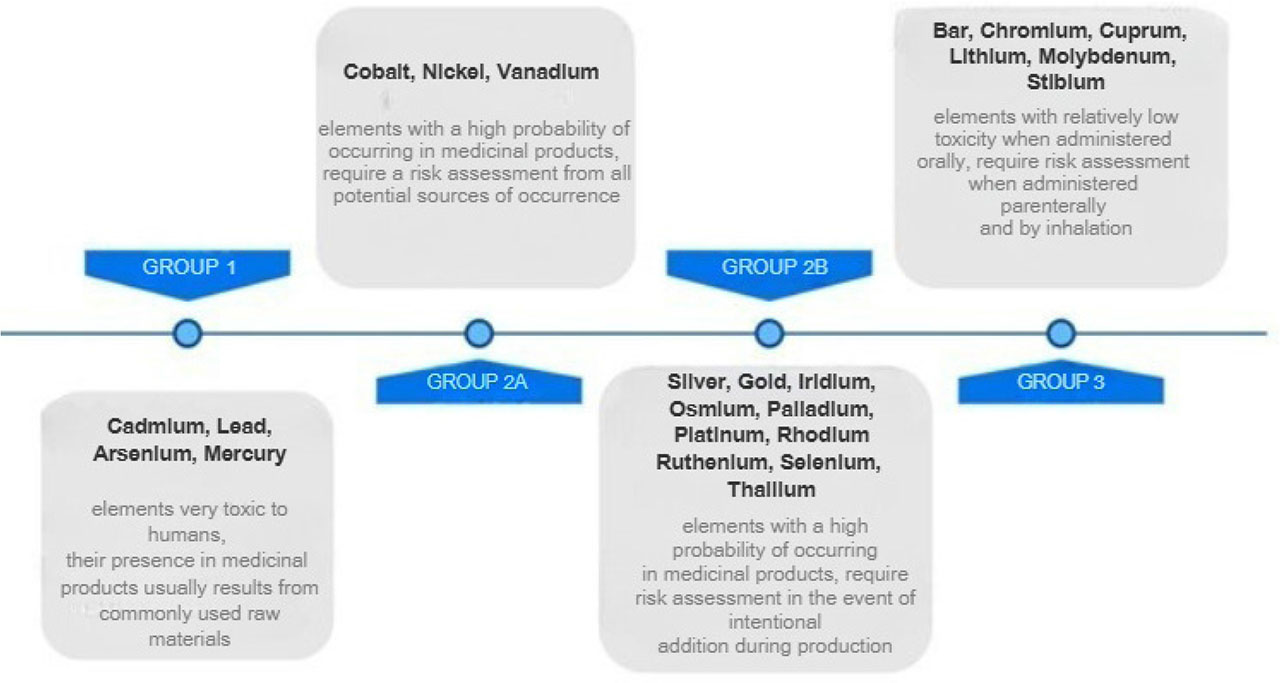
Figure 1.
Division of elemental contaminants according to ICH Q3D guidelines [according to 21]
4. Food contaminants
The main source of human exposure to heavy metals is food. Contamination of food and medicines can be reduced by following Good Manufacturing Practices and maintaining proper manufacturing processes [23]. Fish and marine shellfish are foods that contain detectable traces of elements, including mercury.
Mercury can occur in metallic form and as an organic or inorganic compound. Organic mercury compounds that have an alkyl group are the most toxic. These include ethylmercury, phenylmercury and methylmercury. They are mainly absorbed from the gastrointestinal tract and then deposited in the brain, kidneys and liver. Accumulation of these compounds in the hair or skin can also occur. A particularly dangerous mercury compound is methylmercury, which can penetrate the blood-placental barrier. This is a very dangerous phenomenon, because the accumulation of mercury in the tissues of a fetus can lead to neurological diseases in the child in the future. Elimination of organic mercury compounds from the body takes place through defecation. Inorganic mercury compounds are mainly absorbed through the gastrointestinal tract and are excreted in the feces or urine. After entering the body, inorganic mercury compounds accumulate in the kidneys or liver, where they bind to metallothionein. In cases of poisoning with these compounds, the kidneys and central nervous system are considered critical organs [24,25,26].
5. Mercury in the body
In Poland, there are 2 main causes of Hg exposure: consumption of fish or seafood rich in this element, and contact with products that are preserved using mercury compounds to inhibit the growth of microorganisms in them (e.g., in cosmetics) [27]. The effects of mercury on the human body can be considered by analyzing the changes it causes in key systems. In the case of the cardiovascular system, exposure to methylmercury in a toxic manner primarily results in elevated blood pressure, atherosclerosis, aggregation of thrombocytes, increased concentrations of vasoconstrictors and myocardial infarction. Previous studies also show an increased risk of hypertension when eating fish from water bodies exposed to high concentrations of Hg from close industrial areas. An important toxic effect on the body within the circulatory system, is the risk of hypercoagulability and alteration of the structures of the vessel-building protein fibrin, which can have a significant impact on the onset or further development of possible cancer [28].
Analyzing the effects of mercury in the urinary system The greatest exposure in the urinary system to mercury is in the proximal tubules. Mercury toxicity to the urinary system is associated with renal tubular necrosis, as well as autoimmune glomerulonephritis. Reduced renal fluid flow, decreased eGFR, and increased excretion of high molecular weight proteins are found in Hg poisoning [29]. Mercury immunotoxicity is mainly autoimmune disorders and immunosuppression. Experimentally administered HgCl2 increases the levels of IgG and IgE class antibodies, activation of B and T lymphocytes, and disruption of cytokines. Mercury can also suppress immune responses by inhibiting the action of Th1 helper lymphocytes by enhancing the response of Th2 lymphocytes, thereby reducing the body’s immune response to the pathogen [30].
Mercury also has a highly dangerous effect on the CNS. Once mercury enters the human body, it causes major changes in the nervous system, which is due to its ability to penetrate the blood-brain barrier. The disorders that affect the CNS as a result of mercury exposure are primarily: changes in the active transport of substances to neurons, disorders in the secretion of dopamine, GABA, acetylcholine, serotonin, norepinephrine, as well as poorer blood supply to the brain and cerebellum. Neuronal damage resulting from methylmercury poisoning is caused by inhibited uptake by astrocytes of cystine and cysteine, which are precursors in glutathione biosynthesis [31].
By affecting the endocrine system, mercury disrupts steroidogenesis in the subthalamic-pituitary-adrenal, subthalamic-pituitary-ovarian/ovarian and hypothalamic-pituitary-thyroid axes. Accumulation of organic and inorganic mercury compounds occurs mainly in the pituitary gland, adrenal glands, testes, ovaries and thyroid gland. Previous studies have shown that concentrations of hormones such as FT4, FT3 and FT decrease with increasing mercury exposure [32,33]. The toxic effects of mercury also occur in the reproductive system. Exceeded mercury exposure with regard to the reproductive system in both men and women has been linked to the occurrence of birth defects, impotence, and abnormalities in sperm morphology. In women, on the other hand, abnormalities in the menstrual cycle have been noted, as well as an increased number of miscarriages in women whose partners have been exposed to mercury vapor over a long period of time. Children born may develop severe brain damage, walking and speaking problems, cardiovascular disorders, hearing loss, and kidney disease [34,35]
6. Mercury accumulation in fish organisms
Mercury occurs in aquatic ecosystems as a result of various activities, including human activities - the use of pesticides containing this element in agriculture is not negligible here. Human activities transfer mercury to groundwater through the soil layer, and mercury-rich industrial waste enters surface water through surface runoff. Mercury can also appear in aquatic ecosystems from natural causes - by being suspended in the atmosphere due to industrial emissions.
Mercury in metallic form, which is present in rainwater, is oxidized to Hg2+. In water bodies, under the influence of chemical reactions and bacterial action, methylmercury and dimethylmercury are formed. The methylation process amplifies mercury’s ability to penetrate biological barriers. This results in a significant accumulation of methylmercury in marine organisms, especially fish. Methylmercury is absorbed by fish through the bronchi or with food. The older the fish, the higher the methylmercury content in its body. This is due to the long half-life of this compound in fish. Predatory fish will also contain higher amounts of mercury, as they feed on smaller fish that are already contaminated with this element. The flesh of predatory fish can even contain more than 1mg of methylmercury per kilogram of body weight [26]. The toxic effects of Hg in the human body will vary depending on the type of exposure to the element - a distinction can be made here between elemental, inorganic or organic exposure. Exposure to inorganic and organic mercury can lead primarily to developmental toxicity, immunotoxicity, neurotoxicity, hepato- and nephrotoxicity, cytotoxicity disrupting the entire homeostasis of endocrine systems [36].
Most of the toxic effects mentioned also depend on factors such as the time and dose of exposure to Hg, the form of mercury, and the age and sex of the exposed person. Both MeHg and Hg in vapor form are highly reactive and interact mainly with (-SH)-containing proteins in the human body. MeHg exerts toxic effects by modulating protease activity; MeHg affects several biological processes: increases lipid peroxidation, generates reactive oxygen species (ROS), reduces cell membrane integrity, alters cell signaling and effects on mitochondria, alters DNA repair and immunomodulatory effects, affects Ca2+ regulation, causes glutamate and calcium dyshomeostasis, and alters DNA methylation, which in turn has adverse effects on the human body.
The levels of mercury contained in fish bodies vary depending on the species of fish. Mercury concentrations in carnivorous fish are higher than in omnivorous species. The highest mercury concentrations are found in long-lived fish predators (such as sharks). This is related not only to the fish’s diet itself, but also to their lifespan or lifestyle (mode with aquatic migrations). For example, species that live mainly on the bottom of reservoirs are usually characterized by higher levels of methylmercury in the body. Water temperature is also significant in methylmercury uptake. Previous studies have shown that an increase in temp. by as little as 1 degree Celsius increases the accumulation of this compound by 3% to 5%. Taking into account the properties of water in the analysis of methylmercury accumulation, it has also been shown that a constant level of its salinity is important, because due to such fluctuations, more toxic forms of mercury persist in the water, making it difficult to eliminate harmful compounds from the fish’s body [26].
Both wild-caught and farmed fish are excellent sources of long-chain omega-3 fatty acids, such as EPA and DHA, which play a crucial role in the prevention of cardiovascular diseases and in supporting proper nervous system function. However, farmed fish are typically fed diets enriched with fish oil and fish protein, resulting in generally higher and more consistent levels of omega-3 fatty acids in their flesh.
In contrast, the omega-3 content in wild fish can vary significantly, depending on factors such as the fish’s developmental stage, food availability, and the season in which it is caught. A notable example is wild salmon, which, during their upstream spawning migration, utilize stored fat as a primary energy source while significantly reducing food intake. As a result, their lipid composition - including omega-3 fatty acid levels - can undergo substantial changes depending on the timing of harvest [37].
7. Mercury levels in fish across geographic region
Mercury concentrations in fish also vary by geographic region. A study was conducted covering 26 countries with 40 water bodies. The highest levels of mercury were recorded in regions with industrial mines (e.g. Minamata) and natural mines (e.g. Cinnabar) located in the Mediterranean, as well as near volcanic springs near Madeira. Studies in China have found that mercury present in fish from water bodies there, accumulates at low levels, but some deviations have been noted. China’s terrestrial aquatic ecosystems are abundant in fish saturated with high concentrations of mercury in the north of the country. In contrast, low concentrations have been reported in the south, which may confirm one reason for the accumulation of the element in fish Th- mercury emission concentrations are highest in northern China [38].
7.1. Africa
Africa is a continent where fisheries play a vital role in ensuring food security and access to high-quality protein. Fish account for approximately 32% of total animal protein consumption, providing not only essential micro- and macronutrients but also long-chain unsaturated fatty acids that are critical for proper physiological function, particularly of the nervous system. Although mercury emissions in Africa are estimated at around 330 tons annually, Hg concentrations in aquatic organisms on the continent remain relatively low. These concentrations largely depend on the amount of mercury available for uptake in a given aquatic ecosystem, as well as the efficiency of bioaccumulation and biomagnification of Hg across trophic levels in the food chain. Factors such as waterbody characteristics, sediment type, pH, temperature, and the structure of the trophic network influence an ecosystem’s ability to convert inorganic mercury into its toxic methylated form—methylmercury (MeHg) [39].
A global study found that the greatest health concerns related to seafood consumption pertain to three specific populations: women and infants living in gold mining areas who rely heavily on locally caught freshwater fish; residents of Arctic regions whose diets include marine mammals; and coastal populations—particularly those along the Pacific and Mediterranean Seas—who are likely to consume commercially sourced seafood. Among women and infants, average mercury biomarker levels indicated MeHg intake several times higher than the threshold considered by WHO and FAO to pose minimal risk for neurotoxicity. Arctic residents also exceeded the reference level for MeHg considered safe with respect to neurotoxic effects. The third group, comprising of coastal populations, exhibited the lowest average Hg biomarker levels among the three groups—either near or only slightly above the reference level [40].
7.2. Mediterranean Sea
Fish caught in the Mediterranean Sea are characterized by some of the highest mercury concentrations among studied marine regions. An analysis covering 36 fish species revealed that many, particularly high-trophic-level predatory species, exceed the 0.46 μg/g wet weight threshold—considered a warning level for mercury exposure. Particularly concerning values have been recorded in the western part of the basin, especially in the Tyrrhenian Sea, the Adriatic Sea, and along the coasts of northwestern Africa and Italy. Eastern areas, such as the Aegean and Black Seas, show lower mercury concentrations, likely due to differences in pollution inputs and food web structures. Elevated mercury levels in the Mediterranean are also associated with local emission sources and the limited water exchange characteristic of this semi-enclosed sea [41].
7.3. Caribbean Sea
In the Caribbean Sea, mercury concentrations in fish vary widely depending primarily on species and trophic level. A study analyzing 39 fish families found that several species—such as yellowfin tuna, mahi-mahi, and red snapper—have average mercury levels below 0.22 μg/g, which are considered safe for consumers. However, large predatory fish such as barracuda, frequently exceed the warning threshold, raising public health concerns regarding their local consumption. Approximately 26% of all analyzed species surpassed the 0.46 μg/g level. This region is particularly relevant from an exposure standpoint, as fish consumption is widespread and environmental monitoring is often limited [42].
7.4. Indian Ocean
Fish from the Indian Ocean—particularly from northern regions—are noted for elevated mercury levels, especially among large pelagic predators. Swordfish from the northern Indian Ocean have shown average mercury concentrations of approximately 0.9 ± 0.1 μg/g, significantly exceeding recommended safety thresholds. By comparison, the same species from the southern Indian Ocean exhibit lower levels (around 0.6 ± 0.1 μg/g). This variation may be attributed to stronger anthropogenic pollution sources in the northern part of the ocean and higher biomass production in warmer tropical waters. Species such as marlin and sharks frequently exceed 1.0 μg/g, posing a clear health risk for consumers [43].
7.5. Africa (Freshwater and Estuarine Waters)
In Africa’s inland and estuarine waters, despite generally low average mercury concentrations, considerable variability has been observed due to ecological and trophic differences. A study involving 16 fish families found that approximately 44% of genera exceeded the 0.22 μg/g threshold, with certain predatory species—such as pike, tigerfish, and some catfish—reaching or surpassing 0.46 μg/g. These levels may be influenced by both natural mercury sources (e.g., geochemical activity) and local human activities, including pesticide use, mining, and overfishing. In many areas, mercury monitoring remains limited, hindering comprehensive risk assessment for local populations [44].
7.6. South America (Amazon, Orinoco, La Plata River Basins)
The Amazon and other South American river basins represent areas of particular concern regarding mercury contamination, mainly due to widespread gold mining using mercury amalgamation. Among the 36 fish families analyzed in the region, 17 exhibited average mercury levels above 0.46 μg/g. The highest concentrations were found in predatory species such as piranha, dorado, and surubí. Methylmercury accumulates up the food chain, and local communities that traditionally rely on fish as a dietary staple are especially vulnerable to chronic mercury poisoning. Environmental challenges such as dam construction and deforestation further exacerbate the issue [45].
7.7. Asia (China and Other Freshwater Regions)
Available data from Asia—particularly China—indicate relatively low mercury concentrations in freshwater fish, even in large-scale reservoirs such as the Three Gorges Reservoir. In most species studied, mercury levels did not exceed 0.22 μg/g. These lower values may reflect national policies aimed at reducing industrial emissions and implementing stricter water quality regulations. Nonetheless, exceptions exist in localized areas where industrial and agricultural activities contribute to elevated mercury levels, especially in closed water systems with limited circulation [46].
7.8. Canada and Scandinavia (Lakes and Rivers)
In Canada and Scandinavian countries, mercury levels in fish have been extensively monitored since the 1970s, allowing for the observation of long-term trends. Data from Canada—comprising over 300,000 records of mercury concentrations in fish—show a general decline in Hg levels across many species. This reduction is largely attributed to the decrease in both domestic and transboundary mercury emissions. Similar downward trends have been observed in Sweden, Norway, and Finland, where mercury concentrations in species like northern pike have significantly decreased over recent decades. Exceptions remain in certain sensitive lakes with low buffering capacity, where mercury levels remain elevated despite reduced emissions [47].
7.9. United States (Northeastern region, lakes and rivers)
In the northeastern United States, mercury levels in fish show a mixed pattern. While many lakes have demonstrated a decline in mercury concentrations since the 1990s, others—especially acidic lakes or those rich in dissolved organic matter—have not experienced such improvements. In some cases, mercury levels in species like largemouth bass have remained stable or even increased. These findings suggest that, despite reductions in atmospheric mercury deposition, fish mercury levels can persist due to factors such as climate change, which may enhance mercury methylation and remobilize contaminated sediments. This highlights how ecological processes can delay ecosystem responses to decreased pollutant emissions [48].
As it relates to game animals, mercury may also be present in their bodies if the cartridge design was based on mercury compounds when shot. A study based on an analysis of the accumulation of this element in wild animals showed that the highest concentrations of mercury from the cartridge used are found in the kidneys and liver, while the lowest concentrations are found in the muscles. Mercury can also be found in mushrooms. The concentration of this element depends on the species of fungus and the amount of mercury in the medium [49].
An experimental study conducted by Højbjerg et al. [..] using an animal model demonstrated that a high-fat diet—where fats accounted for approximately 50% of total caloric intake—resulted in reduced absorption of methylmercury (MeHg) and mercuric chloride (HgCl2) compared to a low-fat diet containing only 5% fat. These findings suggest that a high dietary fat content may decrease the bioavailability of certain mercury compounds, potentially playing a protective role in mitigating mercury toxicity in living organisms [50].
8. Mercury in dietary supplements and medicinal products
Due to the course of the production process and environmental pollution of mercury compounds, it is virtually impossible to obtain preparations completely free of mercury. For this reason, appropriate regulations have been created, specifying the maximum amounts of mercury in these preparations [17].
For dietary supplements, the highest permissible level of mercury in dietary supplements is 0.1 mg/kg fresh weight. For the same element, for fish meat, the standards are 0.5 mg/kg fresh weight or 1 mg/kg fresh weight, depending on the species of fish. Thus, the permissible level of mercury contamination in fish products is up to 10 times higher than that in dietary supplements [19].
Limits for mercury contaminants that may be present in medicinal products are included in the ICH Q3D guidelines [21]. The ICH division of elemental contaminants assigns mercury to Class 1, whose elements are characterized by very high toxicity. The route of administration of the drug has also been considered when setting permissible levels of mercury in medicinal products. The ICH Q3D guidelines include established permissible daily doses (PDEs) for mercury. In addition, based on the established PDEs, the permitted concentrations of mercury that can be found in medicinal products have been developed [51].
Some EU countries, e.g. Finland and Sweden, are characterized by intakes that are much higher than those in other member states. According to the GEMS/Food Consumption Cluster Diets, fish consumption in these countries oscillates between 35g per person per day (marine fish) and about 9.1g per person per day (freshwater fish). In comparison, shellfish consumption is about 5.1g per person per day, with France holding the record for consumption with an average of 6.8g per person per day [52].
The number of publications on the analysis of mercury content in dietary supplements containing fish oil or other fish oils is not large. In their work, Smutna et al [53] analyzed the content of mercury, methylmercury and organic impurities in capsules containing marine fish oil. The range of variation in mercury content in these preparations was between 0.013–2.03 μg/kg, and the amount of methylmercury in all capsules was below the detection level. The results in the paper by Brodziak et al. were much lower and were in the range of 0.02–0.24 μg/kg. According to the authors of the above publication, none of the fish oils tested exceeded acceptable levels of mercury content, and their consumption was considered safe and healthy [31].
Foran et al [54] studied mercury levels in OTC preparations containing fish oil. In 3 of the 5 preparations, the mercury content was below the detection level, while in the other 2 preparations it was at the minimum level and did not exceed acceptable standards. Koller et al [55] also tested the heavy metal content of over-the-counter preparations that contained fish oil or other fish oil. In all of the samples tested, heavy metal levels were at minimum levels and were considered insignificant. Studies on mercury levels were also conducted on other types of dietary supplements. The mercury content of dietary supplements sourced from Polish pharmacies was studied in their work by Socha et al [56].
Of the dietary supplements tested, none exceeded the allowable 100 μg/kg. The mercury content of all the studied preparations ranged from 0.1–47.99 μg/kg, and the average mercury content was 5.36 μg/kg. These results are much higher than those obtained in the work under review, whose arithmetic mean was 0.1 μg/kg and the range of variation was 0.02–0.24 μg/kg. Mercury levels in dietary supplements available on the Lebanese pharmaceutical market were studied by Korfali et al [57]. Mercury content was found in all samples tested, but it did not exceed acceptable limits. Comparable results were obtained in their work by García-Rico et al [58], who studied the mercury content of dietary supplements available in Mexico.
9. Discussion
Dietary supplements and medicinal preparations containing fish oil or other fish oils in their composition, commonly available in Polish pharmacies, have also been studied in Poland. The preparations, containing in their composition fish oil, had a statistically higher content of mercury in relation to the preparations, which contained shark liver oil by an average of 0.06 μg/kg [31]. In the study in question, mercury was detected in all formulations tested, but it was at a minimal level. Hypothetically, analyzing the dosage and calculating from it the daily, weekly, monthly and annual intake of mercury that the consumer is exposed to when using the tested preparations was 0.00025 μg, while the annual intake was 0.09 μg. The highest daily intake was recorded for the Moller’s Norwegian trance formulation and was 0.00076 μg. In contrast, the lowest daily intake was observed with the Life shark liver oil formulation and was 0.00001 μg. The percentage of PTWI (Provisional Tolerable Weekly Intake) for inorganic mercury was also calculated. The PTWI value for inorganic mercury is 4 μg/kg body weight. Supplementation in the formulations analyzed averaged 0.04% of the PTWI, and none of the formulations studied exceeded the standard [31].
Contaminants that may adversely affect human health include not only methylmercury, but also lipophilic organic compounds such as dioxins and polychlorinated biphenyls (PCBs). These substances can enter the marine food chain and accumulate in fish oils. However, their concentrations are generally much lower compared to methylmercury levels and therefore pose a comparatively lower toxicological risk—though their long-term effects should not be overlooked. The issue of methylmercury accumulation is particularly pronounced in predatory fish species such as sharks and swordfish, which occupy high trophic levels in the marine food web. Due to biomagnification, mercury concentrations in their tissues can reach levels around 1 μg/g wet weight, significantly exceeding the safety limits established by the World Health Organization (WHO) and other public health agencies [5].
10. Conclusions
In conclusion, the market for dietary supplements is developing rapidly. With reference to the cited works, it can be concluded that preparations containing fish oil and other fish oils, which are available on the pharmaceutical market, are safe for the health of patients. The permissible standards for mercury content set by the European Commission are not exceeded. Mercury contained in dietary supplements containing fish oil and other fish oils does not exceed PTWI limits.
However, it should be borne in mind that quality control of dietary supplements before they enter the Polish market is not required, and the dynamic pace at which the market is developing does not allow for sufficient control of already registered measures. Stricter legal requirements for dietary supplements are necessary, and testing of preparations available on the market should be as frequent as possible to ensure the safety and health of consumers.
Notes
[1] Contributed by Author contribution
Concept and study design – Jerzy Stojko, Aleksandra Moździerz, Magdalena Kurkiewicz, Anna Rzepecka-Stojko. Project supervision – Jerzy Stojko, Aleksandra Moździerz. Literature review – Aleksandra Moździerz, Magdalena Kurkiewicz, Anna Rzepecka-Stojko. Data analysis and interpretation – Jerzy Stojko, Aleksandra Moździerz, Magdalena Kurkiewicz, Anna Rzepecka-Stojko. Writing – review and editing – Aleksandra Moździerz, Magdalena Kurkiewicz, Anna Rzepecka-Stojko. Final proofreading – Jerzy Stojko, Aleksandra Moździerz, Magdalena Kurkiewicz, Anna Rzepecka-Stojko.