
INTRODUCTION
Cerebral palsy (CP) is one of the leading causes of childhood disability. Its global prevalence is estimated at approximately 2 to 3 per 1000 live births, in low-income countries, this may be considerably higher, with reports of up to 4.4 per 1000 in some regions. In addition to this prevalence, challenges associated with primary deficits (such as motor impairments) and secondary complications (such as sensory and cognitive alterations), combined with unfavourable contextual factors, contribute to low levels of social participation among children with CP1,2,3,4.
Social participation in children with CP is closely influenced by contextual and environmental factors, including family setting, access to services, and the attitudes, beliefs, and values of the community. From an ICF (International Classification of Functioning, Disability and Health perspective, these elements may act as facilitators or barriers to everyday functioning, independence, and quality of life in children with CP5.
In response to this reality, the literature has documented several therapeutic approaches focused on modifying the context to support social participation in this population. In 2011, Darrah, Law, Russell, and Rosenbaum published the formal description of Context Therapy as a paediatric rehabilitation approach focused on modifying task demands and/or environmental conditions in order to achieve functional goals defined by the family, without directly intervening on the child’s motor capacities. This intervention is characterised by its focus on the family, the child, and their functional objectives, ideally implemented in natural settings with therapeutic support. Based on dynamic systems theory, the ICF, and family-centred practice, it differs from traditional rehabilitation approaches mainly because it does not focus on developing skills or changing the child’s body structures and functions, but rather on identifying and modifying environmental barriers and facilitators. Since 2016, evidence reviews and practice guidelines have incorporated Context Therapy within interventions oriented towards activity and social participation, while gaps have been identified regarding its long-term impact, the generalisation of results, and its cultural adaptation in different clinical contexts6,7,8.
In this review, CBIs are defined as rehabilitation strategies designed and delivered in natural environments such as the home, school, or community, that explicitly target activity and social participation outcomes through the modification of tasks, environments, or both. The operational criteria for inclusion as a context-based intervention were implemented in everyday settings, goal setting in collaboration with the child or caregiver with goals focused on social participation, and adaptation of tasks or environments with or without the use of technology rather than exclusively aiming to remediate impairments. This definition encompasses Context Therapy and other approaches such as caregiver-mediated home programs, school-based goal-oriented training, telerehabilitation with coaching, and technology-supported activities including exergaming and virtual reality.
Although CBIs have been conceptually developed for over a decade, there is still a need to understand how they are implemented in real-world contexts, the challenges involved, and the strategies used to translate this conceptual foundation into practice. This scoping review aims to identify and summarise the available evidence on CBIs designed to enhance social participation and functional performance in children with CP. Guided by the person-centred care (PCC) framework, the review focuses on children with CP, CBIs targeting participation and functionality, and their application within rehabilitation and home or community settings. Accordingly, the review addresses three main questions: (1) What types of CBIs have been implemented for children with CP? (2) In which clinical or community settings have these interventions been applied, and what outcomes and assessment tools have been used to evaluate social participation and functional performance? and (3) What gaps remain in the current evidence regarding the effectiveness, cultural adaptation, and sustainability of these interventions?
MATERIAL AND METHODS
Protocol and registration
This scoping review was conducted in accordance with the Preferred Reporting Items for Systematic Reviews and Meta-Analyses extension for Scoping Reviews (PRISMA-ScR) guidelines9. The protocol was prospectively registered in the Open Science Framework OSF DOI: https://doi.org/10.17605/OSF.IO/ZBNYV10.
Eligibility criteria
This scoping review addressed a population of children aged 0–13 years diagnosed with CP. The review focused on CBIs aimed at improving activity and/or social participation, implemented within natural environments such as the home, school, or community, with or without caregiver involvement and/or technology support. Eligible studies were interventional in design and assessed changes in activity and/or social participation outcomes within this population. Studies were excluded if they involved participants outside the specified age range, lacked a diagnosis of CP, or employed observational designs or any type of systematic review, as these designs do not allow for the direct assessment of intervention effects and therefore fall outside the review’s objective of mapping evidence on implemented and evaluated interventions.
Information sources
The literature search was conducted in the following electronic databases: PubMed, Scopus, web of science (WOS), and EBSCO. The search was limited to articles published between 2014 and 2024 in English or Spanish. A broad and sequential search strategy was used, combining MeSH terms and free-text keywords to maximise the yield of relevant studies. Each researcher was assigned a specific database to execute the search strategy as previously defined by the research team (Table 1). The identified records were imported into the Rayyan screening platform, yielding an initial total of 8367 records. Grey literature sources were not included, as the review focused exclusively on peer-reviewed studies indexed in the selected databases to ensure consistency in methodological quality. The language restriction to English and Spanish was applied due to the linguistic competencies of the research team, allowing for accurate assessment of methodological quality and extraction of data without the need for translation resources to mitigate the potential risk of missing relevant evidence, the reference lists of included studies were manually checked, and citation tracking was performed.
Table 1.
Search strategy used in each database
| Database (number of studies) | Search strategy |
|---|---|
| PubMed (3214) EBSCO (2325) Scopus (1256) WOS (1572) | (((CP) AND (rehabilitation)) AND (context focused intervention)) AND (Context therapy) |
| (((CP) AND (rehabilitation)) AND (participation)) AND (Functional independence) | |
| ((CP) AND (rehabilitation) AND (family) | |
| (((CP) AND (Rehabilitation)) AND (family)) AND (acceptance and commitment therapy) | |
| ((CP) AND (rehabilitation)) AND (home based) | |
| ((CP) AND (rehabilitation) AND (social environment) | |
| (((CP) AND (rehabilitation)) AND (self-help devices)) AND (assistive technology) | |
| ((CP) AND (rehabilitation)) AND (health services accessibility) | |
| ((CP) AND (rehabilitation)) AND (health knowledge, attitudes, practice) | |
| Context-focused intervention AND CP | |
| Context-focused intervention environments AND CP | |
| CP [Title] AND (‘enriched environments’[Title] OR ‘steppingstones’[Title] OR ‘family centered therapy’[Title] OR ‘performance’[Title] OR ‘environment’[Title]) | |
| ‘CP’ AND ‘f words’ | |
| ‘CP’ AND ‘health knowledge’ | |
| ‘CP’ AND ‘health services accessibility’ | |
| ‘CP’ AND (‘health technologies’ OR ‘self-help devices’) |
Evidence selection
The methodological phases were predefined in the registered protocol of this review. In general, the research process was organised into four stages: evidence selection and coding, data extraction, appraisal of levels of evidence, and synthesis of findings.
For the selection process, duplicates were removed, resulting in 3759 records. Two independent reviewers then screened titles and abstracts according to the previously established inclusion and exclusion criteria. After this first screening, 14 studies met the eligibility requirements and were included in the second phase, which involved full-text review based on the same criteria. A third reviewer was consulted to resolve any discrepancies during this phase.
Once the final studies were selected, the 14 articles were evenly distributed among reviewer pairs to extract general information on the available evidence concerning CBIs in children with CP, with a focus on functional performance and social participation outcomes.
Critical appraisal of evidence and synthesis of results
The data obtained were recorded in a Microsoft Excel® spreadsheet and subsequently transferred to Microsoft Word®. The methodological quality of the selected studies was appraised and classified according to the Oxford Center for Evidence-Based Medicine (OCEBM) Levels of Evidence for interventional studies11. This framework was chosen because it provides a widely recognised and practical hierarchy for appraising heterogeneous research designs, which is particularly relevant in scoping reviews where randomised trials are not always available. Two reviewers conducted the appraisal independently, and disagreements were resolved by consensus. In addition, information on the statistical approaches reported in the primary studies (e.g. descriptive or inferential analyses, reporting of effect sizes, or adjustments for confounders) was extracted to contextualise the methodological rigor, although no quantitative synthesis was intended.
The synthesis of results followed the PRISMA-ScR checklist of Tricco9 and was carried out in four phases. First, the general characteristics of the included studies were summarised in tables, including title, language, study design, level of evidence, study objectives, and sample characteristics. Second, the studies were organised according to the components of the ICF and grouped by level of evidence. Third, the specific details of each intervention were extracted and summarised, highlighting the type of CBIs, the clinical or community setting in which it was applied, and the outcomes related to social participation and functional performance. Finally, a narrative synthesis was developed to provide a descriptive analysis of the information extracted, identify patterns and gaps across studies, and highlight the variability of methodological and analytical approaches.
RESULTS
A total of 8367 records were identified through the initial database search. After removing 4608 duplicates, 3759 articles remained for title and abstract screening. Of these, 3745 were excluded for not meeting the inclusion criteria. Subsequently, 14 full-text articles were assessed for eligibility, all of which were included in the final synthesis, as illustrated in Figure 1.
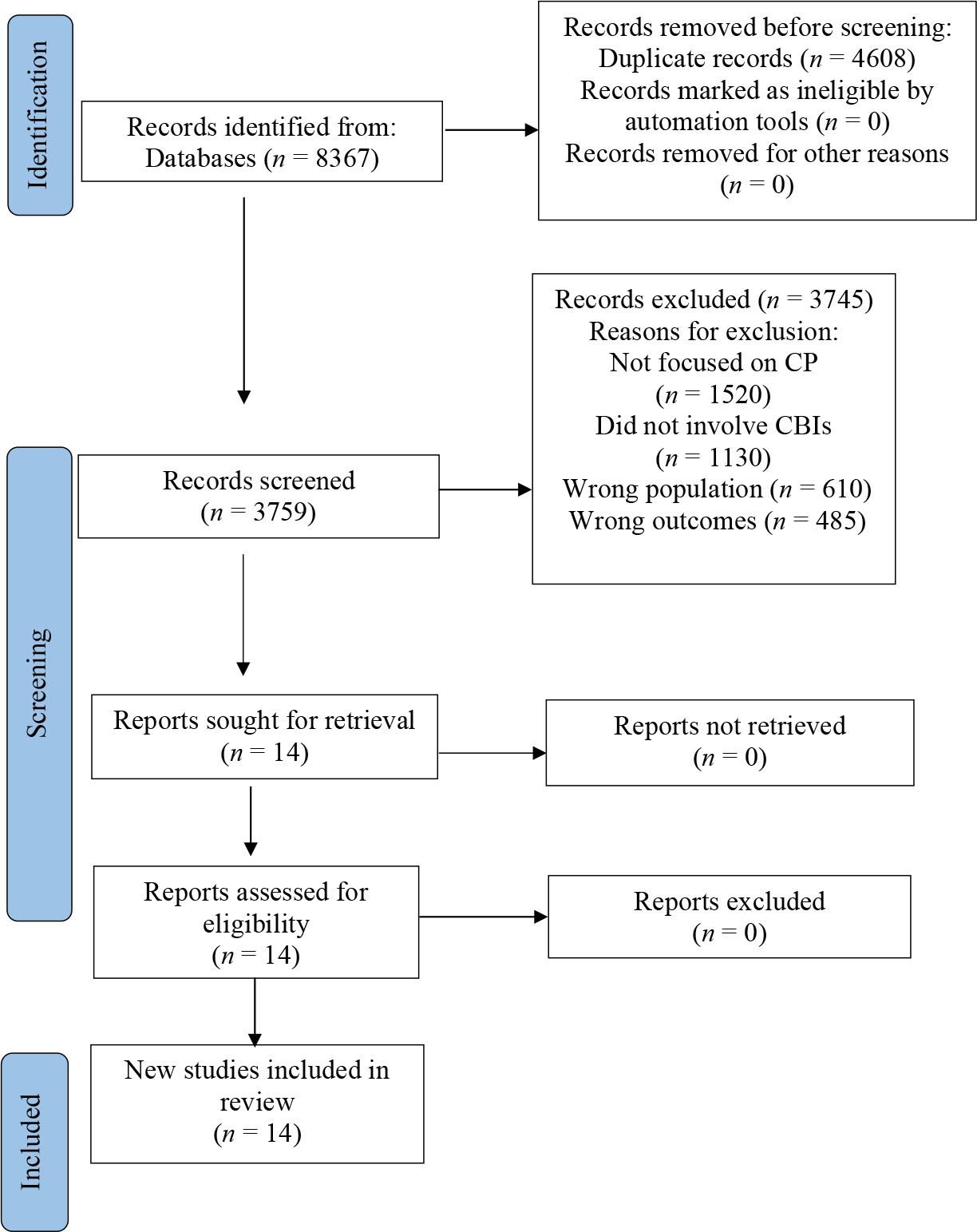
Figure 1.
PRISMA flow diagram for study selection through database searching. CP - cerebral palsy, CBIs - context-based interventions
The geographic distribution of the studies included is presented in Figure 2. Of the total studies included, 35.7% were conducted in North America, 28.5% in Asia, 28.6% in Europe, and 7.1% in Oceania. The predominant study designs were randomised controlled trials and pre-post pilot studies, most of which were carried out in home-based settings with active caregiver involvement, as detailed in the summary of study characteristics presented in Table 2.
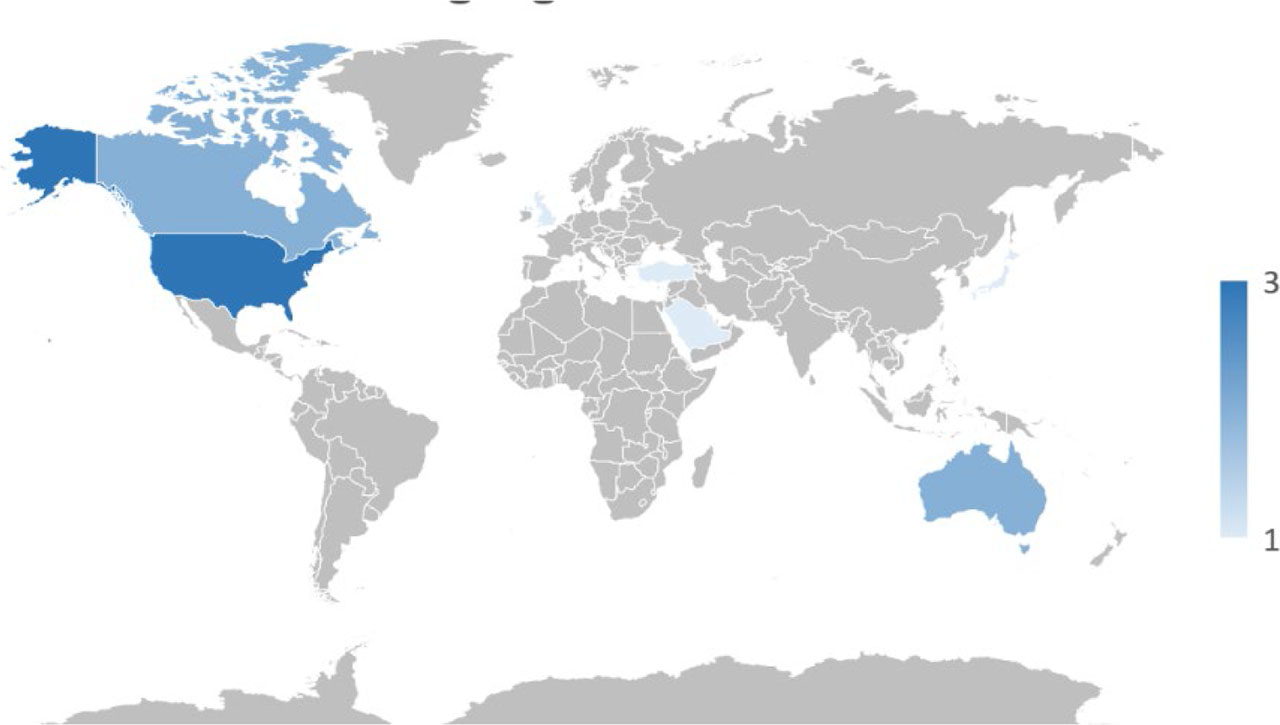
Figure 2.
Geographic distribution of studies included (own source)
Table 2.
General characteristics of the included studies
| Author | Country | Study design | Aim | Type of CBIs | Sample age | Number of participants | ICF components addressed | Outcome measures | Level of evidence (CEBM) |
|---|---|---|---|---|---|---|---|---|---|
| AlSaif et al. 12 | Saudi Arabia | RCT | To examine the effects of Nintendo Wii Fit training on motor performance in children with spastic CP | Home-based use of Nintendo Wii Fit | 6–10 years | 40 (20 intervention/20 control) | Activity, Motor Function | BOTMP 5:6,mABC-2, 1MWT | 2b |
| Chiu et al. 13 | Taiwan | Pre–post feasibility study | To assess the feasibility and clinical benefits of home-based Wii Fit training in children with CP | Home-based Wii Fit training supervised by parents and therapists | 6–12 years | 20 | Activity, Motor Function, Participation | APS, Muscle strength, 6MWT, 10MWT | 4 |
| Chen et al.14,15 | USA | Pilot study (case series) | To evaluate the feasibility and effectiveness of a low-cost home-based VR system (Super Pop VR) for children with CP | Home-based virtual reality (Super Pop VR) supervised by caregivers | 7–10 years | 3 children with CP | Activity, Motor Function, Participation | BOT-2, PMAL, Reaching kinematics (VR), | 4 |
| Chan-Víquez et al.16 | Canada | Mixed-methods case study | To evaluate the feasibility, motor outcomes, and user experiences of the Bootle Blast home-based videogame for upper limb rehabilitation in children with hemiplegic CP | Home-based goal-directed therapy using Bootle Blast | 8–13 years | 4 children with hemiparesis | Activity, Participation, Motor Function | AHA, BBT, COPM, CHEQ, Grip Strength, ROM | 4 |
| Farr et al. 17 | UK | RCT | Feasibility of virtual reality rehabilitation in children with CP | Home-based virtual reality therapy with family involvement | 5–16 years | 30 | Activity, Participation, Motor Function | BOT-2, GMFM-66, GAS SDQ, TUG | 2b |
| Goswami et al. 18 | India | RCT | To assess home-based activity therapy in children with spastic diplegic CP | Home-based functional activity therapy supervised by caregivers | 5–12 years | 59 (30 intervention/29 control) | Activity, Participation, Motor Function | 6MWT, 10MFWT, CP-QoL, GMFM-88, MAS, MTS | 2b |
| Hung et al.19 | USA | Quasi-experimental (pre-post) | To evaluate home-based bi-manual training in children with unilateral CP. | Intensive home-based bimanual training (H-HABIT) led by caregivers | 2.5–4.5 years | 7 | Activity, Motor Function, Participation | Bimanual coordination (kinematic analysis), joint motion | 4 |
| Kassee et al.20 | Canada | Pilot study | To compare home-based Wii and resistance training in children with hemiplegic CP | Wii group: home-based Nintendo Wii use | 7–12 years | 6 (3 Wii/3 resistance) | Activity, Motor Function | ABILHAND-Kids, MA2, Grip Strength (dynamometer) | 3b |
| Mattern-Baxter et al.21 | USA | RCT | Comparing low- versus high-intensity home-based treadmill training on walking in children with CP | Home-based treadmill training | 14–32 months | 19 (10 LI/9 HI) | Activity, Motor Function | 1MWT, 10MWT, FMS, GMFM-66 D/E, PDMS-2, PEDI, Step Watch | 2b |
| Preston et al.22 | UK | Pilot study | To assess the feasibility and effects of computer-assisted arm rehabilitation games in schools for children with CP | Computer-assisted robotic games in school | 6–12 years | 11 (9 schools) | Activity, Motor Function | ABILHAND-Kids, COPM, CKAT (kinematics: speed, smoothness, accuracy) | 3b |
| Preston et al.23 | UK | Pilot RCT | To assess home-based rehabilitation gaming for arm function in children with spastic CP. | Robotic rehabilitation games at home post-botulinum toxin | 5–12 years | 15 (8 intervention/7 control) | Activity | ABILHAND-Kids, COPM | 2b |
| Reedman et al.24 | Australia | RCT | To evaluate the effects of participation-focused therapy on goal performance and physical activity in children with CP | Participation-focused therapy (ParticiPAte CP): home/community-based individualised intervention | 8–12 years | 37 (18 intervention/19 control) | Activity, Participation, Environmental Factors | COPM (performance/satisfaction), Accelerometry (MVPA), BPPA-Q, PEM-CY | 2b |
| Sel et al.15 | Turkey | Triple-blind RCT | To evaluate the effectiveness of a telerehabilitation-based structured home program in pre-school children with CP | Structured home program with telerehabilitation support | 3–6 years | 43 (23 intervention/20 control) | Activity, Participation, Motor Function | GMFM-66, COPM, GAS, PEDI | 1b |
| Wang et al.25 | Taiwan | Pilot RCT | Comparing home-based Nintendo Wii-augmented constraint-induced therapy with conventional CIT in children with CP | Conventional CIT versus CIT with exergaming (Wii) at home | 5–12 years | 18 (10 CIT-Wii/8 CIT) | Activity, Participation, Motor Function | ABILHAND-Kids, BOT-2,Top, PSI-SF | 2b |
[i] 1MWT - one-minute walk test, 6MWT - six-minute walk test, 10MFWT - ten-meter fast walk test, BOT-2 - Bruininks–Oseretsky test of motor proficiency – second edition, BOTMP - Bruininks–Oseretsky test of motor proficiency, CBIs - context-based interventions, CFCS - communication function classification system, COPM - Canadian occupational performance measure, CP - cerebral palsy - CP-QoL - cerebral palsy quality of life questionnaire - EQ - engagement questionnaire, GAS - goal attainment scale, GMFCS - gross motor function classification system, GMFM-66 - gross motor function measure-66, GMFM-88 - gross motor function measure-88, MACS - manual ability classification system, MAS - modified ashworth scale, mABC-2 - movement assessment battery for children – second edition, MTS - modified Tardieu scale, PEDI - paediatric evaluation of disability inventory, PMAL - paediatric motor activity log, PMAL-R - revised paediatric motor activity log, PEM-CY - participation and environment measure for children and youth, Top - test of playfulness, WeeFIM - functional independence measure for children.
The studies analysed demonstrate that CBIs, particularly those implemented in home settings with family involvement and supported by technologies such as exergaming and virtual reality lead to improvements in performance, social participation, and quality of life in children with CP.
Most of the studies included outcome measures within the domains of activity like gross motor function measure (GMFM), paediatric evaluation of disability inventory (PEDI), Bruininks–Oseretsky test of motor proficiency (BOT-2), and of social participation like the Canadian occupational performance measure (COPM), cerebral palsy quality of life questionnaire (CP-QoL) and goal attainment scale (GAS). Additionally, some studies assessed environmental or personal factors such as motivation and adherence. The combination of accessible technology, active family involvement, and environmental modifications was commonly identified as a facilitator of positive changes.
Fourteen studies met the inclusion criteria. Evidence was profiled using the OCEBM Levels of Evidence for interventional studies, applied through a pre-specified extraction sheet and independent dual appraisal; disagreements were resolved by consensus. Importantly, the appraisal did not rely on study design alone but also considered basic methodological signals reported by each article (e.g. sample size justification or power, clarity and appropriateness of outcome measures, completeness of statistical reporting, and handling of attrition). On this basis, six studies were randomised controlled trials (Levels 1b–2b), and seven used non-randomised designs (pre–post, feasibility, pilot, or mixed-methods; Levels 3b–4). Overall, methodological rigour was moderate, but heterogeneity in designs and outcomes limited comparability. The general characteristics of the included studies, including design, objectives, outcomes, statistical approach, and level of evidence, are summarised in Table 2.
With respect to analytical approaches, most studies reported descriptive statistics; a minority applied inferential analyses, and only a few explicitly reported effect sizes or adjustments for potential confounders. This variability in analytical rigour should be considered when interpreting the findings and likely contributes to between-study heterogeneity.
Across intervention categories, home-based and caregiver-supervised activity-focused programs generally demonstrated feasibility and achieved outcomes comparable to conventional physiotherapy on several mobility measures18,19,21,22,23,24, whereas exergaming (e.g. Wii-based training or CIT augmented with gaming) was associated with improvements in manual dexterity and bimanual performance (e.g. BOT-2, ABILHAND-Kids), and in some studies with balance and walking capacity12,13,14,17,20,25. Participation-focused approaches (e.g. ParticiPAte CP) showed clinically meaningful gains in goal performance (COPM) and reductions in contextual barriers, underscoring the value of empowering families18,24. Technology-enabled formats (including virtual reality games and telerehabilitation15) were linked to improvements in motor function (e.g. GMFM), self-care (e.g. PEDI), and goal attainment (GAS); several studies suggested a dose–response pattern (e.g. ≥20–30 minutes/day) and highlighted feasibility for children with higher functional limitations (e.g. GMFCS level III). Taken together, strategies that combine technology, family engagement, and environmental adaptations appear promising for improving motor function and social participation; however, standardisation of protocols, dosage, and outcome reporting are needed to strengthen future evidence.
DISCUSSION
This scoping review identified 14 studies addressing CBIs aimed at improving activity and social participation in children with CP aged 0–13 years. These interventions ranged from home-based programs led by caregivers to the use of accessible technologies such as video games, virtual reality, and telerehabilitation. The results indicate a growing trend towards more holistic approaches, adapted to the child’s environment, with active family involvement and supported by accessible home-based technologies.
Interactive technologies such as Nintendo Wii Fit, Bootle Blast, and Super Pop VR have been incorporated into home settings with positive results in motor function, bimanual coordination, and social participation. These tools, in addition to being accessible, offer a playful component that improves adherence to treatment compared to traditional interventions. Improvements were documented using measures such as GMFM-66, ABILHAND-Kids, COPM, and BOT-212,13,16,25,26,27,28.
Despite these benefits, more advanced virtual reality systems face economic and access barriers in low-income regions. However, the development of low-cost, highly adaptable platforms such as Super Pop VR offers a viable alternative, particularly in-home settings29,30,31.
The implementation of home-based programs supervised by caregivers has proven feasible and beneficial. Studies report improvements in mobility, coordination, and functional performance following intensive home-based interventions. However, the evidence suggests that these approaches may require periodic professional support to maximise their effectiveness. This reflects what has been described as the Implementation Paradox, in which context-based or home-delivered programs offer low fixed costs and high accessibility but depend on continuous professional monitoring, training, and feedback to ensure adherence, correct task execution, and sustained outcomes. Consequently, while these interventions are economically attractive and adaptable to low-resource environments, their long-term effectiveness may be constrained by the availability of qualified professionals to provide ongoing coaching and supervision18,20,32,33.
Empowering caregivers through structured training contributes not only to the child’s functional improvement but also to increased motivation and family participation. This aligns with the ICF framework, which emphasises the role of the environment as a facilitator or barrier to participation in this population34.
Participation-centred interventions, such as ParticiPAte CP, demonstrated meaningful changes in functional independence, occupational performance, and quality of life, as measured by the COPM and other participation scales. This type of approach, which centres on the child’s interests and context, emerges as a key strategy for achieving sustainable outcomes. Additionally, increased motivation among participants and their families has been highlighted as a complementary effect of this type of intervention24,35,36.
Telerehabilitation has emerged as a promising alternative for improving access to therapy in regions with geographic or economic barriers. The studies included in this review reported significant improvements in mobility (GMFM-66), self-care (PEDI), and goal attainment (GAS), with outcomes largely comparable to face-to-face therapy and accompanied by high levels of family satisfaction. Nevertheless, these findings should be interpreted with caution given the moderate methodological rigour of the available evidence, as most studies relied on small sample sizes, heterogeneous designs, and predominantly descriptive analyses. Furthermore, the potential impact of telerehabilitation appears contingent upon active caregiver involvement, structured training, and technological feasibility, which may limit generlisability in settings with reduced resources. Future research with larger, well-powered randomised trials and standardised outcome measures is needed to establish the long-term effectiveness, cost-efficiency, and scalability of telerehabilitation in children with CP15,37,38,39.
CBIs, particularly those combining accessible technology, family participation, and environmental adaptations, offer an opportunity to optimise health system resources and promote inclusion of children with CP. Integrating these approaches into primary care and community rehabilitation programs can expand their reach and enhance clinical impact.
Although the summarised evidence is promising, several limitations must be acknowledged. First, the expected variability is present, given that CP is a heterogeneous condition with a wide spectrum of functional impairments, associated comorbidities, and contextual factors that influence outcomes. Second, some studies had relatively small sample sizes and only considered short- or medium-term follow-up, which may limit the robustness of the conclusions regarding the sustainability and generalisation of the observed effects. Third, there is a notable under-representation of studies conducted in low- and middle-income countries, which makes it difficult to generalise the findings to diverse socioeconomic contexts.
It is important to note that, within the context of this scoping review, the OCEBM levels of evidence were applied solely as a mapping tool to illustrate the distribution of methodological rigour and evidence sources among the included studies. This framework was intended to identify structural gaps and highlight areas where more robust research designs are required, rather than to synthesise intervention effectiveness or evaluate risk of bias. Such an application is consistent with the exploratory purpose of scoping reviews, which seek to describe the breadth and characteristics of the available evidence rather than quantify intervention effects.
Our review also has methodological limitations related to the search strategy: only publications in English and Spanish were included, and grey literature was excluded. These factors may have led to the omission of relevant studies and limit the validity of our conclusions regarding the cultural adaptation and sustainability of interventions contextualised in diverse socioeconomic and cultural contexts.
In conclusion, this scoping review provides a general interpretation of the results in relation to the review questions and objectives, identifies trends in context-specific rehabilitation for children with CP, and highlights implications for clinical practice and future research.
CBIs, supported by accessible technologies, caregiver training, and environmental adaptations, show promise for improving participation and functionality. To strengthen the validity of future research, it is recommended that studies employ robust mixed methods approaches with extended follow-up periods, which will broaden the evidence base regarding their effectiveness, feasibility, and scalability across diverse settings.
CONCLUSIONS
CBIs emerge as promising and feasible strategies to enhance functional performance and social participation in children with CP, particularly when implemented in natural environments such as the home and supported by active caregiver involvement. Accessible and low-cost technologies, including interactive video games, virtual reality platforms, and telerehabilitation, offer playful and motivating formats that may improve adherence and allow for greater individualisation of therapy to the needs of each child and family.
However, the available evidence is limited by population heterogeneity, methodological variability, and small sample sizes in some studies. These limitations, along with the scarcity of studies from low- and middle-income countries, restrict the generalisability of the findings and underscore the need for more rigorous research.
Future studies should employ well-powered and methodologically robust designs, with standardised protocols and clearly defined minimum dosages, while incorporating outcome measures aligned with the International Classification of Functioning, Disability and Health. Strengthening evidence in this field is essential to support the systematic integration of CBIs into rehabilitation services, which has the potential to optimise health system resources, promote inclusion, and contribute to sustainable improvements in the participation and daily lives of children with CP and their families.