
1. Introduction
Artificial Intelligence (AI) technologies are rapidly transforming the higher education environment, giving students new opportunities to learn, analyse information and perform academic tasks. Since 2022, with the public release of ChatGPT, AI tools are becoming increasingly accessible and widely used in a variety of contexts, including education. However, despite the ubiquity of these tools, many questions arise about their impact on the learning process, students’ academic performance and the quality of education. This paper explores Lithuanian students’ views on the integration of AI tools in their studies.
The aim of the study is to assess students’ use of AI tools and their attitudes towards their integration in the study process by examining usage across different academic institutions, exploring students’ perceptions and impacts on learning, and identifying key benefits and challenges of AI integration.
The study used methods of scientific literature analysis, quantitative research (questionnaire survey) and statistical data analysis. The study is relevant and timely as AI technologies are changing the traditional paradigm of learning and teaching, and lecturers, students and educational institutions need to adapt to these changes. The understanding of how students use AI tools and the impact these tools have on their learning is essential to effectively integrate these technologies into the study process and to address the potential challenges related to academic integrity, critical thinking and quality of teaching.
The results of this study can be useful both for the academic community seeking to better understand students’ needs and expectations regarding the use of AI tools, and for educational policy makers seeking to develop appropriate guidelines and regulations for the use of AI technologies in higher education. Importantly, the study does not only cover the higher education sector, but also includes vocational training institutions. The findings of the study can also help educational institutions to improve their teaching strategies and curricula in the light of the changing technology landscape and student attitudes.
2. Research Background and Literature Review
2.1 Use of AI tools among students
AI tools are becoming increasingly prevalent in student learning due to their accessibility and ability to answer questions quickly. Research shows that students actively use AI tools in both vocational and higher education, with ChatGPT emerging as the most popular platform (Annuš, 2025; Gesser-Edelsburg et al., 2024; Jereb & Urh, 2024; Metreveli et al., 2025). A Digital Education Council (DEC) survey of 3,839 undergraduate, Master’s and PhD students from 16 countries found that 86% of respondents use AI during their studies: 24% do so daily and 54% at least once a week, indicating a high level of engagement with these technologies (DEC, 2024). Similar patterns were observed in Slovenia, where 24% of students use AI several times a week and 9% almost every day (Jereb & Urh, 2024). In a USA study conducted at a university offering doctoral programs, all 68 surveyed students reported being familiar with ChatGPT (Divekar et al., 2024). In Germany, a survey of 108 students found that 96.4% were aware of ChatGPT, 40.2% used AI more than twice per week for academic purposes, and 17% used it almost daily (Kubullek, Kumaç & Dogangün, 2024). In a vocational and technical college in mainland China (N = 756), 61.4% of respondents reported having prior experience using generative AI (GenAI) tools for learning (Wu, Li & Mo, 2025).
Among the most frequently used tools, ChatGPT (66%), Grammarly and Microsoft Copilot (25% each) stand out, with more than two AI tools used per student on average (DEC, 2024). In addition to these applications, students also use Google Gemini, Claude AI, Perplexity, DeepL and visual content creation tools such as Canva with its AI features DALL-E or Midjourney.
Higher Education. International studies demonstrate a consistent trend in the use of AI in higher education. A DEC study (2024) found that information retrieval is the most popular use case of AI among students, followed by grammar checking, summarising documents, paraphrasing texts, and creating first drafts. A study conducted in Slovenia (N = 258) showed that students most frequently use AI for information retrieval and idea generation, and as many as 86.3% of respondents reported that AI helps them to better understand the content of their studies (Jereb & Urh, 2024). A Hong Kong study (N = 399) revealed positive attitudes towards GenAI in teaching and learning processes, recognising its potential for personalised learning, writing and idea generation support and research analysis (Chan & Hu, 2023). AI tools, particularly LLM models, enable students to review and process large amounts of information more quickly, which speeds up literature reviews and the initial stages of data analysis, allowing more time for deeper thinking and critical evaluation (Chan & Hu, 2023). A study at Bentley University in the USA (N = 68) revealed the active use of AI in academic work and in learning about complex topics (Divekar et al., 2024). A qualitative study in Finland (N = 12) showed that students value ChatGPT as a useful tool for understanding academic concepts and as an additional learning resource that allows them to get quick explanations and help with coursework without waiting for the lecturer’s answers (Fuchs & Aguilos, 2023). A study conducted by Malaysian researchers (N = 284) confirmed that AI increases student engagement, helps to solve academic problems and keep students up to date (Khairuddin et al., 2024).
Vocational Education and Training. The integration of AI into vocational education and training (VET) systems remains less explored compared to higher education, despite its growing importance for future labour market demands (Annuš, 2025; Wu, Li & Mo, 2025). Research from Malaysia highlights the potential of virtual simulations in vocational training, demonstrating their effectiveness in providing practical, risk-free experience and improving students’ competitiveness in real-world professional settings (Amdan et al., 2024).
A study conducted in Slovakia (N = 200) revealed that IT-focused vocational school students primarily used generative AI for debugging and code generation. Interestingly, both beginner and advanced learners reported similar levels of perceived usefulness, suggesting that AI tools are viewed as broadly supportive across programming tasks, regardless of experience level (Annuš, 2025). In Sweden, a case study (N = 14) showed that students used AI tools to learn new skills, find and analyse information, generate ideas, and support professional tasks such as programming, text editing, and marketing. The programme also helped students better understand how AI works, recognise its business value, and explore new career opportunities (Metreveli et al., 2025).
In Ukraine, research (N = 200) revealed that AI adoption in vocational education is still at an early stage. Most integration occurs through distance learning platforms such as Moodle, which do not yet fully use AI technologies (Vasiutynska et al., 2025). The study also found major gaps compared with global levels, especially in funding (25% local vs. 85% global) and AI integration (60% vs. 85%), showing a clear shortage of resources for innovation (Vasiutynska et al., 2025).
Globally, AI integration in vocational education focuses on personalised learning, the use of generative assistants and virtual tutors, real-time career guidance, and the automation of training and administrative tasks (Amdan et al., 2024; Duan & Wu, 2024; Ejjami, 2024; Jiang et al., 2024; Vasiutynska et al., 2025; Wu, Li & Mo, 2025). AI also supports the use of simulations and virtual reality, giving students practical, risk-free experience and improving their employability (Ejjami, 2024).
Across different contexts, AI use in vocational education is linked to positive learning outcomes, higher motivation and engagement, and better individual learning support through adaptive feedback and context-based content generation (Amdan et al., 2024; Çela et al., 2024; Ejjami, 2024; Suparyati et al., 2023; Treve, 2024).
2.2 Challenges for the integration of AI in studies
AI technologies, especially GenAI, such as ChatGPT, have opened a new era in the academic sector (Bozkurt, 2024a; Gesser-Edelsburg et al., 2024). Although AI applications such as intelligent learning systems and learning analytics have been used in education for some time, the emergence of GenAI in 2022 marked a turning point – one characterised by both optimism and deep concern (Bozkurt, 2024a, 2024b; Bozkurt et al., 2021). It is therefore essential that GenAI integration ensures that these tools complement the learning process, rather than undermine critical thinking and academic integrity (Bae & Bozkurt, 2024; Gesser-Edelsburg et al., 2024).
The main challenges related to the implementation of AI into education are ethical risks, the need for AI literacy and critical thinking, and the lack of clear institutional guidelines.
Ethical considerations and risks related to the quality of learning. Despite the benefits of AI, the academic community faces challenges posed by AI. UNESCO emphasises that students should understand AI ethics, including responsible use and data privacy. A survey by the DEC (2024) shows that 50% of students are concerned about how the use of AI tools may affect academic integrity, 60% question the fairness of AI assessment, 61% are concerned about privacy and data security, and 51% are concerned about the reliability of AI-generated content (DEC, 2024). Students also express concerns about bias in AI decisions (32%), insufficient AI competences of lecturers (28%) and a possible decline in the quality of education (27%). In addition, 25% of students have concerns about accessibility and inclusion, and believe that AI may reduce the value of their degree, while 23% question the return on their educational investment. Over-reliance on AI is also a concern: 55% of students believe it reduces the quality of teaching and 52% say it negatively affects their academic performance (DEC, 2024). Jereb and Urh (2024) note that students face problems with the accuracy and fact-checking of AI, and the tools are not always effective in dealing with complex tasks. Furthermore, a Finnish study (Fuchs & Aguilos, 2023) highlights the risk of plagiarism, with students easily copying AI-generated content, and some admitting to using ChatGPT in defiance of institutional rules. The easy availability of quality AI responses encourages academic dishonesty, which challenges the quality of learning. Chen and Lin (2024) point out that access to a wide range of learning resources through AI stimulates students’ creativity and allows for deeper exploration of topics but can weaken critical thinking if used irresponsibly. Khairuddin et al. (2024) stress that excessive use of AI can negatively affect creativity and independent thinking. Researchers suggest that AI should be seen as a tool for generating ideas and exploring different perspectives, emphasising the importance of developing independent thinking and the ethical aspects of using AI (Lee & Low, 2024; Lubbe, Marais & Kruger, 2025). While AI provides useful tools that can support certain stages of research, the final insights, analysis and conclusions should be based on students’ own critical thinking and academic integrity (Slimi, 2023). AI tools, such as ChatGPT, should be used as complementary tools rather than as the main source to ensure the quality and academic rigour of research texts (Bozkurt, 2024a; Fuchs & Aguilos, 2023; Gluoksnyte, 2025). Despite the risks, many students do acknowledge AI’s benefits, with 84.3% believing it enhances the quality of their studies (Jereb & Urh, 2024). However, traditional learning methods continue to be highly valued. In a UK study (N = 302), students still value traditional teaching more highly on several academic dimensions: academic support, assessment, encouragement to perform better and course quality (Rodway & Schepman, 2023).
AI literacy and critical thinking in education. Effective integration of AI in education requires a high level of AI literacy and critical thinking. AI literacy is defined as the ability to understand and effectively use AI tools while developing resilience to the challenges posed by AI-based environments (Zhao, 2025). It is important that AI does not become a substitute for students’ thinking; on the contrary, students should improve their critical thinking and evaluation skills by constantly evaluating the content created by AI. This helps AI become an aid rather than a substitute for thinking (Nagelhout, 2023). Higher-level thinking skills, such as analysis, evaluation, and creation (according to Bloom’s taxonomy), are becoming increasingly important in an AI-driven world (Lubbe, Marais & Kruger, 2025).
Contemporary research reveals a significant knowledge gap regarding AI and GenAI within the academic community (Gesser-Edelsburg et al., 2024). For example, DEC (2024) found that 58% of students do not believe they have sufficient knowledge about AI, and 48% do not believe they are adequately prepared for a job market where AI is widely used. In addition, 80% say that the use of AI in universities does not meet their expectations. Students emphasise the need for training: 72% would like training on the effective use of AI tools, 73% believe that such training is necessary for teachers, and 72% would like more courses on AI literacy (DEC, 2024). Divekar et al. (2024) emphasise that AI literacy is essential to ensure the responsible and effective use of technology. Research also shows that insufficient knowledge of AI tools is one of the main barriers to their effective use (Gesser-Edelsburg et al., 2024).
Student involvement in AI integration processes is particularly important. According to DEC (2024), 71% of students want to participate in decision-making regarding AI implementation in universities, which indicates a desire for greater involvement. Students expect universities to organise training for teachers so that they can more effectively integrate AI tools into the teaching process (DEC, 2024). It is useful for graduates to know how to effectively integrate GenAI into their work. This means being able to apply expert knowledge and professional judgment rather than blindly accepting AI results. Engaged augmentation is essential – the strategic and conscious use of AI technologies in education to enhance human capabilities, and promote critical thinking and creativity, rather than passively adapting or allowing technologies to dominate (Dahri et al., 2024; Gesser-Edelsburg et al., 2024). This requires both students and educators to be AI literate and actively involved in AI integration processes, ensuring that technologies align with educational values and contribute to the creation of engaging and effective learning environments (Farooqi, Amanat & Awan, 2024; Gesser-Edelsburg et al., 2024).
Guidelines and communication on the use of AI. The lack of clear guidelines for the use of AI still remains a significant challenge. According to DEC (2024), only 5% of students are fully aware of their university’s AI guidelines and consider them to be comprehensive, while 86% are not well informed and 93% believe that these guidelines should be improved. These results highlight communication gaps and the need for clearer rules. Divekar et al. (2024) argue that institutions must develop clear guidelines that maximise the potential of AI and minimise risks. Khairuddin et al. (2024) suggest integrating AI into teaching strategies to ensure responsible use, while Fuchs and Aguilos (2023) emphasise that universities should introduce plagiarism prevention measures, train in the responsible use of AI, and adapt teaching methods to encourage critical thinking and deeper engagement. Zhang and Aslan (2021) highlight the gap between the potential of AI technologies and their actual application in education. They call for more empirical research in real learning environments to better address educational goals and needs. The challenge for institutions is not only to provide training, but also to develop systems to prevent dependence on AI and ethical problems.
While the scientific literature confirms the significant opportunities AI tools offer for learning and increased engagement, it also highlighted the significant lack of AI literacy and challenges related to institutional readiness. Most studies have focused on higher education institutions, with less attention paid to vocational education, where digital readiness and pedagogical contexts differ significantly (Ejjami, 2024; Wu, Li & Mo, 2025).
Building on the findings of previous studies, the aim of this study is to provide empirical evidence from the Lithuanian context, examining institutional and disciplinary differences in the implementation of AI, its perceived impacts, and ethical aspects. The survey design directly reflects the insights of the literature review – examining topics such as AI literacy, critical thinking, academic integrity, and institutional readiness – with the aim of broadening the discussion beyond higher education and providing new comparative data for the international field.
3. Research methodology
This study applied a mixed methodological approach, combining quantitative research (questionnaire) with statistical data analysis and qualitative content analysis obtained from open-ended responses.
Participants details. 803 Lithuanian students representing three types of educational institutions participated in the survey: 415 university students (51.7%), 216 college students (26.9%), and 172 vocational school students (21.4%). In the Lithuanian education system, vocational schools provide secondary-level VET focused on practical skills for specific professions and are not part of higher education.
To identify patterns and differences, the data were compared by educational institution, and for higher education respondents by field of study. Vocational school respondents were not further categorised due to structural differences in their programs. Detailed data are presented in Figure 1.
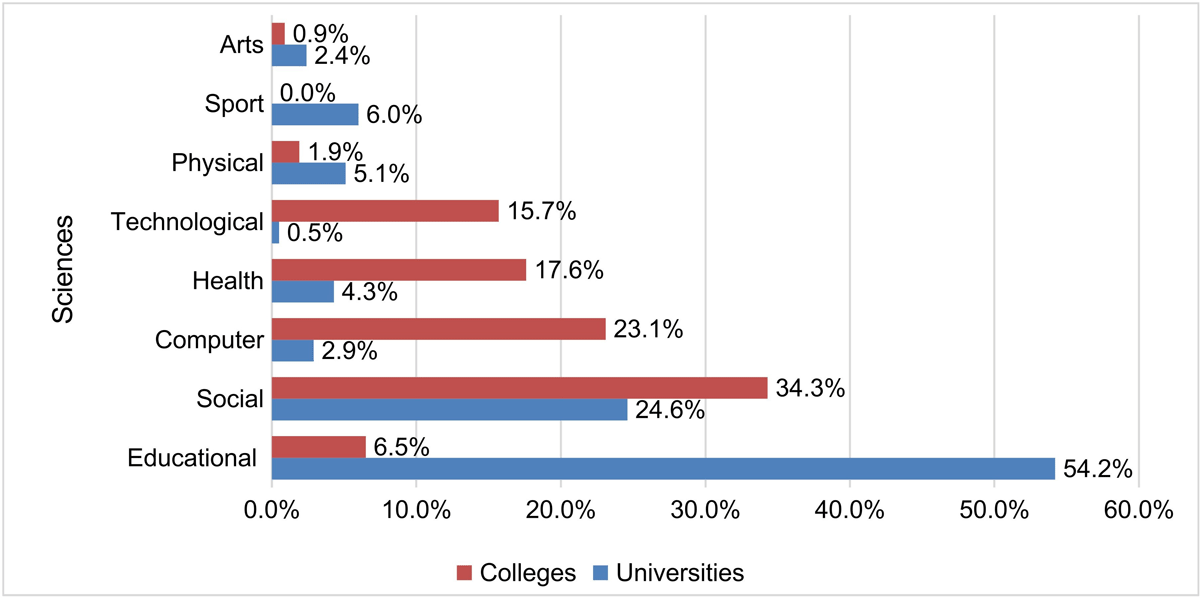
Figure 1
Distribution of respondents from higher education institutions (universities and colleges) by type of institution and field of study.
Research instrument and data collection. Data were collected using a structured online questionnaire consisting of several thematic blocks. The instrument was developed based on prior literature and designed to capture key themes such as AI usage patterns, perceived impact on learning and ethical concerns. This instrument collected both quantitative and qualitative data on students’ use of AI tools and attitudes towards integrating technology into learning. The complete questionnaire structure is detailed below. Students from universities, colleges, and vocational education institutions across Lithuania were invited to participate on a voluntary basis. The link to the questionnaire was distributed online through the institutions’ communication channels and student networks.
Structure of the Questionnaire. The questionnaire comprised four main sections with a total of 8 items (3 demographic questions, 2 questions related to AI tool usage, 1 question assessing perceived impact, and 2 open-ended questions):
Demographic information. This section collected basic background data about participants, including the type of educational institution (university, college, or vocational school), field of study and year of study.
Use of AI Tools in Academic Contexts. This section captured detailed usage data, addressing the overall aim of determining how AI tools are used in students’ academic work.
General Usage: One question asked whether participants had used AI tools (such as ChatGPT, code assistants, or AI-based learning platforms). Responses were recorded using a nominal scale with three options: ‘Yes,’ ‘No,’ or ‘Don’t know’.
Frequency of Use: The frequency of use for specific tools, including ChatGPT, Gemini, Grammarly, DeepL, Image Creator (Bing), and GitHub Copilot, was measured using a seven-point ordinal scale: ‘Never’ (1), ‘Once a year’ (2), ‘Once a semester’ (3), ‘Monthly’ (4), ‘Weekly’ (5), ‘Several times a week’ (6), and ‘Daily’ (7).
Perceived Impact of AI on Learning. This section explored students’ overall attitudes toward AI’s influence on their learning processes. Respondents evaluated the overall impact of AI (such as ChatGPT) using four distinct options: ‘More positive than negative impact’, ‘More negative than positive impact’, ‘Balanced positive and negative impact’, and ‘Uncertain impact’ (‘Don’t know’).
Open-Ended Questions. These two qualitative items were crucial for gathering ‘deeper insights into students’ experiences’. Students described in their own words the main positive impact and the main negative impact of AI in academic contexts.
Data Analysis Methods. To analyse patterns of AI tool integration, usage, and student attitudes toward their impact on learning, the following methods were employed: quantitative research (questionnaire survey), statistical data analysis (Chi-square tests, Fisher’s Exact Test, Cramér’s V), and qualitative content analysis of open-ended responses.
Ethical Considerations. Participation in the study was voluntary and anonymous. Respondents were selected from different educational institutions across Lithuania. Before completing the questionnaire, all participants were informed about the purpose of the study, voluntary participation, anonymity and confidentiality of their responses. Informed consent was obtained electronically prior to data submission. No personally identifiable information was collected; all responses were treated strictly confidential and used only for academic research purposes.
4. Results
This section presents the empirical findings from a mixed-methods survey involving 803 Lithuanian students. Section 4.1 summarises the quantitative results on the extent and frequency of AI tool usage across different types of institutions. Section 4.2 examines students’ evaluations of the perceived impact of AI on learning. Finally, Section 4.3 presents a qualitative content analysis of the open-ended responses, highlighting key perceived benefits and challenges.
4.1 Using AI tools
Frequency of AI tool use. (1–7 scale: ‘Never’ → ‘Daily’). Overall, ChatGPT is the most commonly used tool (M = 4.15), corresponding to usage ranging from ‘Monthly’ to ‘Several times a week’. In contrast, all other tools are used infrequently, including DeepL (M = 1.87), Grammarly (M = 1.58), Gemini (M = 1.57), GitHub Copilot (M = 1.38), and Image Creator/Bing (M = 1.36).
By institution, universities (M = 4.31, SD = 1.72) and colleges (M = 4.42, SD = 2.03) report similarly high ChatGPT use, though colleges show greater variability across students (higher SD). Vocational schools use ChatGPT markedly less (M = 3.45, SD = 2.03), typically between ‘Once per semester’ and ‘Once per month’. ChatGPT dominates students’ AI usage across sectors, with lower uptake in vocational schools and greater heterogeneity in colleges. Other AI tools are currently niche in study-related use.
Use of AI tools in different types of educational institutions. Of the 803 students surveyed, 570 (71%) reported using AI tools in their studies, including ChatGPT, code assistants, and AI-based learning platforms: 163 college students (75.5% of college students), 327 university students (78.8% of university students) and 80 vocational school students (46.5% of vocational school students). Of the surveyed students, 199 (24.8%) do not use AI tools in studies and 34 (4.2%) are not aware of the possibility of doing so. It is also noticeable that ignorance of AI tools is highest among vocational students, 24 out of 172 (14%), compared to students from colleges (1 out of 216, 0.5%) and universities (9 out of 415, 2.2%) (Figure 2).
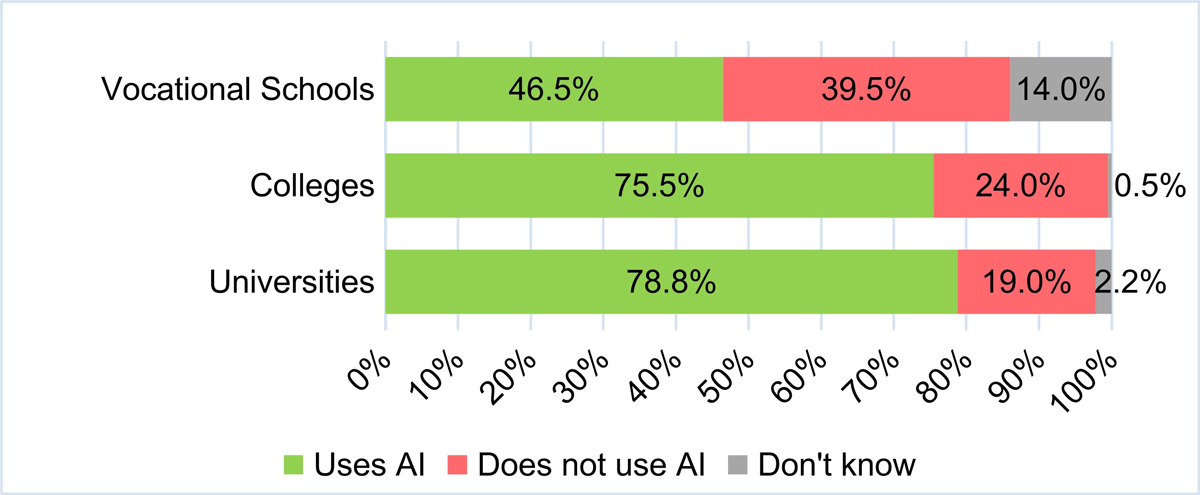
Figure 2
AI Usage in different types of educational institutions (N = 803).
The results show that while university students are the most frequent users of AI tools, college students are also active users, while vocational students are the least frequent users. This is confirmed by the statistically significant difference between the users of AI tools in different educational institutions (Fisher’s Exact Test returned p = 2.2e–16). The type of educational institution influences the use of AI tools, but the differences are not very pronounced (Cramér’s V = 0.24). This means that the relationship between the educational institution and the use of AI tools is moderate. Thus, the type of training institution has a statistically significant effect on the use of AI tools. These results show that students from higher education institutions are more likely to use AI tools than students from vocational schools, but the trend is similar between university and college students.
The use of AI tools in higher education institutions among students from different years of study. A chi-square test showed a statistically significant relationship between the year of study and the use of AI tools (Chi², p = 0.012), suggesting that AI tool usage varies by study year. The association, although statistically significant, was of low strength (Cramér’s V = 0.12).
The use of AI tools in higher education institutions among students from different fields of study. The use of AI tools is unevenly distributed across the different fields of study, with the highest levels of use recorded in computer science (90.3%), arts (83.3%), health sciences (82.1%) and social sciences (80.7%). The lowest rate of AI use was observed in educational sciences at 66.7%, although here too the majority of students reported using these tools. Statistical analysis of the results revealed a statistically significant relationship between the field of study and the use of AI tools (Chi², p = 0.001, Cramer’s V = 0.17). The percentage of students that do not know if they use AI tools is relatively low in all fields of study, except for arts, where the figure is 16.7%.
4.2 Students’ attitudes towards the impact of AI tools on learning
Students’ perceptions of the impact of AI tools on learning in different types of educational institutions. Students’ attitudes towards the impact of AI tools such as ChatGPT on learning were compared in three different educational settings: colleges, universities and vocational schools. Most respondents (43%, N = 345) believe that there is a balance between positive and negative impacts. This opinion is prevalent in all educational institutions, but slightly more pronounced in universities (46%, N = 191) and colleges (44.4%, N = 96), and less pronounced in vocational schools (33.7%, N = 58). The positive impact of AI is most perceived by almost a third (27.5%, N = 221) of students in all types of educational institutions. This view is most common in colleges (31.5%, N = 68), less common in universities (26.7%, N = 111) and least common in vocational schools (24.4%, N = 42). A small proportion of respondents (13.2%, N = 106) consider the impact of AI to be more negative. This attitude is most pronounced in universities (15.4%, N = 64), to a lesser extent in vocational schools (13.4%, N = 23) and to a lesser extent in colleges (8.8%, N = 19). A significant proportion of respondents (16.3%, N = 131) indicated that they did not have a clear opinion, indicating that some of them are not yet sufficiently familiar with AI tools or do not feel that they have a significant impact on their studies. Interestingly, this opinion is most prevalent in vocational schools (28.5%, N = 49) and least prevalent in universities (11.8%, N = 49) (Figure 3).
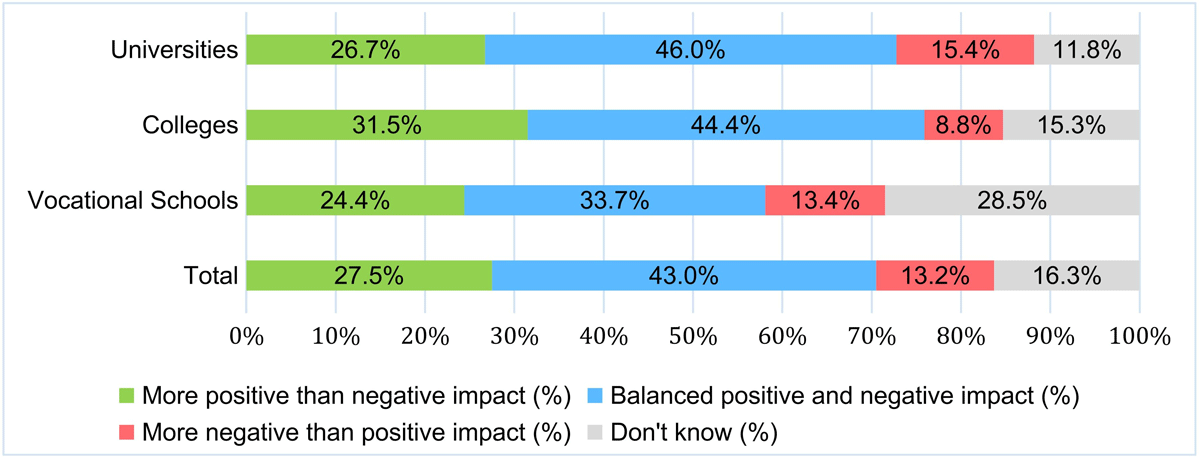
Figure 3
Respondents’ views on the impact of AI tools on learning.
These findings show that students’ attitudes towards the impact of AI on higher education depend on their institution of study. University and college students are more likely to see a balanced or positive impact, while vocational students are more likely to express doubts or see more negative aspects. Statistical analysis confirms that these differences are statistically significant (Chi², p < 0.001, Cramer’s V = 0.14), implying that students from different institutions have statistically significant differences in their perceptions of the impact of AI models on learning.
Higher education students’ perceptions of the impact of AI tools on their learning by field of study. The study assessed university and college students’ views on the impact of AI tools on learning. Figure 4 shows the distribution of responses (N = 631) from university and college students regarding the impact of AI tools on learning, broken down by field of study. The results reveal that student assessments vary significantly across different fields (Chi², p < 0.001, Cramer’s V = 0.17).
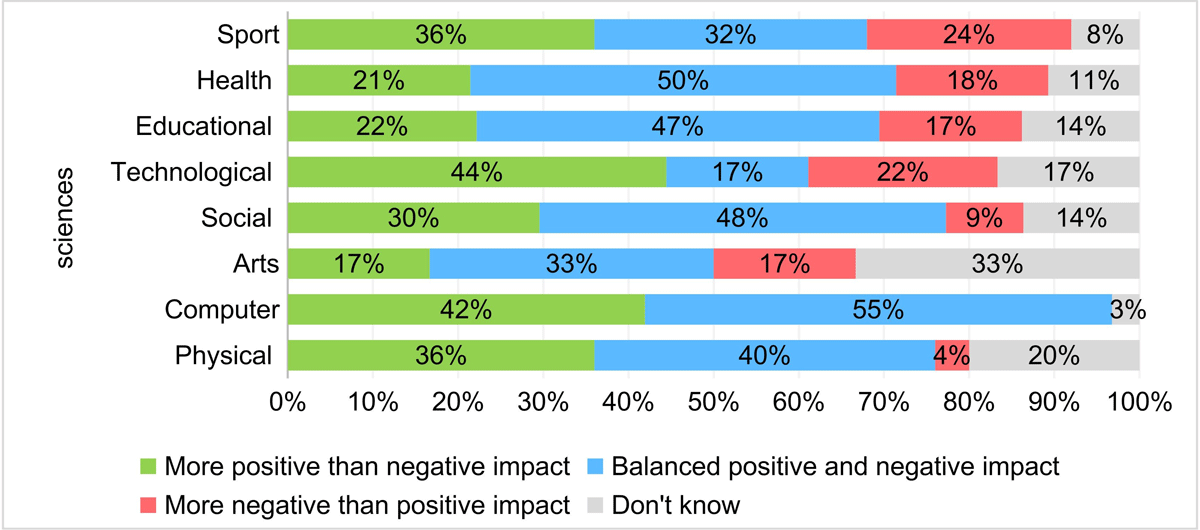
Figure 4
Higher education respondents’ views on the impact of AI tools on learning by field of study.
Students of computer and technological sciences most often indicate that AI has more positive than negative effects – more than 40% of students in these fields chose this answer. Students of physical and social sciences also tended to rate the impact as positive or balanced. In contrast, arts and educational sciences students were more cautious. Students of arts showed higher proportions indicating uncertainty or perceiving negative effects. Health science students were also quite skeptical, with a significant proportion of them stating that the impact of AI on learning is more negative (18%). Table 1 presents the survey data by type of educational institution and field of study.
Table 1
Students’ assessments of the impact of AI tools on learning by field of study and type of institution (universities and colleges, %).
| STUDY FIELD | MORE POSITIVE | BALANCED | MORE NEGATIVE | DON’T KNOW | ||||
|---|---|---|---|---|---|---|---|---|
| UNIVERSITY | COLLEGE | UNIVERSITY | COLLEGE | UNIVERSITY | COLLEGE | UNIVERSITY | COLLEGE | |
| Physical sciences | 33.3 | 50.0 | 47.6 | 0.0 | 4.8 | 0.0 | 14.3 | 50.0 |
| Computer science | 33.3 | 44.0 | 66.7 | 52.0 | 0.0 | 0.0 | 0.0 | 4.0 |
| Arts sciences | 0.0 | 100.0 | 40.0 | 0.0 | 20.0 | 0.0 | 40.0 | 0.0 |
| Social sciences | 31.4 | 27.0 | 45.1 | 51.4 | 10.8 | 6.8 | 12.7 | 14.9 |
| Technological sciences | 100.0 | 41.2 | 0.0 | 17.6 | 0.0 | 23.5 | 0.0 | 17.6 |
| Educational sciences | 23.6 | 0.0 | 47.6 | 42.9 | 16.9 | 14.3 | 12.0 | 42.9 |
| Health sciences | 22.2 | 21.1 | 44.4 | 52.6 | 33.3 | 10.5 | 0.0 | 15.8 |
| Sport sciences | 36.0 | 0.0 | 32.0 | 0.0 | 24.0 | 0.0 | 8.0 | 0.0 |
The results show clear institutional and disciplinary differences. University students most often reported a balanced or positive view of AI’s impact, particularly in computer, social, and physical sciences. Educational sciences students also tended to view AI’s influence as balanced, though some expressed uncertainty. Health sciences students were comparatively more skeptical, indicating higher proportions of negative evaluations. Statistical analysis confirmed a significant relationship between among university students the field of study and the assessment of the impact of AI (Chi², p = 0.031).
Among college students, attitudes followed a similar pattern, though slightly more respondents viewed AI positively overall. Uncertainty was higher in colleges, especially in educational and technological fields. A statistically significant relationship between field of study and assessment of the impact of AI was also found among college students (Chi², p < 0.001).
Compared to university students, college students are more likely to rate the impact of AI positively (31.5% in colleges, 26.7% in universities), but the lack of knowledge about the impact of AI is higher in colleges (15.3% in colleges, 11.8% in universities). Universities have a more balanced view (44.4% in colleges, 46% in universities), but university students, especially in the field of educational sciences, have a slightly more positive view of the impact of AI. Statistically significant differences confirm that the field of study influences students’ attitudes towards the application of AI models to learning. Strategies for integrating AI in higher education therefore need to be tailored to the specificities and needs of particular fields of study.
The relationship between the use of AI tools and their impact on learning. The results of the study showed a moderate correlation between students’ use of AI tools in their studies and their attitudes toward the impact of these technologies on higher education (Chi², p < 0.001; Cramer’s V = 0.3). Students who actively use AI tools such as ChatGPT, code assistants, or AI-based learning platforms, were more likely to say that these tools have a more positive than negative impact on their studies (33.2%) compared to those who do not use these tools (13.1%). In addition, users were more likely to indicate that the impact of AI tools is balanced – neither entirely positive nor entirely negative (48.4%). Meanwhile, those who do not use AI tools were more likely to choose the answer ‘I don’t know’ (39.7%), which may indicate not only a lack of knowledge but also less exposure to the real possibilities of applying these technologies. These data suggest that practical experience with AI tools leads to a more favourable assessment of them, which is important when developing strategies to promote the targeted and responsible integration of AI into the study process.
4.3 Qualitative Results: Perceived Benefits and Challenges of AI in Learning
Respondents were asked open-ended questions in which they were asked to indicate the main positive and negative impacts of AI in an academic context. Qualitative content analysis was used to summarise and systematise the results. The responses were divided into thematic categories according to their dominant semantic meanings. Each response could be coded into one or more categories, as respondents often mentioned multiple themes. The results are summarised by institution type and main thematic categories.
4.3.1 Analysis of the positive impact of AI in an academic context
When analysing students’ responses using qualitative content analysis, 10 qualitative categories were identified, covering the main aspects of AI application in studies (see Table 2). A total of 494 students (61.5%) provided answers to this question, including 299 university students (72%), 120 college students (55.6%), and 75 vocational school students (43.6%).
Table 2
Categories of positive aspects of AI and their illustrations.
| NO. | CATEGORY | ILLUSTRATIONS |
|---|---|---|
| 1 | Accessibility and search for information | ‘Finds information quickly’, ‘Additional learning resources can help students analyze information more deeply’, ‘Access to articles’. |
| 2 | Facilitating learning and understanding | ‘AI explains information more clearly’, ‘Helps to understand the information presented, explains it’, ‘Helps to explain difficult topics or homework, and simplifies information’, ‘Makes it easier to master the material’. |
| 3 | Time savings and efficiency | ‘Saves a lot of time’, ‘…all information is presented much faster…’, ‘Speeds up learning’. |
| 4 | Reducing stress and boosting confidence | ‘Gives more confidence’, ‘Reduces student stress’, ‘AI does not cause any pressure because you can ask questions at any time’, ‘Increases self-confidence’. |
| 5 | Idea generation and creativity | ‘Provides ideas’, ‘Personally helped me generate ideas’, ‘Good tool for generating ideas’, ‘Provides more response options, encourages creative and broader interpretation of information’, ‘…unleashes creativity’. |
| 6 | Information systematisation and analysis | ‘Speeds up the collection and systematisation of material’, ‘Helps to systematise information’, ‘Summarises information’, ‘Systematises material, describes it clearly and comprehensively’. |
| 7 | Personalised learning | ‘The main positive impact of AI is its ability to help personalise the learning process’, ‘Students can learn at their own pace and receive the support they need’, ‘The ability to easily and quickly adapt learning processes to each individual’s abilities’. |
| 8 | Help with problem solving | ‘Helps solve sometimes difficult questions’, ‘Makes it easier to clarify mistakes when you don’t know what to ask the lecturer’, ‘Helps greatly with certain tasks’, ‘Helps facilitate calculations, information gathering, and problem solving’. |
| 9 | Academic writing | ‘Guides you on the path to writing’, ‘Helps you formulate certain sentences’, ‘Makes writing easier’, ‘Helps you organise your thoughts’. |
| 10 | Language and grammar help | ‘Checks for grammatical errors’, ‘Helps to formulate certain sentences when a student finds it difficult to do so independently’, ‘I have difficulty with the Lithuanian language, especially in grammar and style, so sometimes it’s worth using AI’. |
The most prominent categories were accessibility and search for information (34.4%), facilitating learning and understanding (32.6%), and time savings and efficiency (30.6%). Moderately mentioned categories include reducing stress and boosting confidence (11.1%), idea generation and creativity (10.9%) and information systematisation and analysis (7.9%). Less frequently cited categories were personalised learning (6.3%), help with problem solving (3.6%), academic writing (2.2%), and language and grammar help (1%). Percentages are calculated from the number of respondents who provided a valid response within each institution type (Answered N). Detailed information is provided in Table 3.
Table 3
Distribution of Positive Aspects Across Institution Types (%).
| INSTITUTION TYPE | ANSWERED (N) | CATEGORIES OF POSITIVE ASPECTS OF AI | |||||||||
|---|---|---|---|---|---|---|---|---|---|---|---|
| 1 | 2 | 3 | 4 | 5 | 6 | 7 | 8 | 9 | 10 | ||
| Universities | 299 | 48.3 | 33.1 | 37.8 | 9.4 | 15.1 | 12.4 | 8.4 | 3 | 2.3 | 1 |
| Colleges | 120 | 29.8 | 37.5 | 22.5 | 20 | 7.5 | 1.7 | 1.7 | 5 | 3.3 | 1.3 |
| Vocational schools | 75 | 30.7 | 22.7 | 14.7 | 4 | 0 | 0 | 5.3 | 4 | 0 | 0.8 |
| Total | 494 | 34.4 | 32.6 | 30.6 | 11.1 | 10.9 | 7.9 | 6.3 | 3.6 | 2.2 | 0 |
[i] Note: Percentages may sum to more than 100% as respondents could mention multiple aspects.
Differences Across Institution Types
These results indicate distinct patterns of AI use across educational contexts. University students especially emphasised AI’s contribution to time efficiency (37.8%) and idea generation (15.1%), showing a more mature and research-oriented use of AI tools.
College students stood out by emphasising emotional and motivational benefits: 20% mentioned that AI reduces stress and increases confidence. They also highly valued facilitating learning and understanding (37.5%), associating AI with both learning facilitation and emotional support.
Vocational students perceived AI primarily as a tool for basic information access (30.7%) and assistance in learning (22.7%); advanced uses, such as idea generation or information organisation, were not mentioned (0%).
Overall, these findings demonstrate that AI use becomes progressively more sophisticated across educational levels – from practical and supportive functions in vocational education to analytical and creative applications in universities.
Differences in Positive Impact Across Fields of Study in Higher Education
Further analysis examined the distribution of positive AI-related aspects across eight fields of study in universities and colleges (Table 4). The results indicate clear disciplinary variations in how students perceive AI’s benefits.
Table 4
Distribution of Positive Aspects Across Fields of Study in Higher Education (%).
| SCIENCES | ANSWERED (N) | CATEGORIES OF POSITIVE ASPECTS OF AI | |||||||||
|---|---|---|---|---|---|---|---|---|---|---|---|
| 1 | 2 | 3 | 4 | 5 | 6 | 7 | 8 | 9 | 10 | ||
| Physical | 17 | 41.2 | 41.2 | 17.6 | 0.0 | 0.0 | 11.8 | 0.0 | 5.9 | 0.0 | 5.9 |
| Computer | 42 | 21.4 | 16.7 | 73.8 | 11.9 | 0.0 | 7.1 | 4.8 | 35.7 | 0.0 | 0.0 |
| Arts | 12 | 0.0 | 0.0 | 16.7 | 0.0 | 0.0 | 0.0 | 0.0 | 0.0 | 16.7 | 16.7 |
| Social | 113 | 40.7 | 36.3 | 30.1 | 4.4 | 11.5 | 8.8 | 5.3 | 12.4 | 8.0 | 0.0 |
| Technological | 16 | 62.5 | 25.0 | 25.0 | 0.0 | 0.0 | 0.0 | 0.0 | 25.0 | 0.0 | 0.0 |
| Educational | 162 | 30.2 | 37.0 | 32.7 | 3.1 | 16.0 | 17.3 | 1.9 | 8.6 | 9.9 | 1.2 |
| Health | 38 | 44.7 | 23.7 | 34.2 | 0.0 | 0.0 | 10.5 | 0.0 | 7.9 | 0.0 | 0.0 |
| Sports | 19 | 31.6 | 63.2 | 36.8 | 0.0 | 0.0 | 36.8 | 0.0 | 5.3 | 0.0 | 0.0 |
| Total | 419 | 22.8 | 22.2 | 23.3 | 2.4 | 6.2 | 8.6 | 1.7 | 8.2 | 4.3 | 0.8 |
[i] Note: Percentages may sum to more than 100% as respondents could mention multiple aspects.
Computer science students most strongly valued time saving and efficiency (73.8%) and problem-solving support (35.7%), reflecting a practical and goal-oriented use of AI tools. Educational sciences students, despite having the lowest overall AI usage rate (66.7%), emphasised the pedagogical benefits of AI, particularly its role in facilitating learning (37%) and information systematisation (17.3%). Arts students showed very limited engagement, focusing on surface-level support such as academic writing (16.7%) and grammar correction (16.7%), consistent with their high uncertainty (33% ‘Don’t know’) regarding AI’s overall impact. Sports sciences students prioritised learning facilitation (63.2%) and information organisation (36.8%), reflecting AI’s role in structuring and clarifying educational content. Technological sciences students highlighted information access (62.5%) as the main advantage, while health sciences students stressed accessibility and information search (44.7%), efficiency (34.2%), and support for learning (23.7%).
Overall, the findings demonstrate that students’ perceptions of AI benefits align closely with their disciplinary focus – from technical efficiency in computer and technological sciences to pedagogical and support-oriented applications in education, health, and sports sciences, and stylistic assistance in the arts.
4.3.2 Analysis of the negative impact of AI in an academic context
When analysing respondents’ answers about the negative impact of AI in an academic context, the main categories were identified based on the nature of the most frequently mentioned concerns (see Table 5). A total of 495 students (61.6%) provided answers to this question, including 298 university students (71.8%), 123 college students (56.9%), and 74 vocational school students (43%).
Table 5
Categories of negative aspects of AI and their illustrations.
| NO. | CATEGORY | ILLUSTRATIONS |
|---|---|---|
| 1 | Problems with the reliability of information and lack of AI literacy | ‘Sometimes provides incorrect information’, ‘Inaccurate information’, ‘Incorrect information’, ‘Information may be false’, ‘Inaccurately presented information’, ‘Need time to learn how to use AI effectively’, ‘Little information about available AI tools and their functions’. |
| 2 | Loss of critical thinking and independence | ‘Reduces independent thinking’, ‘Does not encourage thinking’, ‘Lack of thinking’, ‘Limits independent critical thinking’, ‘Weakening of critical thinking and independent learning skills’, ‘You think less for yourself’, ‘You no longer know how to express your thoughts’, ‘You try less to complete tasks’. |
| 3 | Laziness and reduced effort | ‘Encourages laziness’, ‘Laziness’, ‘Slacking off’, ‘Students start working less’, ‘Less effort in learning’, ‘Does not encourage effort’, ‘Calm laziness’. |
| 4 | Decrease in creativity and originality | ‘Decline in creativity’, ‘Takes away creativity’, ‘Hindrance to our creativity’, ‘Inhibits creativity’, ‘Reduces creativity’, ‘Students lose their unique way of thinking’, ‘Restricts people’s creativity’, ‘Destroys creativity’. |
| 5 | Decline in the quality of education | ‘Knowledge is absorbed more slowly’, ‘New skills are not learned’, ‘Does not help to absorb knowledge more’, ‘Less information is remembered’, ‘Quality of studies’, ‘No in-depth study or research’. |
| 6 | Violation of academic integrity (plagiarism, etchics, privacy) | ‘Plagiarism’, ‘High probability of plagiarism’, ‘Academic dishonesty’, ‘Encourages academic dishonesty’, ‘Probability of plagiarism’, ‘Copying’, ‘Cheating’, ‘Data security’, ‘Does not indicate the source and authorship of the information’. |
| 7 | Dependence on technology | ‘Dependence on technology’, ‘Dependence on AI will arise’, ‘Inability to perform work independently, without AI assistance’, ‘High dependence’, ‘Certain students may become dependent’. |
| 8 | Problems with information sources | ‘Does not indicate the source of information’, ‘Unclear sources…’, ‘Unreliable sources’, ‘Uses outdated or repetitive literature’, ‘Provides too little or limited information’, ‘AI often gives similar answers to different users, leading to repetitive written works’, ‘Limited access to some tools or programs due to high cost’. |
| 9 | Assessment accuracy | ‘Unequal grading between students using and not using AI’, ‘Hard to assess the student’s actual contribution’, ‘AI use may distort fair evaluation and reduce self-esteem’, ‘Accepted AI-generated work undermines assessment fairness’. |
| 10 | Social impacts | ‘They will shut themselves off and it will be difficult to communicate’, ‘Lack of live communication’, ‘The human factor disappears’, ‘Cooperation no longer works’. |
The most frequently mentioned concerns were problems with information reliability and lack of AI literacy (26.1%), loss of critical thinking and independence (22.4%), and laziness and reduced effort (18%). Moderately mentioned categories include decrease in creativity and originality (14.1%), decline in the quality of education (14.1%), violation of academic integrity (12.5%), and dependence on technology (12.1%). Less frequently cited concerns were problems with information sources (7.7%), assessment accuracy (1.8%), and social impacts (0.8%). Detailed information is provided in Table 6.
Table 6
Distribution of Negative Aspects Across Institution Types (%).
| INSTITUTION TYPE | ANSWERED (N) | CATEGORIES OF NEGATIVE ASPECTS OF AI | |||||||||
|---|---|---|---|---|---|---|---|---|---|---|---|
| 1 | 2 | 3 | 4 | 5 | 6 | 7 | 8 | 9 | 10 | ||
| Universities | 298 | 25.8 | 25.2 | 18.1 | 18.1 | 17.4 | 13.4 | 11.1 | 7.0 | 0.7 | 1.3 |
| Colleges | 123 | 31.7 | 19.5 | 20.3 | 10.6 | 8.1 | 13.8 | 13.8 | 13.8 | 5.7 | 0.0 |
| Vocational schools | 74 | 17.6 | 16.2 | 13.5 | 4.1 | 10.8 | 6.8 | 13.5 | 0.0 | 0.0 | 0.0 |
| Total | 495 | 26.1 | 22.4 | 18.0 | 14.1 | 14.1 | 12.5 | 12.1 | 7.7 | 1.8 | 0.8 |
[i] Note: Percentages may sum to more than 100% as respondents could mention multiple aspects.
Differences Across Institution Types
Analysis across institution types revealed distinct patterns in how different student groups perceive AI risks. University students showed the highest concern regarding loss of critical thinking and independence (25.2%) and decrease in creativity and originality (18.1%), focusing primarily on higher-order cognitive risks.
College students exhibited the highest concern about information reliability and lack of AI literacy (31.7%) and demonstrated elevated awareness of assessment accuracy (5.7%) concerns. College students were notably more concerned about external verification, information sources, and the fairness of evaluation.
Vocational school students reported lower overall engagement across most categories, focusing mainly on basic learning impacts such as information reliability (17.6%) and loss of critical thinking (16.2%).
These findings indicate that concerns about AI vary across educational contexts. University students emphasise cognitive and creative consequences, college students demonstrate heightened concern about information evaluation and assessment fairness, while vocational school students express more limited engagement with AI-related concerns overall, focusing mainly on basic learning impacts.
Differences in Negative Impact Across Fields of Study in Higher Education
A detailed analysis of open-ended responses confirmed that concerns varied significantly by field of study (see Table 7).
Table 7
Distribution of Negative Aspects Across Fields of Study in Higher Education (%).
| SCIENCES | ANSWERED (N) | CATEGORIES OF NEGATIVE ASPECTS OF AI | |||||||||
|---|---|---|---|---|---|---|---|---|---|---|---|
| 1 | 2 | 3 | 4 | 5 | 6 | 7 | 8 | 9 | 10 | ||
| Physical | 18 | 16.7 | 22.2 | 27.8 | 5.6 | 5.6 | 0.0 | 5.6 | 0.0 | 0.0 | 0.0 |
| Computer | 42 | 7.1 | 19.0 | 40.5 | 19.0 | 26.2 | 11.9 | 23.8 | 9.5 | 0.0 | 4.8 |
| Arts | 12 | 16.7 | 16.7 | 33.3 | 0.0 | 0.0 | 8.3 | 0.0 | 0.0 | 0.0 | 0.0 |
| Social | 112 | 8.9 | 23.2 | 25.0 | 19.6 | 20.5 | 18.8 | 10.7 | 10.7 | 1.8 | 4.5 |
| Technological | 16 | 12.5 | 12.5 | 62.5 | 0.0 | 0.0 | 0.0 | 0.0 | 37.5 | 0.0 | 0.0 |
| Educational | 163 | 20.2 | 23.9 | 27.6 | 13.5 | 20.2 | 14.1 | 14.1 | 6.7 | 1.2 | 1.2 |
| Health | 38 | 21.1 | 21.1 | 10.5 | 5.3 | 18.4 | 21.1 | 10.5 | 7.9 | 0.0 | 0.0 |
| Sports | 20 | 30.0 | 50.0 | 15.0 | 10.0 | 20.0 | 20.0 | 0.0 | 10.0 | 0.0 | 0.0 |
| Total | 421 | 15.9 | 23.5 | 27.6 | 13.5 | 18.8 | 14.7 | 11.9 | 9.0 | 1.0 | 2.1 |
[i] Note: Percentages may sum to more than 100% as respondents could mention multiple aspects.
Technological and computer sciences students reported the highest concern for laziness and reduced effort (40.5% in computer science), indicating a primary fear of overreliance stemming from AI’s efficiency gains. Educational sciences students, reflecting the pedagogical community’s concerns, emphasised the risks to core learning values, showing high concern for loss of critical thinking (23.9%) and decline in learning quality (20.2%). Arts sciences students (who showed the highest uncertainty) focused heavily on laziness (33.3%). Qualitative responses suggested that for them, concern manifests as an immediate cognitive regression (e.g., ‘thinking quality has aggressively decreased’). Sports sciences students demonstrated the strongest worry regarding the loss of critical thinking (50%). Health sciences students expressed balanced, multifaceted, and elevated concerns related to professional accountability, including academic integrity violations (21.1%) and information reliability (21.1%).
Overall, these findings demonstrate that AI-related concerns reflect disciplinary orientations: technical and computer sciencies emphasise overreliance risks, educational and sports sciences highlight cognitive and pedagogical decline, health sciences balance ethical and professional concerns, and arts disciplines reveal apprehension over creativity and intellectual depth.
5. Discussion
This study revealed complex attitudes among Lithuanian students towards the integration of AI tools into their learning processes. The influence of institution type and field of study on AI usage and evaluation emerged as particularly prominent.
5.1 Institutional and Disciplinary Differences
The study results indicate that university and college students use AI tools considerably more actively (78.8% and 75.5%, respectively) than vocational school students (46.5%). Insufficient knowledge about AI capabilities was identified as a primary barrier, particularly among vocational school students (14% were unaware of the possibility of using AI, compared with 2.2% in universities and 0.5% in colleges). Numerous studies confirm that knowledge gaps represent a major obstacle to AI tool implementation (DEC, 2024; Gesser-Edelsburg et al., 2024; Jereb & Urh, 2024).
Across all educational sectors, ChatGPT dominates AI usage, with mean usage scores of M = 4.31 (SD = 1.72) in universities, M = 4.42 (SD = 2.03) in colleges, and M = 3.45 (SD = 2.03) in vocational schools – corresponding to usage between ‘monthly’ and ‘several times per week’ in higher education institutions. Vocational school students showed limited overall engagement, with the lowest rate of open-ended responses (43.6%, versus 72% for universities and 55.6% for colleges). They primarily viewed AI as a source of basic information (30.7%) and learning assistance (22.7%), while more advanced applications – such as idea generation, information organisation, or personalised learning – were absent (0%).
The caution among vocational school students likely stems from several factors. First, insufficient AI literacy leads to greater feelings of uncertainty (28.5% of vocational students do not know what the impact was). Second, vocational training is often more oriented toward practical skills, in which AI application may be less obvious or insufficiently integrated into curricula.
Analysis by field of study revealed significant differences in AI adoption and evaluation among higher education students (Chi², p < 0.001, Cramér’s V = 0.17). Students of computer and technological sciences were were among the most likely to report that AI has more positive than negative effects (over 40% in both fields), alongside the highest usage rates (90.3% in computer science).
Educational sciences students demonstrated the lowest level of AI usage (66.7%). This relative reluctance may reflect the pedagogical community’s concerns about ethical and pedagogical risks (Divekar et al., 2024; Farooqi, Amanat & Awan, 2024; Gesser-Edelsburg et al., 2024; Kamali, Alpat & Bozkurt, 2024). Meanwhile, computer science and technology students use AI more actively and evaluate it more positively, which aligns with international research showing that technical subjects lead other fields in AI usage for learning purposes (Divekar et al., 2024; Dogan, Goru Dogan & Bozkurt, 2023; Ward et al., 2024; Zhang & Aslan, 2021).
Arts students exhibited the greatest uncertainty, with 33% selecting ‘don’t know’ regarding AI’s impact – the highest rate across all disciplines. This may indicate both limited exposure to AI in creative curricula and ambivalence toward AI’s place in human-centered creative processes.
Health sciences students were the most sceptical, with 33.3% of university students reporting that AI has more negative than positive effects – the highest negative rate across all fields. This reflects legitimate professional concerns. In an Egyptian study (N = 614), about 60% of medical students expressed doubts about ChatGPT’s accuracy on medical topics, and more than 71.3% of medical students worried about potential misuse in medical education (Abdelhafiz et al., 2025). A German study (N = 6,300) similarly found that health sciences students had the lowest AI usage rate (52.7%) among all disciplines (von Garrel & Mayer, 2023).
Finally, the integration of AI tools raises important equity issues. In the absence of clear guidelines and structured support, a divide can emerge, with strong students becoming even stronger through the use of AI, while weaker students risk falling further behind (Gesser-Edelsburg et al., 2024). The 32.3 percentage point gap in AI usage between vocational (46.5%) and university (78.8%) students represents a critical equity concern that demands urgent institutional attention. Moreover, equity issues extend beyond technical skills – they are crucial in socially sensitive fields such as social work, educational policy and medicine, where responsible and inclusive integration of AI is essential (Kubullek, Kumaç & Dogangün, 2024). The task of educational institutions is therefore not only to provide access to AI tools, but also to ensure equal opportunities for learning, consultation and ethical support to prevent the widening of achievement gaps and promote balanced digital readiness across all student groups.
5.2 Contradictions in Cognitive Impact
Open-ended questions revealed a striking paradox at the core of students’ AI experiences: the same technology is simultaneously viewed as a tool for enhancing creativity (10.9% mentioned idea generation and creativity) and as a primary cause of creativity decline (14.1%). This contradiction also extends to critical thinking, with 22.4% of respondents expressing concern about the loss of critical thinking and independence – the second most frequently mentioned negative impact after concerns about information reliability (26.1%). This dual evaluation emphasises AI’s dual impact – it can be either a benefit or a threat (Bozkurt & Bae, 2024; Divekar et al., 2024; Gesser-Edelsburg et al., 2024).
When used as an auxiliary tool for idea generation or for preliminary information processing, AI can accelerate the learning process and create space for deeper thinking (Chan & Hu, 2023; Gluoksnyte, 2025). However, the greatest concern involves overreliance on AI, which encourages laziness and suppresses cognitive effort and critical reasoning – skills essential for intellectual growth (Bae & Bozkurt, 2024; Bozkurt et al., 2024; Kamali, Alpat & Bozkurt, 2024). If AI is used as a substitute for independent work, there is a risk that students will lack sufficient cognitive depth to navigate new challenges independently (Bozkurt et al., 2024). Students themselves may become trained to use tools but lack the resilience to work without them (Bozkurt et al., 2024).
This duality underscores the need for pedagogical balance: integrating AI as a complement rather than a substitute for human thought (Fuchs & Aguilos, 2023; Ward et al., 2024). Educators should design learning tasks that promote reflection, critical evaluation, and creativity while leveraging AI’s efficiency benefits (Bozkurt et al., 2024).
5.3 Practical Experience, Ethics, and the Institutional Response
The study identified a strong correlation between actual AI usage and more positive attitudes toward its impact (Chi², p < 0.001; Cramér’s V = 0.3). Students who actively use AI tools were substantially more likely to evaluate their impact as positive (33.2% vs. 13.1% among non-users) or balanced (48.4% vs. 39.7% ‘don’t know’ among non-users). This pattern indicates that practical experience reduces uncertainty and shapes more favourable evaluation (Chan & Hu, 2023; Kubullek, Kumaç & Dogangün, 2024).
However, despite this growing familiarity, the results also reveal a considerable gap in AI literacy and institutional preparedness. Students frequently reported uncertainty about when and how AI tools should be appropriately used in their studies. This aligns with international findings which show that only 5% of students considered their institutions’ AI policies to be clear and comprehensive (DEC, 2024). In the Lithuanian context, this uncertainty was most pronounced among vocational school students, who showed both the lowest rates of AI use and the highest proportion of ‘don’t know’ responses (28.5%, compared with 11.8% in universities). This trend indicates not only a lack of systematic institutional guidance but also limited exposure to the practical potential and ethical implications of AI, reflecting broader differences in digital readiness across education levels.
The qualitative analysis also highlighted ethical issues directly related to the lack of AI literacy. Students mentioned risks related to plagiarism (12.5%), academic integrity and overreliance on AI-generated content (12.1% expressed concerns about technology dependency), demonstrating an awareness of ethical dilemmas but also of unclear institutional boundaries. These findings are consistent with broader debates about authorship and ownership in the age of GenAI (Bozkurt, 2024a; Xiao et al., 2025). When AI contributes to the creation of written works or ideas, questions arise about who owns the content created and to what extent AI’s involvement is ethically acceptable – questions that remain largely unresolved in current institutional systems.
Research limitations and future directions
The study has several methodological limitations: the uneven sample of respondents by field of study, the fact that self-reported data may contain bias, and the fact that only Lithuanian students took part in the study, which may not reflect global trends. However, the sample size (N = 803) and the inclusion of different types of educational institutions allow us to draw reasonable conclusions about trends in the use of AI tools and students’ perceptions of the impact of AI tools on learning. Future research should consider international comparisons, longitudinal studies and analysis of learning outcomes related to AI use.
Conclusions and recommendations
The study on Lithuanian students’ attitudes towards the integration of AI tools in the study process revealed significant patterns and differences across various types of educational institutions and fields of study. The main findings of the study are:
The use of AI tools varies according to the type of institution. University (78.8%) and college (75.5%) students are significantly more likely to use AI tools than vocational school students (46.5%). A significant proportion of vocational school students (14%) reported being unaware of the possibility of using AI tools, highlighting a pronounced AI literacy gap that limits exposure to the practical potential and ethical implications of AI in the VET sector.
Students’ attitudes towards the integration of AI tools in the study process depend on the type of their institution. University and college students are more likely to see a balanced or positive impact of AI on learning, while vocational students are more likely to express doubts or see more negative aspects. There is a strong association between the use of AI tools and students’ attitudes. Students who actively use AI tools tend to perceive their impact more positively. This implies that practical experience shapes perceptions and supports more favourable evaluation.
The study revealed distinct usage purposes and concerns across institutional types: University students employ AI primarily for research and analytical purposes (e.g., information systematisation 12.4%, idea generation 15.1%) and focus on higher-order cognitive risks, such as the loss of critical thinking (25.2%) and creativity decline (18.1%). College students demonstrate a distinct emphasis on emotional support (reducing stress and boosting confidence 20%) and learning facilitation (37.5%), with their primary concerns centring on information reliability (31.7%) and assessment accuracy (5.7%). Vocational school students perceive AI mainly as a tool for basic information access and learning assistance, showing the lowest overall engagement with complex AI-related concerns.
The main perceived benefits include time saving (30.6%), accessibility of information (34.4%), and improved comprehension (32.6%). The core risks include the loss of critical thinking and independence (22.4%), and reduced creativity. This highlights a fundamental contradiction: AI is viewed as both a tool for idea generation (10.9%) and a cause of creativity decline (14.1%).
The integration of AI tools into learning offers many opportunities, but also poses challenges in terms of academic integrity, information reliability, students’ AI literacy and quality of learning. Educational institutions need to strengthen communication of policies on the use of AI and provide clear and effective guidelines to mitigate risks and promote the ethical integration of AI into the learning process.
Higher education needs to continue to promote the use of AI in teaching and research, as students are already seeing the benefits of AI. In vocational schools/centers, it is recommended to raise students’ awareness of AI tools and their applications, as almost one third of students are still unaware of the impact of AI on their learning. To ensure the successful integration of AI tools, it is necessary to address the ethical aspects and to provide students with the skills they need to use these technologies responsibly in their learning process. Educational institutions should develop clear guidelines for the use of AI, provide training for students and lecturers, and regularly evaluate the impact of AI tools on the quality of teaching and learning. Future research should further explore the impact of AI on teaching and learning processes, how to use AI to improve academic performance, and how to effectively develop students’ critical thinking and AI literacy in a technology-laden world.
Data Accessibility Statement
The datasets are available from the corresponding author on reasonable request. Aggregated data supporting all findings are presented in the manuscript’s tables and figures.
Additional File
The additional file for this article can be found as follows:
Supplementary File
Use of Artificial Intelligence in Learning. DOI: https://doi.org/10.65043/eurodl.165.s1
Acknowledgements
We thank the students who participated in this study and the lecturers who supported the research by facilitating the distribution of the questionnaire.
Competing Interests
The authors have no competing interests to declare.