Have a personal or library account? Click to login
‘Dark reuse’: an empirical study of teachers’ OER engagement Cover

‘Dark reuse’: an empirical study of teachers’ OER engagement

By:   
Open Access
|Dec 2018

Figures & Tables

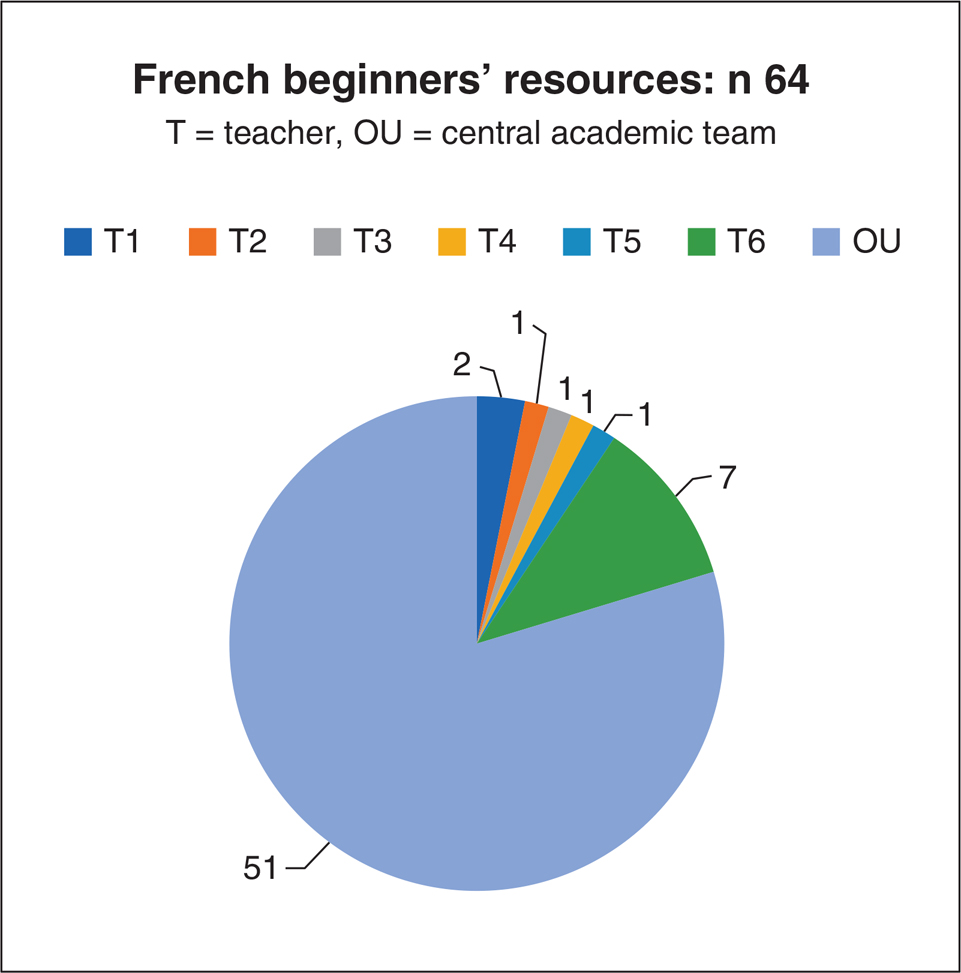
Figure 1

Uploads of Beginner French Resources in LORO

Table 1

Number of resources used in the first tutorial discussed

TeacherNumber (total 151)
F16
S18
F29
S210
S312
S412
S513
S613
F313
S715
F418
S822
Table 2

Provenance of resources used in the first tutorial discussed

Provenance of resourceNumber (total 151)% total (rounded up)
LORO6543%
Own resource4831.7%
Another teacher2415.8%
Found on the web (online image)63.9%
Slide capture from course book53.3%
other31.9%
Table 3

Types of adaptation and number of instances discussed

Adaptations made to the resources in the first tutorial observed Total resources discussed: 72 Numbers indicate the number of instances such changes were discussed
Physical changes to the resources (i.e. to the slides)34
  • Changes to wording

23
  • Changes to the look (font, layout, visuals)

9
  • Changes to the slides AND the activity

2
Changes to the use of the resource (but no physical change to the resource itself)17
  • Adding steps to an activity

9
  • Changing the pedagogical use of the activity

5
  • Removing steps from an activity

2
  • Adapting the way the resource is used to suit different contexts, styles or aims

1
Changes to the technical arrangements suggested in the resource notes about the conferencing system tools (e.g. use of breakout groups, use of chat function, etc.)11
  • Simplify activity by using fewer tools from those suggested in the teaching notes available with the resource

5
  • Use of additional tools to enhance the activity

3
Changes to a group of slides10
  • Adding slides to an activity for review after the class

8
  • Adding slides to an existing multi-slide resource

1
  • Selecting only some of the slides from a multi-slide resource

1
Table 4

Barriers, enablers and drivers to sharing (micro level)

Barriers:
  • lack of skills (Windle et al., 2010);

  • undermining the uniqueness of one’s individual teaching (Bates, Loddington, Manuel & Oppenheim, 2007);

  • fear of criticism (Wenk, 2010; van Acker et al., 2014);

  • lack of reward (Wenk, 2010);

  • lack of time (Rolfe, 2012; Windle et al., 2010);

  • lack of confidence in the quality of one’s materials (Bates et al., 2007; Windle et al., 2010).

  • lack of confidence or knowledge about copyright and IPR of (Clements & Pawlowski, 2012; Rolfe, 2012; Hassler et al., 2014)

Enablers:
  • availability of open licences (Nikoi & Armellini, 2012);

  • one’s confidence in subject knowledge and teaching skills (Masterman, Wild, White & Manton, 2011).

Drivers
  • personal satisfaction (Wenk, 2010);

  • increased reputation (Hylén, 2006; Wenk, 2010; Rolfe, 2012; van Acker, van Buuren, Kreijns & Vermeulen, 2013);

  • reward in the form of altruism and reciprocity (van Acker et al., 2013).

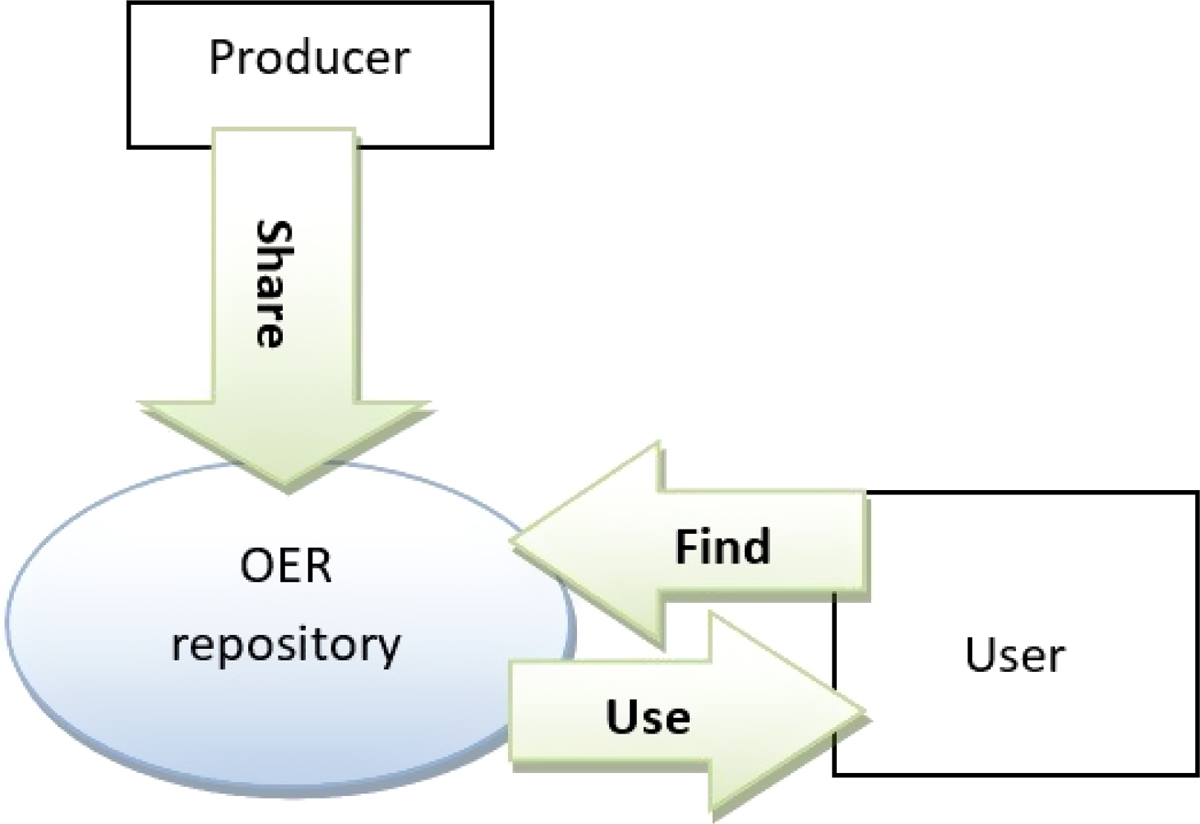
Figure 2

The repository view: limited engagement with the OER lifecycle
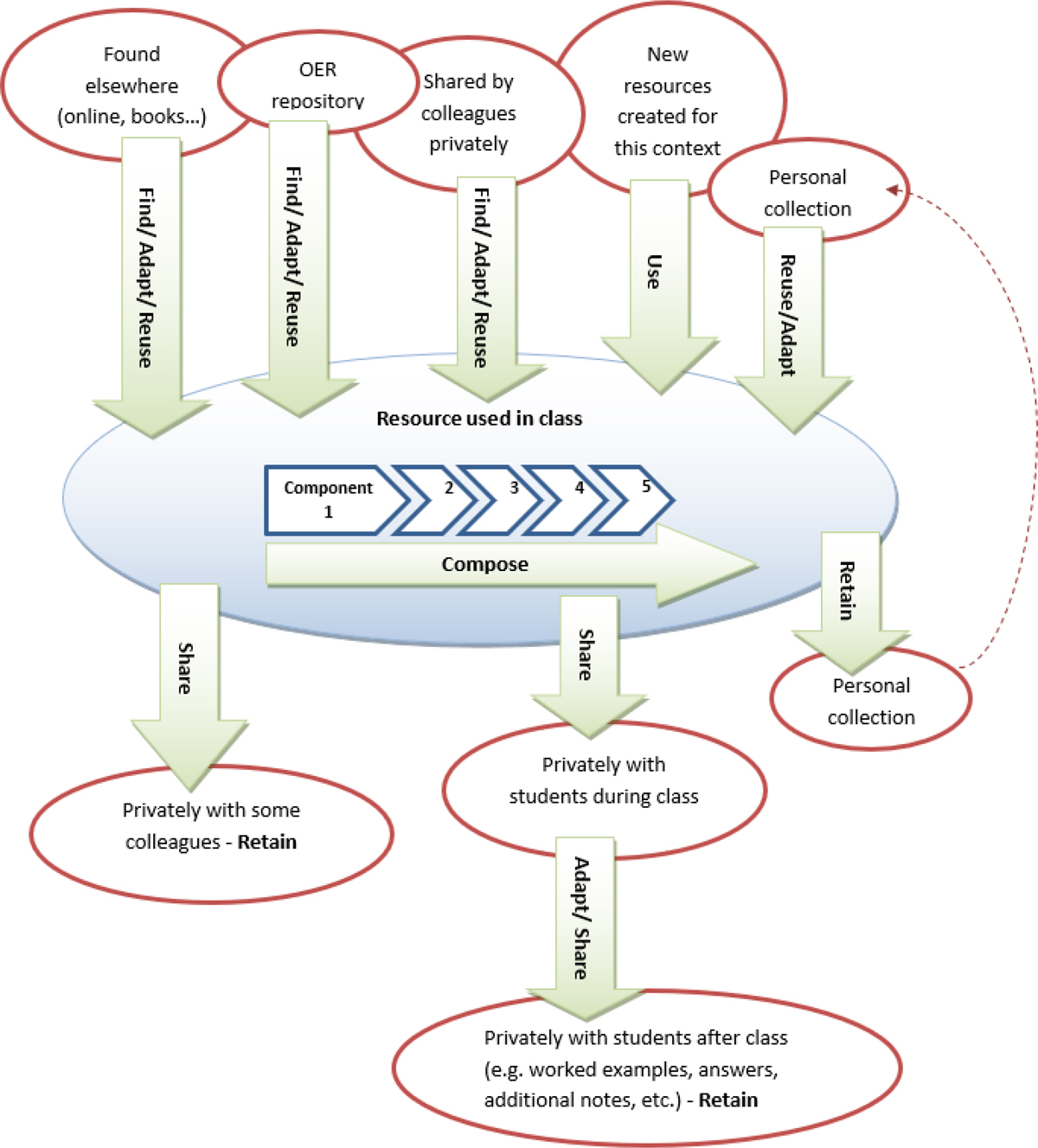
Figure 3

The resource view: full engagement with the OER lifecycle

Language: English
Page range: 377 - 391
Submitted on: May 18, 2018
Accepted on: Dec 10, 2018
Published on: Dec 31, 2018
Published by: International Council for Open and Distance Education (ICDE)
In partnership with: Paradigm Publishing Services

© 2018 Tita Beaven, published by International Council for Open and Distance Education (ICDE)
This work is licensed under the Creative Commons Attribution 4.0 License.