
Table 1
Participant demographics.
| PARTICIPANT | DEGREE FIELD | GENDER IDENTITY | PROFESSION |
|---|---|---|---|
| P1 | Journalism | Female | Designer |
| P2 | Cooking | Male | Chef |
| P3 | Media and Communication | Prefer not to say | Media Analyst |
| P4 | Public Administration | Female | Civil Servant |
| P5 | Economics | Male | Consultant |
| P6 | Media and Communication | Male | Research Assistant |
| P7 | English Language Teaching | Female | English Teacher |
| P8 | Sociology | Female | Sociology Lecturer |
| P9 | Foreign Trade | Male | School Counselor |
| P10 | Sociology | Prefer not to say | Reader |
| P11 | Economics | Female | PhD Student |
| P12 | Brand Communication | Female | Physics Instructor |
| P13 | Healthcare Management | Female | Consultant |
| P14 | Journalism | Female | News Editor |
| P15 | Political Science | Prefer not to say | Research Assistant |
| P16 | English Language Teaching | Male | English Teacher |
| P17 | Social Media Management | Male | UX Designer |
| P18 | Journalism | Female | Journalist |
| P19 | History | Male | Museum Curator |
| P20 | Tourism and Hotel | Male | Therapist |
| P21 | Business Administration | Male | Specialist |
| P22 | Sports Management | Prefer not to say | Consultant |
[i] *Total: 22 participants — 9 Male, 9 Female, 4 Prefer not to say.
Table 2
Themes, codes, and conceptual focus by research question.
| RESEARCH QUESTION (RQ) | THEMATIC FOCUS | SAMPLE CODES | CONCEPTUAL FOCUS |
|---|---|---|---|
| RQ1. How do learners in open education assert autonomy and adopt alternative learning practices? | Against the Curriculum: Punk Ethos, DIY Innovation and Educational Autonomy | autonomy, tool modification, DIY strategies | learner agency, non-conformity, creative adaptation |
| RQ2. How do learners experience networked collaboration and co-construct knowledge through rhizomatic practices? | Networked Collaboration and Peer-Based Learning in Open Education | peer feedback, iterative writing, co-design | distributed knowledge, learning networks |
| RQ3. How do learners challenge traditional authority and engage in critical dialogue as acts of subversive learning? | Critical Disruption and Dialogic Agency in Open Learning Contexts | resistance, critique, dialogic writing | subversive pedagogy, critical literacy |
| RQ4. How do learners construct identity and agency through digital communities and cultures of belonging? | Community, Identity, and the Affective Dimensions of Digital Learning Cultures | community learning, identity, cultural voice | belonging, affective agency, hybrid identities |
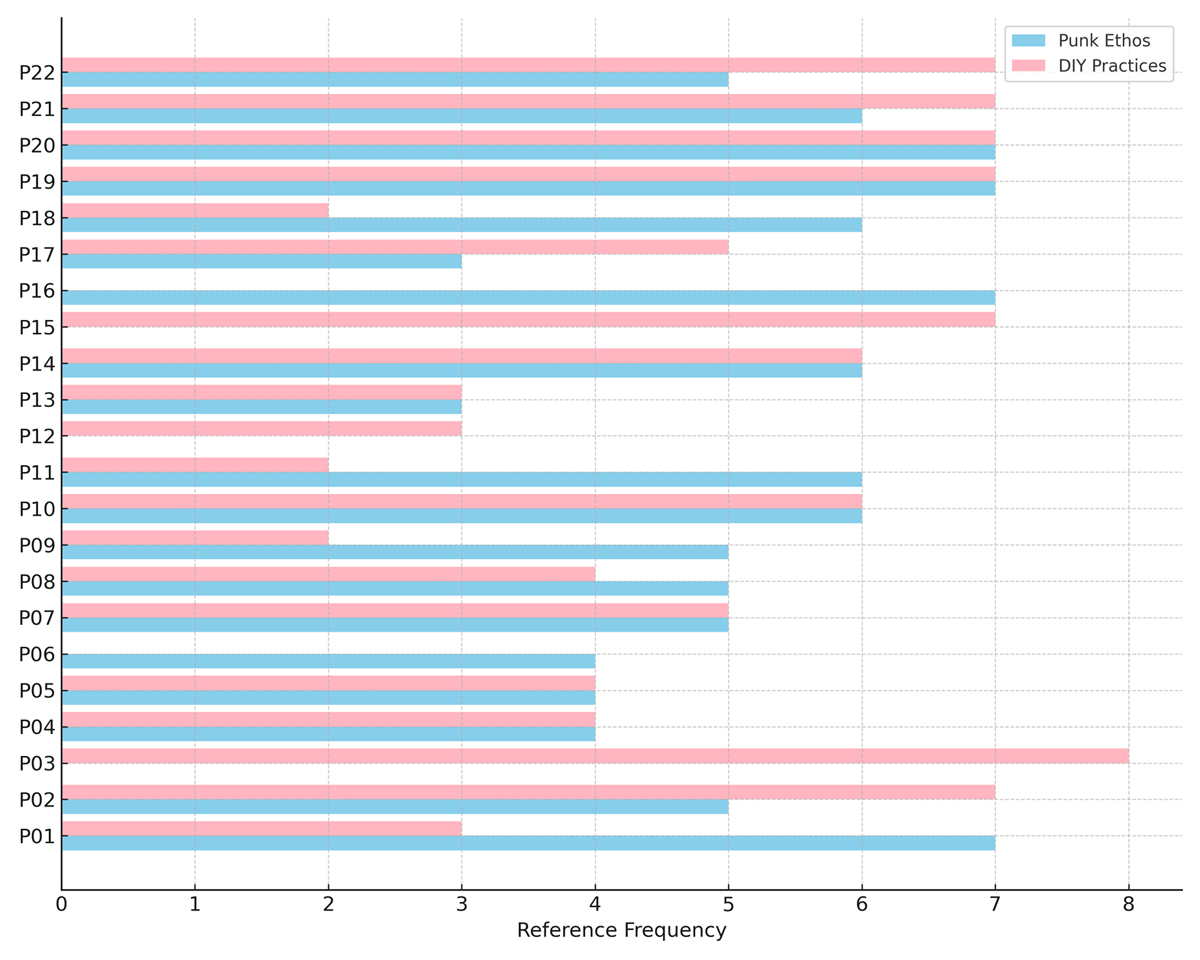
Figure 1
Distribution of references to punk ethos and do-it-yourself practices across participants.
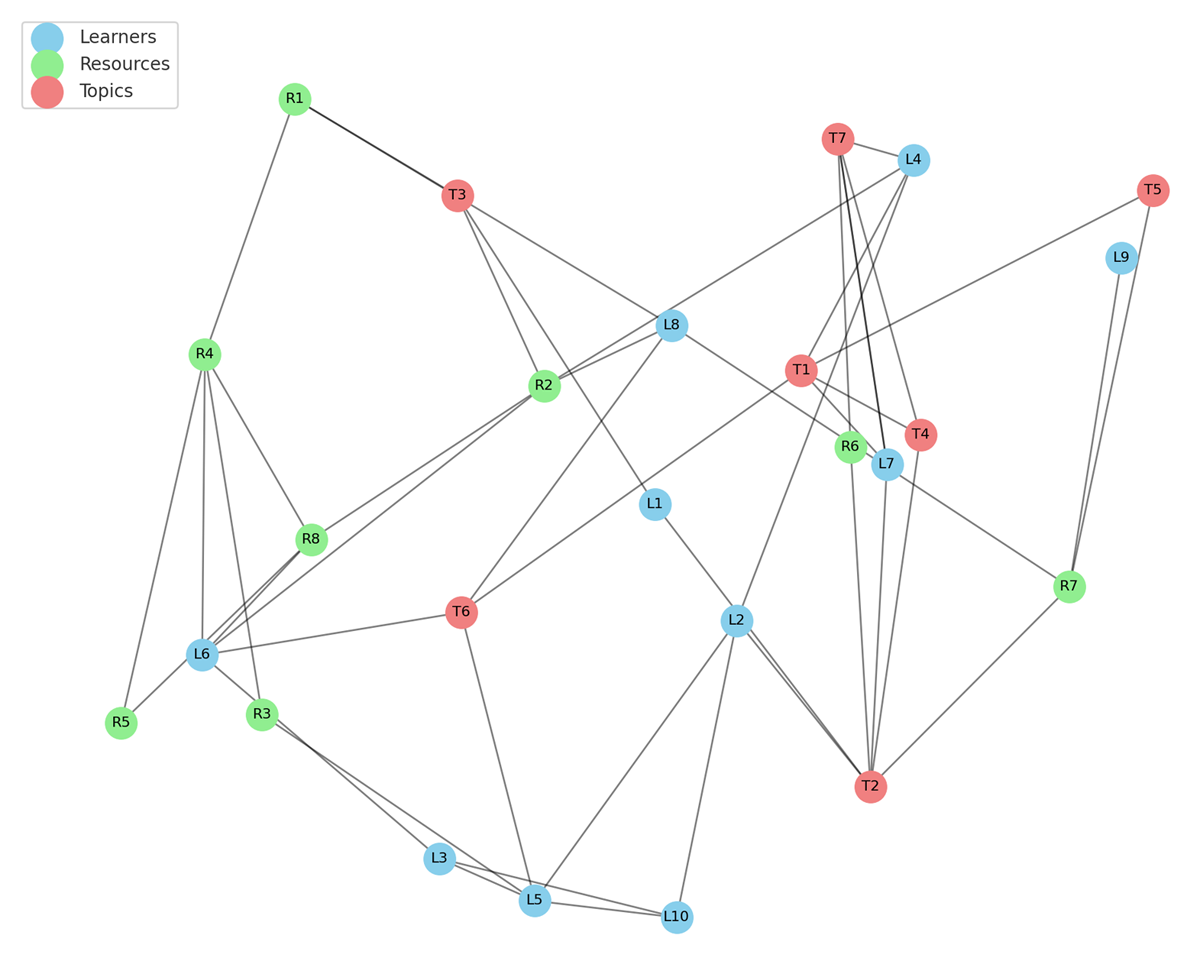
Figure 2
Mapping rhizomatic learning: Interactions of learners, resources, and topics.
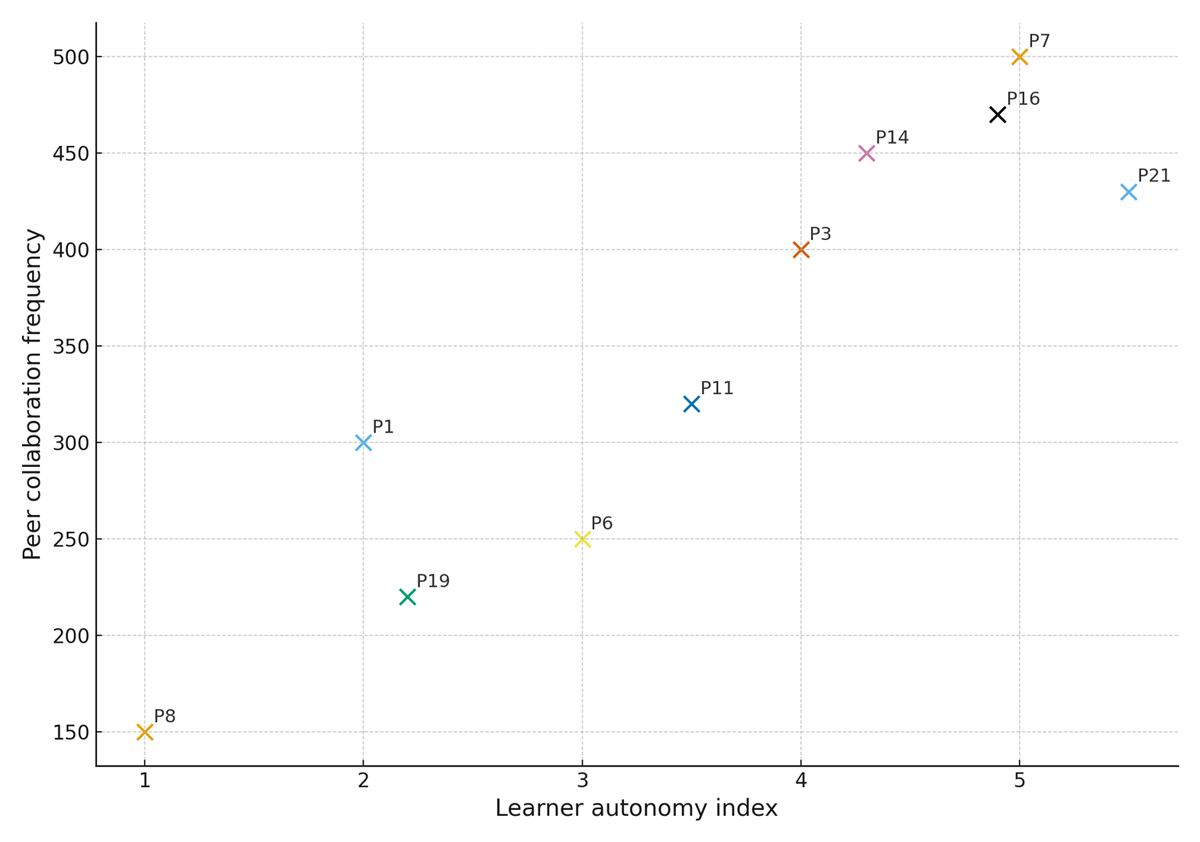
Figure 3
Learner autonomy and collaborative intensity in rhizomatic learning contexts.
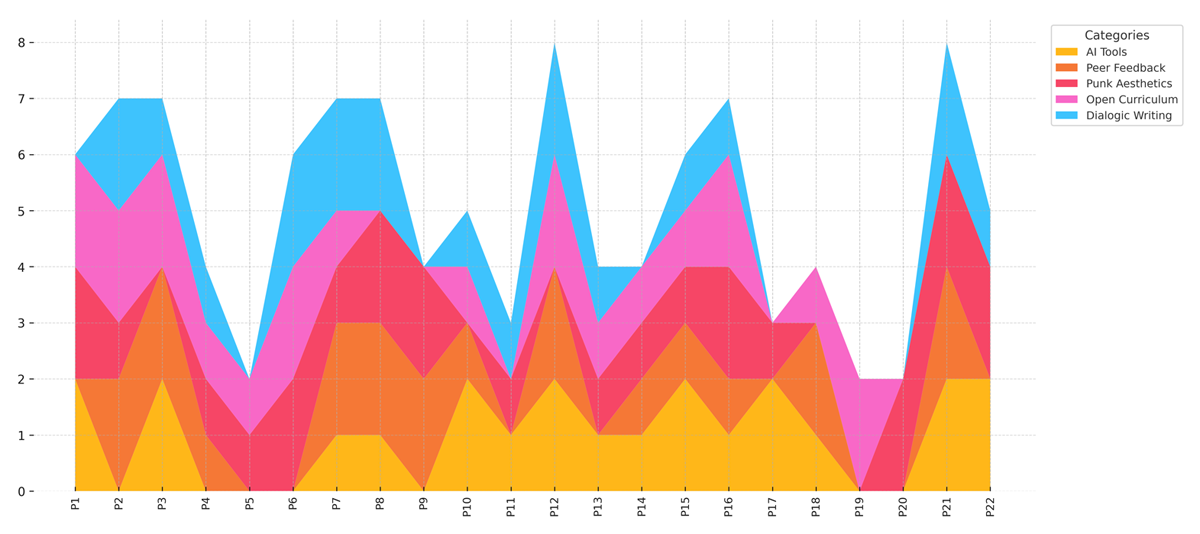
Figure 4
Distribution of dialogic and subversive learning contributions by participants.
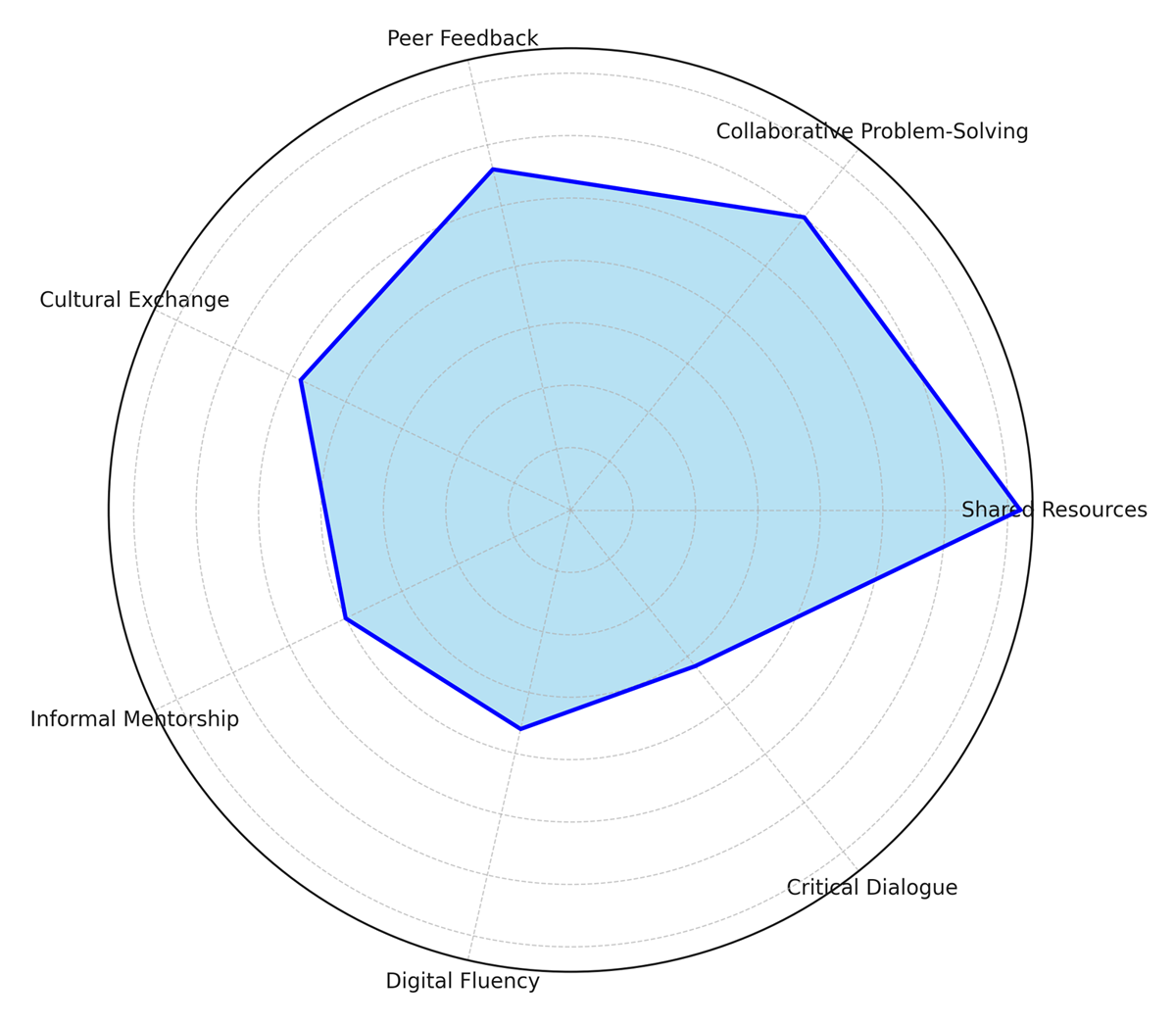
Figure 5
Radial distribution of community learning themes in open education.