
Introduction
The field of open, distance and digital education has developed through successive technological shifts and changing pedagogical needs, moving from early correspondence models to today’s diverse online learning systems. In Türkiye, this development began with conceptual discussions in the 1920s, continued with secondary-level distance initiatives in the 1970s, and later became institutionalised in higher education through the establishment of Anadolu University’s Open Education Faculty in the 1980s (Bozkurt, 2017, p. 86).
Recent developments in artificial intelligence have added a new layer to open and digital education, expanding opportunities for learner agency, decentralised knowledge production and participatory engagement (Zawacki-Richter et al., 2025, p. 22). Yet, Bozkurt (2025) warns that the environmental impact of AI regarding water, heat, and waste poses ethical challenges that open education must address. These shifts intersect with critical and subcultural perspectives. Punk, rooted in the margins of 1970s youth culture, offered a critique of authority and institutional power, and its pedagogical extensions emphasise collaborative knowledge-making and non-hierarchical learning (Logan et al., 2024). This orientation resonates with Freire’s concept of praxis as “reflection and action upon the world in order to transform it” (Freire, 1970, p. 36), a view further developed through work highlighting learning as a socially situated and culturally shaped process (Dines, 2023, p. 10; Glass, 2001, p. 16).
Drawing on these perspectives, this study examines how learners in open and distance education challenge standardised structures, reshape learning spaces and co-construct meaning through practices grounded in autonomy, collaboration, resistance and identity. The study aims to understand how learners reconfigure educational practice through dialogic, affective and subculturally informed engagements that reflect a punk approach to pedagogy.
To address this aim, the study is guided by four research questions:
How do learners in open education assert autonomy and adopt alternative learning practices?
How do they experience networked collaboration and co-construct knowledge through rhizomatic practices?
How do they challenge traditional authority and engage in critical dialogue as acts of subversive learning?
How do they construct identity and agency through digital communities and cultures of belonging?
The subsequent sections review the theoretical framework and qualitative methodology. Findings are then analyzed across four thematic areas, followed by a discussion of their broader implications and directions for future research.
Rethinking Open Education: Critical, Subcultural, and Punk Approaches
This section reviews scholarship that informs the study’s focus on autonomy, networked collaboration, subversive engagement and digital belonging in open education. Prior work on DIY practices, rhizomatic learning, critical dialogue and digital identity provides the conceptual grounding for these themes. The review also outlines how each thematic strand corresponds to one of the four research questions, clarifying the relationship between the theoretical background and the study’s analytic focus.
Learner Autonomy and the DIY Ethos in Open Education
The concept of learner autonomy in open education often intersects with the ethos of do-it-yourself (DIY) culture, particularly as articulated within punk movements. Rooted in resistance to institutional gatekeeping, the DIY approach advocates for inclusive, self-directed participation in creative and educational practices (Stewart & Way, 2023). From the 1970s onward, DIY moved beyond a reactionary stance and developed into a critical proposal and political programme that expressed alternative ways of being and knowing (Silveira & Conter, 2015). In the educational realm, this ethos challenges standardized curricula by enabling learners to personalize their learning paths within decentralized, digitally mediated environments (Bhatia et al., 2023).
Scholars argue that DIY practices are not externally imposed but rather resonate with learners’ lived realities and are already embedded in their everyday lives (Sancho-Gil et al., 2015). Initiatives like the DIYLab project demonstrate how collaborative learning fosters digital literacy, creativity, and lifelong learning by placing learners at the center of content creation (Sánchez-Valero et al., 2017). Furthermore, the economic dimensions of DIY cannot be ignored; punk communities often navigate precarious labor conditions while generating temporary zones of resistance and possibility (McKee, 2024). As DIY culture expands to encompass environmental activism, citizenship, and social justice, it serves as a dialogic space bridging art, politics, and education (Bennett & Guerra, 2023).
Educational scholars have also critically engaged with the neoliberal instrumentalization of autonomy, warning that market-driven frameworks may reduce learners to atomized consumers (Olssen & Peters, 2005). Maker cultures and open learning communities, in response, reimagine autonomy as a relational, socially situated practice (Gibbons & Snake-Beings, 2018).
This body of work aligns with Research Question 1 by clarifying how learners assert autonomy and develop alternative learning practices within open education.
Networked Collaboration and Rhizomatic Learning
Contemporary open education increasingly relies on networked collaboration, where learners participate as co-producers of knowledge rather than passive recipients. Digital learning environments support peer-based interaction, positioning interaction as a central component of learning (Chen, 2019). Peer models foster communication and teamwork skills while offering flexible, context-responsive pathways for learning (Murphy et al., 2024). This shift reflects a movement away from static knowledge delivery toward relational and collaborative meaning-making. It also highlights the learner’s role as both a node and a contributor within distributed networks of education.
Rhizomatic learning, derived from the philosophy of Deleuze and Guattari (1987), conceptualizes knowledge as an expanding network of nodes and connections rather than a hierarchical structure. In educational contexts, this approach enables learners to generate meanings by drawing on both human and non-human resources (Brailas, 2020). Research informed by rhizomatic perspectives values responsiveness to context and recognizes material agency, embracing knowledge production as experimental and emergent (Hickey-Moody, 2015). This orientation decentralizes authority and supports learners in navigating complexity and ambiguity without predetermined pathways.
Within this paradigm, curriculum becomes a negotiated space shaped through learners’ encounters rather than a fixed sequence of content (Honan & Sellers, 2007). Learners define their goals, identify relevant resources, and chart individualized learning trajectories (Axe et al., 2020). Learning is therefore understood as a dynamic and evolving process shaped through interactions with technologies, communities, and contexts.
These perspectives inform Research Question 2 by explaining how learners experience networked collaboration and co-construct knowledge through rhizomatic practices.
Challenging Authority and Practicing Critical Dialogue
Open education creates opportunities for learners to question traditional authority structures and participate in critical dialogue. Weber (2003) defines authority as the likelihood that one’s will is realized despite resistance. In educational contexts, authority is therefore not only instructional but also tied to legitimacy claims and power relations (Rust, 2018). Digital tools, including AI-mediated interactions, introduce new forms of dialogue in which learners shape and are shaped by knowledge flows (Butson & Spronken-Smith, 2024).
Critical pedagogical approaches position discourse as a site of both reproduction and resistance, enabling educators and learners to examine how power operates through language and to mobilize this awareness toward transformation (Kibler et al., 2021). Disruptive pedagogies redesign learning activities to make knowledge processes more transparent and accessible, emphasizing learner empowerment and active participation (Harper & Parkin, 2024). Dialogic agency becomes central in these contexts, functioning as a condition for shared knowledge construction rather than a supplemental technique (Lawrence, 2019). Through these dynamics, open, distance, and digital education environments support forms of engagement in which learners contest authority, negotiate meaning, and assert agency.
This scholarship supports Research Question 3 by clarifying how learners challenge authority and engage in critical dialogue as forms of subversive learning.
Community, Identity, and the Affective Dimensions of Digital Learning
The formation of learner identity and a sense of belonging in open education is deeply tied to digital communities and affective engagement. While the role of digital communication in fostering lasting relationships remains debated (Maffie, 2020), community-based knowledge production supports culturally responsive curriculum design (Mpuangnan & Ntombela, 2024). Digital human capital within communities acts as a catalyst for the diffusion of knowledge, skills, and innovation (Mossberger & Tolbert, 2021).
Learners’ affective ties within digital communities foster an environment of mutual recognition, in which identity is developed not in isolation but through shared narratives and symbolic practices.Such affective dimensions of learning environments play a vital role in motivating sustained participation, especially when learners experience social visibility and emotional resonance within their networks. Agency in such contexts is multidimensional, encompassing not only self-recognition but also professional self-articulation aligned with the sociocultural conditions of learning (Chávez et al., 2022). Institutional approaches shaped by neoliberal values redefine academic identity through performance metrics, while managerial strategies promote internalization of such belief systems (Adler & Lalonde, 2020).
Interdisciplinary collaboration further enhances these processes by facilitating cross-boundary interactions and co-learning in supportive digital environments (Elofsson et al., 2025). In this regard, identity formation within open education emerges as a situated process shaped by interpersonal dynamics and collective affect. This underscores the importance of emotional investment and reciprocal recognition in sustaining inclusive and participatory learning networks.
These insights support Research Question 4, which examines how learners construct identity and belonging in digital communities and cultures of participation.
Methods
Research Design and Approach
This study adopts a qualitative case study design rooted in an interpretive paradigm. As Busetto et al. (2020) note, this approach is particularly well-suited for examining the contextual and processual dimensions of learning practices that transcend rigid structures. By engaging deeply with participants’ narratives, the framework offers the interpretive flexibility needed to explore emotional and cultural dynamics. Purposive sampling was prioritized over broad representativeness to allow for a detailed exploration of lived experiences (Bouncken et al., 2025). Additionally, grounded in diverse philosophical traditions, the method contributes to testing and refining existing theories rather than starting with fixed hypotheses (Köhler et al., 2023). This reflexive design enables the identification of patterns across participants while preserving the integrity of individual voices.
Data Collection Tools
This study employed semi-structured interviews as the primary data collection method, conducted with 22 participants between September 2024 and June 2025. Interviews were held either face-to-face or online, depending on participants’ availability and contextual circumstances. Prior to data collection, ethical approval was granted by Gebze Technical University (E-43633178-199-199386). All participants were informed about the scope, aims, and procedures of the study, and provided informed consent before taking part in the interviews. Ethical principles were followed throughout the process, with attention to institutional norms and situated contexts, particularly given the influence of local regulatory frameworks on everyday academic life (Åkerfeldt & Björklund Boistrup, 2022, p. 52).
The interview protocol was designed to explore learners’ experiences of autonomy, collaboration, critique, and identity in open and distance education. To support both data handling and analysis, generative AI tools were used alongside manual thematic coding. AI-assisted steps were limited to transcription support, preliminary pattern exploration, and organizational functions. All outputs generated by AI were cross-checked manually, and final coding decisions were made through human-led interpretation. This approach enabled efficiency while maintaining analytic rigour and ensuring that meaning-making processes remained grounded in participants’ narratives.
Research Group
The study involved 22 participants (P1–P22) who completed open education programs between 2010 and 2024. Selected via purposive sampling, the group represents diverse fields including sociology, engineering, and the arts, with professional roles ranging from freelance designers to public sector employees. Most participants possessed experience in both analogue and digital environments, offering longitudinal insight into evolving educational practices. Table 1 provides a detailed overview of the participant demographics.
Table 1
Participant demographics.
| PARTICIPANT | DEGREE FIELD | GENDER IDENTITY | PROFESSION |
|---|---|---|---|
| P1 | Journalism | Female | Designer |
| P2 | Cooking | Male | Chef |
| P3 | Media and Communication | Prefer not to say | Media Analyst |
| P4 | Public Administration | Female | Civil Servant |
| P5 | Economics | Male | Consultant |
| P6 | Media and Communication | Male | Research Assistant |
| P7 | English Language Teaching | Female | English Teacher |
| P8 | Sociology | Female | Sociology Lecturer |
| P9 | Foreign Trade | Male | School Counselor |
| P10 | Sociology | Prefer not to say | Reader |
| P11 | Economics | Female | PhD Student |
| P12 | Brand Communication | Female | Physics Instructor |
| P13 | Healthcare Management | Female | Consultant |
| P14 | Journalism | Female | News Editor |
| P15 | Political Science | Prefer not to say | Research Assistant |
| P16 | English Language Teaching | Male | English Teacher |
| P17 | Social Media Management | Male | UX Designer |
| P18 | Journalism | Female | Journalist |
| P19 | History | Male | Museum Curator |
| P20 | Tourism and Hotel | Male | Therapist |
| P21 | Business Administration | Male | Specialist |
| P22 | Sports Management | Prefer not to say | Consultant |
[i] *Total: 22 participants — 9 Male, 9 Female, 4 Prefer not to say.
Research Procedures
The research process consisted of three stages: preparatory work, structured implementation, and interpretive analysis. In the preparatory stage, the interview protocol was refined through a pilot application, ethical approval was obtained, and written informed consent was secured from all participants. Each section of the protocol was aligned with the research questions to ensure coherence between the study’s aims and procedural design.
During implementation, interview sessions were scheduled, documented, and supported with memo-writing to capture contextual details relevant to learner experiences. Reflexive notes were kept throughout this stage to trace the researcher’s positionality and decision-making.
The interpretive stage involved a thematic analysis process in which generative AI tools were used for transcription support and preliminary organisation of the data. All AI-assisted outputs were cross-checked manually. Coding progressed iteratively, connecting emerging categories to the analytical framework and the four research questions. An audit of coding decisions was maintained through analytic memos to enhance transparency and traceability.
Validity and Reliability Measures
This study adopts Guba and Lincoln’s (1989) criteria of credibility, dependability, confirmability and transferability to establish trustworthiness in qualitative research. Credibility was supported through prolonged engagement during the data collection period from September 2024 to June 2025, as well as peer debriefing that allowed emerging themes to be reviewed with critical feedback. Confirmability was strengthened through the triangulation of manual coding, AI-assisted analytic support and reflexive notes that kept a record of key decisions. The preservation of raw data, fieldnotes, interview transcripts and a reflexive journal helped relate and cross-check the material in line with the view that transparent documentation supports analytic rigor (Nowell et al., 2017, p. 3).
Dependability was addressed by applying a consistent analytic protocol and documenting each procedural step. Transferability was supported through detailed contextual information about participants’ demographic backgrounds, educational settings and digital learning experiences. These descriptions enable readers to evaluate the extent to which the findings may be relevant to other contexts. Although no formal audit trail was created, referential adequacy materials and methodological notes were retained to ensure transparency. Reflexive journals were also kept throughout the study to articulate the researcher’s thought processes and reasoning behind methodological choices, which supports methodological clarity (Gunbayi, 2024, p. 5).
Limitations
This study is based on a limited number of participants from Türkiye, which restricts the generalisability of its findings to broader open education contexts. The sampling process involved a purposive approach where initial screening questions assessed whether participants resonated with values aligned with the punk ethos, such as autonomy, anti-authoritarianism, and critical engagement with institutional norms. The study predominantly reflects the experiences of learners who view open and distance education as a space for resisting traditional pedagogical structures. While this focus provides rich insight into alternative learning imaginaries, it also introduces selection bias by foregrounding participants with subversive inclinations. Cultural, institutional, and linguistic specificities unique to Türkiye may also limit the applicability of these findings to other national or transnational settings.
Findings
To present the findings clearly, this section is organised around the four research questions that guided the study. Each question corresponds to a thematic pattern developed through participant accounts and coded data. These themes show how learners approached open education in different ways, from individual practices to collective forms of participation. Table 2 summarises the connection between each research question and its thematic focus.
Table 2
Themes, codes, and conceptual focus by research question.
| RESEARCH QUESTION (RQ) | THEMATIC FOCUS | SAMPLE CODES | CONCEPTUAL FOCUS |
|---|---|---|---|
| RQ1. How do learners in open education assert autonomy and adopt alternative learning practices? | Against the Curriculum: Punk Ethos, DIY Innovation and Educational Autonomy | autonomy, tool modification, DIY strategies | learner agency, non-conformity, creative adaptation |
| RQ2. How do learners experience networked collaboration and co-construct knowledge through rhizomatic practices? | Networked Collaboration and Peer-Based Learning in Open Education | peer feedback, iterative writing, co-design | distributed knowledge, learning networks |
| RQ3. How do learners challenge traditional authority and engage in critical dialogue as acts of subversive learning? | Critical Disruption and Dialogic Agency in Open Learning Contexts | resistance, critique, dialogic writing | subversive pedagogy, critical literacy |
| RQ4. How do learners construct identity and agency through digital communities and cultures of belonging? | Community, Identity, and the Affective Dimensions of Digital Learning Cultures | community learning, identity, cultural voice | belonging, affective agency, hybrid identities |
RQ1. How Do Learners in Open Education Assert Autonomy and Adopt Alternative Learning Practices?
Against the Curriculum: Punk Ethos, DIY Innovation and Educational Autonomy
This section presents how participants in open and distance education actively exercised autonomy to develop alternative learning practices beyond institutional boundaries. The data reveals that learners did not simply respond to formal limitations; they embraced autonomy as a mode of resistance and identity formation. Across participant narratives, this autonomy frequently appeared as a refusal to passively follow prescribed curricula. For example, P04 described a deliberate process of avoiding the university’s suggested syllabus to craft a personal path using open-access lectures and political podcasts, seeking content “that aligned with how I think and live”.
Aligning learning with personal values transforms education into a means of self-definition. Learners consistently moved away from standard frameworks to engage with alternative tools. P12, for instance, explained how their study group moved to Discord and began using generative AI tools to enable real-time collaboration, describing the shift as “less about meeting requirements and more about shaping our own learning space”. Beyond choosing platforms, several participants described the act of creating their own learning materials as a transformative practice. P09 remarked that standard readings failed to resonate, prompting them to compile “zine-style summaries by combining diagrams, selected quotes, and even pieces of graffiti” to gain a sense of ownership over the learning process.
Personalising learning content through these self-made formats supported critical thinking and creative expression. Many participants framed these production processes as affective and ideological acts that provided agency within a restrictive system. P16 expressed this view clearly:
“I know I’m stuck in this system. I am working a job that drains me and chasing a degree that might not mean much. But every time I organize a study circle or design my own learning schedule, I feel like I’ve stolen something back” (P16).
The narratives indicate that the application of DIY practices in learning settings often expanded beyond the individual to encompass collective purposes. Communities formed around co-learning practices engaged in critical discourse. P01 described their collaborative syllabus project as “a shared process of questioning what counts as valid knowledge” and a way to “reclaim learning as something collective, reflective, and meaningful beyond the formal curriculum”.
Participants frequently positioned themselves as agents responding to uncertainty and change, rejecting the role of passive knowledge recipients. P18 linked their engagement with alternative practices to a desire for resilience:
“The official curriculum didn’t reflect what we were going through. By creating alternative projects, we were not simply reacting to a situation but actively preparing for what might come next. In our own way, it felt like we were building a form of resilience for the future” (P18).
Figure 1 presents the frequency of references to punk ethos and DIY practices among participants (P01 to P22). The blue bars represent references to punk ethos, including themes such as autonomy, resistance, anti-authoritarian values, and subcultural identity. The pink bars indicate references to DIY practices, which involve self-organised learning, alternative content production, and collaborative study formats. The side-by-side bar layout illustrates the comparative distribution, showing how individual participants placed different levels of emphasis on the ideological versus the practical aspects of autonomous learning. The data reveals that while most participants addressed both themes, the intensity and balance of references varied, suggesting that learners experience autonomy through a combination of abstract values and concrete, creative practices of knowledge production.
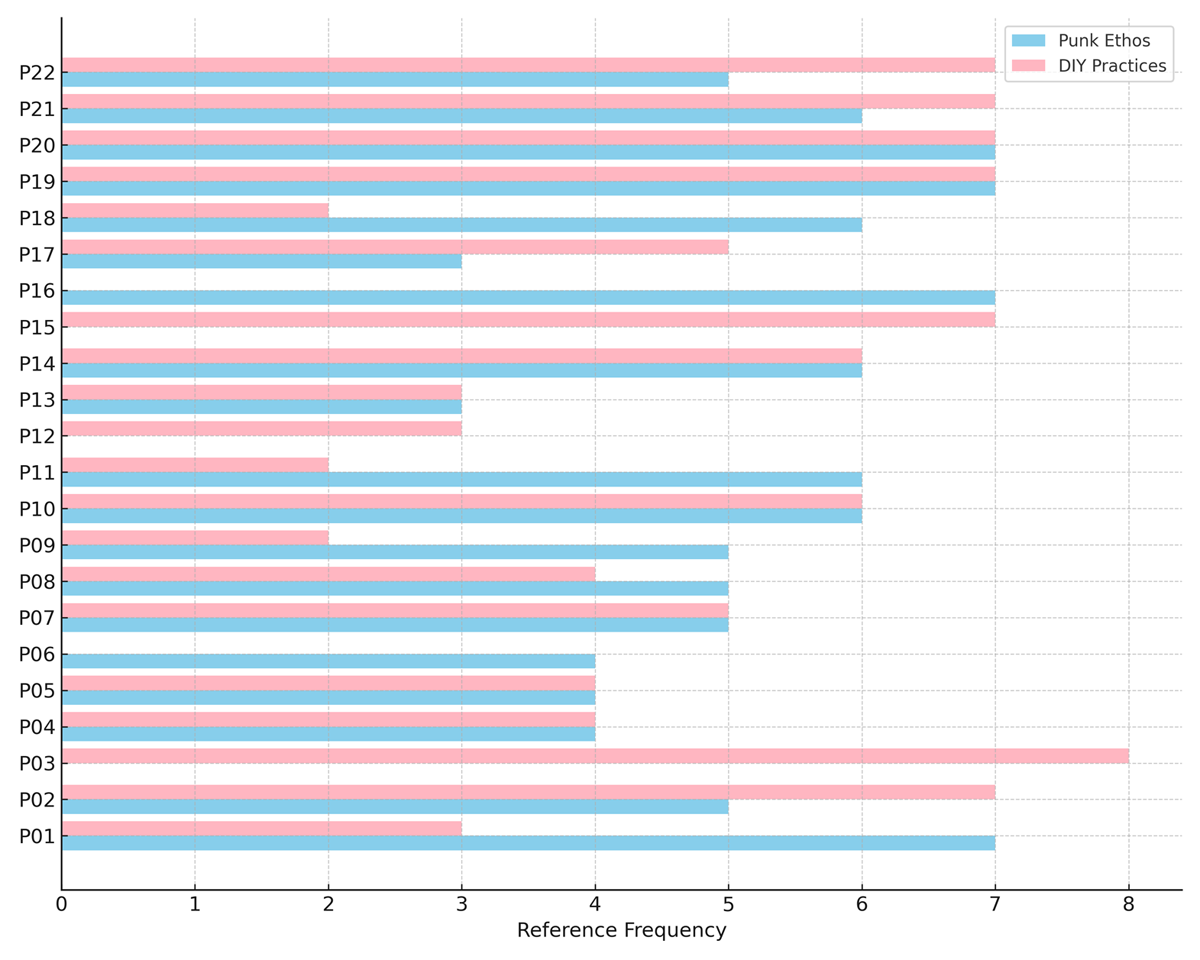
Figure 1
Distribution of references to punk ethos and do-it-yourself practices across participants.
RQ2. How Do Learners in Open Education Experience Networked Collaboration and Co-construct Knowledge Through Rhizomatic Practices?
“Networked Collaboration and Peer-Based Learning in Open Education”
Participants in open education environments consistently described a fundamental shift in how they perceived their peers. They moved from viewing others as competitors or passive classmates to seeing them as active co-constructors of knowledge. This networked collaboration emerged as the primary engine of learning. The interaction often appeared as a horizontal sharing economy where hierarchy dissolved. P07 articulated this collaborative intimacy by describing peers not just as classmates but as collaborators where they “share everything: tools, drafts, even failures,” noting that feedback often redirected their work. Similarly, P14 highlighted how such relationships created essential structures of accountability that the formal institution did not provide, stating they “wouldn’t have finished the course” without the group’s habit of checking in and co-writing.
These narratives suggest that the learning structure operates through multiplicity and interconnectedness. In instances where the formal syllabus was absent or fluid, this peer-driven reliance became even more pronounced. P02 described the initial uncertainty of such an environment as “strange at first, but exciting,” where the group decided together what was worth exploring, shifting focus from submitting assignments to “shaping the learning path collectively”.
As illustrated in Figure 2, the learning process creates a decentralized network where learners, resources, and topics engage in multidirectional flows. This visual complexity mirrored participant behaviors regarding resource creation. Learners engaged in curation as a form of learning instead of simply consuming a static reading list. P19 explained how individual exploration evolved into a community asset; after diving into a “rabbit hole of open-source materials,” they began curating sources on Discord, eventually building “a resource map made by learners for learners”.
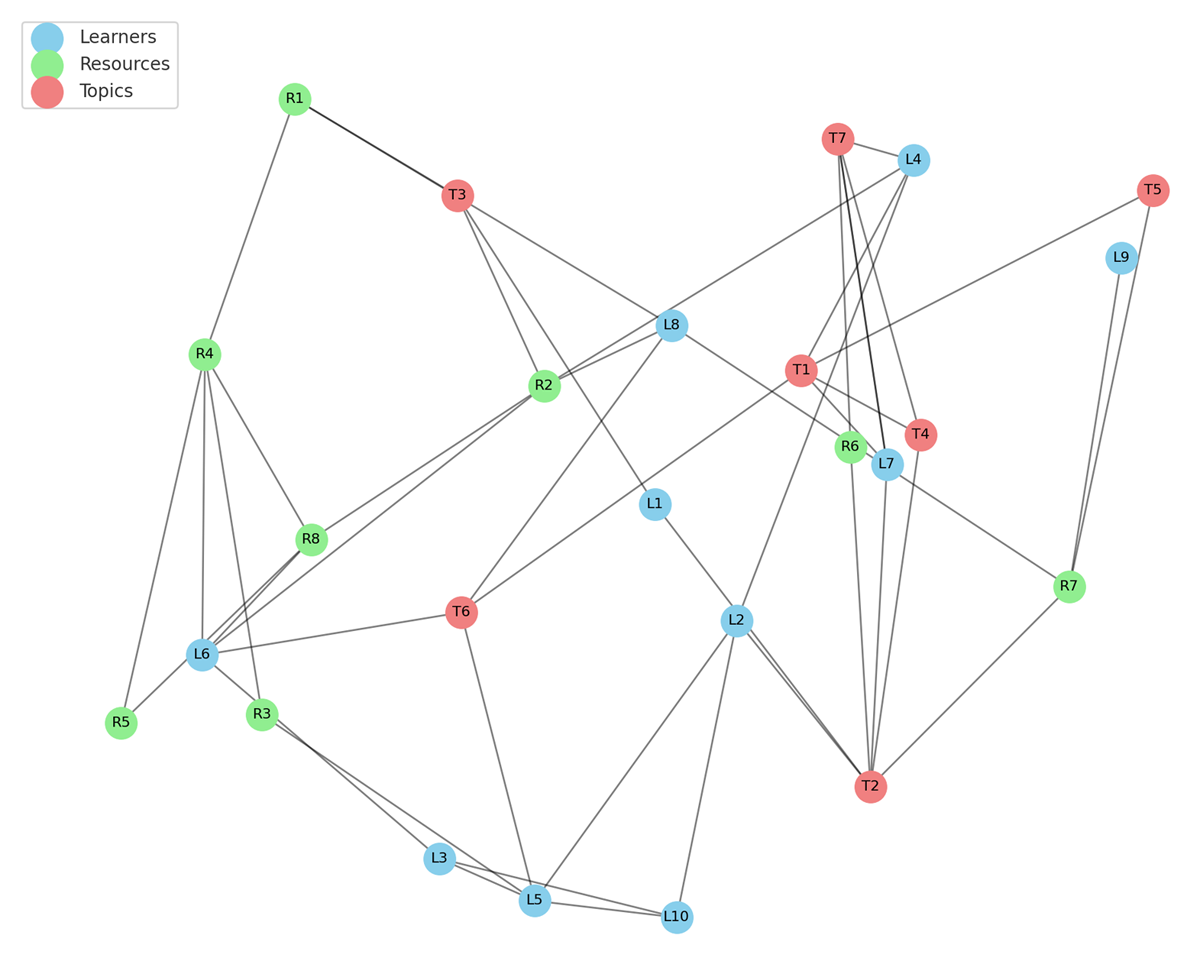
Figure 2
Mapping rhizomatic learning: Interactions of learners, resources, and topics.
The curriculum in these settings functioned as a negotiated terrain. The boundary between teacher and student became porous, allowing learners to inject their own interests into the formal structure. This co-creation became evident when P11 realised they were “not just following something” but making it, seeing their questions incorporated into session plans. P06 added that the tutor avoided lecturing, allowing students to bring examples, articles, or memes that guided the discussion, creating a feeling of “co-creating the course” instead of merely attending it.
These accounts indicate that agency in open education is tied to how the path is navigated. P21 noted that the lack of templates forced them to “figure out who to talk to” and how to combine tools, making the project meaningful. While initially challenging, the act of navigating the unknown itself became a pedagogical outcome. P16 emphasized the ownership derived from this freedom:
“The freedom to choose my tools, my format, even how I engaged with others, gave me a sense of ownership. I wasn’t performing for grades but really building something with others” (P16).
Figure 3 visualizes this interplay and shows that high learner autonomy does not imply isolation. On the contrary, the data suggests that as learners exercised more autonomy, their engagement with peer networks and diverse resources often intensified. This challenges the assumption of the solitary autodidact, revealing that autonomous learning in open contexts is inherently social and resource-intensive.
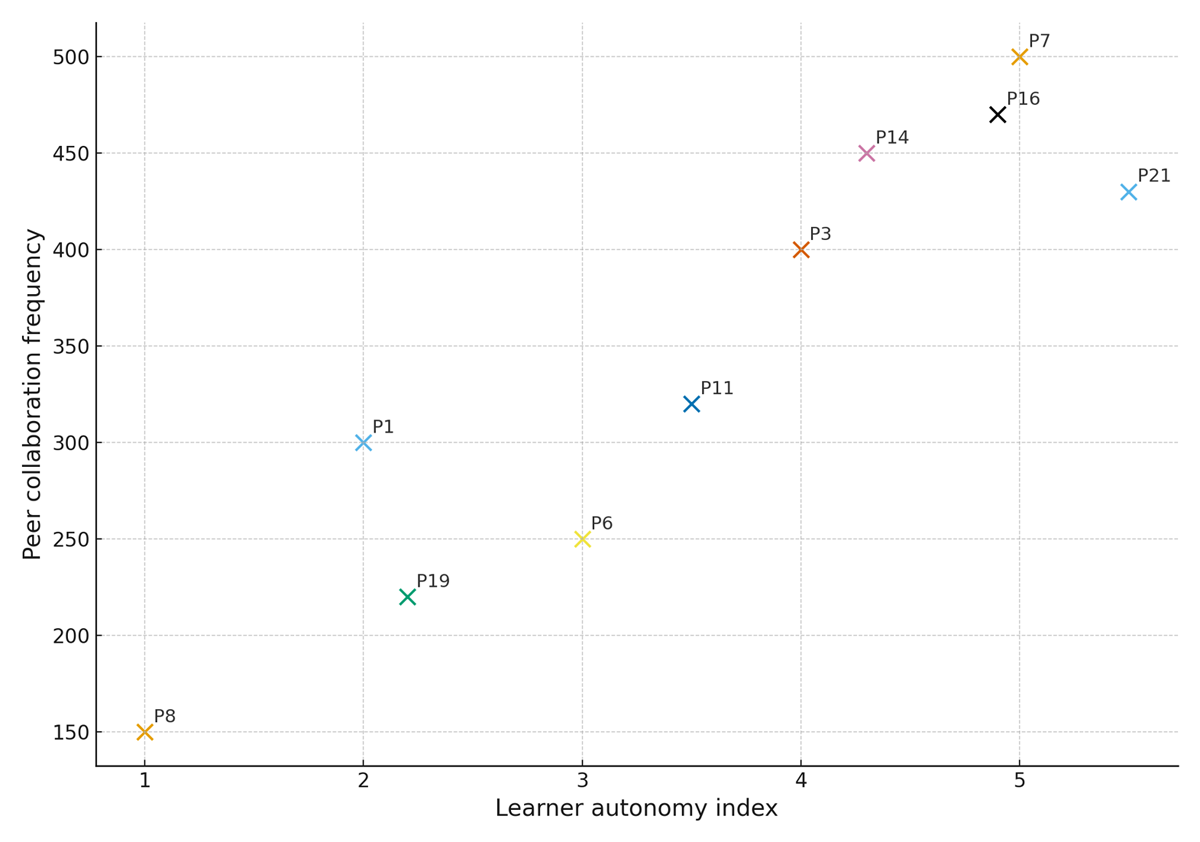
Figure 3
Learner autonomy and collaborative intensity in rhizomatic learning contexts.
RQ3: How Do Learners in Open Education Challenge Traditional Authority and Engage in Critical Dialogue as Acts of Subversive Learning?
Critical Disruption and Dialogic Agency in Open Learning Contexts
In this study, participants reflected on how open education environments enabled forms of resistance to traditional authority. Unlike traditional settings with rigid curricular structures, open models encouraged learners to deconstruct these patterns by co-authoring their educational pathways. This process often involved challenging the conventional logic of submission. One participant disrupted the flow of a scheduled class to propose a reorientation of content, while others engaged in acts of subversion by choosing unconventional topics. These experiences show that open learning reshapes the relationships that structure knowledge.
Specific moments of agency demonstrated how learners actively intervened in the course design. P09 challenged the reliance on a specific source, questioning why the discussion depended on a central textbook; ultimately, the group “switched to another open source that made more sense to everyone”. Similarly, P13 introduced a completely new case study, bringing in a feminist media case from Türkiye to question the conceptual framing. Despite the lack of a central instructor, the platform moderators “incorporated my critique into the design of the next week’s activity”.
These narratives indicate that subversive learning often emerged as a productive response to institutional inertia. In the absence of a central teacher figure, open and distance learning environments created a space for learners to articulate their own priorities. P04, P10, and P19 described situations where they rejected passivity. P04 described pausing a confusing video to search for other explanations and sharing a thread about it, noting, “It wasn’t about showing off. It was about finding something that worked for us”. P10 realized they could decide the reading order, choosing a podcast and writing their own questions to make the class feel like it “belonged to me”. Likewise, P19 posted a project idea and found that the group offered critiques and tools, realizing, “I didn’t need a teacher to tell me what to fix”.
Some participants enacted disruption by intervening in the discursive structure. As P22 explained, this form of agency was central to their engagement with a media literacy project. By introducing punk zines, P22 challenged the aesthetic and linguistic norms of the course:
“I used punk zines as examples for a media literacy project. At first, my peers didn’t get it. But I explained how they question authority, aesthetics, and language. That started a long discussion, and others ended up using alternative formats too” (P22).
The data also shows that these dynamics appeared in exchanges with machines. P18 recounted an ongoing interaction with AI tools. In this context, the AI ceased to be a passive instrument and became a dialogic partner that filled the role of a private tutor:
“Through open and distance learning, I encountered productive AI tools that effectively became my personal tutors. During lessons, I constantly adjusted prompts and refined responses. This repetitive interaction gradually became engaging… I realized I wasn’t simply using a tool. I was learning with it. It revealed what I was missing and showed me how to explore topics more deeply” (P18).
Figure 4 shows how participants (P1–P22) engaged with five domains of dialogic and subversive learning: AI Tools, Peer Feedback, Punk Aesthetics, Open Curriculum, and Dialogic Writing. The stacked area chart presents individual contributions across these categories and makes visible the range and intensity of their involvement. The patterns suggest that subversive learning in this setting does not rely on confrontation. Instead, it reflects efforts to rethink learning, pose questions, and shape meaning together.
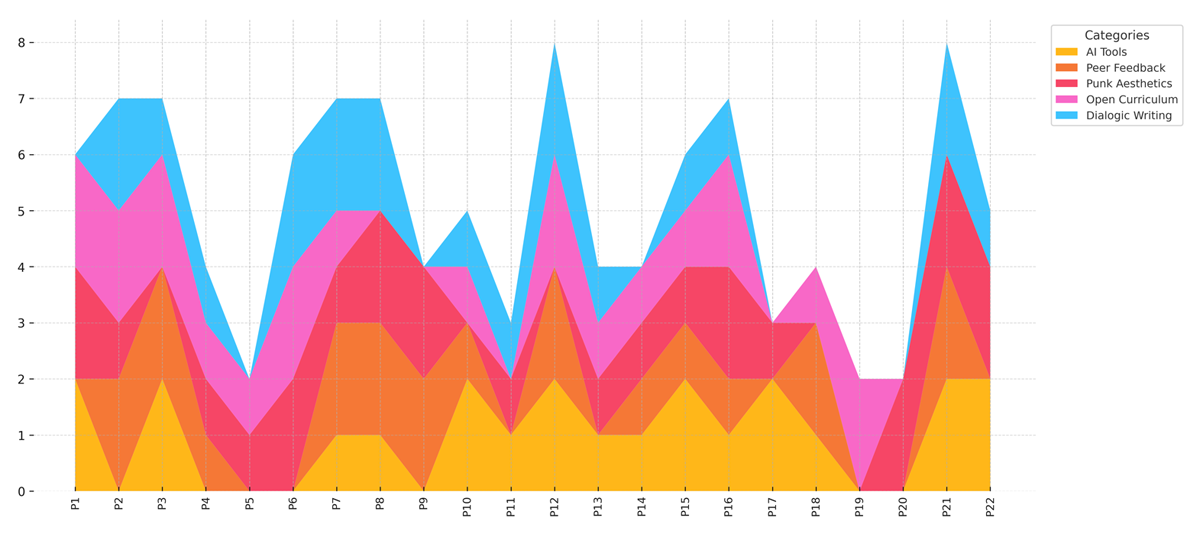
Figure 4
Distribution of dialogic and subversive learning contributions by participants.
RQ4: How Do Learners Construct Identity and Agency Through Digital Communities and Cultures of Belonging in Open Education?
Community, Identity, and the Affective Dimensions of Digital Learning Cultures
Identity construction in open education environments extends beyond academic performance or curriculum compliance. It unfolds within dynamic digital communities where learners find opportunities to belong and transform themselves through relational engagement. Participants described how these environments provided new forms of presence through shared values and mutual support. Several early graduates reflected on their engagement in forums and blog communities before the rise of social media. P02 recalled accessing the internet via cafés and connecting through forums, noting that although the process was slower, they “remained connected and regularly shared drafts” when questions arose. Similarly, P06 added that trust built over time through long blog threads and email chains, especially through “feedback on each other’s drafts and project ideas” because instant notifications did not exist.
Current narratives suggest that belonging is defined by relevance and reciprocity instead of just duration. Identity construction appeared tightly interwoven with cultural and community-based knowledge. P11 emphasized how sharing locally rooted examples, such as a media campaign challenging gender stereotypes, led to inclusive dialogue where “other learners really engaged with it”. P15 described expanding professional capabilities through peer support, noting that they “wasn’t familiar with design software at first” but learned through shared tutorials and AI tools, filling the gap left by the formal curriculum.
These expressions signal the affective labor that sustains digital belonging. Collaborative interactions often reoriented professional views. P07 recounted how these networks shifted her perspective on teaching from delivery to facilitation:
“I studied teaching and sociology through distance and open education… What shaped my identity as an educator was not just the content but the collaborative learning process. Interacting with peers, sharing resources, and asking critical questions fostered a sense of belonging and helped me grow through the community, not just the curriculum” (P07).
However, the data shows that identity formation was not always emancipatory. Several participants critiqued how performance-oriented cultures shaped their roles. P10 argued that standardized tests promoted rote learning, creating a system that “rewarded continuous output” instead of thoughtful engagement. Similarly, P14 pointed out a conflict between stated autonomy and the reality of rankings, stating it was “difficult to feel genuinely free or creative” amidst constant deadlines.
Despite such tensions, interdisciplinary collaboration emerged as a theme of identity affirmation. P21 described how working with people from tech and arts made the group vibrant, noting, “I learned to reframe my points depending on the audience”.
Figure 5 illustrates the distribution of key community learning themes based on participant contributions. The radial chart visualizes how learners engaged in practices such as resource sharing, informal mentorship, and collaborative problem-solving. Each segment represents a distinct theme and is scaled by the density of participant responses. Themes like peer feedback appeared frequently among those navigating interdisciplinary environments.
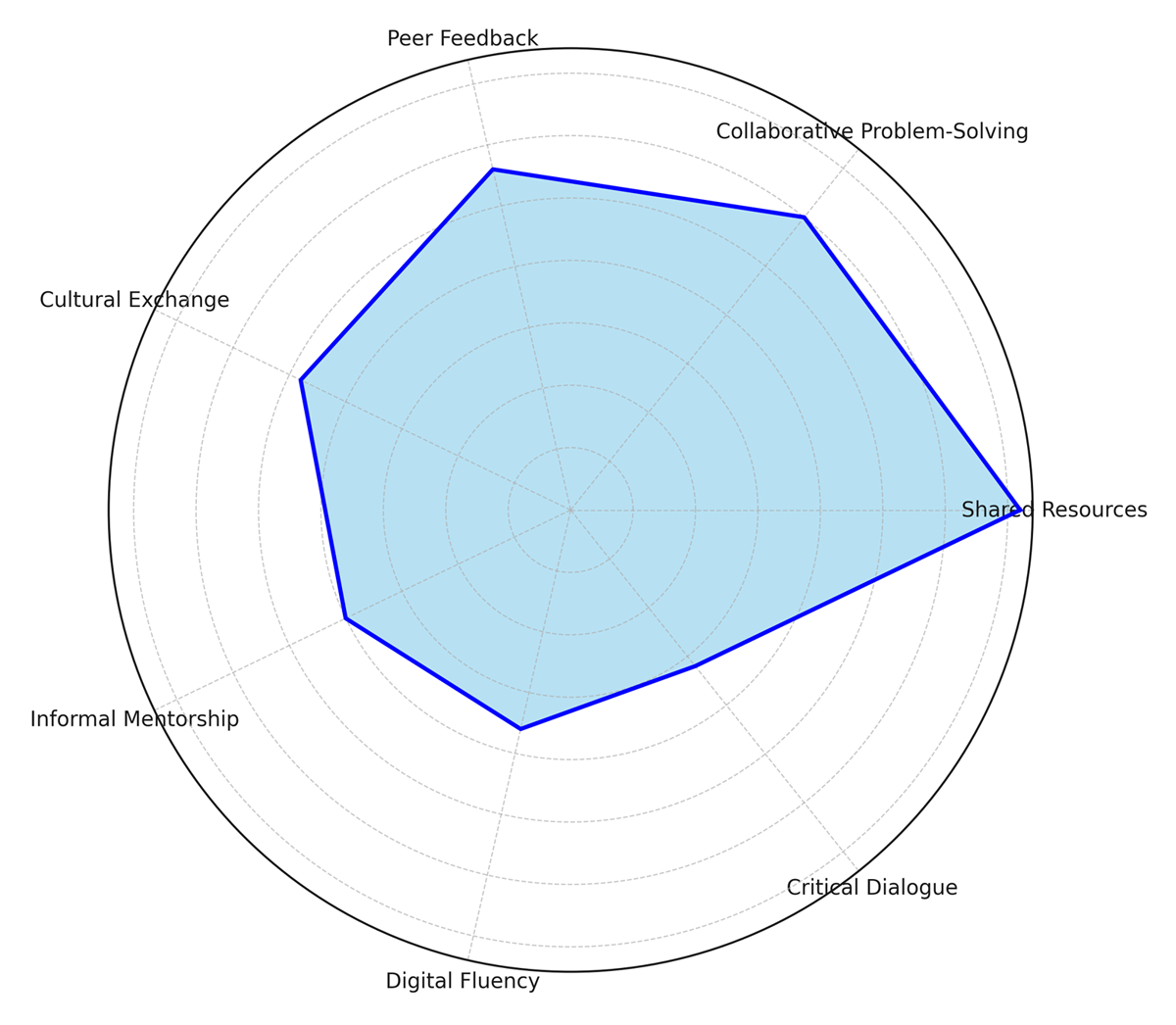
Figure 5
Radial distribution of community learning themes in open education.
Ultimately, these interactions show how identity and agency evolve through dialogic exchanges. P18 summarized this sentiment by framing open education as a form of creative resistance:
“What shaped my learning most were the shared conversations, moments of doubt, and the collaborative exploration of tools, rather than the formal structure of the course itself. For me, this confirmed that open education is the new punk. It emerged through collective effort, creative resistance, and the freedom to learn on our own terms” (P18).
Discussion
This study examined how learners in open education assert autonomy, navigate networked collaboration, challenge authority, and construct professional identities. The data indicates that open education functions as a contested space where learners actively reclaim agency through practices that align with punk ethos and rhizomatic engagement.
Learner autonomy in this context operates as a form of resistance against institutional constraints. Much of the literature frames autonomy within a neoliberal paradigm where self-direction produces efficient and atomized consumers (Olssen & Peters, 2005). Participants articulated a different trajectory. Their refusal to follow prescribed syllabi and their creation of alternative artifacts align with the punk ethos of anti-gatekeeping described by Stewart and Way (2023). Unlike the view that DIY practices are simply a reaction to a lack of resources, these acts are intentional and political. Silveira and Conter (2015) argue that DIY has evolved into a symbolic flag for alternative ideologies. Consistent with this, the fanzines produced function as creative platforms that articulate youth subcultures shaped by social and economic upheavals, while also making visible their quests for autonomy, resistance, and alternative identities (Serbes et al., 2025). Participants use these practices to reclaim their education. This contrasts with Gibbons and Snake-Beings (2018) who discuss DIY primarily as a pedagogical strategy implemented by educators. In this study, DIY emerges despite the pedagogical design and functions as a learner-led intervention. Significant innovations occur in the underground spaces created by learners rather than in formal course structures.
Networked collaboration challenges the stereotype of the open learner as a solitary autodidact. High autonomy coexists with intense peer collaboration and supports the argument that independence in open education is inherently social. This mirrors Deleuze and Guattari’s (1987) concept of the rhizome where connections are non-hierarchical. Participants described the curriculum as a negotiated terrain. This confirms Honan and Sellers’ (2007) assertion that curricula are co-constituted by encounters. The current analysis extends this definition by highlighting the migratory nature of these networks. Learners frequently abandoned institutional platforms for user-controlled spaces like Discord to escape surveillance. This supports Brailas’ (2020) view of rhizomatic learning but points to a gap in institutional readiness. Universities offer open courses but their infrastructures fail to support the messy nature of true inquiry. This failure forces learners to build their own architectures.
The study supports the concept of subversive pedagogy but with a critical inversion. Here the learners act as the agents of subversion. By disrupting classes and using AI as unauthorized private tutors, participants dismantled the instructional authority described by Rust (2018). These acts represent a demand for dialogic agency (Lawrence, 2019). When learners question the syllabus or introduce local case studies, they engage in a sophisticated critique of power relations consistent with Weber (2003). AI played a distinct role in this context. Butson and Spronken-Smith (2024) frame AI-mediated dialogue as a site of knowledge flow. Participants here utilized AI to bypass human gatekeepers entirely. This aligns with Hanshaw et al. (2024), who found that AI assistants significantly support student self-efficacy and motivation in online settings. Learners use advanced technology to render the traditional instructor less necessary. This signals a shift where subversive learning becomes a constructive method for making the educational system visible.
Identity construction revealed significant contradictions. The punk metaphor confirms that open education fosters cultures of belonging and digital human capital (Mossberger & Tolbert, 2021). This contradicts Maffie’s (2020) skepticism regarding the durability of digital relationships. When communities form around shared struggle, the lack of face-to-face interaction does not diminish belonging. Yet a friction exists between the rhetoric of freedom and the reality of surveillance. Adler and Lalonde (2020) warned that the flexibility of open education often feels like a trap of continuous performance. Learners strive for autonomy but remain tethered to neoliberal metrics. This creates a hybrid identity that is simultaneously subversive and compliant. The openness of education is defined less by institutional policies and more by the transgressive acts of the learners themselves.
Conclusion, Implications and Suggestions
This study examined how learners in open and distance education engage with autonomy, collaboration, critical dialogue, and identity construction. The findings reveal that open education functions as a contested space. Learners do not merely consume content. They question established structures, develop alternative practices, and participate in communities of shared learning. Many participants reflected values drawn from DIY and punk cultures. These insights highlight that open education is shaped by learner agency and social interaction. Practices such as open-source collaboration and learner-created materials show that engagement extends beyond formal curriculum boundaries.
The focus on Türkiye and purposive sampling limits generalisability. Learners were selected based on their resonance with non-traditional educational approaches. This may not represent broader open education contexts. Cultural and institutional specificities also influence how these practices are formed and interpreted. Nonetheless, participant narratives highlight the need for models that support emotional engagement and learner-driven innovation.
These outcomes offer specific directions for practice aligned with the core themes of the study. To support autonomy, instructional designs must move beyond rigid syllabi and allow for user-generated content pathways. The prominence of networked collaboration suggests that institutions should integrate decentralized platforms rather than relying solely on vertical learning management systems. Acknowledging subversive learning requires participatory governance where learners co-author curriculum decisions. Future research may explore how these practices develop over time or across different contexts. Comparative and longitudinal studies can offer deeper insight into how learners sustain autonomy and belonging within evolving digital education systems.
Data Accessibility Statement
The datasets used and/or analysed during the current study are available from the corresponding author on reasonable request.
Sustainable Development Goals (SDGs)
This study is linked to the following SDG(s): Quality education (SDG 4), Reduced inequalities (SDG 10), and Responsible consumption and production (SDG 12).
Ethics and Consent
The ethical approval was granted by Gebze Technical University (E-43633178-199-199386).
Competing Interests
The author has no competing interests to declare.
Author Contributions (CRediT)
Hüseyin Serbes: Conceptualization, methodology, formal analysis, investigation, data curation, visualization, writing—original draft preparation, writing—review and editing.
Author Notes
Based on Academic Integrity and Transparency in AI-assisted Research and Specification Framework (Bozkurt, 2024), this paper was reviewed, edited, and refined with the assistance of Gemini 1.5 Pro (Google, Version as of December 2025), complementing the human editorial process. Data visualizations in this paper were initially created with the help of Gemini 1.5 Pro (Google, Version as of December 2025). For the translation and localization of content, DeepL (Version as of March 2025) was employed. The human author critically assessed and validated the content to maintain academic rigor. The author also assessed and addressed potential biases inherent in the AI-generated content. The final version of the paper is the sole responsibility of the human author.