
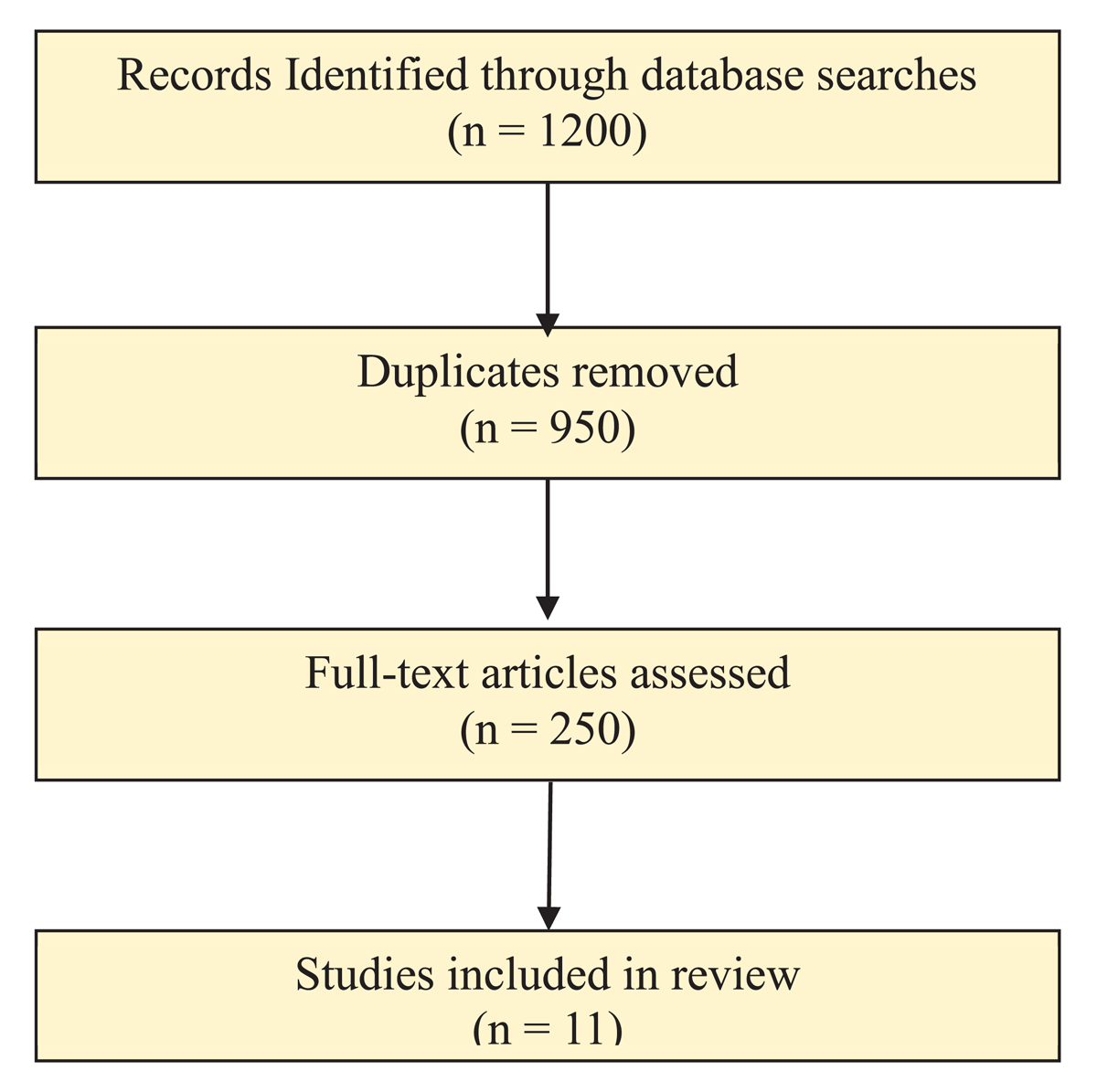
Figure 1
PRISMA Flow Diagram of Study Selection Process for Online Proctoring in ODeL (2014–2024).
Table 1
Summary of Empirical Studies on Proctoring and Academic Integrity in ODeL (2014–2024).
| THEMES | AUTHOR(S) & YEAR | KEY FINDINGS |
|---|---|---|
| Strategic Integration of Proctoring Technologies | Badaru & Adu (2022) | LMS platforms (Moodle, Blackboard, Sakai) remain central to ODeL but often fail to support innovative assessment; integration should align with pedagogy, not only technology. |
| Al-Zoubi et al. (2022) | Automation and blockchain integration in LMSs improve scalability but introduce privacy and reliability risks that affect assessment integrity. | |
| Selwyn et al. (2023) | Technical breakdowns in online proctoring systems cause missed exams, appeals, and faculty overload; these undermine institutional trust in ODeL settings. | |
| Balancing Security and Academic Integrity | Majola & Mudau (2022) | Digital literacy gaps, weak institutional support, and low connectivity reduce the effectiveness of online proctoring and exacerbate inequality among students. |
| Badaru & Adu (2022) | Integrity in ODeL requires pedagogical redesign rather than technological enforcement; sustainable assessment must integrate flexibility and inclusivity | |
| Hussein et al. (2020) | Comparative review of online proctoring tools demonstrates that while surveillance deters misconduct, usability and access barriers must be addressed for fairness. | |
| Perceptions and Experiences of Stakeholders | Gilbert (2022) | Students report anxiety, isolation, and limited peer support under online assessment/proctoring |
| Mak et al. (2022) | Need for greater technical preparedness, empathy, and emotional support to sustain performance. | |
| Al-Zoubi et al. (2022) | Technical friction during proctored exams frustrates students and harms perceived fairness. | |
| Ethical Considerations and Inclusivity | Selwyn et al. (2023) | Institutional focus on surveillance overshadows fairness and inclusivity; calls for ethical framework for equitable assessment. |
| Verhoef & Coetser (2021) | Student voices highlight privacy, trust, and digital-access gaps; transparency and inclusivity are essential for legitimacy. | |
| Hylton et al. (2016) | Webcam-based proctoring deters cheating but raises privacy and comfort concerns among distance learners. | |
| Lee and Fanguy (2022) | Evaluate online proctoring as both innovation and ethical risks; advocates inclusive, transparent governance. | |
| McKenna (2022) | Frame proctoring as part of a broader surveillance culture; warns against normalising intrusive monitoring in higher education |
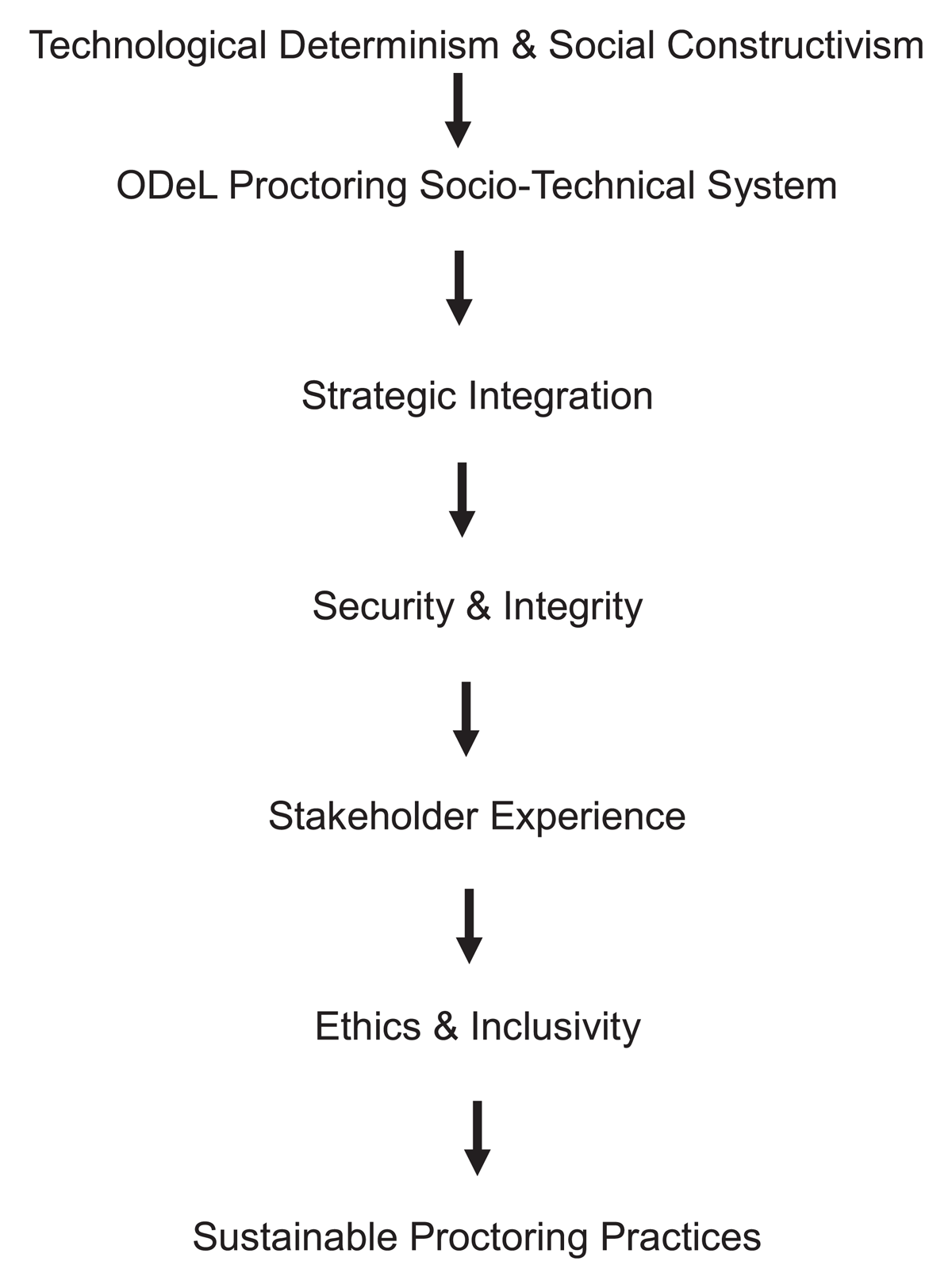
Diagram 1
The ODeL Proctoring Socio-Technical System: Integrating Technological Determinism and Social Constructivism.