
Introduction
The mental health and wellbeing of university students is an increasingly important topic in higher education. Research has shown that students’ mental wellbeing can have a significant impact on their likelihood of study success, affecting their likelihood of completing or passing courses (Mojtabai et al. 2015; Richardson 2015), dropping out of university (Brown 2016), and attaining higher grades (Eisenberg et al. 2009; Office for Students 2019). Furthermore, studies suggest that higher education practices, stresses and environments can negatively affect students’ mental health: UK university students are consistently found to have poorer wellbeing than the general population of comparative age (Neves & Hillman 2019; Office for National Statistics 2020), and studies have found that studying, academic pressure, university culture and systems may be causing or exacerbating mental health issues for students (Brown 2016; Lee & Kim 2019; Ribeiro et al. 2018; Tinklin, Riddell & Wilson 2005; Winzer et al. 2018).
Terminology around mental health and wellbeing can be controversial; ‘language in this field is particularly contested, revisited and innovated’ (Davies 2014). In this paper we adopt the World Health Organization (WHO) definition of mental health as ‘a state of well-being’ (WHO 2013), recognising the intrinsic connection and overlap between wellbeing and mental health, and as such we use both terms within this paper. However, we recognise that these terms are not interchangeable; following Houghton and Anderson’s (2017) approach, we use ‘mental health’ to refer to issues such as depression, anxiety or other potentially diagnosable conditions, and ‘wellbeing’ to reflect more transient highs and lows that everyone can experience but which can still have significant impact on students’ experience and success.
In UK Higher Education (HE), sector bodies are calling for universities to take a more proactive and holistic approach, working in partnership with students to embed mental wellbeing throughout learning, tuition and curricula (Houghton & Anderson 2017; Hughes & Spanner 2019; Piper & Emmanuel 2019; Universities UK 2020). Participatory approaches and partnerships with students are particularly crucial in designing successful student-centred interventions and solutions (Lister, Coughlan, et al. 2021; Lister, Riva, et al. 2022), and working in partnership with students to identify where barriers to positive mental wellbeing reside has been found to be successful in identifying areas for intervention (Lister 2021; Lister et al. 2023; Lister, Seale & Douce 2021). An example of a taxonomy of barriers and enablers to mental wellbeing in distance learning is shown in Figure 1.
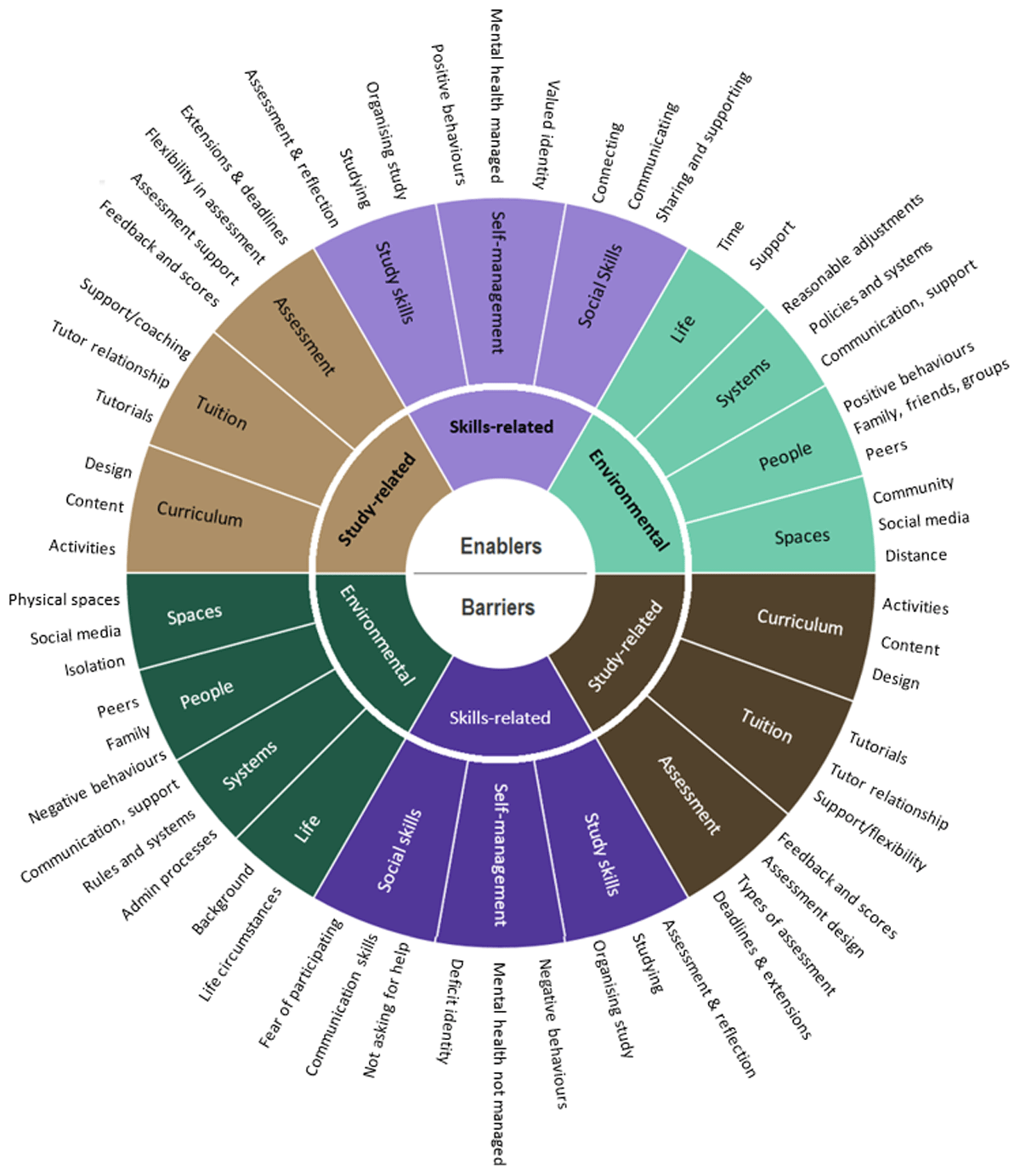
Figure 1
Taxonomy of barriers and enablers to mental wellbeing (Lister, Seale & Douce, 2021).
Assessment is frequently identified in the literature as a barrier to wellbeing, with assessment design, collaborative work, challenges of assessment workload and post-assessment feedback identified as ‘psychological threats’ (Jones et al. 2020). Baik, Larcombe and Brooker also found that assessment design impacted on wellbeing, with student perceptions of clarity and fairness in design being particularly critical (Baik, Larcombe & Brooker 2019), while Hill et al. highlight impacts of assessment feedback on student wellbeing (Hill et al. 2021). Finally, of course, failure and fear of failure are major contributors to student academic stress or distress (Whittle et al. 2020).
Pedagogy and curriculum are also recognised to contain barriers to wellbeing. Tinklin, Riddell and Wilson identified ‘Lack of understanding among lecturers’ and ‘badly designed learning experiences’ as barriers (Tinklin, Riddell & Wilson 2005), and Baik, Larcombe and Brooker found that lack of clarity in teaching materials, low levels of classroom interaction and lack of variety in activities impacted negatively on wellbeing (Baik, Larcombe & Brooker 2019). Specific activities, such as groupwork, can be a barrier for wellbeing (McPherson, Collins & Gallen 2019), while impacts of power dynamics involved in faculty-centred as opposed to student-centred pedagogies have been found to affect students’ confidence and wellbeing (Felton & Stickley 2004; Hill et al. 2019). Feeling ‘overwhelmed’ by curriculum content has been linked to student withdrawal (Weller, van Ameijde & Cross 2018), and distressing curriculum content has been shown to present particular mental health challenges for some students (Bentley 2017; Slavin, Schindler & Chibnall 2014).
Further barriers may be experienced if students lack skills they need to study confidently. Barrable, Papadatou-Pastou and Tzotzoli found that stress associated with ‘study skills difficulties’, particularly around ‘time management, staying motivated, and memory techniques’ (Barrable, Papadatou-Pastou & Tzotzoli 2018) were a trigger for mental ill health and negative feelings. Distance and online learning can be particularly challenging; Simpson identifies time management as a particular challenge in distance learning (Simpson 2002), and Weller, van Ameijde & Cross highlight difficulties with communications skills in online education (Weller, van Ameijde & Cross 2018). The balancing of study with other life circumstances can also present barriers to wellbeing, especially with part time or distance students. In research with Open University students, Waterhouse, Samra and Lucassen found that the balancing of commitments such as family, work and ‘unpaid caring responsibilities’ with study was a barrier for mental wellbeing in distance learning (Waterhouse, Samra & Lucassen 2020), and Samra, Waterhouse and Lucassen recommend universities offer ‘realistic guidance and planning tools that students can personalise to manage their multiple roles in conjunction with study’ (Samra, Waterhouse & Lucassen 2021).
Universities have a duty to support their students and to attempt to address these barriers. However, despite calls from sector bodies for rigorous, whole-university approaches to be taken, this is a complex and deeply nuanced area and there is frequently a ‘lack of consensus’ in HE around approaches, responsibilities and action (Hartrey, Denieffe & Wells 2017). This has led to a plethora of studies trialling individualistic, intervention-based approaches, which generally show limited or short-term success (Winzer et al. 2018), and do not address underlying issues in university cultures and practices. They also tend to focus on campus-based support, and can unintentionally exclude part time, distance or commuter students, who may be at increased risk of mental health difficulties or more likely to need support (Barr 2014; Lister, Seale & Douce 2021).
There is a need to holistically address barriers to mental wellbeing within HE environments so that all students can benefit from them, instead of deficit models which focus on individual groups of campus-based students. This is not always straightforward; the issues are complex and practitioners can struggle to understand the nuances involved and to balance them against other sector priorities. Lister and McFarlane (2021) identified that personas and vignettes that illustrate experiences of students’ mental health difficulties in study can be valuable tools in designing inclusive curricula and assessment experiences as part of a holistic approach to student wellbeing. An example of a vignette exploring challenges of mental wellbeing in distance learning is shown in Figure 2.
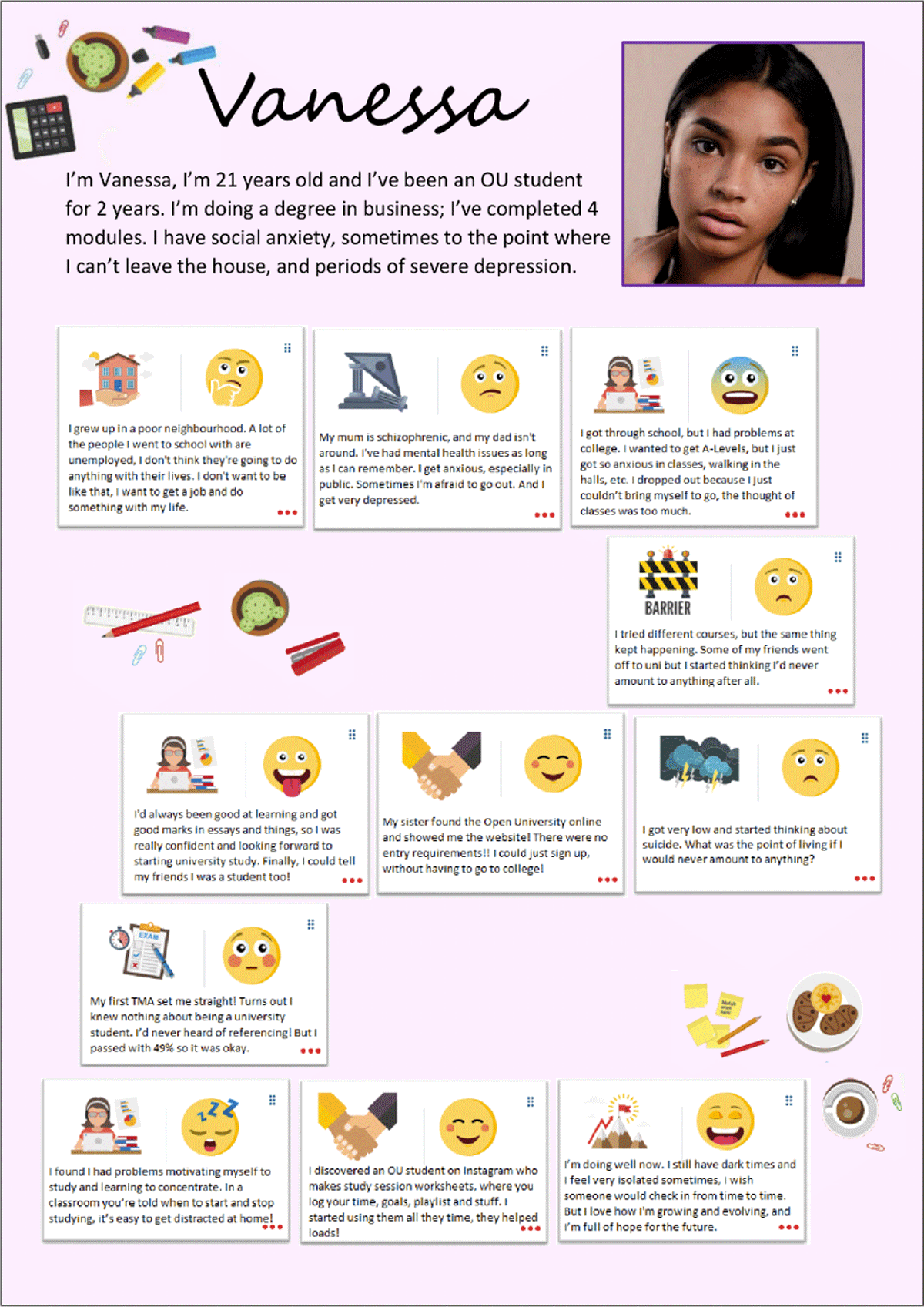
Figure 2
Example of a vignette illustrating challenges in distance learning (Lister & McFarlane, 2021).
There is much that universities can do to address these barriers. This paper presents a collaborative participatory study involving three UK higher education institutions and three UK sector bodies which attempts to do just that. The Positive Digital Practices collaborative project (funded by the UK Office for Students) aims to address some of the barriers to mental wellbeing in higher education study experiences by scaling up existing positive practices and co-creating guidance with students to facilitate this practice. Positive Digital Practices aims to support student mental wellbeing in three areas:
Positive Learner Identities – supporting students’ emotional awareness, reflection, resilience in adversity and wellbeing literacy;
Positive Digital Communities – supporting students’ sense of belonging and facilitating meaningful connections that do not rely on a campus environment;
Positive Digital Pedagogies – creating and sharing pedagogical practices that support mental wellbeing.
In this paper, we present baseline data from staff and students on their perceptions of barriers and enablers to student mental wellbeing, including areas where these perceptions differ. We also explore examples of positive practice from the Positive Learner Identities work area, presenting the participatory co-creation methodologies used, the resources created, and ideas for how these can be applied by practitioners (the methods and findings from Positive Digital Communities and Positive Digital Pedagogies will be explored in future publications). These resources are a call to action for post-secondary practitioners to work together to enhance student mental health and wellbeing, and make education a more inclusive, equitable experience.
Methods
Positive Digital Practices used a participatory, co-creation methodology (Lister, Riva, et al., 2022) following an appreciative inquiry approach (Cockell, McArthur-Blair & Schiller 2020). The baseline surveys were co-created with students, and the work packages involved co-creation partnerships with students, universities and sector bodies. Methods and partnerships for the surveys and the Positive Learner Identities work area are explored in greater detail below.
Baseline surveys
Baseline data for the project was captured through staff and student surveys, with two aims: first, that the surveys would spotlight areas where students and staff felt guidance and support was needed, and second, that the survey may be run again at a future date to measure change.
The surveys were co-designed by an academic and two students who had been involved in a precursor study using an iterative co-design approach. The survey questions mapped to the three areas in Lister, Seale and Douce’s taxonomy of barriers and enablers of mental wellbeing (Lister, Seale & Douce 2021), using a barriers and enablers approach inspired by the social model of disability (Oliver 1983) and included both quantitative (categorical and Likert scale) and qualitative (open comment) survey questions. A draft was piloted with 12 students who tested the approach and gave feedback on question wording and design.
Students were recruited via email invitation sent to two stratified random samples; 2500 students who had disclosed a mental health condition to the university; and 2500 students who had not disclosed a mental health condition. Undergraduate and post-graduate taught students were included. The samples were stratified to be representative of the broader cohort in terms of gender, ethnicity, faculty and geographic location, with under 1.4% variance. An invitation email and two follow-up emails were sent over a period of 23 days, inviting students to take part in the survey.
Staff were recruited as part of a biennial accessibility and inclusion survey (Lister et al. 2020; Lister, Pearson, Coughlan, et al. 2022; Lister, Pearson, McPherson, et al. 2022). An invitation was sent to staff samples consisting of:
Academic/faculty staff (N = 800)
Associate lecturers (tutors) (N = 800)
Student support staff (N = 300)
Learning technologists (N = 200)
Library staff (N = 70)
An invitation email and two follow-up emails were sent to the samples over a period of 26 days.
The analysis approach was participatory; two students who had been involved in different stages of the study worked with an academic to analyse the data in SPSS (version 26) and NVivo 11. Frequency data was analysed using descriptive statistics to identify barriers, enablers, solution ideas and perceived effectuality of piloted solutions. Crosstab analysis of frequency data was used to contrast findings from different student and staff groups. Pearson’s chi-squared was used to determine statistical significance, with an alpha level of .05 for all statistical tests. Open comment data was analysed in NVivo using reflexive Thematic Analysis (Braun & Clarke 2019).
Respondent demographics and findings from the surveys are explored in the ‘Results’ section of this paper.
Positive Learner Identities
The Positive Learner Identities work area was led by The Open University, experts from UK sector bodies Jisc and the University Mental Health Advisor Network, and students from a panel managed by Student Minds. Four discreet work packages were developed, each with a core team of academics, at least one student and at least one associate lecturer (AL). The teams used participatory co-creation methods, where resources were developed and refined communally in a series of meetings that took place over an academic year. These work packages were:
Diverse Journeys: Students, ALs and academics co-created guidance on reflection practices within study, recommending practical approaches that can support reflection, emotional awareness help seeking behaviour and mental wellbeing to accompany the Our Journey digital platform (Coughlan, Lister & Lucassen 2021; Coughlan, Lister & Freear 2019; Coughlan & Lister 2022). They also co-created examples of the diverse journeys that academics can experience on their routes to higher education, to serve as examples to current students.
Emotional Resilience: Students, associate lecturers and academics co-created a digital toolkit of guidance, videos, student-led audio discussions and resources for students and educators on teaching and studying curriculum that contains sensitive and emotionally challenging content. The toolkit built on findings from a previous research project that worked in partnership with students and associate lecturers to investigate how students learn sensitive and emotionally challenging topics in their curriculum and integrated trauma-informed educational approaches.
Study Confidence: Students, ALs and academics co-created resources to support students to manage and, crucially, feel good about four areas of academic study that have been shown to be challenging for students:
Groupwork (McPherson, Collins & Gallen 2019)
Academic writing (Rambiritch 2018)
Maths (Johnston-Wilder et al. 2020)
Giving presentations (Grieve et al. 2021).
Tough Times: Students, ALs and academics co-created an interactive digital resource to support part-time, distance or commuter students to manage the complexities of balancing life with study (Samra, Waterhouse & Lucassen 2021), and a series of additional resources on managing relationship breakups in study.
More details of participants, methods, results and outputs are explored in the ‘Results’ section of this paper. This project was approved by the Human Research Ethics Committee at The Open University.
Results
This section presents the results from the baseline surveys and explores in greater depth the work packages from Positive Learner Identities.
Baseline surveys
The student survey was completed by 584 students (11.68% response rate). The response rate was higher for students disclosing a mental health difficulty, with 340 responses (13.6%) compared to 244 responses (9.76%) from students who did not disclose a mental health condition. Participant demographics are shown in Table 1.
Table 1
Student survey respondents’ characteristics.
| PARTICIPANT CHARACTERISTIC | COUNT | % | |
|---|---|---|---|
| Mental health disclosure | No | 244 | 41.7 |
| Yes | 340 | 58.2 | |
| Age | Under 25 | 120 | 20.5 |
| 26–35 | 155 | 26.5 | |
| 36–45 | 115 | 19.7 | |
| 46–55 | 121 | 20.7 | |
| 56 and over | 73 | 12.5 | |
| Gender | Female | 432 | 73.9 |
| Male | 152 | 26.0 | |
| Ethnicity | Asian | 13 | 2.2 |
| Black | 15 | 2.5 | |
| Mixed | 20 | 3.4 | |
| Other/Refused/Unknown | 25 | 4.2 | |
| White | 511 | 87.5 | |
| Disability (other than mental health) | No | 500 | 85.6 |
| Yes | 84 | 14.4 | |
The staff survey was completed by 666 staff, (30.7% response rate). Demographic details about staff were not captured, but Table 2 shows a breakdown of response rates by staff groups.
Table 2
Staff survey respondents’ characteristics.
| ROLE | RESPONDENTS | RESPONSE RATE (%) |
|---|---|---|
| Academic/faculty | 196 | 24.5 |
| Tutors | 274 | 34.3 |
| Learning technologists | 54 | 27.0 |
| Student support | 116 | 38.7 |
| Library | 26 | 37.1 |
Student survey findings
To identify barriers and enablers to wellbeing in study, students were asked to select areas from a list which ‘caused problems for your mental wellbeing while studying’ (i.e. barriers) or which ‘helped your mental wellbeing while studying’ (i.e. enablers). As can be seen in Figure 3, assessment and life circumstances were selected as barriers to mental wellbeing for the highest number of participants, while building study skills, the people in students’ lives, and curriculum and module content were selected as enablers for the highest numbers of students.
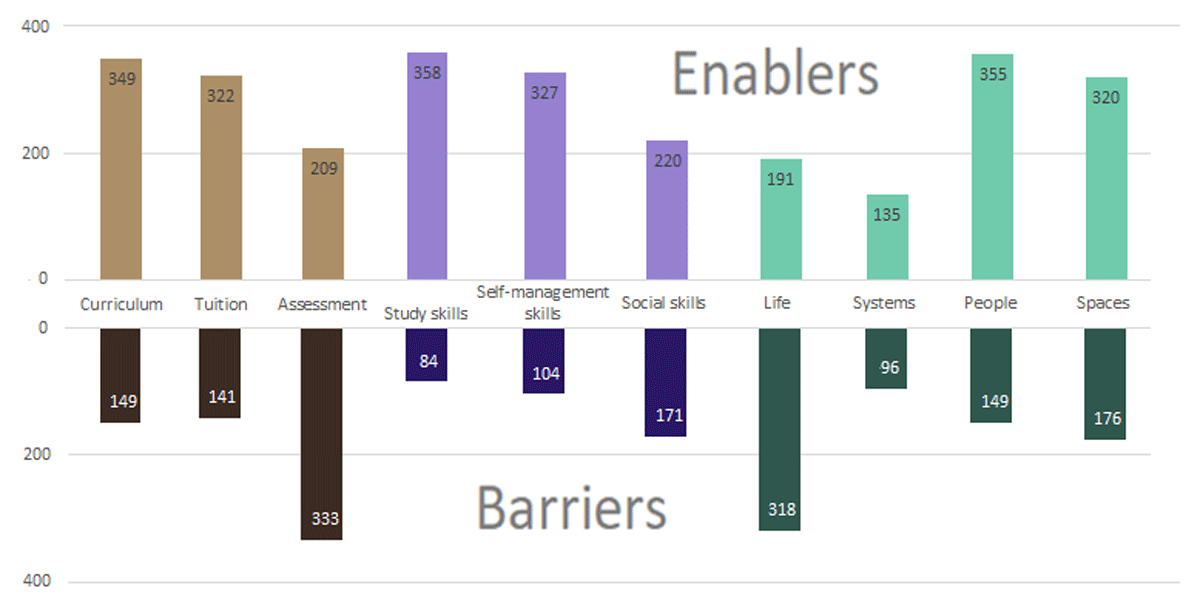
Figure 3
Student perceptions of barriers and enablers to mental wellbeing.
There were statistically significant variations in responses from students from different demographic groups. For example, students who disclosed a mental health condition to the university were statistically more likely to experience barriers than students who did not, but were just as likely to benefit from enablers to mental wellbeing (for details and statistics, see Lister et al. 2023). This implies that enablers are positively experienced by students in general, while barriers appear more keenly felt by students with diagnosed mental health difficulties.
Students were also asked an open question about ‘things you would like the [university] to do to support students’ mental wellbeing in studying’. 162 students (28%) responded to this question, resulting in 264 coded references.
87 references were coded as ‘Tuition, curricula and assessment’. ‘Tuition’ had 47 references, including suggestions to train tutors such as ‘Educate tutors in empathy and what not to say and how to positively adapt to a mental health student.’ There were 22 references to ‘Curriculum’, including ‘Offering trigger warning on potentially upsetting videos or resources.’ In the ‘Assessment’ theme, students asked for changes to
Feedback (e.g. ‘More helpful feedback and more consistent feedback.’)
Flexible deadlines (e.g. ’Be more flexible with final deadlines and EMAs.’)
Support for failing and retaking (e.g. ‘When I failed an exam I had no support or contact of any kind from [institution]. Better support is needed if we fail an exam.’)
Exams (e.g. ‘Consider making exams easier to manage for those with mental health issues.’)
Community and peer support codes were applied to 18 references. These included:
Student community (e.g. ‘More student community’ or ‘One thing I think would be great is to have a YouTube channel (or a similar type of internal [institution] web page) for students who are studying at a given time (not module-specific), where they can go and chat with other students who are also studying at that specific moment, and listen to some music at the same time (if they want) – would help build community spirit I think and help students feel less alone.’)
Student mental health peer support (e.g. ‘perhaps a module forum for students who are going through difficult times are affecting their mental well-being.’)
Study buddy (e.g. ‘introduce study buddies to help feel less isolated and connections to others – to improve mental health not for learning/improving study outcomes.’)
Mental health forums (e.g. ‘Perhaps students having a forum where they could discuss the impact of both other students and tutors would be helpful.’)
There were 16 references where students expressed desire to build their skills and confidence. These included managing wellbeing (e.g. ‘I’d support having mental wellbeing resources that students can explore on the website if needed and tutors can refer students there if needed’), mental health literacy (e.g. ‘Mental health awareness webinars’) and study skills (e.g. ‘More guidance on how to organise a study timetable for students with jobs that are not a standard 9am-5pm – i.e. how to balance it out but not overload oneself’). These responses indicate that students would value resources in these areas themselves, as well as training and guidance for their tutors.
Staff survey findings
To explore staff perceptions on barriers and enablers, staff participants were asked to select areas (from a list) that they believed ‘present the greatest barriers for student mental wellbeing in learning’ and ‘the greatest enablers or support for student mental wellbeing in learning’. As shown in Figure 4, staff felt life circumstances were the strongest barrier, followed by assessment. Staff found tuition was the strongest enabler, followed by the people in students’ lives, and building social skills.
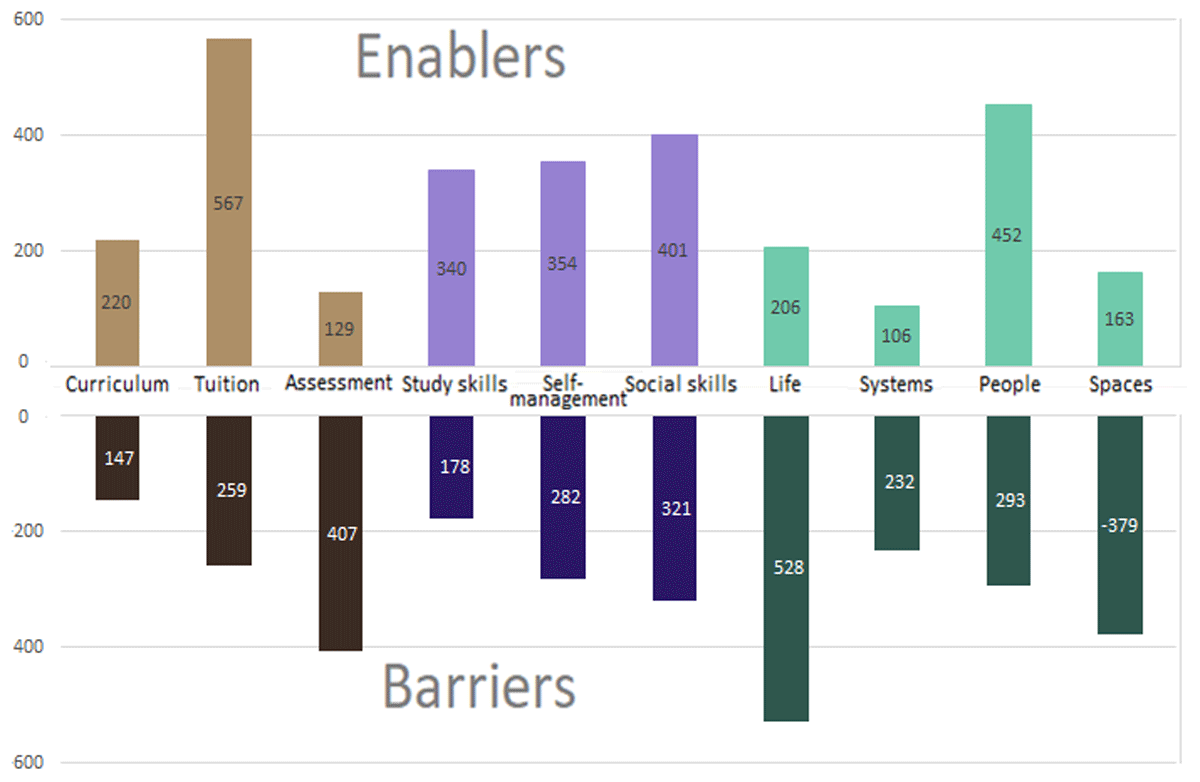
Figure 4
Staff perceptions of barriers and enablers to mental wellbeing.
These perceptions were common across different staff groups; there were no statistically significant differences between groups’ perceptions of enablers, and only two barriers revealed significantly different responses from different staff groups, Tuition (X2 (4, N = 666) = 51.585, p < .001) and Systems (X2 (4, N = 666) = 14.621, p < .006). In the tuition area, tutors were less likely to believe tuition and systems represented barriers while student support staff were more likely to believe tuition presented barriers; in the systems area, library staff were more likely to believe systems presented barriers.
Staff were also asked an open question about how to ‘best reduce barriers to student mental wellbeing in distance learning’. 355 staff (53%) responded to this question, resulting in 448 coded references.
Pedagogies, curricula, assessment and tuition codes were applied to 162 references. The most populated theme was ‘tuition’, with 94 coded references, e.g. ‘Ensuring a strong tutor-student relationship’. ‘Assessment’ had 26 coded refences relating to support and flexibility in assessment, e.g. ‘Clear expectations of what’s required to succeed with assessment. Flexibility to adapt to individual circumstances’ and ‘Alternatives to exams & group work’. The 15 references to ‘Curriculum’ included ‘adopt a Universal Design for Learning (UDL) approach’ and ‘provide potential triggers in topics for students’. The five ‘Pedagogy’ references focused on scaffolding and cohesion between curriculum and tuition, e.g. ‘properly scaffolded teaching, achievable assessment tasks and space to accommodate life events’.
Community and peer support codes were applied to 35 references. There were 23 references to ‘peer support’, such as ‘Formal study buddy schemes’ and ‘Some kind of peer mentoring system’. There were 7 references to ‘Community’, such as ‘supporting the creation of a learning community’ and ‘Helping to build support communities’. There were five references coded as ‘Spaces’, which expressed concerns about ‘unofficial WhatsApp and FaceTime Forums’ and advocated for the institution to ‘encourage [institution] based online peer support environments with student moderators rather than having students make their own away from the [institution]’.
Skills and confidence codes were applied to 26 references. Of these, there were 18 suggestions coded as ‘Study skills’, e.g. ‘Build on study skills so they can reach the standards’. There were six references to building students’ confidence, e.g. ‘give them the skills and confidence to be less dependent on our processes’. Two references were categorised as ‘communication skills’, e.g. ‘embed communication skills training at the start of core modules, so students know how to interact with their tutor and build a good relationship’.
Finally, there were 15 references to ‘Training for staff’, including ‘training staff in accessibility and inclusion’ and ‘Keep increasing the knowledge around mental health for all as much as possible’. This shows a real appetite for resources that can help staff be more inclusive in their practice and support student wellbeing. The Positive Digital Practices project has aimed to meet this need by creating forty open access resources across ten work packages, designed to support staff to support students. Four of these work packages are discussed in the following sections.
Positive Learner Identities
The Positive Learner Identities work packages aimed to address many of the themes identified in the survey results. The approaches, resources developed and potential applications to practice for each work package are discussed in the following sections.
Diverse Journeys
Approach
The Diverse Journeys work package team consisted of two academics, an associate lecturer and professional counsellor, three student partners and a mental health advisor representing the University Mental Health Advisor Network.
The work package utilised the existing Our Journey platform, which prompts students to represent their study journeys as a means of communicating and reflecting on challenges, goals and wellbeing (Coughlan, Lister & Lucassen 2021; Coughlan & Lister 2022). It explored how students might be best guided to use the platform, and how they and the staff they worked with might benefit from activities using it.
Resources developed
The goal of this activity was to produce guidance, with one version for staff and one for students, to support users to actively consider their mental wellbeing while using the platform. Both were designed to be compatible such that staff and students would have common ground if they had read these resources independent of each other. The staff-facing guidance gave additional details about how to plan activities around self-narrative creation and reflection for a group or class.
The guidance offered three approaches to creating a journey, agreed and developed with the partners. These were:
a mindful approach, logging events and how you felt about them as they happened;
a retrospective approach, looking back at the events that stand out from the past with the goal of sense-making;
a skills-focused approach, identifying when skills were demonstrated and aiming to build confidence in these.
The guidance also offered three reflective approaches that could be beneficial when looking back on a created representation of a study journey. These were:
a self-compassion lens, being understanding, balanced and not overly negative in our judgements on our past selves;
a growth mindset lens, recognising how growth occurs by responding to challenges in a positive way and not assuming our abilities are set in stone;
a values lens, adopting a set of values such as independence, curiosity or challenging yourself when reviewing the journey.
Applications to practice
The guidance is designed to be used directly by students and practitioners to support reflection using the Our Journey platform. It is available on the platform, on the project website (Figure 5) and was promoted at events and pilots. The approaches to creating a journey and reflecting on it were offered as examples when working with students, particularly in getting started with the activity. The approaches were valued but feedback has also provided some ideas for future work, such as producing simpler multimedia versions for students to get them started quickly.
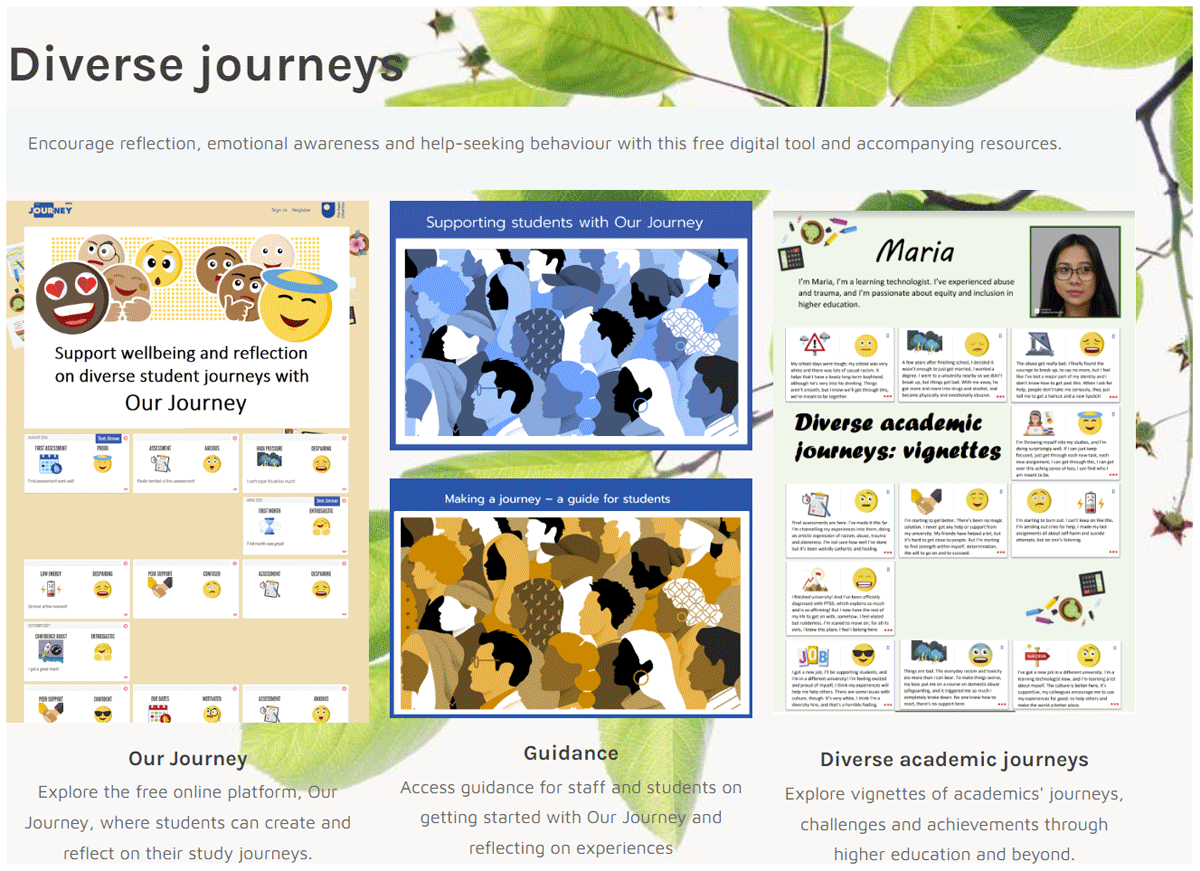
Figure 5
The Diverse Journey resource area.
Study Confidence
Approach
The Study Confidence work package team consisted of three academics, three students and an associate lecturer, with two further academics joining to collaborate on one specific resource.
This work package recognised that factors such as time spent out of education and feeling isolated from other students or teachers can affect students’ levels of confidence during their studies (Butcher 2020; Hogan & Devi 2019) but that confidence is also strongly related to challenges presented by certain subjects and academic tasks. Drawing on literature and precursor work, the team identified specific activities and tasks that tend to present confidence challenges in some students: academic writing, giving presentations or speaking out in public, taking part in groupwork, and maths activities. To support students’ confidence, the team created guidance to promote positive feelings towards the identified challenges and talk about how some other students have coped with them.
Resources developed
Four resources were developed with the common theme of “Feeling good about…”:
Feeling good about academic writing – guidance with twelve tips with practical suggestions on how to use them;
Feeling good about presenting and speaking out – guidance containing three short videos, with prompts for reflection;
Feeling good about groupwork – guidance with six tips, including two short videos and reflective questions;
Feeling good about maths – guidance consisting of four exercises, helping students to ‘make friends with maths’.
Applications to practice
The resources have been published on the Positive Digital Practices website (Figure 6) and have been promoted through HE events. At the time of writing, feedback had been received from six practitioners in four different institutions on how they are using them:
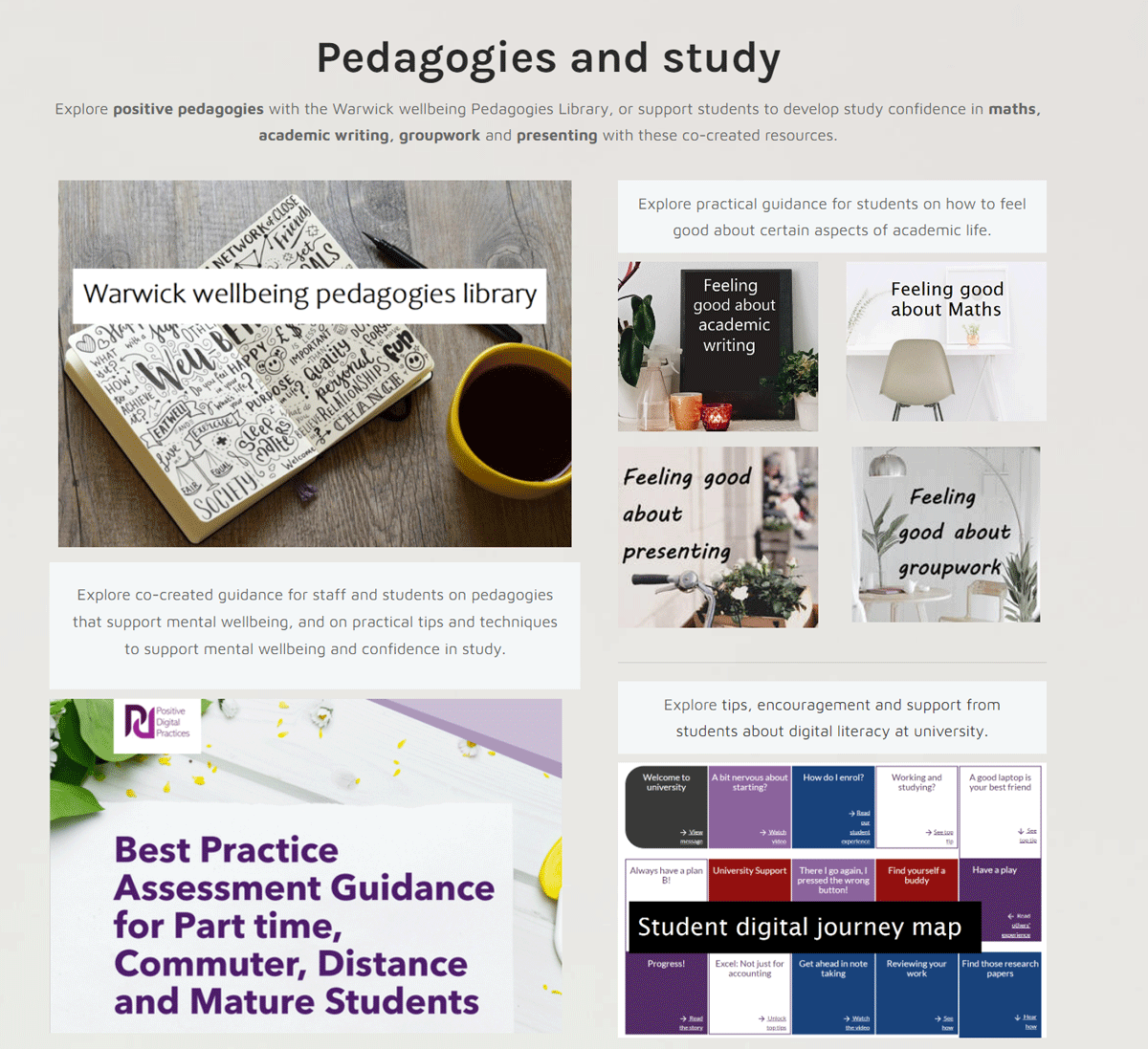
Figure 6
The Pedagogies and Study Hub.
‘I used them to inform my own lesson planning and teaching, and I shared some with students in class.’
‘I used the feeling good ones with my students in class. I used the other ones in my lesson planning and assessment design.’
‘Signposted L4 nursing students to this resource in embedded workshop: Introduction to writing skills.’
‘[I used them to] learn more about teaching leadership strategies in our communities, how the professional works in working places to evaluate and carry on in our future.’
Response to the resources has been positive, all six practitioners found the resources to be user-friendly and to contain suitable content, and all six stated they thought the resources would be very helpful for supporting student wellbeing. Two suggestions for improvement were given, which will be taken into account in future iterations of the resources:
‘The tip about applying digital technology was appropriate but as a practitioner I feel it is important to be clear this does not include AI software and text generating apps as these compromise academic integrity.’
‘Maybe a link to mindfulness/meditation for calming one’s breathing with the presentation videos.’
Emotional Resilience
Approach
The Emotional Resilience team included one academic, two associate lecturers, three undergraduate students (two served roles in the Student Association) and one postgraduate research student (a volunteer for the Student Association). One academic, AL and one undergraduate student continued their involvement from a previous research project that investigated how students learn sensitive and emotionally challenging topics in their curriculum.
The work package built on discussions of research findings and recommendations co-produced with students and stakeholders in two collaborative workshops held at The Open University in June and October 2021 and a student panel coordinated by Student Minds in March 2022. This informed decisions about resources that were developed as an emotional resilience digital toolkit shared across the institution and higher education sector. The Emotional Resilience team worked collaboratively to realise and finalise each resource. Skills and confidence in making videos were supported by training sessions with an experienced media trainer and freelance cameraman and editor.
Resources developed
The aim of this work package was to maximise impact by offering resources aimed at educators in a wide range of formats accompanied by guidance on how resources could be embedded into teaching and learning. This included:
A student-facing guide ‘Your emotional resilience skills: a guide for students studying emotionally challenging content’;
An educator’s guide to supporting emotional resilience skills in higher education (including skills tutorial slides and top tips to use videos in teaching);
Eight short videos co-created with students, tutors, academics, and student mental health advisors;
Student-led audio discussion on four key areas: impacts, strategies and skills, benefits and duty of care.
Applications to practice
All resources were made available on the Positive Digital Practices platform (Figure 7) and publicised widely, including in an article for Times Higher Education Campus. Institutions and partners were encouraged to get in touch and request editable copies and adapt them to the particularities of student support and learning and teaching infrastructures. For example, one institution has incorporated emotional resilience resources into their Decolonising the Curriculum toolkit. The internal webpage on teaching and learning sensitive and emotionally challenging content at The Open University was updated and shared with colleagues across different faculties in presentations and newsletters. Resources have been embedded in various modules to affirm and support students’ emotional resilience skills as an academic study skill for all. Feedback to date has been positive, and has indicated further appetite for a student-facing digital toolkit, adapting the toolkit to practice and placement-based disciplines (e.g., nursing and social work), and focus on assessment design.
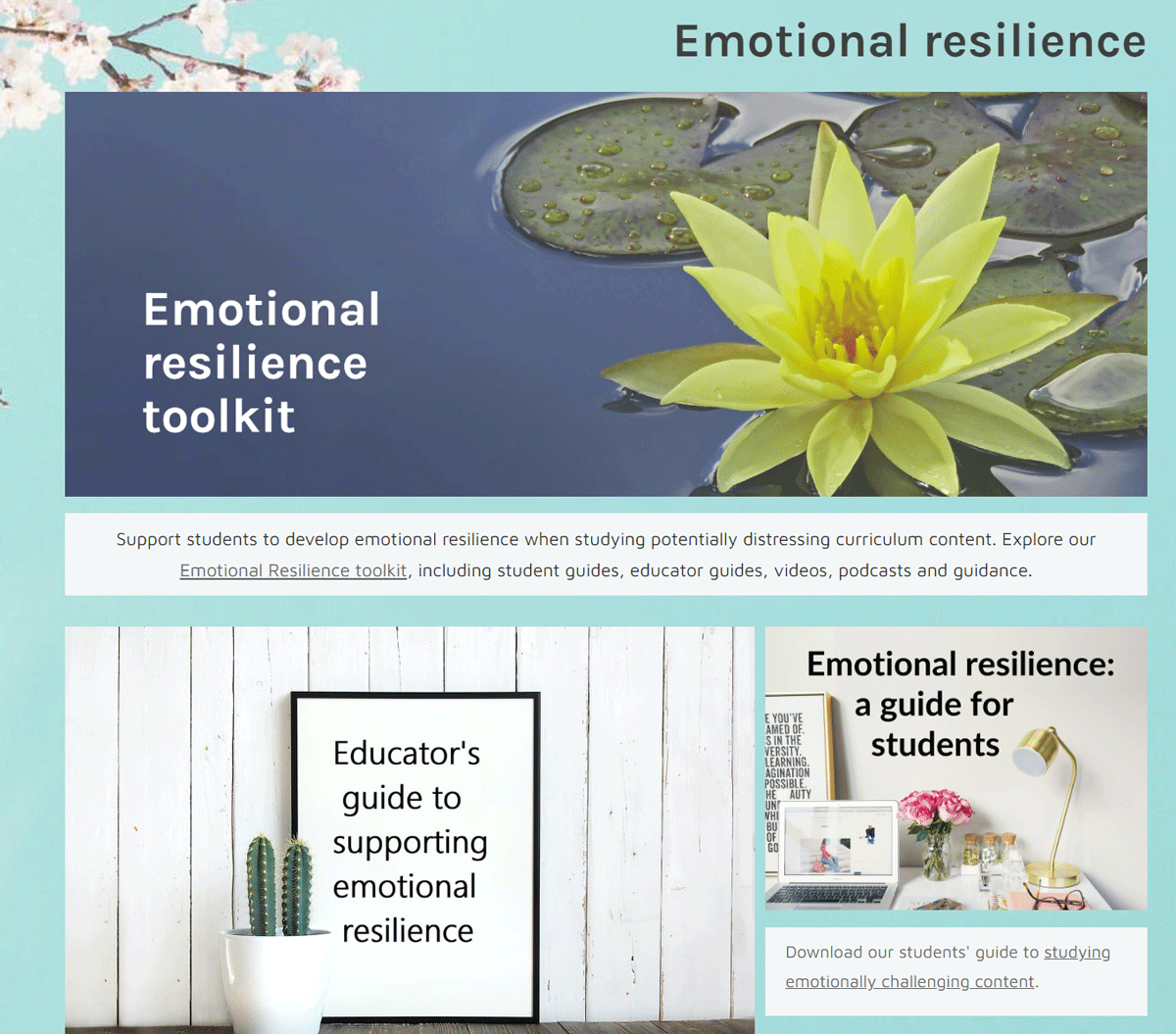
Figure 7
The Emotional Resilience Toolkit.
Tough Times
Approach
The Tough Times work package team consisted of two academics, an associate lecturer and student consultant. The decision to focus one resource around the complexities of balancing study with work and/or family responsibilities was informed by a previous funded project (Samra, Waterhouse & Lucassen 2021; Waterhouse, Samra & Lucassen 2020). However, the team also wanted to explore other areas that students identified as important. We used the story completion method (Clarke et al. 2019), a qualitative approach where participants are asked to write a story in response to an initial provided scenario. This method asks about a hypothetical situation, so can be a preferable method when discussing sensitive topics such as mental wellbeing and study challenges where students may be hesitant to discuss their own experiences. Four main story stems were created based on issues that the AL and student consultant identified as common challenges. We also conducted consultations with students (one coordinated by Student Minds; the second held at The Open University) to explore how studying and life circumstances can intersect to influence wellbeing and perceptions of current university support. Whilst in the story stems, emotional response to the challenge presented was a common theme, in the student consultations a lack of resources that prepare or support students with dealing with the emotions that can arise while studying was identified. Therefore, in all the resources we created the handling of emotions was at the fore.
Resources developed
Two sets of resources were developed: a video-based interactive around navigating work and/or family alongside study (called ‘At a crossroads’) and a set of resources on managing relationship breakups whilst studying (called ‘Speaking after the split’).
In developing ‘At a crossroads’, the team used digital storytelling as a method, as film has been found to be an effective medium to bring complex issues to life in the field of education. Nonetheless, a challenge was to make an individual story that spoke to a wide audience. Three areas of conflict (lack of support from employers; lack of support from immediate and extended families) identified from the research and consultations formed the focus. Feedback suggested that whilst not all the scenes in the dramatization are relevant to everyone, the resource successfully evoked situations viewers had been in or conveyed the emotions they had felt; feedback also suggested that the film generated a felt-sense of connection. Social polls and reflective questions, in addition to advice, are included in the interactive to encourage student reflection.
In developing ‘Speaking after the split’, the team worked with current and former students to create written stories on their experiences of relationship break-ups whilst studying. Guidance for staff supporting students and students experiencing break-up was co-produced with mental health advisors at The Open University.
Applications to practice
The ‘At a crossroads’ interactive and ‘Speaking after the split’ guidance are free-standing self-help resources available for student support teams to deepen conversations about issues and what might be the best pathways in terms of support. They are both freely available on the Positive Digital Practices website (see Figure 8). The link to the ‘At a crossroads’ interactive can be added to student handbooks, wellbeing websites or other student facing resources (e.g. induction materials). The Speaking after Split guidance and associated stories provide a resource that is potentially useful to include in staff training.
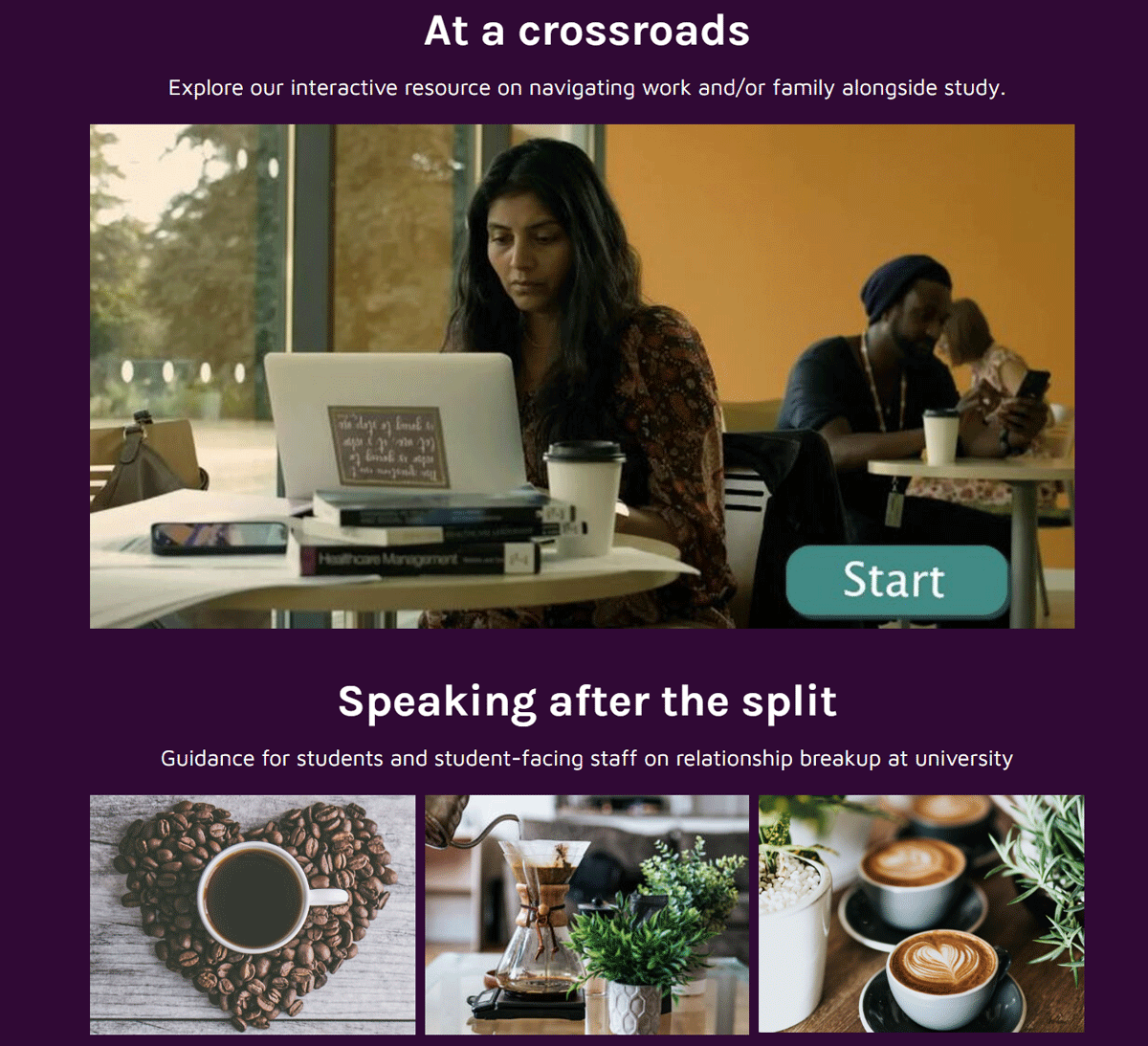
Figure 8
The Tough Times interactive resource area.
Discussion
Differences in staff and student perspectives
There were some interesting contrasts between the staff and student survey results. Student and staff perceptions of barriers were broadly comparable, with the notable exception of ‘curriculum’, which was the fifth highest barrier for students but was ranked lowest by staff. However, their perceptions of enablers revealed interesting differences. For example, students ranked curriculum and study skills as more enabling than tuition, while staff ranked curriculum and study skills much lower, placing tuition as the highest enabler by far. Students also found the distance learning environment to be a key enabler, while staff ranked this as one of the lowest, and staff placed more emphasis on social skills (including help seeking) than on study skills or self-management skills. It is interesting that the three highest-ranking enablers from staff (tuition, people, and social skills) appear to rely on human intervention, while three of the students’ four highest ranking enablers focus more on autonomous study (curriculum, study skills and self-management). This appears to support links in the literature between autonomy in learning and student wellbeing (O’Shea & Salzer 2020), and studies showing that students value autonomy, independence and resilience (Holdsworth, Turner & Scott-Young. 2018). Further investigation is required, but this may be an important implication for practitioners around building students’ independence and autonomy in order to support wellbeing.
There were many similarities between student and staff open comment suggestions for improvements; both identified suggestions in relation to curricula, tuition and assessment, and both identified the need for tutors to be trained to better support students. One interesting difference was in the ‘skills and confidence’ area; it was notable that students focused on wanting to build mental health skills and literacy, with only one reference to study skills, while staff focused on wanting to build students’ study skills and did not mention mental health skills. Both approaches can be found in the literature about managing mental health (e.g. AMOSSHE 2018; Barrable, Papadatou-Pastou & Tzotzoli 2018; Hewitt & Stubbs 2017; Holdsworth, Turner & Scott-Young 2018), but this does imply a need to educate both staff and student groups about different kinds of skills to be developed, and also potential overlaps between these two types of skills and abilities (Lister 2022). Another interesting contrast was that while both groups identified the need to build community and peer support, staff expressed concern about social media spaces that were not linked to (or moderated by) the institution, while students expressed no concerns in this area and one reference expressed a desire for such a space. This dichotomy of views is also present in the literature, with some scholars identifying the benefits of social media in learning (Greenhow & Lewin 2016), and others finding negative impacts on student mental health (Braghieri, Levy & Makarin 2022).
Participatory approaches
Literature and sector body white papers identify the value to working in partnership with students when aiming to enhance inclusivity and wellbeing in higher education (Hughes & Spanner 2019; Lister, Riva, et al. 2022; Piper & Emmanuel 2019). However, participatory approaches are not always straightforward, and it is important to surface lessons learned from co-creation and collaborative projects as well as the benefits the approach brings. Some of the challenges experienced by our team are already well documented in the literature, such as the challenges of recruiting students, and managing the additional time required for participatory approaches in conjunction with project deadlines (Lister, Coughlan, et al. 2021; Lister, Riva, et al. 2022; Rix et al. 2020). Further challenges that arose that were specific to this project related to the co-creation approach; some of the resources created were rather too focused on the specific realities of the student partners, and would have benefited from a broader participation from different student groups. Overall, however, the barriers to co-production reduced over the timeline of the project, and work package teams reported that participatory approaches brought richness and joy to the study. They reported that the new perspectives and diversity of different academic backgrounds brought by students led to the identification of new themes and richer resources, and that they immensely enjoyed the sense of achievement in the student partners in the knowledge that their work will help other staff and students.
Project outputs and next steps
All forty Positive Digital Practices resources (those discussed in this paper and others) are centrally hosted on the Positive Digital Practices Resource Hub. They are all freely available for use by practitioners at https://positivedigitalpractices.weebly.com/resource-hub.html.
The project team is currently actively promoting the resources to higher education institutions, offering support to pilot resources or embed them in practice, and sector bodies. To date, 87 contact forms have been received from the website, requesting meetings or support, and one-to-one contact has been made with 59 different institutions. Visits and meetings have been held with over thirty of these, and eight institutions so far have committed to using the resources in their practice in some way. The resources are also being promoted in the UK University Mental Health Charter programme by Student Minds and collaborative projects run by the UK sector body Advance HE. An evaluation of impact will take place in 2024.
Limitations
There were a number of limitations to this project. The survey data was collected from one institution only, and so it may not be representative of the broader sector. Both the surveys and the co-creation with students are subject to volunteer bias, where the students who chose to participate may not be representative of the broader cohort.
Conclusion
This paper has presented a work-in progress collaborative project to support student mental wellbeing in higher education. Informed by baseline data and open comments from staff and students on perceptions of barriers and enablers to mental wellbeing, three universities and three sector bodies worked in partnership to create resources to support wellbeing in study for part-time, distance and commuter students. The Positive Learner Identity resources provide tools to support reflection on wellbeing in study, practical guidance for students on feeling good about certain challenging areas of study, guidance for students and practitioners on teaching and learning potentially distressing content, and resources on managing challenging life circumstances that can affect study. These resources are openly available as a call to action for post-secondary practitioners across the world to work together to enhance student mental health and wellbeing, and are being promoted through initiatives such at the UK University Mental Health Charter programme by Student Minds and collaborative projects run by the UK sector body Advance HE. The authors hope that these can support practitioners to make education a more inclusive, equitable experience.
Funding Information
The Positive Digital Practices project was funded by the UK Office for Students Mental Health Funding Competition (funding number DMH12).
Competing Interests
The authors have no competing interests to declare.