
Introduction
The term micro-credential is much debated. This work follows the UNESCO definition of micro-credentials:
a record of focused learning achievement verifying what the learner knows, understands or can do.
Includes assessment based on clearly defined standards and is awarded by a trusted provider.
Has standalone value and may also contribute to or complement other micro-credentials or macro-credentials, including through recognition of prior learning.
Meets the standards required by relevant quality assurance (Oliver 2022: 6).
Within the global skills-based economy, micro-credential-related changes are occurring in education, with better economic alignment via accreditation (Clear et al. 2020) and more granular credentialing (Brown et al. 2021). In employment, skills-based hiring, adaptive reskilling and lifelong and life-wide learning expectations are increasing (Gallagher 2018), with skills, capabilities and competencies, rather than degrees, increasingly differentiating potential employees (Fuller, Langer & Sigelman 2022).
We have also seen significant global scrutiny of digital skills and computer science education, with major national curriculum, qualifications and skills reforms having taken place or currently emerging (Arthur et al. 2013; Brown et al. 2014; Moller & Crick 2018; Tryfonas & Crick 2018; Davenport et al 2020; Becker et al. 2023). This has also touched national degree accreditation processes for computer science in the UK (Crick et al. 2019; Crick et al. 2020), alongside critical evaluation of pedagogy and practice (Davenport et al. 2016; Murphy et al 2017; Davenport & Crick 2021; Prickett et al. 2023). This is further contextualised by the emerging long-term impact of the COVID-19 pandemic on the UK higher education sector — especially in the context of the digital disruption to learners, practitioners and education institutions and structures (Watermeyer et al. 2021a; Crick 2021; Watermeyer et al. 2021b; Watermeyer et al. 2022a; Watermeyer et al. 2022b) — but also specifically the impact on computing as an academic discipline (Crick et al. 2020; Siegel et al. 2021; Crick et al. 2022) and the importance of security and resilience of digital education infrastructure (Irons & Crick 2022). Finally, we are experiencing significant scrutiny and attention of the impact of artificial intelligence (AI) on education (Dwivedi et al. 2021), especially generative AI, large language models (LLMs) and tools such as ChatGPT (Dwivedi et al. 2023).
The UK Government has recently proposed a higher education funding changes through a Lifelong Loan Entitlement (UK Government 2022) that offers more opportunities for micro-credential-based studies. This paper therefore focuses on how building micro-credentials into UK higher education may impact provision. It considers computer science degree courses, as a fast-moving area where companies are increasingly prioritising skills over qualifications. The courses form comparative case studies, with an innovative skills profiling approach used to connect skills, degrees and jobs through calculating learning outcome hours and converting these into skills hours. The findings, approach and insights are transferable and of general interest. In particular, the approach provides clarity: to curriculum developers on how to reflect industry needs better; to micro-credential providers on how their provision can be used within higher education; to learners on how their courses can be personalised and better tailored to their career and life aspirations; and to industry and government on how skills gaps can be better addressed.
Personalised learning stems from the early 20th century ideas of John Dewey which advocated placing learners at the heart of education (Dewey 1906). It gained prominence in the 1970s as a pedagogical approach (Kong 1970; Peck 1970) and more recently gained political prominence in the UK in the early part of the new millennium (Park 2004) as part of efforts to provide greater choice within education (Deakin-Crick 2012). This work uses Ward’s (2020: 12) definition of personalised learning – learning which enables metalearning to occur i.e. learning through which each person can learn how to learn. This simple definition focuses on optimising learning achievement by providing learning approaches which cater to the individual learner’s context and needs, and enables them to use these to best develop themselves. It therefore combines the elements outlined in the UNESCO definition of personalised learning: teaching and learning that is focused on the background, needs, potential and perception of the learner (UNESCO International Bureau for Education 2017: 5).
Micro-credentials
The use of degree certificates to evidence learning achievements has not changed much over the last 200 years, with the credential’s credibility linked to the providing institution (Brown 2001). The potential for alternative digital credentials, to supplement traditional ones, has been promoted since the rise of the World Wide Web in the 1990s (Noam 1995). Indeed, for a while, Massive Open Online Courses (MOOCs) were the subject of much hype, such as the New York Times declaring 2012 as “The Year of the MOOC” (Pappano 2012). Whilst not meeting the original hype, the impact of MOOCs has been significant, with platforms such as Coursera, edX, FutureLearn, LinkedIn Learning, Udacity, etc., providing courses and resultant micro-credentials to many learners. Such development has not been without challenges in the form of bogus providers and credentials (Ezell & Bear 2005). One solution to this is to use micro-credentials to personalise professional development (Hunt et al. 2020) either alongside or within formal qualifications, especially where completing a university qualification is the foundation of professional formation (Raj et al. 2022) (e.g. Computing, Engineering, Medicine, Nursing, Teaching).
Skills-based hiring
Skills-based hiring is becoming an increasingly popular recruitment approach (Fuller, Langer & Sigelman 2022). Employers still ask for degrees, but increasingly they are specifying subject-specific and transferable skills (Gallagher 2018; Prospects 2021), including 21st Century Skills. In this work 21st Century Skills are defined as competencies gained by a learner that enable them to self-reflect, self-regulate and self-optimise their capabilities within highly emergent contexts. This definition is implicitly built on a personalised learning perspective (Barty et al. 2023).
A common theme in the 21st Century Skills debate is sub-categories representing knowledge, skills and dispositions. For example, CC2020 considers knowledge, skills, and dispositions directly (Clear et al. 2020). ATC21S (2020) considers ten 21st Century Skills within four main categories (ways of thinking, working and living, plus the tools to work). Other authors present slightly different but similar combinations of categories (Joynes, Rossignoli & Amonoo-Kuofi 2019).
By analysing job advertisements we can better understand these skills demands (Papoutsoglou et al. 2019). Indeed, such a research approach underpins reports by Harvard Business Review (Hershbein & Kahn 2017), Forbes (Bernick 2022) and the National Bureau of Economics (Hershbein & Kahn 2018). One commercial organisation undertaking such analysis is Lightcast (Lightcast 2022), who produce job skills mappings. From these, competency specifications for entry-level computing graduate roles (software engineer, data scientist, etc.) can be compared against skills gained within education.
Credential portability trends in Europe
The European Qualifications Framework (EQF) is a common European reference framework whose purpose is to make qualifications more readable and understandable across different countries and systems. Covering qualifications at all levels and in all sub-systems of education and training, the EQF provides a comprehensive overview over qualifications in the 38 European countries currently involved in its implementation (European Centre for the Development of Vocational Training n.d.). The European Skills, Competences and Occupations (ESCO) classification describes 13,485 skills and 2,942 occupations (ESCO 2022). ESCO aspires to align non-formal and informal learning through open badges and digital credentialing, providing a link between qualifications, skills, micro-credentialing frameworks and employment. Within the European Union, the European Skills Agenda (European Commission Directorate-General for Employment, Social Affairs and Inclusion 2022) highlights twelve actions, including (Action 10) developing a European Approach to Micro-credentials and (Action 11) creating a new Europass Platform (Europass 2022). The Europass platform provides online tools to help manage skills and support learning and career development. In doing so, it promotes transparency and understanding of formal, non-formal and informal qualifications and skills as identified, for example, through ESCO. Building upon this, in 2022, the Council of the European Union adopted a recommendation to develop a European approach to micro-credentials which seeks to support the development, implementation and recognition of micro-credentials across institutions, sectors and borders (European Commission 2022).
The European Commission also recognised that a growing number of European higher education institutions were working with micro-credentials and identified a need for a common definition and approaches for their application (Futures, Anderson & Larson 2020). The Micro-credential Higher Education Consultation Group provided a definition (Antonaci, Henderikx & Ubachs 2021), and micro-credentials linked to the Bologna (Joint declaration of the European Ministers of Education 1999) key commitments project (MICROBOL) specified an approach, requiring micro-credentials to: explicitly reference the European or National Quality Framework Levels; state the learning outcomes achieved; document related workload in terms of European Credit Transfer and Accumulation System (ECTS); and indicate the assessment approach adopted (Antonaci, Henderikx & Ubachs 2021). To implement these expectations, the European MOOC Consortium developed the Common Microcredentials Framework (CMF) (EMC Common Microcredential Framework. N.d.; European MOOC Consortium 2023). Other European Projects have similar aims, for example, MicroHE and OEPASS, European Short Learning Programmes Project (E-SLP) and Digital Credentials collaboration (CORSHIP 2019). Together, these initiatives support a rapidly maturing environment and promote the increased usage of micro-credentials.
Within the United Kingdom specifically, higher education micro-credential use has been debated in the Quality Assurance Agency (QAA) community of practice (QAA 2022a). In 2020, Professor Sue Reece published a discussion paper for QAA members regarding modular qualifications (focus on micro-credentials) and a report (QAA 2021), outlining, amongst other things, the opportunities for micro-credential approaches to enhance the student learning experience.
Micro-credentialing trends in computing and engineering professions
Employer micro-credential support is varied. One recent review suggested, experienced and aspiring computing professionals need to manage their qualifications according to current market needs. That includes certification achievement as well as formal education, experience, and licenses (Tannian & Coston 2021: 56). Amazon has committed $1.2 billion to provide free education and skills for their employees and hundreds of millions to provide free cloud computing-related training to the public (Amazon 2022). Google also recognises micro-credentials within its recruitment processes (Oliver 2020).
Together, this highlights a trend in defining micro-credentials and industry demand in a more systematic manner, recognising and employing credentials in the broadest sense with employment, careers and education/training. This is particularly true within computing and engineering professions, where reskilling and certification requirements are high, and opportunities to enter these professions through non-degree certificate routes are becoming increasingly popular.
In response to employer trends, there have been attempts to harmonise engineering graduate educational outcomes. The Washington, Sydney and Dublin Accords (International Engineering Alliance 2022a, 2022b, 2022c) advocate that engineering programme accreditation is foundational to engineering professional practice. The Seoul Accord extends this to computing (Seoul Accord Secretariat 2022). All have successfully promoted internationalisation of curricula and consistency and parity across higher education (Engineering Council n.d.). As a related example, the European Network for Accreditation of Engineering Education (ENAEE) EUR-ACE Framework Standards and Guidelines are intended to be widely applicable and inclusive so that they can be applied to all branches of engineering. They aim to reflect the diversity of engineering degree programmes which provides the education necessary for graduates to enter the engineering profession and to have their qualifications recognised throughout the area (EUR-ACE Framework Standards and Guidelines 2020). It should be noted that ENAEE does not accredit engineering degree programmes; using the standards, ENAEE evaluates the policies and procedures implemented by accreditation and quality assurance agencies which have applied for authorisation to award the EUR-ACE label to the engineering degree programmes which these agencies accredit.
Accreditation seeks to ensure the development of competent professionals. Competence applies to professions such as medicine, legal or teaching. The ACM and IEEE Computer Society suggest, “Competency = [Knowledge + Skills + Dispositions] in Task” (Clear et al. 2020: 47). In a higher education context, transferable skills have been embedded within degree programs (Kemp & Seagraves 1995) and formalised through transversal competencies, for example, in the computing discipline (Sicilia 2010). Alongside these developments, industry competency models have also developed, such as the Industry Structure Model (Johnson 1997). This digital skills model was refined into the Skills Framework for the Information Age (SFIA) in 2000 (SFIA Foundation 2022). SFIA describes 102 professional skill areas for the computing sector and specifies a range of generic skills. Related work in the UK includes initiatives by the Institute of Coding, a £40m+ strategic investment by the UK Government to “transform the digital skills profile of the country” aiming to “create a new way to develop the digital skills you’ll need at work and beyond” (Davenport et al. 2020). The IoC Accreditation Standard is a novel approach to accreditation of degree courses that focuses on the demonstration of competence in addition to academic knowledge, co-designed with industry to develop a new standard for “digital” graduates (Institute of Coding Accreditation Standard 2020).
In parallel, competency models developed via the Software Engineering Institute of Carnegie Mellon University evolved firstly into the software assurance competency model (Mead & Shoemaker 2013) and then the ACM and IEEE Computing Curricula 2020 Report (CC2020 report) model (Clear et al. 2020). This model presents competency as an individual-centred concept demanding the demonstration of technical knowledge, skills, and dispositions within a task or job context. Dispositions, such as collaboration or communication, parallel SFIA skill level qualities. Indeed, terminology aside, competency evidence is broadly comparable between the ACM/IEEE model and the SFIA model, though the SFIA model also links to specific job roles and expects repeated successful demonstration of competency. This work reflects the SFIA approach.
Methodology
Case studies have been used in education research since the 1970s to provide a deeper understanding in a real context (Hamilton & Corbett-Whittier 2013). This paper uses exploratory case studies to surface data and explore patterns therein (Yin 2018). A sample of programmes have been identified and modelled using a process developed by Ward et al. (2021) that involved labour market analytics. Each case study was analysed and related in context and a narrative generated.
Data sample
Computing-related programmes at six different universities were used to explore opportunities for badging and micro-credentialing within UK higher education, covering the five approaches advocated by Professor Sue Reece (QAA 2021), as shown in Figure 1.
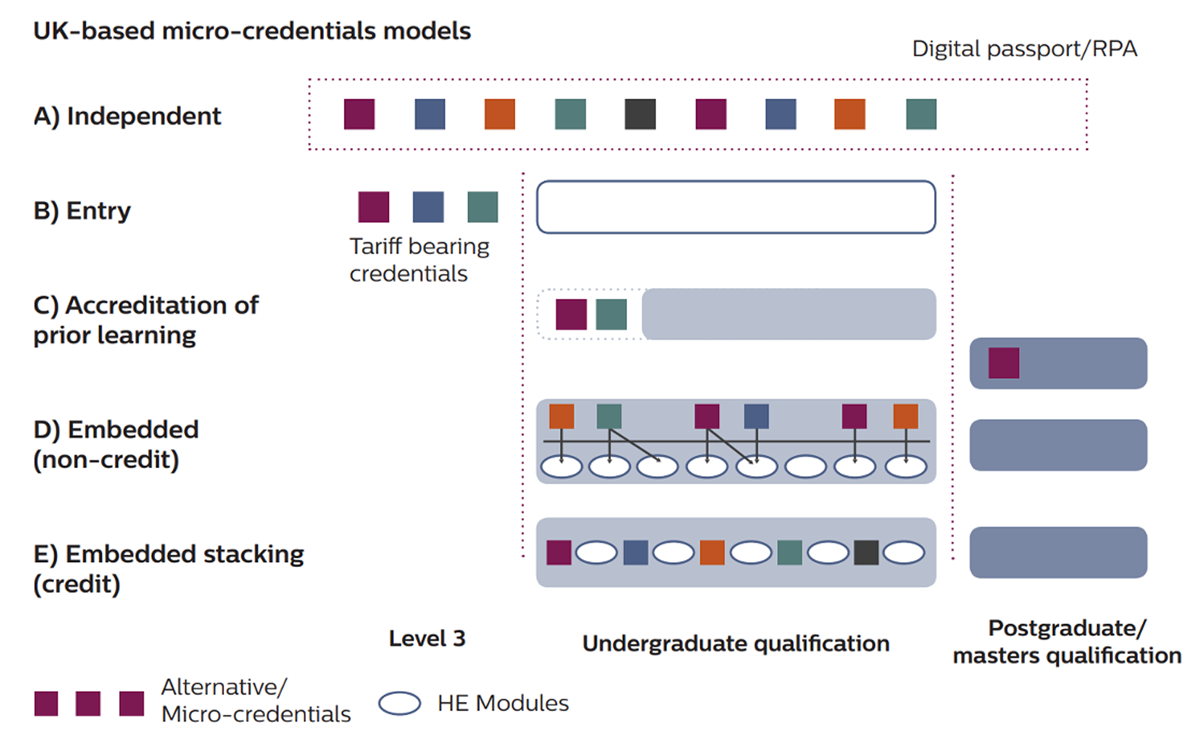
Figure 1
Professor Sue Reece’s five potential models for UK micro-credentialing (QAA 2021: 7).
Modelling approach
Data was collected regarding existing course structures, learning outcomes and assessments. Learning outcomes were translated into 21st Century skills categories (Ward et al. 2021), with Figure 2 showing the six skills themes used to develop skills profiles. Translating in this way enabled learning to be combined differently to offer more flexible, efficient and personalised approaches to assessment, whilst maintaining the quality assurance and integrity of the degree programmes themselves.
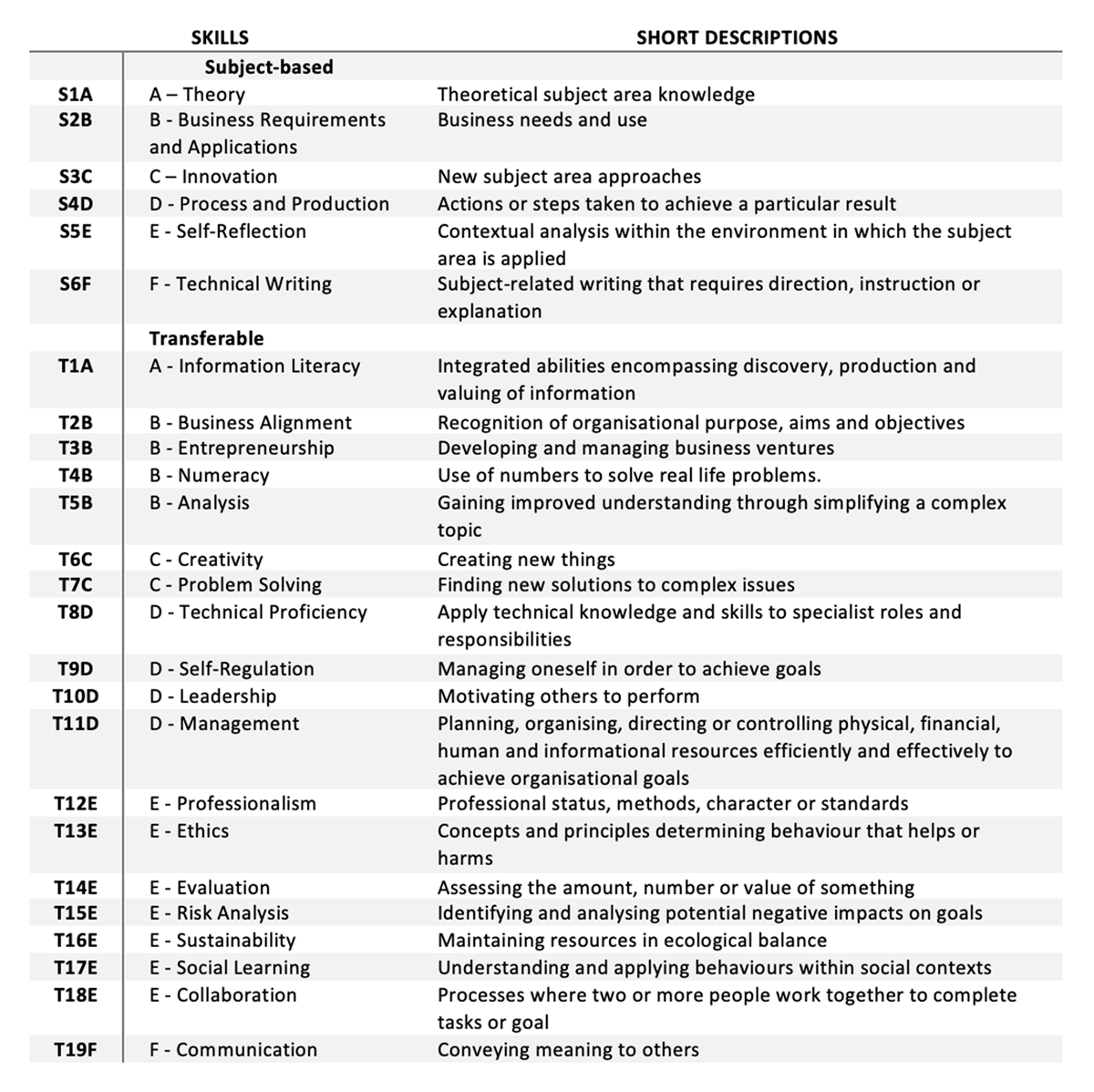
Figure 2
Ward et al.’s (2021) skills categories.
The first stage involved calculating learning outcome hours based on total learning hours, assessment components and learning outcomes tested through each assessment. Skills hours were calculated pro-rata from learning hours, assessment weightings and learning outcomes. Two types of skills hours were calculated, subject-specific and transferable. Each was calculated based on the total learning hours of the degree. Subject-specific skills hours were calculated through a one-to-one mapping (learning outcome to subject-specific skills category). To illustrate this, in the example below, a 20 credit module with 200 learning hours is assumed to have two assessments weighted 60% and 40%. Skills hours associated with each assessment are 120 (60% of 200) and 80 (40% of 200). Assessment 1 addresses 4 learning outcomes, so 120/4 = 30 skills hours are allocated against each skill. Assignment 2 addresses 2 learning outcomes, so 80/2 = 40 skills hours are allocated against each skill. Skills hours are then collated (Figure 3).
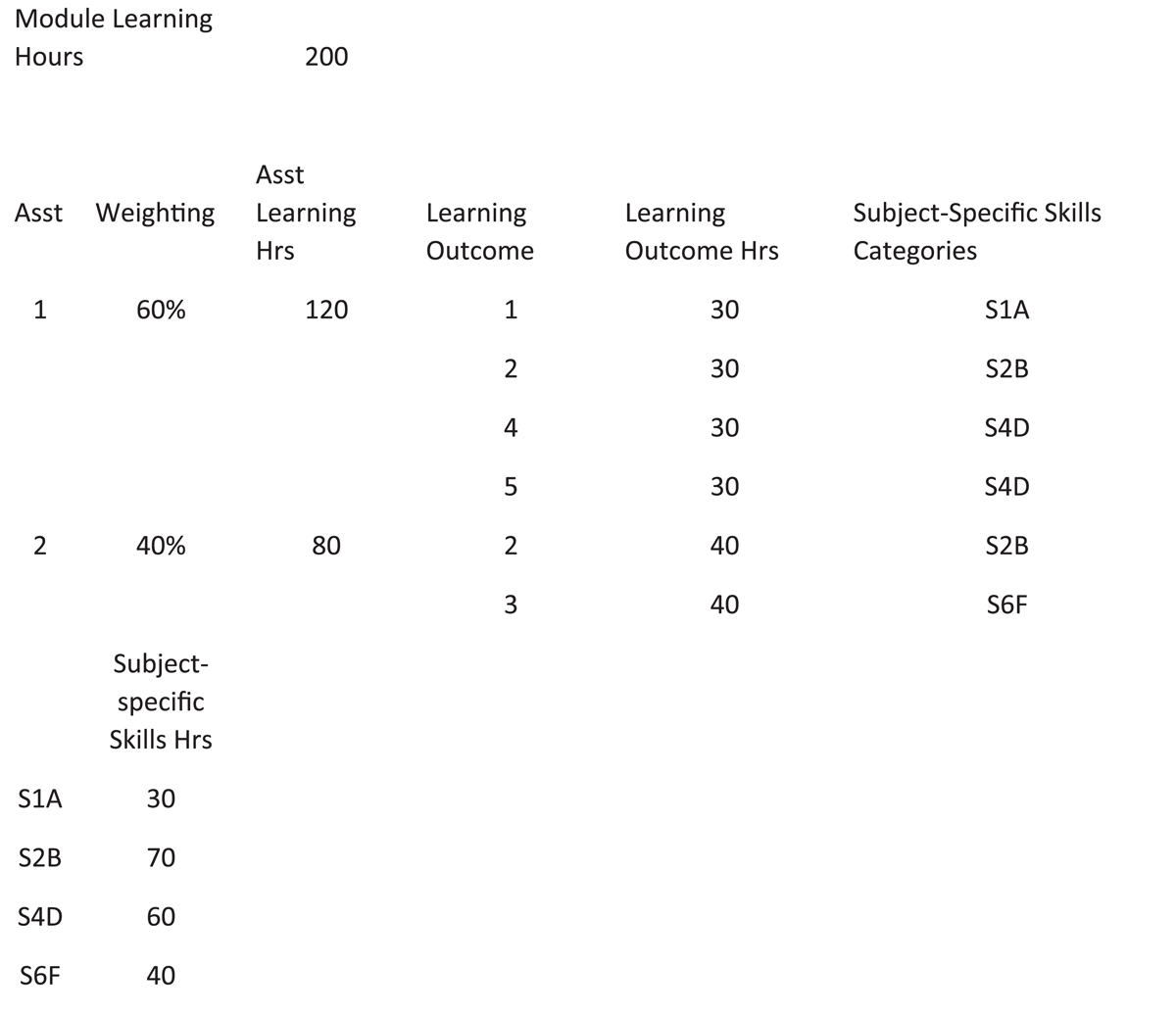
Figure 3
Example showing subject-specific skills profiling.
A similar approach is used for transferable skills (Figure 4), however several transferable skill categories can be mapped to a single learning outcome. Skills hours allocation, for example, to learning outcome 4, is therefore split equally across T9D, T10D and T11D. Each of the three skills are therefore allocated 10 hours. Skills hours are then totalled to provide the profile.
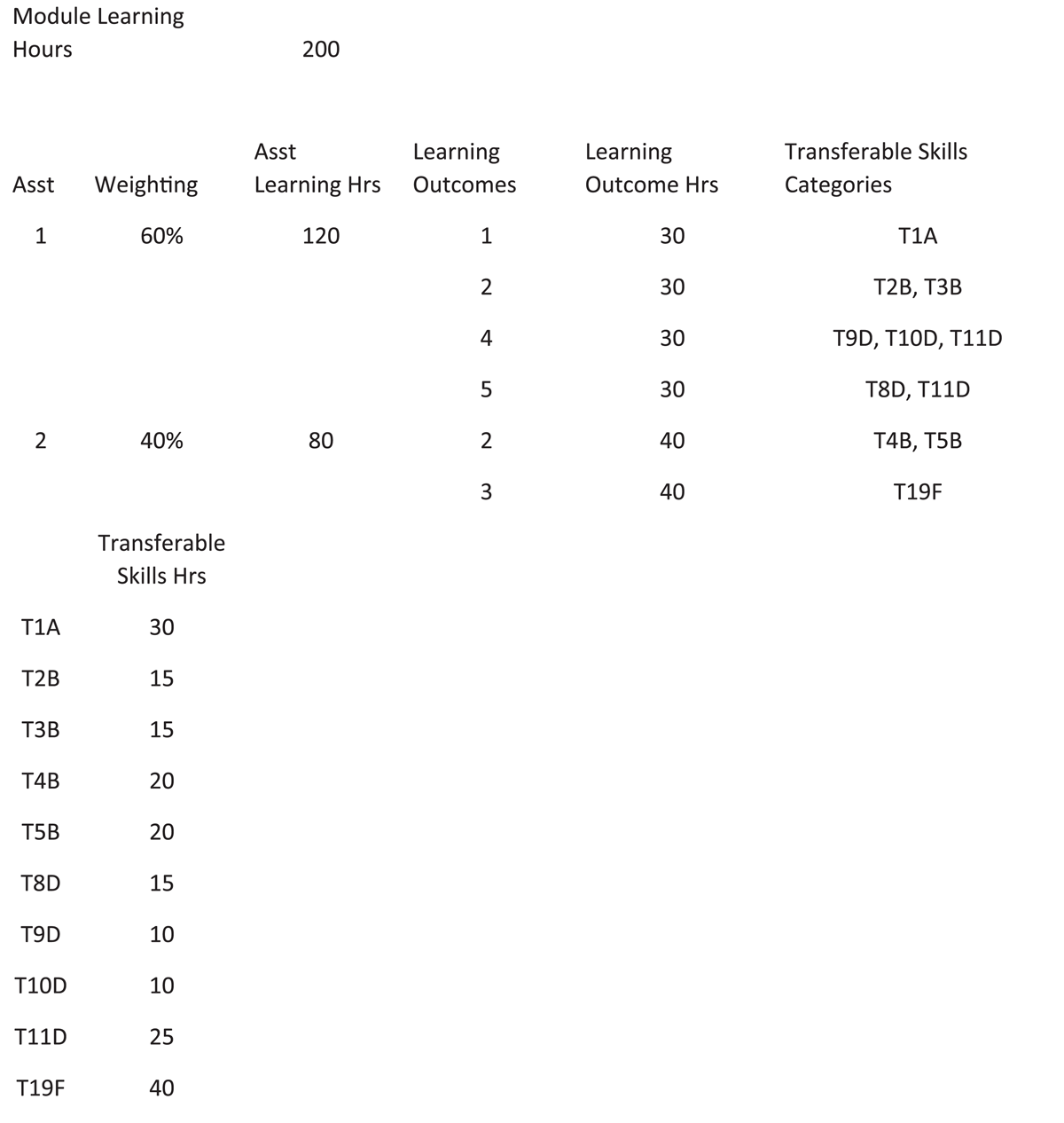
Figure 4
Example showing transferable skills profiling.
Labour market analytics
Job analysis was undertaken using labour market analytics (Lightcast 2022). Relevant advertisements were searched for using degree specialism and skills quantified based on occurrence frequency. Skills were then collated and coded against skills categories and compared to courses by using the percentage distributions of skills by course and jobs. This approach identifies the “skills gap” between what employers seek and degree programmes offer.
Analysis approach
Results were analysed employing narrative analysis (Andrews, Squire & Tamboukou 2013), focusing on Big Stories i.e. more significant issues (Freeman 2011) since the modelling approach used is approximate and therefore minor differences may be the consequence of the modelling approach. Each participating institution compared results in their own context to develop their narrative. For example, Ulster used the mapping outcomes to help guide students in selecting activities contributing towards an extra-curricular award and how this will complement their formal learning. This facilitates micro-credentials being embedded within the curriculum in a non-credit-bearing way (Model D in Figure 1).
Results
Incorporating non-formal learning through the EDGE Award (University of Ulster, Model A)
Context – What was the intervention?
Ulster students can gain the EDGE Award (Ulster University 2019) recognising ad-hoc and pre-defined extra-curricula learning activities such as volunteering activities and professional certification micro-credentials.
Contextual narrative – What was the outcome?
Skills profiling enables students to select activities complementing their formal learning. For example, the skills mapping indicated Management coverage was lower than Lightcast data suggested it should be. Students (and indeed Studies Advisors who guide students in their choices) can use this knowledge to encourage students to undertake such activities, for example, in a volunteering role managing a local sports team.
One particularly interesting insight was that areas flagged as having “low” coverage were often taught within the module content but skills were not necessarily being assessed. This was particularly apparent in “difficult” to assess areas. For example, assessing students’ ability to actually manage (and not just their ability to recall the material they were taught) is a challenge. However, many of the activities students undertake within the EDGE Award offer such opportunities, providing students with useful experiences to discuss at interview, thus enhancing their employability.
Incorporating non-formal learning through iDEA digital badges (Manchester Metropolitan University, MMU, Model A)
Context – What was the intervention?
MMU students are supported in taking challenges from the Inspiring Digital Enterprise Award (iDEA) scheme, a free online international programme aimed at developing digital, enterprise and employability skills (Manchester Metropolitan University 2020). MMU promotes iDEA to students as a way of enhancing their digital skills. iDEA comprises a series of online challenges which students complete to achieve badges and awards. Challenges include coding projects, building websites and learning entrepreneurial skills. Students can use the awards to support job applications.
Contextual narrative – What was the outcome?
MMU used the BSc (Hons) Computing course to explore the independent model (Model A). Analysis of the skills profile data identified where study on the iDEA platform would create a more holistic skills profile for students. BSc Computer Science has a strong emphasis on theoretical and practical aspects of the discipline and hence, as anticipated, subject-specific skills such as Process and Production and Theory feature prominently. The main skills that students could strengthen through extra-curricular study were Innovation, Self-Reflection and Technical Writing. In terms of transferable skills, as expected, given the nature of the degree, there was significant effort allocated to Technical Proficiency, Problem Solving, Information Literacy and Evaluation. It was surprising to note that there was a relatively low proportion of time spent on Leadership, Social Learning, Collaboration, Professionalism and Ethics, which may reflect difficulty in explicitly assessing these transferable skills. Sustainability also had a low proportion of time devoted to it, but this will be addressed at the next validation with the increased need for carbon literacy.
A comparison of skills mapping between MMU’s BSc Computer Science course and Lightcast’s labour market information demonstrated a good level of consistency. There were two skill areas, Requirements and Applications and Process and Production, however that had a lower proportion of hours compared to the Lightcast data.
The MMU case study identified clear benefits of adopting micro-credentials within the iDEA programme. The principal benefit was in identifying gaps and extra-curricular study through iDEA to address these. Analysis of the skills mapping data can also offer insights for curriculum development (e.g. a need to embed sustainability).
Reflecting on intended and specified learning outcomes (Abertay University, Model B)
Context – What was the intervention?
At Abertay, students with different entry profiles were considered. One key finding was the clarity of skills profiling versus learning outcomes.
Contextual narrative – What was the outcome?
Initial skills mapping highlighted that teachers’ implicit understanding differed from specified learning outcomes. Skills were widely developed in practice-based environments and yet weren’t seen through skills profiling as learning outcomes only implicitly highlighted these. Assessment components also did not enable practice-based skills to be easily differentiated, with portfolios of evidence developed exactly for this reason (to demonstrate skills, capabilities and competencies). It would be interesting to consider how such evidence can be best aligned across different types of courses to clearly demonstrate learner-earner achievements.
Incorporating micro-credentials for credit (Northumbria University, Model C)
Context – What was the intervention?
MSc Data Science was selected as a trial of credit recognition for entry into existing programmes through completion of relevant LinkedIn Learning content. Learning completed via two LinkedIn Learning courses was mapped to a programme module. Once the department was satisfied with the equivalence, the proposal was agreed upon by the Faculty Pro Vice-Chancellor and passed to the legal team for agreement, before being approved by the university’s quality processes and a cooperation agreement signed.
Contextual narrative – What was the outcome?
Completing the two LinkedIn Learning courses enabled advanced entry to the programme. There have been very few expressions of interest in pursuing progression from the LinkedIn Learning courses to the MSc Programme so far. It may be that those completing LinkedIn Learning courses, or something similar, are employed full-time and are looking for professional development opportunities rather than formal learning opportunities. The MSc runs as a full-time programme, which may further amplify the differences in approach.
Reflecting on learning outcome definitions and institutional approaches (University of Bath, Model D)
Context – What was the intervention?
The University of Bath applied this methodology to a postgraduate course, the generalist MSc in Computer Science, where non-credit content can augment what is being taught within the course. This is a full-time one-year course, with 60 taught ECTS credits (12 of which are research methodology and dissertation preparation) and a 30-credit dissertation done over the summer. As is Bath’s standard, students’ views were sought, and the learning outcomes of the course were approved by learning and teaching committees. Bath’s learning outcomes are student-focused. The university’s Industrial Advisory Board shapes course learning (subject areas and generic skills), but industrialists would not normally see module learning outcomes. Bath does not allocate learning outcome hours, so a uniform distribution was assumed.
Contextual narrative – What was the outcome?
Student-focussed learning outcomes were not cast in the same language as the Lightcast terminology, so there wasn’t a one-to-one mapping. At times, one learning outcome contained an explicit reference to many skills, for example plan, organise and implement program code to support reuse and maintainability of a software project. The opposite of the Abertay example, above, which represented more learning than they actually defined. This has raised the question “Who are the audience for learning outcomes?”
Course alignment example (University of Huddersfield, Model E)
Context – What was the intervention?
Identifying whether a degree course develops graduate skills is a key concern of government, professional bodies, universities, employers and learner-earners themselves. Comparing course alignment to industry needs via skills profiles therefore provides an innovative, and much sought, solution to better inform skills gap and course alignment discussions.
Contextual narrative – What was the outcome?
An embedded stackable credit-bearing approach (Figure 5) was applied to BSc Software Engineering, where subject-specific skills were focussed in three key areas – Process and Production (32%), Technical Writing (26%) and Theory (23%). Comparing these to Lightcast data (Figure 6), there is a much higher requirement for Process and Production skills and an increased requirement for Business Requirements and Applications, reflecting, in part, different education and employment expectations regarding breadth and depth, though it is interesting to note a lack of requirements for Innovation, Self-Reflection and Technical Writing despite these being in high demand amongst more rounded graduates (Succi & Canovi 2020). The Lightcast data highlights career entry expectations though later expectations could be different.
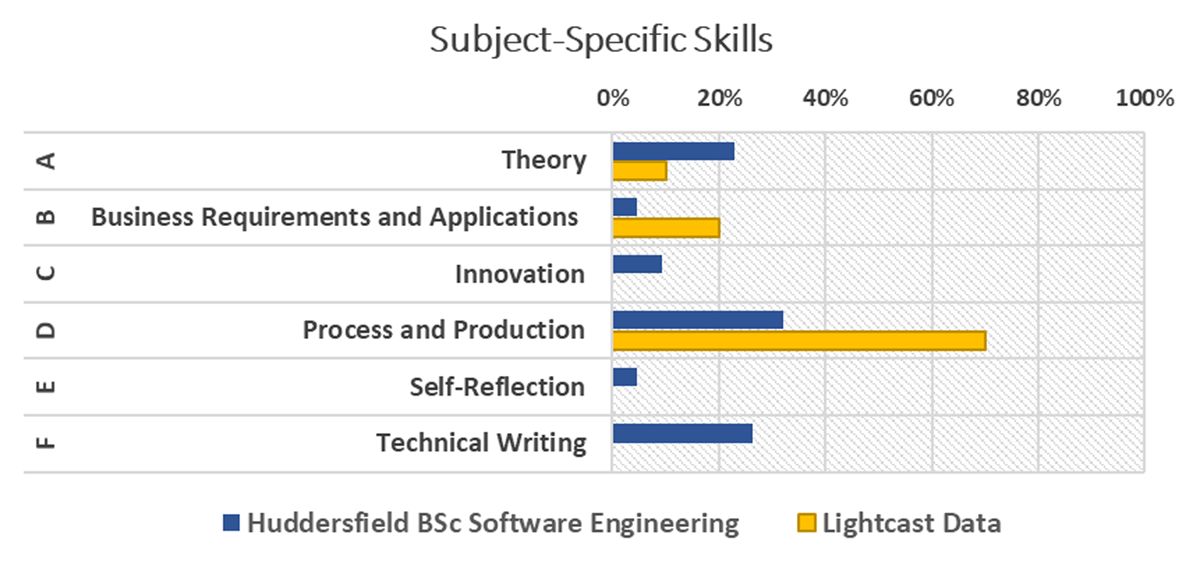
Figure 5
Subject-specific skills.
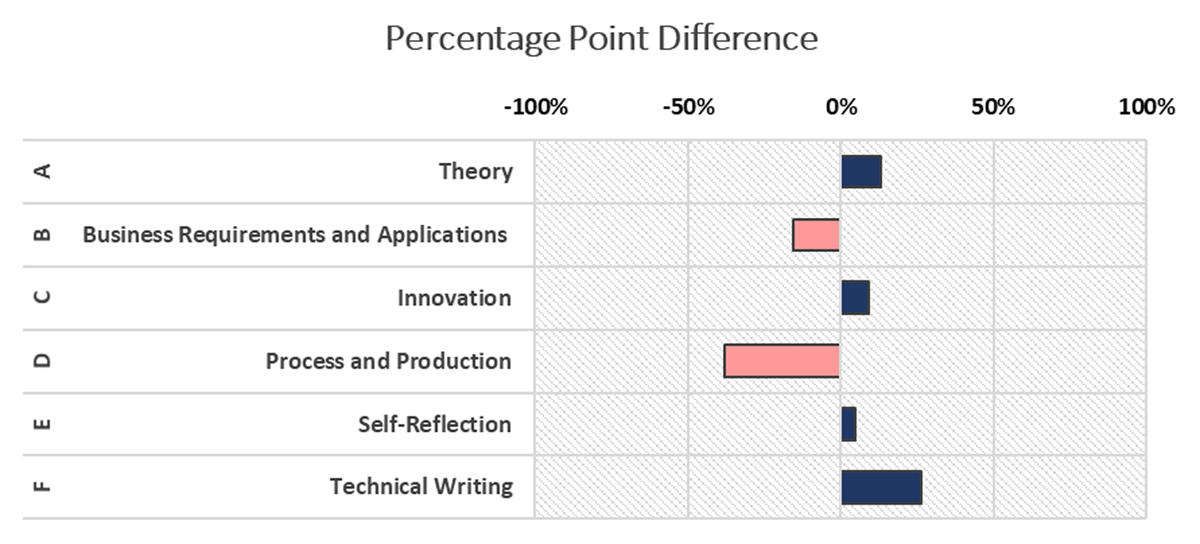
Figure 6
Subject-specific skills difference.
Figure 7 shows transferable skills were focussed in four key areas – Information Literacy (18%), Numeracy (14%), Problem Solving (14%) and Leadership (30%) all contributing significantly to the overall skills profile. Here the pattern is somewhat different to the labour market information, as shown in Figure 8. Leadership, Problem Solving and Information Literacy are all more developed within the programme than is sought in job roles (though if we combine leadership and management the first of these becomes much less different). However, there are large numbers of transferable skills sought by employers that are not clearly developed within the courses including, in particular, Social Learning, Sustainability and Communication. Similar comparisons were made across each institution and course under consideration. They demonstrated reasonably good agreement between programmes and labour market needs and where variation occurs it is typically indicative of differences in priorities between capabilities (within degree programmes) and competencies (within job roles).
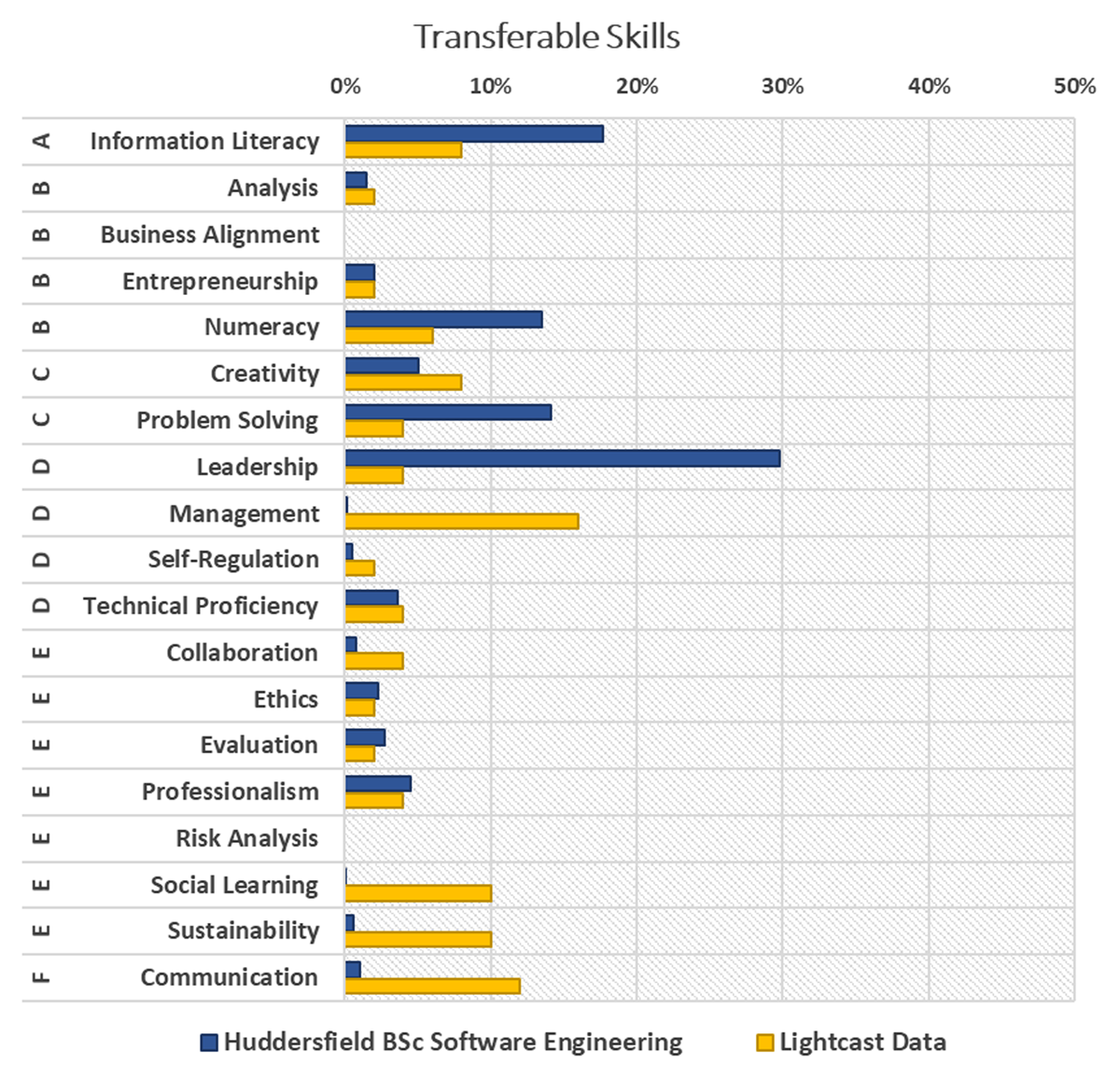
Figure 7
Transferable skills.
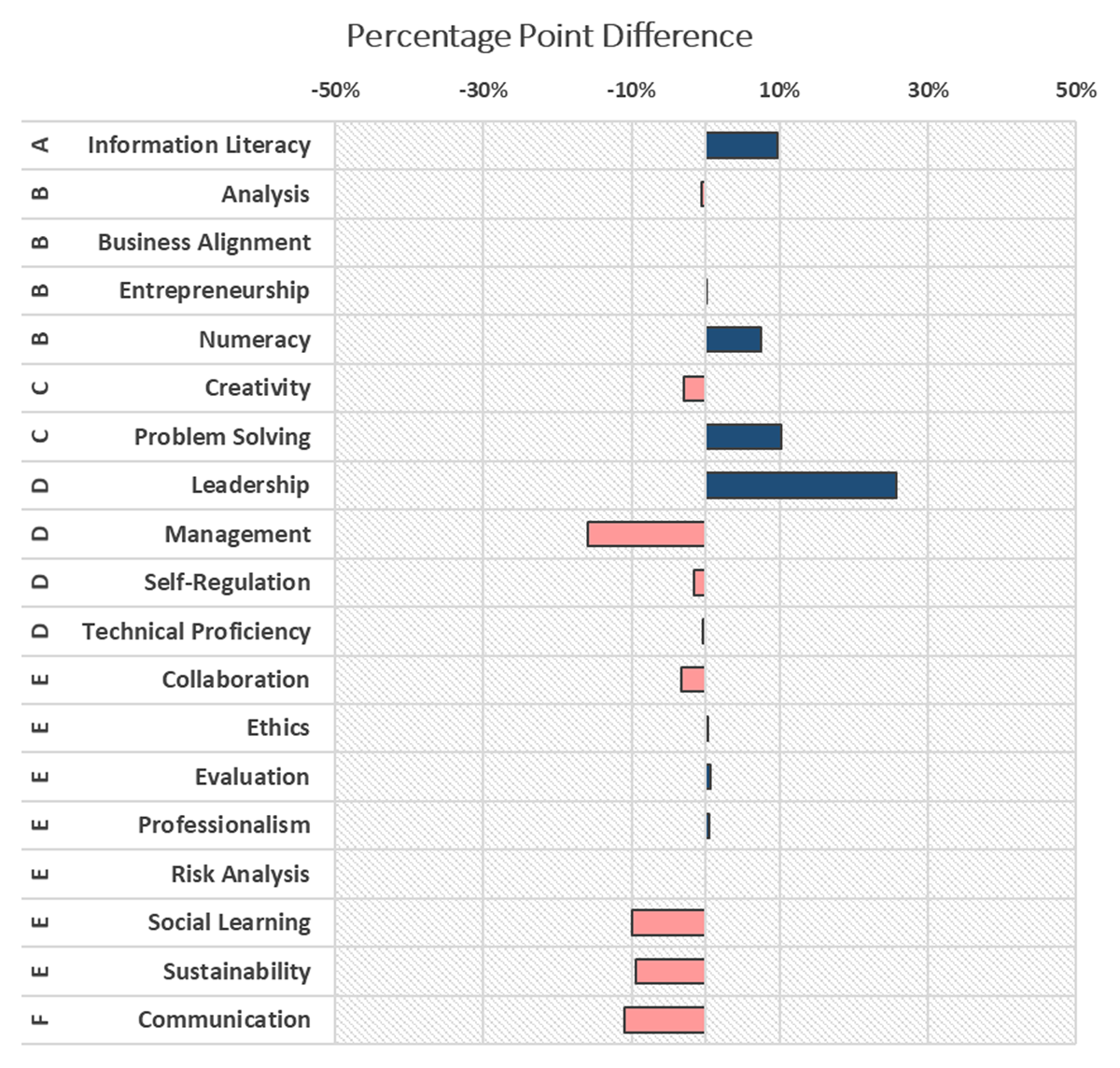
Figure 8
Transferable skills difference.
Personalised learning example (University of Huddersfield, Model E)
Context – What was the intervention?
The University of Huddersfield is one of two UK universities (together with Northumbria) that provide a credit-based route for LinkedIn Learning. As such it already has expertise in developing accredited routes by which external learning resources can be incorporated into course structures. Presented here are two approaches where external learning resources can be stacked within courses. This addresses two of the key issues arising when discussing micro-credentials within higher education – do micro-credentials increase course complexity and assessment burden and do micro-credentials provide any added flexibility to enable personalised learner-earner journeys?
Contextual narrative – What was the outcome?
The first approach enables multiple assessments to be reduced. The example shown in Tables 1 and 2 demonstrates how a cyber security module, with two assessments, can use a set of five external learning resources to replace one of the assessments. For simplicity of presentation subject-specific skills are considered, though it is trivial to apply the same approach to transferable skills. In this example the module being considered has been mapped against three skills (1A, 4D, 6F). Embedding the external learning resources (Table 2), we can develop a stackable version of the module.
Table 1
Subject-specific skills.
| CIS2201 CYBER SECURITY | MODULE LEARNING HOURS | 200 | ||||
|---|---|---|---|---|---|---|
| ASST | 1A | 2B | 3C | 4D | 5E | 6F |
| 1 | 67 | 33 | ||||
| 2 | 67 | 33 | ||||
| Total | 67 | 67 | 67 | |||
Table 2
Subject-specific skills for External Learning Resources (ELRs).
| ELR | 1A | 2B | 3C | 4D | 5E | 6F |
|---|---|---|---|---|---|---|
| 1 | 5 | 10 | 5 | |||
| 2 | 10 | 5 | 10 | 10 | ||
| 3 | 5 | 10 | 5 | |||
| 4 | 10 | 5 | 5 | |||
| 5 | 5 | 10 | 10 | |||
| Total | 35 | 5 | 10 | 40 | 30 | |
| Remainder | 32 | –5 | –10 | 27 | 37 |
The external learning resources skills hours account for 120 learning hours, more than half of the module learning hours. It is therefore entirely reasonable for there to be a single assessment which accounts for the remaining 80 learning hours (Table 3).
Table 3
A stackable version of the Cyber Security module.
| CIS2201E CYBER SECURITY (ELR) | INTERNAL LEARNING HOURS | 80 | ||||
|---|---|---|---|---|---|---|
| EXTERNAL LEARNING HOURS | 120 | |||||
| ASST | 1A | 2B | 3C | 4D | 5E | 6F |
| 1 | 28 | 22 | 30 | |||
| ELRs | ||||||
| 1 | 5 | 10 | 5 | |||
| 2 | 10 | 5 | 10 | 10 | ||
| 3 | 5 | 10 | 5 | |||
| 4 | 10 | 5 | 5 | |||
| 5 | 5 | 10 | 10 | |||
| Total | 63 | 5 | 10 | 62 | 0 | 60 |
The second approach enables personalised learning and assessment within the same module, such that learners can differentiate themselves through bespoke skills profiles whilst being taught the same module content. A simple example of this is shown in the tables below. Firstly, space is created for personalisation by a pro-rata reduction in the core provision skills profile, with the internal learning hours reducing from 200 to 140 (Table 4).
Table 4
A reduced learning hours version of the Cyber Security module.
| CIS2201P CYBER SECURITY (PL) | MODULE LEARNING HOURS | 140 | ||||
|---|---|---|---|---|---|---|
| ASST | 1A | 2B | 3C | 4D | 5E | 6F |
| 1 | 47 | 23 | ||||
| 2 | 47 | 23 | ||||
| Total | 47 | 47 | 46 | |||
Different combinations of external learning resources can be used to complete the 60 external learning hours (Table 5).
Table 5
Two examples of ELR combinations.
| ELR | 1A | 2B | 3C | 4D | 5E | 6F | |
|---|---|---|---|---|---|---|---|
| 2 | 10 | 5 | 10 | 10 | 35 | ||
| 5 | 5 | 10 | 10 | 25 | |||
| Total | 15 | 5 | 20 | 20 | 60 | ||
| ELR | 1A | 2B | 3C | 4D | 5E | 6F | |
| 1 | 5 | 10 | 5 | 20 | |||
| 3 | 5 | 10 | 5 | 20 | |||
| 4 | 10 | 5 | 5 | 20 | |||
| Total | 20 | 10 | 20 | 10 | 60 |
These two example combinations would then be added to the 140 internal learning hours (Tables 6 and 7).
Table 6
An example of a personalised learning approach to a module.
| CIS2201PL CYBER SECURITY (PL) | INTERNAL LEARNING HOURS | 140 | ||||
|---|---|---|---|---|---|---|
| EXTERNAL LEARNING HOURS | 60 | |||||
| ASST | 1A | 2B | 3C | 4D | 5E | 6F |
| 1 | 47 | 23 | ||||
| 2 | 47 | 23 | ||||
| ELRs | ||||||
| 2 | 10 | 5 | 10 | 10 | ||
| 5 | 5 | 10 | 10 | |||
| Total | 62 | 5 | 0 | 67 | 0 | 66 |
Table 7
A second example of a personalised learning approach to a module.
| CIS2201PL CYBER SECURITY (PL) | INTERNAL LEARNING HOURS | 140 | ||||
|---|---|---|---|---|---|---|
| EXTERNAL LEARNING HOURS | 60 | |||||
| ASST | 1A | 2B | 3C | 4D | 5E | 6F |
| 1 | 47 | 23 | ||||
| 2 | 47 | 23 | ||||
| ELRs | ||||||
| 1 | 5 | 10 | 5 | |||
| 3 | 5 | 10 | 5 | |||
| 4 | 10 | 5 | 5 | |||
| Total | 67 | 0 | 10 | 67 | 0 | 56 |
By combining both approaches across a range of module assessments, loads can be reduced whilst personalisation and differentiation of skills profiles and learning can be increased. The overall approach enables learners to have greater agency over learning and skills development, better matching their skills to their future career aspirations.
Discussion
In the following subsections, four key impact perspectives are explored (Higher Education Institutions, education and employment policies, assessment and personalised learning).
Higher Education Institutions
Reflecting on learning outcome definitions and institutional approaches, it is clear that there were different approaches between universities in how learning outcomes are expressed. Learning outcomes tend to focus on
what is taught?
what is to be learnt?
how will they subsequently be applied? (although this is very rare)
Which focus has been adopted may help explain the confusion amongst employers. There appear to be two common challenges: learning outcomes descriptions and constraints. Policies can compound this, as some providers limit the number of learning outcomes and therefore generate multi-faceted learning outcomes with several embedded competencies. Assessment drives the language used in many learning outcomes; thus, items that are straightforward to evidence via assessment can predominate. This may mean critical learning, that is more challenging to assess directly, is overlooked. Clear et al. (2020) suggest a number of dispositions which are relevant characteristics to develop within computing education but are not commonly assessed (passion, conviction, responsiveness and respect). The career relevance of such dispositions is apparent; however, the assessment approach is less obvious.
Different approaches to expressing expectations could be partly responsible for course alignment differences (Huddersfield, Model E) and mismatches between competencies desired by employers and learning outcomes. Some disciplines have developed competency-focused criteria (e.g. Nursing, Medicine, Education) (Raj et al. 2022), though not the computing discipline. Indeed, a recent UK governmental review made several recommendations regarding improving computing graduate work-readiness (Shadbolt 2016). This suggests a need to further explore how competency and 21st Century Skills can be more formally embedded into programme specifications with a great emphasis on learners employing knowledge, skills and dispositions in a real context. For example, being an effective collaborator is often the desired outcome of T18F – Collaboration rather than solely an in-depth knowledge related to the theories of collaboration. Skill frameworks, such as SFIA, can help define and explain these required competencies.
For education and employment policies
The skills profiling approach can reassure stakeholders that degree programmes are providing employable graduates, as well as identifying where programmes are strongly and weakly aligned to industry needs. Differences in meeting industrial needs may be down to the type of course (generalist or specialist), the topic (arts-based or science-based) or the way learning is defined or prioritised.
Job postings generally do not contain the subject-specific skills of Innovation, Self-Reflection and Technical Writing (Figure 5); however, these are embedded in learning outcomes. It is perhaps unsurprising that degree programmes seek to provide broader preparation as a graduate than simply an alignment to a specific job role, but when employers often voice concerns about employees’ creativity, self-regulation and communication it is interesting to note that these areas are not explicitly sought in job postings.
There may also be issues with describing learning with learning outcomes. Leadership and Management could perhaps have been combined (Figure 7 shows one scores highly for course, the other for job postings). Social Learning and Communication should be part of graduate expectations, but may not be strongly addressed in specific programmes especially Masters. Innovation, Self-Reflection and Technical Writing, Professionalism, Ethics, Risk Analysis and Sustainability are curricula areas promoted by professional bodies, higher education institutions and employers alike and hence may be assumed knowledge by employers. However, if assumed, their lack of visibility and promotion in job postings means that signals of their importance are missed, limiting incentives for these competencies to be developed further in programmes.
There is a difference between education and training programmes. It is possible to argue that higher education programmes are from a liberal education tradition, whereas training courses are more vocationally focused. Liberal education can be argued to have three central discourses (Collini 2012; Newman 1886):
Knowledge for its own end;
Knowledge viewed in relation to learning;
Knowledge used in relation to professional skill.
This may explain some of the observed differences. The degree is broader than the professional skills embedded within or the explicitly stated job posting requirements. This highlights an ongoing debate in terms of education programmes that follow a liberal education model i.e. should this still be the approach that universities follow or should they focus more on professional skills? This paper cannot resolve these questions but it can provide a helpful way of considering and reflecting on such issues. Education and employment agencies may wish to explore such models and approaches to promote the more formal embedding of competencies within programmes. It also points to further work in terms of exploring the skills expectations of mid-career or senior professionals, the role of competency frameworks in clarifying skills progression requirements and how a skills profiling approach could be used to demonstrate how skills are developed throughout learner-earner journeys. Senior positions are likely to require a different skills profile from entry level roles, and specific aspects of study may well support this development for senior positions that are not immediately evident in entry level positions, such as leadership and management skills developed through studying for a Masters in Business Adminstration course, for example.
For assessment
A key consideration when seeking to express learning through skills, badges and micro-credentials is how does it demonstrate authenticity for learners whilst also enabling authenticity for earners i.e. how does it support both capability and competency measures? Fully aligning the skills profile mappings in this work would require a move towards assessing competency. Traditional approaches for assessment can find it challenging to evidence competencies (Raj et al. 2021). Authentic assessment approaches are required to enable learners to evidence expected knowledge, skills and dispositions. This would require changes to programme specifications and more formal consideration of skills, capabilities and competencies within assessed activities; moving away from focusing on learning that is straightforward to assess (knowledge and, to a slighter extent, skills), and greater alignment with employer needs at a more granular skills-based level. This is part of the reason for both current micro-credentialing trends and why this skills profiling approach is so important. It provides many more opportunities for authentic assessments in ways that clearly differentiate individual learner-earners.
For personalised learning
Two examples of learner-earners differentiating their capabilities and competencies are provided in this work (personalised learning (Huddersfield, Model E) and incorporating micro-credentials for credit (Northumbria, Model C)). It is possible to conceive of an extension to these examples whereby a learner chooses to complete some learning via micro-credentials and some via a traditional learning route. The Lifelong Loan Entitlement (UK Government 2022) is predicated on opening up such opportunities. The approach outlined in this work would facilitate such opportunities, promoting both lifelong and life-wide learning. It also provides a mechanism to help identify learning equivalencies between formal, informal and non-formal contexts. Doing so helps encourage personalised pathways through programmes, where some learning can be completed as credentials or micro-credentials, and additional learning from a formal education setting added such that the learning can be combined into a formal qualification. This would facilitate a learner-earner’s understanding of their own development and enable better-informed learning choices that then enable better alignment between education and employment and between skills, capabilities and competencies development and what is sought by employers. Opening up personalised learning pathways in higher education is not without its challenges. Nonetheless, it represents a vast opportunity to enhance the learner-earner experience and improve both the efficiency and effectiveness of education and employment pathways thus improving their outcomes.
Conclusion
This work has focused upon
an approach for mapping a higher education degree programme onto a skills framework;
an approach for mapping a micro-credential onto a skills framework;
evaluating the differences between the competencies evidenced with a higher education degree programme and those expected from related entry-level roles and presenting these in a user-friendly way.
It has addressed the first area with six universities. Clearly this is a preliminary study and it could be expanded to include more of the over one hundred institutions that deliver computing programmes in the UK (Whatuni 2022). Whilst a variety of UK universities have been included, different outcomes could have arisen at other universities or overseas. The outcomes of the research illustrate how micro-credentials can be employed within higher education provision, using a skills framework based on skills profiling. This provides a mechanism to explain more clearly to learners, teachers and employers how micro-credentials can be used via any of the five models discussed above.
The competencies evidenced within different degree programmes can be better explored through this skills-based approach, in particular how degrees align with each other and with future job roles. It also informs a set of recommendations regarding potential next steps to realising the opportunities presented by micro-credentials and a move to a more skills-based ecosystem.
Finally, it provides a methodology and resource that can be replicated and developed for use globally to inform similar studies in a broad range of contexts. Further details, and in depth analysis supporting this paper, can be found in a recent QAA Report (QAA 2022b).
From this paper, and the content presented herein, it is clear that there are many opportunities arising from a more granular consideration of learning and earning through the use of skills profiling. In particular, it provides a helpful common language for educationalists and employers to communicate capabilities and competencies. It provides a mechanism to align learning to earning that can be regularly reviewed and, perhaps most importantly, it provides a mechanism to differentiate individual learner-earners so employers can make better employment decisions, educationalists can provide more flexibility, adaptability and diversity in learning and individual learner-earners can better understand their own skills, capabilities and competencies; thus maximising their life and career opportunities by adopting a more personalised learning-earning journey.
Acknowledgements
The authors are grateful to many colleagues who helped with the base research, in particular Rachael Hogg (Abertay), Lee Hutchison (Abertay), Luke Millard (Abertay), Denise Lengyel (Bath, now Newcastle), Oliver Phillips (Huddersfield), Tuba Shamim (Huddersfield), Rakhshanda Ali (Northumbria) and David Bowers (Open University).
Funding Information
Aspects of this work was supported by a QAA Collaborative Enhancement Project 2021–2022 grant, led by Professor Rupert Ward.
Competing Interests
The authors have no competing interests to declare.