
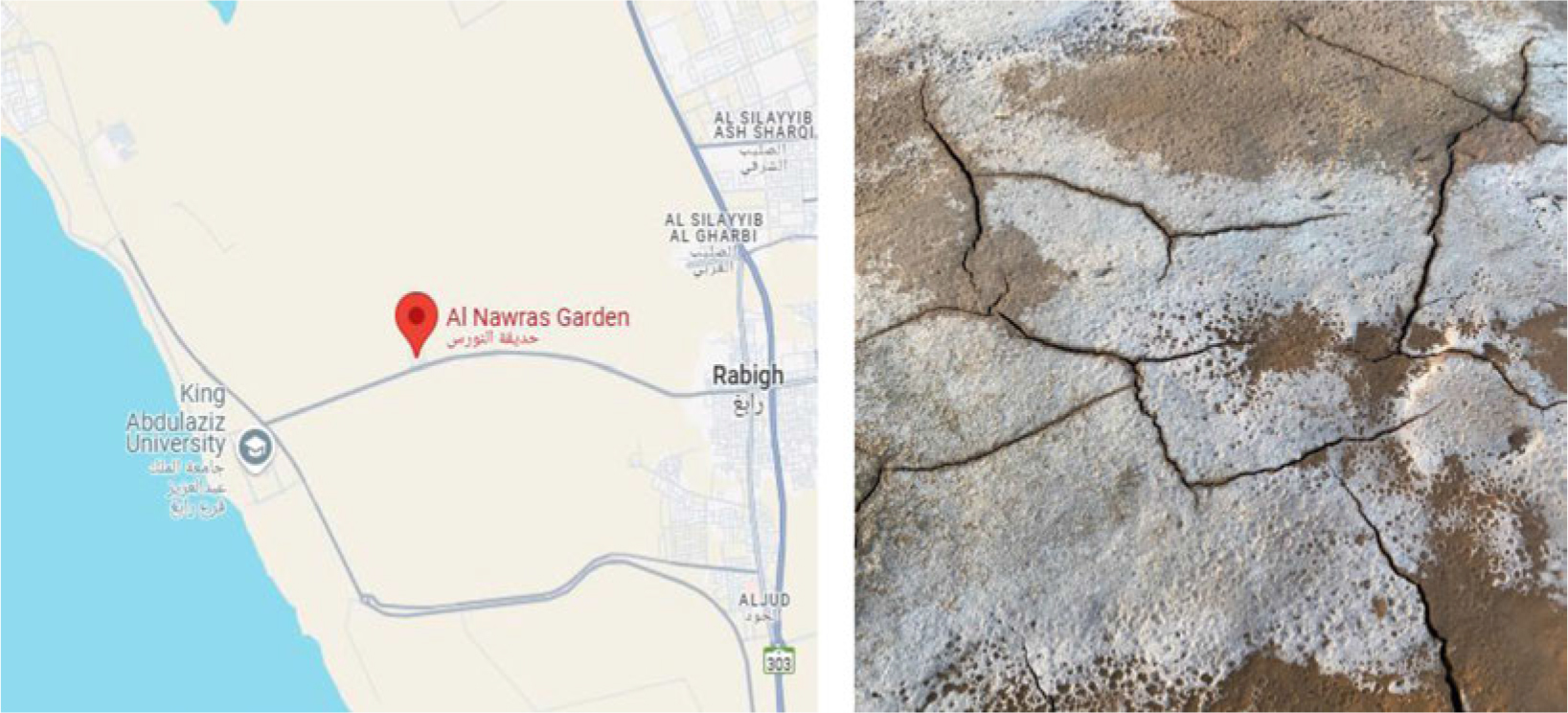
Fig. 1.
Type of soil used in this study surrounding Rabigh City in the Kingdom of Saudi Arabia (22.803970N, 38.984341E).
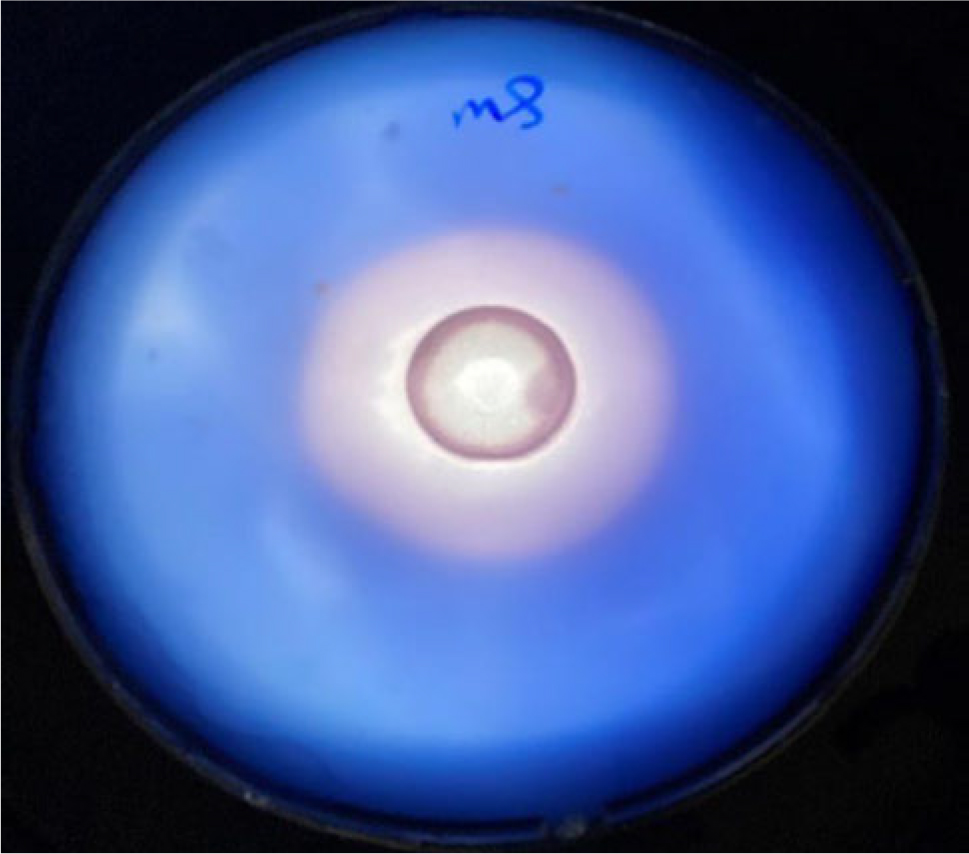
Fig. 2.
Isolate WL showing positive starch hydrolysis test in presence of iodine.
Table I
Gram staining, morphological and physiological characterization of the isolates having a zone of clearance with iodine solution.
| Sample | Gram stain | Morphology under light microscope | Colony color | Colony morphology | Growth on α-amylase agar |
|---|---|---|---|---|---|
| M1 | + | Bacillus | white | filamentous | ++++ |
| M2 | + | Bacillus | white | irregular | +++ |
| WL | + | Bacillus | white | irregular | ++++ |
| M12 | + | Bacillus | creamy | circular | ++ |
| M13 | + | Bacillus | creamy | circular | ++++ |
| L5 | − | Bacillus | white | circular | ++ |
| L6 | + | Bacillus | white | circular | ++ |
| L8 | + | Bacillus | creamy | irregular | +++ |
| L15 | + | Bacillus | creamy | circular | ++ |
Table II
Screening of α-amylase activity (U/ml) using starch nitrate medium and selecting of WL as a potent isolate for further study.
| Isolate code | α-amylase activity (U/ml) |
|---|---|
| M1 | 511.08 ± 0.12 |
| M2 | 572.10 ± 0.14 |
| WL | 579.12 ± 0.18 |
| M12 | 509.98 ± 0.04 |
| M13 | 499.99 ± 0.02 |
| L5 | 568.12 ± 0.18 |
| L6 | 539.08 ± 0.12 |
| L8 | 568.12 ± 0.12 |
| L15 | 539.08 ± 0.14 |
Table III
Physiological characters of the selected bacterial Bacillus cereus WL.
| Character | WL Strain |
|---|---|
| Temperature range | 35–60°C |
| Optimum temperature | 45°C |
| pH range | 4–8 |
| Optimal pH | 6 |
| Catalase | + |
| Oxidase | + |
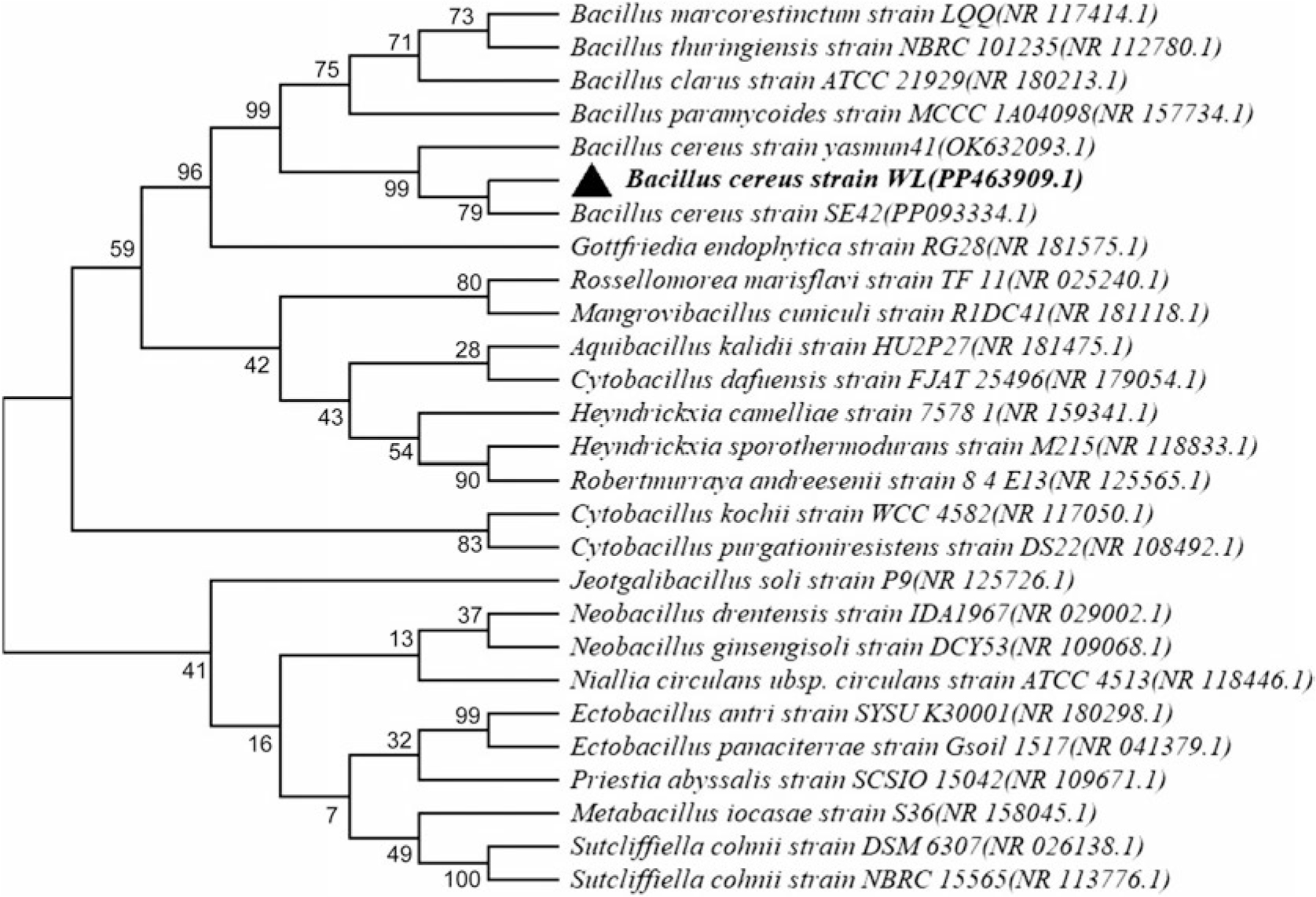
Fig. 3.
The phylogenetic tree of Bacillus cereus WL with the accession number PP463909.1 and its close relatives based on the 16S rRNA sequence. The tree was constructed using the Neighbor-Joining method in MEGA software v11. The percentage of replicate trees in which the associated taxa clustered together in the bootstrap test (1,000 replicates) are shown next to the branches.
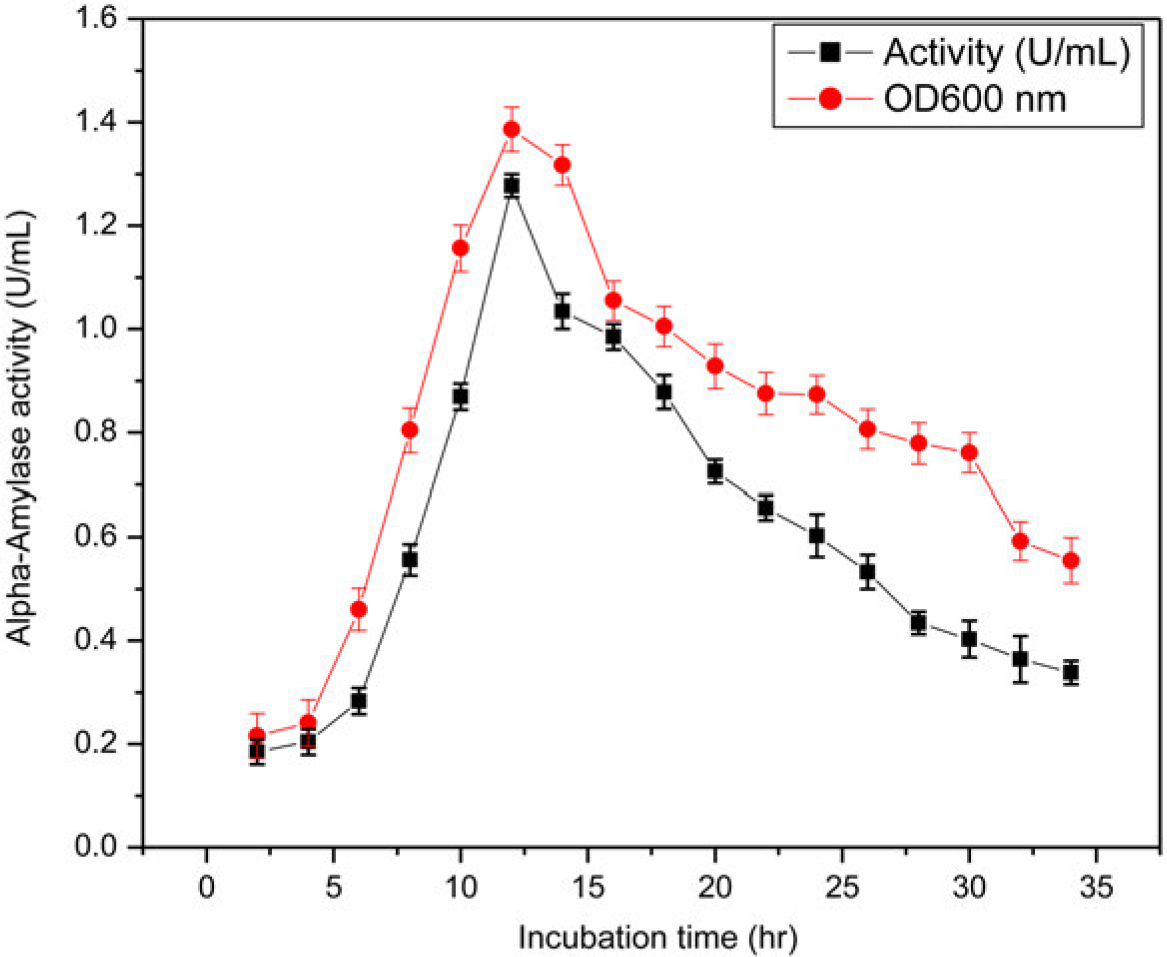
Fig. 4.
Effect of incubation time on the growth and the α-amylase activity from Bacillus cereus WL.
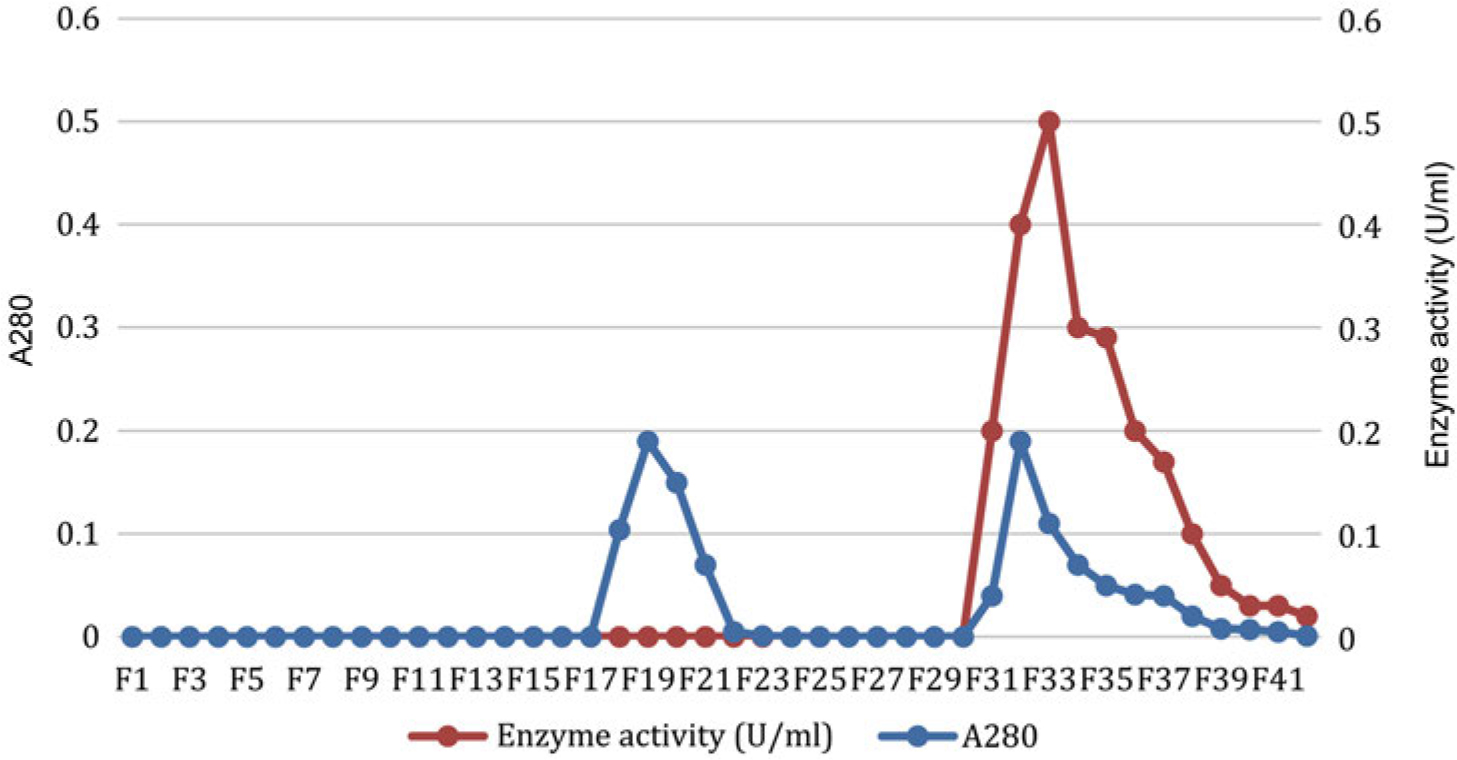
Fig. 5.
Chromatography of Bacillus cereus WL on Sephacryl™ S-200.
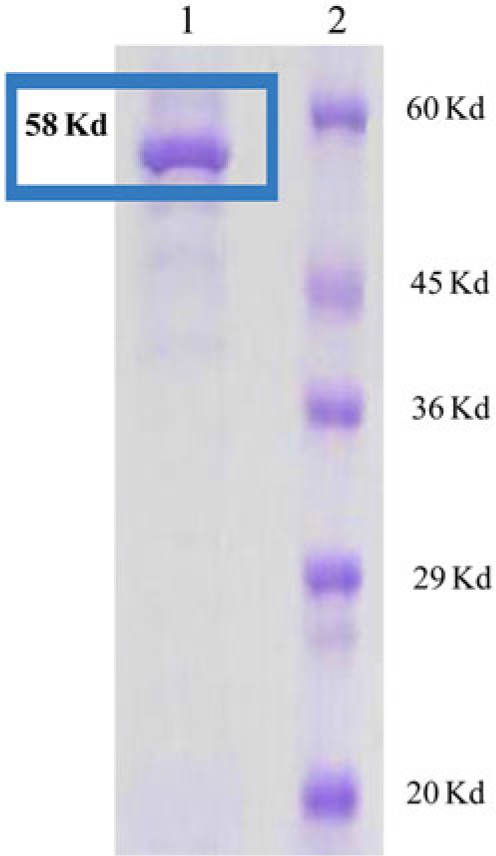
Fig. 6.
The SDS-PAGE (12%) analysis of the Bacillus cereus WL.
Lane 1 – 20 μg of partially purified amylase obtained after Sephacryl™ S-200 chromatography; Lane 2 – Molecular mass markers.
Table IV
Flow sheet of the Bacillus cereus WL purification.
| Purification steps | Total activity (U) | Total proteina (mg) | Specific activity (U/mg) | Activity recovery (%) | Purification factor |
|---|---|---|---|---|---|
| Crude enzyme | 180 | 0.817 | 220 | − | 1 |
| Participate by amm. sulfate (80%) | 90 | 0.225 | 400 | 50 | 1.8 |
| Sephacryl S-200 | 45 | 0.055 | 818.18 | 25 | 3.7 |
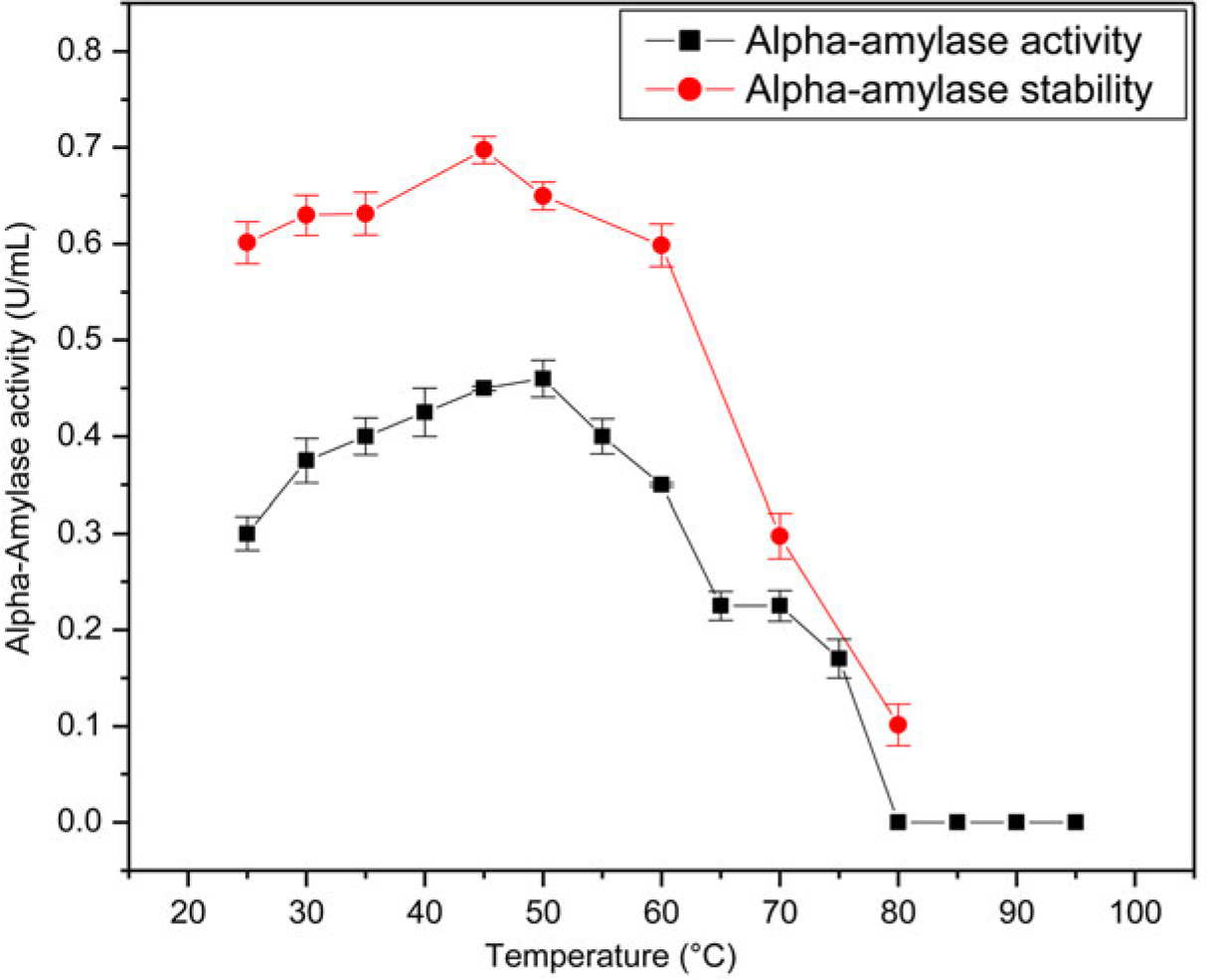
Fig. 7.
Effect of temperature on the activity and the stability of the purified Bacillus cereus WL.
α-Amylase was measured under stander conditions as described in Material and Methods section.
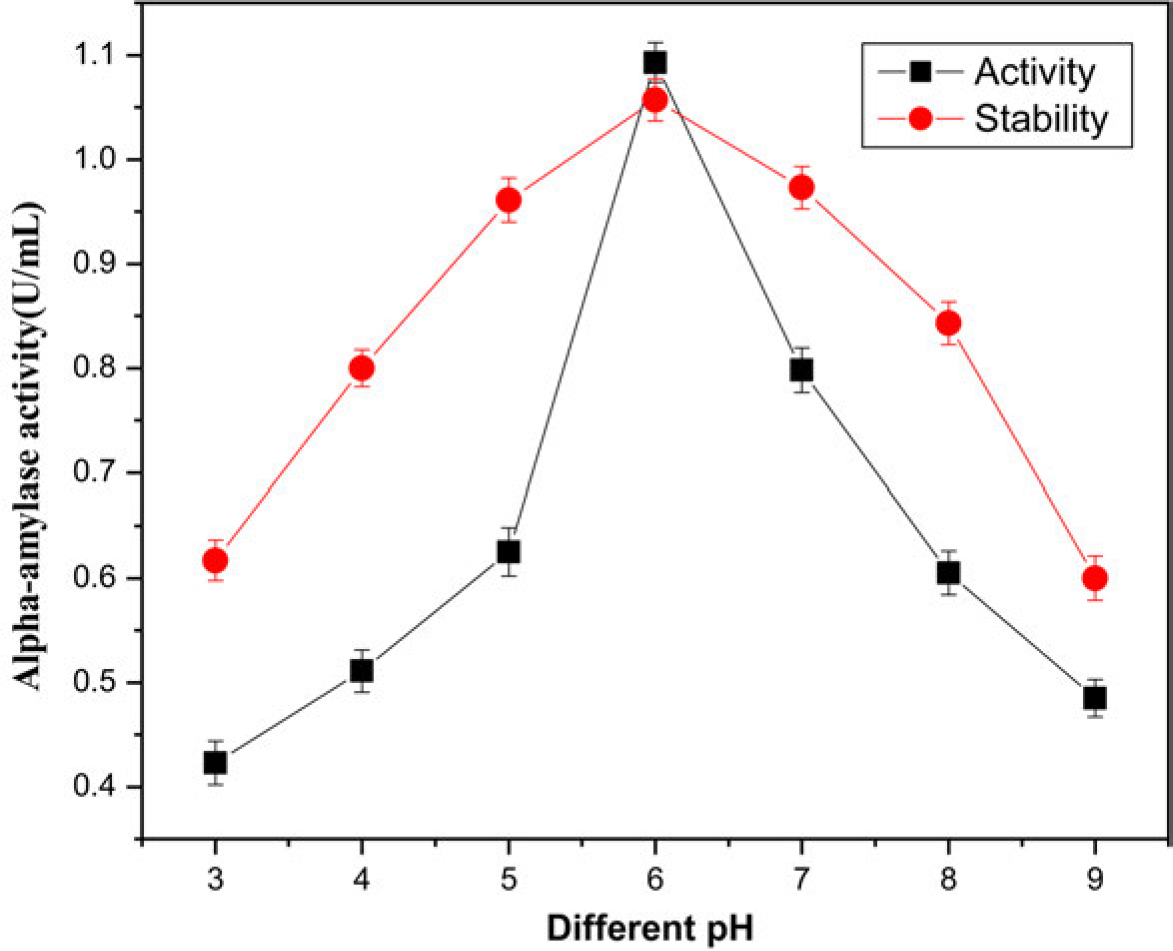
Fig. 8.
Effect of pH on the activity and the stability of the purified Bacillus cereus WL.
α-Amylase was measured under standard conditions as described in Material and Methods section.
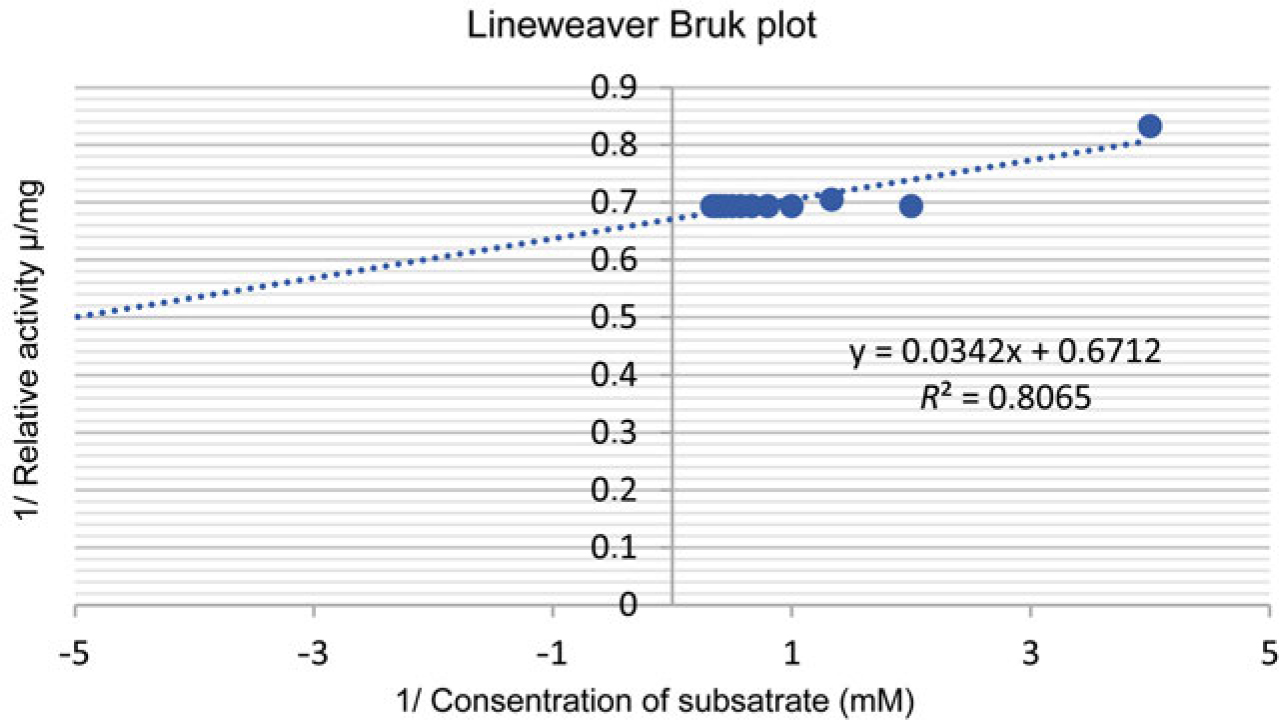
Fig. 9.
Lineweaver-Burk plot (1/Relative activity (v) vs. 1/Concentration of substrate (S)) for α-amylase activity.
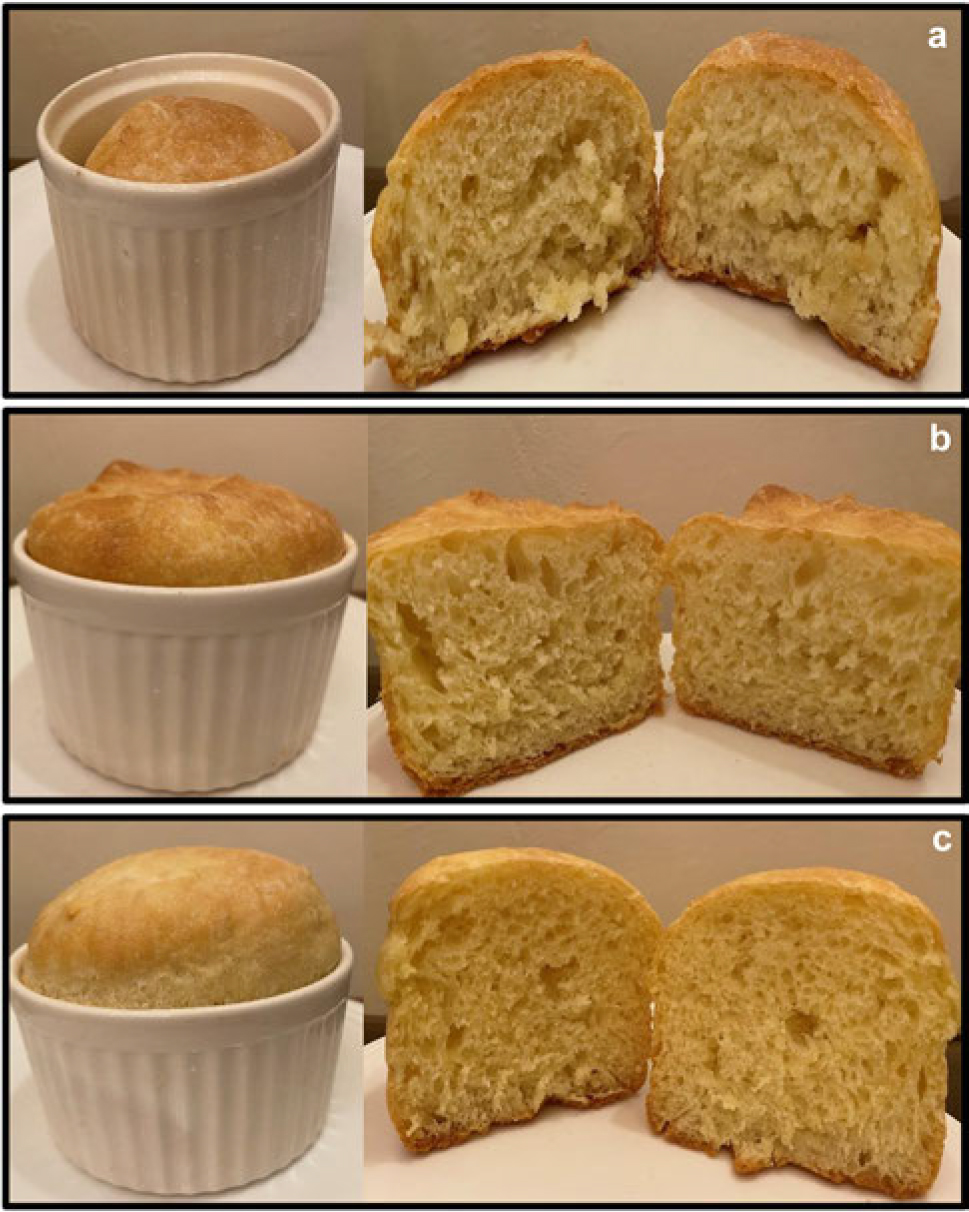
Fig. 10.
Effect of the addition of α-amylase on the volume of bread.
a – bread without enzyme; b – bread with 1 U/kg enzyme; c – bread with 2 U/kg enzyme.