
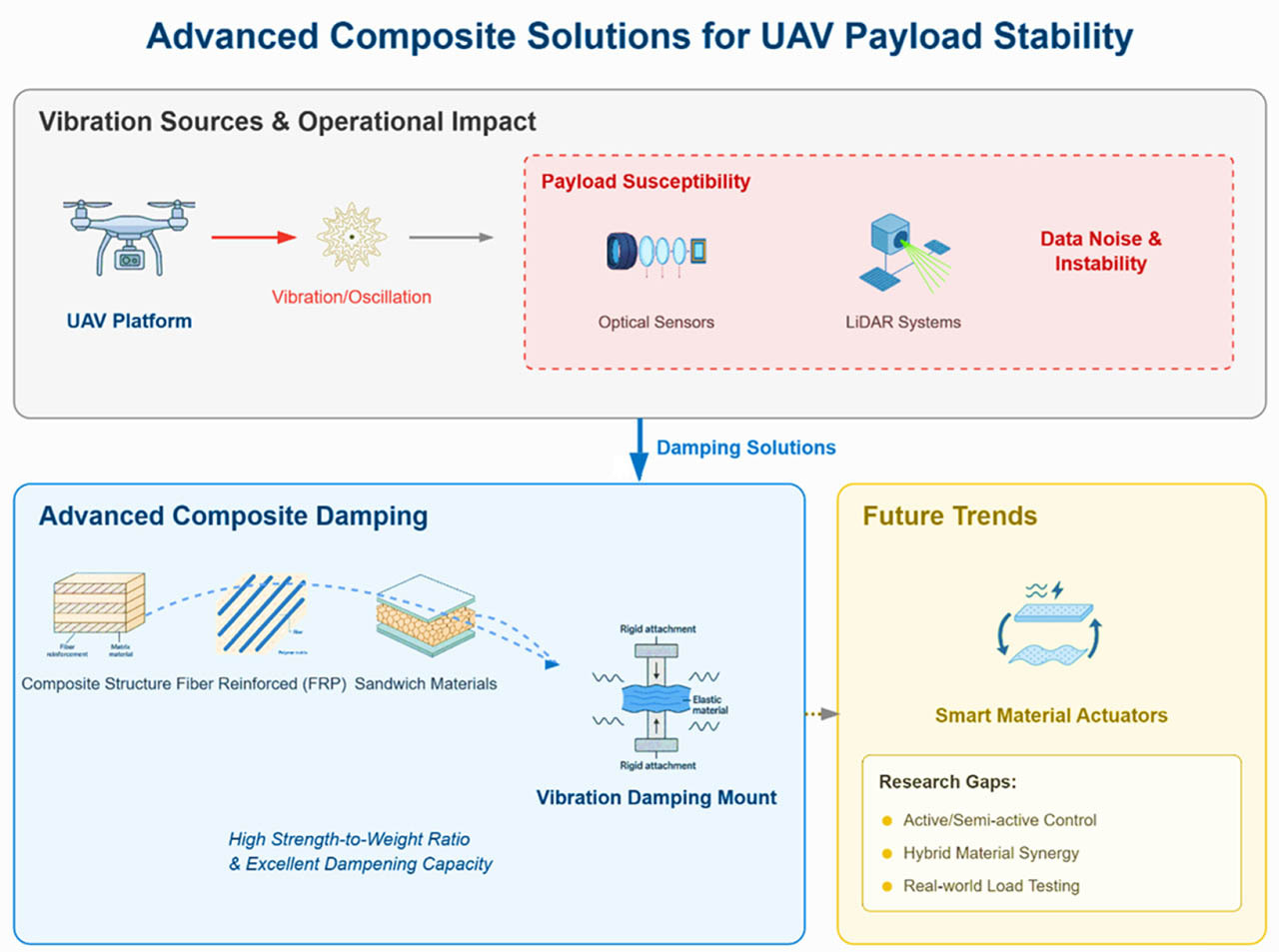
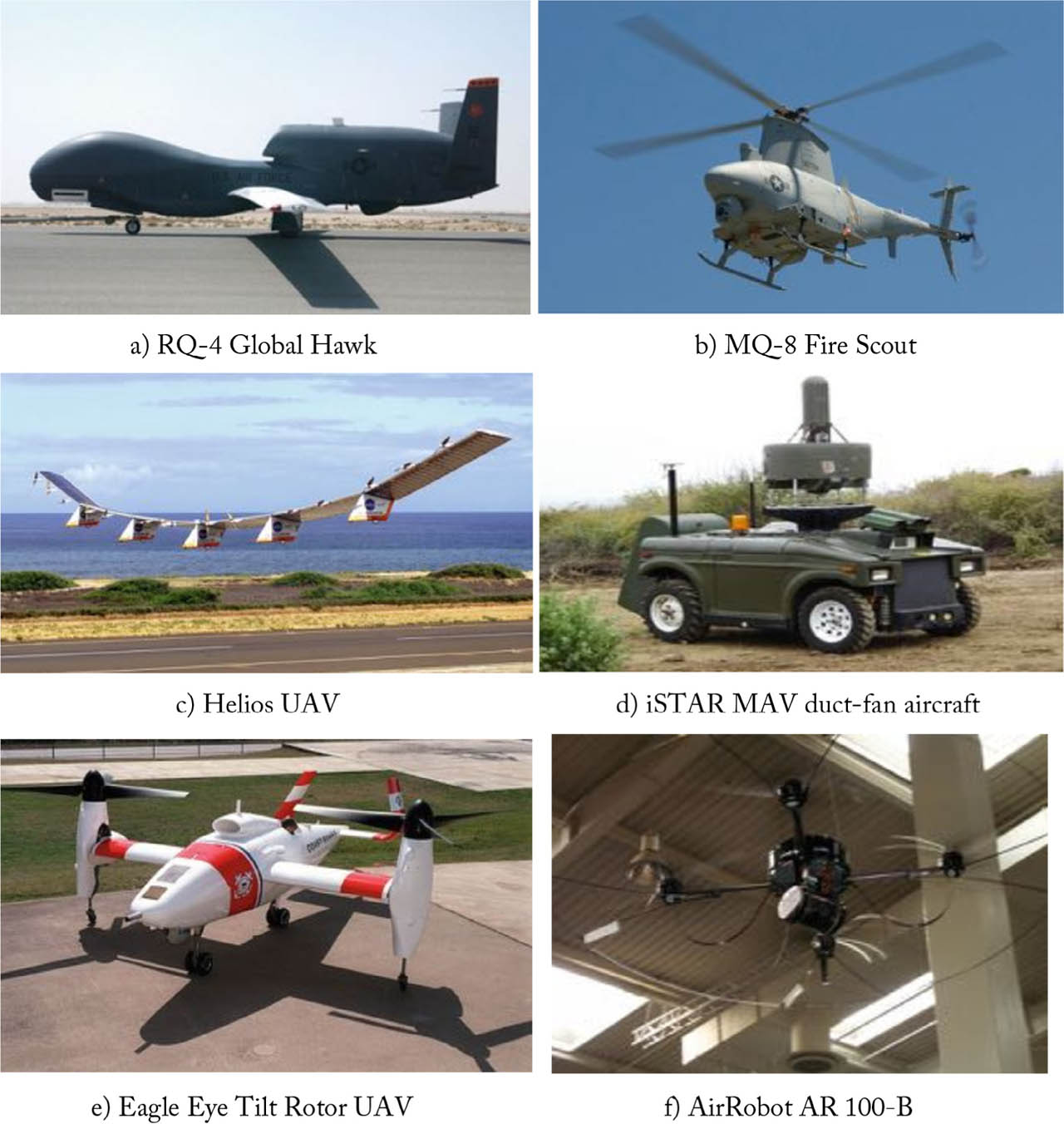
Fig. 1.
Different UAV configurations [3].
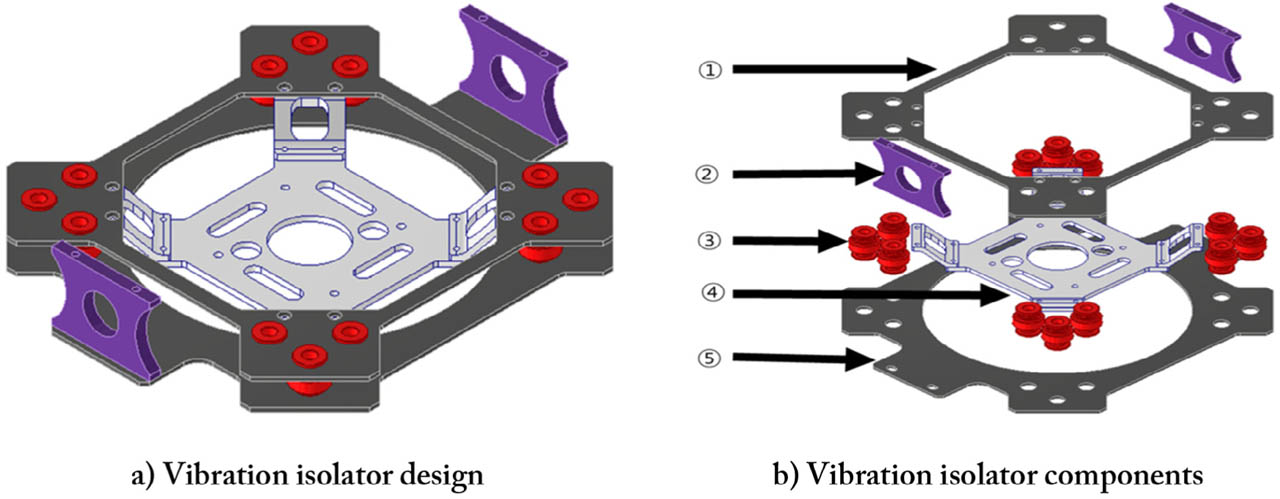
Fig. 2.
Vibration isolator [8].
Table 1.
Sources, nature, frequency characteristics, and impact of Vibrations in Unmanned Aerial Vehicles (UAVs).
| Vibration Source Category | Specific Sources | Nature of Vibration | Typical Frequency Range | Primary Effects on UAV & Payload | Refs |
|---|---|---|---|---|---|
| Propulsion System | Propellers, motors, Electronic Speed Controllers (ESC), Torque fluctuations, Motor imbalances, Electromagnetic forces | Periodic, Harmonic | High frequency (dominant blade passage frequencies) | Dominant vibrations, high-frequency excitation, additional harmonic frequencies from ESC, payload instability | [8, 9, 13] |
| Aerodynamic Induced | Gust loads, Trailing-edge vortices, Flow separation, Vortex shedding, Unsteady flow behaviour, Random pressure variations | Random, Broadband, Stochastic | Low to Mid frequency | Random vibrations affecting payload stability, image distortion, misalignment in sensors (cameras, LiDAR) | [10, 11] |
| Structural Dynamics | Flexibility of UAV frame, fixed wings, rotors, landing gear, arms, payload mounts | Resonant, Modal Interaction | Low to Mid frequency | Resonance leading to amplified vibration, complex coupled vibration patterns, structural fatigue, potential structural failure | [12] |
| Aerodynamic Controls | Control surface movements, forward/backward flight dynamics | Periodic + Random | Mid frequency | Interaction with structural modes, degradation of flight stability and payload performance | [10, 11] |
| Rigid Body & Overall System | Combination of all above sources | Mixed (Low + High frequency excitation) | Low-frequency (Rigid body & structural modes), High-frequency (Motor/Propeller dynamics) | Overall payload instability, reduced accuracy in imaging, mapping, LiDAR, navigation errors, reduced fatigue life | [14] |
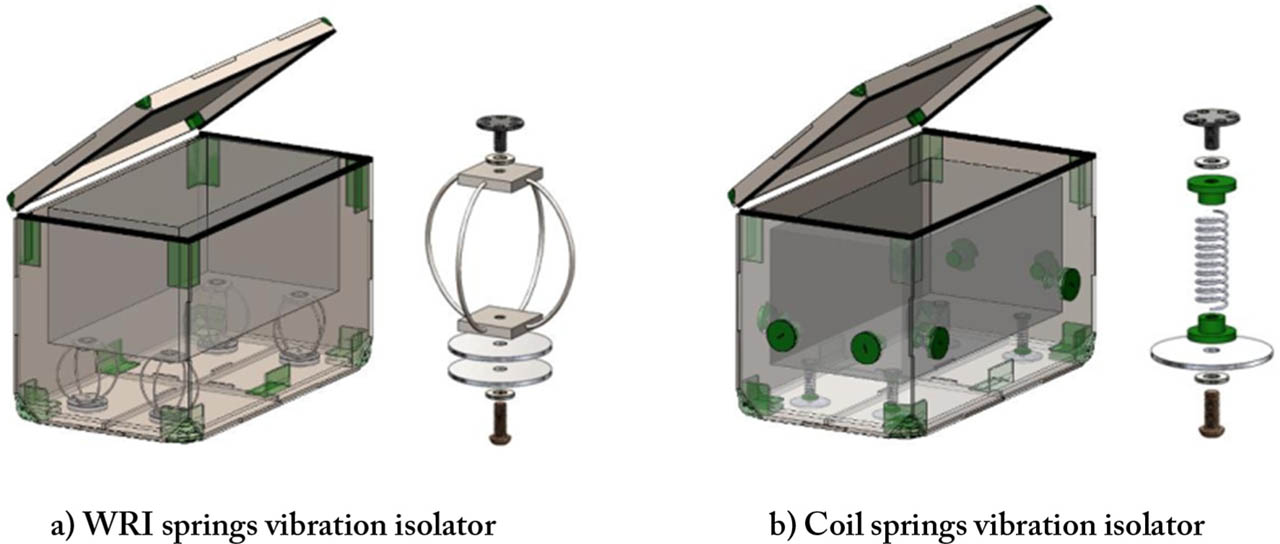
Fig. 3
Prototype designs of vibration isolation for medical goods transportation [15].
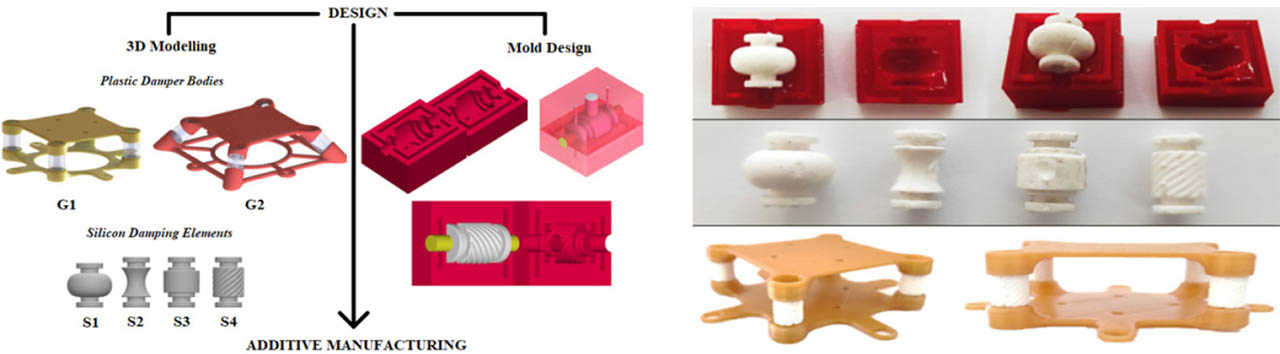
Fig. 4.
Design and additive process of the plastic damper bodies and the silicone damping elements [25]
Table 2.
Vibration isolation & damping methods for UAVs.
| Method | Type | Frequency Coverage | Payload Protection | Key Limitation | Refs |
|---|---|---|---|---|---|
| Rubber/Elastomer Mounts | Passive | Narrow | Low | Degrades with age & temperature | [22,23,24] |
| Spring & Wire Rope Isolators | Passive | Medium | Moderate | Adds weight, narrow tuning | [15, 24] |
| Tuned Mass Damper (TMD) | Passive | Very Narrow | Good (one freq.) | Only works at specific band | [25] |
| Viscoelastic Sandwich Composite | Passive | Broad | High | Requires precise layup | [45,46,47,48] |
| Hybrid Smart Composite | Semi-Active | Broad + Adaptive | Very High | Complex & higher cost | [52,53,54,55,56,57] |
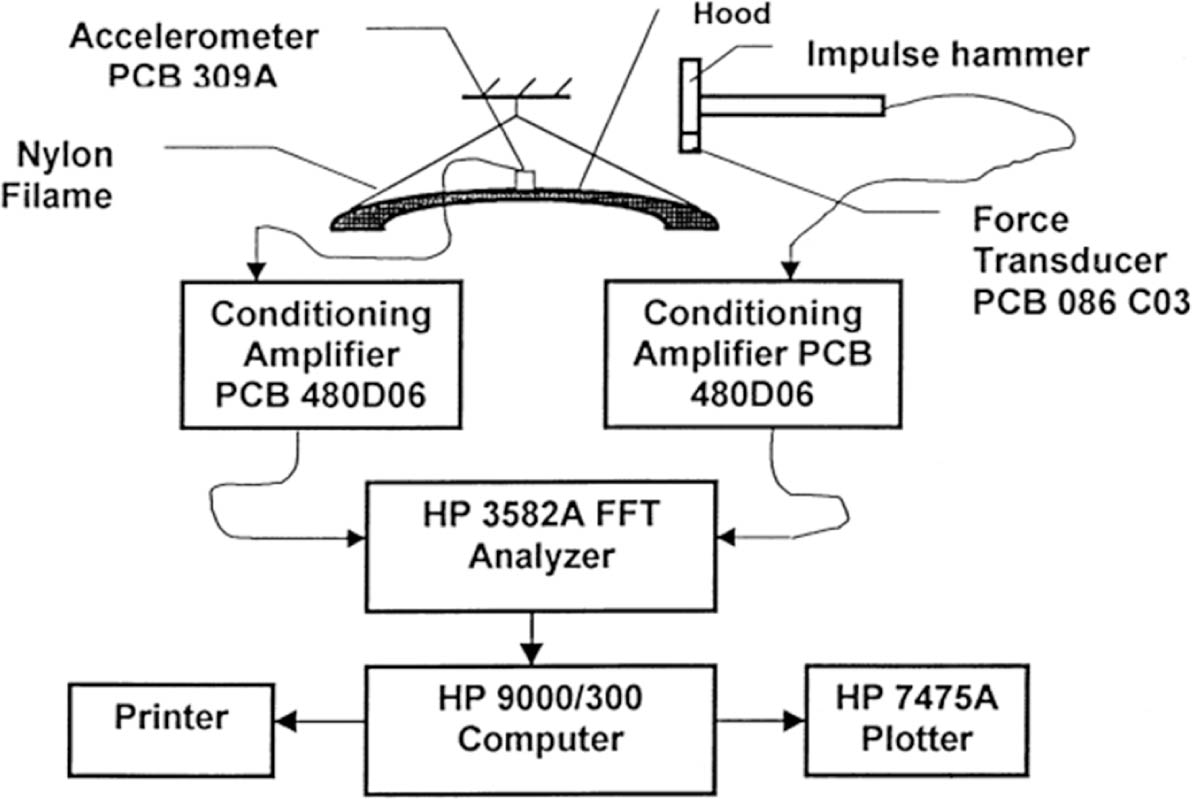
Fig. 5.
Apparatus for response testing of adhesive bonded composite automotive hood-closure panels [43].
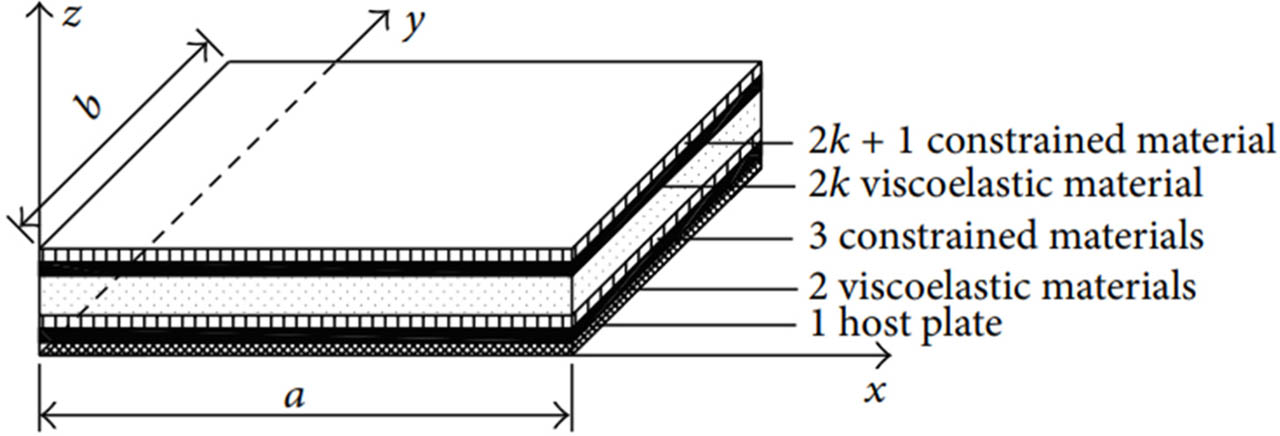
Fig. 6.
Multilayered constrained damping plate [45].
Table 3.
Advanced materials for vibration damping.
| Material Type | Stiffness | Damping Level | Key Mechanism | Main Advantage | Refs |
|---|---|---|---|---|---|
| Carbon Fiber (CFRP) | Very High | Moderate | Fiber-matrix interfacial friction | Lightweight + high strength | [40,41,42] |
| Glass/Natural Fiber (GFRP) | Moderate | High | Matrix viscoelasticity | Excellent natural damping | [49, 50] |
| Viscoelastic Sandwich | High | Very High | Shear deformation in soft core | Broadband damping, low weight | [45,46,47,48] |
| Hybrid (Carbon + Viscoelastic) | High | Highest | Combined friction + shear | Balanced strength & energy loss | [43, 47] |
| Smart Hybrid (Piezo/SMA) | High | Adaptive High | Energy conversion & phase change | Real-time tunability | [52,53,54,55,56,57] |
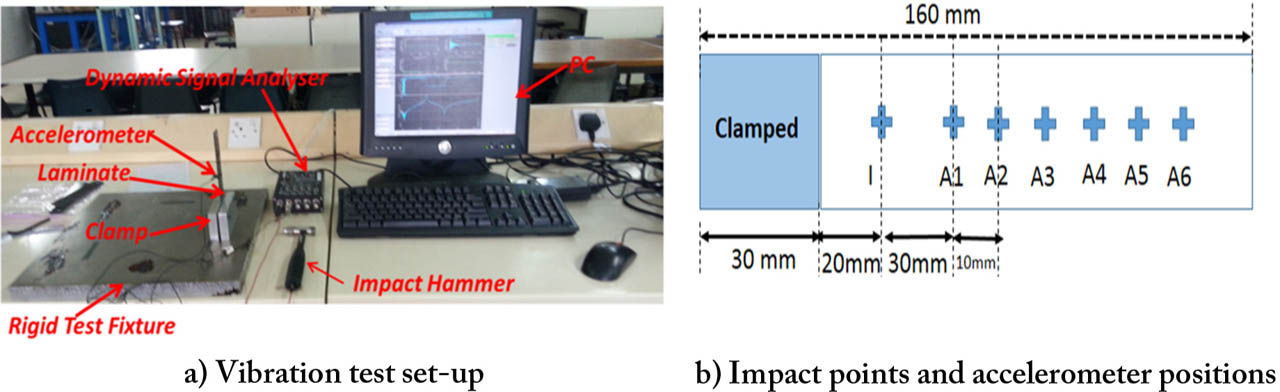
Fig. 7.
Vibration testing of composite laminate [52].
Table 4.
Trends in composite damping mounts.
| Trend | Control Type | Key Feature | UAV Benefit | Refs |
|---|---|---|---|---|
| Passive Viscoelastic Composites | Passive | Shear damping in soft core | Broadband damping at low weight | [46,47,48,49] |
| Piezoelectric Smart Composites | Active | Converts vibration into electrical energy | Real-time suppression & sensing | [53,54,55,56] |
| Shape Memory Alloy (SMA) Hybrids | Adaptive | Energy dissipation through transformation | Tuneable damping under varying conditions | [57, 58] |
| Hybrid Passive-Active Systems | Semi-Active | Passive isolation + active control | Adapts to changing flight & payloads | [32, 58] |
| Next-Gen Multifunctional Composites | Self-Sensing | Self-healing, energy-harvesting | Lightweight, multi-role smart mounts | [52,53,54,55,56,57,58] |
Table 5.
Conventional vs advanced composite damping methods for UAVs.
| Damping Method | Type | Frequency Range | Damping Effectiveness | Weight Penalty | Adaptability | Overall UAV Suitability | Refs |
|---|---|---|---|---|---|---|---|
| Rubber/Elastomer Mounts | Passive | Narrow | Low | Low | None | Low | [22,23,24, 26] |
| Spring & Wire Rope | Passive | Medium | Moderate | High | Low | Moderate | [15, 24, 27] |
| Tuned Mass Damper (TMD) | Passive | Very Narrow | Good (Single freq.) | Moderate | None | Limited | [25, 26] |
| Viscoelastic Sandwich Composite | Passive | Broad | High | Low | Moderate | High | [45,46,47,48, 51] |
| Hybrid Smart Composite | Semi-Active | Broad + Adaptive | Very High | Low | High | Excellent | [52,53,54,55,56,57,58] |