
1. INTRODUCTION
The development of Unmanned Aerial Vehicles (UAVs) has accelerated in recent years, driven by their versatility, lightweight design, and autonomous capabilities. Present-day UAVs are widely used in aerial reconnaissance, precision agriculture, mapping, delivery services, remote sensing, and imaging missions, where stable payload performance is critical to mission success. However, the structures of modern UAVs are highly susceptible to vibrations arising from the propulsion system, aerodynamic excitation, and structural dynamics [1,2,3,4,5,6,7].
The primary sources of vibration in UAVs include rotor imbalance, propeller-induced vibration, aerodynamic disturbances, structural resonance, and motor vibration [8,9,10,11,12,13,14]. Such vibrations adversely affect the performance of onboard payloads, including cameras, LiDAR systems, thermal imagers, communication equipment, and other scientific instruments, resulting in image distortion, navigation errors, sensor interference, and reduced measurement accuracy [15,16,17,18,19,20]. Prolonged exposure to these dynamic forces can also shorten the service life of UAVs and their payloads [19,20,21].
A range of vibration isolation techniques, including rubber mounts, metallic isolators, spring-damper systems, and elastomers, are widely used due to their design simplicity and low production cost [22,23,24,25,26,27]. Despite these advantages, such techniques suffer from a limited operating frequency range, poor adaptability to changing flight conditions, added weight, and sensitivity to environmental conditions [26,27]. With the growing use of UAVs across diverse applications in recent years, the demand for lightweight, robust, and efficient vibration dampers has increased substantially [28,29,30,31,32], motivating the development of more sophisticated vibration suppression techniques.
Advanced composite materials, such as fiber-reinforced polymers and viscoelastic sandwich composites, have shown promise in vibration damping applications owing to their high strength-to-weight ratio, corrosion resistance, design versatility, and energy absorption capability [33,34,35,36,37,38,39,40,41,42,43,44,45,46,47,48]. Hybrid composites combining carbon, glass, aramid, and viscoelastic materials have been shown to enhance vibration damping performance without compromising stiffness or strength [49,50,51,52,53,54,55]. In addition, smart materials such as piezoelectric materials and shape memory alloys (SMAs) have been identified as promising candidates for semi-active vibration damping systems [52,53,54,55,56,57,58].
However, despite these advances, several gaps remain in composite-material-based damping techniques. One challenge lies in selecting composite materials that provide effective vibration damping without compromising stiffness and strength. Another challenge is integrating damping mounts into existing airframe designs without introducing additional structural stress.
2. OVERVIEW OF UNMANNED AERIAL VEHICLES AND SYSTEMS AND THEIR APPLICATIONS
TResearch interest in Unmanned Aerial Vehicles and Systems (UAV&S), commonly referred to as drones, has grown significantly over the past several decades, driven by rapid technological advances in electronics, control systems, aerodynamics, and communication systems. Early UAV research was largely confined to military applications, including surveillance, reconnaissance, armament deployment, and payload delivery, before extending to civilian and commercial use owing to their inherent advantages. UAVs are now widely employed in commercial applications such as agricultural spraying, aerial videography and photography, surveying and mapping, traffic management, and package delivery. The integration of aerospace engineering, robotics, automation, artificial intelligence, and machine learning has further enabled UAVs to perform autonomous and semi-autonomous tasks [1,2,3].
The range of UAV applications has expanded considerably in recent years, in response to advances in battery management systems, nanosensors, and lightweight, high-strength composite materials. These developments have improved the endurance and operational capabilities of UAVs. Multi-rotor UAVs, in particular, have gained widespread popularity owing to their vertical take-off and landing capability, simple control architecture, and adaptability to diverse mission requirements [4,5]. Research and development in UAV&S continue to gain prominence in both industry and academia, holding considerable promise for advances in aerial transportation, smart cities, remote sensing, and data acquisition.
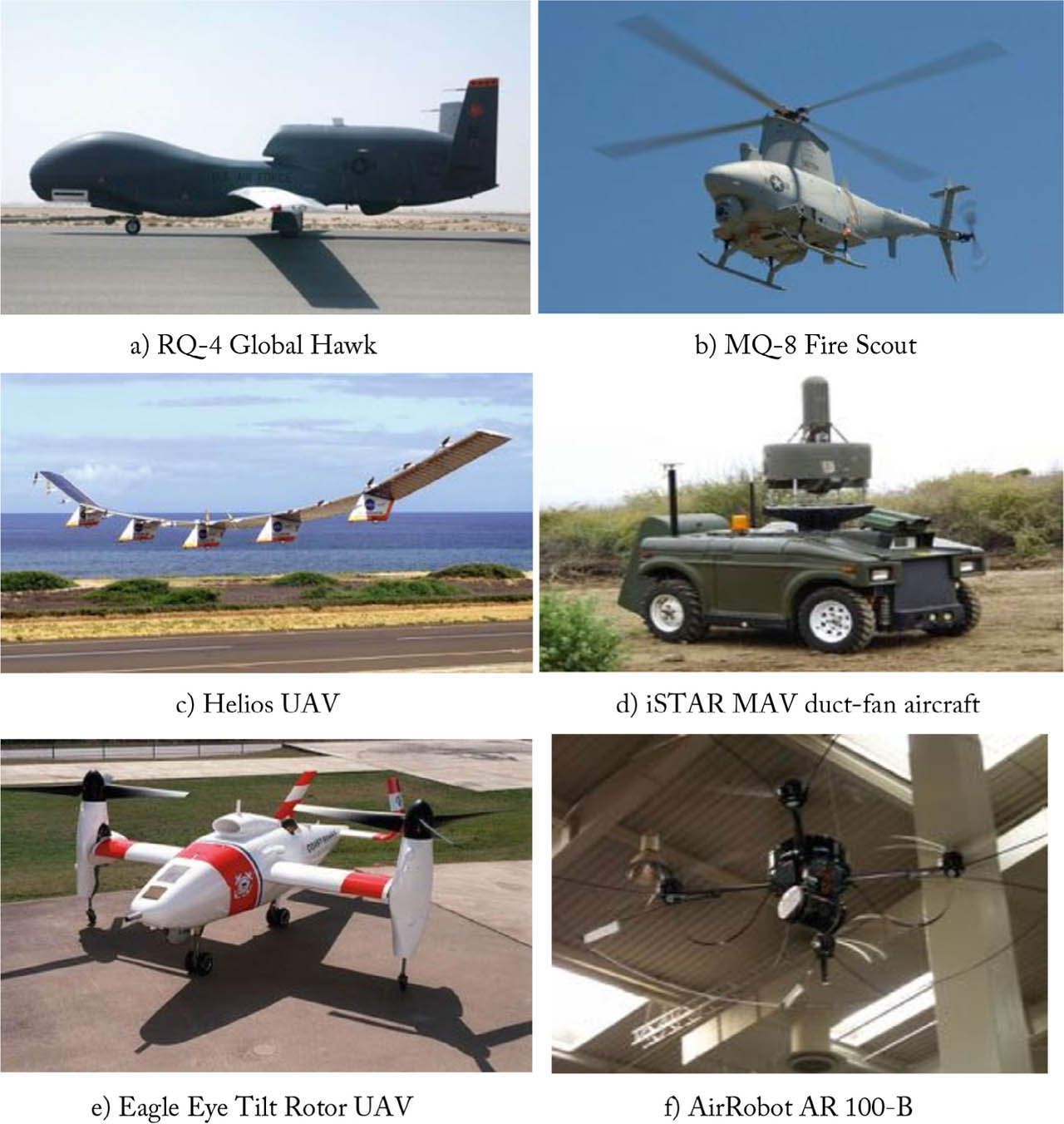
Fig. 1.
Different UAV configurations [3].
Payload stability and management are among the most critical parameters governing the effectiveness of UAV operation. Typical UAV payloads include delivery packages, cameras, thermal imaging devices, LiDAR sensors, communication devices, and, in certain applications, weapons and scientific equipment, as per the specific mission objectives. The quality and accuracy of the data collected by a UAV depend directly on the performance and stability of its payload. Even minor disturbances or instabilities in the payload can distort the images and video captured by onboard cameras, and in military UAVs, even a slight sensor deflection can cause a target to be missed.
Hence, the success of a UAV mission depends on the stability and performance of its payload system. Payload performance is governed by UAV dynamics, which are in turn closely related to vibration effects and payload-mounting strategies. As UAVs are increasingly deployed in sophisticated applications, the development of robust and efficient payload systems has become essential [5,6,7].
3. SOURCES AND NATURE OF VIBRATIONS IN UAVs
The principal sources of vibration in UAVs include the propulsion system, aerodynamic controls, and structural dynamics. In multi-rotor UAVs, the propeller and motor system contributes significantly to overall vibration levels. Imbalanced aerodynamic forces in rotating components give rise to oscillations and periodic vibrations, with propeller rotation typically producing periodic vibrations dominated by the blade passage frequency [8,9].
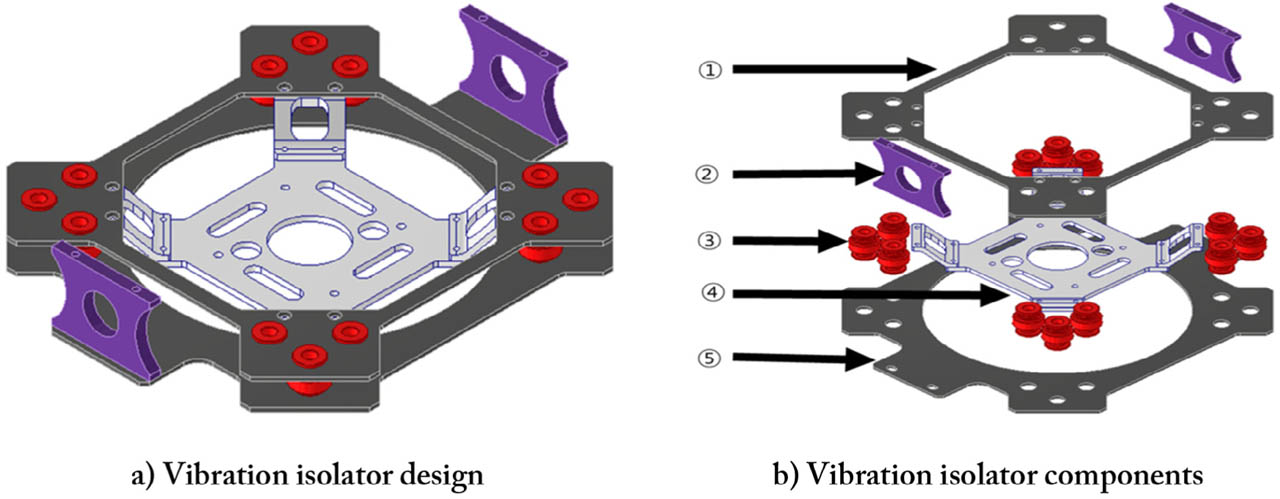
Fig. 2.
Vibration isolator [8].
In addition to propulsion-related vibrations, aerodynamically induced vibrations play a significant role in payload stability and performance, particularly during forward or backward flight and under unsteady flow conditions. Aerodynamic instabilities can arise from gust loads, trailing-edge vortices, flow separation, vortex shedding, and random pressure fluctuations in the flow field. The behaviour and impact of these phenomena are difficult to predict and give rise to random vibrations within the structure. Small UAVs are particularly susceptible to such vibrations owing to their low weight and low structural stiffness, which makes efficient payload management especially challenging [10,11].
Structural vibrations also arise from the flexibility and dynamic characteristics of the UAV frame. Components such as fixed wings, rotors, landing gear, arms, and payload mounts can experience resonance when excited at particular frequencies, leading to amplified vibration levels and, potentially, structural failure. Interaction between different vibration modes at resonant frequencies can further produce complex vibration patterns that are difficult to isolate using conventional methods [12].
Table 1.
Sources, nature, frequency characteristics, and impact of Vibrations in Unmanned Aerial Vehicles (UAVs).
| Vibration Source Category | Specific Sources | Nature of Vibration | Typical Frequency Range | Primary Effects on UAV & Payload | Refs |
|---|---|---|---|---|---|
| Propulsion System | Propellers, motors, Electronic Speed Controllers (ESC), Torque fluctuations, Motor imbalances, Electromagnetic forces | Periodic, Harmonic | High frequency (dominant blade passage frequencies) | Dominant vibrations, high-frequency excitation, additional harmonic frequencies from ESC, payload instability | [8, 9, 13] |
| Aerodynamic Induced | Gust loads, Trailing-edge vortices, Flow separation, Vortex shedding, Unsteady flow behaviour, Random pressure variations | Random, Broadband, Stochastic | Low to Mid frequency | Random vibrations affecting payload stability, image distortion, misalignment in sensors (cameras, LiDAR) | [10, 11] |
| Structural Dynamics | Flexibility of UAV frame, fixed wings, rotors, landing gear, arms, payload mounts | Resonant, Modal Interaction | Low to Mid frequency | Resonance leading to amplified vibration, complex coupled vibration patterns, structural fatigue, potential structural failure | [12] |
| Aerodynamic Controls | Control surface movements, forward/backward flight dynamics | Periodic + Random | Mid frequency | Interaction with structural modes, degradation of flight stability and payload performance | [10, 11] |
| Rigid Body & Overall System | Combination of all above sources | Mixed (Low + High frequency excitation) | Low-frequency (Rigid body & structural modes), High-frequency (Motor/Propeller dynamics) | Overall payload instability, reduced accuracy in imaging, mapping, LiDAR, navigation errors, reduced fatigue life | [14] |
The propulsion system constitutes a further important source of vibration. It typically comprises electric motors, propellers, and an electronic speed controller (ESC) in small UAVs, or an internal combustion engine in larger platforms. High-frequency vibrations within the propulsion system can result from torque fluctuations, motor imbalance, and electromagnetic forces. In electric UAVs, the ESC can additionally introduce harmonic frequencies into the vibration spectrum of other components [13].
Vibrations in UAVs can be broadly classified into low-frequency and high-frequency components. Low-frequency vibrations are typically associated with rigid-body dynamics and structural modes, whereas high-frequency vibrations arise primarily from motor and propeller dynamics. Effective vibration mitigation therefore requires that both frequency ranges be addressed, given their combined impact on payload stability and performance [14].
A clear understanding of the sources and characteristics of these vibrations is therefore essential for the design of efficient damping and isolation systems. In particular, identifying the critical frequency ranges is important when developing composite-material-based vibration damping applications.
4. EFFECT OF VIBRATIONS ON UAV PAYLOAD PERFORMANCE
The performance of payload systems is directly dependent on vibrations in UAVs, especially in high precision applications. UAV payloads such as optical cameras, infrared sensors and cameras, LiDAR sensors, ultrasound sensors, ammunitions, delivery packages, etc., are highly sensitive to dynamic vibrations. Even low-amplitude vibrations can compromise data quality, image and video clarity, munition performance, and package safety, potentially preventing mission objectives from being achieved [15,16].
In aerial photography and videography applications, even low-amplitude vibrations can cause image and video blur, resulting in a loss of resolution. Aerial mapping and surveying require precise image alignment and accurate GPS tagging, and even minor vibrations can introduce misalignment that compromises the entire project. In LiDAR-based measurements, even minute vibrations can introduce noise and inaccuracies into distance calculations, adversely affecting three-dimensional terrain models and object detection [17,18].
Navigation and communication systems are similarly susceptible to vibration-induced disturbances. Vibration-related fluctuations can cause antenna misalignment, resulting in degraded or intermittent connectivity. In addition, severe vibrations can cause inertial measurement units (IMUs) to produce inaccurate readings, potentially destabilizing the entire flight control system [19].
Frequent and severe vibrations can also reduce the fatigue life of UAVs and their payload components. Continuous dynamic strain can loosen mechanical joints and degrade sensor calibration, shortening the operational lifespan of sensitive equipment. This, in turn, increases maintenance requirements for onboard components and raises the risk of in-flight failures, potentially compromising overall mission safety [20].
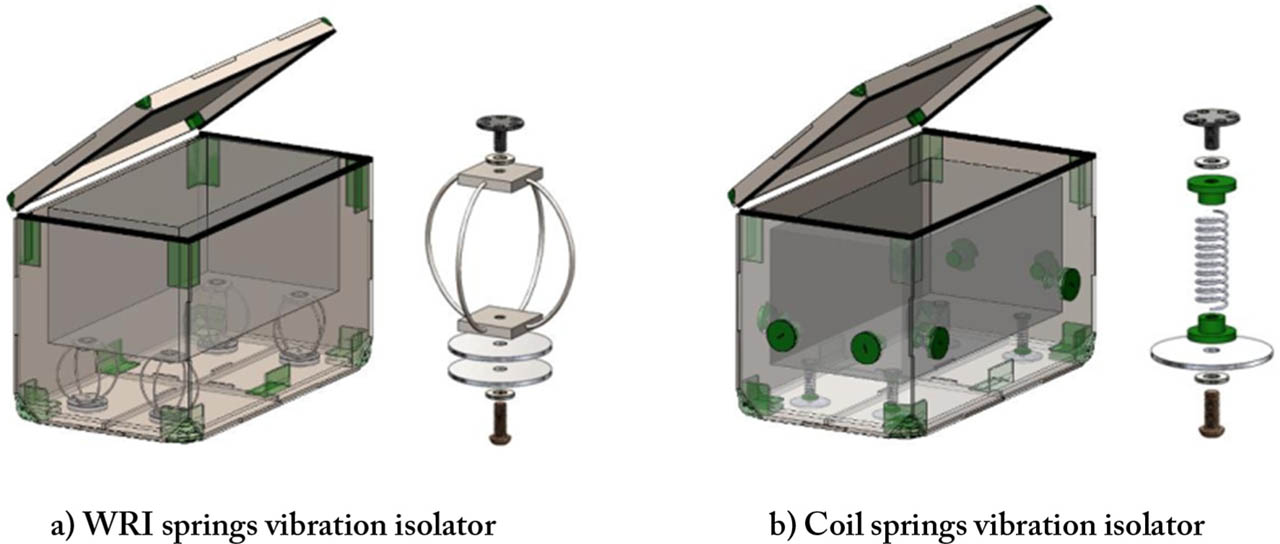
Fig. 3
Prototype designs of vibration isolation for medical goods transportation [15].
Interaction between structural vibrations and the payload mounting system can further amplify oscillations if vibration effects are not properly accounted for in the design. This issue is particularly pronounced in micro and small UAVs, where structural damping is inherently low. The effectiveness of the payload mounting system therefore plays a critical role in protecting sensitive equipment from harmful vibrations [21].
Overall, the effects of vibration extend beyond immediate performance degradation to influence the accuracy, durability, and reliability of UAV operations. Achieving stable, high-quality payload performance across diverse mission requirements therefore calls for advanced vibration damping methods, particularly those based on composite materials.
5. VIBRATION ISOLATION AND DAMPING METHODS
Researchers have employed a range of conventional and unconventional vibration damping and isolation methods to mitigate the adverse effects of vibration in UAVs. Common passive isolation and damping techniques include rubber mounts, spring-damper systems, elastomers, and metallic isolators. Passive isolation techniques operate on the principle of reducing the transmission of vibrational energy from the source—such as motors and propellers—to the payload, primarily through energy absorption and dissipation [22,23].
Rubber and elastomeric mounts are among the most widely used vibration isolation solutions owing to their simple construction, low cost, and ease of fabrication. These materials dissipate vibrational energy across a wide frequency range through their inherent damping properties. Metallic and spring-damper systems, by contrast, isolate vibration by introducing compliant and dissipative elements that shift the structure’s natural frequency away from the dominant excitation frequencies [24].
Wire-rope isolators and foam-based materials are also employed on some UAV platforms to reduce vibration, particularly for sensitive payloads; these systems can accommodate multidirectional vibrations and are generally more robust to environmental variation. In certain applications, tuned mass dampers (TMDs) have been used to counter specific resonant frequencies, employing auxiliary masses that oscillate out of phase with the main structure [25].
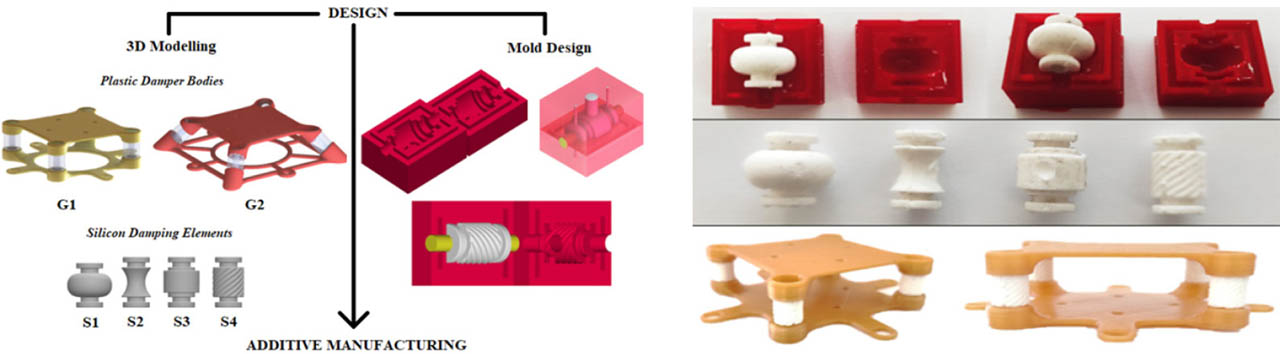
Fig. 4.
Design and additive process of the plastic damper bodies and the silicone damping elements [25]
While these classical damping techniques remain widely used, they present notable limitations when applied to existing UAV systems. Narrow bandwidth is among their principal drawbacks: because such systems are tuned to a limited frequency band, equipment relying on them may underperform outside that range. This poses a significant risk to UAV operation under critical flight conditions, varying rotor speeds, and diverse payload configurations [26].
Table 2.
Vibration isolation & damping methods for UAVs.
| Method | Type | Frequency Coverage | Payload Protection | Key Limitation | Refs |
|---|---|---|---|---|---|
| Rubber/Elastomer Mounts | Passive | Narrow | Low | Degrades with age & temperature | [22,23,24] |
| Spring & Wire Rope Isolators | Passive | Medium | Moderate | Adds weight, narrow tuning | [15, 24] |
| Tuned Mass Damper (TMD) | Passive | Very Narrow | Good (one freq.) | Only works at specific band | [25] |
| Viscoelastic Sandwich Composite | Passive | Broad | High | Requires precise layup | [45,46,47,48] |
| Hybrid Smart Composite | Semi-Active | Broad + Adaptive | Very High | Complex & higher cost | [52,53,54,55,56,57] |
Limited damping performance and added weight represent another significant drawback of these vibration isolation methods. Most conventional isolation methods impose a weight penalty on the UAV, reducing flight endurance and payload capacity. In addition, passive materials such as rubber and elastomers can degrade over time due to environmental factors including humidity, temperature fluctuations, and mechanical fatigue, resulting in reduced performance and reliability [27].
Existing vibration isolation techniques generally do not allow for adjustment or dynamic adaptation to changing vibration states, which significantly limits their effective application in UAV missions. As UAV systems continue to evolve, there is a clear need for more efficient, lightweight, and adaptive vibration damping solutions capable of addressing the limitations of conventional isolation methods.
6. NEED FOR ADVANCED VIBRATION DAMPING SOLUTIONS
Conventional vibration isolation and damping methods have severe limitations in terms of meeting the performance requirements of modern, highly complex UAV operations, driving strong demand for more advanced damping solutions. UAVs are increasingly used in applications such as high-resolution imaging, aerial surveying and mapping, and autonomous navigation, all of which demand high precision and leave little margin for vibration-induced error. This necessitates the development of highly efficient and reliable vibration isolation methods capable of operating consistently across varying conditions [28,29,30].
UAV design also faces stringent weight and size constraints. While lightweight structures improve speed, endurance, and manoeuvrability, they typically exhibit lower inherent damping and are more susceptible to vibration. There is therefore a need for damping methods that provide high structural strength and effective vibration energy dissipation without incurring a significant weight penalty [31,32]. Advanced materials and innovative design approaches offer a means of achieving this balance between vibration control and overall system performance.
Effective vibration suppression across a wide frequency band is a key requirement for advanced damping solutions. UAVs are subject to both low- and high-frequency vibrations arising from motors, propellers, and other dynamic components, and these broad frequency ranges cannot be addressed efficiently using conventional passive damping methods. Advanced composite materials, by contrast, offer the potential to achieve broadband frequency response and improved overall damping performance [33,34,35].
Current UAV operations also involve varying flight conditions, diverse payload configurations, and demanding environmental conditions. Active and semi-active damping methods, which respond to changing vibration profiles in real time, are well suited to addressing this variability. The use of smart materials and advanced vibration control mechanisms can provide the adaptability needed to outperform conventional passive damping techniques [36,37,38].
Advanced vibration damping methods must therefore combine lightweight construction with effective, reliable performance across a wide range of frequencies and operating conditions. Much of the current research is directed toward composite- and smart-material-based damping techniques capable of delivering improved UAV payload performance and stability [39].
7. ADVANCED COMPOSITE MATERIALS FOR VIBRATION DAMPING
One of the most promising solutions to the limitations of conventional vibration damping methods is the use of advanced composite materials, owing to their high specific strength and design flexibility. Composite materials, particularly fiber-reinforced polymers (FRPs), comprise high-strength fibers embedded within a polymer matrix, combining lightweight characteristics with excellent structural performance. These materials offer high specific strength, corrosion resistance, and the ability to tailor properties to specific application requirements, making them well suited to aerospace and UAV applications [40,41,42].
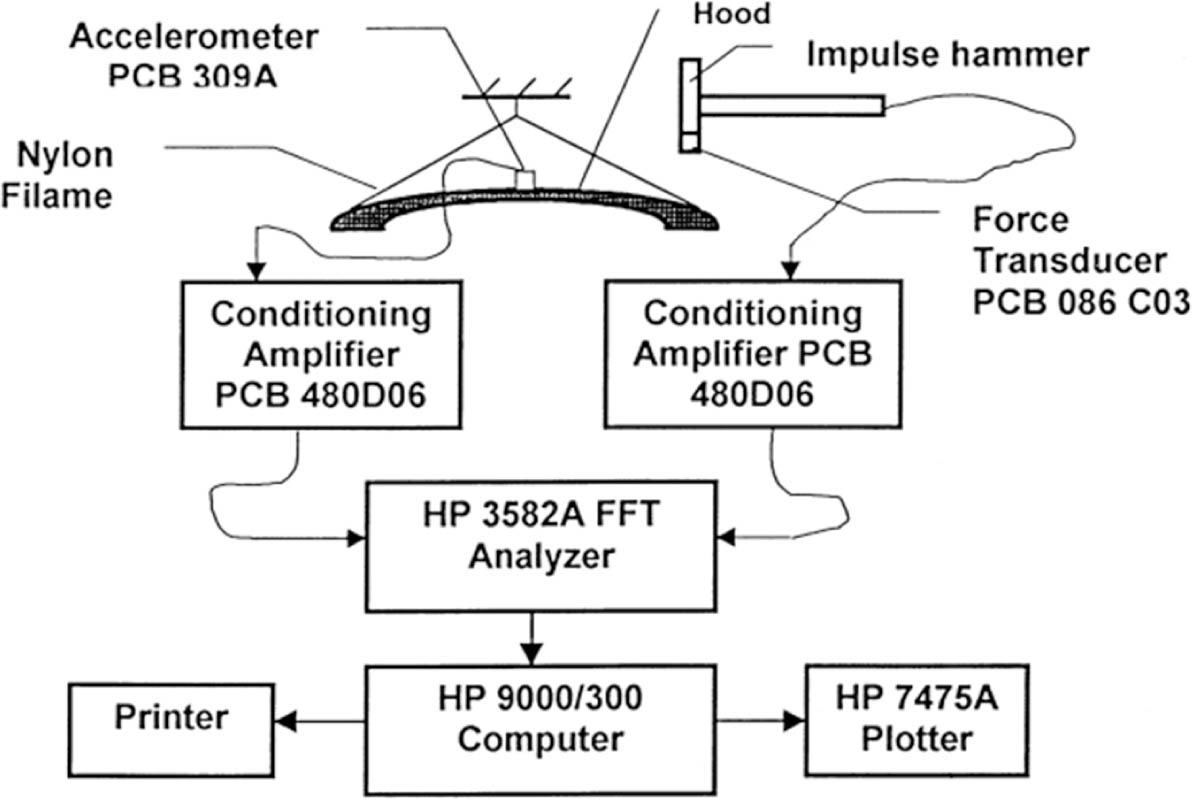
Fig. 5.
Apparatus for response testing of adhesive bonded composite automotive hood-closure panels [43].
One of the main advantages of using composite materials for vibration damping is their inherent energy dissipation capability. Whereas conventional metals and alloys rely primarily on structural stiffness for vibration damping, composite materials achieve damping through mechanisms such as fiber–matrix interfacial friction, matrix viscoelasticity, and internal micro-deformation. This enables composites to attenuate vibrational energy efficiently over a wider frequency range [43,44].
Viscoelastic composites have attracted considerable attention owing to their outstanding damping characteristics. These materials exhibit combined elastic and viscous behaviour, enabling them to store and dissipate vibrational energy simultaneously. Integrating viscoelastic layers within composite structures can significantly enhance vibration attenuation without a substantial weight penalty [45,46,47,48].
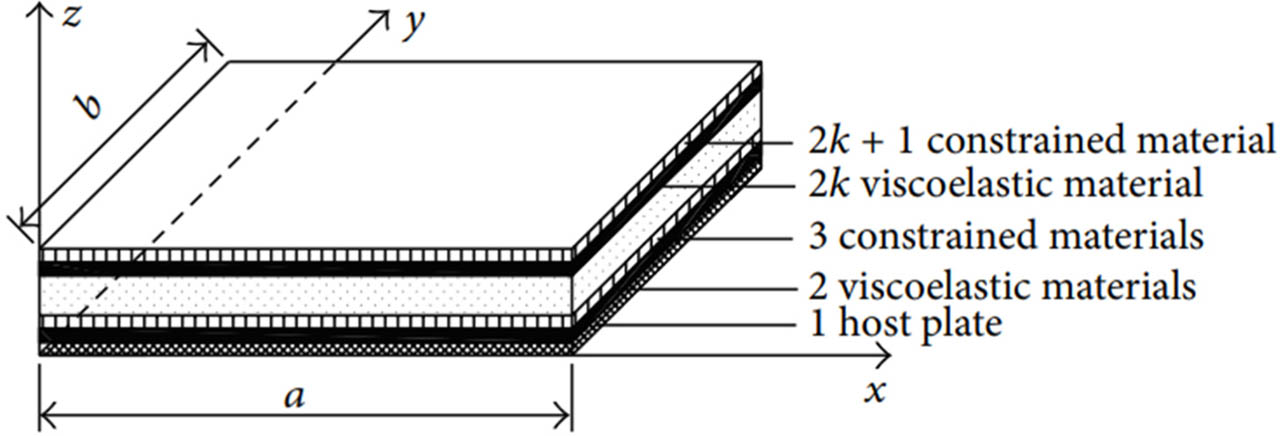
Fig. 6.
Multilayered constrained damping plate [45].
Hybrid composite materials, which combine different fiber and matrix types, such as carbon, glass, aramid, and natural fibers, are also used for vibration damping. This hybrid structure allows the optimization of strength, stiffness, and damping properties: carbon-fiber composites offer relatively high stiffness, while glass- or natural-fiber composites provide superior damping capability. Combining the two can achieve a balanced trade-off between vibration absorption, strength, and stiffness for UAV applications [49,50].
A further important advantage of advanced composites is their design tailorability. By varying fiber orientation, material composition, structural configuration, and stacking sequence, designers can achieve the dynamic characteristics required for a specific vibration response. This allows engineers to design vibration damping mounts that are tuned to the critical frequency ranges encountered in UAV operation [51].
Table 3.
Advanced materials for vibration damping.
| Material Type | Stiffness | Damping Level | Key Mechanism | Main Advantage | Refs |
|---|---|---|---|---|---|
| Carbon Fiber (CFRP) | Very High | Moderate | Fiber-matrix interfacial friction | Lightweight + high strength | [40,41,42] |
| Glass/Natural Fiber (GFRP) | Moderate | High | Matrix viscoelasticity | Excellent natural damping | [49, 50] |
| Viscoelastic Sandwich | High | Very High | Shear deformation in soft core | Broadband damping, low weight | [45,46,47,48] |
| Hybrid (Carbon + Viscoelastic) | High | Highest | Combined friction + shear | Balanced strength & energy loss | [43, 47] |
| Smart Hybrid (Piezo/SMA) | High | Adaptive High | Energy conversion & phase change | Real-time tunability | [52,53,54,55,56,57] |
Overall, advanced composite materials offer a versatile and effective approach to vibration damping, combining high mechanical performance, lightweight construction, and tuneable energy dissipation. Incorporating composite materials into UAV payload mounting systems therefore offers a clear advantage in achieving enhanced stability and improved mission outcomes.
8. EVOLVING TRENDS IN COMPOSITE DAMPING MOUNTS
Ongoing advances in materials science continue to drive the development of innovative composite-based vibration damping mounts for UAV applications. Much of the recent research focuses on improving damping adaptability, efficiency, and multifunctionality without compromising lightweight characteristics. One prominent research direction involves the development of semi-active and active vibration control systems through the incorporation of smart materials, such as piezoelectric materials and shape memory alloys, into composite structures [52,53,54,55].
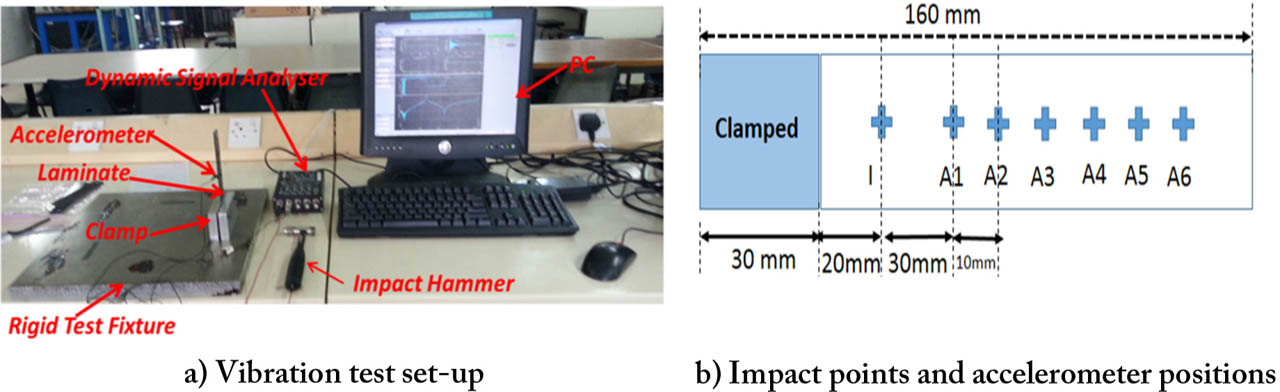
Fig. 7.
Vibration testing of composite laminate [52].
Piezoelectric materials can be used for active vibration suppression owing to their ability to convert mechanical deformation into electrical energy. This property enables them to sense vibrational shocks and generate an opposing force, thereby reducing oscillations. Shape memory alloys, meanwhile, offer high energy dissipation capability through their phase-transformation behaviour and their ability to retain shape and size under varying operating conditions, making them well suited to adaptive vibration damping [56,57].
Hybrid damping systems combine passive and active damping mechanisms, utilizing passive components to provide baseline vibration isolation while active elements dynamically adjust the system response [56,57,58].
Table 4.
Trends in composite damping mounts.
| Trend | Control Type | Key Feature | UAV Benefit | Refs |
|---|---|---|---|---|
| Passive Viscoelastic Composites | Passive | Shear damping in soft core | Broadband damping at low weight | [46,47,48,49] |
| Piezoelectric Smart Composites | Active | Converts vibration into electrical energy | Real-time suppression & sensing | [53,54,55,56] |
| Shape Memory Alloy (SMA) Hybrids | Adaptive | Energy dissipation through transformation | Tuneable damping under varying conditions | [57, 58] |
| Hybrid Passive-Active Systems | Semi-Active | Passive isolation + active control | Adapts to changing flight & payloads | [32, 58] |
| Next-Gen Multifunctional Composites | Self-Sensing | Self-healing, energy-harvesting | Lightweight, multi-role smart mounts | [52,53,54,55,56,57,58] |
9. Comparative Analysis of Different Vibration Damping Methods
A comparison between advanced and traditional vibration damping techniques reveals clear differences in their capacity for UAV payload isolation. Traditional isolation techniques-including rubber mounts, spring and wire-rope isolators, and tuned mass dampers (TMDs)-have been widely used owing to their simplicity and low installation cost [22,23,24,25]. These techniques, however, present several disadvantages, including narrow bandwidth, poor fatigue resistance, high weight, and reduced efficiency under varying environmental conditions [26,27]. Rubber mounts, in particular, exhibit poor stiffness and damping characteristics, limiting their suitability for high-precision payloads [22,23], while springs impose a substantial weight penalty and TMDs are effective only at their tuned resonant frequency [25,26].
In contrast, state-of-the-art composite solutions offer markedly improved performance. As shown in Table 5, viscoelastic sandwich composites and hybrid fiber composite systems achieve high damping losses through constrained-layer shear deformation and fiber–matrix friction, damping both low-frequency structural modes and high-frequency vibrations arising from propeller operation [45,46,47,48]. These materials overcome the stiffness–damping trade-off inherent in conventional approaches, combining high specific strength, low weight, and broadband damping [40,41,42,51].
Table 5.
Conventional vs advanced composite damping methods for UAVs.
| Damping Method | Type | Frequency Range | Damping Effectiveness | Weight Penalty | Adaptability | Overall UAV Suitability | Refs |
|---|---|---|---|---|---|---|---|
| Rubber/Elastomer Mounts | Passive | Narrow | Low | Low | None | Low | [22,23,24, 26] |
| Spring & Wire Rope | Passive | Medium | Moderate | High | Low | Moderate | [15, 24, 27] |
| Tuned Mass Damper (TMD) | Passive | Very Narrow | Good (Single freq.) | Moderate | None | Limited | [25, 26] |
| Viscoelastic Sandwich Composite | Passive | Broad | High | Low | Moderate | High | [45,46,47,48, 51] |
| Hybrid Smart Composite | Semi-Active | Broad + Adaptive | Very High | Low | High | Excellent | [52,53,54,55,56,57,58] |
The progression from purely passive viscoelastic composites to smart hybrid systems incorporating piezoelectric components and SMA actuators is illustrated in Table 4 [52,53,54,55,56,57]. Hybrid passive/active mounting systems provide semi-active or adaptive damping behaviour depending on the prevailing operational mode and flight speed [56,57,58]. As the comparison shows, state-of-the-art composite dampers offer improved fatigue resistance, frequency bandwidth, environmental robustness, and payload stabilization relative to conventional methods [43,47,49].
Overall, the shift from traditional elastomeric dampers to composite-based materials represents a substantial advance in addressing UAV vibration issues. While conventional approaches may remain adequate for simpler UAVs subject to low vibration intensity, composite-based solutions become essential for advanced platforms requiring high-precision, high-reliability equipment [28,29,30,31,32]. Nonetheless, challenges relating to cost, integration difficulty, durability, and optimization remain and are addressed in the research gaps discussed later in this paper.
10. CONCLUSION AND FUTURE SCOPE
The elastomeric dampers currently used in most UAVs lack sufficient stiffness, exhibit poor fatigue life, and cover only a narrow frequency range, making them ineffective for precision instruments such as cameras, LiDAR systems, and military equipment. This paper has examined in detail the origins and characteristics of vibration in UAVs, including periodic harmonics arising from propeller rotation and random excitations due to airflow, among other factors.
The above analysis indicates that advanced composite materials, particularly sandwich structures incorporating viscoelastic layers, offer a more effective solution. These materials provide efficient damping across a wide frequency range while retaining excellent specific strength, stiffness, and low weight. Through mechanisms such as interfacial friction, matrix viscoelasticity, and constrained-layer damping, composite vibration mounts can achieve strong performance against both low- and high-frequency vibrations without a substantial weight penalty. Emerging trends in this field point toward the incorporation of smart composites with embedded piezoelectric materials and shape memory alloys to enable active or semi-active damping.
Overall, it can be concluded that advanced composite damping mounts offer promising performance for stabilizing UAV payloads, although further research and validation are required. This paper has provided an overview of current advances in this area, examining state-of-the-art composite mounts, comparing their characteristics with conventional materials and technologies, and identifying key areas for future research.
One promising direction for future research is the development of optimized hybrid composite damping mounts that achieve a balanced trade-off between stiffness, damping performance, and weight through advanced fiber-orientation designs, novel viscoelastic polymers, and multifunctional matrices. Further attention should also be directed toward active damping control using smart materials-such as piezoelectric elements, shape memory alloys, and magnetorheological fluids-to enable real-time vibration suppression under changing operating conditions.
Significant opportunities also exist in combining multiscale modelling techniques with machine learning algorithms to design damping mounts tailored to specific UAV configurations, such as multicopters, fixed-wing aircraft, and ducted-fan platforms. Extensive long-term durability studies under varying temperature, humidity, and UV radiation conditions are also needed, alongside the development of scalable manufacturing methods for economically producing composite mounts.
Further technological development in composite damping mounts for UAVs should explore self-monitoring, self-healing, and energy-harvesting capabilities, with validation ultimately requiring testing on full-scale UAV test benches.
Acknowledgement
The authors would like to thank GNA University, Phagwara, Punjab, India for the conducive academic, institutional and research conditions provided for the purpose of conducting this research work. The authors would also like to thank all the researchers and scholars whose publications have helped in enriching the literature and technical part of this review paper. The authors confirm that no artificial intelligence or any automated content generation or writing assistance tool has been used for this review paper.