Have a personal or library account? Click to login
Role of multimodal imaging in HCM: Thinking beyond fibrosis—A case report Cover

Role of multimodal imaging in HCM: Thinking beyond fibrosis—A case report

Open Access
|Feb 2026

Figures & Tables

Figure 1

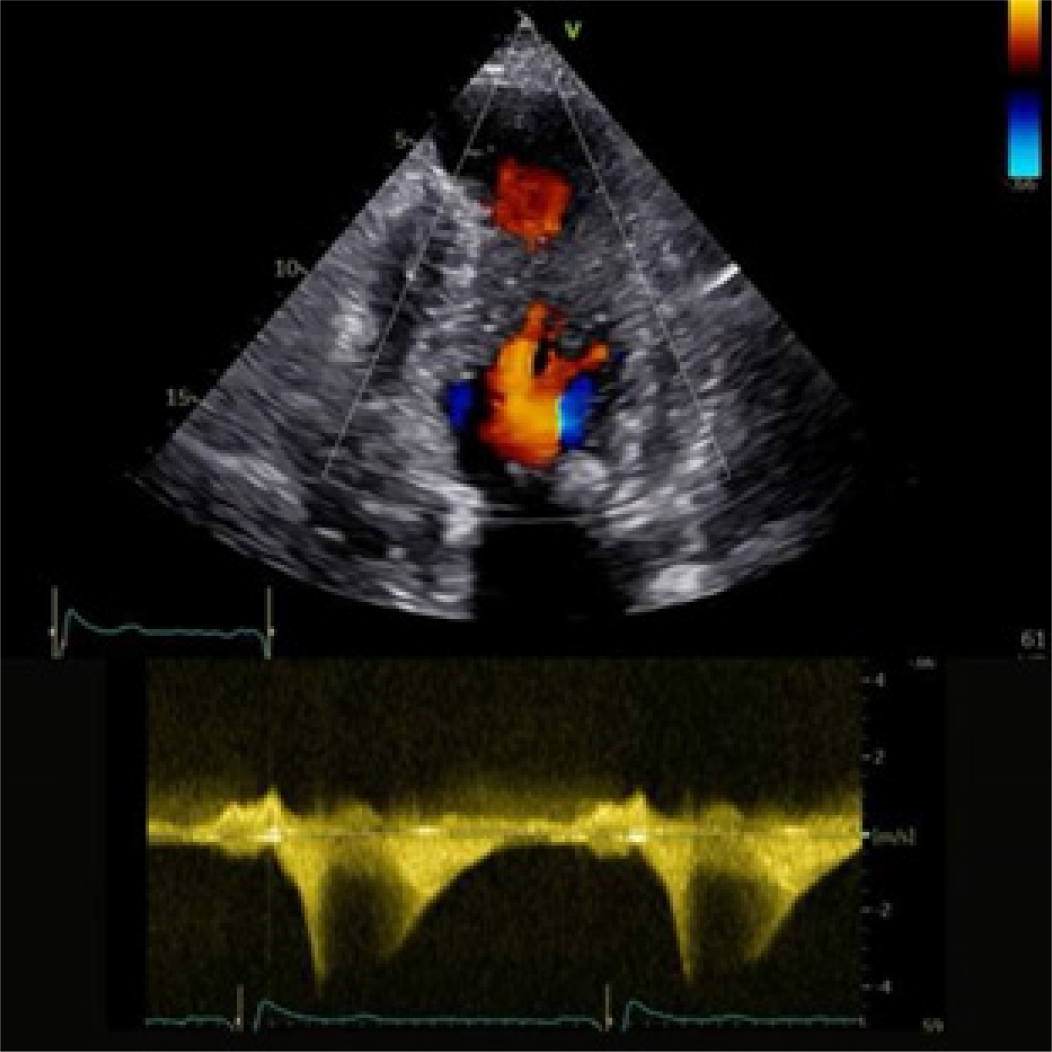
CW Doppler analysis of mid-LV obstruction showed an interruption in blood flow from the LV apex to the base during mid-systole (void pattern), followed by a late systole to early diastole paradoxical jet flowing out of the aneurysm.
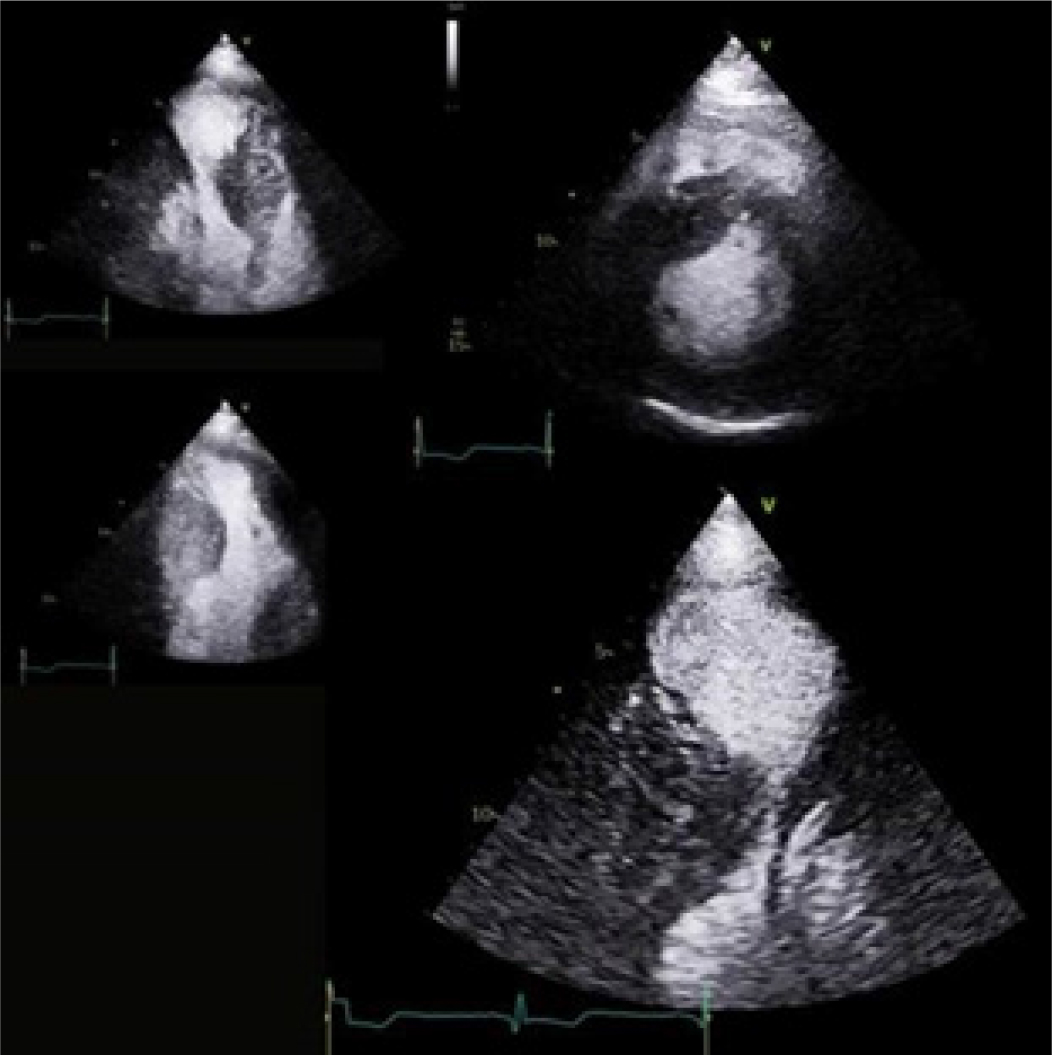

Figure 2

Contrast echocardiography was used to accurately assess the endocardial border and characterize the apical aneurysm, revealing moderate systolic dysfunction.
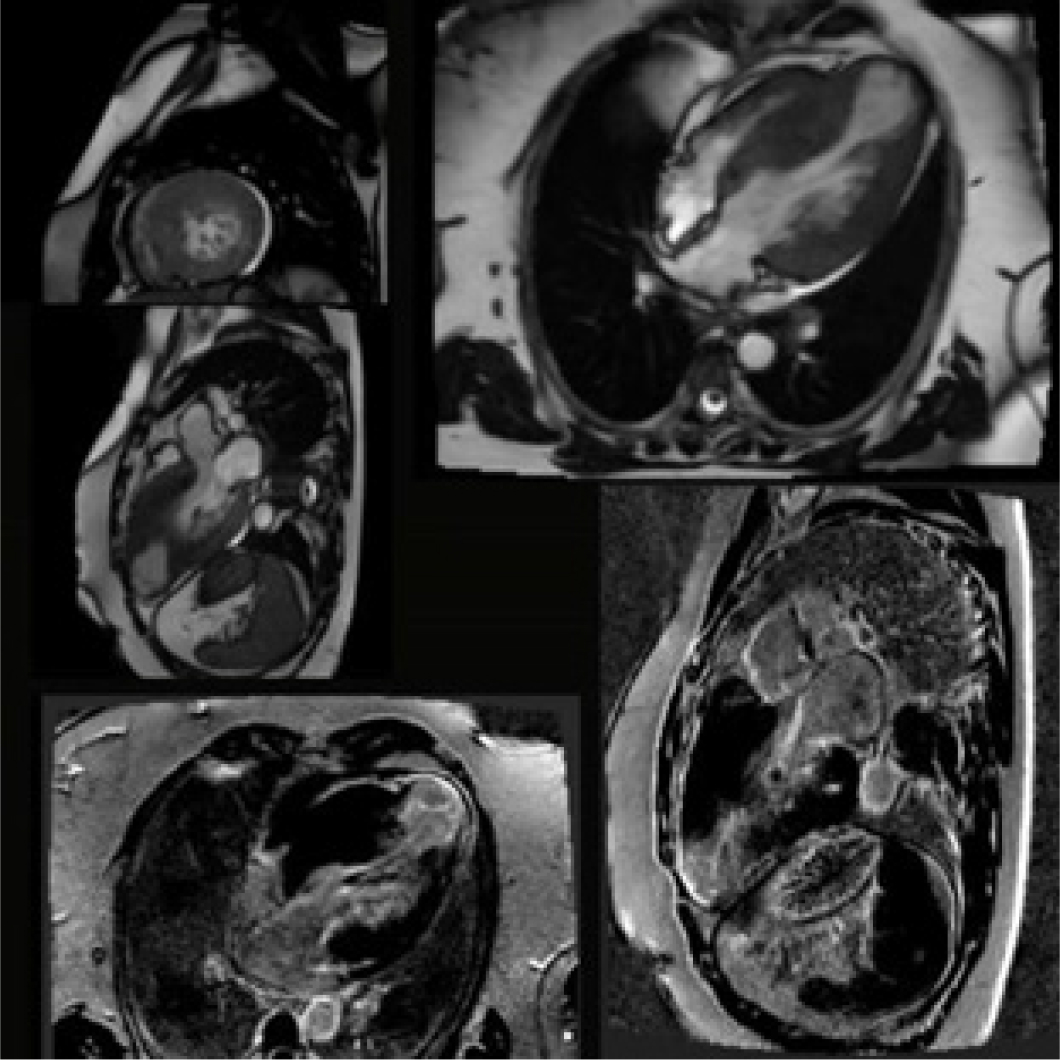

Figure 3

Cardiac MRI confirms medio-ventricular HCM in the burn-out stage with severe systolic dysfunction, 16% LGE of LV myocardial mass predominantly at the level of the apical aneurysm, and subendocardial fibrosis in the inferior and inferolateral walls, suggesting myocardial viability.
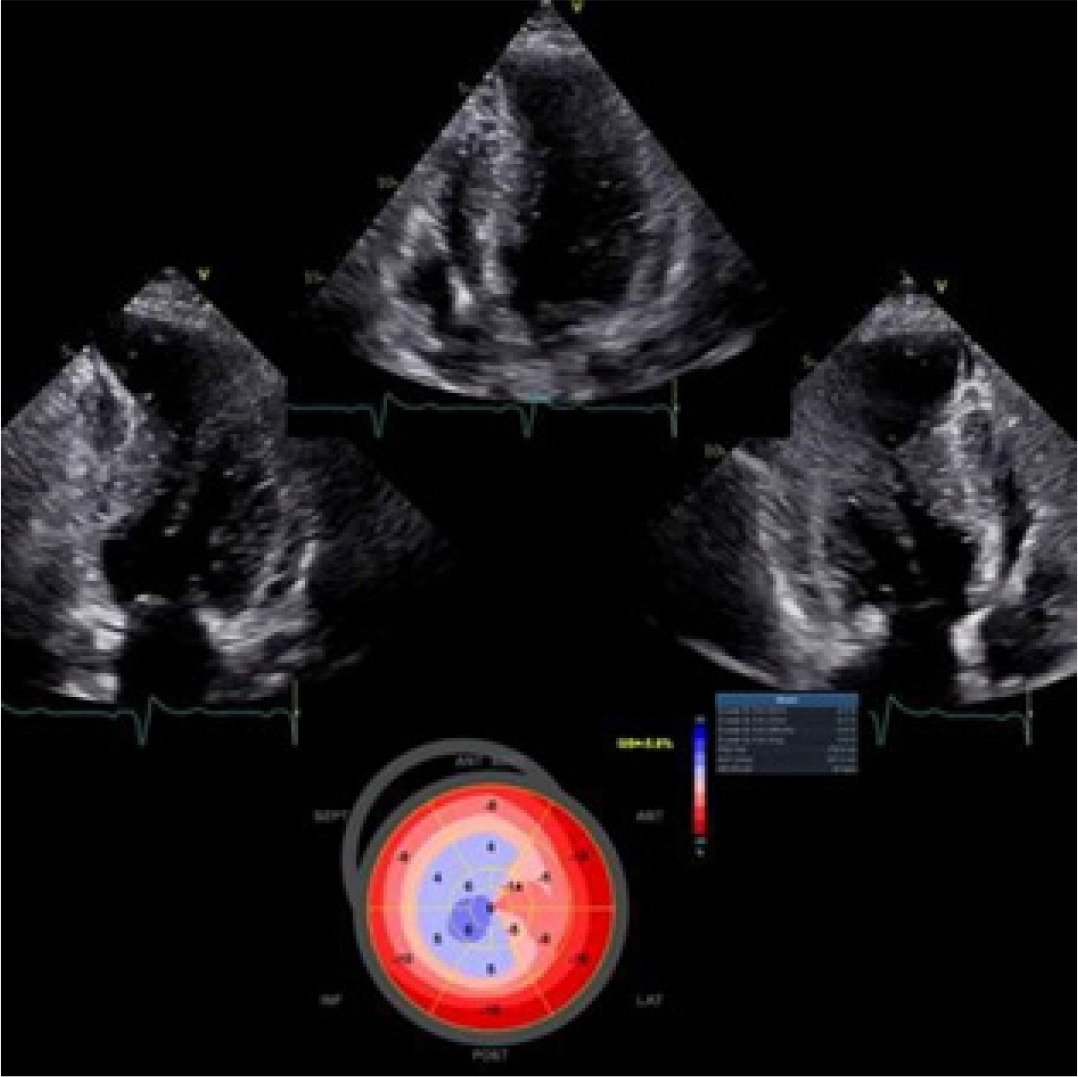

Figure 4

Echocardiography and speckle tracking imaging showed improved regional kinetics after revascularization, but persistent severe global longitudinal dysfunction, especially at the medio-ventricular and apical levels.
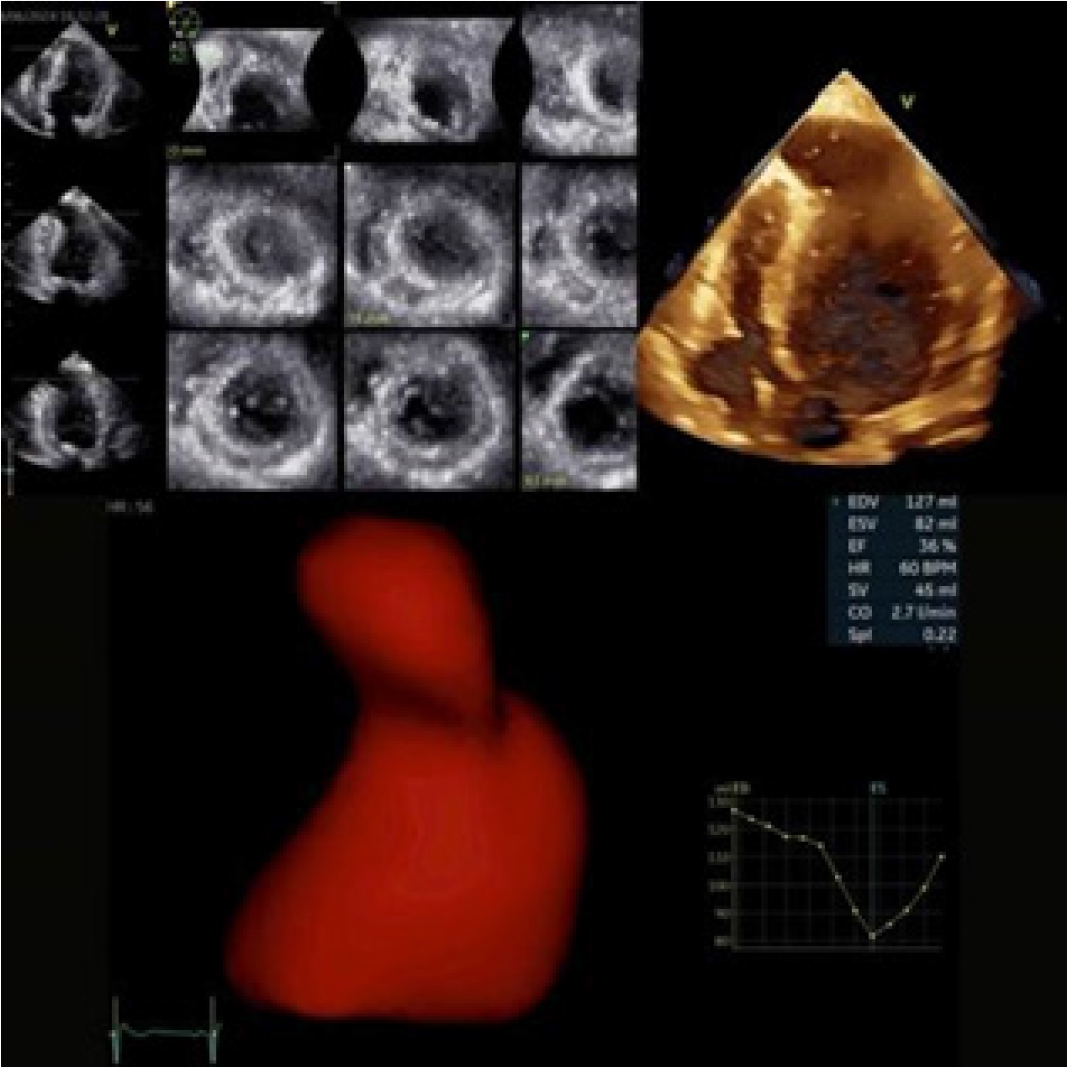

Figure 5

The follow-up echocardiogram highlighted a remodelled LV with an hourglass shape, moderate systolic dysfunction assessed by 3D volumetry with an EF of 36%.
DOI: https://doi.org/10.2478/rjc-2026-0001 | Journal eISSN: 2734-6382 | Journal ISSN: 1220-658X
Language: English
Published on: Feb 6, 2026
In partnership with: Paradigm Publishing Services
Publication frequency: 4 issues per year

© 2026 Teodora-Maria Barboi, Ruxandra Oana Jurcut, Sebastian Onciul, Lucian Marius Predescu, Leonard Mandes, Daniela Oana Andrei, published by Romanian Society of Cardiology
This work is licensed under the Creative Commons Attribution 4.0 License.

AHEAD OF PRINT