
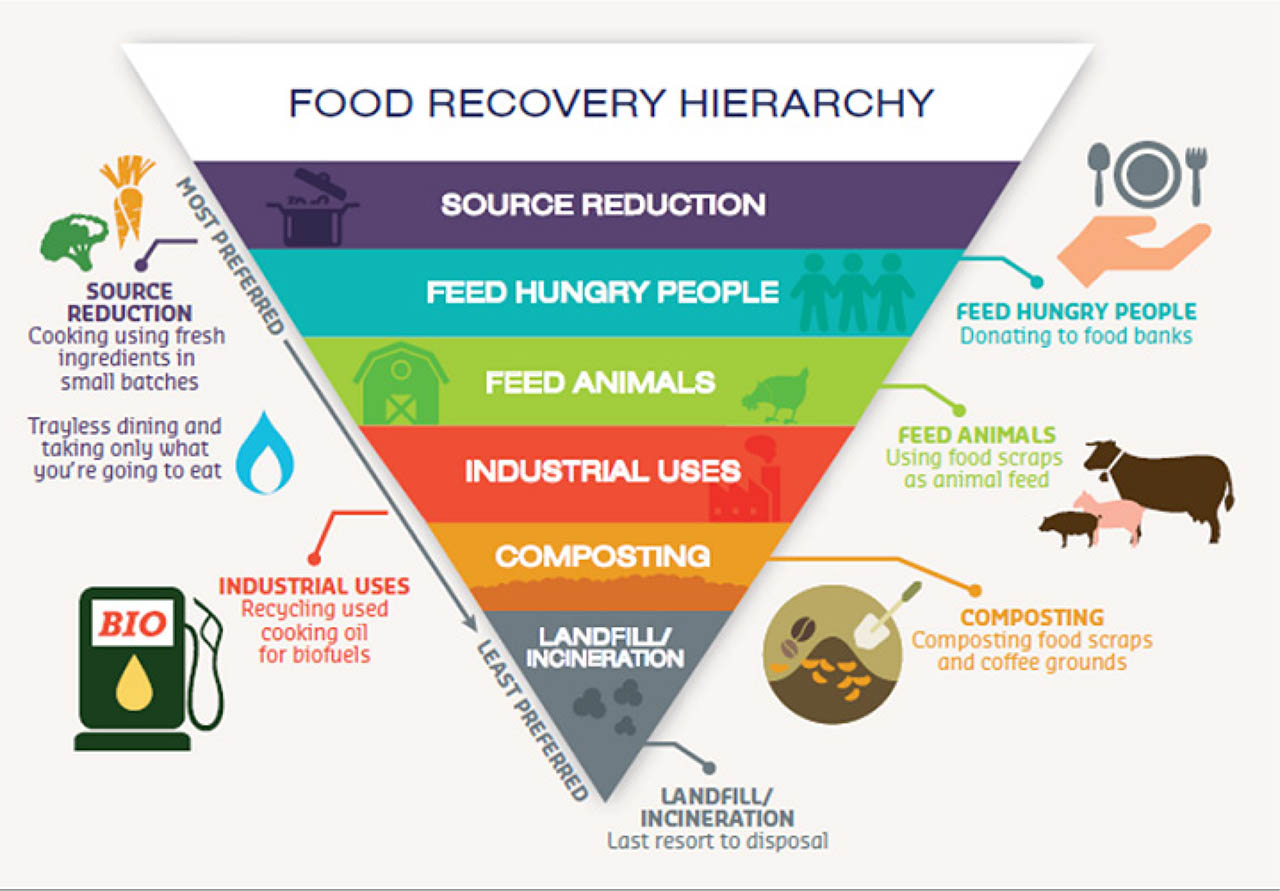
Figure 1
Food Recovery Hierarchy. Source: https://www.bioenergyconsult.com
Table 1
Comparison of the characteristics of consumerist and frugalistic attitudes (Elaborated by M. Niedek).
| Features of the consumerist attitude | Features of a frugalistic attitude |
|---|---|
| Overconsumption | Sustainable and moderate consumption |
| Compulsive consumption | Consumption resulting from real needs |
| Satisfying desires and whims | Satisfying real needs |
| Waste | Recovering |
| Ostentatious and snobbish consumption | Modesty |
| Consumption of cheap and perishable goods (low-quality products, junk food) | Consumption of durable and high-quality goods (in particular of ecological quality) |
| The predominance of consumption of material goods | Consumption of intangible goods (knowledge, art, beauty, services) – focussing on personal, spiritual and interpersonal development |
| Self-centred consumption, without awareness of ecological and social effects and costs | Consumption aware of the social and environmental impact |
| Hedonistic consumption (aimed at instant gratification here and now) | Consumption aware of the pre-consumption stage (origin, way of producing products) and post-consumption stage (way of managing post-consumer waste) |