
Virtual influencers are on the rise. They have become a growing phenomenon in the digital marketing landscape, blending artificial intelligence with social media to create compelling online personas. Approximately 300 virtual influencers are active on Instagram alone. The digital creations range from hyper-realistic humanlike avatars to more stylized, cartoonish characters. One of the most well-known humanlike virtual influencers is Lil Miquela, who has amassed about 2.5 million followers on Instagram and collaborated with major brands like Prada and Calvin Klein. On the more cartoonish side, Any Malu, a popular Brazilian virtual influencer and Cartoon Network star, is known for her fully animated, virtual You-Tuber presence. With almost four million YouTube subscribers and a significant following across social media platforms, she brings a unique blend of humor and animation to her audience.
These digital personas are not limited by geographical boundaries. Whether humanlike or cartoonish, these virtual influencers are known for their fashion collaborations, product endorsements and ability to connect with audiences through carefully crafted personalities and storylines.
Design challenges of virtual characters
Driven by advancements in AI and computer graphics, these digital personas are reshaping customer interactions, enabling highly customized, humanlike experiences across digital platforms. They can exist in any form—robots, animals, cartoon figures, human avatars or even aliens—and are tailored with specific personalities that emulate human traits, behaviors and interactions. This freedom allows content creators and brands to explore virtually limitless possibilities, but it also demands careful design choices to align a character’s appearance with the intended personality of an influencer or brand objectives. We investigated how the design of a virtual character can impact consumer reactions (see Box 1).
BOX 1
Testing virtual characters in a simulated shopping environment
To examine the impact of virtual characters on consumer behavior, we designed an online experiment simulating a shopping experience with digital personas. We recruited 2,000 U.S.-based participants and divided them into four groups, each engaging with either a humanlike or a cartoonish version of a virtual influencer or advisor (see Figure 1). At the start, we asked participants to imagine a scenario where they were seeking inspiration for a day off and planning to purchase some products while browsing the internet. They then interacted with their assigned virtual character, who provided personalized recommendations for these products. Following this interaction, participants visited a simulated online store where they could purchase one of three available options in each product category. One option in each category was promoted by the virtual character.
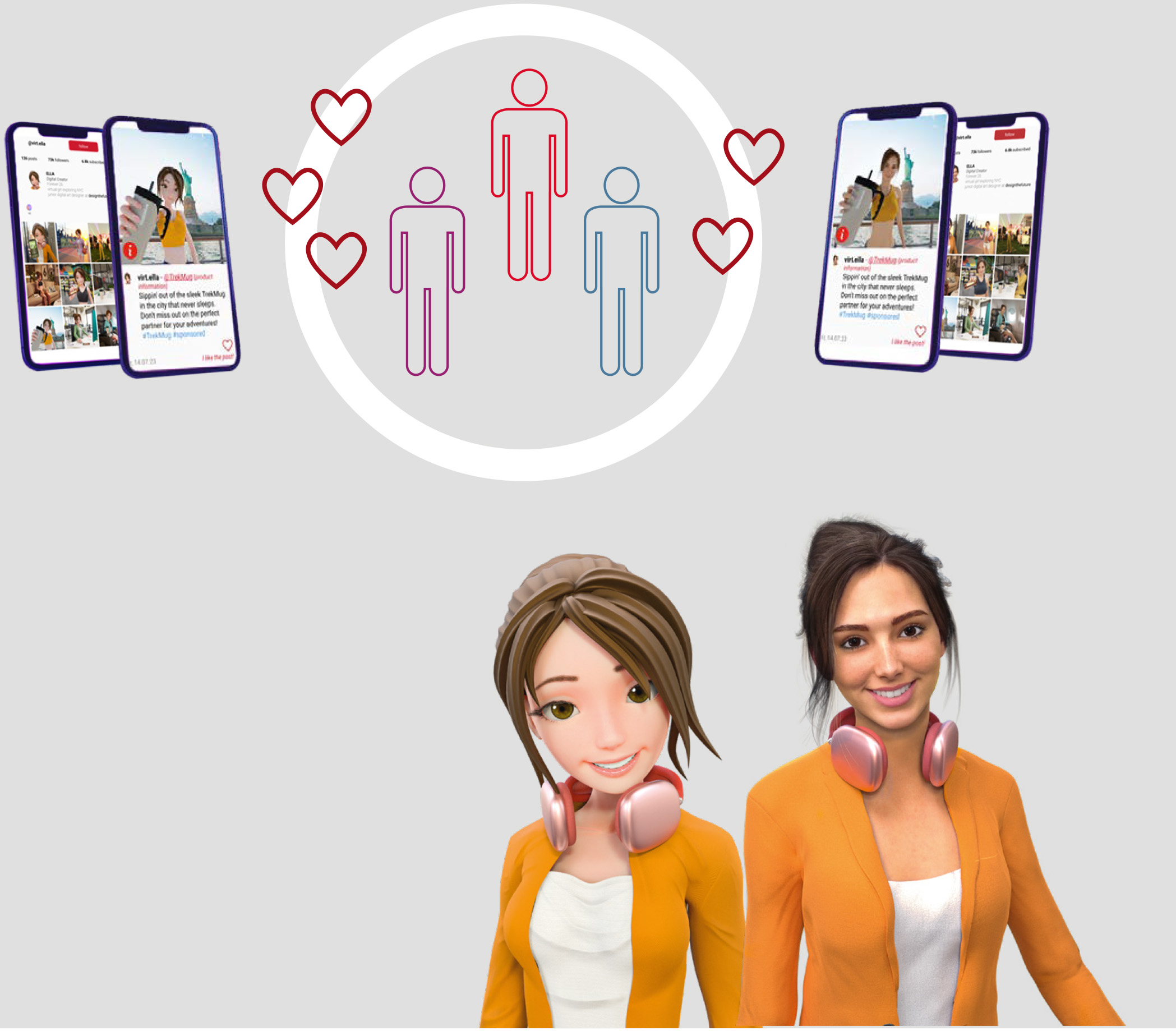
FIGURE 1
The humanlike and cartoonish versions of Ella, the virtual influencer/virtual advisor used in the experiments
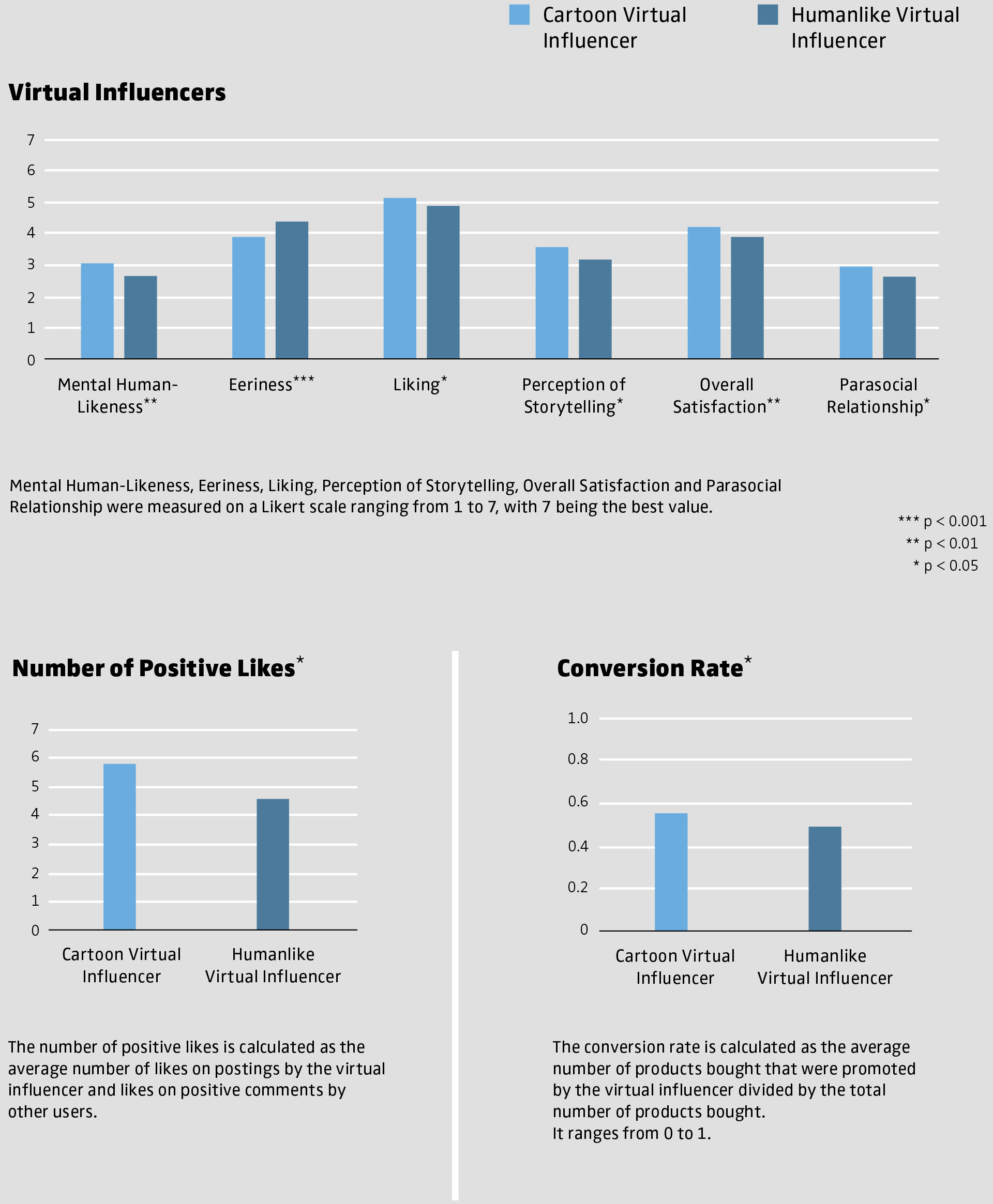
FIGURE 2
Effect of influencer design on influencer evaluation
During the interaction with the virtual character, we measured participants’ engagement through the number of likes they gave. In the simulated store, participants selected products, allowing us to analyze purchase behavior. A follow-up questionnaire captured participants’ perceptions of the virtual character’s humanlike capabilities as well as their evaluation of its storytelling and relationship strength and their overall satisfaction and liking of the character.
To ensure realism, we partnered with a design agency to create two comparable virtual characters—one with a humanlike appearance and the other cartoonish. These characters were integrated into a prototype social media platform inspired by Instagram as influencers or in the role of virtual advisors at a custom-built online store, providing a familiar, immersive environment for participants to experience and evaluate each character’s influence on their shopping decisions (see Box 2).
BOX 2
From virtual influencers to virtual advisors
Virtual characters are not only populating the web as influencers. A rising number of retailers and digital platforms also use them as virtual advisors to improve the customer experience. Virtual advisors are gaining traction as tools to enhance online customer interactions, create personalized offers and ultimately increase sales. Earlier studies show that virtual advisors can boost customer satisfaction, engagement and even website traffic by up to 300%, often doubling conversion rates and reducing cart abandonment.
MINIMAL IMPACT OF DESIGN FOR VIRTUAL ADVISORS
In our study, we also tested the different impacts of cartoonish versus humanlike virtual advisors. In this application, character design had little influence, with both cartoonish and humanlike designs yielding similar consumer attitudes and purchasing behaviors. This difference highlights a key insight: While virtual influencers benefit from a design that fosters personal connection and storytelling, virtual advisors operate in a context centered more on the shopping experience and product guidance. Consequently, the advisor context appears less sensitive to the character’s appearance, focusing instead on functionality and efficiency.
THE ADVANTAGES OF VIRTUAL OVER HUMAN ADVISORS
Virtual advisors are rapidly gaining traction in various industries. While they may not match the versatility and capabilities of human employees, they present unique advantages, including cost-effectiveness, customization and scalability. Once integrated into a business, virtual characters are tireless, complaint-free and do not make salary demands, and they consistently adhere to company policies. As the design and the implementation of virtual advisors keep getting easier due to the progress of AI, this form of customer experience enhancement is worth being considered by marketing teams.
Midjourney AI, prompt GCO
Arguments in favor of humanlike versus cartoonish personas
The impact of human likeness in virtual characters has long been debated. The Computers Are Social Actors theory posits that consumers respond more positively to humanlike virtual characters, leading to increased trust, a stronger sense of social presence and higher purchase intentions. Research shows that people feel more connected with humanlike virtual agents, which can positively affect customer attitudes, trust and loyalty. However, the Uncanny Valley theory warns that hyper-realistic virtual personas can also trigger discomfort. Studies highlight consumer responses to humanlike characters, where realism often evokes negativity and criticism. Some consumers, especially those unfamiliar with virtual characters, may experience unease or even aversion toward humanlike digital characters. This response underlines the complexity of design decisions, as creators or brands need to balance consumer comfort with the character’s intended impact.
Virtual characters drive product engagement across designs
Our research shows that both cartoonish and realistic virtual influencers and advisors effectively boosted product engagement. In every scenario, participants purchased significantly more items recommended by virtual characters than would be expected by chance alone. However, the design of the character influenced consumer attitudes and behaviors differently depending on their role and context, highlighting the nuanced impact of character style on user engagement and purchase decisions.
“The cartoonish virtual influencer consistently outperformed its humanlike counterpart.”
Character design decisions for virtual influencers make a difference
In the realm of virtual influencers, character design proved pivotal. The cartoonish virtual influencer consistently outperformed its humanlike counterpart. It was perceived as more humanlike: Participants found it more expressive, lifelike and equipped with an engaging personality and emotional depth that captivated them (as shown under “mental human likeness” in Figure 2). The cartoon style not only reduced feelings of eeriness but also enhanced perceived storytelling quality, leading to stronger relationships, higher satisfaction and greater liking. Consequently, users were more likely to purchase products recommended by the cartoonish influencer and more actively engaged with it on social media.
Eeriness emerged as a critical factor in conversion rates. The cartoon-style influencer, by eliciting less eeriness, achieved significantly higher conversion, especially among users unfamiliar with virtual influencers. For those with prior experience, however, perceptions of eeriness were similar for both cartoonish and humanlike influencers. As virtual influencers become more prevalent, the distinction between reactions to different styles is expected to lessen, potentially narrowing the impact of character design on user comfort and conversion.
“Both cartoonish and realistic virtual influencers and advisors effectively boosted product engagement.”
Chances and challenges of virtual characters for marketing managers, consumers and society
Our research indicates that virtual characters significantly influence consumer purchasing decisions, with character design playing a crucial role depending on the context. The insights gained from our study equip content creators, brand managers, consumers and society as a whole with insights needed to make informed decisions regarding the use and engagement of virtual characters.
Creators and brand managers: Align character design with communication goals
Virtual influencers benefit from cartoonish designs that enhance emotional appeal and avoid eeriness, while virtual advisors are effective with either style, with a focus on functionality. Managers should strategically align character design with specific campaign goals, considering audience familiarity with virtual personas, as those less accustomed may react more sensitively to hyper-realistic designs. Regular assessment of a virtual character’s impact on its audience and on brand perception and iterative adjustments can help sustain engagement and avoid consumer fatigue.
Consumers: Strengthen your digital literacy to navigate virtual influence
As virtual characters become more common, consumers need to build digital literacy to critically assess these entities’ influence in their lives. Understanding that virtual characters are crafted to evoke emotional connections empowers consumers to make informed choices. By recognizing how these characters shape preferences and purchasing behaviors, consumers can maintain agency in their decisions. Education and information promoting transparency in virtual marketing can further help consumers distinguish between genuine recommendations and curated digital influence, fostering healthier engagement with digital media.
Society as a whole: Build ethical standards and broadly discuss the social impact of virtual characters
This study highlights the urgent need for ethical guidelines and industry standards regarding virtual characters. These digital personas can blur the lines between reality and virtuality, potentially harming identity, self-esteem and social norms. Their ability to mimic hyper-realistic human traits raises concerns about authenticity and the unrealistic standards they may impose on younger audiences. Society would benefit from frameworks promoting transparency about the artificial nature of these characters. Additionally, discussions on their psychological and cultural impact can help mitigate negative effects, such as unrealistic ideals and overreliance on virtual interactions. Balancing the benefits of virtual characters with responsible practices is essential to ensuring their positive influence in digital marketing while protecting consumer well-being and cultural integrity.
As virtual influencers are fast becoming a cornerstone in the influencer marketing landscape, creators, as well as brand managers, need to learn more about their potential. The freedom to tailor specific personalities opens new possibilities, but it also demands careful design choices and the monitoring of effects on different levels.