
Glossary of field-specific abbreviations
- BPA
Bisphenol A
- CAS
Chemical Abstracts Service
- IFU
Instructions for Use
- SDS
Safety Data Sheets
1. Introduction
Pit and fissure sealants are among the most effective methods of preventing dental caries. These materials are particularly suitable for use on the occlusal surfaces of molars and premolars, which have deep, anatomically complex grooves that are difficult to clean [1]. The application of a sealant creates a physical barrier that stops dental plaque and food debris from accumulating within these fissures (Figure 1). It significantly reduces the risk of carious lesions development. The most widely used class of materials for sealing is resin-based sealants, which combine the mechanical advantages of composite resins with the ease of application [2]. Their high clinical efficacy stems from their ability to penetrate enamel microfissures and form a durable, micromechanical bond after polymerization. The physicochemical and biological properties of these materials, particularly their capacity for fluoride release, are directly dependent on their chemical composition [3]. Improving both clinical performance and biological safety requires a comprehensive understanding of the structure and functional role of individual components within resin-based sealant formulations [4,5]. These components usually comprise organic monomers, inorganic fillers, polymerization initiators, adhesion promoters, and fluoride-releasing additives. These components all play a decisive role in determining the material’s durability, mechanical behavior, and biocompatibility. Therefore, a detailed compositional analysis of resin-based pit and fissure sealants is crucial for optimizing their formulations. Furthermore, identifying and comparing the key compositional differences between existing materials can guide the choice of the most suitable sealant for particular clinical applications, thereby enhancing their overall preventive efficacy.
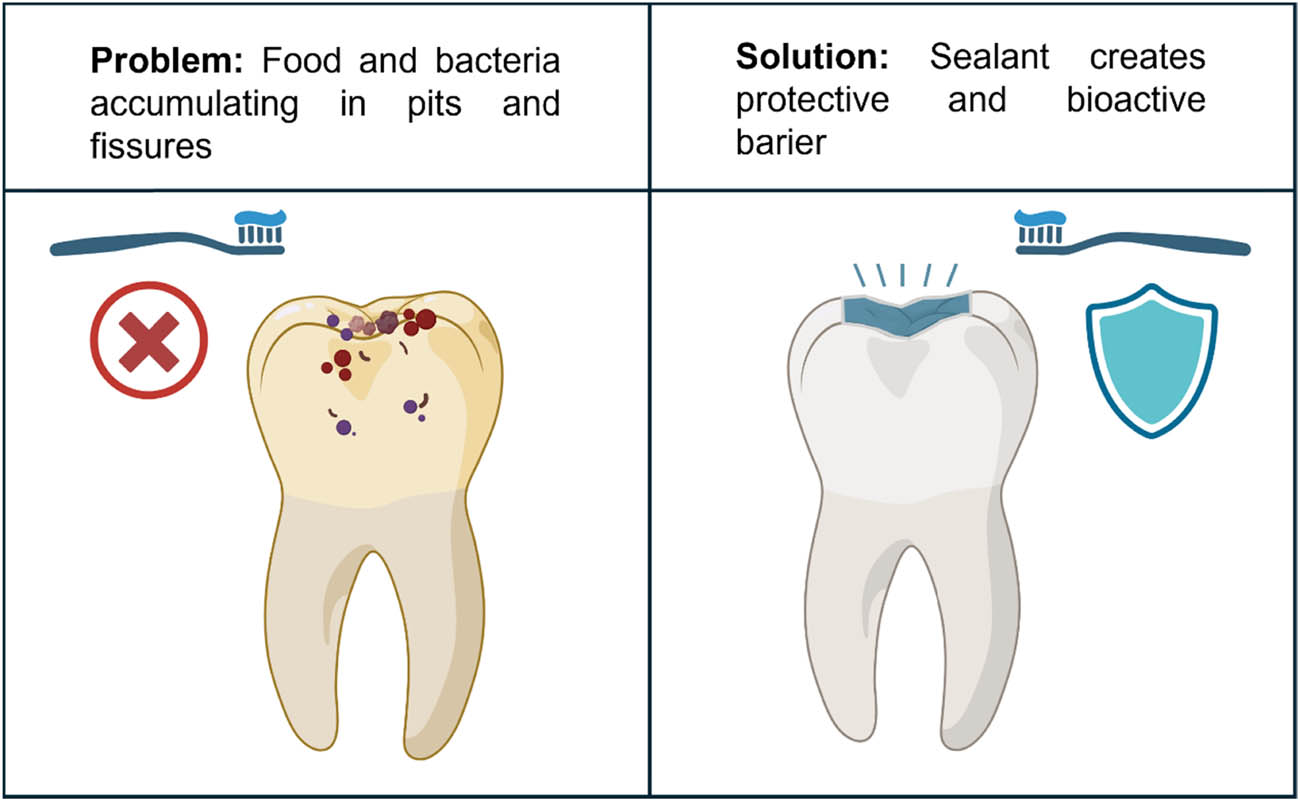
Figure 1
Graphical illustration of the operation principle of dental sealants.
Source: Author’s contribution.
Fissure sealants based on resin matrices are widely used materials for preventing caries, as they act as occlusive agents for pits and fissures on dental surfaces. Despite their extensive use, the chemical composition of these materials is ambiguous and inconsistent. A notable gap in the literature is the absence of a systematic review consolidating data on their chemical constituents, the categorization of their components, and the traceability of the compounds based on approved commercial formulations.
This integrative review aims to conduct a qualitative and quantitative analysis of resin-based dental pit and fissure sealant formulations, focusing on identifying key components, categorizing, and describing their technological functions. This work involves a systematic compilation of data from various literature sources and manufacturer disclosures, enabling the synthesis of knowledge on typical ingredients, their average proportions, and their roles in sealant formulations. Analyzing the composition of sealants is essential for improving their performance, ensuring clinical efficacy and safeguarding patient safety [6,7]. A deeper understanding of the roles of individual components enables more informed and targeted material design that is tailored to patients’ needs and contemporary dental practice demands. The presented review article addresses critical gaps in the current body of knowledge. These include the lack of standardization in ingredient disclosure, the challenges of identifying substances, and the limited availability of data concerning the proportions and functions of various auxiliary additives. The findings presented herein represent a step toward harmonizing information on sealant composition and improving transparency in manufacturer declarations. Furthermore, the article proposes the new classification of dental sealants based on the presence of monomers in their matrix. These findings are aimed to impact future scientific research, dental pit and fissure sealant classification, and their clinical application perspectives.
2. Methods
This article follows integrative review methodological recommendations published by Whittemore and Knafl [8] as well as guidelines reported by Torraco [9].
2.1. Focused question
This integrative review adhered to the PICO framework with the following question: In the context of commercial, resin-based dental pit and fissure sealants (population), does the chemical composition (investigated condition) vary qualitatively and quantitatively (outcome), between investigated formulations (comparison condition)?
2.2. Search strategy
Given the proprietary nature and incomplete indexing of commercial resin-based dental pit and fissure sealant formulations in standard scientific databases, this review does not aim for exhaustive coverage. Instead, it synthesizes all formulations retrievable through systematic searching of peer-reviewed sources and targeted web searches between June 1 and November 15, 2025. While additional products and registered formulations may exist beyond those identified, the presented dataset represents the most comprehensive and transparent collection accessible through reproducible search strategies.
The search strategy utilized the following keywords, phrases, and their combination to identify specific commercial products: “dental sealant,” “dental sealant composition,” “pit and fissure sealant,” and “dental pit and fissure sealant.” Upon identification of specific commercial products, supplementary targeted searches were performed using the product names combined with terms such as “composition,” “data sheet,” and “formulation,” to retrieve detailed compositional information. The literature search encompassed several scientific databases, including PubMed, ScienceDirect, Scopus, and ResearchGate, alongside general and academic search engines such as Google Scholar, Google, and Bing. This multitiered approach enabled capturing both peer-reviewed and grey literature sources, optimizing coverage of the diverse commercial formulations and composition data available within the domain of resin-based dental pit and fissure sealants.
The search process was iterative and included both peer-reviewed and grey literature sources (databases, regulatory documents, company reports, technical datasheets, and marketing materials). Searches were continued until saturation was reached, defined as the point at which additional queries and newly accessed sources did not yield novel formulations. The final update was performed on November 15, 2025, at which time a total of 52 distinct resin-based dental sealant formulations had been identified. While it is recognized that additional products may exist beyond this set, the decision to stop was based on the diminishing likelihood of uncovering substantially new information and the need for methodological transparency. Furthermore, the composition of each identified sealant was cross-checked in two independent sources. As the result, 11 formulations are presented with two alternative compositions supported by appropriate references. Therefore, 52 formulations of 41 distinctive products were subjected to analysis. Inclusion of the references was based on the eligibility criteria listed in Section 2.3.
Due to the transient and dynamic nature of grey literature, which may be subject to removal, modification, or loss over time, all relevant website entries were systematically saved on the latest date they were accessed (15th November 2025). This was accomplished using the Internet Archive Wayback Machine platform, ensuring preservation of the content for reproducibility and future reference in the study [10].
2.3. Eligibility criteria
Inclusion criteria for selected grey and scientific literature sources were as follows:
Access to the full text or peer-review article or grey literature entry to ensure extraction of complete compositional data on the composition of resin-based commercial formulation of dental sealant, including qualitative and/or quantitative information of ingredients.
Sources providing sufficient detail on key components, including resin matrix monomers and fillers.
Publications/website entries from the last 25 years (since 2000) to encompass advances in formulation while excluding outdated products.
Grey literature sources and scientific articles published in peer-reviewed journals regarding the composition of resin-based commercial formulation of dental pit and fissure sealants.
English and Polish sources were included for the feasibility of review.
Exclusion criteria were as follows:
Studies/grey literature entries on nonresin sealants or mixed interventions that preclude isolating resin-based sealant composition.
Exclusion of entries without primary compositional data, such as reviews without new analyses.
Exclusion of in vitro or clinical studies where sealant formulations were not sufficiently described or were inaccessible.
2.4. Data extraction and delineation
The collected sources were analyzed and categorized according to their reported ingredients, composition, and fluoride content. To ensure relevance and reduce the risk of bias, each formulation was cross-checked against a second reference to validate its composition. The assessment included categorizing each component into one of the outlined categories and attempting to assign a Chemical Abstracts Service (CAS) number. Subsequent analyses were performed on the basis of the extracted and presented compositional information of commercial dental sealant formulations. Data extraction was performed by three reviewers.
2.5. Data analysis
To best demonstrate the differences and similarities in the chemical composition of sealants, clustering was performed. Since most manufacturers did not provide the exact percentages of distinct components, binary clustering algorithms were chosen based solely on the presence or absence of distinct components.
All calculations were performed in the R statistical environment [11], using four additional libraries [12,13,14]. First, the Jaccard distance for the different sealants was calculated [12], using equation (1), where a stands for a number of common ingredients, and b and c stand for a number of unique ingredients in the first and second compared sealants, respectively. Noteworthy, the Jaccard distance ignores the number of ingredients that are absent from both sealants. Then, Ward’s minimum variance method was used to cluster the obtained results hierarchically [13]. It minimizes the total within-cluster variance with each step. Subsequently, a dendrogram depicting distances between sealants and a heatmap were created [14,15].
3. Results
3.1. Identification and classification of dental sealant components
The composition of dental pit and fissure sealants can be systematically divided into several categories based on their role in the matrix. These outlined categories include monomers, fillers, fluoride sources, functional additives, initiators and catalysts, resin and polymers, stabilizers and additives, solvents, and those that cannot be categorized. This division offers a practical way of understanding the unique role of each ingredient and how it affects the final product’s characteristics. The complete inventory of chemical compounds detected in the analyzed formulations is delineated in Table S1 in the Supplementary Materials. Identified entries have been sorted by category and appearance in the formulations. The compound list is supplemented by respective abbreviations, assigned CAS numbers, and categorization, as well as their rarity of occurrence. The classification of Rarity is outlined as follows: Ingredients categorized as “Common” are present in four or more formulations, those categorized as “Rare” are present in two or three, and those categorized as “Unique” are present in one.
This review identified 116 unique ingredients present in commercial formulations. Of these, 41 were assigned a CAS number and 75 were not. The identified components present in the formulations and declared by the manufacturers were classified according to their technological function. The individual entries were allocated to each category: monomers, fillers, fluoride sources, functional additives, initiators and catalysts, resins and polymers, stabilizers and additives, solvents, and those that cannot be categorized. The proposed classification, along with the implied rarity of occurrence of ingredients from each group and the size of each group, is illustrated in the Bubble Heatmap (Figure 2).
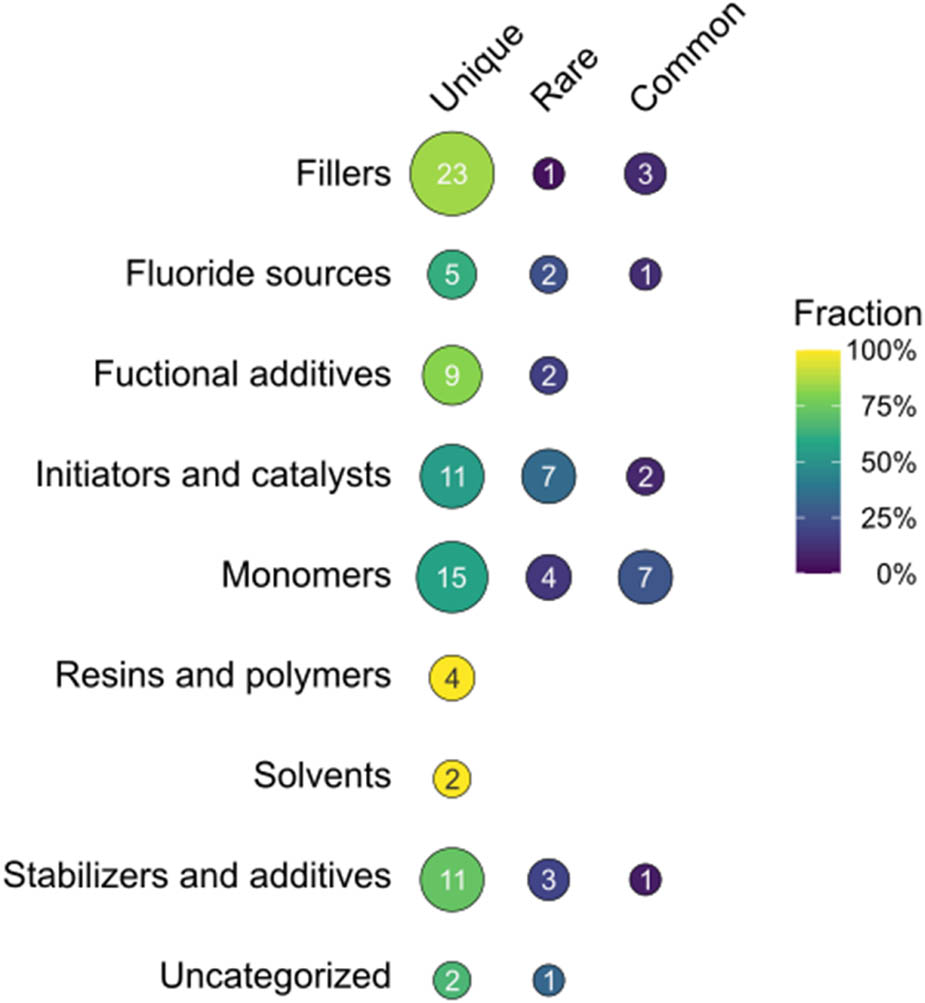
Figure 2
Bubble heatmap depicting the classification of the rarity of ingredients identified in the dental sealant formulations and the size of each group.
Source: Author’s contribution.
The conducted analysis allowed for the identification of 52 unique sealant formulations. The research methodology encompassed a cross-checking of each formulation in a minimum of two references. The investigation yielded 11 discrepancies in composition, consequently necessitating the presentation of two alternative formulations of the same entries (e.g., 1.1 and 1.2). As a consequence, 52 compositions of 41 products were taken into analysis. As illustrated in Table 1, the products under discussion are accompanied by the names of their respective manufacturers, their compositions, and the quantities of ingredients contained within them.
Table 1
Composition of identified dental pit and fissure sealants with respective quantity of ingredients.
| No. | Product Name | Manufacturer | Chemical compound | Quantity | Reference |
|---|---|---|---|---|---|
| 1.1 | Embrace Wet Bond | Pulpdent Corporation, Watertown, Massachusetts, USA | Uncured acrylate ester monomers | 55–60% | [16] |
| FS | 5% | ||||
| NaF | <2% | ||||
| 1.2 | Embrace Wet Bond | Pulpdent Corporation, Watertown, Massachusetts, USA | Aliphatic urethane dimethacrylate | — | [17] |
| Bis-methacryloyl phosphate | — | ||||
| HEMA | — | ||||
| TMPTMA | — | ||||
| H2O | |||||
| NaF | — | ||||
| SiO2 | — | ||||
| 2 | Fotoseal | Remed Prodimpex SRL, Bucharest, Romania | Dimethacrylate monomer mixture | 60% | [17,18] |
| Colloidal silica | 40% | ||||
| TiO2 | |||||
| Eutectic fluoride | |||||
| 3.1 | 3M Clinpro Sealant | 3M, St. Paul, Minnesota, USA | Bis-GMA | 40–50% | [19] |
| TEGDMA | 40–50% | ||||
| Silane-treated silica | 5–10% | ||||
| TBATFB | <5% | ||||
| DPIHFP | <1% | ||||
| TiO2 | <0.5% | ||||
| SbPh3 | <0.5% | ||||
| EDB | <0.3% | ||||
| HQ | <0.05% | ||||
| 3.2 | 3M Clinpro Sealant | 3M, St. Paul, Minnesota, USA | TEGDMA | — | [20] |
| Bis-GMA | — | ||||
| TBATFB | — | ||||
| Dichloride methylsilane | — | ||||
| Silica | 6% | ||||
| Dye | — | ||||
| 4.1 | UltraSeal XT Plus | Ultradent Products inc, South Jordan, Utah, USA | TEGDMA | >10–≤25% | [21] |
| UDMA | 1–10% | ||||
| HEMA | ≥0.1–<1% | ||||
| Trade Secret | ≥0.1–<1% | ||||
| 4.2 | UltraSeal XT Plus | Ultradent Products inc, South Jordan, Utah, USA | UDMA | <10% | [22] |
| Bis-GMA | <20% | ||||
| DMAEMA | <1% | ||||
| SMFP | <1% | ||||
| TiO2 | <1% | ||||
| Fillers | 58% | ||||
| 5 | SEAL-RITE PIT AND FISSURE SEALANT | Pulpdent Corporation, Watertown, Massachusetts, USA | Uncured acrylate ester monomers | 55–65% | [23] |
| FS | 5% | ||||
| NaF | <2% | ||||
| 6 | Helioseal | Ivoclar Vivadent, Schaan, Lichtenstein | Bis-GMA | 58.30% | [24,25] |
| TEGDMA | 38.1% | ||||
| TiO2 | 2.1% | ||||
| Catalysts | 1.6% | ||||
| Stabilizers | |||||
| 7.1 | Helioseal F | Ivoclar Vivadent, Schaan, Lichtenstein | Bis-GMA | 11.8% | [24] |
| TEGDMA | 23.40% | ||||
| UDMA | 23.40% | ||||
| Fluorosilicate glass | 40.50% | ||||
| SiO2 | |||||
| TiO2 | 0.6% | ||||
| Stabilizers | 0.3% | ||||
| Catalysts | |||||
| 7.2 | Helioseal F | Ivoclar Vivadent, Schaan, Lichtenstein | Bis-GMA | — | [26] |
| UDMA | — | ||||
| TEGDMA | — | ||||
| Fluorosilicate glass | 20% | ||||
| SiO2 | 21.5% | ||||
| 8 | Helioseal Clear | Ivoclar Vivadent, Schaan, Lichtenstein | Big-GMA | 60.0% | [24,27] |
| TEGDMA | 39.3% | ||||
| Stabilizers | 0.7% | ||||
| Catalysts | |||||
| 9.1 | Conseal F | SDI, Victoria, Australia | Acrylic monomer | 93% | [28,29] |
| Silica | 7% | ||||
| TiO2 | 0.01% | ||||
| NaF | 0.01% | ||||
| 9.2 | Conseal F | SDI, Victoria, Australia | UDMA | 50–70% | [30] |
| 10.1 | GUARDIAN SEAL | Kerr corporation, Orange, California, USA | Uncured methacrylate ester monomers | 60–65% | [31] |
| Mineral fillers | — | ||||
| Photoinitiators | — | ||||
| Stabilizing additives | — | ||||
| 10.2 | GUARDIAN SEAL | Kerr corporation, Orange, California, USA | Fluoride releasing monomer: BF3 | — | [32] |
| Bis-GMA | — | ||||
| CQ | — | ||||
| Silica | — | ||||
| 11.1 | DELTON Plus Light Cure Opaque Sealant | DENTSPLY Professional, York, USA | Resin blend | 55–65% | [33] |
| Silanated milled glass | 30–40% | ||||
| NaF | 1–2% | ||||
| TiO2 | <1% | ||||
| 11.2 | DELTON Plus Light Cure Opaque Sealant | DENTSPLY Professional, York, USA | Aromatic and aliphatic dimethacrylate | 91.20% | [22] |
| TiO2 | 1.50% | ||||
| SiO2 | 5.40% | ||||
| EDB | 1.00% | ||||
| Light activators | >1% | ||||
| 12 | FluroShield VLC | Dentsply Sirona, Milford, USA | Urethane modified Bis-GMA dimethacrylate | <40% | [22,34] |
| Barium boron alumino silicate glass | <30% | ||||
| Polymerizable dimethacrylate resins | <20% | ||||
| Bis-GMA | <20% | ||||
| NaF | <5% | ||||
| Dipentaerythritol pentaacrylate phosphate | <5% | ||||
| 13 | Fissurit FX | VOCO GmbH, Cuxhaven Germany | Bis-GMA | 91% | [35,36] |
| UDMA | |||||
| Borosilicate glass | 3% | ||||
| NaF | |||||
| 14 | BeautiSealant | Shofu, Kyoto, Japan | Surface pre-reacted glass-ionomer | 30% | [30,36,37] |
| FS | — | ||||
| UDMA | — | ||||
| TEGDMA | — | ||||
| 15 | PermaSeal | Ultradent Products, South Jordan, Utah, USA | Bis-GMA | 60% | [38,39] |
| TEGDMA | <40% | ||||
| DMAEMA | <3% | ||||
| 16 | CosmeSeal Filled | Deltamed GmbH., Friedberg,Germany | UDMA | 10–40% | [40] |
| Bis-GMA | 10–30% | ||||
| BDDMA | <25% | ||||
| 17 | RE-GEN™ Pit and Fissure Sealant | Inter-Med, Inc./Vista Dental Products, Racine, Wisconsin, USA | HEMA | 0–30% | [41] |
| HMPP | 0.5–1.5% | ||||
| TPO | 0.5–1.5% | ||||
| EDB | 0.5–1.5% | ||||
| UDMA | 0–70% | ||||
| MDP | 0–20% | ||||
| FS | 0–10% | ||||
| 18 | HEXA PIT & FISSURE SEALANT – VISIBLE LIGHT CURE | Hexa Denal, East Washington Blvd., California, USA | Bis-GMA | <32% | [42] |
| TEGDMA | <37% | ||||
| GPTA | <26% | ||||
| Inorganic filler | <4.5% | ||||
| EDB | <2.0% | ||||
| 19 | OMNICHROMA | Tokuyama Dental Corporation, Tokyo, Japan | Ceramic-composite filler | 79% | [43,44] |
| UDMA | — | ||||
| TEGDMA | — | ||||
| HQMME | — | ||||
| BHT | — | ||||
| UV absorber | — | ||||
| 20 | Grandio Seal | VOCO GmbH, Cuxhaven, Germany | TEGDMA | 10–25% | [30,45] |
| FS | 5–10% | ||||
| Bis-GMA | 2.5–5% | ||||
| 21.1 | Ionoseal | VOCO GmbH, Cuxhaven, Germany | Bis-GMA | — | [46] |
| BHT | — | ||||
| Ionomer glass | — | ||||
| 21.2 | Ionoseal | VOCO GmbH, Cuxhaven, Germany | Fluoroalminumsilicate | — | [47] |
| Bis-GMA | — | ||||
| HEMA | — | ||||
| TEGDMA | — | ||||
| CQ | — | ||||
| Amine | — | ||||
| 22 | Fissurit | VOCO GmbH, Cuxhaven, Germany | Bis-GMA | — | [48,49] |
| UDMA | — | ||||
| BHT | — | ||||
| Benzotriazol derivative | — | ||||
| 23.1 | Fissurit F | VOCO GmbH, Cuxhaven, Germany | Bis-GMA | — | [49] |
| UDMA | — | ||||
| BHT | — | ||||
| Benzotriazol derivative | — | ||||
| NaF | — | ||||
| 23.2 | Fissurit F | VOCO GmbH, Cuxhaven, Germany | Bis-GMA | — | [48] |
| Bis-EMA | — | ||||
| UDMA | — | ||||
| BHT | — | ||||
| Benzotriazol derivative | — | ||||
| TEGDMA | — | ||||
| NaF | — | ||||
| 24 | Smartseal & loc F | DETAX GmbH & Co, Ettingen, Germany | Bis-HEMA phosphate | <15% | [50,51] |
| Unspecified HEMA phosphate | <10% | ||||
| DMAEMA | <5% | ||||
| TMPTMA | <5% | ||||
| Padimate O | <1% | ||||
| TEGDMA | <1% | ||||
| 25 | Smartseal & loc | DETAX GmbH & Co, Ettingen, Germany | Bis-HEMA phosphate | <15% | [51] |
| Unspecified HEMA phosphate | <10% | ||||
| DMAEMA | <5% | ||||
| TMPTMA | <5% | ||||
| Padimate O | <1% | ||||
| TEGDMA | <1% | ||||
| 26.1 | Seal.it Light-Cured Pit and Fissure Sealant | Spident Co., Ltd., Seoul, South Korea | Bis-EMA | — | [52] |
| TEGDMA | — | ||||
| UDMA | — | ||||
| Micro/Nano silica | — | ||||
| Initiator | — | ||||
| Catalyst | — | ||||
| Stabilizer | — | ||||
| Others | — | ||||
| 26.2 | Seal.it Light-Cured Pit and Fissure Sealant | Spident Co., Ltd., Seoul, South Korea | Bis-EMA | 30–50% | [53] |
| TEGDMA | 20–30% | ||||
| 27 | Light Bond Sealant without Fluoride | RELIANCE, Alsip IL, USA | UDMA | 30–50% | [54] |
| TEGDMA | 10–30% | ||||
| Bis-GMA | 10–30% | ||||
| THFMA | 10–20% | ||||
| 28 | Light Bond Sealant with Fluoride | RELIANCE, Alsip IL, USA | UDMA | 30–50% | [54] |
| TEGDMA | 10–30% | ||||
| Bis-GMA | 10–30% | ||||
| THFMA | 10–20% | ||||
| Fluorinated Methacrylate Monomer | 1–5% | ||||
| 29 | ACCLEAN | Henry Schein, Melville, NY, US | HEMA | >0–30% | [55] |
| HMPP | 0.5–1.5% | ||||
| TPO | 0.5–0.5% | ||||
| EDB | 0.5–1.5% | ||||
| UDMA | >0–70% | ||||
| 30.1 | UltraSeal XT hydro | Ultradent Products, Utah, USA | TEGDMA | <20% | [56] |
| UDMA | <8% | ||||
| Al2O3 | <4% | ||||
| MA | <1% | ||||
| TiO2 | <0.3% | ||||
| SMFP | <0.2% | ||||
| 30.2 | UltraSeal XT hydro | Ultradent Products, Utah, USA | TEGDMA | 10–30% | [57] |
| UDMA | 5–20% | ||||
| Trade Secret | 1–10% | ||||
| TiO2 | 1–10% | ||||
| MA | <1% | ||||
| Organophosphine Oxide | <1% | ||||
| 31 | PF Seal | Prevest DenPro Limited, Bari-Brahmana, India | UDMA | — | [58] |
| TEGDMA | — | ||||
| Silanated barium glass | — | ||||
| Glass powder | — | ||||
| FS | — | ||||
| Curing agents | — | ||||
| Stabilizer | — | ||||
| 32 | Defense-Chroma | Angelus, Lindoia, Brasil | Bis-GMA | — | [59] |
| Modified urethane | — | ||||
| TEGDMA | — | ||||
| Barium aluminum borosilicate | — | ||||
| Tetra-acrylic ester | — | ||||
| H3PO4 | — | ||||
| NaF | — | ||||
| MDEA | — | ||||
| CQ | — | ||||
| 33 | TeEconom Plus Sealant | Ivoclar Vivadent AG, Schaan, Liechtenstein | Dimethacrylates | 22 wt% | [60] |
| TEGDMA | |||||
| Barium glass | 76 wt% or 60 vol% | ||||
| YbF₃ | |||||
| SiO2 | |||||
| Mixed oxides | |||||
| Additives | 2 wt% | ||||
| 34 | BioCoat Bioactive Pit and Fissure Sealant | Premier Dental Products Company, 1710 Romano Dr, Plymouth Meeting, PA 19462, USA | Barrium aluminoborosilicate | <60% | [61,62,63] |
| TEGDMA | — | ||||
| Calcium donor | <2% | ||||
| Phosphate donor | — | ||||
| FS | — | ||||
| Photoinitiator | <2.5% | ||||
| Bis-GMA | — | ||||
| 35 | Alpha-seal light cure pit & Fissure Sealant | Dental Technologies, inc., 6901 N. Hamlin Avenue, Lincolnwood, Illinois 60712, USA | Barium-alumino-silicate glass containing fluoride | 45–55% | [64] |
| Methacrylate monomers | 45–55% | ||||
| Accelerator | <1% | ||||
| Photoinitiator | <1% | ||||
| UV stabilizer | <1% | ||||
| Colorant | <1% | ||||
| 36 | Enamel loc | Premier Dental Products Company, REV, USA | UDMA | — | [65,66] |
| TEGDMA | — | ||||
| Methacrylated phosphoric acid esters | — | ||||
| 4-MET | — | ||||
| Photoinitiators | — | ||||
| TiO₂ | — | ||||
| FS | — | ||||
| 37 | SEAL & PROTECT™ Protective Sealant for Exposed Dentin | Dentsply Sirona, York, PA, USA | Acetone | 40–50 wt% | [67] |
| Urethane dimethyl resin | 20–30 wt% | ||||
| Dipentarythritol pentaacrylate phosphate | 10–20 wt% | ||||
| TMPTMA | 1–10 wt% | ||||
| Triclosan | 1–5 wt% | ||||
| 38 | Eco-S | Vericom Co., Ltd., Republic of Korea | Bis-GMA | 50–55% | [68] |
| FS | 5–9% | ||||
| TEGDMA | 35–40% | ||||
| 39 | PREVENT SEAL | ITENA CLINICAL, Paris, France | UDMA | 50–75% | [69] |
| DEGDMA | 25–50% | ||||
| HEMA–phthalate derivative | 0–10% | ||||
| Glass | 0–10% | ||||
| Oxide | |||||
| Chemicals | |||||
| Unspecified HEMA phosphate | 0–10% | ||||
| EDB | 0–5% | ||||
| CQ | 0–5% | ||||
| 40 | Arkona Flow-color | Arkona, Nasutów, Poland | Bis-GMA | — | [70] |
| TEGDMA | — | ||||
| UDMA | — | ||||
| Bis-EMA | — | ||||
| Barium–alumino-borosilicate glass | — | ||||
| Fluoroaluminosilicate barium glass | — | ||||
| FS | — | ||||
| Pigments | — | ||||
| 41 | Flow-it ALC | Pentron, Orange, CA, USA | EGDMA | 10–30% | [71] |
| PEG | 10–30% | ||||
| HALS 292 | 0.1–1% |
Source: Author’s contribution, references indicated.
3.2. Cluster analysis of the identified sealant compositions
Identification of the unique and repeating compounds in the formulations presented in Table 1 allowed for clustering and assembly of the heatmaps, indicating similarities in composition of evaluated formulations. The first presented heatmap focuses on monomers based on their presence in the sealants’ matrix. It is presented in Figure 3. On the basis of the clusterization, we can outline six distinctive groups based on the monomer combination in the formulation:
Triethylene glycol dimethacrylate (TEGDMA) and urethane dimethacrylate (UDMA): 36, 31, 19, 9.2, 14
Hydroxyethyl methacrylate (HEMA) and UDMA: 17, 29
TEDGMA and bisphenol A glycidyl methacrylate (Bis-GMA): 38, 34, 20, 8, 6, 3.1, 3.2
Only trimethylolpropane trimethacrylate (TMPTMA): 37, 11.2, 10.1, 5, 9.1
TMPTMA and other monomer combination: 24, 25
Other monomers: all other remaining formulations.
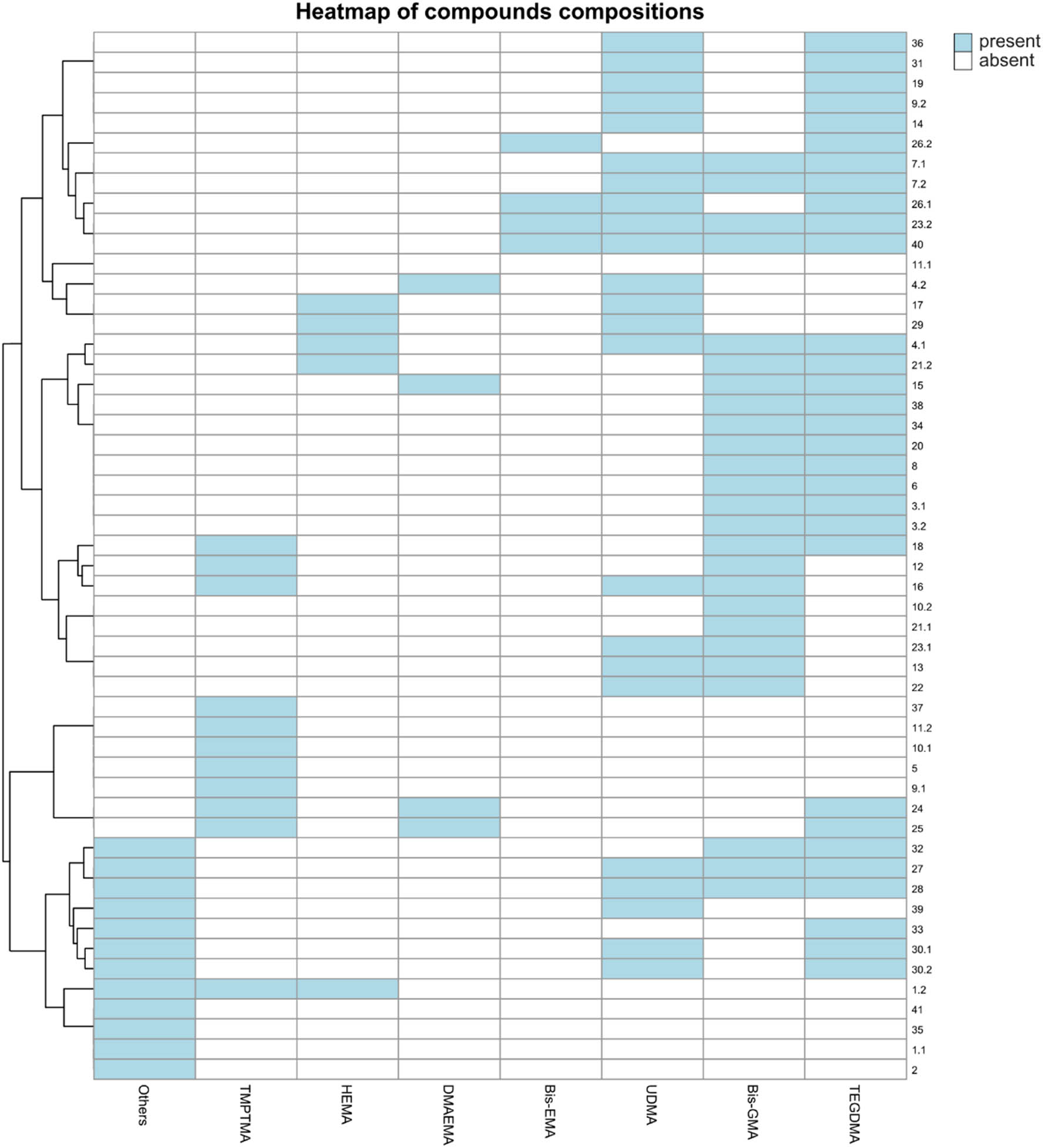
Figure 3
Heatmap with a dendrogram depicting the results of sealant clustering based on similarities in composition of monomers. Blue indicates the presence and white indicates the absence of an ingredient. The dendrogram on the left indicates possible sealant groups. Sealants linked into one branch of the dendrogram have a similar composition. Distance from the tree increases with increasing differences.
Source: Author’s contribution.
Subsequent heatmap involves clusterization of a broader spectrum of components, not only monomers (Figure 4).
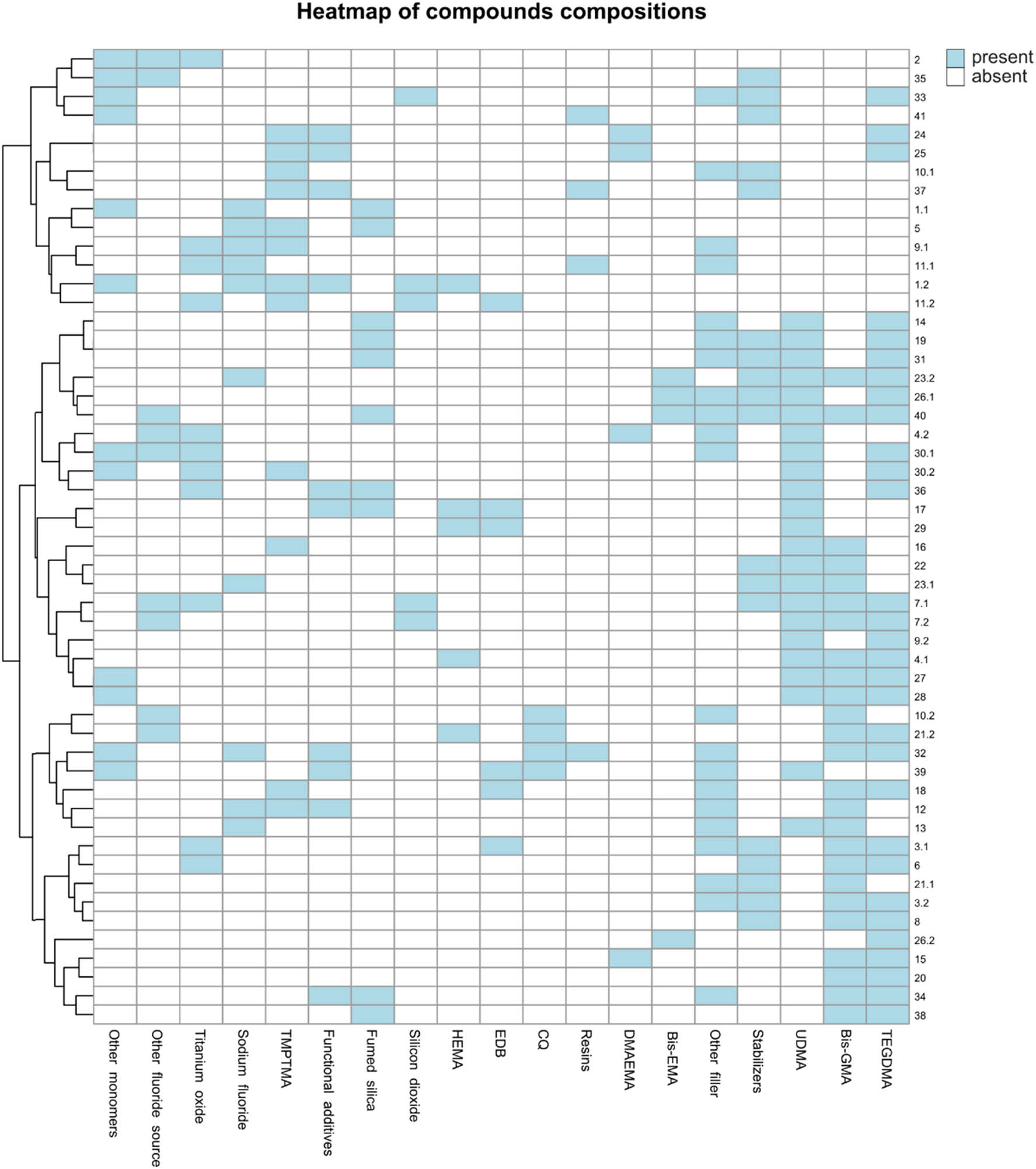
Figure 4
Heatmap with a dendrogram depicting the results of sealant clustering based on similarities in composition of various additives. Blue indicates the presence and white indicates the absence of an ingredient. The dendrogram on the left indicates possible sealant groups. Sealants linked into one branch of the dendrogram have a similar composition. Distance from the tree increases with increasing differences.
Source: Author’s contribution.
3.3. Fluoride presence in the identified formulations
As a supplementary analysis, fluoride presence, its source, and amount were examined in the investigated formulations. Fluoride was identified in 25 entries, and in 27, it was not. The results of this analysis are presented in Table 2.
Table 2
Fluoride presence in the identified sealants formulations with information of its quantity and source
| No. | Product Name | Presence | Quantity | Source | Reference |
|---|---|---|---|---|---|
| 1.1 | Embrace Wet Bond | Yes | <2% | NaF | [16] |
| 1.2 | Embrace Wet Bond | Yes | Not disclosed | NaF | [17] |
| 2 | Fotoseal | Yes | Not disclosed | Eutectic fluoride | [17,18] |
| 3.1 | 3M Clinpro Sealant | Yes | <5% | TBATFB | [19] |
| 3.2 | 3M Clinpro Sealant | Yes | Not disclosed | TBATFB | [20] |
| 4.1 | UltraSeal XT Plus | No/not disclosed | — | — | [21] |
| 4.2 | UltraSeal XT Plus | Yes | <1% | SMFP | [22] |
| 5 | SEAL-RITE PIT AND FISSURE SEALANT | Yes | <2% | NaF | [23] |
| 6 | Helioseal | No/not disclosed | — | — | [24,25] |
| 7.1 | Helioseal F | Yes | Not disclosed | Fluorosilicate glass | [24] |
| 7.2 | Helioseal F | Yes | Not disclosed | Fluorosilicate glass | [26] |
| 8 | Helioseal Clear | No/not disclosed | — | — | [24,27] |
| 9.1 | Conseal F | Yes | 0.01% | NaF | [28,29] |
| 9.2 | Conseal F | No/not disclosed | — | — | [30] |
| 10.1 | GUARDIAN SEAL | No/Not disclosed | — | — | [31] |
| 10.2 | GUARDIAN SEAL | Yes | Not disclosed | Fluoride releasing monomer: BF3 | [32] |
| 11.1 | DELTON Plus Light Cure Opaque Sealant | Yes | 1–2% | Sodium fluoride | [33] |
| 11.2 | DELTON Plus Light Cure Opaque Sealant | No/not disclosed | — | — | [22] |
| 12 | FluroShield VLC | Yes | <5% | NaF | [22,34] |
| 13 | Fissurit FX | Yes | 3% | Borosilicate glass fluoride – NaF | [35,36] |
| 14 | BeautiSealant | Yes | 30% | Surface pre-reacted glass-ionomer | [30,36,37] |
| 15 | PermaSeal | No/not disclosed | — | — | [38,39] |
| 16 | CosmeSeal Filled | No/not disclosed | — | — | [40] |
| 17 | RE-GEN™ Pit and Fissure Sealant | No/not disclosed | — | — | [41] |
| 18 | HEXA PIT & FISSURE SEALANT – VISIBLE LIGHT CURE | No/not disclosed | — | — | [42] |
| 19 | OMNICHROMA | No/not disclosed | — | — | [43,44] |
| 20 | Grandio Seal | No/not disclosed | — | — | [30,45] |
| 21.1 | Ionoseal | Yes | Not disclosed | Ionomer glass | [46] |
| 21.2 | Ionoseal | Yes | Not disclosed | Fluoroaluminosilicate | [47] |
| 22 | Fissurit | No/not disclosed | — | — | [48,49] |
| 23.1 | Fissurit F | Yes | Not disclosed | NaF | [49] |
| 23.2 | Fissurit F | Yes | Not disclosed | NaF | [48] |
| 24 | Smartseal & loc F | Yes | Not disclosed | Composite-based, hydrophilic, with fluoride | [50,51] |
| 25 | Smartseal & loc | No/not disclosed | — | — | [51] |
| 26.1 | Seal.it Light-Cured Pit and Fissure Sealant | No/not disclosed | — | — | [52] |
| 26.2 | Seal.it Light-Cured Pit and Fissure Sealant | No/not disclosed | — | — | [53] |
| 27 | Light Bond Sealant without Fluoride | No/not disclosed | — | — | [54] |
| 28 | Light Bond Sealant with Fluoride | Yes | 1–5% | Fluorinated methacrylate monomer | [54] |
| 29 | ACCLEAN | No/not disclosed | — | — | [55] |
| 30.1 | UltraSeal XT hydro | Yes | <0.2% | SMFP | [56] |
| 30.2 | UltraSeal XT hydro | No/not disclosed | — | — | [57] |
| 31 | PF Seal | No/not disclosed | — | — | [58] |
| 32 | Defense-Chroma | Yes | Not disclosed | NaF | [59] |
| 33 | TeEconom Plus Sealant | No/not disclosed | — | — | [60] |
| 34 | BioCoat Bioactive Pit and Fissure Sealant | No/not disclosed | — | — | [61,62,63] |
| 35 | Alpha-seal light Cure Pit & Fissure Sealant | Yes | 45–55% | Barium-alumino-silicate glass containing fluoride | [64] |
| 36 | Enamel loc | No/not disclosed | — | — | [65,66] |
| 37 | SEAL & PROTECT™ Protective Sealant for Exposed Dentin | No/not disclosed | — | — | [67] |
| 38 | Eco-S | No/not disclosed | — | — | [68] |
| 39 | PREVENT SEAL | No/not disclosed | — | — | [69] |
| 40 | Arkona Flow-Color | Yes | Not disclosed | Fluoroaluminosilicate barium glass | [70] |
| 41 | Flow-It ALC | No/not disclosed | — | — | [71] |
Source: Author’s contribution, references indicated.
3.4. Discrepancies in the identified formulations
During the conducted analysis, numerous dental pit and fissure sealants were examined, revealing discrepancies between the chemical compositions declared in Safety Data Sheets (SDS) and Instructions for Use (IFU), and those reported in scientific literature. These inconsistencies pertain to both the qualitative and quantitative aspects of the materials’ formulations.
In the case of Embrace Wet Bond (items 1.1, 1.2), the SDS specifies the presence of 55–60% acrylate monomers, 5% amorphous silica, and less than 1% sodium fluoride [16]. However, a scientific study has indicated the presence of additional monomers and differing component ratios [17]. The observed discrepancies may be attributed to a variety of factors, including proprietary formulations, the omission of ingredients present in concentrations below 1%, batch-to-batch variations, or limitations of analytical methods. It is noteworthy that the formulation described in the extant literature dates to 2021, whereas the SDS version is from 2024.
In the case of 3M Clinpro Sealant (items 3.1, 3.2), the SDS lists Bis-GMA and TEGDMA at 40–50%, along with other additives and tetra-butylammonium tetrafluoroborate (TBATFB) as a source of fluoride. A survey of the extant literature reveals a certain lack of consensus with regard to the precise composition of the monomers in question [20]. Furthermore, there is a paucity of information with respect to auxiliary components in the referenced literature, the nature of which is disclosed in the standard SDS. The SDS was issued in 2021, whereas the referenced article was published in 2025.
UltraSeal XT Plus (items 4.1, 4.2) composition is partially disclosed in its SDS [21]. A study assessing curing depth and microleakage of this product highlights the significant influence of surface preparation and reports different sealant compositions [22]. Discrepancies between the IFU and composition presented in the reported scientific article may be attributable to the omission of trace additives. The study was published in 2014, while the IFU dates to 2024, suggesting possible reformulations and/or additional components disclosure over time. The findings of both sources concur with regard to the monomer composition and the indication of the source of fluoride.
As indicated by the technical documentation, the Helioseal F composition (items 7.1, 7.2) consists of a resin matrix comprising UDMA, Bis-GMA, TEGDMA, TiO2, and a fluoride-silicate filler. Literature pertaining to alterations in material hardness subsequent to the ageing process reported different formulations [26], namely, the omission of the presence of TiO2, stabilizers, and catalysts. The article was published in 2021, whereas the SDS was released in 2011. This suggests that the formulation may have undergone modifications not documented in the earlier version, or some ingredients were omitted due to the legislation.
Conseal F (items 9.1, 9.2) is described in the SDS [29] as containing 93% acrylate monomers, 7% silica, and <0.01% TiO2 and NaF. However, studies on fluoride release reveal the presence of fluoride-containing components [28] not disclosed in other studies [30]. Discrepancies between the two cited articles and SDS may reflect formulation changes between 2004 and 2018.
The composition of Guardian Seal (items 10.1, 10.2) differs between the SDS [31] and a scientific article [32]. The SDS presents a regulatory-compliant overview using generalized chemical group names and concentration ranges, while the article provides a research-oriented breakdown of key monomers and additives. Namely, the research article specifies the presence of Bis-GMA, BF3 fluoride-releasing monomer, as well as CQ, which is not specified in the SDS. These differences may also result from updates to the product’s formulation since the article’s publication (2005).
Delton Plus Light-Cure Sealant (items 11.1, 11.2) contains 55–65% resin blend, 30–40% silanated milled glass, 1–2% sodium fluoride, and <1% TiO2 according to its 2014 SDS [33]. A 2015 article [22] also describes the composition of the sealant specifying additionally ethyl 4-dimethylaminobenzoate (EDB) and SiO2, while not providing the information on the fluoride source.
Ionoseal (items 21.1, 21.2) is a light-cured composite cement based on glass ionomer technology. The instruction for use lists Bis-GMA, dibutylhydroxytoluene (BHT), stabilizer, and ionomer glass [46]. However, literature and clinical observations [47] reveal differences additionally enlisting fluoroaluminumsilicate HEMA, TEGDMA, CQ, and amine and do not report BHT. These differences may result from unreported minor formulation changes and the lack of market-specific compositional details.
For Fissurit F (items 23.1, 23.2), the IFU lists the following components: Bis-GMA, UDMA, BHT, benzotriazole derivative, and NaF [49]. In addition to the aforementioned composition, a scientific article additionally reports Bis-EMA and TEGDMA in the sealant matrix [48]. Discrepancies may arise from differing documentation as well as potential formulation changes and varying levels of detail.
The composition of Seal.it Light-Cured Pit & Fissure Sealant (items 26.1, 26.2) varies across sources. IFU describes it as comprising Bis-EMA, UDMA, TEGDMA, inorganic fillers (micro-/nano-silica), and various additives (initiators, catalysts, stabilizers). Scientific article indicates only bisphenol-based monomer (Bis-EMA) in the context of bisphenol A (BPA) release and TEGDMA [53]. These differences may reflect the omission of trace additives in the publication.
Finally, UltraSeal XT hydro (items 30.1, 30.2) is a light-cured fissure sealant based on TEGDMA and UDMA, with additional components. A study reports the presence of Al2O3 and sodium monofluorophosphate (SMFP), while SDS does not and additionally indicates the presence of the organiphosphine oxide. Subsequently, the amount of components differ [56,57]. These differences likely stem from formulation updates.
4. Discussion
4.1. Role of identified compound categories
The primary organic matrix of dental pit and fissure sealants is formed by monomers such as Bis-GMA and UDMA. Bis-GMA is characterized by its high molecular weight and rigid molecular structure, which provide low polymerization shrinkage, strong mechanical properties, and robust adhesion to enamel. UDMA reduces the viscosity of the composite, enhancing its flexibility and degree of polymerization. To improve handling and increase filler loading, UDMA is commonly combined with Bis-GMA and low-viscosity comonomers such as triethylene glycol dimethacrylate (TEGDMA). The careful selection and balance of these monomers influence the durability, resistance, ease of application, and overall effectiveness of the sealant [72].
Essential inorganic components found in pit and fissure sealants include fillers such as silicone dioxide (SiO₂), titanium dioxide (TiO₂), borosilicate glass, and barium alumino borosilicate glass. They primarily improve the mechanical strength and wear resistance of the material, making sealants more durable in the oral environment. They also help to minimize the risk of microleakage and material loss by reducing polymerization shrinkage and increasing abrasion resistance. Additionally, they influence the viscosity and consistency of the sealant, facilitating easier application and adaptation to enamel surfaces. The careful selection of fillers ensures that dental sealants achieve the desired balance of strength, durability, and clinical performance [73].
The fluoride sources in dental sealants vary primarily due to differences in material composition and intended release profiles. Sealants may contain sodium fluoride (NaF) or SMFP, or they may incorporate specialized fluoride-releasing glass fillers. These are chosen for their chemical compatibility with the resin matrix, and for the rate of fluoride release into the environment of the oral cavity. Some sources enable a rapid “burst” release of fluoride immediately after application, while others favor a sustained release over a longer period to support ongoing caries prevention. Manufacturers select different sources to balance initial effectiveness with prolonged protection and to ensure compatibility with the other components of the sealant formulation [73,74].
The presence of functional additives in pit and fissure sealants has been demonstrated to play a crucial role in enhancing both adhesion and bioactivity of the material. Inclusion of compounds such as 10-methacryloxydecyl phosphate (MDP), phosphate derivatives, and certain methacrylated acids in sealing formulations is a strategy employed to promote chemical bonding to enamel through interactions with calcium ions [75]. These additives have been demonstrated to enhance the formation and stability of the hybrid layer between sealant and tooth, thereby increasing retention and reducing microleakage. Moreover, the utilization of functional additives, such as nanosized calcium phosphate or amorphous calcium phosphate, has been demonstrated to facilitate the release of ions that promote remineralization and inhibit demineralization of adjacent tooth structures. The combination of additives has been demonstrated to enhance the durability of sealants and to support their role in preventing caries [76].
The presence of initiators and catalysts is critical for the occurrence of photopolymerization of monomers and ultimately mechanical resistance of pit and fissure sealants [4]. The most frequently used photo-initiator is camphorquinone (CQ), which, upon excitation with blue light, interacts with co-initiators such as EDB or tertiary amines to efficiently induce the photopolymerization [77]. Novel catalysts like diphenyliodonium hexafluorophosphate (DPIHFP) and TBATFB are employed in advanced formulations to tailor curing speed and depth [78]. The selection of specific initiators and catalysts determines the sealant’s handling properties, the effectiveness of curing, and the stability of the material under clinical conditions. On the other hand, in the context of chemically cured sealants, benzoyl peroxide frequently functions as the primary initiator, in conjunction with tertiary amines as accelerators.
The mechanical integrity and adaptability of the material are attributable to resin and polymers, including resin blends, modified urethane, urethane dimethyl resin, and polyethylene glycol (PEG). Resins are often composed of blends, which combine different monomers and oligomers to optimize properties like viscosity, durability, and ease of application [79]. Therefore, they are distinguishable from monomers outlined as a separate group in the conducted analysis. Modified urethane and urethane dimethyl resin improve flexibility and wear resistance, allowing sealants to better withstand occlusal forces. This subgroup also consists of polymers such as PEG, which is often added to increase hydrophilicity, affecting wetting of the fissure surface and enhancing sealant penetration. The selection and proportion of polymers and resins in the matrix have been demonstrated to influence the retention, marginal sealing, and overall longevity of pit and fissure sealants [80].
In contemporary dentistry, pit and fissure sealants, stabilizers, and additives are meticulously chosen to guarantee endurance and aesthetic stability. Compounds such as hydroquinone derivatives and BHT play a role in the prevention of premature oxidative degeneration of the resin network [81]. UV absorbers and benzotriazol derivatives improve resistance to color changes and material breakdown caused by exposure to light. Functional colorants contribute to the maintenance of a persistent hue and facilitate clinical management. In addition, the presence of antimicrobial additives, such as triclosan, serves to protect the material from bacterial colonization and the formation of biofilm. Together, these ingredients work in synergy to maintain material integrity, aesthetics, and the protective function of the sealant in the challenging conditions of the oral cavity.
Dental sealant compositions encompass ingredients that are categorized as trade secrets or unspecified chemicals. Manufacturers are known to exercise discretion over the disclosure of the precise identity and function of these components, with the aim of safeguarding proprietary formulations and intellectual property. These hidden ingredients may contribute to the application, durability, or unique physical properties of the product, but their impact and safety are assessed through standardized product testing and regulatory declarations. Consequently, clinicians and researchers are compelled to depend on publicly accessible safety data and scientific evidence concerning the overall performance of the product, as opposed to particulars regarding these confidential additives.
4.2. Outlook on the presence of fluoride
The compositional analysis of the examined pit and fissure sealants revealed significant divergence in manufacturers’ strategies regarding the incorporation of fluoride, which is a pivotal component recognized for enhancing the material’s cariostatic potential. Fluoride was explicitly identified in 25 out of the 52 detailed analyzed entries, which constituted nearly half of the surveyed formulations (48%). In the remaining 27 products, the presence of fluoride was either unconfirmed or not explicitly disclosed. This division underscores two principal trends in sealant design: one that actively leverages the fluoride reservoir to augment preventive efficacy, and another that focuses exclusively on mechanical retention and marginal sealing integrity based on composite formulations. In instances where the concentration of fluoride was documented, a wide range of concentrations of fluoride-containing compounds was observed:
Lowest quantities ranging from 0.01% (Conseal F) to <0.2% (UltraSeal XT hydro).
Moderate quantities ranging from <1% (UltraSeal XT Plus) to <5% (3M Clinpro Sealant and FluroShield VLC) and 1–5% (Light Bond Sealant with Fluoride).
Highest quantities for products such as BeautiSealant (30%) and Alpha-Seal Light Cure Pit & Fissure Sealant (45–55%) contain the largest amounts, which is directly attributed to the fluoride presence in glass-based fillers.
Historically, the first generation of dental sealants consisted of liquid resins that were cured by UV light. These were developed following the discovery of acid-etch bonding by Dr Michael Buonocore in 1955 [82]. Subsequently, second-generation autopolymerizing resin-based sealants were identified as fluoride-releasing agents employed to prevent caries. The third generation introduced light-cured resins with enhanced application and curing properties. Finally, the fourth generation has been shown to enhance caries prevention through the incorporation of fluoride-releasing particles into resin sealants [83,80]. It is imperative to acknowledge that the quantity of fluoride present in each disclosed compound varies. The final bioavailability of fluoride ions is influenced by both content and chemical character, yet this is not the subject of the analysis presented here. Three major fluoride formulation strategies were identified:
Fluoride salts: The predominant source here is sodium fluoride (NaF), typically added in relatively low concentrations, usually below 5% (e.g., Embrace Wet Bond, FluroShield VLC). In vitro studies indicate that these products exhibit a dynamic initial “burst release.” Their objective is the rapid saturation of the ionic environment with fluoride, which is particularly crucial during the immediate post-application phase of the sealant [73,74].
Fluoride glass-ionomer fillers: this strategy is characterized by significantly higher fluoride concentrations, reaching 30% (BeautiSealant) and even 45–55% (Alpha-Seal). The fluoride is chemically bound within the structure of glass ionomer, fluorosilicate, or surface pre-reacted glass-ionomer. Such formulations are engineered for a more controlled and long-term fluoride release, often retaining the capability for recharge from external fluoride sources, classifying them as technologically more advanced.
Fluorinated monomers: certain products, such as Light Bond Sealant with Fluoride, utilize fluorinated methacrylate monomers, suggesting an attempt to chemically integrate fluoride into the polymer matrix during polymerization and cross-linking. This potentially represents a pathway toward achieving more stable and predictable release kinetics.
The quantitative differentiation of fluoride, from trace amounts to the majority of the composition, directly reflects the primary mechanism of action prioritized by the manufacturer. Low concentrations of NaF provide an intense and short-term protective effect. Conversely, glass fillers, introduced in large quantities, are intended to constantly maintain an elevated concentration of F− ions, which is critical for preventing secondary caries at the sealant margins. Thus, the formulation choice should be dictated not only by expected retention but also by the necessity of providing the patient with long-term protection. The observed differences in fluoride concentration, which span tens of percentage points, are not merely a consequence of random variation; rather, they are the result of fundamentally distinct approaches to ensuring bioactive performance. It is hypothesized that products with a high concentration of fluoride from glass sources may offer robust and sustained protection, acting as dynamic systems that respond to fluctuations in the oral fluoride environment. Nevertheless, other abovementioned fluoride delivery methods (fluoride salts and fluorinated monomers) also provide valuable benefits, and direct comparative clinical data are required for further comparison.
4.3. Proposition of new classification of dental sealants based on cluster analysis
The results of the possible clustering of sealants are shown in Figures 3 and 4. The distinct groups are based on the number of common ingredients and the number of ingredients that are unique to one sealant. As stated Section 3, the heatmap presented in Figure 3 allowed for outlining six possible groups. Since the majority of identified compounds is rare or unique, the cluster analysis was based on monomers where the repeatability in the formulation is the highest. For the sake of the analysis, the presence of unique components was neglected although they may affect the clinical properties of the formulations. Therefore, we propose the nomenclature for the new type of classification, which is based on the monomer presence and its combination in the sealant matrix. The authors would like to explicitly state that the proposed classification presented in the article acts as a working hypothesis, which is exploratory and conceptual in nature.
TEGDMA and UDMA – TUmatrix
HEMA and UDMA – HUmatrix
TEDGMA and Bis-GMA – TBmatrix
Only TMPTMA – Tmatrix
TMPTMA and other monomer combination – T + matrix
Other monomers: Xmatrix
4.4. Unification of reported composition – necessity or redundancy?
Lack of CAS assignment of all compounds significantly hindered the unequivocal identification of the sealant matrices. The substantial quantity of substances lacking assigned CAS numbers engenders challenges in their identification and comparison across diverse products. It is important to note that discrepancies in the composition of the same sealant may be connected to the legislation and requirements for different markets, including those of the European Union and other individual countries. Nevertheless, categorization based on chemical characteristics made it possible to analyze all formulations. It is evident that the initial phase in the unification of sealant composition should entail comprehensive disclosure of the composition itself, in addition to the allocation of a CAS number to each constituent. This approach would facilitate the identification of each component, thereby ensuring the integrity and reliability of the composition data.
Many commercial dental materials do not fully disclose their qualitative and quantitative formulations, often relying on trade-secret protection while meeting SDS requirements that mandate hazardous ingredient identification and allow concentration ranges in defined circumstances. Nevertheless, the presence of specific monomers, fillers, or additives can carry clinical implications and inform recommendations of particular products for patient-specific needs, for example, in relation to BPA-related concerns or ion-releasing claims discussed in the literature [84]. Accordingly, protecting innovations through patents (which require enabling public disclosure) and using trademarks for branding is preferable to restricting compositional transparency for dental professionals, since trademarks do not protect technical features and patents exchange disclosure for limited exclusivity.
The most significant variations among materials pertain to their filler systems (i.e., ionomer glass, silica), the presence of fluoride additives, and auxiliary agents like photoinitiators and stabilizers. It is of particular concern that the results of toxicological analyses frequently confirm the presence of BPA derivatives, even in instances where these substances are not explicitly declared in the relevant technical documentation. This issue gives rise to significant concerns regarding transparency and adherence to the principles of chemical safety [85,86].
Based on observations mentioned above, an integrated relational framework should be proposed and disclosed in the commercial formulation documentation. As an example of such an approach, we propose the utilization of the CCC model for resin-based dental sealants, as a relation of Composition, Conversion, and Clinical Performance. The CCC model facilitates a holistic assessment of materials, wherein a change in one element directly influences the others. The implementation of such a model and the understanding of these interdependencies carry direct practical and research implications. For clinical practice, this understanding enables the informed selection of materials. In this model, Composition refers to the chemical identity and disclosed quantity of monomers, fillers, and additives; Conversion encompasses the polymerization process parameters its influence on final properties; and Clinical Performance represents the ultimate outcomes observed in practice, including retention, microleakage, and bioactivity. For instance, an increased proportion of TEGDMA in the composition enhances viscosity, yet concurrently elevates the risk of monomer migration, thereby negatively impacting biocompatibility. Preparations rich in UDMA are more hydrophobic and moisture resistant, while those with a high TEGDMA content better penetrate narrow fissures due to lower viscosity, albeit at the cost of potentially higher cytotoxicity from monomer elution. Furthermore, long-term in vivo studies investigating the aging of biomaterials and migration of degradation by-products from sealants and other dental biomaterials within the organism shall also be disclosed.
In the realm of regulation and safety, the partial nondisclosure of formulations, often concealed under the veil of “trade secrets” or proprietary information, highlights the need for a reporting standard based on functional classes (e.g., monomers, initiators) rather than merely on components officially deemed hazardous.
5. Limitations of the study
This integrative review has several limitations inherent to the scope and nature of the available evidence. First, the identification of biomaterial formulations relied heavily on grey literature sources (e.g., product leaflets, company reports, and technical datasheets), which are not systematically indexed and often incomplete. As a result, the dataset compiled here cannot be regarded as exhaustive. Instead, it should be interpreted as a representative corpus reflecting what could be retrieved through reproducible and transparent search strategies at the time of review. Despite an extensive search across multiple sources, only 41 unique products were identified, and it is highly likely that additional products exist but remain undisclosed due to proprietary restrictions or lack of accessible documentation. Furthermore, the same products reported different formulations in 11 occurrences, resulting in 52 unique formulations of 41 products. Second, the inclusion of heterogeneous source types limited the ability to perform standardized quality appraisal; instead, emphasis was placed on relevance and contribution to conceptual understanding. Finally, the acquired results states that majority of available formulations (both qualitatively and quantitatively) are not fully disclosed and contain either unclassifiable or proprietary compounds. Furthermore, the cluster analysis was based on 0/1 presence of components. Undeniably, their proportions have an influence on the final properties of the formulation. Due to the limited quantitative data, this variable could not be taken into account. Finally, the bioavailability of fluoride delivered from the matrices and long-term clinical outcomes were not directly evaluated in this review.
The aforementioned limitations do not undermine the findings, but highlight the challenges of synthesizing knowledge in areas where industry secrecy and fragmented reporting impede comprehensive coverage. Future research would benefit from standardized disclosure practices and greater collaboration between academic and industrial stakeholders to improve transparency in the reporting of biomaterial formulations.
6. Conclusions
This integrative review provides a synthesis of current knowledge on the chemical composition of resin-based pit and fissure sealants, underscoring a critical dichotomy between their widespread clinical application and the prevailing lack of transparency in reporting their formulations. The analysis of 52 distinct commercial preparations revealed that as many as 75 of the 116 identified ingredients lacked a CAS number, a factor that significantly impedes their unambiguous identification. The collected data indicate that, despite this diversity, the resin matrix of these sealants exhibits a high degree of uniformity, predominantly composed of Bis-GMA, UDMA, and TEGDMA as monomers in their matrix. Therefore, a new classification is proposed – based on the presence of monomers in the sealant matrix. Furthermore, the review provides a synopsis of the function of each identified group, highlighting their significance and practical implications, aiming to increase awareness of the correlation composition with clinical properties.
Acklowledgements
The presented article was prepared with involvement of the Students representing Koło Naukowe B.E.hive (B.E.hive Student Association) at Faculty of Fundamental Problems of Technology, Wrocław University of Science and Technology (Paulina Drapiewska, Julia Kurczyk, Natalia Stelmaszczyk). The association is supervised by Dr. Paweł J. Piszko.
Funding information
The research received no external funding.
Author contributions
Conceptualization: P.J.P., A.P.; data curation: P.J.P., P.D., J.K., N.S.; M.J.K.; formal analysis: P.J.P.; M.J.K.; investigation: P.J.P., P.D., J.K., N.S.; methodology: P.J.P.; M.J.K.; project administration: P.J.P.; resources: P.J.P.; software: P.J.P., M.J.K.; supervision: P.J.P., M.D.; validation: P.J.P., M.J.K.; visualization: J.K., M.J.K; writing – original draft preparation: P.J.P., P.D., J.K., N.S., M.J.K., A.P., M.D.; writing – review & editing: P.J.P., A.P., M.D.
Conflict of interest statement
Authors state that no conflict of interest.