
Introduction
Naturally grown or sown vegetation fulfills a variety of functions in vineyards. Among them are protection against erosion, amendment of soil with organic matter, increasing pore formation, improving gas exchange and infiltration capacity, storage or input of nutrients through nitrogen fixing legumes and improved trafficability. In addition, green cover improves the biological diversity by providing food for a variety of species, not least for beneficials. However, plant species in the greening of a vineyard can become weeds. The green cover may compete with the vines for water or nutrients or promote disease infection of the vines, e.g. by increasing the humidity or hosting pathogens (Abad et al., 2021a, b for review; Griesser et al., 2022a, b, for review; Teasdale, 2003).
The composition of the weed flora in a vineyard depends on natural factors such as climatic conditions and soil type, but also, to a large extent, on vineyard management. Among the weeds frequently found in vineyards in temperate areas are annual or bi-annual species growing from seed such as such as Solanum nigrum, Stellaria media, Sinapis arvensis, Capsella bursa pastoris, Amaranthus retroflexus, Galium aparine, Polygonum aviculare Sonchus arvensis or Fumaria officinalis. Other weed species are perennial and often possess deep reaching root systems such as Lepidium draba, Convolvulus arvensis, Taraxacum spp., Elymus repens and thistles like Cirsium arvense (wein.plus, 2025).
The commonly used trellised planting systems in vineyards require different green cover management for the areas under the vines and those between the rows. Undervine management may be carried out by cultivation, mowing, mulching of a naturally established or seeded green cover or the use of herbicides at specific times during the vegetation period. Traditionally, weeds within the rows have been controlled by cultivation, by hand, by horse drawn ploughs and later mechanical weeding tools. From the 1970s onwards, with the introduction of glyphosate, the use of herbicides became the most common strategy for under-vine weed control worldwide (Duke et al., 2018; French Wine and Vine Institute, 2021). Nowadays, however, the use of herbicides in general is controversial in society. Glyphosate has been linked to human cancer and adverse effects on the environment and several initiatives are calling for its ban. So far, though, the European Commission saw neither sufficient scientific nor legal grounds justifying a ban of glyphosate (Tarazona et al. 2017; European Commission, 2023). In Austria, in addition to glyphosate the active agents MCPA, flazasulfuron, napropoamid, cyclocydim, and a biocontrol product based on nonanaic acid (pelargonic acid) are homologized for weed control, pyraflufen-ethyl and carfentrazone-ethyl for de-suckering in vineyards (BAES, 2025). Across all agricultural crops, more than 30% of all pesticides used in the EU-27 Member States during 2010–2019 were herbicides. The premise for the reduction of chemical synthetic herbicides, however, is the development of adoption of suitable, practical alternative control strategies (Triantafyllidis et al., 2023).
In recent years, further weed control strategies for under-vine areas based on heat, electricity or strong water jets have been developed. Thermal weeding strategies killing weeds by high temperature proved effective but require a lot of time and in most cases fossil fuel (French Wine and Vine Institute 2021). In case of electric weeders, electrical current is passed through the weeds from the leaves to the roots, thereby destroying the plant cells (Zasso, 2024a). According to the manufacturer, in Australian trials, the efficacy of the electric weeding was comparable to the application of glyphosate (Zasso, 2024b). Another new development for weed control in the under-vine area is based on uprooting the weeds using a 1000 bar pressure water jet (Caffini, 2024). What the last two methods have in common is that hardly any trials have been carried out on their efficacy. In a recent study, a newly developed sprayable, self-hardening mulch material based on renewable raw materials (mainly rapeseed oil, starch and sodium alginate) was tested for its potential for weed control under vines and fruit trees. The treatment achieved good control after application (up to 97%), but it showed weaknesses in control of weeds with extensive root systems (e.g. Cirsium arvense or Convolvulus arvensis) or on sites with high weed pressure (Follak et al., 2024). Experiments studying seeded or natural under-vine vegetation revealed that a green cover beneath the vines may provide protection against the force of raindrops and in consequence soil degradation, enhance microbial diversity in the soil and reduce bunch rot (Vanden Heuvel et al. 2021, for review). A recent case study reported that a permanent green cover under the vines promotes soil microbial activity, reduces soil water content in a depth of 11–20 cm and berry and pruning wood weights and has no effect on total soluble solids and titratable acidity (Griesser et al., 2022b).
In vineyard interrows, green cover management heavily depends on the climatic conditions and the tradition of the respective wine-growing region as well as on the farming method, the slope inclination and the mechanical equipment of the specific winery (Griesser et al., 2022a). Frequently used cover crop species include cereals, legumes and brassicas as well as e.g. buckwheat (Goldammer, 2021). In most cases, annual cover crops are chosen. Winter annual cover crops, protecting the soil in the winter months are sown in fall, produce biomass in fall and spring and are removed by bending, mowing or tillage in late spring or summer. Some annual species are killed by frost and are therefore sown in early spring. Perennial species are in most cases used for deep and fertile soils, e.g. to reduce the growth of the vines or on fallows adjacent to vineyards (Goldammer, 2021). In addition to the above mentioned positive effects of green covers on e.g. biodiversity, beneficials, soil aggregates, reduction of erosion, soil temperature and greenhouse gas emission, green covers can be effectively used to outcompete vineyard weeds (Penfold and Collins, 2012). Cover crops exclude light from the soil surface and compete with weeds for nutrients, and some cover crops negatively affect weeds through allelopathy. Cover crop residues on the soil surface can directly supress weed growth (Teasdale, 2003).
One weed species that regularly occurs in vineyards is C. arvensis (field bindweed). Due to its deep and far-reaching root system and its drought tolerance field bindweed is among the most resilient weeds. The carbohydrate reserves in its root system allow it to regrow from vegetative propagules and even through mulch. The plant species directly competes with the vines for water and nutrients, and due to its vining habit, it might affect the movement of machinery in the vineyard (Simanonok et al., 2018; Sosnoskie et al., 2020). In addition to its competitive strength, field bindweed plays a central role in the spread of ‘Candidatus Phytoplasma solani’, the causal agent of the economically relevant grapevine disease Bois Noir (BN). This disease is characterised by discoloration and rolling of leaves and a desiccation of flowers or clusters. Lignification in fall is reduced, which may lead to vine death in cold winters (Riedle-Bauer et al., 2006, Aryan et al., 2014, Jovic et al., 2019). All significant outbreaks of BN in vineyards, reported in Central Europe so far, have been linked to the planthopper Hyalesthes obsoletus (Hemiptera, Cixiidae) as pathogen vector and two weed species, namely C. arvensis and Urtica dioica as pathogen sources. C. arvensis or U. dioica host two discernible types of stolbur phytoplasmas and each of the two species serves as the crucial pathogen reservoir in an independent epidemic cycle (nettle and bindweed cycle, respectively). Independent H. obsoletus populations, either developing on field bindweed or on stinging nettle, act as pathogen vectors in each epidemic cycle. H. obsoletus instars developing on the roots of field bind-weeds or nettles take up the phytoplasma and become infectious during their development into adults. The adult planthoppers are polyphagous and due to their probing and feeding behavior they distribute the pathogen to a wide range of crop species. In addition to H. obsoletus, depending on the epidemic cycle and the affected crop species, other Cixiid planthoppers, as well as some leafhoppers of the family Cicadellidae are proven or putative pathogen vectors (Riedle-Bauer et al., 2006; Riedle-Bauer et al., 2008; Aryan et al., 2014; Jovic et al., 2019, for review; Mehle et al., 2022, Riedle-Bauer and Brader, 2023). Phytoplasmas are transmitted in a persistent propagative manner, the phytoplasmas multiply in the insect vector body before it becomes infectious (Weintraub and Beanland, 2006, for review). The latency period, required for a vector insect to become infectious, takes several weeks, longer than the lifespan of the adult H. obsoletus. In consequence, only plant species, acting as hosts for insect development and the phytoplasma, are epidemiologically relevant for phytoplasma spread. Therefore, C. arvensis and U. dioica are the crucial sources of BN in Central European vineyards (Jovic et al., for review). In the course of recent years, global warming with hot and dry summers has greatly favoured drought-tolerant weeds, particularly field bindweed in vineyards, along roadsides and on other sites with regular green cover management (Riedle-Bauer, unpublished). A connection between hot and dry summers and rising H. obsoletus populations was already observed in the 1950s (Wenzl, 1963).
In Austria, as stated above, currently, two wild plant species, namely, C. arvensis and U. dioica are the crucial dual hosts for the phytoplasma and H. obsoletus instars, allowing the development of infectious H. obsoletus adults. In consequence, the suppression of these two species within and around vineyards is a central aspect for BN management in practice.
In the course of recent years, in Lower Austria and Burgenland the warm and dry summers have greatly increased field bindweed abundance. Depending on the management of a vineyard and its surroundings, the weed species finds suitable growing conditions under the vines, in the vineyard interrows, and in areas adjacent to vineyards, such as roadsides, slopes or fallows. Successful bindweed management is hampered by its extensive root system, the capacity of vegetative reproduction through adventitious buds on roots and root parts and long-lived seeds. Mechanical disturbance such as mechanical weeding or mowing may contribute to propagation by spreading of vegetative propagules (Davis et al., 2018, Kopta et al., 2024). Unsuitable measures may select exactly this species and thus increase ‘Ca. P. solani’ infection pressure close to the vines (Bianco et al., 2019).
The aim of the current study was to evaluate the effect of vineyard green cover management strategies with particular focus on field bindweed density. Strategies for under-vine management included mechanical weeding, application of a high-pressure water jet, electric weeding and chemical control (without glyphosate). Green vegetation surface cover, vegetation height and the coverage of C. arvensis were assessed. In vineyard interrows and in fallows adjacent to vineyards we studied the effect of sowing of cover crop species and the spreading of cereal straw on bindweed density. The effect of different mulching intensity of natural cover green on bindweed abundance was evaluated in a vineyard fallow and along roadsides.
Material and Methods
Two vineyards were available for the experiments. Both of them are located in Langenzersdorf and were maintained by the Federal Institute and Research Station for Viticulture and Pomology Klosterneuburg. Vineyard 1 (Fig. 1; 48° 18′ 39.2″ - 48° 18′ 38.3″ N, 16° 22′ 17.2″ - 16° 22′ 23.1″ E) is predominantly characterised by highly calcareous brown loam from clay slate with good supply, high storage capacity, low permeability and slow water movement (www.bodenkarte.at). In vineyard 2 (Fig. 2; 48° 18′ 42.9″ - 48° 18′ 42.6″ N, 16° 22′ 25.8″ - 16° 22′ 28.5″ E) the soil predominantly consists of moderately dry chernozem from calcareous marl with high storage capacity and moderate permeability (www.bodenkarte.at). The annual precipitation at the test location reached 473 mm in 2022 and 639 mm in 2023. Precipitation from April 1 to September 30 amounted to 358 mm in 2022 and 392 mm in 2023. The average temperature in this period was 17.8 °C in 2022 and 18.2 °C in 2023. Vineyard 1 was planted in 2001 with different red grape varieties on rootstock SO4, vineyard 2 was planted in 2005 with the variety Gelber Muskateller on rootstocks SO4, K5BB, and R110. The plant protection management followed the guidelines of integrated production.
Under-vine management trials
The experiments were carried out in both vineyards mentioned above in 2023. The experimental design included five different under the vine treatments, i) mechanical weeding by inter-vine blade, ii) electric weeding, iii) application of a high-pressure water jet, iv) chemical control and v) untreated control in a randomized block design with three repetitions per treatment and vineyard (Tab. 1, Fig. 1 and 2).
Tab. 1:
Treatment variants in the under-vine area
| Treatment | Manufacturer | Driving speed | Dates of application | |
|---|---|---|---|---|
| Inter-vine blade | Clemens, Wittlich, Germany | 2 km/h | Due to a technical default, only 2 applications, May 23, July 26 | |
| Tournesol: Undervine weeder | Pellenc, Santa Rosa, CA, USA | 2 km/h | May 02, June 02, July 25 | |
| Graskiller: High pressure water jet weeder | Grasskiller, Caffini, Verona, I | 2 km/h | April 20, June 06, July 19 | |
| Zasso XPS: High voltage electric weeder | Zasso XPS, Zug, CH | 2.5 km/h | April 28, June 13, July 24 | |
| Chemical synthetic control (usual farm practice) |
|
| Spraying device: Bauer, Obermarkersdorf Schrattenthal, A, Volume of spray liquid: 200 l/ha | |
| Untreated control | ||||
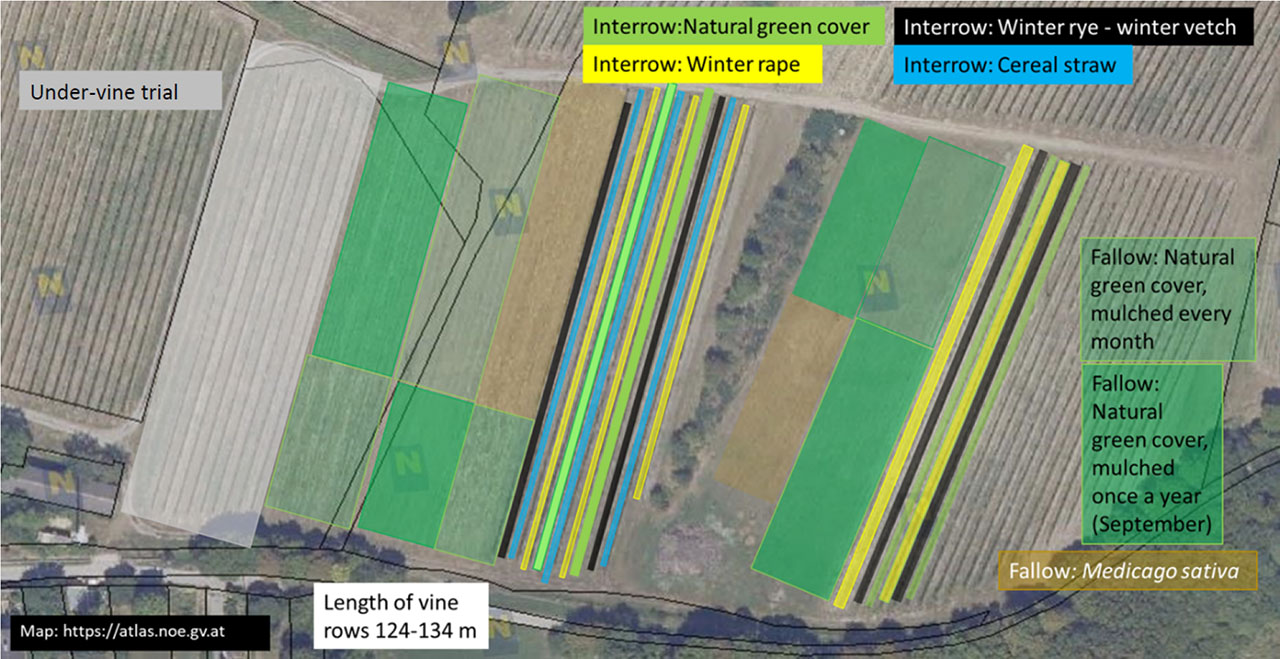
Fig. 1:
Experimental vineyard 1: Site 1 of undervine management trials, site and arrangement of experiments on green cover management in vineyard interrows and fallow land.
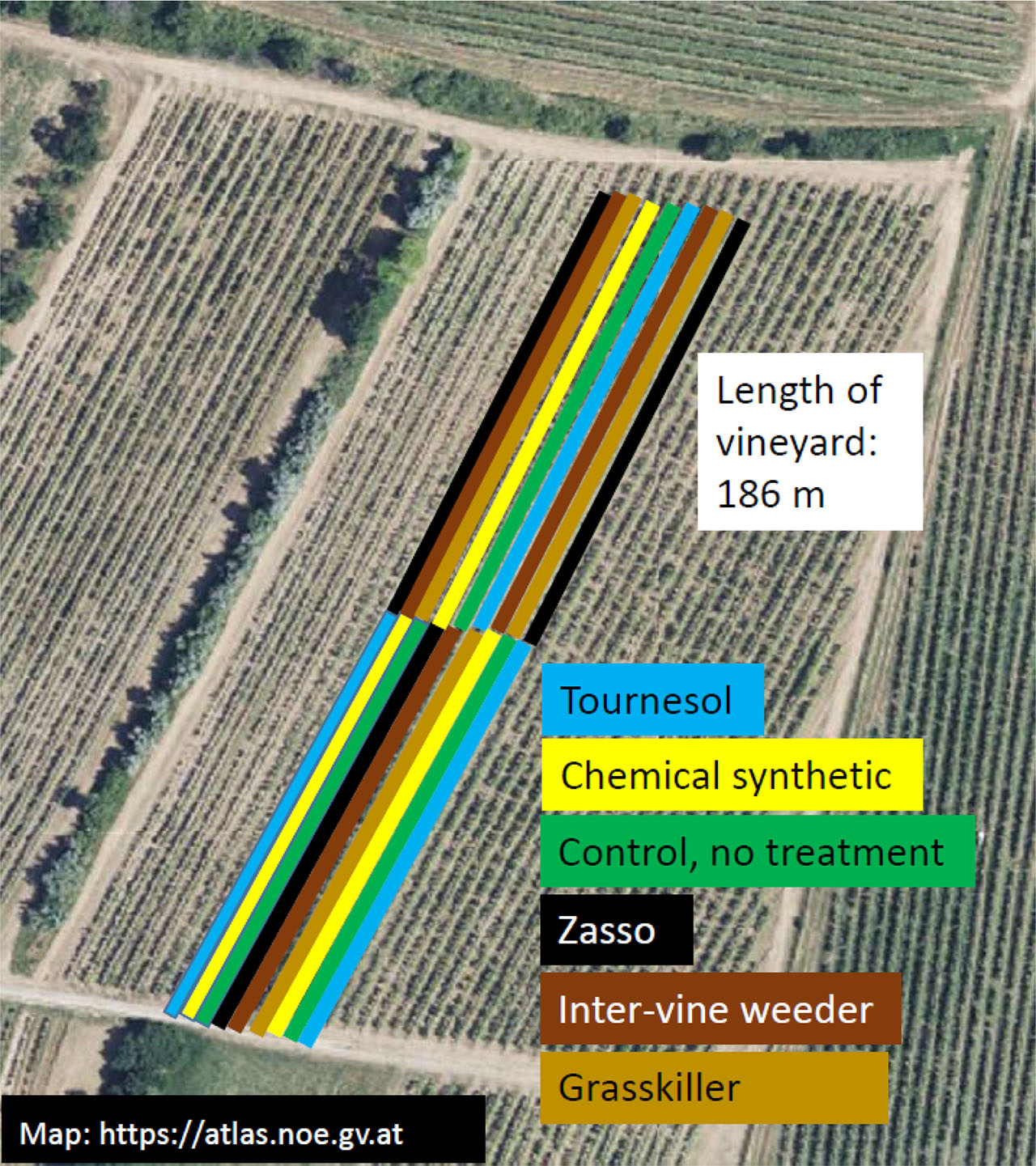
Fig. 2:
Experimental vineyard 2: Site 2 and arrangement of under-vine management trials.
At five points in time, namely on May 09, June 01, June 16, June 18 and July 11, the rate of total green coverage was analysed visually placing an estimation frame in the size of 40 × 40 cm with subdivision into quarters into the under vine area between two previously marked vines. The rate of total green coverage of the test squares was visually assessed. On June 16, June 28 and July 11, in addition, the maximum height of the under vine vegetation inside the test frame was measured with the help of a levelling rule and data were rounded up to increments of 5 cm. At all sampling dates (identical to assessment of cover rates), the field bindweed abundance was visually classified based to the scheme of Braun-Blanquet (1964), but simplified and converted into ordinally scaled data as follows:
0 absent
1 sparse with very low cover, 2–5 individuals in the recording area
2 Moderate occurrence and covering less than 5% of the area
3 Covering 5–25% of the area and any number of individuals
4 Covering 25–50% of the recording area and any number of individuals
5 Covering 50–75% of the recording area and any number of individuals
6 Covering more than 75% of the recording area and any number of individuals
Effect of green cover management in vineyard interrows and fallow land on bindweed density
The experiments in vineyard interrows were carried out in 2022 and 2023 (sowing date November 2021 and 2022) in vineyard 1 as outlined in Fig. 1. The treatments i) winter rape, ii) winter vetch/winter rye, iii) spreading of cereal straw and iv) natural green cover were created. At the beginning of June, the variants winter rape and winter vetch/winterrye were bent using a roller to reduce competition for water with the vines (Tab. 2). The natural green cover variant was mulched approximately once a month (customary at the estate). Experiments in the fallows around vineyard 1 took place in 2020 and 2023 and included the variants i) alfalfa (Medicago sativa) sown in 2019 at a sowing rate of 100 kg/ha, mulched once per year in September, ii) naturally established green cover mulched to a height of 8–10 cm every 4 weeks and iii) naturally established green cover mulched once a year (in September) (Fig. 1). The effect of the treatments on bindweed abundance was assessed twice per vegetation period using the procedure for classification of field bindweed density described above.
Tab. 2:
Treatment variants in the vineyard interrows
| Green cover management in interrows | |||
|---|---|---|---|
| Green cover | Sowing/spreading date | Sowing rate/amount | Date of bending |
| Winter rape | November 2021 and 2022 | 15 kg/ha | Beginning of June 2022 and 2023. |
| Winter vetch/winter rye | November 2021 and 2022 | 100 kg/ha rye, + 20 kg/ha winter vetch | Beginning of June 2022 and 2023. |
| Cereal straw |
| 22 t/ha | |
Effect of mulching intensity on bindweed density along roadsides
The experiments were carried out at in 2022 and 2023 at three locations in Weinviertel (Lower Austria). Test squares of 1 m2 along the road were mulched intensively to a height of approximately 8–10 cm using a gasoline-powered motorized scythe or mulched extensively (once a year at end of September) as specified below:
1) Maissau Grübern (48°33′13″ - 48°33′14″N; 15°47′28″ - 15°47′31″ E)
– Mulching 2022: every 14 days from June to September
– Mulching 2023: monthly from beginning of June to end of September
– three test repetitions with in each case three intensively mulched and three extensively mulched test plots
2) Simonsfeld (48°30′6″ N; 16°20′28″ E).
– Mulching 2022: every 14 days from June to September
– Mulching 2023: monthly from beginning of June to end of September
– one test repetition with in each case six mulched and three extensively mulched test plots
3) Großnondorf (48°38′18″ - 48°38′19″ N; 15°59′20″ E).
– Mulching 2022 every 14 days from June to September
– Mulching 2023 monthly from beginning of June to end of September
– three test repetitions with in each case three mulched and three extensively mulched test plots
Bindweed density was visually scored twice per year (in Großnondorf only once in 2023) according to the classification scheme illustrated above.
Statistical analysis
Data evaluation and statistical analyses were performed using the software SPSS Statistics 29 (IBM, Vienna, Austria). For analysis of under-vine treatments we computed generalised linear models for the response variables i) rate of total green cover (in %), ii) height of green cover (in 5 cm increments) and iii) bindweed density (classified according to the scheme presented above) using the explanatory variables i) treatment, ii) vineyard (1 or 2), ii) date of visual scoring, and the model type Gamma with the link function Log.
Data of the experiments in vineyard interrows, fallows and along roadsides were analysed (in separate calculations) using generalized linear models including bindweed density as response variable, i) cover crop and ii) date of visual assessment as explanatory variables, the distribution Poisson and the link function Log.
In each model, data were analysed for the main effects, post hoc analysis was carried out by aid of Least significant difference (LSD) tests.
Results
Under-vine management trials
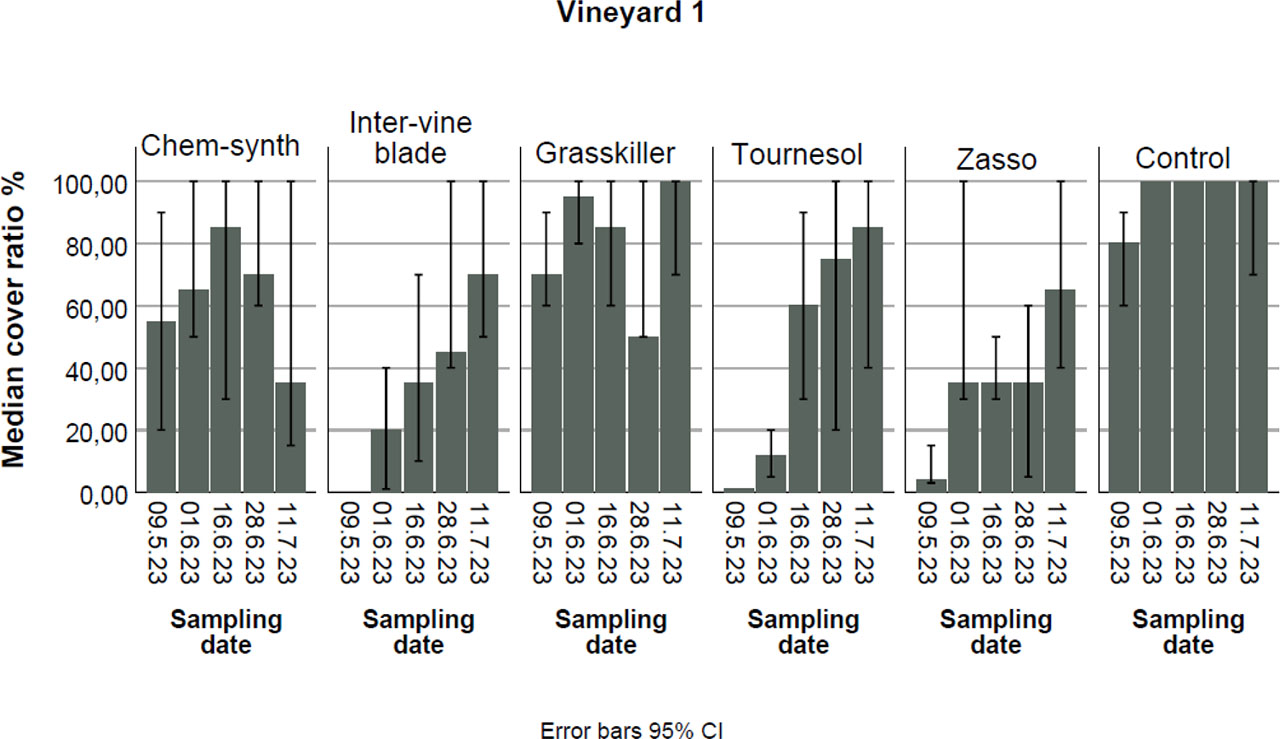
Fig. 3:
Effect of treatments on median cover ratio under the vines the rows in vineyard 1.
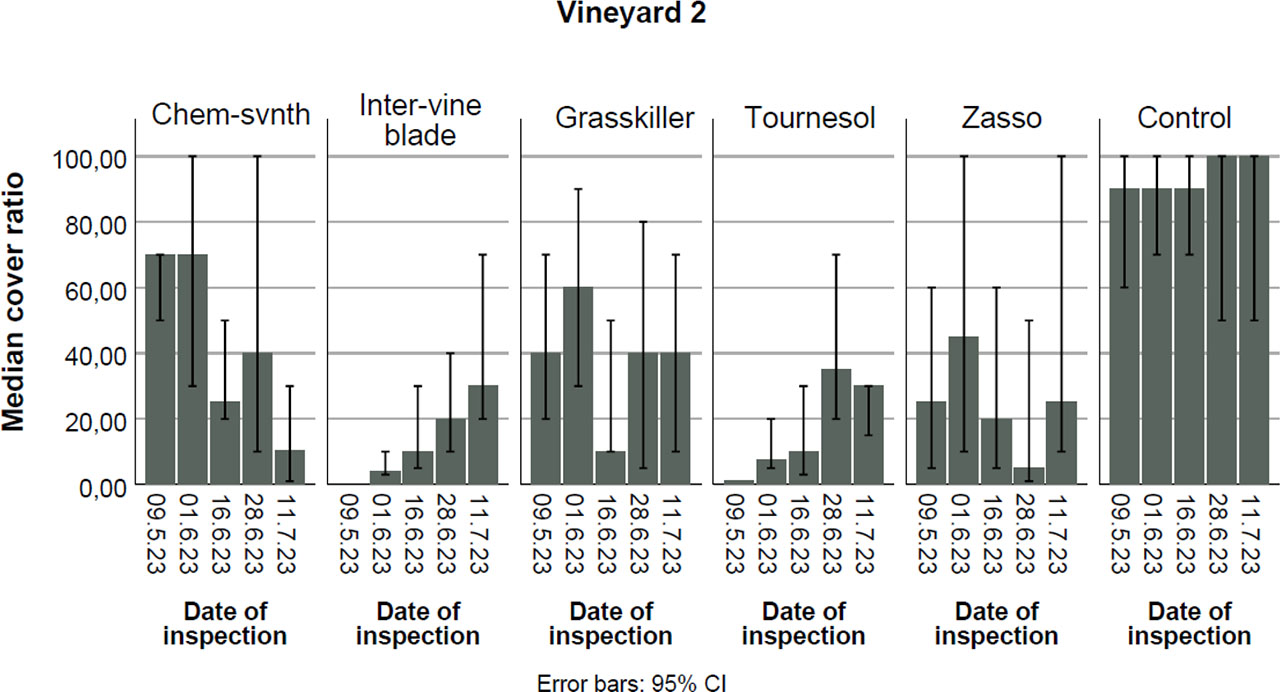
Fig. 4:
Effect of treatments on median cover rate under the vines in vineyard 2.
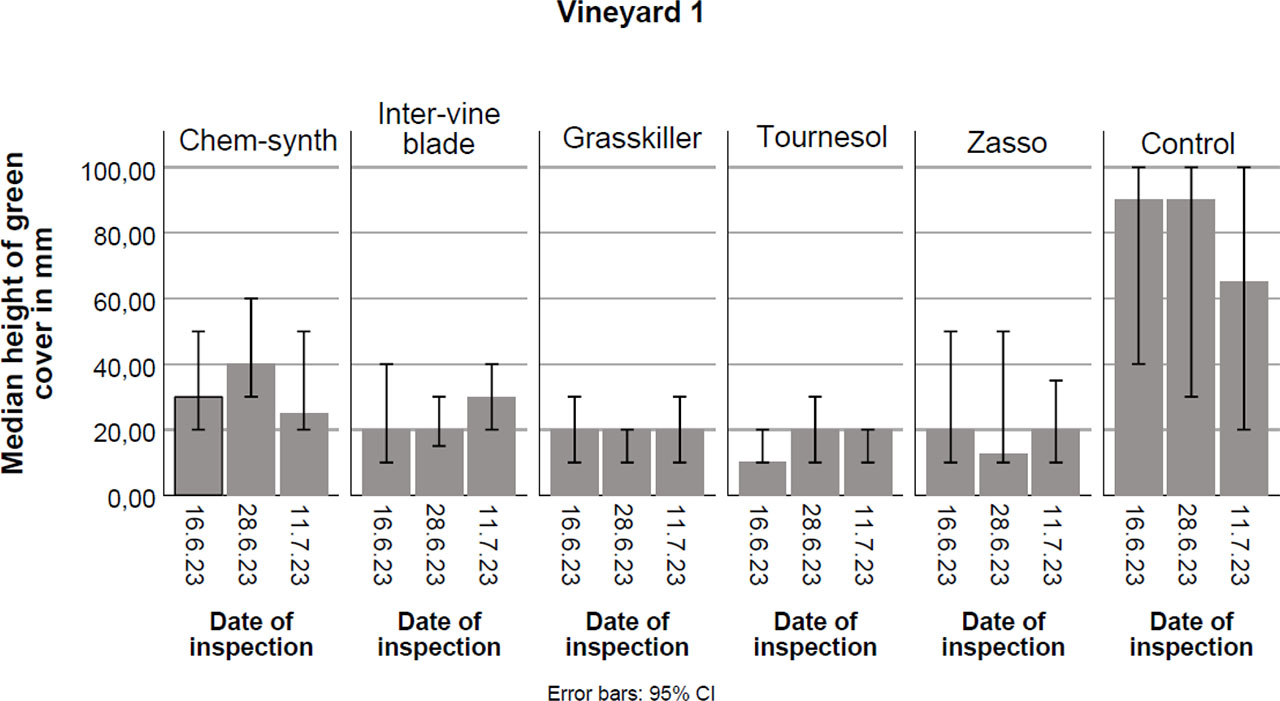
Fig. 5:
Effect of treatments on median height of green cover within the rows in vineyard 1.
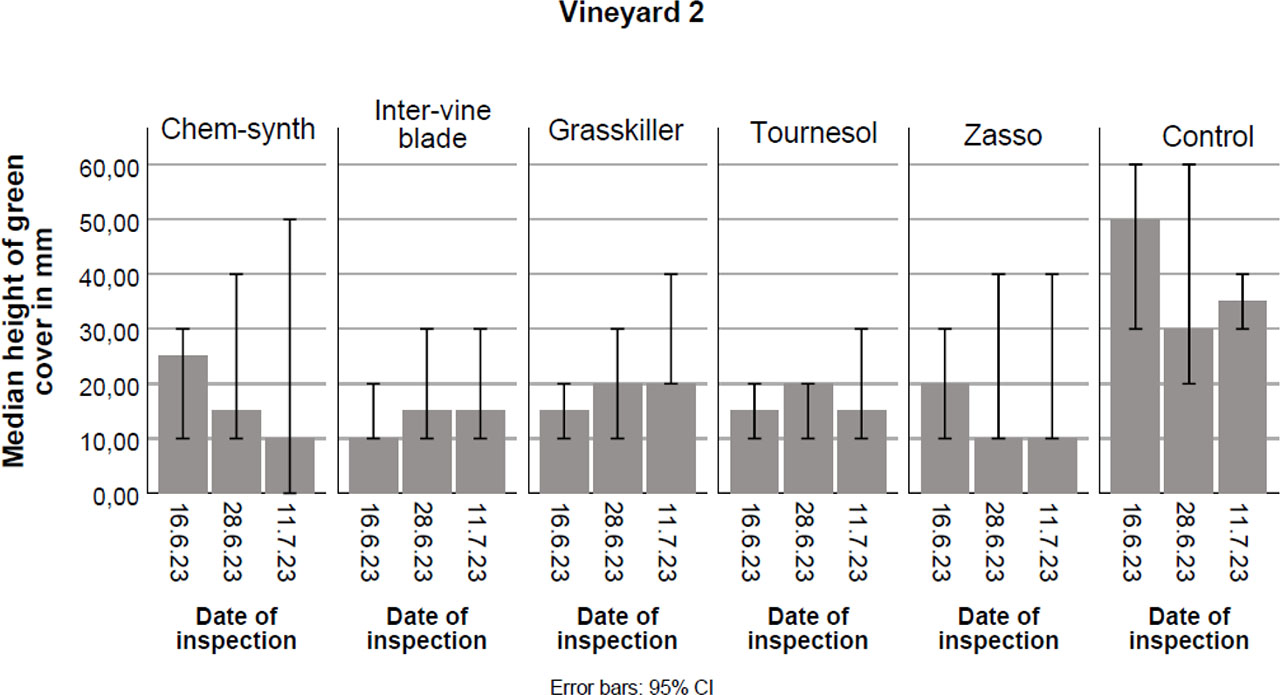
Fig. 6:
Effect of treatments on median height of green cover within the rows in vineyard 2.
As illustrated in Fig. 3 and 4 the median cover rate was lower in all treatment variants than in the untreated control in both vineyards at all scoring times, with the exception of the treatment Grasskiller in vineyard 1. The statistical analysis over all sampling dates and both vineyards, proved a significant effect of the factor treatment on the green coverage (Wald χ2=114.27, df=5; p<0.001). A significantly reduced rate of green coverage as compared to the untreated control was computed for all treatments, except Grasskiller. Green coverage was significantly lower in the treatments Zasso, inter-vine blade and Tournesol than in the treatments chemical synthetic control and Grasskiller. In addition, the model revealed a significant effect of the factor vineyard on cover green rates, (Wald χ2=36.84, df=1; p<0.001), cover rates in vineyard 2 were significantly lower than in vineyard 1. In addition, the cover rate was influenced by the date of assessment (Wald χ2=19.94, df=4; p<0.001; Tab. 3).
Over both vineyards and all sampling dates, the treatments affected the height of the green cover beneath the vines (Fig. 5 and 6). Median height of green covers (classified into 5 cm increments) in both vineyards ranged between 10 and 40 cm in all treatments whereas it was 30 to 90 cm in the untreated control. Statistical analysis confirmed the significant effect of the factor treatment on the height of the green cover (Wald χ2=166.58, df=5; p< 0.001). All treatments significantly reduced cover green height as compared to the untreated control, with Tournesol, Grasskiller and the inter-vine blade being the most effective. Besides, the height of the green cover was affected by the factor vineyard (Wald χ2=16.02, df=1; p< 0.001), lower heights were recorded in vineyard 2. The date of visual assessment had no effect (Tab. 3).
A medium to high bindweed density under the vines was recorded in both vineyards over the entire test period in all treatments. In vineyard 1, test areas with a coverage of more than 50% were regularly observed from June 1 onwards. In general, vineyard 2 had lower bindweed densities, but also in this vineyard coverage rates classified into category 3 (of 5–25% of the area covered with field bindweed) were also observed in all treatment variants (Fig. 7 and 8). The generalized linear model including both vineyards and all scoring dates indicated a significant effect of the factors treatment (Wald χ2=16.34, df=5; p= 0.006), vineyard (Wald χ2=131.60, df=1; p< 0.001) and scoring date (Wald χ2=75.35, df=4; p< 0.001) on bindweed abundance. The post hoc analysis revealed a significantly lower bindweed density in the control plots as compared to plots managed with intervine blade, Grasskiller, Tournesol and Zasso. No statistically significant difference was indicated between the control treatment and the chemical weed control. Bindweed density was significantly lower in vineyard 2 (Tab. 3).
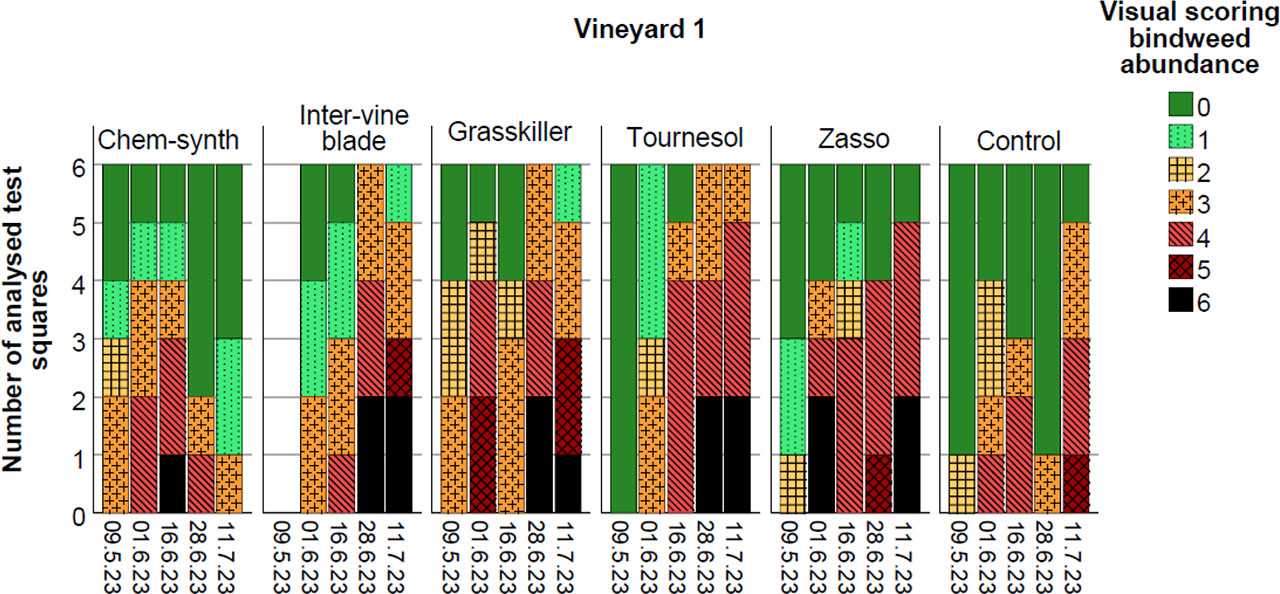
Fig. 7:
Effect of treatments on bindweed abundance under the vines in vineyard 1
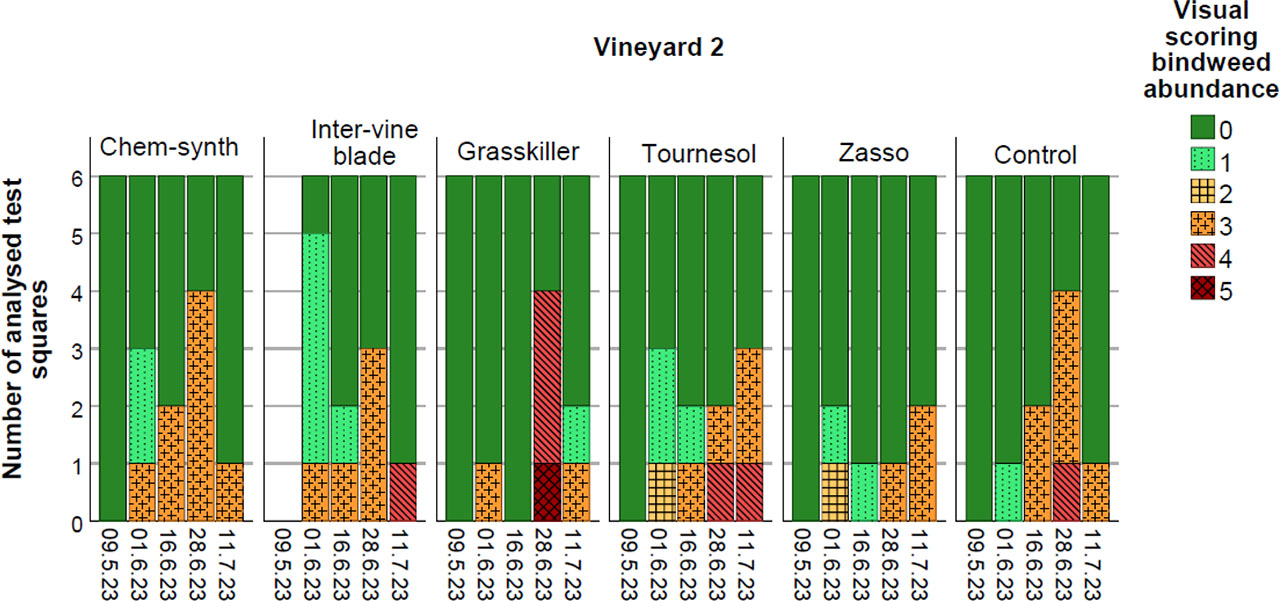
Fig. 8:
Effect of treatments on bindweed abundance under the vines in vineyard 2.
Tab. 3:
Description of general models calculated for the under-vine experiments.
| Description of model | ||||
|---|---|---|---|---|
| Under-vine experiments | ||||
| Dependant variable/Factors | Wald χ2 | p | df | Pairwise comparison (LSD) of treatments (estimated marginal means) |
| Rate of total green cover (%) | ||||
| Treatment | 114.27 | <0.001 | 5 | Tourneso1a (25.19%), inter-vine bladeab (26.49%), Zassob (35.17%), Chem-synth.c (56.79%), Grasskillerc (58.33%), Controld (93.90%) |
| Vineyard | 36,84 | <0.001 | 1 | Vineyard 1a: (56.97%), vineyard 2b (34.05%) |
| Date of visual scoring | 19.94 | <0.001 | 4 | |
| Height of green cover (cm) | ||||
| Treatment | 166.58 | <0.001 | 5 | Tournesola (16.77cm), inter-vine bladea (18.93 cm), Grasskillera (19.32cm), Zassoa (20.41 cm), Chem-synth.b (28.67cm), Controlc (54.49 cm) |
| Vineyard | 16.02 | <0.001 | Vineyard 1a: (27.31cm), vineyard 2b (21.25 cm) | |
| Date of visual scoring | 2.40 | n.s. | ||
| Bindweed density according to classification scheme | ||||
| Treatment | 16.34 | 0.006 | 5 | Controla (0.82), Chem-synth.ab (0.98), Zassob (1.13), inter-vine bladebc (1.21), Grasskillerc (1.39), Tournesolc (1.32). |
| Vineyard | 131.60 | <0.001 | 1 | Vineyard 1a: (1.98), vineyard 2b (0.64) |
| Date of visual scoring | 75.34 | <0.001 | 4 | |
Photographs of the understock areas treated with high pressure water jet (Grasskiller) and electricity (Zasso) are shown in Fig. 9 and 10.
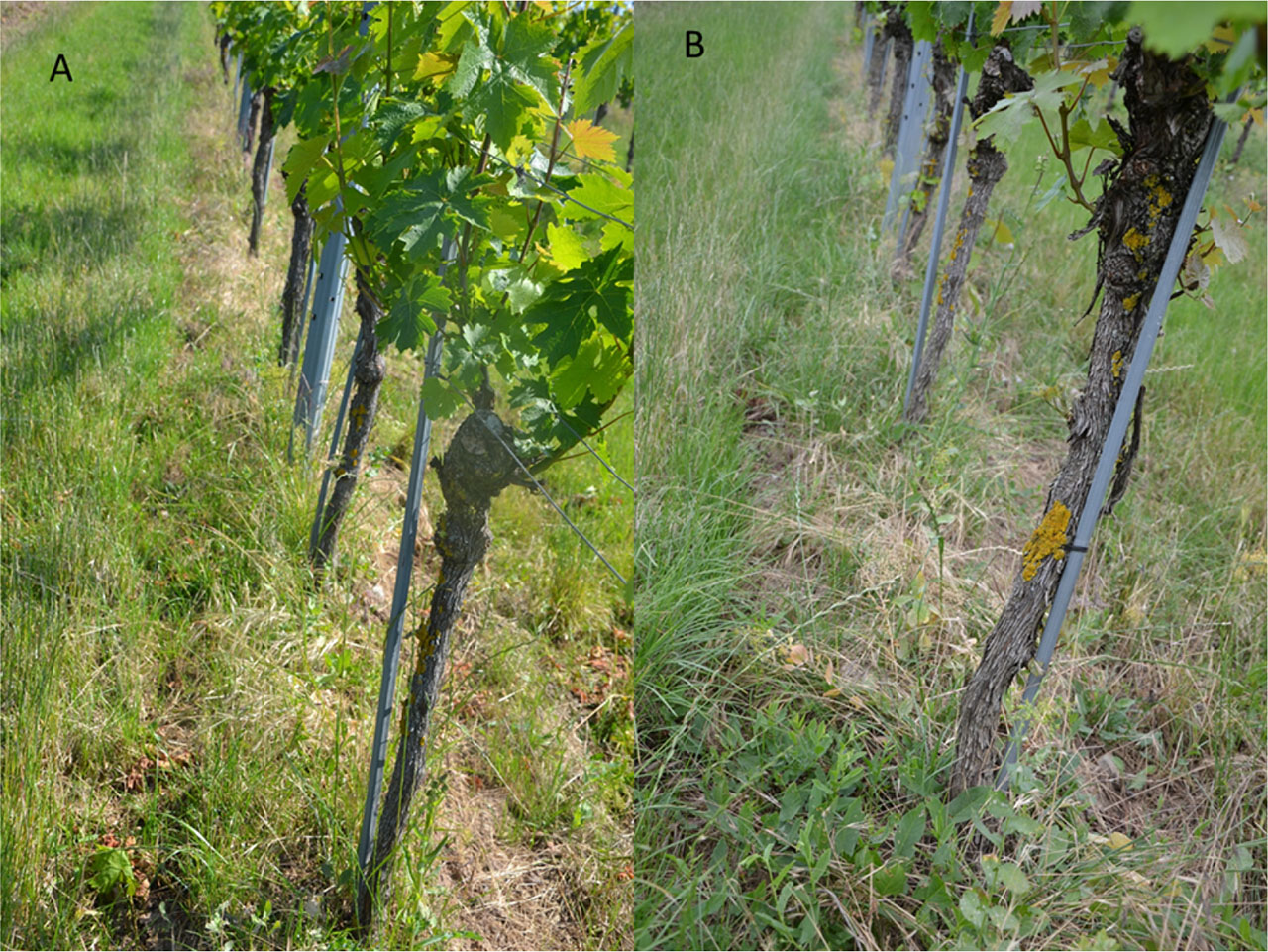
Fig. 9:
Effect of weeding by high pressure water jet (Grasskiller device) in the under-vine area, A: on June 02 in vineyard 2, B: on June 28 in vineyard 1 (treatment on June 06).
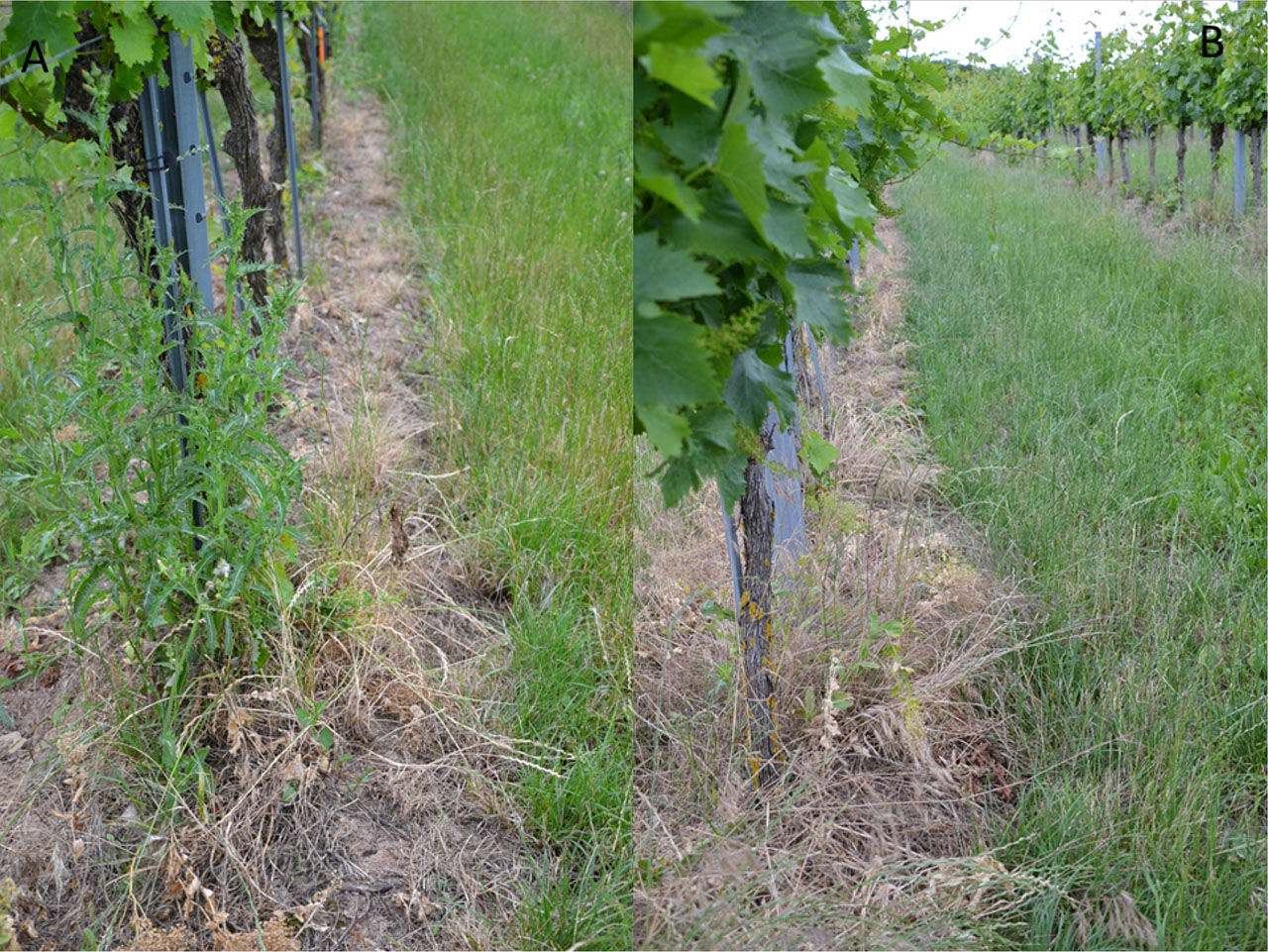
Fig. 10:
Effect of electric weeding (Zasso) on June, 28, 2023. A: in vineyard 1, B: in vineyard 2 (treatment on June 13).
Effect of green cover management in vineyard interrows and fallow land on bindweed density
The effect of cover management in vineyard interrows on bindweed abundance in 2022 and 2023 is outlined in Fig. 11. The lowest bindweed abundances were recorded on June 16 and July 11 2023 in the variants sown with vetch-rye and winter rape. Statistical analysis over all scoring dates proved a significant effect of the factor treatment on the bindweed abundance (Wald χ2=16.48 df=3; p<0.001), and confirmed the lower bindweed abundance in interrows greened with vetch-rye and winter rape as compared to the regularly mulched natural green cover and cereal straw. Furthermore, the factor date of visual scoring significantly influenced bindweed presence (Wald χ2=26.87, df=3; p<0.001) with higher bindweed abundance in 2022 (Tab. 4).
In the vineyard fallow, the cultivation of alfalfa (Medicago sativa) largely supressed bindweed. Regularly mulched areas had a higher bindweed density than areas that were mulched once a year only (Fig. 12). Both observations were also confirmed by the generalized linear model (Wald χ2=91.83 df=2; p<0.001). Bindweed density in the fallow was in addition influenced by the date of the visual scoring (Wald χ2=43.9926.87 df=3; p<0.001) (Tab. 4).
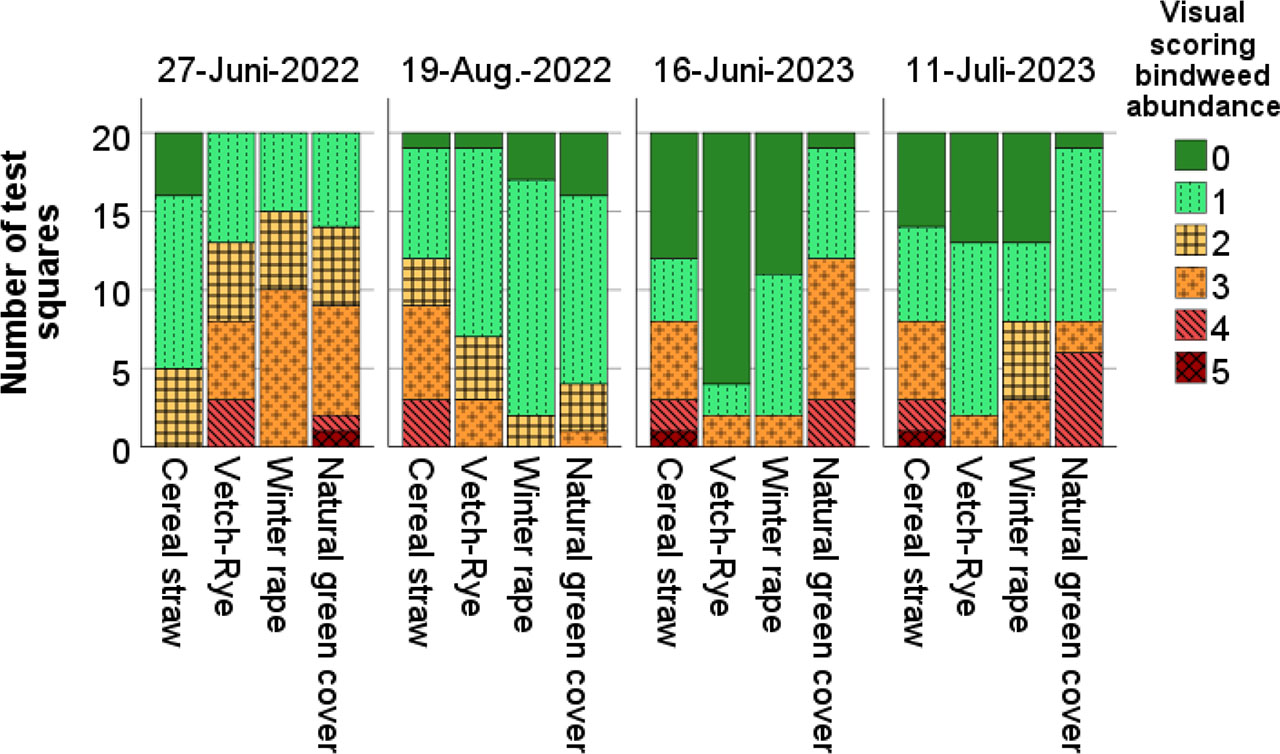
Fig. 11:
Effect of green cover management on bindweed density in the vineyard interrow area.
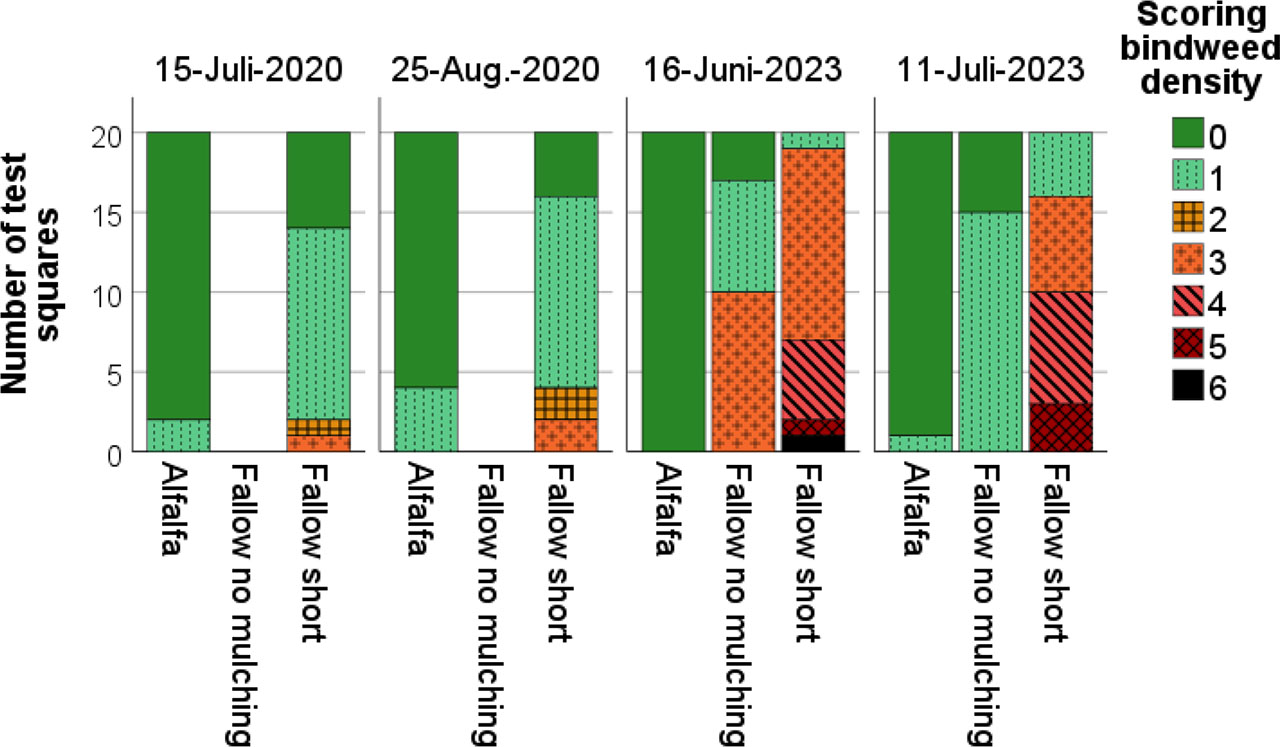
Fig. 12:
Effect of green cover management on bindweed density in the vineyard fallow area.
Tab. 4:
Description of general models calculated for the effect of interrow and fallow management on field bindweed abundance.
| Green cover in vineyard interrows | ||||
| Dependant variable/Factors | Wald χ2 | p | df | Pairwise comparison (LSD) of treatments (estimated marginal means) |
| Bindweed density according to classification scheme | ||||
| Green cover treatment | 16.48 | <0.001 | 3 | Vetch-rye (1.21)a, winter rape (1.27)ab, cereal straw (1.60)bc, natural green cover (1.90)c |
| Date of visual scoring | 14,20 | 0.003 | ||
| Fallow management | ||||
| Dependant variable/Factors | Wald χ2 | p | df | Pairwise comparison (LSD) of treatments (estimated marginal means) |
| Bindweed density according to classification scheme | ||||
| Green cover treatment | 91.83 | <0.001 | 2 | Alfalfa (0.09)a, natural green cover mulched 1x per year (0.89)b, natural green cover, regularly muched (2.21)c |
| Date of visual scoring | 43.99 | <0.001 | 3 | |
Effect of mulching intensity on bindweed density along roadsides
Intensive mulching increased the abundance of field bindweed along roadsides at all test sites in both trial years (Fig. 13). This observation was confirmed by the statistical analysis (Wald χ2=41.12, df=1; p<0.001; pairwise comparison of treatments (LSD) and estimated marginal means: regularly muched 0.55a, mulched 1x per year 1.52b). In addition, the statistical analysis revealed significant differences between the test locations (Wald χ2=13.77, df=2; p<0.001; pairwise comparison of treatments (LSD) and estimated marginal means: Simonsfeld 0.65a, Großnondorf 0.90ab, Grübern 1.33b) and the dates of inspection in respect to field bindweed density (Wald χ2=9.53, df=1; p=0.049).
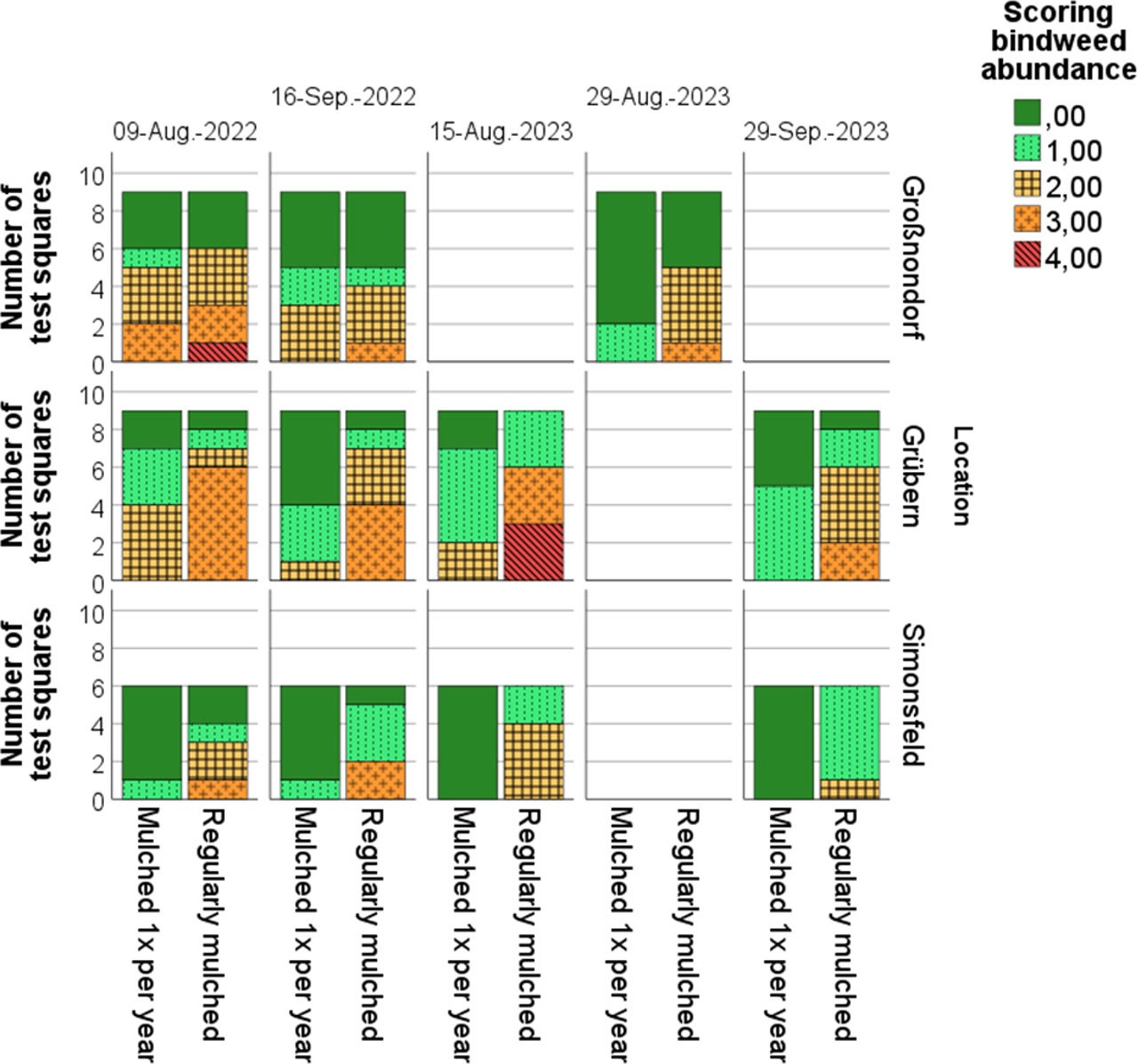
Fig. 13:
Effect of mulching intensity on bindweed density close to roadsides.
Discussion
The experiments carried out in this study were adapted to the different requirements of green cover maintenance in the various areas of a vineyard, namely the areas under the vines, the areas between the rows and the areas around the vineyard, such as plantings, green strips, embankments, roadsides and fallow land.
For the management of the under-vine area, the current study compared an electric method and a high pressure water jet strategy with mechanical methods and a glyphosate-free chemical synthetic strategy in terms of the overall degree of green cover, the height of the green cover, and their effects on field bindweed abundance. The results of the study show, that satisfactory results in under vine weed control not only depend on the used management strategy, but perhaps even more on the characteristics of the vineyard to be treated. Treatment efficacy of all variants were significantly better in vineyard 2, characterized by lighter soil. From a practical point of view, in this vineyard, weed cover rates achieved by the control measures were largely satisfactory, regardless of the strategy. In contrast, in vineyard 1, with heavy, loamy soil and a high pressure of “problem” weeds, no strategy produced truly satisfactory results with respect to cover rates. This observation is in accordance with previous reports, that weed control measures are more effective on dry sites (Goldammer, 2021). Looking at the current results for the individual treatment measures, all tested management variants reduced the total rate of green cover as compared to the untreated control. The statistical analysis including data of both vineyards identified the mechanical treatments Tournesol and inter-vine blade as most effective in reducing growth under the vines. In the drier vineyard 2, these treatments permitted maintaining a median weed coverage of 10–15%. In vineyard 1, the Zasso treatment gave the best results with a median cover rate of 35%, followed by inter-vine blade with a median cover rate of 40% and the Tournesol treatment with a median cover rate of 45%. Regarding the height of the growth beneath the vines, results in both vineyards were comparable. All treatments were approximately equally effective and the average height of the green cover was 15–20 cm, and 55 cm in the untreated control.
Concerning field bindweed control, the current results highlighted the difficulties in field bindweed control and its possible promotion by weed control measures, already previously described in other studies. All undervine treatments favoured field bindweed abundance, the worst performing strategies were Tournesol, Grasskiller and intervine blade. In vineyard 1, field bindweed coverage rates of more than 75% were regularly observed in the respective test plots. The lowest bindweed density was recorded in the untreated control. Promotion of bindweed growth by the treatments Tournesol, Grasskiller and inter-vine blade can be explained by the mechanical division of bindweed roots during these procedures. The fact that mechanical disintegration of bindweed roots may lead to enhanced weed multiplication is well known (Davis et al. 2018, Bianco et al. 2019, Kopta et al. 2024). According to literature, at the best, frequent long-term mechanical measures can lead to a depletion of carbohydrate reserves in bindweed roots and in consequence to a suppression of this weed species (Sullivan et al. 2004).
In addition, however, the actual under-vine results indicated that one key factor in the low competitiveness of field bindweed in taller vegetation is competition for light. Field bindweed appears to require full light for its development. In addition, competition between plant species for other factors such as space, water, and nutrients might also reduce C. arvensis development. In the current study, the dense and high vegetation contributed massively to the lower field bindweed abundance in the untreated control variant (but the strategy is not applicable in a yielding vineyard). The weed control treatments scoring best in terms of field bindweed control in the actual study, chemical treatment and Zasso, did not rip bindweed roots but lacked the shadowing and competition effect of surrounding vegetation. Our observations match numerous previous reports, indicating that field bindweed, when shaded, is not very competitive (Sullivan et al. 2004, Orloff et al. 2018, for review).
Overall, in the current study the relatively new Zasso and Grasskiller devices did not show superiority with respect to green coverage and cover green height as compared to the conventional mechanical methods and they were only slightly more effective than the synthetic chemical herbicide variant. In terms of field bindweed control, especially the high pressure water jet (Grasskiller) was not convincing, somewhat better results were recorded for the electric weeding. The statement that Grasskiller is capable of solving weed problems within the vineyard rows with not more than two annual treatments (Losavio et al., 2016) was at the best partly confirmed in vineyard 2. In contrast, in vineyard 1, the efficacy of the device with respect to total green coverage and bindweed control was insufficient from a practical point of view (Fig. 9). The success of Grasskiller could be better on dry soils or, as in the aforementioned study in Italy, in drier regions. This question should be investigated in further studies. Better overall results on total green coverage were achieved by electric weeding (Zasso). In uneven vine rows, however, this device had difficulties to reach the vegetation in the middle of the row and left swaths of weeds where the electrodes had not reached (Fig. 10). In a previous study on undervine weeding in Germany, electric weeding by a Zasso device (2–3 treatments, current 18 and 24 kW) was compared to chemical treatment with glyphosate, and mechanical weed management by disc plough and a disc plough with roller hoe. The treatment success of the Zasso device (as well as all other treatments) varied greatly between experimental plots. All procedures became more effective with increasing treatment frequency but all strategies failed to efficiently control “problem weeds” such as Chenopodium album, and, comparable to the current study, Convolvulus arvensis (Lang et al., 2022).
Concerning the technical execution of the current under-vine trials, it should be noted that there were some shortcomings. These might to some extent have influenced the comparability of the results of the individual treatments. Firstly, it was not possible to apply all greening management options at the same time (Tab. 1), because the time of application depended on the device manufacturers (Grasskiller, Zasso) and internal processes at the experimental estate. In addition, the inter-vine blade variant was not implemented until May 23 due to a defect of the device. In consequence, an accurate comparison of green cover strategies at a single point in time was not conclusive. Instead, we evaluated all data collected over the entire duration of the experiment together in the generalized linear model (examination dates as one factor). Furthermore, it was not possible to assess the green covers under the vines in August 2023.
According to the actual data, in vineyard interrows, sowing of cover crops can be an expedient strategy for field bindweed reduction, provided however, that sufficient humidity allows a proper development of the green cover. Particularly, in 2023, covers of winter rape and a mixture of rye and winter vetch, bent by the beginning of June were effective, likely due to a shadowing effect of the cover crop itself or later its organic material. A comparably weaker success was observed in 2022, in this year, a lack of rainfall in winter and early spring (total precipitation from January 1 to March 31: 39.9 mm) reduced the development of the sown cover crops. A good effect of fall-planted rye and vetch against field bindweed in vegetable field was also previously reported (Sullivan, 2004). In practical viticulture, the competition of sown green covers with the vines for nutrients and water is a widespread cause for concern. A wide number of scientific papers concluded that competition of cover crops with the vines for nutrients is generally not relevant and cover crops have, as illustrated above, a large number of positive effects. In contrast, literature data highlight that water competition must be taken into account when planning cover crops in regions where water shortages are expected in summer (Abad, 2022b, for review).
In the current study, the introduction of cereal straw in interrows was no effective method for field bindweed control. In both experimental years, it reduced field bindweed in spring as compared to the natural green cover, but its effect disappeared in the course of the vegetation period (Fig. 11). The straw layer rotted quickly, so there was no longer a sufficient cover in summer. Moreover, the straw was costly to obtain and time consuming to spread (data not shown). However, it is quite possible that a more frequent straw application could very well lead to better suppression of field bindweed. In an experiment in Spain, rice straw largely reduced the weed coverage of a vineyard. In this study, different amounts of rice straw, from 25–50 t/ha were not only applied in October/November but also in May. Likely the application twice per year, possibly also together with dryer conditions in Spain allowed the constant presence of an unrotted organic layer which supressed weed growth, especially when applied at a rate of 50t/ha (Gómez de Barreda et al., 2023).
For bindweed management in all surrounding areas of vineyards, which can be fallow land, roadsides, enbankments, green stripes or other areas, shading by taller vegetation proved effective in the actual experiments. Permanent greening by alfalfa reduced the density of field bindweed to almost zero. Leaving the natural green cover long also reduced the incidence of field bindweed, whereas a constantly mulched short cover crop allowed a relevant bindweed cover to establish.
Very similar results were obtained from the trial along roadsides in Simonsfeld, Großnondorf and Grübern. A low mulching intensity was almost always associated with a lower incidence of field bindweed. Interestingly, an effect of alfalfa against field bindweed by light deprivation was already described over 100 years ago (Cox, 1909, reported in Sullivan, 2004).
With respect to control of BN, a shading effect of higher vegetation could have a further benefit. Sunny areas, predominantly sites covered by short or sparse vegetation only, are the preferred habitat of H. obsoletus and other potential phytoplasma vectors. In previous experiments, the greening of a fallow adjacent to a vineyard with Medicago sativa largely reduced the abundance of plant- and leafhoppers and prevented their migration into the neighbouring vineyards (Riedle-Bauer and Brader, unpublished, Riedle-Bauer et al., 2010, Riedle-Bauer et al., 2011). In vineyard interrows, the cover crop species, Phacelia tanactifolia, Rhaphanus sativus and Fagopyrum esculentum largely supressed bindweed and lead to a reduction in almost 100% of leaf- and planthopper species in the green cover (Riedle-Bauer et al., 2010).
In summary, it can be stated that greening measures, particularly in vineyard interrows, in fallow land and other areas in the vicinity of vineyards or along roadsides have the potential to greatly reduce ‘Ca. P, solani’ infection pressure in BN outbreaks linked to field bindweed as the crucial pathogen source. Higher green covers have the potential to outcompete field bindweed and create hostile conditions for the vectors of this pathogen. In the planning of green cover management strategies, however, competition between the vine and the green cover, particularly the risk of water competition must be taken into account.
Acknowledgements
The authors wish to thank Martina Zederbauer, ecoplus. Niederösterreichs Wirtschaftsagentur GmbH, for her comprehensive support in the implementation of the described research activities. This work was supported by the collective research program of the Austrian Research Agency, FFG (grant number 910148).