
1. Introduction
Every company, regardless of industry, undertakes various initiatives to attract as many consumers as possible and increase product sales (Singhal, 2021, pp. 3–4; Madej-Kurzawa & Pieczarka, 2024, pp. 121–123). The same holds true for computer game producers, who publish numerous promotional materials, trailers, and announcements long before a game’s planned release, gradually revealing details of the gameplay. This phenomenon, commonly referred to as hype, is an important element of the computer games market, as it influences consumers’ emotions and expectations, and consequently their purchasing decisions.
In this article, the term computer game refers to games designed for the PC platform and specific types of consoles. Although this definition may not seem entirely appropriate, given that it clearly indicates the target platform, Kuipers (2010, p. 78) argues the term computer game is a hyperonym encompassing both video game and console game, all of which developed relatively simultaneously. Furthermore, major titles, especially ones that generate hype, are nowadays almost always released across multiple platforms simultaneously. Therefore, for clarity and consistency, the term computer game is adopted here as the overarching term.
The aim of this study is to identify the importance of hype in consumer purchasing decisions, as well as to analyze the benefits and consequences of its use by game producers. With this goal in mind, the following research question was formulated: How does hype influence the purchasing decisions of computer game consumers, and can it be considered a commercialization tool?
Although the hype phenomenon has sometimes been discussed in the literature in the context of word-of-mouth marketing and brand communication, studies that treat hype as a standalone factor mediating consumer decision-making in the computer game market still remain scarce. Existing research tends to focus on hype as an element of marketing strategy, overlooking its importance in shaping consumer purchasing decisions. This article fills this gap by proposing a conceptual model that connects the Gartner Hype Cycle with consumer behavior, presenting hype as a factor mediating the relationship between a manufacturer’s promotional activities and consumer purchasing decisions both before and after a game’s release.
The findings presented here may help consumers understand the hype phenomenon and its implications, thereby fostering greater awareness when making future computer game purchasing decisions. They may also be useful for game producers, helping them to better manage hype, so that they can minimize the risk of consumer disappointment – which, in turn, can lead to lower trust in the game developer.
2. Material and research methods
This study is based on an analysis of secondary sources published from 2014 to 2025, including scientific literature, industry reports, statistical services (e.g., Statista, Google Trends), promotional materials, and online consumer reviews. This timeframe was chosen because the phenomena under analysis, such as the creation and escalation of hype surrounding computer games, have become particularly intense in recent years. Previous conceptual and theoretical studies on hype and word-of-mouth marketing found in the literature were also considered, providing a starting point for further analysis.
The article utilizes an integrative literature review (Tanujaya et al., 2022), which aims to combine available theoretical approaches and empirical evidence from multiple studies, regardless of methodology, to comprehensively present the phenomenon under investigation (Orłowska et al., 2017). Only public and verifiable sources were included in the analysis, ensuring transparency and repeatability of the research procedure (Moravcsik, 2020). The selection of material was limited to content directly related to the analyzed game titles and included only those publications that allowed for the reconstruction of the hype phenomenon across its individual phases. The analysis utilized data triangulation (Mazurek-Łopacińska & Sobocińska, 2018), combining quantitative and qualitative data, which allowed for a more comprehensive understanding of the phenomenon under investigation.
Four computer games were analyzed – Red Dead Redemption II (RDR II), Cyberpunk 2077, Grand Theft Auto VI (GTA VI), and The Witcher 4 – using a case study approach, which allows for a multifaceted description of the hype phenomenon (Grzegorczyk, 2015; Harrison et al., 2017). The selection of games was intentional. All four of these games belong to the AAA segment (Bernevega & Gekker, 2022) – high-budget productions that strongly influence player reactions (Siuda et al., 2024). Due to the scale of investment in production and promotion, these titles have the greatest potential to attract consumer attention and influence their purchasing decisions. Intense hype surrounded all of them.
Two examples (GTA VI and The Witcher 4) allow the hype phenomenon to be described in real time, as these games have not yet been released. Their hype cycles are still being shaped by producers, and consumer interest is systematically increasing. The other two examples (RDR II and Cyberpunk 2077), on the other hand, represent contrasting completed cycles, allowing for a full description of the hype phenomenon, i.e., both the pre-release situation and the identification of its post-release effects. This made it possible to examine whether consumer expectations were met and how they influenced the product’s reception, sales, and the producer’s reputation. This selection of examples captures the two-sided nature of the phenomenon, revealing both the positive and negative effects of hype. Comparing titles at different stages of the Gartner curve also makes it possible to observe the phenomenon’s continuity over time and to compare the mechanisms behind hype generation and its potential consequences, even if not all market effects are yet fully measurable. This selection is therefore illustrative and analytical in nature, and its aim is to capture the dynamics of the phenomenon, and not to statistically examine the impact on consumer purchasing decisions.
The analysis spanned the period from the developer’s release of the game’s first trailer to the present, capturing both the early hype-building phase and the long-term consequences. Each case study was developed using a consistent framework. Gartner’s Hype Cycle was adapted to each game to identify its individual stages. Within this framework, measurable marketing metrics were analyzed, such as the number of YouTube views, comments, and reactions, sales volume (including pre-order data where available), promotional campaign budgets, and average consumer and critic ratings.
Findings were formulated using the analysis and synthesis method, which allows for the organization and integration of the obtained information into a coherent whole. The answer provided to the research question relied on incomplete induction, a reductive method commonly used in the social sciences, applicable where it is impossible to observe all phenomena or processes of a given class. As Strzelec (2019) points out, reasoning based on incomplete induction is unreliable, and the conclusions drawn can only have a certain degree of probability. The conclusions presented in this article are a generalization of observations regarding selected game examples, referring to the broader phenomenon operating in the computer games market. Nevertheless, the method is appropriate for the research question posed, as it allows for the formulation of generalizations based on observations of a limited sample of illustrative cases.
It should also be emphasized that research on hype requires further in-depth analyses that will allow for empirical confirmation of the proposed theoretical assumptions.
3. Defining the hype phenomenon
Many computer game producers, especially those generating high revenues and with widely recognized game titles, such as Electronic Arts, Take 2 Interactive (subsidiaries include Rockstar Games and 2K Games), and even the Polish CD Projekt RED (Olejniczak, 2016, p. 59; Companies Market Cap, 2025), begin intensive promotional activities long before their product launches. The goal is to build reputation and desirable relationships with consumers (Wojcik, 2021, p. 26). Various forms of promotion are used for this purpose, such as television and press advertisements, billboards and posters in prominent locations, promotional fairs, fan gatherings, merchandising activities at stationary points of sale, collectible gadgets (such as figurines of the game’s protagonist), virtual additions (such as a new type of weapon or object), narrative expansion, demo releases, and social media initiatives (Rzemieniak, 2017, pp. 293–294). These activities are transparent and carried out through all possible communication channels to reach the largest possible audience (Kobylińska & Szamborski, 2018, p. 18; Dziwiński, 2023).
Such broad and intensified promotion is colloquially referred to as inflating a balloon, which in this case leads to increased consumer interest and excitement surrounding the upcoming game. Regardless of their gamer profile (Tondello & Nacke, 2019) or their motivation to play (Lazzaro, 2009), consumers react to these stimuli, mutually reinforcing their expectations (Kobylińska & Szamborski, 2018, p. 19). This phenomenon is referred to as hype, generally understood as excessive excitement and anticipation for an event or product (Musialik, 2023).
The Cambridge Dictionary (2025) offers two complementary definitions: as a verb, hype refers to the process of generating publicity, while as a noun, it refers to the publicity itself. The former defines hype as making something seem more important or exciting than it actually is by talking about it frequently, especially on television, in newspapers, etc.; the latter defines hype as the excessive attention given to something, especially on television, in newspapers, etc., so that it seems more important or exciting than it actually is.
The presented definitions suggest that hype is created through publicity, meaning it can be defined as an element of word-of-mouth marketing (WoMM), sometimes called buzz marketing (Purwanto et al., 2023) or whisper marketing (Burkiewicz & Kawa, 2020). In the English-language literature, the concepts of word-of-mouth marketing and buzz marketing are often treated as equivalents, although some practitioners distinguish them – with the former referring to initiating natural product recommendations by consumers, the latter to generating publicity, buzz, and interest in the brand (Petrykowska, 2011, p. 117). Regardless of the nomenclature adopted, many marketing executives argue that WOMM is the most effective form of marketing, as consumer rumors and interpersonal recommendations strongly influence purchasing decisions (Berger, 2014; Chen & Yuan, 2020, p. 7). Furthermore, word-of-mouth marketing is the most customer-oriented form of communication (Yaman, 2018, p. 176). Viewed from this perspective, hype emerges not only from the producer’s promotional efforts but also from consumer engagement, both cognitive and emotional.
The Gartner Hype Cycle is a well-known and useful depiction of the dynamics of hype. Developed in 1995 by the IT consulting firm Gartner Inc., this methodology describes the typical adoption pattern for any new technology (Figure 1) (Ferrara, 2013, p. 290). While the model was designed for technological innovation, it can be helpful for anyone deciding whether and when to implement a new product, process, idea, or practice (Fenn & Raskino, 2008, p. XV).
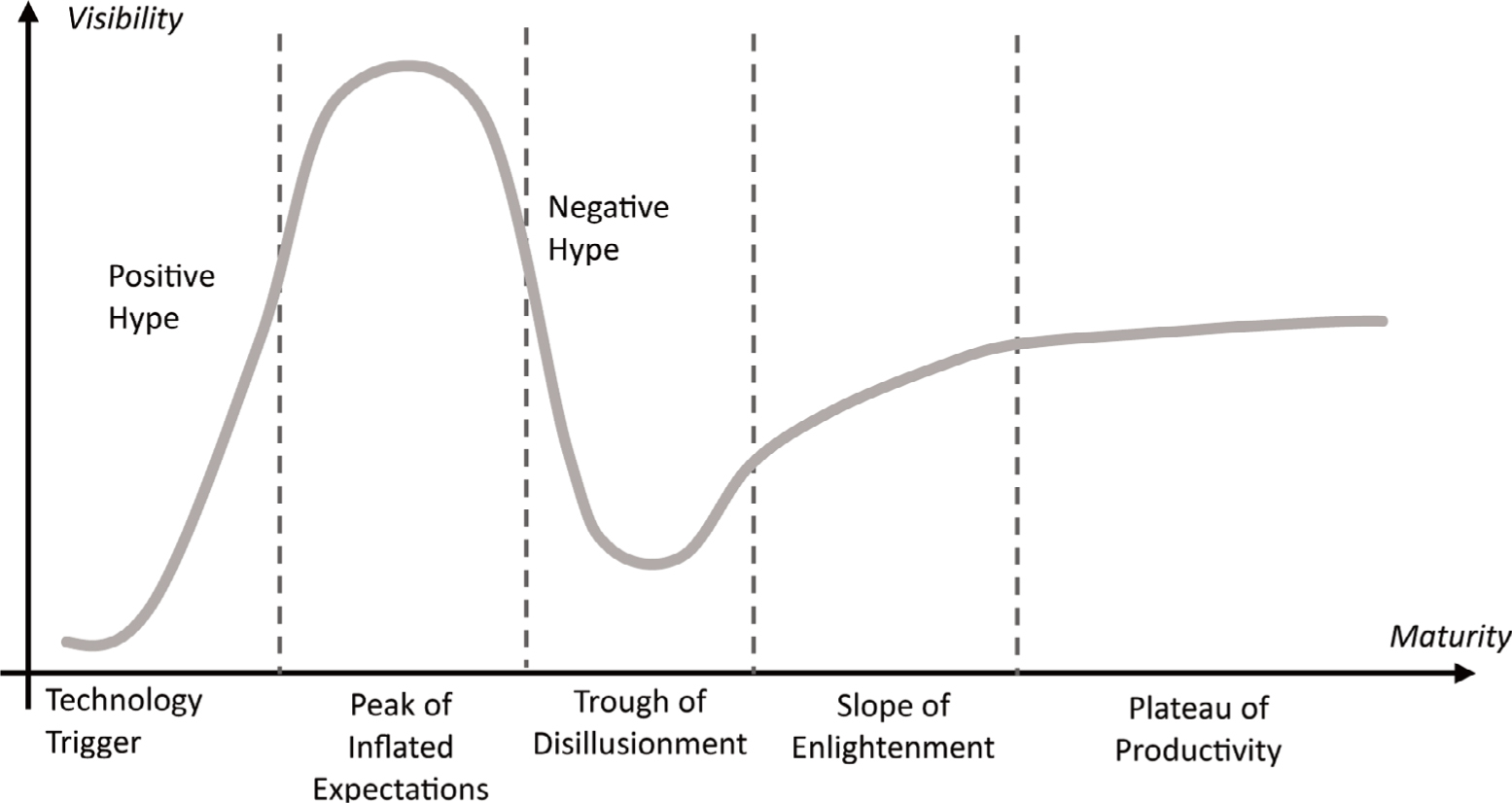
Figure 1.
Gartner Hype Cycle. Source: Linden & Fenn (2003).
When adapted to the computer game market, the model highlights that producers may initiate early buzz as soon as they reveal the first fragments of information about a planned game. This initial buzz may be weak and may even occur in several preliminary waves before a serious growth trajectory begins. As a game gains greater visibility, the hype level increases significantly. After the peak of excitement and maximum consumer expectations is reached, a natural decline in interest follows, accompanied by a decline in buzz and enthusiasm, which can lead to consumer disappointment (Lajoie & Bridges, 2014). Importantly, for each technology or product, the hype cycle will have a different scale depending on its overall perceived importance to the business or consumers (Linden & Fenn, 2003, p. 6). In some cases, the decline in interest will subside slightly, while in others, consumer disappointment will be more profound, giving the curve a different shape.
Hype is therefore a complex and difficult-to-measure variable that cannot be captured by a single metric or indicator. No unified operationalization has yet been developed in the literature, and the concept continues to function intuitively in both industry and academic circles.
Measuring hype requires distinguishing between two phases: pre-release and post-release. In the first phase, important indicators include the number of trailer views, reactions and comments on social media, the number of pre-orders, the dynamics of online searches, and the promotional budget. In the second phase, sales volume and dynamics should be considered, as well as the extent to which consumer expectations were met, assessed through user reviews and public reception (Figure 2). A key methodological challenge in analyzing post-release feedback lies in determining the nature of consumer comments; one potential technique is sentiment analysis (Farhadloo & Rolland, 2016).
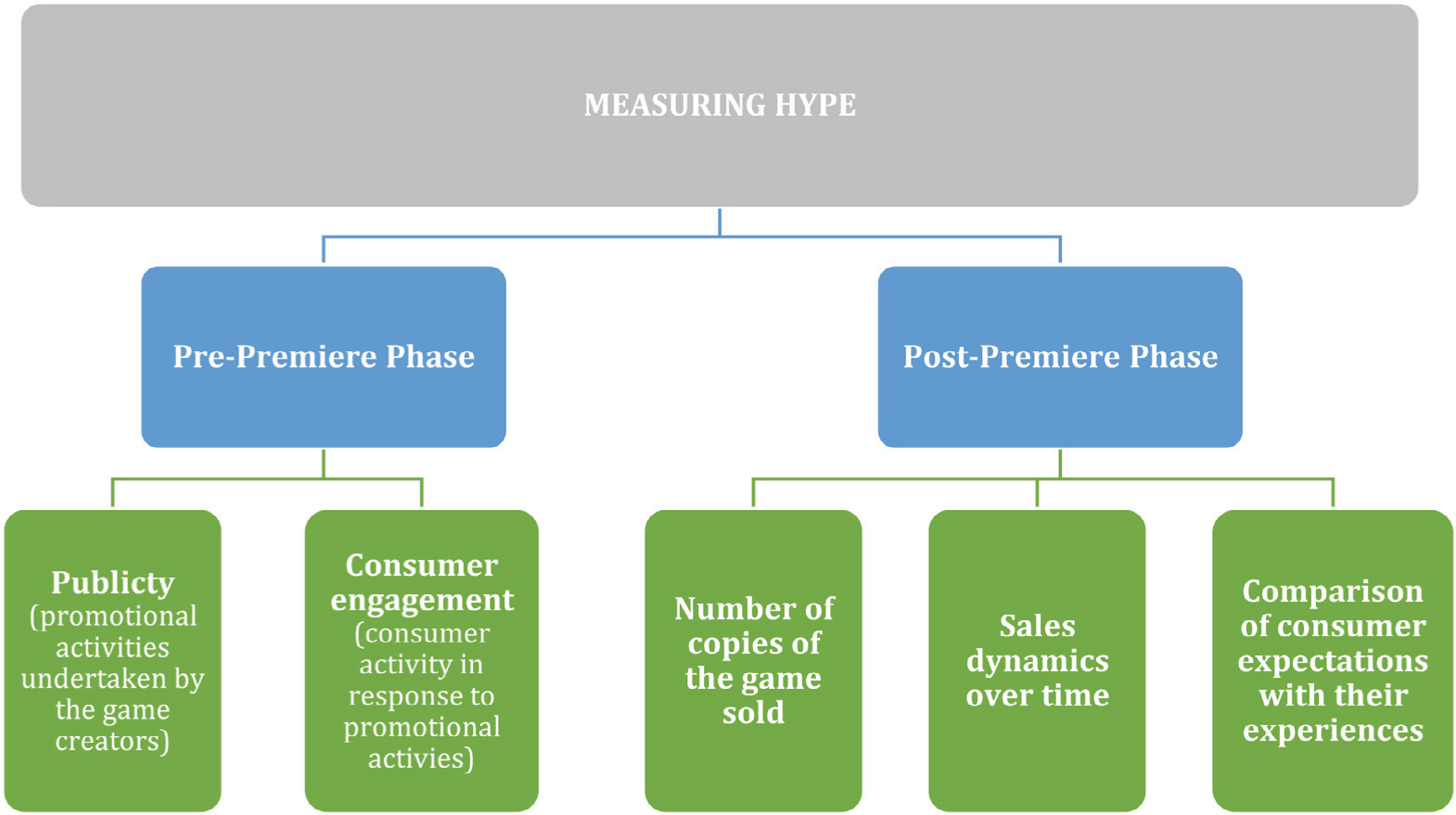
Figure 2.
Ways to measure hype. Source: original compilation.
The marketing metrics proposed in Figure 2 provide a starting point for the empirical operationalization of hype, but it should be noted that data is not always fully available and verifiable. Detailed data on the number of pre-orders, promotional campaign budgets, or the number of game copies sold are sometimes published by game developers themselves, especially in the AAA segment; such information may also be available through industry reports and studies or statistical services such as Statista. Information on public reception, including the number of trailer views, comments, and reactions, is readily available on the developers’ official profiles on major social media platforms (Facebook, YouTube, Instagram, TikTok). In contrast, systematically capturing consumer opinions from thematic forums is much more difficult, as they are dispersed and numerous. Consequently, any attempt to operationalize hype should incorporate both official data as well as indicators derived from observations of consumer activity in the digital space.
The publicity indicator encompasses promotional activities undertaken by game developers, which can be measured by taking into account the costs of creating promotional materials (e.g., trailers) and advertising costs in traditional and digital media, such as television, public spaces, brick-and-mortar stores, and social media. Consumer engagement, in turn, refers to consumer activity in response to these activities and can be measured based on the number of trailer views, the number of reactions and comments on social media, the number of pre-orders and game add-ons, and the frequency of searches for the game title in online search engines. This information, supplemented with data from the post-release phase, including the number of copies sold, sales dynamics over time, and a comparison of consumer expectations with their actual experiences, provides the basis for a broad measurement of hype. In practice, operationalizing this phenomenon requires the integration of both official data and observations of consumer activity in the digital space, which allows for a more holistic approach to the process being analyzed.
Hype is also a dynamic process: it gradually builds, reaches a peak, and then fades away. Discussing the stages of this buildup and decay is essential for explaining why hype persists long after release for some games while rapidly fading for others.
4. The process of creating and dissolving hype on the computer games market
The Gartner Hype Cycle illustrates that hype can be divided into two types: positive hype, which contributes to building a favorable image of a computer game, and negative hype, which reflects consumer disappointment when a highly anticipated title fails to meet expectations or does not resemble what the producer initially promised.
Positive hype most often develops during the pre-release period, when producers control the communication method and intensity of the message. Consumers then engage in online discussions, creating a community centered around a given game. Social media is an important information and communication medium through which hype grows rapidly. It is currently a place for sharing thoughts, feelings, and other tangible and intangible resources with others (Filipek, 2023, p. 134). It is also an environment where numerous trends emerge, viral stories circulate, and various contextual formats are created and replicated by many users. User activity – liking posts, sharing them, commenting – demonstrates the scale of engagement and can easily escalate into emotional reactions, including negative ones. Through this self-activation, consumers may unintentionally become participants in the hype cycle, which further amplifies feelings of excitement and anticipation for a given game.
The peak of inflated expectations typically occurs at launch or a few days thereafter. This is a moment when consumers confront their expectations and perceptions with reality. If the game meets or exceeds expectations, positive hype persists, leading to increased sales. Otherwise, hype quickly descends into disappointment. The market offers numerous examples of both outcomes – games that have significantly disappointed players, as well as titles that have positively surprised them and exceeded initial assumptions.
5. Computer games as the subject of hype – a study of selected market successes and disappointments
In analyzing the presented game examples using the case study method, we can hypothesize that each producer consciously manages hype as a commercialization tool.
One of the most striking examples of hype in the computer game market is GTA VI, originally scheduled for release in the fall of 2025 (Madejski, 2025). Although this game is only in the first phase of the Gartner Hype Cycle, interest in it quickly reached record levels. The game’s first trailer, released on December 5, 2023, was viewed over 90 million times in the first 24 hours – earning it a place in the Guinness Book of World Records for the most views of a computer game trailer within 24 hours of its release (Reymann-Schneider, 2023). Over a year and a half later, on August 5, 2025, the trailer had been viewed over 264 million times, with over 12 million reactions and one million comments.
The GTA series’ popularity stems from its innovative approach to gameplay, blending genres, and creating stories that reflect real-world socio-cultural issues (Everett & Watkins, 2008; Cicchirillo & Appiah, 2014; Tadeo, 2020). GTA VI is projected to reach $3.2 billion in sales in its first twelve months (Statista, 2025a), significantly higher than last year’s highest-grossing film, Inside Out 2 ($1.7 billion in revenue; Zhu, 2025), or the Squid Game series ($900 million; Entrepreneur Middle East Staff, 2025), which also generated hype.
Google Trends data (Google Trends, 2025a) provide further illustration of this dynamic. Entering the phrase “Grand Theft Auto VI” and selecting the period of the last twelve months (i.e., from August 4, 2024 to August 9, 2025), taking into account information from around the world, reveals that GTA VI achieved the highest popularity (i.e., a value of 100) in the week from May 4 to 10. This peak coincided with Rockstar Games’ announcement of a revised release date of May 26, 2026 (Rockstar Games, 2025). Each new communication from the game’s developers triggers increased consumer activity, which suggests further intensification of promotional activities as the release approaches.
A second example of a game whose hype is just beginning (phase I of the Gartner Hype Cycle) as of the writing of this article is The Witcher 4. The previous installment, The Witcher 3: Wild Hunt, achieved global success, selling over 50 million copies between May 18, 2015, and May 2023 (Statista, 2025b), ranking 6th in PC Gamer’s 2024 ranking of the best computer games. In this ranking, games are evaluated based on four weighted categories: quality (how good is it?), importance (how noteworthy is it?), hotness (how exciting is it?), and playability (how playable is it? – Savage, 2024). Given the positive reviews of the previous installment, many consumers are interested in The Witcher 4, as evidenced by the 872,000 views of the first trailer in just two months. The numerous comments (5,506) under the film include: “I need to get my act together, finish projects, raise children, and pay off loans. Because if this comes out, I’ll be gone for a year,” “…it’s so good, it gives me goosebumps and brings tears to my eyes,” and “I’m excited and looking forward to it” (The Witcher, 2024a). Google Trends data (2025b) indicates that the highest interest to date was evident after the announcement of the start of production and the premiere announcement. As new promotional content appears, however, consumer interest can be expected to continue to grow.
The scale of hype is even greater for games produced by well-known developers. A prime example is RDR II, produced by Rockstar Games. In this case, hype remained high both before and after its release. Three trailers for the game (Rockstar Games, 2016–2018) generated a combined total of over 87 million views, 1,300,000 reactions, and 100,000 comments, with the promotional campaign estimated at around $200–300 million (Naresh, 2018). In its first three days of sales, RDR II generated $725 million in revenue, becoming the second-highest-grossing release in entertainment history (Yin-Poole, 2018). By May 2025, 74 million copies of the game had been sold worldwide (Statista, 2025c). Upon release, the game received rave reviews from both players and critics, ensuring that many consumers weren’t disappointed with the long-awaited product. One wrote that “the hype surrounding Red Dead Redemption II and the expectations of its devoted fanbase made me partially believe Rockstar Games would never deliver on all its numerous promises. They did, and they delivered. From the feeling of a truly lived-in world to the emotional connections you build, Red Dead Redemption II is the game of the generation” (Tłuchowski, 2018).
Promotion of RDR II took various forms to encourage as many consumers as possible to purchase it – announcements, trailers, billboards, posters, and displays in brick-and- mortar retail outlets. Examples of such activities are shown in Figure 3.

Figure 3.
Examples of Red Dead Redemption II promotion forms. Source: Google Graphics (2025).
The peak of inflated expectations for RDR II was reached when consumer expectations met their experiences, meaning when they could play the game and form their own opinion. According to the Gartner Hype Cycle, the level of hype should theoretically have declined significantly and turned negative, but in this case, such a shift did not apply. Considering the value of RDR II sales over time, it can be assumed that hype remained positive after reaching the peak of the second phase of the Gartner Hype Cycle, and its magnitude decreased slightly. The period between May and November 2021 could be considered a trough of disappointment, as during this time, RDR II sales growth was not as significant as in other periods. Subsequently, an increase in sales dynamics is visible, which can be interpreted as an enlightenment curve, and a subsequent stabilization of the productivity plateau (Statista, 2025c).
The Gartner Hype Cycle curve for Cyberpunk 2077 developed in a markedly different way than for the previously discussed titles. Before its release, it was considered the most anticipated computer game of 2020 (Escourido-Calvo & Martínez-Fernández, 2022, p. 184). Player expectations were very high from the start, due to CD Projekt’s recent success with The Witcher 3: Wild Hunt. A staggering $131 million was spent on the Cyberpunk 2077 marketing campaign, representing 45% of the game’s entire budget (Siuda et al., 2024). It was such a promising game that it was likened to RDR II or GTA V, and a month before its release, it topped the global Steam Top Sellers list (Kieszek, 2020), which translated into over 8 million pre-orders (Tragarz, 2020).
According to available data, over 13 million copies were sold on the first day of release (or within the first 10 days, depending on the source), making Cyberpunk 2077 one of the most successful releases in history (Statista, 2025d). However, numerous errors and technical shortcomings, manifesting themselves in the form of software crashes or problems with character textures (Escourido-Calvo & Martínez-Fernández, 2022, p. 184), led to a sharp decline in consumer sentiment and thousands of negative reviews. The flood of negative reviews reflected what Siuda et al. (2024) refer to as broken promises marketing, defined as the gap between how a game is positively presented before release and how it ultimately looks at launch. The scale of the disappointment was so great that Poland’s Office of Competition and Consumer Protection intervened, demanding clarification on whether CD Projekt was aware of these errors and what forms of compensation would be offered to consumers (Money, 2021). Only after numerous updates and the release of add-ons did the game regain positive consumer reception – in 2023, three years after launch (Peters, 2023).
The case of Cyberpunk 2077 confirms the hypothesis of this section: that hype can be used by developers as a commercialization tool. CD Projekt’s intensive promotional campaign initially brought the desired effect, i.e., consumers engaged with the game’s community and recorded high pre-release sales. However, unlike RDR II, where the hype remained positive after release, Cyberpunk 2077 experienced a sudden transition to a phase of disappointment. Numerous bugs led to a decline in consumer confidence and a decline in sales, with negative reviews persisting for approximately three years. It was not until after 2023 updates improved the game’s reception that we can identify a phase of enlightenment and a gradual entry into a productivity plateau. If the Gartner Hype Cycle curve for Cyberpunk 2077 had followed a similar pattern to RDR II, total sales could now have reached 40–50 million copies. However, unmet expectations and the game’s image crisis significantly slowed this process.
In order to systematize this analysis, Table 1 presents a comparison of the four games discussed. Across all the analyzed cases, the scale of hype was directly related to the level of promotional expenditures and the intensity of communication activities conducted by the developers. AAA games, such as RDR II and Cyberpunk 2077, were supported by multi-million-dollar promotional budgets, which translated into exceptionally high consumer engagement with the game community, high trailer view counts, and sales volume in the first days after release. Still upcoming releases such as GTA VI and The Witcher 4 exhibit similar mechanisms for generating interest, even though they are still (at the time of writing this article) in the early stages of the Gartner Hype Cycle. Even the first trailers serve as a catalyst for excitement and interaction among consumers. In this way, the innovation trigger phase becomes the foundation for a subsequent rise in expectations, which often leads to sales success.
Table 1.
Comparison of selected hype indicators for chosen computer game titles.
| Game title | Red Dead Redemption II | Cyberpunk 2077 | GTA VI | The Witcher 4 |
|---|---|---|---|---|
| Specification | ||||
| Release date | 26th October 2018 | 10th December 2020 | 26th May 2026 | 2027 at the earliest |
| Budget allocated for advertising activities | Estimated at $200–300 million | About $131 million | Hard to estimate at present, but the entire game (advertising, development, future updates etc.) is expected to cost around $2.5 billion | n.d. |
| Number of game trailer views* | Trailer #1 – nearly 28 million Trailer #2 – over 18 million Trailer #3 – nearly 41 million | Over 26 million | Over 264 million | Over 982,000 |
| Number of pre-orders sold | No data, but over 12 million units were sold in the first three days | About 8 million | n.d. | n.d. |
| Number of copies sold since release | About 75 million | About 30 million | n.d. | n.d. |
| Consumer experience after the premiere | positive | negative | n.d. | n.d. |
1 Source: original compilation based on: Cyberpunk 2077 (2018); Krajewski (2022); The Witcher (2024b) and other sources mentioned in this article.
The collected data therefore indicate that hype is not a spontaneous phenomenon, but rather the outcome of deliberately planned marketing activities with a high degree of commercial focus. In this context, it becomes appropriate to discuss the importance of hype as a commercialization tool in the computer game industry.
6. Hype as a commercialization tool
The use of hype requires game producers to undertake transparent activities and allocate significant financial resources to promotion (Dudić et al., 2016) in order to obtain numerous benefits, the main one of which – from a company perspective – is increased sales revenue. This perspective is consistent with the universal definition of commercialization proposed by Radło et al. (2020, pp. 44–45), who describe it as a process in which something becomes (or is) the subject of market exchange as part of profit-oriented activity. Koszembar-Wiklik (2016, p. 255) further emphasizes that the effectiveness of commercialization depends primarily on the planning and organizing processes, as well as the marketing communication tools used.
Given the scale and visibility of the activities undertaken by game producers when generating hype, it can be assumed that hype functions as a deliberate commercialization tool and a component of broader market strategy. However, exploiting hype at such intensity requires developers to accept a substantial degree of risk (Klimas, 2016). Hype cannot be fully controlled – consumer reactions, expectations, and subsequent behaviors often extend beyond what producers can predict or manage. In promoting a game as flawless or ground-breaking, developers implicitly make promises to consumers, for which they may later be held accountable.
Mismanaging hype, in turn, can carry serious consequences: the loss of consumer trust, reputational damage, and weakened market position. In extreme cases, it may even trigger intervention by institutions tasked with protecting consumer rights. On the other hand, when used skillfully, hype significantly increases the likelihood of expanding the game’s audience and persuading more people to purchase the product, ultimately enhancing commercial success.
7. Factors shaping hype and its importance in the decision-making process
Hype is impossible to overlook. It does not arise spontaneously; rather, it emerges from a combination of factors that both shape the phenomenon and influence consumer decision-making.
Today, consumers absorb vast amounts of information on a daily basis (Luberda, 2024, p. 63). Within this overabundance, content that attracts extensive commentary or engagement particularly stands out. Such visibility triggers consumer curiosity about why a given topic is attracting attention. This, in turn, may generate social pressure or a fear of being excluded from an experience that others might find rewarding. This mechanism is described in the literature as FoMO (Fear of Missing Out; Przybylski et al., 2013, p. 1841). Research indicates that FoMO plays an important role in impulse purchasing (Rachman et al., 2024, p. 120). Carter et al. (2016, p. 586) note that such anxieties can cause consumers to divert from choices aligned with their own goals and values. Consequently, the decision to purchase a highly hyped computer game may not be entirely rational or fully reflective of individual preferences.
Moreover, many consumers strive to be at the center of events, staying up-to-date with world events and available information. Furthermore, becoming involved in game-related events or communities built on hype may help consumers satisfy their need for belonging (Lai et al., 2016, p. 516) and also have a positive impact on their well-being (Carter et al., 2016, p. 586). In the context of hype, the importance of opinions shared between consumers is once again evident: positive reviews increase attractiveness, which may encourage consumers to purchase a given computer game (Wawrowski & Otola, 2020, p. 8). Tobon and García-Madariaga (2021) write that hype, especially online, has a substantial impact on purchasing decisions. Trailers can also encourage consumers to order a computer game before its premiere (Švelch, 2017).
Alha et al. (2019) conducted a survey of 2,612 respondents who had played Pokémon GO (PGO) at least once, analyzing their reasons for starting, continuing, and quitting gameplay. They found that 709 respondents (27.3%) cited the game’s popularity – coded as hype, interest, and expectations – as a factor in their decision to first try PGO. The authors also acknowledged that some respondents had been waiting for the game since they heard pre-release announcements. The most significant motivations, however, were previous experience (43.9%), curiosity (31.3%), and social influence (28.4%) – all cited more often than the game’s popularity. Interestingly, of the 117 respondents, 63 indicated that a particular situation (described by 12 codes, including one referring to declining hype) prompted them to quit playing PGO.
Overall, hype in the computer game market is shaped by promotional activities, consumer engagement in game communities, and trailers – these and other factors can build consumer expectations and also influence decision-making processes. Ultimately, how a hyped computer game is received by consumers depends on the degree of alignment between the actual gameplay experience and the expectations created through hype.
8. Limitations
The research approach and data analysis methods employed in this study entail several limitations. First, the analysis is based solely on information from secondary sources, which makes it difficult to draw precise conclusions due to the lack of empirical data. Furthermore, the analysis utilized data from publicly available and free sources, limiting the scope and level of detail of the information obtained. Consequently, some indicators, such as actual promotional budgets or precise sales data, may be estimates.
Given the conceptual and exploratory nature of this study, further work should focus on empirically validating the proposed model of the phenomenon of hype and collecting primary data that will allow for quantitative verification of its assumptions. Moreover, the case studies included only four computer games, which limits the generalizability of these findings to the entire computer games market. Although the titles presented in this study are representative of the AAA segment and accurately depict the hype phenomenon, from its initiation to its plateau, including other games – even from other segments – could yield additional findings and deepen understanding of the phenomenon under study.
Further research should also consider the mobile gaming market (i.e., games designed for smartphones and tablets), where hype generation may proceed differently due to specific promotional budgets, product lifecycles, and audience communication channels. Supplementing the analysis with this market would facilitate the comparative examination of the different methods of generating interest between computer and mobile games.
Lastly, the computer game market is highly dynamic. Rapid changes in marketing practices, shifts in communication trends, and the increasing role of artificial intelligence in promotional processes may alter the way hype is created and sustained in the future. Consequently, some observations presented here may have limited long-term applicability.
9. Summary
Metaphorically speaking, hype is like a magnificent palace that dazzles from the outside and attracts the attention of many, but it is only after crossing the threshold that we discover what truly lies within. It could be just as magnificent as the exterior, thus fulfilling our expectations, or it could be a complete ruin, burying our lofty imaginations. Drawing on the analysis presented above, it is now possible to address the research question formulated in the introduction, which consisted of two parts and addressed two perspectives: that of the consumer and that of the producer.
From the consumer’s perspective, it certainly isn’t fair to say that hype plays a marginal role in their decision-making processes. Rather, it can significantly influence their decision to purchase a game. Hype generates a certain appealing aura around a computer game, arousing consumers’ curiosity and desire to purchase a specific product. It may entice consumers to want to participate in a major event or be part of a large community. Encouraged by the numerous promises made by the manufacturer and the positive opinions of other consumers, they may feel a fear of missing out on something important, being excluded from a given group, or not being able to experience the game as others are experiencing it. A hype-driven computer game purchase decision may not be fully rational or optimized, as various psychological and social motivations may come into play. Through hype, consumers may gain unique, immersive experiences and feel that they are part of a large community, but they may also feel a sense of wasted money, time, and disappointment.
From the producer’s perspective, hype can indeed be treated as a commercialization tool. Although only part of the process is controllable, producers still consciously manage hype, determining where, how, with what frequency and intensity, and what marketing communication tools will be used. These activities require financial investment, planning, and organizational effort. In this sense, hype serves both promotional and strategic functions, enabling producers to attract consumers long before a game’s release – through community engagement, brand-building, and pre-order sales. Hype can therefore strengthen competitive advantage and reinforce market position. At the same time, however, developers cannot fully predict or control consumer reactions. Mismanagement of hype risks loss of trust, reputational damage, and reduced sales both for the current title and future releases. Thus, while hype holds considerable commercial potential, it also entails risks that require careful and responsible management.
In summary, hype is a factor that can significantly influence consumer purchasing decisions, while simultaneously functioning as an important component of game developers’ market strategies. On the one hand, it influences consumer emotions and needs, while on the other, it serves as a commercialization tool that – if managed prudently – can significantly build a competitive advantage.