
Citrus (Citrus spp.) is one of the most widely cultivated fruit crops worldwide, grown in over 140 countries (United States Department of Agriculture, 2012). In 2024, global citrus production reached 165.6 million metric tons. Iran ranks among the top ten citrus-producing countries, with 124,664 ha under cultivation and an annual production of 4.08 million tons (Food and Agriculture Organization of the United Nations, 2026). Within Iran, Fars Province, located in the south, is the second-largest citrus-producing region after Mazandaran Province in the north (Figure 1), contributing approximately 24.5% of national citrus production (Ahmadi et al., 2021). The “citrus belt” of Fars Province with the counties Kazerun, Shiraz, Ghir, Jahrom, Fasa, and Darab produces over 94% of the province’s citrus yield, with Jahrom County alone accounting for nearly 42% of the provincial output (Fars Agricultural Jihad Organization, 2020).
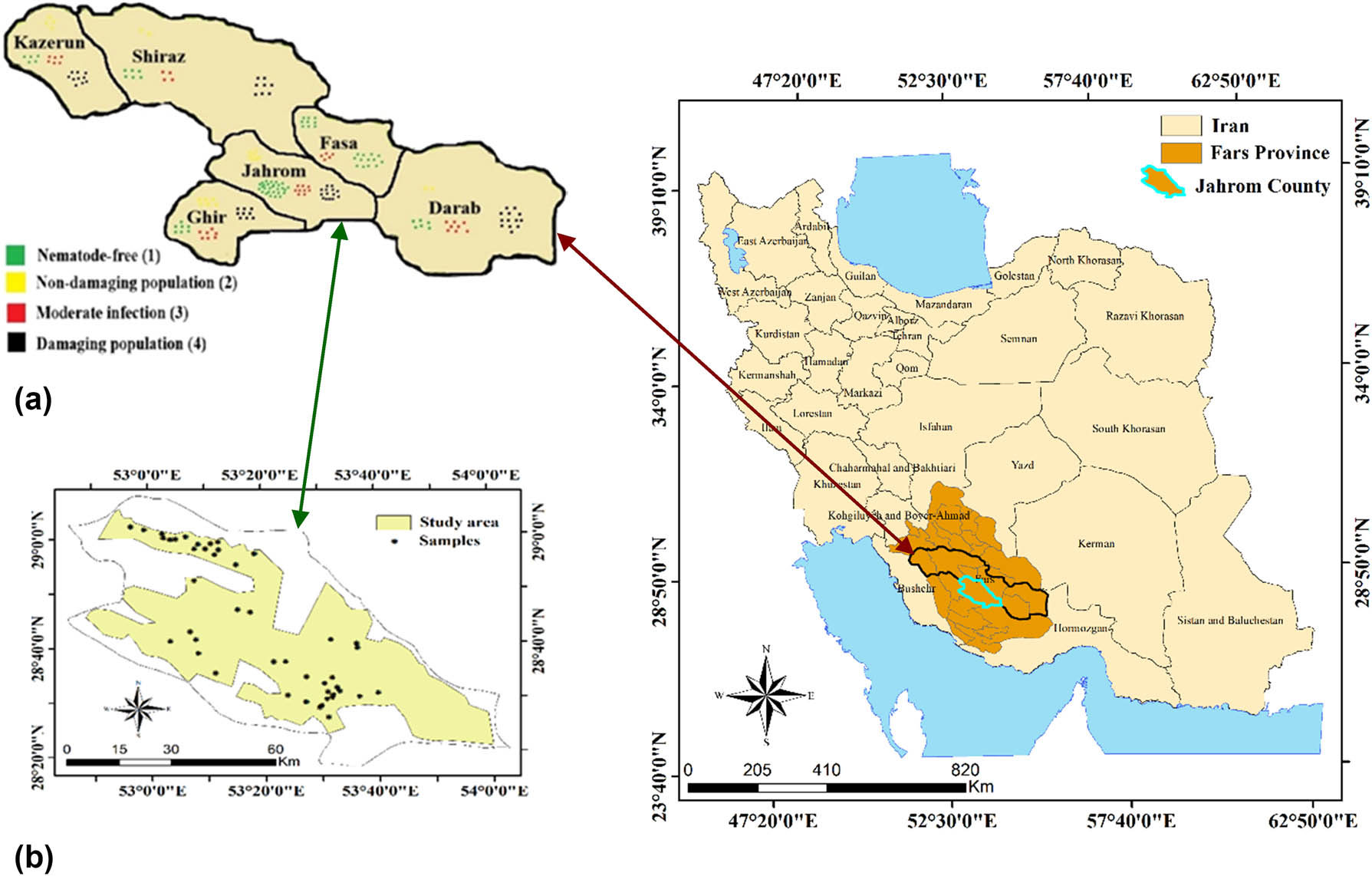
Figure 1
Sampling sites in citrus-growing regions of Fars Province, southern Iran. (a) Provincial survey of 189 orchards across the major citrus-producing areas collectively known as the “citrus belt” (Kazerun, Shiraz, Ghir, Jahrom, Fasa, and Darab). (b) Focused survey in Jahrom County involving 46 orchards. Scores of 1, 2, 3, and 4 correspond to nematode-free (0), nondamaging (<800 males and J2), moderate (800–3,600 males and J2), and damaging (>3,600 males and J2) densities per 100 cm3 soil, respectively.
Among the major threats to citrus production, the citrus nematode Tylenchulus semipenetrans Cobb, 1913 is considered one of the most economically important plant-parasitic nematodes (PPNs) worldwide (Timmer et al., 2000; Duncan, 2005). In Iran, T. semipenetrans has been reported from both southern (Izadpanah & Safarian, 1968) and northern (Katcho & Allow, 1969; Tanha Maafi & Damadzadeh, 2008) citrus-growing regions. The nematode is widespread in southern provinces including Khuzestan (Izadpanah & Saffarian, 1968; Minassian & Moadab, 1970), Kohgilouyeh va Boyerahmad (Abiverdi et al., 1970; Salahi Ardakani et al., 2014), Hormozgan (Tanha Maafi & Kheiri, 1991), Kerman (Rashidifard et al., 2015), and Fars (Abiverdi et al., 1970; Sharafeh, 1972; Ayazpour & Ghanaatian, 2004). Nematode incidence in Hormozgan Province and Shahdad County (Kerman Province) has been reported as 52% and 90%, respectively (Tanha Maafi & Kheiri, 1991; Rashidifard et al., 2015). Notably, 100% infestation was observed in sampled orchards of Jahrom County, Fars Province (Ayazpour & Ghanaatian, 2004).
Population dynamics studies of T. semipenetrans in southern Iran have revealed variable seasonal peaks in soil nematode density (males and second-stage juveniles [J2]), including May to July and September in Hormozgan (Tanha Maafi & Kheiri, 1991), autumn in Kerman Province (Rashidifard et al., 2015), October in Khafr, Fars Province (Sharafeh, 1972), and late May and November to December in Fasa County, Fars Province (Rumiani et al., 2025). T. semipenetrans can complete its life cycle in approximately 2 months (Van Gundy et al., 1964), potentially producing multiple peaks annually. However, environmental conditions, seasonal carbohydrate availability in roots, and plant phenology may limit the number of life cycles (Duncan & Eissenstat, 1993; Rumiani et al., 2025).
Currently, three biotypes of T. semipenetrans are recognized: Citrus, Mediterranean, and Poncirus. These biotypes differ in reproductive compatibility with differential host plants (Baines et al., 1969, 1974; Lamberti et al., 1976; O’Bannon & Ford, 1977; Inserra et al., 1980; Inserra et al., 1994). The Citrus biotype infects citrus species, olive (Olea europaea L.), and grapevine (Vitis vinifera L.), but reproduces poorly on trifoliate orange (Poncirus trifoliata (L.) Raf.). The Mediterranean biotype has a similar host range but does not infect olive, whereas the Poncirus biotype infects citrus, trifoliate orange, and grapevine, but not olive. Accurate identification of biotypes is essential for nematode management, rootstock selection, and breeding programs.
In addition to host plants, soil physical and chemical properties significantly influence nematode distribution and population dynamics (Castro et al., 1990; Cardoso et al., 2012). Soil parameters such as texture, pH, salinity, organic matter content, and land-use practices affect both nematode abundance and host plant health (Van Gundy & Martin, 1962; Mashela et al., 1992a, 1992b; Boogert et al., 1994; Gorres et al., 1999; Kabata-Pendias, 2000; Sharma et al., 2005; Fajardo et al., 2011; Carvalho et al., 2025). Although T. semipenetrans can survive in various soil types, moderate levels of clay and silt favor its population development (Van Gundy et al., 1964; Davide, 1971; Bello et al., 1986).
Precision agriculture is an important component of Integrated Pest Management (IPM). IPM is a sustainable approach that combines various pest management techniques, including biological control, cultural practices, and, when necessary, chemical pesticide application. In this context, Geographic Information Systems (GIS) enable spatial analysis of complex relationships, including those between soil properties and PPN abundance (Joshi et al., 2004; Arnaudova & Bileva, 2011). GIS facilitate the collection, visualization, and analysis of georeferenced data, revealing spatial patterns shaped by environmental and geographic factors (Seif-Ennasr et al., 2020).
Classifying citrus-growing areas by nematode population density and damage thresholds is critical. These thresholds represent the point at which nematode density causes significant yield reduction and are influenced by the nematode aggressiveness, soil properties, environmental conditions, temporal variation, sampling time, management practices, plant susceptibility, and the presence of other soil-borne pathogens (Labuschagne & Kotze, 1988; Le Roux, 1995; Duncan, 1999; Mashela & Nthangeni, 2002; Sorribas et al., 2008). General threshold ranges reported in previous studies suggest that T. semipenetrans densities below 800 J2 and males per 100 cm3 soil are considered nondamaging, whereas densities of 800–3,600 J2 and males per 100 cm3 soil may cause subdamaging effects. Populations exceeding 3,600 J2 and males per 100 cm3 soil are generally associated with measurable root damage (Garabedian et al., 1984; Duncan, 2005). Because nematode populations in soil fluctuate seasonally, damage thresholds are also expressed in terms of female populations per gram of roots, typically ranging from 100 to 700 females per gram of infested roots (Garabedian et al., 1984; Le Roux, 1995; Sorribas et al., 2008). However, the spatial distribution of fibrous roots is highly variable in soil, and many samples may lack feeder roots.
Despite previous studies on soil–nematode interactions, a comprehensive assessment of T. semipenetrans populations in relation to soil properties across Fars Province is still lacking, and detailed spatial mapping of its distribution has not yet been conducted. The present study addressed this gap by characterizing nematode population densities and examining their relationships with soil properties in the region. Furthermore, this study integrates machine learning (ML) and GIS-based spatial modeling to predict nematode distribution and identify key environmental drivers. In particular, Random Forest (RF) algorithm was applied as a robust ML method capable of handling complex ecological datasets and identifying important predictors of spatial variability (Breiman, 2001; Niu et al., 2024). This approach provides a data-driven framework for risk zoning and targeted management strategies in citrus orchards. Therefore, the objectives of this study were to (i) quantify T. semipenetrans population densities in citrus orchards of Fars Province; (ii) determine the nematode biotype(s) based on host differential assays; and (iii) analyze the relationship between soil physicochemical properties and nematode distribution in the Jahrom region using GIS and ML approaches.
1. Materials and methods
1.1. Study area and sampling
The study consisted of two distinct sampling surveys. The first survey included 189 orchards across the major citrus-growing areas of Fars Province, collectively known as the “citrus belt,” including the counties Jahrom, Darab, Ghirokarzin, Kazerun, Fasa, and Shiraz. The second survey focused exclusively on Jahrom and employed a previously optimized sampling method (Rumiani et al., 2021) to investigate the relationships between soil properties and citrus nematode population densities in 46 orchards. In both surveys, each orchard was sampled only once.
In the first survey, 189 soil and root samples were collected across major citrus-growing areas of Fars Province to represent spatial variation in orchard conditions. Sampling was conducted in Jahrom (59 orchards), Darab (29 orchards), Ghirokarzin (29 orchards), Fasa (27 orchards), Kazerun (25 orchards), and Shiraz (20 orchards). Samples were collected from late summer to early autumn 2018 (Figure 1a; Table 1). According to the modified De Martonne classification method, the climate of the citrus belt is relatively uniform and classified as temperate semi-arid (Rahimi et al., 2013; Asefjah et al., 2022). Sampling intensity in each region was proportional to the area under citrus cultivation. Orchards were selected to represent regional variability in citrus cultivars, orchard age, management practices, and irrigation systems. Because one of the primary objectives of this study was to develop a spatial distribution map, sampling locations were selected to represent spatial variation in climate, orchard management, and cultivation characteristics across the region. Trees were sampled along diagonal transects in regularly shaped orchards (e.g., rectangular or square) and along zigzag transects in irregularly shaped orchards. Trees exhibiting symptoms of slow decline associated with T. semipenetrans infestation were preferentially selected (Duncan & Phillips, 2009). PPNs generally follow the distribution of feeder roots within the rhizosphere (Sikora et al., 2018; Perry & Moens, 2013). Citrus fine roots extend beyond the upper soil layers (Castle, 1980) and have been reported at depths ranging from 28 to 68 cm, depending on rootstock and soil conditions (Zheng et al., 2024). Therefore, soil samples were collected beneath the tree canopy at depths of 5–50 cm to capture the main citrus root zone, recognizing that feeder root density varies with depth and soil conditions. The upper 5 cm of soil was removed to eliminate dry surface layers and shallow herbaceous roots. Sampling was performed using a hand trowel. Three subsamples were collected from different locations under each tree canopy and thoroughly homogenized to form a single composite sample. Approximately 2 kg (1,550 cm3) soil was collected per composite sample, placed in labeled plastic bags, and transported to the laboratory. Nematode extraction and counting were subsequently performed for each composite sample (Table 1).
Table 1
Distribution of Tylenchulus semipenetrans in citrus orchards of Fars Province, Iran, from late summer to early autumn 2018
| Citrus producing regionsa | The number of sampling localities by nematode scoresb | Total samples | |||
|---|---|---|---|---|---|
| Nematode-free (1) | Nondamaging population (2) | Moderate infection (3) | Damaging population (4) | ||
| Jahrom | 28 | 8 | 9 | 14 | 59 |
| Darab | 6 | 2 | 8 | 13 | 29 |
| Ghirokarzin | 7 | 6 | 7 | 9 | 29 |
| Fasa | 9 | 0 | 5 | 13 | 27 |
| Kazerun | 5 | 4 | 6 | 10 | 25 |
| Shiraz | 6 | 2 | 4 | 8 | 20 |
| Total samples | 61 | 22 | 39 | 67 | 189 |
In the second survey, 46 orchards in Jahrom were selected to represent the full gradient of nematode infestation levels and soil variability observed in the preliminary survey, ensuring balanced representation of infested and noninfested sites for modeling purposes (Figure 1b; Table 2). Orchards were selected to ensure an even spatial distribution across the region, and the GPS coordinates (latitude and longitude) of each site were recorded using a Garmin eTrex 32x handheld device (Olathe, KS). Most orchards were drip irrigated and planted with trees spaced 5 × 6 m apart (Table 2). Soil sampling involved two composite samples per tree: one from the inner zone (A) and one from the outer zone (B), located on opposite sides of the irrigation dripline. The inner zone consisted of four subsamples collected approximately 60 cm from the tree trunk, whereas the outer zone consisted of six subsamples collected approximately 150 cm from the trunk. Subsamples were taken from soil at a depth of 0–30 cm beneath the tree canopy, corresponding to the active citrus roots where T. semipenetrans are typically most abundant (Davis, 1984; Duncan et al., 1994a; Abd-Elgawad, 2021; Rumiani et al., 2021). Subsamples from each zone were thoroughly mixed to form a composite sample, and approximately 2 kg (1,550 cm3) soil was collected for each composite sample. The composite samples were placed in separate labeled bags. The average nematode population obtained from the two composites was used as the final value for each tree (Rumiani et al., 2021). The same composite samples were subsequently submitted to a certified soil testing laboratory for detailed physicochemical analysis.
Table 2
Geographic coordinates, Tylenchulus semipenetrans population densities, and nematode damage scores in citrus orchards in Jahrom County, Fars Province, Iran
| Soil Sample codes | GPS location | Nematode countsa | Nematode population scoresb | Soil Sample codes | GPS location | Nematode counts | Nematode population scores | ||
|---|---|---|---|---|---|---|---|---|---|
| Latitude (N) | Longitude (€) | Latitude (N) | Longitude (€) | ||||||
| 1 | 28.669278 | 53.606233 | 10,200 | 4 | 24 | 28.657221 | 53.608646 | 5,805 | 4 |
| 2 | 29.035991 | 52.948343 | 4,370 | 4 | 25 | 28.685277 | 53.059892 | 195 | 2 |
| 3 | 29.026267 | 52.989052 | 8,120 | 4 | 26 | 28.689224 | 53.135475 | 30,908 | 4 |
| 4 | 29.013814 | 53.041493 | 3,335 | 3 | 27 | 28.713066 | 53.118763 | 11,843 | 4 |
| 5 | 29.000878 | 53.044644 | 75 | 2 | 28 | 28.685308 | 53.059835 | 0 | 1 |
| 6 | 28.995715 | 53.064851 | 1,700 | 3 | 29 | 28.646726 | 53.142337 | 0 | 1 |
| 7 | 28.996655 | 53.081414 | 10,125 | 4 | 30 | 28.585194 | 53.191659 | 1,538 | 3 |
| 8 | 29.003597 | 53.110989 | 2,835 | 3 | 31 | 28.514193 | 53.402093 | 1,755 | 3 |
| 9 | 28.967092 | 53.135956 | 730 | 2 | 32 | 28.493349 | 53.454955 | 173 | 2 |
| 10 | 28.980327 | 53.147542 | 0 | 1 | 33 | 28.474944 | 53.494705 | 750 | 2 |
| 11 | 28.986850 | 53.205817 | 555 | 2 | 34 | 28.444957 | 53.519854 | 788 | 2 |
| 12 | 28.916327 | 53.257365 | 2,498 | 3 | 35 | 28.481629 | 53.499258 | 0 | 1 |
| 13 | 28.948801 | 53.312334 | 83 | 2 | 36 | 28.500721 | 53.516178 | 135 | 2 |
| 14 | 28.981959 | 53.184211 | 0 | 1 | 37 | 28.505358 | 53.530622 | 368 | 2 |
| 15 | 28.966185 | 53.168300 | 0 | 1 | 38 | 28.513342 | 53.533937 | 735 | 2 |
| 16 | 28.947530 | 53.194809 | 3,023 | 3 | 39 | 28.523522 | 53.518746 | 255 | 2 |
| 17 | 28.962441 | 53.206915 | 12,483 | 4 | 40 | 28.535712 | 53.546095 | 8,880 | 4 |
| 18 | 28.868347 | 53.133130 | 75 | 2 | 41 | 28.549132 | 53.509364 | 0 | 1 |
| 19 | 28.779141 | 53.259646 | 2,325 | 3 | 42 | 28.567053 | 53.532719 | 0 | 1 |
| 20 | 28.770289 | 53.296342 | 998 | 3 | 43 | 28.570218 | 53.457169 | 83 | 2 |
| 21 | 28.683328 | 53.530932 | 195 | 2 | 44 | 28.618094 | 53.397301 | 0 | 1 |
| 22 | 28.507193 | 53.612112 | 2,700 | 3 | 45 | 28.617202 | 53.362431 | 0 | 1 |
| 23 | 28.518237 | 53.667010 | 0 | 1 | 46 | 28.524671 | 53.553364 | 15 | 2 |
1.2. Nematode extraction, identification, and counting
Soil nematodes, including males and second-stage juveniles (J2), were extracted for 48 h using the tray method (Whitehead & Hemming, 1965). Identification was based on morphological and morphometric characteristics using standard nematode identification keys (Inserra et al., 1988; Tanha Maafi et al., 2012). Morphological features were examined using an Olympus BX41TF compound microscope equipped with a Dino-Capture digital camera (Tokyo, Japan).
The nematode suspension extracted from 100 cm3 soil was thoroughly mixed, and a 1-mL aliquot was withdrawn and counted using a counting dish under a stereomicroscope. This procedure was repeated three times, and the mean value was used to estimate nematode density, expressed as individuals/100 cm3 soil (McSorley et al., 1984; Sorribas et al., 2008). T. semipenetrans population density was defined as the total number of males and J2 per 100 cm3 soil.
To assess the impact of the citrus nematode, a four-point scoring system based on published damage thresholds was used (Ferris, 1978; Garabedian et al., 1984; Philis, 1989; Duncan, 2005). Scores were assigned as follows: 1 = nematode-free (no nematodes); 2 = non-damaging population (<800 nematodes/100 cm3 soil); 3 = moderate infestation (800–3,600 nematodes/100 cm3 soil); and 4 = damaging population (>3,600 nematodes/100 cm3 soil).
1.3. Biotype determination using differential hosts
To determine the biotypes of T. semipenetrans, 19 populations were collected from citrus orchards across Fars Province. These included samples from seven orange (Citrus sinensis L.) orchards, six sour orange (C. aurantium L.) orchards, four sweet lemon (C. limetta Risso) orchards, and two mandarin orange (C. reticulata L.) orchards. Although citrus trees in Fars Province are predominantly grafted onto sour orange rootstocks (Ebadi et al., 2014), orchards were selected to represent the diversity of citrus-growing regions within the province.
To assess nematode reproduction on differential hosts, seeds of sour orange and trifoliate orange were thoroughly washed to remove the gelatinous seed coat and germinated in a 2:1 cocopeat-to-perlite seedbed. Seedlings were maintained in a growth chamber at 25–29°C for 4 weeks before being transferred to pots in a greenhouse. Grapevine (Vitis vinifera cv. Yaghoti) cuttings were rooted in a 2:1 sand-to-field soil mixture in plastic pots under greenhouse conditions (26–34°C). One-year-old olive (Olea europaea cv. Conservalia) plants were obtained from a commercial nursery. The seedlings and rooted cuttings were transplanted into plastic pots with a soil capacity of 3.5 kg (15 cm height × 12 cm diameter), filled with a pasteurized (70°C heat treatment) 1:2 field-soil to sand mixture. Three-month-old citrus seedlings and rooted grapevine cuttings and 1-year-old olive plants were inoculated. Soil naturally infested with T. semipenetrans representing each of the 19 populations was homogenized and used for inoculation. To determine the initial nematode density, three independent 100-cm3 subsamples were taken from each homogenized soil, and nematodes were extracted using the tray method and counted in triplicate. The amount of infested soil added to each pot was adjusted to provide approximately 5,000 T. semipenetrans J2 and males/kg soil. The inoculum was applied uniformly around the root zone and gently incorporated into the upper soil layer to ensure even distribution. Each T. semipenetrans population/differential host combination was replicated four times.
Plants were maintained in a greenhouse for 8 months at 26–34°C and 40–60% relative humidity under natural seasonal photoperiod conditions without supplemental lighting. Plants were irrigated every four days and received standard NPK fertilization through irrigation during plant growth. At the end of the experiment, soil nematodes were extracted using the tray method, and roots were stained with acid fuchsin followed by clarification in acidified glycerol to visualize the nematodes (Eisenback & Hunt, 2021). Biotypes were determined based on nematode reproduction on the differential hosts.
1.4. Data analysis
A total of 189 soil samples were used to assess the spatial distribution of T. semipenetrans, whereas 46 samples collected from Jahrom County were used to examine the relationships between nematode population density and soil physicochemical properties. Soil and nematode data were recorded and organized using Microsoft Excel 2013 (Table 2; Supplementary Table S1). Distribution maps were generated for soil texture, potassium, calcium carbonate, magnesium, iron, copper, manganese, zinc, organic matter, and nematode populations (Figures 2–4).
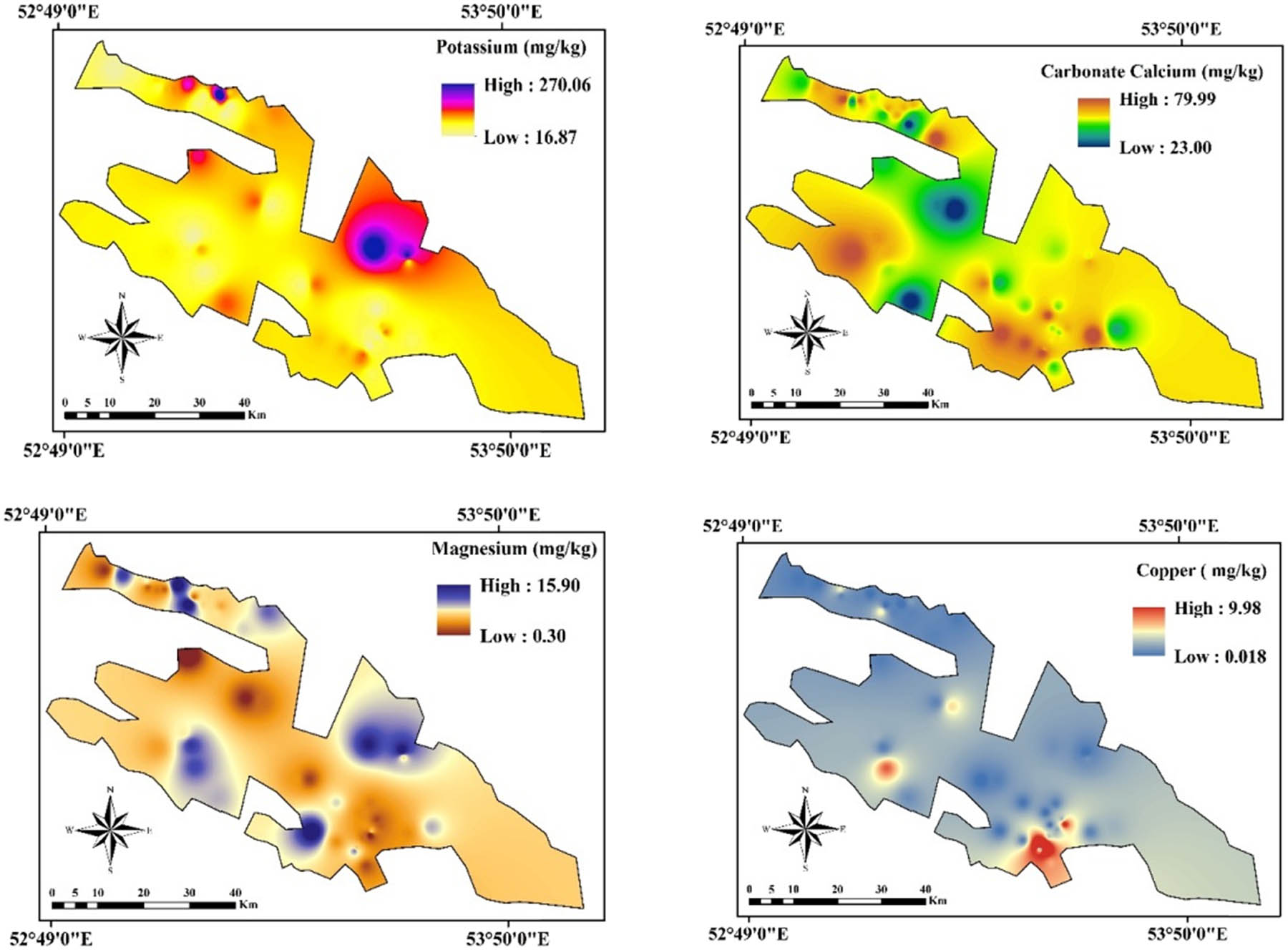
Figure 2
GIS-based spatial distribution maps of soil potassium, calcium carbonate, magnesium, and copper in citrus orchards of Jahrom County, Fars Province.
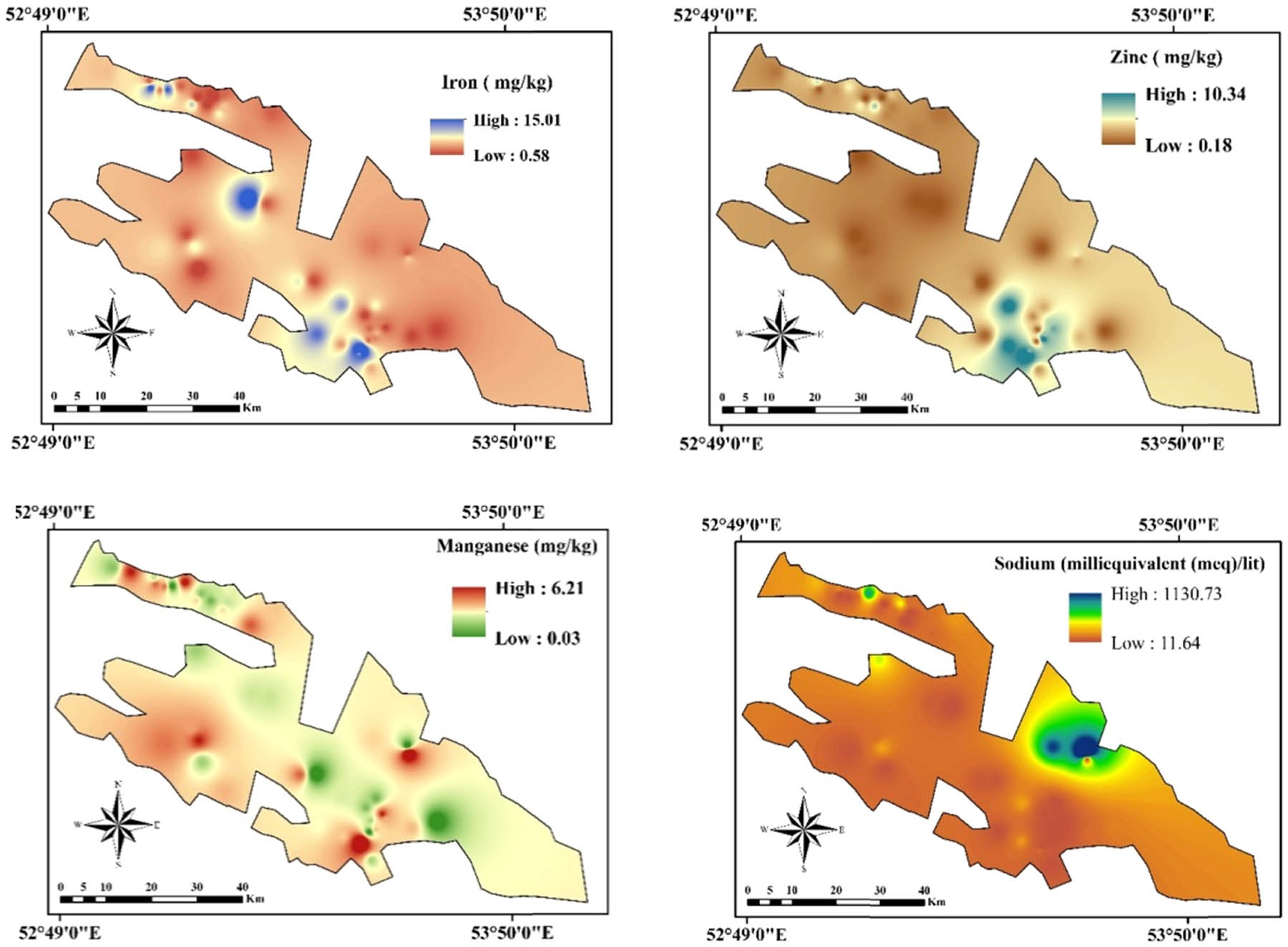
Figure 3
GIS-based distribution maps of soil iron, zinc, manganese, and sodium in citrus orchards of Jahrom County, Fars Province.
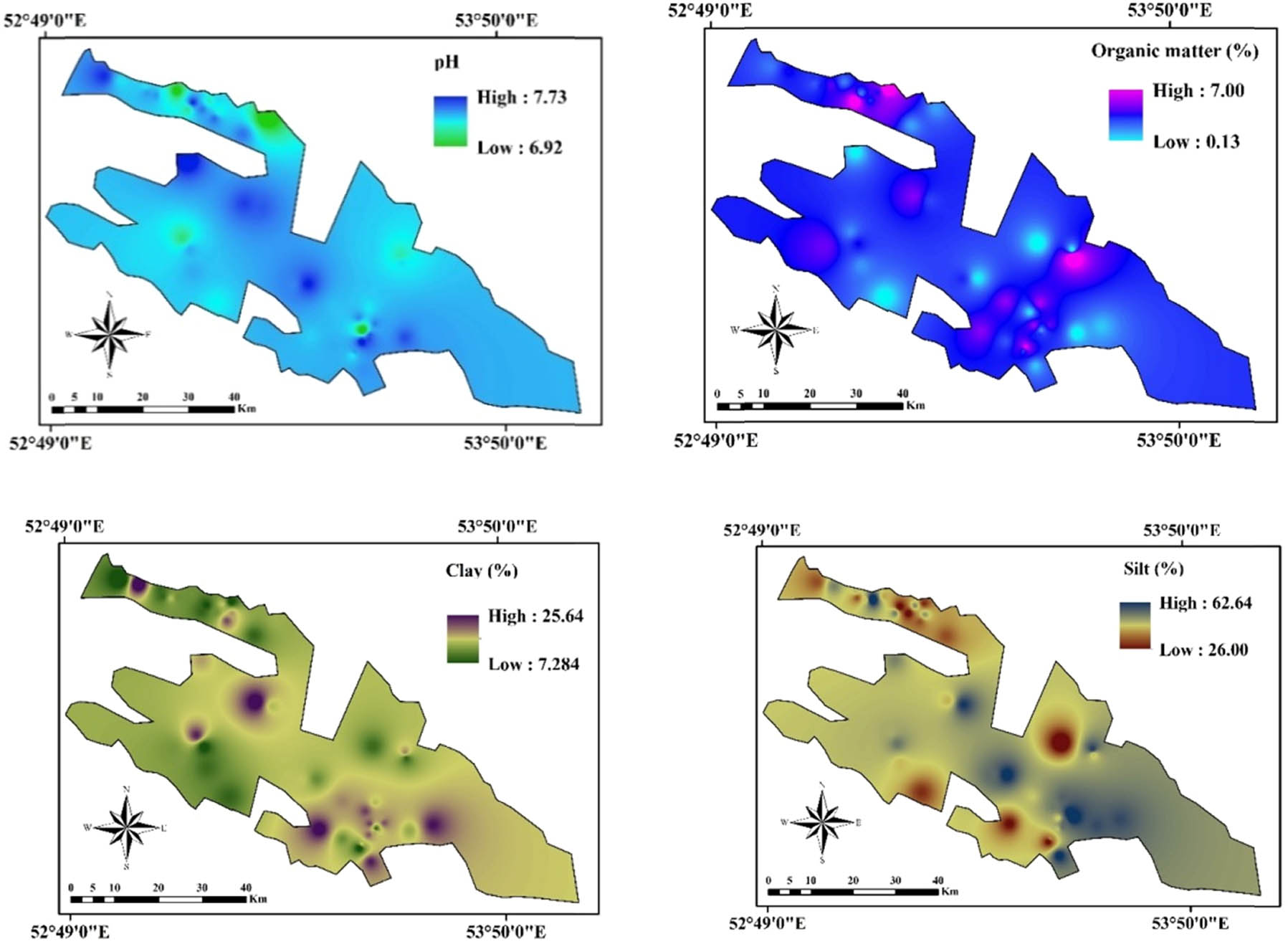
Figure 4
GIS-based spatial distribution maps of soil pH, organic matter, clay, and silt in citrus orchards of Jahrom County, Fars Province.
Spatial interpolation of soil parameters was performed using ArcGIS 10.3 and the inverse distance weighting (IDW) method to visualize spatial variation in soil properties across the study area (Shepard, 1968; Li & Heap, 2014; Benmoshe, 2025). It should be noted that IDW interpolation assumes gradual spatial variation and may not fully capture abrupt changes in heterogeneous orchard environments. The RF ML algorithm was used to identify the soil properties most strongly associated with T. semipenetrans population density in citrus orchards of Jahrom County. RF was applied to explore associations between soil properties and T. semipenetrans population density and to identify variables contributing most to model prediction (Breiman, 2001; Biau, 2012). In addition, RF provides variable importance metrics that support interpretation of the relative contribution of environmental factors to model predictions.
Model performance was evaluated using the coefficient of determination (R 2), mean squared error (MSE), root mean square error (RMSE), bias, and concordance index based on cross-validated predictions. Spatial distribution maps of soil properties were generated using ArcGIS 10.3 with IDW interpolation, while the RF model was applied separately to evaluate the relationship between soil variables and nematode population density.
2. Results
2.1. Provincial survey
Preliminary soil sampling across 189 citrus orchards in Fars Province revealed the presence of T. semipenetrans in 128 orchards (67.7%). Sixty-one orchards (32.3%) were nematode-free, 22 orchards (11.6%) had low (1–800 nematodes/100 cm3 soil), 39 orchards (20.6%) had moderate (800–3,600 nematodes/100 cm3 soil), and 67 orchards (35.4%) had high (more than 3,600 nematodes/100 cm3 soil) population densities. The highest percentages of heavily infested orchards were recorded in Fasa (48%), Darab (45%), Kazerun (40%), Shiraz (40%), Ghirokarzin (31%), and Jahrom (24%). In contrast, nematode-free orchards were most frequently observed in Jahrom (47%), followed by Fasa (33%), Shiraz (30%), Ghirokarzin (24%), Darab (21%), and Kazerun (20%) (Table 1).
2.2. Study in Jahrom County
Among the 46 soil samples collected from Jahrom County, 25 soils were classified as loam (the dominant soil texture), 11 as silt loam, 9 as sandy loam, and 1 as clay loam based on physical and chemical analyses. The measured ranges of soil properties were as follows: organic matter, 0.1%–7%; pH, 6.9–7.7; electrical conductivity (EC), 1.1–9.2 dS/m; phosphorus, 5–100 mg/kg; potassium, 17–270 mg/kg; calcium carbonate (CaCO3), 23–80 g/kg; calcium, 2.4–24 mg/kg; magnesium, 0.3–15.9 mg/kg; sodium, 12–1131 meq/L; zinc, 0.2–10.3 mg/kg; iron, 0.6–15 mg/kg; copper, 0.0–10 mg/kg; and manganese, 0.0–6.2 mg/kg. Considerable variation was observed among sampling sites in key soil properties, including pH, EC, organic matter content, and macronutrient and micronutrient levels (Supplementary Table S1).
Among the 46 sampled orchards in Jahrom County, 11 orchards were assigned a score of 1 (no nematodes), 16 a score of 2 (1–799 nematodes/100 cm3 soil), 10 a score of 3 (800–3,600 nematodes/100 cm3 soil), and 9 a score of 4 (more than 3,600 nematodes/100 cm3 soil) (Table 2).
Distribution maps illustrating variation in soil properties, including potassium, calcium carbonate, magnesium, copper, iron, zinc, pH, manganese, sodium, organic matter, clay, and silt, were generated (Figures 2–4). Distinct patches or hotspots observed in these maps indicate a heterogeneous spatial distribution of soil properties that may influence nematode abundance. These findings provide a spatial reference for identifying areas with potentially favorable or unfavorable soil conditions for nematode development.
The GIS-based distribution map of T. semipenetrans density revealed spatial variation in predicted nematode pressure across the study area (Figure 5). According to the legend, darker red regions represent zones with the highest nematode densities (>3,600 males and J2/100 cm3 soil), whereas lighter-colored areas (blue and yellow) indicate lower predicted nematode densities, including sites where nematodes were not detected during field sampling. The spatial clustering of high-risk areas suggests environmental or agronomic factors may be associated with nematode reproduction and distribution. According to the spatial modeling results, higher predicted nematode densities were observed in the Khafr and central Jahrom regions, which are known for intensive citrus seedling production (Figure 5).
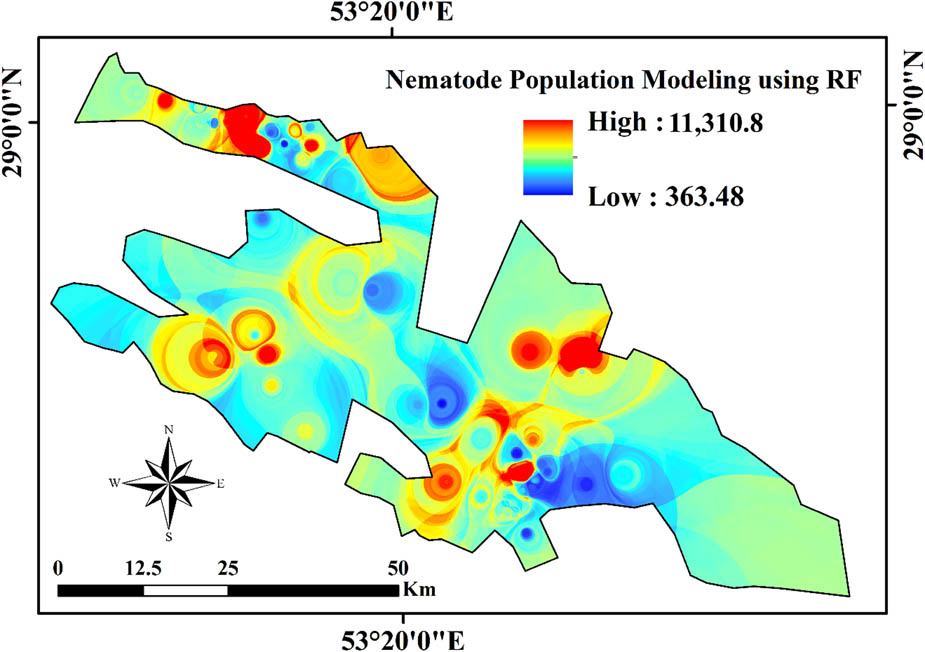
Figure 5
Spatial distribution model of Tylenchulus semipenetrans in citrus orchard soils of Jahrom County, Fars Province, using the Random Forest (RF) machine learning algorithm.
ML analysis using the RF algorithm (implemented in Edge.RF.Exp) provided a robust framework for identifying the most important soil properties influencing T. semipenetrans population densities in citrus orchards (Figure 6). The model diagnostics (R 2 = 0.826; MSE = 10,501,925; RMSE = 3,240.67; Bias = 215.31) indicated that the RF model generated reliable predictions of nematode density based on soil properties. The obtained R 2 value (0.826) indicates good model performance for ecological field data, where moderate noise and environmental heterogeneity are expected. Variable importance was assessed using the percentage increase in mean square error (%IncMSE), which reflects the reduction in model accuracy when a variable is randomly permuted; higher values indicate a greater influence on nematode distribution.
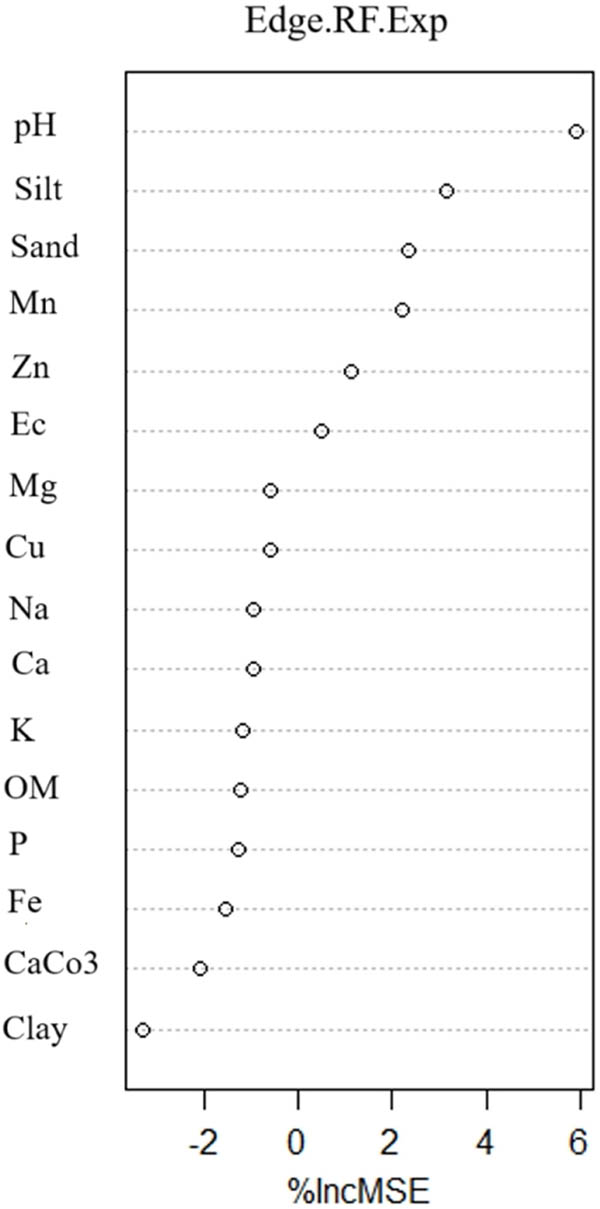
Figure 6
Relative importance of soil physicochemical properties influencing the distribution of Tylenchulus semipenetrans in citrus orchard soils of Jahrom County, Fars Province, based on Random Forest (RF) model. Soil variables included pH, silt, sand, manganese, zinc, EC, magnesium, copper, sodium, calcium, potassium, organic matter, phosphorus, iron, calcium carbonate, and clay. Edge.RF.Exp refers to the experimental RF model used to evaluate the effects of soil properties within the defined study area. “%IncMSE” represents the percentage increase in the mean squared error (MSE) following random permutation of each variable, higher values indicate greater influence on nematode distribution.
The results identified soil pH, silt content, sand content, and Mn as the most influential predictors of T. semipenetrans distribution in Jahrom County, as these variables exhibited the highest %IncMSE. In contrast, clay content and calcium carbonate levels showed the lowest %IncMSE values, suggesting a comparatively minor effect on nematode abundance (Figure 6).
2.3. Biotype identification study
Eight months after inoculation on differential host plants (olive, grapevine, sour orange, and trifoliate orange), the population density of T. semipenetrans ranged from 0 to 21,160 J2/100 cm3 soil (Table 3). Greenhouse trials confirmed that all tested populations (100%) reproduced on citrus but showed limited reproduction on the other differential hosts. The lowest reproduction rates were observed in olive and trifoliate orange, whereas similarly low densities were observed on grapevine (0–735 nematodes/100 cm3 soil). These findings are consistent with characteristics previously reported for the Mediterranean biotype, which reproduced poorly on olive and trifoliate orange.
Table 3
Reproduction of 19 Tylenchulus semipenetrans populations on differential host plants [olive (Olea europaea), grapevine (Vitis vinifera), sour orange (Citrus aurantium), and trifoliate orange (Poncirus trifoliata] 8 months after inoculation
| Population codes | Nematode counts on differential hosts 8 months after inoculationa | |||
|---|---|---|---|---|
| Olive | Grapevine | Sour orange | Trifoliate orange | |
| 411 | 0 | n.d. | 310 | 0 |
| 828 | 0 | n.d. | 2,200 | 0 |
| 830 | 0 | n.d. | 4,410 | 0 |
| 835 | 0 | n.d. | 2,820 | 0 |
| 843 | 0 | n.d. | 560 | 0 |
| 898 | 0 | n.d. | 1,500 | 0 |
| 908 | 75 | 120 | 2,100 | 0 |
| 921 | 90 | 735 | 9,315 | 0 |
| 942 | 45 | 105 | 5,505 | 15 |
| 969 | 0 | 0 | 220 | 0 |
| 993 | 30 | 90 | 5,115 | 75 |
| 1001 | 0 | 70 | 510 | 105 |
| 1033 | 0 | 90 | 135 | 0 |
| 313 A | 0 | 0 | 1,550 | 0 |
| 37 A | 0 | 0 | 780 | 0 |
| 411 A | 0 | n.d. | 3,240 | 0 |
| 42B | 0 | n.d. | 2,460 | 0 |
| AA-1 | 75 | n.d. | 21,160 | 0 |
| Gre P | 0 | 0 | 8,220 | 30 |
3. Discussion
Developing an effective IPM strategy for PPNs requires an understanding of population dynamics and the influence of soil physicochemical properties on their spatial distribution (Goodell & Ferris, 1981). In the present study, 68% of soil samples from citrus orchards in Fars Province were infested with T. semipenetrans, indicating widespread regional occurrence. The broad distribution of T. semipenetrans across the surveyed area is consistent with multiple dispersal pathways reported for citrus orchards, including movement of infected nursery seedlings (Duncan et al., 1994b; Timmer et al., 2000), contamination via soil, irrigation water, and agricultural equipment (Tarjan, 1956; Inserra et al., 2005), use of surface irrigation systems (Cohn et al., 1976; Duncan et al., 1995), and episodic flooding events (Asrari & Masoudi, 2010; Rumiani et al., 2024). These factors collectively likely explain the extensive regional dispersal, consistent with previous reports (Duncan et al., 1994a). The highest infestation levels in Fasa and Darab counties were likely associated with the use of infected planting material and suboptimal orchard management practices.
Spatial analysis revealed considerable heterogeneity in soil properties across the surveyed area, indicating that local edaphic variation may contribute to nematode establishment and population densities. Higher predicted nematode densities in Khafr and central Jahrom were associated with areas of intensive citrus seedling and nursery production, suggesting that the movement of planting material may play an important role in nematode dissemination. These findings emphasize the importance of spatially explicit data for nematode risk assessment and management (Supplementary Table S1).
Among chemical properties, phosphorus was weakly associated with nematode density, suggesting limited influence under the environmental conditions of this study. In contrast, previous studies on other PPNs reported stronger relationships with phosphorus availability (Carvalho et al., 2025), indicating that nutrient effects may be species and context dependent. Soil pH was the most important predictor in the RF model, with the highest nematode densities observed under slightly neutral to alkaline conditions (pH 7.3–7.5), consistent with the study by Salahi Ardakani et al. (2014). Although earlier studies reported weak or nonsignificant relationships between pH and nematode density (Rashidifard et al., 2015), the present results indicate a strong predictive role of pH under regional conditions. There was no direct association of calcium carbonate with nematode abundance, although indirect effects through pH buffering and collinearity with soil pH in calcareous soils may be important. Overall, soil pH appears to be a more influential driver than CaCO₃ in shaping T. semipenetrans distribution in the study region.
Soil physical and chemical properties strongly influence nematode abundance (Gorres et al., 1999). Consistent with these observations, the RF analysis conducted in the present study identified soil texture as a major determinant of nematode occurrence. Higher populations were associated with soils containing moderate to high sand and silt contents, which likely enhance nematode mobility and root penetration. These findings are consistent with reports that T. semipenetrans and other PPNs are more abundant in lighter-textured soils with greater porosity (Van Gundy et al., 1964; Bello et al., 1986; Cadet et al., 2004). Similarly, higher nematode populations were observed in soils with 40–60% silt content, in agreement with Salahi Ardakani et al. (2014). In contrast, clay content had a weaker effect, likely due to restricted pore space, which limits nematode movement.
Biotype testing confirmed that all of the T. semipenetrans populations reproduced on citrus but had limited or no reproduction on olive and trifoliate orange, consistent with the Mediterranean biotype (Inserra et al., 1980). Reduced reproduction on grapevine compared with earlier reports (Inserra et al., 1994) may reflect regional variation within Mediterranean populations. This interpretation is supported by previous molecular evidence, indicating high haplotype diversity of T. semipenetrans in Fars Province (Rumiani et al., 2024), suggesting possible intraspecific variation.
In conclusion, T. semipenetrans is widely distributed across citrus orchards in Fars Province, likely facilitated by infected planting material and multiple environmental dispersal pathways. Soil texture and pH were the most important predictors of nematode distribution, whereas calcium carbonate and phosphorus had limited effects. Integration of GIS and ML provides a useful framework for identifying high-risk areas and supporting site-specific nematode management in citrus production systems.
Acknowledgements
The authors gratefully acknowledge the financial support of Shiraz University.
Funding information
This research was financially supported by Shiraz University.
Author contributions
Mohammad Rumiani: Investigation, data collection, methodology, writing-original draft. Akbar Karegar: Conceptualization, nematode analysis, supervision, review & editing. Habiballah Hamzehzarghani: Conceptualization, statistical analysis, supervision, review & editing. Hamid Reza Pourghasemi: GIS analysis, supervision, review & editing.
Conflict of interest statement
The submitted research was conducted in the absence of any personal, professional, or financial relationships that could potentially be construed as a conflict of interest.
Data availability statement
The data supporting the findings of this study are available from the first author (mohammad.rumiani68@gmail.com) upon reasonable request.