
The United States floriculture industry is an economically significant sector of specialty crop agriculture, valued at approximately USD 6.69 billion in 2023, and projected to grow at an annual rate of 8% (USDA-NASS, 2024). The industry has also experienced structural expansion, with more than 10,000 floriculture producers operating nationwide and increasing participation by small and regional farms. Pennsylvania and Ohio consistently ranked among the leading states in both number of operations and total sales, highlighting their important role in regional ornamental crop production (USDA-NASS, 2024).
Dahlia (Dahlia hybrida) has emerged as a high-value specialty crop driven by strong demand in both the cut flower and tuber markets. As cut flower, dahlia is particularly suited to local and regional production because its relatively short postharvest lifespan limits long-distance shipping, favoring direct marketing channels such as farmers’ markets, community-supported agriculture programs, and florist partnerships (Burnett et al., 2023). At the same time, the expanding tuber market, supported by commercial growers and home gardeners seeking new cultivars, provides an additional revenue stream through off-season sales of propagation material. Together, the combined cut flower and tuber markets have increased the economic relevance of dahlia within regional floriculture systems, positioning them as a valuable crop for diversified ornamental production in the United States (Burnett et al., 2023).
Dahlia hybrida, a member of the family Asteraceae, belongs to one of the largest and most diverse plant families, comprising more than 14,000 species worldwide (Ciobanu et al., 2021). Dahlia is among the most popular ornamental plants due to their broad adaptability to diverse environmental conditions and extensive phenotypic diversity, including remarkable variation in flower size, color, and morphology. These attributes make dahlia highly valued in the ornamental horticulture industry, particularly as cut flower and landscape plants. Before their widespread cultivation as ornamentals, dahlia held dietary and native medicinal significance for the Aztecs, who utilized their tubers as a source of food and for therapeutic purposes (Santana et al., 2016). Dahlia can be propagated sexually through seeds or vegetatively via tuber division and stem cuttings. Although vegetative propagation enables rapid multiplication and uniformity, it increases the risk of disseminating soilborne pathogens and pests, and limits genetic variability, thereby rendering populations more vulnerable to abiotic and biotic stressors, including plant-parasitic nematodes (PPNs).
PPNs are microscopic, obligate parasites of plants and represent a major constraint to agricultural and horticultural production worldwide, causing estimated losses exceeding USD 100 billion annually (Kantor et al., 2022). Among PPN, root-lesion nematodes (Pratylenchus spp.) are considered one of the most economically damaging groups after root-knot and cyst nematodes (Handoo et al., 2021; Castillo and Vovlas, 2007). One economically important species affecting chrysanthemum (Chrysanthemum sp.) nurseries in Japan is Pratylenchus pseudocoffeae Mizukubo, 1992. This species has also been reported parasitizing several economically important crops, including beans, tomatoes, and lettuce (Uesugi et al., 2012). In the United States, P. pseudocoffeae has a limited documented distribution so far, and only been reported from Florida, where it was recovered from aster (Aster spp., Asteraceae) (Inserra et al., 1998).
Outside the United States, this species has been reported primarily associated with plants belonging to the family Asteraceae in Japan (Mizukubo, 1992), Iran (Deimi et al., 2009), and South Korea (Kim et al., 2016).
In 2023, dahlia growers and homeowners in Ohio and Pennsylvania submitted symptomatic dahlia tubers to their respective plant pest diagnostic laboratories and nematode clinics. During diagnostic examinations, root-lesion nematodes belonging to the genus Pratylenchus were consistently recovered from the infected tubers. Preliminary morphological and molecular analyses identified these nematodes as putative populations of P. pseudocoffeae.
Given the limited documented distribution of P. pseudocoffeae in the United States and the economic importance of dahlia production, accurate identification and pathogenicity assessment of these populations were considered important for ornamental crop management and plant diagnostic programs. Therefore, the objective of this study were to: (i) Characterize populations of P. pseudocoffeae recovered from dahlia tubers submitted to the Ohio and Pennsylvania diagnostics labs by dahlia growers representing the first detection of this species in the Midwestern and Northeastern United States and the first report of dahlia as a natural host; and (ii) Evaluate the pathogenicity of a P. pseudocoffeae population to dahlia under greenhouse conditions.
1. Materials and methods
1.1. Nematode samples
Tuber-derived populations of Pratylenchus spp. were recovered from symptomatic dahlia tubers submitted by commercial producers and home gardeners to The Penn State Plant Disease Clinic and Nematode Diagnostics Laboratory and to The Ohio State University Plant Diagnostic Network. Infected tubers exhibited extensive lesions and necrosis; symptoms consistent with damage caused by migratory endoparasitic nematodes. Infected samples originated from five counties in Pennsylvania (Delaware, Erie, Lancaster, Franklin, and Centre) and four counties in Ohio (Darke, Franklin, Greene, and Cuyahoga). Herein, a nematode population refers to nematodes recovered from each of these counties. Fig. 1 shows the counties of origin of Pratylenchus spp. populations analyzed in this study and their distribution relative to previously reported occurrences of this nematode in the United States.
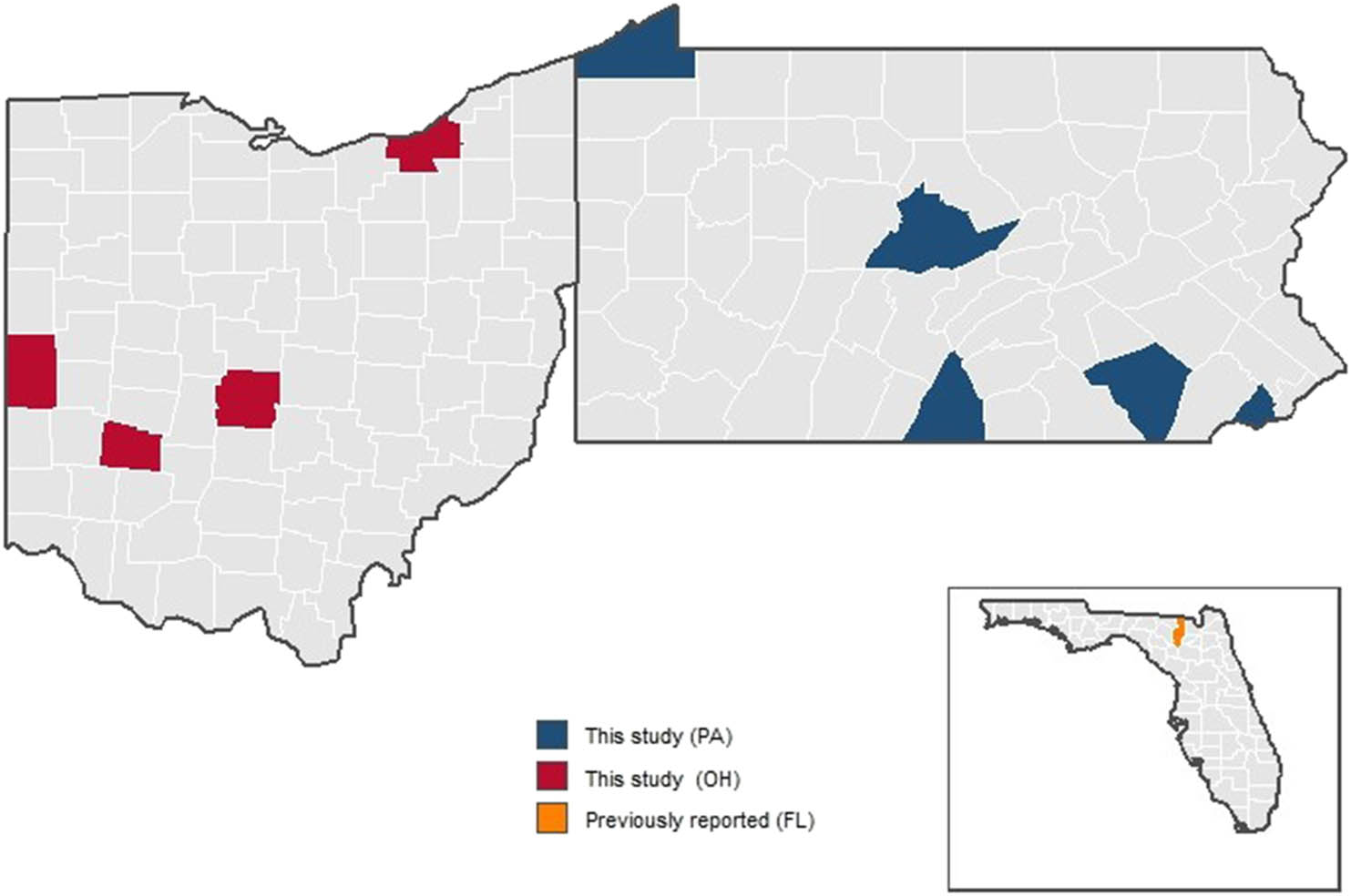
Figure 1
Geographic distribution of Pratylenchus pseudocoffeae in the United States, including new detections in Ohio and Pennsylvania from this study, and a previously reported occurrence in Florida (Inserra et al., 1998).
1.2. Nematode isolation and morphological characterization
Nematodes were extracted from symptomatic dahlia tubers using a modified Baermann tray method from tuber peels or macerated pieces of tubers (Viaene et al., 2021). Individual nematodes were hand-picked under a dissecting microscope and transferred to embryo dishes containing distilled water. Representatives from each population were used for molecular analyses, while one population from Pennsylvania (Franklin County population) and one from Ohio (Cuyahoga County population) were randomly selected for detailed morphological characterization. For morphological observations and morphometric analyses, nematodes were heat-killed and mounted on temporary slides for imaging and measurements. Micrographs were captured using a Zeiss AXIO Imager M2 compound microscope (Carl Zeiss Microscopy GmbH, Jena, Germany) equipped with a Zeiss AxioCam 712 camera. Morphometric measurements were obtained using ZEN Pro software (Carl Zeiss Microscopy GmbH, Jena, Germany).
1.3. Molecular characterization
Genomic DNA was extracted from single specimens from each county population using a modified Proteinase K protocol (Kawasaki 1990; Frey et al.,2022). Briefly, a single nematode was cut into 12 µl of Milli-Q water and transferred to a 0.2 ml PCR tube containing 12 µl of Kawa buffer (10 mM Tris HCl, 1 mM EDTA, 0.5 % Tween 20, 50 μg/ml Proteinase K, pH 8.0). Samples were centrifugated for 1 min at 1,400 rpm, incubated at 37°C for 30 min and 94°C for 2 min, followed by a centrifugation at 1,400 rpm for 1 min. DNA samples from Greene, Franklin, and Cuyahoga counties (Ohio), were obtained using Worm Lysis protocol (Williams et al., 1992).
Two loci of the ribosomal DNA (rDNA) were amplified and Sanger sequenced. The D2-D3 expansion of the large rDNA subunit (LSU; 28S) was amplified using the D2A (5′-ACA AGT ACC GTG AGG GAA AGT TG-3′) and D3B (5′ – TCG GAA GGA ACC AGC TAC TA – 3′) primers as described by De Ley et al. (2005). The internal transcribed spacer (ITS) region was amplified using primers TW81 [5′ – GTT TCC GTA GGT GAA CCT GC – 3′; Joyce et al. (1994)] and AB28 [5′ – ATA TGC TTA AGT TCA GCG GGT – 3′; Howlett et al. (1992)] as described in Subbotin et al. (2000). The PCR products were purified using QIAquick PCR purification kit (Qiagen, Germantown, MD, USA) and sequenced directly using the respective forward and reverse PCR primers, or amplicons were first cloned using either the NEB (New England Biolabs, Ipswich, MA, USA) or TOPO (Thermo Fisher Scientific, Carlsbad, CA, USA) PCR cloning kits. Inserts were amplified and validated by colony PCR using the vector-specific primers supplied with the kits following the manufacturers’ protocols. The resulting amplicons were cleaned and subsequently sequenced with the vector-specific (M13 universal) primers at The Pennsylvania State University Genomics Core Facility (State College, Pennsylvania, USA) or Eurofins Genomics (Louisville, KY, USA).
Nucleotide sequences were assembled using Geneious version 11.1.5 (Biomatters Ltd, Auckland, New Zealand), and aligned using ClustalX 1.83 (Chenna et al., 2003). Alignments were manually edited, when necessary, in GenDoc 2.5 (Nicholas et al., 1997) and subsequently analyzed using Bayesian inference in MrBayes 3.1.2 (Ronquist and Huelsenbeck, 2003). The best-fit models of nucleotide substitution were determined using jModelTest 0.1.1 (Posada, 2008) under the Akaike Information Criterion. Pairwise sequence divergence was calculated using PAUP*4a (Swofford, 2003). Bayesian analysis for each DNA region was initiated from random starting trees and run with four Markov chains for 1.0 × 10⁶ generations (Subbotin, 2021). Posterior probabilities (PP) above 0.5 are indicated on the corresponding nodes.
1.4. Nematode multiplication and greenhouse pathogenicity assays
To confirm pathogenicity, the response of commercial dahlia cuttings (cv. Mystic Spirit) obtained from ColorLink, Ball Horticultural Company (West Chicago, IL), to infestation by a P. pseudocoffeae population originating from Cuyahoga County, Ohio, was evaluated in a greenhouse experiment conducted at The Ohio State University, Columbus, Ohio, from August 22 to October 31, 2025. The inoculum used in the experiment consisted of P. pseudocoffeae specimens isolated from infected dahlia tubers and subsequently multiplied on surface-sterilized carrot discs as described by Coyne et al. (2014).
Rooted cuttings were transplanted individually into a commercial soilless potting mix in 8.9 cm × 8.9 cm pots and arranged in a randomized complete block design on a 25.4 cm × 50.8 cm tray. Four inoculation treatments were applied: 0 (control), 4,000 (low), 8,000 (medium), and 16,000 (high) nematodes per plant, corresponding to, approximately, 0, 7, 14, and 28 nematodes cm−3 of soil. Inoculum density was estimated from the total number of nematodes present in a stock suspension by averaging counts from three aliquots examined under a microscope at 40× magnification. The volume of suspension required to obtain the target inoculum density for each treatment was subsequently calculated. Each treatment was replicated four times. Nematode suspensions containing a mixture of vermiform life stages (juveniles and adults) were applied as a soil drench around the base of each stem and covered with potting mix. Plants were watered daily and maintained for 10 weeks at 24 ± 5°C and 16 h light and 8 h dark cycles.
At harvest, plants were carefully removed from the pots, and substrates were collected for nematode extraction. Roots were gently washed in beakers to retain adhering substrate, blotted dry with paper towels, and weighed. Nematodes were extracted from both substrate and macerated roots using Baermann funnels and are reported as the total mean number recovered per plant.
1.5. Statistical analysis
Plant growth parameters were analyzed using linear models with treatment (inoculum density) as a fixed effect. Pairwise comparisons were conducted using Tukey-adjusted tests, and compact letter displays were used to summarize differences among treatments. Dunnett-adjusted contrasts were applied to compare each inoculum density with the noninoculated control.
Nematode counts were analyzed after ln (x + 1) transformation. Percent reduction in root weight relative to controls was calculated from treatment mean values, and 95% confidence intervals were estimated using bootstrap resampling (5,000 iterations). All analyses were performed in R version 4.3.2 (R Core Team, 2023) using the packages tidyverse (Wickham et al., 2019), multcomp (Hothorn et al., 2008), and car (Fox and Weisberg, 2019).
2. Results
2.1. Host symptoms
Dahlia tubers submitted for diagnosis exhibited bark-like texture with longitudinal grooves, scarring of the tuber skin, and necrotic lesions; additional necrotic lesions were observed after peeling the tubers (Fig. 2). Population densities of dahlia root-lesion nematodes obtained from these tubers ranged from 5 nematodes g⁻¹ tissue in asymptomatic tubers to as high as 544 nematodes g⁻¹ tissue in symptomatic tubers.
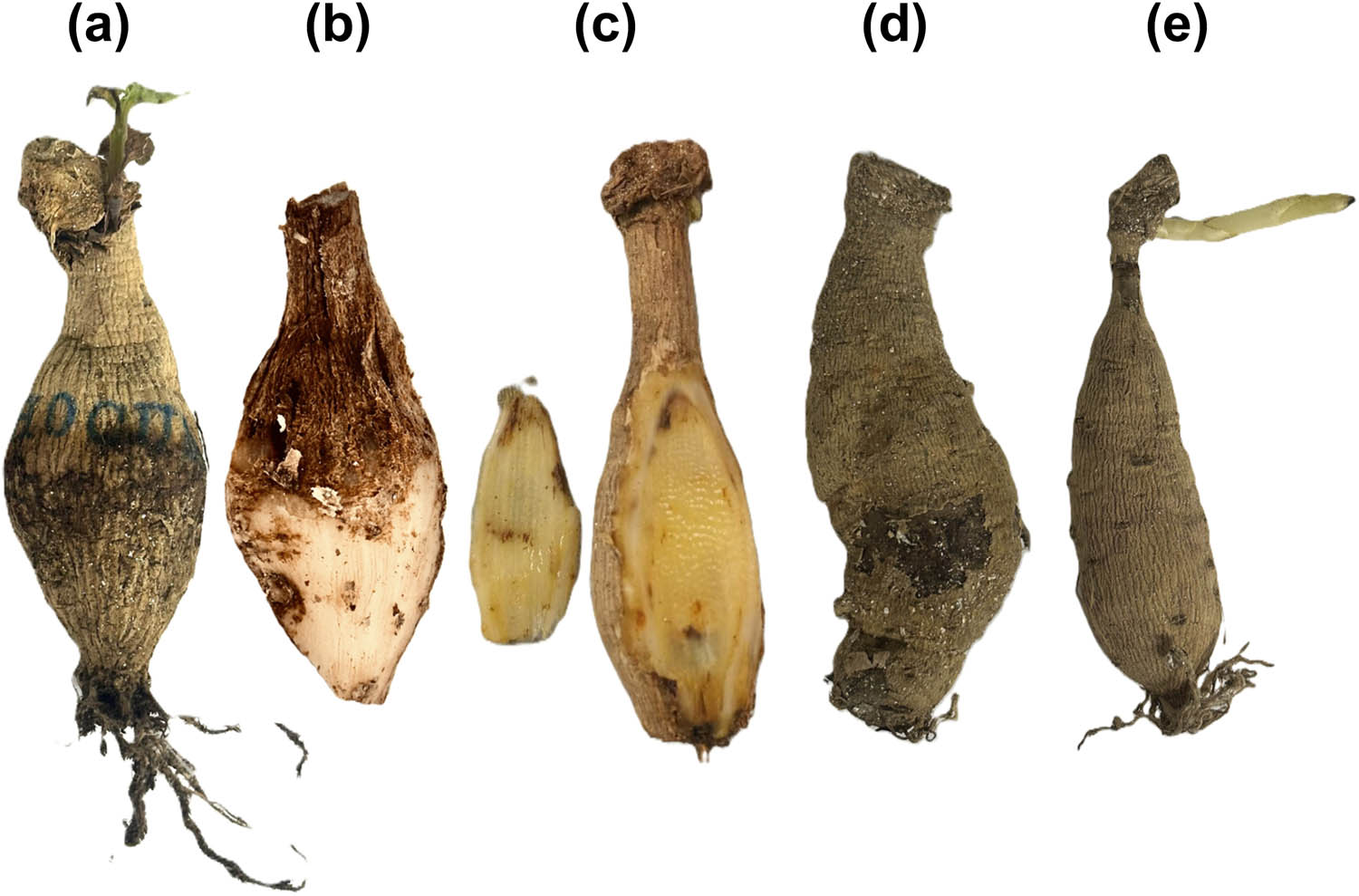
Figure 2
Dahlia tubers submitted to the Pennsylvania State Nematology Laboratory infected with Pratylenchus pseudocoffeae. Panels a and b show the same tuber before and after peeling for nematode extraction; this tuber had a density of 544 P. pseudocoffeae g−1 tuber peel. Panels c–e represent individual infected tubers.
2.2. Nematode morphological and morphometric characterization
Root-lesion nematodes recovered from symptomatic tubers measured 472 ± 14.9 to 558 ± 60 µm in body length (Table 1), with females slightly longer than males. No sexual dimorphism was observed other than reproductive structures. In females (Fig. 3a–d), the vulva was located at approximately 80% of body length; the vagina extended more than half of the body width at the vulval level (Fig. 3h); and the spermatheca was rounded to elliptical and contained sperm (Fig. 3f). The body was slightly ventrally curved when heat-killed. The labial region exhibited two to three annuli; the lateral field consisted of four incisures (Fig. 3g). The tail terminus was smooth and rounded to sub-hemispherical (Fig. 3c and d).
Table 1
Morphometric measurements of Pratylenchus pseudocoffeae recovered from dahlia tubers in Ohio and Pennsylvania, compared with those of type specimens from Japan
| Japan (Topotype) (Mizukubo, 1992) | Ohio, USA | Pennsylvania, USA | ||||
|---|---|---|---|---|---|---|
| Character | (♀) | (♂) | (♀) | (♂) | (♀) | (♂) |
| n | 40 | 11 | 15 | 15 | 10 | 10 |
| L | 554 ± 59.9 | 489 ± 42.7 | 561.1 ± 50.4 (463.3–641.4) | 509.8 ± 23.7 (446.4–552.3) | 555.2 ± 60.0 (500–676) | 472 ± 14.9 (455–492) |
| a | 29.9 ± 2.2 | 30.6 ± 3 | 24.7 ± 2.0 (22.0–29.7) | 28.1 ± 2.9 (21.6–32.6) | 26.8 ± 4.3 (20.0–34.4) | 27.7 ± 3.1 (22.7–31.0) |
| b | 6.3 ± 0.7 | 6.1 ± 0.7 | 4.9 ± 0.6 (4.2–6.3) | 4.7 ± 0.3 (4.4–5.5) | 4.5 ± 0.4 (3.7–5.2) | 4.7 ± 0.3 (4.2–5.13) |
| b′ | 3.1 ± 0.4 | 3.3 ± 0.3 | _ | _ | _ | _ |
| c | 19.4 ± 1.4 | 20.3 ± 1.6 | 21.0 ± 2.2 (17.9–24.8) | 20.6 ± 1.4 (18.4–23.2) | 19.7 ± 2.1 (16.7–24.1) | 20.7 ± 2.4 (18.5–24.6) |
| c′ | 2.3 ± 0.2 | 2.4 ± 0.3 | 1.8 ± 0.2 (1.6–2.1) | 1.9 ± 1.1 (1.6–2.3) | 1.8 ± 0.4 (1.3–2.2) | 2.2 ± 0.6 (1.1–3.1) |
| V (%) | 80.4 ± 0.9 | _ | 80.7 ± 1.5 (79.0–84.0) | _ | 81.2 ± 1.5 (79.5–83.4) | _ |
| Stylet length | 16.4 ± 0.5 | 14.9 ± 0.5 | 14.6 ± 0.6 (13.8–15.9) | 13.6 ± 0.5 (12.3–14.3) | 16.3 ± 0.6 (15.5–17.5) | 15.0 ± 0 15.0–15.0) |
| m (%) | 50.3 ± 1.6 | 50.7 ± 1.9 | 46.3 ± 1.8 (44.1–51.1) | 46.9 ± 0.16 (43.3–50.5) | _ | _ |
| DGO | 1.8 ± 0.39 | 1.8 ± 0.4 | 2.4 ± 0.2 (2.1–2.8) | 2.2 ± 0.2 (1.9–2.9) | _ | _ |
| Knob width | 3.7 ± 0.25 | 3.0 ± 0.2 | 3.5 ± 0.3 (2.8–3.8) | 2.9 ± 0.06 (2.6–3.2) | _ | _ |
| Excretory pore | 88 ± 5.4 | 83 ± 5.7 | 81.1 ± 10 (62.1–98.9) | 82.5 ± 4.8 (75.9–92.1) | 100.1 ± 5.7 (90.5–111.3) | 95.2 ± 11.8 (83.0–119.1) |
| Pharynx | 88 ± 9.1 | 81 ± 8.2 | _ | _ | 83.6 ± 5.1 (77.4–91.1) | 83.8 ± 11.9 (75.4–110.1) |
| Vulva-anus | 80 ± 11.3 | _ | 80.8 ± 11.6(62.9–99.9) | _ | 83.2 ± 6.4 (65.7–102.4) | _ |
| Tail length | 29 ± 3.4 | 24 ± 2.4 | 26.7 ± 2.0 (23.9–29.9) | 23.8 ± 1.1 (22.9–27.7) | 28.5 ± 3.7 (19.0–26.0) | 22.9 ± 2.2 (20.0–25.0) |
| PUS | 28 ± 5.0 | _ | 27.6 ± 3.8 (20.3–34.6) | _ | 27.7 ± 4.4 (22.0–36.0) | _ |
| Tail annuli | 20 ± 1.8 | _ | _ | _ | 22.1 ± 2.5 (19.0–26.0) | _ |
| Spicules | _ | 16.9 ± 1.3 | _ | 17.1 ± 1.1 (15.6–19.4) | _ | 16.6 ± 1.2 (15.0–18.0) |
| Gubernaculum | _ | 4.0 ± 0.4 | _ | 5.4 ± 0.3 (5.1–5.9) | _ | 4.8 ± 0.4 (4.0–5.0) |
| Spicules/stylet ratio | _ | 1.14 ± 0.06 | _ | 1.3 ± 0.08 (1.1–1.4) | _ | 1.1 ± 0.07 (1.0–1.2) |
All measurements are in µm (except ratios) and are presented as mean value ± standard deviation followed by range (min.–max.). Ranges for the Japanese populations were not provided in the original description by Mizukubo (1992).
Abbreviations: n = number of measured specimens; L = overall body length; a = body length/greatest body width; b = body length/pharynx length; c = body length/tail length; c′ = tail length/body width at anus or cloaca; V%: distance of the vulva from the anterior end × 100/total body length; DGO: distance of the dorsal pharyngeal gland orifice from stylet knob base; PUS: post-uterine sac length.
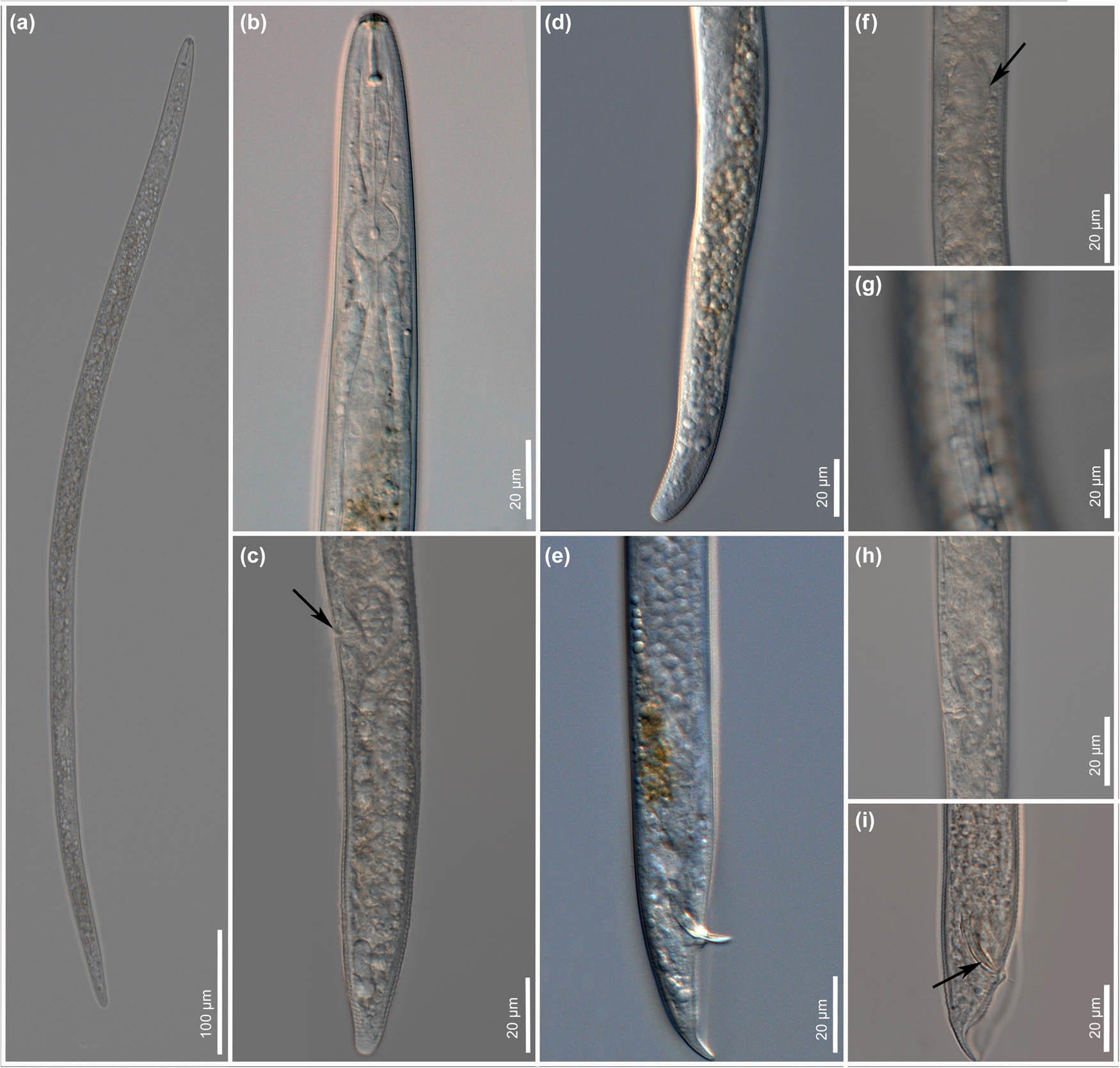
Figure 3
Light micrographs of Pratylenchus pseudocoffeae collected from infected dahlia tubers from Franklin County, Pennsylvania. (a) Female, entire body; (b) female anterior region; (c) female posterior region (arrow indicated vulva position); (d) female posterior end; (e) male posterior end; (f) spermatheca (arrowed); (g) lateral field showing four incisures; (h) vulva region; (i) male reproductive structures (spicules and gubernaculum).
In males, lateral fields with four incisures extended along the mid-body and terminated at the bursa. Spicules were paired and slender; gubernaculum was small and simple (Fig. 2e and i). The excretory pore was located just posterior to the pharyngo-intestinal junction, approximately at the level of the pharyngeal gland origin.
2.3. Morphometric measurements
All measurements are provided in Table 1.
2.4. Molecular characterization
Based on morphological and molecular analyses, all nine nematode populations recovered from the symptomatic dahlia samples were identified as P. pseudocoffeae. The lengths of the D2D3 region of the 28S and ITS fragments generated for all populations were 741 and 889 bp, respectively, excluding primer binding sites. Newly obtained sequences were deposited in GenBank under accession numbers PV986174 to PV986178, PZ048661, PZ048662, PX945294, and PX945295 for 28S rDNA region, and PV988438 to PV988442, PX945289, PX957255, PZ028637, and PZ028638 for ITS region. In the aligned datasets, sequences were trimmed at both ends to match the shortest reference sequences obtained from GenBank. The final aligned 28S and ITS datasets had 737 and 883 bp, respectively, including alignment gaps. Phylogenies were inferred using the GTR + G model. Sequences from the original description of P. pseudocoffeae from Japan were not included because these were not produced in the original description by Mizukubo (1992), but sequences from a Japanese population reported by Kushida and Kondo (2015) were included in the analyses. Phylogenetic relationships between the Ohio and Pennsylvania populations of P. pseudocoffeae and related Pratylenchus species are shown in Fig. 4. In both 28S- and ITS-based phylogenies (Fig. 4a and b, respectively), all of the nine populations clustered with previously reported P. pseudocoffeae populations in a strongly supported monophyletic clade (PP = 1.0). This clade was clearly separated from other Pratylenchus species, including P. scribneri, P. agilis, P. hippeastri, and P. coffeae, confirming the identity of the dahlia root-lesion nematode as P. pseudocoffeae.
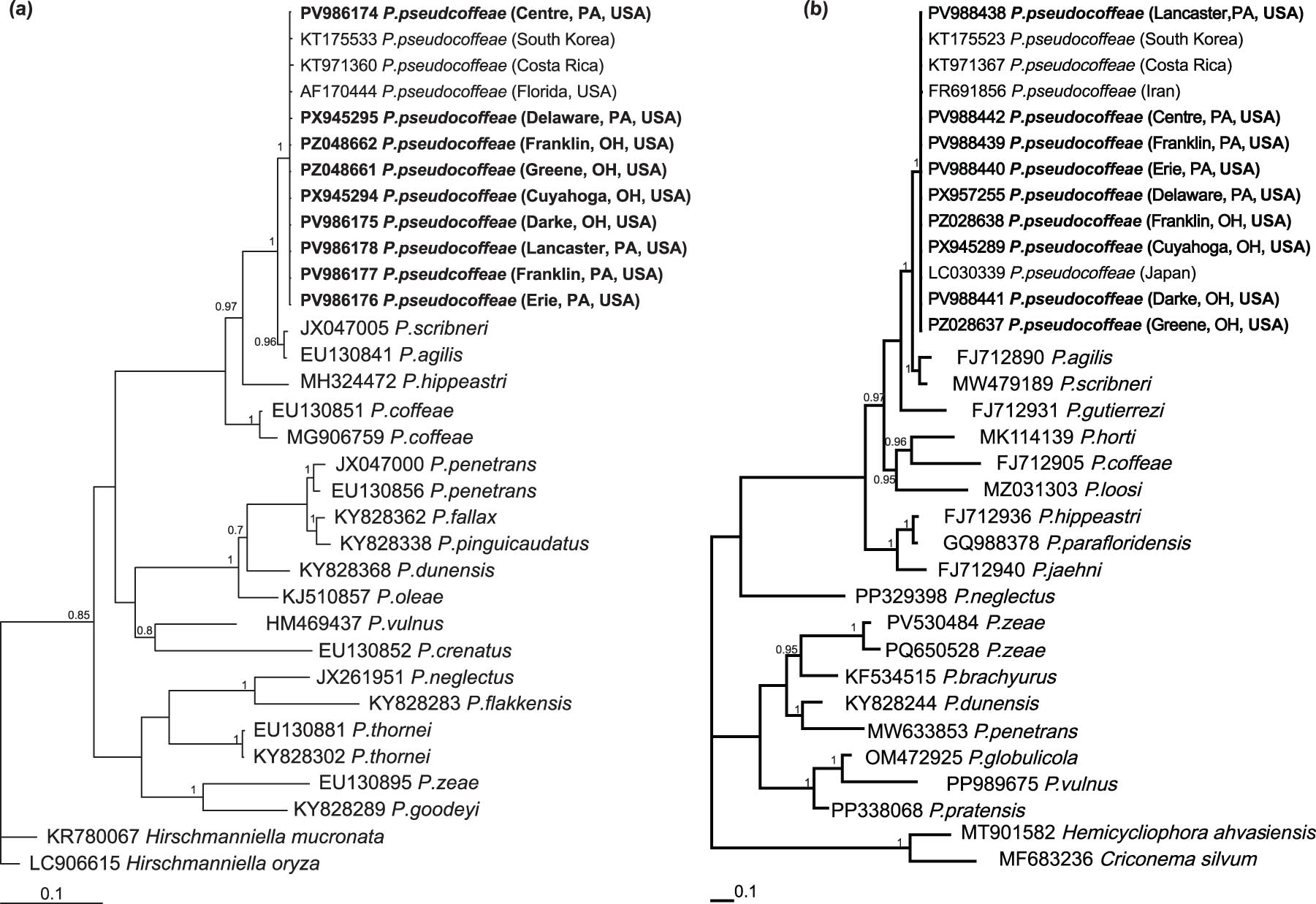
Figure 4
Phylogeny of Pratylenchus pseudocoffeae isolated from dahlia tubers in Ohio and Pennsylvania inferred from the D2D3 region of the 28S (a) and ITS (b) regions of the rDNA. Bayesian analyses employed the GTR + G model. Branch support values above 0.5 are shown as PP next to the respective nodes. Sequences obtained in this study are shown in bold. Outgroup taxa were Hirschmanniella mucronate and H. oryzae for 28S tree; and Hemicycliophora ahvasiensis and Criconema silvum for ITS tree.
2.5. Greenhouse pathogenicity assay
Nematode inoculation significantly reduced root and shoot growth relative to noninoculated control plants (Table 2, Fig. 5). Mean root weight in control plants was 12.96 g, compared with 3.27, 4.94, and 4.40 g in the low-, medium- and high-inoculum treatments, respectively. Dunnett-adjusted contrasts (Table 3) confirmed that each inoculum level resulted in significantly lower root weight than the noninoculated controls. Although inoculation significantly reduced root weight, no significant differences were detected among the three inoculum levels. At the end of the trial, nematodes were absent in the control plants but were detected in all inoculated treatments, with mean total counts ranging from approximately 6,708–8,204 P. pseudocoffeae per plant (Table 2). Nematode densities were similar among inoculated treatments. The significant root damage and corresponding reduction in root biomass (Fig. 5) across all inoculum levels indicate the impact of nematode interaction with the plants.
Table 2
Summary of root weight, shoot weight, plant height, and nematode population density across treatment levels
| Treatment | n | Mean root weight (g) ± SD | Mean shoot weight (g) | Mean height (cm) | Mean nematode count ± SD |
|---|---|---|---|---|---|
| Control | 4 | 12.96 ± 4.07 a | 9.25 ± 1.23 a | 33.42 ± 2.54 a | 0.0 ± 0.0 a |
| Low | 4 | 3.27 ± 1.76 b | 8.06 ± 3.93 a | 30.41 ± 2.40 ab | 8,204 ± 2019.5 b |
| Medium | 4 | 4.94 ± 3.91 b | 7.40 ± 2.31 a | 27.77 ± 2.11 b | 6,886 ± 3554.6 b |
| High | 4 | 4.40 ± 1.21 b | 6.08 ± 1.04 a | 27.66 ± 1.20 b | 6,708 ± 496.5 b |
Different letters within a column indicate significant differences among treatments according to Tukey’s HD test (α = 0.05).
Abbreviations: n = number of samples; SD = standard deviation.
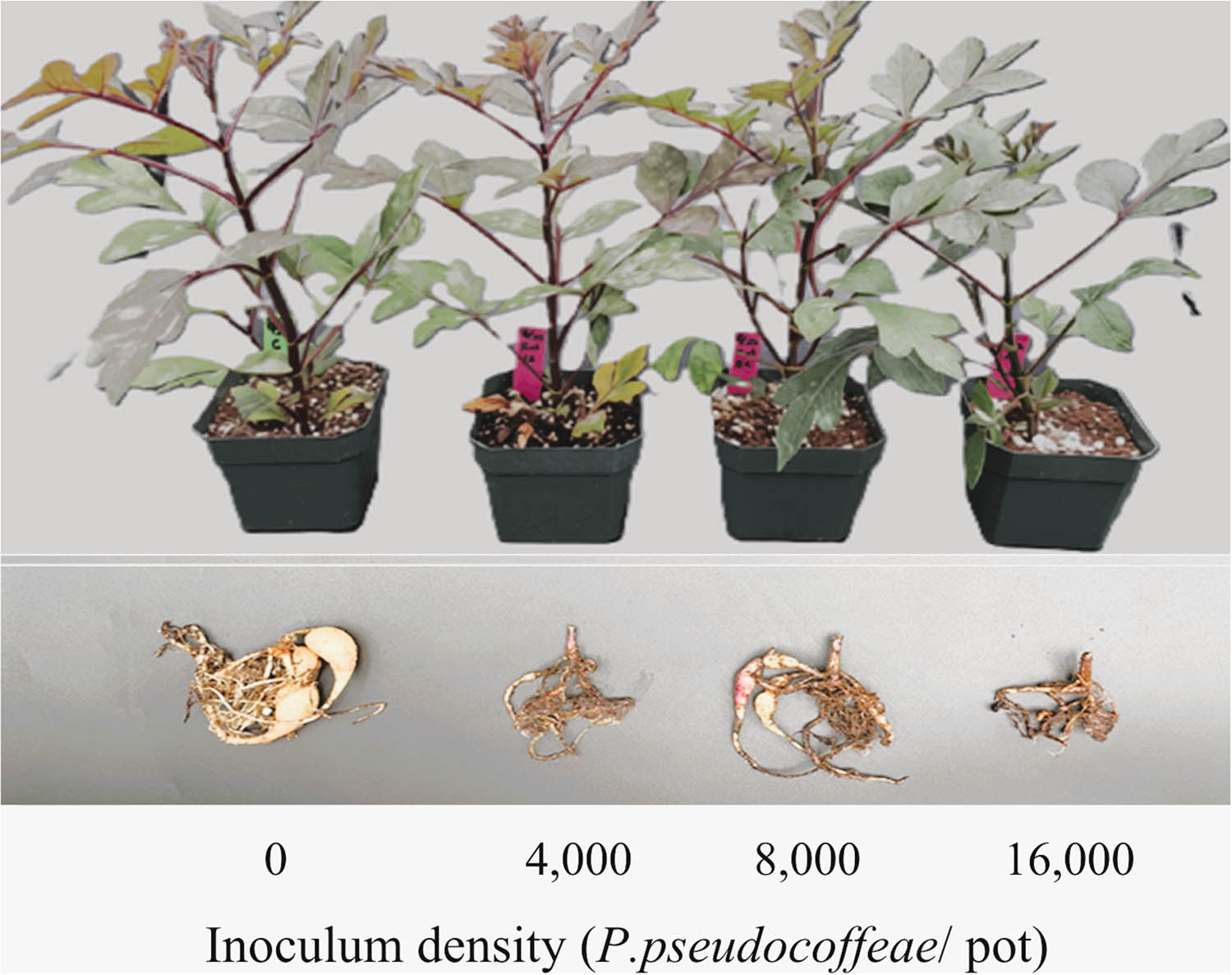
Figure 5
Dahlia plant height at 8 weeks post-inoculation across increasing inoculum densities (0–28 Pratylenchus pseudocoffeae cm−3 soil). Control plants did not receive nematode inoculum. Bottom row shows roots corresponding to each treatment.
Table 3
Dunnett-adjusted reductions and percent reductions in root weight, shoot weight, and plant height for inoculated treatments relative to uninoculated control (n = 4)
| Trait | Contrast | Reduction | Reduction (%) | Lower CL | Upper CL | SE | df | t ratio | P value |
|---|---|---|---|---|---|---|---|---|---|
| Root weight | Low | 9.69 g | 74.8 | 4.01 | 15.38 | 2.13 | 13 | −4.56 | 0.001 |
| Root weight | Medium | 8.02 g | 61.9 | 2.33 | 13.70 | 2.13 | 13 | −3.77 | 0.006 |
| Root weight | High | 8.56 g | 66.1 | 2.33 | 14.79 | 2.33 | 13 | −3.68 | 0.007 |
| Shoot weight | Low | 1.19 g | 12.9 | 2.88 | 5.25 | 1.52 | 13 | −0.78 | 0.757 |
| Shoot weight | Medium | 1.85 g | 20.0 | 2.22 | 5.91 | 1.52 | 13 | −1.22 | 0.500 |
| Shoot weight | High | 3.17 g | 34.2 | 1.28 | 7.62 | 1.66 | 13 | −1.90 | 0.191 |
| Plant height | Low | 3.01 cm | 9.0 | 0.87 | 6.89 | 1.45 | 13 | −2.08 | 0.144 |
| Plant height | Medium | 5.65 cm | 16.9 | 1.77 | 9.53 | 1.45 | 13 | −3.89 | 0.005 |
| Plant height | High | 5.76 cm | 17.2 | 1.51 | 10.01 | 1.59 | 13 | −3.62 | 0.008 |
Statistically significant reductions are indicated in boldface P values.
Abbreviations: df = degree of freedom; CL = Confidence Interval; n = number of samples.
Although shoot weight and plant height generally declined with increasing inoculum density, treatment effects were less pronounced than those observed for root weight (Fig. 4, Table 3). Mean shoot weight declined by 12.9% (P = 0.757), 20.0% (P = 0.500), and 34.2% (P = 0.191) in the low-, medium- and high-inoculum treatments, respectively, but these reductions were not statistically significant. In contrast, plant height decreased by 9.0% (P = 0.144), 16.9% (P = 0.005), and 17.2% (P = 0.008), in the low-, medium- and high-inoculum treatments, respectively, with significant reductions observed at the medium- and high-inoculum levels. Overall, these results indicate that root growth and tuber formation were more strongly affected by nematode inoculation than shoot biomass although plant height was significantly reduced at higher inoculum densities (Tables 2 and 3).
3. Discussion
This study documents the first occurrence of P. pseudocoffeae in Ohio and Pennsylvania and identifies Dahlia hybrida as a new host. Previously, P. pseudocoffeae had been reported in the United States only from Florida on aster (Inserra et al., 1998), with international records primarily associated with chrysanthemum in Japan, Iran, and South Korea (Mizukubo, 1992; Kim et al., 2016; Deimi et al., 2009). These findings expand the known geographic distribution and host range of this nematode species in North America and identify dahlia as a new host of P. pseudocoffeae.
Morphological and morphometric analyses of nematodes recovered from submitted dahlia samples were consistent with diagnostic features of P. pseudocoffeae (Castillo and Vovlas, 2007; Mizukubo, 1992). The ITS- and LSU-based phylogenies also placed these nematodes within well-supported clades containing reference P. pseudocoffeae sequences, corroborating the morphological identification. The integration of morphological and molecular data provides robust validation of the nematode diagnosis.
Symptoms observed in submitted tubers, including longitudinal grooves, bark-like texture, and internal necrotic lesions, are consistent with injury caused by root-lesion nematodes. Symptomatic tubers contained up to 544 nematodes g⁻¹ of tissue; however, asymptomatic tubers were also infected, although they harbored lower nematode densities. Although symptom severity was associated with nematode density, the detection of P. pseudocoffeae in asymptomatic tubers indicates the potential for latent infection. Because dahlia is primarily propagated vegetatively through tuber division, infected but symptomless planting material may facilitate the undetected dissemination of this species into new areas.
Within the genus Pratylenchus, species differ markedly in host range. Some species are broad generalists, capable of parasitizing a wide variety of plant hosts, whereas others exhibit narrower host specificity and are associated with relatively few plant species (Castillo and Vovlas, 2007). Repeated reports of P. pseudocoffeae from plants belonging to the family Asteraceae (Kim et al., 2016; Deimi et al., 2009; Inserra et al., 1998; Mizukubo, 1992) suggest a possible pattern of host preference. If this association proves consistent, P. pseudocoffeae may pose a risk to additional ornamental production systems cultivating species in the Asteraceae, highlighting the importance of monitoring and management.
Greenhouse pathogenicity assays confirmed that P. pseudocoffeae is an aggressive pathogen of dahlia and Koch’s postulates were fulfilled with re-isolation and identification of this nematode species. Across all nematode inoculum densities, nematode infection significantly reduced root biomass, with reductions averaging 61.2–74.8% relative to uninoculated controls. Notably, differences among inoculum levels were not statistically significant, suggesting that even lower initial population densities could potentially result in substantial root damage under controlled conditions. It is important to note that pathogenicity assays were conducted using dahlia cuttings; nematode multiplication and damage may be even greater in tuber-propagated plants, where storage tissues may provide additional food and for an extended period of time.
Aboveground effects were less pronounced; however, plant height declined significantly at medium and high inoculum levels, indicating that root injury can impair overall plant performance. In ornamental crops such as dahlia, where tuber quality and plant vigor determine economic value, reductions in root and tuber mass may translate into decreased establishment, lower flower yield, and reduced marketability.
The geographic distribution observed in this study, including multiple counties in Ohio and Pennsylvania in addition to the earlier report from Florida, suggests that P. pseudocoffeae may be more widely distributed than currently recognized in the United States. The presence of this species in climatically distinct regions indicates a capacity to establish beyond warm environments and supports the likelihood of broader ecological adaptability. The discontinuous distribution pattern is consistent with anthropogenic dissemination, particularly through the movement of infected planting material. Given that dahlia is propagated vegetatively via tubers, asymptomatic but infected material may facilitate long-distance spread and introduction into new production systems. County-level detections further suggest that nematode populations may already be locally established rather than representing isolated introductions.
The present findings also highlight the importance of collaboration among plant pest diagnostic laboratories. Although the samples analyzed in this study were submitted independently by growers and homeowners rather than collected through a coordinated survey, the detection and confirmation of P. pseudocoffeae from multiple states were facilitated by the exchange of morphological and molecular data among diagnostic institutions. Such collaborative networks are essential for the accurate identification of emerging or previously unreported nematode species, particularly in ornamental production systems where plant material frequently moves across state lines. Continued cooperation among diagnostic laboratories will remain critical for documenting new host associations, monitoring pathogen distribution, and supporting timely plant health management and potential regulatory responses.
In summary, this report expands the known distribution of P. pseudocoffeae in the United States and establishes dahlia as a new and highly suitable host. The confirmed pathogenicity and reproductive capacity of this nematode highlight its potential economic significance in floriculture production. These findings also highlight the potential risk that P. pseudocoffeae poses to other economically important crops previously identified as suitable hosts (Mizukubo, 1992). Continued surveillance and integration of nematode diagnostics into ornamental crop management programs will be essential to limit further spread of this nematode and other emergent species.
Acknowledgments
The authors would like to thank Mankanwal Goraya for her assistance in the laboratory at the beginning of this project. Its contents are solely the responsibility of the authors and do not necessarily represent the official views of the USDA.
Funding information
This study was partially supported by the USDA National Institute of Food and Agriculture (NIFA) Federal Appropriations under project PEN04828 (MK), and Agricultural Marketing Service (AMS) through grant AM21SCBPOH1070.
Author contributions
E. Consoli, M. Bogale, Lopez-Nicora, H.D., and Kantor M: Designed the experiments, prepared the visualizations, Wrote the first draft. E. Consoli and M. Bogale: curated and analyzed the data. All authors conceived the study and revised the final draft
Conflict of interest statement
Authors state no conflict of interest.