
THEORETICAL FRAMEWORK
Hybrid Model of Education
With the digital transformation, higher education institutions (HEIs) increasingly introduced digital technologies into education. As a result, they had the opportunity to continue the teaching and learning process during the COVID-19 pandemic (Antonopoulou, 2023; Trevisan, 2023). The pandemic significantly accelerated the shift from traditional classes to the main models of remote and hybrid learning. In its initial phase, most HEIs followed a technology-mediated teaching and learning model (Gorina, 2023). In the distance learning model, classes were available in asynchronous (with time separation) and synchronous (without time separation) forms (Rof et al., 2022). Even before the pandemic, it was predicted that the development of blended learning models would stimulate the implementation of technology in higher education (Adams Becker et al., 2017; Packmohr & Brink, 2023). By contrast, the pandemic caused the opposite process: the development of technology enabled HEIs to switch to a hybrid mode, allowing them to combine both remote and in-person learning (in-person model) (Bervell et al., 2023). Importantly, the integration of technology into teaching does not automatically categorise this process as blended learning (Nae, 2022).
Due to this interplay, the hybrid model does not merely appear as a single mixture, but evolves into a more deliberate and structured integration. It becomes an educational design that weaves together in-person engagement with digital practices in a way that is both flexible and systematic.
Selected examples of methods used in digital education that change the teaching and learning process are presented below, divided into asynchronous and synchronous methods. Table 1 presents methods used in the hybrid model.
Table 1.
Methods used in the hybrid model
| asynchronous | synchronous |
|---|---|
| Blogs | Live webinars |
| Pre-recorded webinars | Video conferencing |
| Online forums and discussion boards | Virtual classrooms |
| Instant messaging | |
| MOOCs (massive online courses with open access for the community, including people with disabilities) | SMOC (synchronous mass online courses with Internet access, using features that make students present digitally) |
| SPOC (small private online courses, for a limited number of participants) | SSOC synchronous online courses for a limited number of participants and assuming that students are present digitally |
The hybrid education model, also known as blended learning, focuses on the educational benefits of both traditional teaching and digital technologies. Students participate in-person and in online classes. HEIs offer courses that feature on-site classes and online assignments, projects, meetings or discussions. Online activities are conducted using a learning management system (LMS) or other digital platforms that allow students to access resources, submit assignments, participate in virtual discussions, and assess and evaluate their work (Hashim et al., 2022; Griffin et al., 2022). Guerrero-Quiñonez et al. (2023) highlight the potential of this model to enhance the learning experience, promote interaction and improve accessibility.
Experiments in Digital Education with Educational Forms, Methods and Pedagogies
During the pandemic, HEIs gained new knowledge and enhanced their competence with technological tools and online teaching practices. Post-pandemic, experiences with new, flexible education models have provided HEIs with the opportunity to innovate in teaching and learning, particularly with formats that combine synchronous and asynchronous modes. HEIs continued to explore educational innovations, and this process fostered openness to adopting riskier strategies (Elena, 2017; Packmohr & Brink, 2023). Following expanded digitisation, HEIs have begun to apply technologies and resources that added new, often previously unknown capabilities to the educational process (Kaputa et al., 2022). Digitisation has enabled a range of options, including the hybridisation of educational systems and tools that increase their multimodality (Hashim et al., 2022).
Digital amplification has created new methods to verify knowledge and skills, e.g. during online exams. The incorporation of digital learning forms, such as group project-based learning and gamification, in the educational process has become more attractive (Antonopoulou et al., 2023; PwC, 2018). Research-based learning (RBL) methods used in online university courses strengthened and increased student engagement (Packmohr & Brink, 2023). As Rof et al. (2022) emphasise, the implementation of such innovations was influenced by both contextual and organisational factors, as well as those resulting from the individual preferences of individual HEIs. Griffin et al. (2022) describe the experience of CHARM European University within the European University Alliance in the context of creating, implementing and testing multiple hybrid classrooms that provided space for simultaneous teaching and learning locally and remotely. Collaboration in the hybrid classroom was made possible through videoconferencing software and providing a collaborative space for transdisciplinary teamwork (Griffin et al., 2022).
HEIs were prompted to create elaborate frameworks combining traditional and digital methods, forms and tools. Such matrices integrated in various modes of learning have led to the development of new methodologies and pedagogies and the evolution of multi-mode digital learning. According to Rof et al. (2022), this concept began the construction of an educational model allowing HEIs to address students' individual educational needs. The new paradigm has also been enhanced by those HEIs that implement software for learning process management and blockchain technology for storing documents and conducting analysis of big data sets. For this reason, the digital transformation of HEIs requires critical reflection and systematic strategies to integrate technology with pedagogical innovations and social involvement. This can enable HEIs to employ digitalisation for education, fostering community engagement and sustainable development (Balić et al., 2024; Trevisan et al., 2024).
From Digital Transformation to Transition of HEIs
As a result of technological progress, globalisation and social change, researchers have shown a growing interest in the topic of the digital transformation of HEIs. This is reflected in increased number of publications exploring this field from multiple perspectives (Benavides et al., 2020; Garcez et al., 2022; Trevisan et al., 2023).
However, there is still a lack of coherent understanding not only of the concept of digital transformation itself, but also in the context of HEIs (Wang et al., 2023). Table 2 contains an overview of digital transition approaches in the context of HEIs, as presented by various authors over the last five years. Researchers considered the digital shift of HEIs in drawing on technological development to provide educational services and gain a competitive advantage over other universities (NV, 2017; Rodrigues, 2017), or to build a digital learning space (Bygstad et al., 2022). Initially, they examined the features of digitalisation in HEIs as well as the mechanisms and factors decisive for organisational change. Hervás-Gómez et al. (2021) emphasised the importance of digital culture and leadership in building education and digital transition. The significance of specialised, professional tools in digital transformation is also highlighted, including artificial intelligence (Fernandez et al., 2023; Pietersen, 2023; Yavuz et al., 2023), leading to the development of competences, social relations and experiences of the academic community (Espinosa-Vélez et al., 2022; Carvalho et al., 2023; Linh et al., 2023; Buck & Willat, 2024). Recently, the research gap relating to the contribution of digital transformation to achieve sustainability in higher education institutions has begun to be filled (Trevisian et al., 2024).
Table 2.
Digital transformation in the context of HEIs
| Authors | Digital transformation in the context of HEIs |
|---|---|
| NV, 2017, p. 6 | Digital transformation as a method of improvement of ‘how’ universities do their existing work. |
| Rodrigues, 2017 | (HEIs) have been exploiting emerging technologies as a way to improve performance and adapt to their increasingly technology-driven society. |
| Bygstad et al., 2022 | (…) a key aspect of digital transformation of higher education – the emergence of a digital learning space. |
| Benavides et al., 2020 | The distinctive characteristics of the digital transformation (DT) implementation process that have taken place in HEIs. |
| Antonopoulou et al., 2023 | The underpinning mechanisms that a Higher Education Institution engages upon to manage digital transformation amidst extreme uncertainty. |
| Fernandez et al., 2023; Pietersen, 2023; Yavuz et al., 2023 | The process of digital transformation is primarily concerned with the introduction of digital tools such as learning platforms, clouds or artificial intelligence. |
| Wang et al., 2023 | Key factors influencing the implementation of digital transformation in higher education institutions – (...) developing, updating, and adapting a curriculum integration of digital technologies for universal education, cloud. |
| Espinosa-Vélez et al., 2022; Carvalho et al., 2023; Linh et al., 2023; Buck & Willat, 2024 | Digital transformation and its tools influence the development of competencies, social relations and experiences of the academic community. |
| Trevisan et al., 2024 | By linking digital transformation and sustainability activities it is believed that HEIs can collaborate to face global challenges. |
Industry 4.0 and Society 5.0 are changing the manner in which HEIs operate and interact with students or their various stakeholders. Nowadays, the digital transformation process is part of a broader transition that forces HEIs to undertake considerably more complex and multi-faceted activities. Digital transformation means that HEIs must implement and coordinate changes in staffing, structure and technology to incorporate operational and pedagogical approaches (Brooks & McCormack, 2020). Benavides et al. (2020) identify eleven interrelated dimensions of digital transformation. The authors emphasise the importance of digital infrastructure, skills and competences, as well as a management structure that supports the effective implementation of digital transformation in HEIs.
There are still no answers to the questions of how higher education institutions can understand digital transformation and meet its requirements (Marstio, 2019). However, what seems more important is the search for answers about the connection between digital transformation and digital education leading to the transition of HEIs, including the key features of this process – teaching and learning models, pedagogies, tools, actors and implementation (Wang et al., 2023). The research undertaken indicates a gap regarding an in-depth review of the current state of the digital transition in HEIs.
The concept of digital transition of HEIs is significantly more complex than issues of technology development. It encompasses the learning culture adopted by HEIs, including the pedagogical approach, the teaching and research process, the assessment system, the development of the learning community, the importance of skills and the capabilities of human resources. The authors propose the following model (Fig. 1) for understanding the relationship between digital transformation, digital education and the transition process of HEIs.
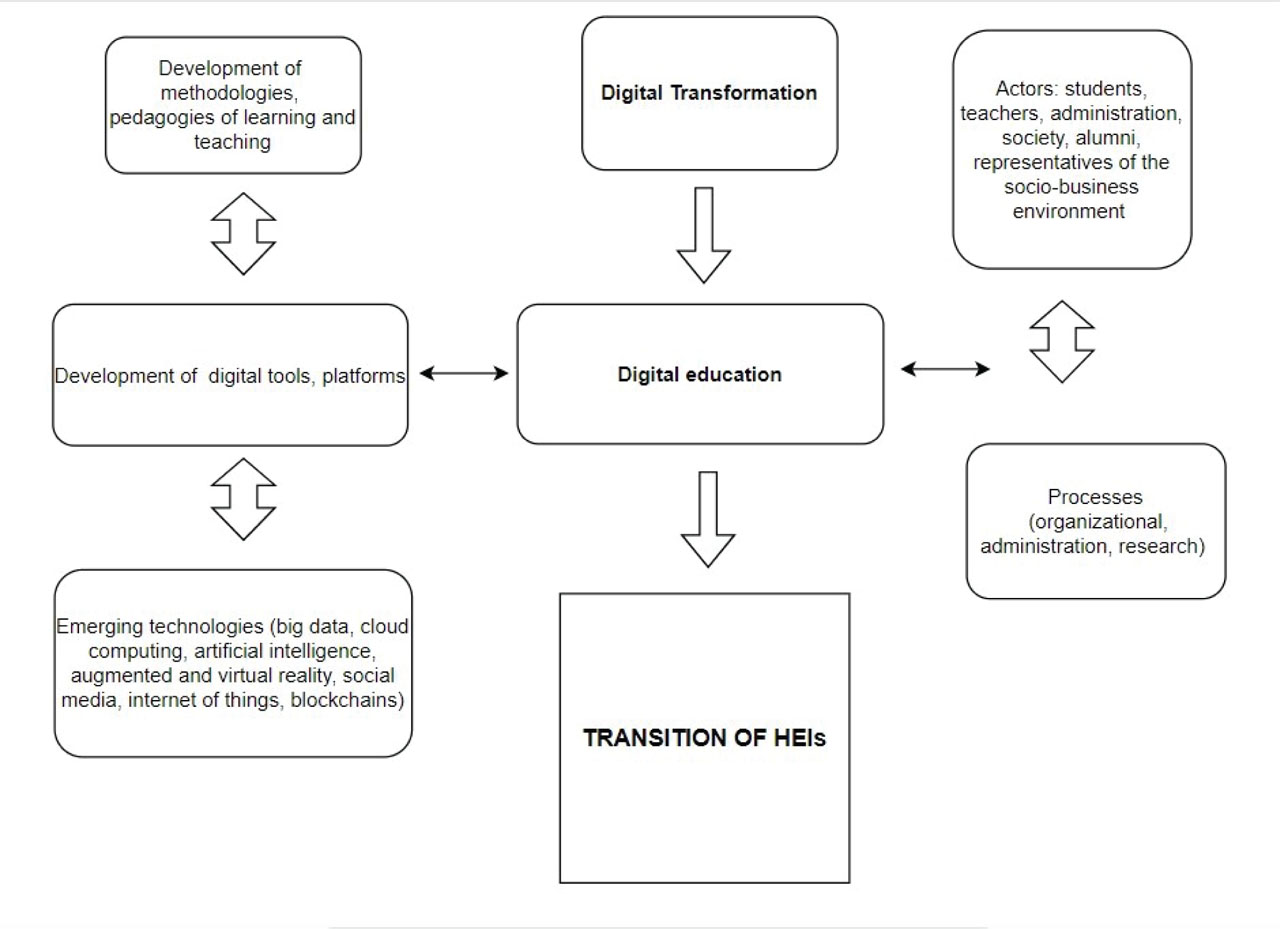
Figure 1.
The relationship between digital education, digital transformation and the transition of HEIs
Source: Authors' own work.
The transition of HEIs is a process of introducing changes caused by digital transformation and affecting digital education and its elements. As emphasised by Balić et al. (2024), the use of digital tools highlights a discrepancy between the expectations for a digital shift in learning environments and reality. Therefore, simply expanding the existing digital environments and educational practices without creating new and improved teaching systems and models is insufficient. The digital transition requires comprehensive and strategic management so that universities can take full advantage of digital development for the benefit of the learning community. In the process of digital transition, it seems particularly important that HEIs develop comprehensive strategies that will be systemic activities, covering not only digital technologies but also the reconstruction of a digital education model.
RESEARCH METHODOLOGY
Case Study Context
The research employs a single, qualitative case study method (Njie & Asimiran, 2014) to illustrate the theoretical model. The research should be a quantitative study of a representative sample of universities. This case study was planned in three stages.
Desk Research
The first stage was the analysis of background data, such as the university's website, the university's development strategy and any available reports. It provided contextual knowledge on the digital transformation processes at Laurea University and the main institutional priorities. It also laid the groundwork for designing tools for further research.
Classroom Observations
At the second stage, five classroom observations were performed: three in the classroom, one online and one taught in a hybrid model. The main aim was to identify the theoretical models of digital pedagogies and quality management for practically-oriented HEIs through examining the perceptions and experiences of academics, class observations and analysing strategic documents of the applied sciences university.
Semi-Structured Interviews
To deepen the knowledge gained at the previous stages and answer the research question, the third stage involved qualitative research. It consisted of four semi-structured interviews with three experienced specialist subject teachers and an expert in digital pedagogy. This latter individual was responsible for online education and supporting the teaching staff with online learning, training and managing various digital learning initiatives. The research group was selected using the purposive sampling method, through which respondents are selected based on their experiences with a given phenomenon (Creswell, 2013). The interviews were of an expert nature, so the respondents were selected based on their professional competence and knowledge of digital pedagogies, digital education and digital transition at the university. Another criterion was a minimum of five years' experience at the university. The interviews were conducted live, and one took place online. They lasted between one hour and one hour and thirty minutes.
To conduct the interviews, a scenario was prepared as a research tool. The interviews were anonymized by coding the respondents' personal data. Three women and one man participated in the interviews. The following codes were used when quoting the respondents' statements: academic teachers – T1, T2, T3; expert in digital education – E1. The use of desk research analyses, classroom observation and semi-structured interviews explored the views of the respondents on digital flexibility and the technological transition of Laurea University. The interviews allowed the respondents to share their own observations and experiences. The document analysis and class observations increased the credibility of the research as a triangulation strategy to limit possible biases (Bowen, 2009).
Data Analysis
All the research materials, including recordings of the interviews, were transcribed and coded in the program N-Vivo. The analysis began with a detailed re-reading of the research material. The material was a dynamic process. The structure of the coding tree was modified as the contextual understanding of the analysed material deepened.
CASE STUDY OF LAUREA UNIVERSITY OF APPLIED SCIENCES
General Description
Laurea University was founded in 1991 and is one of the major Finnish public universities of applied sciences. The university operates within six campuses located in different parts of the country: Hyvinkää, Leppävaara, Lohja, Otaniemi, Porvoo and Tikkurila (Vantaa). There are a total of approximately 7,800 students studying in 18 programmes within the following study fields: Business Management, Social Services, and Healthcare and Hospitality Management. To date, more than 30,000 students have graduated from the university (Laurea, 2021). Annually there are 1,600 undergraduates and 300 postgraduates. The university's graduates are rapidly becoming active in the labour market – the employment rate one year after graduation was 96.4% in 2019 (Finnish National Agency for Education, 2019). The university has an annual turnover of EUR 52 million, the external funding of the BRI (2020) is approximately EUR 4.26 million (Laurea, 2023).
As the university's website reads, “The strategic intent of Laurea University of Applied Sciences is to be an international developer of working life competence and vitality in the Uusimaa region in 2030.” The university's activities are based on three core values: openness, effectiveness and responsibility. The organisational structure of Laurea University is headed by the president as chairman of the management team. It consists of the heads of units, the rectorate, the representatives of the staff organisations and a representative of the university's student organisation, Laureamko. The management team supports the president in the management and development of the university. In the ownership structure, the largest owners of the university are the two cities Espoo and Vaanta.
A collaborative organisational culture prevails at Laurea. Research, RDI and regional development activities rely on extensive collaboration with various stakeholders, social actors, sectors and international partners. The focal point of the university's activities are human interactions and encounters; and a focus of getting to know the other.
The university has adopted the model of digital education based on the pedagogical approach called “Learning by Development” (LbD). In practice, the model means learning through the implementation of development projects and tasks. The LbD model emphasises learning, research, reflection and joint development of teachers, students and active interaction with business and employers.
RESEARCH RESULTS
The qualitative data analysis was based on a six-step analysis procedure (Clarke & Braun, 2012). This flexible yet systematic process was associated with recursiveness and deep immersion in the data set. The analysis included records and reflections collected during the classroom observations, strategic documents and semi-structured interviews. Inductive coding and Thematic Analysis were used to explore the respondents' experiences in an explanatory manner excluding reconceptualization of theoretical or conceptual frameworks (Braun, & Clarke, 2021). The process of observing connections between codes and emerging themes was supported by charts, images and data visualisations. Once the topics were no longer repeated or overlapped, the following hierarchical structure of thematic nodes was obtained: digital learning pedagogies, support of learning, systematic quality of learning management, digital learning tools and challenges of digital flexibility in HEIs. The thematic analysis revealed four interconnected nodes that constitute the theoretical model of Digital Pedagogies and Quality Management in HEIs. Each node represents a distinct yet interdependent dimension of digital transformation, and factors influencing its implementation and effectiveness. The main components and interconnections allowed the creation of the following nodes.
A. Digital Learning Foundation
The Digital Learning Foundation constitutes the primary layer of the model and encompasses two components – Digital Learning Pedagogies and Digital Learning Tools. This foundation serves as the essential infrastructure upon which all other elements of the digital transformation are built.
Digital Learning Pedagogies
This is the core around which the remaining nodes revolve. The methods and strategies adopted by HEIs to impart knowledge in the digital era form the basis of any transformation. The key factors influencing the effectiveness of the Digital Learning Pedagogies include the alignment of pedagogical approaches within institutional goals, the level of faculty engagement in pedagogical innovation, the availability of specialised units dedicated to pedagogy development, and the systematic implementation of pedagogical experiments and training programmes. At Laurea University, the first steps towards building digital learning pedagogy began in 2014, with the creation of the DigiTeam unit dedicated to this field. DigitTeam experts started working on a technology-supported education model, conducting pedagogical experiments and training workshops to support their competences in using digital tools.
“The DigiTeam consisted of experts in digital pedagogy, digital media production and digital tools. Through extensive collaboration on the online learning design process, pedagogical scenarios for the courses and the necessary materials were created.”
E1
“The results of DigiTeam's work were available to all teachers in Laurea and widely promoted. Soon, more and more educators wanted to develop courses in line with the digital learning pedagogy.”
T1
Digital Learning Tools
These are the technologies and platforms used for the implementation of the pedagogies. They directly support and intertwine with the pedagogies. Digital tools are constantly evolving to provide new features. The effectiveness of the Digital Learning Tools is determined by factors like the compatibility of tools with adopted pedagogical approaches, the ease of integration into existing learning management systems, the capacity to support both synchronous and asynchronous learning modes, and the potential for enhancing student engagement and motivation.
In this context, it is important that the entire environment is sufficiently competent to use these tools not only for communication but, predominantly, to support the learning process and offer a means of evaluation.
“The initial experience with the digital learning environment was based on the Optima tool. Now we mainly work with Canva. The program creates many opportunities to further motivate and engage students in a digital learning. environment.”
T3
“Digital education tools are constantly developing. From the beginning, we participated in staff training workshops focusing on the use of supporting digital tools. There is always room for competence development in this area.”
T2
B. Enabling Factors
The Enabling Factors node comprises two critical components that facilitate successful implementation of digital pedagogies: Digital Flexibility and Support for Learning. These factors act as mediators between the foundational elements and the desired learning outcomes. Both factors directly influence the quality and accessibility of digital education.
Digital Flexibility
Digital Flexibility is the ability of the digital learning platform to adapt to various learning styles, paces and environments. It is directly influenced by the tools and pedagogies chosen. Digital Flexibility is shaped by interconnected factors: the adaptability of learning platforms to individual student needs, the capacity to accommodate diverse learning preferences and schedules, the integration of multiple pedagogical approaches within a single course framework, and the ability to seamlessly transition between online and dace-to-face learning modes. At Laurea University, the impact of digital flexibility on student learning outcomes is crucial. A flexible hybrid learning environment impacts students' learning experiences because the learning environment helps personalise the learning process. It influences the perception of students' needs, preferences and learning styles. When conducting classes using online tools, the learning process is taken into account and the question of whether the students can achieve the same goals in online learning as in face-to-face classes is critical.
“We are aware that there are different ways of learning – in the digital model, students can have greater freedom to decide when, how and where they will learn. Digital learning platforms enable us to design learning frameworks that encompass a variety of pedagogical approaches – developmental learning, game-based learning, flipped learning, sprints, etc.”
E1
“Digital tools shape both the way of teaching and learning, and the content taught or methodologies. We can combine methods to create hybrid and blended learning experiences. Thanks to technology, if we're on campus and we have students in the classroom, those who couldn't make it can also join the class online. This kind of digital flexibility of university can contribute to more equitable learning for students from different backgrounds.”
T3
Support for Learning
The infrastructure, resources and mentorship provided to aid students' digital education journey. This directly reinforces the digital pedagogies in place. The quality of learning support is influenced by factors like availability and accessibility of technical and pedagogical assistance, the effectiveness of feedback mechanisms between students and educators, the clarity of communication regarding expectations and responsibilities, and the provision of resources for personal and professional development.
At Laurea University, learning support is always available. It allows students to learn how to study as they are not used to acquiring knowledge under academic conditions. The support also involves sharing expertise on how to use digital tools, which allows each person to become familiar with the learning system and digital tools. Basically, supporting the learning process involves giving and receiving feedback. If the course is well structured and includes interaction between students, then it can have a very good impact on learning outcomes. It can be more than just face-to-face teaching. However, a lot depends on the teacher's skill in building the course and how much guidance and feedback he or she provides. In addition, students take part in a “student-to-professional” course that supports them in their personal and professional development.
“Our students need to be engaged in using a variety of digital tools. It is very important that everyone knows what the rules are in the team. Students determine them themselves together with the teacher. Thanks to this, they know who is responsible for what. Individual tasks for which students are responsible are commented on and opinions are provided, which creates an adequate learning environment.”
T1
“We have online tools through which various tasks are created. The teams are in constant contact, work is based on continuous feedback and asking questions. The teachers are also involved in this process and comment on the development of work, tasks and, therefore, the learning process on an ongoing basis.”
T2
“We constantly evaluate the development of tasks (and therefore the learning process) and we need to do it systematically so that everyone evaluates the same part. It's especially important to get feedback from others, because other people can see points that you can't see, and then you can learn something about how to improve these aspects and what to work on next.”
T2
C. Institutional Quality Control
Systematic Quality of Learning Management
The Institutional Quality Control node serves as a regulatory mechanism within the model. It ensures that all components of digital transformation meet established standards and contribute to high-quality educational outcomes. HEIs ensure the quality, consistency and effectiveness of the learning experience. Systematic Quality of Learning Management oversees and evaluates all other nodes to maintain a high standard of education. The Systematic Quality of Learning Management is determined by critical factors: the adoption of competence frameworks for faculty digital skills development (such as DigCompEdu), the implementation of structured approaches to course design and learning path development, the establish of quality criteria for online and hybrid learning, and the continuous monitoring and evaluation of learning outcomes.
High quality teaching requires teachers to develop digital competences in the face of rapidly changing requirements, including those regarding digital education. At Laurea University, a general reference framework to support the development of teacher-specific digital competences is provided by DigCompEdu. Thanks to the list of competencies, teachers know which competencies should be improved. Learning quality management includes a system for creating pedagogical scenarios for courses. Learning Design is based on the model of Dalziel et al. (2016), which is built from three elements: Learning Design Framework, Learning Design Conceptual Map and Learning Design Practice.
“To ensure high quality learning, we design learning paths, activities and materials. The main goal of the learning design process is a learning activity. Learning Design Conceptual Maps are created to help teachers discover the relationships between the “moving parts” of how to teach in a certain way at a certain time.”
E1
“A more formal approach to course design thus means incorporating quality criteria for online learning.”
E1
D. Challenges & Overcoming Them
The Challenges & Overcoming Them node acknowledges the multifaceted obstacles that HEIs encounter during a digital transformation. This component of the model is important for understanding the barriers to successful implementation and for developing strategies to address them.
Challenges of Digital Flexibility in HEIs
Unfortunately, creating digital flexibility in HEIs is never a smooth process. Implementing and maintaining digital flexibility comes with many complex obstacles that HEIs struggle with. The analysis revealed four categories of challenges: pedagogical challenges related to balancing personalization with educational rigour, technical challenges concerning infrastructure and tool integration, psychological challenges affecting student well-being and engagement, and finally economic challenges stemming from funding constraints and institutional pressures. In addition to their technical nature, such challenges can be pedagogical, psychological or economical.
One of the most important challenges concerns pedagogy and the design of digital learning. Teachers are challenged to strike a balance between adapting the learning process to the needs and abilities of students and excessive individualisation and apparent engagement.
As one teacher remarked:
“The question is how to combine students' needs and abilities with these digital pedagogies and tools. I mean, what kind of learning outcomes we will get depends on the models we adopt.”
T2
The challenges posed by digital flexibility require particular critical reflection. On the one hand, digital technology and tools increase access, but may also decrease the intensity of educational experiences and lead to a weakening of social bonds. Economic and financial challenges may cause universities to put pressure on students to complete their studies quickly. Consequently, this may compromise the quality of education.
“We have to focus very strongly on various challenges. And there are many of them. What to do to ensure that digital flexibility does not lead to superficial learning and limited social contacts. We need to think critically about the tools we use. Laurea has already introduced rules regarding the use of ChatGPT. We also have to deal with challenges such as economic constraints or restrictions on the study funding our university receives from the government. Does this mean we need to put pressure on the students to graduate as quickly as possible? These are the challenges that come with digital adaptability.”
T2
Another teacher pointed to the impact of pressure and stress associated with adapting to digital learning on students' well-being. This observation highlights the challenge of building students' resilience to stress and supporting healthy development and mental wellbeing in a digital learning environment.
“We have to keep up with digital developments and therefore face many challenges. This applies to many issues, not only technical, related to learning pedagogy but also to the well-being of students.”
T1
The Model of Digital Pedagogies and Quality Management in Practically-Oriented HEIs - Model Dynamics
The analyses concerning the isolated nodes were the basis for proposing a theoretical model of Digital Pedagogies and Quality Management in practically-oriented HEIs. The model comprises four interconnected nodes, each representing a distinct dimension of digital transformation: (A) Digital Learning Foundation, which establishes the pedagogical and technological basis; (B) Enabling Factors, which facilitates effective implementation; (C) Institutional Quality Control, which ensures standards and continuous improvement; and (D) Challenges, which identifies obstacles and informs adaptive strategies. The Digital Learning Foundation is the starting point of the model. The pedagogies and tools chosen by HEIs lay the groundwork for digital transition. Enabling Factors enhance and are influenced by the foundation. The more flexible and supportive the digital learning environment, the better the outcomes. Institutional Quality Control acts as a regulatory mechanism, ensuring that the Foundation and Enabling Factors meet the required standards. The Challenges node recognises the obstacles to achieving a seamless digital transition. Such challenges include pedagogical issues, technical barriers or economic pressures. However, by strengthening the Foundation, optimising Enabling Factors, and ensuring Quality, HEIs can overcome these challenges. The dynamic nature of the model is reflected in the bidirectional relationship between nodes. Improvements in the Digital Learning Foundation positively influence Enabling Factors, which in turn enhance the effectiveness of Quality Control mechanisms. Simultaneously, the identification and analysis of Challenges to digital flexibility provides feedback that informs adjustment across all other nodes. It creates a continuous cycle of improvement and adaptation.
These universities implement the model, introduce standards for using AI-based tools and provide personalised support services for students. See Fig. 2.
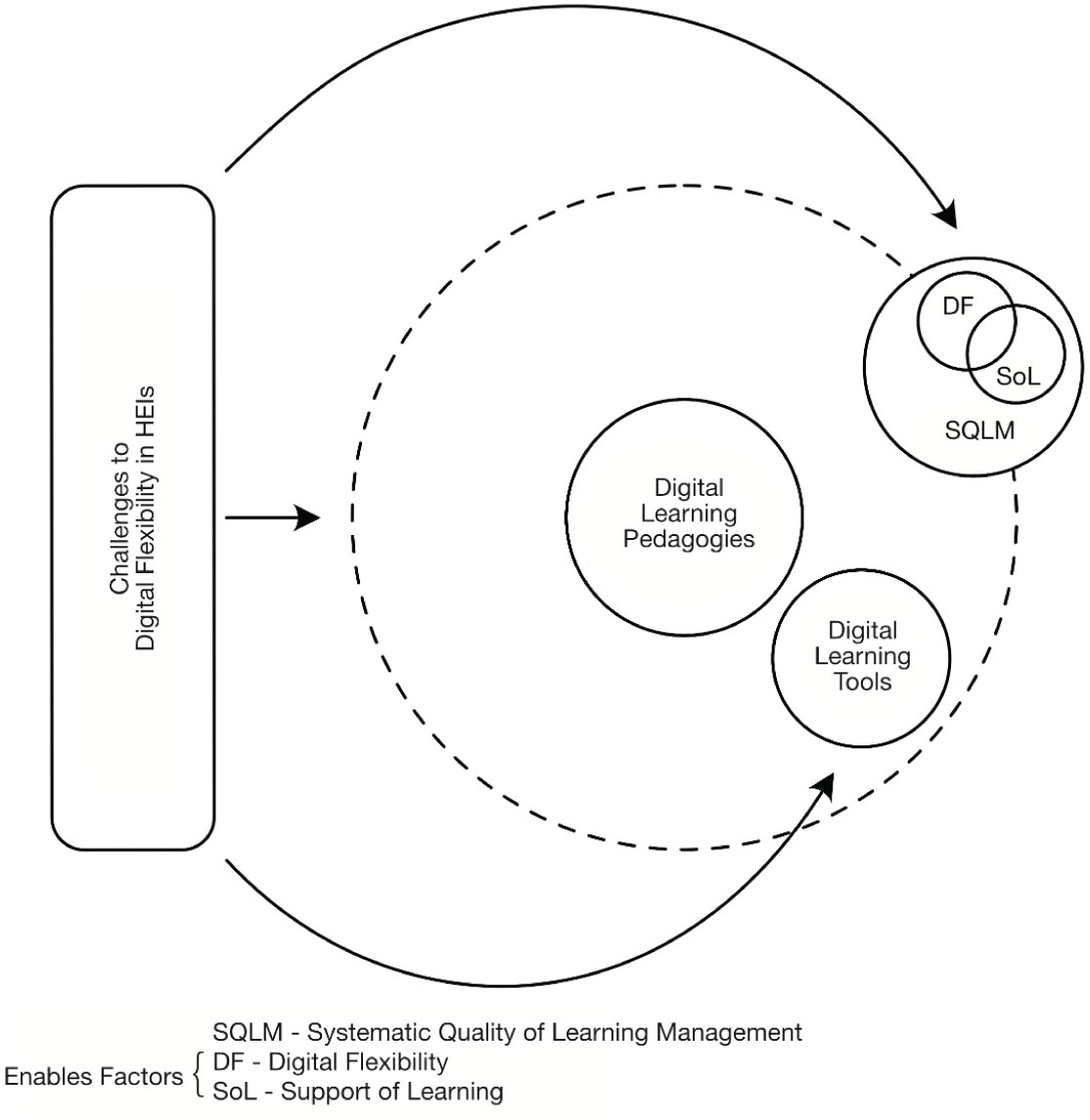
Figure 2.
A visualisation of the theoretical model of Digital Pedagogies and Quality Management in practically-oriented in HEIs
Source: Authors' own work.
DISCUSSION
The study of qualitative data provides a thorough comprehension of the digital transformation in HEIs, as evidenced by the ensuing discussion on its outcomes. The analysis follows a systematic six-step method that prioritises thorough examination of the dataset, supplemented by inductive coding and Thematic Analysis. This approach was selected to investigate respondents' experiences without being limited by pre-established theoretical frameworks, thereby enabling a novel and elucidating viewpoint.
The data has been systematically collected through careful observations and semi-structured interviews, and visual aids have supported the analysis. The methodology mentioned above has established a hierarchical framework consisting of theme nodes, including digital learning pedagogies, learning support, systematic quality of learning management, and the issues associated with digital flexibility in higher education institutions.
The node Digital Learning Foundation plays a crucial role by emphasising that pedagogies are the fundamental basis upon which all other nodes are built. The proactive approach of Laurea University is demonstrated by the implementation of DigiTeam in 2014, which has significantly influenced the development of the digital pedagogical landscape. The team of breakthrough thinkers – experts in digital pedagogy and tools – has played a crucial role in developing pedagogical scenarios and enhancing educators' competencies in utilizing digital resources. As a result, there has been a significant increase in the implementation of digital learning pedagogies throughout the institution.
The Digital Learning Tools node emphasises the shift from Optima to Canva, illustrating the progression of tools that play a crucial role in implementing pedagogical approaches. The dynamic nature of these technologies requires educators to continuously improve their competency in order to support and assess the learning process successfully. It also requires a critical approach to digital tools and their use.
Within the Enabling Factors node, the significance of Digital Flexibility is acknowledged as a crucial element for accommodating various learning styles and surroundings. This is exemplified by implementing a flexible hybrid learning model at Laurea University. Adaptability is bolstered by Support for Learning, which encompasses the provision of infrastructure, resources and mentorship to enrich the educational experience in the digital realm. The digital pedagogies in place are supported by a complete system incorporating feedback and encouraging active engagement with digital tools. The feedback system is provided by both the teacher and other students, members of the learning group.
The implementation of Institutional Quality Support is a crucial mechanism that guarantees the maintenance of a high level of education. This is achieved through the methodical management of educational processes, employing frameworks such as ‘DigCompEdu’ to guide the cultivation of digital competencies among teachers. A systematic strategy is crucial for upholding the integrity and optimising the efficacy of the digital learning experience.
The final node, Challenges of Digital Flexibility, recognises the inherent complexities that HEIs encounter. These challenges include accommodating students' needs, adhering to instructional frameworks and effectively managing fiscal limitations. Even with these problems, the model posits that HEIs may effectively navigate the intricacies of digital flexibility by bolstering the fundamental aspects, improving facilitating factors and adhering to quality support measures. Kulikowski et al. (2022) argue that successful digitisation of HEIs requires systemic cultural and behavioural changes among academic staff in addition to infrastructure and technological accessibility. The academic community should be ready to adapt to pedagogical paradigms, implement pedagogical innovations and continuously develop professionally.
CONCLUSIONS
Technological progress is pushing universities towards digital transformation (e.g. cloud computing, artificial intelligence, IoT). The process of globalisation creates pressure, but also provides opportunities for a globally-connected academic landscape. These phenomena also affect social expectations, as the demands of students and society on education and its provision are changing. These expectations are evolving towards the inclusiveness of the learning process and wider access to education. As a result, HEIs are in the midst of a digital transformation, accompanied by factors that support or hinder their ability to adapt to rapidly changing technologies and educational needs. The rapid pace of changes means that digital transformation can be a significant challenge for HEIs. Institutional response has a direct impact on the design and implementation of changes to digital agility. As institutions adopt new technologies and strategies, they are shaping the nature of digital agility. Its quality, depth and scope determine the nature of the institutional transformation. The more integrated and sophisticated the efforts, the deeper the transformation.
The proposed model of Digital Pedagogies and Quality Management in practically-oriented HEIs serves as a roadmap to explore the complex relations between external forces, institutional responses, digital learning and institutional transformation in the university context. It provides a comprehensive framework that can help inform research and policy decisions in this field. The model assumes that universities are not static entities and can evolve in response to external and internal pressures. The model also assumes that the relation between digital agility and institutional transformation is reciprocal, with one influencing the other in a continuous loop.
Research Limitations
The authors are aware of the limitations of the conducted research and the proposed model. A significant limitation of the study is its reliance on a single case study. As Yin (2009, p. 52) states, “Case studies, like experiments, can be generalized to theoretical claims, but they cannot be extended to populations or universes”.
Another important limitation of the study is that it is based on too few in-depth interviews, documents and classroom observations, which may prevent generalising the results. The outcomes are also prone to subjectivity in the judgments of the interviewees and observations.
Conducting research solely within one university may result in a model that inadequately represents the diverse range of experiences, perspectives and challenges across different universities. This theoretical model may not account for the nuances of all HEIs. It should be borne in mind that these institutions differ in terms of size, resources, location and mission, as well as the type of ownership. Additionally, it's essential to consider the dynamic nature of technology and social changes, as they introduce complex interdependencies and determinants that also impact the digital transformation of HEIs. Rapid technological advancement can leave some elements of a model obsolete over time, replaced instead with new features. Moreover, the factors outlined in the model may be influenced by the unique context of each HEI, leading to potential variations in the prioritisation of these factors. It's crucial for future research to address these limitations comprehensively.
The proposed model could be used in future comparative analyses involving various HEIs. These should represent both public and private universities, research-oriented and teaching-oriented institutions, in order to better validate and refine the model and its components. The model can also be used in higher education as a theoretical framework for improving technology-assisted strategic planning processes, teaching staff development programmes and the design of learning environments. Longitudinal studies focused on analysing the evolution of the factors identified in the model could be useful in terms of further conclusions on the sustainability and adaptability of digital transformation initiatives in higher education. Despite the indicated weaknesses, the proposed model can have an informative, explanatory and predictive functions for building empirical models and conducting further research.