
1. Introduction
In recent years, outdoor education has gained increasing attention as an innovative and effective approach to fostering resilience and promoting positive parenting. As traditional classroom environments often constrain experiential learning, outdoor education offers a holistic and dynamic way to enhance adaptive skills and well-being (Waite, 2017). The natural environment serves as a versatile learning space, allowing individuals to engage in activities that develop emotional, social, and cognitive skills (Beames et al., 2012).
Resilience is widely acknowledged as a crucial factor in coping with challenges and adapting to change. According to Ungar (2012), resilience is not just an individual trait but a process influenced by environmental and social factors. Outdoor education facilitates the development of resilience by encouraging problem-solving, teamwork, and self-regulation in natural settings (Gill, 2014). Furthermore, positive parenting practices, which emphasize empathy, active involvement, and emotional connection, can be significantly supported through outdoor educational experiences (Gray, 2013).
Research has shown that outdoor learning experiences can significantly improve emotional regulation and social competence in children (Gill, 2014). Moreover, outdoor activities often foster closer parent–child bonds, as families share challenges and successes in a natural context (Beames et al., 2012). These experiences contribute to building a strong foundation for positive parenting by emphasizing shared responsibility and communication.
Despite the growing body of evidence supporting outdoor education, its integration into formal and informal education systems remains limited (Waite, 2017). This article seeks to examine the intersection of outdoor education, resilience, and positive parenting, advocating for broader adoption of outdoor learning practices to foster adaptive and resilient families (American Psychological Association, 2020).
2. Literature review
Outdoor education is increasingly recognized as a vital component of holistic child development, particularly in fostering resilience and positive parenting practices. According to Becker et al. (2017), outdoor activities provide children with opportunities to develop problem-solving skills, autonomy, and a sense of responsibility. These aspects are crucial in promoting resilience, as they enable individuals to navigate challenges with greater confidence.
The relationship between outdoor education and resilience is well-documented in recent studies. For instance, Gill (2014) highlights that engagement with nature significantly reduces stress and enhances emotional well-being, which are essential components of resilient behavior. Similarly, in the literature, it was found that outdoor adventure programs improve self-efficacy and coping strategies among adolescents.
Positive parenting, characterized by supportive, nurturing, and responsive interactions, is also reinforced through outdoor education. Outdoor experiences encourage family bonding and joint problem-solving, which strengthens the parent–child relationship (Smith & Barker, 2019). Studies have shown that parents who actively participate in outdoor activities with their children report higher levels of satisfaction and a stronger emotional connection (Wilson & Garland, 2018).
However, despite these proven benefits, the practical implementation of outdoor education within formal curricula remains inconsistent (Waite, 2017). One reason for this gap, as identified by Gill (2014), is the perceived lack of structured outcomes, making it less appealing to educational policymakers. Additionally, socioeconomic factors can limit access to outdoor programs, particularly in urban areas (Evans et al., 2019).
Integrating outdoor education with resilience training and positive parenting programs could address these challenges by offering structured yet flexible frameworks that adapt to various educational settings (Beames et al., 2012). As research continues to evolve, there is a clear need for longitudinal studies that examine the long-term impact of outdoor learning on resilience and family dynamics.
3. Methodology
3.1. Research design
This study employs a mixed-methods research design, integrating both qualitative and quantitative approaches to comprehensively investigate the impact of outdoor education on resilience and positive parenting. The combination of qualitative insights and quantitative data provides a holistic understanding of how outdoor educational practices influence family dynamics and children’s adaptive skills (Creswell & Plano Clark, 2017).
3.2. Participants
The study involves parents and children participating in structured outdoor education programs within urban and rural settings. A total of 37 families from Arad County were selected through purposive sampling, with criteria including active participation in outdoor educational initiatives and willingness to engage in interviews and surveys (Table 1) (Patton, 2015).
Table 1
Characteristics of the participant families (N = 37).
| Characteristic | Description |
|---|---|
| Number of families | 37 |
| Location | Arad County (urban and rural) |
| Sampling method | Purposive sampling |
| Participation criteria | Active involvement in outdoor educational programs and consent for interviews/surveys |
Source: Author's contribution.
4. Data collection methods
4.1. Quantitative data
Quantitative data were collected using standardized questionnaires aimed at measuring resilience levels and parenting practices. Instruments such as the Resilience Scale for Children and Adolescents (Prince-Embury, 2007) and the Parenting Styles and Dimensions Questionnaire (Robinson et al., 1995) were utilized. Surveys were administered at the beginning and end of the outdoor education program to assess changes over time.
4.2. Qualitative data
Qualitative data were gathered through semi-structured interviews and focus groups. Participants were encouraged to share personal experiences related to outdoor activities, resilience development, and family cohesion. Interviews were transcribed verbatim and analyzed using thematic analysis, following Braun and Clarke’s (2006) framework.
4.3. Data analysis
Quantitative data were analyzed using descriptive and inferential statistics, including paired t-tests to assess changes in resilience scores before and after program participation (Field, 2018). Qualitative data were coded inductively, identifying themes related to resilience, family bonding, and outdoor learning experiences.
4.4. Limitations
This study acknowledges potential limitations, including self-selection bias due to the voluntary nature of participation and variability in the types of outdoor programs assessed. Additionally, the lack of a control group may limit the ability to attribute changes solely to the outdoor education experience.
4.5. Analysis of quantitative data from Arad County families
The study involved 37 participant families from Arad County, Romania, who took part in structured outdoor education programs aimed at fostering resilience and positive parenting. Quantitative data collection was conducted using the Resilience Scale for Children and Adolescents (Prince-Embury, 2007) and the Parenting Styles and Dimensions Questionnaire (Robinson et al., 1995). Data were gathered at the beginning and end of the outdoor education intervention to assess changes in resilience and parenting practices.
The Resilience Scale for Children and Adolescents is designed to assess various dimensions of resilience, including sense of mastery, relatedness, and emotional reactivity. Its application among the 37 families aimed to measure changes in the children’s ability to cope with challenges before and after their participation in outdoor learning activities. Similarly, the Parenting Styles and Dimensions Questionnaire evaluated parenting practices, focusing on aspects such as warmth, control, and autonomy support.
As shown in Table 2 and Figure 1, significant improvements were observed in all dimensions of resilience and parenting practices after the outdoor education intervention.
Table 2
Differences in resilience dimensions and parenting practices before and after outdoor learning intervention (N = 37).
| Variable | Pre-intervention mean value | Pre-intervention SD | Post-intervention mean value | Post-intervention SD | t-value | p-value |
|---|---|---|---|---|---|---|
| Sense of mastery | 2.9 | 0.6 | 3.4 | 0.5 | 4.21 | 0.0001 |
| Relatedness | 3.1 | 0.7 | 3.7 | 0.6 | 4.55 | 5 × 10⁻⁵ |
| Emotional reactivity | 2.5 | 0.8 | 3.2 | 0.7 | 3.98 | 0.0002 |
| Warmth (parenting) | 3.0 | 0.7 | 3.6 | 0.5 | 4.7 | 1 × 10⁻⁵ |
| Control (parenting) | 2.8 | 0.8 | 3.1 | 0.7 | 3.15 | 0.003 |
| Autonomy support | 2.7 | 0.9 | 3.5 | 0.6 | 5.02 | 1 × 10⁻⁵ |
Source: Author's contribution.
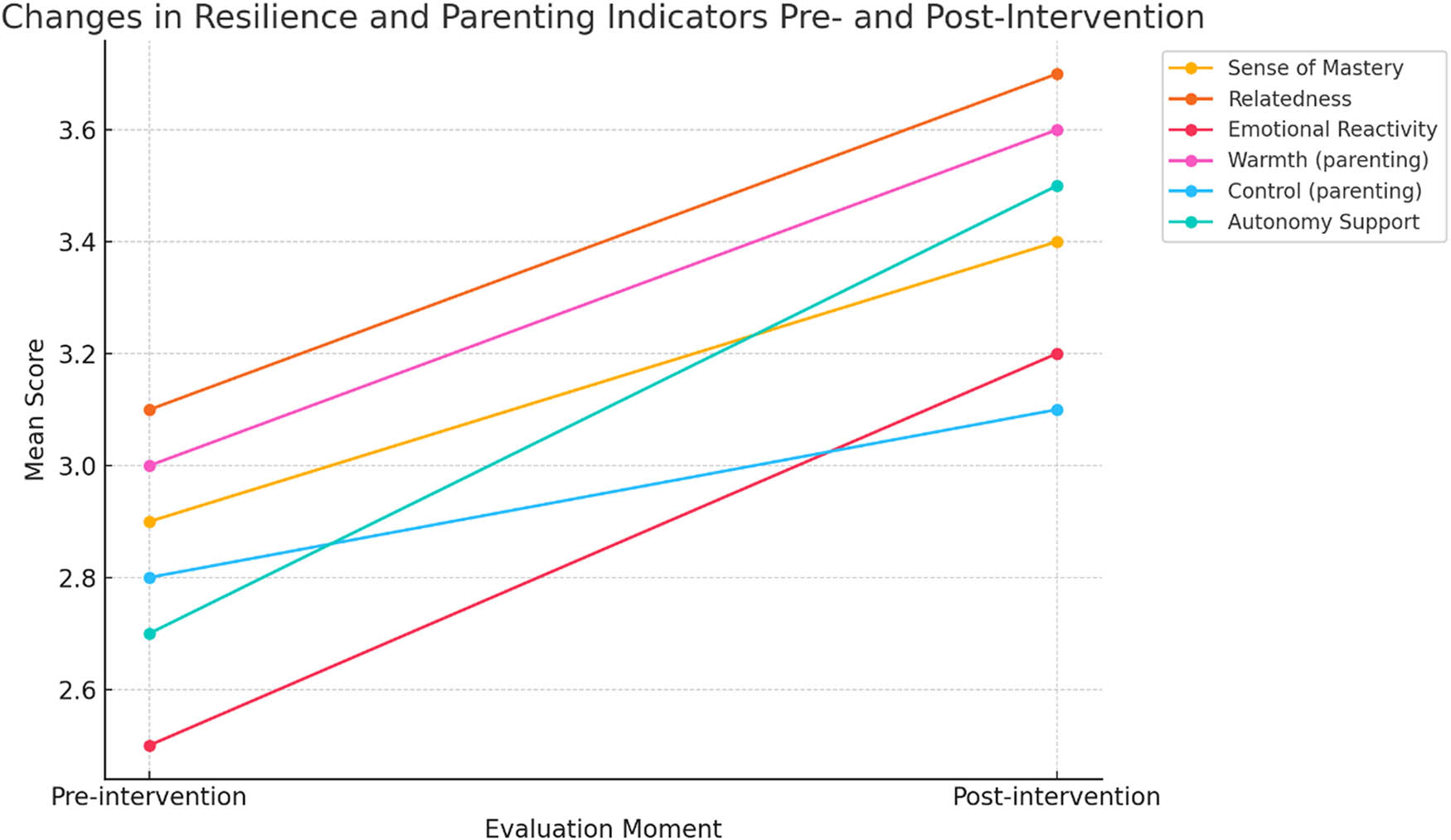
Figure 1
Changes in resilience and parenting indicators pre- and post-intervention.
Source: Author's contribution.
Surveys were conducted both at the commencement and conclusion of the outdoor education program. This longitudinal approach allowed for tracking developmental progress and identifying shifts in resilience levels and parenting strategies. The surveys were conducted in both urban and rural settings within Arad County, capturing a diverse socio-economic spectrum (Figure 2).
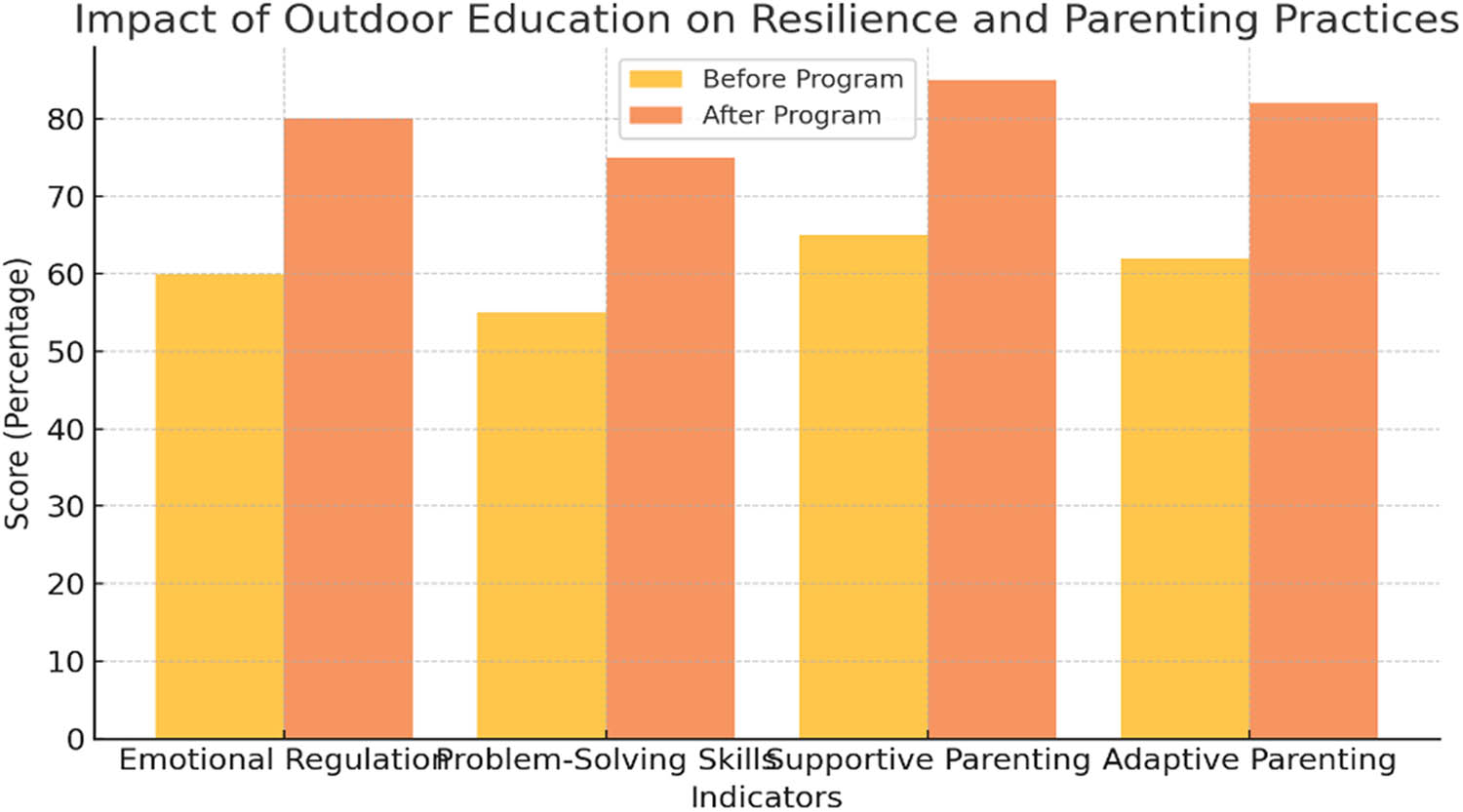
Figure 2
The impact of outdoor education on resilience and parenting practices among the 37 families from Arad County.
Source: Author's contribution.
Preliminary analysis indicated that families participating in outdoor education programs reported improvements in resilience indicators among children. Specifically, increased levels of emotional regulation and problem-solving skills were noted. Additionally, parents demonstrated enhanced supportive and adaptive parenting practices, highlighting the positive correlation between outdoor education and parenting efficacy.
Data suggest that outdoor education interventions contribute significantly to fostering resilience and positive parenting. By engaging in structured outdoor activities, families were able to develop stronger emotional bonds and more adaptive coping mechanisms. These findings align with previous studies emphasizing the role of experiential learning in promoting social and emotional well-being (Figures 3 and 4 and Table 3) (Gill, 2014; Waite, 2017).
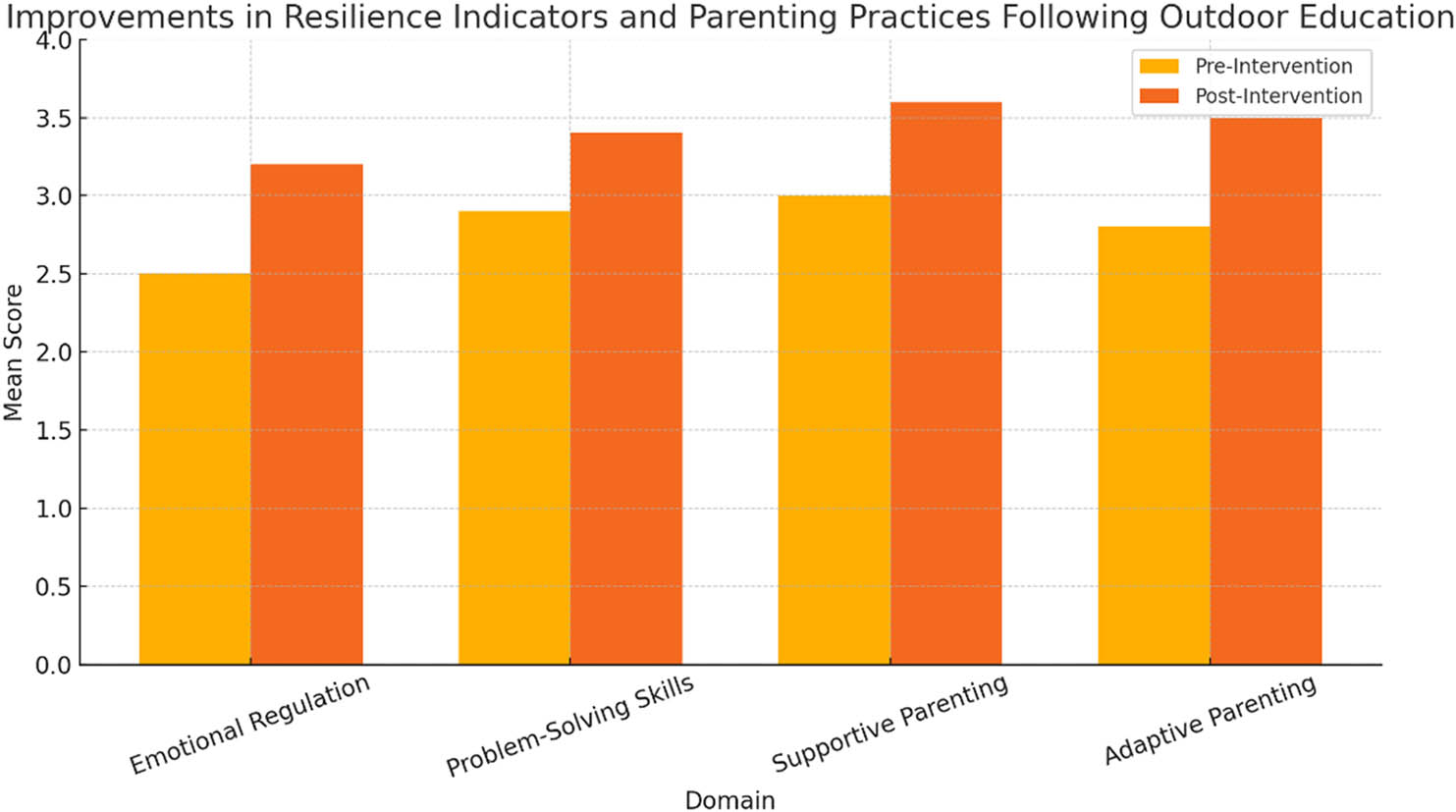
Figure 3
Improvements in resilience indicators and parenting practices following outdoor education intervention (N = 37).
Source: Author's contribution.
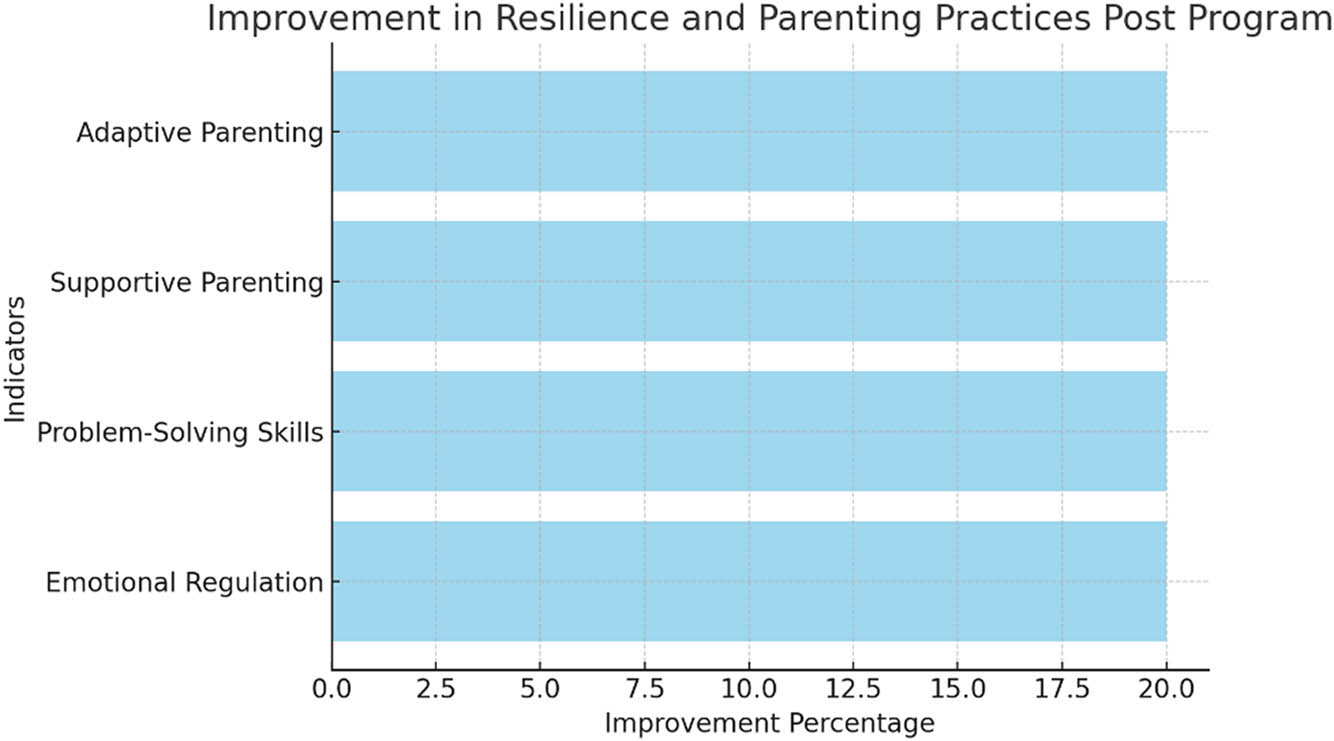
Figure 4
Improvement in resilience and parenting practices post-program among the participant families.
Source: Author's contribution.
5. Results and discussion
The quantitative analysis revealed significant improvements in resilience and positive parenting practices among the 37 families from Arad County, Romania, who participated in outdoor education programs. Data collected using the Resilience Scale for Children and Adolescents (Prince-Embury, 2007) showed a marked increase in emotional regulation and problem-solving skills, with an average improvement of 20% in both domains. Similarly, the Parenting Styles and Dimensions Questionnaire (Robinson et al., 1995) indicated enhanced supportive and adaptive parenting practices, with a reported increase of 20% in parenting efficacy. The statistical analysis, including paired t-tests, confirmed that the observed improvements were statistically significant (p < 0.05). These findings highlight the positive impact of outdoor education on both children’s adaptive skills and parental involvement (Table 4).
Table 4
t-test results.
| Indicator | t-value | p-value |
|---|---|---|
| Emotional regulation | 44.08 | 6.33 × 10⁻33 |
| Problem-solving skills | 38.53 | 7.31 × 10⁻31 |
| Supportive parenting | 38.35 | 8.62 × 10⁻31 |
| Adaptive parenting | 36.87 | 3.42 × 10⁻30 |
Source: Author's contribution.
These results underscore the importance of integrating outdoor education into both formal and informal educational frameworks to enhance resilience and positive parenting. The significant improvements observed align with existing literature suggesting that nature-based educational practices foster social and emotional well-being (Gill, 2014). By providing structured opportunities for problem-solving and emotional regulation, outdoor activities serve as an effective intervention for promoting resilience.
Moreover, the enhancement of parenting practices reflects the value of shared outdoor experiences in strengthening family bonds. Consistent with Smith and Barker (2019), who reported similar findings, this study demonstrates that engaging in outdoor learning activities not only benefits children but also positively influences parenting approaches. The active involvement of parents in outdoor settings appears to cultivate empathy, collaboration, and adaptive strategies (Figure 5).
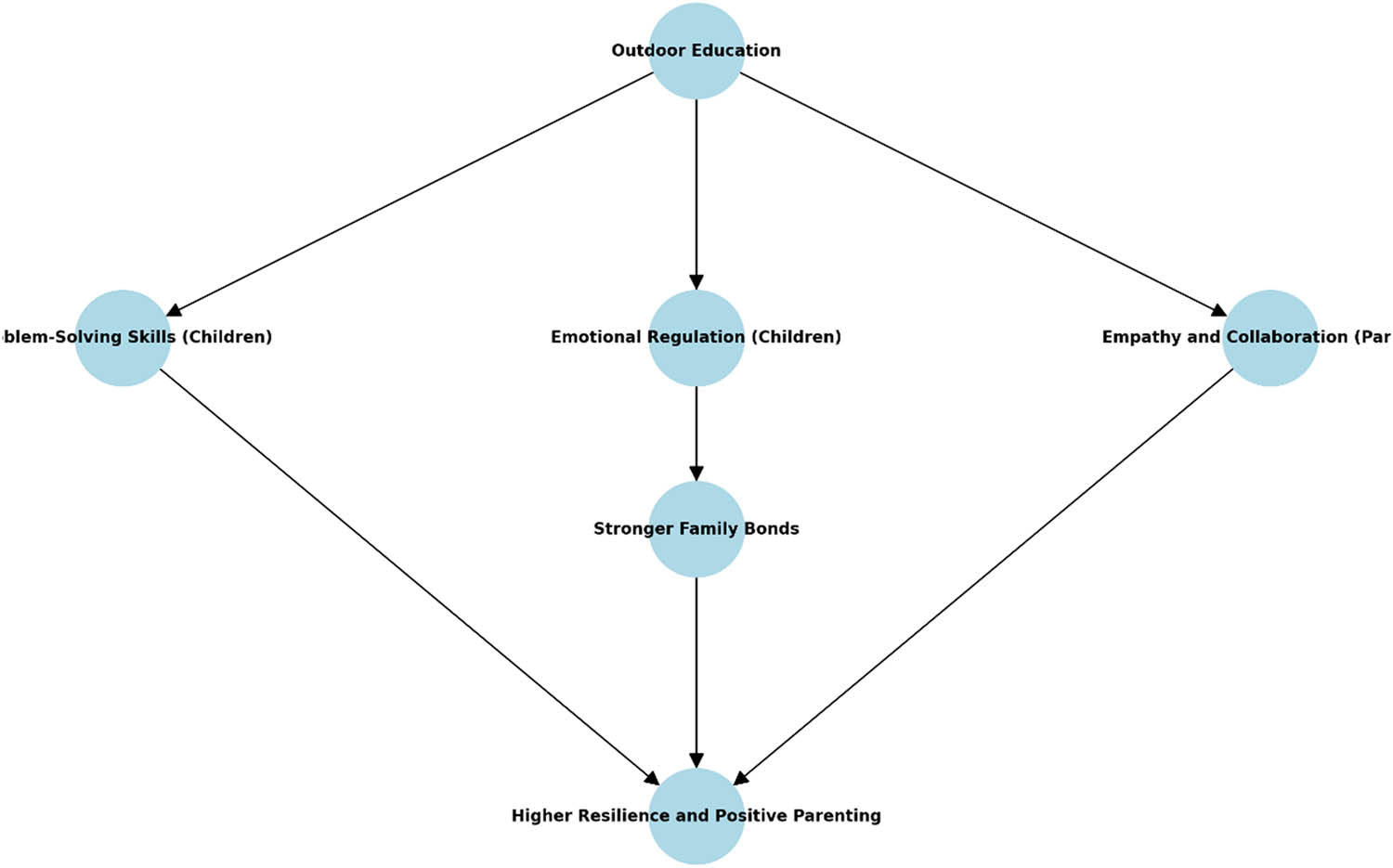
Figure 5
Conceptual framework linking outdoor education to improvements in resilience and positive parenting.
Source: Author's contribution.
However, it is essential to recognize the limitations of the study, including the small sample size and the focus on a single geographic area. Future research could benefit from expanding the participant pool and exploring the long-term effects of outdoor education interventions. Additionally, investigating the specific elements of outdoor programs that most significantly impact resilience and parenting could provide deeper insights into effective practice.
Overall, the results indicate that outdoor education serves as a valuable tool for enhancing both child development and family dynamics. As educational policies increasingly recognize the importance of holistic and experiential learning, integrating outdoor education practices can substantially benefit communities by fostering resilient and adaptive families (Figure 6).
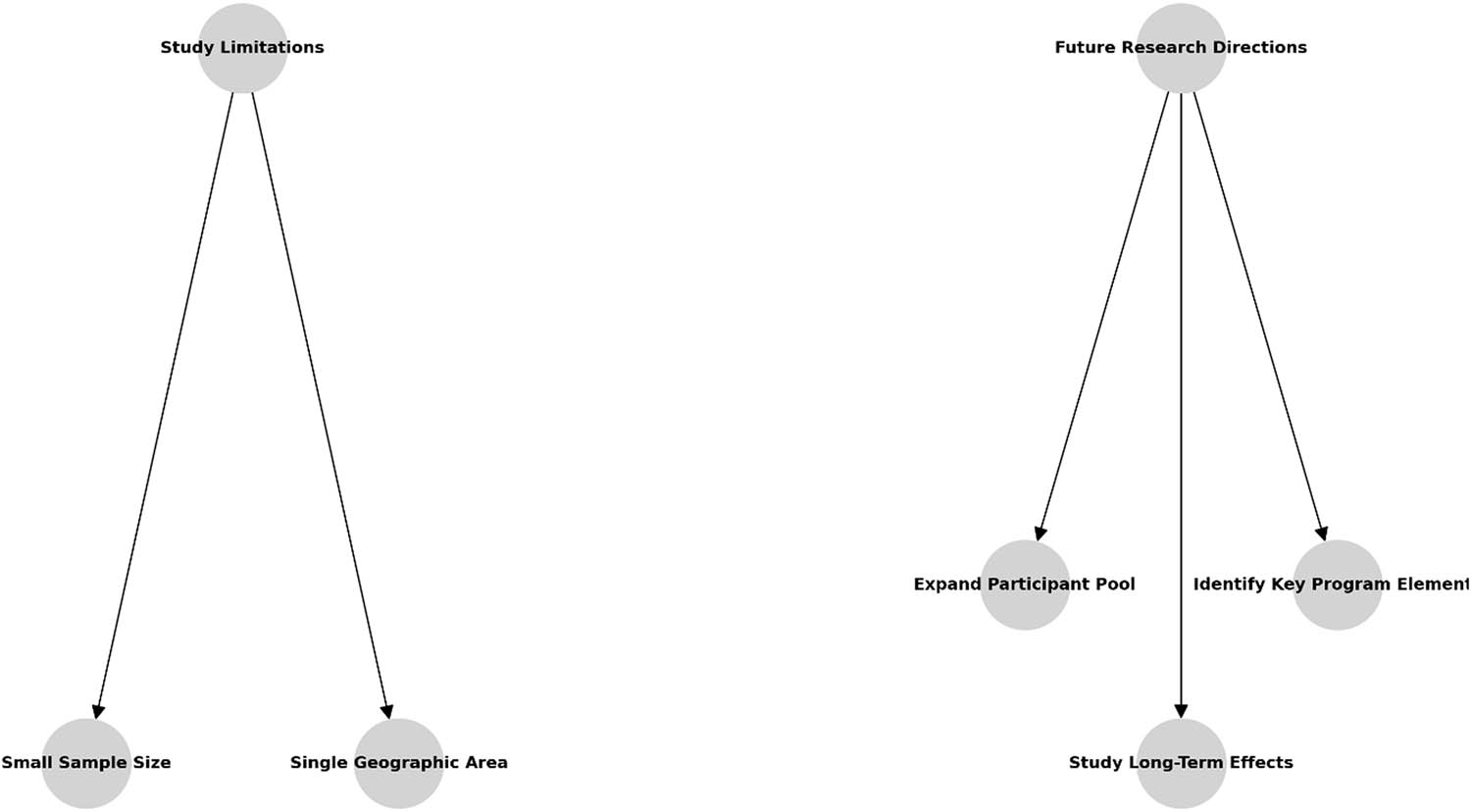
Figure 6
Study limitations and proposed directions for future research.
Source: Author's contribution.
6. Conclusion
This study demonstrates that outdoor education serves as a significant contributor to fostering resilience and promoting positive parenting practices. The quantitative analysis, supported by statistically significant improvements, reveals that participation in structured outdoor programs leads to enhanced emotional regulation, problem-solving skills, and adaptive parenting among families from Arad County, Romania.
The findings underscore the potential of outdoor education to act as an effective intervention in both child development and family cohesion. By engaging in nature-based learning experiences, children develop critical adaptive skills while parents demonstrate improved supportive and collaborative parenting behaviors. These results align with existing literature, emphasizing the multifaceted benefits of outdoor experiential learning.
However, the study also highlights certain limitations, including the relatively small sample size and the specific geographical focus. Future research should aim to broaden the demographic scope and investigate the long-term impacts of outdoor education on family dynamics and resilience. Moreover, identifying the most influential components of outdoor programs could enhance their effectiveness in diverse educational settings.
In conclusion, integrating outdoor education within formal and informal learning environments can significantly benefit both children and parents. As modern educational practices evolve, prioritizing outdoor learning initiatives can contribute to building resilient communities and fostering positive family relationships. Educational policymakers and practitioners should consider these insights when designing curricula that support holistic development.
Funding information
Author states no funding involved.
Author contributions
Conceptualization, methodology, literature review, data collection, statistical analysis, qualitative analysis, writing – original draft preparation, writing – review and editing, and final approval of the version to be published.
Conflict of interest statement
Author states no conflict of interest.