
Introduction
Sustainable investment has experienced remarkable growth in recent years and is expected to continue expanding (Eurosif 2025). The emergence of sustainable investing has redefined financial decision-making paradigms by embedding environmental, social, and governance (ESG) factors alongside traditional profit-maximisation objectives (Boffo and Patalano, 2020). Sustainable mutual funds that integrate ESG criteria, for instance, focus on clean energy, affordable housing, gender equality, social inclusion, and food security, while also seeking to maintain competitive financial performance (Garg et al. 2022). Sustainable investments have gained recognition as an alternative through which investors can pursue financial objectives while also deriving non-monetary utility from investment choices that align with their sustainability preferences, ethical considerations, and broader social values (Tao et al. 2022). The high interest in sustainable investments is also reflected among retail investors (RIA 2023), as more than 60% individuals express their intention to invest in sustainable finance products (2DII 2020). Riedl & Smeets (2017) documented that prosocial motivations significantly shape individuals’ investment decisions. Social impact is valued as a desirable attribute, as reflected in investors’ willingness to pay for investments that generate positive externalities (Barber et al. 2021). The dual nature of sustainable investing adds significant complexity to decision-making processes. This compounds the inherent challenges individuals already face when processing information-intensive financial choices, making it particularly difficult for consumers to reach well-informed decisions (ESMA 2023). As sustainable investing gains mainstream traction (D’Hondt et al. 2020), understanding how individuals process and act upon financial and non-financial information becomes critical to shaping both market behaviour and policy interventions.
News media serve as the primary source of market information for investors (Aman et al. 2024), who rely on streams of financial news from traditional outlets, digital platforms, and social media as the basis of their investment strategies. Market participants incorporate this continuous flow of information to update their assessments and forecasts under the inherent constraints of time, uncertainty, and cognitive limits. Previous studies (Allen et al. 2019; Ben-Rephael et al. 2017; Engelberg & Parsons 2011; Tetlock 2007) have established significant correlations between news content and market reactions, demonstrating the mechanisms through which media narratives shape investment decisions. Extending beyond conventional investment paradigms where news primarily informs financial assessments, sustainable investing requires investors to reconcile ESG narratives with financial metrics. Media coverage serves as the main source of climate information (Carvalho 2010) and contributes to building awareness and fostering positive attitudinal shifts toward climate change mitigation and adaptation strategies (Junsheng et al. 2019). In addition, increasing attention toward climate change news is positively associated with increasing knowledge and concern, leading to behavioural change (Hestres 2014). In the sustainable investment context, attention to sustainable finance and economic news was found to have a positive correlation with sustainable finance literacy (Strauß et al. 2023). Environmental news positively influences individual investor sentiment toward green stocks, although it correlates negatively with stock returns (Wang et al. 2021). Furthermore, retail investors respond similarly to standalone presentations of either financial returns or ESG impact metrics; both approaches increase allocations to sustainable investments. Nevertheless, combining these information sets produces no marginal benefit (Seifert et al. 2024). This may reflect cognitive constraints in processing multidimensional investment attributes or the dominance of one decision frame when both are present.
Despite this growing body of work, research remains limited on how investors simultaneously process financial and sustainability-related information when making portfolio decisions. Previous studies (Barreda-Tarrazona et al. 2011; Døskeland & Pedersen 2016; Heeb et al. 2023; Riedl & Smeets 2017) have predominantly examined the financial and sustainability aspects in isolation. This study aims to address this gap by exploring how information priming influences investors’ portfolio allocation decisions, with a specific focus on the interactive effects of financial and sustainability-related information. Using experimentally controlled news videos, this study examines how individuals rebalance their portfolios between conventional and sustainable investments when exposed to positive and negative stimuli. This study contributes to the behavioural finance and sustainable investing literature by providing empirical evidence on how information priming influences sustainable investment decisions, addressing the interaction between financial and sustainability-related information. Such insights are particularly pertinent in the context of financial advisory, where clients are frequently exposed to complex and potentially conflicting information regarding both financial and sustainability considerations.
Literature Review
Sustainable investment decisions extend beyond conventional risk-return evaluations by requiring investors to consider both financial performance and sustainability-related attributes. While traditional finance theories (Markowitz 1952; Sharpe 1964) Assume that investors base their financial decisions mainly on financial aspects. Sustainable investments introduce ESG considerations as an additional layer of evaluation. The dual-motive nature of sustainable investments allows investors to derive utility not only from financial payoffs but also from holding investments that align with their values, sustainability preferences, and social concerns (Pasquino & Lucarelli 2024). Prior research has demonstrated that financial considerations remain important in sustainable investment decisions (Narayanan et al. 2021). Investors’ financial concerns were found to be the key determinants of their attitude toward sustainable investments (Brunen & Laubach, 2022; Garg et al. 2022; Siemroth & Hornuf 2023). In contrast, evidence also suggests that financial motives alone do not fully explain sustainable investment behaviour. Perceived financial gains, for instance, were found to have no impact on the intention to invest in ethical funds (Chamorro-Mera & Palacios-González 2019) or the amount allocated to sustainable investments (Gutsche et al. 2023). In a similar vein, empirical studies (Bollen 2007; Renneboog et al. 2011) provide evidence that the money flows of socially responsible investment (SRI) funds are less sensitive to past financial performance compared to conventional funds. The findings suggest the role of nonfinancial factors in shaping investors’ behaviour (Kapil & Rawal 2023; Kräussl et al. 2024). Prior research indicated that non-pecuniary motivations, including environmental concerns (Akhtar 2022; Meunier & Ohadi 2023) and warm-glow effects, the joy that individuals experience after doing a prosocial action (Kleffel & Muck 2023), increase the likelihood of sustainable investment adoption. Sustainable investment choices also function as pro-social signals, communicating personal values and demonstrating a commitment to sustainability (Gutsche et al. 2021; Riedl & Smeets 2017).
Theoretical models treat sustainable investments as consumption goods, where the ESG-motivated investors derive direct utility from holding green assets beyond the assets’ monetary payoffs (Avramov et al. 2022, 2024; Pástor & Vorsatz 2020; Pedersen et al. 2021). This implies that sustainable investment decisions involve integrating financial and non-pecuniary utility. As a result, investors face greater complexity when evaluating sustainable investment products, particularly when financial and sustainability-related information point in different directions (Escrig-Olmedo et al. 2017). A growing body of literature explores the link between individuals’ financial literacy, knowledge of sustainable finance, and sustainable investment preferences. Due to the additional layer of complexity of green finance, financially sophisticated individuals were found to be more engaged in green finance, as they are better equipped to comprehend information on financial products (Anderson & Robinson 2022). The finding aligns with Bethlendi et al. (2022), who documented that financial and green knowledge are positively correlated with attitude toward green finance. Higher levels of financial knowledge are also associated with a greater amount allocated to sustainable mutual funds (Gutsche et al. 2023). Knowledge of sustainable finance or sustainable finance literacy exhibits a positive linkage with willingness to invest in sustainable investments (Carlsson Hauff 2022; Filippini et al. 2024). However, the relationship between literacy and sustainable investment behaviour is not always straightforward. While financial literacy is positively correlated with individuals’ awareness of sustainable investment options, it shows a negative relationship with actual sustainable investing behaviour (Gutsche et al. 2021). Using subjective financial literacy measures, Rossi et al. (2019) indicated that individuals who perceive themselves as financially literate show less interest in socially responsible investments. These mixed findings suggest that knowledge may help investors process information but may not be sufficient to explain how they respond to sustainability-related cues, particularly when decisions are shaped by uncertainty or contextual information.
Behavioural finance provides an important framework for understanding how external information may shape investment decisions. The decision-making process is susceptible to unconscious influences such as environmental stimuli or contextual cues that can modify individuals’ risk perceptions and preferences. Priming refers to the process through which exposure to a stimulus activates related concepts in memory, thereby leveraging the availability heuristic to shape subsequent choices (Momsen & Stoerk 2014). This technique makes preferred options more cognitively salient, thereby increasing the likelihood of action. Hao et al. (2024) proposed a comprehensive definition of priming as “interventions involving either the presentation of stimuli within micro-environments or the evocation of prior experiences, with minimal conscious engagement leading to the activation of nodes in associative memory that enhances performance in perceptual or cognitive tasks”. In financial decision-making, priming can make certain dimensions, such as risk, loss, or return, more cognitively accessible at the moment of choice.
Prior research in behavioural finance has empirically demonstrated how priming influences financial decision-making processes and outcomes. An experimental study using advertisements and articles as priming stimuli showed that risk-related content influences risk preferences and investment decisions, with professional investors exhibiting greater sensitivity than undergraduate students (Gilad & Kliger 2008). This supports the findings from Moore et al. (1999), which found that investors, both inexperienced and professional, often make suboptimal decisions due to multiple influencing factors in the judgment process. Moreover, exposure to financial information paired with different colours was found to influence investment decisions (Kliger & Gilad 2012). The study indicated that seeing the colour red made people focus more on potential losses, causing them to value loss-related outcomes higher than gains compared to those who saw green. In contrast, retail investors exhibited greater risk tolerance when exposed to simultaneous negative investment outcomes and fear-inducing stimuli (Cantarella et al. 2023). In times of financial turmoil, however, most investors stay passive and do not engage with their investments, but tend to wait out the storm (Söderberg & Wester 2012).
In the context of sustainable investing, the use of different labels in mutual funds to prime information about climate impact represents an effective behavioural nudge, significantly increasing retail investors’ allocations to sustainable investment options (Bassen et al. 2019). Asking investors to specify exclusionary industries reduces their willingness to invest in sustainable options. Investors show greater commitment when they perceive their investments as aligned with their moral principles (Meunier & Ohadi 2023). Using an experiment that manipulated participants’ feelings through guilt induction, Gevorkova et al. (2024) highlighted that guilt-primed individuals are more likely to select green funds and are willing to forego more return to invest in sustainable products compared to those who do not feel guilty. A study by Vanwalleghem & Mirowska (2020) indicated that exposure to positive environmental imagery increases investors’ willingness to accept lower financial returns for sustainable investment options compared to negative environmental visuals. The impact is even stronger for individuals with highly proactive personalities. These studies indicate that sustainability-related cues can shape investor preferences, especially when they activate moral, emotional, or identity-related considerations.
At the same time, the effects of sustainability-related information may depend on how it interacts with financial information. Financial performance and environmental impact indicators demonstrate a positive association with investor satisfaction for SRI mutual funds (Nilsson et al. 2014). On the other hand, excessive emphasis on ESG information could foster scepticism, leading to discouragement from investing. Correspondingly, overemphasising financial rewards may diminish the intrinsic motivation for sustainable investing (Agnew & Szykman 2005). Extending this point, Seifert et al. (2024) suggested that presenting either financial or environmental information has a similar impact in encouraging sustainable investments among individual investors. However, exposing investors to both types of information simultaneously has no additional effect. The presentation format of sustainability ratings significantly influenced investment allocations, with investors allocating larger amounts to mutual funds categorised as high-sustainability compared to those with low sustainability ratings (Hartzmark & Sussman 2019). This preference for high-sustainability funds aligns with loss aversion principles (Kahneman & Tversky 1979), where investors weigh negative information more heavily than equivalent gains.
Building on this literature review, the study examines how different combinations of positive and negative financial information and positive and negative environmental sustainability information are associated with sustainable investment portfolio allocation decisions.
Materials and Methods
Participants
An a priori power analysis was conducted using the G*Power statistical analysis program to determine the required sample size for a repeated-measures within-subjects design (F tests: repeated-measures ANOVA, within-factors). Assuming a medium effect size, the analysis indicated that a minimum of 31 participants was required to achieve the expected effect with a statistical power of 0.95 at a 5% significance level. The study participants were recruited from a master’s degree program at a public university in Sweden. A total of 64 participants initially registered for the study. Some participants did not complete all five experimental sessions, resulting in incomplete repeated-measures data. Consistent with the experiment design, only participants who completed the entire five-week experiment were included in the final analysis. The final sample comprised 42 participants, exceeding the minimum required for the analysis. We selected students as participants for two key reasons: first, we want to capture the decision-making patterns of non-professional investors, and second, to ensure logistical feasibility for a study requiring repeated measures. Our sample exhibits a relatively balanced gender distribution, with 48% female and 52% male participants. In terms of age, the majority (57%) fall within the 18–25 range, followed by 38% aged 26–35, and a smaller proportion (5%) aged 36–45.
Stimulus Material
The experimental manipulation involved priming participants through exposure to financial and sustainability-related news events. We developed four fictitious news-style videos for this purpose. Two videos focused on financial events - one presenting a favourable financial situation and the other depicting an unfavourable financial scenario. Similarly, the remaining two videos addressed sustainability events, with one conveying positive environmental developments, such as progress in renewable energy, and the other highlighting negative ecological issues, such as increased flooding and pollution. We used artificial intelligence (AI) to generate the videos instead of using authentic news videos to maintain a consistent tone, pacing, visual quality, and presentation structure across positive and negative financial and sustainability scenarios. The video content was validated through pilot testing to ensure equivalent perceived credibility and emotional impact across all experimental conditions. We ensured experimental consistency across all stimuli by standardising the video format along three key dimensions: 1) We maintained a uniform duration of approximately one minute for each video. 2) Each video addressed an identical number of core issues, structured around four consistent prompts. This means that positive or negative prompts were kept similar, with equal emphasis on each. And 3) We preserved equivalent production quality throughout all videos. This standardisation controlled for potential confounding effects by eliminating variability in length, content density, and technical execution that might otherwise influence participant responses independently of the experimental manipulation (He et al., 2023). All videos were in English and with English subtitles to accommodate international student participants. The inclusion of subtitles was to ensure accessibility for non-native English speakers and to mitigate the potential audio disruptions or clarity issues during experimental sessions. A sample of the prompts used to generate the videos is as follows:
“Create a news-style video featuring a news presenter who greets viewers as a news anchor at the start and end. The report covers positive news on mitigating climate change in four ways: higher production of renewable energy, more efficient and affordable clean energy production, the development of more innovative recycling technologies, and increased forest conservation efforts. Use only relevant pictures or footage in the video to help visualize the news. Avoid mentioning specific countries, companies, or identities. The duration of the video should be between 1 and 1.5 minutes long with a professional news intro and closing segments. The presenter in the video should have a professional news anchor articulation, tone, and facial expression. The language of the video is English, and add clear English subtitles throughout.”
Representative screenshots from each experimental video stimulus are provided in Appendix A-D. The script of each video can be found in Appendix E.
Procedure
The research design of this study is a within-subject experiment, where all participants are assigned to all of the treatments and are involved in repeated measures (Koschate-Fischer & Schandelmeier 2014). The same participants completed repeated portfolio allocation tasks across five consecutive weekly sessions. The design consisted of one baseline session without experimental stimuli, followed by four treatment sessions in which participants were exposed to different combinations of financial and sustainability-related news videos. We selected a within-subject rather than between-subject design to reduce the influence of individual differences in baseline risk preferences, financial literacy, and sustainability attitudes. A within-subject experimental design not only minimises the impact of individual differences but also requires fewer control variables (Wedel & Kopyakova 2022). By exposing all participants to all treatment conditions, each participant served as their own control, thereby increasing statistical efficiency and reducing sample size requirement (Alferes 2012). Since participants do repeated measures, the risk of having learning and order effects is generally higher in a within-subject experiment (Viglia et al. 2021). Five experiment sessions were conducted between November and December 2024, with a one-week break between each treatment.
Before conducting the experiment, we conducted a manipulation check with five participants to assess whether the video stimuli were effective in influencing participants as intended. The participants were shown each of the four videos and were asked to answer these questions after each video (on a Likert-scale 1–7): 1) How would you describe the overall tone of the video you just watched?; 2) To what extent did the video focus on financial issues?; 3) To what extent did the video focus on environmental or sustainability-related issues?. The manipulation test results during the pilot study indicated the validity of the manipulation. Therefore, we proceeded to use the videos for the experiment sessions. We did not do manipulation checks during the experiment, as it could contaminate the dependent variable (Stoner et al., 2023), since participants were required to make portfolio allocations every week. Manipulation checks may not be necessary when the experiment uses stimuli that can be objectively identified, when there are no plausible alternative explanations for the observed effects, or when the study uses well-established manipulations (Kardes & Herr 2019; Sigall & Mills 1998; Stoner et al. 2018).
The study employed a baseline measurement session prior to any experimental exposure rather than a separate no-treatment control group. The participants were asked to complete a consent form and a questionnaire regarding their financial literacy, sustainability literacy, and sustainable finance literacy. During this session, participants made portfolio allocation decisions without viewing any news videos. This baseline condition served as the reference point against which post-treatment allocation changes were evaluated. Participants were given a hypothetical situation and asked to make investment allocation decisions. The question is as follows:
“Your grandparents left you 100,000 Swedish Kronor (SEK) in their will, with the stipulation that you have to invest the money. You can withdraw the inheritance and the investment returns 30 years from now. You have four funds to choose from and are free to choose how much money you want to allocate to each fund. For example, you can put 100% of your money in one fund, you can choose to invest in two funds with different percentages of allocation each, or spread all the money evenly into four funds, or any way you like as long as you invest in the listed fund options. Here are the mutual funds that you can invest your money in. All funds are equity funds and have the same annual fee rate”.
The four investment alternatives are presented in Table 1 as follows:
The four funds exhibit distinct sustainability orientations, where Funds A and C do not incorporate ESG risks into their investment strategies. On the other hand, Funds B and D explicitly integrate ESG considerations. In terms of risk-return profiles, Funds A and B offer comparatively lower risk-return characteristics, while Funds C and D present higher risk-return. This experimental design includes both conventional and sustainable funds across the risk-return spectrum to accommodate varying investor risk preferences.
During each of the four treatment sessions, participants were exposed to one financial news video and one sustainability news video. We used positive and negative priming for both financial and sustainability news. We systematically varied the presentation order of positively and negatively valenced videos across sessions to prevent sequence biases. After viewing each pair of videos, participants responded to the same standardised portfolio allocation measure used in the baseline assessment. Figure 1 presents the detailed treatment timeline, specifying the video sequence for each session.
Table 1.
Investment options
| Description | Fund A | Fund B | Fund C | Fund D |
|---|---|---|---|---|
| Average annual return for the last 1 year | 5,8% | 5,6% | 7,6% | 7,3% |
| Average annual return for the last 5 years | 5,7% | 5,5% | 7,5% | 7,1% |
| Risk Profile (1=low; 6= very high) | 4 (moderate) | 4 (moderate) | 5 (high) | 5 (high) |
| Integrating sustainability (ESG) risk into their investment strategy | No | Yes | No | Yes |
| How much will you allocate your money to: | ||||
| Fund A: ……………….% | ||||
| Fund B: ……………….% | ||||
| Fund C: ……………….% | ||||
| Fund D: ……………….% | ||||
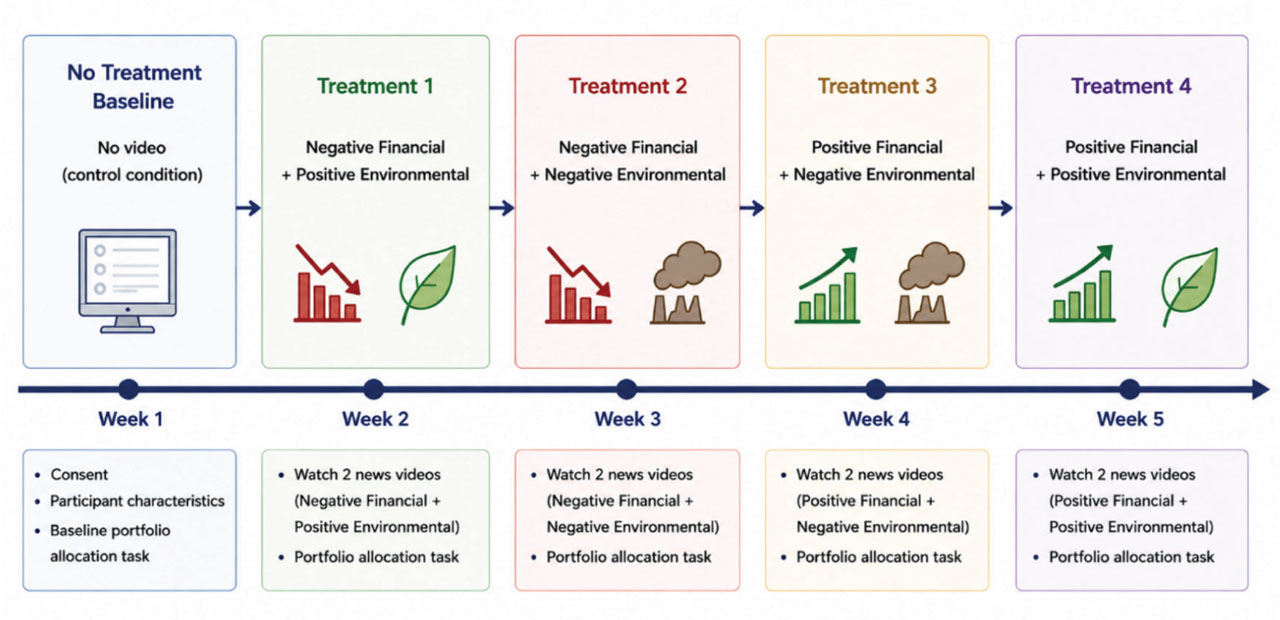
Figure 1.
Experiment Timeline.
Statistical analysis
Statistical analyses were conducted using SPSS software version 28. Descriptive statistics were first computed for participant characteristics and baseline investment preferences. Kolmogorov-Smirnov tests indicated non-normality in the allocation data. Therefore, non-parametric analyses were employed. Friedman tests were used to assess differences in portfolio allocations across the repeated treatment conditions. A significant Friedman result only shows that at least one treatment’s distribution or mean rank differs, not which ones (St. Laurent & Turk 2013). Post hoc Wilcoxon signed-rank tests were conducted following significant Friedman test results to identify which treatment conditions differed significantly from the baseline allocation condition. The Wilcoxon signed-rank test was selected because it is appropriate for pairwise comparisons involving related samples under non-parametric repeated-measures conditions. In addition, Spearman’s rank correlation was conducted to examine the associations between financial literacy, sustainability literacy, and sustainable finance literacy measures and changes in portfolio allocations following exposure to the experimental stimuli.
Results
Respondents were asked to rate their experience with investing in the financial market on a scale from 1 (not at all) to 7 (to a great extent). We found that male respondents reported significantly greater investment experience (M = 4.05) compared to female respondents (M = 2.55), where M refers to the group means on a 7-point experience scale. The F statistic indicates a significant difference between groups, with F(1, 39) = 10.68, p = .02. This confirms previous studies (Bajtelsmit and Bernasek, 1997; Brooks et al., 2018; Montford and Goldsmith, 2016) that reveal men to have higher risk tolerance and be more active in making investments in riskier assets than women.
Understanding participants’ knowledge of sustainable finance is essential, as it may determine their ability to evaluate financial and sustainability information and, in turn, affect their decisions to invest in sustainable mutual funds. Table 2 presents the results from the indices measuring literacy. These indices range from 0 to 1, where a low score suggests low literacy and a higher score, high literacy. The results suggest that participants demonstrated a high level of financial literacy, as well as a moderate understanding of sustainable finance. In general, Sweden is one of the countries with the highest level of financial literacy in the world (Faulkner 2022). However, knowledge of sustainability was the area where participants scored the lowest.
Table 2.
Means for literacy
| Index | Mean score (0 to 1) |
|---|---|
| Financial literacy | 0.95 |
| Sustainability literacy | 0.36 |
| Sustainable finance literacy | 0.38 |
To assess the impact of the four experimental conditions, we first established a baseline measurement. Respondents were provided information about the profiles of the four mutual funds and asked to rate both their perceived risk and their likelihood of investing in each. The results in Table 3 indicate that Fund A and Fund C were perceived as slightly riskier, while Fund C and D were marginally more likely to attract investment, though differences were modest.
Table 3.
Perceived risk and willingness to invest
| Fund A | Fund B | Fund C | Fund D | |
|---|---|---|---|---|
| Risk (1 - low, 7 - high) | 4,1 | 3,2 | 4,4 | 3,8 |
| Likelihood of investment (1 - low, 7 - high) | 3,8 | 4,1 | 4,2 | 4,6 |
Subsequently, participants were asked to allocate a fictitious 100,000 SEK they had inherited across the funds. This allocation served as the baseline measurement. The post-treatment investment allocations for each fund were compared to the baseline scenario to assess the impact of news priming on investment decisions. Kolmogorov-Smirnov tests were conducted to check the normality of the data distribution. The results indicated non-normality; therefore, the Friedman test was employed to examine statistical differences across treatments. The findings are presented in Table 4.
Table 4.
Friedman test results
| Description | Mean Rank | |||
|---|---|---|---|---|
| Fund A | Fund B | Fund C | Fund D | |
| Baseline - mean rank | 2.964 | 2.866 | 3.119 | 3.305 |
| Treatment 1 - mean rank | 3.274 | 2.841 | 2.988 | 2.756 |
| Treatment 2 - mean rank | 3.179 | 3.280 | 2.738 | 2.549 |
| Treatment 3 - mean rank | 2.821 | 3.037 | 3.000 | 3.171 |
| Treatment 4 - mean rank | 2.762 | 2.976 | 3.155 | 3.220 |
| Chi-Square (4, N=42) | 6.471 | 3.431 | 2.911 | 10.893 |
| Asymp. Sig. | 0.167 | 0.488 | 0.573 | 0.043** |
The results show that portfolio allocations to Funds A, B, and C did not significantly differ across the five treatment conditions. This means that different treatment conditions did not lead to statistically significant changes in participants’ preferences for these funds. Nevertheless, the investment allocation to Fund D demonstrated a statistically significant difference across the five treatments at a 5% significance level. This shows that the different treatment conditions influenced how participants allocated their investments to Fund D. The Friedman test does not specify which treatment had an effect; therefore, we conducted post hoc Wilcoxon signed-rank tests to find which treatment conditions differ from each other.
Table 5 compares each treatment condition to the baseline scenario, the initial condition without any treatments. The Wilcoxon signed-rank test results indicated a statistically significant difference in scores between the baseline scenario and Treatment 2. This means that after participants were exposed to both negative financial and environmental news, their allocations to Fund D (with a higher risk-return profile and ESG risk integration) changed significantly relative to the baseline scenario. The statistics show that negative ranks are the highest compared to positive ranks and ties. This suggests that most participants decreased their allocation to Fund D as a response to treatment 2 compared to the baseline condition. Combined exposure to negative financial and sustainability information may trigger a reassessment of risk and impact considerations, specifically away from the sustainable fund with a higher risk-return profile. The behavioural shift implies that participants perceived greater risk in Fund D under conditions of compounded uncertainty, even when it aligns with long-term sustainable goals. The effects were only evident for Fund D because it is exposed to both financial risk, due to its high risk-return profile, and sustainability risk, due to its ESG integration. When financial markets and environmental conditions are portrayed negatively, the risk perception of fund D increases, making it appear riskier than other funds with lower exposure to either financial or sustainability-related risks. The findings support Cho & Lee (2006), who found that higher perceived risk resulting from increased uncertainty leads to a reduction in allocation to higher-risk investments.
Table 5.
Post hoc Wilcoxon signed-rank test results
| Comparisons with the Baseline Condition | Description | N | Mean Rank | Sum of Ranks |
|---|---|---|---|---|
| Treatment 1 | Negative Ranks | 19 | 16.16 | 307.00 |
| Positive Ranks | 12 | 15.75 | 189.00 | |
| Ties | 11 | |||
| Total | 42 | |||
| Z | −1.160 | |||
| Asymp. Sig. | 0.246 | |||
| Treatment 2 | Negative Ranks | 22 | 16.30 | 358.50 |
| Positive Ranks | 10 | 16.95 | 169.50 | |
| Ties | 10 | |||
| Total | 42 | |||
| Z | −1.773 | |||
| Asymp. Sig. | 0.076* | |||
| Treatment 3 | Negative Ranks | 16 | 14.91 | 238.50 |
| Positive Ranks | 13 | 15.12 | 196.50 | |
| Ties | 13 | |||
| Total | 42 | |||
| Z | −0.456 | |||
| Asymp. Sig. | 0.648 | |||
| Treatment 4 | Negative Ranks | 13 | 12.12 | 157.50 |
| Positive Ranks | 12 | 13.96 | 167.50 | |
| Ties | 17 | |||
| Total | 42 | |||
| Z | −0.135 | |||
| Asymp. Sig. | .0893 |
Spearman’s rank correlations were conducted as supplementary analyses to examine whether financial literacy, sustainability literacy, and sustainable finance literacy were associated with changes in portfolio allocations following exposure to negative financial and environmental news stimuli. As shown in Table 6, the analyses did not reveal statistically significant associations between literacy measures and changes in portfolio allocation. The coefficients were small in magnitude for financial literacy, sustainability literacy, and sustainable finance literacy, indicating no relationship between literacy levels and allocation changes after participants were exposed to negative financial and negative environmental news stimuli.
Discussion
Based on the statistical analyses, portfolio allocations did not differ significantly across most treatment conditions. The only significant difference emerged when negative financial information was combined with negative environmental information. In this condition, participants reduced their allocations to the sustainable mutual fund with a higher risk-return profile. This finding aligns with the loss aversion principle from prospect theory (Kahneman & Tversky 1979), which posits that individuals value losses more than equivalent gains. When confronted with two simultaneous sources of risk, financial market downturns and environmental degradation, participants may have perceived sustainable investments with higher risk-return profiles as more vulnerable to loss. As a result, they shifted away from Fund D to avoid potential losses, even if the fund aligns with their long-term impact goals. Additionally, the results support the previous study by Vanwalleghem & Mirowska (2020), which found that investors are more encouraged to invest in sustainable investments when shown positive environmental images rather than negative ones. Our results provide controlled experimental evidence that combining financial and sustainability-related information may shape sustainable investment decisions under specific conditions, particularly when the investment option combines ESG integration and a higher risk-return characteristic, in contrast to the findings of Seifert et al. (2024).
While the correlations between literacy measures and changes in portfolio allocation were not statistically significant, the negative direction observed for sustainable finance literacy may indicate that more knowledgeable participants were slightly more attentive to negative sustainability-related information. One possible interpretation is that emotionally salient negative cues may shape allocation decisions through heuristic processing that is not substantially determined by the knowledge level, particularly when participants must respond to short-horizon stimuli under controlled experimental conditions. However, given the weak magnitude of the relationship, this interpretation should be treated cautiously and warrants further investigation in future research. The descriptive results indicate that most participants had high levels of financial literacy, but relatively low levels of sustainability literacy and sustainable finance literacy, similar to the previous study by Faradynawati et al. (2025), who found literacy gaps among individuals holding investment products in Sweden. Nevertheless, this finding contrasts with Lanciano et al. (2025), who demonstrated that financial literacy is positively associated with knowledge in sustainability and sustainable finance, and that these knowledge dimensions positively influence sustainable investment decisions. In the present study, however, the Spearman’s rank analyses did not show a significant association between literacy measures and changes in portfolio allocation following exposure to negative financial and environmental news stimuli. Auzepy et al. (2024) further show that the effect of sustainable finance literacy on sustainable investment decisions is moderated by sustainability preferences. Since sustainability preferences were not measured in this study, they may represent an important unobserved factor that could help explain the absence of a significant relationship between literacy and investment allocation decisions.
Limitations
As with any empirical study, this explorative research is subject to several limitations. First, the study has limited sample diversity, as the participants consisted solely of university students. While student samples are commonly used in experimental research due to their accessibility and ability to participate in controlled experimental designs, this homogeneity may limit the generalizability of the findings to the broader population of investors. Future research could address this limitation by including a more diverse pool of participants across different demographic groups. Additionally, incorporating both experienced and inexperienced investors could provide deeper insights into how information priming influences sustainable investment decisions across varying levels of financial experience. The second limitation is the hypothetical nature of the investment task, where participants allocated windfall gains instead of earned income. This potentially has reduced participants’ behavioural realities compared to when real financial stakes are involved. Moreover, the use of windfall gains in an experiment tends to increase participants’ willingness to invest sustainably (Hoffmann et al. 2019), potentially leading to inflated ESG allocation levels in our experiment. Incentivised experiment designs could be considered where participants receive a real payout based on their investment choices. This way, future research can increase the ecological validity of the experiment. Third, the use of AI-generated videos may reduce ecological realism compared to authentic news broadcasts. Participants may respond differently to AI-generated versus real news content. Consequently, future research could compare AI-generated and real-world media stimuli to assess whether presenter authenticity moderates priming effects in sustainable investment decision-making. Fourth, the sample was characterised by generally high levels of financial literacy, which have contributed to the skewed distribution of the data and limited variation needed for further analysis. Future research can include participants with more diverse literacy levels to provide a richer understanding of how literacy shapes responses to financial and sustainability-related information.
Implications
This research contributes to the literature in two ways. First, it extends behavioural finance research on information priming and loss sensitivity to the context of sustainable investment decision-making. Specifically, the study examines how established behavioural mechanisms operate in a dual-motive investment setting, where individuals must process both financial and sustainability-related information. The contribution lies in examining the interactions between those two types of information, rather than considering financial and sustainability-related information in isolation. The findings suggest that information priming, as an element of choice architecture, plays a selective and context-dependent role in sustainable investment decisions. The exploratory empirical results show that exposure to different combinations of financial and sustainability-related news did not broadly alter portfolio allocations across all fund types. Instead, the effect emerged primarily when negative financial and environmental information were jointly presented in the investment option, which combined sustainability consideration with a higher risk-return profile. Second, the study contributes methodologically by using AI-generated videos to demonstrate how emerging digital media tools can be used to simulate contemporary information environments. The use of AI to generate stimuli enabled control over experimental conditions, thereby allowing the study to more precisely isolate the effects of information valence and domain.
This study offers practical implications for financial advisors, suggesting that clients’ sustainable investment decisions may be shaped by their interpretation of financial and environmental news events. A necessary starting point for advisors is to identify whether clients have concerns about ESG issues or an interest in sustainable investing, as such baseline preferences provide an important context for interpreting potential media effects. This is particularly relevant because advisory interactions do not occur in isolation from external information, and the influence of media exposure may be more pronounced among clients who already consider ESG factors in their investment decisions. Clients may enter advisory conversations with concerns shaped by recent financial or sustainability-related news, which can alter how they perceive risk, uncertainty, and the attractiveness of sustainable investment products. Financial advisors should therefore not only provide product recommendations but also assist clients in contextualising media-driven information and distinguishing between temporary news sentiment and the long-term fundamentals of sustainable investment products. This may be especially important for higher-risk ESG funds, where clients may perceive compounded uncertainty from both financial market volatility and sustainability-related risks. In practice, financial advisors can support clients by providing clearer explanations of both financial and sustainability-related risks, reinforcing long-term investment strategies, and supporting clients in making decisions that align with their financial goals and sustainability preferences despite short-term fluctuations in news sentiment. Additionally, our results indicated no relationship between literacy levels and changes in allocation, implying that improving clients’ technical knowledge may be necessary but not sufficient. Clients may also require support from financial advisors in interpreting news sentiments or contextual cues when making decisions that align with their investment goals. Furthermore, policymakers and regulators aiming to promote sustainable finance participation could benefit from ensuring that sustainability-related disclosures are clear, consistent, and easily interpretable for retail investors. Improving the accessibility and transparency of sustainability information could help investors better distinguish between temporary news-driven sentiment and the long-term characteristics of sustainable investments.
Conclusion
This study examines how information priming influences investors’ portfolio allocation decisions, focusing on the interaction between financial and sustainability-related information. Our findings suggest that exposure to different priming conditions and combinations of financial and sustainability-related information may have a selective effect on portfolio allocation decisions in this experimental setting. These effects emerged primarily for the fund that combined ESG integration with a higher risk-return profile, in which participants reduced their allocations after exposure to both negative financial and environmental news stimuli. These results suggest that negative information environments may be particularly relevant when investors evaluate sustainable investment options that are also perceived as financially riskier. Exposure to negative news in both the financial and sustainability domains may compound uncertainty and amplify the perceived risk of investments with high-risk-return profiles and ESG integration.
Acknowledgements
The authors state that there is no conflict of interest.
This research received no specific grant from any funding agency in the public, commercial, or not-for-profit sectors.
Appendix
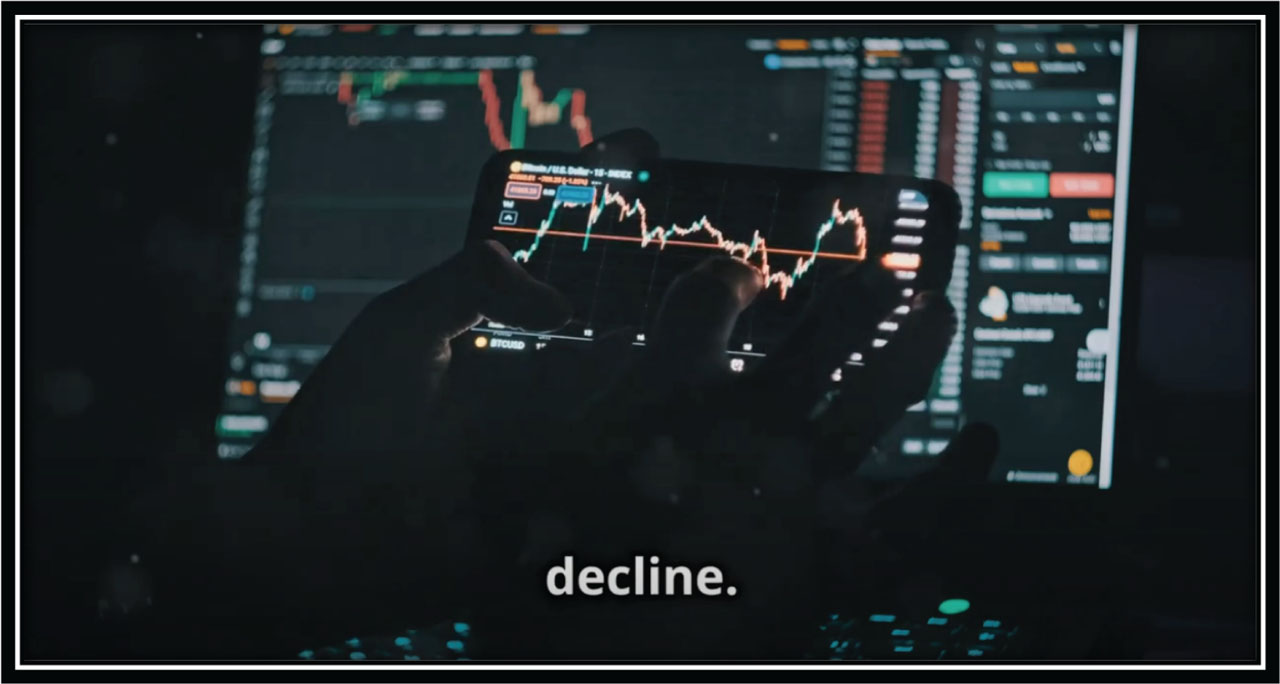
Appendix A.
Screenshot of video: Negative financial news.
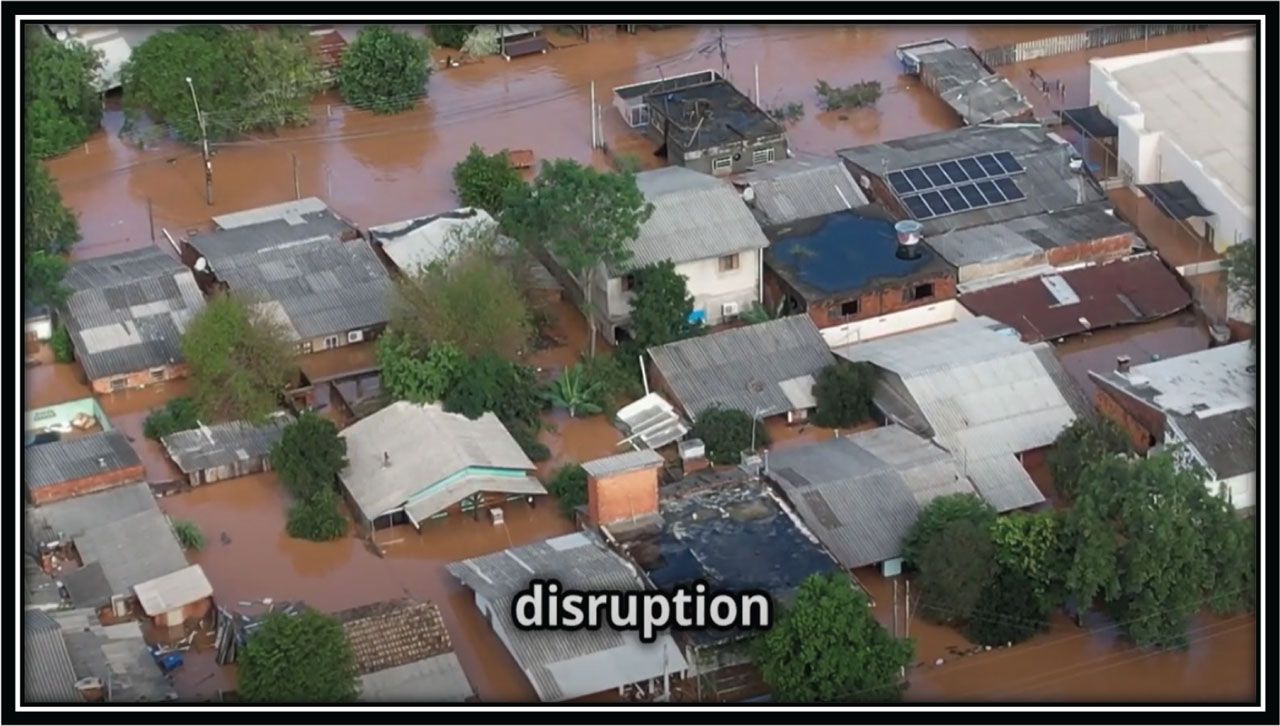
Appendix B.
Screenshot of video: Negative environmental news.

Appendix C.
Screenshot of video: Positive financial news.

Appendix D.
Screenshot of video: Positive environmental news.
Appendix E. Transcripts of the videos
Positive environmental news
Hello viewers, welcome to the afternoon news. The headline for our program today is the report on climate change mitigation efforts. Today, we are reporting on achievements in our efforts to protect our planet. First up, coming from the energy industry. Breakthroughs in renewable energy sources are making waves, powering homes and businesses with clean, sustainable energy. Solar, wind, and hydro technologies are becoming more efficient and widespread, giving us hope for a greener future. In addition, innovative recycling technologies are transforming waste management. These advancements mean less trash in our landfills and more materials being repurposed, conserving resources and reducing pollution. Statistics from the forest protection agency show that conservation efforts in various regions are flourishing, protecting vital ecosystems and absorbing carbon dioxide from the atmosphere. Thank you for tuning in to today’s news. Stay informed, and we wish you a wonderful day.
Negative environmental news
Good evening. Tonight, our headline news will bring you an update on the escalating climate crisis. Our top story: severe flooding is causing widespread disruption in urban areas, submerging homes and displacing thousands. Reports indicate that extreme flooding events are becoming more frequent and severe. Experts attribute this to warmer temperatures, which increase evaporation and lead to more intense rainfall. Entire communities are being uprooted, with homes destroyed and lives disrupted. Wildfires, hurricanes, and droughts are becoming more frequent and severe. Climate change is intensifying these events, making them more unpredictable and destructive. Wildfires, for instance, are burning hotter and spreading faster, devastating vast areas of land and wildlife. Meanwhile, glaciers are melting at an unprecedented rate. This contributes to rising sea levels, posing a significant threat to coastal cities and small island communities. Beyond environmental impacts, there are serious human costs. Food and water shortages, economic instability, and health risks are just some of the challenges being faced. Thank you for watching.
Positive financial news
Welcome to today’s economic update. Financial markets are showing a steady trend. Analysts are monitoring key indicators suggesting potential growth. Businesses are performing well, investments are yielding returns, and consumer confidence is notable. What factors are influencing this economic trend? It’s a combination of innovative technology, strategic investments, and market fundamentals. Companies are expanding, new opportunities are emerging, and the financial landscape is adapting. Diversified portfolios are showing gains, and the market’s stability is attracting investors. Consumer confidence is on the rise, fueling further growth and investment. Analysts anticipate sustained momentum as businesses continue to thrive in these favourable conditions. Stay tuned for more updates as we continue to monitor the economic landscape. Thank you for joining us on this economic outlook.
Negative financial news
Good morning, welcome back to the headline news. Global financial markets are experiencing increased pressure today as stock markets continue to decline across several regions. Analysts report that rising market volatility and weakening investor confidence are raising concerns about economic stability. Several major companies are also facing financial difficulties due to rising operational costs and lower consumer demand. Some businesses have announced layoffs, while others are facing serious financial challenges and potential bankruptcy. At the same time, rising inflation and ongoing economic uncertainty continue to affect households worldwide. Increasing living costs and concerns about future economic conditions are creating anxiety among consumers and investors alike. Many people are increasingly worried about job security, retirement savings, and their long-term financial future as economic conditions remain uncertain. Financial experts advise individuals to remain cautious with spending and investment decisions during this period of instability. For more updates and financial insights, stay tuned and keep watching.