
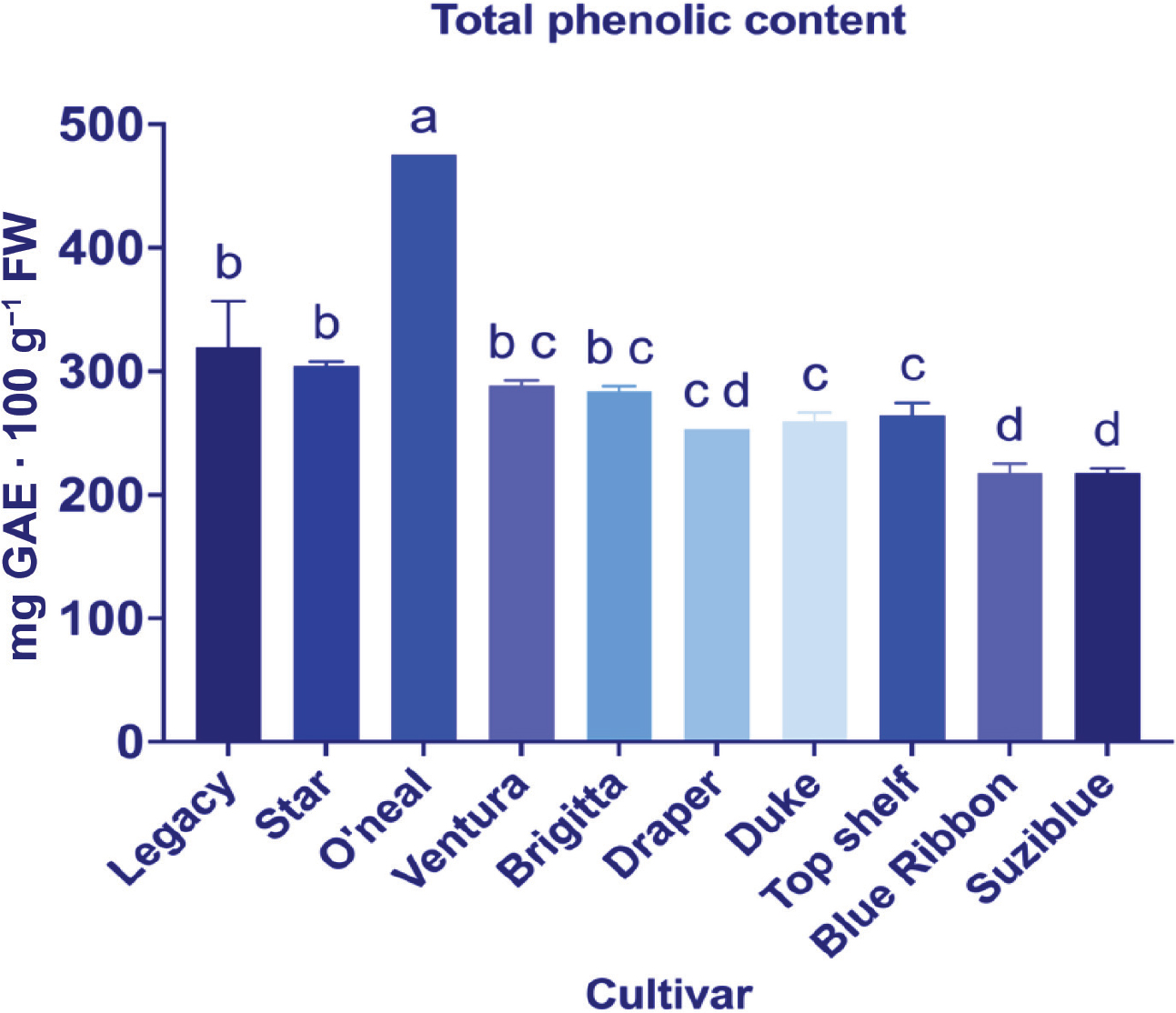
Figure 1.
Total phenolic content. Data correspond to mean ± SE of three biological replicates of the ripe fruit state. Different letters indicate significant differences among samples (p ≤ 0.05; ANOVA).
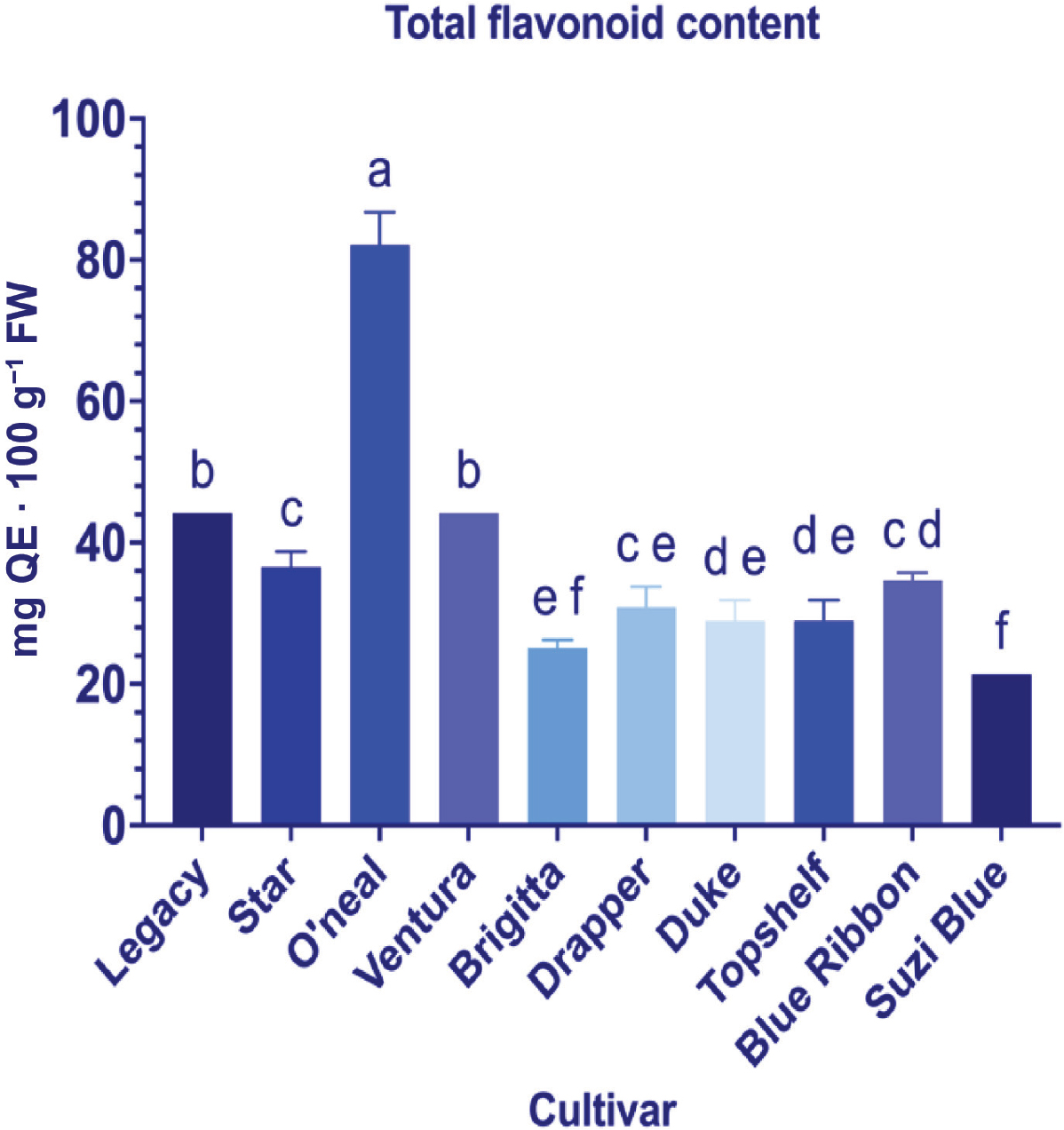
Figure 2.
Total flavonoid content. Data correspond to mean ± SE of three biological replicates of the ripe fruit state. Different letters indicate significant differences among samples (p ≤ 0.05; ANOVA).
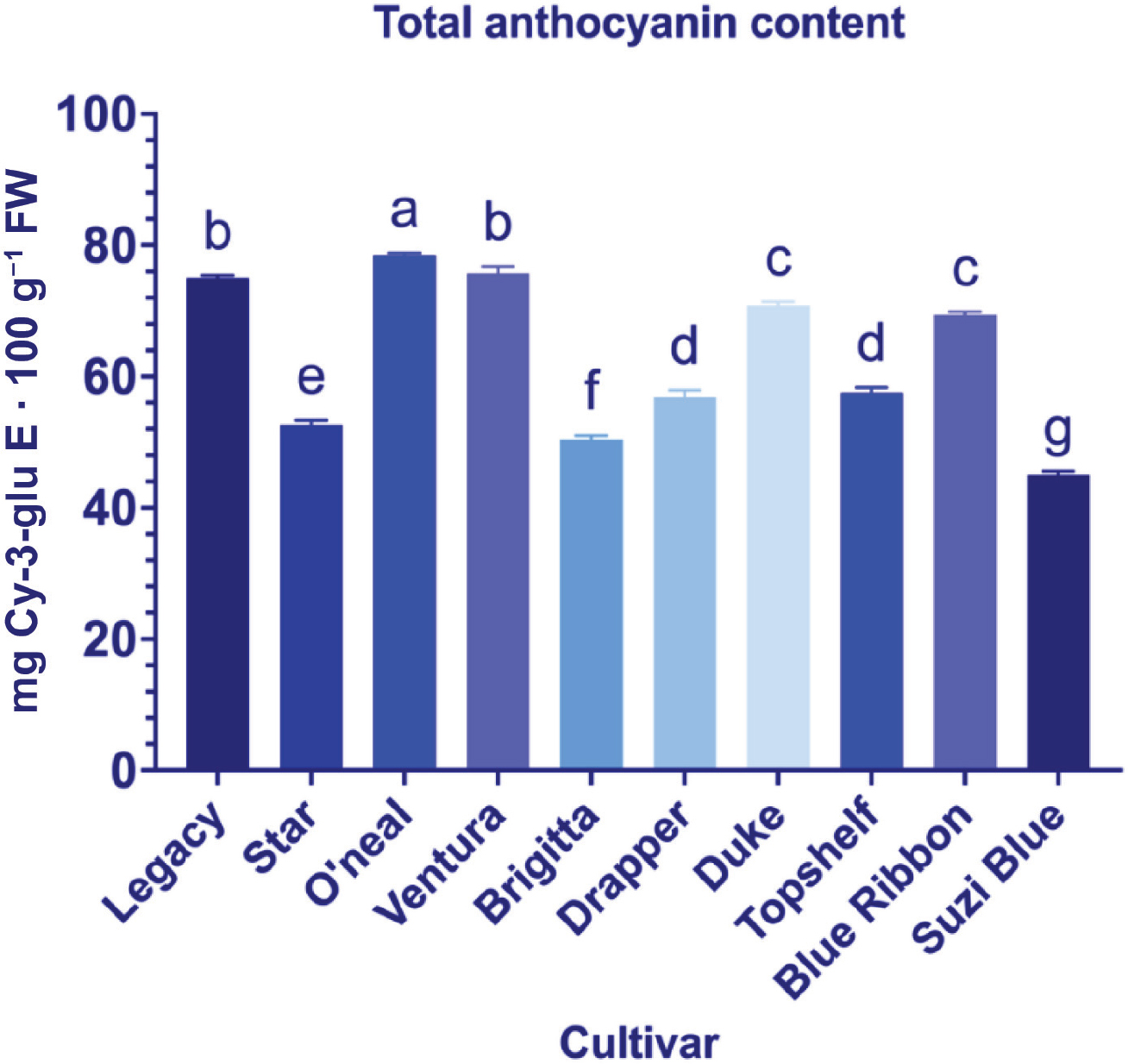
Figure 3.
Total anthocyanin content. Data correspond to mean ± SE of three biological replicates of the ripe fruit state. Different letters indicate significant differences among samples (p ≤ 0.05; ANOVA).
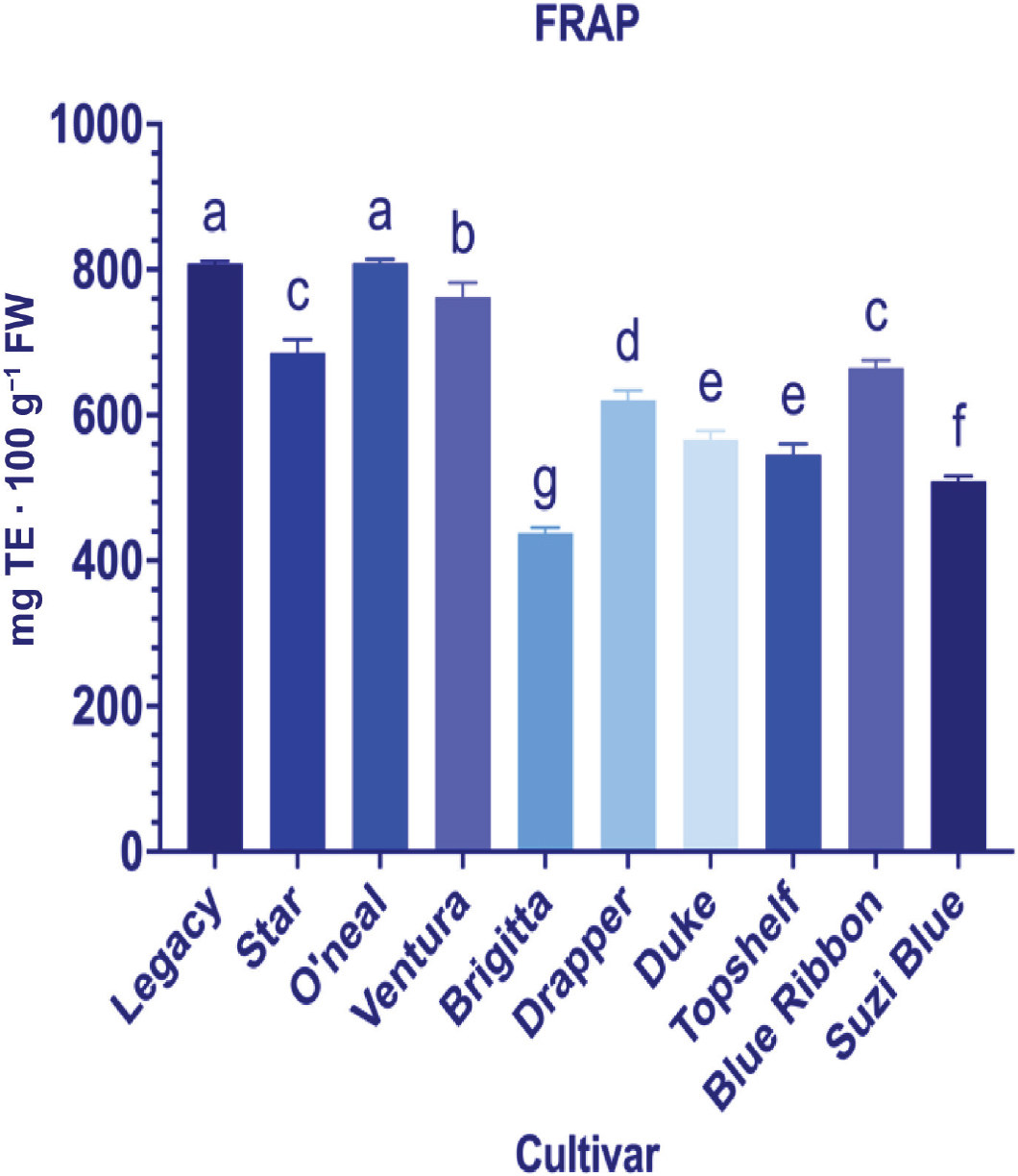
Figure 4.
Antioxidant capacity. Free radical scavenging activity by FRAP was estimated in the ripe stage of fruit. Data correspond to mean ± SE of three biological replicates. Different letters indicate significant differences among developmental stages [p ≤ 0.05; ANOVA]. FRAP, ferric reducing antioxidant power.
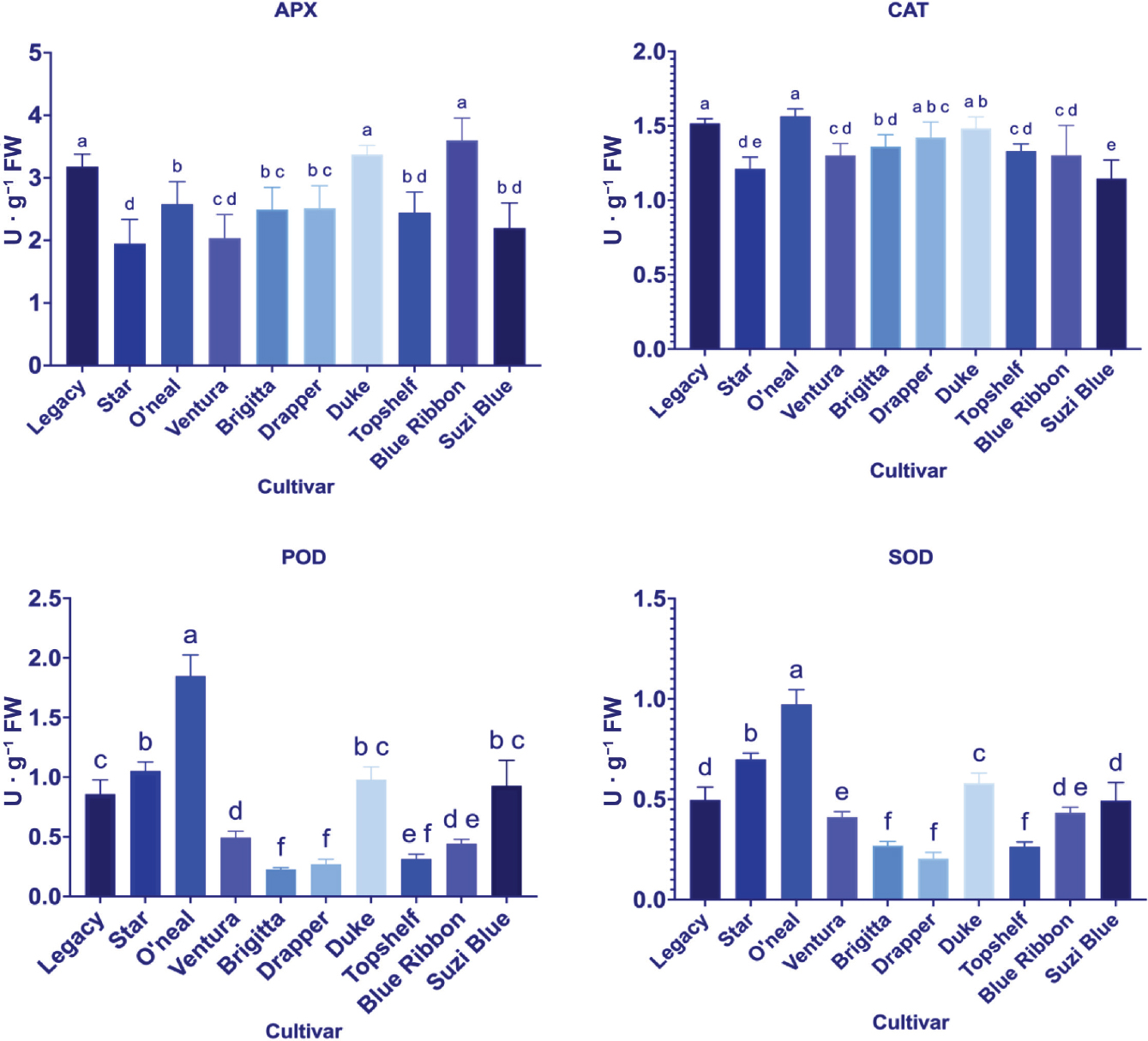
Figure 5.
Antioxidant enzyme activities (CAT, POD, SOD, and APX) in different blueberry cultivars. Different letters indicate significant differences (p ≤ 0.05; ANOVA). Bars represent means ± SE from three independent experiments. APX, ascorbate peroxidase; CAT, catalase; POD, peroxidase; SOD, superoxide dismutase.
Table 1.
Colour readings of the 10 blueberry fruits peel.
| Cultivar | a* | b* | L* | C*ab | h°ab | ΔE | ||||||
|---|---|---|---|---|---|---|---|---|---|---|---|---|
| Mean | SD | Mean | SD | Mean | SD | Mean | SD | Mean | SD | Mean | SD | |
| 'O’Neal' | 1.16 | ±0.57 | –1.13 | ±0.40 | 4.59 | ± 1.34 | 1.68 | ±0.48 | 315.06 | ± 16.70 | - | - |
| 'Drapper' | 2.43 | ±0.92 | –0.57 | ±0.56 | 6.91 | ±0.97 | 2.52 | ± 1.01 | 348.52 | ±7.67 | 2.45 | ±0.89 |
| 'Suzi' | 1.39 | ±0.72 | –1.31 | ±0.30 | 3.72 | ±0.51 | 2.00 | ±0.45 | 313.63 | ± 16.67 | 1.55 | ±0.24 |
| "Legacy' | 2.87 | ±2.04 | –0.43 | ±0.25 | 6.77 | ± 1.67 | 2.92 | ±2.02 | 349.39 | ±7.75 | 2.80 | ± 1.90 |
| 'Star' | 1.65 | ±0.97 | –0.99 | ±0.33 | 4.28 | ±0.74 | 2.01 | ±0.83 | 322.98 | ±20.67 | 1.37 | ±0.32 |
| 'Top shelf' | 4.17 | ± 1.04 | –0.4 | ±0.44 | 7.17 | ± 1.17 | 4.20 | ± 1.06 | 354.83 | ±5.32 | 3.67 | ± 1.07 |
| 'Ventura' | 1.01 | ±0.11 | –1.48 | ±0.06 | 3.44 | ±0.02 | 1.79 | ±0.08 | 304.11 | ±3.13 | 1.66 | ±0.04 |
| 'Duke' | 1.61 | ±0.71 | –0.98 | ±0.31 | 6.00 | ±2.09 | 1.97 | ±0.46 | 324.68 | ± 20.62 | 2.13 | ± 1.00 |
| 'Blue ribbon' | 1.64 | ±0.84 | –1.03 | ±0.62 | 4.15 | ± 1.01 | 2.08 | ±0.47 | 324.19 | ±25.01 | 1.47 | ±0.15 |
| 'Briggita' | 4.87 | ± 1.54 | –0.77 | ±0.76 | 7.00 | ± 1.32 | 5.01 | ± 1.32 | 348.62 | ± 14.00 | 4.08 | ± 1.73 |
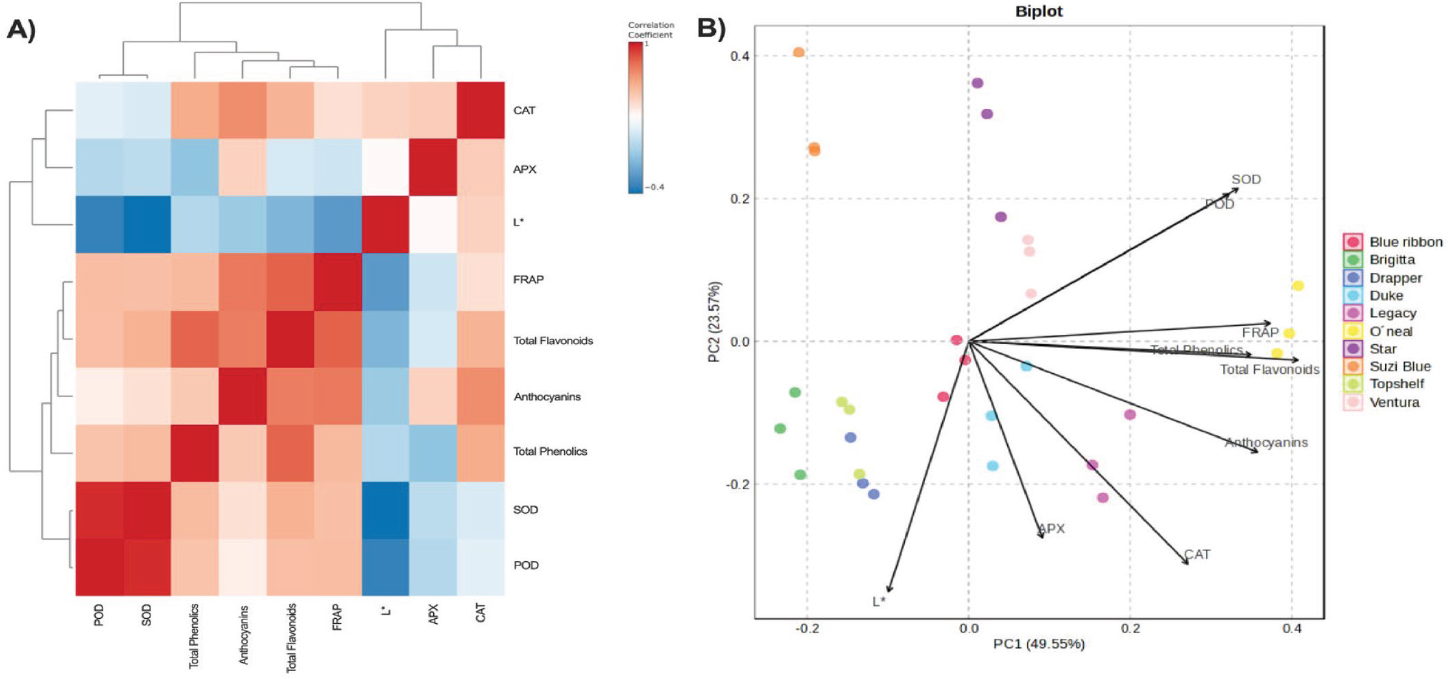
Figure 6.
Correlation analysis. (A) Hierarchical clustering heatmap showing Pearson correlation coefficients among biochemical and antioxidant traits in 10 blueberry (Vaccinium spp.) cultivars. (B) biplot derived from PCA. Variables include enzymatic antioxidant activities (POD, SOD, CAT, APX), total phenolics, total flavonoids, anthocyanins, antioxidant capacity (FRAP), and fruit color lightness (L). Red indicates positive correlations and blue indicates negative correlations, with color intensity corresponding to the strength of the relationship. Clustering reveals distinct groups of traits that co-vary, reflecting different antioxidant strategies among cultivars. APX, ascorbate peroxidase; CAT, catalase; PCA, principal component analysis; POD, peroxidase; SOD, superoxide dismutase.
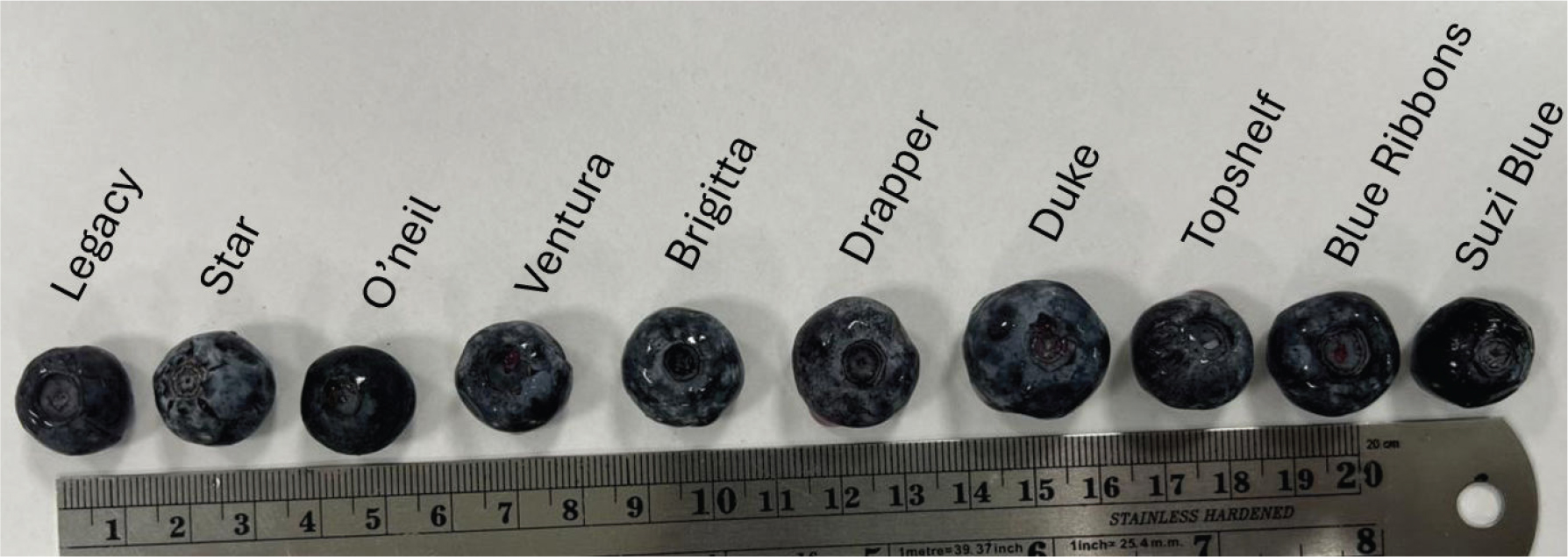
Figure S1.
Different blueberry varieties as a visual reference.