
INTRODUCTION
Rosemary (Rosmarinus officinalis L.) is a well-known versatile herb that is utilised frequently in culinary preparations due to its distinctive aroma (Sasikumar, 2012). Additionally, rosemary has numerous health benefits and is economically important mainly due to its essential oil that is rich in bioactive compounds, including eucalyptol, α-pinene, camphor, camphene, and β-pinene (Sasikumar, 2012; Tadtong et al., 2015) that underpin its various therapeutic and medicinal properties. The oil is utilised widely in the pharmaceutical, cosmetic, and food industries. Research has documented that rosemary essential oils have antioxidant, anti-inflammatory, and antimicrobial activities, as well as stress-relieving properties, making them valuable in traditional medicine and complementary therapies (Peter and Shylaja, 2012; Aziz et al., 2022; Eid et al., 2022). In addition, it has been shown that essential oils from rosemary can have significant inhibiting effects on orange postharvest decay (Bakhtiarizade and Souri, 2019) as well as improve the nutrient uptake in plant seedlings (Souri and Bakhtiarizade, 2019).
Due to many benefits of rosemary, there have been several efforts to cultivate this herb to maximise productivity and increase the quality of its essential oils. During rosemary cultivation, it requires careful attention to environmental conditions, including temperature (15–25°C), light intensity (5–6 hr · day−1), and water availability (well-drain soil) (Peter and Shylaja, 2012; German et al., 2016). Rosemary is a temperate-climate plant that grows best at 15–25°C (Peter and Shylaja, 2012). In addition, excessive watering or rainfall could induce stress in rosemary due to waterlogging, which can lead to stunted growth and even death (German et al., 2016). In Thailand, rosemary has been reported to grow in the highlands, such as in the north under the Royal Project (Skilbeck et al., 2014). Phetchabun province located in the highlands of Thailand had mean maximum and minimum temperatures of 34.97°C and 15.86°C, respectively (Kaewkrom et al., 2007). In addition, the precipitation in Phetchabun province normally exceeds 1000 mm in the rainy season from June to October (Ono et al., 2014). Such an environment suggests that rosemary plants could be grown in Phetchabun province, Thailand; however, there may be some issues associated with other unfavourable factors that are challenging for rosemary cultivation.
The application of plant growth regulators (PGRs) is one of the effective strategies to enhance plant resilience to unfavourable environmental conditions and to increase the productivity of various plant species (Sabagh et al., 2022). Environmental stress changes the endogenous hormones, such as abscisic acid and salicylate, in the rosemary plant (Asensi-Fabado et al., 2013), suggesting that these plant hormones may control the stress response. Among the group of plant hormones, jasmonate (JA) and salicylate are PGRs that have been reported to mitigate the impact of unfavourable environmental factors on plants. JA has been reported to improve plant resistance to salinity stress and water stress (Hossain et al., 2021), as well as being associated with an increase in the production of essential oil as a defence mechanism against insects (Wari et al., 2022). Therefore, it could be appropriate to consider the application of JA that is present in volatile herbs (particularly in the Lamiaceae family to which rosemary belongs). Additional members of this family, such as sweet basil (Talebi et al., 2018), lemon balm (Pirbalouti et al., 2019), thyme (Alavi-Samani et al., 2015), and lettuce leaf basil (Złotek et al., 2016), have demonstrated various uses of JA during concentrations of 0.001–0.1 mM in enhancing plant responses and essential oil production. Salicylate has been identified as a signalling molecule facilitating plant self-protection mechanisms in response to environmental stress (Souri and Tohidloo, 2019; Pan et al., 2021) and pathogen attack (Pan et al., 2021), as well as increasing essential oil production in various volatile plants, including cumin (Rahimi et al., 2013), lemon balm (Pirbalouti et al., 2019), and fragrant trees such as silver birch and black alder (Blande et al., 2010) when foliar apply salicylate during concentrations of 0.002–1 mM.
Therefore, the application of jasmonate and salicylate could be a potential strategy to support rosemary cultivation in regions with unpredictable climates or limited resources, as is often experienced in Thailand. Consequently, this study aimed to enhance the efficacy of utilising jasmonate and salicylate in promoting growth and maximising the essential oil yield of rosemary, based on evaluating their optimal concentrations.
MATERIALS AND METHODS
Plant materials and cultivation practices
Stem of rosemary 'Common Rosemary' aged over 6 months after planting was cut as an explant. Rooting was induced by soaking in 0.1% naphthaleneacetic acid before being transplanted into pots for 2 months. Subsequently, these cuttings were relocated to a field in Phetchabun province, Thailand (16°56′02″ N, 101°06′59″ E). When they had reached shrub-size, they were managed according to local standard farming, by adding 20 g of organic fertiliser into each planting hole and irrigating the plants using a sprinkler water system.
Application of plant growth regulators
Five months after field planting (May 2023), the rosemary shrubs were individually treated with different PGRs–salicylic acid (SA) or methyl jasmonate (MeJA)– at concentrations of 0.01, 0.1, or 1 mM (millimolar), with distilled water (0 mM) as a control. Approximately 20 mL of the PGRs, each mixed with 0.1% Tween-20 as a surfactant, were hand-sprayed onto rosemary leaves on separate plants at the designated concentration. Subsequent respraying 20 mL of the PGRs occurred at 6 months after transplanting (June 2023), following the same procedures.
Growth and determination of photosynthetic pigment
One month after the application of the various concentrations of the PGRs onto the leaves of the rosemary plants for the second time (July 2023), growth parameters were measured, consisting of stem height, canopy width, and number of branches. Subsequently, the first pair of mature leaves from the apex was gathered to determine photosynthetic pigments content. The leaf sample (40–60 mg) was extracted in the dark for 24 hr at room temperature using 1.5 mL N,N-dimethylformamide for dilution. The absorbance of the extract solution was determined at 664, 657, and 480 nm using a Ultraviolet (UV)–visible spectrophotometer (Genequant 1300; Columbia, MO, USA). The total chlorophyll (total chl), chlorophyll a (chl a), chlorophyll b (chl b), and carotenoids in each plant sample were estimated and compared to their fresh weight according to Porra et al. (1989) and Wellburn (1994). In addition, the ratio of chl a-to-chl b was calculated.
Assessing changes in leaf spectral indices
Leaf reflectance measurements were conducted on the second pair of mature leaves from the apex. The leaf spectral indices, consisting of the normalised difference vegetation index (NDVI), the normalised difference red edge index (NDRE), the simple ratio pigment index (SRPI), the normalised pigment chlorophyll index (NPCI), the Carter index (Ctr1), and the structure-insensitive pigment index (SIPI) were measured using a Polypen PR410 UVIS (Photon System Instruments; Brno, Czech Republic) with wavelengths in the range 340–780 nm, which encompassed the reflectance values of essential oils of around 400–500 nm (Ouaddari et al., 2022). The readings were used to calculate the R400, R425, R450, R475, and R500 indices. The specific formulas for each index are provided in Table 1.
Table 1.
Spectral indices used in this study.
| Abbreviation | Spectral index | Formula | Ref. |
|---|---|---|---|
| NDVI | Normalised difference vegetable index | NDVI = (RNIR—RRed)/(RNIR + RRed) | Rouse et al. (1974) |
| NDRE | Normalised difference red-edge index | NDRE = (R790—R720)/(R790 + R720) | Barnes et al. (2000) |
| SRPI | Simple ratio pigment index | SRPI = R430/R680 | Peñuelas et al. (1995) |
| NPCI | Normalised pigment chlorophyll index | NPCI = (R680—R430)/(R680 + R430) | Peñuelas et al. (1994) |
| Ctr1 | Carter index 1 | Ctr1 = R695/R420 | Carter (1994) |
| SIPI | Structure-intensive pigment index | SIPI = (R790—R450)/(R790 + R650) | Peñuelas et al. (1995) |
| R400 | – | R400 = 1/R400—1/R600 | This study |
| R425 | – | R425 = 1/R425—1/R600 | This study |
| R450 | – | R450 = 1/R450—1/R600 | This study |
| R475 | – | R475 = 1/R475—1/R600 | This study |
| R500 | – | R500 = 1/R500—1/R600 | This study |
Evaluation of essential oil content
About 1 kg fresh weight of rosemary from each treatment was dried at room temperature (avoiding direct sunlight). Then, each dried sample was weighed, and the essential oil was extracted using a steam distillation method using a modified Clevenger’s apparatus. It consisted of one 1000 mL round bottom flask, which was connected with another two-way round flask containing raw material. The top flask was attached to the condenser (Khan et al., 2024). The distilled water was heated at 100°C to provide a stream pass through the raw material for 30 min. The steam facilitated the evaporation of the oil, which then condensed into a container along with drops of water. Subsequently, the condensed solution was carefully transferred to a separatory funnel for phase separation. The essential oil was collected, and its volume was measured. The percentage of the total essential oil in each rosemary sample determined based on the percentage of essential oil volume (mL) in the total dried sample (g) according to Melese et al. (2023).
Statistical analysis
Experiments were conducted in a completely randomised design with four replications and used three plants per replication. Statistical analysis was carried out using the SPSS statistical software version 22 (SPSS Inc.; Chicago, IL, USA). The significance of the observed differences among the treatments was determined based on a one-way ANOVA. Means differing at p < 0.05 were considered significant using Tukey’s honestly significant difference (HSD) test. Pearson’s correlation coefficient was utilised to determine correlations among parameters. A heatmap was generated using the Microsoft Excel 365 software (Microsoft Corporation; Redmond, WA, USA).
RESULTS
Growth and photosynthetic pigments
The growth of rosemary plants including stem height, canopy width, and the number of branches in all treatments were similar before the foliar spraying of SA or MeJA (Figure 1 in Supplementary Material). Both SA and MeJA applications increase the stem height of the rosemary across all concentrations studied. The 0.1 mM MeJA produced a significantly greater stem height (20.9%) than the control. There were no significant differences observed among the SA and MeJA concentrations (Figure 1A). In addition, the canopy width increased in the PGRs treatments. All concentrations of MeJA, particularly at 0.1 mM, produced a significantly wider canopy (22.3%) than the control. Furthermore, only the 1 mM SA application produced a significantly wider canopy than the control. Based on these results, MeJA had a greater potential to enhance canopy width than SA, particularly with the 0.1 mM concentration (Figure 1B). However, the application of either SA or MeJA did not produce any noticeable response in the number of branches (Figure 1C).
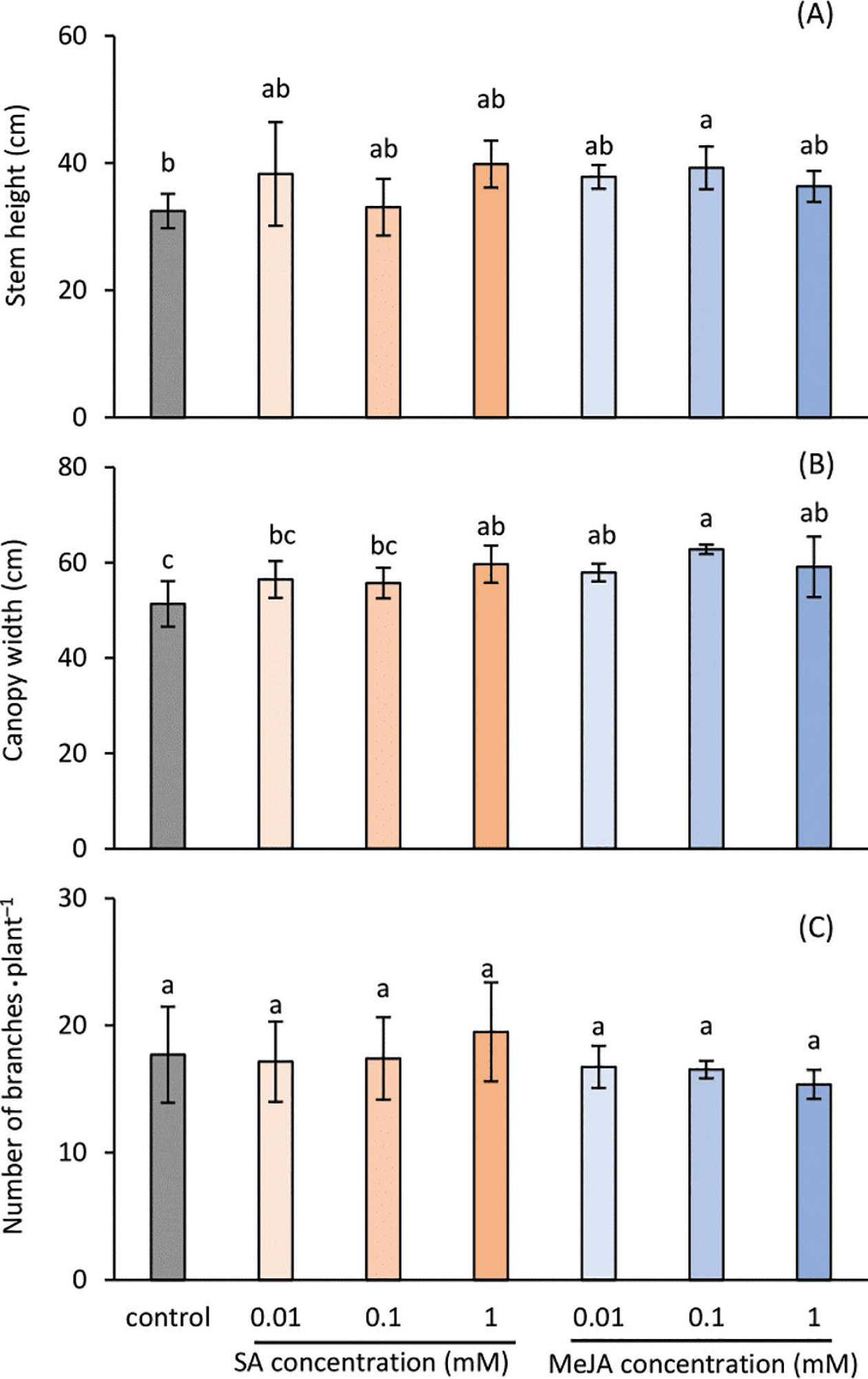
Figure 1.
Growth of rosemary after treating with SA or MeJA: (A) stem height, (B) canopy width, and (C) number of branches · plant−1. Bars sharing the same letter indicated no significant difference (Tukey’s HSD test, p < 0.05). Vertical error bars show ± standard deviation. HSD, honestly significant difference; MeJA, methyl jasmonate; SA, salicylic acid.
The application of either SA (0.01 mM and 0.1 mM) or MeJA (0.1 mM) increased the total chl content (Figure 2A) and chl a (Figure 2B). However, these increases were not significant compared to the control. The application of SA had more potential to enhance chl a than MeJA. The 0.01 mM and 0.1 mM SA applications resulted in the highest chl a content compared to the other treatments (Figure 2B). However, the chl b level was not noticeably different from either application of SA or MeJA (Figure 2C). In addition, chl a-to-chl b (chl a/chl b) was significantly different between the MeJA and SA applications, with the 0.01 mM or 0.1 mM SA applications having a higher chl a/chl b value than the MeJA applications across all concentrations (Figure 2D). The carotenoid contents of all study treatments were not significantly different compared to the control. However, the 0.01 mM SA application produced the highest carotenoid content of all treatments (Figure 2E).
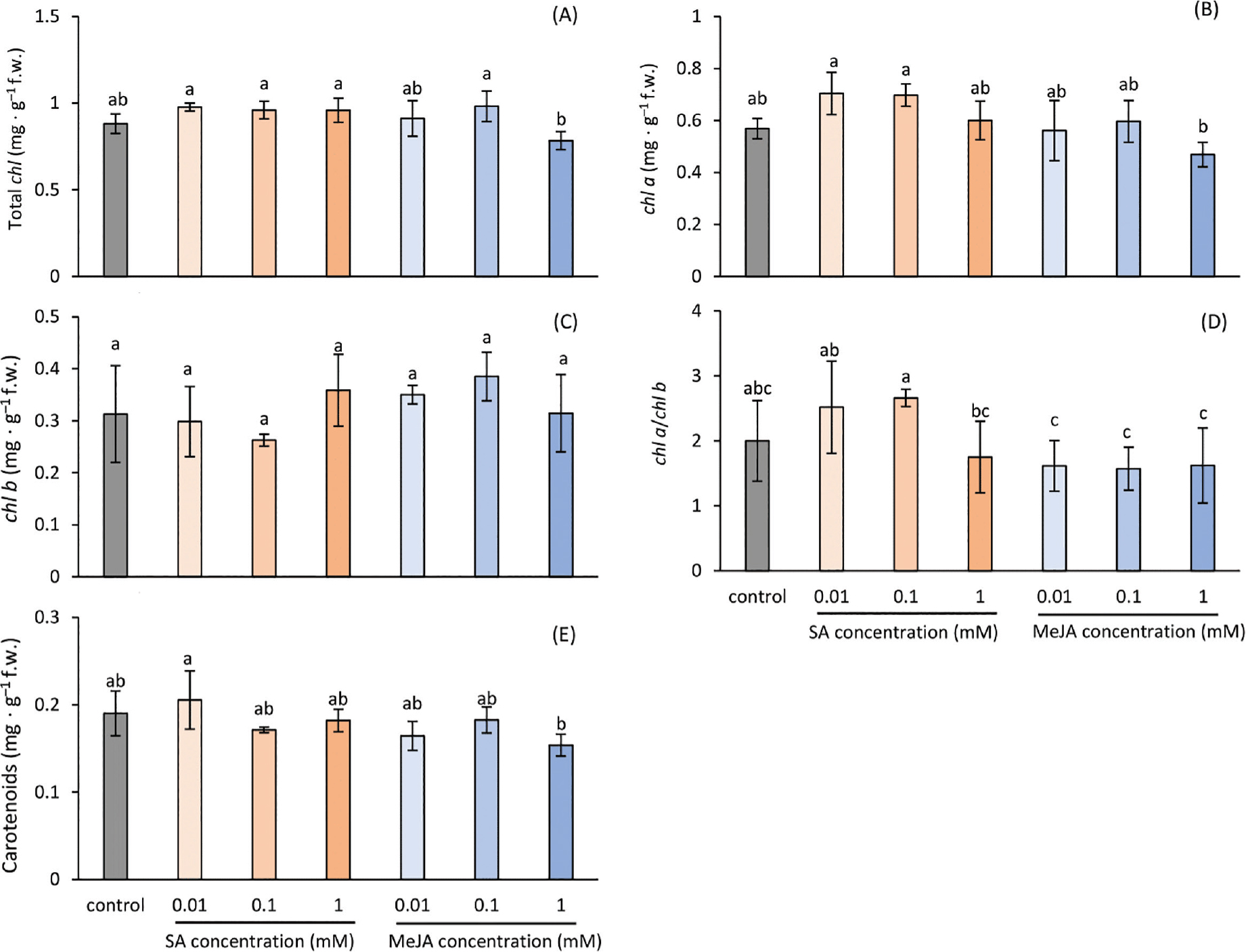
Figure 2.
Photosynthetic pigments of rosemary after treating with SA or MeJA: (A) total chlorophyll (total chl), (B) chlorophyll a (chl a), (C) chlorophyll b (chl b), (D) chl a/chl b, and (E) carotenoid content. Bars sharing the same letter indicated no significant difference (Tukey’s HSD test, p < 0.05). Vertical error bars show ± standard deviation. HSD, honestly significant difference; MeJA, methyl jasmonate; SA, salicylic acid.
Leaf spectral indices
Spectral indices were measured that could indicate the plant stress level (NDVI and NDRE). Based on the results, neither SA nor MeJA affected the NDVI and NDRE readings of rosemary plants (Figures 3A and 3B). In addition, the spectral indices were calculated from leaf reflectance values in the range 400–500 nm. These spectral indices were divided into two groups. The first group was spectral indices directly obtained using the Polypen PR410 UVIS, consisting of SRPI, NPCI, Ctr1, and SIPI (Table 1). The other group was the spectral indices calculated in this study based on formulas (Table 1). Considering all these results, there were no significant differences among treatments for SRPI, NPCI, Ctr1, and SIPI (Figures 3C–3F). However, rosemary plants treated with SA (0.1 mM and 1 mM) and MeJA (0.01 mM) had higher NPCI values, but they were non-significantly different from the control plants (Figure 3D). In addition, applications of 1 mM SA and 0.01 mM MeJA tended to increase Ctr1 more than the control (Figure 3E). Among the calculated spectral indices in this study (Figures 4A–4E), R425 and R450 showed a significant response following the SA or MeJA treatments (Figures 4B and 4C). The SA application produced an upward trend in the R425 value as the concentration increased. The 0.1 mM and 1 mM SA concentrations had higher R425 values than the control, with increases of 41.7% and 51.4%, respectively. Furthermore, of the MeJA applications, only the 0.01 mM concentration produced significantly higher R425 values than the control, representing the highest R425 value among the MeJA concentrations (Figure 4B). This result was consistent with the R450 index, where 0.1 mM and 1 mM SA and 0.01 MeJA produced higher R450 values than the control (Figure 4C). The responses based on the R400, R475, and R500 indices showed that rosemary treated with SA (0.1 mM and 1 mM) or MeJA (0.01 mM) tended to have an enhanced R475 value compared to the control (Figure 4D); whereas, SA or MeJA application did not significantly alter the R400 and R500 values (Figures 4A and 4E).
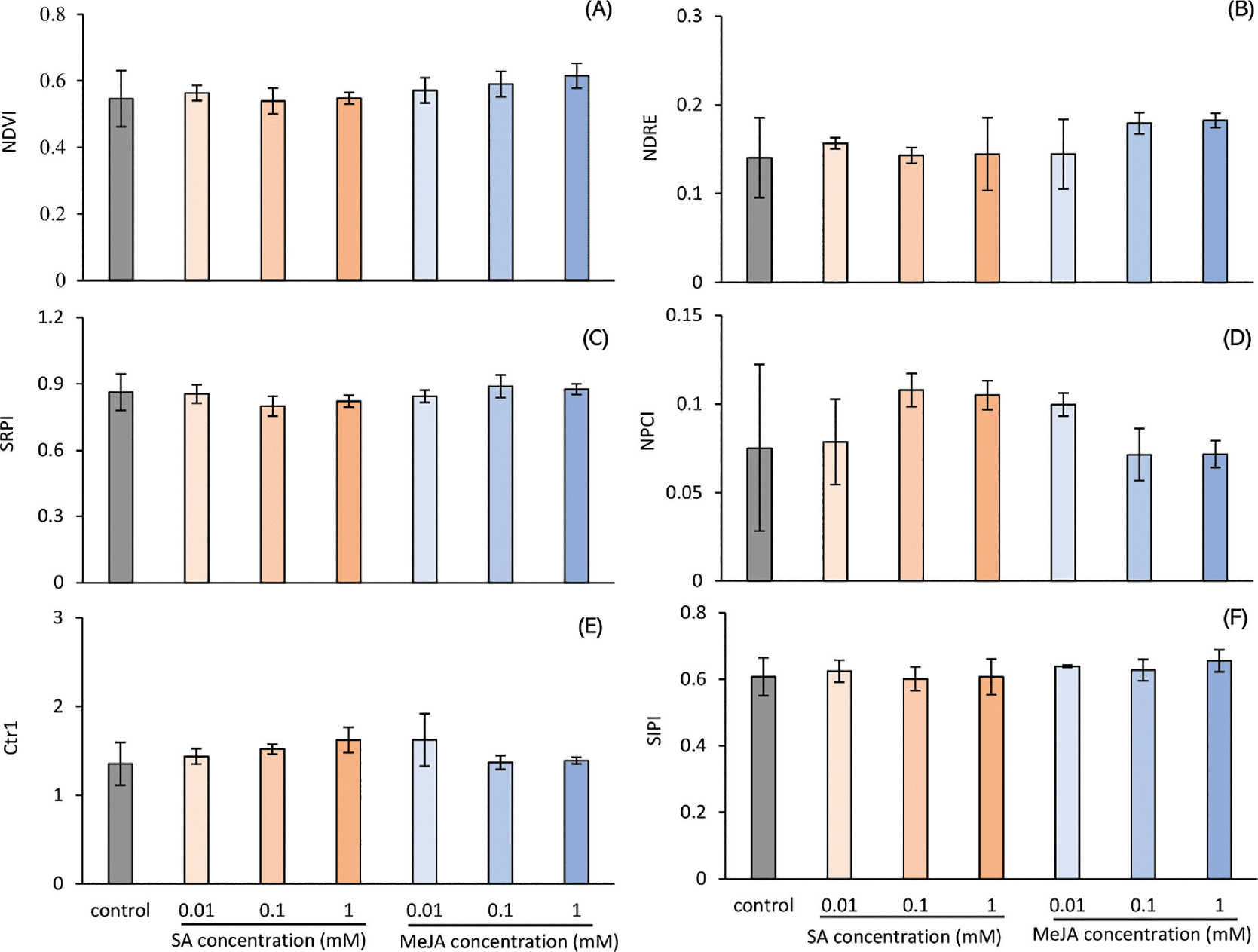
Figure 3.
Different spectral indices of rosemary treated with SA or MeJA: (A) NDVI, (B) NDRE, (C) SRPI, (D) NPCI, (E) Ctr1, and (F) SIPI. According to Tukey’s HSD test, all data had non-significant differences at p < 0.05. Vertical error bars show ± standard deviation. Ctr1, Carter index 1; HSD, honestly significant difference; MeJA, methyl jasmonate; NDRE, normalised difference red edge index; NDVI, normalised difference vegetation index; NPCI, normalised pigment chlorophyll index; SA, salicylic acid; SIPI, structure-insensitive pigment index; SRPI, simple ratio pigment index.
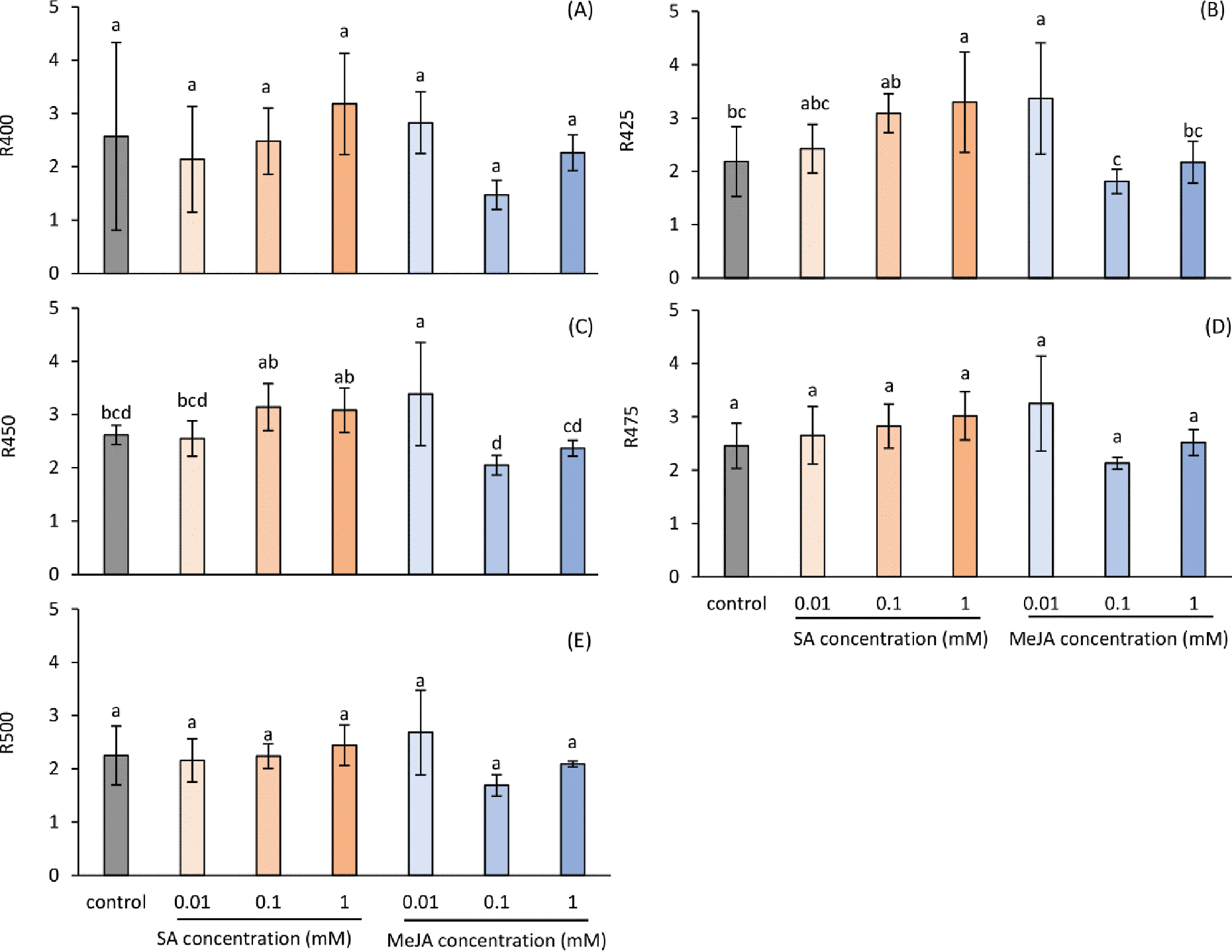
Figure 4.
Spectral indices related to reflectance between 400 nm and 500 nm of rosemary treated with SA or MeJA: (A) R400, (B) R425, (C) R450, (D) R475, and (E) R500. Bars sharing the same letter indicated no significant difference (Tukey’s HSD test, p < 0.05). Vertical error bars show ± standard deviation. HSD, honestly significant difference; MeJA, methyl jasmonate; SA, salicylic acid.
Rosemary essential oil content
The application of SA produced an upward trend in essential oil content, reaching its highest value at 1 mM. The application of 1 mM SA significantly increased the rosemary essential oil content by 64.6% compared to the control (Figure 5). Not only SA application but also the 0.01 mM MeJA application significantly increased the rosemary essential oil content by 54.2%, compared to the control (Figure 5).
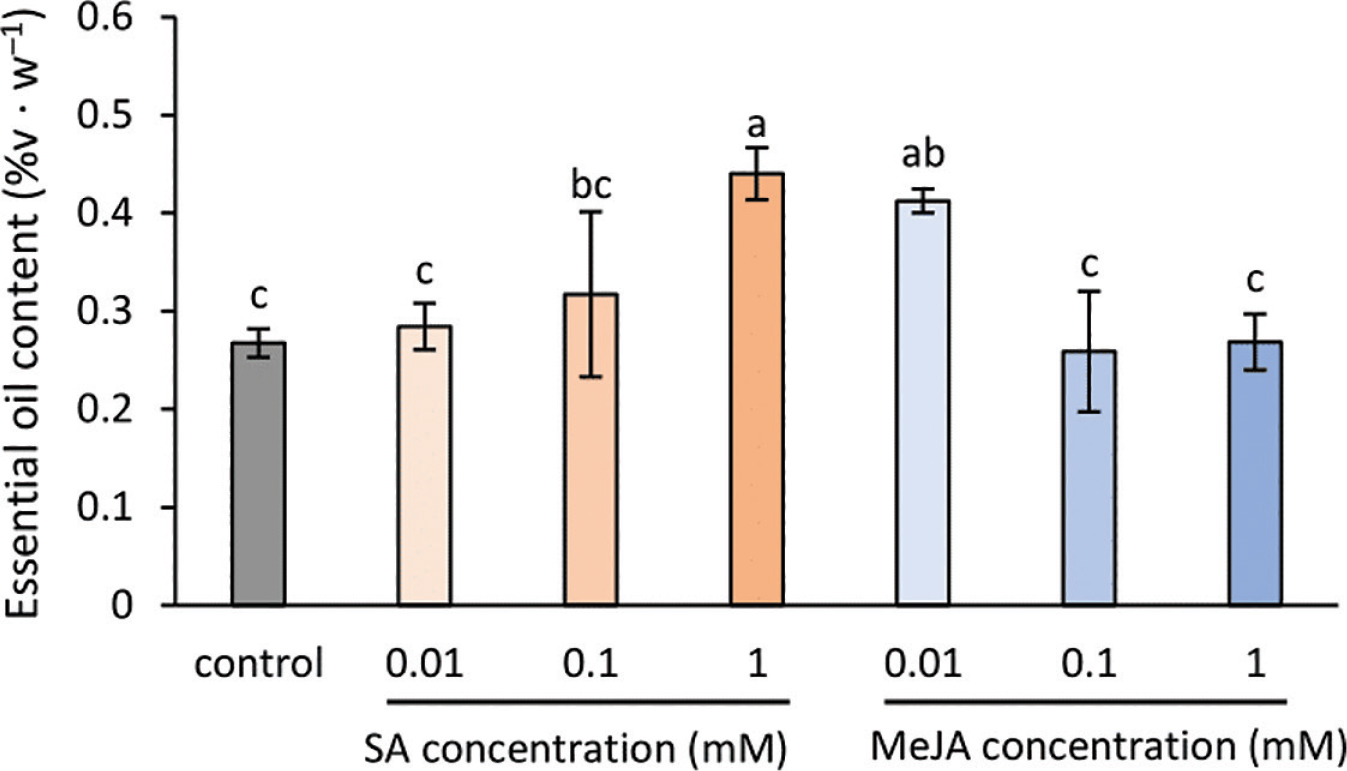
Figure 5.
Essential oil content of rosemary treated with SA or MeJA. Bars sharing the same letter indicated no significant difference (Tukey’s HSD test, p < 0.05). Vertical error bars show ± standard deviation. HSD, honestly significant difference; MeJA, methyl jasmonate; SA, salicylic acid.
Correlations among growth, photosynthetic pigments, spectral indices, and essential oil
The heatmap analysis revealed significantly positive correlations between calculated spectral indices in this study, such as R425, R450, and R475, and the essential oil content with R2 values of 0.61, 0.65, and 0.58, respectively, at p < 0.01 (Figure 6). In addition, spectral indices determined using the Polypen RP410 UVIS, such as Ctr1 and NPCI, had significantly positive correlations with the essential oil content at p < 0.05 (Figure 6). Considering the two groups of spectral indices, Ctr1 had a positive correlation with all calculated indices in the range 400–500 nm; whereas, NPCI had a positive correlation with only R400 and R425 (Figure 6). On the contrary, all calculated indices in the range 400–500 nm had negative correlations with NDVI; whereas, only R400 and R425 had negative correlations with SRPI (Figure 6). Among the photosynthetic pigments, chl a and carotenoids were positively correlated with total chl; whereas, chl b was positively correlated with stem height and canopy width (Figure 6). Lastly, chl a/chl b was strongly positively correlated with chl a but strongly negatively correlated with chl b (Figure 6).
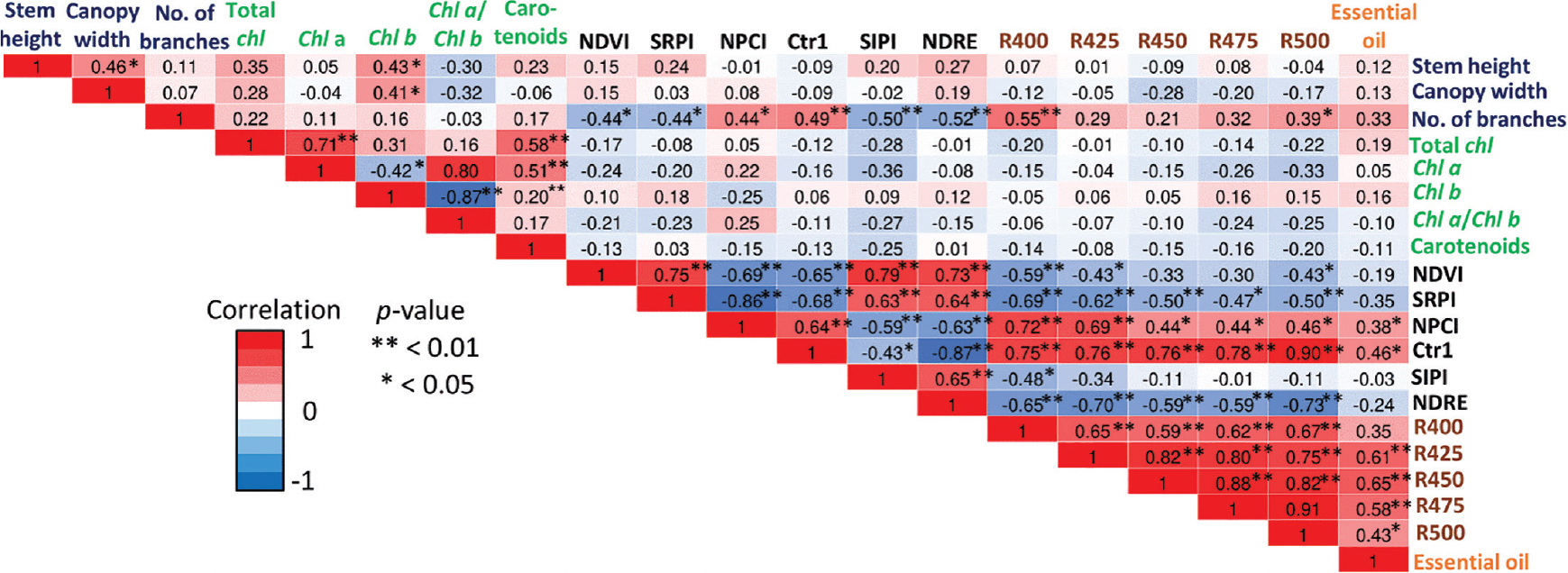
Figure 6.
Heatmap of Pearson’s correlation coefficients for growth, photosynthetic pigments, spectral indices, and essential oil content in rosemary treated with SA or MeJA. Red and blue colour gradients represent positive and negative correlations, respectively. MeJA, methyl jasmonate; SA, salicylic acid.
DISCUSSION
The height response of the rosemary was pronounced in response to 0.1 mM MeJA (Figure 1A), while canopy width responded to both MeJA and SA applications at different concentrations (Figure 1B). However, the common use of SA and MeJA is associated typically with enhancing plant defence against environmental and biotic stress and not primarily on promoting growth. Studies have reported that JA inhibited cell division and reduced the cell mitotic index (Mahfouz et al., 2014; Huang et al., 2017), which was consistent with the current results, where MeJA did not significantly increase the growth of rosemary but rather demonstrated an upward tendency at specific concentrations. Nevertheless, MeJA has been documented to enhance cell expansion by working cooperatively with cytokinin during etiolated cotyledon development (Pandita, 2022). Jasmonate has been reported to be associated with the expansion of potato tuber cells, attributed to an increase in osmotic pressure resulting from sucrose accumulation and alterations in cell wall architecture affecting wall extensibility (Koda, 1997). SA has been reported to interact with stem diameter and canopy parameters in fennel under water stress conditions (Ghilavizadeh et al., 2019). Furthermore, the application of 1.25 mM SA has been shown to increase the number of cells in the G1 state during cell division (Mahfouz et al., 2014), which was consistent with the current result, where 1 mM SA increased the canopy width of rosemary. SA has also been reported to improve rice shoot growth and the cell cycle by inhibiting the effect of abscisic acid (Meguro and Sato, 2014). However, in this study, the number of branches did not respond to either the MeJA or SA applications (Figure 1C), which was consistent with another study on coriander, where neither SA nor irrigation affected the number of branches · plant−1 (Hesami et al., 2012). Similarly, MeJA applications at concentrations in the range 0.01–1 mM did not increase the number of branches in cumin (Rahimi et al., 2013). In addition, the slight promotion of rosemary growth following the SA or MeJA treatments in this study might have been influenced because SA and MeJA treatments may mitigate high-temperature stress (up to about 30°C during May–July 2023).
The application of MeJA and SA did not significantly impact photosynthetic pigments. However, SA consistently increased both the total chl and chl a contents at all applied concentrations, while the 0.1 mM MeJA treatment also produced a similar trend with a higher total chl than the control (Figures 2A and 2B). This was consistent with the results observed in cucumber plants, where SA increased the chlorophyll content under both saline stress and normal conditions (Yildirim et al., 2008). The use of jasmonate in pigeon peas produced a similar trend to our findings, with a considerable increase in the total chl content after treatment with 1 μM jasmonate (Poonam et al., 2013). However, numerous studies have mentioned that jasmonate is an inhibitor of chlorophyll and carotenoid synthesis and that it reduced photosynthetic pigments in various plant species (Moreira-Rodríguez et al., 2017). Our findings did align with aspects of these reports in that MeJA application at all concentrations resulted in a lower chl a/chl b ratio compared to SA applications at 0.01 mM and 0.1 mM and tended to be lower than the control (Figure 2D). The ratio of chl a-to-chl b reflects a plant’s ability to use light energy. An increased chl a-to-chl b ratio suggests better acclimation to high light intensity leading to increase the photosynthetic electron transport rate (Jin et al., 2016). This suggests that SA applications might enhance the photosynthetic performance of rosemary.
The leaf spectral indices (NDVI, NDRE, SRPI, NPCI, Ctr1, and SIPI) were selected to investigate various responses in this study. NDVI and NDRE are commonly used to assess plant health and serve as indicators to evaluate plant pigment content and other biochemical compounds inside plant leaves (Stamford et al., 2023). The same levels of NDVI and NDRE in all the treatments in this study indicated that all the rosemary plants were at the same plant physiological stress level. The other indices were chosen based on their use of leaf reflectance values involved in the wavelength range 400– 500 nm, which were in the same range as the essential oil absorption wavelengths recorded in many plants such as clove, thyme, and cinnamon in the laboratory study (Ouaddari et al., 2022). High absorption in plant essential oil in the range 400–500 nm, with low absorption after 600 nm, has been reported by Ouaddari et al. (2022), implying that plants with a high essential oil content should produce low leaf reflectance at wavelengths in the range 400–500 nm and high leaf reflectance at 600 nm because leaf reflectance values are the reverse of leaf absorption values (Ustin and Jacquemoud, 2020). Thus, in this study, of the spectral indices calculated from those specific wavelengths (SRPI, NPCI, Ctr1, and SIPI), only NPCI and Ctr1 increased after the SA or MeJA applications (Figure 3). NPCI and Ctr1 were calculated from the 430 nm and 420 nm wavelengths, respectively (Table 1) and are within the 400–500 nm range, which could be useful in estimating the essential oil in plants (Ouaddari et al., 2022). NPCI has been used to estimate nitrogen deficiency in plant leaves and disease defence (Sapate and Deshmukh, 2019). Tan et al. (2018) reported that high NPCI values were highly correlated with the maximum quantum yield of photosystem II (Fv/Fm), which is a well-known parameter used for plant stress detection (Murchie and Lawson, 2013). Another spectral index (Ctr1) has been reported to decrease after abiotic stress occurrence (Rosa et al., 2023; Samarina et al., 2024). Therefore, the tendency for increased values for NPCI and Ctr1 following the SA or MeJA treatments implied that SA and MeJA might reduce stress in rosemary plants during growth.
In addition, this study investigated other spectral indices calculated using wavelengths related to the essential oil content as reported by Ouaddari et al. (2022). Specifically, the R400, R425, R450, R475, and R500 indices were calculated from leaf reflectance at 400, 425, 450, 475, and 500 nm, respectively, compared to leaf reflectance at 600 nm (Table 1). The results showed that the R425 and R450 indices significantly responded to the SA and MeJA treatments at specific concentrations (Figures 4B,C). This result was associated with the increase in the rosemary essential content after SA or MeJA treatments (Figure 5). Another study highlighted eucalyptol as the main volatile compound in rosemary essential oil, constituting over 82% (Tadtong et al., 2015). The eucalyptol was associated with the alteration of light absorption of the photosynthetic pigment of Chlorella vulgaris, especially at 413, 453, and 457 nm (Zhao et al., 2016). Consequently, the R425 and R450 indices indicated a significant response to the increase of the essential oil after SA or MeJA applications, which will be used for non-destructive estimation of the essential oil content in rosemary in the future.
The impact of SA application on the increase in the essential oil content recorded in this study has been documented in various plant species (El-Esawi et al., 2017; Pirbalouti et al., 2019; Sabagh et al., 2022; Ahmed and Shehata, 2023). However, the impact of SA and its concentration varied depending on the plant species. For example, with lemon balm, SA applications in the range 0.14–14 g · L−1 considerably increased the essential oil content (Pirbalouti et al., 2019). Similarly, there was an increase in the essential oil content at 400 ppm SA with rosemary grown in sandy calcareous soil (Ahmed and Shehata, 2023). In cumin, SA applications at concentrations of 0.01–1 mM increased the essential oil content in the fruit (Rahimi et al., 2013), while under stress conditions, SA had a positive impact on the accumulation of essential oil (El-Esawi et al., 2017; Sabagh et al., 2022) due to its role as a key signalling molecule in plant defence mechanisms. SA stimulates the binding of proteins constituting the cell wall structure, enhancing wall strength (Napoleão et al., 2017). Additionally, SA inhibits mechanisms responding to plant injury, inhibits ion leakage through cell membranes, promotes rapid water and mineral absorption in the roots, reduces leaf transpiration by regulating stomatal aperture, and stimulates leaf senescence (Shaukata et al., 2022; Tyagi et al., 2022). The application of MeJA (0.01 mM) increased the essential oil content in this study (Figure 5), which could be attributed JA modulating gene expression (Kianersi et al., 2021), influencing glandular trichome development (Cappellari et al., 2019), and interacting with other signalling pathways (Yu et al., 2021) involved in essential oil biosynthesis.
There were significantly positive correlations between some spectral indices (R425, R450, NPCI, and Crt1) and the rosemary essential oil contents (Figure 6) with increased SA or MeJA application (Figures 3–5). Based on these results, leaf reflectance values in the range of 400–500 nm could be used for the estimation of the essential oil content in rosemary (Figure 7). In addition, this study showed that only chl a was positively correlated with total chl (Figure 6), which was supported by Böszörményi et al. (2020), who found that the level of chl a in rosemary leaves was about three times higher than for chl b. The relationship between an increase in chl b and some rosemary growth parameters, such as stem height and canopy width (Figure 6), might have been due to the increase in chl b synthesis enhancing light-harvesting proteins that resulted in increased plant growth (Biswal et al., 2012).
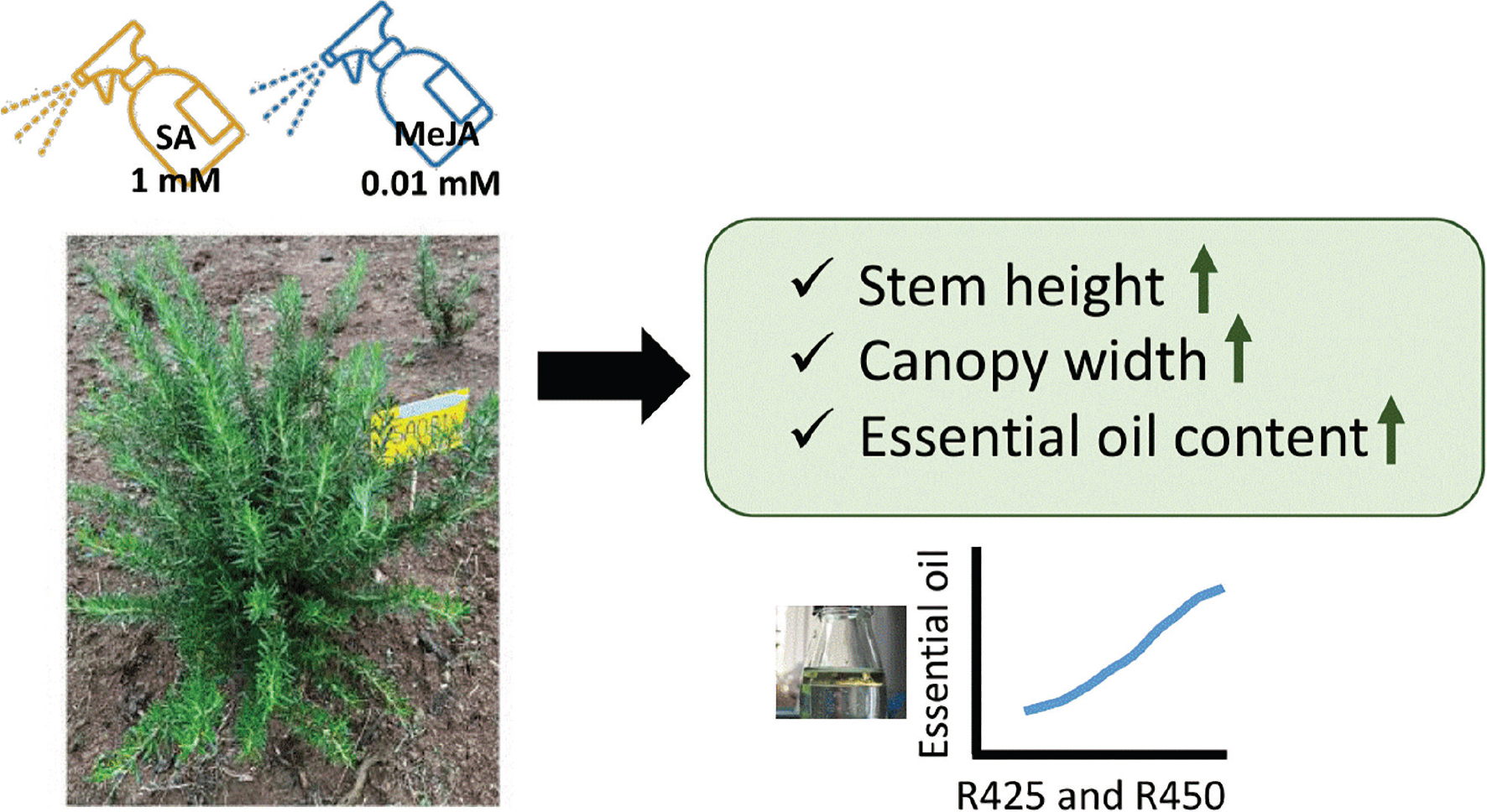
Figure 7.
The summary effects of 1 mM SA and 0.01 mM MeJA on growth and essential oil production in rosemary. The R425 and R450 indices showed a high correlation to rosemary essential oil. MeJA, methyl jasmonate; SA, salicylic acid.
The outcomes of this study suggested that SA and MeJA had the potential to enhance stem height, canopy width, and the essential oil yield in rosemary, particularly at specific concentrations (Figure 7). These findings should provide valuable insights that can be applied to optimise rosemary cultivation practices.
CONCLUSIONS
The application of 1 mM SA and 0.01 mM MeJA significantly enhanced growth, spectral indices (R425 and R450), and essential oil production in rosemary. The application of SA and MeJA had the potential to apply for rosemary cultivation in regions with similar climates to Phetchabun province, Thailand, which had the highest temperature up to 30°C.
SUPPLEMENTARY MATERIALS
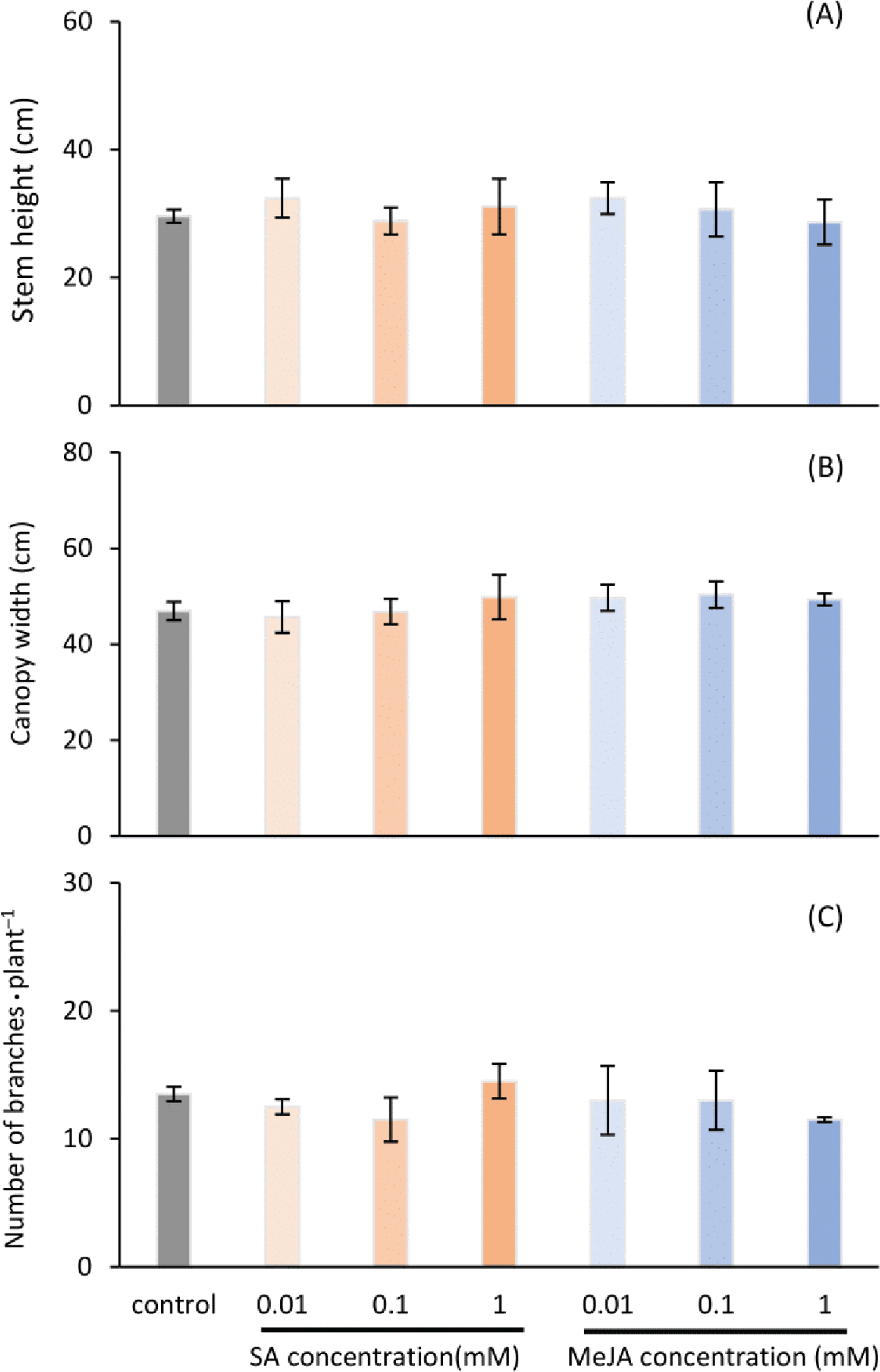
Figure S1.
Growth of rosemary before treating with SA or MeJA: (A) stem height, (B) canopy width, and (C) number of branches · plant−1. According to Tukey’s HSD test, all data had non-significant differences at p < 0.05. Vertical error bars show ± standard deviation. HSD, honestly significant difference; MeJA, methyl jasmonate; SA, salicylic acid.
ACKNOWLEDGEMENTS
The Kasetsart University Research and Development Institute (KURDI), Kasetsart University, Bangkok, Thailand, provided English editing assistance for the manuscript.
Notes
[4] Contributed by AUTHOR CONTRIBUTIONS
J.T., N.C., and P.B were involved in conceptualisation. J.T., N.C., W.D., T.T., and A.M. conducted methodology. J.T. and N.C. performed statistical analysis. T.T. and J.T. prepared the original draft. J.T. reviewed and edited the manuscript. W.D. was project administration and funding acquisition. P.B. and T.S. were project consultants. All authors have read and agreed to the published version of the manuscript.
[5] Conflicts of interest CONFLICT OF INTEREST
The authors declare no conflict of interest.
Abbreviations
- chl
chlorophyll
- Ctr1
Carter index
- HSD
honestly significant difference
- JA
jasmonate
- MeJA
methyl jasmonate
- mM
millimolar
- NDRE
normalised difference red edge index
- NDVI
normalised difference vegetation index
- NPCI
normalised pigment chlorophyll index
- PGRs
plant growth regulators
- SA
salicylic acid
- SIPI
structure-insensitive pigment index
- SRPI
simple ratio pigment index