
INTRODUCTION
Structural vibrations are an inherent characteristic of rotating machinery, arising unavoidably from its operation. Their mitigation demands a dual approach: reducing vibrational effects in service while simultaneously optimizing components and subassemblies during the design phase.
Turbine engines represent a specific class of rotating machinery. Their operation frequently occurs near resonance frequencies, as components pass through resonances during acceleration and deceleration, creating conditions conducive to the formation of fatigue cracks.
Turbine blades are particularly susceptible to fatigue failure (El-Aini et al., 1997; Uchanin, 2021). Crack propagation in a blade leads to its destruction, typically causing engine failure (Peter, 1999 ) and forced withdrawal from service, resulting in significant operational costs. Consequently, methods are continuously being developed to reduce machine failures not only during operation (Witoś, 2008; Yepifanov & Brunak, 2021), but also at the turbine blade design stage.
One approach to reducing blade vibrations is to increase their damping capacity (Szwedowicz, 2010; Csaba & Andersson, 1997; Klepacki, 1975). Conventional methods rely on structural modifications that enhance damping at the blade root, as well as on the incorporation of dedicated damping elements such as friction dampers (Hanson, 1956). A less conventional approach involves increasing vibration damping within the blade volume itself (Moneta et al., 2022a; Goldin et al., 2021). This requires the implementation of energy absorption mechanisms inside the structure – a goal that can be pursued through blade manufacturing methods based on Additive Manufacturing (AM) (Moneta et al., 2022b), also known as 3D printing. However, this approach demands specific design and manufacturing strategies (Kozak et al., 2021), careful selection of an appropriate production method, and extensive testing and validation before the desired vibration properties are achieved.
According to the American Society for Testing and Materials (ASTM F42) and ISO/ASTM 52900 classification (Kim et al., 2023; ISO/ASTM, 2021), additive manufacturing processes are divided into seven categories: Vat Photopolymerization (VPP), Material Jetting (MJT), Binder Jetting (BJT), Material Extrusion (MEX), Powder Bed Fusion (PBF), Sheet Lamination (SHL), and Directed Energy Deposition (DED). Among these, VPP, MJT, and MEX are primarily polymer-based and therefore unsuitable for metal component production. The remaining methods – BJT, SHL, DED, and PBF – are applicable to metals, but differ considerably in precision and performance. Binder Jetting offers cost advantages for batch production, yet requires post-process sintering and yields lower dimensional accuracy. Sheet Lamination can bond metallic sheets but is restricted to relatively simple geometries. Directed Energy Deposition is well-suited to large structures and repair applications, but lacks the resolution required for fine geometric detail. By contrast, Powder Bed Fusion – and Selective Laser Melting (SLM) in particular – offers superior dimensional precision (±0.05 mm), near-full density (>99%), and the capacity to fabricate complex internal geometries without dedicated tooling. These characteristics make SLM the preferred method for high-performance applications in the aerospace, medical, and engineering sectors, where geometric fidelity and mechanical integrity are paramount (Loughborough University, n.d.). Furthermore, the use of metallic powder as the raw material in this process aligns well with the assumptions underlying the proposed blade design.
This paper presents the design, additive manufacturing, and experimental vibration testing of a turbine blade prototype with internal powder-filled damping pockets produced by SLM, with the aim of evaluating the effectiveness of the proposed damping concept.
BLADE DESIGN WITH INTERNAL VIBRATION DAMPING
Prototype Lattice blade replicates the nominal geometry of a conventional turbine blade, while departing from it in one fundamental respect: rather than consisting of solid material throughout, the interior of this Lattice blade comprises a series of pockets filled with loose damping material in powder form.
Lattice bars and pins of various geometries, and consequently different natural frequencies, were built onto the bottom surface of each pocket during the printing process. Their function is to absorb vibration energy and transfer it to the surrounding powder, where it is effectively dissipated. All pockets share the same width and height, with their thickness set to 60% of the local blade profile thickness. The pins similarly share a common width and height, with thickness equal to 20% of the local blade profile thickness. The bars maintain constant height, diameter, and inter-bar spacing, so the number of bars within each pocket varies according to pocket volume.
The Lattice blade was manufactured using Selective Laser Melting (SLM) (Yap et al., 2015; Płatek et al., 2020) from a CoCr alloy on a SISMA MYSINT100 machine. A Solid blade was produced in parallel using the same technology as a reference specimen – geometrically identical on the outside, but with a fully homogeneous, solid interior. The Lattice blade is approximately 6% lighter than its Solid counterpart.
The blade prototype presented here is not yet a production-ready component; it serves as a technology demonstrator for the concept of increasing damping in additively manufactured structures. The design and testing effort was focused on evaluating the effectiveness of the proposed damping mechanisms. Results to date are promising, and further development and validation work is planned, encompassing multiple aspects of blade property improvement.
A patent application has been filed covering the damping solutions embodied in the Lattice blade prototype.
Figure 1 illustrates the internal blade structure, a single powder-filled pocket with its lattice bars and pin, and a photograph of a cross-sectioned blade prototype. Orange arrows in the sketch indicate the expected vibrational motion of the lattice bars and pin during blade excitation.
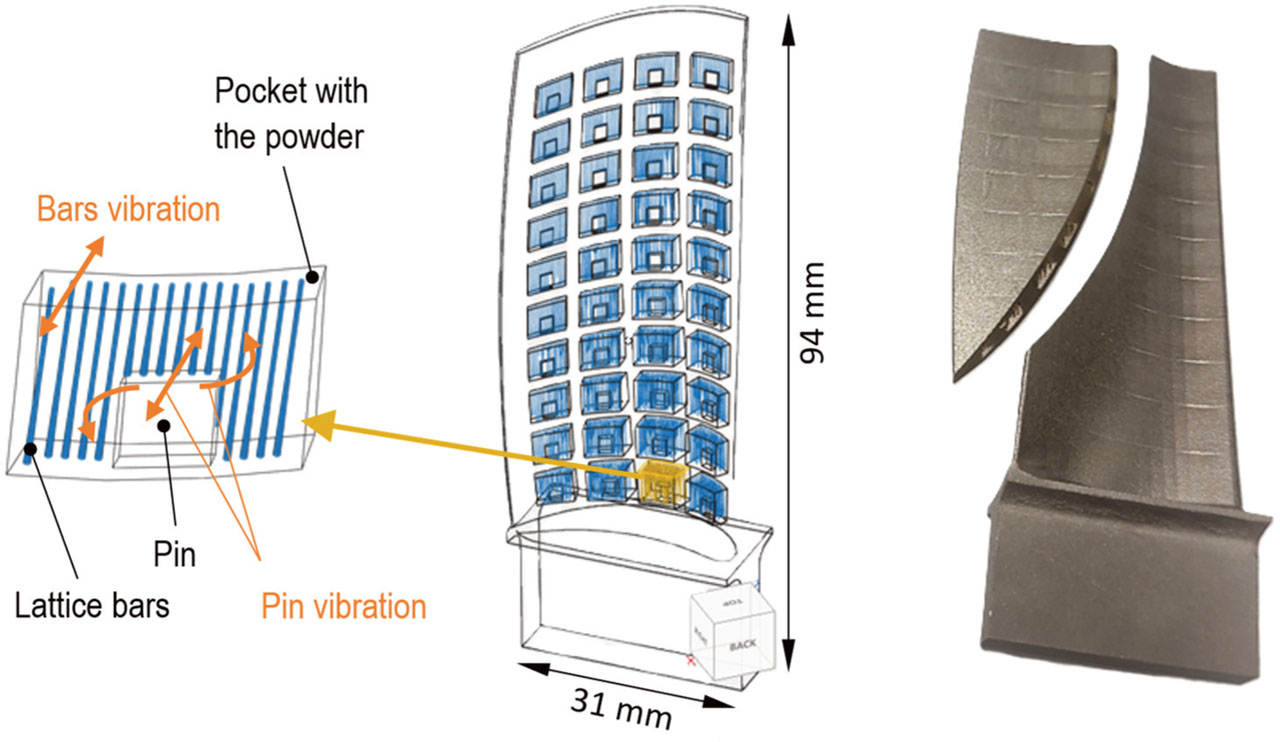
Figure 1.
Internal blade structure (middle), powder-filled pocket with damping elements (left), and cross-section of the manufactured blade prototype (right).
DETERMINATION OF VIBRATION MODES
To characterize the vibration properties of the manufactured structure, experimental studies were carried out to determine its natural frequencies and mode shapes.
The experiments were conducted using a Ling Electronics E-390 electrodynamic shaker. Its excitation frequency range – up to 5 kHz – is sufficient to capture four fundamental vibration modes of the blade. At this stage of product development, this coverage is adequate for estimating the effectiveness of the applied damping mechanisms, understanding the dynamic behavior of the internal structure, and informing further design optimization toward a blade with high vibration damping efficiency.
During testing, the blade was mounted in a dedicated fixture bolted to the shaker table. The assembled configuration is shown in Figure 2.
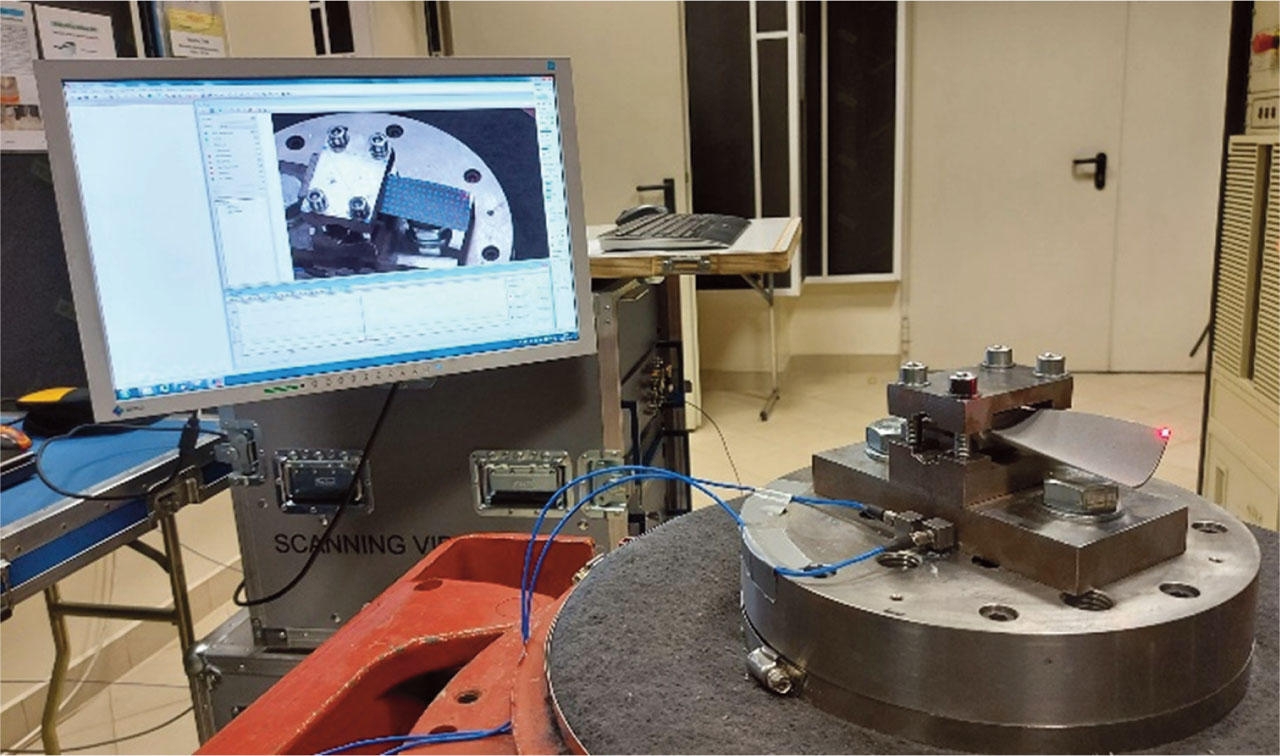
Figure 2.
Blade mounted in the fixture on the shaker and view of the measuring system.
Vibrations were measured using a Polytec PSV-500 3D scanning laser vibrometer equipped with three laser heads: one PSV-I-500 primary head and two PSV-I-520 lateral heads. This configuration enabled the acquisition of full spatial representations of the measured mode shapes, which were subsequently rendered as animated numerical models and static illustrations. The complete test stand, comprising the shaker and all three vibrometer heads, is shown in Figure 3.
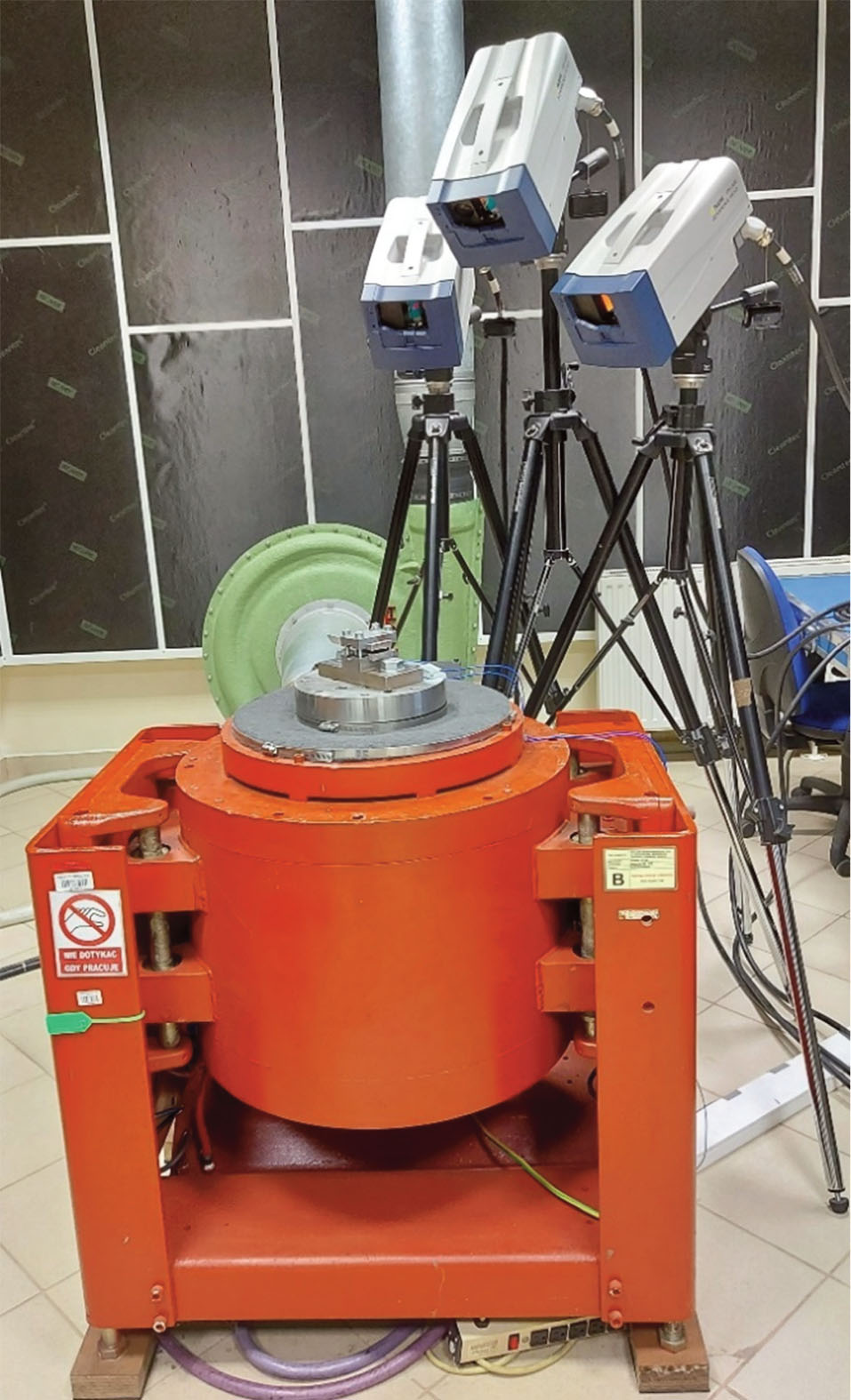
Figure 3.
Test stand: E-390 shaker and heads of the PSV 500 3D scanning vibrometer.
The use of a contactless vibration measurement method is essential when testing small, lightweight objects, particularly where vibrations must be captured at a large number of points in order to accurately reconstruct mode shapes. The method requires no sensors to be mounted on the object, meaning the specimen mass is not increased by their addition, which would otherwise alter its vibration properties (Cieślak, 2018). In this project, damping measurement is of particular importance: conventional piezoelectric accelerometers would be disadvantageous in this respect, as their wiring introduces additional damping into the system. The laser vibrometer eliminates such disturbances and enables precise, repeatable definition of measurement locations.
Measurement points were distributed across the entire exposed surface of the blade – that is, the portion not obscured by the fixture. The resulting measurement grid comprised 105 points on the blade and 4 points on the fixture, the layout of which is shown in Figure 4. The laser heads used have a beam diameter of approximately 0.1 mm, which would permit a considerably finer grid with more closely spaced points; however, the grid adopted here is fully sufficient for resolving the fundamental vibration modes of interest. A finer mesh may be employed in later stages of the project – for instance, during optical measurement of dynamic stress and strain using the Polytec laser vibrometer (Polytec GmbH, 2010), which is planned as a subsequent phase of this project.
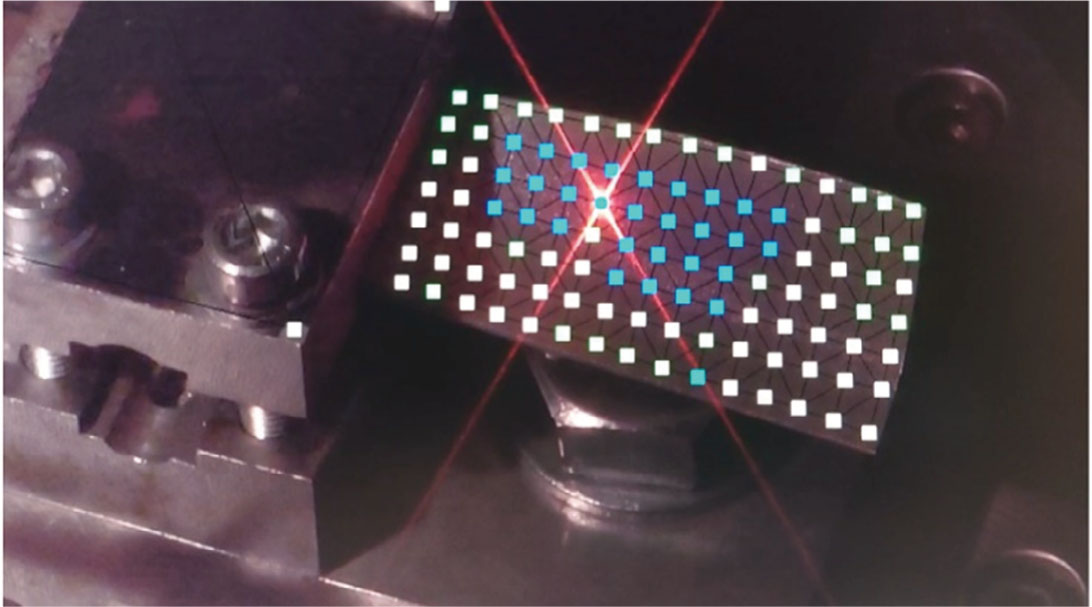
Figure 4.
Measurement point grid for vibration mode shape acquisition.
Scanning and vibration measurements at all points were performed under random excitation. The data acquisition time at each point was 5.12 seconds. From the resulting response spectrum, resonant frequencies were identified and mode shapes were extracted. Both the Lattice blade – with its internal damping pockets – and the Solid blade were tested under identical conditions.
The resulting vibration mode shapes are presented in Figure 5. As the mode shapes of the Solid and Lattice blades are closely similar, a single set of illustrations is shown.
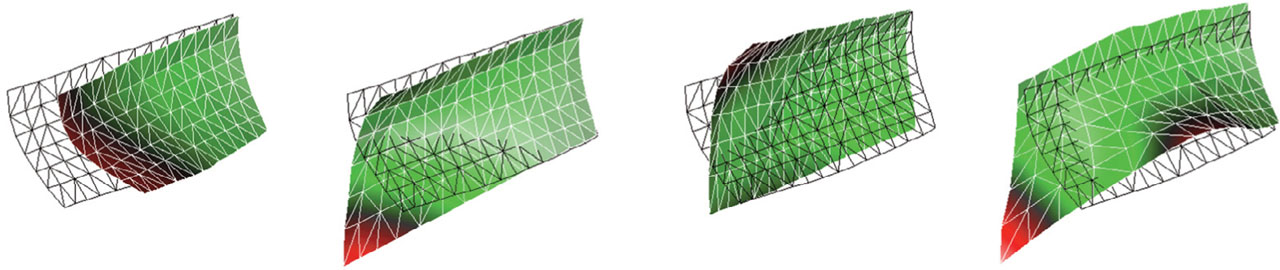
Figure 5.
Mode shapes obtained from vibration testing.
Table 1 presents the natural frequencies measured experimentally for both the Solid and Lattice blades.
Table 1.
Natural frequencies of the blades obtained from experimental testing.
| Object | Mode | ||||
|---|---|---|---|---|---|
| 1 | 2 | 3 | 4 | ||
| Solid Blade | f [Hz] | 1076 | 2529 | 3745 | 4928 |
| Lattice Blade | f [Hz] | 1019 | 2293 | 3357 | 4463 |
| Relative Difference | −5% | −9% | −10% | −9% | |
The natural frequencies of the Lattice blade are lower than those of the Solid blade by up to 10%, a direct consequence of the reduced stiffness introduced by the damping pockets.
It is worth noting that natural frequencies can vary among blades produced by conventional methods, owing to geometric deviations arising from manufacturing tolerances (Osiewicz et al., 2022). In the case of precision additive manufacturing, this source of variability is largely negligible.
With the natural frequencies and mode shapes of both blades established, attention next turns to quantifying the damping properties of the Lattice blade and evaluating the effectiveness of the implemented damping structures.
BLADE VIBRATION DAMPING TESTS
The main objective of this project is to increase blade vibration damping by leveraging the capabilities of advanced additive manufacturing technology. To evaluate the effectiveness of the implemented damping structures, tests were conducted to quantify the damping of the fundamental resonant vibration modes of a blade mounted on an electrodynamic shaker.
Sinusoidal vibrations were excited with a frequency sweep from 0.5 to 5 kHz. The response was measured at the point of maximum vibration amplitude using a single vibrometer head, positioned such that the laser beam was perpendicular to the blade surface at the measurement point (Fig. 6).
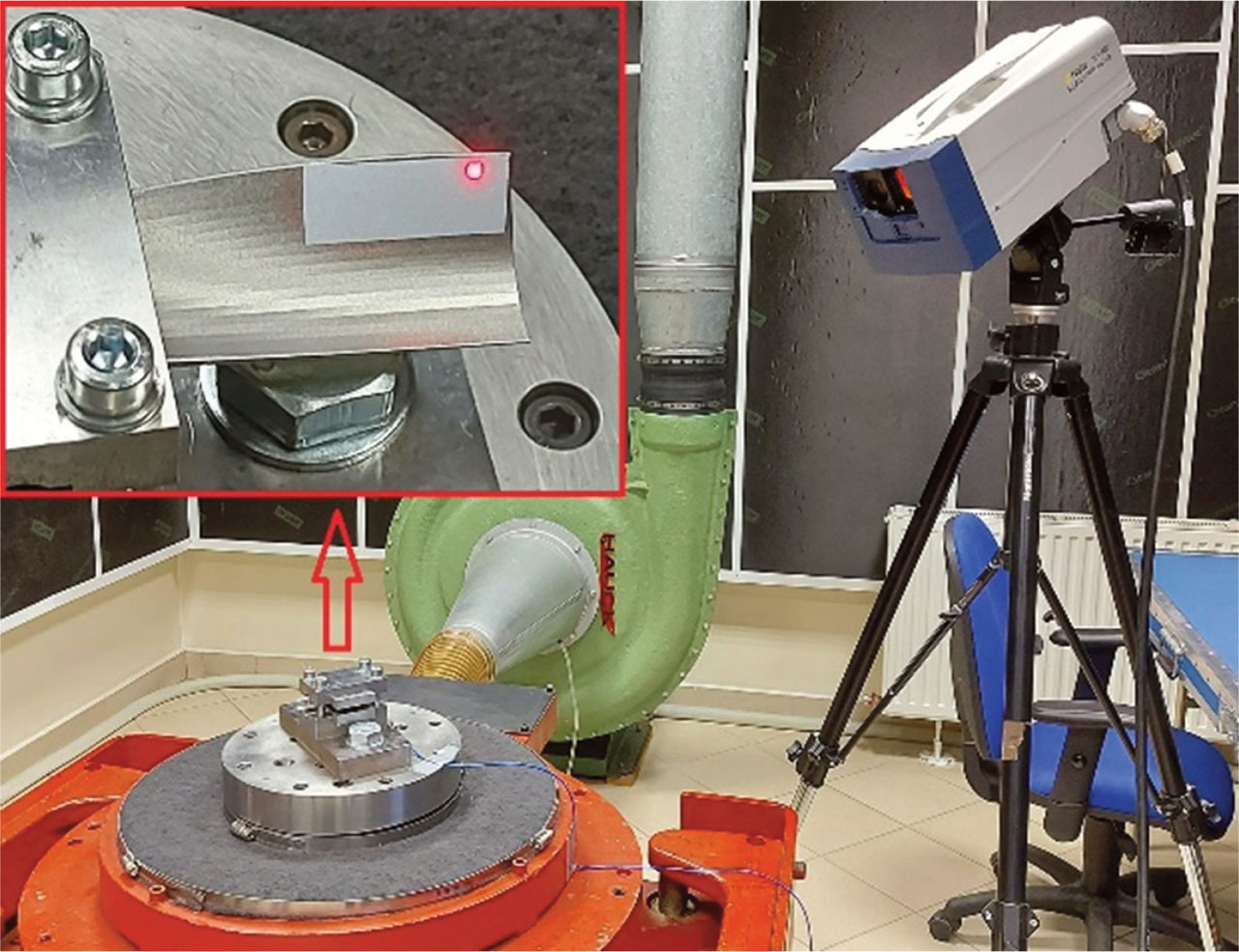
Figure 6.
Test stand for measuring vibration damping.
Data acquisition and shaker control were handled by a system based on the LMS SCADAS recorder operating with LMS Test.Lab software. The system recorded signals from both the laser vibrometer head and a control accelerometer mounted on the shaker table.
From the recorded data, velocity-frequency response characteristics were derived for the blade tip measurement point. The resulting curves for both blades are shown in Figure 7, obtained under excitation at a constant level of 1g across the full frequency band.
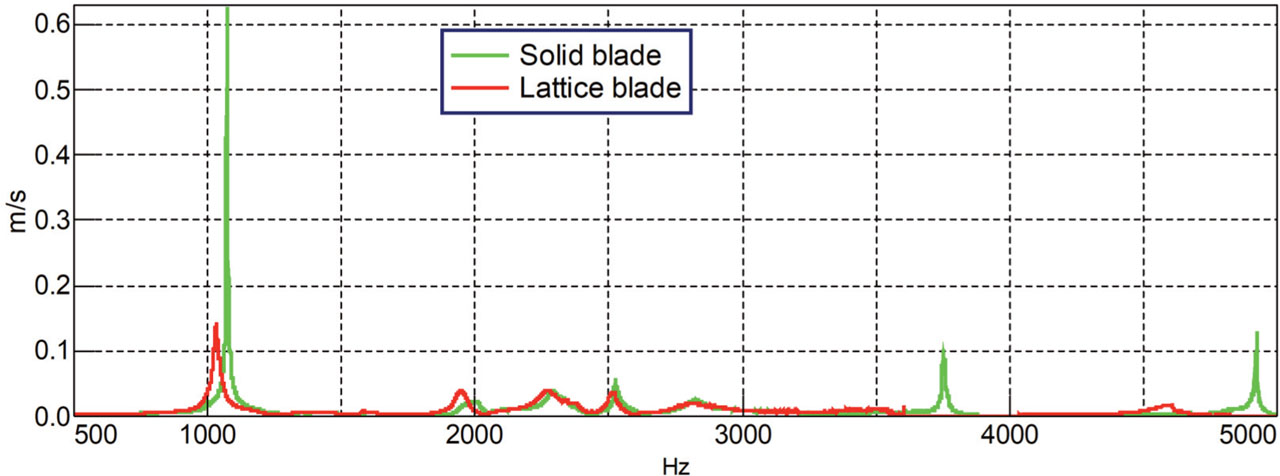
Figure 7.
Amplitude-frequency characteristics of the Lattice and Solid blades.
A reduction in the vibration amplitude of the Lattice blade compared to the Solid blade is clearly visible in the graphs. The broadening of the resonance curve further indicates greater vibration damping (Szmidt, 2014).
The modal damping ratio was determined from the measured response curves using the half-power method (Osiński, 1998), following the procedure illustrated in Figure 8 and the formula (Siemens Industry Software NV, 2015):
where:- ζ
damping ratio,
- Δf−3dB
resonance curve width at −3dB level (Δf−3dB) = f2 − f1),
- f0
resonant frequency.
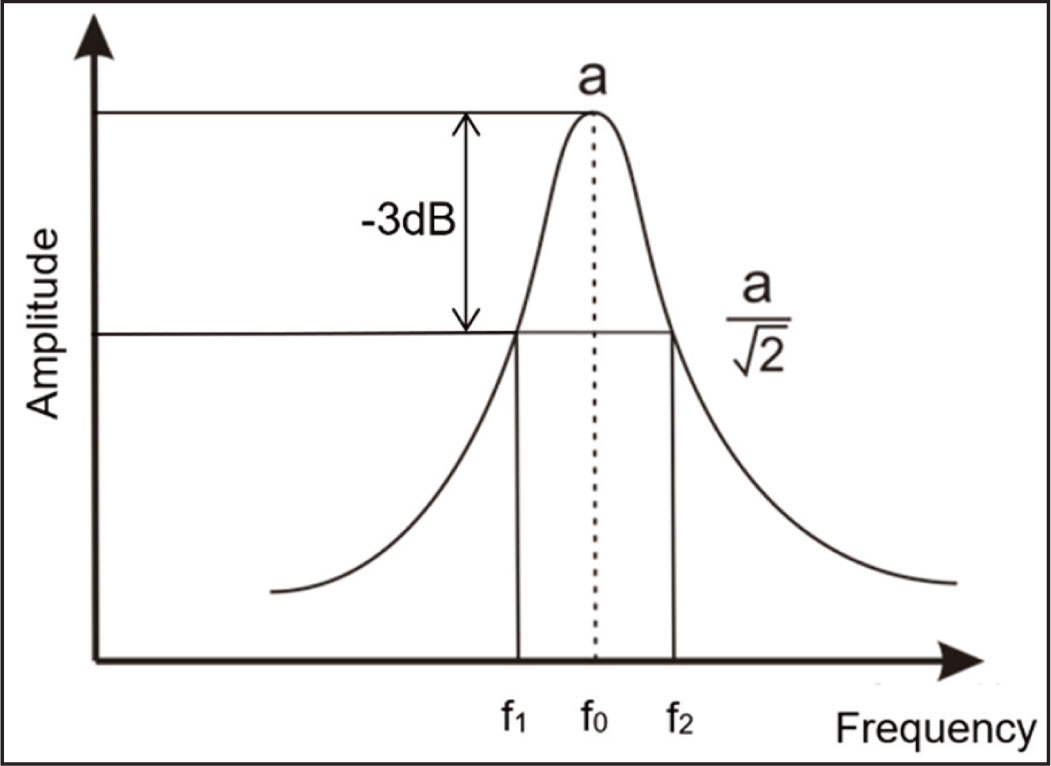
Figure 8.
Determination of vibration damping by the half-power method (Braun et al., 2002).
The results revealed damping increases in the Lattice blade of up to several times that of the Solid blade, depending on the vibration mode considered. Table 2 presents the damping ratios calculated from sweep test data acquired at an excitation amplitude of 1g.
Table 2.
Damping ratio for excitation amplitude 1g.
| Object | Mode | ||||
|---|---|---|---|---|---|
| 1 | 2 | 3 | 4 | ||
| Solid Blade | ζ [Hz] | 0.16 | 0.28 | 0.11 | 0.06 |
| Lattice Blade | ζ [Hz] | 0.86 | 0.53 | 0.29 | 0.72 |
| Damping increase | 5.4× | 1.9× | 2.6× | 12× | |
The results indicate that the damping enhancement attributable to the loose powder within the pockets varies across vibration frequencies and modes, suggesting that the effect of the damping structures is not spatially uniform within the blade. This is presumably governed by the distribution of nodal and antinodal lines – specifically, whether these intersect the damping pockets or pass through regions of solid material
DAMPING NONLINEARITY RELATIVE TO VIBRATION AMPLITUDE
In dynamically nonlinear structures with discontinuities, particularly where friction or looseness is present, the amplitude of resonant vibrations is not directly proportional to the excitation force amplitude (Krzymień, 2019). During initial testing of the Lattice blade, it was anticipated that both vibration amplitude and structural damping might depend significantly on the magnitude of the excited vibrations.
To investigate this relationship, both blades were subjected to a series of sweep tests on the electrodynamic shaker, each performed at a different but constant excitation level. Excitation amplitude was controlled by a reference accelerometer mounted on the shaker table, and vibration levels ranging from 0.0156g to 8g were applied. Blade vibrations were measured at a single point on the blade tip using the laser vibrometer, consistent with the configuration described previously (Fig. 6).
The two blades exhibited markedly different behavior in their amplitude-frequency characteristics as a function of excitation level. Figures 9 and 10 show the vibration acceleration response as a function of frequency for the first mode of each blade, measured across the full range of excitation levels. The frequency response function (FRF) diagrams are presented in dimensionless form, with the blade vibration acceleration amplitude normalized by the excitation acceleration amplitude measured on the shaker table. Blue arrows indicate the direction of increasing excitation amplitude.
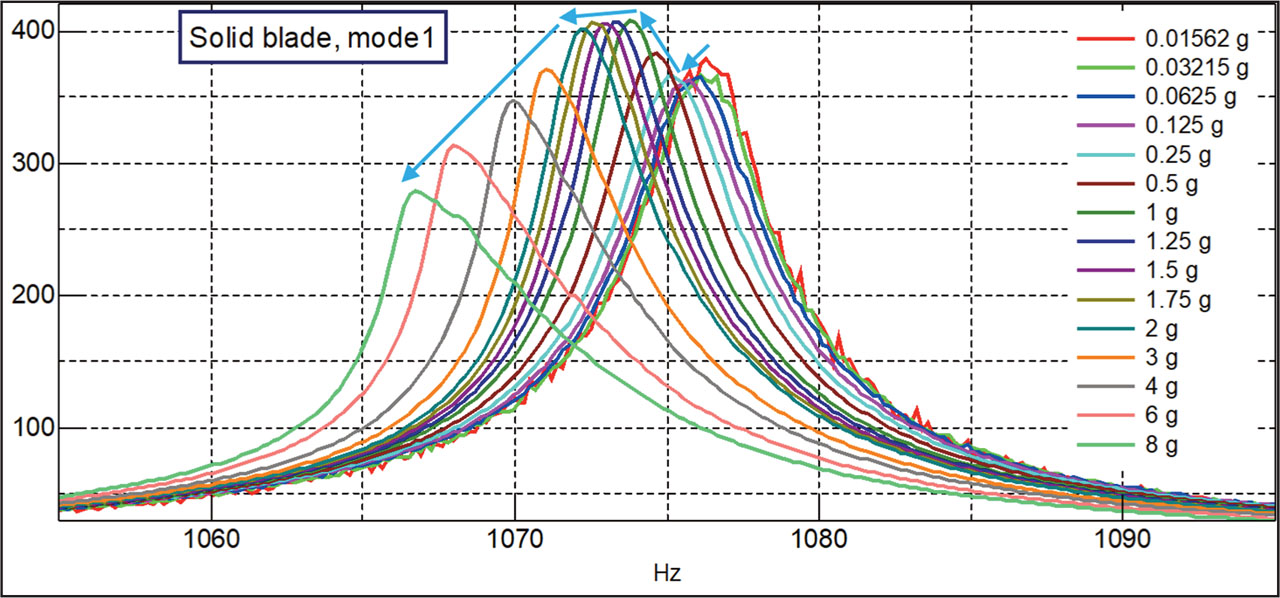
Figure 9.
Solid blade frequency characteristics for various amplitude of excited vibrations (1st mode).
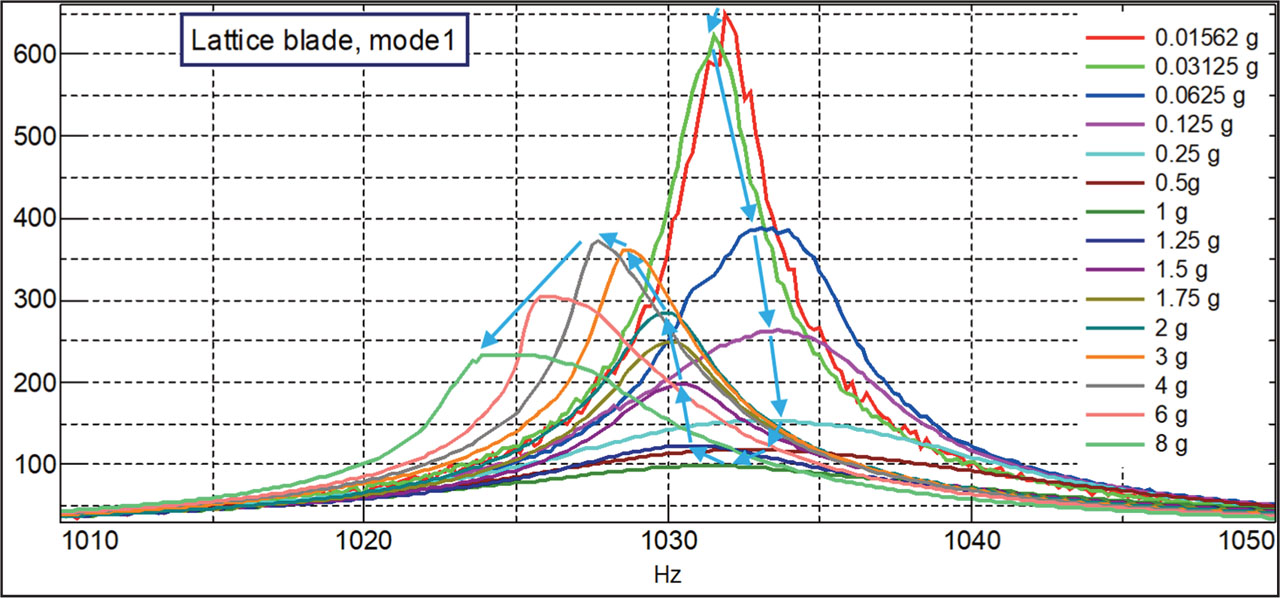
Figure 10.
Lattice blade frequency characteristics for various amplitude of excited vibrations (1st mode).
The graphs show that for the Solid blade, the relative vibration amplitude increases slightly with rising excitation level at low amplitudes, indicating a marginal reduction in the damping ratio. Above approximately 1g, the blade vibration amplitude begins to decrease gradually – in other words, damping increases.
The Lattice blade, on the other hand, exhibits a markedly different behavior. In the initial phase of increasing excitation, the relative vibration amplitude decreases substantially, reflecting a strong rise in damping. After reaching an excitation level of approximately 1g, the relative amplitude begins to increase, reaching a local maximum at around 3g, before decreasing again at higher excitation levels.
These trends are reflected in the damping ratio values calculated across all sweep test characteristics. The dependence of the damping ratio on excitation amplitude is shown in Figure 11.
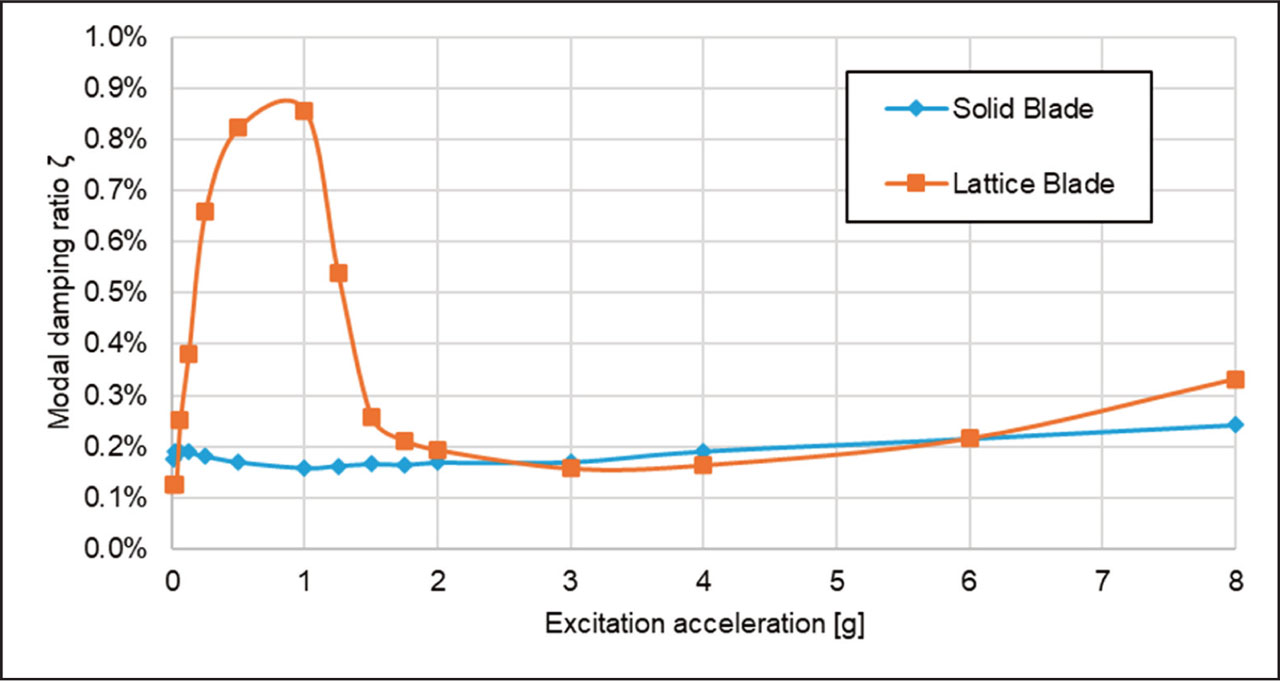
Figure 11.
Damping ratio as a function of excited vibration amplitude (Moneta et al., 2022b).
The Lattice blade exhibits a strongly nonlinear relationship between damping ratio and excitation amplitude. Maximum damping occurs at an excitation level of approximately 1g, with a local maximum expected near 0.7g. A local minimum is observed at 3g, after which the damping ratio increases once more with further excitation.
For the Solid blade, the relationship is considerably closer to linear, with only a slight positive slope – consistent with the well-known amplitude dependence of material damping under increasing strain.
SUMMARY
Vibration testing of additively manufactured blades confirmed the effectiveness of the newly developed damping mechanism. A significant increase in the damping ratio was achieved for the Lattice blade relative to the Solid blade: one that brings the damping ratio to levels comparable to those of friction dampers and other conventionally employed damping solutions (Szwedowicz et al., 2008). A further advantage of the Lattice blade is that its internal structure has no influence on the aerodynamics of the working elements, the blade mounting, or the internal layout of the jet engine.
The damping ratio increase was found to vary with vibration mode shape, indicating that the damping structures behave differently across the blade volume depending on local displacements. Certain pockets containing non-fused powder appear inactive for some mode shapes while contributing effectively for others, suggesting that in some blade regions the presence of damping structures may have little effect. A uniform distribution of pockets is therefore not optimal for broadband resonance excitation. Optimization of pocket geometry, filling (Scott-Emuakpor et al., 2021), and spatial distribution is considered necessary to maximize performance for the specific mode shapes most associated with turbine failures. A universal solution effective across a wide vibration spectrum is also a viable objective, though its performance for individual mode shapes is expected to be more moderate.
Further investigation is required to elucidate the fundamental mechanisms underlying the damping behavior of non-fused powder pockets. This includes detailed comparison of mode shapes between the Solid and Lattice blades, characterization of the dependence of the damping coefficient on excitation amplitude, and identification of the physical origin of the observed nonlinearity.
A comprehensive approach to damping structure research will require high-fidelity numerical models correlated with experimental results, along with dedicated models for the damping structures themselves and methods for estimating the effectiveness of non-fused powder pockets. Such models are expected to deepen understanding of the governing mechanisms and enable more effective design of future configurations.
The influence of centrifugal force on the behavior of non-fused powder within the pockets must also be addressed in further Lattice blade development. With sufficient agreement between experimental data and numerical predictions, reliable estimation of blade behavior under high rotational speed conditions becomes feasible.
Lattice blade development cannot proceed without concurrent static and fatigue strength optimization. The presence of powder-filled pockets throughout the blade volume inevitably reduces structural strength; however, pockets can be positioned in regions where their detrimental effect on integrity is minimized. Pocket distribution optimization should therefore be closely coupled with structural strength analysis. Additionally, the effect of post-process thermal treatment on both mechanical properties and damping behavior has yet to be examined.
Strength analysis must ultimately be validated through physical prototype testing. As a minimum baseline, resonance testing on an electrodynamic shaker is required to demonstrate that the proposed damping concept extends blade service life.
At the current stage of research, the damping performance of the Lattice blade under realistic turbine operating conditions – including high rotational speed and elevated temperature – remains unknown. Centrifugal force may cause powder migration and compaction toward pocket boundaries, while high operating temperatures may promote powder sintering; both effects may reduce the effectiveness of the damping pockets (Scott-Emuakpor et al., 2021). Consequently, following the completion of strength optimization and successful stationary vibration testing, a test campaign on an operational jet engine will be required as the final validation phase.
In parallel, the authors intend to extend the lattice-structure concept to non-rotating components, where the influence of rotational conditions on the non-fused powder can be disregarded.