
Table 1.
Chemical Analysis of Aluminum Alloy 2024-T351.
| Element | Cu | Zn | Mg | Mn | Fe | Si |
|---|---|---|---|---|---|---|
| According to (EAA) | 3.8–4.9 | ≤ 0.25 | 1.2–1.8 | 0.3–0.9 | ≤ 0.5 | ≤ 0.5 |
| Measured | 4.41 | 0.0269 | 1.64 | 0.462 | 0.28 | 0.102 |
| Element | Cr | Ti | Bi | Ni | Al | Others |
| According to (EAA) | ≤ 0.1 | ≤ 0.15 | --- | --- | Rem. | ≤ 0.15 |
| Measured | 0.0066 | 0.067 | 0.0052 | 0.0097 | Rem. | 0.0229 |
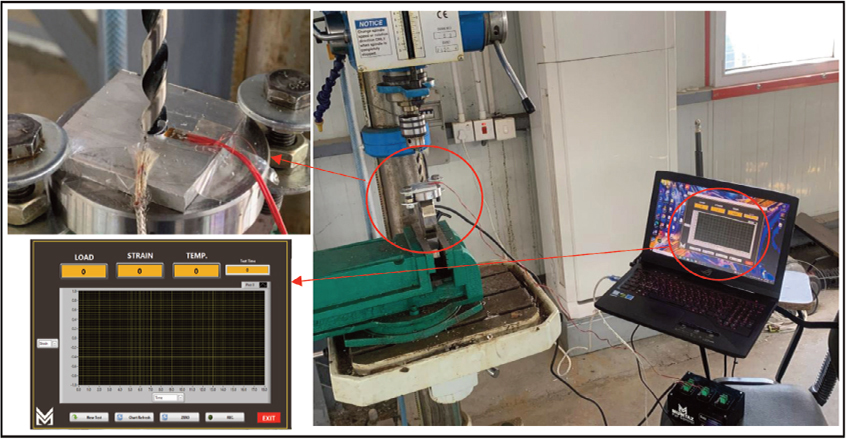
Figure 1.
The drilling machine setup.
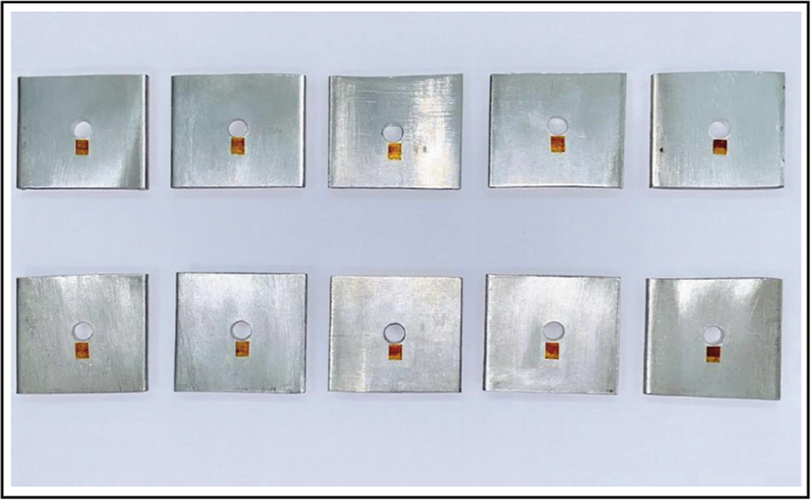
Figure 2.
Al2024-T351 specimens.
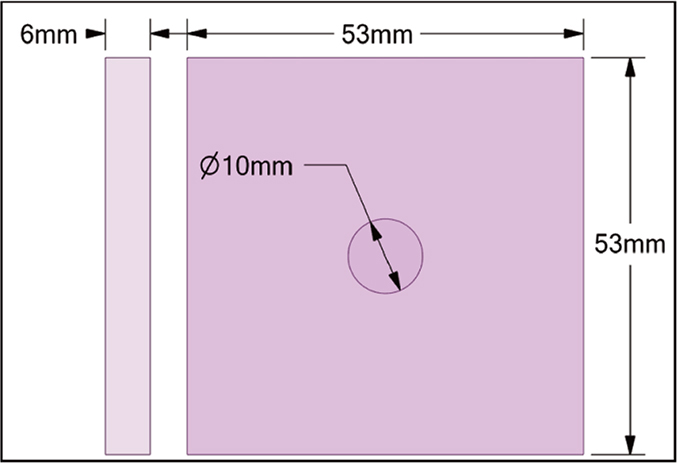
Figure 3.
Dimensions of Al2024-T351 plate.

Figure 4.
Geometry and dimensions of the drill bit used in this investigation.
Table 2.
Material Properties Used for Defining the Al2024-T351 Workpiece in the FE Model.
| Property | Value |
|---|---|
| Elastic modulus E | 73 GPa |
| Poisson’s ratio ν | 0.33 |
| Yield strength σy | 369 MPa |
| Density ρ | 2770 kg/m3 |
| Thermal conductivity k | 121W/m·K |
| Specific heat capacity cp | 875 J/kg·K |
| Thermal expansion coefficient α | 24.7 × 10⁻⁶ K−1 |
[i] Source: Aslam et al. (2020)
Table 3.
Johnson-Cook Damage Parameters Used in the Abaqus Material Definition.
| Parameter | Value |
|---|---|
| d1 | 0.31 |
| d2 | 0.045 |
| d3 | −1.7 |
| d4 | 0.005 |
| d5 | 0 |
| Melting temperature k | 775 |
| Transition temperature | 0 |
| Reference strain rate | 1 |
[i] Source: Aslam et al. (2020)
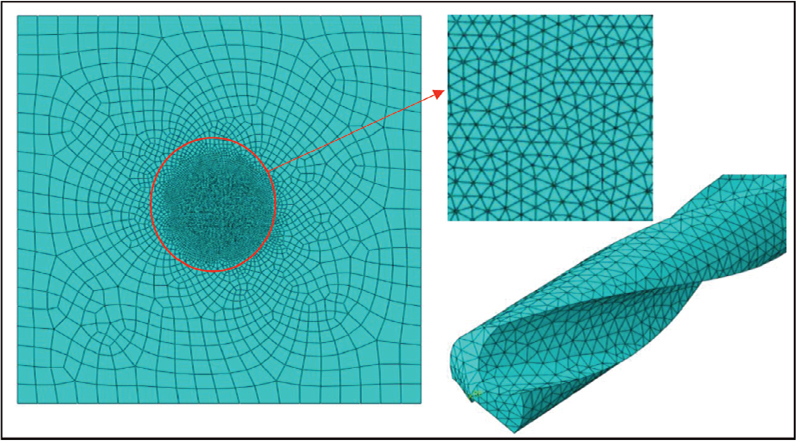
Figure 5.
Mesh generation in drill bit and workpiece.
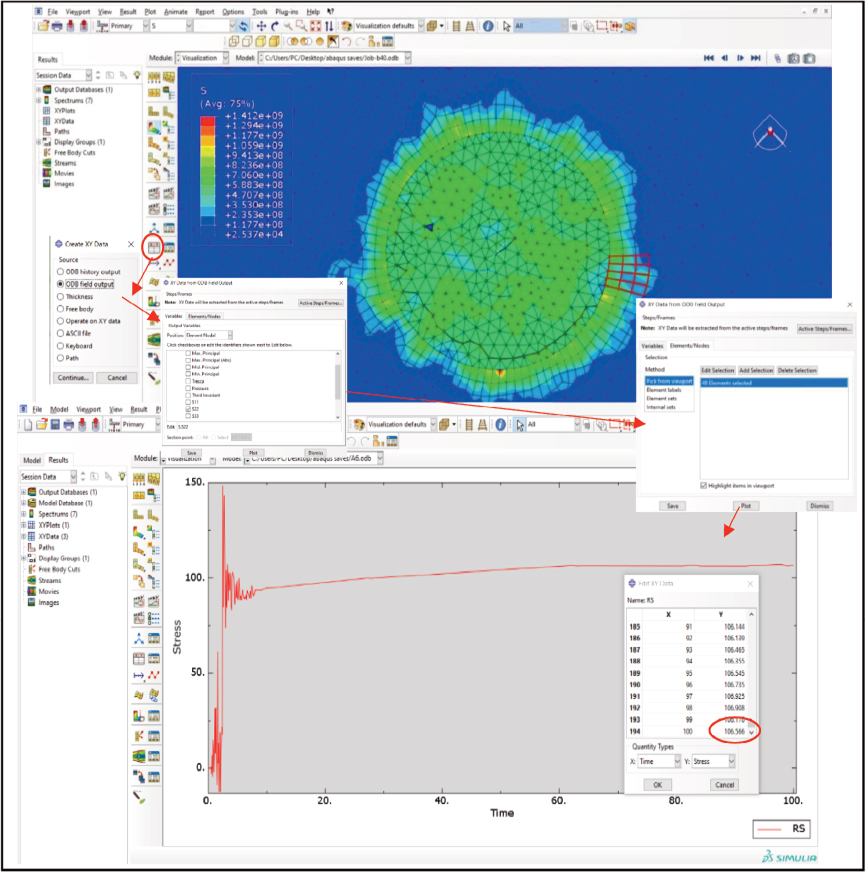
Figure 6.
Residual stress extraction procedure showing S22 history at gauge-representative elements (Case: Group A, 375 rpm, 0.12 mm/rev).
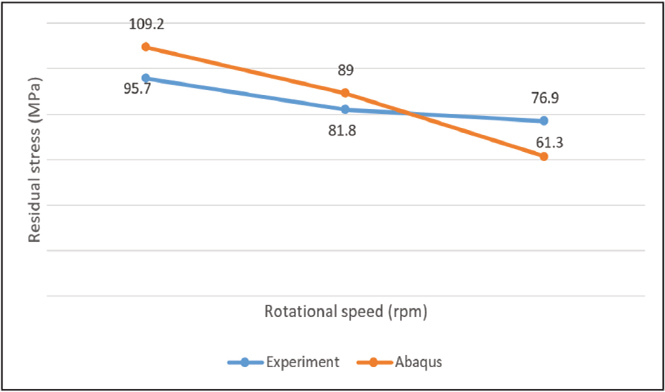
Figure 7.
Comparison of experimental and Abaqus-predicted residual stress at different spindle speeds for Group A.
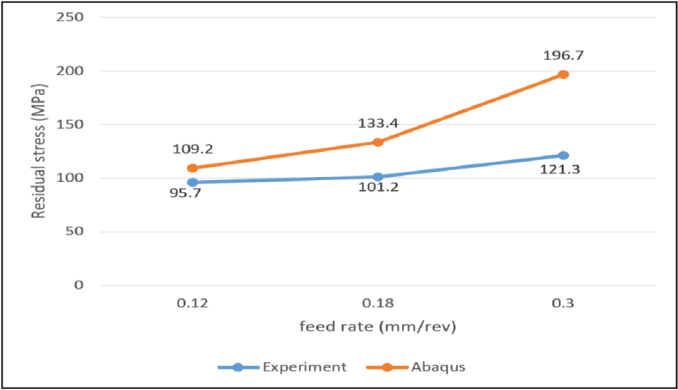
Figure 8.
Comparison of experimental and Abaqus-predicted residual stress at different feed rates for Group A.