
Nomenclature
| symbols | Designations | symbols | Designations |
|---|---|---|---|
| da/dN | Crack growth rate (m/cycle) | Qi | Energy dissipated per cycle i |
| A | a dimensionless constant | Qenv | Enclosed energy (total area enclosed by all the cycles) |
| A | Elongation (%) | R | Load Ratio |
| B | Thickness (mm) | S1, S2 | Ductile and brittle Striations |
| D1, D2 | Dimples | US | Specific energy (J/m2) |
| Kmin, Kmax | Minimal and maximal stress intensity factor (MPa.m1/2) | W | Width (mm) |
| K′ | Cyclic strength coefficient (MPa) | α | The maximum specimen compliance during a cycle and Po |
| ΔK | Amplitude stress intensity factor (MPa.m1/2) | δ, δ′ | Crack opening displacement (mm) and differential crack opening (mm) |
| L | Length (mm) | γ | Energy necessary for creating surface (J/m2) |
| n | Hardening coefficient | μ | Shear modulus, MPa |
| Pmin, Pmax | Minimum and maximum load (N) | σc | Critical stress at fracture MPa |
| Po | Crack opening load (N) | σu | Ultimate tensile strength (MPa) |
| Q | hysteretic energy dissipated (J/cycle) | σy | yield stress (MPa) |
1. INTRODUCTION
Fatigue crack growth under variable loads is complex and influenced by fluctuating stresses and load histories. Aircraft structures are mainly subjected to random load spectra, including overloads and underloads. Schijve (1979) classified these into stationary (constant) and non-stationary (dynamic) load spectra. Different models have been proposed for predicting crack propagation under variable amplitude loading, including cycle-by-cycle methods, which sum the crack growth rate per cycle while assuming no interactions, and equivalent constant load models, which represent the entire load sequence by a single level. Other approaches use mean square maxima and minima.
Elber (1976) defined short spectra as those in which crack growth during a sequence does not exceed the size of the plastic zone created by the maximum load of that sequence. Many researchers have examined fatigue crack propagation under CAL and VAL using various methods, such as experimental (Witek, 2009; Śnieżek, 2009; Reymer et al., 2023), numerical (Augustin, 2009; Niepokólczycki et al., 2009; Jasztal et al., 2018; Łukasiewicz, 2021; Kebir et al., 2023), probabilistic (Kocańda et al., 2009), and energetic approaches. It has been highlighted that dissipated energy, resulting from internal structural changes in the material, can serve as a fatigue criterion. Kebir et al. (2017) developed a fatigue crack growth (FCG) model in the Paris regime. This model introduces advanced features that account for the inherent variability in cyclic hardening behavior and elastic properties of materials, aiming to improve the accuracy and reliability of fatigue life predictions. The model was later enhanced to simulate crack propagation under cyclic loading conditions and was coupled with a graphical user interface (GUI) in MATLAB, providing a combined tool for parametric studies (Kebir et al., 2021). Moussouni et al. (2022) proposed an empirical model based on the Gamma function for constant amplitude loading. Their findings demonstrate a strong correlation with experimental results and show good agreement with the Paris law, as discussed by Benachour et al. (2017).
Since the Paris law (1963), understanding of crack propagation has advanced through energy-based models, including damage models (Lemaitre et al., 2005) and cyclic plastic strain energy approaches (Morrow 1965; Kebir et al., 2019). Recent research emphasizes energetic methods, such as Weertman’s (1973) model, which relates the crack growth rate to the energy released at crack surfaces, building on the theory proposed by Bilby et al. (1965):
Researchers have experimentally validated energy-based models by measuring the energy required to separate atoms in metals, using methods such as micro strain gauges, subgrain size and microhardness measurements, microcalorimetry, and infrared thermography (Ikeda et al., 1977; Gross et al., 1982; Liaw et al., 1980; Izumi et al., 1979; Benguediab et al., 2001; Zemri et al., 2009). Differential techniques (Kikukawa et al., 1977) have also been employed (Ranganathan, 1985; Ranganathan et al., 1987a; Benguediab, 1989) to quantify hysteretic energyand to better understand fatigue crack growth behavior. Other studies (Klingbeil, 2003; Mazari et al., 2008; Maachou et al., 2016; Zhu et al., 2018; Wang et al., 2018) have linked fatigue crack growth rates to the total plastic energy dissipated upstream of the crack tip. Fractographic analysis (Bogdanowicz et al., 2009; Benguediab et al., 1988) has provided further insight into fracture mechanisms, with Albedah et al. (2020) explaining crack growth retardation due to overload. Walker et al. (2017) developed a fatigue crack propagation model for high-strength steel based on quantitative fractography, which showed good agreement with experimental results. In addition, Benguediab et al. (2012) combined fracture surface analysis with energy considerations to elucidate the mechanisms governing crack propagation.
Building on this foundation, the present paper proposes a model based on the energy concept, which allows the establishment of an equivalent constant-amplitude load. The equivalence criteria are defined by the energy dissipated between the equivalent constant-amplitude load and the spectrum, with the equivalent load ratio required to match the load ratio of the predominant level determined through quantitative fractographic analysis.
2. METHODOLOGY OVERVIEW
2.1. Material
The study was conducted on the high strength aluminum alloy 2024 T351. Its nominal composition and mechanical properties are given in Tables 1a and 1b.
2.2. Experimental procedure
In this study, compact tension CT75 specimens B = 12 mm thick and W = 75 mm wide were used in the fatigue test (Fig. 1).
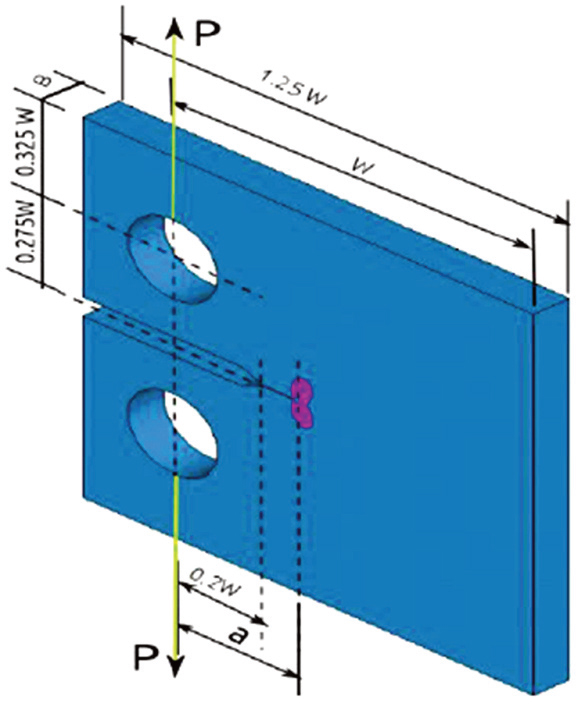
Figure 1.
Schematic of a compact tension specimen.
Figure 2 presents a schematic illustration of crack opening displacement (COD), denoted as delta (δ), which represents the separation of the crack faces at a specific location.
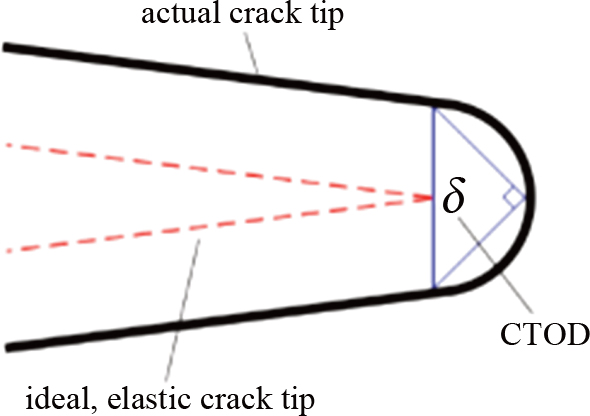
Figure 2.
Schematic of crack opening displacement δ.
The characterization of fatigue behavior under constant-amplitude loading was carried out for five different load ratios R, with the corresponding loading conditions given in Table 2. Additional tests were performed under spectrum loading for different configurations (Figure 3 and Table 3). The constant-amplitude tests were conducted first to characterize the material behavior. The load ratio R = 0.01 corresponds to a ground–air–ground (GAG) cycle, representing the stress transition between the minimum ground stress and the maximum stress in the spectrum, while R = 0.54 corresponds to the maximum load in a specific spectrum.
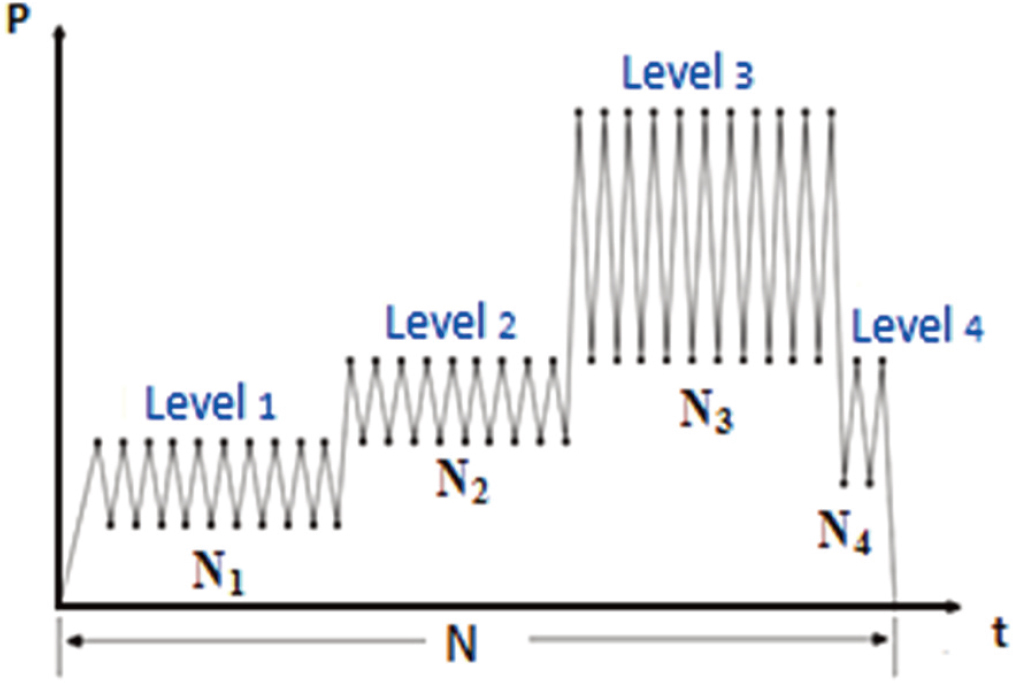
Figure 3.
Reduced spectrum studied.
Table 2.
Loading conditions under constant amplitude loading.
| R | 0.01 | 0.10 | 0.33 | 0.54 | 0.70 | |||
|---|---|---|---|---|---|---|---|---|
| Pmin (daN) | 4 | 6 | 40 | 50 | 158 | 178 | 324 | 588 |
| Pmax (daN) | 400 | 600 | 400 | 500 | 480 | 540 | 600 | 840 |
| ΔP (daN) | 396 | 594 | 360 | 450 | 322 | 362 | 276 | 252 |
Table 3.
Different load levels with specific steps.
| Type of spectrum | Level 1 Pmin = 80 daN Pmax = 150 daN R=0.53 | Level 2 Pmin = 160 daN Pmax = 392 daN R = 0.41 | Level 3 Pmin = 323 daN Pmax = 600 daN R = 0.54 | Level 4 Pmin = 138 daN Pmax = 323 daN R = 0.43 |
|---|---|---|---|---|
| N1 | N2 | N3 | N4 | |
| A | 1 | 1 | 1 | 1 |
| B | 10 | 10 | 10 | 2 |
| C | 10 | 10 | 50 | 2 |
| D | 10 | 10 | 100 | 2 |
The spectra were derived from the statistical load history of aircraft wings. The different load levels and the corresponding number of cycles are presented in Table 2.
All tests were conducted on an INSTRON 8501 hydraulic machine with a capacity of 100 kN, controlled by dedicated software that recorded load and displacement data. Figures 4a and 4b show the testing machine and the crack opening displacement gauge (CODG) mounted on the specimen to measure displacement.
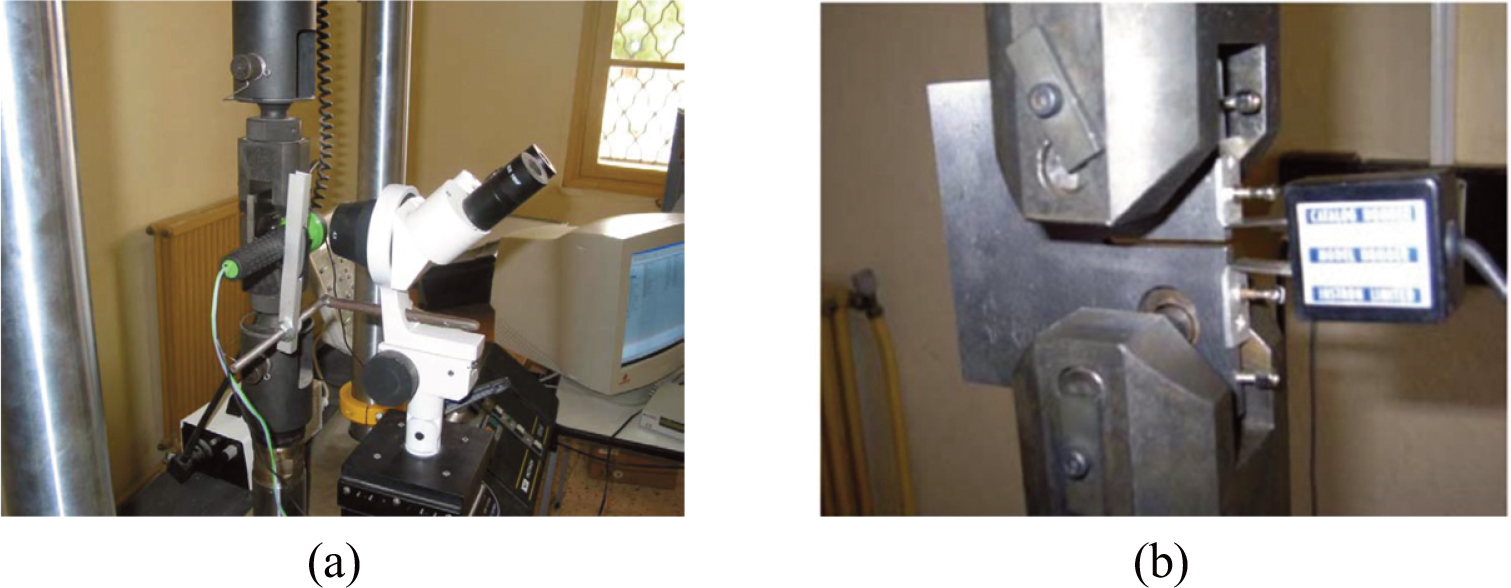
Figure 4.
(a) Testing machine; (b) crack opening displacement gauge (CODG).
The opening load measurements were performed using the differential technique, which evaluates the quantity δ′ = δ – αP, where α represents specimen compliance with the open crack and Po is the load at which the curve becomes horizontal (See Fig. 5).
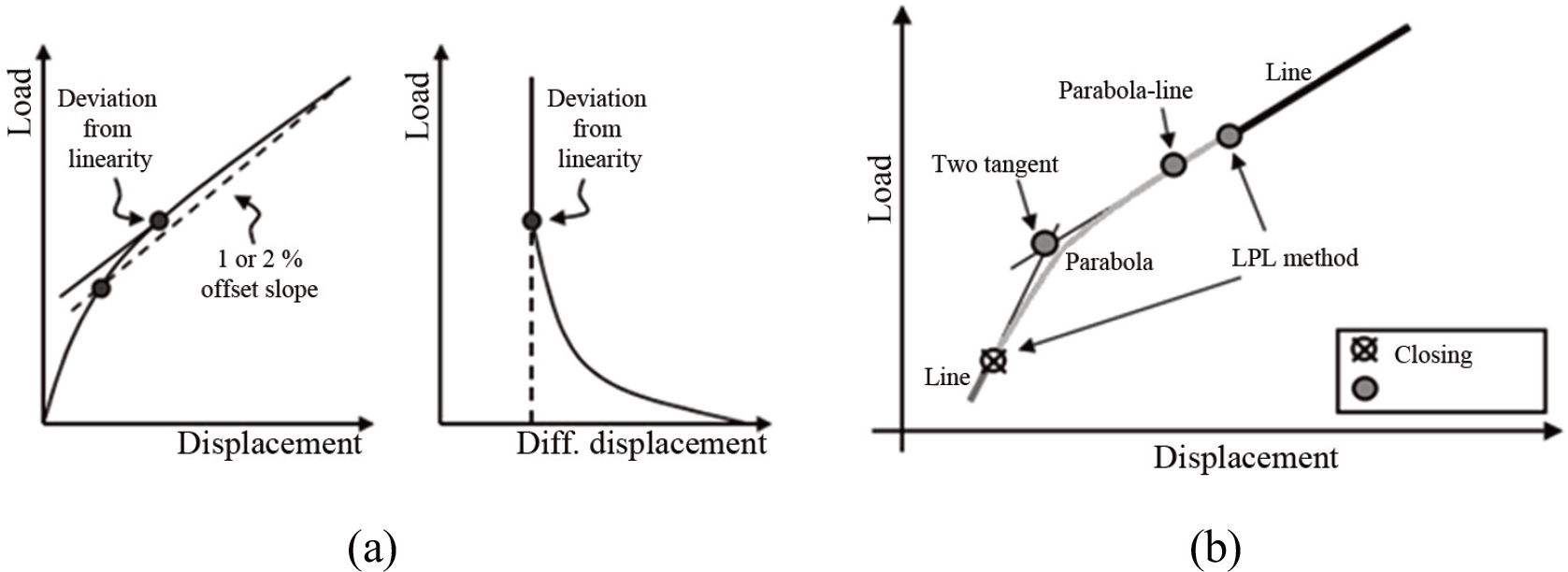
Figure 5.
(a) Schematic diagram of P – δ and P – δ′; (b) curve fitting method (Stoychev & Kajawski, 2003).
The set up of the devices used for recording of the compliance curves can be seen in Fig. 6. The applied load was acquired directly by the Instron test machine. Adata acquisition card served as the interface between the computer and the Instron machine.
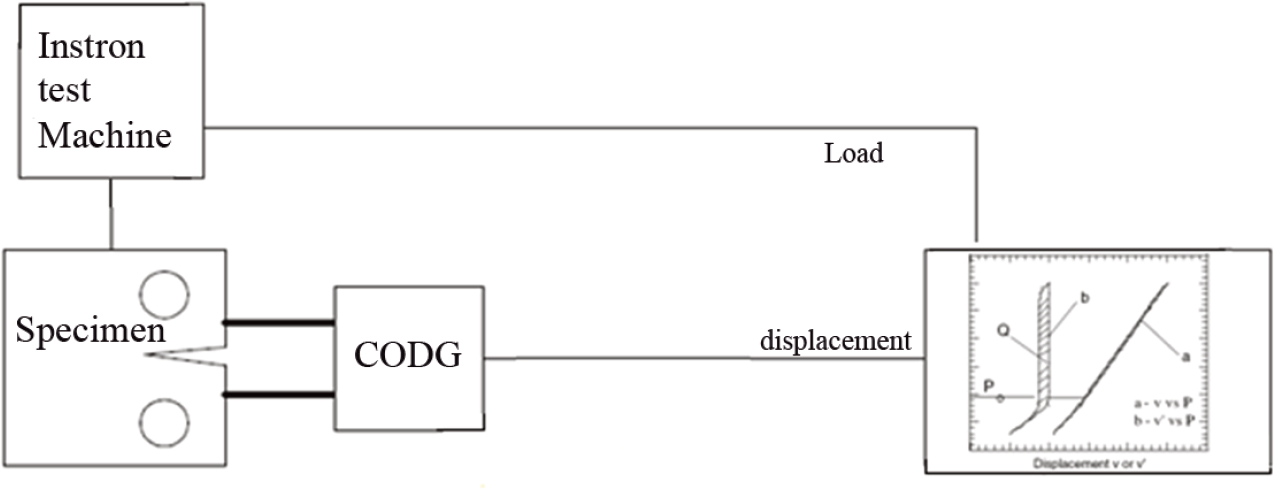
Figure 6.
Crack closure measurement system.
Significant graphs of (P – δ) and (P – δ′) for CAL and reduced spectra load are represented in Figs. 7 and 8. The dissipated energy per cycle, Q, is obtained from the area inside the δ′–P diagram after applying the necessary corrections (Ranganathan et al., 1987a).
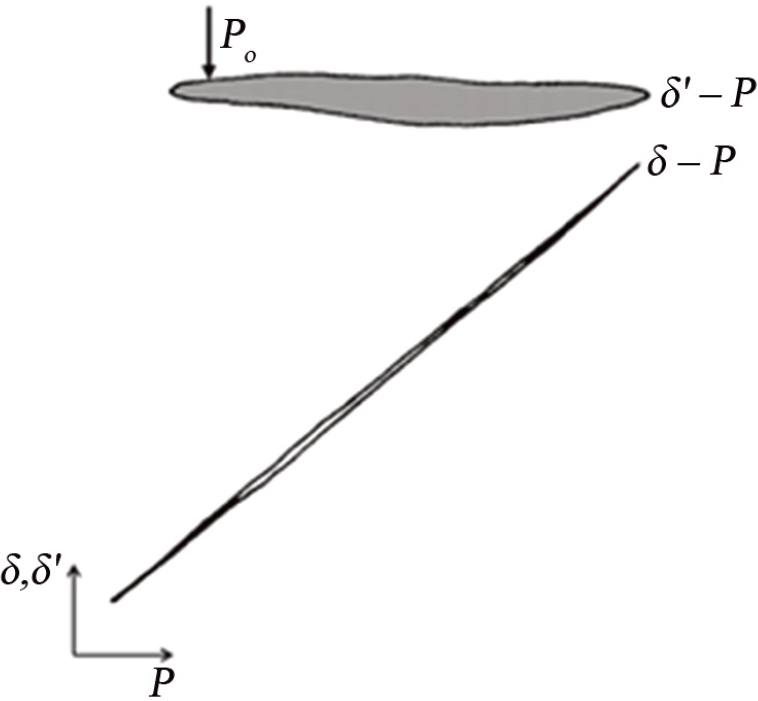
Figure 7.
Diagram P–δ hysteresis energy measurements under CAL (Benguediab, 1989).
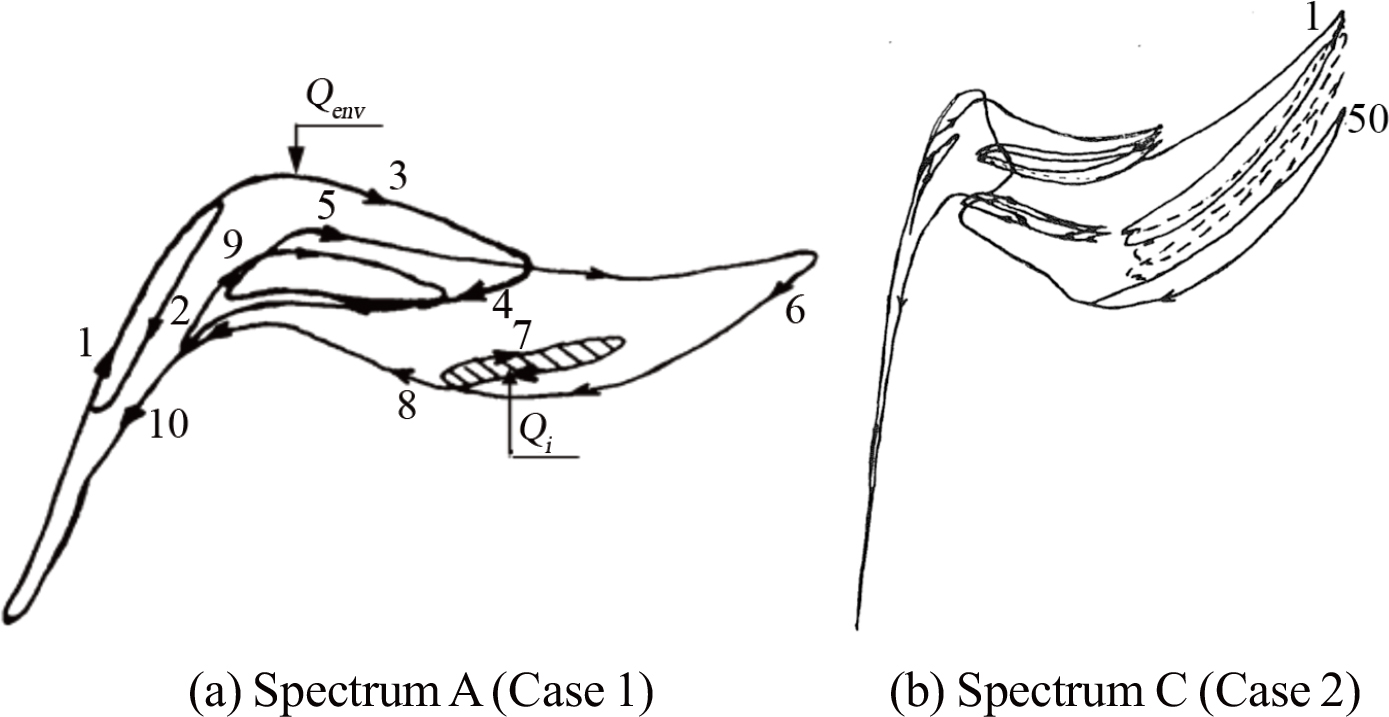
Figure 8.
Diagram P – δ hysteresis energy measurements under VAL; (a) Sp. A. (b) Sp. C (Benguediab, 1989).
The hysteretic energy Q dissipated during one cycle was determined by numerical integration of the area enclosed by the (δ′ – P) diagram. The specific energy US is defined as:
For variable-amplitude loading, two cases are considered:
Case 1. The crack advance is negligible during a block (see Fig. 8a). In this case, the total energy QT is defined as:
where Q is the energy dissipated per cycle and Qenv is the enclosed energy (i.e., the total area enclosed by all cycles).Case 2. There is appreciable crack advance during each spectrum (see Fig. 8b). In this case, the energy dissipated in each individual cycle, Qi, is expressed as:
The analysis assumes that in Case 1 the crack advance remains nearly stationary during the spectrum, with all hysteretic energy dissipated in the same plastic zone. Conversely, in Case 2, plasticization energy accumulates in the advancing crack with each cycle. Subsequently, the damaged surface was examined using scanning electron microscopy (SEM) at magnifications ranging from 200× to 1000× to characterize and measure distinct fractographic features. A novel quantitative approach for analyzing fracture surfaces was employed, with detailed methodology described by Ranganathan et al. (1993). The main fractographic features identified were as follows:
Quasi-cleavage (pseudo-cleavage): A fracture surface exhibiting features of both cleavage and ductile fracture. Its flat, shiny appearance indicates cleavage, while the presence of microcavities reflects ductile behavior. The fracture progresses by a transgranular mechanism and differs from pure cleavage by showing slight deviations from established crystallographic planes (see Fig. 9a).
Striations (S1 and S2): Striations (S1) are parallel marks indicating progressive crack advance with each loading cycle, characteristic of fatigue failure (see Fig. 9a). Striations (S2) are more pronounced than S1, but their spacing does not directly correlate with crack growth rate, unlike typical fatigue striations (see Fig. 9a).
Dimples (D1 and D2): Dimples (D1) are microscopic decohesions that form around precipitates or inclusions and gradually merge, leading to ductile fracture. Dimples (D2) are larger, more conventional dimples formed after extensive plastic deformation. Their presence indicates a ductile fracture mechanism, characterized by significant plastic deformation prior to separation (see Fig. 9b).
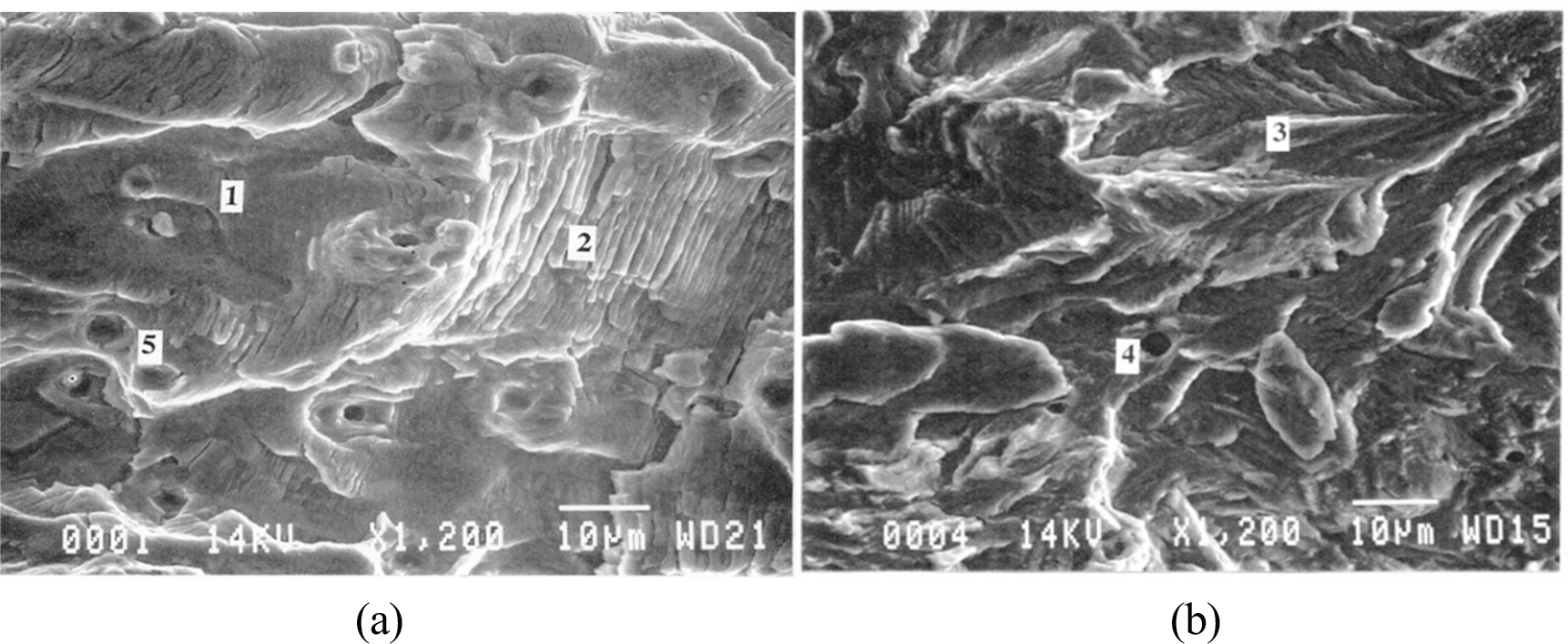
Figure 9.
(a) 1 – Ductile striations S1, 2 – brittle striations S2, 5 – Dimples D2; (b) 3 – Quasi-cleavage, 4 – Dimples D1.
Figure 10 shows an example of D2 dimples, with details provided in the inset, which indicates the magnification of the dimples.
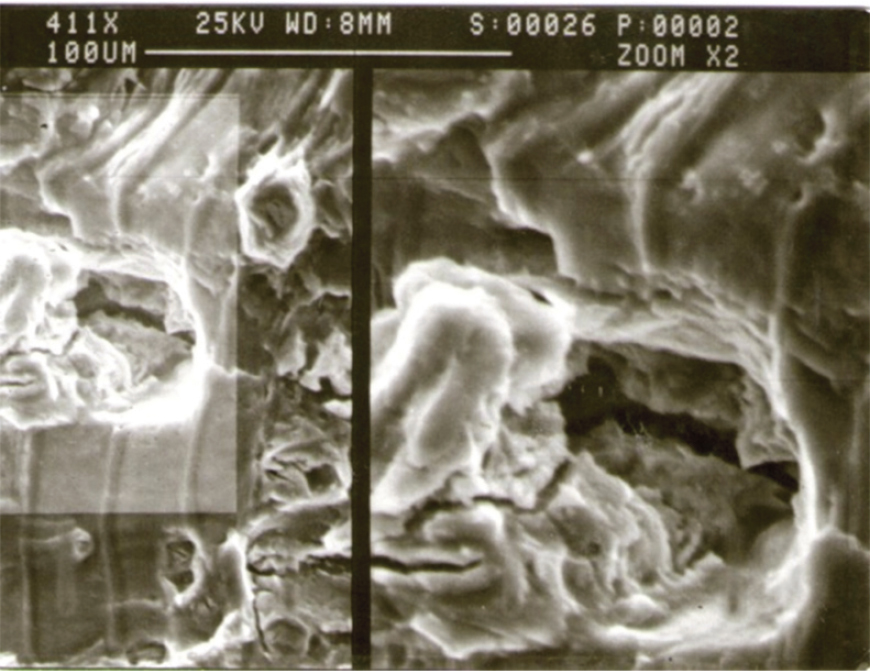
Figure 10.
Example of typical dimple D2, with magnified inset.
3. RESULTS AND DISCUSSIONS
This section presents the experimental results obtained under both constant-amplitude and variable-amplitude loading. The discussion is organized into two subsections: (1) constant-amplitude loading, which reports the results of the constant-amplitude tests, and (2) variable-amplitude loading, which highlights degradation behavior and lifetime assessments.
3.1. Constant amplitude loading condition
3.1.1. Relationship between da/dN vs. ΔK and da/dN vs. Kmax
The crack growth rate curves shown in Figures 11a and 11b illustrate the relationship between the crack growth rate (da/dN) and the stress intensity factors ΔK and Kmax, respectively. These curves exhibit distinct transition points, marked by changes in slope, which indicate variations in crack propagation behavior. The values of ΔK and Kmax were calculated in accordance with ASTM standards (1999).
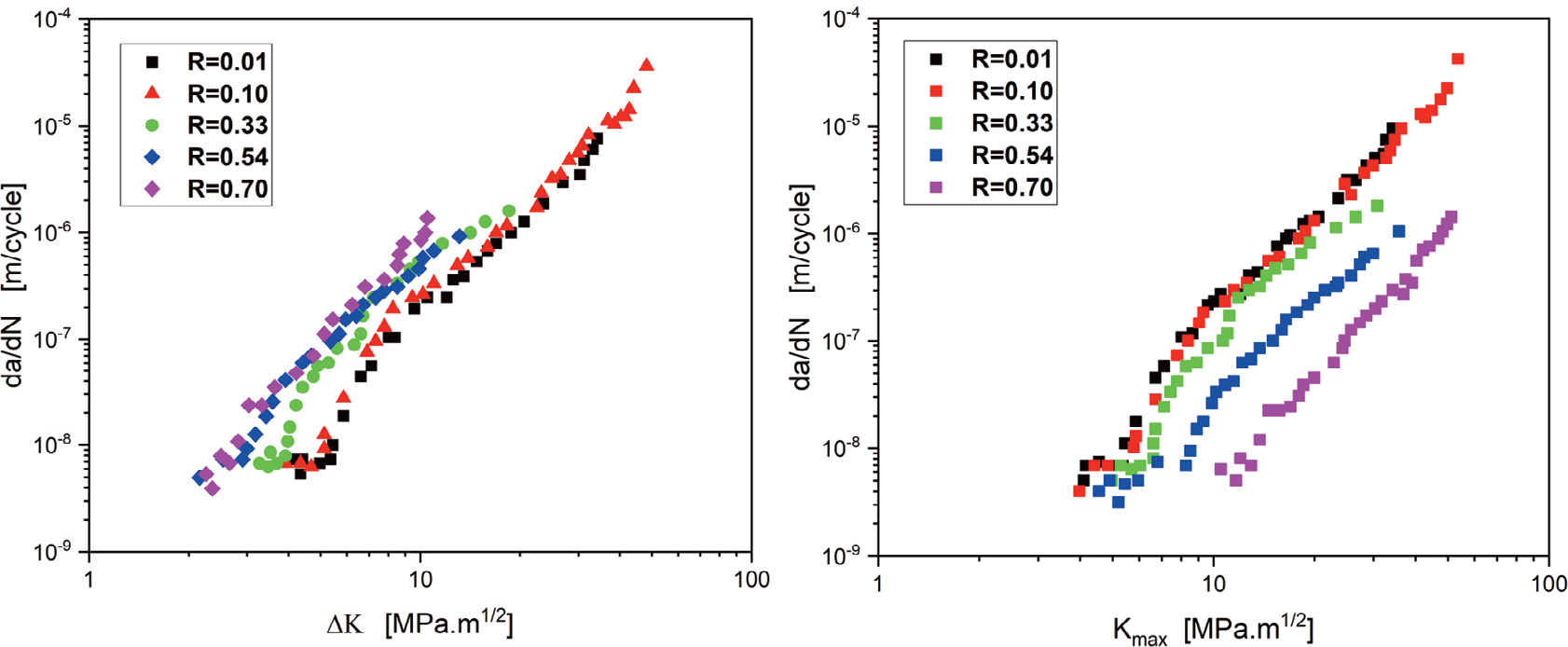
Figure 11.
The relation between da/dN vs. ∆ K and between da/dN vs. Kmax.
The different stages and transitions identified are as follows:
The stage corresponding to low crack growth rates ends with the first transition, denoted as T1.
After this transition, a steeply sloped region is observed for R < 0.54. This domain is bounded by the second transition, T2.
Beyond T2, a near-constant crack growth rate is observed, extending up to about 10−6 m/cycle for R ≤ 0.54. The end of this stage is marked by T3.
After T3, a final increase in slope occurs as static rupture conditions are approached.
The specific values of ΔK, Kmax, and da/dN corresponding to these transitions are summarized in Table 4. These data are essential for understanding the different crack propagation regimes and the associated fracture mechanisms.
Table 4.
Transition-related parameters.
| R | 0.01 | 0.10 | 0.33 | 0.54 | 0.70 | |
|---|---|---|---|---|---|---|
| T1 | ΔK | 8 | 7.5 | 6 | 6 | 5 |
| Kmax | 8.5 | 8.5 | 9 | 12 | 15 | |
| da/dN | 10−8 | 10−8 | 8 × 10⁻⁹ | 7.5 × 10⁻⁹ | 8 × 10⁻⁹ | |
| T2 | ΔK | 12 | 11 | 9 | 7 | 7 |
| Kmax | 12 | 12 | 12 | 15 | 23.3 | |
| da/dN | 1.30 × 10⁻⁷ | 1.30 × 10⁻⁷ | 1.70 × 10⁻⁷ | 7.2 × 10⁻⁸ | 2 × 10⁻⁷ | |
| T3 | ΔK | 19.8 | 18 | 21 | 13 | 12 |
| Kmax | 20 | 20 | 31 | 28 | 37 | |
| da/dN | 3 × 10⁻⁶ | 3 × 10⁻⁶ | 1.6 × 10⁻⁶ | 7 × 10⁻⁷ | 4 × 10⁻⁷ | |
These transitions have been examined in numerous studies. Certain researchers (Benguediab et al., 1999; Yoder et al., 1982; Grinberg, 1984) have observed that, at this stage, the size of the plastic zones corresponds to the characteristic dimensions of the microstructure.
3.1.2. Quantitative fractographic analysis
To gain a deeper understanding of the mechanical parameters influencing changes in cracking mechanisms, we examined the development of two types of features (dimples and striations) as shown in Figures 12a and 12b.
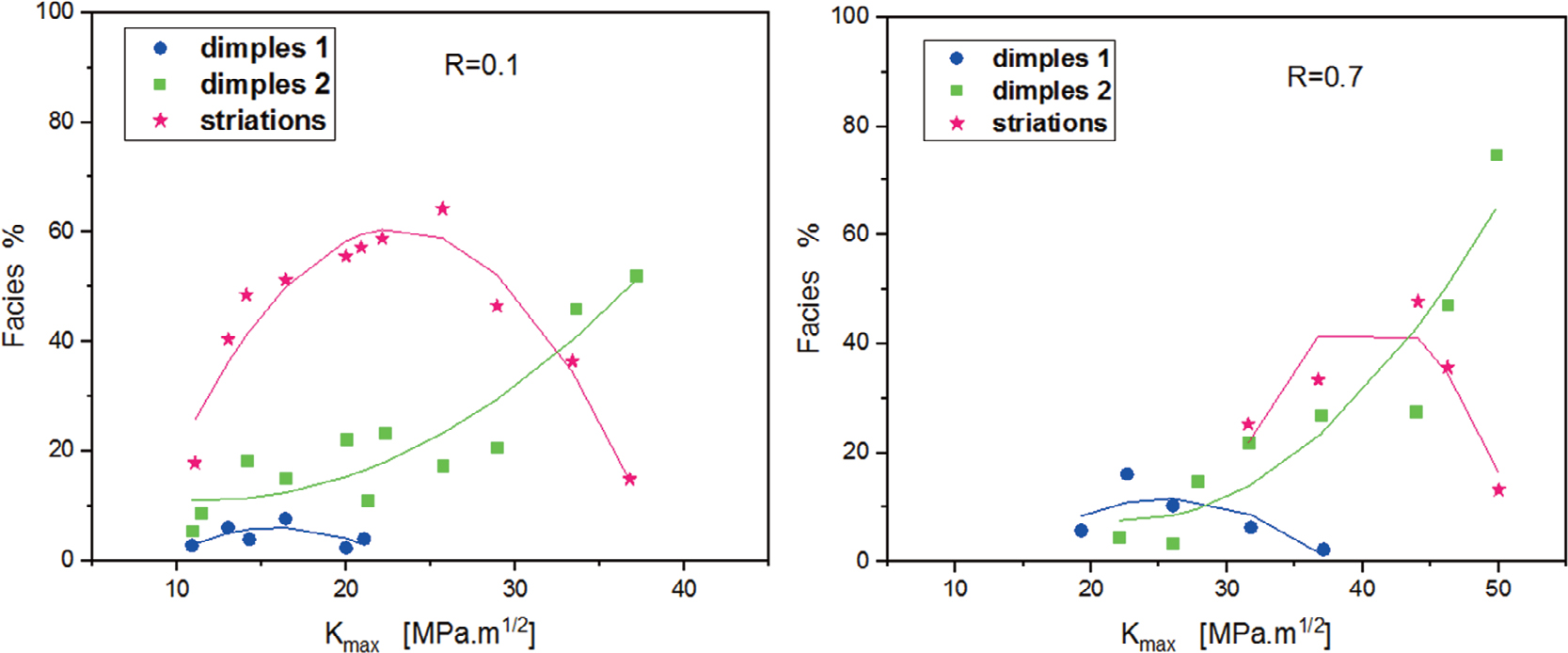
Figure 12.
Area distribution of striations and dimples.
In general, the percentage of striations and dimples (D1) increases at low Kmax values, reaches a peak, and then decreases at higher Kmax values. In contrast, dimples (D2) increase steadily with Kmax. The influence of fracture mechanics parameters is clearly observed in these figures. The range of Kmax associated with particular fractographic features differs significantly when comparing the two load ratios. These results indicate that at low load ratios, cracking is primarily driven by a streak-formation mechanism. At higher load ratios, however, the cracking process involves two simultaneous mechanisms: one leading to the formation of striations, and the other causing decohesion around inclusions, which results in dimple formation. Figures 13a and 13b illustrate the feature distributions at an identical crack growth rate (da/dN = 5 × 10⁻⁷m/cycle) for R = 0.01 and R = 0.7, respectively. The distributions of these features vary significantly with the load ratio R, as summarized in Table 5.
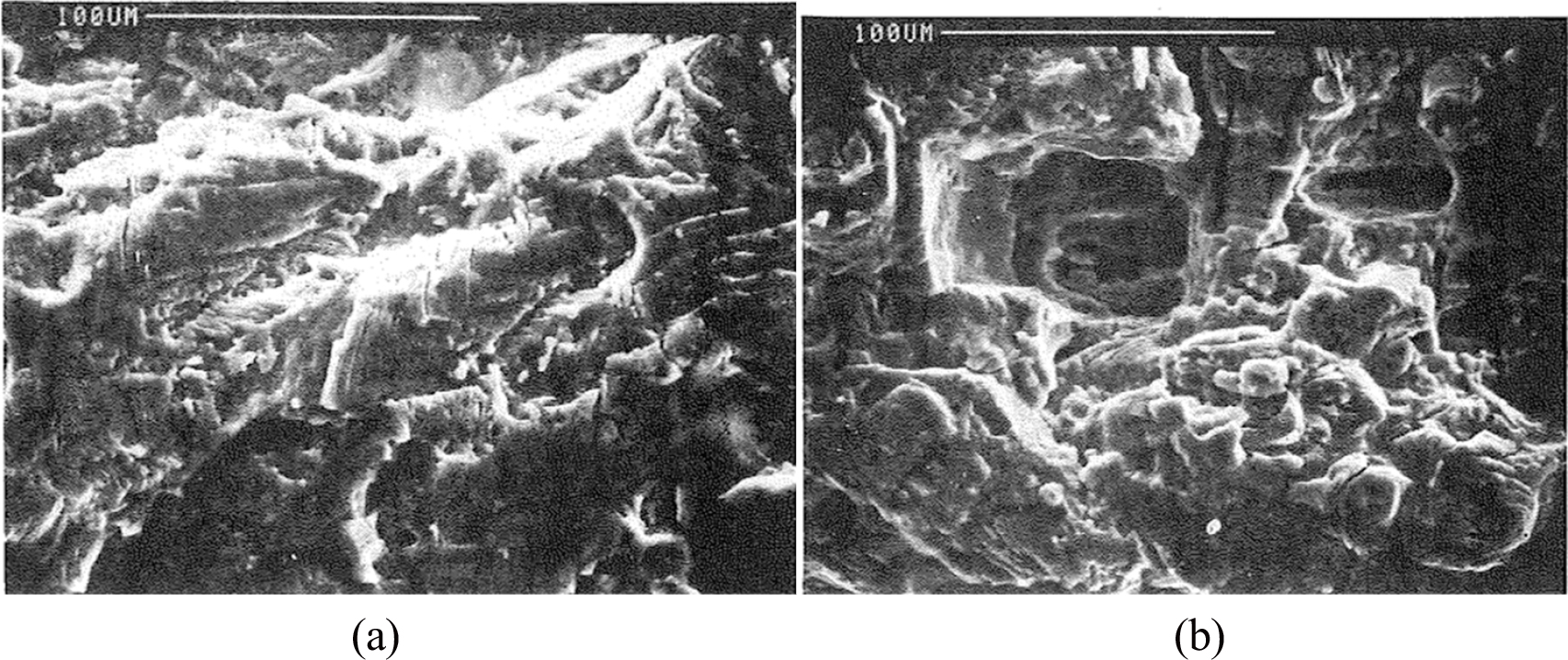
Figure 13.
Repartition of features at da/dN = 5 × 10⁻⁷m/cycle; (a) R=0.10; (b) R=0.70.
3.1.3. Analysis by energetic approach
Crack propagation can also be analyzed using an energetic approach, based on the Weertman model and the concept of specific cracking energy. The results are therefore examined in terms of energy parameters. Figure 14 illustrates the variation of crack growth rate as a function of the dissipated energy per cycle (Q) for different load ratios (R).
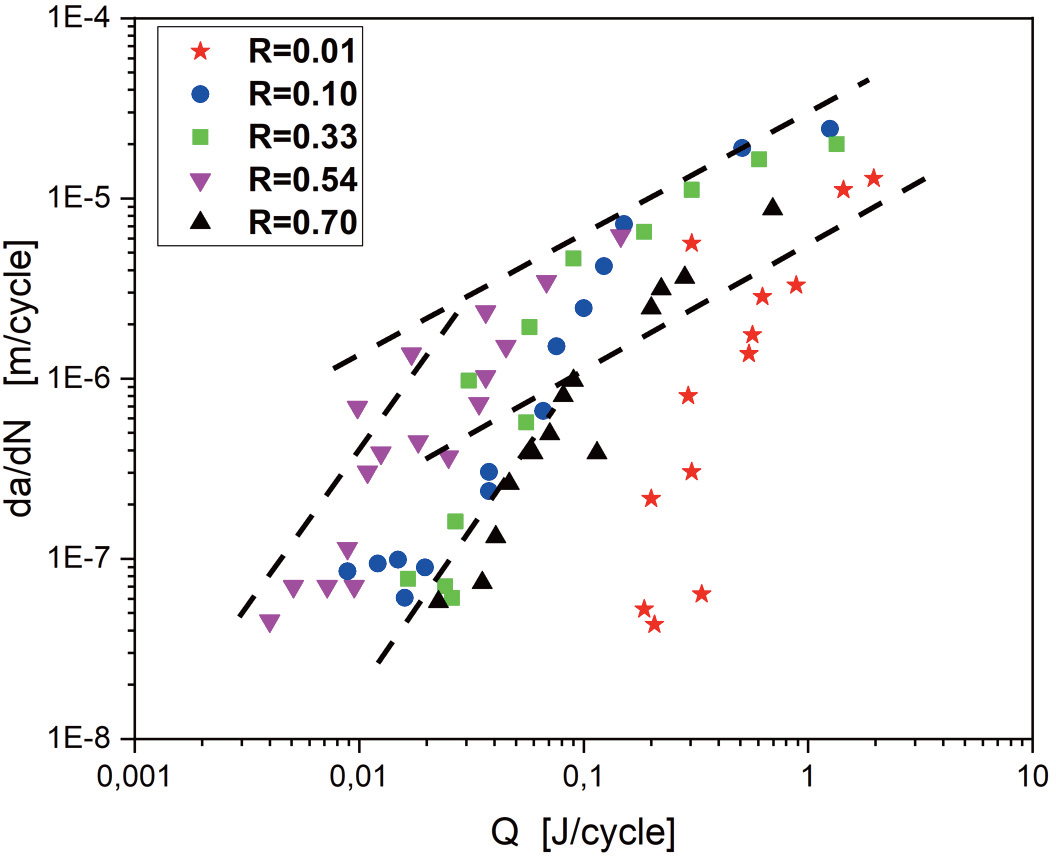
Figure 14.
Evolution of the crack growth rate da/dN vs. the energy dissipated Q.
This figure shows that the relationship between crack propagation speed and hysteretic energy dissipated per cycle differs significantly for R = 0.01 compared to higher values of R. Indeed, for R = 0.01, two phases can be observed: a first phase corresponding to crack propagation rates ≤ 5 × 10⁻⁸ m/cycle, where Q is constant, and a second phase characterized by higher crack propagation rates, where the relationship between da/dN and Q follows a power-law form:
whereB = 2.22 × 10⁻⁵ m/J and n = 3.80.For R ≥ 0.01 and da/dN ≥ 2.10−7 m/cycle, the relationship can be expressed as a linear equation:
where A = 1.80 × 10⁻⁴ m/J.The observed behavior indicates two distinct cracking mechanisms depending on the crack growth rate. At low growth rates, a step-by-step cracking process is dominant, suggesting gradual crack propagation by accumulation of damage. In contrast, at high growth rates, a cycle-by-cycle cracking mechanism occurs, characterized by the formation of striations that reflect rapid, repetitive crack advances within each load cycle. The singular behavior observed at R = 0.01 appears to be related to an increase in hysteresis effects. This increase is likely due to mechanical clearances within the system, which become more influential under relatively low load conditions.
Figure 15 shows the relationship between specific energy (US) and maximum stress (Kmax), demonstrating a correlation consistent with previous findings. Similar results have been reported in the literature (Ranganathan et al., 1987b; Ranganathan et al., 1993).
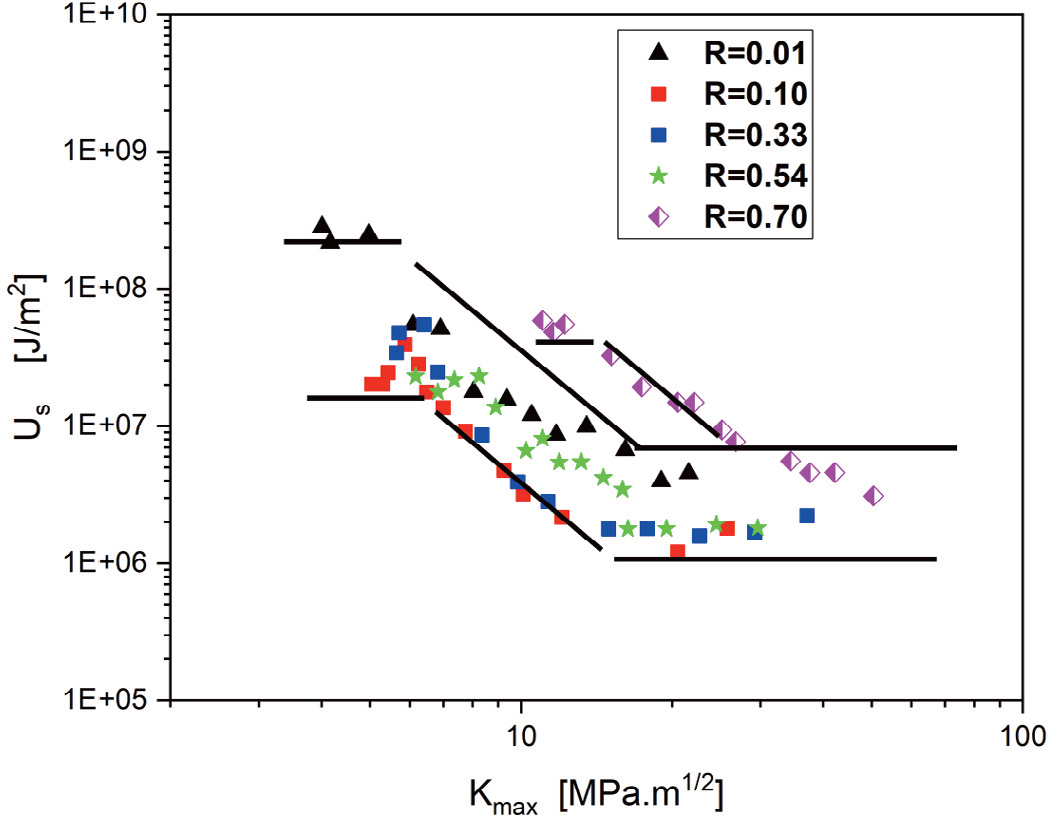
Figure 15.
Evolution of the energy dissipated per cycle vs. Kmax.
Note that, with the exception of the curve at R ≤ 0.1, the initial value of US remains consistent across different values of R. A decrease in US begins as Kmax increases, starting at the T1 transition. This decrease continues until it reaches a critical value, Ucr, which appears to be independent of R. The critical value has been determined as approximately:
This value is slightly lower than that reported by Ranganathan (1985).
3.2. Constant amplitude loading condition
3.2.1. Δa/block vs. Kmax relationships
Figure 16 presents the results obtained under spectrum loading, showing the crack advance per block as a function of Kmax. The value of Kmax considered corresponds to the maximum load of the spectra. The graph compares block load tests for spectra A, B, C, and D, as defined in Figure 3 and Table 3, along with constant-amplitude tests conducted at R = 0.01 and R = 0.54. These spectra can be classified according to the increasing number of cycles at the highest load amplitude (see Fig. 3). For a given Kmax, the crack advance per block is greatest for spectrum D and smallest for spectrum A, while spectra C and B show intermediate growth rates. This order of severity corresponds to the number of cycles at level 3, N3.
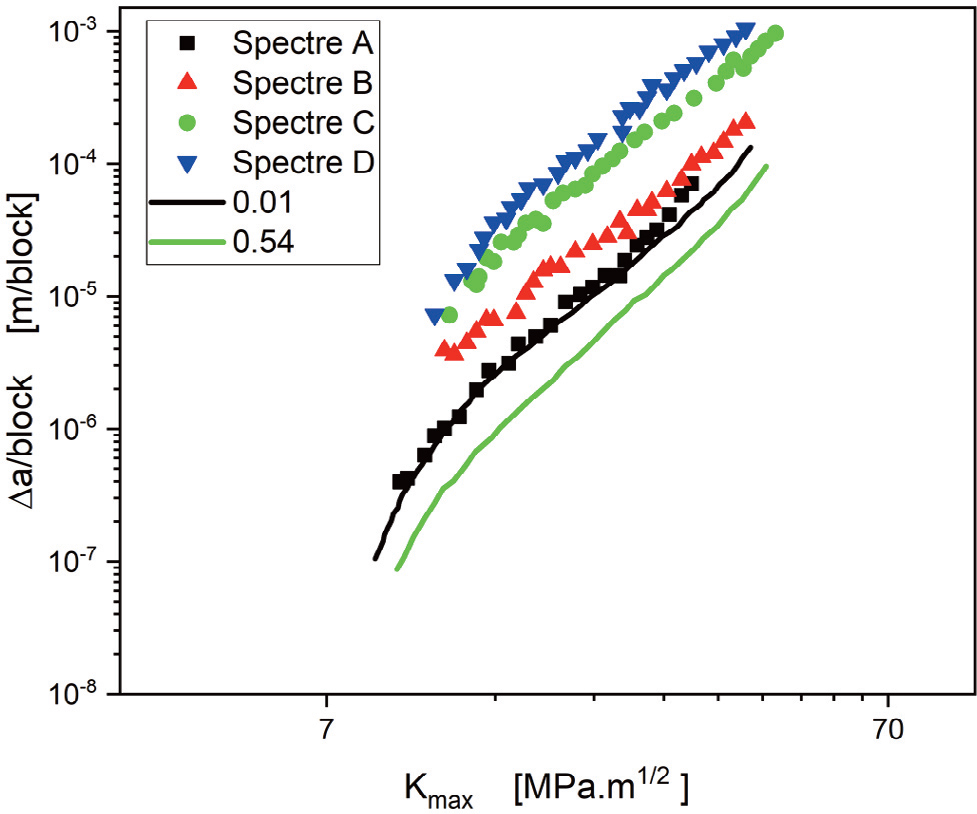
Figure 16.
Δa/block vs. Kmax.
The key observations are as follows:
The curve for Spectrum A closely aligns with the R = 0.01 constant-amplitude test.
The crack growth rate increases with spectrum severity, as indicated by a higher number of high-load cycles.
3.2.2. Analysis by energetic approach
The above results are now examined through the lens of energy parameters. Figure 17 shows the progression of crack advance per block as a function of cumulative (ΣQi) for all variable loading tests.
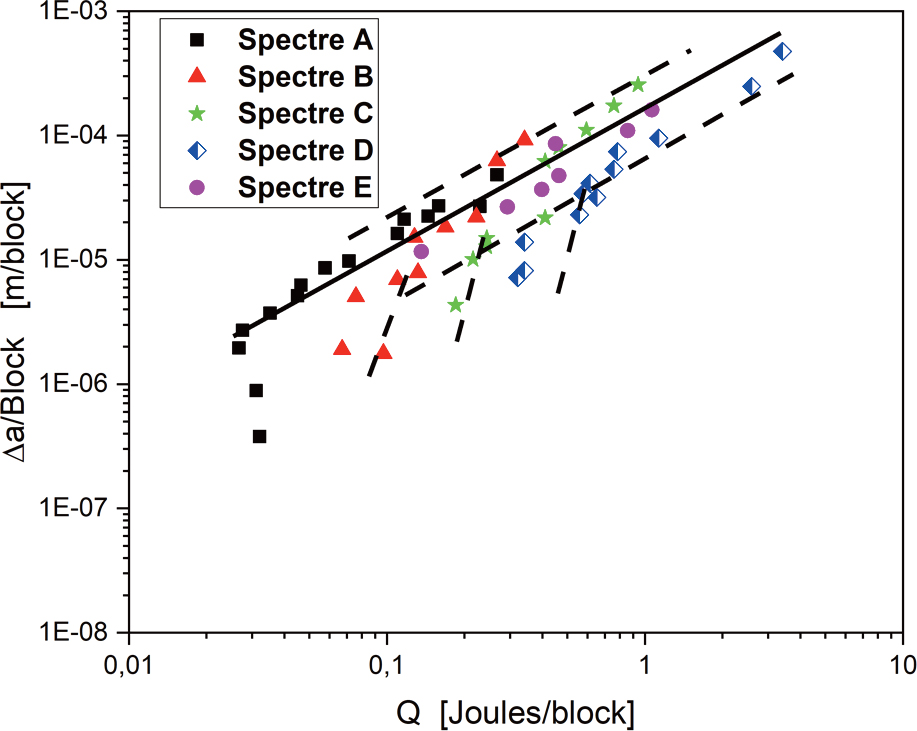
Figure 17.
Evolution of the crack growth rate da/block vs. the energy dissipated Q.
For each investigated spectrum and beyond a specific threshold, this relationship between crack advance and cumulative energy follows a linear trend:
where A = 1.80 × 10⁻⁴ m/J.Figure 18 shows the relationship between specific energy and the stress intensity factor Kmax for different spectra.
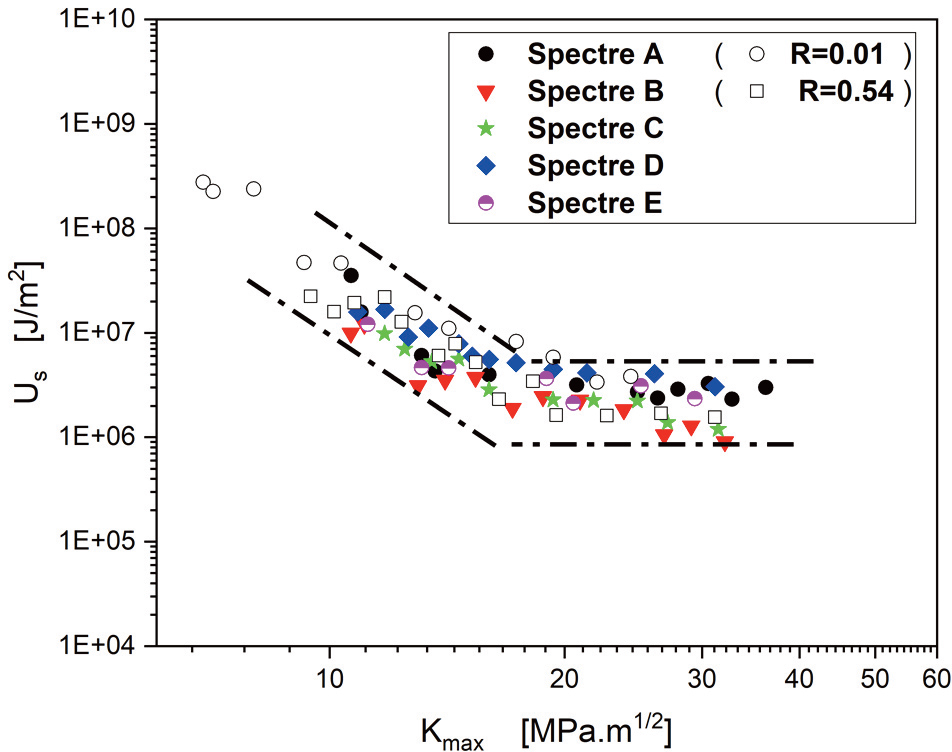
Figure 18.
Evolution of US with respect to Kmax.
The specific energy attains its lowest value, designated as Ucr, which is approximately 2.17 × 10⁵ J/m2, when Kmax attains a threshold of 17 MPa.m1/2. Notably, this value closely corresponds to the change T2 observed in propagation curves (see Figure 11).
3.2.3. Quantitative fractographic analysis
Fractographic analysis (Benguediab, 1989) shows that the transition is associated with a sequential mechanism at low crack growth rates, whereas at elevated rates the process progresses incrementally with each block. Figure 19 presents the quantitative fractographic analysis for variable-amplitude tests, showing the percentage of the main fractographic features as a function of Kmax.
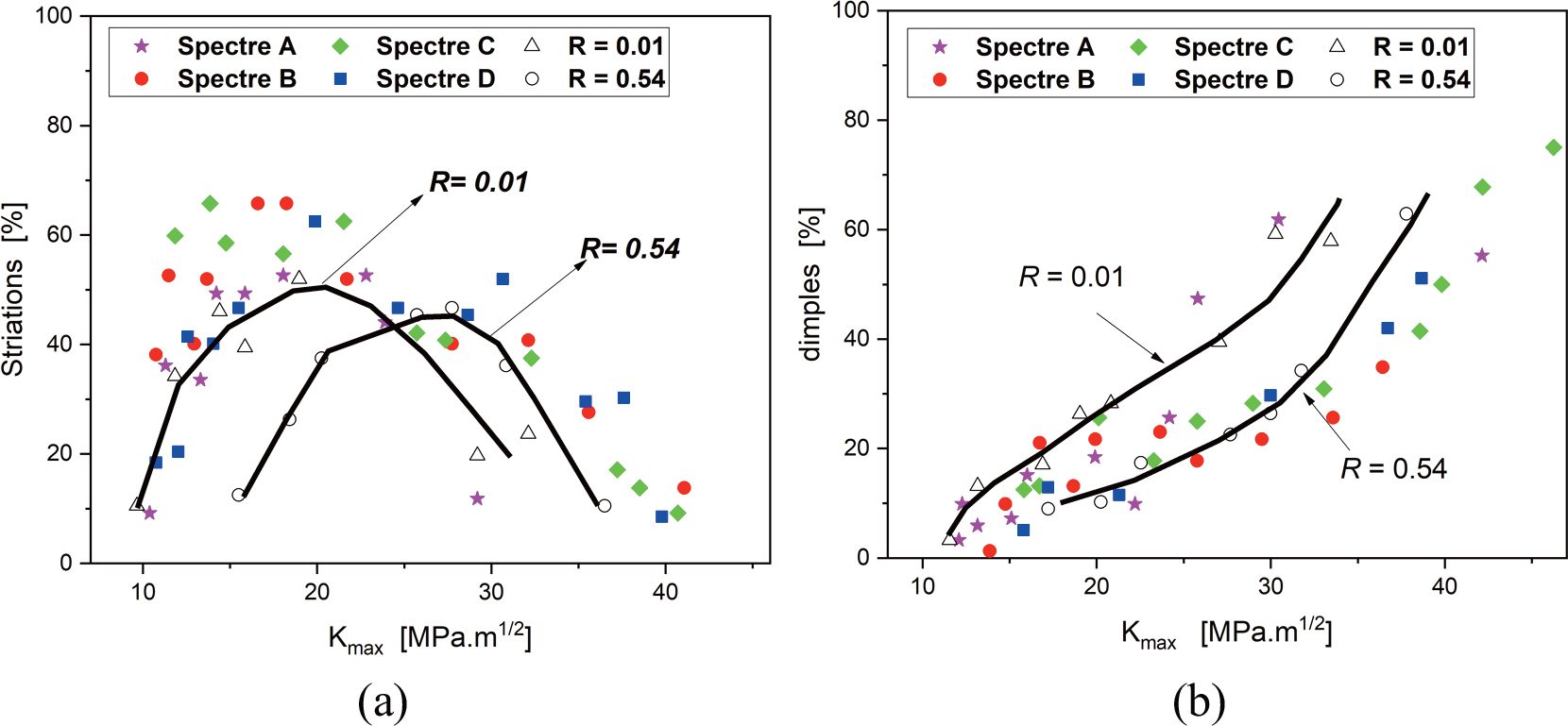
Figure 19.
Area distribution of fractographic characteristics: (a) striations; (b) dimples.
Spectrum A, which includes only a single cycle of loading at each level, exhibits behavior comparable to that at R = 0.01. For the other spectra, which include more cycles under maximum load conditions, the progression at lower Kmax values also resembles that at R = 0.01. At higher Kmax levels, however, the fractographic characteristics are similar to those observed at R = 0.54 under constant-amplitude loading.
Based on the microfractographic analysis, Based on the microfractographic analysis, the spatial distribution of significant fractographic features for spectrum A is similar to that obtained under CA conditions at R = 0.01. The identical low R ratio applies to other spectra at low Kmax values. However, at high Kmax values, the equivalent R ratio is equal to 0.54 for spectra B, C, and D, representing the highest level. To understand this better, the distances between markings from different blocks were examined. It was found that at low Kmax values, rough slip marks appeared at nearly regular intervals across all spectra. At elevated Kmax values, distinct blocks could be clearly identified (Figure 20).
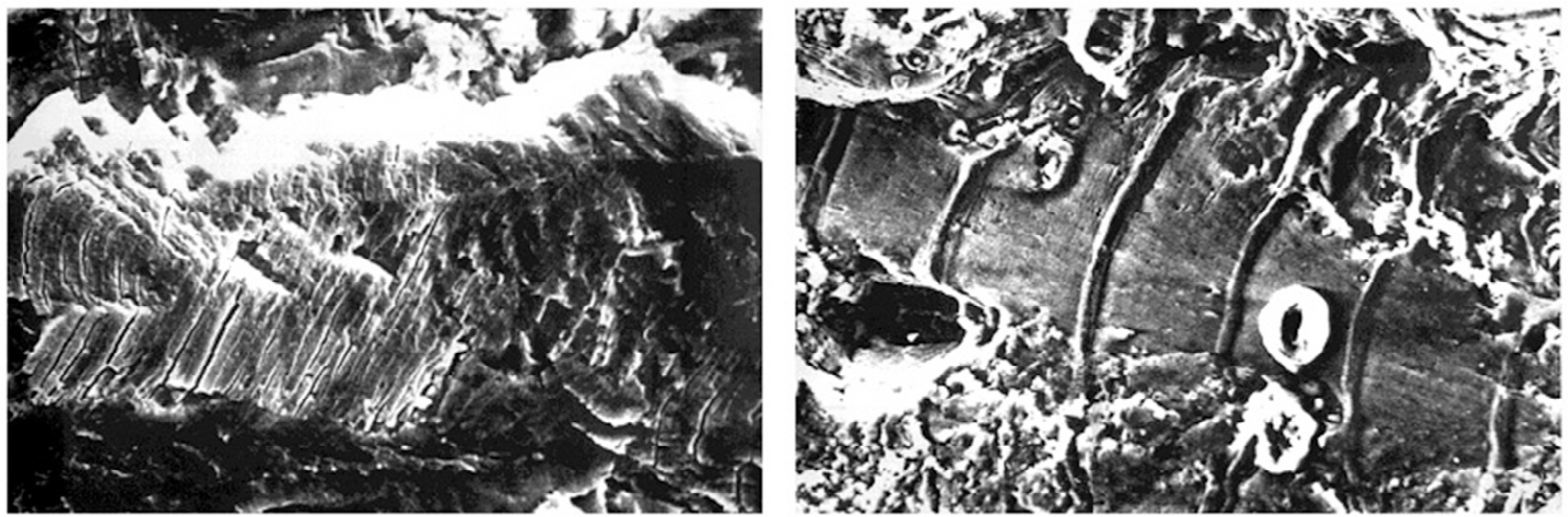
Figure 20.
Slip markings observed at low Kmax values (Kmax=13.50 MPa.m1/2 Spectrum D).
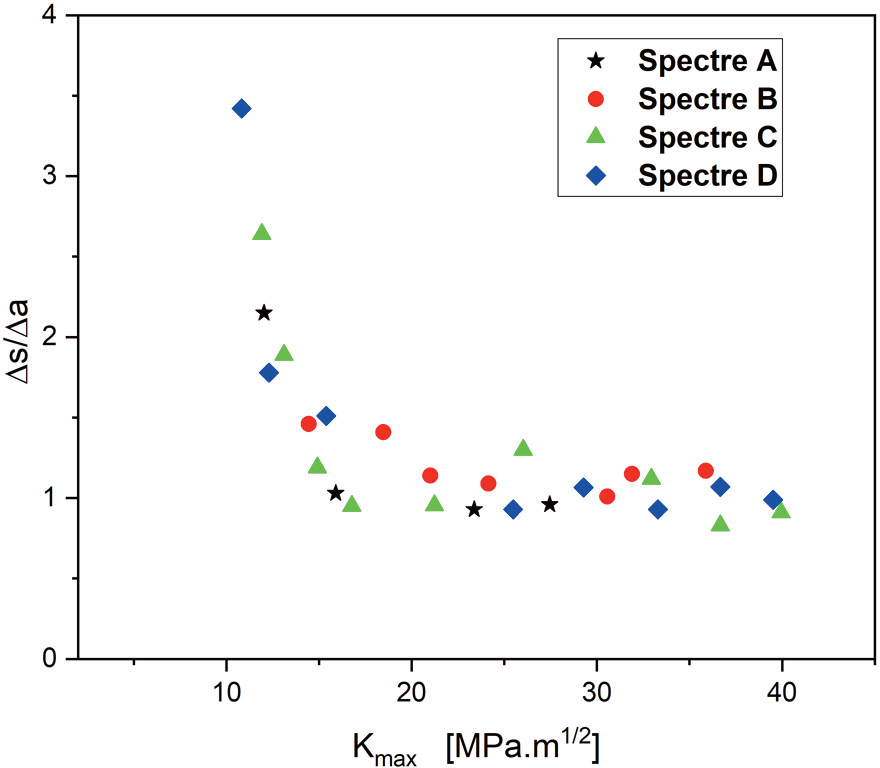
Figure 20.
Ratio of Δs (spacing between markings) to Δa (macroscopic crack advance) as function of Kmax for VAL tests.
In Figure 21, the ratio of the marking distance ∆s to the macroscopic growth rate Δa decreases from 4 to 1 as Kmax increases.
Cracks advance with each block only at high Kmax values, in line with the overall growth rate. At low Kmax, however, crack growth proceeds step by step over multiple blocks. During each block, the crack remains mostly stationary, while damage gradually accumulates in the plastic zone ahead of the crack tip between blocks.
4. PROPOSED MODEL
The relationship between crack advance per block and accumulated energy becomes linear above acertain threshold, which depends on the spectrum considered. It has been observed that the level defining the onset of the linear domain corresponds to transition T2, where the specific energy remains constant at approximately 2.17 × 10⁴ J/m2 – a value very close to that obtained under constant-amplitude loading Fractographic analysis revealed that the distribution of facets across the T2 transition region closely resembles the pattern observed at a stress ratio of R = 0.54 under constant-amplitude loading for spectra B, C, and D.
Based on these results, it is feasible to replace a given spectrum with an equivalent constant-amplitude loading, as originally proposed by Elber (1976) for short and stationary spectra within the framework of the crack closure concept.
In the present work, the equivalence criteria for determining the equivalent constantamplitude loading are defined as follows:
The cumulative energy per block is the same for the equivalent constant-amplitude loading and the spectrum at a given Kmax.
The ratio R of the equivalent constant-amplitude load must equal the ratio R of the predominant level determined by fractographic analysis.
This second condition fixes the value of R; thus, for the equivalent constantamplitude loading above transition T2, R = 0.54 for all spectra except spectrum A.
To satisfy the first condition, a number of equivalent cycles Neq per block was determined such that:
The crack advance per block Δa/block is then given by:
where A = 1.8 × 10⁴m/J.For lower values of Kmax < T2, the crack advances incrementally by cumulative damage. Since the crack remains practically stationary during a single block, and only the cycles corresponding to the minimum and maximum loads of the spectrum are effective, all of the energy is dissipated withinthe plastic zone.
In this range of Kmax, the evolution of fracture facets under spectrum loading is similar to that observed at R = 0.01 under constant-amplitude loading, where R is defined as the ratio between the minimum and maximum loads of the spectrum. Thus, the number of equivalent cycles per block is given by:
The crack advance is then expressed by:
where B = 2.22 × 10⁵m/J and n = 3.80.Fatigue life predictions can be obtained either by integrating the crack growth rate directly or from life predictions established under constant-amplitude loading. Table 6 presents a comparison between experimentally measured lifetimes and those estimated by various models, including those of Maachou et al. (2016), Elber (1976), and the present model.
Table 6.
Lifespan in number of blocks and relative error.
| Block | Number of blocks | Error (%) | |
|---|---|---|---|
| A | Measured Maachou et al. (2016) Present model Elber (1976) | 75120 68323 69454 92981 | - 9.04 7.54 23.77 |
| B | Measured Maachou et al. (2016) Present model Elber (1976) | 23900 11196 26161 31060 | - 53.15 9.46 29.95 |
| C | Measured Maachou et al. (2016) Present model Elber (1976) | 9600 11153 10208 10713 | - 16.17 6.33 11.60 |
| D | Measured Maachou et al. (2016) Present model Elber (1976) | 5500 3670 5151 5883 | - 33.27 6.35 6.96 |
The relative error (in %) is calculated using Equation (12):
Based on Table 6, the following observations can be made regarding the different models:
Elber (1976): This model slightly overestimates the lifetime for all spectra studied, with relative errors in the range 6.96% < RE < 29.95%.
Maachou et al. (2016): This model underestimates the lifetime for all spectra studied, with relative errors in the range 9.04% < RE < 53.15%.
Present model: The average deviations associated with the present model are lower than those of the other models, indicating higher predictive accuracy.
These findings highlight the effectiveness of the energy-based approach employed in the present model. By incorporating the micromechanisms occurring at the crack tip, this approach provides a more realistic representation of the fracture process. The results suggest that the measured energy closely corresponds to the energy dissipated within the plastic zone, underscoring the importance of localized energy considerations for accurate lifetime predictions. However, it must be emphasized that this method is currently purely experimental and, at this stage, cannot be considered a fully predictive approach. This limitation may be addressed by estimating the hysteretic energy using numerical methods.
5. CONCLUSIONS
This study has identified several key aspects of crack growth under different loading modes.
Constant-Amplitude Loading:
Experiments conducted over a range from 10−8 m/cycle up to failure allowed the definition of various cracking regimes and the transitions between them. Microfractographic analyses revealed that the distribution of striation and dimple features strongly depends on both R and Kmax. The relationship between crack growth rate (da/dN) and energy dissipated per cycle (Q) showed that:
Beyond a crack growth rate threshold of 10−7 m/cycle, this relationship becomes linear, indicating that the specific energy per cycle (US) remains constant.
At lower crack growth rates, the relationship follows a power-law form, reflecting different mechanisms depending on the propagation regime.
Variable-Amplitude Loading:
Crack growth was evaluated under various loading spectra, with the crack growth rate found to depend on spectrum severity. The evolution of fracture features as a function of Kmax indicated that:
At low Kmax values, the distribution of features is similar to that observed under constant-amplitude loading at R = 0.01.
At higher Kmax values, the distribution resembles that obtained under constantamplitude loading at R = 0.54.
A linear relationship between crack growth per block and energy dissipated per block was observed beyond transition T2, similar to the behavior under constantamplitude loading.
Below T2, the relationship between crack growth Δ a/block and dissipated energy (QT) depends on the spectrum type, requiring specific modeling.
Fracture Surface Analysis:
Beyond T2, the presence of markings associated with blocks indicates block-by-block propagation with striation formation.
Below T2, crack progression occurs through cumulative damage in a step-by-step manner.
Finally, an energy-based model was proposed, defining an equivalent constantamplitude load for the studied spectra. This model provided excellent predictions of crack growth under the tested conditions, demonstrating a robust approach for characterizing and modeling crack propagation under variable loading.