

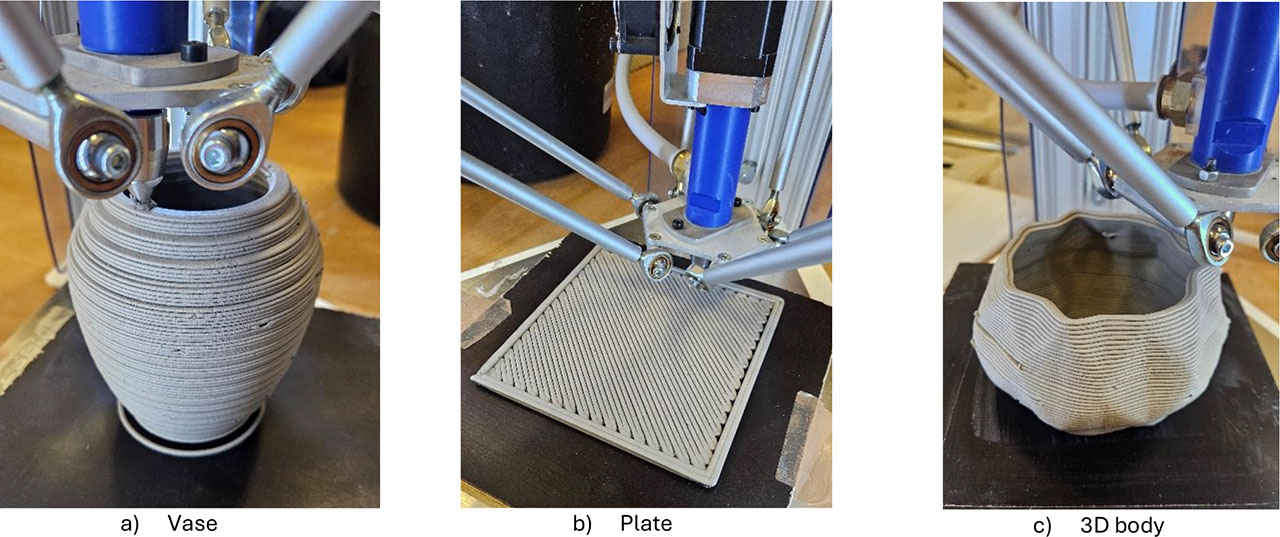
Figure 1:
Design and test print element – clay
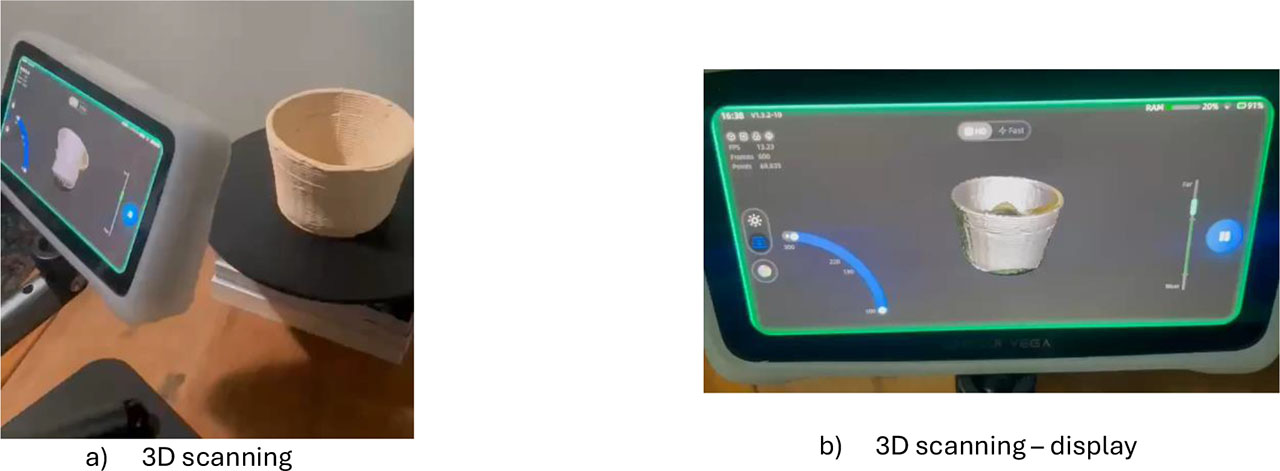
Figure 2:
3D scanning technology – clay
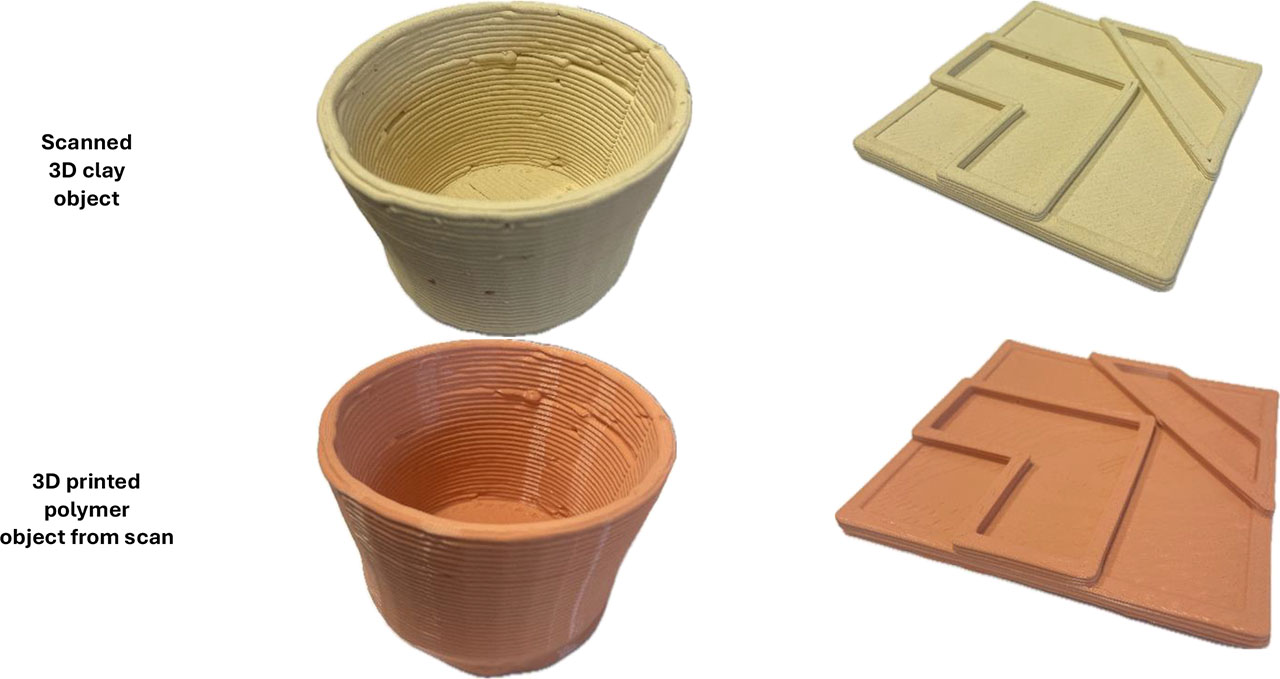
Figure 3:
3D scanning and reverse engineering
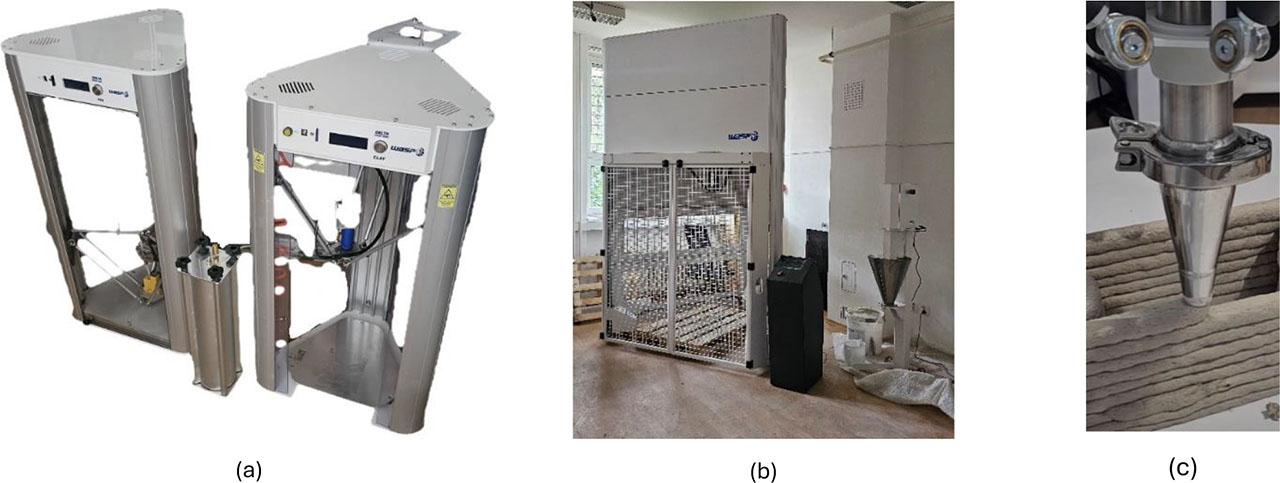
Figure 4:
3D printer: (a) 3D printer Delta construction (left – FDM, right – clay); (b) 3D printer Delta construction – concrete; (c) 3D printer Delta construction – printhead for concrete
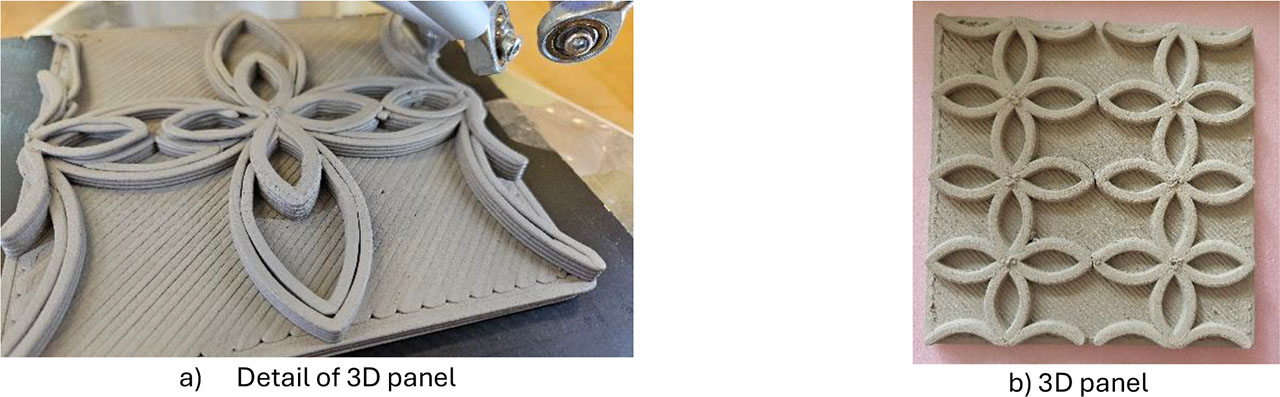
Figure 5:
3D print detail and artistic aspect – clay MA
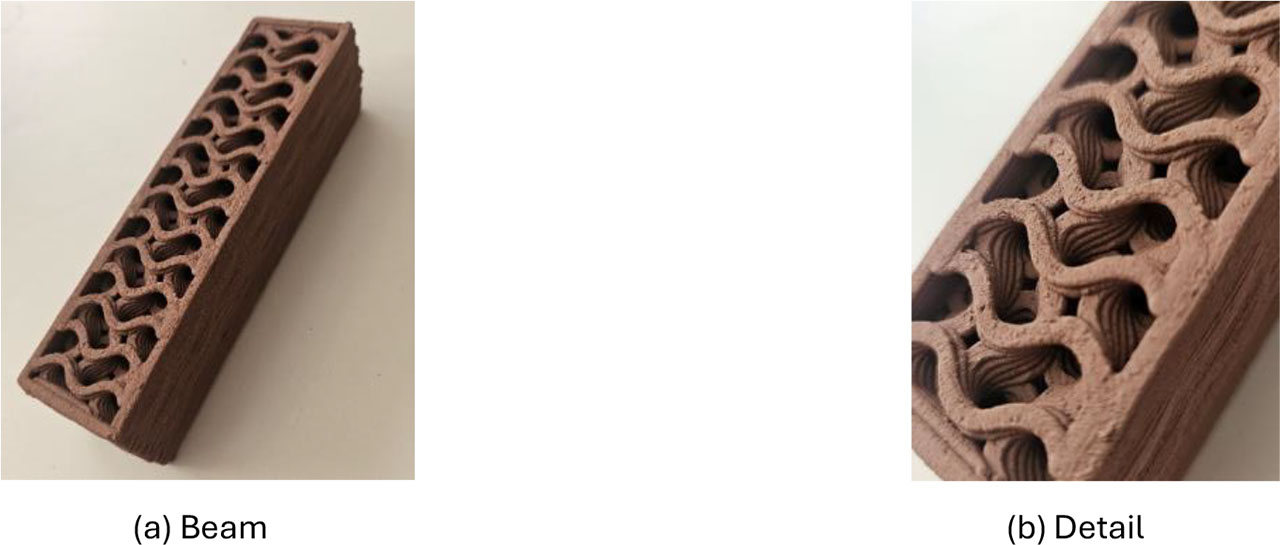
Figure 6:
3D print detail and artistic aspect – clay CERADBUD (1)
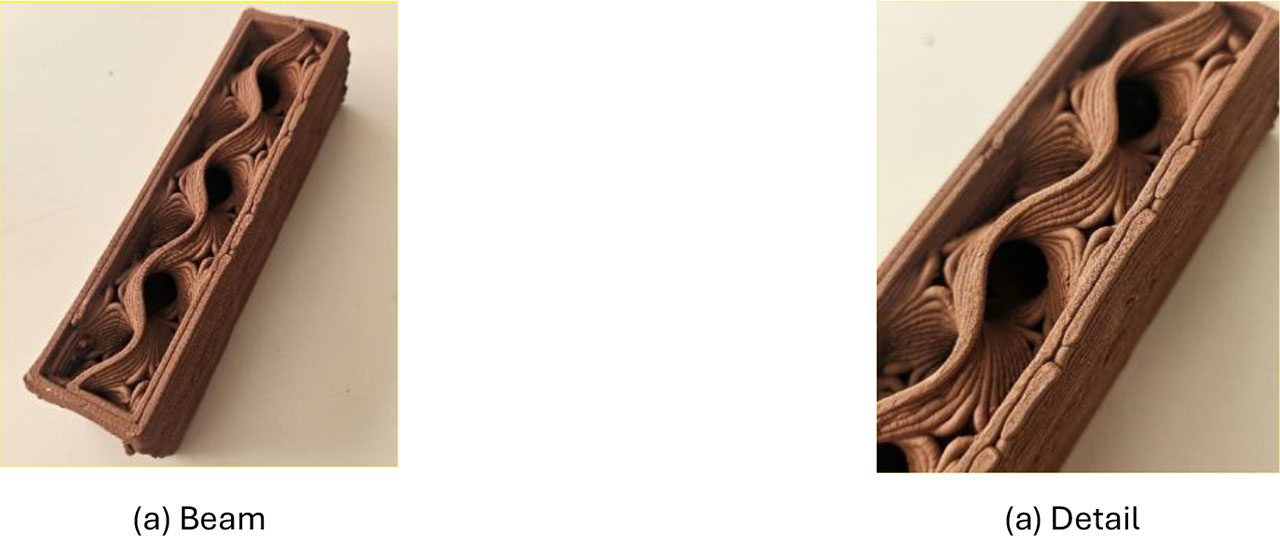
Figure 7:
3D print detail and artistic aspect – clay CERADBUD (2)
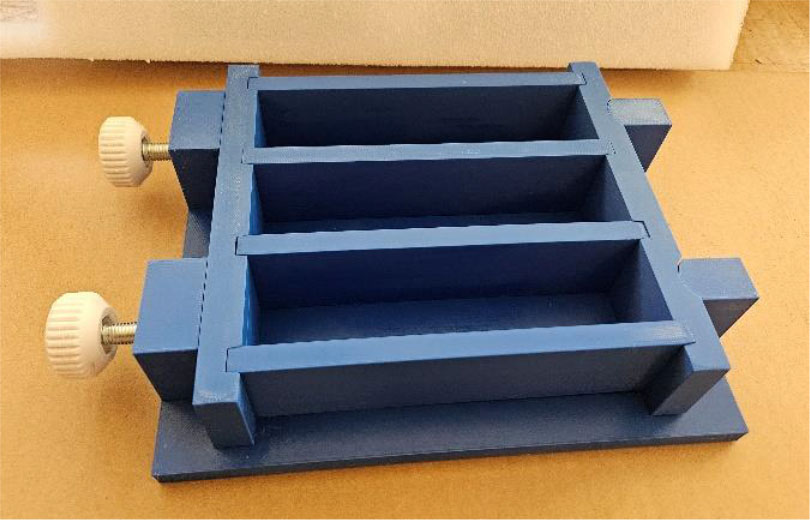
Figure 8:
Mold for concrete samples I
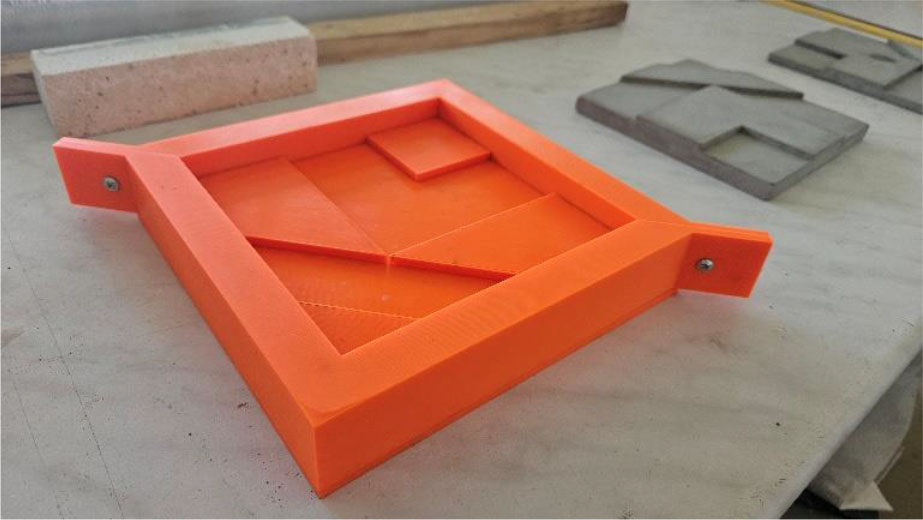
Figure 9:
Mold for concrete samples II
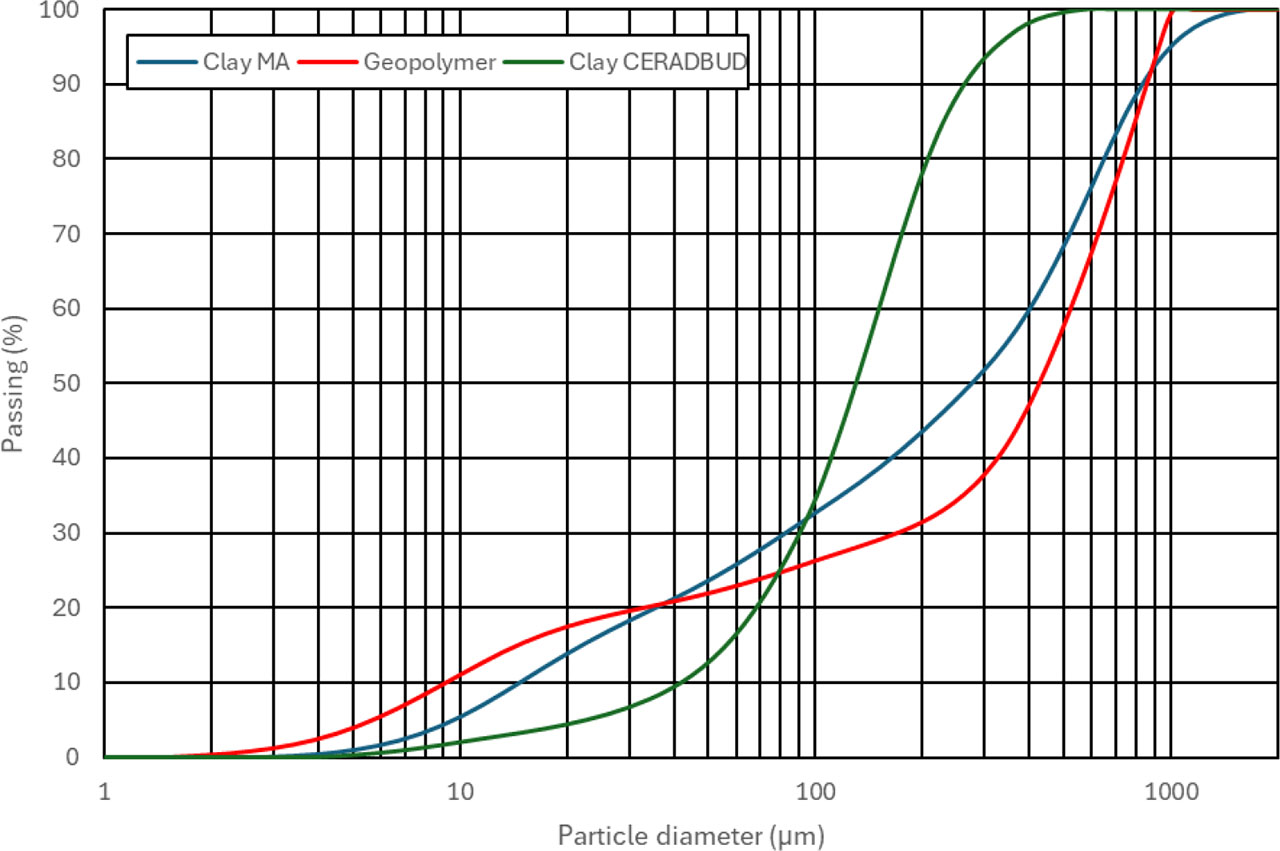
Figure 10:
Granulometry – materials for 3D printing
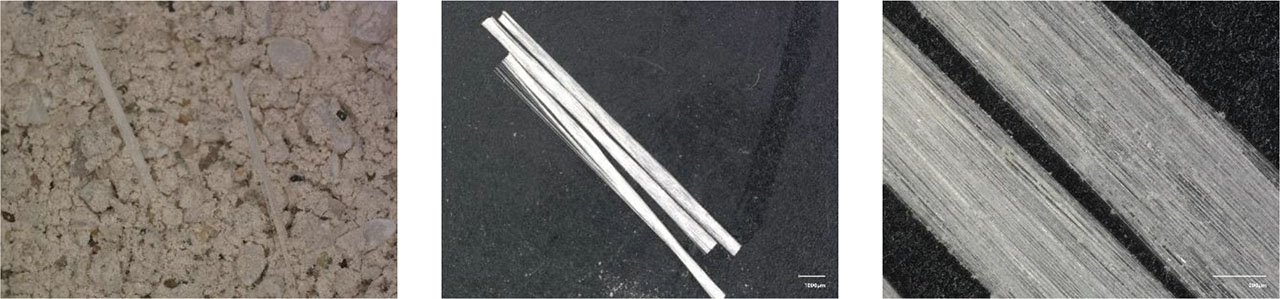
Figure 11:
Detail of fibre of geopolymer: (a) material; (b) fibre; (c) detail of fibre
Table 1:
Composition: MA clay material
| Composition | Weight [%] |
|---|---|
| - Na2O | 0.550 |
| - MgO | 0.374 |
| - Al2O3 | 28.613 |
| - SiO2 | 55.658 |
| - P2O5 | 0.066 |
| - SO3 | 0.121 |
| - Cl | 0.031 |
| - K2O | 2.132 |
| - CaO | 0.370 |
| - TiO2 | 1.092 |
| - MnO | 0.010 |
| - Fe2O3 | 1.611 |
| - Loss by annealing | 8.800 |
Table 2:
Composition: CERADBUD clay material (Ceradbud, 2025)
| Composition | Weight [%] |
|---|---|
| - SiO2 | 55.00 – 62.14 |
| - Al2O3 | 15.70 – 17.70 |
| - TIO2 | 0.70 – 0.90 |
| - Fe2O3 | 6.09 – 7.90 |
| - MnO | 0.04 – 0.17 |
| - MgO | 2.20 – 3.20 |
| - CaO | 0.33 – 1.81 |
| - Na2O | 0.06 – 0.26 |
| - K2O | 2.90 – 3.50 |
| - P2O5 | 0.05 – 0.18 |
| - Loss by annealing | 7.04 – 13.40 |
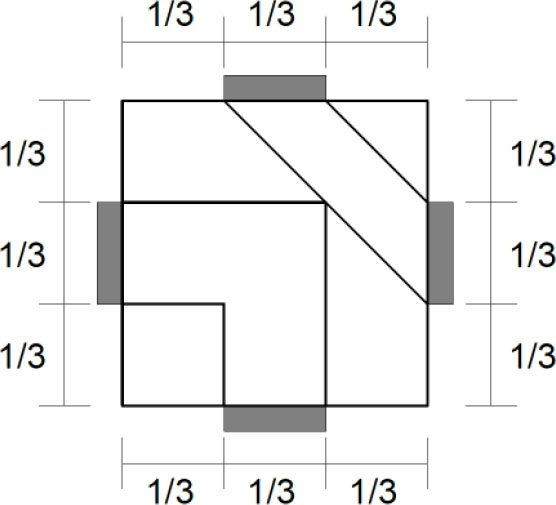
Figure 12:
Cladding concept for building application
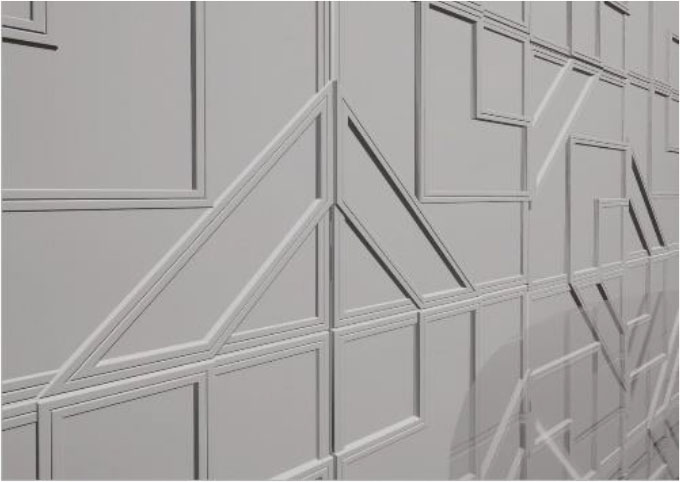
Figure 13:
Cladding concept for building application v visualization
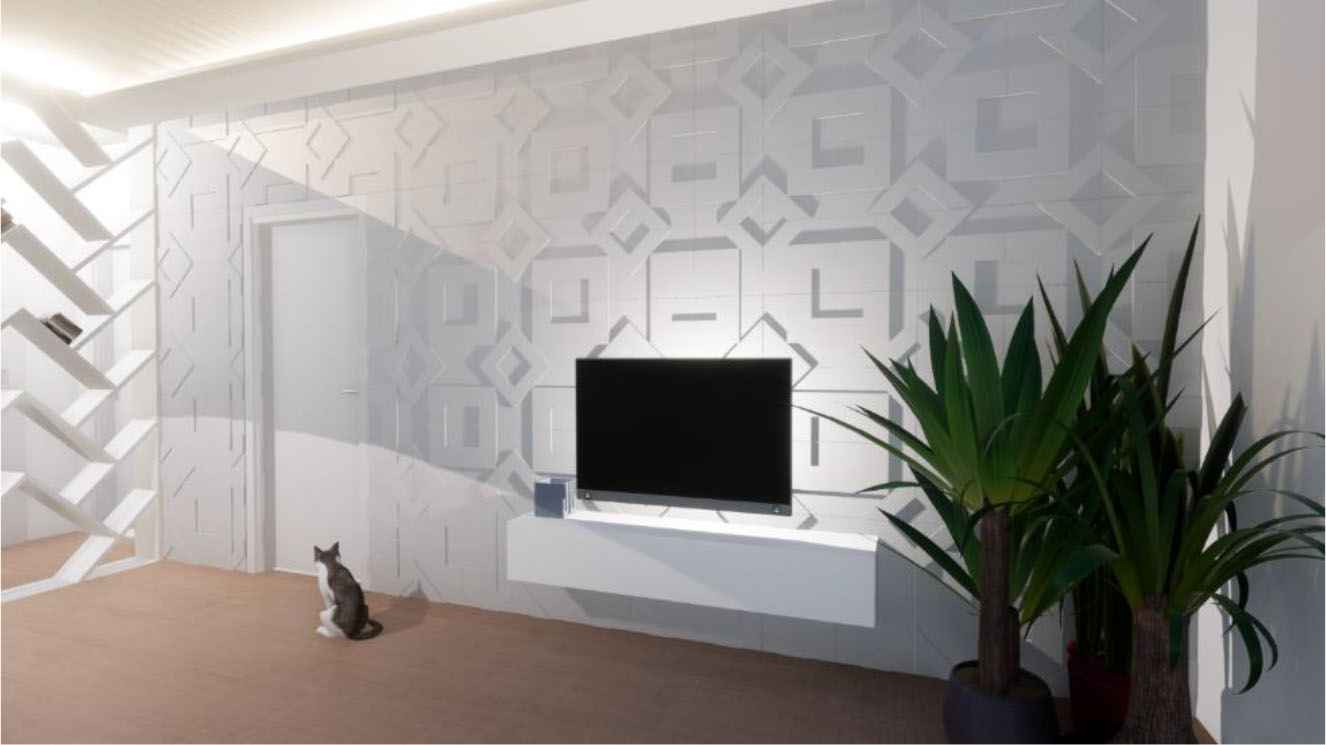
Figure 14:
3D comprehensive visualization
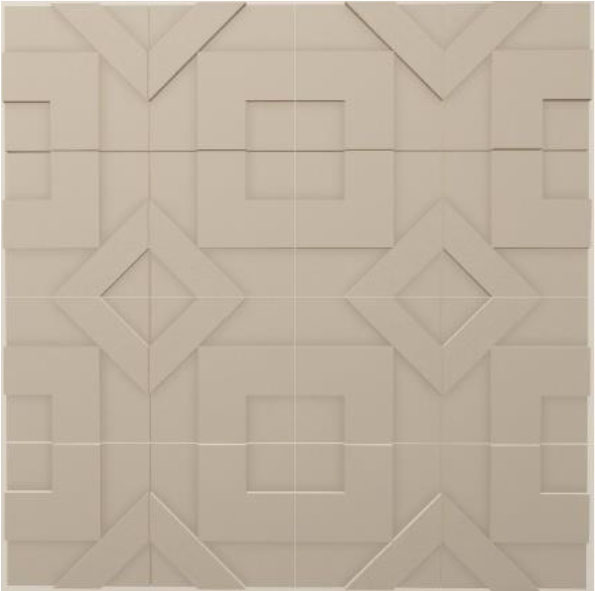
Figure 15:
3D symmetrical composition
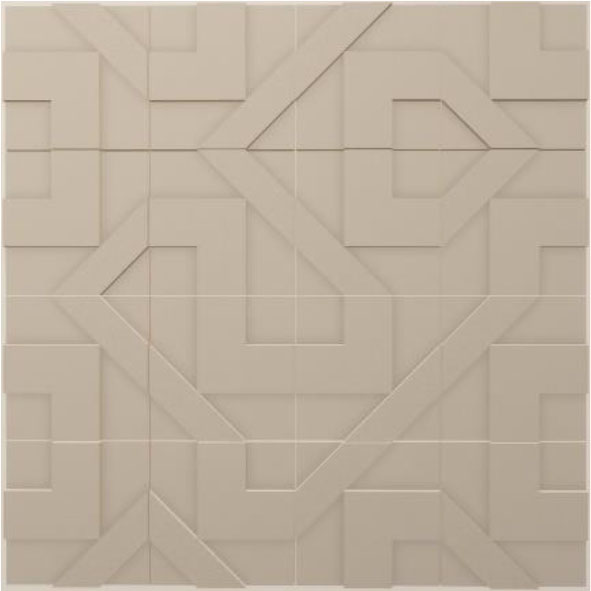
Figure 16:
3D asymmetrical and random composition
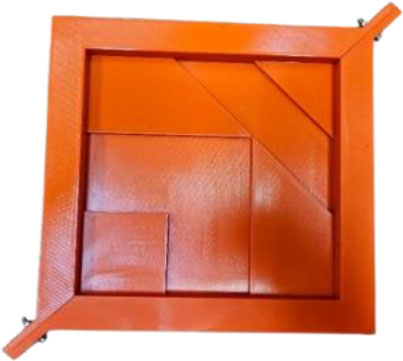
Figure 17:
3D mold for concrete (1)
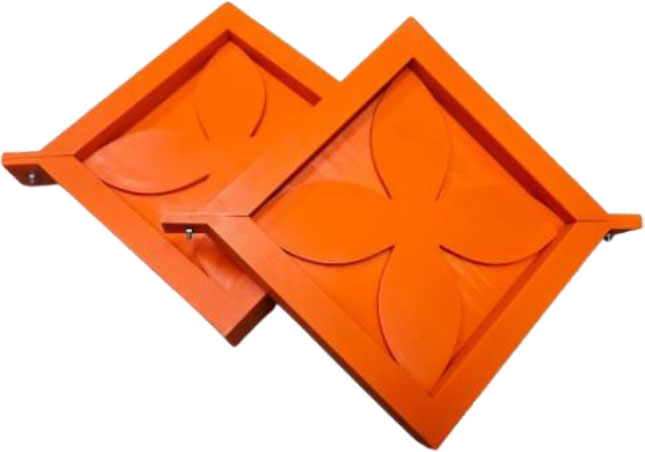
Figure 18:
3D mold for concrete (2)
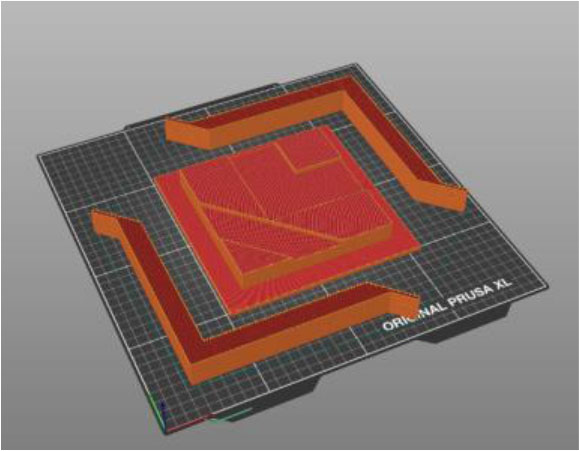
Figure 19:
3D print model
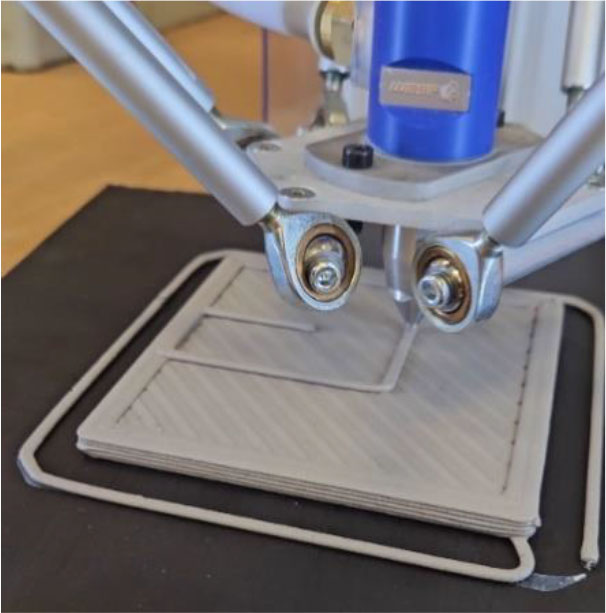
Figure 20:
Clay test sample
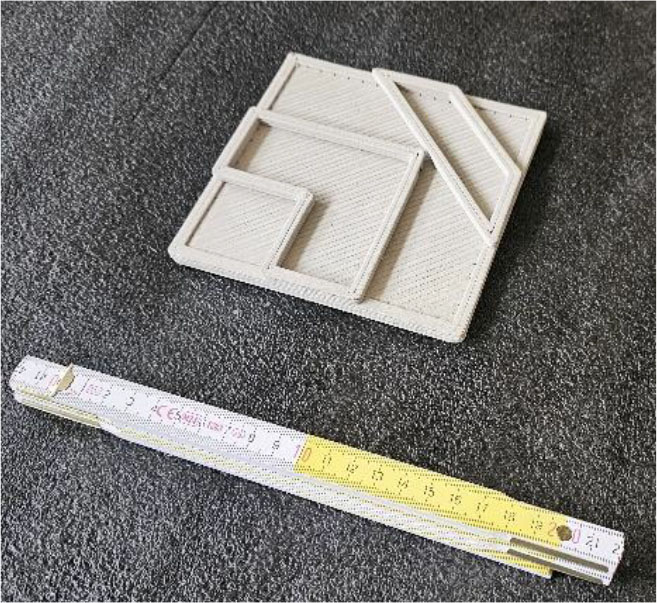
Figure 21:
Clay test sample – print
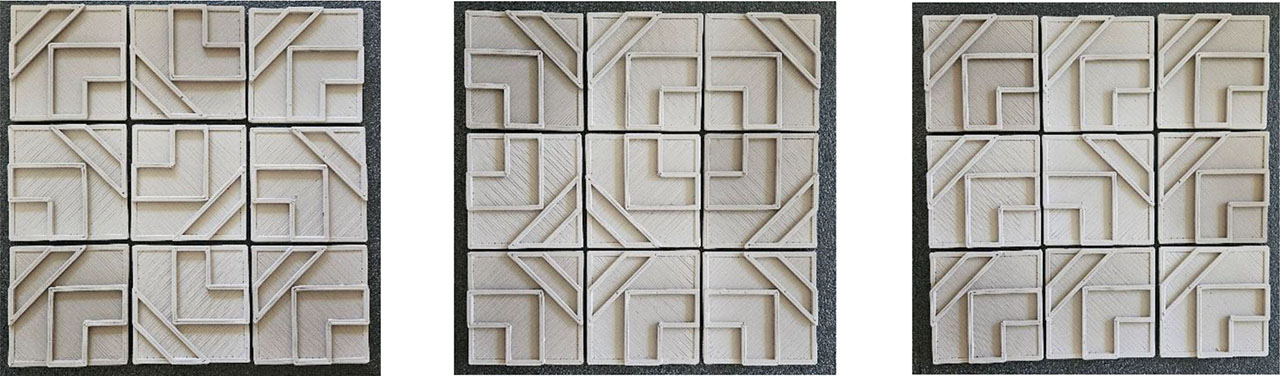
Figure 22:
Clay test samples – 3×3
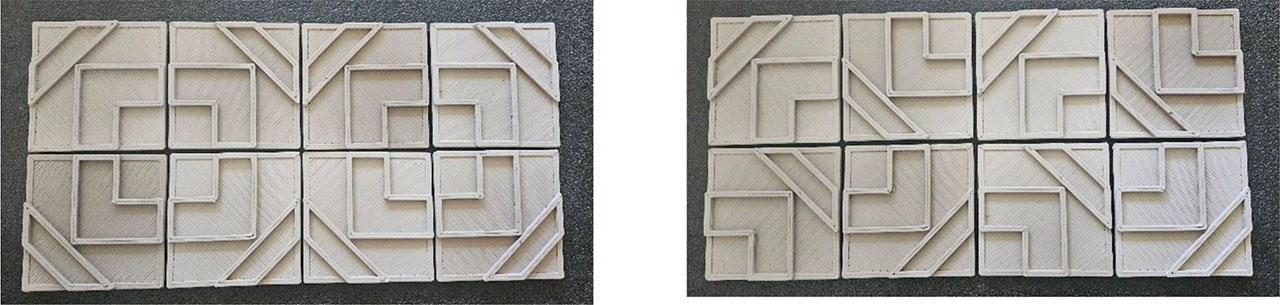
Figure 23:
Clay test samples - 2×4
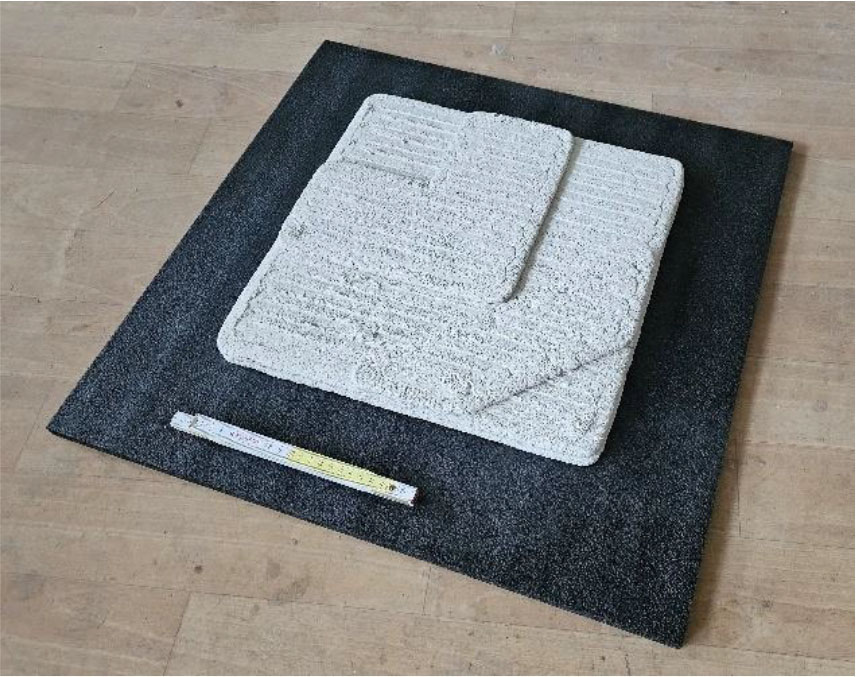
Figure 24:
Geopolymer (concrete) sample
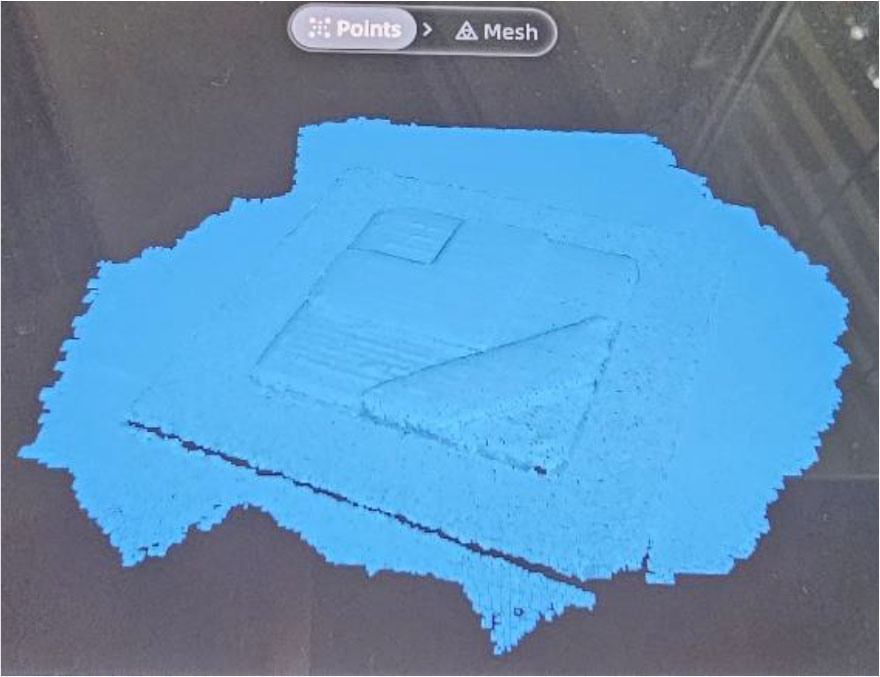
Figure 25:
3D scan – Geopolymer (concrete) sample
Table 3:
Print materials for LDM (geopolymer and clay)
| Characteristic | Geopolymer | Clay | ||||
|---|---|---|---|---|---|---|
| Volumetric weight [kg/m3] | Flexural strength [MPa] | Compressive strength [MPa] | Volumetric weight [kg/m3] | Flexural strength [MPa] | Compressive strength [MPa] | |
| Mean | 1889 | 1.8 | 5.8 | 1575 | 4.8 | 13.4 |
| Standard deviation | 4.7 | 0.3 | 0.2 | 14.7 | 0.3 | 2.4 |
| Coefficient of variation [%] | 0.2 | 18.3 | 3.3 | 0.9 | 5.6 | 18.1 |
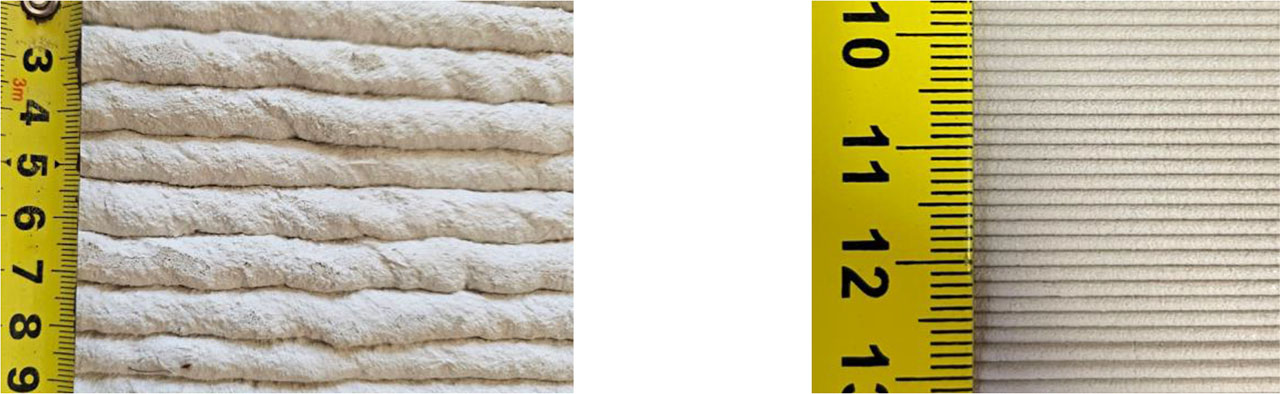
Figure 26:
Printing layers: (a) Geopolymer; (b) Clay
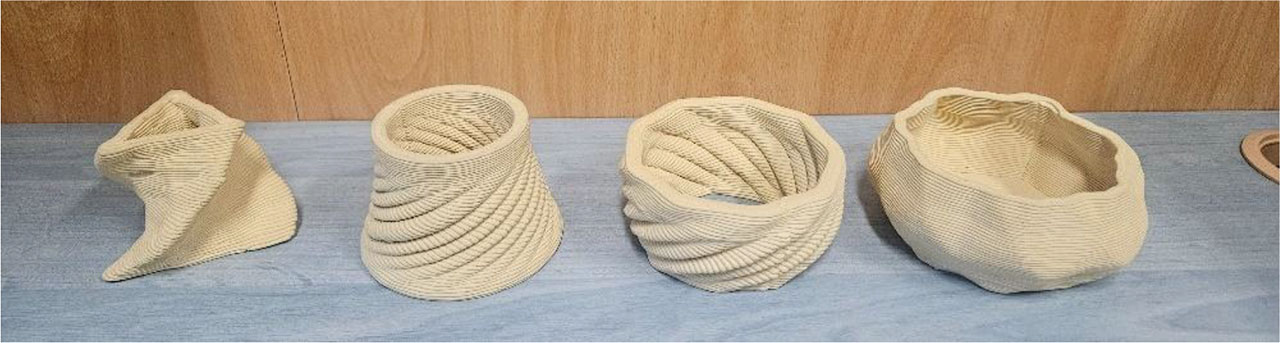
Figure 27:
3D printed clay models