

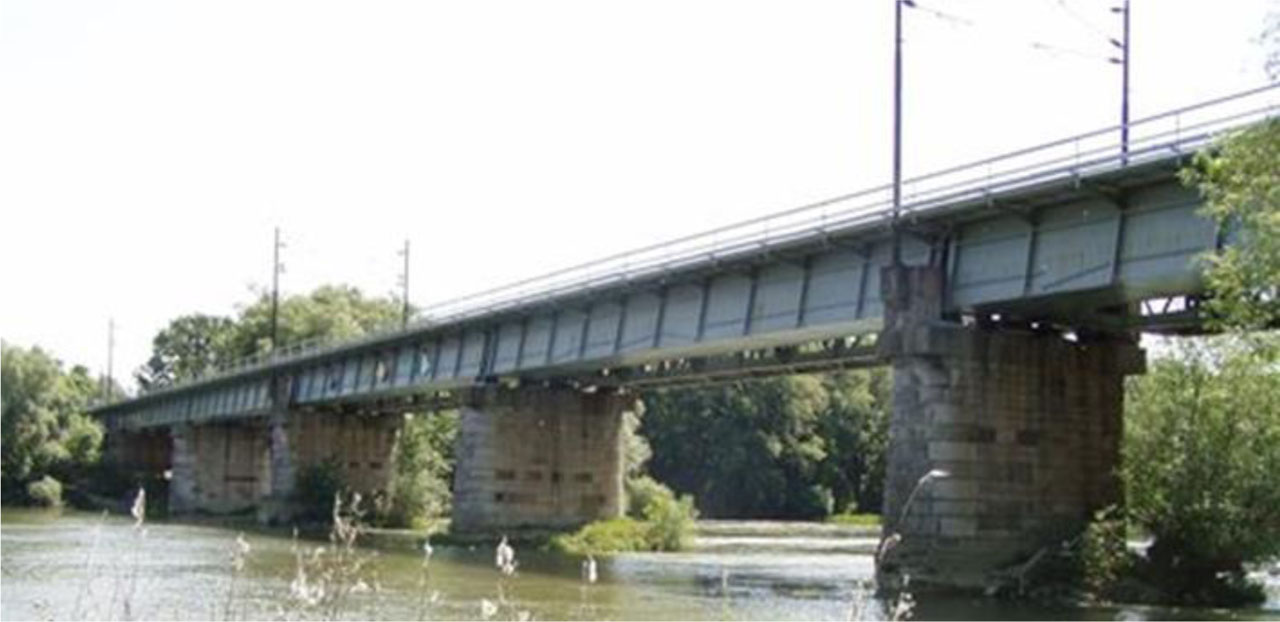
Figure 1:
Bridge 1: a longitudinal view at the part of multi-span bridge
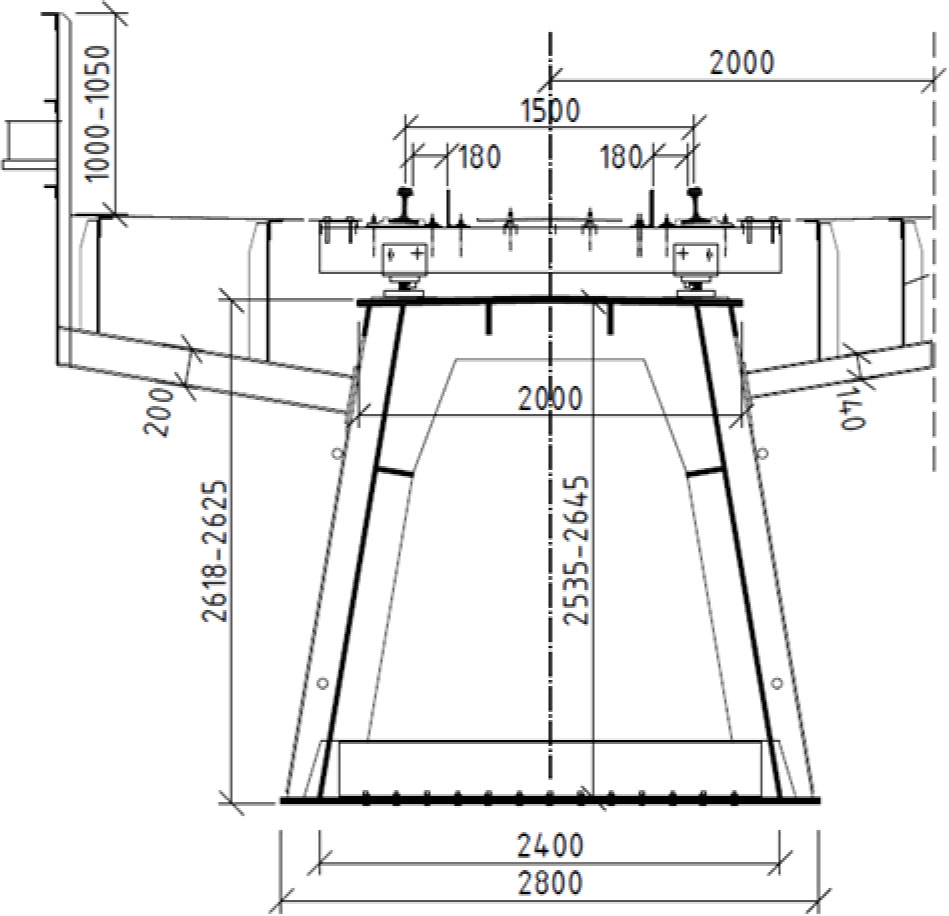
Figure 2:
Bridge 1: cross section of the box-girder superstructure BR1
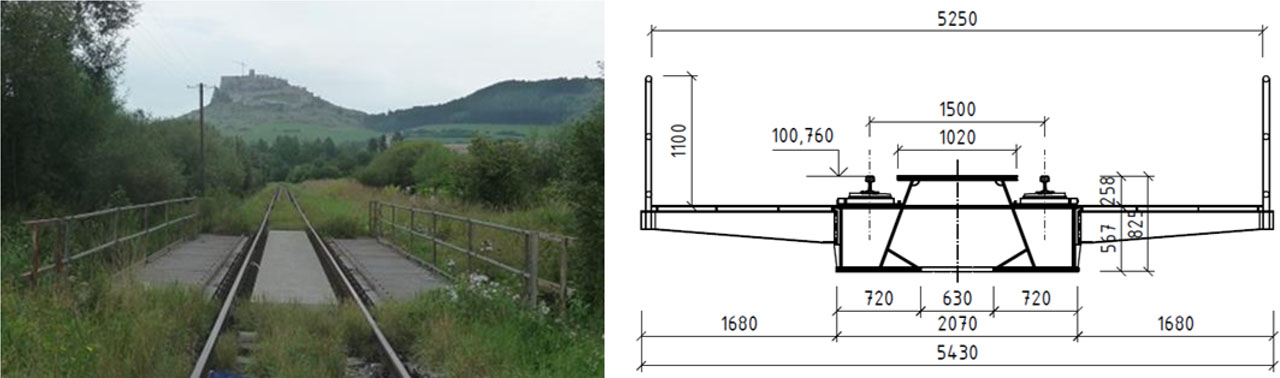
Figure 3:
Bridge 2: a location on a local railway line (left); cross section of the box-girder superstructure BR2 (right)
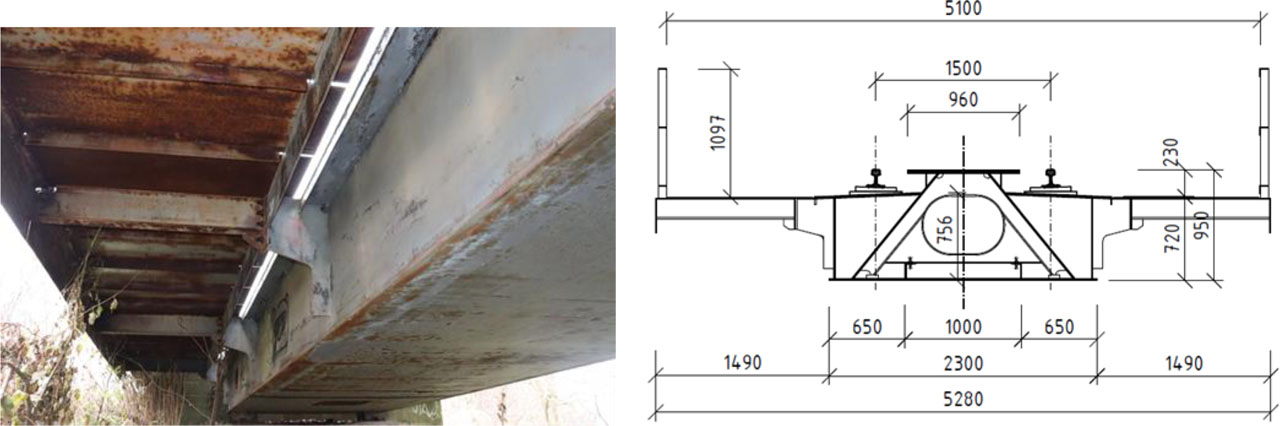
Figure 4:
Bridge 3: a view of the bridge from below (left); cross section of the box-girder superstructure BR3 (right)
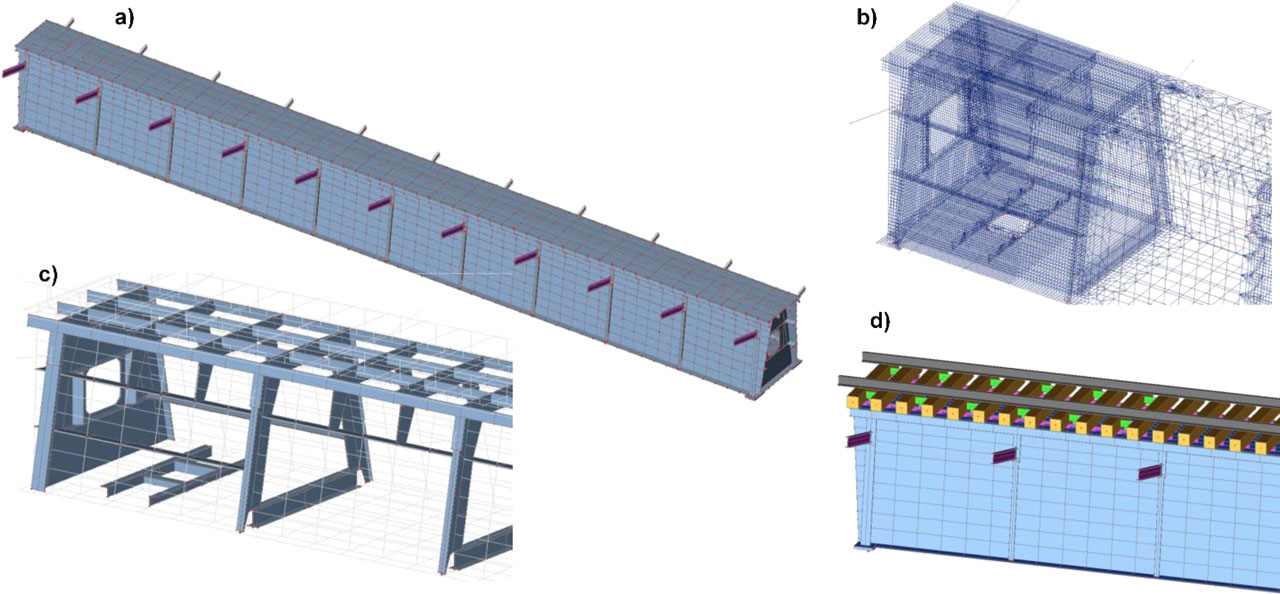
Figure 5:
FEA model of BR1: a) superstructure model; b) detail of mesh in support area; c) separated modelled stiffeners and diaphragms; d) model of track together with model of superstructure
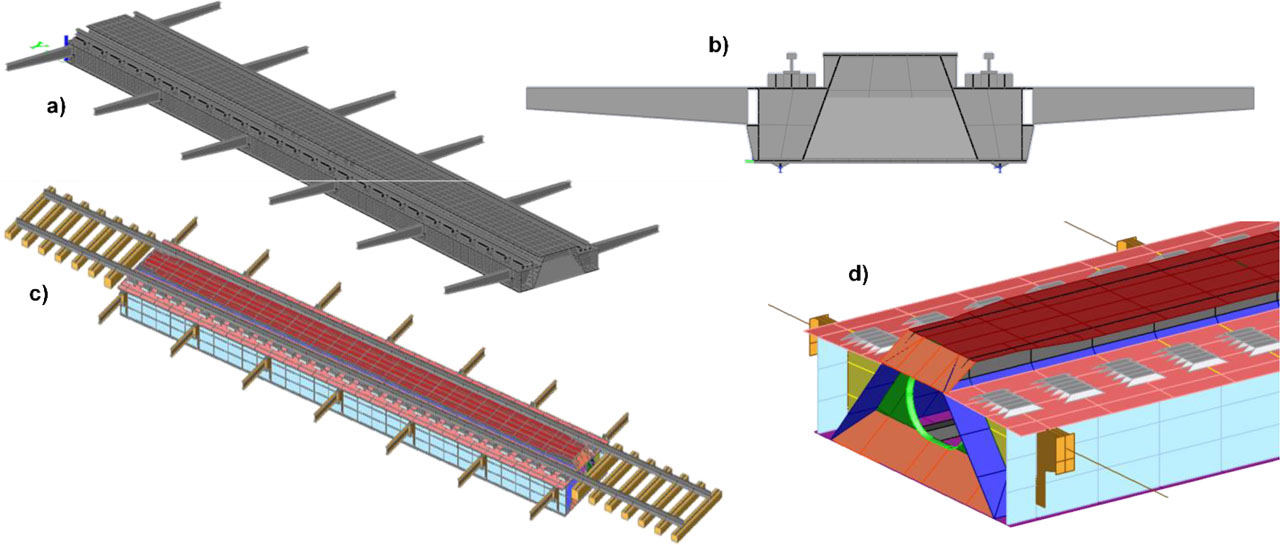
Figure 6:
FEA model of BR2 (top) and BR3 (bottom): a) model of superstructure BR2; b) cross-section of FEA model BR2; c) model of superstructure BR3 together with model of track; d) detailed view on the model of superstructure BR3
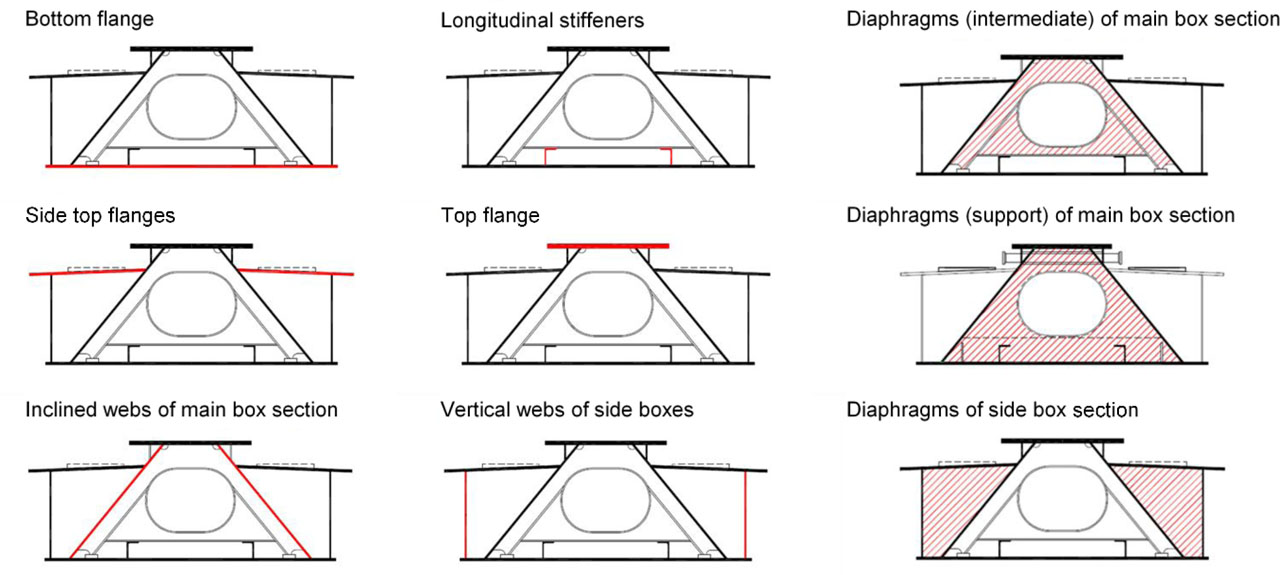
Figure 7:
Example of dividing the cross-section of superstructure BR3 into relevant parts valid for the assessment
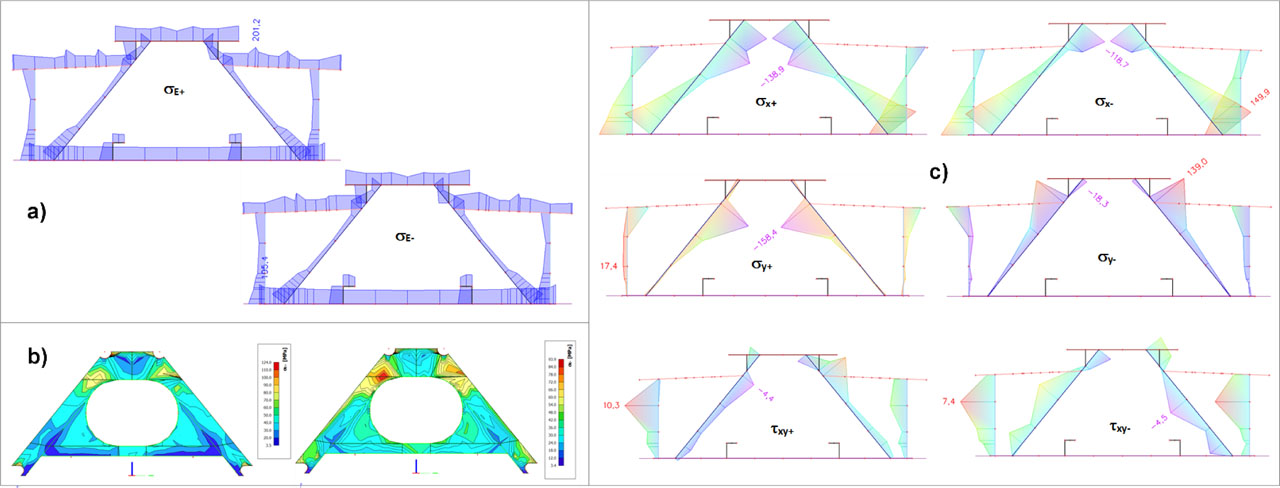
Figure 8:
Example of extracting stresses in any section or in any plate (results in the case of superstructure BR3): a) equivalent main stresses in section; b) isopalette of equivalent stresses; c) section results in the form of stress components
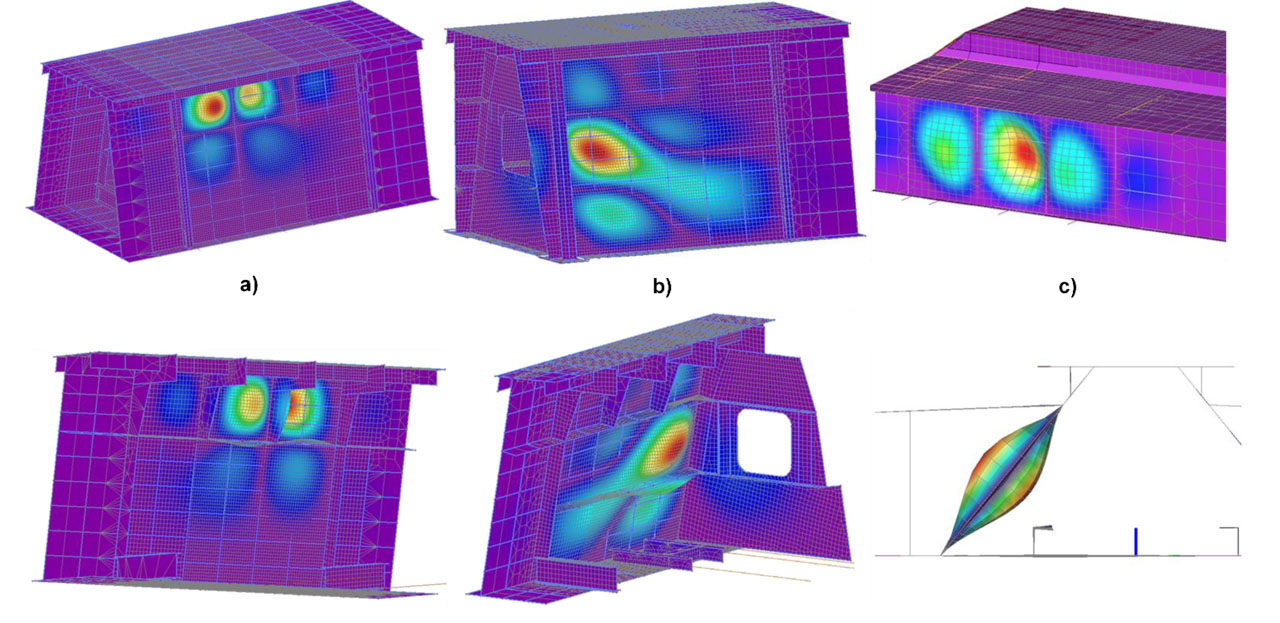
Figure 9:
Example of calculated buckling shapes for the webs under relevant load combinations: a) BR1, web at midspan area, αcr = 4.12; b) BR1, web at the area near support, αcr = 4.62; c) BR3, vertical web of side box at the area near support, αcr = 5.86; (at the top: views from outside the structure; at the bottom: views from inside the cross-section)
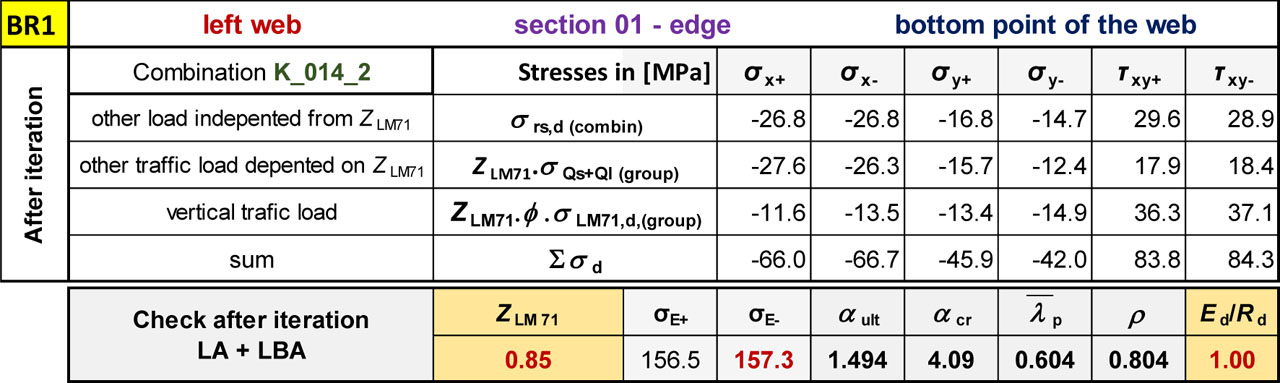
Figure 10:
Example of iterative assessment in a predefined point of the assessed panel (BR1)
Table 1:
Overview of limiting load-carrying capacities for each analysed superstructure
| Bridge | Point / detail | Stress | ZLM71 | Note |
|---|---|---|---|---|
| BR1 | bottom point of the web | planar stress | 0.85 | resistance |
| weld of centric stirrup to top flange | normal stress range | 0.46 | fatigue | |
| BR2 | top flange near the web | planar stress | 1.02 | resistance |
| weld of diaphragm to main top flange | normal stress range | 0.69 | fatigue | |
| BR3 | bottom point of main web | planar stress | 1.02 | resistance |
| weld of diaphragm to main web | normal stress range | 1.25 | fatigue |