
INTRODUCTION
Beer is one of the most popular alcoholic beverages in the world, valued for its flavor and the presence of natural nutritional and biological compounds such as carbohydrates, amino acids, vitamins and polyphenols. Traditional beer is produced from water, barley malt, hops and yeast (Olsovska et al., 2014; Djordjevic et al., 2016; Di Domenico et al., 2020; Ullah et al., 2020). Nowadays the brewing industry is undergoing dynamic changes. Craft beers are gaining increasing importance due to their flexible formulations and the potential for incorporating innovative ingredients.
According to reports by the Polish Office of Competition and Consumer Protection (UOKiK) and eLeader (using the Shelf Recognition AI app), craft beers are gaining popularity and occupying more shelf space in stores. However, their overall market share remains relatively small, and the overall production of beer in Poland has seen a decline in recent years (UOKiK, eLeader, 2023). This trend reflects growing consumer interest in natural ingredients and awareness of the potential health effects of high-proof alcohol (Elzinga et al., 2015; Gomez-Corona et al., 2016; Preiss et al., 2018).
Modern consumer expects beer not only to be refreshing but also to offer a unique sensory profile (distinctive flavor and aroma), innovative ingredients and potential health benefits (Wojtyra, 2020; Brezinova, 2021; Kikut-Ligaj, Mikołajczyk-Bator, 2022; Mazengia et al., 2022). In consumers’ opinion, craft beers are most often chosen because of their variety of flavors and superior quality compared to industrial beers (Kikut-Ligaj, Mikołajczyk-Bator, 2022).
The technological flexibility of small breweries enables producers to quickly respond to changing market demands, experiment with the formulations and develop products with increased functional value. The market offers beverages crafted from various types of malt and hops, as well as adjuncts including herbs, fruits, spices and bee products (Mastanjevic et al., 2019; Nardini, Garaguso 2020; Pluhackova et al., 2020). The additives used not only impart a characteristic flavor and aroma to the beers (Carvalho et al., 2016), but also enrich them with bioactive compounds such as polyphenols, flavonoids, vitamins with high anitioxidant activity and enhance the shelf life of the products (Nardini, Garaguso, 2020; Horincar et al., 2020; Lin et al., 2023). Herbs, especially from Lamiaceae (L.) family represent a particularly interesting group of additives – due to their content of essential oils, polyphenols and other secondary metabolites with confirmed antioxidant, antibacterial, anti-inflammatory properties (Sohrabvandi et al., 2012; De Falco et al., 2013; Galovicova et al., 2021).
Research on the use of herbs and spices in craft brewing is of significant importance to the industry, as it not only allows for the expansion of the product range and its better adaptation to consumers’ expectations, but also enables the creation of beers with increased functional value, which can provide competitive advantage in the rapidly growing market for fermented beverages. Moreover, incorporating plant ingredients into formulations can be seen as a synergistic effect between tradition and modernity – combining classic brewing technology with current health and nutritional trends. Following this trend of searching for an innovative craft beer recipes with an attractive sensory profile and increased functional value, the five Pale Ale (PA) variants were developed with the addition of plant ingredients: thyme, ginger, lavender, marjoram and mint.
MATERIALS AND METHODS
Materials
The subject of the study was beer with herbal adjuncts. PA beer was selected as a base beer. PA barley malt (Weyermann, Germany), water, Hercules hops and selected brewing yeast strains Saccharomyces cerevisiae (SafAle US-05, Fermentis) were used in the production process of the beer. In the experimental variants selected lyophilized plant materials with health-promoting properties were added, including thyme (0.50 g/L), ginger (1.00 g/L), lavender (0.10 g/L), marjoram (0.30 g/L) and mint (0.50 g/L). The given values refer to the mass of the dry plant material per 1 liter of wort before fermentation process. The plant parts used were leaves for thyme, marjoram, and mint, rhizome for ginger, and flowers for lavender. After lyophilization, the plant material was ground into a coarse powder. The amounts of additives were determined based on preliminary studies involving a series of samples with varying proportions of plant material (0.1–2 g/L). The assessment of optimal doses was performed using sensory tests (N = 20 people, 5-point hedonic scale).
Beer production process
Beer production process was carried out according to the standard technology described by Lehrl (2017), using a Cobra CB3 device (COBRA, HOMEBREWING).
Mashing was carried out using the infusion method following the temperature profile: a 15-minute rest at 52 °C to activate proteolytic enzymes, followed by a 30-minute rest at 63 °C to hydrolyze starch into dextrins and fermentable sugars and heating to 72 °C for 20 minutes to promote α-amylase activity. After reaching 78 °C, filtration and sparging were performed. The wort was boiled for 60 minutes with hops added in three equal doses of 20 g each, according to the brewing protocol. After boiling the wort was cooled down to 20 °C and aerated, then inoculated with a top-fermenting Saccharomyces cerevisiae yeast strain. Vigorous fermentation was carried out at 18–20 °C for 7 days, after which the beer was decanted from the sediment and transferred to secondary fermentation conducted at 12 °C for another 14 days. Lyophilized herbs (thyme (Thymus vulgaris L.), ginger (Zingiber officinale Rosc.), lavender (Lavandula angustifolia Mill.), marjoram (Origanum majorama L.), mint (Mentha×piperita L.) were added directly to the fermenters during secondary fermentation, in doses according to the formulation. After maturation, the beer was filtered to remove suspended particles and any herb residues, then bottled with added 5% sucrose for re-fermentation. The finished product was conditioned at 4 °C for a minimum of 14 days.
Physicochemical analysis
In the finished products, pH, real extract content, total polyphenol content (TPC), flavonoids content, antioxidant activity using the ABTS•+ cation radical and FRAP methods and as well as color in the EBC system were determined. In addition, the sensory evaluation was carried out.
The alcohol content in beer samples was determined according to the analytical methods EBC 9.43.2 (EBC Analytica, 2010) using Alcolyzer Beer with a DMA 4500M density module (Anton Paar GmbH, Austria). Real extract of wort was calculated based on the determined alcohol content in beer in compliance with EBC 9.43.2 method (EBC Analytic, 2010). Active acidity (pH) was measured according to the PN-90/A-75101/06 standard. The method is based on testing the potential difference between two electrodes immersed in the tested solution. The assessment was performed using an EDGE HI 2002 pH meter (Hanna Instruments, Italy).
Total polyphenol content was quantified using a method described by Fang et al. (2006) based on the reaction with a Folin-Ciocalteu reagent. The absorbance of the complex was measured at a wavelength of 735 nm, and the results were expressed in mg of chlorogenic acid per liter of beer (mg/L) using a calibration curve prepared for this compound. The flavonoid content was determined using the spectrophotometric method described by Papoutsis et al. (2016) using NaNO2 and AlCl3 solutions, measuring the absorbance at a wavelength of 510 nm. Beer samples were diluted 1:5 with distilled water before the analysis. The results were expressed as mg of quercetin equivalents (Sigma-Aldrich, St. Louis, MO, USA).
Antioxidant activity was expressed by two methods. FRAP method was carried out in accordance with the procedure described by Gościnna et al. (2019), based on Benzie and Strain (1996), measuring absorbance at a wavelength of 593 nm and presenting the results in mmol Fe²+/L of beer using a calibration curve prepared for iron ions. For the ABTS•+ cation radical assay, beer samples were first degassed by ultrasonic treatment and centrifuged at 4000 rpm for 15 min at 4 °C (Hettina Zentrifugen, Rotina 420 R, Germany). The obtained supernatant was used as the beer extract. The ABTS•+ assay was then performed as described by Re et al. (1999) by incubating the ABTS•+ working solution with the beer extract at 30 °C, followed by absorbance measurement at 734 nm. The results were expressed as µmol Trolox/L of beer.
All measurements were performed using a SHIMADZU UV-1800 spectrophotometer (UV-Vis Spectrophotometer System, Japan). Each analysis was conducted in triplicate for each sample.
Sensory evaluation
Sensory analysis was conducted after the beers had completed secondary fermentation, were filtered, bottled with added sugar for refermentation, and conditioned for at least 14 days at 4 °C.
Consumer hedonic assessment
Consumer acceptance was evaluated using a five-point hedonic scale (5 – very satisfactory, 4 – satisfactory, 3 – average, 2 – unsatisfactory, 1 – very unsatisfactory). The evaluation panel consisted of 100 individuals (women and men aged 19–69) who were regular consumers of this type of product.
Each participant evaluated all four beer samples, including a control PA beer without herbal additives. Samples were served chilled in a randomized order. Portions of 30 mL were served in transparent, tulip-shaped glasses (100 mL capacity) marked with randomly generated two-digit codes.
Descriptive sensory analysis
A descriptive sensory analysis was conducted to characterize the sensory attributes of the examined beers, including flavor, aroma, color, and foam characteristics. The evaluation was performed by a trained panel of 100 assessors experienced in beer sensory analysis.
Panelists evaluated the samples qualitatively using predefined sensory descriptors commonly applied in beer assessment (e.g., bitterness, herbal notes, spiciness, floral aroma, foam density and color).
Attributes were considered “not perceived negatively” when no undesirable or off-flavors were reported by the panel during the descriptive assessment.
Statistical analysis
The influence of the analyzed factor on the physiochemical properties of products was determined using analysis of variance (ANOVA) in Statistica 13.1 software. Tukey’s test was also applied with a significance level of α = 0.05 to examine the differences between mean values. Relationships between the examined qualitative characteristics were analyzed using Spearman rank correlation coefficient (p < 0.05). The results were presented as the arithmetic means ± standard deviation (SD) from 3 replicates for each sample. For sensory evaluation principal component analysis (PCA) were performed.
RESULTS AND DISCUSSION
Characteristics of the base PA beer
The physicochemical characteristics of laboratory produced PA beer are presented in Table 1,Figure 1A, B and 2. Real extract content was 3.23% and the alcohol content was 4.94% V/V. The pH was 4.37. The beer’s color was 14.33 in EBC which corresponds to a dark golden, amber color (Table 2).
Table 1.
The results of physicochemical measurements for tested beers with functional additives.
| Beer variant | Real extract [%] | Alcohol [% V/V] | pH | Color (EBC) |
|---|---|---|---|---|
| PA* | 3.23±0.04 a | 4.94±0.10 b | 4.37±0.03 cd | 14.33±0.38 b |
| PAT | 3.48±0.09 b | 4.74±0.12 a | 4.33±0.04 bc | 15.37±0.98 ab |
| PAG | 3.25±0.08 a | 4.75±0.07 a | 4.30±0.01 ab | 16.63±1.06 c |
| PAL | 3.29±0.09 a | 4.61±0.05 a | 4.33±0.02 bc | 16.83±0.58 c |
| PAMR | 3.34±0.08 ab | 4.70±0.10 a | 4.26±0.05 a | 13.87±1.16 ab |
| PAM | 3.33±0.14 ab | 4.74±0.06 a | 4.39±0.04 d | 12.57±0.67 a |
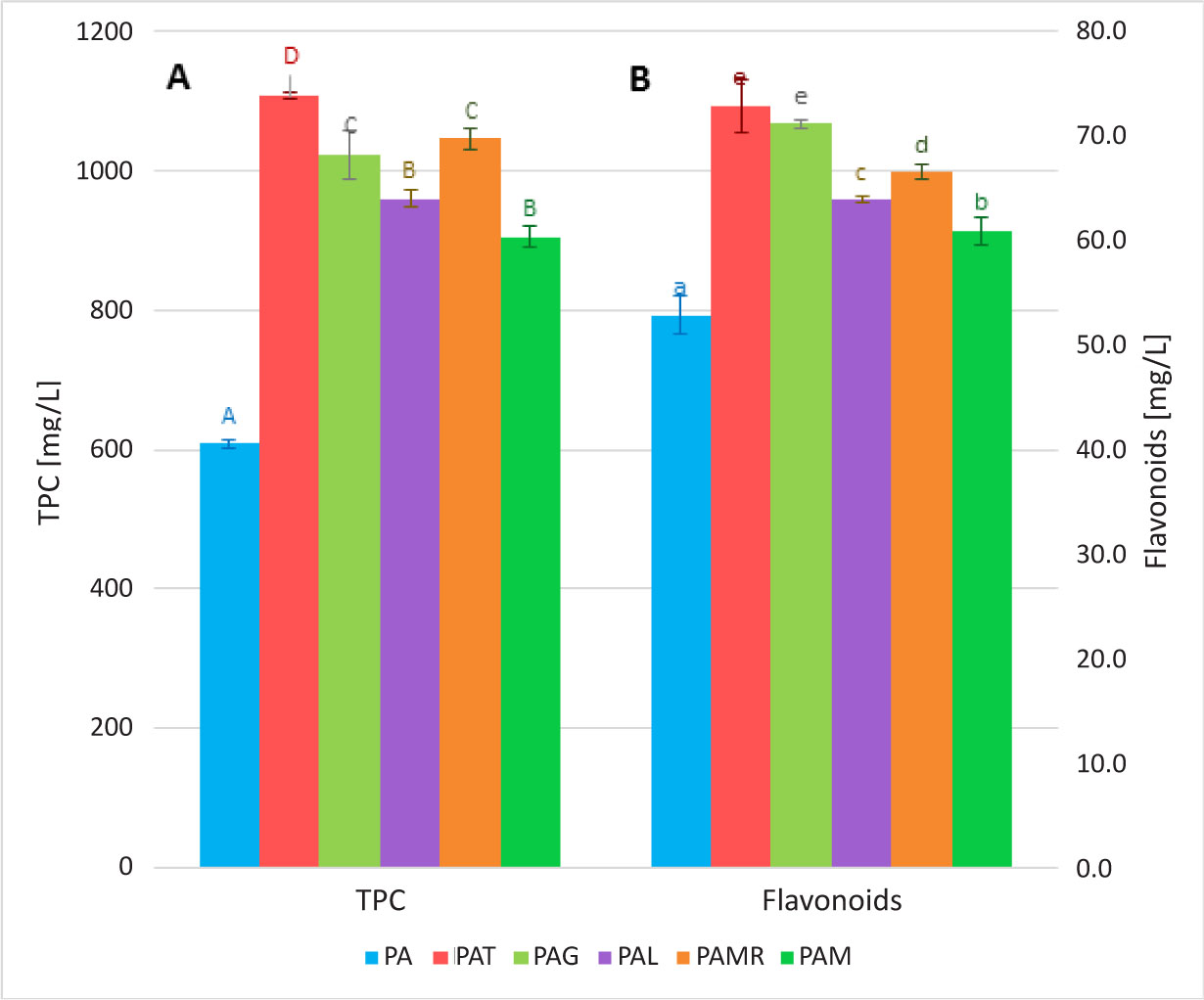
Figure 1.
(A) Total polyphenol content (TPC) and (B) flavonoids in analyzed beer variants. A, B…, a, b…– means sharing the same letter in column are not significantly different (p<0.05). Abbreviations – see Table 1.
Table 2.
Coloring of beers according to the EBC (Rum, 2005).
| EBC | Color | Description | Beer example |
|---|---|---|---|
| 1–4 | Straw, light yellow, light gold | Pale lager | |
| 5–8 | Yellow, gold | Pilsner | |
| 9–20 | Dark gold, dark yellow, amber | Wheat | |
| 21–35 | Light brown, brown, copper | Pale ale | |
| 36–60 | Brown | Bock | |
| > 60 | Dark brown, black | Stout |
Obtained values of the extract and alcohol are within the typical range for PA beers, which indicates that the fermentation process proceeded correctly and that the brewing process was stable. The pH value of 4.37 is compliant with the expected range for this style of beer ensuring adequate microbiological stability and positively influencing the flavor and freshness of the beverage (Lehrl, 2017; Cocuzza et al., 2019).
The measured EBC color (14.33) is slightly lower than the typical range reported for Pale Ale (20–35 EBC, Table 2). This deviation may be attributed to the specific selection of malts and brewing conditions used in this laboratory-scale production, which produced a slightly lighter shade of amber. Nevertheless, the resulting color remains within the spectrum of craft beer variations, which can differ depending on the raw materials, adjuncts, and brewing methods employed (Ualema et al., 2024).
Total polyphenol content was 609.1 mg/L, and flavonoids content was 52.8 mg/L (Figure 1A, B). Antioxidant capacity measured using the ABTS•+ cation radical was equal to 5.5 µmol of Trolox/L, while FRAP reducing capacity – 665.7 mmol Fe²+/L (Figure 2). The results indicate that the analyzed PA beer was characterized by a high content of bioactive compounds and strong antioxidant potential, which, when considered together with its color profile, are generally consistent with the characteristics of beers of this style. Although the measured EBC value was slightly lower than the typical range reported for Pale Ale, the observed color remains within the spectrum of variation commonly found in craft beers. These findings are consistent with the literature data, which indicate that PA beers contain increased content of polyphenolic compounds, that determine significant sensory profile of beer, including its color (Di Domenico et al., 2020; Habschied et al., 2021).
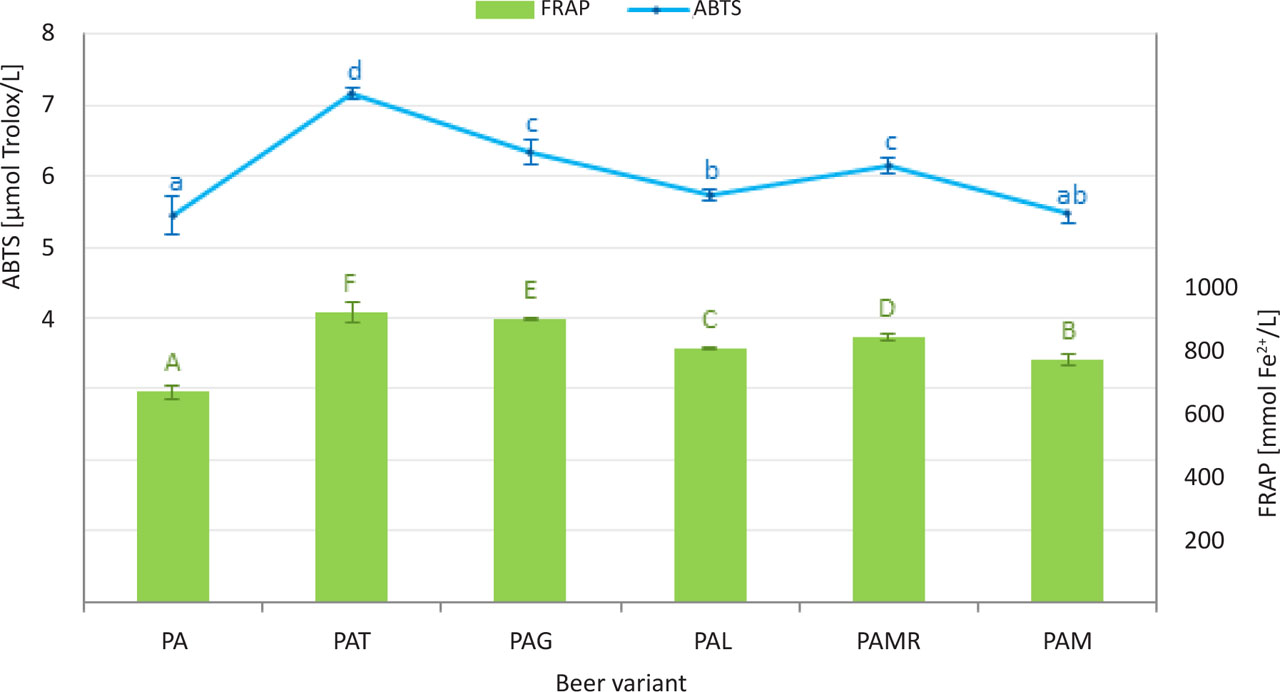
Figure 2.
Antioxidant activity FRAP and ABTS•+ cation radical of analyzed beer variants: PA – Pale Ale (control), PAT – Pale Ale with thyme, PAG – Pale Ale with ginger, PAL – Pale Ale with lavender, PAMR – Pale Ale with marjoram, PAM – Pale Ale with mint. A, B…, a, b… — means sharing the same letter in column are not significantly different (p<0.05)
Many factors influence the polyphenolic content in beers, as well as the antioxidant capacity. The type and quality of malt used are of key importance. In the study by Ditrych et al. (2016) the lowest content of polyphenolic compounds, at 74 mg/L was observed in non-alcoholic beer, which was due to the low amount of malt used during production. In contrast the highest concentration of polyphenols was detected in dark beers, where the values ranged from 233.9 mg/L to 407.5 mg/L (Ditrych et al., 2016). The variety and quantity of hops used, as well as the conditions of the mashing process (temperature, time, pH), the method of wort filtration, the fermentation process and maturation, are also of significant importance (Sokół-Łętowska, 2013; Skendi et al., 2017; Ramos da Silva et al., 2021). The higher proportion of specialty malts containing melanoids and reductones formed by Maillard reaction during additional thermal processing of malt (e.g. roasting) promotes an increase in polyphenol content (Shopska et al., 2021; Guido, Ferreira 2023). These compounds are responsible for the darkening of beer color (Coronas et al., 2024). However, some stages of the process, such as filtration and clarification may lead to their partial loss (Yalçınçıray et al., 2022; Kumari, Sit, 2025). Parameters like temperature and pH during mashing, determine the extraction of phenolic compounds from the malt and hops, which influences the final biological activity of beer (Šibalić et al., 2021; Gribkova et al., 2022).
In this context it is worth pointing out the differences between industrial and craft beers. The craft beers are usually brewed in smaller batches and use less aggressive clarification methods, with higher use of specialty malts and more aromatic hops varieties. Industrially produced beer needs more intense stabilization and filtration methods, because of the desire for repeatability, stability and high clarity, which reduces the content of polyphenols, flavonoids and antioxidant activity of beverages (Humia et al., 2019). These factors do not favor maintaining a high level of bioactive compounds, as confirmed by scientific studies. As reported by Ambra et al. (2021) during industrial-scale brewing, approximately 60% of polyphenols from malt are degraded due to high-temperature pasteurization and filtration. Craft beers do not undergo these processes and maintain higher concentration of polyphenolic compounds. Sperkowska et al. (2021) studied 8 industrial beers and noticed significantly lower concentration of bioactive compounds than those reported in her own studies. The average polyphenol content in her studies was 237.2 μg GAE/L (gallic acid equivalents), while for flavonoids it was 45.03 μg CAT/L (catechin equivalent). The antioxidant capacity measured by FRAP method was 1.2 μmol Trolox/L.
Based on the results presented in Figures 1 and 2, it was observed that herbal adjuncts had positive influence on the polyphenol and flavonoids content and also on the antioxidant capacity of studied beers, in comparison to base beer. At the same time, a statistically significant decrease in alcohol content was found in the samples with plant additives relative to the base beer. The highest alcohol concentration was observed in beers containing ginger rhizoma (4.8% V/V), representing a 3.9% decrease compared to the base beer. Conversely, the lowest concentration was found in beers with lavender flowers (4.6% v/v), corresponding to a 6.7% decrease relative to the base beer.
These findings suggest that the presence of herbal adjuncts could have affected the fermentation process and sugar assimilation by yeast. As stated by Viejo et al. (2018) and Anderson et al. (2019), alcohol content is influenced not only by its concentration in the wort but also by the type of malt, technological process, and yeast strain used. Bottom-fermented beers (e.g., lager, pilsner, porter) typically have a higher concentration of residual sugars and lower alcohol content (approx. 3.5–4.5% v/v) and are brewed with Saccharomyces pastorianus. In contrast, top fermented beers (e.g. ALE, IPA) are characterized by higher alcohol concentration (approx. 4–7% V/V) due to the activity of Saccharomyces cerevisiae yeast strain.
Each variant of beer with plant additives showed a slight increase in real extract content compared to the base beer (3.2%). The highest concentration was observed in beers with thyme thyme (3.48%, increase by 7.2%) and the lowest content in the beers with ginger (3.25%, increase by 0.6%) (Table 1). The results suggest may indicate that herbal addition affects the extraction of soluble substances from raw materials and their availability during the fermentation. The thyme beer variant showed a higher real extract content (statistically significant differences) compared to the ginger (3.25%), lavender (3.29%) and control beers (3.23%) (Table 1).
The pH value for all beer types ranged from 4.26 to 4.39 (Table 1). All beers (except the one with mint addition, which showed a slight pH increase of 0.02) exhibited a small decrease in pH compared to the base beer. The largest decrease was observed in beers with marjoram (4.26; 0.11 lower) and ginger (4.30; 0.07 lower). Statistically significant differences were also noted between beers with marjoram and mint (4.29). According to Basarova et al. (2015), the pH value of beer primarily depends on organic acids produced during fermentation and typically falls within 4.0–4.9. Minor variations in pH were observed among beers with different herbal additions. The beer with marjoram (PAMR) showed the lowest pH (4.26), which was statistically lower than several other variants, while the remaining samples did not differ significantly from the control (PA, 4.37) (Table 1).
Herbal adjuncts caused distinct changes in the color of finished products (Table 1). Beers with thyme, lavender and ginger addition had a higher EBC value that base beer (15.37, 16.63, 16.83, 14.33 accordingly). Similar effect was observed in the studies of Gościnna et al. (2019) where the addition of thyme also resulted in the darkening of the beer. However, mint and marjoram addition resulted in lightening of beers (12.57 and 13.87 EBC accordingly). Statistically significant differences were observed between base beer and beers with ginger, lavender and mint and also amongst beer with marjoram or thyme and beer with ginger or lavender (Table 1). The differences in EBC values may be related to the presence of natural pigments in plant tissues and, as previously mentioned, to Maillard reaction and oxidation of polyphenols during the brewing process. The technological process also has a significant impact on color, as it can accelerate the oxidation of polyphenols and formation of complex compounds that influence the final color (Pieczonka et al., 2021).
Herbal adjuncts significantly affected the content of polyphenolic compounds compared to the base beer (609 mg/L) (Figure 1A). The highest polyphenol content was found in beer with thyme (1107.8 mg/L, an 80% increase), and the lowest in beer with mint (905.2 mg/L, a 48% increase). Beers with thyme, marjoram, and ginger contained significantly more polyphenols than those with lavender or mint, while no significant differences were found between mint and lavender or between ginger and marjoram beers.
A similar trend was observed for flavonoids (Figure 1B). The base beer contained 52.8 mg/L, while beer with thyme had the highest concentration (72.9 mg/L, 38% increase), and beer with mint the lowest (60.9 mg/L, 15% increase). Statistical analysis revealed significant differences between the base beer and all beers with herbal adjuncts, as well as among individual additives, except for beers with ginger (71.1 mg/L) and thyme (72.8 mg/L), where no significant difference was observed.
Similar observations were made by Solgajova et al. (2024), who demonstrated a significant increase in polyphenol content after the addition of dried herbs (sage, oregano, lemon balm, thyme) during fermentation. Compared to the control beer (253.6 mg/L), this increase ranged from 118% for thyme (553.8 mg/L) to 216% for lemon balm (763 mg/L). However, Gościnna et al. (2019) reported that adding fresh thyme (7 g/L) increased TPC by only 3.5% compared to the base beer (321.2 mg/L). Djordjević et al. (2016) achieved a 37% increase in TPC after adding liquid thyme extract (0.5 mL/L). Such variations indicate that the quality, form, and processing of the additive (e.g., maceration time) are critical factors influencing the final effect.
Plant adjuncts can be added at any stage of brewing; however, studies indicate that the earlier they are added, the greater the potential loss of polyphenolic compounds due to oxidation and degradation. Adding plant material during mashing may therefore negatively affect the concentration of bioactive compounds and antioxidant activity (Gorjanovic et al., 2010; Sanna, Pretti, 2015).
In all samples, the addition of herbs to the base beer resulted in a statistically significant increase in antioxidant activity (ABTS•+, FRAP) (Figure 2). The highest antioxidant activity was noted in beer with thyme (ABTS•+: 7.16 µmol Trolox/L, increase by 31%; FRAP: 918.3 mmol Fe²+/L, increase by 38%), while the lowest was found in beer with mint (ABTS•+: 5.5 µmol Trolox/L, increase by 0.7%; FRAP: 767 mmol Fe²+/L, increase by 15%) (Figure 2). For the FRAP method, significant differences in antioxidant capacity were observed for each beer variant. However, for the ABTS•+ method, no differences were noted between beers with ginger and marjoram or between those with lavender and mint. These results align with Lin et al. (2023), who reported that the addition of herbs such as jasmine and hibiscus enhances antioxidant activity, and Solgajova et al. (2024), who observed multiple increases in TEAC (ABTS) activity in Pilsner beers with added thyme, sage, oregano, or lemon balm.
Therefore, this research indicates that herbs are valuable brewing adjuncts due to their high content of bioactive substances, including polyphenols, which diffuse into the beer during brewing and enhance its antioxidant capacity. This phenomenon is often accompanied by a decrease in pH and alcohol content, which may contribute to improved shelf life, stability, and potential health benefits (Borsa et al., 2022).
However, it should be emphasized that a high polyphenol content is not always beneficial. Excessive amounts may cause technological issues, such as turbidity or colloidal precipitation, as well as sensory defects – harsh or astringent taste notes (Humia et al., 2019). In lager beers, where a mild sensory profile and high clarity are expected, this is undesirable. Conversely, in PA, characterized by pronounced hop bitterness, a higher polyphenol level enhances the typical flavor profile and is considered desirable (Habschied et al., 2021). Therefore, optimizing polyphenol levels in beers enriched with herbal additives should balance health-promoting effects and sensory quality, which poses a significant challenge for brewing technologists.
Spearman rank correlation analysis revealed significant relationships between the studied parameters (Figure 3). The strongest correlations were observed between flavonoid content, TPC, and FRAP reducing capacity (r = 0.9–1.0), clearly indicating that phenolic compounds – particularly flavonoids – are the main contributors to beer’s antioxidant activity. The ABTS•+ method also showed strong positive correlations with flavonoids, TPC, and FRAP (r = 0.9, 0.96, and 0.9, respectively), confirming the consistency of results and the dominant role of these compounds in shaping beer’s biological potential.
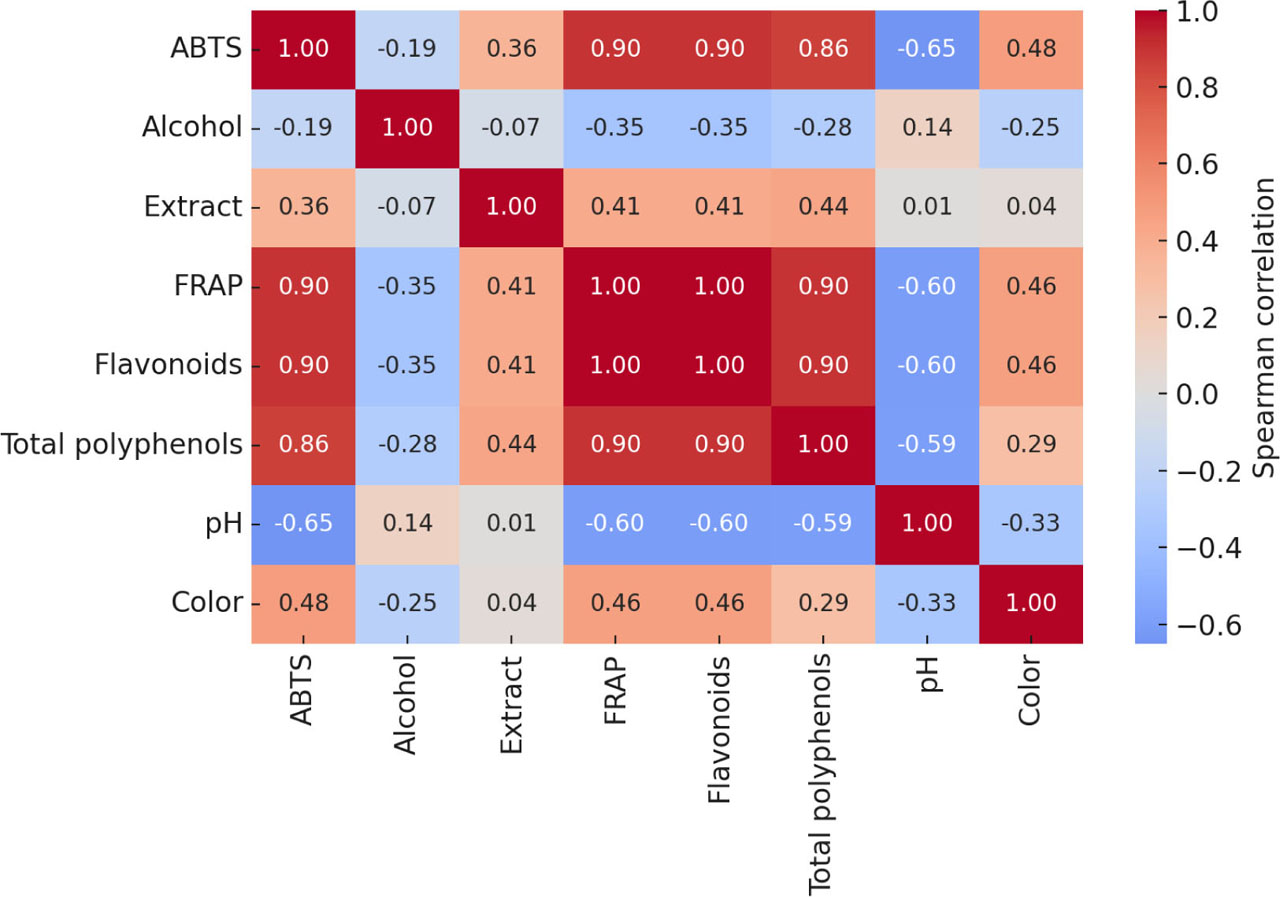
Figure 3.
Spearman rank correlation matrix between antioxidant activity (ABTS, FRAP), phenolic compounds (flavonoids, total polyphenols), physicochemical parameters (pH, alcohol, real extract), and color (EBC). Significant positive correlations were observed between radical cation ABTS•+, FRAP, flavonoids and total polyphenols, while pH showed a negative correlation with antioxidant parameters
A negative correlation between pH and phenolic compound content and antioxidant activity (r = −0.59 to −0.65) was observed. Lower pH may promote increased extraction and stability of phenolic compounds from malt. Other studies (Chethan et al., 2007) indicate that mildly acidic beer conditions (pH 4–4.5) can favor the extraction process by improving polyphenol solubility, while higher pH conditions may decrease polyphenol content due to precipitation. It is also possible that the presence of phenolic compounds during wort fermentation may themselves contribute to pH reduction. Further studies are needed to clarify the exact mechanisms underlying these observations.
In contrast, beer color showed a positive correlation with flavonoid content and FRAP activity (r = 0.46), implying that darker beers, enriched in Maillard compounds and polyphenols, tend to exhibit higher biological activity. The lack of significant correlation between alcohol content and antioxidant parameters indicates that ethanol itself is not responsible for beer’s health-promoting properties, but rather the polyphenol fraction. Importantly, the positive correlation between extract, polyphenols, and antioxidant activity (r = 0.41–0.44) suggests that the use of phenolic-rich raw materials and the extent of extraction are key factors influencing the antioxidant potential of the final product. Here, “antioxidant potential” is used to describe the beer’s capacity to neutralize free radicals, which is a more precise and measurable aspect of its biological activity. The extraction process applied in this study can be considered typical for the brewing conditions used; no comparative experiments with more intensive or alternative extraction methods were performer.
The obtained results clearly demonstrate that the content of phenolic compounds and flavonoids in beer is the main factor determining its antioxidant activity and indirectly influencing sensory characteristics such as color.
Sensory evaluation
The results of the sensory evaluation of the PA beer (control sample) and its variants with herbal additives (thyme, ginger, lavender, marjoram and mint) are presented in Figure 4 and Table 3. These outcomes clearly indicate that the adjuncts used significantly differentiated the flavor and aroma profiles of the beers, which was reflected both in the qualitative sensory characteristics and in consumer desirability ratings.
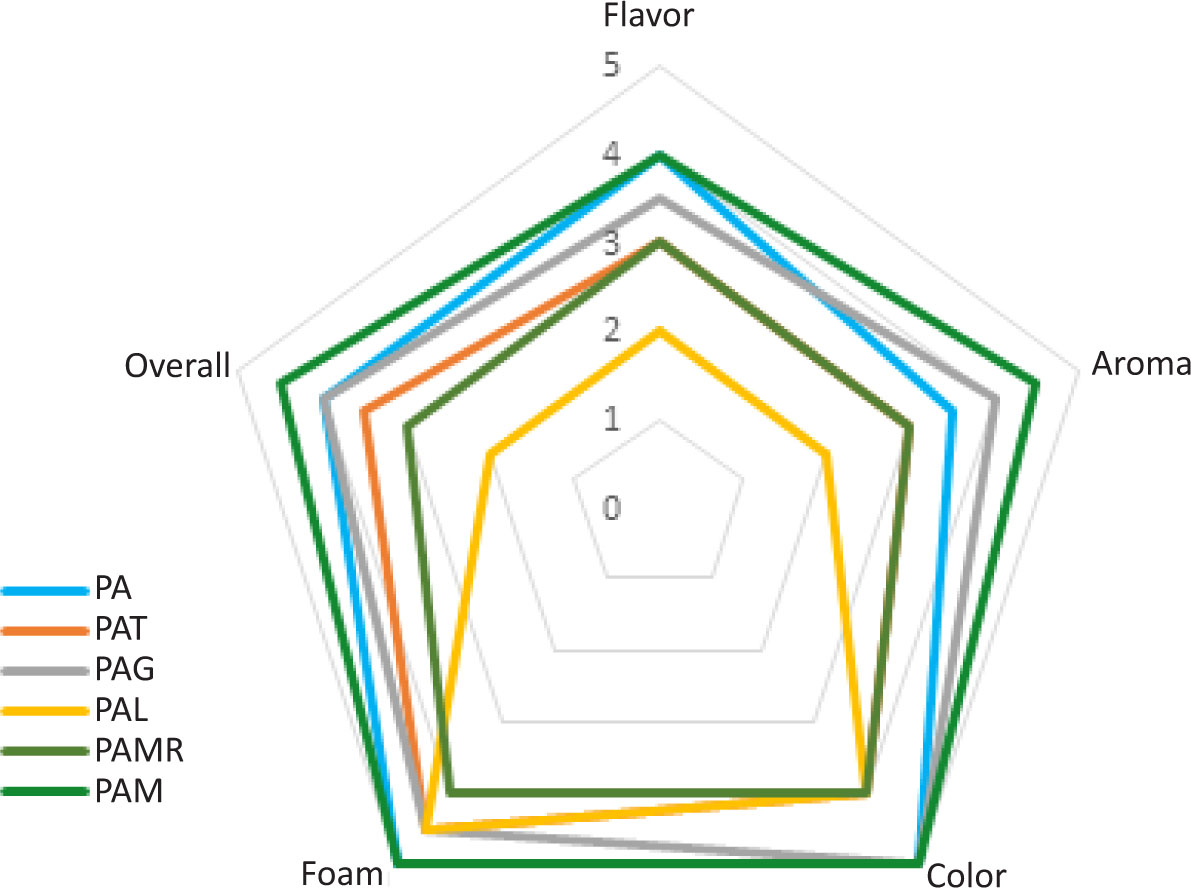
Figure 4.
Sensory evaluation of examined beers: PA – Pale Ale (control), PAT – Pale Ale with thyme, PAG – Pale Ale with ginger, PAL – Pale Ale with lavender, PAMR – Pale Ale with marjoram, PAM – Pale Ale with mint. Rating scale: 1 – lowest desirability, 5 – highest desirability
Table 3.
Results of sensory evaluation of examined beers.
| Beer variant# | Flavor | Aroma | Color | Foam (density/color) |
|---|---|---|---|---|
| PA | Bitter, slightly hoppy | Hoppy, malty | Pale golden | Thick, white |
| PAT | Astringent, herbal, slightly bitter | Distinctly herbal, thyme | Pale amber | Medium, creamy |
| PAG | Spicy, slightly sweet, herbal | Spicy, fresh ginger | Golden | Fine, white |
| PAL | Bitter, slightly floral | Floral, lavender | Pale golden | Medium, whitish |
| PAMR | Herbal, slightly astringent | Herbal, dried herbs | Honey-like | Low, creamy |
| PAM | Fresh, cooling, slightly sweet | Minty, intense | Pale golden | Thick, white |
The highest desirability rating (Figure 4) received beer with mint (4.5 points), which was characterized by a fresh, cooling and slightly sweet taste and intense mint aroma. This profile was positively perceived by the panelists, which is also confirmed in the literature. Menthol and essential oils from mint are often suggested as factors enhancing the feeling of refreshment and improving the sensory acceptance of beverages (Hadi et al., 2025). Mint (Mentha spp.) belongs to Lamiaceae family and is rich in essential oils, polyphenols and flavonoids which a broad spectrum of biological activity (Best, 2022; Arshad et al., 2023) which is why it is frequently used as an additive in various products (Arshad et al., 2023).
The beer with ginger also achieved a high note (4.0 points) (Figure 4). It stood out with its spicy, aromatic aroma and slightly sweet flavor (Table 3). This sample was sensory similar to the base beer (control), indicating that ginger blends well with the base profile of PA, without disrupting the beverage’s sensory balance. Ginger (Zingiber officinale) is a valuable botanical raw material, valued both for its flavor and health-promoting properties (Tozetto et al., 2019). It contains many bioactive compounds, including gingerols and shogaols, which are responsible for its intense aroma and functional properties (Haniadka et al., 2013). The literature highlights its anticancer activity (Zadorozhna, Mangieri, 2021; Zhao et al., 2020), antibacterial (Sebiomo et al., 2011; Srinivasan, 2017) and anti-inflammatory properties. The addition of ginger rhizome to the beer, not only enriches its sensory profile and imparts a warming effect, but may also enhance health benefits and microbiological stability (Sebiomo et al., 2011; Mao et al., 2019).
The lowest desirability was observed in beer with lavender, which received only 2.0 points (Figure 4). These samples were described as bitter and slightly floral (Table 3). This flavor and aroma profile appeared to be the least desirable among evaluators. Lavender flowers (Lavandula angustifolia) are known for their sedative and digestive properties (Matławska, 2008) and possess an intense essential oil aroma containing over 100 volatile compounds (Kim et al., 2017; Wells et al., 2018). As a beer additive, it imparts a floral and bitter aroma (Table 3), described as spicy, floral, with notes of lemon and mint, giving the beer a unique flavor profile, and is sometimes used as a hop substitute in hop-free beers. Aromatic compounds from lavender may be perceived as dominant and discordant. These results align with FKelemen et al. (2024), who reported that Blonde Ale beers with lavender addition exhibited a strong lavender aroma during boiling, dominating the beer’s aroma, and increased bitterness (24.6 IBU vs. 15 IBU in control beers).
The different results were obtained for beers with the addition of thyme and marjoram (Figure 4). Both variants had a distinct herbal, astringent flavor, which resulted in moderate desirability among the evaluators (3.0–3.5 points). Herbal and slightly bitter notes were not perceived negatively, but did not increase the attractiveness of the beer, to the same extent as ginger or mint. A similar effect was observed by Djordjevic et al. (2016) during their studies on lager beers with herbal additives (lemon balm, thyme, juniper berries, hop cones), where they found that although thyme increased TPC, it did not have a positive effect on the sensory values of beer. Gościnna et al. (2019) and Solgajova et al. (2024) confirmed that thyme is not the best received beer addition. The beer with lemon balm and thyme addition was described by consumers as too herbal, resembling a „medicinal syrup”. The overall desirability and acceptability of product is determined by its flavor, aroma and color (Baryłko-Pikielna, Matuszewska, 2014). Flavor is the most important factor shaping desirability – as already discussed, the highest ratings were given to the beers with mint and ginger, while the lavender addition reduced the attractiveness of the product.
Similar effects were observed for aroma (Figure 4). The control beer had a characteristic hoppy and malty aroma (Table 3), typical of Pale Ale, and was rated as neutral (3.5 points). Beer with mint received the highest aroma score (4.5 points), described as minty and intense (Table 3). High marks were also given to beer with ginger (4.0 points), exhibiting subtle spicy notes (Table 3). Thus, mint and ginger enhanced aroma perception compared to the base beer. Other adjuncts received moderate aroma ratings: thyme and marjoram (3.0 points) were herbal and slightly astringent, while beer with lavender had the lowest aroma rating (2.0 points), characterized by an intense floral aroma.
Beer color was rated highly for all samples (Figure 4), indicating visual attractiveness. The highest scores (5.0 points) were given to beers with mint, ginger, and the base beer, described as pale gold, clear, and typical (Table 3). Beers with thyme and marjoram received slightly lower ratings (4.0 points), related to their darker color (pale amber, honey) (Table 3), but still highly acceptable. Color is a key selection indicator, being the first feature noticed by consumers. Market beers range from pale straw to golden, amber, brown, and black. In addition to Maillard reactions during malting and brewing, other reactions occur: caramelization, polyphenol oxidation, and pyrolysis, forming colored compounds. Polyphenol oxidation can occur during storage, particularly in light beers, leading to some darkening over time; however, this does not imply that polyphenol content increases due to oxidation. Darker beers generally contain higher initial levels of polyphenols, which strongly correlate with EBC, TPC, and flavonoid values.
The important attribute of beers is also the foam appearance (Bamforth, 2023). In conducted evaluations (Figure 4) all samples received high scores, from 4.0 points for the beer with marjoram, in which the foam was described as low and creamy (Table 3) to 5.0 in base beer and the mint variant, both characterized by dense and white foam (Table 3). Foam formation and stability in beer depend on the temperature of the beverage and its carbon dioxide content. The main substances responsible for foam formation are ethanol and lipids, while its endogenous stabilizers are polypeptides and bitter acids, further supported by melanoidins and metal ions. Therefore, the studied phenolic compounds play a minor role in this process (Bamforth, 2023). The observed differences in foam quality among the samples may result from interactions between proteins and polysaccharides and compounds derived from the herbal additives.
Principal component analysis (PCA) (Figure 5) visualized sensory differentiation among beer variants. PC1 accounted for 82.7% of total variance, and PC2 explained an additional 12.1%, indicating that these two axes capture nearly all variability. Clustering was evident: beers with thyme and marjoram were close, confirming similar sensory profiles (intense herbal notes, moderate desirability). The control beer and beer with ginger were positioned together, indicating ginger did not significantly change the overall profile. Beer with mint occupied a distinct position, reflecting its unique, fresh, and highly rated profile. Lavender beer was separated on PC1, indicating its least accepted sensory profile. These results indicate that botanical additives differentiate sensory profiles and may also enhance functional properties through antioxidant compounds (polyphenols) and essential oils (Habschied et al., 2021; Galovicova et al., 2021; Silva et al., 2021). Thus, these raw materials are valuable for creating innovative beers, both in terms of sensory and health-promoting properties.
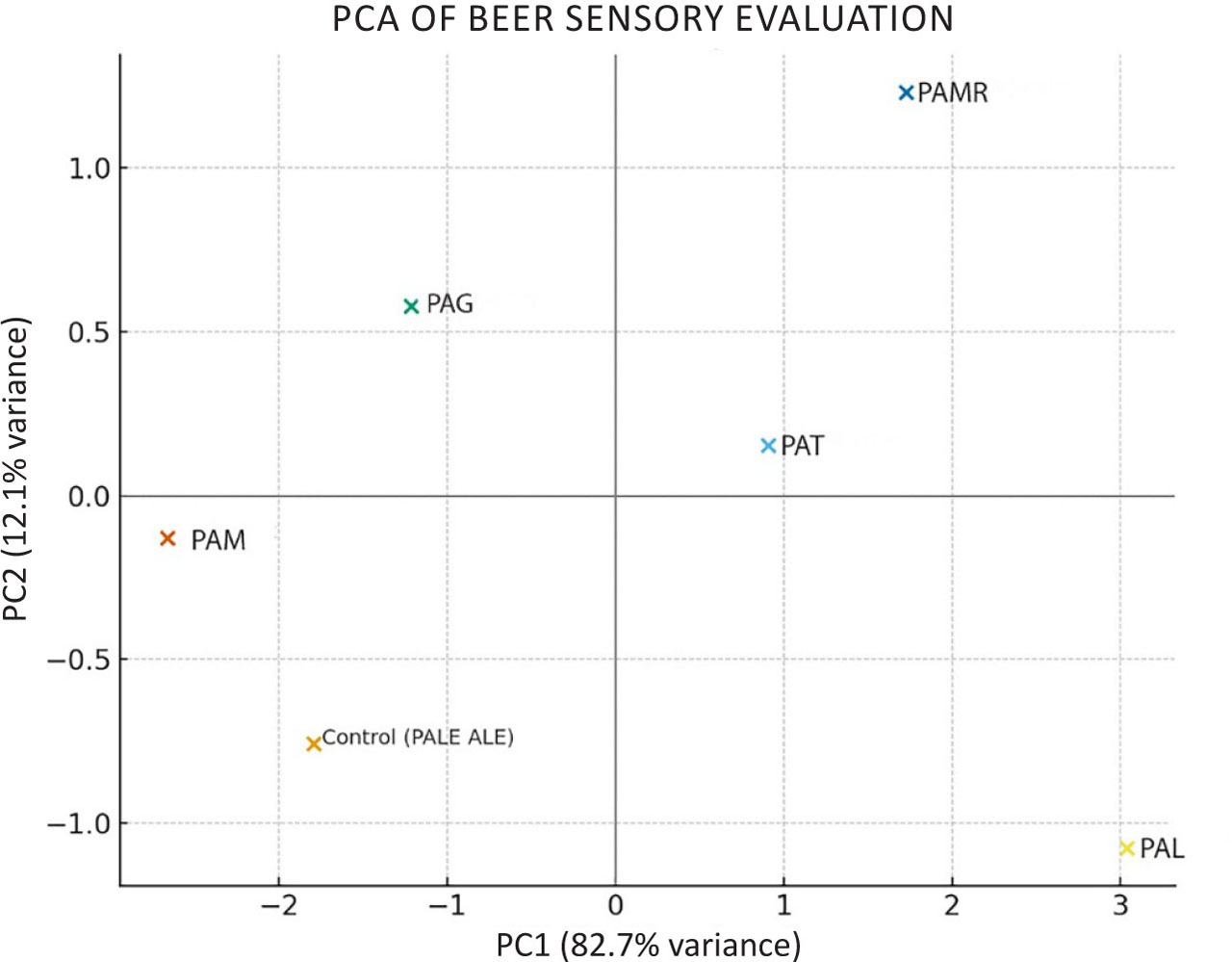
Figure 5.
Principal component analysis (PCA) in sensory evaluation of examined beers.
Beers with herbal adjuncts are attractive for both health-promoting properties and sensory qualities. The growing craft beer trend enables producers to experiment with formulas and reach new consumers. Herbal adjuncts, fruits, spices, and bee products allow for the creation of unique, innovative products targeting different groups.
Botanical ingredients contain a wide range of chemical constituents (polyphenols, vitamins, minerals) with health-promoting properties, enhancing sensory profile, stability, and shelf life (Solgajova et al., 2024; Coronas et al., 2024). However, careful process control is essential, as natural polyphenol degradation occurs during mashing, boiling, fermentation, and storage. Monitoring is also important in bottom-fermented beers (lagers), where high bioactive compound concentrations can cause cloudiness and sharp, intense aromas (Di Domenico et al., 2020; Habschied et al., 2021). Polyphenols have a dual role: they shape flavor (bitterness/astringency) and contribute to health benefits.
CONCLUSIONS
The analysis conducted demonstrated that herbal adjuncts significantly differentiate the sensory profile of beer and substantially influence its consumer desirability. The highest ratings were given to beers with mint and ginger additions, while the lowest ratings were observed in beers containing lavender.
The PCA results confirmed clear clustering of sensory variants, indicating the possibility of categorizing herbal beers into more or less attractive groups for consumers. Botanical raw materials, in addition to shaping sensory characteristics, are a valuable source of bioactive compounds, such as polyphenols, which determine the beer’s antioxidant properties. In summary, the use of botanical ingredients in craft beer production offers the opportunity to create unique and innovative products with enhanced health-promoting benefits and attractive sensory attributes.