
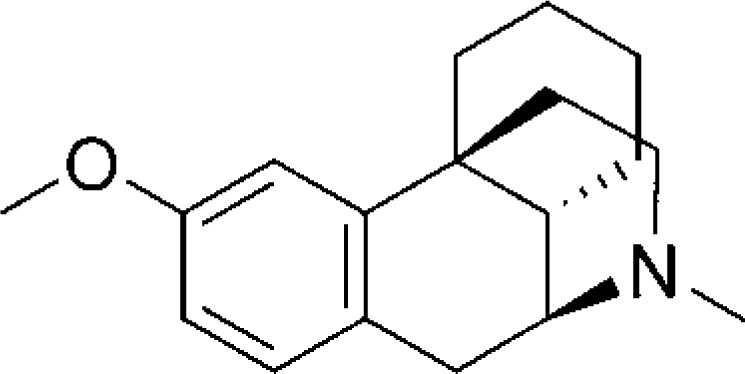
Figure 1.
Structural formula of dextromethorphan. An uncompetitive NMDA receptor antagonist and Sigma-1 receptor agonist. The structure was generated in ChemDraw based on the SMILES string from the PubChem database.
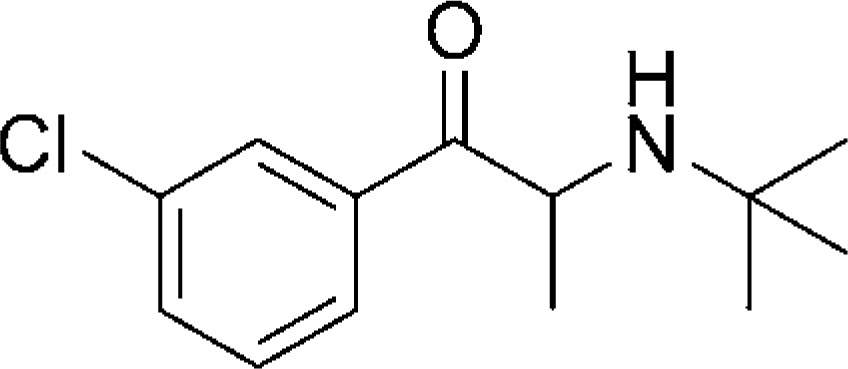
Figure 2.
Structural formula of bupropion. A CYP2D6 inhibitor used to prevent the metabolism of dextromethorphan and maintain its therapeutic plasma levels. The structure was generated in ChemDraw based on the SMILES string from the PubChem database.
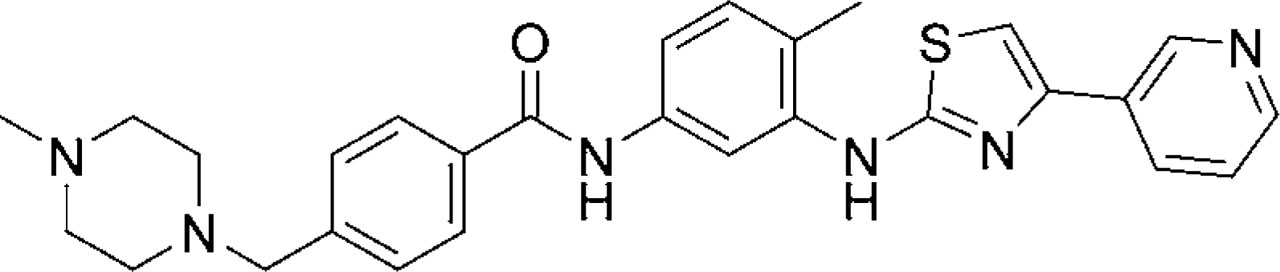
Figure 3.
Structural formula of masitinib. A selective tyrosine kinase inhibitor targeting c-Kit, PDGFR-α/β, and Lyn kinase to modulate neuroinflammation. The structure was generated in ChemDraw based on the SMILES string from the PubChem database.
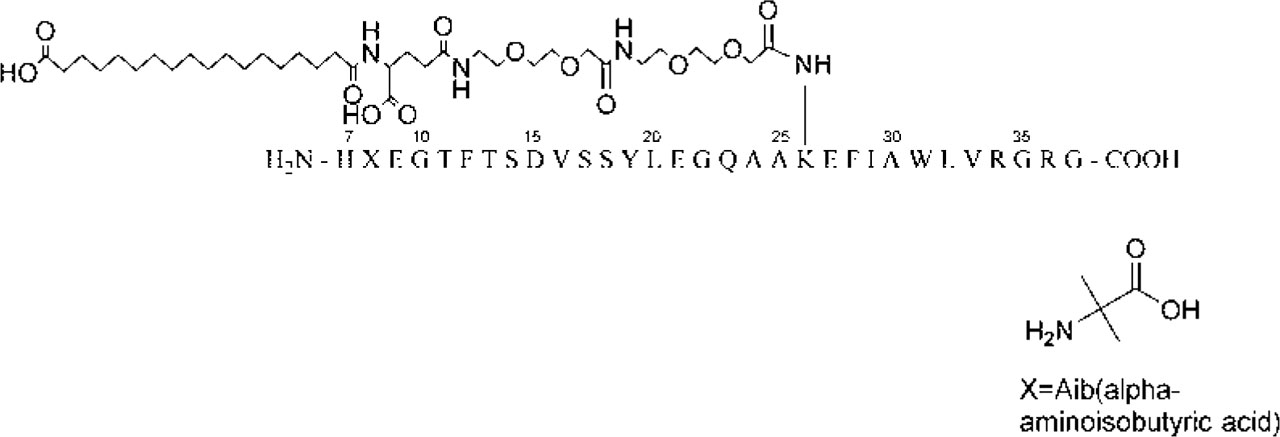
Figure 4.
Structural schematic of semaglutide. The 31-amino acid peptide backbone is presented using the standard one-letter amino acid code, with traditional GLP-1 numbering starting at histidine (denoted as H7) to reflect the biologically active form of the hormone. The schematic highlights the structural modifications: the α-aminoisobutyric acid (Aib) substitution at position 8 (denoted as X) and the 18-carbon (C18) fatty diacid side chain conjugated to the lysine residue at position 26 (K26) via a γ-Glu-2xOEG spacer. The chemical structures of the side chain and the Aib residue were generated in ChemDraw based on SMILES strings sourced from the PubChem database.
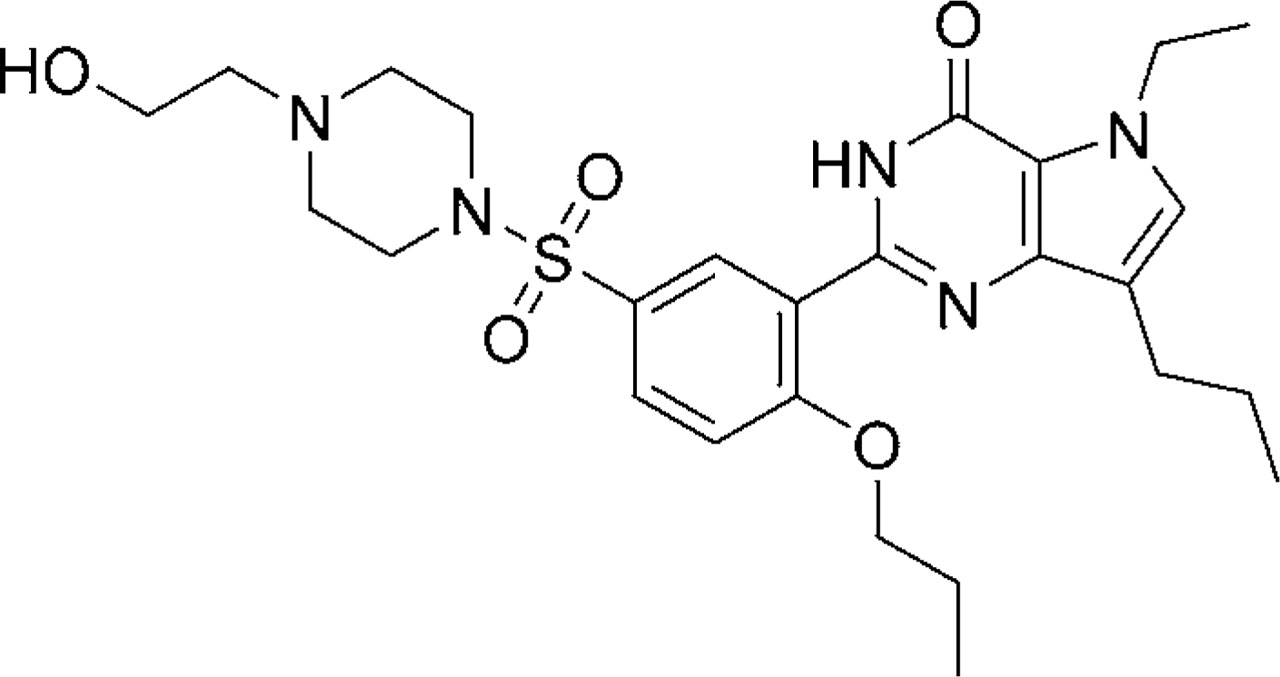
Figure 5.
Structural formula of mirodenafil. A small-molecule phosphodiesterase 5 (PDE5) inhibitor that elevates intracellular cGMP levels. The structure was generated in ChemDraw based on the SMILES string from the PubChem database.
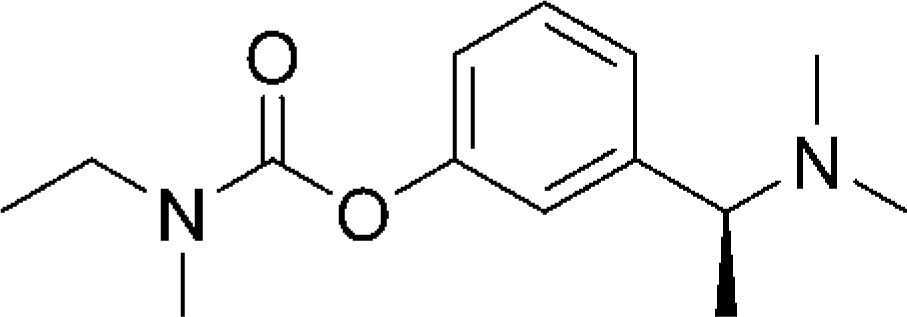
Figure 6.
Structural formula of rivastigmine. A dual acetylcholinesterase (AChE) and butyrylcholinesterase (BuChE) inhibitor with a brain-selective carbamate structure. The structure was generated in ChemDraw based on the SMILES string from the PubChem database. Based on the SMILES string from the PubChem database.
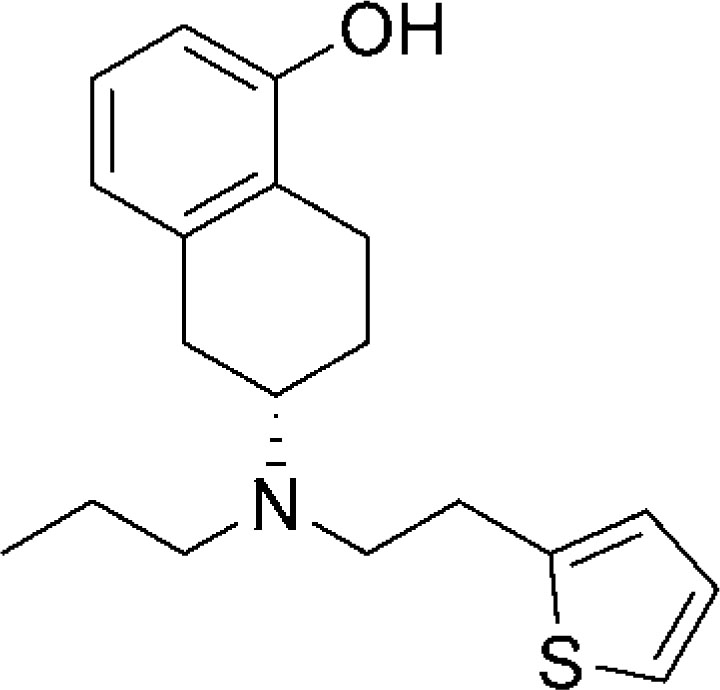
Figure 7.
Structural formula of rotigotine. A non-ergoline dopamine agonist binding to all dopamine receptor types (D1-like and D2-like). The structure was generated in ChemDraw based on the SMILES string from the PubChem database.