
Introduction
As established in Part 1, while recent regulatory approvals of anti-amyloid antibodies represent a pivotal milestone, mixed clinical outcomes and the risk of amyloid-related imaging abnormalities (ARIA) underscore the limitations of a purely amyloid-centric approach. Comprehensive disease modification will require complementary, non-amyloid strategies. This second part of the review explores mechanistically diverse agents targeting neuroinflammation, tau hyperphosphorylation, neurotransmitter deficits, and excitotoxicity. We present five therapies at various stages of clinical development: dextromethorphan/bupropion (AXS-05) for agitation, the tyrosine kinase inhibitor masitinib, the GLP-1 receptor agonist semaglutide, the PDE5 inhibitor AR1001, and a rotigotine/ rivastigmine combination. Unlike immunotherapy, these agents carry no ARIA risk. By addressing the profound heterogeneity of Alzheimer’s disease, they highlight the emerging rationale for individualized, multimodal treatment.
Dextromethorphan/Bupropion (AXS-05, Alzydys)
Mechanism of Action
AXS-05 is an oral fixed-dose combination (dextromethorphan/bupropion) targeting sympto-matic agitation in AD without modifying the underlying disease course (Figure 1, Figure 2)[1]. Dextromethorphan (DXM) acts as a voltage – and use-dependent, uncompetitive NMDA receptor antagonist, selectively inhibiting pathological Ca2+ influx during excitotoxic states without abolishing physiological synaptic transmission [2]. Concurrently, it acts as a Sigma-1 receptor agonist—reducing oxidative stress, supporting mitochondrial function, and exerting anti-inflammatory effects via microglial modulation [3]—and as a SERT inhibitor, contributing to mood stabilisation [2]. Bupropion functions as a CYP2D6 inhibitor, preventing first-pass demethylation of DXM and maintaining therapeutic plasma levels [1–2].
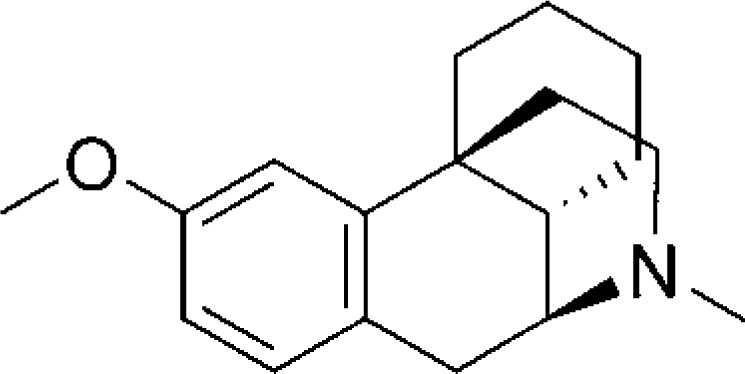
Figure 1.
Structural formula of dextromethorphan. An uncompetitive NMDA receptor antagonist and Sigma-1 receptor agonist. The structure was generated in ChemDraw based on the SMILES string from the PubChem database.
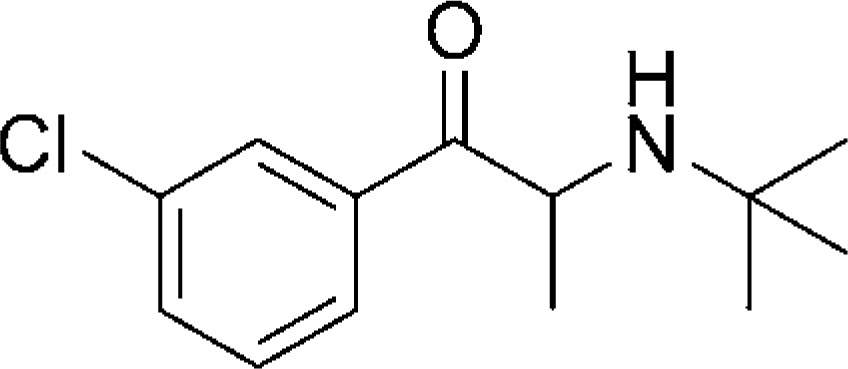
Figure 2.
Structural formula of bupropion. A CYP2D6 inhibitor used to prevent the metabolism of dextromethorphan and maintain its therapeutic plasma levels. The structure was generated in ChemDraw based on the SMILES string from the PubChem database.
Clinical Efficacy
Efficacy was evaluated in two pivotal Phase 3 trials. The ADVANCE-1 study (NCT03226522; N = 366, probable AD + IPA-defined agitation, ages 65–90, 5 weeks) met its primary endpoint: a statistically significant reduction in the CMAI total score versus placebo, with the onset of effect observed at Week 2 [4–5]. AXS-05 was superior to bupropion monotherapy, confirming DXM as the active anti-agitation component. The mADCS-CGIC scale showed significant global improvement versus placebo. The ACCORD trial (NCT04797715; N = 178, randomised withdrawal design, up to 35 weeks) met its primary endpoint: a significantly longer time to agitation relapse versus placebo after open-label stabilisation; relapse rates were substantially lower with continued AXS-05 [1, 6–7]. The FDA approved AXS-05 (Alzydys) in August 2023.
Safety and Tolerability
AXS-05 was well tolerated in both trials. Adverse events were predominantly mild-to-moderate and transient, with the total incidence closer to placebo than to bupropion monotherapy. The incidence of falls were not increased versus placebo (rate lower than with bupropion monotherapy). Somnolence was slightly more frequent with AXS-05 than bupropion, but insomnia and dizziness profiles were more favourable. The MMSE score remained stable throughout treatment, confirming the absence of cognitive worsening—a key advantage over atypical antipsychotics used off-label for this indication [5–6].
Masitinib (AB1010)
Mechanism of Action
Masitinib is an oral, selective tyrosine kinase inhibitor targeting c-Kit, PDGFR-α/β, and Lyn kinase—key regulators of mast cell and microglia/macrophage activity in the CNS (Figure 3) [8,9,10]. By suppressing these innate immune populations, masitinib reduces neuroinflammation, aberrant tau phosphorylation, and Aβ-induced neurotoxicity. Given that mast cells and microglia are implicated in AD pathophysiology, selective kinase inhibition represents a mechanistically distinct add-on strategy to established symptomatic pharmacotherapy.
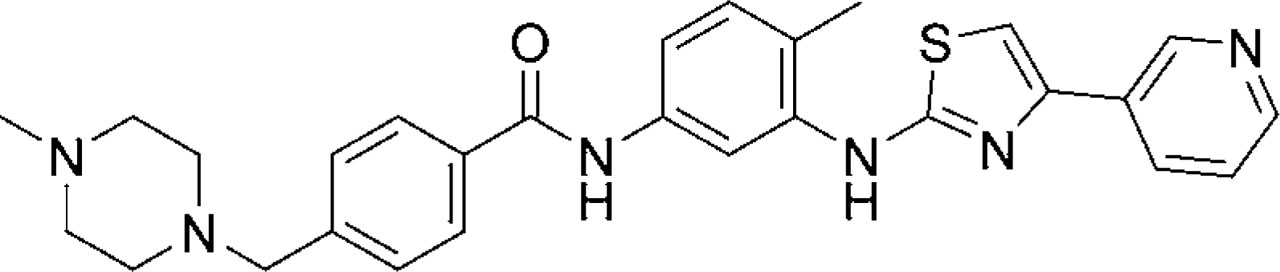
Figure 3.
Structural formula of masitinib. A selective tyrosine kinase inhibitor targeting c-Kit, PDGFR-α/β, and Lyn kinase to modulate neuroinflammation. The structure was generated in ChemDraw based on the SMILES string from the PubChem database.
Clinical Efficacy
In the Phase 2b/3 study AB09004 (NCT01872598; N = 718, probable AD by NINCDS–ADRDA, MMSE 12–25, on stable ChEI and/or memantine for ≥60 months, ages ≥50, 24 weeks), masitinib met both co-primary endpoints at Week 24: a statistically significant improvement over placebo in ADAS-Cog (cognitive domain) and the ADCS-ADL (functional domain) [8, 11]. Secondary endpoints including CDR-SB and the NPI also showed significant benefit, consistent with overall clinical improvement.
Safety and Tolerability
Treatment-emergent adverse events (TEAEs) occurred in 87% of masitinib patients versus 77% on placebo, predominantly mild-to-moderate. The most frequent events were diarrhoea (15%), nausea (13%), rash (10%), and fatigue (9%). Serious adverse events occurred in 7.4% (masitinib) versus 4.9% (placebo). No ARIA was observed. The safety profile was consistent with prior masitinib experience across other indications [8].
GLP-1 Receptor Agonists (Semaglutide)
Mechanism of Action
Semaglutide is a GLP-1 receptor agonist (SC, once weekly) originally approved for type 2 diabetes and obesity (Figure 4). GLP-1 receptors are widely expressed in the hippocampus and cortex [12–13]. Receptor activation engages Gαs → adenylate cyclase → cAMP → PKA → CREB phosphorylation pathway, inducing BDNF and Bcl-2 expression and driving neurite outgrowth, synaptogenesis, and neuronal survival [14–15]. Concurrent PI3K/Akt activation inactivates GSK3β, reducing tau hyperphosphorylation, and suppresses the mitochondrial apoptosis pathway [15–16]. GLP-1 pathway activation also restores microglial/astrocytic homeostasis, reduces chronic neuroinflammation, improves blood–brain barrier integrity, and counteracts cerebrovascular dysfunction [12, 17]. Although semaglutide has limited direct BBB penetration, it interacts with circumventricular regions (area postrema, arcuate nucleus) to exert central effects [12].
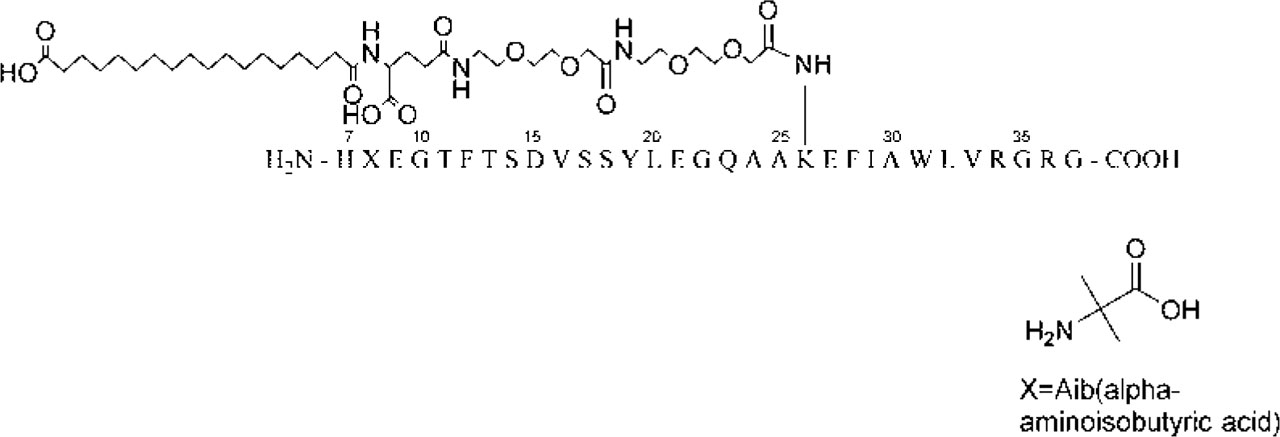
Figure 4.
Structural schematic of semaglutide. The 31-amino acid peptide backbone is presented using the standard one-letter amino acid code, with traditional GLP-1 numbering starting at histidine (denoted as H7) to reflect the biologically active form of the hormone. The schematic highlights the structural modifications: the α-aminoisobutyric acid (Aib) substitution at position 8 (denoted as X) and the 18-carbon (C18) fatty diacid side chain conjugated to the lysine residue at position 26 (K26) via a γ-Glu-2xOEG spacer. The chemical structures of the side chain and the Aib residue were generated in ChemDraw based on SMILES strings sourced from the PubChem database.
Clinical Efficacy
Semaglutide was evaluated in two parallel Phase 3 trials: EVOKE (NCT04777396) and EVOKE PLUS (NCT04777409) [18–19], each enrolling approximately 1840 participants aged 55–85 with MCI (CDR 0.5) or mild AD (CDR 1.0), confirmed amyloid pathology on PET or CSF, MMSE ≥22, and RBANS delayed memory index ≤85. EVOKE PLUS additionally enrolled patients with significant cerebral small vessel disease to test vascular hypotheses [12, 17]. The primary endpoint in both trials (CDR-SB change over 104 weeks) was not met [20]. Key secondary endpoints—ADCS-ADL-MCI and time to dementia progression in MCI participants—were also non-significant. Biological activity was confirmed: hs-CRP and CSF YKL-40 (neuroinflammation marker) decreased significantly. However, pTau217 and pTau181 were unchanged, and NfL increased by approximately 5% in EVOKE PLUS and GFAP by approximately 4% in both trials, indicating no attenuation of neurodegeneration or glial activation [20].
Safety and Tolerability
Semaglutide was associated with more adverse events than placebo. The most frequent was nausea (24.3%), followed by diarrhoea and vomiting. Weight reduction and decreased appetite were consistent with the established GLP-1RA class profile. No ARIA was observed; no CNS-specific safety signals emerged [20].
AR1001 (Mirodenafil)
Mechanism of Action
Mirodenafil is an oral, small-molecule PDE5 inhibitor (Figure 5). PDE5 inhibition elevates intracellular cGMP, activating PKG and triggering downstream CREB and PI3K/Akt signalling [21–22]. CREB activation preserves synaptic plasticity; Akt-mediated GSK3β inhibition directly reduces hyperphosphorylated tau [21,22,23]. The mechanism requires metabolically active neurons and thus targets early-stage disease (MCI or mild AD), where viable neuronal substrates for drug action remain present [23].
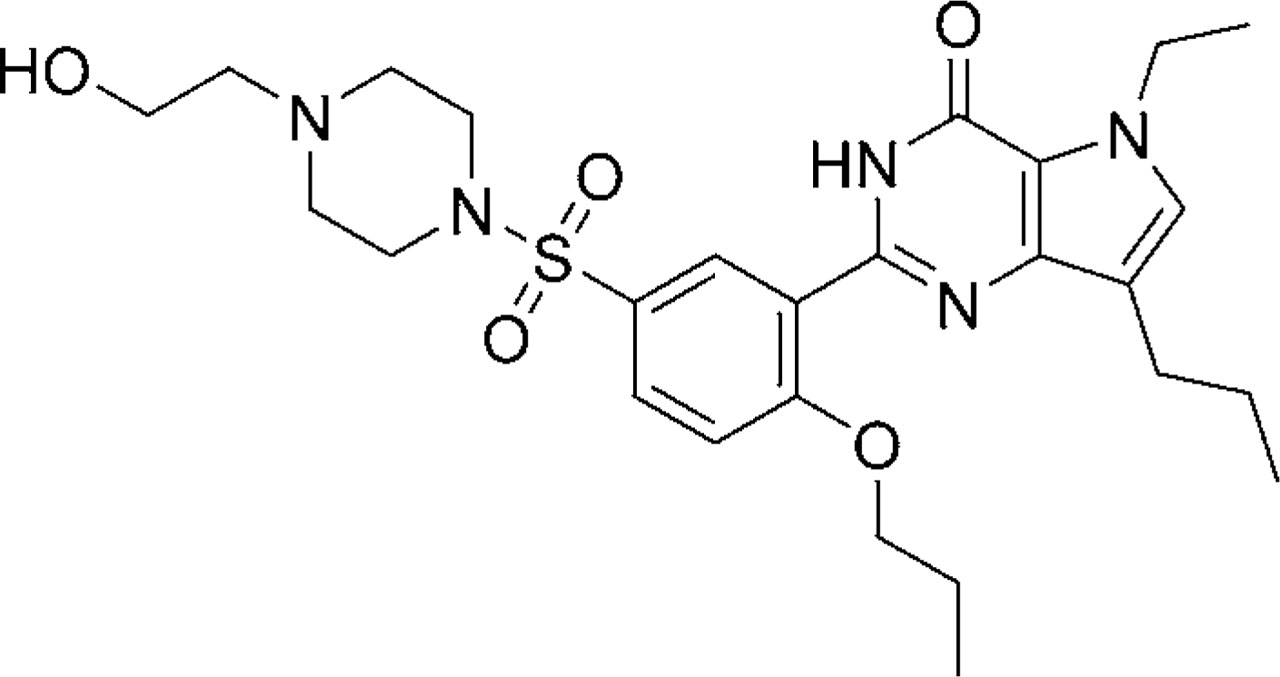
Figure 5.
Structural formula of mirodenafil. A small-molecule phosphodiesterase 5 (PDE5) inhibitor that elevates intracellular cGMP levels. The structure was generated in ChemDraw based on the SMILES string from the PubChem database.
Clinical Efficacy
Phase 2 (NCT03625622; N = 210, NIA-AA stages 4–5, MMSE 16–26, ages 55–80, 26 weeks, AR1001 10 mg vs. 30 mg vs. placebo) did not meet the co-primary endpoints (ADAS-Cog13, ADCS-CGIC), largely due to a substantial placebo response in the first 13 weeks [24]. Secondary endpoints (MMSE-2, NPI, GDS, QOL-AD) were likewise non-significant. However, the 30 mg dose produced significant improvements in plasma biomarkers: pTau-181, pTau-217, and GFAP decreased, with a favourable trend in NfL; Aβ42/40 ratio was stable [23]. Post-hoc analysis in the high pTau-181 subgroup demonstrated a slower rate of cognitive and functional decline with AR1001 versus placebo, providing the rationale for biomarker-verified eligibility criteria in the Phase 3 Polaris-AD trial (NCT05531526), currently ongoing [25].
Safety and Tolerability
Adverse events occurring in ≥5% of any group during treatment were fall, nausea, headache, urinary tract infection (UTI), dizziness, and arthralgia. Despite PDE6 co-inhibition (as observed for sildenafil), no clinically significant visual safety signals were identified. In the extension phase, only UTI occurred at ≥5% frequency. No ARIA were observed [23].
Rotigotine in Combination with Rivastigmine
Mechanism of Action
The combination targets two distinct neurotransmitter deficits in mild-to-moderate AD. Rivastigmine is a dual AChE/BuChE inhibitor with a carbamate structure conferring brain-selective, relatively weak but sustained enzyme inhibition (Figure 6); by reducing acetylcholine hydrolysis, it compensates for cholinergic deficits characteristic of AD [26]. Rotigotine is a non-ergoline dopamine agonist administered via a 24-hour transdermal silicone-matrix patch, which maintains stable plasma concentrations, minimises peak-to-trough fluctuations, and improves adherence in patients with dementia (Figure 7) [27]. At the molecular level, rotigotine binds all dopamine receptor types: D1-like (Gs-coupled) → cAMP/PKA → synaptic plasticity and long-term potentiation in the prefrontal cortex; D2-like (Gi/G0-coupled) → modulation of motivation-reward pathways [28]. Together, the combination addresses executive dysfunction and apathy—symptom domains inadequately treated by cholinesterase inhibitors alone.
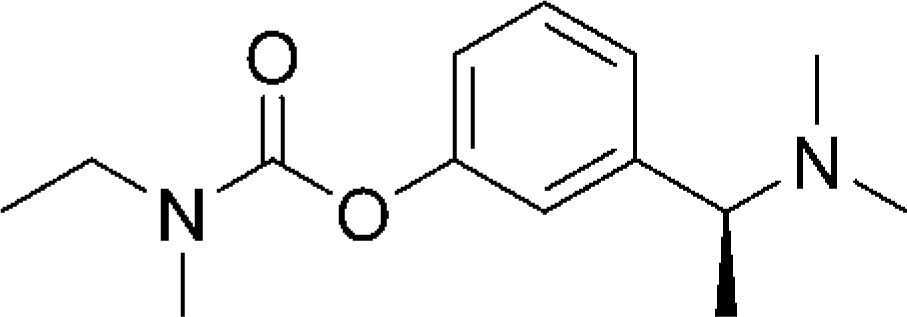
Figure 6.
Structural formula of rivastigmine. A dual acetylcholinesterase (AChE) and butyrylcholinesterase (BuChE) inhibitor with a brain-selective carbamate structure. The structure was generated in ChemDraw based on the SMILES string from the PubChem database. Based on the SMILES string from the PubChem database.
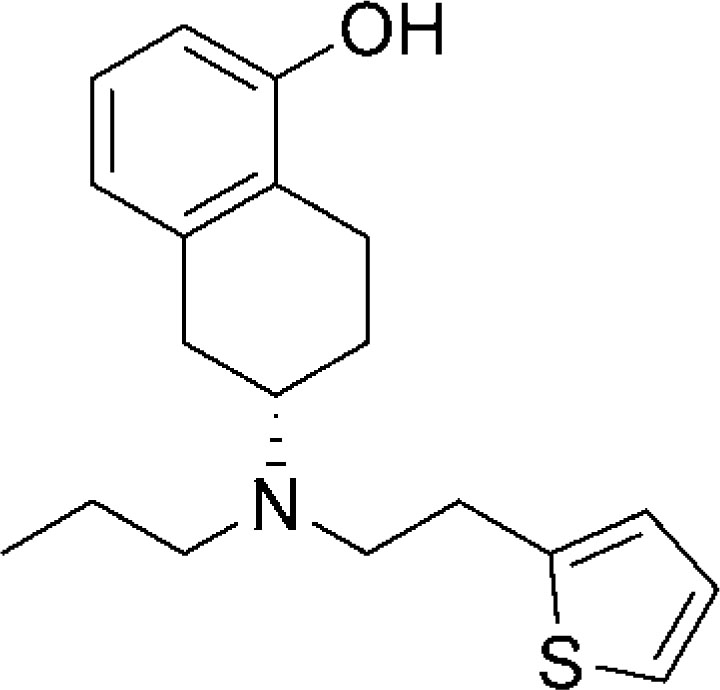
Figure 7.
Structural formula of rotigotine. A non-ergoline dopamine agonist binding to all dopamine receptor types (D1-like and D2-like). The structure was generated in ChemDraw based on the SMILES string from the PubChem database.
Clinical Efficacy
Phase 2 (NCT03250741; N = 94, probable AD defined by NINCDS-ADRDA criteria, CDR 0.5 or 1, MMSE 20–26, on stable AChEI, ages 50–85, 24 weeks) did not meet its primary endpoint: no significant change in the ADAS-Cog-11 (global cognition) versus placebo [29–30]. In contrast, key secondary endpoints revealed a significant benefit: the Frontal Assessment Battery (FAB) showed improvement in executive function (while placebo declined); ADCS-ADL demonstrated reduced functional deterioration. TMS-EEG confirmed increased dorsolateral PFC oscillatory activity (alpha/beta frequencies) in the rotigotine group, supporting enhanced mesocortical dopaminergic transmission as the underlying mechanism [30]. A Phase 3 trial (NCT06702124; DOPAD-3) is currently recruiting [31].
Safety and Tolerability
The most common adverse events in the rotigotine group were nausea, dizziness, and patch-site reactions. Less frequent events included visual hallucinations, sleep disturbances, and anxiety. Serious adverse events included pneumonia and cardiac pacemaker implantation. No ARIA was observed [30].
Summary
The agents reviewed across both parts of this series collectively illustrate the evolving pharmacological landscape of Alzheimer’s disease. Three recurrent themes emerge. First, biomarker-guided patient selection is now indispensable: the greatest clinical benefit across mechanistically diverse agents is consistently observed in early-stage, biomarker-confirmed populations, before irreversible tau accumulation and neuronal loss. Second, the dissociation between biological and clinical efficacy—most clearly illustrated by aducanumab, solanezumab, and semaglutide—cautions against interpreting surrogate biomarker improvement as a reliable proxy for clinical benefit. Third, APOE4 genotype is the dominant safety modifier for anti-amyloid antibodies; non-antibody approaches (valiltramiprosate, AR1001, masitinib, and AXS-05) carry no ARIA risk and may extend treatment access to patients ineligible for immunotherapy. The approved AXS-05 and the positive Phase 2b/3 results for masitinib demonstrate that meaningful benefit is achievable through non-amyloid mechanisms in carefully selected populations. Future AD treatment will likely require individualised, multimodal strategies informed by biomarker profiles, genetic risk, and disease stage.
Acknowledgements
Not applicable.
Notes
List of Abbreviations
- AChE
acetylcholinesterase
- AD
Alzheimer’s disease
- ADAS-Cog
Alzheimer’s Disease Assessment Scale–Cognitive Subscale
- ADCS-ADL
Alzheimer’s Disease Cooperative Study–Activities of Daily Living
- ApoE4
apolipoprotein E ε4 allele
- ARIA
amyloid-related imaging abnormalities
- BBB
blood-brain barrier
- BDNF
brain-derived neurotrophic factor
- BuChE
butyrylcholinesterase
- CDR-SB
Clinical Dementia Rating–Sum of Boxes
- cGMP
cyclic guanosine monophosphate
- ChEI
cholinesterase inhibitor
- CMAI
Cohen-Mansfield Agitation Inventory
- CREB
cAMP response element-binding protein
- CYP2D6
cytochrome P450 2D6
- DXM
dextromethorphan
- EMA
European Medicines Agency
- FAB
Frontal Assessment Battery
- FDA
Food and Drug Administration
- GFAP
glial fibrillary acidic protein
- GLP-1RA
glucagon-like peptide-1 receptor agonist
- GSK3β
glycogen synthase kinase 3β
- IPA
International Psychogeriatric Association
- LTP
long-term potentiation
- mADCS-CGIC
Modified ADCS–Clinical Global Impression of Change
- MCI
mild cognitive impairment
- MMSE
Mini-Mental State Examination
- MRI
magnetic resonance imaging
- NfL
neurofilament light chain
- NPI
Neuropsychiatric Inventory
- PDE5
phosphodiesterase 5
- PET
positron emission tomography
- PFC
prefrontal cortex
- PI3K
phosphatidylinositol 3-kinase
- PKA
protein kinase A
- PKG
protein kinase G
- p-tau
phosphorylated tau
- RBANS
Repeatable Battery for the Assessment of Neuropsychological Status
- SC
subcutaneous
- SERT
serotonin transporter
- TEAE
treatment-emergent adverse event
- TMS-EEG
transcranial magnetic stimulation combined with electroencephalography
- UTI
urinary tract infection