
Introduction
The introduction of proton pump inhibitors (PPIs) into clinical practice in the late 1980s represented a major breakthrough in gastroenterology and fundamentally changed the treatment standards for acid-related diseases. These drugs act by selectively and irreversibly blocking the H+/K+-ATPase enzyme (the proton pump), which is located in the gastric parietal cells. This provides the most potent and longest-lasting suppression of hydrochloric acid secretion among all available pharmaceuticals. Their high efficacy and favorable tolerability profile quickly made PPIs some of the most frequently prescribed drugs.
However, their success has led to widespread and uncritical use of these agents. It is estimated that 30% to 50% of patients taking these drugs long-term in primary care have no clear, current medical indications [1]. Such multi-year and often unmonitored therapy, combined with the rising phenomenon of polypharmacy, is not without consequences for the human body.
The aim of this review is to summarize the current state of knowledge regarding both the benefits and potential risks of long-term proton pump inhibitor use. The article will cover the most common indications for PPI therapy, adverse effects associated with long-term use (such as the risk of nutritional deficiencies, infections, renal and bone complications), as well as safe drug discontinuation, based on current guidelines and literature.
Indications for long-term PPI therapy
Severe forms of gastroesophageal reflux disease (GERD) and prevention of recurrence
Long-term therapy with proton pump inhibitors (PPIs) is the cornerstone of maintenance treatment in patients with severe forms of gastroesophageal reflux disease, particularly in cases of erosive esophagitis graded C and D according to the Los Angeles classification [2–3,5]. In this patient group, discontinuing treatment is associated with a very high risk of symptom recurrence and the re-emergence of inflammatory lesions in the esophageal mucosa [2–3]. Studies have shown that up to 80–90% of patients with severe esophagitis experience a recurrence of endoscopic lesions within 6–12 months of completing successful PPI therapy [2–3]. Long-term use of proton pump inhibitors maintains stable suppression of hydrochloric acid secretion, which leads to healing of the esophageal mucosa, reduces its exposure to acidic gastric contents, and limits the chronic inflammatory process [2–3].
Numerous clinical trials and meta-analyses have shown that PPI maintenance therapy is significantly more effective than placebo, H2 receptor antagonists, or on-demand treatment in preventing the recurrence of erosive GERD and maintaining long-term remission [2, 3, 4]. The benefits of long-term PPI therapy include both the control of reflux symptoms—such as heartburn and acid regurgitation—and a reduced risk of complications from severe GERD, including recurrent erosions, esophageal ulcers, bleeding, and peptic strictures [2–3,5]. Maintaining a physiological pH within the esophageal lumen promotes epithelial regeneration and limits mucosal damage caused by chronic exposure to gastric acid [2–3].
Consequently, international guidelines, including those of the American College of Gastroenterology (ACG), recommend long-term PPI maintenance treatment for patients with a history of severe erosive esophagitis (Los Angeles grade C/D) and those with GERD complications [2]. It is recommended to use the lowest effective dose that maintains symptom control and mucosal healing; however, indefinite therapy is necessary for some patients [2–3].
Barrett’s esophagus and cancer prevention
Another important indication for the long-term use of proton pump inhibitors is the diagnosis of Barrett’s esophagus [6, 7, 8, 9]. Therapy in this patient group is justified not only by the need to control reflux symptoms but, more importantly, by its potential chemopreventive effect against the development of high-grade dysplasia and esophageal adenocarcinoma [6, 7, 8, 9]. Chronic suppression of gastric acid secretion reduces the exposure of the metaplastic epithelium to acidic gastric contents, and limits chronic inflammation, oxidative stress, and cell proliferation, which are considered key elements of the meta-plasia–dysplasia–adenocarcinoma sequence [6, 7, 8, 9].
Data from observational studies and meta-analyses suggest that PPI use may be associated with a reduced risk of Barrett’s esophagus progressing to high-grade dysplasia (HGD) and esophageal adenocarcinoma (EAC) [6, 7, 8]. A meta-analysis involving over 155,000 patients showed that PPI therapy was associated with an approximately 53% reduction in the risk of progression to HGD or EAC (OR 0.47; 95% CI 0.32–0.71) [8]. Similar results were obtained in a cohort study analysis, which observed an approximately 54% reduction in this risk (RR 0.46) [7].
It should be emphasized that the strength of evidence regarding the antineoplastic effect of PPIs remains moderate, as some earlier analyses failed to show a clear benefit in reducing the incidence of esophageal adenocarcinoma, indicating significant heterogeneity in the available data [6, 7, 8]. Despite these limitations, current clinical guidelines recommend long-term PPI use in patients with Barrett’s esophagus, typically at a once-daily dose, with treatment intensification considered in cases of persistent reflux symptoms or active esophagitis [2,6,9].
Hypersecretory states (e.g., Zollinger-Ellison syndrome)
Long-term proton pump inhibitor (PPI) therapy is unequivocally indicated in hypersecretory states, particularly Zollinger-Ellison syndrome (ZES), where excessive gastrin secretion by a neuroendocrine tumor leads to pathologically increased hydrochloric acid secretion [10–11]. Untreated gastric acid hypersecretion is associated with a high risk of severe peptic ulcer disease, multiple and recurrent gastric and duodenal ulcers, bleeding, perforation, strictures, secretory diarrhea, and malabsorption [10–11]. PPIs, through potent and long-lasting inhibition of the H+/K+-ATPase pump in gastric parietal cells, are the first-line treatment for controlling acid hypersecretion in ZES [10–11].
The benefit of long-term PPI therapy is the effective normalization or significant reduction of gastric acid secretion, which leads to the healing of ulcerations, resolution of pain and diarrheal symptoms, and prevention of recurrent peptic ulcer disease complications [10–11]. Unlike typical indications, treatment in ZES often requires higher doses and is long-term or lifelong, as discontinuing therapy can result in a rapid recurrence of severe acid hypersecretion and its complications [10–11].
The literature emphasizes that interrupting PPI treatment in patients with diagnosed or suspected ZES can be dangerous; therefore, therapy should be maintained long-term, with the dose individually adjusted to achieve clinical and biochemical control [10–11]. Long-term observations indicate that chronic PPI therapy in patients with ZES is effective and generally well-tolerated; one review highlighted that the need to discontinue PPIs due to adverse effects was extremely rare [11]. However, potential consequences of prolonged, potent acid suppression must be monitored, particularly vitamin B12 deficiency, which has been reported in ZES patients on long-term PPI therapy [11].
Gastroprotection: prevention of gastrointestinal bleeding in patients on long-term nonsteroidal anti-inflammatory drugs (NSAIDs), antiplatelet, or anticoagulant therapy (especially in high-risk groups)
Gastroprotection is one of the most well-documented indications for PPI therapy in patients on long-term nonsteroidal anti-inflammatory drugs (NSAIDs), antiplatelet, or anticoagulant agents, especially in the presence of additional risk factors for upper gastrointestinal bleeding [12, 13, 14, 15, 16]. The primary risk-elevating factors include: advanced age (particularly >65 years), a history of peptic ulcer disease or gastrointestinal bleeding, the concurrent use of multiple drugs that increase the risk of mucosal damage (e.g., NSAIDs combined with antiplatelet drugs, anticoagulants, or glucocorticoids), and Helicobacter pylori infection [12–13,15–16]. In these patient groups, the benefits of long-term gastric acid suppression outweigh the potential risks associated with prolonged PPI use [12, 13, 14, 15].
The mechanism of action behind PPI gastroprotection relies on the sustained inhibition of the H+/K+-ATPase proton pump in gastric parietal cells, which increases the pH of gastric contents, diminishes the aggressive action of acid, and enables mucosal regeneration [3,12–13]. In NSAID users, co-administration of PPIs has been shown to significantly reduce the incidence of ulcers and upper gastrointestinal complications, including bleeding, making it the standard of care for patients at high gastrointestinal risk [12–13]. However, it must be emphasized that this protective effect mainly applies to the upper gastrointestinal tract and does not extend to the same degree to small bowel damage or lower gastrointestinal bleeding [13,15].
In patients treated with antiplatelet drugs, particularly dual antiplatelet therapy (DAPT), and those taking oral anticoagulants, PPI co-prescription is associated with a reduced risk of upper gastrointestinal bleeding [14, 15, 16]. Meta-analyses of observational studies have shown that in patients using oral anticoagulants, PPI therapy reduces the risk of upper gastrointestinal bleeding by approximately 33% (OR 0.67; 95% CI 0.61–0.74), with the greatest benefit observed in individuals with additional risk factors, such as concurrent use of NSAIDs or antiplatelet agents [14]. Similar benefits have been demonstrated in patients on low-dose aspirin, where long-term PPI therapy reduces the rate of recurrent bleeding and ulcer complications [12,16].
For this reason, current gastroenterology and cardiology guidelines recommend PPI use as gastroprotective therapy in patients receiving long-term NSAIDs, antiplatelet, or anticoagulant treatments if they present with factors that increase the risk of upper gastrointestinal bleeding [12–13,15–16]. Treatment should be continued for as long as the exposure to the damaging agent persists and risk factors are present, using the lowest effective PPI dose [12–13,15].
A summary of the main indications for long-term proton pump inhibitor therapy, along with their primary clinical objectives and recommended treatment duration, is presented in Table 1.
Table 1.
Summary of indications for PPI therapy with key treatment benefits and recommended duration. Own work based on the compiled literature.
| Clinical Indication | Main Objective and Benefit of Therapy | Recommended Duration / Dosage |
|---|---|---|
| Severe forms of GERD (Esophagitis grades C and D according to the Los Angeles classification) | Prevention of painful recurrence of erosive lesions, ulcers, bleeding, and peptic strictures of the esophagus. | Often indefinite therapy; aiming for the lowest effective dose to control symptoms. |
| Barrett’s esophagus | Effective reflux control, chemopreventive effect – reduction in the risk of progression to high-grade dysplasia (HGD) and esophageal adenocarcinoma (EAC). | Long-term and indefinite therapy; typically once-daily dosing (intensification considered if symptoms are uncontrolled). |
| Hypersecretory states (e.g., Zollinger-Ellison syndrome) | Normalization of pathological hydrochloric acid production; healing of multiple ulcers, and suppression of secretory diarrhea. | Lifelong therapy; required doses are significantly higher than standard, individually tailored. |
| Gastroprotection (NSAIDs / Anticoagulants) | Protection of the gastric and duodenal mucosa, and reduction of the risk of upper gastrointestinal bleeding by approx. 33%. | Therapy continued as long as the exposure to mucosal-damaging drugs persists in high-risk patients. |
Potential risks and complications of long-term therapy
Malabsorption and nutritional deficiencies
The physiological, acidic environment of the stomach plays a key role in the processes of digestion and the release of vitamins and micronutrients from food. Long-term use of proton pump inhibitors (PPIs), leading to iatrogenic hypochlorhydria or complete achlorhydria, can result in clinically significant nutritional deficiencies in the long term [1,28–29].
Vitamin B12 (cobalamin)
Hydrochloric acid and pepsin are essential for cleaving vitamin B12 from dietary proteins, which is the first and crucial step of its absorption. Only after being released can this vitamin bind with intrinsic factor (Castle’s factor), which enables its absorption in the terminal ileum. Studies indicate that continuous PPI therapy lasting over two years is associated with a significant increase in the risk of cobalamin deficiency, which can consequently lead to the development of macrocytic anemia and neurological complications [30].
Iron
An adequately low gastric pH is necessary for the reduction of non-heme iron (mostly derived from a plant-based diet) from the ferric state (Fe3+) to the more easily absorbed ferrous state (Fe2+). Furthermore, the acidic environment facilitates the release of iron from dietary complexes. Extensive population studies have demonstrated that chronic gastric acid suppression increases the risk of developing iron deficiency and secondary microcytic anemia [29].
Magnesium
One of the more serious, yet frequently overlooked complications of long-term therapy is hypomagnesemia. This issue has gained clinical significance to such an extent that the US Food and Drug Administration (FDA) issued an official warning regarding this phenomenon. The mechanism behind this deficiency is most likely linked to PPI-induced disruption of the TRPM6 and TRPM7 ion channels located in the intestinal epithelium, which are responsible for active magnesium transport. Clinical symptoms of hypomagnesemia may include painful muscle spasms, tremors, tetany, and in extreme cases, lifethreatening cardiac arrhythmias. Significantly, serum magnesium levels quickly return to normal after drug discontinuation [31].
Calcium
Changes in the gastric luminal pH also directly impair the solubility of calcium salts (especially the commonly used calcium carbonate), which significantly reduces their bioavailability from the diet and supplements. In response to decreased intestinal calcium absorption, a compensatory mechanism is triggered in the body in the form of secondary hyperparathyroidism. Increased secretion of parathyroid hormone (PTH) results in bone demineralization and calcium release from bones to maintain normal serum concentrations [32]. This phenomenon acts as a direct factor paving the way for the next clinical problem associated with chronic PPI therapy: progressive degradation of the skeletal system.
Impact on the skeletal system - increased risk of osteoporosis and low-energy fractures (hip, spine)
A direct consequence of the previously described impairment of calcium absorption due to hypochlorhydria is the negative impact of long-term PPI therapy on bone metabolism. Secondary hyperparathyroidism induced by low calcium levels leads to increased bone resorption and a gradual loss of bone mineral density (BMD). However, the mechanism of bone homeostasis disruption in chronic PPI users is not limited solely to absorption issues. Studies point to a direct cellular effect of PPIs—by inhibiting the activity of proton pumps in osteoclast membranes and interfering with the physiological bone remodeling process [33]. Additionally, it is suggested that chronic hypergastrinemia, caused by a long-term lack of acid in the stomach, may also stimulate parathyroid gland hyperplasia, further exacerbating demineralization [32].
The clinical consequences of these processes are significant, especially in the geriatric population. Accumulating observational studies and extensive meta-analyses consistently demonstrate that chronic PPI therapy (lasting over 1–2 years) increases the risk of low-energy fractures in a dose-dependent manner. The highest risk involves fractures of the proximal femur (femoral neck), vertebral bodies, and forearm bones [1]. The US Food and Drug Administration (FDA) issued an official warning about the increased risk of fractures in patients taking high doses of PPIs for more than a year.
Clinical significance in light of guidelines: Importantly, despite the established link between PPIs and fracture risk, current guidelines from the American Gastroenterological Association (AGA) do not recommend routine bone mineral density monitoring using dual-energy X-ray absorptiometry (DEXA), nor prophylactic calcium and vitamin D supplementation for every patient undergoing chronic gastric acid suppression [1]. DEXA scans should be ordered in accordance with general osteoporosis diagnostic guidelines—that is, in patients who possess additional, independent risk factors (e.g., advanced age, female sex in the postmenopausal period, chronic steroid therapy). On the other hand, if pharmacological calcium supplementation is necessary in individuals with achlorhydria, calcium citrate is the preferred formulation over calcium carbonate, as citrate absorption is independent of the acidic gastric pH [33].
Increased susceptibility to infections (microbiome alteration)
Gastric acid, in addition to its digestive functions, serves as the primary and crucial protective barrier of the body against foodborne pathogens. Pharmacological elevation of gastric pH, persisting for most of the day in chronic PPI users, leads to the loss of this bactericidal effect. This results in significant shifts in the composition of the gastrointestinal microbiome and predisposes patients to developing dangerous infections.
The most serious documented risk in this group is an increased susceptibility to Clostridioides difficile infection. In a hypochlorhydric environment, both the spores and even the vegetative forms of this bacterium can survive passage through the stomach and subsequently colonize the large intestine. Extensive meta-analyses have shown that PPI therapy is associated with a significant increase in the risk of C. difficile infection [34]. This risk is particularly high in hospitalized patients and those receiving broad-spectrum antibiotics.
The second major gastroenterological complication is the development of small intestinal bacterial overgrowth (SIBO). The absence of an acidic gastric barrier facilitates the migration of bacteria from the oral cavity and the translocation of pathogens from the large intestine, which colonize the small intestine. Meta-analyses confirm that the prevalence of SIBO is significantly higher in patients using PPIs. Clinically, this manifests as chronic bloating, osmotic diarrhea, and abdominal pain, which is often mistakenly interpreted by patients as a worsening of their primary condition [35].
Disruption of the bactericidal function of the stomach also has extraintestinal consequences, particularly affecting the respiratory system. Numerous observational studies indicate an increased risk of developing community-acquired pneumonia (CAP) in patients using PPIs. The pathomechanism of this phenomenon is most likely based on microaspiration of unneutralized bacterial flora from the upper gastrointestinal tract into the airways [1,32]. However, it is worth noting that recent studies emphasize that this risk appears to be highest in the first weeks of therapy, and long-term analyses are often biased by other patient comorbidities [1,32].
Renal complications
For many years, proton pump inhibitors were considered agents devoid of any significant impact on the excretory system. A shift in this belief occurred in the previous decade, when numerous studies linked chronic PPI therapy with serious adverse renal outcomes[1]. The latest clinical guidelines emphasize that the risk of nephrotoxicity should serve as a direct justification for implementing deprescribing protocols in patients [28].
The first described phenomenon was acute interstitial nephritis (AIN). In the case of PPIs, this complication is idiosyncratic (dose-independent and immunologically mediated) and can occur at any stage of treatment—both within a few days and several months after initiating therapy. The clinical course is most often oligosymptomatic or even asymptomatic, and the only abnormality may be a gradual, isolated increase in serum creatinine levels [36].
This atypical, “clinically silent” manifestation of AIN means the problem is often unrecognized by clinicians, and patients unknowingly continue taking the drug inducing the inflammatory reaction. This phenomenon has become the basis of a now widely accepted hypothesis explaining the development of a much more serious complication: chronic kidney disease (CKD). Sustained inflammation in the renal interstitium eventually leads to irreversible tissue fibrosis, tubular atrophy, and a progressive loss of nephrons [36].
The association between long-term PPI use and the development of chronic kidney disease has been established. Studies have shown that chronic exposure to PPIs is associated with a 20–50% higher risk of developing CKD compared to non-users or those using alternative acid-suppressing drugs (such as H2-receptor antagonists). A clear cumulative effect has also been observed—the risk of kidney failure progression grew proportionally to the duration of therapy and the daily PPI dose administered [37].
Clinical significance: Due to the insidious and initially asymptomatic nature of kidney injury, nephrology experts recommend implementing active surveillance for patients undergoing chronic PPI therapy. As highlighted in their publication on safe pharmacotherapy, Al-Aly et al. state that in patients who strictly require long-term and uninterrupted use of these drugs (e.g., in cases of Barrett’s esophagus), periodic monitoring of renal function is recommended. This approach should be based on regular serum creatinine measurements along with estimated glomerular filtration rate (eGFR) calculations, allowing for the early detection of subclinical declines in renal function and prompt treatment modification [36].
Gastrointestinal alterations
As previously mentioned, long-term therapy with proton pump inhibitors (PPIs) suppresses gastric acid secretion, which secondarily increases serum gastrin levels, leading to hypergastrinemia [17, 18, 19, 20]. Gastrin exerts a trophic effect on the gastric mucosa, particularly on parietal cells and enterochromaffin-like (ECL) cells, which can result in their hyperplasia, dilation of the fundic glands, and the development of fundic gland polyps (FGPs) [17, 18, 19, 20]. Numerous observational studies and meta-analyses have shown an increased prevalence of FGPs in chronic PPI users, especially with exposure exceeding 12 months, and the risk appears to increase with treatment duration and dose [17–18]. Meta-analyses by TranDuy et al. and Martin et al. demonstrated a significant association between chronic PPI therapy and a higher incidence of FGPs; however, it should be emphasized that most of these lesions are benign and do not carry malignant potential [17–18].
Notably, the relationship between PPI-induced hypergastrinemia and the development of FGPs remains a subject of ongoing debate [17, 18, 19, 20]. While the classical model suggests that elevated gastrin levels stimulate ECL cell proliferation and cystic changes in the fundic glands, some recent analyses challenge a direct causal link between hypergastrinemia and FGP development [17, 18, 19, 20]. A study by Fossmark et al. found no correlation between gastrin concentration and the presence of FGPs, and modern analyses based on the Bradford Hill criteria indicate that the causal relationship between PPI use and FGPs may be weaker than previously assumed [19–20].
Another important issue is the potential impact of chronic hypergastrinemia on the development of gastric carcinoids, i.e., type I gastric neuroendocrine tumors associated with ECL cell proliferation [19–20]. Experimental data showed the development of gastric carcinoids in rats receiving long-term, potent acid secretion inhibitors, which initially raised concerns regarding human PPI safety [20]. However, long-term clinical trials and population-based observations have not confirmed a significant increase in the incidence of gastric carcinoids in patients using PPIs, and such cases remain extremely rare [20]. Nevertheless, it should be emphasized that in recent years, reports have emerged suggesting a biologically plausible association between chronic, multi-year hypergastrinemia and the development of gastric neuroendocrine tumors, particularly in patients receiving high doses of PPIs for many years [20]. The absolute risk, however, remains very low and does not constitute a contraindication to PPI use in patients with clearly defined clinical indications [3,20].
Drug-drug interactions
Long-term PPI therapy can be associated with clinically significant drug-drug interactions, arising from both hepatic metabolism effects and changes in gastric pH [21, 22, 23, 24]. A classic example is the interaction with clopidogrel, which, as a prodrug, requires activation primarily by the CYP2C19 isoenzyme [21–22]. Some PPIs, especially omeprazole and esomeprazole, inhibit CYP2C19, which can decrease the formation of clopidogrel’s active metabolite and weaken its antiplatelet effect [21–22]. The clinical significance of this interaction remains partially controversial, as observational studies and meta-analyses pointed to a possible increase in cardiovascular event risks, whereas randomized trial data suggest this effect might be smaller than retrospective data imply [21]. From a practical standpoint, in patients requiring concurrent gastroprotection and clopidogrel therapy, it is recommended to avoid omeprazole and esomeprazole and to prefer PPIs with a weaker effect on CYP2C19, such as pantoprazole [21–22].
The second mechanism of interaction is the maintenance of an elevated gastric pH, which can impair the dissolution and absorption of drugs requiring an acidic environment [22, 23, 24]. This applies, among others, to levothyroxine tablets, whose bioavailability may decrease during PPI therapy, leading to an increase in TSH levels and necessitating dosage adjustments or formulation changes [23]. A systematic review of studies showed that concurrent PPI use in patients treated with levothyroxine was associated with elevated TSH, indirectly confirming impaired absorption of the hormone [23]. A similar issue affects certain antifungal agents, especially ketoconazole and itraconazole capsules, whose solubility and bioavailability are dependent on an acidic pH; acid suppression in these cases can lower drug exposure and potentially reduce the efficacy of antifungal therapy [24].
In conclusion, although proton pump inhibitors are drugs of proven efficacy, their long-term use carries the risks of health consequences that are rarely limited to a single system. A comprehensive compilation of the discussed complications of long-term PPI therapy, taking into account the affected organs, underlying pathophysiological mechanisms, and practical patient monitoring recommendations, is presented in Table 2.
Table 2.
Multi-organ profile of potential complications and adverse effects associated with long-term use of proton pump inhibitors (PPIs). Own work based on the compiled literature.
| System / Organ | Main Complication | Pathophysiological Mechanism | Clinical Management |
|---|---|---|---|
| Electrolyte and vitamin balance | Deficiencies in vitamin B12, iron, magnesium, and calcium | Iatrogenic hypochlorhydria; impaired release from dietary proteins, impaired ion reduction, and blockade of TRPM6/7 channels | Periodic monitoring of serum levels; in the case of calcium, use of calcium citrate instead of calcium carbonate |
| Skeletal system | Osteoporosis, low-energy fractures | Secondary hyperparathyroidism (induced by hypocalcemia), direct cellular effect on osteoclasts | No routine DEXA scan for every patient; screening indicated in the presence of additional risk factors |
| Gastrointestinal tract (microbiome) | C. difficile infections, SIBO syndrome | Loss of the gastric bactericidal barrier, facilitated migration and colonization of pathogens | Special caution in hospitalized patients and those receiving antibiotic therapy |
| Excretory system (kidneys) | Acute interstitial nephritis (AIN), CKD | Asymptomatic idiosyncratic (immunological) reaction leading to organ fibrosis | Routine, periodic monitoring of serum creatinine levels and calculation of eGFR |
| Gastric mucosa | Fundic gland polyps (FGP) | Trophic effect of hypergastrinemia on parietal and ECL cells | Lesions are mostly benign, requiring only endoscopic surveillance |
| Drug-drug interactions | Decreased efficacy of clopidogrel, levothyroxine, and antifungal agents | Inhibition of the hepatic CYP2C19 isoenzyme or impaired drug solubility due to elevated gastric pH | Selection of PPIs with weaker affinity for CYP2C19 (e.g., pantoprazole); monitoring of TSH levels |
Rebound acid hypersecretion phenomenon
Abrupt discontinuation of proton pump inhibitors (PPIs) can lead to rebound acid hyper-secretion (RAHS), which is one of the primary reasons for difficulties in terminating long-term therapy [25, 26, 27]. The mechanism of this phenomenon stems from the prolonged suppression of acid secretion, which secondarily increases gastrin secretion [25–26]. As previously mentioned, hypergastrinemia exerts a trophic effect on enterochromaffin-like (ECL) cells and gastric parietal cells, increasing the mucosal capacity for acid production once the proton pump blockade is lifted [25–26]. Consequently, PPI withdrawal can cause a transient increase in acid secretion above baseline levels, which manifests clinically as heartburn, regurgitation, epigastric pain, or dyspepsia [25–26].
The clinical significance of RAHS has been confirmed primarily in studies involving healthy volunteers [25–26]. In a randomized controlled trial by Reimer et al., the use of esomeprazole for 8 weeks led to the occurrence of acid-related symptoms after drug discontinuation in a significant proportion of previously asymptomatic individuals [25]. A systematic review by Lødrup et al. showed that in two studies involving healthy volunteers, symptoms after PPI discontinuation occurred in approximately 44% of participants, usually within the first 4 weeks; these were primarily mild to moderate heartburn and regurgitation [26]. At the same time, in studies involving patients with pre-existing gastroesophageal reflux disease, it was more difficult to clearly distinguish RAHS from a recurrence of the primary disease [26]. This phenomenon is of significant practical importance, as symptoms arising after PPI discontinuation can be misinterpreted by both patients and clinicians as evidence of the necessity to continue treatment, even if the primary indication for chronic therapy no longer exists [26–27]. This can facilitate the so-called “vicious cycle” of chronic PPI use: treatment induces an adaptive increase in the stomach’s secretory capacity, discontinuation causes transient symptoms, and resuming PPI therapy provides rapid relief, reinforcing the belief in the need for continuous therapy [25, 26, 27].
The mechanism of this phenomenon and the pathway of developing patient dependency on chronic acid suppression are illustrated in Figure 1.
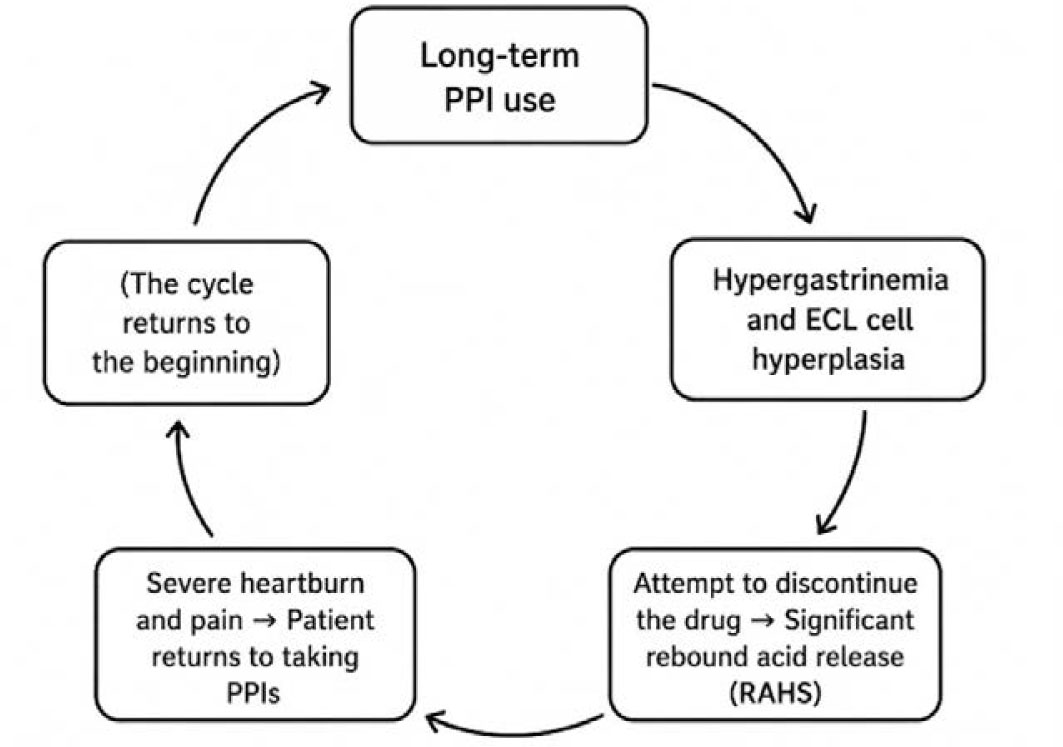
Figure 1.
Pathophysiological and clinical scheme of the “vicious cycle” of chronic proton pump inhibitor use induced by rebound acid hypersecretion (RAHS). Own work based on the compiled literature.
Safe use and principles of therapy de-escalation
In light of evidence regarding potential systemic complications associated with long-term proton pump inhibitor therapy, deprescribing has become a key element of modern pharmacotherapy. This process is defined as a planned, physician-supervised dose reduction or complete discontinuation of a medication when the indications for its use have expired or when the risk of adverse effects outweighs the clinical benefits [27].
The first step in the deprescribing process is patient selection. According to the latest expert position statement from the American Gastroenterological Association (AGA), a trial of drug discontinuation should be considered in patients with uncomplicated gastroesophageal reflux disease (GERD), patients who have completed Helicobacter pylori eradication therapy, and individuals in whom PPIs were initiated as ulcer prophylaxis during short-term NSAID therapy and who are no longer exposed to risk factors. On the other hand, deprescribing is contraindicated in patients with Barrett’s esophagus, severe eosinophilic esophagitis, a history of upper gastrointestinal bleeding, and severe reflux esophagitis (grade C or D according to the Los Angeles classification) [28].
A detailed compilation of qualification criteria, including clinical scenarios requiring mandatory continuation of treatment and conditions justifying a trial of therapy de-escalation, is presented in Table 3.
Table 3.
Patient qualification criteria for therapy continuation or a trial of de-escalation. Own work based on current guidelines from the American Gastroenterological Association[27–28].
| Absolute Indications for Long-Term PPI Therapy | Clinical Scenarios Justifying a Deprescribing Trial |
|---|---|
| Barrett’s esophagus | Non-erosive reflux disease (NERD) or mild esophagitis (grade A or B according to the Los Angeles classification) |
| Severe reflux esophagitis (grade C or D according to the Los Angeles classification) | Status post successful Helicobacter pylori eradication |
| History of upper gastrointestinal bleeding due to peptic ulcer disease | Completed treatment for an uncomplicated peptic ulcer |
| Eosinophilic esophagitis | Discontinuation of NSAID therapy (if PPI was used only for gastroprotection) |
| Gastric acid hypersecretory states (e.g., Zollinger-Ellison syndrome) | Functional dyspepsia (no abnormalities on endoscopic examination) |
| Chronic and uninterrupted NSAID therapy in patients at high risk of gastrointestinal bleeding | No documented indications for therapy (PPI initiated empirically without a full diagnostic workup) |
The gold standard in international guidelines is to avoid abrupt treatment discontinuation in patients on chronic PPI therapy. Gradual dose reduction (known as tapering) is recommended, allowing the gastrointestinal tract to gradually adapt to new secretory conditions.
In clinical practice, three main therapy de-escalation strategies are utilized, which are often implemented sequentially [27]:
Dose reduction (Step-down): Reducing the standard PPI dose by half (e.g., from 40 mg to 20 mg daily) and maintaining it for a period of 2 to 4 weeks.
Intermittent therapy (extending intervals): After the initial dose reduction, transitioning to taking the medication every other day for another 2–4 weeks.
“On-demand” therapy (On-demand): In the final stage of deprescribing, the patient takes the PPI only on days when they experience a clear worsening of symptoms and discontinues the medication as soon as they resolve.
The model of gradual dose reduction (tapering) and the principles of transitioning to on-demand therapy are illustrated in Figure 2.

Figure 2.
Algorithm for safe de-escalation and deprescribing of chronic proton pump inhibitor (PPI) therapy. Own work based on the guidelines [27–28].
To increase the likelihood of successful PPI discontinuation, guidelines allow the supportive, on-demand use of medications with alternative mechanisms of action. In the event of transient discomfort, the patient may utilize short-acting antacids (e.g., alginate-containing preparations) or H2-receptor antagonists [28].
Summary
Since their introduction into clinical practice in the late 20th century, proton pump inhibitors (PPIs) have remained one of the most important and effective tools in the treatment of acid-related diseases. However, their favorable safety profile and excellent efficacy have led to a global phenomenon of drug overuse, often without clear medical indications. Although chronic PPI therapy provides indisputable benefits and is necessary in specific clinical conditions—such as severe forms of GERD (LA grade C/D), Barrett’s esophagus, hypersecretory states, or gastroprotection in high-risk patient groups—long-term gastric acid suppression is not without systemic consequences for the human body.
Long-term iatrogenic hypochlorhydria predisposes patients to numerous systemic complications. These include nutritional deficiencies (vitamin B12, iron, magnesium, and calcium), an increased risk of osteoporotic fractures, alterations in the gut microbiome (predisposing to Clostridioides difficile infections and the development of SIBO), and subclinical renal injury (AIN leading to CKD). Consequently, a modern clinical approach to patients on PPI therapy requires regular re-evaluation of treatment indications and the implementation of deprescribing protocols in individuals for whom the benefits of therapy no longer outweigh the risks. Due to the physiological phenomenon of rebound acid hypersecretion (RAHS), this process must be conducted in a planned and gradual manner, accompanied by active patient education.