
Introduction
The growing burden of neurodegenerative diseases
Neurodegenerative diseases, particularly Alzheimer’s disease (AD) and Parkinson’s disease (PD), represent one of the most formidable challenges for modern medicine in the face of global population aging. The number of individuals living with dementia is projected to increase systematically, primarily due to the lack of available disease-modifying therapies that can effectively target underlying pathological mechanisms rather than merely alleviating symptoms [2]. The progressive degradation of neurons leads to an irreversible loss of patient independence, creating an urgent need to search for novel therapeutic strategies [1].
The incretin axis and the brain
The incretin axis, conventionally associated with glucose metabolism, plays a pivotal role in the functioning of the central nervous system (CNS). Glucagon-like peptide-1 receptor agonists (GLP-1 RAs) possess a unique ability to cross the blood-brain barrier, allowing them to interact directly with receptors located on neurons and glial cells. This mechanism involves the suppression of neuroinflammation by reducing microglial activation and lowering the levels of pro-inflammatory cytokines in the brain. Furthermore, GLP-1 agonists protect neurons from oxidative stress and support nerve cell survival, which is crucial for slowing down degenerative processes in brain structures [2].
Aim of the study
The aim of this narrative review is to analyze current scientific evidence (2015–2026) regarding the neuroprotective potential of GLP-1 receptor agonists in neurodegenerative diseases. This article focuses on evaluating the clinical efficacy of these molecules in inhibiting cognitive and motor deficits.
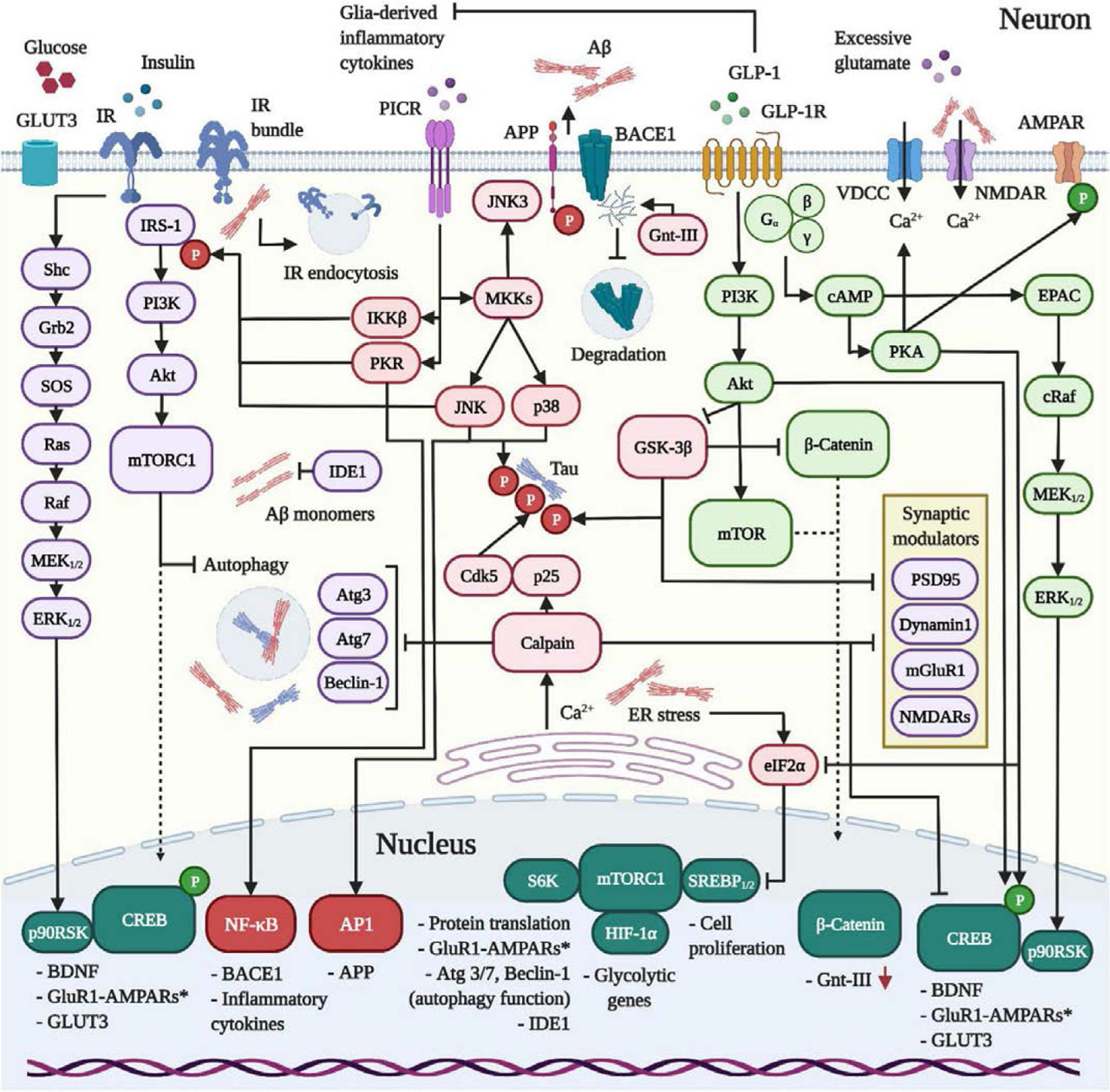
Figure 1.
Intracellular neuroprotective signaling pathways of GLP-1 RAs. Reprinted from Frontiers in Neuroscience (2022), DOI: 10.3389/fnins.2022.970925, under the Creative Commons Attribution License (CC BY).
As illustrated, the binding of GLP-1 RAs to their specific receptors (GLP-1R) on neurons triggers a cascade of intracellular protective pathways. Key mechanisms include:
PI3K/Akt and MAPK/ERK Activation: These pathways downregulate pro-apoptotic signals while enhancing cellular survival mechanisms and synaptic plasticity.
CREB Pathway and BDNF Expression: The downstream activation of the CREB transcription factor directly upregulates the transcription of brain-derived neurotrophic factor (BDNF), supporting neuronal viability and synaptic maintenance under pathological stress.
Autophagy Regulation: GLP-1R signaling modulates key autophagy markers such as Beclin-1, Atg3, and Atg7. This enhancement of autophagic flux assists in the degradation of toxic protein aggregates, including amyloid-beta (Aβ) and phosphorylated tau, which are key hallmarks of Alzheimer’s disease pathology.
Reduction of Neuroinflammation and ER Stress: By suppressing glial-derived inflammatory cytokines and mitigating endoplasmic reticulum (ER) stress, GLP-1 RAs help preserve blood-brain barrier integrity and prevent excessive calcium influx and glutamate-induced excitotoxicity.
Methodological Rationale and Search Strategy
To ensure a comprehensive retrieval of relevant literature, a structured search was conducted across electronic databases (PubMed, Embase, Web of Science, Cochrane Library; 2015–2026) using key terms related to GLP-1 RAs, neurodegeneration. A narrative review design was applied to enable a broad, multifaceted synthesis encompassing preclinical signaling mechanisms and clinical trial outcomes (RCTs and observational cohorts). Given the methodological heterogeneity across these diverse domains, a structured narrative framework provides the most effective approach to critically analyze the evolving evidence.
Results
Table 1 provides a comprehensive summary of the included clinical trials and observational studies, detailing patient cohorts, interventions, key clinical outcomes, and biological mechanisms of GLP-1 receptor agonists in Alzheimer’s and Parkinson’s diseases.
Table 1.
Summary of key clinical trials, systematic reviews, and meta-analyses on GLP-1 RAs in neurodegenerative diseases (2015–2026).
| Author & Year | Study Type | Study Population / Cohort Size | Intervention | Main Findings | Limitations |
|---|---|---|---|---|---|
| Nørgaard et al. (2022) [1] | Pooled RCTs & nationwide registry cohort |
| GLP-1 RAs (liraglutide, semaglutide) vs. placebo/other antidiabetics | Association with up to a 63% reduction in dementia risk (RR = 0.37) in diabetic populations. | Cohort limited to patients with type 2 diabetes; potential healthy-user bias; observational design. |
| Yeh et al. (2025) [13] | Propensity score-matched cohort study & meta-analysis |
| GLP-1 RAs vs. SGLT2 inhibitors | GLP-1 RAs associated with ~30% lower risk of PD onset (HR = 0.70). However, SGLT2i showed a 20% stronger protective profile. | Retrospective design; potential residual confounding; no direct head-to-head clinical trial validation. |
| Messak et al. (2025) [4] | Systematic review & meta-analysis of RCTs |
| Various GLP-1 RAs (exenatide, lixisenatide, etc.) vs. placebo | Heterogeneous motor outcomes; high rate of gastrointestinal attrition and risk of mild-to-moderate dehydration. | Small sample sizes in individual trials; short follow-up periods; high dropout rates due to adverse events. |
| Zhang et al. (2025) [16] | Systematic review & meta-analysis of RCTs |
| Short-acting (e.g., exenatide) vs. long-acting GLP-1 RAs | Statistically significant motor improvement only for short-acting formulations (MD = −2.93 on MDS-UPDRS Part III). | High study heterogeneity; limited long-term data on the durability of the observed motor benefits. |
| O’Mara et al. (2026) [24] | Meta-analysis of double-blind RCTs |
| GLP-1 RAs vs. placebo | Cognitive stabilization, preservation of cortical volume, and metabolic protection rather than cognitive reversal. | Phase II exploratory nature of included trials; small sample sizes (N<100 per trial); short study duration (12–18 months). |
| Badran & Gbreel (2025) [18] | Systematic review & meta-analysis |
| GLP-1 RAs vs. placebo | Confirmed significant risk of muscle mass loss (sarcopenia), worsening of frailty, and acute gallbladder events. | Limited active reporting of sarcopenia across older trial designs; inconsistent monitoring of body composition. |
GLP-1 Receptor Agonists in Alzheimer’s Disease
The latest clinical data confirm the neuroprotective potential of glucagon-like peptide-1 receptor agonists (GLP-1 RAs) in Alzheimer’s disease (AD). Large-scale analyses indicate that GLP-1 RA treatment is associated with a significantly lower incidence of dementia in patients with type 2 diabetes, a finding corroborated by nationwide registry data and pooled analyses of clinical trials [1]. Network meta-analyses further demonstrate that GLP-1 RAs offer superior prophylactic benefits compared with selected other antidiabetic agents regarding the overall risk of dementia [3].
A key mechanism observed in AD is the ability of these analogs to improve cerebral glucose metabolism by enhancing glucose transport across the blood-brain barrier, directly counteracting neuronal energy deficits [9–10]. This improvement is reflected in standardized cognitive assessments, such as the MMSE, and is strongly correlated with the molecular impact of GLP-1 RAs on upregulating brain-derived neurotrophic factor (BDNF) expression. Research shows that restoring neurotrophic support via BDNF promotes synaptic plasticity and neuronal survival even under exposure to toxic amyloid-beta (Aβ) oligomers, forming the foundation for clinical cognitive improvement [2,6–7,11].
Beyond improving glucose metabolism, GLP-1 modifying factors have been shown to strengthen the blood-brain barrier (BBB) and stimulate progenitor cell proliferation in the subventricular zone [15]. However, clinical translation exhibits a clear disparity between observational data and active trials. Observational cohort analyses and nationwide registries (e.g., [1,14]) suggest that GLP-1 RAs reduce the risk of developing AD by up to 63% (RR = 0.37) compared with control groups. Importantly, these highly promising preventive figures are derived almost exclusively from patients with type 2 diabetes, introducing potential healthy-user bias and confounding by indication. In contrast, double-blind RCTs involving non-diabetic mild cognitive impairment (MCI) or AD cohorts paint a more conservative picture, demonstrating cognitive stabilization (slowing of decline) and preservation of cortical volume (MD = 0.08 mm3, 95% CI: 0.02–0.14, p = 0.012) rather than active cognitive restoration [6–7, 24].
GLP-1 Receptor Agonists in Parkinson’s Disease
The role of GLP-1 RAs in Parkinson’s disease (PD) is currently evaluated from two perspectives: preventive and therapeutic. Recent large-scale population studies suggest that this class exhibits potential in preventing idiopathic PD, reducing the risk of onset by approximately 30% (HR = 0.70, 95% CI: 0.51–0.96, p = 0.026) [14]. However, it should be noted that in real-world evidence (RWE) studies, this effectiveness is sometimes lower compared with that of SGLT2 inhibitors, which demonstrate a stronger protective profile in PD prophylaxis (HR = 0.56, 95% CI: 0.44–0.72, p < 0.001) [13].
In the context of symptomatic treatment for individuals already diagnosed with the disease, clinical outcomes depend heavily on the drug’s pharmacokinetics. A recent meta-analysis revealed that only short-acting formulations (e.g., exenatide) yield a statistically significant improvement in motor function (MD = −2.93 on the MDS-UPDRS Part III, 95% CI: −4.91 to −0.95, p = 0.004), whereas long-acting medications fail to show such an effect [16,22]. This is supported by Cochrane review data, indicating that improvements in the Movement Disorder Society-Unified Parkinson’s Disease Rating Scale (MDS-UPDRS) Part III can exceed the threshold for a minimal clinically important difference (MCID) and persist even after treatment cessation [17,20]. Nonetheless, the quality of this symptomatic evidence is graded as moderate-to-low due to small sample sizes (typically fewer than 100 participants per trial) and limited follow-up windows (usually 48 to 60 weeks), leaving the longevity of this therapeutic benefit highly uncertain.
Despite promising motor outcomes, GLP-1 agonists do not currently demonstrate a significant impact on non-motor symptoms or the overall quality of life of patients [14,16,17,18]. The biological rationale for the observed benefits remains the marked increase in BDNF levels (up to 377%) and the protection of dopaminergic neurons from neurotoxicity, as confirmed in preclinical models [2].
Safety and Neuroprotective Mechanisms
While GLP-1 RAs present a promising multi-targeted therapeutic approach, their clinical deployment in neurodegenerative cohorts is constrained by a distinct profile of adverse events. Beyond common, transient gastrointestinal symptoms such as nausea and dyspepsia, clinical trials and post-marketing surveillance highlight several serious systemic risks that require careful consideration in geriatric populations [4–5, 12, 18]. A primary concern in elderly patients is the potential acceleration of skeletal muscle mass loss (sarcopenia) alongside overall weight loss, which can critically compromise physical function and postural stability. Furthermore, gastrointestinal adverse effects—particularly persistent vomiting and diarrhea—frequently lead to acute dehydration, presenting a high risk of prerenal acute kidney injury in vulnerable cohorts. Additionally, therapy with GLP-1 RAs is associated with class-specific risks of acute pancreatitis and gallbladder-related disorders, including cholelithiasis (gallstones) and cholecystitis, necessitating vigilant clinical monitoring and rendering their overall safety profile acceptable only under strict medical supervision [4–5,18].
Discussion
Neuroprotective mechanisms in light of clinical evidence
The analysis of the gathered evidence indicates that GLP-1 receptor agonists (GLP-1 RAs) constitute a therapeutic class with encouraging potential to modulate pathways involved in neurodegenerative disorders. The primary argument supporting their potential is the multi-targeted nature of their molecular action observed in preclinical models. Findings from 2024–2025 suggest that GLP-1 RAs not only improve cerebral glucose metabolism but may also stimulate autophagic processes (through the regulation of Beclin-1 and LC3-II markers) and increase the expression of BDNF by 76–377% in experimental settings [2,19]. These mechanisms, combined with preclinical evidence of strengthened blood-brain barrier integrity, create a favorable environment that may support neuroprotection [15].
The modulation of autophagic processes is of functional importance, as animal and in vitro models demonstrate that GLP-1 RAs can facilitate the clearance of amyloid-beta and alpha-synuclein aggregates [19]. However, it must be emphasized that such physical clearance of pathological protein aggregates has not yet been directly proven in human clinical trials. At the clinical level, these cellular changes translate primarily to a slowing of symptom progression rather than active neuroregeneration [25].
Dualism of outcomes in Parkinson’s and Alzheimer’s disease
Throughout the analysis, significant differences in clinical response were observed between the studied disease entities. In Parkinson’s disease (PD), the pharmacokinetic properties of the drug emerged as a critical determinant of therapeutic success. Recent meta-analyses indicate that only short-acting formulations (e.g., exenatide) yield statistically significant motor improvements (MD = −2.93, 95% CI: −4.91 to −0.95, p = 0.004) [16]. The persistence of these motor benefits beyond the washout period, frequently exceeding the minimal clinically important difference (MCID) threshold, points toward a potential neuroprotective or structural effect rather than a purely transient symptomatic relief, though confirmation in larger cohorts remains necessary [17,22].
Conversely, while GLP-1 RAs demonstrate a robust reduction in dementia risk in Alzheimer’s disease cohorts, the clinical picture in Parkinson’s disease is far more nuanced. The profound neuroprotection initially observed in animal models often fails to translate into immediate quality-of-life improvements as measured by scales such as the PDQ-39. This discrepancy highlights a major translational barrier (from bench to bedside) and suggests that pharmacological interventions in PD clinical trials may be introduced too late in the disease trajectory, when the remaining neuronal reserve is already insufficient for structural regeneration [15,18].
Comparison with other modern antidiabetic therapies
An important aspect of the discussion is the positioning of GLP-1 RAs relative to other classes, such as SGLT2 inhibitors and DPP4 inhibitors. Although GLP-1 RAs are highly effective in reducing cardiovascular events and stroke, recent network meta-analyses suggest that SGLT2 inhibitors may exhibit higher efficacy in pure Parkinson’s disease prophylaxis (HR = 0.56, 95% CI: 0.44–0.72, p < 0.001) [13,23]. Furthermore, reports of a potentially lower risk of developing PD in patients using DPP4 inhibitors (OR = 0.54, 95% CI: 0.38–0.77, p < 0.001) compel caution before declaring GLP-1 RAs the sole optimal choice in preventive neurology [23–24].
Safety of therapy and systemic challenges
Despite encouraging clinical signals, integrating GLP-1 RAs into neurological treatment standards faces complex safety and tolerability barriers, particularly within frail, elderly populations. The high frequency of gastrointestinal adverse events (nausea, reflux, chronic vomiting) is not merely a matter of patient discomfort; in geriatric patients, it carries a substantial risk of severe dehydration. For patients with Parkinson’s disease, who frequently suffer from autonomic dysfunction and orthostatic hypotension, even mild dehydration can trigger severe hypotensive episodes, increasing the frequency of syncope and subsequent trauma.
Furthermore, the non-selective weight loss induced by GLP-1 RAs often involves a significant reduction in lean skeletal muscle mass rather than exclusively adipose tissue. In patients already suffering from neurodegenerative decline, this muscle wasting directly exacerbates age-related sarcopenia. In Parkinson’s disease, loss of muscle strength severely compromises postural stability, accelerating gait impairment and elevating the risk of debilitating falls. In Alzheimer’s disease, rapid muscle loss accelerates the onset of physical frailty syndrome, substantially shortening the window of patient independence [18,20].
Clinicians must also account for less frequent but severe class-specific complications. The association of GLP-1 RAs with acute pancreatitis and gallbladder diseases (such as cholelithiasis and acute cholecystitis) requires careful screening. Delayed gallbladder emptying and altered bile composition under GLP-1 therapy can precipitate biliary colic, a condition that may be difficult to diagnose early in cognitively impaired AD patients who cannot communicate symptoms effectively. These concerns, combined with epidemiological signals indicating an elevated risk of thyroid malignancies (OR = 1.58, 95% CI: 1.10–2.27, p = 0.013) [23], underscore the necessity of rigorous, individualized patient selection and careful dosage titration rather than a generalized prescribing approach.
Methodological Quality and Limitations of Current Evidence
To objectively assess the clinical viability of GLP-1 RAs in neurology, a critical appraisal of the current literature’s quality is mandatory. The existing body of evidence suffers from several methodological vulnerabilities that prevent immediate clinical implementation:
Observational Confounding vs. RCT Efficacy: The dramatic risk reductions reported in dementia prevention (up to 63% [14]) and Parkinson’s disease prophylaxis (30% [13]) stem from retrospective, observational cohort studies of patients treated for type 2 diabetes. These studies are inherently susceptible to residual confounding, such as the “healthy-adherer effect” (patients compliant with antidiabetic regimens may engage in healthier lifestyles overall).
Sample Size and Follow-up Constraints: Most double-blind RCTs evaluating symptomatic benefits (especially in PD) are phase II exploratory trials with highly restricted sample sizes (e.g., $N < 100$) and short follow-up durations (typically 12–18 months). Since neurodegenerative progression occurs over decades, these brief observational windows cannot definitively distinguish true disease-modification from transient symptomatic enhancement.
High Attrition Rates: Due to the hallmark gastrointestinal adverse effects of GLP-1 RAs (nausea, vomiting, weight loss), clinical trials report high dropout rates (often exceeding 15–20%). This high attrition introduces attrition bias, potentially skewing efficacy results toward healthier, more tolerant survivors.
Lack of Direct Head-to-Head Comparisons: While network meta-analyses [13,23] attempt to rank GLP-1 RAs against SGLT2 or DPP4 inhibitors, there is a total absence of direct, head-to-head RCTs comparing these metabolic agents in neurodegenerative cohorts. Consequently, the relative superiority of GLP-1 RAs remains statistical rather than clinically validated.
Consequently, according to the GRADE (Grading of Recommendations, Assessment, Development, and Evaluation) guidelines, the quality of evidence supporting the preventive neurological benefits of GLP-1 RAs is considered moderate, while the evidence supporting active motor and cognitive symptom modification remains low-to-moderate. Large-scale, multicenter Phase III trials with multiyear follow-ups are urgently required to upgrade these recommendations.
Limitations of the Study
While this review provides valuable insights into the neuroprotective potential of GLP-1 RAs, several key limitations of the current literature must be acknowledged:
Observational Bias and Confounding: High risk-reduction estimates (up to 63% in dementia and 30% in Parkinson’s disease) stem mostly from observational studies in diabetic cohorts. These findings are vulnerable to residual confounding, indication bias, and the healthy-user effect.
Sample Size and Duration Constraints: Most randomized controlled trials (RCTs) are phase II exploratory studies with small cohorts (fewer than 100 participants per arm) and short follow-up windows (12–18 months). This duration is insufficient to prove true, long-term disease modification versus transient symptomatic relief.
High Attrition Rates: The frequent occurrence of gastrointestinal adverse effects led to significant patient dropout rates across trials, introducing potential attrition and survivor bias.
Lack of Direct Comparative Evidence: There is a total absence of head-to-head clinical trials comparing GLP-1 RAs with other metabolic therapies (e.g., SGLT2 or DPP4 inhibitors), preventing firm conclusions regarding absolute pharmacological superiority.
Conclusion
The scientific and clinical evidence analyzed in this review suggests that glucagon-like peptide-1 receptor agonists (GLP-1 RAs) represent a highly interesting therapeutic class with promising neuroprotective properties. Their capacity to cross the blood-brain barrier appears to trigger multi-targeted cascades in experimental models, including the upregulation of BDNF expression (by 76–377%) and the modulation of autophagy markers (Beclin-1, LC3-II). While these preclinical pathways facilitate the reduction of toxic protein aggregates (such as amyloid-beta and alpha-synuclein) in vitro and in vivo, further research is strictly required to verify whether these clearance mechanisms occur at a clinically meaningful level in human patients.
Clinical data highlight a distinct dualism in therapeutic response depending on the specific disease pathology and the pharmacokinetic profile of the administered molecule. In Alzheimer’s disease, observational studies in diabetic populations show a lower incidence of dementia (RR = 0.37), but randomized controlled trials in non-diabetic cohorts point toward cognitive stabilization and the preservation of brain volume rather than active cognitive restoration. In Parkinson’s disease, clinical benefits appear highly sensitive to drug kinetics; only short-acting agents (e.g., exenatide) have achieved statistically significant improvements in motor scores on the MDS-UPDRS Part III (MD = −2.93), whereas long-acting formulations have yet to demonstrate comparable clinical efficacy.
However, the transition of GLP-1 RAs from diabetes management to standard neurological practice is constrained by notable safety barriers and translational limitations. Frequent gastrointestinal adverse events and the risk of weight loss require vigilant monitoring in elderly patients to avoid worsening frailty syndrome. Additionally, potential safety signals, such as the reported association with thyroid malignancies (OR = 1.58), necessitate cautious patient selection. Definitive clinical recommendations await the results of large-scale, multicenter Phase III trials that can objectively establish whether GLP-1 RAs possess true disease-modifying efficacy in human neurodegeneration.
Notes
[1] Conceptualization, Paulina Orzechowska and Gabriela Budziszewska; methodology, Paulina Orzechowska; software, Aneta Dziurdź; check, Paulina Orzechowska, Katarzyna Majewska and Gabriela Mastej-Witek; formal analysis, Paulina Orzechowska; investigation, Aleksandra Kielan; resources, Aleksandra Barkowska; data curation, Paulina Głowacka; writing-rough preparation, Alicja Okupniak; writing - review and editing, Aleksandra Łupicka; visualization, Paulina Orzechowska; supervision, Paulina Orzechowska; project administration, Paulina Orzechowska; All authors have read and agreed with the published version of the manuscript.