
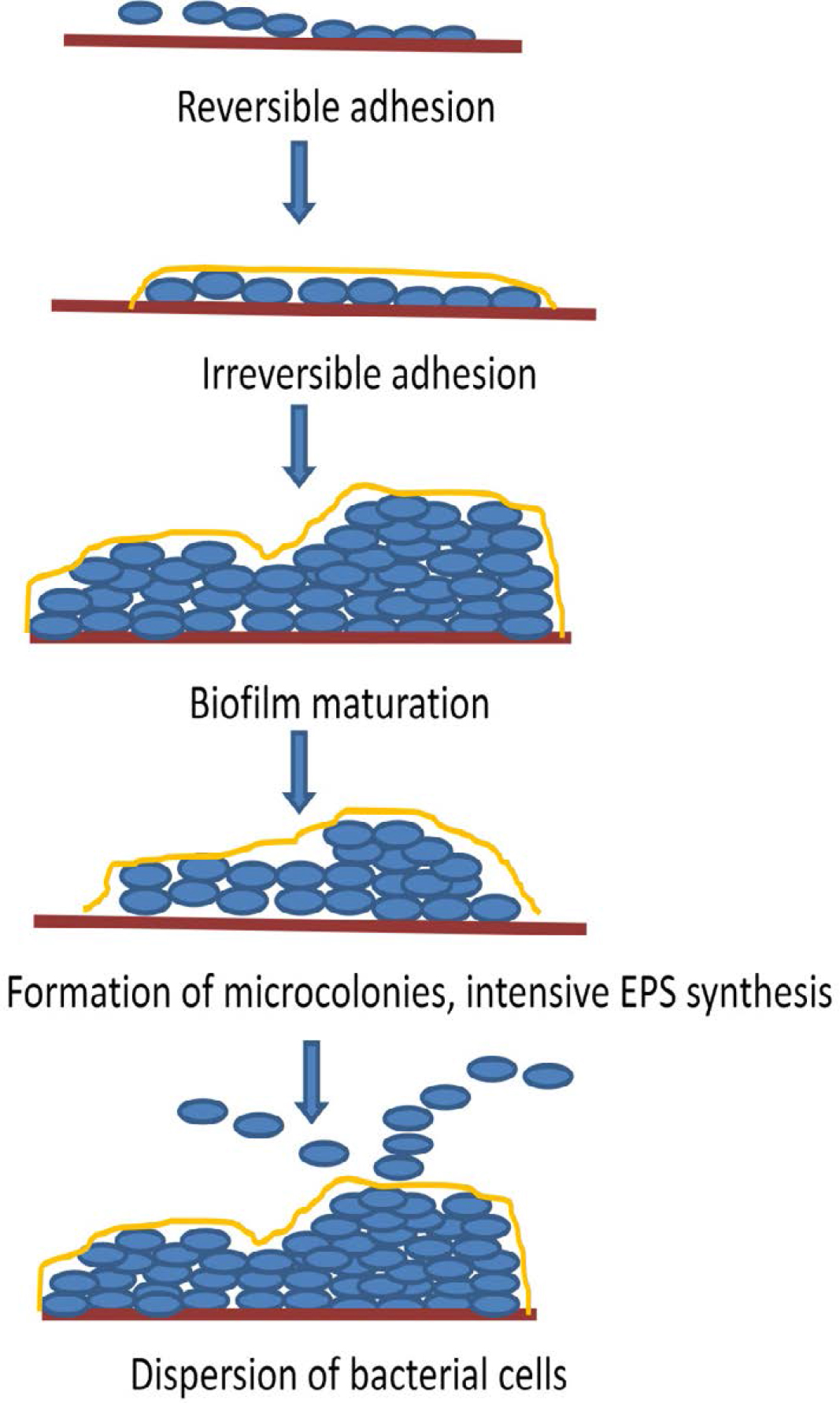
Figure 1.
Biofilm formation (own elaboration)
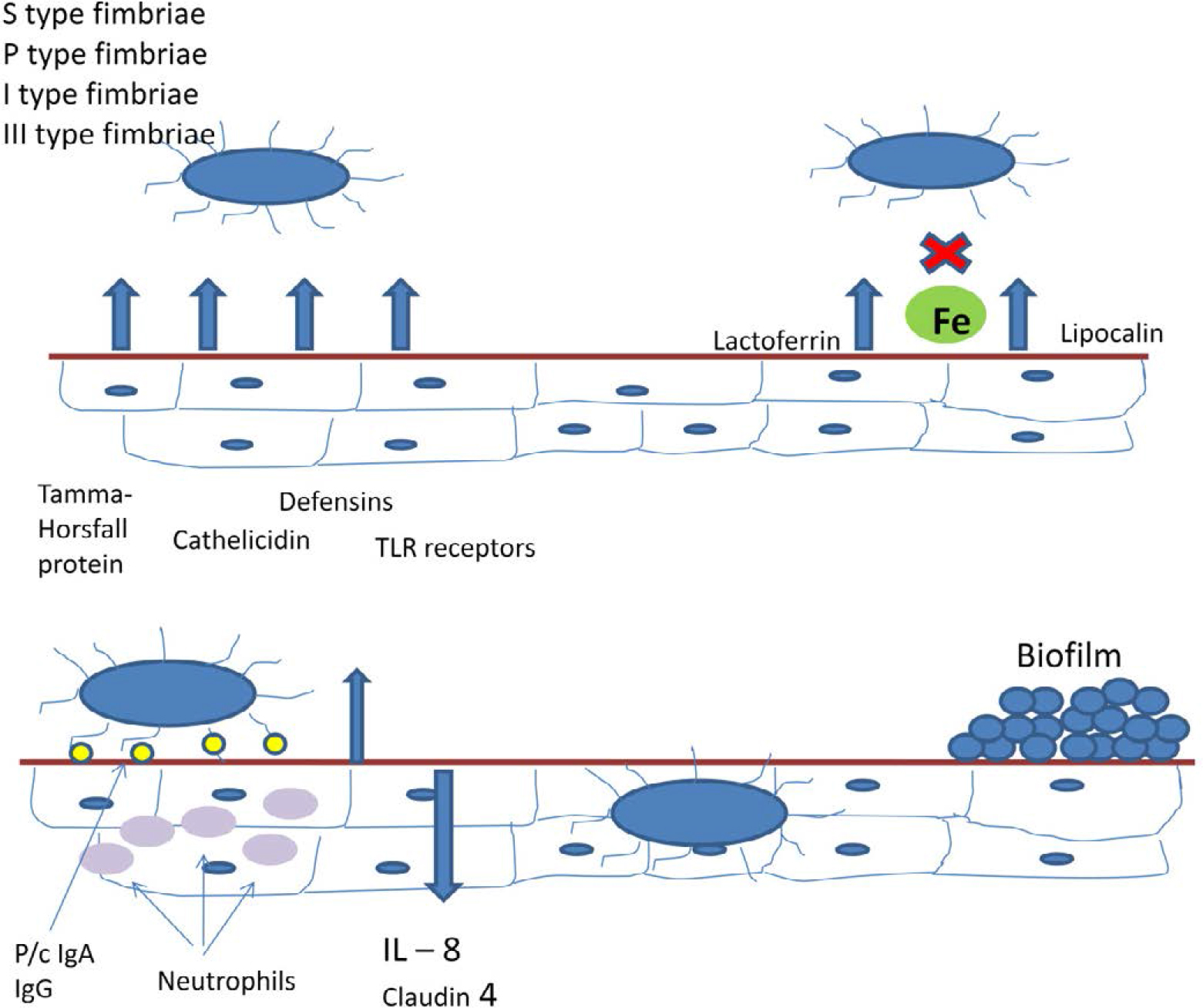
Figure 2.
Formation of biofilm on the urinary tract surface (own elaboration)

Figure 3.
Urea breakdown catalyzed by urease.
Table 1.
Examples of infections associated with biofilm formation.
| Type of Infection | Description | Example Pathogens |
|---|---|---|
| Urinary Tract Infections (UTIs), | UTIs often associated with the presence of catheters, where biofilm formation hinders the eradication of pathogens. | Escherichia coli, Klebsiella pneumoniae, Pseudomonas aeruginosa |
| Respiratory Tract Infections | Chronic lung infections, especially in patients with cystic fibrosis, where biofilm protects bacteria from antibiotics and the immune response. | Pseudomonas aeruginosa, Staphylococcus aureus |
| Chronic Wound Infections | Chronic wounds, where biofilm inhibits regenerative processes and promotes persistent inflammation. | Staphylococcus aureus, Enterococcus faecalis, Pseudomonas aeruginosa |
| Infections Associated with Medical Implants | Infections associated with implanted medical devices, where biofilm on the surface of the implant leads to chronic inflammation. | Staphylococcus epidermidis, Staphylococcus aureus, Propionibacterium acnes |
| Endocarditis | Infection of the inner layer of the heart, often associated with biofilm on heart valves, leading to severe complications. | Staphylococcus aureus, Streptococcus viridans, Enterococcus faecalis |
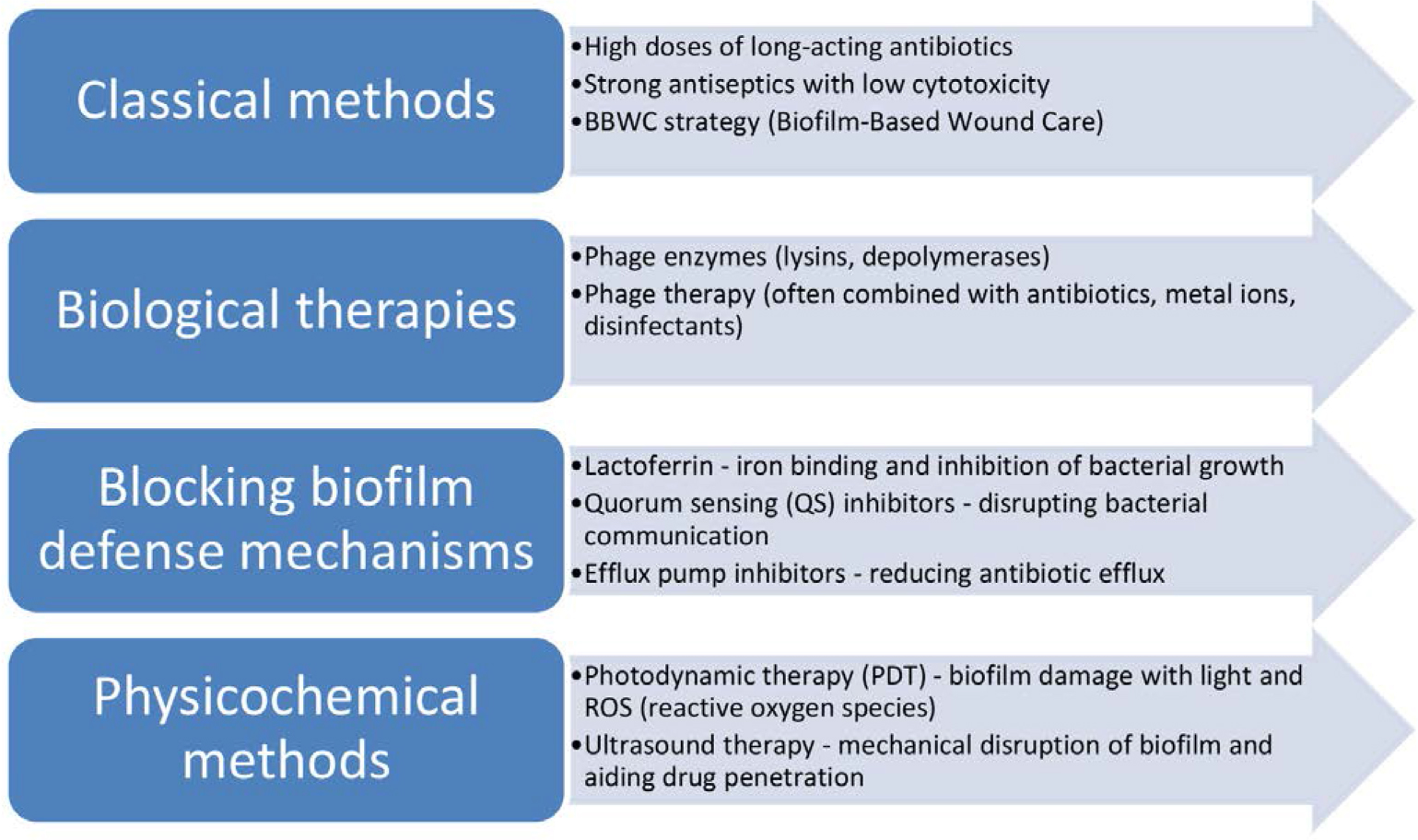
Figure 4.
Diagram of Bacterial Biofilm Eradication Strategies.
Table 2.
Comparison of Selected Methods for Combating Bacterial Biofilm.
| Method | Mechanism of Action | Advantages | Limitations |
|---|---|---|---|
| BBWC – Wound therapy | High doses of drugs, antiseptics, anti-biofilm agents | Effective in treating chronic wounds | Requires intensive treatment monitoring |
| Phage Enzymes (Lysozymes, Depolymerases) | Cell wall degradation and EPS biofilm breakdown | Targeted action on biofilm | Limited effectiveness in monotherapy |
| Combined Phage Therapy | Bacterial lysis, supporting antibiotics and disinfection | Enhances the effectiveness of classical therapy | Risk of bacterial resistance to phages |
| Lactoferrin | Iron binding, limiting bacterial growth | Natural, safe compound | Effectiveness dependent on environmental conditions |
| Quorum Sensing Inhibitors (QS) | Blocking bacterial communication and biofilm regulation | Targeted action on virulence mechanisms | Primarily in the research phase, limited clinical availability |